Tag: Google Business Profile

  • LinkedIn for Restoration Companies: Building the Relationships That Google Ads Can’t Buy

    LinkedIn for Restoration Companies: Building the Relationships That Google Ads Can’t Buy

    The Machine Room · Under the Hood

    The restoration industry has a relationship problem disguised as a marketing problem. You don’t need more leads. You need more adjusters, property managers, and facility directors who already know your name before the loss happens.

    That’s what LinkedIn does—when you use it correctly. And almost nobody in restoration uses it correctly.

    I’ve watched restoration companies pour five and six figures into Google Ads while their owners’ LinkedIn profiles sit dormant with a headshot from 2017 and a bio that says “Owner at ABC Restoration.” Meanwhile, the property management companies and insurance adjusters who control the highest-value commercial work are making referral decisions based on who they see, trust, and remember. LinkedIn is where that trust gets built. Not at trade shows twice a year. Every single week.

    Why LinkedIn Matters More for Restoration Than Any Other Trade
    Seven cards naming common AI chatbot failure modes
    Why LinkedIn matters more for restoration than any other trade.

    Most trades—plumbing, HVAC, electrical—sell primarily to homeowners. Residential, transactional, search-driven. For those businesses, LinkedIn is a nice-to-have.

    Restoration is structurally different. The highest-value work comes through B2B relationships: insurance carriers, TPAs, independent adjusters, property management firms, facility directors, general contractors, and real estate professionals. These decision-makers live on LinkedIn. They evaluate potential restoration partners the same way they evaluate any vendor—by reputation, visibility, and demonstrated expertise.

    LinkedIn drives 75-85% of all B2B leads from social media. For restoration companies pursuing commercial and insurance-referred work, that number is probably higher because the alternative B2B platforms—Facebook, Instagram, X—are where these decision-makers consume entertainment, not where they evaluate business relationships.

    The Profile Is the Foundation (And Yours Is Probably Broken)

    Your LinkedIn profile is not a resume. It’s a landing page for professional credibility. When an adjuster searches for restoration contractors in your market, or a property manager gets your name from a referral, the first thing they do is look you up on LinkedIn.

    What they should find: a current professional photo, a headline that communicates what you solve (not your job title), a summary that establishes your expertise and service territory, published content that demonstrates industry knowledge, and endorsements or recommendations from people in the industries you serve.

    What they usually find: a blurry photo, “Owner/CEO at Acme Restoration,” a blank summary, and zero activity since the profile was created.

    Fix the profile before you post a single thing. The profile converts attention into trust. Without it, every post you publish is leaking credibility.

    The Content Strategy That Builds Commercial Relationships
    Comparison of Claude how-to fit versus local service page fit for assistants
    The content strategy that builds commercial relationships.

    LinkedIn’s 2026 algorithm rewards relevance, credibility, and consistency—not volume. Success doesn’t come from posting daily or copying trending formats. It comes from aligning your content around clear professional positioning that demonstrates what you know.

    For restoration company owners and business development leaders, the content categories that generate the most engagement and inbound commercial inquiries are:

    Industry education. Posts explaining restoration processes, timelines, and standards to the people who refer work. “What property managers should know about mold remediation timelines” performs better than “We offer mold remediation services” because it educates the referral source rather than selling to them.

    Behind-the-scenes project documentation. Photos and descriptions from active job sites—with appropriate permissions—showing your team executing complex work. Adjusters and property managers want to see competence in action, not stock photos of clean trucks.

    Industry commentary. Your perspective on regulatory changes, insurance industry shifts, or technology adoption in restoration. This positions you as a thought leader, not just a vendor. When a property manager needs to choose between three qualified restoration companies, they remember the one who taught them something.

    Relationship acknowledgments. Tagging partners, acknowledging referral relationships, congratulating industry contacts on achievements. This signals that you’re embedded in the professional network, not standing outside it.

    Social Selling: The 45% Quota Advantage

    Research consistently shows that sales professionals who practice social selling—building relationships through content and engagement on LinkedIn rather than cold outreach—are 45% more likely to exceed their sales quotas. That statistic applies across B2B industries, but it’s especially relevant to restoration because the sales cycle is relationship-dependent.

    Social selling in restoration means engaging with content posted by adjusters, property managers, and facility directors before you need anything from them. Comment thoughtfully on their posts. Share their content with your own perspective added. Build familiarity through consistent, low-pressure engagement. When the loss happens and they need a restoration partner, you’re already in their consideration set—not because you called, but because they’ve been seeing your name for months.

    This only works with genuine engagement. LinkedIn’s algorithm and its users can both detect performative networking. One thoughtful comment per day on content from people in your target referral network is worth more than ten “Great post!” drive-bys per day.

    LinkedIn Ads for Restoration: When They Make Sense

    LinkedIn Ads are expensive—typically $8-$15 per click for B2B targeting. For most restoration companies, organic LinkedIn activity delivers better ROI than paid LinkedIn campaigns.

    The exception: geographic targeting for commercial program development. If you’re building a preferred vendor program and want to reach every property management company within 50 miles, a sponsored content campaign targeting property managers and facility directors in your MSA can accelerate awareness faster than organic posting alone.

    The key is matching the ad format to the objective. Lead generation forms work for downloadable resources (emergency preparedness guides, restoration timeline checklists). Sponsored content works for brand awareness among a defined professional audience. Message ads (InMail) have declining effectiveness as users increasingly ignore unsolicited messages.

    Google Business Profile Posts and Review Generation: The Social Adjacent Play

    While LinkedIn owns the B2B relationship channel, Google Business Profile posts function as a social-adjacent channel that directly influences local search visibility. Weekly GBP posts signal activity to Google’s local algorithm and provide content that appears in your knowledge panel.

    Review generation—actively requesting reviews from satisfied customers and referral partners—compounds your GBP visibility and provides social proof that influences both direct consumers and B2B referral sources. An adjuster deciding between two restoration companies will check Google reviews the same way a homeowner does.

    The companies winning at social media in restoration aren’t choosing between LinkedIn and GBP. They’re running both—LinkedIn for relationship building with referral sources, GBP for local visibility and social proof.

    The Weekly Rhythm

    Desk with laptop, checklist notebook, and billing card ready before creating an Anthropic API key
    The weekly rhythm.

    Monday: Share one piece of educational content relevant to your referral sources. Tuesday: Engage with 5-10 posts from adjusters, property managers, or facility directors in your network. Wednesday: Post a project photo or behind-the-scenes update. Thursday: Comment on industry news with your perspective. Friday: Acknowledge a professional relationship or share a team achievement.

    Total time investment: 20-30 minutes per day. Total cost: zero. Expected timeline to measurable results: 90 days of consistent execution.

    The restoration companies that treat LinkedIn as a relationship-building system rather than a broadcasting platform are the ones getting calls from property managers who say, “I’ve been following your posts.” That sentence is worth more than any ad click you’ll ever buy.

    Illustration for article: LinkedIn for Restoration Companies: Building the Relationships That Google Ads Can’t Buy

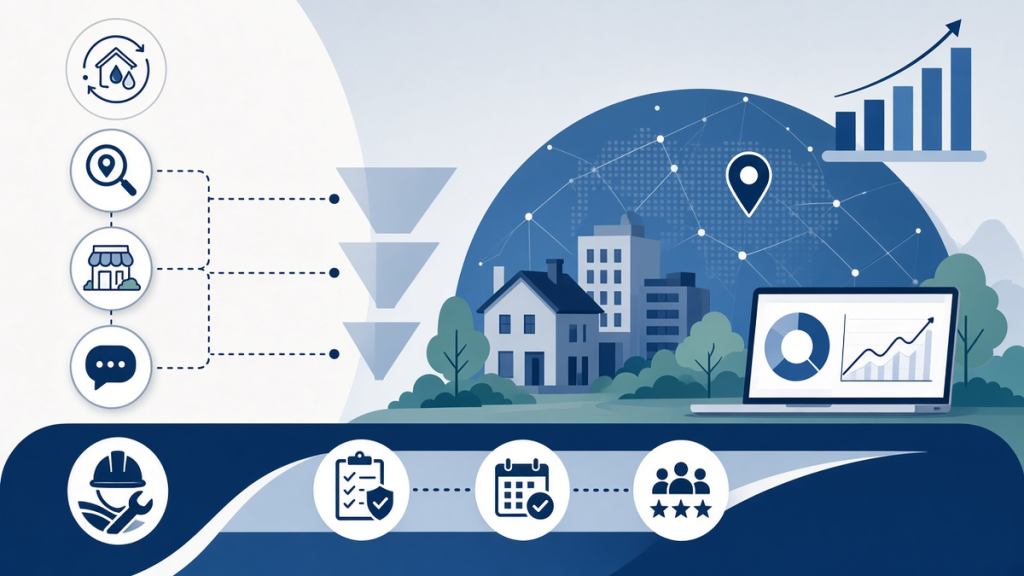
    Visual summary

    Editorial illustration for LinkedIn for Restoration Companies: Building the Relationships That Google Ads Can’t Buy - Tygart Media AI-generated visual
    AI-generated editorial illustration — Vertex AI Imagen 4 Standard

    About this image. This image was generated by Google’s Vertex AI Imagen 4 model as the featured visual for LinkedIn for Restoration Companies: Building the Relationships That Google Ads Can’t Buy . Every image in the Tygart Media visual library is AI-generated, converted to WebP for optimal performance, and enriched with IPTC/XMP metadata for search engine discoverability.

    • Model: Vertex AI Imagen 4 Standard (imagen-4.0-generate-001)
    • Format: WebP (quality 90)
    • Aspect Ratio: 16:9
    • Metadata: IPTC/XMP injected (title, description, creator, rights, location)
    • Creator: Tygart Media — tygartmedia.com

    Part of The Studio collection — AI-generated visuals powering the Tygart Media content engine.
  • The Restoration Company’s Local SEO Playbook for 2026: What Actually Moves Rankings

    The Restoration Company’s Local SEO Playbook for 2026: What Actually Moves Rankings

    Tygart Media / Content Strategy
    The Practitioner JournalField Notes
    By Will Tygart
    · Practitioner-grade
    · From the workbench

    Every restoration company I talk to says the same thing: “We show up on Google.” Then I ask them to search from a phone two miles outside their office. Silence.

    Here’s the reality of local SEO for restoration contractors in 2026: the companies that own their service area aren’t doing anything exotic. They’re doing the basics—relentlessly, precisely, and without ever stopping. The ones who disappear? They optimized once, called it done, and went back to waiting for the phone to ring.

    I’ve spent years in the gap between Manhattan-level martech and Main Street execution. The restoration industry sits in a strange place—high-value emergency services competing on local search with the sophistication of a 2014 dental practice. That gap is where the money is.

    Google Business Profile Is Not a Set-It-and-Forget-It Tool

    Comparison of Claude how-to fit versus local service page fit for assistants
    Google Business Profile is not set-it-and-forget-it.

    Google Business Profile (GBP) remains the single highest-leverage local SEO asset for restoration contractors in 2026. But “remains” is doing heavy lifting in that sentence. What GBP demands today is radically different from what it demanded two years ago.

    The data is unambiguous: businesses that post weekly updates, respond to every review within 24 hours, and add new photos at least twice a month outperform inactive profiles by measurable margins. One contractor study showed a 21% increase in local search impressions after three months of consistent GBP activity—weekly posts, Q&A responses, and photo uploads.

    That’s not a hack. That’s showing up.

    Google’s local algorithm now weighs four signal categories: relevance, distance, prominence, and behavioral engagement. The first three are table stakes. The fourth—how users interact with your listing—is where most restoration companies bleed rankings. If someone calls from your GBP listing, stays on the line, and books a job, Google notices. If they click, bounce, and call the next result, Google notices that too.

    The NAP Consistency Problem Nobody Fixes

    Name, Address, Phone number. Three fields. And yet NAP inconsistency is still the most common local SEO failure I see in restoration. Your GBP says “ABC Restoration Inc.” Your Yelp listing says “ABC Restoration.” Your BBB page says “ABC Restoration Services LLC.” Google treats these as three different businesses.

    This isn’t theoretical. I’ve watched companies jump 8-12 positions in the local pack within 60 days of cleaning up citation inconsistencies across major directories. No content changes. No link building. Just making their business information match across 40+ platforms.

    The platforms that matter most in 2026: Google Business Profile, Bing Places, Apple Maps, Yelp, BBB, Angi, Thumbtack, Facebook, and industry-specific directories like the IICRC’s provider locator and Restoration Industry Association member listings.

    Service Area Pages That Actually Rank

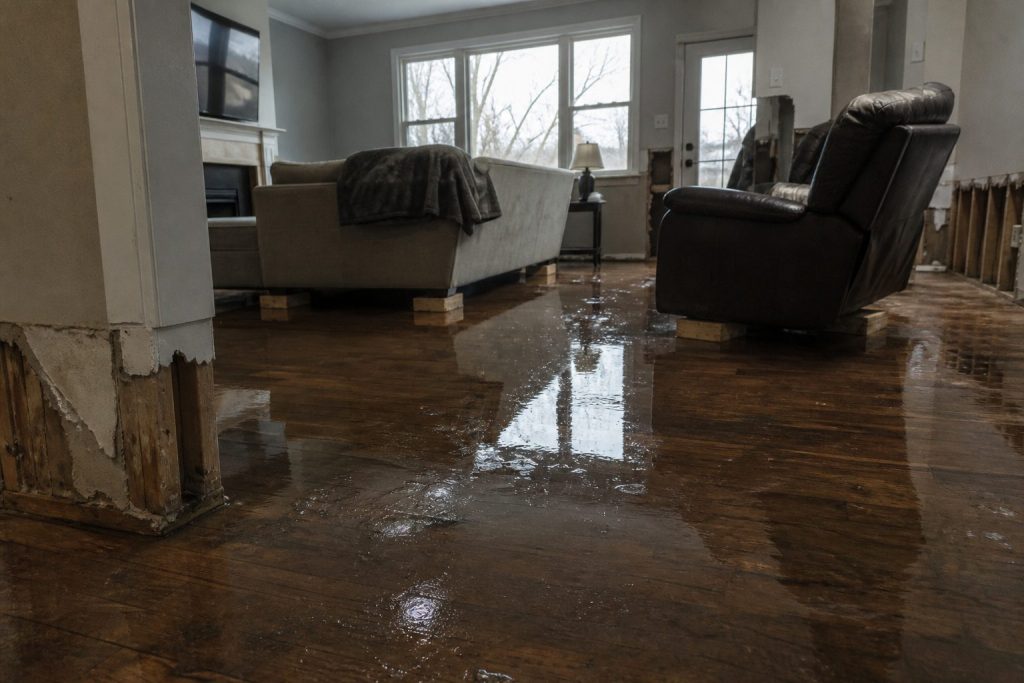
    Flooded residential living room with standing water on hardwood after a water loss
    Service area pages that actually rank.

    Every restoration SEO guide tells you to build service area pages. Almost none of them tell you why most service area pages fail.

    They fail because they’re templates with a city name swapped in. Google’s March 2026 core update doubled down on this—sites running scaled, templated content across dozens of city pages saw significant ranking drops. The update specifically targeted what Google internally calls “location-swapped” content: identical structures with only geographic modifiers changed.

    Service area pages that rank in 2026 share three characteristics: they reference local landmarks, regulations, or conditions specific to that area; they include real project data or case references from that geography; and they answer questions that only someone serving that area would think to address. “Water damage restoration in Houston” needs to talk about clay soil expansion, TCEQ regulations, and hurricane season preparation. “Water damage restoration in Phoenix” needs to talk about monsoon flash flooding, desert foundation cracking, and evaporative cooler leaks.

    Reviews: The Compounding Asset

    Review signals—volume, velocity, recency, and sentiment—carry more weight in local rankings than at any point in Google’s history. This isn’t speculation. The local search ranking factor studies from 2025-2026 consistently place review signals in the top three ranking factors, alongside GBP signals and on-page optimization.

    But here’s what the ranking factor studies don’t tell you: review velocity matters more than total count. A company with 50 reviews that gets 4-5 new ones per month will outrank a company with 200 reviews that hasn’t received one in 90 days. Google wants to see ongoing social proof, not historical accumulation.

    The restoration companies that win reviews consistently have one thing in common: they ask during the emotional peak. Not after the invoice. Not two weeks later. They ask when the homeowner walks back into their restored living room for the first time. That’s the moment. Automate everything else, but make that ask human.

    Technical SEO Foundations Most Restoration Sites Ignore

    I audit restoration company websites every week. The same technical issues appear in roughly 80% of them: no SSL certificate (still), page load times above 4 seconds on mobile, missing schema markup, orphaned pages from old service offerings, and redirect chains three or four hops deep.

    Core Web Vitals aren’t optional in 2026. Google’s page experience signals directly influence local pack rankings. A restoration site loading in 1.8 seconds with proper LCP, FID, and CLS scores will beat a slower competitor even if the slower site has more reviews and more backlinks. Speed is a tiebreaker that breaks a lot of ties.

    Schema markup—specifically LocalBusiness, Service, and FAQPage schema—remains underdeployed in the restoration vertical. Fewer than 15% of restoration company websites use structured data beyond basic organization schema. That’s an open lane for any company willing to implement it properly.

    The Franchise vs. Independent Dynamic

    National restoration franchises are investing more heavily in digital than ever. ServiceMaster, SERVPRO, Paul Davis, and Belfor all have dedicated SEO teams and seven-figure digital budgets. Independent operators look at this and feel outmatched.

    They shouldn’t. Franchise SEO has a structural weakness: corporate brand guidelines create template uniformity across hundreds of locations. Google’s algorithm penalizes this. An independent restoration company with unique, locally-grounded content on a technically sound website will outrank a franchise location running corporate-approved templates in the same market.

    The franchise advantage is brand recognition. The independent advantage is authenticity. In local SEO, authenticity compounds.

    What to Do This Week

    Desk with laptop, checklist notebook, and billing card ready before creating an Anthropic API key
    What to do this week.

    Audit your GBP listing for completeness—every field filled, correct categories selected, photos less than 30 days old. Run your business name through a citation checker and fix every inconsistency. Check your website speed on Google’s PageSpeed Insights from a mobile device. Look at your last 10 reviews and confirm you responded to every single one. If your service area pages read like templates, rewrite the top three by market size with genuinely local content.

    None of this is revolutionary. That’s the point. The restoration companies dominating local search in 2026 aren’t doing revolutionary things. They’re doing obvious things that their competitors won’t sustain.

    That’s the gap. That’s where we operate.

    Illustration for article: The Restoration Company’s Local SEO Playbook for 2026: What Actually Moves Rankings

    Visual summary

    Editorial illustration for The Restoration Company’s Local SEO Playbook for 2026: What Actually Moves Rankings - Tygart Media AI-generated visual
    AI-generated editorial illustration — Vertex AI Imagen 4 Standard

    About this image. This image was generated by Google’s Vertex AI Imagen 4 model as the featured visual for The Restoration Company’s Local SEO Playbook for 2026: What Actually Moves Rankings . Every image in the Tygart Media visual library is AI-generated, converted to WebP for optimal performance, and enriched with IPTC/XMP metadata for search engine discoverability.

    • Model: Vertex AI Imagen 4 Standard (imagen-4.0-generate-001)
    • Format: WebP (quality 90)
    • Aspect Ratio: 16:9
    • Metadata: IPTC/XMP injected (title, description, creator, rights, location)
    • Creator: Tygart Media — tygartmedia.com

    Part of The Studio collection — AI-generated visuals powering the Tygart Media content engine.