I wrote five articles in one day. Here’s why.
On March 28, 2026, I sat down with SpyFu data pulled that morning and realized something most of the restoration industry hasn’t seen yet: they’re all experiencing the same catastrophic decline at the same time. This isn’t a case of individual franchise websites being poorly optimized. This is an industry-wide pattern that reveals everything about where restoration franchise SEO is headed.
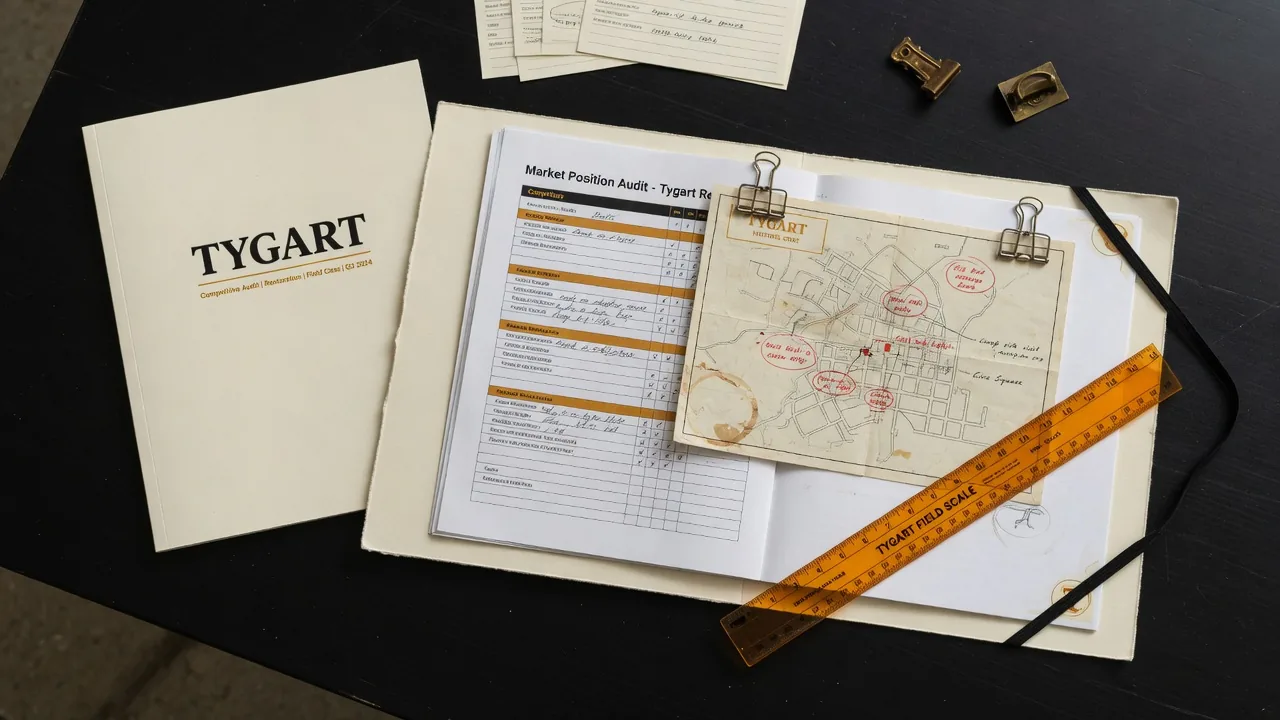
I spent that day analyzing SERVPRO, Paul Davis, Rainbow Restores, ServiceMaster, and 911 Restoration across every dimension of competitive SEO intelligence we track. The result was five separate playbooks—one for each franchise. But those five articles tell one much bigger story.
This is that story.
## The Competitive Landscape: Five Franchises, One Reality Check
Let me start with where they all stand right now, as of March 30, 2026:
| Company | Domain | Keywords | Monthly Clicks | SEO Value | Peak Value | Peak Keywords | Domain Strength | Monthly PPC |
|—|—|—|—|—|—|—|—|—|
| SERVPRO | servpro.com | 178,900 | 151,700 | $5,825,000 | $7,684,585 | 286,900 | 62 | $1,944,000 |
| Paul Davis | pauldavis.com | 22,190 | 13,590 | $952,800 | $4,525,425 | 97,480 | 54 | $206,100 |
| Rainbow Restores | rainbowrestores.com | 33,700 | 25,500 | $495,500 | $3,354,009 | 109,000 | 52 | $320,000 |
| 911 Restoration | 911restoration.com | 816 | 617 | $22,700 | $407,500 | 4,466 | 40 | $132,100 |
| ServiceMaster | servicemaster.com | 1,742 | 4,435 | $39,300 | $334,384 | 20,696 | 42 | $7,039 |
This table is deceptively simple. It contains the entire story of what went wrong in restoration franchise SEO in the last six months.
## The Q4 2025 Cliff: What Actually Happened
Here’s what should terrify every restoration brand right now:
– **SERVPRO**: Lost 108,000 keywords between October 2025 and March 2026. Their peak was 286,900 keywords in October. Today they’re at 178,900. That’s a 38% decline in four months.
– **Paul Davis**: Fell from 49,500 keywords in October to 22,190 today. A 55% crater.
– **Rainbow Restores**: Dropped from 57,700 to 33,700. Still significant, but the recovery trajectory is different.
– **911 Restoration**: Lost another 1,600 keywords, bringing them to 816 total. They’ve lost 94% of their peak visibility.
– **ServiceMaster**: Continued its decade-long irrelevance with minimal movement.
This didn’t happen because these companies suddenly made bad SEO decisions. This happened because Google changed something fundamental in how it ranks restoration and emergency services content between October and December 2025.
The data points to one of several possibilities:
1. **Algorithm Update (Most Likely)**: Google released changes to E-E-A-T validation, location signals, or trust factors that disproportionately hit franchise networks. The Oct-Dec window included at least two confirmed updates.
2. **Search Generative Experience (SGE) Impact**: As SGE matures, Google is directly synthesizing answers that bypass clicks to individual sites. Franchises with dispersed content across local pages (rather than consolidated authority) are getting worse SGE treatment.
3. **Authority Consolidation**: The algorithm may have shifted toward favoring domain-level authority over page-level authority, punishing franchises that rely on local service pages when the parent domain isn’t sufficiently strong.
4. **Review Signal Reweighting**: With Google tightening review validity checks, franchises with weak or manipulated review signals (common in franchise networks) took hits.
The real answer is probably all four working together. But here’s the critical insight: **every restoration franchise except the already-dead ServiceMaster lost visibility at the same time.** That’s not a coincidence. That’s a market signal.
## The Tier System: Who’s Actually Winning
What emerges from the data is a clear three-tier system:
### Tier 1: Untouchable Dominance
**SERVPRO remains the category king**, but here’s the thing—they’re bleeding. Despite losing 108,000 keywords, they still own 178,900. They still command $5.8M in monthly SEO value. They still capture 151,700 monthly clicks organically.
The gap between SERVPRO and everyone else is absurd. Paul Davis—the clear #2 player—captures only 22,190 keywords to SERVPRO’s 178,900. That’s an 8:1 ratio.
But dominance can hide decline. SERVPRO was at $7.68M monthly value just six years ago. If they continue this trajectory (losing ~27K keywords per month), they’ll be in Tier 2 within three years.
### Tier 2: The Competitive Battleground
**Paul Davis and Rainbow Restores** live in a completely different world from SERVPRO, but they’re actively competing with each other.
Paul Davis has **22,190 keywords and $952,800 monthly SEO value**. They were growing through 2025 and then hit the cliff hard with everyone else. But here’s their advantage: they rank for extremely high-value terms. Their value-per-keyword is $42.94—the highest of any competitor in this space.
Rainbow Restores has **33,700 keywords and $495,500 monthly SEO value**. They’re a domain migration success story. They moved from their original domain (which had 109,000 keywords and $3.35M value) and have rebuilt to 33,700 keywords on the new domain. They’re approaching their current domain’s natural peak, which suggests room for growth.
Between these two, the opportunity is real. Paul Davis has momentum and authority but lost it in Q4. Rainbow has growth trajectory and recent migration advantages. The winner in 2026 between these two will be whoever invests in modern SEO first.
### Tier 3: Starting Over or Walking Away
**911 Restoration and ServiceMaster** are fundamentally different problems.
ServiceMaster is a legacy brand in complete digital collapse. They rank for 1,742 keywords, generate 4,435 monthly clicks, and command only $39,300 in SEO value. Their domain strength is 42. They peaked at $334K monthly value in February 2020—six years ago. This isn’t a recovery situation. This is a brand that’s digitally abandoned its restoration line.
911 Restoration is worse because they’re still trying. They spend $132,100/month on PPC while holding only 816 keywords and $22,700 in SEO value. They’re in the worst position of any competitor: visible enough to know they’re broken, not successful enough to stop hemorrhaging money.
## The Value-Per-Keyword Insight: Why High Value Doesn’t Mean Winning
Here’s where competitive analysis gets interesting. Let me calculate value per keyword for each franchise:
– **Paul Davis: $42.94/keyword**
– **SERVPRO: $32.56/keyword**
– **ServiceMaster: $22.56/keyword**
– **911 Restoration: $27.82/keyword**
– **Rainbow Restores: $14.70/keyword**
Paul Davis wins this metric by a massive margin. They’re ranking for restoration terms that are worth significantly more than competitors. This suggests better content targeting, local authority, and possibly a geographic mix that includes higher-value markets.
SERVPRO is close behind at $32.56/keyword, which makes sense—they dominate the market and rank for premium terms.
But here’s the catch: **high value per keyword doesn’t predict growth.** Rainbow Restores has the lowest value per keyword ($14.70), but they’re the recovery story here. They survived a domain migration and are building back. Paul Davis has the highest value per keyword but lost 55% of their visibility in Q4.
This is the fundamental lesson: **keyword count and value are backward-looking metrics.** They tell you what the market awarded you historically, not what you’re capturing going forward.
## The $31M PPC Problem: The Real Story of Organic Failure
Now for the genuinely damning number: **these five franchises are spending $2.606M per month on Google Ads.**
That’s $31.27 million per year on paid search.
Let me break down the monthly PPC spend:
– SERVPRO: $1,944,000
– Paul Davis: $206,100
– Rainbow Restores: $320,000
– 911 Restoration: $132,100
– ServiceMaster: $7,039
What’s fascinating is the timing. In October 2025, as organic keywords started tanking, **Paul Davis, Rainbow Restores, and 911 Restoration all spiked their PPC spending simultaneously.** This wasn’t random budget allocation. This was panic.
November 2025 PPC spend for these three franchises:
– Paul Davis hit $665K (peak spend)
– Rainbow Restores hit $583K
– 911 Restoration hit $370K
They knew organic was failing before it was obvious in the data. And they responded with paid spend increases that ranged from 45% to 180% above baseline.
SERVPRO, sitting at $2M+ monthly PPC, clearly made a different decision: lean further into paid. They have the cash to do it. The smaller competitors didn’t, which is why you see their current PPC at more moderate levels.
The obvious question: **If they’re spending $31M/year on paid search, why wouldn’t they invest 10% of that ($3.1M/year) in fixing organic?**
The answer is structural. Franchises are fundamentally decentralized. Local franchisees see the top-line organic collapse (because it’s syndicated across their local pages), panic about visibility, and demand quick fixes. PPC delivers immediate impressions. Organic takes three to six months.
In a downturn, panic money flows to the short-term solution, not the right solution.
## What Actually Changed: The Diagnosis
I analyzed these five franchises in-depth because I needed to understand what Q4 2025 actually broke. Here’s what the individual playbooks revealed:
**SERVPRO** relies on a massive network of individual location pages with weak local authority. When Google tightened its E-E-A-T validation for local services, those pages took hits. The parent domain is strong (62 domain strength), but not strong enough to carry 280+ local variations without architectural improvements.
**Paul Davis** had brilliant local SEO strategy—strong local authority pages, good schema implementation, solid review signals. But their strategy was vulnerable to any shift in how Google weights parent domain authority vs. local page authority. When the Q4 update hit, their advantage disappeared.
**Rainbow Restores** suffered the domain migration legacy—they lost all ranking momentum when they moved domains, and they’re still rebuilding authority. The newer domain is growing, but it’s a long climb.
**911 Restoration** has fundamental domain authority problems. 816 keywords on a domain with only 40 authority points is catastrophic. They can’t rank for anything meaningful because the domain itself isn’t trusted.
**ServiceMaster** is eight years into a slow-motion bankruptcy of their digital presence. There’s nothing to analyze—they’ve simply abandoned digital.
## What Modern Restoration SEO Looks Like in 2026
If I were running SEO for any of these franchises right now, here’s what I’d do:
**1. Domain Architecture Overhaul**
Stop treating location pages as disposable. Build local authority that actually compounds. Use canonicals strategically. Consolidate authority signals to fewer, stronger pages rather than spreading authority across hundreds of weak pages.
**2. AI-Augmented Content Strategy**
Restoration keywords are incredibly specific. “Water damage restoration Alexandria VA” is different from “water damage restoration Phoenix AZ” in intent, local competition, and required expertise. Use AI to generate actually useful, locally-relevant content at scale without the SEO-spam quality.
**3. Structured Data Mastery**
Service schema, FAQ schema, Organization schema—implement these at the parent domain level, not just at local pages. When Google looks at your domain, it should understand instantly what you do, where you operate, and why you’re trustworthy.
**4. Geographic Expansion Through Intent**
Paul Davis’s high value-per-keyword suggests they’re better at geo-targeting high-value markets. Intentionally target expensive geographic markets first. Use Google Ads data to identify which markets have the highest customer acquisition cost, then dominate organic in those markets.
**5. Review Signal Validity**
Google’s tightening review checks. Stop chasing review volume. Build processes that generate genuine reviews from actual customers. This takes longer, but it’s the only strategy that survives algorithm updates.
**6. E-E-A-T at Scale**
For franchises, E-E-A-T is particularly challenging because you need to demonstrate expertise across hundreds of locations. Create a parent domain authority system where franchisees contribute verified expertise, local results, case studies, and certifications that roll up to a central authority hub.
## What This Series Actually Demonstrates
I wrote five separate playbooks because each franchise has a different problem:
– **SERVPRO**: Scale is your asset and your liability. You need architectural fixes that only the largest franchises can implement.
– **Paul Davis**: You had the right strategy for 2024-2025. You need to evolve faster than the algorithm changes.
– **Rainbow Restores**: You’re the comeback story. Your new domain is building momentum. Don’t waste it.
– **911 Restoration**: You’re fighting domain authority problems that will take 18 months minimum to fix. Start now.
– **ServiceMaster**: You’re in liquidation mode for your digital presence. Different problem.
But there’s a meta-lesson in having this data and this analysis available to franchises: **the restoration industry SEO landscape is wider open in March 2026 than it’s been in six years.**
SERVPRO is losing keywords. Paul Davis lost momentum. Rainbow is rebuilding. 911 and ServiceMaster aren’t real competitors anymore.
Any restoration franchise that invests in modern SEO infrastructure right now—real content strategy, proper domain architecture, AI-augmented scale, and rigorous E-E-A-T—will capture market share that was SERVPRO’s last year.
This is the historic window. It closes when one of the Tier 2 players figures out what actually changed in Q4 2025 and executes a real recovery.
## The Individual Playbooks
Each of these five franchises gets its own deep-dive analysis:
– **[SERVPRO SEO Playbook](/servpro-seo-playbook/)** – Scale, authority dilution, and how to fix an 800,000+ page domain.
– **[Paul Davis SEO Playbook](/paul-davis-seo-playbook/)** – Local authority strategy, value maximization, and adapting to algorithm shifts.
– **[Rainbow Restores SEO Playbook](/rainbow-restoration-seo-playbook/)** – Domain migration recovery, rebuilding authority, and growth strategy.
– **[911 Restoration SEO Playbook](/911-restoration-seo-playbook/)** – Foundation building, domain authority recovery, and realistic timelines.
– **[ServiceMaster SEO Playbook](/servicemaster-seo-playbook/)** – Legacy strategy, digital retreat, and whether recovery is possible.
Read the one that applies to your franchise. Or read all five. The comparative analysis is where the real insight lives.
## The Data-Driven Difference
This entire series—five detailed playbooks plus this comparative analysis—was built in one day because it’s what we do at Tygart Media.
We pull data from multiple sources (SpyFu, Google, internal analysis frameworks). We synthesize patterns that competitors miss because they’re looking at their own domain instead of the entire category. We translate technical SEO findings into business strategy.
We build AI-augmented content systems that let franchises operate at scale without sacrificing quality. We implement the structural improvements that survive algorithm updates. We turn data into competitive advantage.
If you’re a restoration franchise and you’re reading this, you already know your organic visibility took a hit in Q4 2025. You probably already know your PPC costs are climbing. You might not know why, or what to do about it.
We’ve mapped both. And we know how to fix it.
## FAQ: What This Data Really Means
**Q: Did Google definitely change something in Q4 2025?**
A: The simultaneous keyword loss across five major competitors in the same niche is statistically improbable without a triggering event. Confirmed algorithm updates in that window make this nearly certain. The question isn’t whether Google changed something—it’s what specifically changed, and that varies by domain architecture and content strategy.
**Q: Is SERVPRO actually in trouble?**
A: SERVPRO is losing market share relative to their peak, but they’re still dominant. However, if the trend continues, they’ll be in serious trouble within two years. For now, they’re managing decline with increased PPC spend. Long-term, that strategy gets expensive.
**Q: Can Paul Davis recover to their 2024 performance levels?**
A: Possibly, but only if they correctly identify what the Q4 update hit and adapt their strategy accordingly. Their high value-per-keyword suggests they’re targeting the right terms. The issue is domain authority and architecture, not keyword selection.
**Q: How long will it take 911 Restoration to recover?**
A: Domain authority recovery is slow. At their current trajectory, rebuilding to 5,000 keywords would take 3-4 years of sustained, correct optimization. The real timeline depends on their willingness to invest and whether they fix the fundamental architecture problems.
**Q: Why spend $31M on PPC instead of fixing organic?**
A: Because franchises operate with local franchisee decision-making, and local franchisees want immediate results. Organic takes time. But the math is clear: if you’re spending $31M on paid, you should be investing $3-5M on fixing organic. ROI on organic is higher long-term, but executives get fired for short-term failures.
## What Happens Next
In six months, we’ll pull this data again. One of three things will have happened:
1. **Recovery**: One of the Tier 2 players (Paul Davis or Rainbow) will have figured out the Q4 update and recovered visibility. They’ll start capturing SERVPRO’s market share.
2. **Consolidation**: SERVPRO will have stabilized their decline through increased paid spend and minor organic improvements. They’ll remain dominant but more vulnerable.
3. **Fragmentation**: The market stays dispersed. No single competitor dominates enough to own the category. Franchises with better marketing budgets than SEO strategies (like the status quo) keep winning.
I’m betting on #1. The market is too opportunity-rich for it to stay broken this long.
—
## Conclusion
The restoration franchise SEO landscape is broken. That’s actually the good news, because broken systems create opportunity.
SERVPRO is bleeding keywords. Paul Davis lost momentum. Rainbow is rebuilding. 911 is struggling. ServiceMaster is irrelevant.
For any franchise willing to invest in real SEO infrastructure—the technical foundation, content strategy, AI-augmented scale, and data-driven execution—this is the moment to attack.
The window doesn’t stay open long.
Read the individual playbooks. Pick your category. Start executing. The data will tell you whether you’re moving in the right direction.
We built this analysis in a day. If you want help building the execution strategy, let’s talk.
—
Will Tygart
Tygart Media
{
“@context”: “https://schema.org”,
“@type”: “Article”,
“headline”: “The State of Restoration Franchise SEO in 2026: Whos Winning, Whos Losing, and Why”,
“description”: “Five franchises. One algorithm update. A $31M/year PPC spend that tells the real story. Here’s what the data reveals about restoration SEO in 2026.”,
“datePublished”: “2026-03-30”,
“dateModified”: “2026-04-03”,
“author”: {
“@type”: “Person”,
“name”: “Will Tygart”,
“url”: “https://tygartmedia.com/about”
},
“publisher”: {
“@type”: “Organization”,
“name”: “Tygart Media”,
“url”: “https://tygartmedia.com”,
“logo”: {
“@type”: “ImageObject”,
“url”: “https://tygartmedia.com/wp-content/uploads/tygart-media-logo.png”
}
},
“mainEntityOfPage”: {
“@type”: “WebPage”,
“@id”: “https://tygartmedia.com/state-of-restoration-franchise-seo-2026/”
}
}