GA4 shows you exit rate. It does not tell you whether that exit was a success or a failure. That distinction matters more than the number itself.
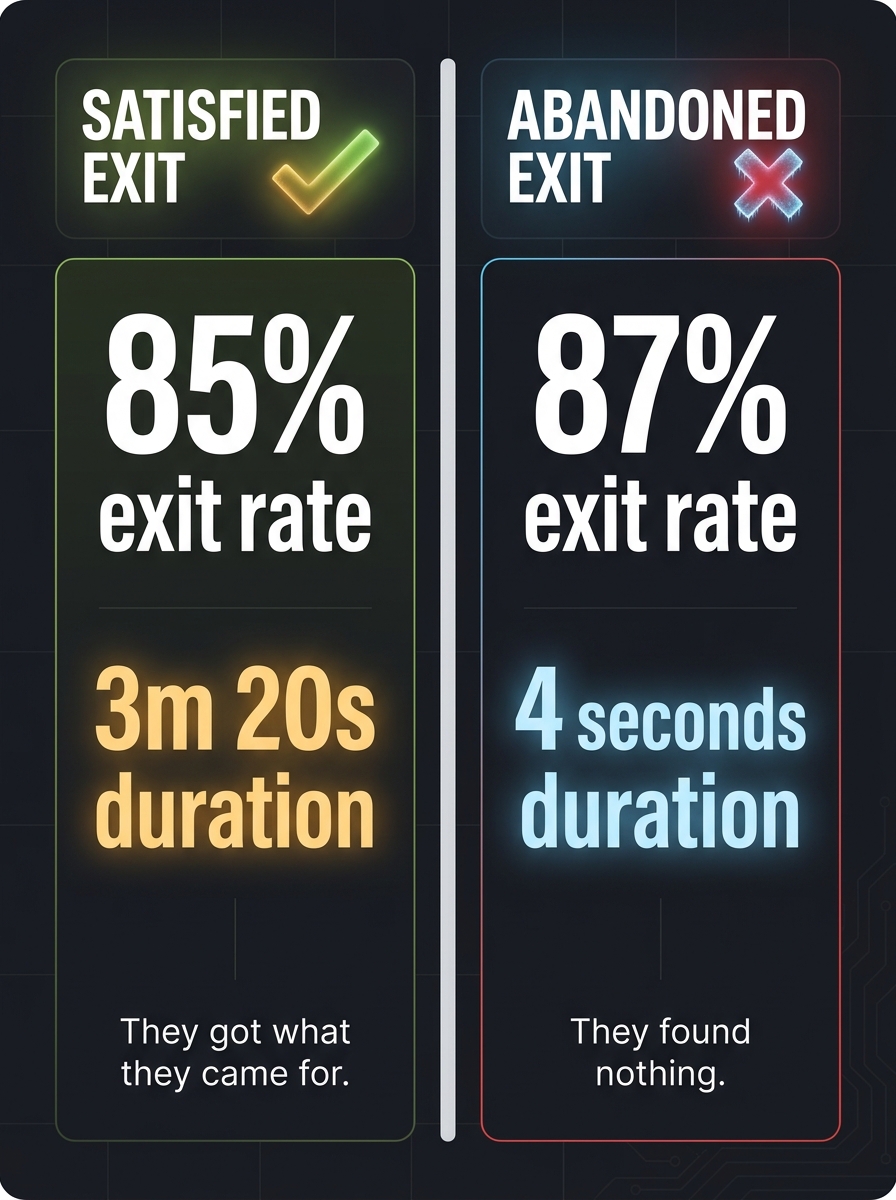
An 85% exit rate on a page where users stay for three minutes means the page did exactly what it was supposed to do. Users arrived, found their answer, and left complete. An 85% exit rate with four seconds means the page failed immediately.
Satisfied Exits vs Abandoned Exits
Satisfied exits vs abandoned exits.
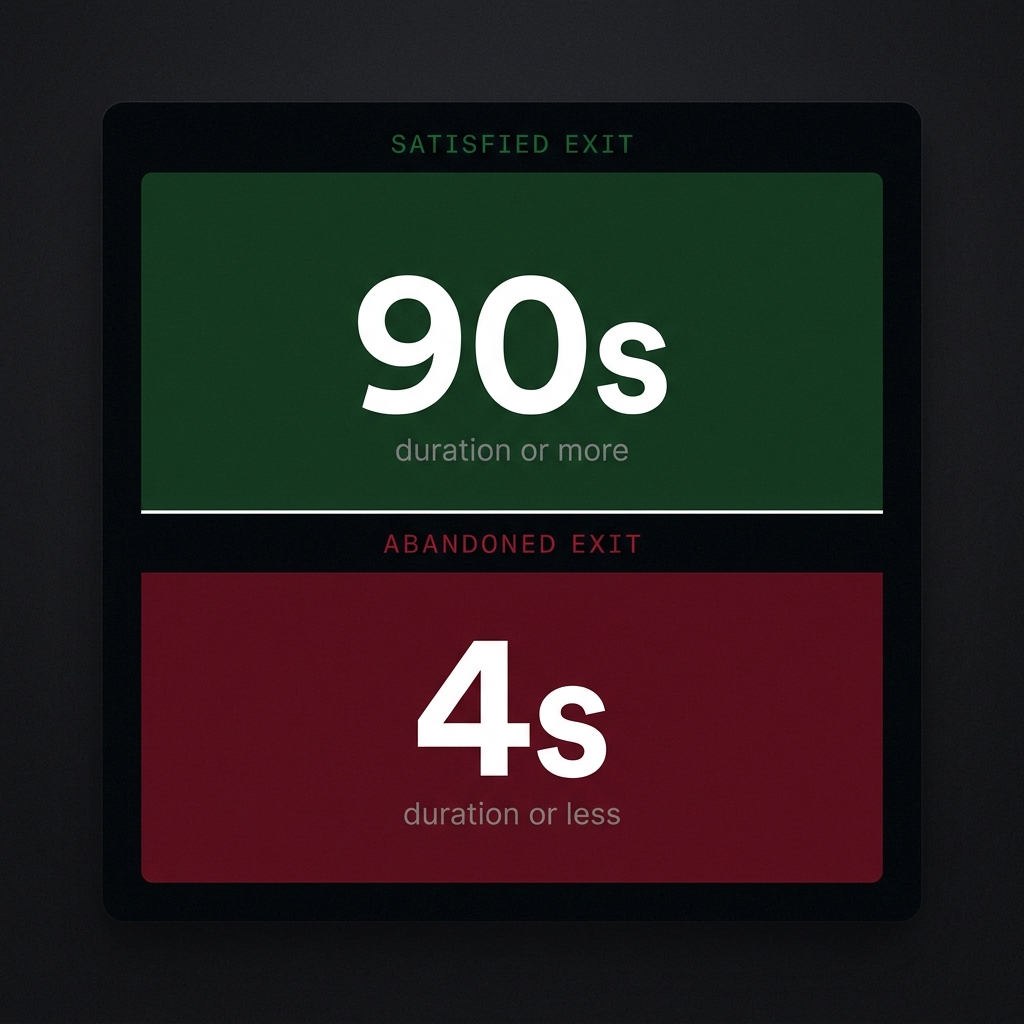
A satisfied exit has a high exit rate and high engagement duration — 90 seconds or more. The user read, completed their task, and left. Adding more CTAs to reduce the exit rate would interrupt a successful journey and make the page perform worse.
An abandoned exit has a high exit rate and low engagement duration — under 30 seconds. The user arrived, found nothing useful, and left. This page needs attention: it is either attracting the wrong audience, delivering the wrong content, or failing to provide a next step.
The diagnostic question for every high-exit-rate page is not “how do I reduce this?” It is “was this exit satisfied or abandoned?”
The NYC Summer Internships Finding
In a live audit on a real content site, the NYC Summer Internships guide showed an 85% exit rate with 3 minutes 20 seconds average duration. The first instinct — reduce the exit rate — would have been wrong. Users were spending over three minutes reading a comprehensive guide and leaving with the information they needed. The exit rate was a function of the page succeeding, not failing.
Compare that to the same site’s homepage: 65% exit rate with 8-second duration. Lower exit rate, dramatically worse performance. The homepage was failing more users despite fewer exits.
Dead-End Pages
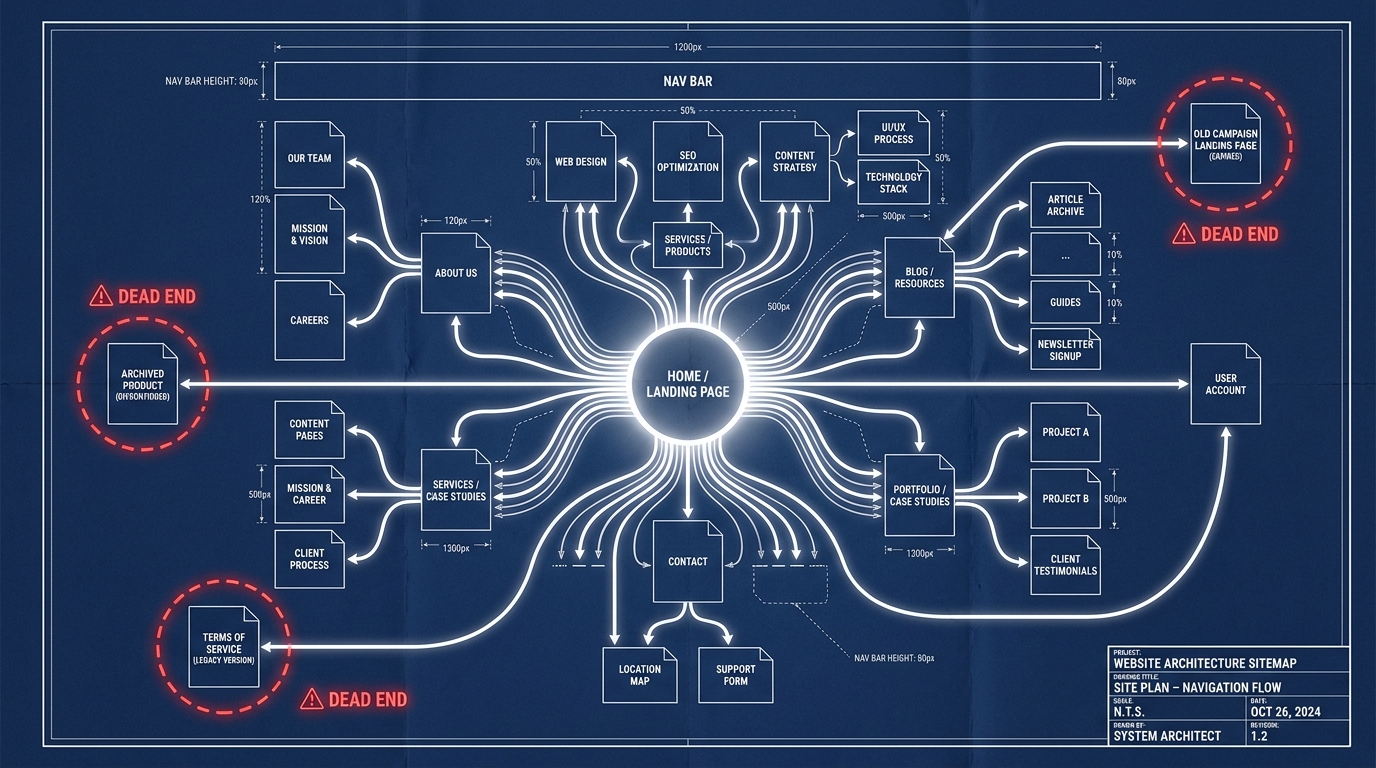
Dead-end pages.
A third pattern exists beyond satisfied and abandoned: the dead end. Users arrive with genuine interest, engage enough to stay, but then have nowhere to go next. No internal links, no navigation to adjacent topics, no next step. The exit is not because the page failed — the site architecture failed.
Dead-end pages show moderate engagement duration and zero internal link click data. Adding one relevant internal link often produces measurable improvement in session depth without any content changes. It requires no developer, no design work, and no new content.
The Internal Link Opportunity Map
The internal link opportunity map.
The most actionable output from an exit intelligence audit is a specific list of page pairings: which abandoned exit pages should link to which high-engagement destination pages. Google’s Analytics Advisor can generate these recommendations from your actual behavioral data — not guesswork about what users might want next.
This analysis runs in one session using Claude-in-Chrome alongside Analytics Advisor. The methodology is packaged as the Books for Bots: GA4 Exit Intelligence Kit.
Open your GA4 referral traffic report and sort by sessions. The source at the top of the list is your most valuable referral partner, right?
Almost certainly not. The default GA4 referral view is sorted by volume. Volume is the wrong metric for understanding referral quality. And the gap between your highest-volume referral source and your highest-quality referral source is almost always larger than you expect.
The Quality Inversion
The quality inversion in referral traffic.
When you re-rank your referral sources by engagement rate instead of session count, the leaderboard flips completely. The source you have been grateful for because it sends 300 sessions a month is often delivering 6-8% engagement — users who arrive, glance at the page, and leave in under 10 seconds. The source sending 8 sessions a month may be delivering 70%+ engagement — users who read deeply, navigate to related pages, and return weeks later.
From a content investment perspective, those 8 sessions from the high-quality source are worth more than the 300 from the volume source. They represent real readers who found genuine value. The volume source is sending noise.
What Drives the Gap
The gap between volume and quality in referral traffic usually comes down to three things.
Intent alignment. A high-volume referral source often sends users whose intent does not match your content. A directory site might link to you as a resource while its users are looking for a service provider. They arrive, realize you are informational content, and leave. A niche newsletter that links to you as recommended reading sends users who explicitly opted in to this exact type of content. Every session is pre-qualified.
Audience specificity. The broader the audience of the referring site, the lower the average quality of the traffic it sends you. A general-interest news aggregator sends everyone. A specialized community sends people who care about your topic.
Editorial context. When a referring site links to you in the body of a relevant article with a reason to click, the user arrives with context and intent. When your URL appears in a list of 50 links on a resource page, the user arriving has no specific reason to engage with your content over anyone else on the list.
How to Find Your Hidden Gem Referrers
How to find your hidden gem referrers.
The query you are looking for in GA4 is not “which referral source sends the most sessions.” It is “which referral sources have fewer than 20 sessions but an engagement rate above 50%.”
That filter surfaces your hidden gems — the small sources that nobody is monitoring because they do not show up at the top of the volume-sorted list. These are the sites whose audiences are most aligned with your content, the writers and communities who are genuinely recommending you rather than listing you.
Once you have the list, the outreach writes itself. A referral partner whose audience stays on your site for 4 minutes and returns regularly is a relationship worth formalizing. A content exchange, a guest post, a link placement in their next relevant piece — any of these turns an organic quality referrer into a deliberate partnership.
What Your Bad Traffic Sources Are Costing You
Beyond missing the hidden gems, there is a cost to the volume sources you are currently treating as successes. If a referral source is sending 300 sessions at 6% engagement and you are investing link-building effort to maintain or grow that relationship, you are optimizing for a metric that does not correspond to business value.
The reallocation question is simple: what would happen if you redirected that same effort toward the sites whose audiences actually engage with your content?
Running the Audit
Running the audit.
This analysis runs in a single session using Claude-in-Chrome alongside Google’s Analytics Advisor in GA4. The query sequence inverts the default referral view, surfaces your hidden quality sources, identifies your bad traffic sources with specific domain-level data, and produces a partnership opportunity list for outreach.
No SQL. No BigQuery. No data analyst. The methodology is packaged as the Books for Bots: GA4 Referral Quality Audit.
Your GA4 engagement rate is one number. But it is not one audience. It is three audiences — and they behave so differently from each other that the aggregate number actively misleads you about how your content is performing.
Here is what most GA4 users see: a site-wide engagement rate of 35%, an average session duration of 90 seconds, and a top channel list led by Organic Search. What most GA4 users miss: within that same 35% number, three AI platforms are sending traffic with engagement rates of 21%, 46%, and 64% respectively — from the exact same pages, to users with completely different intent profiles.
The AI Referral Split Nobody Is Looking At
The AI referral split nobody is looking at.
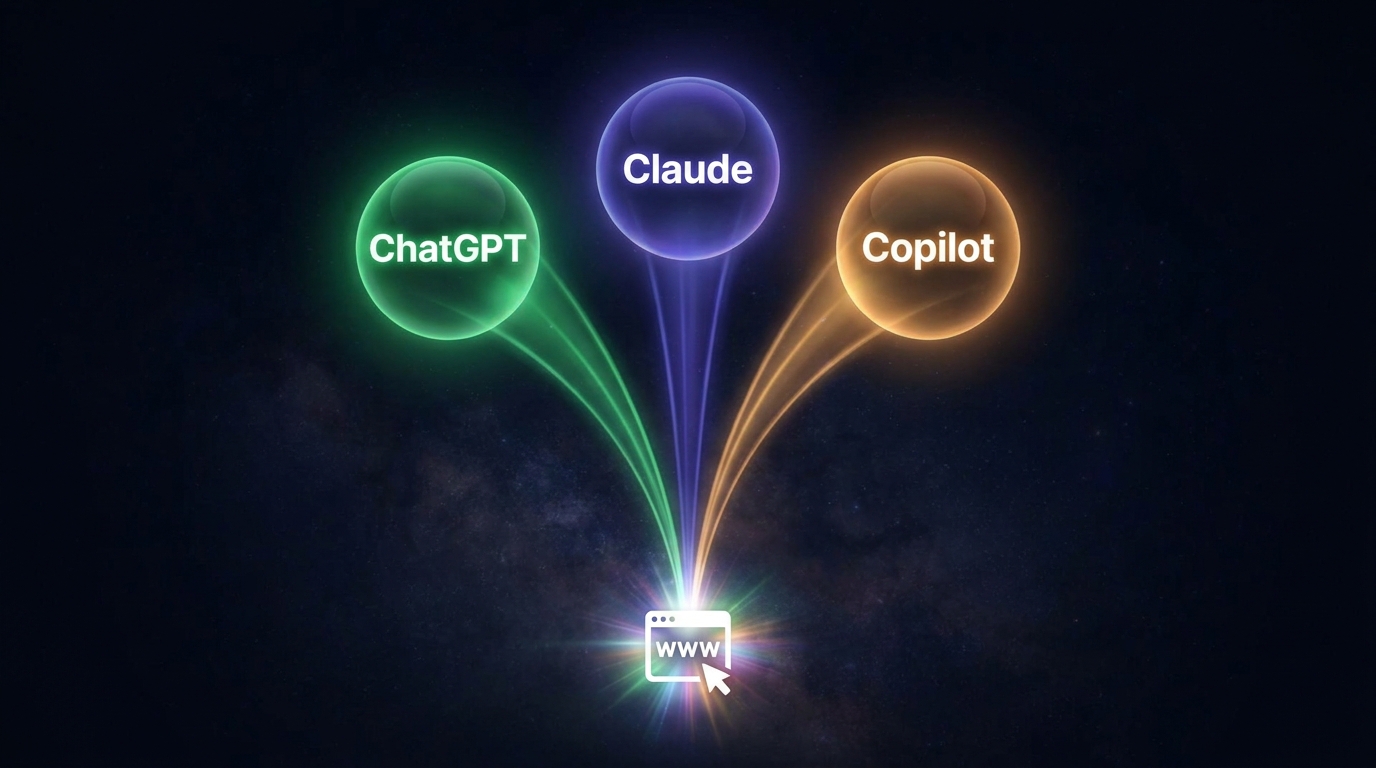
ChatGPT, Claude, and Copilot all send referral traffic to content sites. But they do not send the same user. ChatGPT users arrive, scan for a quick answer, and leave in under 30 seconds — engagement rate around 21%, well below the organic search average. Claude users arrive with research intent, read deeply, and stay for 3-4 minutes — engagement rate above 64%. Copilot users are somewhere between, arriving in planning mode, spending 1-2 minutes on civic and services content.
If you blend these three into your site-wide engagement rate, you get a number that does not represent any of your actual users. You get a mathematical average of behaviors that have nothing in common.
Why Your Engagement Rate Lies
Why your engagement rate lies.
The problem is not your content. The problem is that engagement rate without source segmentation is noise. A 35% site-wide engagement rate could mean you have excellent content reaching the wrong distribution channels. It could mean you have mediocre content propped up by one high-engagement source. It could mean your AI referral traffic is dramatically outperforming your social traffic and you have no idea.
The only way to know which is true is to break the number open by source and look at what each channel is actually delivering in terms of engaged session quality — not just volume.
The Four-Question Audit
The four-question audit.
Before you make any content or distribution decisions based on your GA4 engagement rate, ask these four questions.
Which channel sends the most engaged users — not the most users? The answer is almost never the channel driving the highest session count. In most content sites we have audited, the highest-engagement channel is sending between 8 and 40 sessions per month, not 400.
What is the engagement rate for each AI referral source individually? Blending ChatGPT and Claude traffic treats them as equivalent. They are not. One is a fact-checking audience. The other is a research audience. The content structure that serves one actively fails the other.
Which pages produce satisfied exits versus abandoned exits? A 90% exit rate with a 3-minute duration is a success. A 90% exit rate with a 4-second duration is a dead end. Engagement rate alone does not tell you which you have.
Is your engagement rate rising or falling week-over-week from AI sources? AI referral traffic is growing on most content sites in 2026. If yours is flat or declining, you are losing ground in a channel that is becoming structurally important.
What This Reveals About Your Real Audience
When you segment your GA4 engagement rate by source and run the AI referral breakdown specifically, a picture emerges that the aggregate number completely hides. Your real audience — the people actually reading and acting on your content — is smaller and more specific than your total traffic suggests. It is concentrated in a few sources, a few content types, and in the case of Claude traffic specifically, a few geographic clusters that reflect the academic and professional demographics of that user base.
This is not a problem. It is a targeting signal. It tells you where to invest content development effort and which audience to write for on every new piece.
The Methodology Behind This Analysis
The behavioral profiles in this article come from five live sessions using Claude-in-Chrome to interrogate Google’s Analytics Advisor inside GA4 on a real property. The query architecture — the specific sequence of questions and the capture protocol — is packaged as the Books for Bots: GA4 AI Referral Audit Kit.
It runs in four sessions, requires no SQL, no BigQuery access, and no data analyst. You need Claude-in-Chrome, Editor access to a GA4 property with Analytics Advisor enabled, and approximately 90 minutes. The output is a complete per-AI behavioral profile of your traffic and a content variant framework for acting on it.
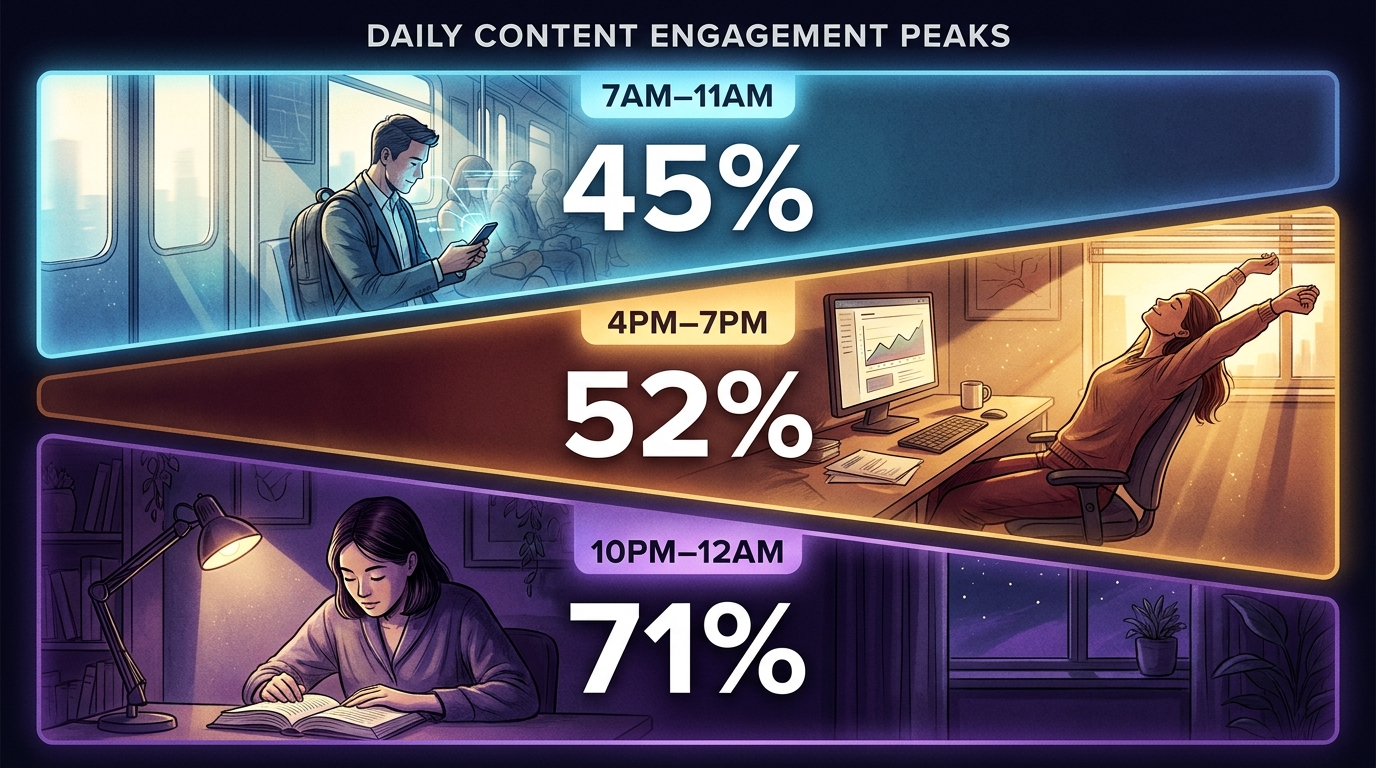
When your best traffic arrives. Day-of-week and hour-of-day patterns that tell you when to publish, when to promote, and when your audience is actually paying attention.
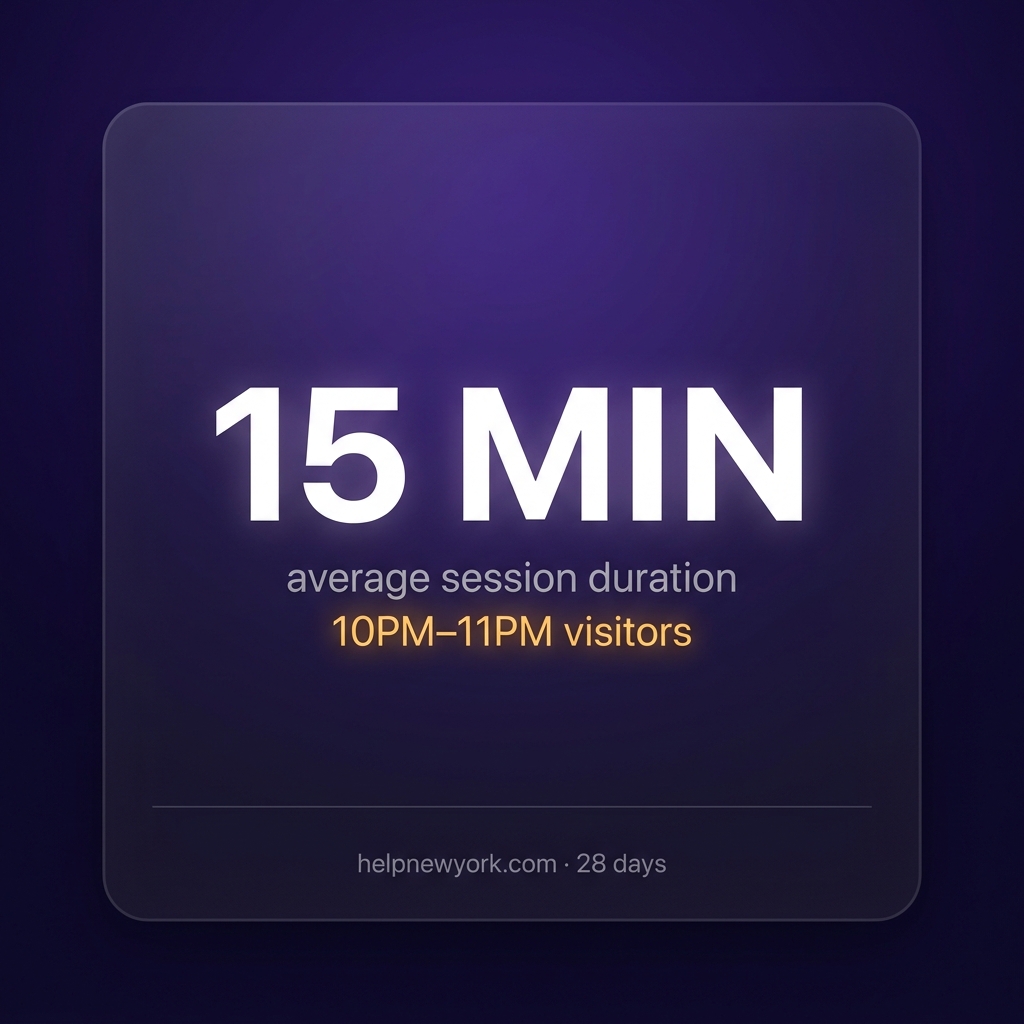
15 minutes Average session duration for 10PM–11PM visitors — your hidden audience
COMING SOON — $27
Most Teams Publish When It’s Convenient
This kit tells you when your audience is actually paying attention — and those two things are rarely the same. One session against Analytics Advisor reveals your peak engagement windows by day and hour, your dead zones, and a hidden late-night audience almost no one is writing for.
FIELD FINDING — LIVE SESSION
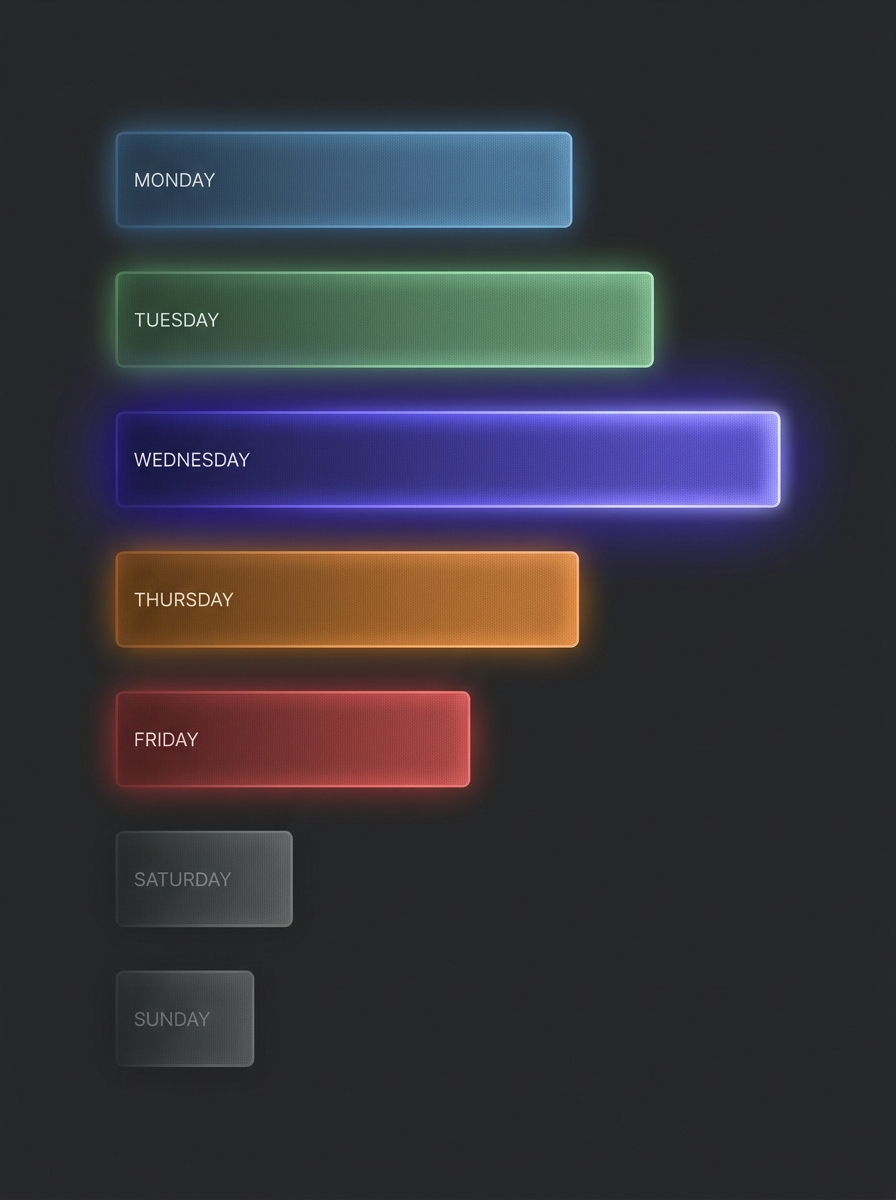
Wednesday produced the highest engagement rate and longest average session duration. Saturday and Sunday dropped below 20% engagement. The gap between best and worst day is larger than most teams expect.
What’s Inside
7 copy-paste queries for Analytics Advisor — one session
Day-of-week engagement ranking — all 7 days scored
Hour-of-day peak window identification — morning, afternoon, late night
Dead zone diagnosis — high volume, low quality windows
Late-night audience profiling — the segment nobody is writing for
Concrete publish timing recommendation from your actual property data
What You Need
Claude-in-Chrome — free from Anthropic
Editor or Analyst access to a GA4 property
Analytics Advisor (BETA) enabled
30–60 minutes
THE KEY INSIGHT
The scheduling insight from this kit is immediate and free to act on. You do not need to create new content. You need to redistribute what you already have into the windows where your audience is actually paying attention.
Individual Kit — Instant PDF Download
COMING SOON — $27
No subscription.
BETTER VALUE — BUNDLE
Get All 6 Kits for $97
Every GA4 intelligence methodology in one purchase. Save $65.
Are your keywords landing on the right pages? Diagnose intent mismatch between what users searched and what they found — and surface what your audience wanted and could not find.
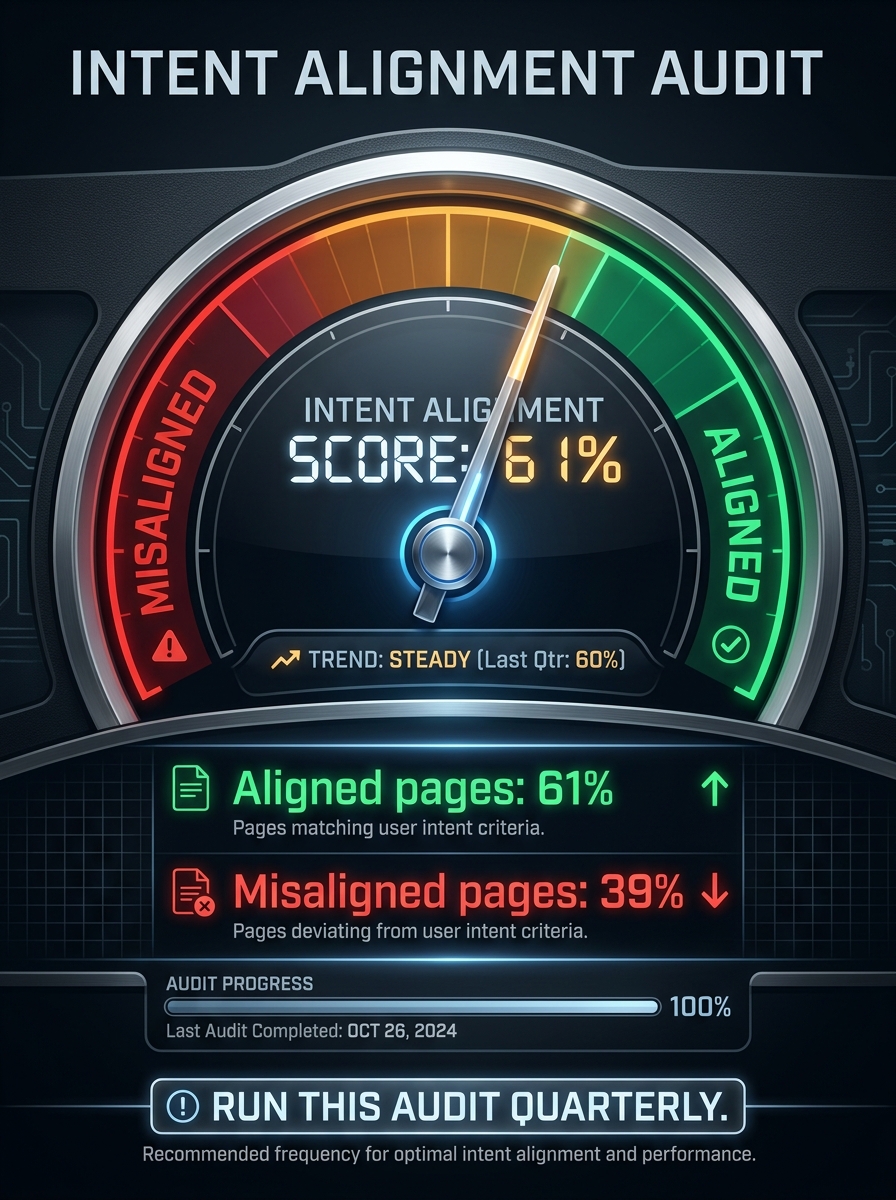
39% misalignedOf organic landing pages delivering the wrong content for the search intent
COMING SOON — $27
A Page Can Rank Well and Still Fail
If the user searched “how to apply for X” and landed on a page about “what X is,” they bounce immediately. GA4 captures this failure even when you cannot see the original query. High organic traffic with low engagement is almost always intent mismatch in disguise.
CORE INSIGHT
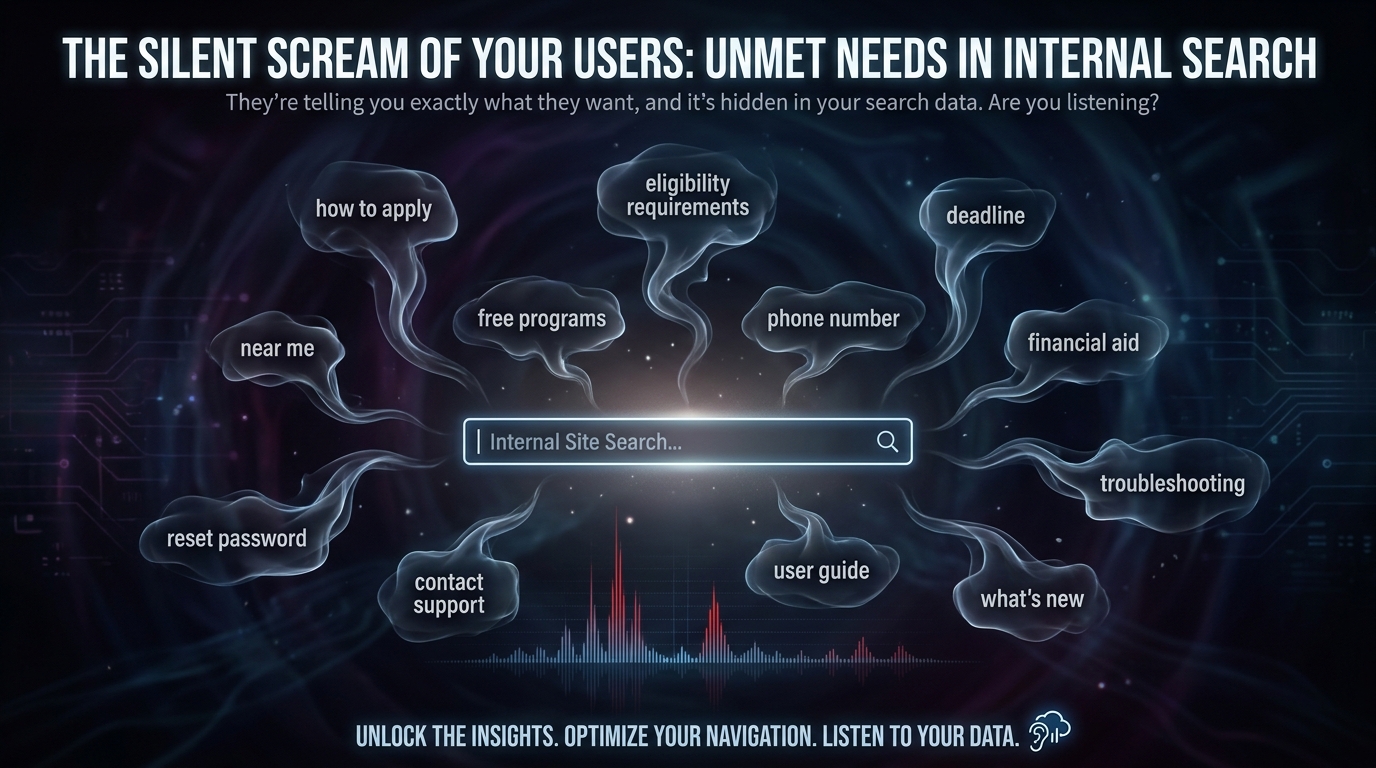
Internal site search is the most underused intelligence in GA4. When a user searches your site, they are explicitly telling you what they wanted and could not find. This kit makes that signal visible and actionable.
What’s Inside
7 copy-paste queries for Analytics Advisor — one session
Organic traffic to engagement mismatch identification
Internal search term extraction — top 20 with gap analysis
Zero-result internal search diagnosis
Homepage navigation gap analysis
Intent alignment score — baseline metric to track quarterly
Content repositioning recommendation framework
What You Need
Claude-in-Chrome — free from Anthropic
Editor or Analyst access to a GA4 property
Analytics Advisor (BETA) enabled
30–60 minutes
THE KEY INSIGHT
Internal search tells you what people search on your site after they arrived. That is a different and more valuable signal than anything a keyword tool produces — and it is sitting in your GA4 right now.
Are your keywords landing on the right pages? Diagnose intent mismatch between what users searched and what they found — and surface what your audience wanted and could not find.
39% misalignedOf organic landing pages delivering the wrong content for the search intent
COMING SOON — $27
A Page Can Rank Well and Still Fail
If the user searched “how to apply for X” and landed on a page about “what X is,” they bounce immediately. GA4 captures this failure even when you cannot see the original query. High organic traffic with low engagement is almost always intent mismatch in disguise.
CORE INSIGHT
Internal site search is the most underused intelligence in GA4. When a user searches your site, they are explicitly telling you what they wanted and could not find. This kit makes that signal visible and actionable.
What’s Inside
7 copy-paste queries for Analytics Advisor — one session
Organic traffic to engagement mismatch identification
Internal search term extraction — top 20 with gap analysis
Zero-result internal search diagnosis
Homepage navigation gap analysis
Intent alignment score — baseline metric to track quarterly
Content repositioning recommendation framework
What You Need
Claude-in-Chrome — free from Anthropic
Editor or Analyst access to a GA4 property
Analytics Advisor (BETA) enabled
30–60 minutes
THE KEY INSIGHT
Internal search tells you what people search on your site after they arrived. That is a different and more valuable signal than anything a keyword tool produces — and it is sitting in your GA4 right now.
Where users leave your site — and what it means. Distinguish satisfied exits from abandoned ones, find your dead-end pages, and map your internal linking gaps.
85% exit rate With 3m 20s duration — a satisfied exit, not a problem to fix
COMING SOON — $27
Not All Exits Are Failures
A user who reads your guide for three minutes and then leaves got exactly what they needed. A user who hits your page and bounces in four seconds got nothing. GA4 treats them identically. This kit teaches you to tell the difference.
FIELD FINDING — LIVE SESSION
The NYC Summer Internships page has an 85% exit rate AND a 3m 20s average session. That is a satisfied exit. Adding CTAs to interrupt it would reduce performance, not improve it.
Satisfied exit.
Abandoned exit.
What’s Inside
7 copy-paste queries for Analytics Advisor — one session
Satisfied vs abandoned exit classification framework
Dead-end page audit — pages with zero internal link clicks
Homepage navigation effectiveness score
Internal link opportunity map — Advisor generates specific page pairings
Exit-to-content-gap mapping for abandoned pages
What You Need
Claude-in-Chrome — free from Anthropic
Editor or Analyst access to a GA4 property
Analytics Advisor (BETA) enabled
30–60 minutes
THE KEY INSIGHT
The internal link fix is the highest ROI action from this kit. No new content, no design changes, no developer. Add one sentence with a link on an abandoned exit page pointing to a relevant high-engagement page.
Individual Kit — Instant PDF Download
COMING SOON — $27
No subscription.
BUNDLE — ALL 6 KITS
Get All 6 Kits for $97
Every GA4 intelligence methodology in one purchase. Save $65.
The complete 4-session Claude-in-Chrome methodology for extracting per-AI audience intelligence from Google Analytics 4 — and turning it into content every AI model cites.
64% vs 21% Claude.ai engagement rate vs ChatGPT — same site, same pages
COMING SOON — $27
CORE FINDING
AI citations are downstream of search quality, not upstream. Pages that win Bing and Yahoo with long-form depth get cited by AI models as a derivative effect.
What’s Inside
Full 4-session query architecture — 26 queries, copy-paste ready
Pre-flight checklist and capture protocol for each session
AI citations are downstream of search quality — not upstream. The path to getting cited by ChatGPT, Claude, and Copilot is not to optimize for AI retrieval patterns. It is to build pages that win on Bing and Yahoo with enough depth that AI models treat them as authoritative sources.
Individual Kit — Instant PDF Download
COMING SOON — $27
No subscription. One-time purchase.
BETTER VALUE
Get All 6 Kits for $97
The complete Books for Bots library. Every GA4 intelligence methodology in one purchase.
For the past several weeks I have been running a live experiment on helpnewyork.com: using Claude-in-Chrome to interrogate Google’s Analytics Advisor inside GA4, session by session, until I had a complete behavioral profile of every AI platform sending traffic to the site.
What came out of it is not what I expected. I expected traffic data. I got a content strategy.
The Setup
The setup for tracking AI referral traffic.
Claude-in-Chrome is Anthropic’s browser extension that lets Claude operate directly inside your browser — reading pages, clicking elements, filling inputs, capturing output. Analytics Advisor is Google’s Gemini-powered chat interface built into GA4, available to English-language accounts since December 2025. It answers natural language questions about your property data with charts, tables, and narrative interpretation.
The combination is unusual. You are using one AI (Claude) to systematically interrogate another AI (Gemini) about your site’s data, then synthesizing what comes back into strategy. The token budget for the heavy data reasoning stays inside Google’s infrastructure. Claude handles the query architecture, the capture protocol, and the synthesis.
I ran four structured sessions across two sittings, using a specific sequence of queries built to extract progressively deeper signal. Session 1 established baseline traffic. Session 2 closed gaps and confirmed AI referral data existed. Session 3 was the AI deep dive. Session 4 was velocity and geography.
What the Data Showed
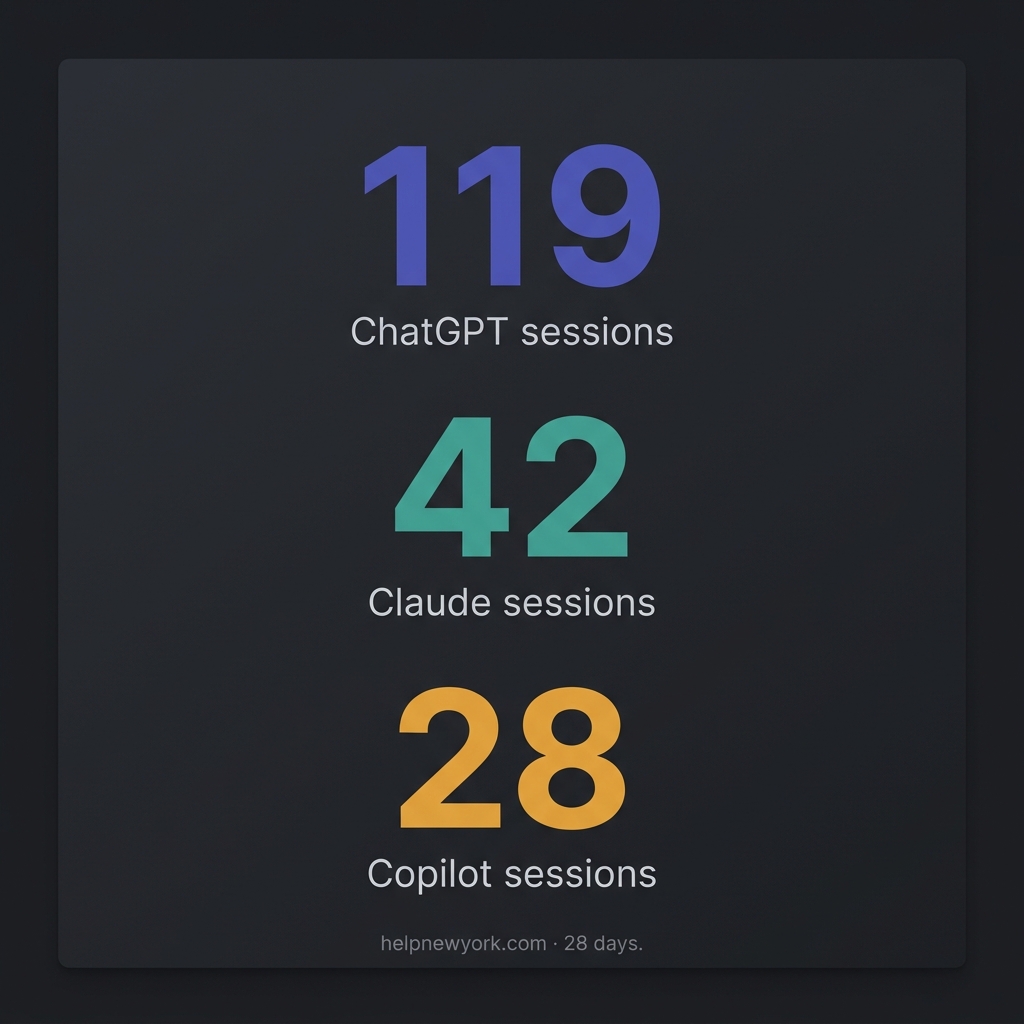
Three AI platforms were sending meaningful traffic to helpnewyork.com during the 28-day window: ChatGPT, Claude, and Copilot. The behavioral profiles were so different from each other that treating them as a single “AI traffic” segment would have produced wrong conclusions.
Claude.ai traffic showed a 64% engagement rate and an average session duration of over 3 minutes. The dominant landing page was an NYC Summer Internships guide, accounting for over 60% of all Claude sessions. Geographic concentration was academic: Ithaca (Cornell), State College (Penn State), Washington DC. The users arriving from Claude were reading to act — they needed specific information, they found it, they stayed.
ChatGPT traffic showed a 21% engagement rate and an average session of 24 seconds. The top landing page was a cherry blossom guide. The users were fact-grabbing: they asked ChatGPT where to see cherry blossoms in New York, got a citation, clicked through, confirmed the location, and left. The content served its purpose in under half a minute.
Copilot traffic was between the two: 46% engagement, roughly 2-minute sessions, desktop-heavy, concentrated in New York’s suburbs. The top pages were civic services — SNAP benefits, tenant rights, transit discounts. These users were in planning mode, researching before they decided or applied.
The Finding That Reframes GEO
The finding that reframes GEO.
The cross-AI page overlap query was the most important one in the entire four-session arc. I asked Analytics Advisor which pages appeared in the top landing pages for more than one AI source. Only one real content page appeared in all three: the cherry blossom guide.
The obvious interpretation is that the cherry blossom guide was “AI-optimized.” The actual interpretation, once you look at the full traffic breakdown, is the opposite. Bing drove 59 sessions to that page. Yahoo drove 16 at 75% engagement and a 3-minute 46-second average session. DuckDuckGo drove 35. The combined AI traffic to that page was 32 sessions — 17% of total. The AI platforms were citing it because traditional search engines had already validated it as the highest-quality answer in the index.
AI citations are downstream of search quality, not upstream. The path to getting cited by ChatGPT, Claude, and Copilot is not to optimize for AI retrieval patterns. It is to build pages that win on Bing and Yahoo with enough depth that AI models treat them as authoritative sources. The GEO play is a traditional SEO play with better content.
The Content Strategy That Follows
The content strategy that follows.
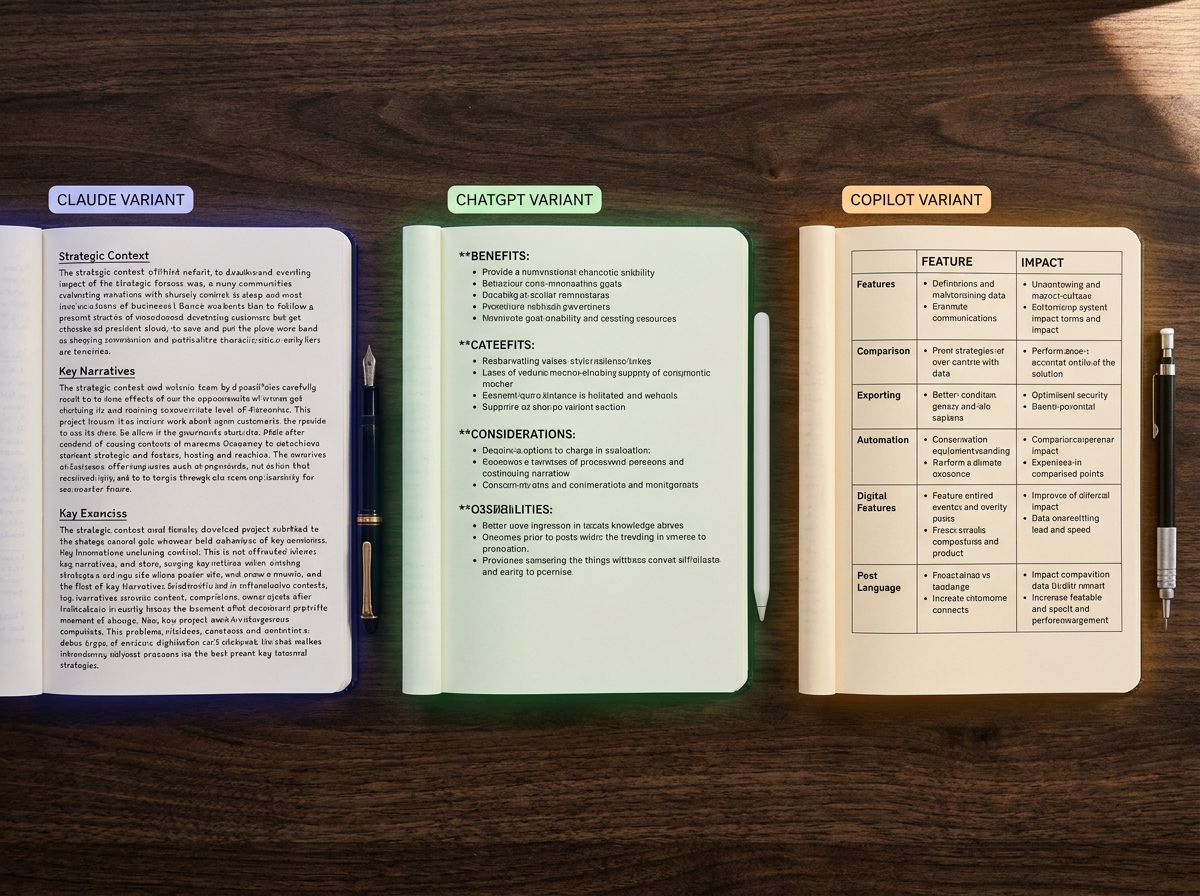
Once you have the per-AI behavioral profiles, you have a content variant framework. The same article can be written in three structural architectures, each tuned to how one AI model retrieves and presents information.
The Claude variant is dense and process-oriented. Headers, eligibility criteria, numbered steps, official program names. Built for the student or researcher who arrived with a specific question and needs a complete answer they can act on.
The ChatGPT variant is a scannable list. Named items, one specific detail per item, direct answer in the first two sentences. Built for the user who will spend 24 seconds on the page and needs the answer immediately or they’re gone.
The Copilot variant is comparison and planning framing. What to know before you go, Option A versus Option B, cost context, logistics. Built for the desktop user doing research before they make a decision.
The core article is the same. The architecture is different. The AI that cites you depends on which structure you used.
The Methodology Is the Product
The query sequence I developed across these four sessions is a repeatable extraction methodology. It works on any GA4 property with Analytics Advisor enabled. The intelligence it produces — per-AI audience profiles, geographic signals, velocity trends, cross-AI content overlap — is not available through DataForSEO, SpyFu, or GSC. It requires Gemini’s reasoning layer operating on top of your property data, orchestrated by a structured query architecture.
I have packaged the complete methodology as a downloadable kit: the full query architecture across all four sessions, the capture protocol, the content variant framework, and the flags to escalate before your next content sprint. It is called Books for Bots: GA4 AI Referral Audit Kit.
The free version covers Session 3 alone — the AI deep dive queries that surface your ChatGPT, Claude, and Copilot traffic split. That alone will show you something most site owners have never seen: which AI is sending them traffic, to which pages, and how engaged those users actually are.
The full kit covers all four sessions and includes the content variant framework that translates the behavioral data into a writing system.
Both are available at tygartmedia.com. What you do with the data after that is yours.
Part 2 of 2. In the first post I showed that Claude, ChatGPT, Perplexity, Copilot, Gemini, NotebookLM, and Kagi collectively sent tygartmedia.com at least 94 new readers in 29 days — and that Claude alone is our #4 traffic source. That is the headline. What follows is the interesting part: when you filter the landing-page report one AI model at a time, the three major assistants cite completely different kinds of pages, and the pattern is actionable.
Claude cites a small number of pages, a lot of times
Claude cites a small number of pages, a lot of times.
Claude.ai sent 79 sessions across 63 users to 16 distinct pages. Two pages ate more than half of it:
#
Page
Sessions
% of Claude traffic
Avg Time
1
/claude-student-discount
22
27.9%
35s
2
/anthropic-console
21
26.6%
11s
3
(not set)
13
16.5%
5s
4
/claude-edu
4
5.1%
6s
5
/claude-pro-vs-chatgpt-plus
4
5.1%
7s
6
/claude-code-on-vertex-ai-gcp
3
3.8%
3s
7
/claude-desktop
2
2.5%
40s
8
/how-to-install-claude-code
2
2.5%
2s
9
/claude-4-deprecation
1
1.3%
1m 07s
10
/claude-managed-agents-pricing-cost-analysis
1
1.3%
1m 38s
The two biggest pages, /claude-student-discount and /anthropic-console, are 54.5% of all Claude-referred traffic to the site. Those are extremely specific query shapes — “how do students get Claude Pro free” and “how do I access the Anthropic Console” — and Claude has apparently decided our pages are the canonical answer for both.
The engagement twist is worth staring at. The two biggest Claude-referred pages have the worst time-on-page: 35 seconds and 11 seconds. The two pages that got a single Claude visit each — /claude-managed-agents-pricing-cost-analysis and /claude-4-deprecation — got 1 minute 38 seconds and 1 minute 7 seconds of real read time. The pattern is clean. When Claude can extract the answer directly into its chat window, users click through briefly to verify and leave. When the answer is deeper than Claude can summarize, readers stay to actually read. Both behaviors are valuable and both are measurable.
ChatGPT cites broadly, favors “X vs Y” content, and (oddly) sends geographic traffic
ChatGPT’s footprint is shaped differently. 16 sessions across 14 users to 13 distinct pages — almost every page received exactly one visit, which is the signature of a model citing a wide range of sources once each rather than reaching for a favorite.
Two patterns in that list. First, ChatGPT appears to cite us disproportionately for model comparisons — grok-vs-claude, opus-4-7-vs-gpt-5-4-vs-gemini-3-1-pro, and the cross-model claude-pro-vs-chatgpt-plus page. Second, and stranger, ChatGPT sent visits to two hyperlocal Pacific Northwest pages: an Everett waterfront guide and a Hood Canal shellfish season page. That is ChatGPT using our site as a reference source for geographic queries, which is not a pattern any other model shows.
The hidden gem: /claude-computer-use-tutorial received one ChatGPT referral and that referral stayed for 2 minutes 7 seconds. ChatGPT appears willing to cite long-form technical tutorials in a way Claude does not.
Perplexity treats us like a research database
Perplexity sent 12 sessions across 10 users to 9 pages — the most evenly distributed of the three and the only model that cites people, founders, and company-history content.
Page
Sessions
Avg Time
/anthropic-founders-2
2
17s
/claude-code-on-vertex-ai-gcp
2
54s
/claude-student-discount
2
0s
/claude-desktop
1
4s
/claude-team-plan
1
0s
/how-to-install-claude-code
1
0s
/restoration-team-training-claude-cowork
1
0s
Perplexity is the only model that pulled visits on /anthropic-founders-2, which implies Perplexity is fielding a different query shape — something closer to “who founded Anthropic” than “how do I use Claude.” Perplexity is also the only model that surfaced the very niche B2B page /restoration-team-training-claude-cowork. That is a long-tail, vertical-specific query and Perplexity cited us as the source. That is exactly the behavior you would hope for from a research-flavored assistant.
The three models have completely different citation personalities
The three models have completely different citation personalities.
Once you lay the three patterns side by side, the strategy falls out of the page.
Claude.ai favors short, factual, access-related pages. Product info, pricing, how-to-access. If you want more Claude citations, write more narrow “how do I do this one specific thing” pages.
ChatGPT favors comparisons and long-tail references. X vs Y, alternatives, and — unexpectedly — some geographic content. If you want more ChatGPT citations, write more “X vs Y” posts with tight comparison tables.
Perplexity favors people, history, and niche research. Founders, company background, domain-specific tutorials. If you want more Perplexity citations, write more research-flavored background pieces.
This is the single most practical insight in the data set. Most people talk about “AI SEO” as if it is one thing. It is three things, at minimum, and the content shape that wins one model will not automatically win the other two.
The crown jewel: one page, 17% of all AI-referred traffic
The clearest cross-model winner on the site is /claude-student-discount. Claude sent 22 sessions. ChatGPT sent 3. Perplexity sent 2. Combined that is 27 sessions — roughly 17% of all AI-referred traffic we received in 29 days, from a single URL. No other page on the site is cited by all three major LLMs in meaningful volume.
There is a playbook inside that one data point. The page works because the query “how do I get Claude for free as a student” is an extremely high-frequency question across every chat surface, and the page happens to be structured the way LLMs like to cite: a short, direct answer near the top, specific eligibility rules in a scannable block, and no wall of context before the reader gets to the fact. That structural recipe — front-load the answer, make the facts liftable, keep the page narrow — is repeatable.
The bigger finding: 90% of our Claude content is invisible to AI
tygartmedia.com has more than 250 Claude-related articles. Exactly 25 of them show up in the AI-referral data set at all. The 90% that do not get cited are not low-quality — several of them have strong engagement from regular search traffic:
/claude-managed-agents-complete-pricing-guide-2026 — 17 sessions at ~1 minute from search, zero AI citations
/notion-knowledge-base-for-claude — 10 sessions at 1m 23s, uncited
/claude-rate-limits — classic FAQ shape, 6 sessions, not cited
/claude-md-playbook — 1 session at 2m 33s, zero AI pickup
The full /claude-cowork-* family of 12+ pages, almost entirely invisible to every model
The difference between an AI-cited page and an AI-invisible page is rarely the quality of the content. It is the shape. Pages that get cited have an early summary, short headings, bulleted facts, and a quotable direct-answer sentence. Pages that do not get cited tend to open with context, build up to the answer, and bury the quotable line in paragraph 9.
The content-cluster scorecard
Cluster
Approx. Pages
Approx. Sessions
Engagement
AI Citations
Claude pricing & access
~10
~160
Mixed
High
Claude managed agents
~12
~130
Strong (25s–1m)
Low
Claude Code
~8
~60
High (18s–3m)
Moderate
Model comparisons (X vs Y)
~10
~45
Very high (1–7 min)
Moderate
Anthropic people/company
~8
~30
Medium
Moderate
Claude how-to / tutorials
~20
~50
Medium
Low
Claude Cowork family
~15
~40
Very low (0–10s)
Almost none
Two clusters deserve action. The Claude Cowork family is a content swamp — 15 pages, low traffic, no AI citations, and 0–10 second engagement on the traffic that does land. That cluster should be consolidated into two or three flagship posts and the rest redirected. The model comparisons cluster is the opposite: low volume but 1–7 minutes of engagement and cross-model citations. One well-researched comparison post outperforms ten mediocre explainers on every metric that matters here.
The playbook, in one list
The playbook, in one list.
Write more narrow single-answer pages. Candidates I would ship next: /claude-web-search, /claude-api-keys, /claude-max-plan-vs-pro, /how-to-cancel-claude, /claude-mobile-app, /claude-desktop-vs-web, /claude-subscription-refund. Each is ~600 words, answer-first, scannable. That is the shape Claude cites.
Add a Quick Answer block to the top of every long-form piece. Two or three sentences. Quotable. That alone moves a real share of our invisible content into AI-citation range.
Invest in comparison posts for ChatGPT pickup. We already know ChatGPT cites our existing X-vs-Y content. Ship more of them, with tight tables.
Write more founder/history/background pieces for Perplexity pickup. Research-flavored. Dates, names, primary sources.
Consolidate the Cowork cluster. Two or three flagship pages, everything else redirected.
Ship a permanent AI-Referral dashboard in GA4. Segment on all seven assistant domains. Watch it weekly. This is now a first-class channel.
Frequently asked questions
What kinds of pages does Claude.ai cite most often?
Based on the tygartmedia.com data, Claude.ai disproportionately cites short, factual, access-related pages — product info, pricing, how-to-access, and eligibility details. On our site, two pages (/claude-student-discount and /anthropic-console) accounted for 54.5% of all Claude-referred traffic in a 29-day window.
What kinds of pages does ChatGPT cite most often?
ChatGPT’s citation pattern favors comparison and long-tail reference pages — “X vs Y” posts like Grok vs Claude, model-to-model comparisons, and, surprisingly, some geographic and local content. ChatGPT tends to cite many pages once each rather than concentrating on a small set.
What kinds of pages does Perplexity cite most often?
Perplexity cites research-flavored content — founders and company history, domain-specific tutorials, and niche B2B pages. It is the only major AI assistant that sent traffic to our Anthropic founders page and to a vertical-specific training page in our data set.
Why does the same page get different citation volume from different AI models?
Because each assistant is answering a slightly different distribution of queries. Claude is most often used for “how do I use this product” questions and favors narrow how-to pages. ChatGPT receives more comparison and alternative-seeking queries. Perplexity skews toward research and background questions. A page that is the best answer for one query type will not automatically be the best answer for another.
How do I structure a page to get cited by AI assistants?
Lead with a direct, quotable answer in the first paragraph. Use short scannable headings. Keep facts in bulleted or tabular form. Include an explicit FAQ block with question-shaped subheadings. Keep the page narrow — one topic, one canonical answer — rather than a sprawling multi-topic explainer.
The bigger picture
The meta-insight worth sitting with: we are currently being cited inside Claude’s internal answer graph for “Claude student discount” because a human sat down and wrote a clear, narrow page about it. That is almost the entire game for publishers for the next three years. Most of the web has not noticed yet. We noticed, and now we have a measurement stack to act on what we noticed.
If you are a publisher, the thing to do this week is boring and powerful: segment your GA4 on the seven AI-assistant domains from Part 1, sort your landing pages by AI-referral volume, and look at the pages that are winning. They will have a shape. Copy it.