Tag: Anthropic

  • The Real Monthly Cost of Running Claude Managed Agents 24/7

    The Real Monthly Cost of Running Claude Managed Agents 24/7

    Last refreshed: October 5, 2026 (Pacific)

    Tygart Media Strategy
    Volume Ⅰ · Issue 04Quarterly Position
    By Will Tygart
    • Long-form Position
    • Practitioner-grade

    If you’re considering running Claude Managed Agents around the clock, you want a number. Not “it depends.” An actual number you can put in a budget. Here’s the math, worked out by scenario, with the honest caveats about where the real costs are.

    The Formula
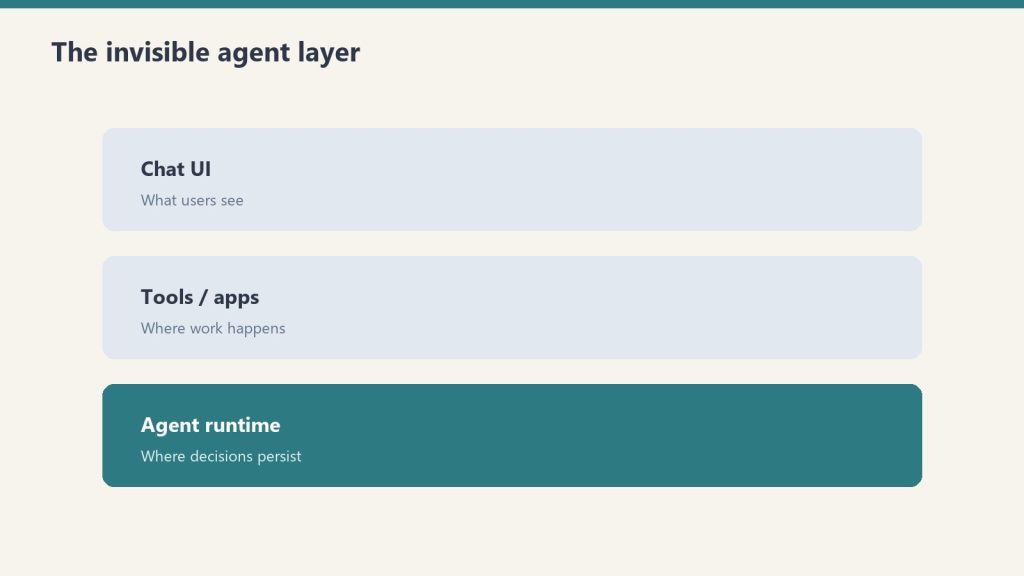
    Three stacked layers: chat UI, tools, agent runtime
    The formula.

    Total monthly cost = (Active session hours × $0.08) + token costs + optional tool costs

    The $0.08/session-hour charge only applies during active execution. Idle time — waiting for input, tool confirmations, external API responses — doesn’t count. This matters significantly for 24/7 workloads, because very few agents are active 100% of the time even when “running around the clock.”

    The Maximum Theoretical Cost

    Scenario: Agent running continuously, zero idle time, 24 hours a day, 30 days a month.

    • Session runtime: 24 hrs × $0.08 × 30 days = $57.60/month
    • Token costs: separate, highly variable (see below)

    $57.60/month is the ceiling on session runtime charges. You cannot pay more than this in session fees under any 24/7 scenario. But here’s the reality: that ceiling assumes zero idle time across the entire month, which doesn’t describe any real production agent.

    Realistic 24/7 Scenarios
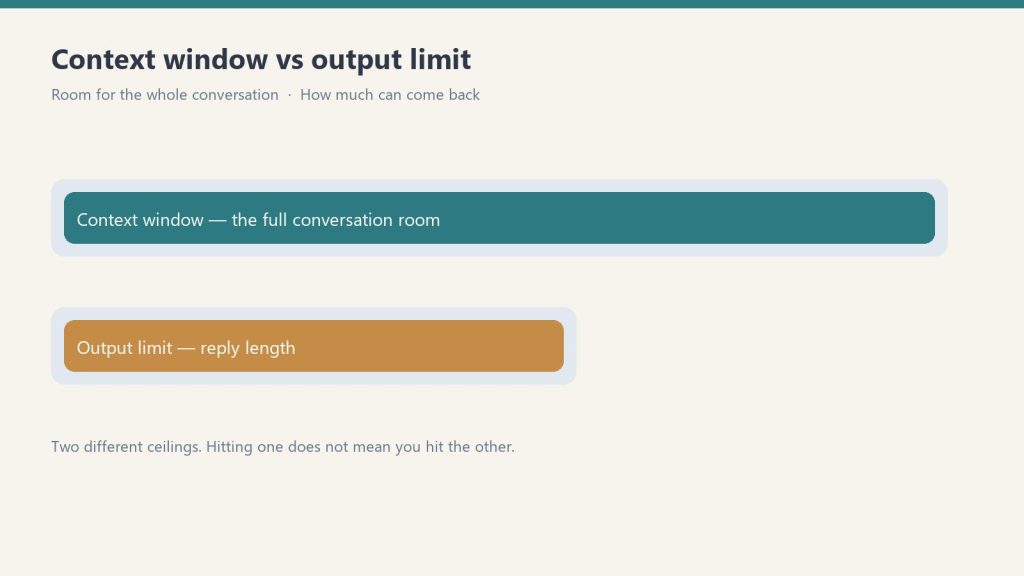
    Diagram comparing a long context window bar with a shorter output limit bar
    Realistic 24/7 scenarios.

    Monitoring Agent (High Idle Ratio)

    Runs continuously watching for triggers — error alerts, specific data patterns, incoming requests. Activates on trigger, processes, returns to monitoring state.

    • Assumption: 5% active execution time (watching 95% of the time, executing 5%)
    • Active hours: 24 × 30 × 0.05 = 36 hours/month
    • Session runtime: 36 × $0.08 = $2.88/month
    • Token costs: low — moderate bursts on trigger events
    • Realistic total: $5–15/month

    Customer Support Agent (Business Hours Active)

    “24/7” in the sense of always-available, but actual request volume concentrates in business hours. Waits for tickets, processes them, waits again.

    • Assumption: 8 hours/day active execution, 16 hours waiting
    • Active hours: 8 × 30 = 240 hours/month
    • Session runtime: 240 × $0.08 = $19.20/month
    • Token costs: depends heavily on ticket volume and average length
    • At 100 tickets/day with moderate length: likely $30–80/month in tokens
    • Realistic total: $50–100/month

    Continuous Autonomous Pipeline

    Batch processing agent that runs continuously through a queue with minimal waiting — the closest to true 24/7 active execution.

    • Assumption: 20 hours/day truly active (4 hours queue exhaustion/maintenance)
    • Active hours: 20 × 30 = 600 hours/month
    • Session runtime: 600 × $0.08 = $48/month
    • Token costs: high — continuous processing means continuous token consumption
    • This is where tokens become the dominant cost driver by a significant margin
    • Realistic total: $200–500+/month (tokens dominate)

    The Real Variable: Token Costs

    For any 24/7 workload that’s genuinely busy, token costs will substantially exceed session runtime costs. The math:

    A moderately active agent processing 10,000 input tokens and 2,000 output tokens per hour with Claude Sonnet 5.5:

    • Input: 10,000 tokens × $2/million = $0.02/hour
    • Output: 2,000 tokens × $10/million = $0.02/hour
    • Token cost: $0.04/hour vs. session runtime of $0.08/hour — the runtime charge now exceeds token cost at this volume

    Scale to 100,000 input tokens and 20,000 output tokens per hour (a busy processing agent):

    • Input: $0.30/hour; Output: $0.30/hour
    • Token cost: $0.60/hour vs. session runtime of $0.08/hour — tokens are 7.5× the runtime charge

    The session runtime fee is flat and bounded. Token costs scale with workload volume. For high-volume 24/7 agents, optimize token efficiency (prompt caching, context management, output brevity) before worrying about the session runtime charge.

    Prompt Caching Changes the Token Math

    If your agent has a large, stable system prompt — common in agents with extensive tool definitions or knowledge bases — prompt caching dramatically reduces input token costs. Cache hits cost a fraction of base input rates. For a 24/7 agent with a 20,000-token system prompt hitting the same context repeatedly, caching that prompt can cut input costs by up to 95% (cache reads run $0.20/MTok). The session runtime charge is unchanged, but the total cost picture improves significantly.

    The Budget Summary

    Desk with laptop, checklist notebook, and billing card ready before creating an Anthropic API key
    The budget summary.
    Agent Type Runtime/mo Typical Total
    Monitoring / low activity ~$3 $5–15
    Support agent (business hours volume) ~$19 $50–100
    Continuous processing pipeline ~$48 $200–500+
    Theoretical maximum (zero idle) $57.60 Unbounded (tokens)

    Complete pricing reference: Claude Managed Agents Pricing Guide. How idle time affects billing: Idle Time and Billing Explained. All questions: FAQ Hub.

    Run your own 24/7 cost model from the Anthropic Console — API keys, billing, and a token-to-dollar cost estimator.

    What to do next

    Now that you have the cost math — here’s how to choose and implement

    You now know what Managed Agents costs at scale. The next decision is whether it’s the right architecture vs. OpenAI’s equivalent — and what the implementation actually looks like in practice.

  • Claude Managed Agents vs. OpenAI Agents API — A Direct Comparison

    Claude Managed Agents vs. OpenAI Agents API — A Direct Comparison

    >

    TL;DR — Pick one in 30 seconds

    Choose Claude Managed Agents for zero-infra, fast production deployment. Choose OpenAI Agents API if you need multi-model flexibility or already run on OpenAI infrastructure.

    Feature Claude Managed Agents OpenAI Agents API
    Model lock-in Claude only GPT-4o, o3 — OAI only
    Setup complexity Zero infra — fully managed SDK — you build the harness
    Memory Built-in (public beta, May 2026) Manual via vector DB
    Multiagent Native (lead + specialists) Swarm/SDK patterns
    Pricing $0.08/session-hr + tokens Token-only (no session fee)
    Best for Fast production, Claude-native Multi-model, existing OAI infra

    Model Accuracy Note — Updated May 2026

    Current flagship: Claude Opus 4.7 (claude-opus-4-7). Current models: Opus 4.7 · Sonnet 4.6 · Haiku 4.5. Claude Opus 4.6 referenced in this article has been superseded. See current model tracker →

    Tygart Media Strategy
    Volume Ⅰ · Issue 04Quarterly Position
    By Will Tygart
    • Long-form Position
    • Practitioner-grade

    You’re evaluating hosted agent infrastructure. Both Anthropic and OpenAI have one. Before you commit to either, here’s what’s actually different — not the marketing version, the architectural and pricing version.

    Bottom Line Up Front

    If your stack is Claude-native and you want to get to production fast without building orchestration infrastructure, Managed Agents is hard to beat. If you need multi-model flexibility or have OpenAI deeply embedded in your stack, the calculus changes. Lock-in is real on both sides.

    Still Deciding?

    I’ve run both. Email me your use case and I’ll tell you which one fits.

    No pitch. If Claude isn’t the right call for what you’re building, I’ll tell you that too.

    Email Will → will@tygartmedia.com

    What Each Product Is

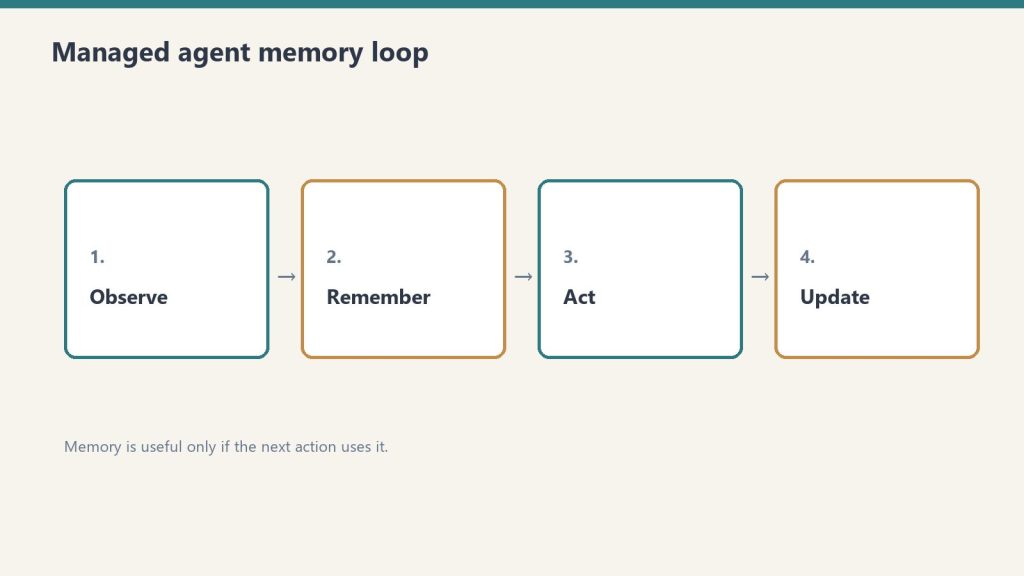
    Four-step loop: observe, remember, act, update for managed agents
    What each agents product is.

    Claude Managed Agents

    Anthropic’s hosted runtime for long-running Claude agent work. You define an agent (model, system prompt, tools, guardrails), configure a cloud environment, and launch sessions. Anthropic handles sandboxing, state management, checkpointing, tool orchestration, and error recovery. Launched April 8, 2026 in public beta.

    OpenAI Agents API

    OpenAI’s hosted agent infrastructure layer, launched earlier in 2026. Provides similar capabilities: hosted execution, tool integration, multi-agent coordination. Supports multiple OpenAI models (GPT-4o, o1, o3, etc.).

    Model Flexibility

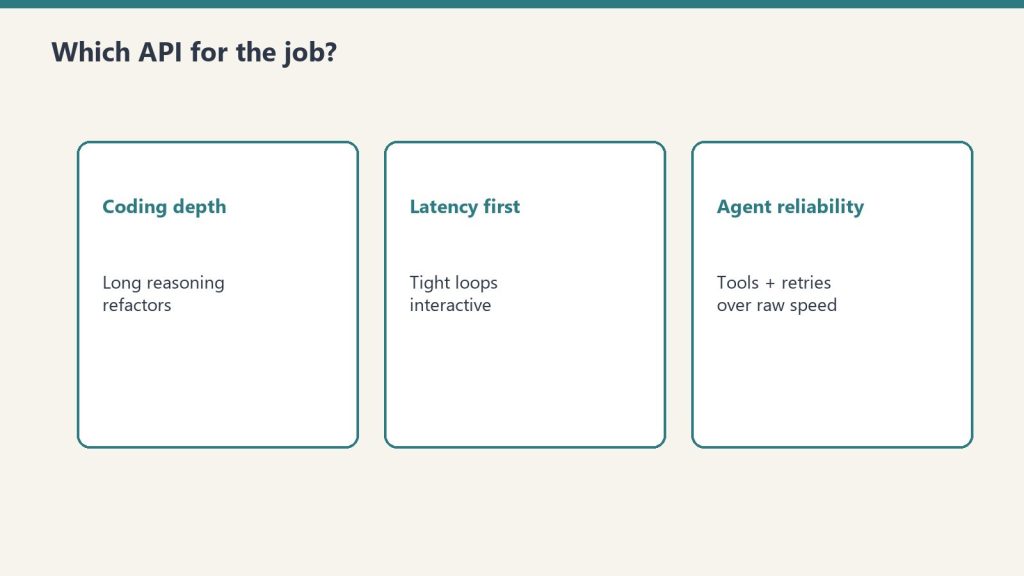
    Three cards: coding depth, latency first, agent reliability
    Model flexibility compared.

    Managed Agents: Claude models only. Sonnet 4.6 and Opus 4.6 are the primary options for agent work. No multi-model mixing within the managed infrastructure.

    OpenAI Agents API: OpenAI models only, but a wider current model lineup (GPT-4o, o1, o3-mini depending on task). Also Claude-only within its own ecosystem — not multi-model in the cross-provider sense.

    The practical implication: If your evaluation is “I want the best model for this specific task regardless of provider,” neither hosted solution gives you that. Both lock you to their provider’s models. The multi-model comparison matters for self-hosted frameworks (LangChain, etc.), not for managed hosted solutions.

    Pricing Structure

    Claude Managed Agents: Standard Claude token rates + $0.08/session-hour of active runtime. Idle time doesn’t bill. Code execution containers included in session runtime — not separately billed.

    OpenAI Agents API: Standard OpenAI token rates + usage-based tooling costs. Pricing structure varies by tool and model tier. Verify current rates at OpenAI’s pricing page — rates have changed multiple times as their agent products have evolved.

    Direct comparison difficulty: Without modeling the same specific workload against both providers’ current rates, headline comparisons mislead. Token rates differ by model, model capabilities differ, and “session runtime” isn’t a category OpenAI uses. Model the workload, not the headline number.

    Infrastructure and Lock-In

    Both solutions create meaningful lock-in. This isn’t a criticism — it’s an honest description of the trade-off you’re making:

    Claude Managed Agents lock-in: Your agents run on Anthropic’s infrastructure with their tools, session format, sandboxing model, and checkpointing. Migrating to OpenAI’s Agents API or self-hosted infrastructure requires rearchitecting session management, tool integrations, and guardrail logic. One developer’s reaction at launch: “Once your agents run on their infra, switching cost goes through the roof.”

    OpenAI Agents API lock-in: Symmetric. Same dynamic in reverse. OpenAI’s session format, tool integration patterns, and infrastructure assumptions create equivalent switching costs to move to Anthropic’s platform.

    The honest framing: You’re not choosing “open” vs. “locked.” You’re choosing which provider’s lock-in you’re more comfortable with, given your existing infrastructure, model preferences, and vendor relationship.

    Data Sovereignty

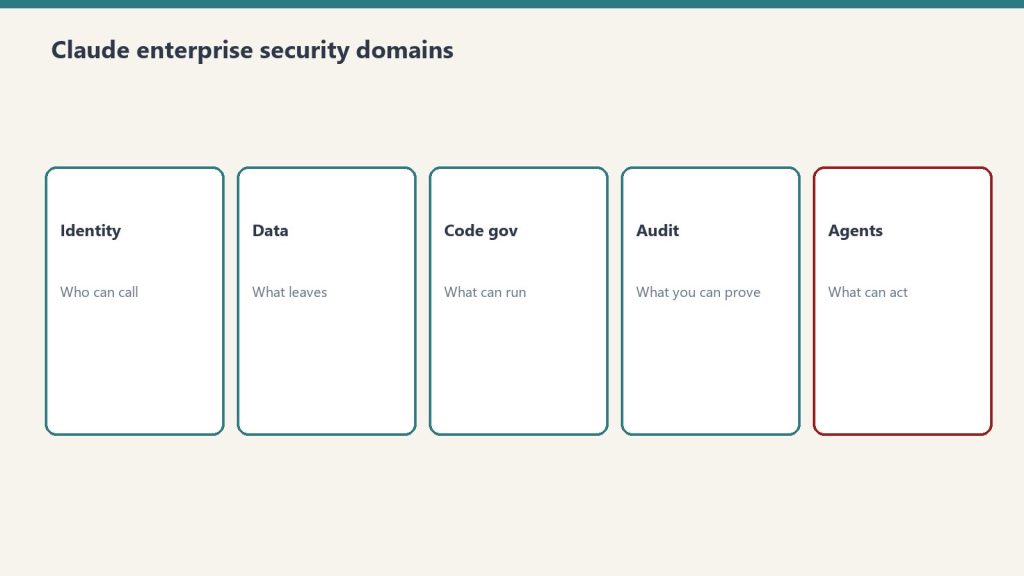
    Five security domains: identity, data, code governance, audit, agents
    Data sovereignty differences.

    Both solutions run your data on provider-managed infrastructure. Neither currently offers native on-premise or multi-cloud deployment for the managed hosted layer. For companies with strict data sovereignty requirements, this is a parallel constraint on both platforms — not a differentiator.

    Production Track Record

    Claude Managed Agents: Launched April 8, 2026. Production users at launch: Notion, Asana, Rakuten (5 agents in one week), Sentry, Vibecode, Allianz. Anthropic’s agent developer segment run-rate exceeds $2.5 billion.

    OpenAI Agents API: Earlier launch gives more time in production, but the product has been revised significantly since initial release. Longer production history, but also more legacy architectural assumptions baked in.

    When to Choose Claude Managed Agents

    • Your stack is already Claude-native (you’re using Sonnet or Opus for most model calls)
    • You want to reach production without building orchestration infrastructure
    • Your tasks are long-running and asynchronous — the session-hour model fits naturally
    • The Notion, Asana, or Sentry integrations are relevant to your workflow
    • You want Anthropic’s specific safety and reliability guarantees

    When to Consider OpenAI’s Agents API Instead

    • Your stack is already heavily OpenAI-integrated (GPT-4o for primary model work, existing tool integrations)
    • You need access to reasoning models (o1, o3) for specific task types — Anthropic’s equivalent is Claude’s extended thinking, which has different characteristics
    • The specific tool integrations in OpenAI’s ecosystem are better matched to your stack
    • You want more production time at scale before committing to a platform

    When to Use Neither (Self-Hosted Frameworks)

    LangChain, LlamaIndex, and similar self-hosted frameworks remain viable — and better — when you genuinely need multi-model flexibility, on-premise execution, or tighter loop control than either hosted solution provides. The trade-off is engineering effort: months of infrastructure work that Managed Agents or OpenAI’s API eliminates.

    Complete pricing breakdown: Claude Managed Agents Pricing Reference. All Managed Agents questions: FAQ Hub. Enterprise deployment example: Rakuten: 5 Agents in One Week.