Tag: AI Use Cases

  • Jared Kaplan: The Physicist Who Discovered AI Scaling Laws

    Jared Kaplan: The Physicist Who Discovered AI Scaling Laws

    Last refreshed: May 15, 2026

    Claude AI · Fitted Claude

    Jared Kaplan is the Chief Science Officer of Anthropic and one of the most consequential AI researchers alive. His 2020 paper on neural scaling laws — co-authored with Sam McCandlish and others — changed how every major AI lab thinks about model development. He is a TIME100 AI honoree, has testified before the U.S. Senate, and Forbes estimates his net worth at $3.7 billion. Yet outside of AI research circles, his name remains largely unknown to the general public.

    Academic Background

    Three stacked layers: chat UI, tools, agent runtime
    Academic background.

    Kaplan holds a PhD in physics, having trained as a theoretical physicist before pivoting to AI. Like several Anthropic co-founders, his physics background proved directly applicable to machine learning — particularly in developing the mathematical frameworks for understanding how AI systems scale. Physics training emphasizes finding simple underlying laws that explain complex phenomena, which is exactly what scaling law research does.

    The Discovery That Changed AI: Scaling Laws

    Diagram comparing a long context window bar with a shorter output limit bar
    The discovery that changed AI — scaling laws.

    In January 2020, Kaplan and colleagues at OpenAI published “Scaling Laws for Neural Language Models” — a paper that demonstrated something remarkable: AI model performance improves in a smooth, predictable way as you increase model size, training data, and compute budget. The relationship follows a power law, meaning you can forecast how capable a model will be before training it, simply by knowing how much compute you’re using.

    This was not merely an academic finding. It gave AI labs a roadmap: if you want a more capable model, you know roughly how much more investment is required. It directly enabled the aggressive scaling strategies that produced GPT-4, Claude 3, and every frontier model since. The paper has been cited tens of thousands of times and is considered foundational to the modern AI race.

    Co-Founding Anthropic

    Desk with laptop, checklist notebook, and billing card ready before creating an Anthropic API key
    Co-founding Anthropic.

    Kaplan was among the seven OpenAI researchers who left in 2021 to found Anthropic. His technical authority — particularly in understanding what training configurations produce which capabilities — made him a natural fit as Chief Science Officer, the role he holds today.

    Recognition and Public Profile

    Kaplan was named to TIME’s 100 Most Influential People in AI, one of a handful of researchers recognized for foundational contributions rather than executive roles. He has testified before the U.S. Senate on AI safety and capabilities — bringing the technical perspective of a researcher who understands, at a mathematical level, how AI systems grow in power.

    Net Worth

    Forbes estimated Kaplan’s net worth at approximately $3.7 billion as of early 2026, reflecting his co-founder equity in Anthropic at the company’s current valuation. If Anthropic proceeds with its targeted IPO in late 2026, this figure could change substantially.

    Related on Tygart Media: Dario Amodei · Anthropic IPO · how to use Claude.

    Frequently Asked Questions

    What is Jared Kaplan known for?

    Jared Kaplan is best known for co-discovering AI scaling laws — the mathematical relationships that predict how AI model performance improves with more compute, data, and parameters. His 2020 paper “Scaling Laws for Neural Language Models” is foundational to modern AI development.

    What is Jared Kaplan’s role at Anthropic?

    Kaplan is the Chief Science Officer of Anthropic, responsible for the company’s scientific research direction and the technical foundations of Claude’s development.

    What is Jared Kaplan’s net worth?

    Forbes estimated Jared Kaplan’s net worth at approximately $3.7 billion as of early 2026, based on his co-founder equity stake in Anthropic.

    Need this set up for your team? Talk to Will →
  • AI Citation Optimization: How to Get Cited by AI Systems

    AI Citation Optimization: How to Get Cited by AI Systems

    Tygart Media / Content Strategy
    The Practitioner JournalField Notes
    By Will Tygart
    · Practitioner-grade
    · From the workbench

    Being cited by AI systems is not luck and it’s not purely a domain authority game. There are structural characteristics of content that make AI systems more or less likely to pull from it. Here’s what those characteristics are and how to build them in deliberately.

    Why Content Structure Determines Citation Likelihood

    AI systems — whether Perplexity, ChatGPT with web search, or Google AI Overviews — are trying to answer a question. When they search the web and retrieve candidate content, they’re looking for the passage or page that most directly and reliably answers the query. The content that wins is the content that makes the answer easiest to extract.

    This has direct structural implications. A 3,000-word narrative essay that eventually answers a question on page 2 loses to a 600-word page that answers the question in the first paragraph, provides supporting evidence, and includes a definition. Not because shorter is better, but because clarity of answer placement is better.

    The Structural Characteristics That Drive Citation

    1. Direct Answer in the First 100 Words

    Every piece of content you want AI systems to cite should answer the primary question it’s targeting before the first scroll. AI retrieval systems don’t read like humans — they identify the most relevant passage, and that passage needs to contain the answer, not just lead toward it.

    Test: take your target query and your first 100 words. Does the answer exist in those 100 words? If not, restructure until it does. The rest of the piece can develop nuance, context, and supporting evidence — but the answer must be front-loaded.

    2. Explicit Q&A Formatting

    Question-and-answer structure signals to AI systems that the content is explicitly organized around answering queries. H3 headers phrased as questions, followed by direct answers, are one of the most reliable patterns for citation capture.

    This is why FAQ sections work — not because of FAQPage schema specifically, but because the underlying structure gives AI systems a clean extraction target. Schema reinforces it; the structure is the foundation.

    3. Defined Terms and Named Concepts

    Content that defines terms clearly — “X is Y” statements — becomes citable for queries looking for definitions. AI systems frequently answer “what is X” queries by pulling the clearest definition they can find. If your content doesn’t include a crisp definitional sentence, it’s not competing for definition queries even if you’ve written a thorough treatment of the topic.

    Add definition boxes. State “AI citation rate is the percentage of sampled AI queries where your domain appears as a cited source.” Don’t bury the definition in the third paragraph of an explanation.

    4. Specific, Verifiable Facts

    AI systems weight specificity. “$0.08 per session-hour” gets cited. “A relatively modest fee” does not. “60 requests per minute for create endpoints” gets cited. “Limited rate limits apply” does not.

    Replace hedged language with concrete numbers and specific claims wherever your content supports it. Don’t fabricate specificity — wrong specific numbers are worse than honest hedging. But wherever you have real, verifiable data, make it explicit and prominent.

    5. Entity Clarity

    Content that makes clear who is speaking, what organization they represent, and what their basis for authority is gets cited more reliably. This is the E-E-A-T signal applied to AI citation: the system needs to assess whether this source is credible enough to cite.

    Name the author. State the organization. Link to primary sources. Include dates on time-sensitive claims (“as of April 2026”). These signals tell the AI system this content has an accountable source, not anonymous text.

    6. Freshness on Time-Sensitive Topics

    For any topic where recency matters — product pricing, regulatory status, current events — AI systems heavily weight recently indexed, recently updated content. A page published April 2026 beats a page published January 2025 for queries about current status, even if the older page has higher domain authority.

    Update time-sensitive content. Add “last updated” dates. Re-publish with fresh timestamps when the underlying facts change. Freshness signals are real citation drivers for volatile topic areas.

    7. Speakable and Structured Data Markup

    Speakable schema explicitly marks the passages in your content best suited for AI extraction. It’s a direct signal to AI retrieval systems: “this paragraph is the answer.” Combined with FAQPage schema, Article schema, and HowTo schema where relevant, structured markup makes your content more parseable.

    Schema doesn’t replace the underlying structure — it reinforces it. A well-structured page with schema beats a poorly structured page with schema. But a well-structured page with schema beats a well-structured page without it.

    8. Internal Link Architecture

    AI systems that crawl the web assess topical depth partly through link structure. A page that sits within a tight cluster of related pages — all cross-linking around a topic — signals topical authority more strongly than an isolated page, even if the isolated page’s content is comparable.

    Build the cluster. The hub-and-spoke architecture is as relevant for AI citation as it is for traditional SEO. Every spoke article should link to the hub; the hub should link to every spoke.

    What Doesn’t Work

    A few patterns that are intuitively appealing but don’t translate to citation lift:

    • More content for its own sake: 5,000 words of padded content is not more citable than 900 words of dense, accurate content. AI retrieval is looking for passage quality, not page length.
    • Keyword density: Traditional keyword repetition strategies don’t make content more citable. The query match is handled at retrieval; the citation decision is about answer quality, not keyword frequency.
    • Generic authority claims: “We’re the leading experts in X” is not citable. A specific data point that demonstrates expertise is.

    The Compound Effect

    These characteristics compound. A page with a direct front-loaded answer, Q&A structure, defined terms, specific facts, clear entity signals, fresh timestamps, and schema markup sitting within a well-linked cluster is materially more citable than a page with only two or three of these characteristics. The full stack produces disproportionate results.

    For the monitoring layer: How to Track When AI Systems Cite You. For the metrics: What Is AI Citation Rate?. For the full citation monitoring guide: AI Citation Monitoring Guide.


    For the infrastructure layer: Claude Managed Agents Pricing Reference | Complete FAQ Hub.

  • AI Citation Monitoring Tools — What Exists, What Doesn’t, What We Built

    AI Citation Monitoring Tools — What Exists, What Doesn’t, What We Built

    The Lab · Tygart Media
    Experiment Nº 570 · Methodology Notes
    METHODS · OBSERVATIONS · RESULTS

    You want to monitor whether AI systems are citing your content. What tools actually exist for this, what they do, what they don’t do, and what we’ve built ourselves when nothing on the market fit.

    The Market as of April 2026

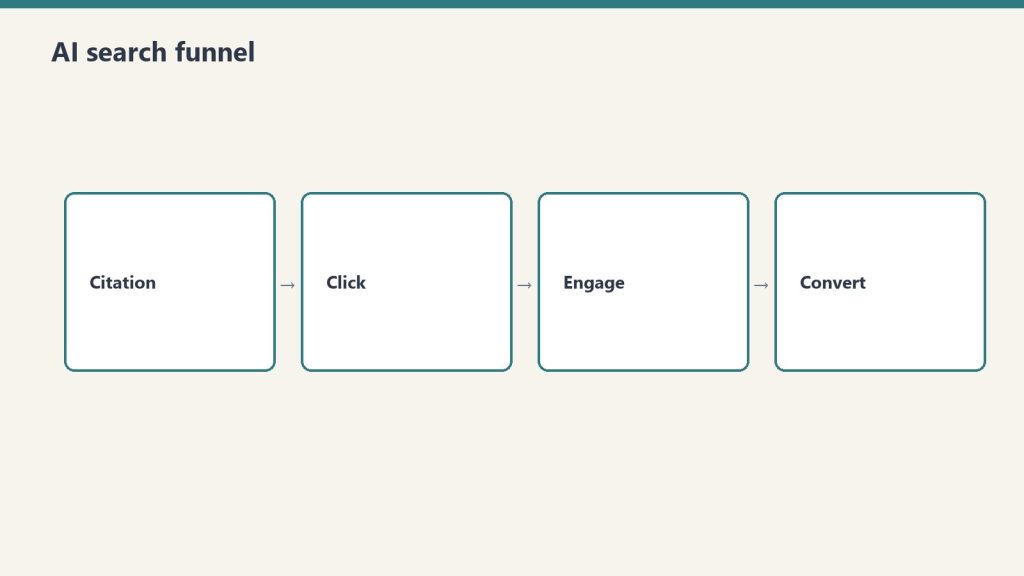
    Four-stage funnel: citation, click, engage, convert
    The market as of April 2026.

    The AI citation monitoring category is real but nascent. Here’s an honest inventory:

    Established SEO Platforms Adding AI Visibility Metrics

    Several major SEO platforms have added “AI visibility” or “AI search” modules in the past 6–12 months. These generally track:

    • Whether your domain appears in AI Overviews for tracked keywords (via SERP scraping)
    • Brand mentions in AI-generated snippets
    • Comparative visibility versus competitors in AI search results

    Ahrefs, Semrush, and Moz have all moved in this direction to varying degrees. Verify current feature availability — this has been an active development area and capabilities have changed rapidly.

    Mention Monitoring Tools Expanding to AI

    Brand mention tools like Brand24 and Mention have begun tracking AI-generated content that includes brand references. The challenge: they’re tracking brand name occurrences in crawled content, not necessarily AI citation events. Useful for brand visibility in AI-generated content that gets published, less useful for tracking in-session citations.

    Purpose-Built AI Citation Tools (Emerging)

    Several purpose-built tools targeting AI citation tracking specifically have launched or raised funding in early 2026. This category is moving fast. As of our last check:

    • Tools focused on tracking specific brand or entity mentions across AI platforms
    • API-first tools targeting developers who want to build citation monitoring into their own workflows
    • Dashboard tools with pre-built query sets for common industry categories

    Treat any specific product recommendation here as a starting point for your own research — the category will look different in 6 months.

    Google Search Console

    The strongest existing tool, and it’s free. AI Overviews that cite your pages register as impressions and clicks in GSC under the relevant queries. This is first-party data from Google itself. Limitation: covers only Google AI Overviews, not Perplexity, ChatGPT, or other platforms.

    What We Built

    Desk with laptop, checklist notebook, and billing card ready before creating an Anthropic API key
    What we built.

    When no existing tool covered the specific workflows we needed, we built our own. The stack:

    Perplexity API Query Runner

    A Cloud Run service that runs a predefined query set against Perplexity’s API on a weekly schedule. It parses the citations field from each response, checks for domain appearances, and writes results to a BigQuery table. Total engineering time: roughly one day. Ongoing cost: minimal (Cloud Run idle cost + Perplexity API usage).

    The output: a weekly BigQuery record per query showing which domains Perplexity cited, with timestamps. Trend queries show citation rate over time by query cluster.

    GSC AI Overview Monitor

    Not a custom build — just systematic review of GSC data. We check weekly which queries are generating AI Overview impressions for our tracked sites. The signal: if a page is generating AI Overview impressions on new queries, that’s a citation event.

    Manual ChatGPT Sampling

    For highest-priority queries, manual weekly sampling of ChatGPT with web search enabled. We log results to a shared spreadsheet. Less scalable than the API approach, but ChatGPT’s web search activation is inconsistent enough that API automation adds complexity without proportional reliability gain.

    What Doesn’t Exist (That Would Be Useful)

    Comparison of Claude how-to fit versus local service page fit for assistants
    What doesn’t exist that would be useful.

    The tool gaps that we still feel:

    • Cross-platform citation dashboard: A single view showing citation rate across Perplexity, ChatGPT, Gemini, and AI Overviews for the same query set. Nobody has built this cleanly yet.
    • Historical citation rate database: Knowing your citation rate is useful. Knowing whether it improved after you published a new piece of content is more useful. The temporal correlation is hard to establish with spot-check sampling.
    • Competitor citation tracking at scale: Easy to check manually for specific queries; hard to monitor systematically across a large competitor set and query space.

    These gaps exist because the category is new, not because the problems are technically hard. Expect the tool landscape to fill in significantly over the next 12 months.

    How to calculate citation rate: What Is AI Citation Rate?. How to set up tracking: How to Track When ChatGPT or Perplexity Cites Your Content. How to optimize for citations: How to Write Content That AI Systems Cite.

    Related on Tygart Media: AI citation monitoring guide · track citations · citing sources.


    The Perplexity API monitoring stack we built runs on Claude. For the hosted infrastructure context: Claude Managed Agents Pricing Reference | Complete FAQ.

  • What Is AI Citation Rate? (And How to Calculate Yours)

    What Is AI Citation Rate? (And How to Calculate Yours)

    Last verified: September 15, 2026

    Citation rate calculation for AI-generated responses: (queries in your sample where the model cited your domain or URL) ÷ (total queries you sampled) × 100. That is a rate. Bing Webmaster Tools AI Performance reports a raw citation count and a per-query citation share. Do not treat either Bing number as this rate until you pick a denominator.

    Direct Answer (9 September 2026): Rate = cited ÷ sampled × 100. Worked example from this site’s query export dated 9 September 2026 (trailing ~30 days): 913 grounding queries, ~126,700 citations to tygartmedia.com. The query family “citation rate calculation AI-generated responses” sat at 11,123 citations / 34.06% share. Share is Bing’s slice of groundings for that query, not your sampled rate.

    Definition

    AI Citation Rate

    The percentage of sampled AI queries where a specific domain or URL appears as a cited source.

    Formula: (Queries where your domain appeared as a source) ÷ (Total queries sampled) × 100

    Citations vs citation rate (the Bing trap)

    • Citation count — how many times an AI grounded on your URL. Bing Page Stats.
    • Citation share — Bing’s percentage of groundings for that query that used you. 34% share on an 11k-cite query still leaves the majority of groundings on other domains.
    • Citation rate — count ÷ a denominator you define (your sample, or your domain total in that window).

    How to calculate it

    1. Define your sample. Pick 20–100 queries you care about. Sample separately on Perplexity, ChatGPT with search, Google AI Overviews, and Bing/Copilot — do not blend platforms into one rate.
    2. Log every query. Cited yes/no, URL vs domain-only, date.
    3. Rate = cited ÷ sampled × 100, by platform and query cluster. Baseline 4–6 weeks, then measure the delta after you patch the ranking slug. Do not mint a twin URL for the same intent.

    Vertical example: a $1–10M restoration shop

    Do not use Tygart Media’s Claude-pricing share as the shop’s KPI. Sample the 20 queries that match how that shop gets hired: water damage + city, Xactimate supplement, emergency vs rebuild. Count whether the contractor domain, GBP, or a Tygart-managed spoke was cited. One citation on a software-evaluation query is not a booked job. See value of an AI citation and profitability dashboards.

    FAQ

    How do you calculate citation rate for AI-generated responses?
    Cited queries ÷ sampled queries × 100. Per platform.

    Is a Bing AI Performance citation count a citation rate?
    No. It is a count. Share is a different fraction. Rate needs your sample.

    What is a good AI citation rate?
    No public standard. Track your line after content changes.

    Related: Claude pricing hub · Bing AI Performance · track citations.