Andy McCabe published something sharp recently, and my first instinct was to push back.
His post was direct: RH and GPP have nothing to do with your dehumidifier calculation. The ANSI/IICRC S500 doesn’t use them. TPAs are weaponizing them to deny equipment that’s legitimately justified by the actual standard. His argument is airtight, and I told him so in the comments — after I pushed back on one thing.
Here’s the double take I had to do.
What McCabe Got Right About Equipment Justification
The S500 Simple Method is not ambiguous. Dehumidifier calculations start with the cubic footage of affected air in each drying chamber, the class of water loss, and the type of equipment on the truck. A Class 2 loss with an LGR uses a factor of 50 to establish a minimum pint-per-day baseline. A Class 1 uses 100. A Class 3 uses 40. Desiccants are calculated in air changes per hour entirely.
What you will not find anywhere in that calculation: a field for relative humidity. Or grains per pound.
When a TPA tells you they won’t approve a dehumidifier because RH isn’t at 70%, they’ve invented a threshold that doesn’t exist in any published standard. McCabe’s response to that Liberty Mutual TPA was exactly right: “What standard is that?” They pointed to their own internal guidelines. Not the S500. Not IICRC. Their guidelines.
That’s the game — and leading your documentation with atmospheric readings as the justification for your equipment is handing them the tool they use to deny you.
Stop justifying equipment with RH and GPP. The S500 math is your argument. Use it.
What I Pushed Back On — and Then Reconsidered
When I responded to McCabe’s post, I drew on years at Polygon/Munters doing large-loss drying — aircraft carrier decks, document archives, new high-rise commercial construction mid-build. In those environments, RH, GPP, and temperature weren’t optional reads. They were the difference between a completed job and a catastrophic materials failure.
I’ve seen what happens when you dry too aggressively. And I’ve seen the liability that follows.
The more I sat with it, the more I realized McCabe and I weren’t in conflict. We were talking about two completely different fights happening on the same job.
The Two-Track Documentation Standard
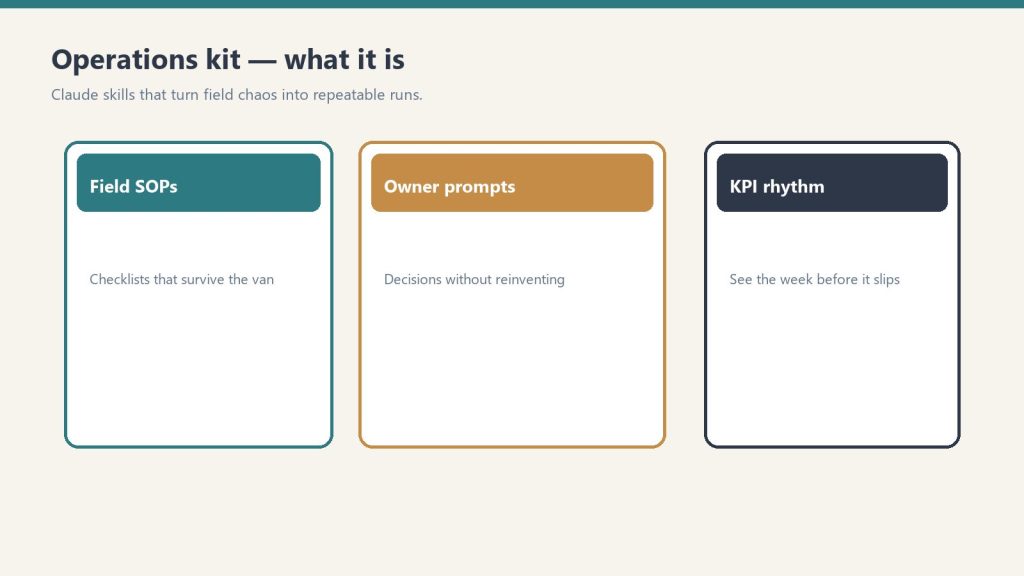
Every water loss has two defensible positions that require documentation. Most contractors are only building one of them.
Track 1: Equipment Justification (McCabe’s Lane)
Show your dehu calculation per the S500 — cubic footage, drying class, equipment type, the published factor. Show your air mover count based on affected square footage and materials above dry standard. Show moisture readings proving materials haven’t yet reached the established dry standard.
This documentation defends your equipment billing against TPA denials based on invented atmospheric thresholds. It’s the argument that holds up in a dispute because it’s grounded in a published ANSI standard — not your opinion, not the adjuster’s internal policy.
Track 2: Materials Science Documentation (The Lane McCabe Didn’t Cover)
Here’s where atmospheric readings earn their place in your job file — just not as equipment justification.
Flooring manufacturers explicitly tie warranty coverage to ambient RH maintenance. Hurst Hardwoods voids their warranty if ambient RH drops below 35% during the life of the floor, citing cracking, delamination, and shrinkage as direct consequences of low humidity. Engineered hardwood manufacturers commonly require 30–50% RH maintenance and list surface checking from improper humidity as an explicit warranty exclusion. Even SERVPRO’s own published guidance notes that rapid drying can cause wood to split.
This isn’t theoretical. When you dry too aggressively — pushing humidity below manufacturer-specified ranges, running heat drying beyond material tolerances, pulling GPP down faster than the materials can handle — you can void the warranty on floors, adhesives, and engineered wood products that weren’t even damaged by the water event itself.
Now the homeowner has a materials failure claim three months after you packed out. And the carrier has a documented argument that the damage was caused by the restoration, not the loss.
Your atmospheric logs are your proof that you didn’t do that.
What This Looks Like in Practice

The documentation standard that protects you on both tracks looks like this:
For equipment: S500 dehu calculation showing class, cubic footage, equipment type, and the published factor. Air mover count tied to affected square footage and material readings above dry standard. Nothing about RH or GPP as justification.
For materials: Continuous atmospheric logs showing that ambient RH stayed within the manufacturer-specified range for every material type on-site throughout the dry. Temperature logs showing you didn’t apply excessive heat. A record that proves you dried professionally, not just fast.
One set of data protects you from equipment denials. The other protects you from being blamed for the cracked hardwood, delaminated adhesives, and voided warranties that surface after you’re gone.
The Bottom Line
Andy McCabe is doing important work calling out the TPA game of inventing atmospheric thresholds to deny legitimately justified equipment. Every restoration contractor should read his post and internalize the S500 math.
But don’t stop taking atmospheric readings. Stop leading with them as equipment justification — and start filing them as materials science documentation that proves the quality of your work.
Two fights. Two documentation tracks. Both matter.
Find more from Andy McCabe at WaterDamageProfit.com.
Related on Tygart Media: S500 in the van · moisture map Claude skill · jobs as knowledge base.
Frequently Asked Questions
Do RH and GPP belong in a dehu calculation?
No. Per the ANSI/IICRC S500, dehumidifier calculations use cubic footage of affected air, drying class, and equipment type. RH and GPP are not inputs in the S500 Simple Method and should not be used to justify equipment placement.
Why should restoration contractors still log RH and GPP?
Atmospheric readings serve as materials science documentation — proof that drying conditions stayed within manufacturer-specified humidity ranges to protect warranty coverage on hardwood floors, adhesives, and engineered wood products. They protect against post-job liability claims, not equipment denials.
Can aggressive drying void a flooring warranty?
Yes. Multiple hardwood flooring manufacturers explicitly void warranties when ambient RH drops below 35%, citing cracking, delamination, and shrinkage as direct results. Drying below those thresholds can create a liability exposure on materials that were undamaged by the original water event.
What is the S500 Simple Method for dehu calculations?
The ANSI/IICRC S500 Simple Method calculates minimum dehumidifier capacity by dividing the cubic footage of the drying chamber by a factor based on equipment type and drying class. Class 1 uses a factor of 100, Class 2 uses 50, and Class 3 uses 40 for LGR units.
What should restoration contractors say when a TPA denies equipment based on RH?
Ask them to cite the published standard their threshold comes from. If they reference an internal guideline rather than the ANSI/IICRC S500, that threshold has no technical standing. Present your S500-based calculation as the documented industry standard for equipment justification.
Leave a Reply