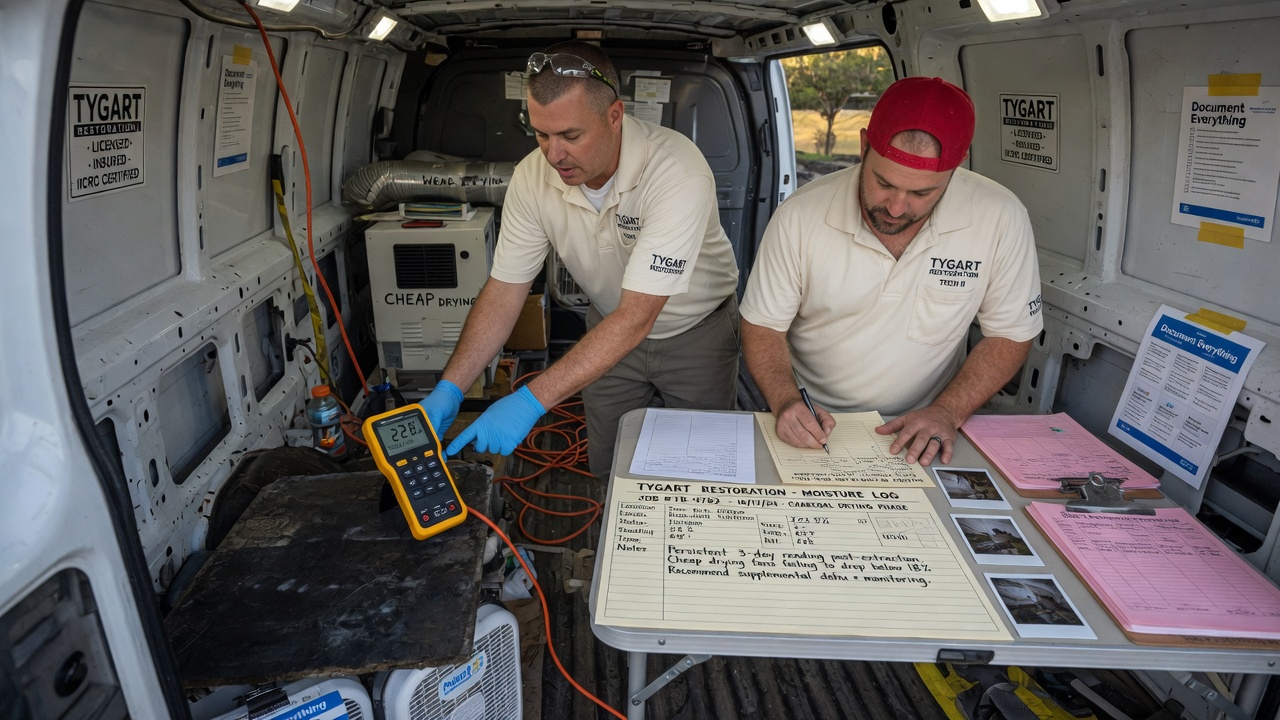
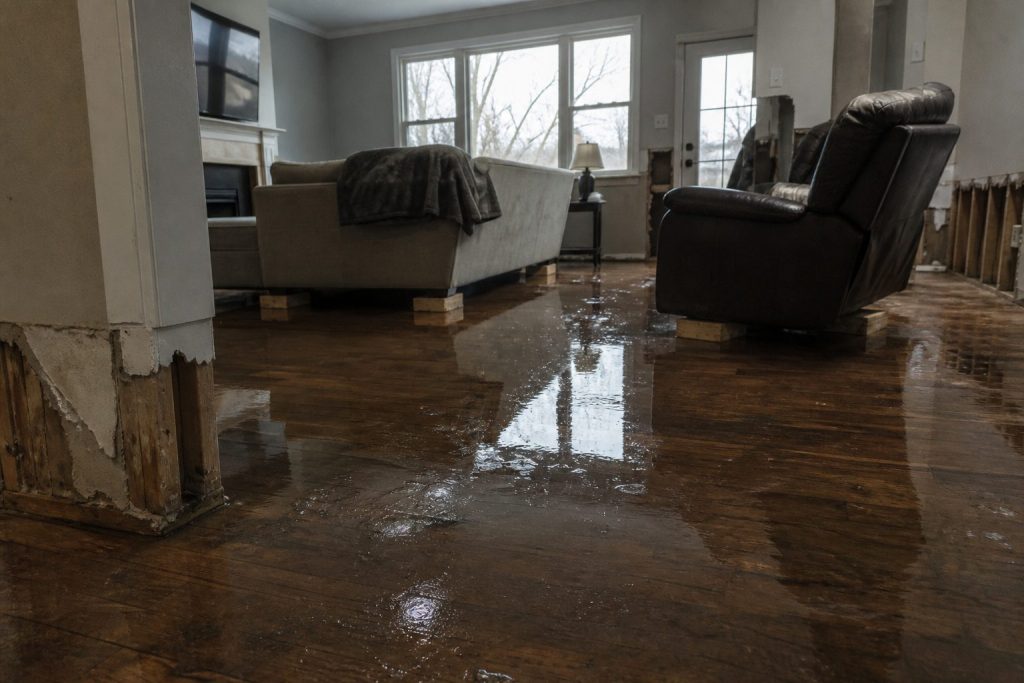
Pressure washing is easy to start, so everyone starts it, so price becomes the product. The better home-service bets are the ones that require a license. Mold in the walls is not a Facebook-marketplace job. The homeowner pays the licensed crew and rarely negotiates in a smaller market.
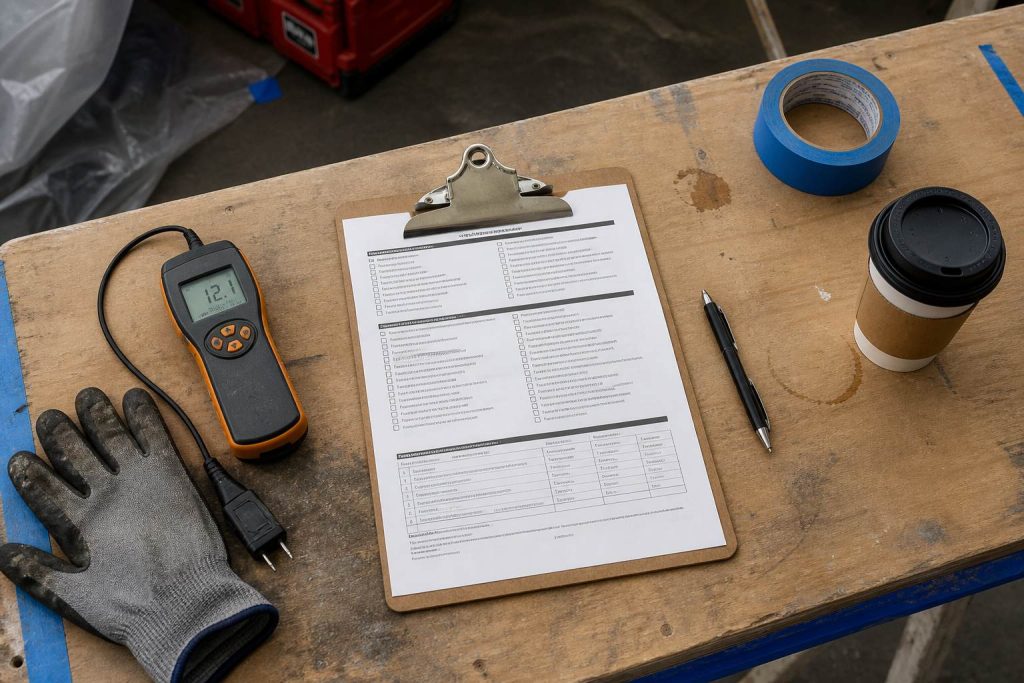
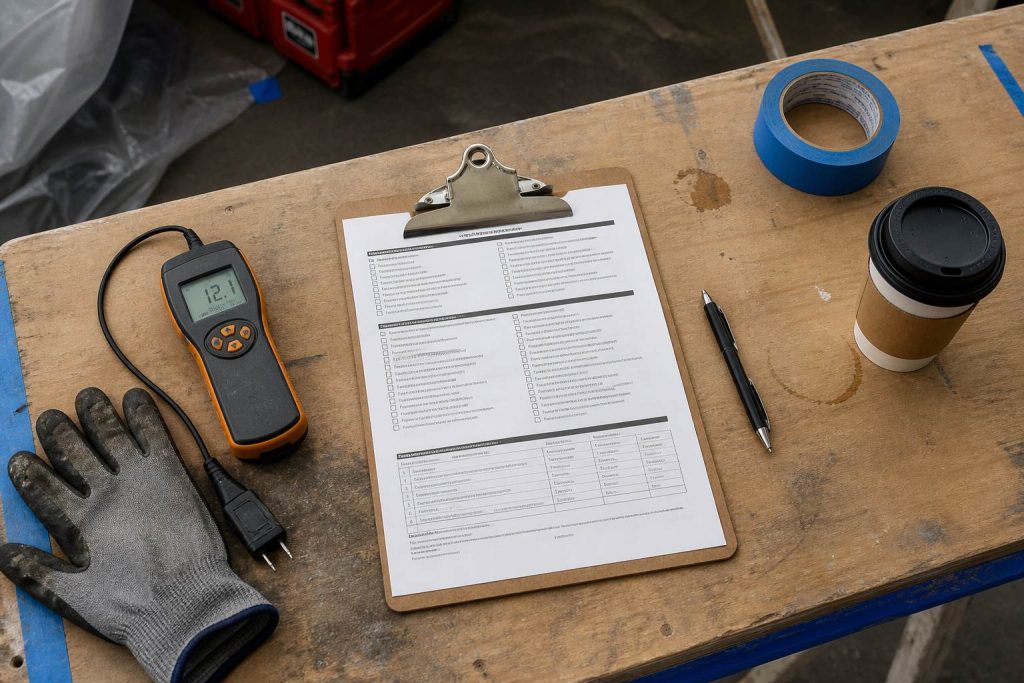
Restoration has both layers. Unlicensed “we dry houses” crews will always undercut a Category 1 extract. That is not your race. IICRC S500/S520, state mold licenses, documented meters, and a paper trail the adjuster can read are why a 2 a.m. sewage job does not get three quotes.
Put the credentials on the pin, the header, and the service page. Then do the work those credentials claim. Price holds when the alternative looks like a shop vac and a prayer.
You do not need another binder in the truck. You need the protocol answer while the carpet is still wet.
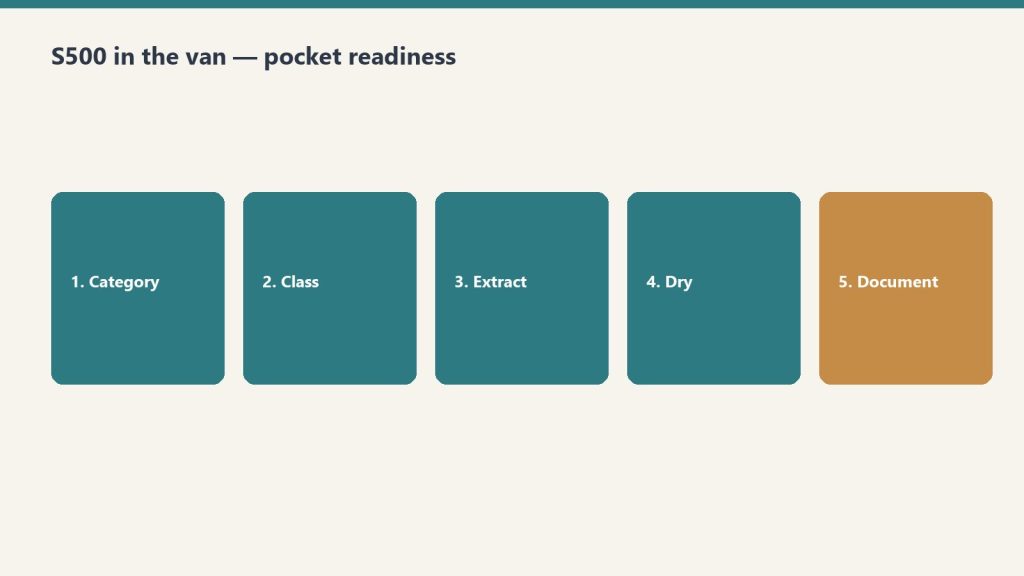
IICRC S500 is not mysterious. The failure mode is that the PM is standing in a basement and the binder is in the office. That is how a supplement dies in email.
Office owns jobs, fleet, claims, and certs. Van gets a work order. When the question is S500-shaped, ask Claude with a protocol-grounded skill — not a Facebook group.
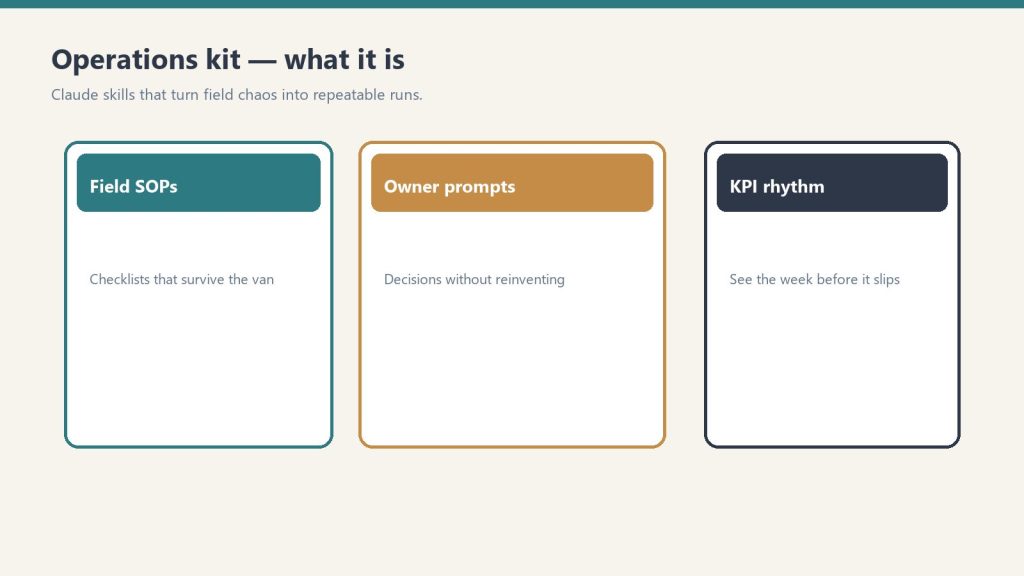
That stack is the Complete Restoration Operations Kit — seven Notion templates plus the IICRC lookup skill. $97 on Square. No email to purchase.
Need only the lookup? Buy the skill. Need more than two pieces? The kit is cheaper.
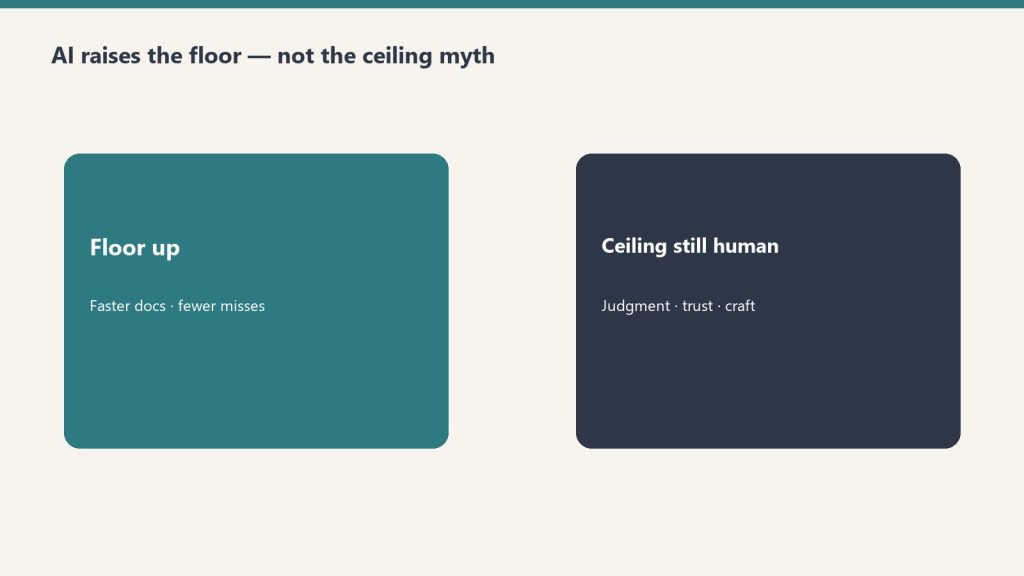
AI is raising the floor of the restoration industry. It is not raising the ceiling. The ceiling will always belong to the operators who have actually stood in a flooded basement at 2 a.m. and made the call. Once you internalize that distinction, the panic about AI replacing skilled trades collapses, and a more useful question takes its place: what happens to an industry when the floor finally catches up to the people who have been carrying it?
This is a commentary about restoration. It is also a commentary about AI in general. The two stories are the same story.
The Floor and the Ceiling
AI raises the floor. Craft still owns the ceiling.
Every industry has a floor and a ceiling. The floor is the minimum competence a customer can expect from anyone in the trade. The ceiling is what the best practitioners are capable of — the judgment calls, the pattern recognition, the gut feel that comes from doing the work for fifteen years and seeing every kind of failure mode at least twice.
In restoration, the floor has been embarrassingly low for a long time. There are operators in this industry who genuinely should not be allowed near a moisture meter. They mis-scope projects, they bill for equipment they did not run, they cut corners on containment, and they sell jobs they cannot deliver. They depress the curve for everyone who is trying to do this work properly. Every honest contractor who has ever lost a job to a lowball bid from a fly-by-night competitor knows exactly who I am talking about.
The ceiling, meanwhile, lives inside the heads of people who have been at this for decades. The Project Manager who can walk into a loss and tell you within ten minutes which insurance adjuster will push back, which trades need to be sequenced first, and which homeowner is going to file a complaint regardless of the outcome. The technician who knows by smell alone whether the mold is active or dormant. The estimator who has internalized the regional cost variance between a Houston hurricane and a Minneapolis ice dam and can write an accurate scope without opening Xactimate. None of that knowledge lives in a database. It lives in the brains of the operators who built it the hard way.
What AI Actually Does to Skilled Trades
Here is the part most takes get wrong. AI is not coming for the ceiling. AI is coming for the floor.
What AI does extremely well is the work that is procedural, well-documented, and pattern-matched against existing data. Writing the initial scope of work. Generating a clean estimate from a photo set. Drafting customer communications. Filling in the IICRC-aligned drying log. Producing the daily progress report. Pulling the right documentation for the carrier. Comparing this loss against the last hundred similar losses in the database and flagging the parts that look off.
None of that is the hard part of restoration. The hard part of restoration is the judgment that comes after the data is collected. The hard part is knowing that the moisture reading the AI just generated is technically correct but practically wrong because of the building envelope quirk you cannot see from the photo. The hard part is reading the homeowner across the kitchen table and knowing they need to hear the truth a specific way or they will fire you by Thursday. The hard part is the call between mitigation and replacement when the numbers are genuinely close and the carrier is going to fight you either way.
AI raises the floor by making the procedural part faster, cheaper, and more consistent across the industry. The technician who used to spend two hours writing a sloppy scope now has a clean scope in fifteen minutes. The estimator who used to fight Xactimate now has a draft to react to. The office admin who used to chase signatures now has a workflow that runs itself. All of that is the floor rising.
The ceiling — the actual judgment, the actual experience, the actual feel for the work — is unmoved. It is still entirely inside the heads of the operators who built it. If anything, it becomes more valuable because the floor is rising fast enough that the only meaningful differentiation left is what the AI cannot replicate.
Why the Bad Actors Get Starved Out
Bad actors get starved when docs and SOPs get cheap to do right.
This is the part that should make every honest operator in the restoration industry hopeful rather than nervous.
The rogue restoration company that has been distorting the curve for fifteen years survives on a specific edge. They can underbid the honest operators because they cut corners on the procedural work — they do not document properly, they do not run the right equipment, they do not follow IICRC standards, they do not handle the carrier paperwork with any rigor. The bid they hand a homeowner looks competitive only because the work they are quoting is not the same work an honest contractor would quote.
When AI raises the floor, that arbitrage disappears. The procedural work becomes table stakes. Any contractor with a smartphone can now produce a clean scope, a defensible drying log, a proper carrier-facing report. The reckless contractor who used to win on speed-by-cutting-corners is suddenly competing on a level surface against operators who have always done the work properly and now have AI making them faster too.
What the reckless contractor cannot do is the ceiling work. They cannot reproduce the judgment, because they never had it. They cannot reproduce the relationships with adjusters, the reputational depth, the operator instinct. When the floor rises and the differentiation moves up to the ceiling, the bad actors are the first ones starved out. Their entire edge was the floor being low.
This is the part nobody is telling honest restoration operators clearly enough. AI is not your threat. AI is the thing that finally levels the playing field against the contractors who have been undercutting you on quality for years.
Data Is Cheap, Fast, and Incomplete
Right now, in 2026, data is cheap. Compute is cheap. Inference is cheap. Every AI system on the market is leveraging the same approximate pool of public data, the same scraped industry documentation, the same generic training corpus. That is why the AI-generated restoration content flooding the internet right now is so painfully shallow — it can describe what a Category 3 water loss looks like in textbook terms, but it cannot tell you what it actually feels like to walk into one.
The data is incomplete. It will stay incomplete until somebody systematically extracts the tacit knowledge from the operators who actually have it. That is the part of the AI story almost everybody is missing. The models are not bottlenecked on compute. They are bottlenecked on the kind of experiential, hard-won, in-the-field knowledge that has never been written down and never made it into the training corpus.
This is true across every industry, not just restoration. It is true in HVAC, in commercial real estate, in healthcare operations, in B2B sales, in any field where the floor is procedural and the ceiling is experiential. The AI floor will continue to rise everywhere. The ceiling will continue to belong to the people who actually did the work.
The Human Distillery
This is why the most important AI work happening right now is not building bigger models. It is what we are calling the Human Distillery — the deliberate, structured extraction of tacit knowledge from industry insiders, captured in a form that becomes AI-ready and operator-ready at the same time.
The way you do this is not with a survey. It is not with a content brief. It is with a long conversation with somebody who has spent twenty years in the field, asking them the questions only an insider would know to ask, then converting their answers into structured artifacts that capture the judgment patterns underneath the words. The scope decisions they make instinctively. The risk signals they read before anyone else sees them. The customer-handling moves they have refined across thousands of jobs. The mistakes they made early in their career and the corrections they internalized.
That body of knowledge has historically died with the operator who held it. They retire, they sell the business, the kid takes over without the same instincts, and the depth of the operation drops a tier. The industry loses that ceiling-raising knowledge every time a senior operator walks away.
The Human Distillery is the methodology for stopping that loss. For a direct take on what this moment means specifically for senior operators, see this letter to the older generation of operators in the AI era. You distill the knowledge while the operator is still in the field, you convert it into both AI-ready training data and operator-ready playbooks, and you compound it. The first restoration company that does this systematically will have a competitive moat that no AI system can replicate by ingesting public data, because the knowledge you are encoding was never public in the first place.
What This Looks Like in Practice
In practice: techs + AI drafts, owners still decide.
Imagine a regional restoration operator with thirty years of field experience. Imagine sitting down with that operator for ten hours across a series of structured conversations. Imagine asking them to walk through every category of loss they have ever handled — water, fire, mold, storm, biohazard, commercial, residential, multi-unit — and surface the specific judgment moves they make at each decision point.
What scope are they running for a Cat 3 with mixed materials in a 1980s slab-on-grade? What changes if the homeowner is elderly and lives alone? What changes if the adjuster is from a specific carrier they have history with? What changes if the loss happened on a Thursday before a holiday weekend?
None of that is in any database. None of it is in any IICRC standard. It is the ceiling. It is the thing that makes that operator’s company twice as profitable as the regional competitor down the road who has the same trucks and the same equipment and the same certifications.
The Human Distillery captures it. It becomes a structured artifact the operator can use to train their own next generation of technicians. It becomes AI-ready content that the operator’s own AI tooling can use to outperform every generic restoration-trained model on the market. And critically, it stays inside the operator’s company. It is not training data for the broader model pool. It is the operator’s proprietary ceiling, made durable and transferable.
Why This Should Give the Industry Faith
The anxiety about AI in restoration — and in every skilled trade — comes from a flawed mental model. The model says: AI gets better, humans get less valuable, eventually AI does the job. That model is wrong.
The correct model is: AI raises the floor faster than humans can lower it, so the floor rises. The procedural work that used to differentiate okay operators from bad operators becomes commoditized. The bad operators, who were surviving by underdelivering on the floor, get starved out because the floor is now too high for them to fake. The honest operators get faster and more profitable because their procedural work is now AI-accelerated. And the great operators, the ones with the ceiling-level experience, become the most valuable people in the industry, because the only remaining differentiation is the part AI cannot do.
That is not a future to fear. That is a future where the people who have always been doing this work properly finally get to compete on the merits.
The very best of who we are as an industry is about to open up. The contractors who have been holding the line on quality for decades — paying their technicians properly, running their equipment to spec, documenting their work the right way, treating their customers like neighbors — are about to find out that the playing field is finally tilting in their direction. The race to the bottom is ending. The race to the top is starting.
Have faith. The knowledge will be the value again. It always was. It is just becoming visible again, because the noise is finally getting filtered out.
No. AI is replacing the procedural and documentation work that used to consume hours of a contractor’s day — scoping, estimating, drying logs, carrier paperwork. The judgment work that defines a great restoration operator (reading a loss site, sequencing trades, handling adjusters, managing homeowner expectations) is unchanged and arguably more valuable, because it is now the only meaningful differentiator left.
What does “AI raises the floor, not the ceiling” actually mean?
The floor is the minimum competence a customer can expect from any operator in the industry. The ceiling is what the best operators are capable of. AI commoditizes the procedural work, which lifts the minimum baseline across the industry. It does not touch the experiential judgment that defines the top performers. The gap between average and excellent does not close. The gap between bad and average disappears.
Why will bad actors get pushed out of the restoration industry?
Bad actors survive on an arbitrage where they underbid honest contractors by cutting corners on procedural work — documentation, equipment, IICRC standards, carrier-facing reports. When AI makes that procedural work fast and cheap for everyone, the underbidding edge disappears. Honest operators get the same speed advantage without sacrificing quality. The bad actors are left competing on judgment and experience, which they never had to begin with.
What is the Human Distillery?
The Human Distillery is a structured methodology for extracting tacit, hard-won industry knowledge from experienced operators and converting it into AI-ready and operator-ready artifacts. It captures the judgment patterns, decision frameworks, and field instincts that have historically lived only inside the heads of senior practitioners and disappeared when those people retired. It is how a restoration company turns its founder’s thirty years of experience into a durable competitive asset.
If AI training data is incomplete, why is AI still useful in restoration today?
AI is useful today for the procedural floor work — scoping, documentation, customer communication, report generation — because those tasks are pattern-matched against public, well-documented content. The incompleteness shows up the moment you ask AI to make a judgment call that requires tacit field experience. Used inside its actual capability envelope, AI is a force multiplier for any honest operator. Used outside that envelope, it produces the shallow, generic content the industry is currently drowning in.
How should a restoration company prepare for the AI shift?
Two parallel moves. First, deploy AI aggressively on the procedural floor — scoping, estimating, documentation, customer-facing communication — to capture the speed and margin advantages. Second, systematically extract the tacit knowledge inside the company’s senior operators using a Human Distillery methodology, and build a proprietary knowledge layer that becomes the company’s defensible ceiling. The companies that only do the first move will be commoditized. The companies that do both will dominate their regions.
The Bottom Line
The restoration industry is a perfect commentary on AI in general. Fancy tools and faster calculations are not the gold. The gold, which it always has been, is the learned experience. AI is raising the floor, and the floor needed to be raised. The rogue contractors will be starved out. The reckless ones will go away. The honest operators with real experience will find themselves on a playing field that finally rewards what they have always been doing properly. And the ceiling will keep belonging to the people who actually showed up, did the work, and earned the knowledge the hard way.
That is when the knowledge will be the value again, just like it always was. The ceiling will start to rise. The very best of who we are as an industry will open up opportunities for the people who built it. Have faith. The floor was the part that was broken. The floor is finally getting fixed.
The Tacit Knowledge Cluster — Further Reading
This piece is part of a larger body of writing on what the AI shift and the broader software-platform shift actually mean for service professions and the workers in them. The full cluster:
Ask Claude any restoration question. Get an answer grounded in IICRC S500/S520 standards.
Who This Is For
Who the IICRC protocol lookup skill is for.
Built for restoration technicians and project managers who need quick, accurate answers to technical drying questions in the field — without carrying a manual or waiting to call a trainer.
The Problem
The protocol lookup problem.
IICRC standards are the backbone of defensible restoration work. But S500 and S520 are dense documents, and the answers to specific field questions — what drying class applies here, how do I size equipment for this structure, what does this GPP reading mean, how do I document this for the adjuster — are not always easy to find quickly under job pressure. This Claude skill turns your AI assistant into a protocol reference that speaks restoration.
What You Get
What you get with the IICRC skill.
Answers technical drying questions with IICRC S500/S520 backing — water damage categories, drying classes 1 through 4, equipment sizing formulas
Explains psychrometrics and GPP calculations in plain language your crew can act on
Covers mold remediation protocols from S520: containment, clearance, documentation
Helps structure drying progress documentation for adjuster review
Works even better when you attach your own IICRC PDF to the conversation
Includes a 25-prompt starter library of the most common restoration protocol queries
Setup guide: installed and running in under 5 minutes
IICRC Protocol Lookup — Claude AI Skill for Restoration Contractors
$19
Delivered to your inbox within 24 hours — no shipping, no waiting
Secure checkout via Square — all major cards accepted
Frequently Asked Questions
How is this delivered?
Within 24 hours of purchase via email from will@tygartmedia.com. You will receive your download link immediately — Notion duplicate link, skill file, or both depending on the product.
Do I need any special software?
A free Notion account is required for the template products. The Claude skill requires a Claude account (free tier works for most uses).
Can I customize this for my company?
Yes — everything is built to be edited. Add your company name, your specific workflows, your equipment rates. It is a starting point, not a locked system.
Is there a refund policy?
Because this is a digital product, all sales are final. If you have a problem with your purchase, email will@tygartmedia.com and we will sort it out.
Give every new tech a structured path from day one — and never lose track of who is certified.
Who This Is For
Who the crew onboarding tracker is for.
Built for restoration owners who are growing their crew but onboarding is chaotic, certifications are tracked in someone’s head, and no one is sure who is cleared to run what equipment.
The Problem
The crew onboarding problem.
Restoration technician turnover is real. When you hire someone new, the first 90 days determine whether they stay. Chaotic onboarding — no clear expectations, no structured training, no visibility into their progress — accelerates the exit. Meanwhile, certification lapses create liability. Knowing who holds WRT, who is overdue for renewal, and who is cleared to operate specific equipment should not require asking around.
What You Get
What you get with the crew onboarding tracker.
New hire checklist: day 1, week 1, and month 1 milestones with owner sign-off
Certification tracker: WRT, ASD, FSRT, AMRT, CCT, and any custom certs you add
IICRC course progress log: completion dates and renewal reminders built in
Training module library: add your own procedures, videos, and field guides
Equipment sign-off tracker: who is cleared to operate what, with sign-off date
Performance notes log for structured 30/60/90 day reviews
Restoration Crew Onboarding & Training Tracker
$19
Delivered to your inbox within 24 hours — no shipping, no waiting
Secure checkout via Square — all major cards accepted
Frequently Asked Questions
How is this delivered?
Within 24 hours of purchase via email from will@tygartmedia.com. You will receive a download link for the ZIP file and/or Notion duplicate link immediately.
Do I need any special software?
A free Notion account is required. No other software needed.
Can I customize this for my specific business?
Yes — that is the point. Everything is built to be edited. Swap in your company name, add your specific workflows, remove anything that does not apply. It is a starting point, not a locked template.
Is there a refund policy?
Because this is a digital product, all sales are final. If you have a problem with your purchase, email will@tygartmedia.com and we will sort it out.
Andy McCabe published something sharp recently, and my first instinct was to push back.
His post was direct: RH and GPP have nothing to do with your dehumidifier calculation. The ANSI/IICRC S500 doesn’t use them. TPAs are weaponizing them to deny equipment that’s legitimately justified by the actual standard. His argument is airtight, and I told him so in the comments — after I pushed back on one thing.
Here’s the double take I had to do.
What McCabe Got Right About Equipment Justification
What McCabe got right about equipment justification.
The S500 Simple Method is not ambiguous. Dehumidifier calculations start with the cubic footage of affected air in each drying chamber, the class of water loss, and the type of equipment on the truck. A Class 2 loss with an LGR uses a factor of 50 to establish a minimum pint-per-day baseline. A Class 1 uses 100. A Class 3 uses 40. Desiccants are calculated in air changes per hour entirely.
What you will not find anywhere in that calculation: a field for relative humidity. Or grains per pound.
When a TPA tells you they won’t approve a dehumidifier because RH isn’t at 70%, they’ve invented a threshold that doesn’t exist in any published standard. McCabe’s response to that Liberty Mutual TPA was exactly right: “What standard is that?” They pointed to their own internal guidelines. Not the S500. Not IICRC. Their guidelines.
That’s the game — and leading your documentation with atmospheric readings as the justification for your equipment is handing them the tool they use to deny you.
Stop justifying equipment with RH and GPP. The S500 math is your argument. Use it.
What I Pushed Back On — and Then Reconsidered
When I responded to McCabe’s post, I drew on years at Polygon/Munters doing large-loss drying — aircraft carrier decks, document archives, new high-rise commercial construction mid-build. In those environments, RH, GPP, and temperature weren’t optional reads. They were the difference between a completed job and a catastrophic materials failure.
I’ve seen what happens when you dry too aggressively. And I’ve seen the liability that follows.
The more I sat with it, the more I realized McCabe and I weren’t in conflict. We were talking about two completely different fights happening on the same job.
The Two-Track Documentation Standard
The two-track documentation standard.
Every water loss has two defensible positions that require documentation. Most contractors are only building one of them.
Track 1: Equipment Justification (McCabe’s Lane)
Show your dehu calculation per the S500 — cubic footage, drying class, equipment type, the published factor. Show your air mover count based on affected square footage and materials above dry standard. Show moisture readings proving materials haven’t yet reached the established dry standard.
This documentation defends your equipment billing against TPA denials based on invented atmospheric thresholds. It’s the argument that holds up in a dispute because it’s grounded in a published ANSI standard — not your opinion, not the adjuster’s internal policy.
Track 2: Materials Science Documentation (The Lane McCabe Didn’t Cover)
Here’s where atmospheric readings earn their place in your job file — just not as equipment justification.
Flooring manufacturers explicitly tie warranty coverage to ambient RH maintenance. Hurst Hardwoods voids their warranty if ambient RH drops below 35% during the life of the floor, citing cracking, delamination, and shrinkage as direct consequences of low humidity. Engineered hardwood manufacturers commonly require 30–50% RH maintenance and list surface checking from improper humidity as an explicit warranty exclusion. Even SERVPRO’s own published guidance notes that rapid drying can cause wood to split.
This isn’t theoretical. When you dry too aggressively — pushing humidity below manufacturer-specified ranges, running heat drying beyond material tolerances, pulling GPP down faster than the materials can handle — you can void the warranty on floors, adhesives, and engineered wood products that weren’t even damaged by the water event itself.
Now the homeowner has a materials failure claim three months after you packed out. And the carrier has a documented argument that the damage was caused by the restoration, not the loss.
Your atmospheric logs are your proof that you didn’t do that.
What This Looks Like in Practice
What this looks like in practice.
The documentation standard that protects you on both tracks looks like this:
For equipment: S500 dehu calculation showing class, cubic footage, equipment type, and the published factor. Air mover count tied to affected square footage and material readings above dry standard. Nothing about RH or GPP as justification.
For materials: Continuous atmospheric logs showing that ambient RH stayed within the manufacturer-specified range for every material type on-site throughout the dry. Temperature logs showing you didn’t apply excessive heat. A record that proves you dried professionally, not just fast.
One set of data protects you from equipment denials. The other protects you from being blamed for the cracked hardwood, delaminated adhesives, and voided warranties that surface after you’re gone.
The Bottom Line
Andy McCabe is doing important work calling out the TPA game of inventing atmospheric thresholds to deny legitimately justified equipment. Every restoration contractor should read his post and internalize the S500 math.
But don’t stop taking atmospheric readings. Stop leading with them as equipment justification — and start filing them as materials science documentation that proves the quality of your work.
Two fights. Two documentation tracks. Both matter.
No. Per the ANSI/IICRC S500, dehumidifier calculations use cubic footage of affected air, drying class, and equipment type. RH and GPP are not inputs in the S500 Simple Method and should not be used to justify equipment placement.
Why should restoration contractors still log RH and GPP?
Atmospheric readings serve as materials science documentation — proof that drying conditions stayed within manufacturer-specified humidity ranges to protect warranty coverage on hardwood floors, adhesives, and engineered wood products. They protect against post-job liability claims, not equipment denials.
Can aggressive drying void a flooring warranty?
Yes. Multiple hardwood flooring manufacturers explicitly void warranties when ambient RH drops below 35%, citing cracking, delamination, and shrinkage as direct results. Drying below those thresholds can create a liability exposure on materials that were undamaged by the original water event.
What is the S500 Simple Method for dehu calculations?
The ANSI/IICRC S500 Simple Method calculates minimum dehumidifier capacity by dividing the cubic footage of the drying chamber by a factor based on equipment type and drying class. Class 1 uses a factor of 100, Class 2 uses 50, and Class 3 uses 40 for LGR units.
What should restoration contractors say when a TPA denies equipment based on RH?
Ask them to cite the published standard their threshold comes from. If they reference an internal guideline rather than the ANSI/IICRC S500, that threshold has no technical standing. Present your S500-based calculation as the documented industry standard for equipment justification.
CH 03· Answer Engine Intelligence
· Filed by Will Tygart
What Is SiteBoost for Regional Restoration?
SiteBoost for Regional Property Damage Restoration is a done-for-you WordPress optimization service for restoration companies serving multi-county suburban and rural markets — where the competition isn’t ServiceMaster or Servpro’s national SEO budget, but regional independents with the same local knowledge advantage you have, and slightly better-optimized WordPress sites. We close that gap.
The restoration SEO landscape outside major metros is fundamentally different from downtown competition. National franchise sites dominate broad category searches. But regional independent operators — companies serving 3–8 counties with genuine local presence and real IICRC credentials — can win the specific, high-intent queries that national sites don’t have the local content depth to capture.
The strategy: own the local entities (county names, neighborhoods, local insurers, regional weather events), demonstrate IICRC credential depth (specific standards by loss type), and produce the adjuster-facing content that decision-makers search for when qualifying restoration contractors for their preferred vendor lists.
What We’ve Done in This Vertical
What we’ve done in this vertical.
We manage content operations for Upper Restoration (NYC and Long Island — Nassau and Suffolk counties) and 247 Restoration Specialists (Houston TX metro). Both are regional independent operators competing against franchise chains with much larger marketing budgets. The content architecture, IICRC entity library, and adjuster-facing content strategy are proven across both markets.
What SiteBoost Covers for Regional Restoration
Multi-county geo-entity injection — County names, municipalities, ZIP codes, and regional landmarks that signal genuine service area coverage to local search algorithms
IICRC standard-level entity injection — S500 (water damage), S520 (mold), S540 (trauma/biohazard), S600 (upholstery), S700 (fire/smoke), S900 (contents) referenced by specific standard and loss type
RIA and industry body signals — Restoration Industry Association references, regional trade association memberships, and professional network signals
Property manager and GC content — Commercial referral source content optimized for property manager and general contractor discovery queries
FAQPage schema — Homeowner, adjuster, and property manager questions answered in structured format for PAA placement
The Adjuster-Facing Content Difference
The adjuster-facing content difference.
Most restoration WordPress sites produce homeowner-facing content exclusively. The highest-value referral relationships — insurance adjuster preferred vendor lists — come from a completely different content audience with completely different search intent. Content that references RCV vs. ACV claims, Xactimate line items, carrier documentation requirements, and IICRC standard compliance reaches the adjuster audience that homeowner-facing content never touches.
What the Pilot Delivers
What the pilot delivers.
Item
Included
Site audit + local and adjuster query gap analysis
How is this different from the standard SiteBoost for Restoration page?
The standard restoration SiteBoost page is built for any restoration operator. This page is specifically for regional independents serving multi-county suburban and rural markets — where the geo-entity strategy, adjuster-facing content, and multi-county local authority approach are the primary differentiators from franchise competitors.
What does adjuster-facing content optimization actually involve?
It means restructuring content to answer the questions insurance adjusters search for when qualifying restoration contractors: IICRC certification verification, documentation and reporting capabilities, carrier compliance history, Xactimate familiarity, and response time and capacity for large loss events. This content doesn’t convert homeowners — it gets you on preferred vendor lists.
Does SiteBoost work for fire and mold restoration as well as water damage?
Yes. The entity injection is loss-type specific — water damage content gets S500 references, mold gets S520 and EPA 402-K-02-003, fire/smoke gets S700. Multi-peril operators get all applicable standards applied to the relevant posts in the 10-post pilot.
CH 03· Answer Engine Intelligence
· Filed by Will Tygart
What Is SiteBoost for Twin Cities Water Damage Restoration?
SiteBoost for Twin Cities Water Damage Restoration is a done-for-you WordPress optimization service for water damage and property restoration companies serving Minneapolis, Saint Paul, and the surrounding metro — injecting Minneapolis-specific neighborhood entities, Minnesota licensing references, IICRC credentials, and local content signals that separate market-native operators from national franchise chains in local search results.
The Twin Cities restoration market has a specific local dynamic: a mix of national franchise operators (ServiceMaster, Servpro, Paul Davis) with massive domain authority, and local independent operators who actually know Edina from Eden Prairie and understand the difference between a Minnetonka lake home and a Saint Paul bungalow. Local content that demonstrates genuine market knowledge wins in that environment — national franchise sites can’t fake it.
We built this system on Partners Restoration (partnerscos.com), a water damage and restoration company serving the Minneapolis SW metro — Edina, Chanhassen, Wayzata, Minnetonka, Eden Prairie, Deephaven, Orono, and Plymouth. The neighborhood entity library, Minnesota-specific licensing references, and local content architecture are proven in this market.
What SiteBoost Covers for Twin Cities Restoration
What SiteBoost covers for Twin Cities restoration.
Minneapolis/Saint Paul neighborhood entity injection — Specific neighborhood names, lake names, school districts, and local landmarks that signal genuine market presence to Google and local searchers
Minnesota licensing entity signals — Minnesota Department of Labor and Industry (DLI) contractor licensing, Minnesota Pollution Control Agency (MPCA) mold references, and state-specific regulatory signals
IICRC credential injection — S500 water damage, S520 mold remediation, S700 fire and smoke standards referenced throughout relevant content
Local buyer FAQ schema — Twin Cities homeowner questions answered in structured format (“does homeowners insurance cover water damage in Minnesota,” “how long does water damage restoration take in Minneapolis”)
Seasonal content signals — Minnesota winter pipe burst, spring flooding, and ice dam water damage content optimized for seasonal query patterns
AI citation optimization — Content structured for Perplexity and Google AI Overview citation when Twin Cities homeowners search for emergency restoration help
Twin Cities Neighborhood Entity Library
Twin Cities neighborhood entity library.
Content that references specific Twin Cities neighborhoods outperforms generic metro-area content for local queries. Our entity library covers: Minneapolis (Uptown, Linden Hills, Kenwood, Longfellow, Northeast), Saint Paul (Highland Park, Macalester-Groveland, Summit Hill, Como), and the SW suburbs: Edina, Eden Prairie, Minnetonka, Wayzata, Chanhassen, Chaska, Orono, Plymouth, Deephaven, Shorewood.
What the Pilot Delivers
What the pilot delivers.
Item
Included
Site audit + Twin Cities local query gap analysis
✅
10 posts optimized (SEO + AEO + GEO)
✅
Minneapolis/Saint Paul neighborhood entity injection
✅
Minnesota licensing reference injection
✅
IICRC entity signals
✅
FAQPage schema (MN homeowner Q&A)
✅
60-day impact report
✅
Interested in SiteBoost for Your Twin Cities Water Damage Restoration Site?
We onboard sites personally. Email Will with your site URL and he’ll follow up within one business day.
Does this only work for companies in the Minneapolis SW suburbs?
No — the geo-entity approach works for any Twin Cities sub-market. The neighborhood entity set is adapted to your actual service area. Companies serving the North Metro (Blaine, Coon Rapids, Maple Grove) or East Metro (Woodbury, Stillwater, White Bear Lake) get a different neighborhood entity set than SW metro operators.
How does this help against national franchise competitors with huge domain authority?
National franchises can’t fake local knowledge. Content that references specific Twin Cities neighborhoods, Minnesota-specific weather patterns, local licensing bodies, and regional building characteristics signals genuine market presence that national sites don’t have. Google’s local algorithm rewards this specificity in local pack and organic local results.
Does SiteBoost cover seasonal content for Minnesota’s specific weather patterns?
Yes. Minnesota’s climate creates specific restoration query patterns — winter pipe bursts, spring snowmelt flooding, summer storm damage, and ice dam water intrusion are all seasonal signals we optimize for as part of the Twin Cities pilot.
What Is the Restoration Niche Pack?
A targeted optimization pass on your 10 highest-traffic restoration posts — injecting IICRC standards references, RIA industry entity signals, EPA mold guidelines, and OSHA citations throughout your content, then adding FAQPage JSON-LD schema on every post. The result: your content reads (and ranks) like it was written by someone who actually knows restoration, not a generic SEO copywriter.
Why Generic Restoration Content Fails
Why generic restoration content fails.
Generic restoration content has a tell: it mentions “water damage” and “mold remediation” without ever referencing the IICRC S500 standard, the Restoration Industry Association (RIA), Class 3 water losses, psychrometric calculations, or EPA 402-K-02-003. Google and AI systems both recognize entity-rich industry content as more authoritative than keyword-stuffed generic copy — and so do adjusters and property managers reading it.
The search engines and AI systems that increasingly control discovery have trained on authoritative industry sources. When your content references the same entities those sources use — IICRC standards, RIA guidelines, ANSI/IICRC S520, EPA remediation thresholds — it reads as part of the same knowledge graph. When it doesn’t, it reads as filler.
The Restoration Niche Pack injects the named entities that separate expert content from generic content — then adds FAQPage schema so your posts are eligible for the featured snippet placements that restoration queries are increasingly winning.
What the Pack Covers (Per Post)
IICRC entity injection — Relevant standards (S500, S520, S540, S600) referenced naturally within content based on post topic
RIA references — Restoration Industry Association signals where applicable
Local entity reinforcement — Service area, local licensing bodies, and regional climate/building context
FAQPage section + JSON-LD — 5–6 Q&As covering the questions adjusters, homeowners, and property managers actually ask
Speakable schema — Key paragraphs marked for voice search and AI synthesis
The Entity Stack by Restoration Vertical
The entity stack by restoration vertical.
Entity injection is not one-size-fits-all. Each restoration vertical has its own authoritative standards body, regulatory framework, and industry terminology. Here is what gets injected by vertical:
Water Damage
The IICRC S500 Standard for Professional Water Damage Restoration is the primary reference — specifically its water damage classification system (Class 1 through Class 4) and contamination categories (Category 1, 2, and 3 water). Content references psychrometric principles, evaporation rates, grain depression calculations, and the role of LGR (Low Grain Refrigerant) dehumidifiers. The Restoration Industry Association (RIA) is cited as the industry advocacy body.
Mold Remediation
The IICRC S520 Standard for Professional Mold Remediation provides the remediation protocol framework. EPA 402-K-02-003 (the EPA Mold Remediation in Schools and Commercial Buildings guide) is cited for regulatory context. Content references containment protocols, HEPA air filtration, negative air pressure chambers, and post-remediation verification testing requirements.
Fire and Smoke Damage
The IICRC S700 Standard for Professional Fire and Smoke Damage Restoration is the primary standard. Content references smoke residue types (wet, dry, protein, fuel oil), pH-balanced cleaning chemistry, and deodorization protocols including thermal fogging and hydroxyl generation.
Asbestos and Environmental
OSHA 29 CFR 1926.1101 governs asbestos work in construction. EPA NESHAP (National Emission Standards for Hazardous Air Pollutants) regulations apply to demolition and renovation work. Content references proper notification procedures, air monitoring, and disposal requirements under applicable state regulations.
Why FAQPage Schema Matters for Restoration
Why FAQPage schema matters for restoration.
Restoration queries are intent-rich and question-heavy. “How long does water damage remediation take?” “What does a Category 2 water loss mean?” “Is mold remediation covered by homeowners insurance?” These are not informational queries — they are pre-decision queries from homeowners and property managers about to make a hiring decision.
FAQPage schema makes your answers eligible for Google’s featured snippets and People Also Ask placements. When your answer appears in position zero for “how long does water damage restoration take,” you have captured the attention of a prospect who hasn’t clicked your competitors yet. The Restoration Niche Pack writes these FAQs around the actual questions your target customers ask — not generic SEO-filler questions.
AI systems including ChatGPT, Claude, and Perplexity also preferentially cite structured, entity-rich content when answering user questions about restoration topics. A post that references IICRC S500, uses proper industry terminology, and includes a structured FAQ section is significantly more likely to appear in AI-generated answers than generic content covering the same topic.
Restoration companies with an existing WordPress site and at least 10 published posts who are ranking but not converting, or ranking page 2 for queries where page 1 competitors have entity-rich content. Also the right move after a taxonomy rebuild when your content foundation is clean and ready for entity-level optimization.
The pack works best for companies that have invested in content volume but haven’t yet differentiated it from competitors — the dozens of restoration sites that all say “24/7 emergency water damage restoration” without the entity density that separates expert content from boilerplate.
What the Pack Does Not Include
The Restoration Niche Pack optimizes existing content — it does not write new posts. It does not include technical SEO audits, site speed optimization, or link building. It is specifically an entity injection and schema markup operation on your existing highest-traffic posts. If your site needs new content, the Fractional AI Content Infrastructure service covers the full content production stack.
Get IICRC Entities and FAQPage Schema on Your Top 10 Posts
Share your restoration site URL. We’ll identify your 10 best candidates and confirm the pack scope before you commit.
Email only. No commitment to reply. Turnaround quoted within 1 business day.
Frequently Asked Questions
Does this work for all restoration verticals (water, fire, mold, asbestos)?
Yes — the entity set is adapted by vertical. Water damage posts get IICRC S500 and psychrometric references. Mold posts get EPA 402-K-02-003 and IICRC S520. Fire/smoke posts get IICRC S700. Asbestos posts get OSHA and EPA NESHAP references.
Will this change the readability of my existing content?
Entity injection is contextual — we add entities where they fit naturally, not as a keyword list. Most readers won’t notice the additions. What they’ll notice is that the content sounds more authoritative.
Does the FAQ content get written fresh or pulled from existing content?
For the Standard Pack, FAQs are written fresh based on the post topic and the questions your target audience actually searches. For posts that already have Q&A sections, we upgrade the existing questions and add schema rather than replacing them.
How long does the Restoration Niche Pack take to complete?
Standard Pack turnaround is 3–5 business days after site access is provided. Deep Pack turnaround is 5–7 business days. All work is done via WordPress REST API — no plugin installs or CMS access required beyond application password credentials.
Do I need a specific SEO plugin for the schema to work?
No plugin is required. Schema is injected as JSON-LD script blocks in post content, which is the method Google recommends and which works independently of Yoast, RankMath, or any other SEO plugin. If you have an SEO plugin, we check for conflicts before injection.
How Restoration Companies Get Found in AI Search When Homeowners Need Help Fast
By Tygart Media Updated: April 12, 2026
The 2am AI search reality: A homeowner discovers water in their basement at 2am. They don’t know which restoration company to call. They ask ChatGPT: “What should I do right now about water damage?” or “How fast does mold grow after water damage?” The AI synthesizes an answer from the most authoritative, structured, entity-rich restoration content it can retrieve. The restoration company cited in that answer has a significant advantage — the homeowner arrives at their phone number pre-trusting a source that just helped them.
Why Emergency Restoration Queries Are the Highest AI Citation Opportunity
Why emergency restoration queries are the highest AI citation opportunity.
Restoration is one of the few industries where the customer’s search happens simultaneously with the problem. A homeowner doesn’t research restoration contractors the week before their pipe bursts — they search during the crisis. This creates a specific AI search opportunity: the queries that precede a restoration call are exactly the kind of direct-answer, process-oriented questions that AI systems are built to answer.
“What to do immediately after water damage,” “how fast does mold grow after a leak,” “is it safe to stay in a house with water damage,” “what does Category 3 water damage mean” — these are answerable questions with verifiable, standard-referenced answers. Restoration content that answers them with IICRC entity references and direct-answer formatting is exactly what AI systems retrieve and cite.
How do restoration companies get cited by ChatGPT and Google AI Overviews for water damage queries?
Restoration companies earn AI citations for water damage queries when their WordPress content combines: ranking in the top 20 organic results for the query, IICRC standard references (S500, S520, specific technician certifications) as named entity anchors that AI systems can verify, direct-answer speakable blocks in the first 50 words after each section heading, and FAQPage JSON-LD schema that makes question-and-answer pairs machine-parseable. Emergency query content — “what to do after water damage,” “how fast does mold grow” — has the highest AI citation potential of any restoration content type because it matches the question format AI systems are built to answer.
The Emergency Query Content Architecture
The emergency query content architecture.
Lead With the Direct Answer
For emergency restoration queries, AI systems retrieve content that answers the question immediately — not content that builds context for three paragraphs before addressing the concern. An article titled “What to Do Immediately After Water Damage” should open with: “In the first 24 hours after water damage: stop the source of water if safe, document with photos before moving anything, call your insurance company to open a claim, and contact an IICRC-certified restoration contractor for professional water extraction — mold growth can begin within 24–48 hours under warm, humid conditions per IICRC S500 guidelines.” That’s the answer. Everything after is supporting detail.
Reference IICRC Time Standards
The IICRC S500 standard provides specific timelines for water damage mitigation that AI systems can verify and cite: Category 1 water damage should be addressed within 24–48 hours to prevent Category 2 contamination escalation; structural drying per IICRC ASD protocols typically requires 3–5 days with commercial dehumidification equipment. These specific, standard-referenced timeframes are what separate authoritative restoration content from generic homeowner advice — and are exactly what AI systems look for when evaluating which content to cite for time-sensitive restoration queries.
Build Speakable Blocks for the Emergency Questions
The highest-citation emergency restoration speakable blocks target: “How fast does mold grow after water damage?” (answer: within 24–48 hours under warm, humid conditions per IICRC S500 — the standard for professional water damage restoration), “What is Category 3 water damage?” (answer: grossly contaminated water including sewage, seawater, and floodwater from rivers per IICRC S500 classification), and “Is it safe to stay in a house with water damage?” (answer: depends on Category classification and structural integrity — Category 3 contamination typically requires temporary relocation). These answers are specific, verifiable, and structured for AI extraction.
Speakable block creation, IICRC entity injection, and FAQPage schema are the three core GEO deliverables in WordPress content optimization for restoration companies through SiteBoost — applied to your existing emergency content to maximize AI citation probability.
Frequently asked questions.Which AI systems are most important for restoration companies to optimize for?
Google AI Overviews has the largest reach — appearing directly in Google search results for emergency restoration queries like “what to do after water damage” and “how fast does mold grow.” Perplexity is increasingly used for research-phase restoration questions because it cites sources inline, giving cited restoration companies visible brand exposure. ChatGPT’s growing search integration captures the late-night crisis searches where homeowners ask AI assistants for immediate guidance. All three use similar evaluation criteria: named IICRC entity references, direct-answer structure, and FAQPage schema.
How is restoration AI search different from restoration Google SEO?
Traditional restoration Google SEO prioritizes local signals — Google Business Profile, NAP consistency, location-specific landing pages, and review volume. AI search evaluates content differently: it looks for topical authority signals (IICRC standards, RIA membership, specific certification designations), direct-answer formatting (speakable blocks with 40–60 word direct answers), and machine-readable schema (FAQPage JSON-LD). Both matter — 97% of AI citations come from pages already ranking organically, so traditional SEO is the prerequisite. But among ranking pages, AI citation requires the additional GEO layer.
Can a restoration company without a strong domain authority still earn AI citations?
Yes, for specific long-tail emergency queries where competition is lower. A restoration company ranking in positions 11–20 for “what to do after a pipe bursts” with strong IICRC entity references and FAQPage schema can earn AI citations for that specific query even if it doesn’t rank in the top 3. The AI citation selection process among ranking pages rewards content quality signals — entity depth, direct-answer structure, schema — not just ranking position within the top 20.
Sources: Blueprint Digital, “Water Damage Restoration SEO” (2026); IICRC S500 Standard for Professional Water Damage Restoration (5th ed.); Whitehat SEO, “SEO Best Practices 2025–2026”; LLMrefs, “Answer Engine Optimization: The Complete Guide for 2026”