This is the second article in the AI in Restoration Operations cluster under The Restoration Operator’s Playbook. Read the first article in this cluster for context on why most AI projects fail before reading this one on what to build first.
The wrong answer is the obvious one

Ask a restoration owner where they would deploy AI first if they could only pick one place to start, and the answers cluster in a predictable range. Customer intake. The first call. Estimate generation. Adjuster communication. Customer follow-up emails. Marketing content. Lead qualification. Each of these answers reflects a real pain point, and each of them is wrong as a starting point.
The wrong answer is wrong because it points the AI at the layer of the business where mistakes are most expensive and where the AI has the least context to draw on. The customer-facing layer requires situational awareness, tone calibration, and judgment under uncertainty. These are exactly the capabilities where AI tools, deployed without substantial customization to the company’s specific operational reality, perform worst. They are also the layer where a single bad output is most damaging to the business.
The right answer is structurally invisible from the outside. It involves no customer-facing change. It produces no marketing story. It does not generate a case study the vendor will use in their next pitch. It just quietly and durably improves the company’s internal operations in ways that compound over time and free senior operator capacity for the work only senior operators can do.
The right answer in 2026 is the operational middle layer — and within the middle layer, the right place to start is documentation acceleration.
Why documentation acceleration is the answer

Every restoration company in the United States is, structurally, a documentation business as much as it is a service business. Every job generates a trail of documents — initial assessment notes, photo sets, moisture logs, equipment placement records, scope sheets, change orders, sub coordination notes, customer communications, carrier correspondence, project completion records, customer satisfaction surveys. The volume of documentation per job is significant, the quality of that documentation determines a meaningful share of the company’s economic outcomes, and the time the senior team spends producing and reviewing that documentation is one of the largest line items in the operating cost structure.
Documentation is also the operational layer where AI tools have the largest demonstrable competence. Producing structured outputs from unstructured inputs, summarizing long source materials, packaging information for specific audiences, drafting communications in a consistent voice, and applying templates with situational customization — these are the things current AI is genuinely good at, in a way that the customer intake conversation is not.
The intersection of those two facts — restoration generates massive documentation work, AI is competent at documentation work — is the right place to start. It is also the place that produces the fastest, cleanest, most defensible early wins for an AI deployment.
What documentation acceleration looks like in practice
Documentation acceleration is not a single capability. It is a category of small, specific applications, each of which removes a measurable amount of senior operator time from the company’s daily operating cycle.
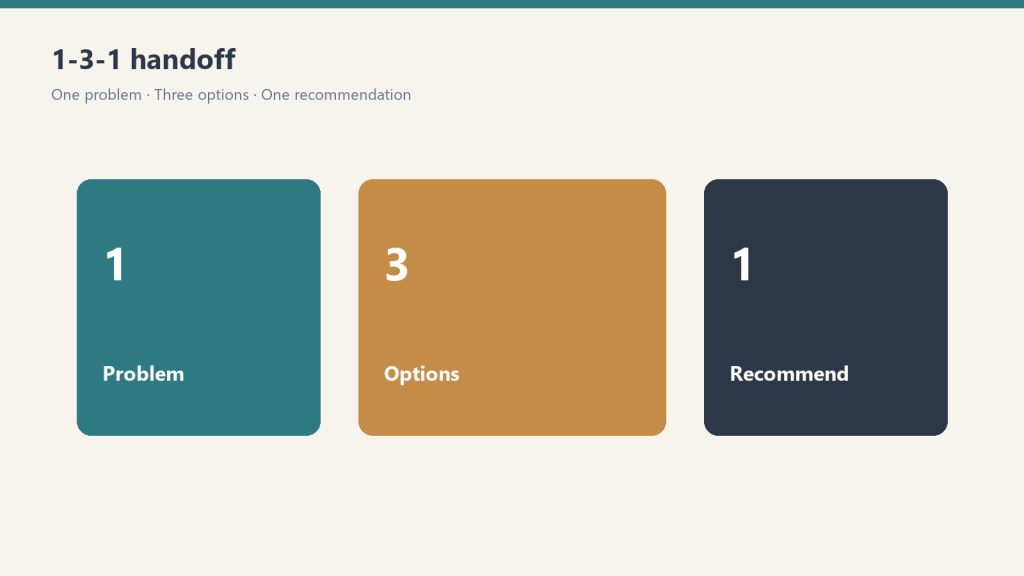
The first application is handoff briefing generation. Take the mitigation file at the close of dryout — the photos, the moisture readings, the equipment records, the supervisor’s notes, any pre-existing condition log — and produce a brief, well-structured summary that the rebuild estimator can read in two minutes to get up to speed on the file before opening it in detail. This briefing is not a replacement for the estimator’s review of the file. It is a five-minute compression of the half-hour of orientation work the estimator currently does manually. The briefing follows a documented template, draws on the captured operational standards described in the prep standard piece, and gets reviewed by the estimator before being relied on.
The second application is photo organization and tagging. Take the photo set from a job and produce a structured organization of those photos by location, condition documented, and audience relevance — the adjuster set, the rebuild estimator set, the homeowner reference set, the pre-existing condition log set. This work currently consumes meaningful operator time on every job and is currently done either inconsistently or not at all in most companies. Acceleration here improves the documentation quality discussed in the photo discipline piece at the same time that it frees operator capacity.
The third application is scope review acceleration. Take a draft scope written by an estimator and review it against the company’s documented standards, the carrier’s typical line item structure, and the file’s documented conditions, and produce a list of items the human reviewer should look at before submission — likely missing items, items that may be over-scoped, items where the supporting documentation is thin. The output is review notes for a human, not a finished scope. The human still does the work. The AI compresses the time spent on the routine review pass so the human’s attention goes to the items that actually warrant judgment.
The fourth application is customer-facing communication drafting — but with an important constraint. The AI drafts the communication. A senior team member reviews and sends. The AI never sends a customer communication directly. The constraint is what makes this application safe and useful. Drafting is high-volume, low-judgment work. Reviewing and sending is low-volume, high-judgment work. Splitting the two recovers the high-volume time while protecting the high-judgment moment.
The fifth application is internal training material generation. Take the company’s documented standards and produce role-specific training modules, scenario walkthroughs, decision practice cases, and onboarding materials. The training materials get reviewed and refined by the senior operator who owns training, but the volume of first-draft material the AI can produce dramatically reduces the time and energy required to keep the training program current as the standards evolve.
None of these five applications is glamorous. None of them generates a marketing story. Each of them recovers measurable senior operator time on every job, every week, every month. Stack five of them together and the company has recovered enough capacity at the senior layer to take on the operational improvements that were previously impossible because no one had time.
Why this works when the customer-facing approach fails
The reason documentation acceleration works as a starting point is structural, not coincidental. Several characteristics of the use case make it well-suited to current AI capabilities and well-protected against the failure modes described in the previous article.
The output is reviewed by a human before it has any external consequence. A bad handoff briefing is caught by the estimator who reads it before opening the file. A bad scope review note is caught by the estimator before the scope is submitted. A bad customer email draft is caught by the senior team member before it is sent. The review step is a structural safety net that prevents AI errors from becoming operational damage.
The work is high-volume and pattern-based, which is exactly the territory where current AI tools are most reliable. The hundredth handoff briefing is structurally similar to the first. The pattern is what makes the AI’s contribution consistent and improvable.
The success criteria are concrete and measurable. Senior operator time saved per week. Estimator review time per file. Documentation quality scores. These are numbers that go up or down based on whether the tool is working, which means the deployment can be evaluated on facts rather than on vendor narrative.
The use cases compound on each other. A company that invests in handoff briefing generation finds that the work also makes their photo organization sharper, which makes the scope review work cleaner, which makes the customer communication drafting more accurate, and so on. The early investment creates a foundation that makes the next investment more productive.
And critically, the use cases create the substrate that makes the more ambitious customer-facing AI applications possible later. A company that has spent eighteen months building documentation acceleration capabilities has, by the end of that period, a captured operational corpus that did not exist at the start. That corpus is the substrate that an eventual customer intake AI deployment would need in order to perform well. The documentation acceleration phase is, structurally, the preparation work for the more ambitious work that comes later.
The honest sequencing
For a restoration company starting AI work in 2026, the honest sequencing is this.
The first six to nine months go to documentation acceleration in the operational middle layer. Pick two or three of the five applications described above, embed a senior operator as the owner, set up the feedback loop with the team, and let the capability mature. The goal in this phase is not breakthrough impact. The goal is to build the company’s first reliable AI muscle and to start producing the captured operational corpus that future work will draw on.
The second nine to twelve months expand the documentation work to additional applications and start to add limited adjacent capabilities — meeting summarization, internal report generation, knowledge base curation, training assessment automation. The senior operator team has, by this point, developed an internal language for what AI is for and what it is not for, and the company can extend its capabilities with fewer false starts than a company doing this work cold.
The third year is the year the customer-facing applications become possible without unacceptable risk. By this point, the company has a documented operational standard, a captured corpus of internal communications, a feedback loop that catches drift, and a senior team that can evaluate AI outputs with judgment built from two years of working with the technology. Customer-facing deployments — intake assistance, scheduling automation, adjuster communication acceleration — can be approached with the operational maturity required to do them well.
This sequencing takes longer than most owners want it to take. It also produces, at the end of three years, an AI-augmented operating system that competitors who started with the customer-facing layer cannot replicate quickly. The patient sequencing is the moat.
What this means for owners deciding now
If you run a restoration company and you are deciding right now where to deploy AI first, the honest recommendation is to ignore the demos that look most exciting and to focus on the unglamorous middle-layer documentation work. Pick the application from the five described above that addresses the most painful documentation bottleneck in your current operations. Embed a senior operator as the owner. Commit to the deployment for at least nine months. Treat the early period as foundation-building rather than impact-producing.
This is not what your vendors will recommend. Vendors are incentivized to pitch the most visible, customer-facing applications because those are the easiest to demo and the hardest for the buyer to fairly evaluate. Vendors who recommend the documentation middle layer first are doing you a favor at the cost of their own short-term revenue, and they are rare. When you find one, take them seriously.
The owners who internalize this sequencing will, in three years, be running operations that are visibly different from their competitors’. The owners who chase the customer-facing demos will, in three years, have spent significant money on tools that did not change the trajectory of their business. The difference will not be about the tools. The difference will be about the order in which the work was done.
Next in this cluster: the senior operator as the source code — what it actually means to treat human judgment as the substrate of an AI deployment, and why this framing changes how owners think about hiring, retention, and operational documentation.
Leave a Reply