Everett Waterfront - Tygart Media

Category: Everett Waterfront

Port of Everett, $1B waterfront redevelopment, marina life, and waterfront news.

  • The Hub @ Everett Just Got a Course Correction: A Complete 2026 Guide to Brixton Capital’s Self-Storage and Office Pivot Where Topgolf Was Going

    The Hub @ Everett Just Got a Course Correction: A Complete 2026 Guide to Brixton Capital’s Self-Storage and Office Pivot Where Topgolf Was Going

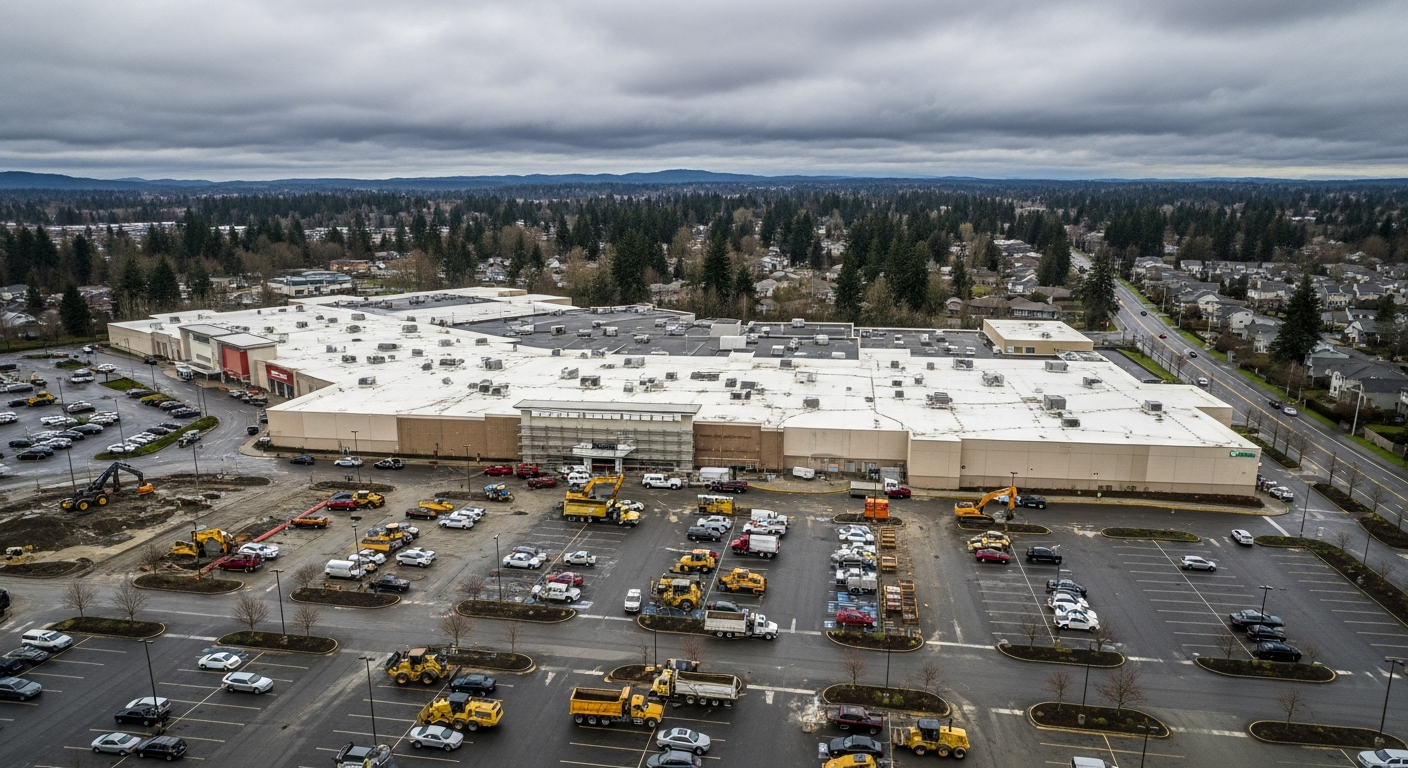
    Quick answer: Brixton Capital — the property owner of the former Everett Mall, now branded as The Hub @ Everett — filed a May 19, 2026 pre-application meeting request with the City of Everett for a project that consists of “the interior demolition of the existing enclosed mall structure and the conversion of a portion of the building into a self-storage facility,” with a 60,000-square-foot proposed office shown in the same site plan sitting where the long-promised Topgolf venue was going to be built. The pre-application is not a permit and not a final design, but it is the clearest signal yet that the original Hub @ Everett vision has shifted materially.

    The headline change, in plain language

    The original redevelopment vision for the old Everett Mall, marketed as The Hub @ Everett, called for an entertainment-led mix anchored by Topgolf and Chicken N Pickle, with the existing enclosed mall corridors being repurposed around those big-format draws. The Brixton pre-application now on file with the City of Everett describes a different mix: a self-storage conversion of part of the existing enclosed structure and a 60,000-square-foot office building sitting in the footprint that was being held for Topgolf.

    The change does not officially cancel Topgolf. Brixton has not issued a public statement walking the program back. The pre-application is a planning conversation with the city, not a final entitlement. But site plans submitted to a pre-application meeting do represent the property owner’s working intent at the time of filing, and the working intent has shifted away from the venue that was treated as the anchor for years.

    How we got here

    The Topgolf-at-Everett-Mall story has run on a long timeline. The mayor publicly confirmed Topgolf and Chicken N Pickle were coming to the redevelopment in 2024. Permit applications for the golf facility followed later that year. Topgolf solidified plans in late 2024. The Hub @ Everett rebranded the property and began phased opening of partial tenant spaces during 2025. Twin Creeks — the surrounding neighborhood that took its name from the buried creeks beneath the site — became part of the city’s broader narrative about reactivating South Everett.

    Two corporate developments quietly changed the calculus. Topgolf’s CEO Artie Starrs left for Harley-Davidson in 2025. On January 1, 2026, private equity firm Leonard Green & Partners closed on a 60% stake in Topgolf, acquired from Topgolf Callaway Brands for approximately $1.1 billion. New ownership and a CEO transition tend to trigger a portfolio review of pipeline locations. The Everett pre-application now on file is consistent with a portfolio decision that the Everett site is no longer in Topgolf’s near-term build pipeline — though neither company has confirmed that publicly.

    What the pre-application actually says

    From the city permitting portal, the Brixton Capital May 19, 2026 pre-application meeting is scheduled for a project described as the interior demolition of the existing enclosed mall structure and the conversion of a portion of the building into a self-storage facility. A 60,000-square-foot proposed office sits in the site plan where the Topgolf venue was being permitted. The pre-application format is a planning conversation between the developer and city staff to identify code, environmental, and infrastructure issues before a formal entitlement application is submitted. It does not approve anything; it scopes the conversation.

    What this means for the Hub @ Everett vision

    The Hub @ Everett was always two narratives stacked on top of each other. One was the entertainment-led reactivation — Topgolf, Chicken N Pickle, plus retail and restaurant follow-on. The other was the practical math of the mall building itself: a very large enclosed structure with declining traditional retail demand, sitting on a parcel with strong vehicle access from I-5 and the Everett Mall Way corridor. Self-storage is one of the most reliable uses for an oversized enclosed building when the entertainment math doesn’t work. Office at 60,000 square feet is meaningfully smaller than a Topgolf facility and works in a different revenue model entirely.

    The half-open Hub @ Everett that has been operating in 2026 — partial tenants, public corridors, the mall structure still standing — has been waiting on the entertainment anchor to define the rest of the program. The pre-application is the first signal that the program may now be defined by a different mix entirely.

    What hasn’t changed

    • Mall Station, the rebuilt and relocated transit station at the property, opened on the original schedule and continues to function regardless of the Hub redevelopment program.
    • The Twin Creeks neighborhood — the surrounding mall-adjacent area that renamed itself in 2026 — is unaffected by the program shift.
    • The half-open portions of The Hub @ Everett that have been operating during 2026 remain operating.
    • The pre-application is not a Topgolf cancellation. Either party could still revive the venue plan in a different form or location.

    What to watch next

    • The May 19 pre-application meeting outcome. Pre-application notes from the city often surface in public records and indicate which design and code issues are most material before a formal application is filed.
    • A formal entitlement application. Pre-applications typically lead to a formal land use application within months when the project is moving forward — or sit dormant when the developer is testing options.
    • Any Topgolf or Brixton public statement. Either party walking through their respective sides of this story would clarify what is now off the table and what is still possible.
    • The half-open mall corridors. Whether tenants continue to come into the existing partially-open Hub @ Everett, or whether the structure shifts toward a self-storage and office program, will be visible to anyone driving past the property over the next year.

    Frequently asked questions

    Is Topgolf no longer coming to Everett?

    Neither Brixton Capital nor Topgolf has issued a public cancellation. The May 19, 2026 pre-application Brixton filed with the City of Everett shows a 60,000-square-foot proposed office sitting where Topgolf was going to be built, alongside a self-storage conversion of part of the existing mall structure. That is a strong signal of a program change but not a formal cancellation.

    What is The Hub @ Everett?

    The Hub @ Everett is the rebranded redevelopment of the old Everett Mall by property owner Brixton Capital. Originally marketed as an entertainment-led mixed-use project anchored by Topgolf and Chicken N Pickle, with phased reuse of the existing enclosed mall structure.

    Who is Brixton Capital?

    Brixton Capital is the property owner and developer driving the Hub @ Everett redevelopment. The company is a private real estate investment firm.

    When is the Brixton pre-application meeting with the city?

    May 19, 2026.

    What is a pre-application meeting?

    A pre-application meeting is a planning conversation between a property owner and city staff to identify code, environmental, and infrastructure issues before a formal entitlement application is submitted. It does not approve anything — it scopes the conversation.

    Will Mall Station be affected?

    No. Mall Station, the rebuilt and relocated transit station at the property, opened on the original schedule and continues to function independently of the Hub redevelopment program.

    What does this mean for South Everett?

    The Hub @ Everett was a meaningful part of the South Everett reactivation narrative. A program shift from entertainment-led to self-storage-and-office is a different kind of reactivation — one that delivers some economic activity without the foot traffic that an entertainment anchor would have generated.

    Related Exploring Everett coverage

  • For South Everett Residents: What Brixton Capital’s Hub @ Everett Pivot to Self-Storage and Office Actually Means For Your Neighborhood

    For South Everett Residents: What Brixton Capital’s Hub @ Everett Pivot to Self-Storage and Office Actually Means For Your Neighborhood

    If you live in Twin Creeks, Westmont, Holly, or anywhere within walking distance of the old Everett Mall — now branded The Hub @ Everett — Brixton Capital’s May 19, 2026 pre-application meeting with the City of Everett is the most consequential signal you’ve gotten about what your neighborhood is actually going to become. Topgolf was the headline anchor. The pre-application now on file shows self-storage and a 60,000-square-foot office in the footprint where Topgolf was going to be built. Here’s what that means specifically if you live nearby.

    What the original Hub @ Everett vision was going to mean for your block

    The entertainment-led version of the Hub @ Everett — Topgolf, Chicken N Pickle, plus retail and restaurant follow-on — would have brought significant evening and weekend foot traffic to a corner of South Everett that has been quiet for years. The neighborhood-level effects would have included more restaurant demand, more nighttime activity, and more on-the-block jobs in the entertainment and food service categories. It would also have brought significant evening and weekend traffic patterns to Everett Mall Way and the I-5 interchange.

    What the new pre-application program would mean instead

    Self-storage and office produce a fundamentally different neighborhood pattern. Self-storage is low-traffic, weekday-tilted, and brings essentially no evening foot traffic. Office at 60,000 square feet — depending on tenant mix — produces weekday daytime traffic during commute hours and almost nothing on evenings and weekends. The aggregate footprint that would have been Topgolf becomes a much quieter use.

    For residents who were looking forward to a walkable evening destination, the pivot is a step backward. For residents who were dreading the traffic and noise that an entertainment anchor would have brought, the pivot is a step in a different direction. Both reactions are reasonable.

    What hasn’t changed for the neighborhood

    • Mall Station is still functional. The rebuilt and relocated transit stop opened on schedule and operates regardless of what happens with the Hub redevelopment program. Your Community Transit access is unaffected.
    • The Twin Creeks neighborhood identity is still intact. The neighborhood that took its name from the buried creeks beneath the mall renamed itself in 2026. That identity sits independently of the property’s eventual program.
    • The half-open mall corridors continue to operate. The partial-tenancy version of the Hub @ Everett that has been functioning during 2026 continues. The pre-application doesn’t immediately change what’s open today.
    • The Westmont-Holly Neighborhood Association still meets first Mondays at Horizon Elementary. The Hub program shift is the kind of issue worth bringing to neighborhood meetings — but the meetings themselves and the city’s neighborhood structure are unchanged.

    What you can actually do with this

    The pre-application is a planning conversation, not an approval. Several practical things are still on the table for residents:

    • Watch for the formal land use application. Pre-applications often lead to formal applications within months when the project is moving forward. The formal application is the public-comment moment.
    • Bring it to your neighborhood association meeting. The Westmont-Holly Neighborhood Association meets first Monday at Horizon Elementary. Twin Creeks and surrounding neighborhood groups have similar standing meeting cadences. Programmatic concerns about a major property like this are exactly what neighborhood meetings are for.
    • Talk to your council member. The Hub @ Everett property’s program decisions are private but the city’s permitting process is public. Council members hear from constituents about properties like this and can sometimes shape the conversation through staff direction or public statement.
    • Use the half-open period to actually visit. The Hub @ Everett’s existing partial-open corridors and tenants are still operating. The more those tenants succeed, the better the case for a more activated final program.

    The bigger question this raises

    South Everett has been waiting for the Hub @ Everett to define what kind of neighborhood the property would create. Self-storage and office is one answer — quieter, less foot-traffic-intensive, more daytime-only. The Topgolf-anchored vision was a different answer. Neither is finalized; the pre-application is the first signal of which direction the property owner is currently leaning.

    For residents, the practical work between now and the formal application is to decide what you actually want from this corner of your neighborhood — and to make that view known to the people who shape the city’s response.

    Frequently asked questions for South Everett residents

    Is Topgolf cancelled?

    Not officially. Neither Brixton Capital nor Topgolf has issued a public cancellation. The May 19, 2026 pre-application Brixton filed shows a 60,000-square-foot office where Topgolf was going to be — that’s a strong signal but not a formal end of the venue plan.

    What is replacing Topgolf at the Hub @ Everett?

    The pre-application shows a self-storage conversion of part of the existing enclosed mall structure plus a 60,000-square-foot proposed office sitting where the Topgolf venue was going to be built.

    Will this affect Mall Station?

    No. Mall Station opened on schedule and operates independently of the Hub redevelopment program.

    Will the Twin Creeks neighborhood identity change?

    No. The neighborhood that renamed itself after the buried creeks beneath the mall site has its own identity independent of what the property eventually becomes.

    How can residents have input?

    Watch for the formal land use application that typically follows a pre-application meeting. The formal application is the public-comment moment. The Westmont-Holly Neighborhood Association meets first Monday at Horizon Elementary; surrounding neighborhood groups have similar cadences.

    Are the existing tenants at the Hub @ Everett staying?

    The half-open corridors and tenants that have been operating in 2026 continue to operate. The pre-application is for changes to the larger building program, not an immediate displacement of current tenants.

    Related Exploring Everett coverage for South Everett residents

  • Snohomish County’s April 2026 Housing Market Has a Number Most Reports Miss: Sales Activity Intensity at 54.9%

    Snohomish County’s April 2026 Housing Market Has a Number Most Reports Miss: Sales Activity Intensity at 54.9%

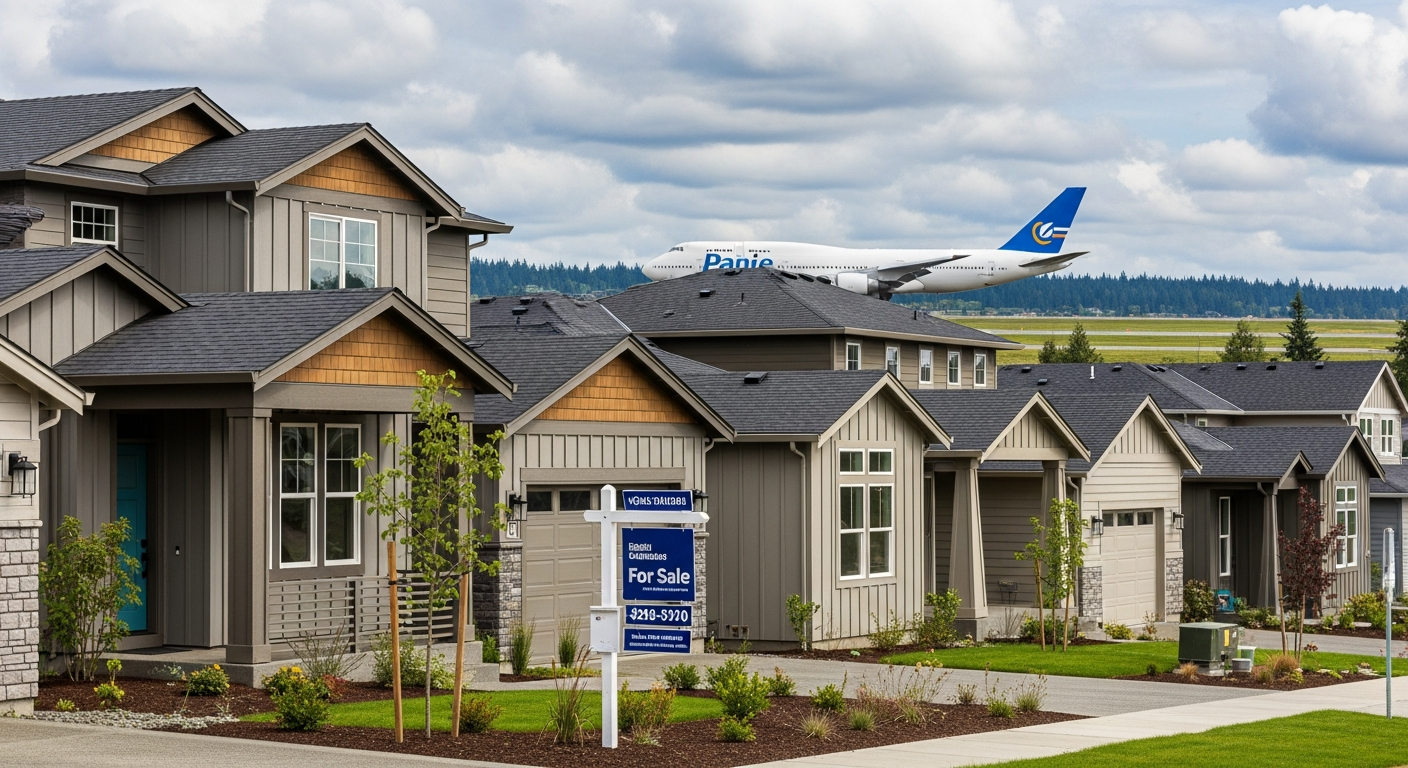
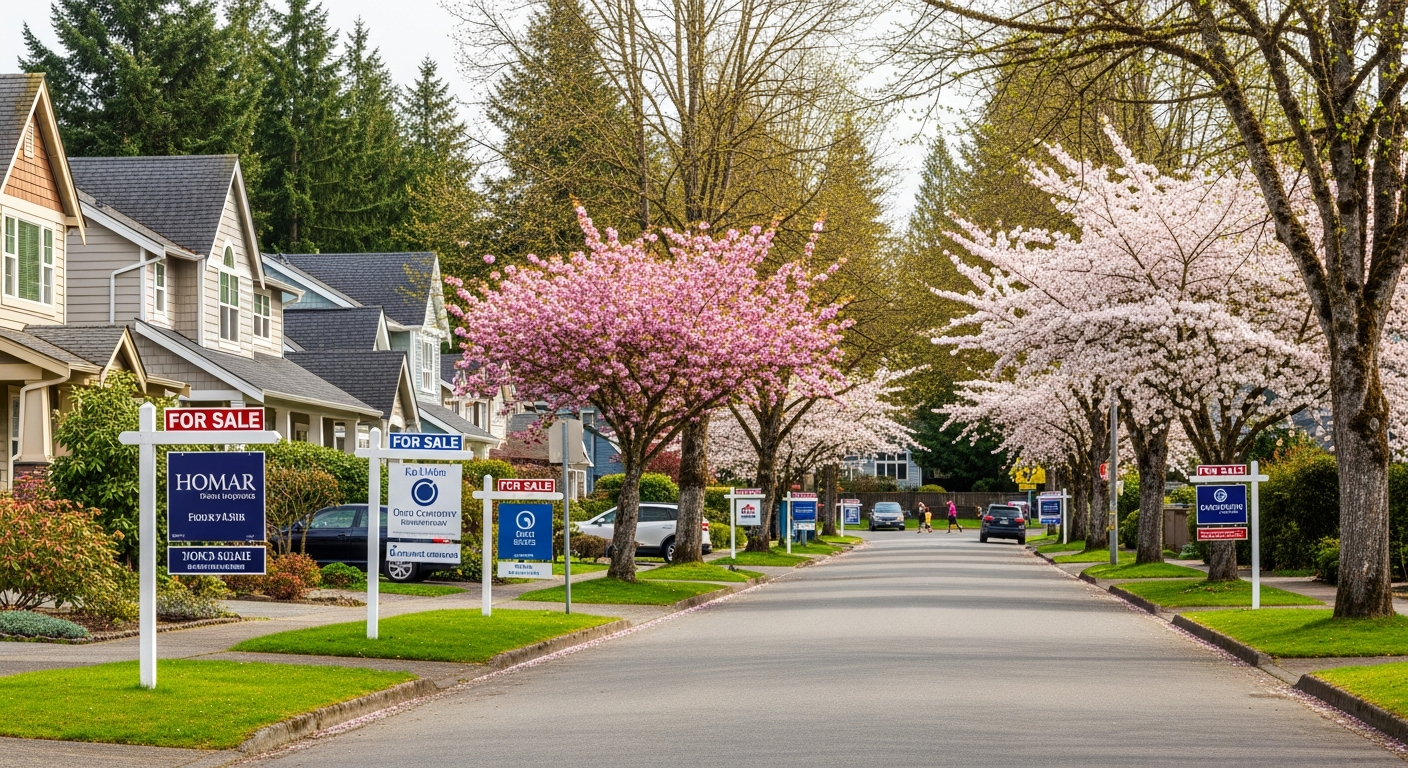
    What’s the headline number from the Madrona Group’s April 2026 Snohomish County housing report? Sales Activity Intensity came in at 54.9%, down only slightly from 56.0% the month before — meaning more than half of all listings still went pending within the first 30 days. Inventory tightened to 1.6 months. Mortgage rates moved up to 6.45%. Single-family resale prices held near $877,000 with homes selling at 99.8% of list price. The market did not slow down the way the inventory headlines suggested.

    You probably read yesterday’s coverage of Snohomish County’s April housing market — the NWMLS data showing inventory up 51.8% year-over-year, the median sale price at $738,000, the 2.8 months of supply. That is one accurate way to read this market. Here is another, also accurate, with very different implications.

    The Madrona Group dropped its April 2026 Snohomish County report this week, and it does not look like a market that lost its footing. It looks like a market that is moving slower at the top of the funnel — fewer homes coming on, fewer offers per listing, more buyer hesitation — but where the deals that do happen are happening fast and at strong prices.

    The number we want to focus on is Sales Activity Intensity — and we are going to explain it because it is not a number that shows up in every market report and most readers have never seen it framed this way.

    What Sales Activity Intensity actually measures

    Sales Activity Intensity is the share of all active listings that go pending within the first 30 days on the market. Not closed — pending. Pending is the moment a buyer’s offer has been accepted and the deal is moving toward closing. It is the moment when the market said yes.

    A 54.9% Sales Activity Intensity in Snohomish County for April 2026 means that more than one out of every two homes that listed last month had a buyer say yes within 30 days. That is a fast market. It is fast even after a small dip from March, when the same number was 56.0%.

    For comparison, a market that is genuinely cooling — homes sitting, sellers cutting prices, buyers waiting — typically shows Sales Activity Intensity drop into the 30s or below. When intensity drops below 30%, sellers start to see real concessions show up at the closing table. That is not what we have right now.

    What’s behind the number

    Three factors are working at once in the April 2026 Madrona Group data, and none of them point in the same direction:

    Mortgage rates moved up to 6.45%. That is up from earlier in the year and up enough to price some buyers out at the margin. Higher rates almost always slow demand. They have slowed it some — but they have not killed it.

    Inventory tightened to 1.6 months. A balanced market in real estate is usually 4 to 6 months of inventory. At 1.6 months, Snohomish County is still well into seller’s-market territory. Note this is the Madrona Group’s specific measurement — the broader NWMLS data on the same county shows 2.8 months because the two reports use slightly different inventory definitions and time windows. Both are true. The Madrona number is the tighter view.

    Single-family resale prices held near $877,000 with homes selling at 99.8% of list price on average. When buyers are paying within 0.2% of the asking price, they are not negotiating much. They are competing.

    Put the three factors together: rates went up, but the homes that are listed are still moving fast and selling at almost full asking. The buyers who are still in the market have stopped flinching.

    What this looks like on the ground in Everett

    Everett sits inside the Snohomish County data but does not behave exactly like the county average. The city’s median sale price runs lower than the county figure — Redfin had Everett’s most recent typical home value near $620,000, well under the $738,000 county median that NWMLS reported. The reasons are familiar: more starter homes, more condos, more older housing stock, more variation between neighborhoods.

    The Sales Activity Intensity dynamic still applies in Everett. A waterfront condo at Sawyer or Carling priced reasonably is going pending in days, not weeks. A starter home in Delta or Riverside priced at the neighborhood median is doing the same thing. What sits is what is overpriced. What sits is what assumes the market is still set to 2022.

    We have seen this pattern in our own coverage — the April 2026 condo market story we published last week showed Snohomish County condo averages up 4.4% year-over-year and Everett condos selling in a 22-day median at 99% of list. That is the same fast-but-narrow market the Madrona report is describing, just on a different property type.

    What this means for buyers right now

    If you are buying in Snohomish County in May 2026 and you have been waiting for the market to break, the Madrona data is the latest signal that a wholesale break is not coming. Specific properties will be soft. Specific sellers will negotiate. But the broad market is still leaning seller.

    A few practical takes from how this number sits:

    • Stop waiting for the price to come down before you make an offer. At 54.9% Sales Activity Intensity, the home you are watching probably already has another offer. The price you saw on Zillow last Tuesday may not be the price that closes.
    • Get rate-locked before you write an offer. With rates at 6.45% and trending up rather than down, the rate you can get this week is probably better than the rate you can get if you wait three weeks. A 0.25% rate move on a $620,000 Everett home is roughly $90 a month for the life of the loan.
    • The 99.8% of list price number is the real number. If you are writing offers at 95% of list and watching them lose, that is why. The market is not built for 95% offers right now.

    What this means for sellers right now

    If you are selling in Snohomish County, the Madrona data is telling you something sellers sometimes miss: price-to-list discipline matters more than ever.

    • Price it right and it goes pending in 30 days. Price it 5% high and it sits — and the market has been trained to read sitting as a problem. The 30-day window is the window where intensity captures your home as a fast mover. Past 30 days, you are competing with newer listings.
    • The 99.8% of list price number cuts both ways. You probably will not get more than asking. You also will not have to take much less than asking. So price it where you are happy to close.
    • Inventory is tight but moving up. The Madrona number says 1.6 months, the NWMLS number says 2.8 months — both are tighter than 4-6, but both are looser than 12 months ago. If you have been on the fence about listing, the supply side is finally giving you some company on the market. Earlier was easier. Now is still good.

    How this fits with everything else we know about Snohomish County in April 2026

    This week alone we have seen:

    • The NWMLS report showing 51.8% year-over-year inventory growth and 2.8 months of supply
    • The Madrona Group report showing 1.6 months supply and 54.9% Sales Activity Intensity
    • Snohomish County condo data showing 4.4% YoY appreciation and 22-day Everett median time on market
    • Mortgage rates moving up to 6.45%, the highest level since fall 2025
    • The Sage Investment Econo Lodge studio-apartment conversion announcement in South Everett — 124 new units coming online by August 2026

    None of those data points contradict each other. They are all measuring different parts of the same market. The market is more inventory than it had, fewer offers than it had, slower at the top of the funnel — and still selling fast and near asking when the property is priced right. That is a more complicated story than “the market is hot” or “the market is cooling.” It is the market being different things at the same time depending on which lens you bring.

    The Madrona Group report adds a useful lens: the velocity at which deals close, not just the count of homes listed. That velocity number is what tells you whether the market still works. In April 2026, in Snohomish County, it still works.

    Frequently Asked Questions

    What is Sales Activity Intensity in real estate?

    Sales Activity Intensity is the percentage of all active listings that go pending — meaning a buyer’s offer has been accepted — within the first 30 days on the market. It is a velocity measure of how fast the average home is moving. Above 50% indicates a fast seller’s market; below 30% indicates real cooling.

    What was Snohomish County’s Sales Activity Intensity in April 2026?

    54.9%, according to the Madrona Group’s April 2026 Snohomish County housing market report. That is down slightly from 56.0% in March. Both numbers indicate a strong seller’s market.

    What are mortgage rates in Snohomish County right now?

    The 30-year fixed rate referenced in the April 2026 Madrona report is 6.45%. Rates have ticked up from earlier in the year. Individual rate quotes vary by lender, credit score, down payment, and loan size.

    Why does the Madrona Group report say 1.6 months of inventory and the NWMLS report say 2.8 months?

    They use slightly different inventory definitions and time windows. The Madrona Group’s measure tends to capture a tighter view focused on actively moving listings. NWMLS uses a broader inventory definition that includes some listings the Madrona view excludes. Both are accurate; both reflect a Snohomish County market still well below the 4-6 month range that defines balance.

    What is the median home price in Snohomish County in April 2026?

    The April 2026 NWMLS report listed the county median sale price at $738,000. The Madrona Group report references single-family resale prices holding near $877,000, which uses a different scope (single-family resale only, with different geographic weighting). The two numbers describe overlapping but not identical slices of the market.

    Is now a good time to buy a home in Everett?

    “Good” depends on your specific situation — your down payment, your job stability, your timeline, the neighborhood you’re targeting. What the April 2026 data says broadly: prices are not falling, inventory is up but still tight, and rates are higher than they were earlier in the year. Waiting for a wholesale price break is currently not what the data supports. Talk to a local agent and a local lender about your specific math.

    Is now a good time to sell a home in Everett?

    Yes, if it is priced right. The market data says homes priced at the neighborhood median are going pending within 30 days at 99.8% of list. Homes priced 5%+ above the neighborhood median sit. Pricing discipline is the difference between a fast sale and a long sit.

  • Everett Mall’s Hub Vision Just Got Smaller: Brixton Capital Files for Self-Storage and Office Where Topgolf Was Going

    Everett Mall’s Hub Vision Just Got Smaller: Brixton Capital Files for Self-Storage and Office Where Topgolf Was Going

    What just changed at Everett Mall? Brixton Capital — the mall’s owner — has scheduled a May 19, 2026 pre-application meeting with the City of Everett to convert a portion of the existing enclosed mall into a self-storage facility, with a 60,000-square-foot proposed office sitting where Topgolf’s hitting bays were going to go. Topgolf was supposed to be the Hub @ Everett’s anchor tenant. Now it may not happen at all.

    For two years the story we got told about Everett Mall was the Hub. Brixton Capital — the San Diego-based real estate group that bought the property — and the City of Everett came out together in 2024 with renderings of an outdoor walkable destination, retail recolored from the inside out, and a 68,000-square-foot, three-level Topgolf as the anchor pulling everyone in. The permits were filed. The 11-acre site was mapped. The narrative held.

    That narrative is now bending.

    On the City of Everett’s permitting portal this week, Brixton Capital has scheduled a May 19, 2026 pre-application meeting for a project described as “the interior demolition of the existing enclosed mall structure and the conversion of a portion of the building into a self-storage facility. The scope also includes subdivision actions to place the proposed storage use on a separate legal parcel.”

    That alone would just be news that the demolition we’ve all been waiting for is finally getting paperwork moving. But the latest site plan that came in with the application tells a different story.

    What the new site plan shows

    Two things sit on the new Brixton site plan that were not on the Hub renderings.

    The first is a single-story building labeled “Everett Mall Self Storage.” It sits where a parking lot was going to be in the Hub vision — so it is not directly displacing Topgolf. But it is also not what anyone signed up for when this redevelopment started. There are already a dozen self-storage facilities within five miles of the mall. None of them are destinations. None of them generate the foot traffic that a mall reinvention needs to work.

    The second is more telling: a 60,000-square-foot building labeled “Proposed Office” that sits squarely on the footprint where the Topgolf hitting bays and outfield were going to go. The old LA Fitness building, which was supposed to come down to make room for Topgolf, now appears in the plan as something that will either be salvaged or replaced to provide that office space.

    Topgolf needs the area marked for the office. The office is in the area Topgolf needed.

    The two plans cannot both be true.

    Why this might be happening

    Topgolf’s parent company has been in restructuring mode since the same window the Everett permits were getting approved. Topgolf Callaway Brands announced a corporate split, then Topgolf CEO Artie Starrs left for Harley-Davidson in 2025. On January 1, 2026, private equity firm Leonard Green & Partners completed an acquisition of a 60 percent stake in Topgolf from Topgolf Callaway Brands for approximately $1.1 billion. Industry coverage has framed the entertainment chain’s recent decline as a problem of over-expansion — too many venues opened too fast, with the new ones cannibalizing the older ones.

    In other words: Topgolf is in pullback mode, not expansion mode. New venues that were promised but never officially confirmed by Topgolf corporate — like Everett — are exactly the kind of project that quietly disappears in a private-equity restructuring.

    Neither Brixton Capital nor Topgolf has officially said the Everett venue is dead. The City of Everett has not announced a change. But the new site plan does the talking.

    What we covered before — and what’s different now

    We wrote about The Hub @ Everett a week ago, on April 25, when the story was that Topgolf was stuck — permitted in January 2025, but on hold pending corporate restructuring. The construction never started. The 11-acre footprint sat untouched. At that point the question was whether Topgolf would eventually break ground or whether Brixton would have to find a new anchor.

    The May 19 pre-application meeting is the answer to that question. Brixton is not waiting on Topgolf anymore. Brixton is moving forward with a different building program for that footprint. Even if Brixton hopes Topgolf eventually shows up, the site plan being submitted to the City does not assume Topgolf shows up. That is the meaningful change.

    It is also a quiet downgrade of what The Hub was supposed to be. A self-storage building and a 60,000-square-foot office building are not the kind of tenants that bring people to a mall on a Saturday. Alderwood Mall down in Lynnwood is full on Saturdays. People circle the parking lot waiting for spots. That is what a working mall in 2026 looks like. A storage facility and a cubicle building is not in that category.

    What this means for the larger Everett Mall picture

    The Hub @ Everett sits on 11 acres in the Twin Creeks neighborhood and is the largest single retail-redevelopment project in South Everett. The mall as a whole is roughly 800,000 square feet of building on a much larger campus. Brixton’s original sales pitch for The Hub assumed Topgolf would draw the foot traffic, which would justify upgrades to the rest of the campus — Ulta Beauty and At Home are already moving into the former Sears box, and the relocated Mall Station opened in December 2025. The walkable outdoor reorientation only works if the anchor pulls.

    If the anchor turns out to be a storage building and an office, the rest of the upgrade math gets harder. Tenants pay rent based on the foot traffic they expect. Foot traffic projections that assumed a Topgolf are not the projections you get with self-storage.

    There is still room for another pivot. Brixton could find another entertainment anchor — a movie theater, a family entertainment center, a fitness destination — and the storage and office plans become the backup. The May 19 meeting is a pre-application discussion, not a building permit. Things can still change between now and the actual permit filing.

    But for right now, what the City of Everett’s permitting portal shows is a mall that planned to be a destination and is being re-planned around uses that nobody drives across town to visit.

    The May 19 pre-application meeting: what it is and what it isn’t

    A pre-application meeting in Everett is the very first formal step a developer takes with the city before submitting actual building permits. It’s a planning-staff conversation — the developer brings their concept, the city tells them what regulations will apply, what studies they’ll need, what review process the project will go through. It is not a public hearing. There is no vote. There is no decision.

    But it does signal seriousness. Pre-application meetings cost money to schedule and prepare for. Developers don’t book them for ideas they’re not pursuing. When a project shows up on the pre-app calendar, it means the developer has internal alignment to keep moving forward with that specific concept.

    So the May 19 meeting is the equivalent of Brixton telling the city: this is what we’re actually planning to build now. The Hub @ Everett brochure is no longer the operative document. The new site plan is.

    What we’ll be watching

    A few things to track in the coming weeks:

    • The actual building permit application. A pre-application meeting usually produces a building permit application within three to nine months. Whatever Brixton submits formally will tell us whether the storage-and-office concept holds or whether they pivot again.
    • Any official Topgolf statement. Leonard Green & Partners has been making public moves since taking control on January 1. A formal cancellation of Pacific Northwest expansion would clarify a lot.
    • Brixton’s leasing posture for the rest of The Hub. If self-storage and office are now in the program, the retail pitch to other tenants changes. Watch for tenant announcements that downshift from the original Hub vision.
    • City of Everett response. The original Hub deal involved zoning and permitting cooperation from the city. A meaningful program change at the site may trigger new city review — especially if the storage building requires the subdivision Brixton is also proposing.

    Frequently Asked Questions

    Is Topgolf coming to Everett Mall?

    As of May 2026, no construction has started, no Topgolf representative has confirmed the Everett location publicly, and Brixton Capital — the mall owner — has filed a pre-application with the City of Everett showing a 60,000-square-foot office building in the exact footprint Topgolf was going to occupy. The official permits from January 2025 are still on the books, but the new site plan does not assume Topgolf is happening.

    Who owns Everett Mall?

    Brixton Capital, a San Diego-based real estate firm, owns Everett Mall. Brixton acquired the property and announced The Hub @ Everett redevelopment plan in 2024.

    What is the Hub @ Everett?

    The Hub @ Everett is the marketing name Brixton Capital and the City of Everett gave to the planned redevelopment of the existing enclosed Everett Mall into a more walkable, outdoor-oriented retail and entertainment destination. The original anchor was supposed to be a 68,000-square-foot Topgolf venue.

    When is the Brixton pre-application meeting?

    May 19, 2026, with the City of Everett’s planning staff. This is a pre-application discussion, not a public hearing — there is no public comment period and no vote.

    What did Brixton apply to build?

    According to the City of Everett’s permitting portal, the May 19 application covers the interior demolition of the existing enclosed mall, conversion of a portion of the building into a self-storage facility, and subdivision of the storage use onto its own legal parcel. The accompanying site plan shows a 60,000-square-foot proposed office building in the area where Topgolf was going to be built.

    Is the rest of The Hub redevelopment still happening?

    Yes — Ulta Beauty and At Home are still moving into the former Sears box, the relocated Mall Station opened in December 2025, and other tenant work continues. The pre-application change appears specific to the Topgolf footprint and the previously-planned parking lot area where the storage facility would now sit.

    When would construction actually start?

    A pre-application meeting is the first step. A formal building permit application typically follows three to nine months later, and construction starts after the permit is issued. So even if the storage-and-office concept holds, ground-breaking is at minimum late 2026 and more likely 2027.

    Deeper coverage in the Hub @ Everett Pivot Cluster:

  • For Everett Community College Students: What the Baker Hall Redesign Means for Cosmetology, Theater, and Your 2026-2028 Plans

    For Everett Community College Students: What the Baker Hall Redesign Means for Cosmetology, Theater, and Your 2026-2028 Plans

    For Everett Community College Students: What the Baker Hall Redesign Means for Cosmetology, Theater, and Your 2026-2028 Plans

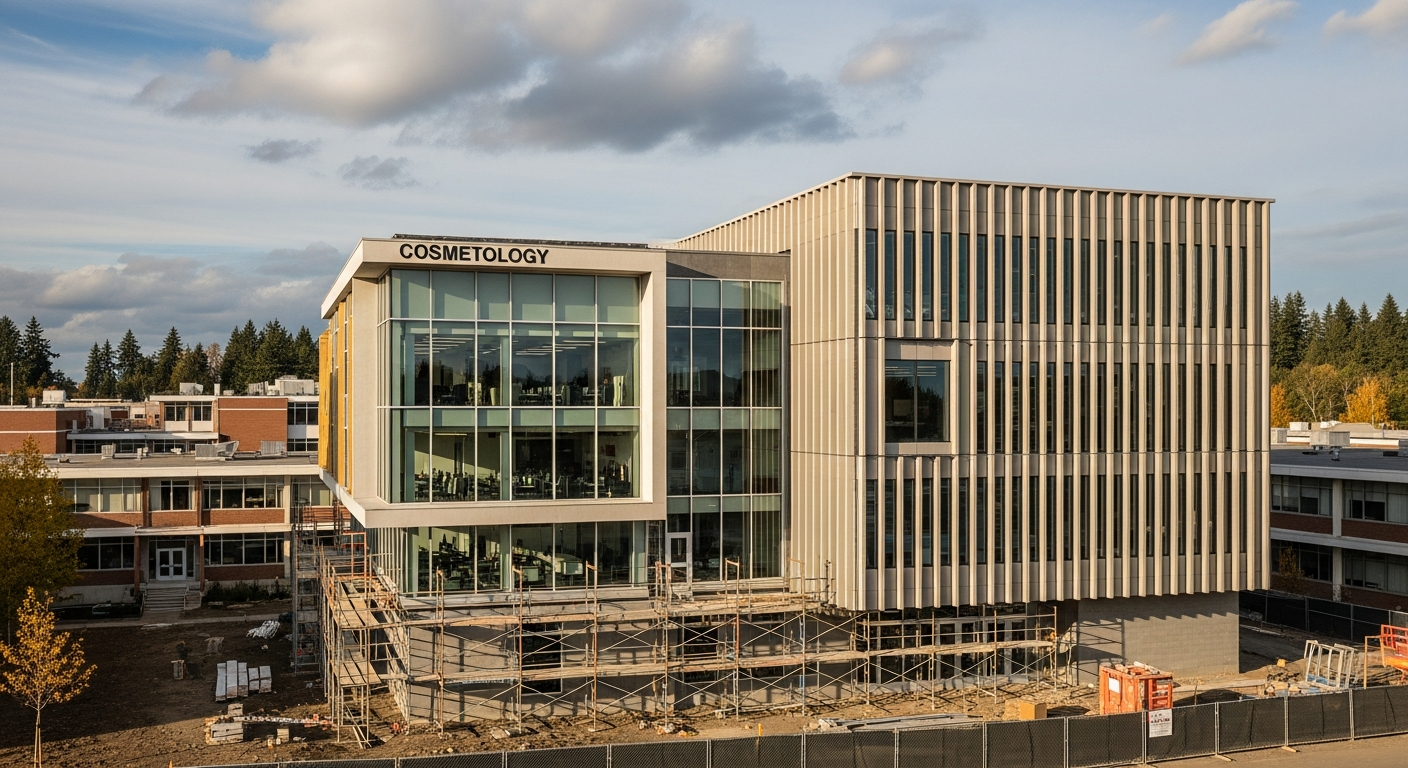
    If you are at EvCC right now, or thinking about enrolling for fall 2026, or about to apply to the cosmetology or theater programs, the Baker Hall news matters in a specific way for you. The replacement building got smaller. The 2028 opening is still on. Your programs still get the spaces they were promised. But the way the campus looks between now and winter 2028 — and the building you eventually move into — has changed.

    This is the student-and-prospective-student guide to what the redesign means and what to plan around.

    Your Programs Are Safe

    The redesign cut roughly 10,000 square feet from the original 32,000-square-foot Baker Hall plan. What got preserved through the cuts:

    The cosmetology wing. A working salon with the plumbing, ventilation, and station layout cosmetology training requires. Classrooms. Meeting spaces. Department offices. None of that came out of the design.

    The 250-seat theater. A real performance space with dressing rooms, a set-construction shop, costume storage, and the support classrooms a theater program needs. The 250-seat figure stayed.

    What was cut was slack — the circulation space, the future-flex rooms, the breathing room around the core program functions. As a student, you will probably not notice that on day one in 2028. You will notice it five or ten years later if the program grows beyond what the smaller building can hold. That is a future-EvCC problem, not a current-student problem.

    What’s Happening Until Winter 2028

    The 1962 Baker Hall has not housed students in roughly two years. That means whatever interim arrangement your program is in right now is the arrangement that continues through 2026 and most of 2027. If you are in cosmetology, you are using the current cosmetology training facilities EvCC arranged when the old Baker Hall was vacated. If you are in theater, the same applies.

    The redesign does not change those interim arrangements. It just delays demolition of the old building so the construction window aligns with the revised drawings. Demolition is now timed against the new construction schedule, not happening on the original 2025 calendar.

    What Winter 2028 Looks Like

    If you are a current EvCC cosmetology or theater student on a two-year track, winter 2028 may be after your graduation. If you are on a longer track or you transfer in for fall 2026 or fall 2027, you may be the first cohort to take classes in the new Baker Hall. That cohort gets:

    • A modern cosmetology salon with proper plumbing, ventilation, and station infrastructure
    • A 250-seat theater with proper backstage, fly space, dressing rooms, and set-construction support
    • Classrooms designed around current teaching models, not 1962 teaching models
    • A building meeting current seismic, accessibility, and mechanical standards

    Those are real upgrades over what either program could ever deliver inside a 64-year-old building.

    What the Redesign Means If You’re Choosing EvCC

    If you are deciding whether to enroll at EvCC for cosmetology or theater specifically because of Baker Hall:

    The 2028 opening is on the table but not guaranteed. Public construction projects can slip. A six-month or one-year slip would not be unusual; a multi-year slip would be unusual but not impossible. Plan around winter 2028 with the understanding that fall 2028 is also possible.

    The program quality does not depend on the building. EvCC’s cosmetology and theater programs have been running through the entire Baker Hall transition. The quality of instruction is not waiting for 2028. If you start in fall 2026, you will get the program — just not in the new building.

    The smaller redesign is still a real upgrade. A 22,000-square-foot purpose-built building with a working salon and a 250-seat theater is meaningfully better than what the 1962 Baker Hall could have offered even after a renovation. The cuts removed slack, not core function.

    What to Watch For

    If you want to track the project’s progress as a student, the milestones to look for:

    • Construction documents revised and re-permitted (2026)
    • Cornerstone Construction trade-package rebids (2026)
    • Demolition of the 1962 Baker Hall
    • Foundation and shell work (2027)
    • Interior fit-out and inspections (late 2027)
    • Move-in and program opening (winter quarter 2028)

    EvCC’s facilities communications and the school’s board minutes are the most reliable sources for milestone updates as they happen.

    The Practical Takeaway

    If you are a cosmetology or theater student, the redesign is, on balance, a good outcome. The alternative — a project killed for budget — would have meant no new Baker Hall at all. The alternative — a supplemental appropriation request — would have meant a 12-18 month delay while Olympia worked through the request, with no certainty of approval. Cutting scope to keep the 2028 opening preserves the deliverable.

    The deliverable is what you actually need: a working salon for cosmetology training, a real theater for theater performance and production training, and modern classrooms for the support coursework. That is what arrives in winter 2028. Just slightly smaller than the original drawings showed.

    Frequently Asked Questions

    Does the Baker Hall redesign change EvCC’s cosmetology program?

    No. The cosmetology wing, including the working salon, was preserved through the redesign. The program continues as currently arranged through 2027 and moves into the new building in winter quarter 2028.

    Is EvCC’s theater program still getting a 250-seat theater?

    Yes. The 250-seat theater, dressing rooms, set-construction shop, and costume storage all survived the redesign.

    When does the new Baker Hall open for classes?

    Winter quarter 2028 is the current target. Demolition of the 1962 Baker Hall has been aligned with the revised construction window.

    What is happening to my program until winter 2028?

    The 1962 Baker Hall has not housed students for roughly two years, so program arrangements that have been in place since the building was vacated continue through the construction window. The redesign does not change those interim arrangements.

    Is the new Baker Hall smaller because EvCC is shrinking the program?

    No. The 10,000-square-foot reduction came from circulation space, flex space, and support functions — not from program-critical spaces. The cosmetology salon, the 250-seat theater, and the supporting classrooms were preserved at full scope.

    Could the 2028 opening still slip?

    Yes. Public construction projects can hit permit, supply, or labor delays. A short slip is not unusual; a multi-year slip would be unusual. Students should plan around winter 2028 with awareness that fall 2028 is possible.

    Will the new building be more accessible than the 1962 Baker Hall?

    Yes. New campus construction in Washington must meet current ADA and accessibility standards. The 1962 building was designed before those standards existed and would have required near-complete reconstruction to comply.


    Related Exploring Everett coverage:


  • Everett Community College’s $38 Million Baker Hall Replacement: The Complete 2026 Guide to the Redesign, the Programs, and the Winter 2028 Opening

    Everett Community College’s $38 Million Baker Hall Replacement: The Complete 2026 Guide to the Redesign, the Programs, and the Winter 2028 Opening

    Everett Community College’s $38 Million Baker Hall Replacement: The Complete 2026 Guide to the Redesign, the Programs, and the Winter 2028 Opening

    Most college construction stories that hit a budget wall get smaller, slower, or quieter. Everett Community College’s Baker Hall replacement just hit the wall — and the result is a campus project that got smaller, kept its core programs, kept its 2028 opening, and is more useful as a case study for state-funded capital construction in 2026 than a typical campus building update would be.

    Here is the complete 2026 guide to what is happening at Baker Hall: the $37.9 million project, what got cut, what survived, why the schedule still works, and what the building means for EvCC students, the cosmetology program, the theater program, and the surrounding waterfront-adjacent campus footprint.

    What Just Changed

    EvCC paused the Baker Hall rebuild and shrank the planned new building by about 10,000 square feet, citing rising construction costs. The original design called for 32,000 square feet. The revised version comes in at roughly 22,000 square feet — a third smaller.

    What did not get cut: the core program elements. The new Baker Hall still includes:

    • A dedicated cosmetology wing — including a working salon, classrooms, meeting spaces, and offices for the cosmetology department
    • A 250-seat theater with dressing rooms, a set-construction shop, and costume storage
    • Additional classroom space layered around those two anchors

    What got cut, in plain terms, is the slack. The square footage that allowed flex space, larger circulation areas, and room to grow programs into the building over the next decade — that is the part that gave way to the budget math. The bones of the program survive. The breathing room around them does not.

    The 2028 Target Is Still On

    Even with the redesign, EvCC is aiming for a winter quarter 2028 opening. That is the operational target the school is working toward right now. Demolition of the existing 1962 Baker Hall — which has not seen students in roughly two years — has been delayed to align with the revised construction window, but the timeline to having students in the new space has not slipped beyond winter 2028.

    A 2028 opening from a 2026 redesign is a real schedule. It requires:

    • Construction documents revised to the new scope
    • Permits refreshed against the revised drawings
    • Cornerstone Construction rebidding the trade packages with the smaller scope
    • Mobilization and site work in 2026
    • Foundation and shell in 2027
    • Interior fit-out and inspection in late 2027
    • Occupancy and program move-in for winter 2028 quarter

    Each of those steps has float built in, but not a lot of it. A 2028 opening is achievable; a slip to fall 2028 or beyond is not unimaginable if any of those phases hits a snag.

    The Players

    The professionals on the project:

    • Architect: McGranahan PBK, selected in February 2025
    • Contractor: Cornerstone Construction, brought on in May 2025
    • Funder: Washington State, through the 2023–25 capital budget cycle, with the $37.9 million allocation
    • Owner: Everett Community College

    That team has been in place for over a year. Keeping the architect and contractor through the redesign — instead of restarting procurement — is the move that protects the 2028 schedule. Restarting would have meant another 12-18 months easily.

    What Got Cut: The Slack, Not the Bones

    It is worth being specific about which 10,000 square feet came out of the design, because that is what determines how the building actually feels in 2028:

    Circulation space. Wider hallways, larger lobbies, more generous gathering spaces — these are the first things that get value-engineered when costs rise.

    Flex and growth space. The original design likely included shell space — built but unfinished rooms ready to be assigned to whatever program needed them in 2030 or 2032. That is one of the easier cuts because the impact is in the future, not at opening.

    Some support functions. Storage, mechanical clearance, prep areas around the theater and salon — all candidates for tightening.

    The cosmetology working salon and the 250-seat theater stayed because they are the reasons the building exists. EvCC’s cosmetology program needs salon-grade plumbing, ventilation, and station layouts that you cannot retrofit into a generic classroom. The theater program needs a real stage, a real fly system, and real backstage. Cutting those would have meant rebuilding the program around a different teaching model. The school chose to cut the slack instead.

    Why the 1962 Baker Hall Has to Go

    The existing Baker Hall opened in 1962. By 2026, that is a 64-year-old building. It has not housed students in approximately two years. Mid-twentieth-century campus buildings on the West Coast share a familiar problem set: seismic standards have moved several times since the original construction, mechanical systems are at or past end-of-useful-life, accessibility retrofits would require near-complete reconstruction, and the floor plans were designed for teaching models that no longer match how the programs operate.

    For a cosmetology program that needs salon-grade infrastructure and a theater program that needs proper stage and backstage, the 1962 building was no longer a workable home. That is why the replacement strategy got chosen over renovation in the first place.

    The Larger Construction-Cost Story

    The Baker Hall pause is one data point in a regional pattern. Construction costs across the Puget Sound have been outrunning state capital budget allocations for several budget cycles. Public-sector projects budgeted in 2023 dollars and bid in 2025 or 2026 dollars are routinely landing 15-30% over their allocations. The choices in those moments are: cut scope, get more money, or kill the project.

    EvCC chose to cut scope while preserving program. That preserves the public investment and keeps the 2028 opening on the table without going back to Olympia for a supplemental appropriation. For state-funded campus projects across Washington’s community college system, this is a useful template.

    What 2028 Looks Like for EvCC Students

    When students walk into the new Baker Hall in winter 2028, they will find a smaller building than the original plan, but a working cosmetology salon, a real 250-seat theater, and the classroom support those programs need. That is the deliverable.

    The building also fits into a larger EvCC campus context that includes the existing arts and humanities footprint, the Northshore-area campus connections, and the broader Everett Station and waterfront corridor. Baker Hall’s replacement sits in that fabric.

    Frequently Asked Questions

    What is happening with Everett Community College’s Baker Hall?

    EvCC paused and redesigned the $37.9 million Baker Hall replacement project, cutting roughly 10,000 square feet from the original 32,000-square-foot design due to rising construction costs. The cosmetology wing, 250-seat theater, and winter 2028 opening target all survived the redesign.

    Who designed and is building the new Baker Hall?

    McGranahan PBK is the architect, selected in February 2025. Cornerstone Construction is the contractor, brought on in May 2025. Both stay on the project through the redesign.

    When does the new Baker Hall open?

    Winter quarter 2028 is the current operational target. Demolition of the 1962 Baker Hall is being aligned with the revised construction window.

    Why was Baker Hall redesigned?

    Construction costs across the Puget Sound region rose between the project’s 2023 budget allocation and the 2025-26 bid environment, pushing the original design over the $37.9 million capital budget. EvCC chose to redesign at smaller scope rather than seek a supplemental appropriation or kill the project.

    What programs will the new Baker Hall house?

    The cosmetology program (with a working salon) and the theater program (with a 250-seat performance space, dressing rooms, set-construction shop, and costume storage) are the anchor tenants, plus additional classrooms.

    How big is the new Baker Hall?

    Approximately 22,000 square feet in the redesign, down from the original 32,000-square-foot plan.

    How is the project funded?

    Through Washington State’s capital budget. The $37.9 million allocation has been on the books since the 2023–25 budget cycle.

    What was wrong with the 1962 Baker Hall?

    The 64-year-old building has aging mechanical systems, outdated seismic standards, and floor plans that no longer match how the cosmetology and theater programs operate. It has not housed students in approximately two years. Replacement was chosen over renovation.


    Related Exploring Everett coverage:


  • Everett Community College’s $38M Baker Hall Replacement Just Got Smaller — Here’s What Got Cut and Why It Still Opens in 2028

    Everett Community College’s $38M Baker Hall Replacement Just Got Smaller — Here’s What Got Cut and Why It Still Opens in 2028

    Everett Community College’s $38M Baker Hall Replacement Just Got Smaller — Here’s What Got Cut and Why It Still Opens in 2028

    Q: What happened to Everett Community College’s Baker Hall replacement project?

    A: EvCC paused the long-planned $37.9 million Baker Hall rebuild and trimmed roughly 10,000 square feet from the original 32,000-square-foot design after construction-cost increases pushed the project over budget. The new building still includes a cosmetology wing with a working salon and a 250-seat theater, with McGranahan PBK as architect, Cornerstone Construction as contractor, and a target opening of winter quarter 2028.

    We’re going to write about a building that didn’t break ground this spring — because the story of why it didn’t, and what got changed before the next attempt, is more useful than we’d usually expect from a delayed campus project.

    Everett Community College’s Baker Hall replacement has been on the drawing board for years. It’s the building that’s supposed to give the cosmetology program a real home, fold the school’s theater program into a properly sized stage, and finally pull a building from 1962 — one that hasn’t seen students in roughly two years — out of EvCC’s footprint. The $37.9 million capital allocation has been on the books since the 2023–25 state budget cycle. The architect, McGranahan PBK, was selected back in February 2025. Cornerstone Construction came on as contractor in May 2025.

    And then construction-cost reality showed up.

    What Just Changed

    EvCC pushed back the Baker Hall rebuild and shrank the planned new building by about 10,000 square feet, citing rising construction costs. The original design was 32,000 square feet. Roughly a third of that is gone in the revised version.

    What didn’t get cut: the core program elements. The new Baker Hall still has the dedicated cosmetology wing — including a working salon, classrooms, meeting spaces, and offices for the cosmetology department — and it still includes a 250-seat theater with dressing rooms, a set-construction shop, costume storage, and additional classroom space. The bones of the program survive.

    What got cut, in plain terms, is the slack. The square footage that allowed flex space, larger circulation, room to grow programs into the building — that’s the part that gave way to the budget math.

    The 2028 Target Is Still On

    Even with the redesign, EvCC is aiming for a winter quarter 2028 opening. That’s the operational target the school is working toward right now. Demolition of the existing 1962 Baker Hall has been delayed to align with the revised construction window, but the timeline to having students in the new space hasn’t slipped beyond winter 2028.

    A 2028 opening from a 2026 redesign is a real schedule. Construction documents have to be revised, permits have to refresh, and Cornerstone has to rebid the trade packages with the new scope. Every one of those steps takes weeks or months. The fact that the target hasn’t moved suggests EvCC and the design-build team are treating the cuts as additive — make the building smaller, keep everything else moving — rather than reopening the design from zero.

    Why This Matters Beyond EvCC

    Three reasons this story matters even if you’re not enrolled in cosmetology or trying out for a play.

    First, it’s the construction-cost story you can actually see. Everett has a lot of large public projects in motion right now — the Edgewater Bridge ($34M, just opened), the West Marine View Drive pipeline ($113M, approved April 2), the Broadway pedestrian bridge ($3.1M for design, future construction vote separate), the downtown stadium ($10.6M for design, $120M total). Most of those projects’ cost numbers have only one direction they’re moving. Baker Hall is the same pressure showing up at a single, well-defined building you can drive past.

    Second, the cosmetology program is one of EvCC’s most direct workforce connections. The school’s cosmetology students earn the cosmetology, esthetics, and barbering hours required for state licensure. Snohomish County’s salon and beauty industry hires from those programs directly. A delayed building doesn’t pause licensure — students continue in the existing program space — but it does delay the full-scale, properly equipped salon environment the program has been planning for.

    Third, the 250-seat theater fills a gap downtown can feel. The Historic Everett Theatre, the Schack Art Center’s gallery space, and Tony V’s Garage all carry different parts of Everett’s performance ecosystem. A 250-seat campus theater isn’t a competitor to any of them — it’s a teaching venue with sufficient capacity to host community-facing student productions and small touring acts. EvCC’s theater program has been working in compromised spaces for years.

    The Architect and the Contractor

    McGranahan PBK was selected as the project architect in February 2025. The firm — known for educational and civic work across the Pacific Northwest — has experience designing buildings that combine vocational program space with performance venues, which is exactly what Baker Hall asks for.

    Cornerstone Construction joined as contractor in May 2025. Cornerstone has done multiple state-funded community college projects in Washington and is comfortable working under the procurement and reporting requirements that come with state capital dollars.

    Both firms are still on the project under the revised scope. EvCC didn’t restart the procurement; it asked the existing team to revise the design to fit the budget envelope.

    The Money Trail

    The $37.9 million construction allocation comes from the state’s 2023–25 capital budget cycle, channeled through the State Board for Community and Technical Colleges. That’s the standard funding path for community college capital projects in Washington — the legislature appropriates the money, the SBCTC tracks the spend, and the individual college runs the project.

    The fact that the cost increases pushed the project to a redesign rather than a request for additional state funding tells you something about where the legislature is on supplementary capital appropriations right now. EvCC made the call to descope rather than ask for more — at least for this round.

    If construction costs continue to climb between now and the next bid window, that math may revisit itself. For now, the project is sized to fit what’s actually in the bank.

    What Happens Between Now and 2028

    Here’s the practical sequence to watch.

    Mid-to-late 2026: Revised construction documents wrap, with the smaller building footprint and the locked-in program elements. Cornerstone re-engages the trade subcontractors to rebid the work at the new scope. Permitting through the City of Everett refreshes for the revised plans.

    Late 2026 or early 2027: Demolition of the existing 1962 Baker Hall, which has been sitting unused for about two years already. This is the most visible moment of the project — the old building comes down, the site clears, foundations start.

    2027: Active construction on the new building. This is the stretch where the cost-control discipline applied in the redesign either holds or doesn’t. Watch for change orders.

    Winter quarter 2028 (early January through mid-March 2028): Target opening to students. Cosmetology classes move into the new salon space. The theater program books its first student production in the new house.

    That’s the plan as it stands today.

    What This Doesn’t Solve

    Two things the redesign doesn’t fix.

    It doesn’t add classroom capacity to the broader campus. The original 32,000 square feet would have given EvCC a meaningful chunk of net new instructional space across multiple programs. The trimmed version brings the cosmetology program and the theater program into modern facilities but doesn’t relieve the pressure on the rest of the campus the way the original scope would have. EvCC’s enrollment recovery from the pandemic has been steady — students need space.

    It doesn’t accelerate the 1962 building’s demolition. Old Baker Hall sits, empty, on prime east-of-Broadway campus real estate. Until demolition starts, that footprint is just waiting. The redesign keeps demolition on the same general timeline rather than pulling it forward.

    Both of those are conversations for the next state capital budget cycle, when EvCC will have data from the revised build to inform the next ask.

    The Bigger Everett Picture

    The Baker Hall delay is a single project on a single campus, but it lands in a pattern. Across Everett, large public projects are running into the same pressure: design starts at one number, construction comes in higher, the response is either find more money or descope. The Edgewater Bridge held its number through completion. The downtown stadium has been wrestling with its $120M total versus the available funding. The Broadway pedestrian bridge hasn’t gotten to construction bidding yet but the design contract alone is $3.1M.

    What EvCC chose to do with Baker Hall — pause, descope, keep the team, hold the timeline — is one of the more disciplined responses to construction-cost pressure we’ve watched a public project in Snohomish County execute. It’s worth noting because the temptation when a budget breaks is to either ask for more or kill the project. EvCC did neither. The smaller Baker Hall still gets built. The cosmetology students still get a salon. The theater program still gets a 250-seat house.

    That’s not nothing. It’s a building, smaller than originally planned, on its original timeline.

    Frequently Asked Questions

    Q: When will Everett Community College’s new Baker Hall open?

    A: EvCC is targeting winter quarter 2028 — early January through mid-March 2028 — for the new Baker Hall to open to students.

    Q: How much was cut from the Baker Hall replacement design?

    A: Approximately 10,000 square feet was removed from the original 32,000-square-foot design after construction costs rose, leaving a smaller building that still contains the planned cosmetology wing and 250-seat theater.

    Q: How much does the EvCC Baker Hall replacement cost?

    A: The project carries about $37.9 million in construction funding from Washington’s 2023–25 state capital budget, channeled through the State Board for Community and Technical Colleges.

    Q: Who is the architect for EvCC’s Baker Hall?

    A: McGranahan PBK was selected as the project architect in February 2025 and remains on the project under the revised scope.

    Q: Who is the contractor for the Baker Hall replacement?

    A: Cornerstone Construction was selected as the contractor in May 2025 and continues with the project after the redesign.

    Q: What programs will the new Baker Hall house?

    A: A dedicated cosmetology wing — including a working salon, classrooms, meeting spaces, and offices — plus a 250-seat theater with dressing rooms, a set-construction shop, costume storage, and additional classroom space.

    Q: Why did EvCC delay the Baker Hall project?

    A: Rising construction costs across the Pacific Northwest pushed the project over its $37.9 million budget. EvCC chose to pause and redesign rather than request additional state funding, descoping the building by about 10,000 square feet to fit the existing allocation.

    Q: When will the existing 1962 Baker Hall be demolished?

    A: Demolition has been delayed to align with the revised construction window. Current sequencing puts demolition in late 2026 or early 2027, ahead of new construction running through 2027 and into early 2028.

    Deeper coverage on this story:

  • Port of Everett Just Won a PSBJ Operational Excellence Award — And the Real Story Is the $4.3M Electrification Project Starting This Year

    Port of Everett Just Won a PSBJ Operational Excellence Award — And the Real Story Is the $4.3M Electrification Project Starting This Year

    Port of Everett Just Won a PSBJ Operational Excellence Award — And the Real Story Is the $4.3M Electrification Project Starting This Year

    Q: Why did the Port of Everett win the Puget Sound Business Journal’s Operational Excellence award in 2026?

    A: For weaving sustainability into every operational decision across its Seaport, Marina, and Waterfront Place properties — including a 16-category Climate Change Strategy, a real-time emissions analytics pilot called DAPE, and a $4.3 million WSDOT electrification grant that funds zero-emission cargo handling equipment with work starting later in 2026.

    The Puget Sound Business Journal handed the Port of Everett its 2026 Environmental Sustainability Award for Operational Excellence on May 1, and we want to talk about it for a minute — because the press release version of this story is a feel-good announcement, and the actually-interesting version is the line near the bottom about a $4.3 million WSDOT grant that’s about to put zero-emission cargo equipment on the working waterfront.

    That’s the story we’d rather tell.

    The Award, Briefly

    The Puget Sound Business Journal recognized the Port of Everett in its 2026 Environmental Sustainability Awards in the Operational Excellence category. The framing from PSBJ is that environmental stewardship runs through how the Port makes operational decisions — not as an add-on, but as one leg of what CEO Lisa Lefeber calls a “triple-bottom-line approach” weighing economy, environment, and community on every call.

    “Environmental stewardship is an important priority for the Port, and you can see that it is woven into every operational decision the team makes, whether at the Seaport, the Marina, or our properties at Waterfront Place,” Lefeber said in the Port’s announcement.

    Port of Everett Commission President David Simpson framed it forward: “As stewards of our waterfront, environmental sustainability is an important aspect of the Port’s work. We will continue to enhance our efforts as we prepare for the next 100 years of stewardship.”

    Why This Award Actually Matters

    Awards are easy to skip. This one is worth not skipping for two reasons.

    First, the criteria. PSBJ’s Operational Excellence category isn’t a “you announced a goal” award. It’s a “you put it into operations” award. The Port had to show its work — and the work it showed reads like a checklist of things you don’t usually see all stacked on the same waterfront.

    Second, what’s coming next. The award is essentially the public-facing receipt for a body of work that includes a real-time emissions analytics platform the Port piloted in 2025, a Climate Change Strategy with 16 distinct action categories, and a freshly funded electrification project that will start putting equipment in the ground later this year.

    That’s the part of the story that hits Everett directly, and it’s the part the press release buried.

    The 16-Category Climate Change Strategy

    The Port’s Climate Change Strategy organizes its sustainability work into 16 tailored action categories — covering everything from infrastructure resilience (think: bulkheads, wharves, and shoreline protection that have to survive sea-level rise and increasing storm intensity) to operational changes (how cargo moves, what equipment runs on what fuel, where electricity comes from).

    The framework is the Port’s answer to a question that doesn’t have a single industry answer yet: how does a working seaport — one that handles roughly $21 billion in exports a year and supports more than 40,000 jobs — actually decarbonize without giving up the cargo function that pays for everything else on the waterfront?

    Sixteen categories is a lot for a port of Everett’s size to take on. The Port of Seattle’s strategy is structured differently. The Port of Tacoma’s looks different again. Everett’s choice to itemize the work this way is part of why the recognition came down on operational execution, not just policy.

    The DAPE Pilot — Real-Time Emissions Analytics

    In 2025 the Port piloted a program called Decarbonization Analytics for Port Equipment, or DAPE — a real-time emissions monitoring and analytics platform that lets ports identify decarbonization opportunities without having to first build new infrastructure to do the measuring.

    The practical version: instead of waiting for a long emissions inventory cycle to reveal that a particular crane or yard tractor is the dirty one, DAPE shows it in operations data as it happens. That changes what the Port can act on quickly — fuel choices, idling rules, equipment scheduling, cargo flow — and it gives a baseline against which the bigger capital moves (electrification, equipment replacement) can actually be measured.

    The pilot won an award of its own when it launched. The fact that it’s now folded into the larger Operational Excellence recognition tells you the Port treated DAPE as part of regular operations rather than a one-off pilot that ended.

    The Numbers That Made the Case

    A piece of the case PSBJ would have looked at: between 2005 and 2021 — across a span when cargo volumes through the Port surged nearly 300% during the pandemic — the Port reduced CO₂ emissions per ton of cargo by 51% compared to 2005 inventories, and 34% compared to 2016 inventories.

    That’s an emissions intensity drop achieved while throughput went up. It’s the kind of number that’s hard to fake and harder to dismiss. The Port participated in the Puget Sound Maritime Emissions Inventory to get the underlying measurements, which means the methodology is shared across Puget Sound ports — apples to apples.

    The $4.3M Electrification Project — The Story Inside the Story

    Here’s the line we want to dwell on, because it’s the part of the announcement that actually changes what’s about to happen on the working waterfront.

    The Port has a $4.3 million grant from the Washington State Department of Transportation through the Washington Port Electrification Program. It funds the Port’s Port Electrification Project, which advances electrification at the Port’s marine terminals and invests in lower- and zero-emission cargo handling equipment.

    Work starts later this year.

    What that means in practice: the Port’s marine terminals — Pier 1, Pier 3, the South Terminal area on the working waterfront — are about to get electric infrastructure that supports zero-emission cargo equipment. The funding source matters here. It’s coming from Washington’s Climate Commitment Act, the cap-and-invest program that’s been generating revenue from emissions allowances since 2023 and routing that money into climate-action investments.

    So the chain is: Washington’s biggest emitters pay into the cap-and-invest program → WSDOT runs a Port Electrification Program with that money → the Port of Everett gets $4.3 million → Everett’s working waterfront gets electric cargo equipment and the infrastructure to charge it → emissions per ton of cargo keep dropping.

    That’s a real money-to-equipment chain, not a slogan. And it ties Everett directly into the politically contested CCA in a way that’s easy to see and easy to point at when the program comes up for renewal or repeal debates.

    What This Means for Everett

    Three concrete things change because of the recognition and the grant behind it.

    Pier 3 gets a quiet upgrade beyond the rebuild. Pier 3 is already getting an $11.25 million federal PIDP grant for structural rebuild that we covered last week. Layered on top of that, the Port Electrification Project adds the electric infrastructure that future cargo equipment will plug into. If you’re a Boeing logistics planner moving oversized parts through Pier 3 — which handles 100% of Boeing’s oversized aerospace components — the long-run picture is a quieter, cleaner Pier 3 where the cranes and yard tractors don’t sit idling on diesel between moves.

    Air quality on the working waterfront moves in the right direction. Diesel cargo equipment is one of the meaningful contributors to local air quality on a working seaport. Electrification swaps that out for grid power — which in Snohomish County is largely hydroelectric via Snohomish County PUD. The neighborhoods directly above the Port — Bayside, Northwest Everett — get the air-quality dividend.

    The Port positions itself for the next round of grants. Federal and state agencies giving out infrastructure money increasingly have decarbonization criteria built into the scoring. Ports that have already done the operational work — measured emissions, run pilots, executed on grants — score better in the next round. The PSBJ recognition is a marker that gets cited in future applications.

    The Quiet Part About Tariffs

    The Port’s 2026 budget — adopted late last year — explicitly noted that the Port was working “despite challenges amid changing tariff guidance and market conditions.” That language is specific to the trade environment heading into 2026.

    The Operational Excellence award isn’t directly about tariffs, but it’s adjacent. A port that’s running tighter operationally — measuring its emissions in real time, running on data, securing climate grants — is also a port with a better grip on its cost structure when global trade gets choppy. The two stories are the same story, told different ways.

    How the Award Connects to the Rest of the Waterfront

    The recognition lands in the middle of one of the most active stretches in Port history. Pier 3 is rebuilding. The Segment E bulkhead and wharf project at Port Gardner Landing is in its final phase. Waterfront Place is 95% leased on the residential side and S3 Maritime just opened on the marine services side. Mukilteo waterfront assembly is in motion.

    The PSBJ award says, quietly, that the Port can do all of that and still win on environmental operations at the same time. That’s the through-line worth holding onto.

    What to Watch For Next

    A few specific things will tell you whether the Operational Excellence recognition is real or just a press cycle.

    The first is the start of the Port Electrification Project later this year. Watch for procurement notices on electric cargo handling equipment and for shore-power infrastructure permits. Those are the construction-document equivalents of the work being real.

    The second is the next iteration of the Puget Sound Maritime Emissions Inventory. The 2021 inventory showed the 51% per-ton emissions drop versus 2005. The next one will tell us whether the trend held through the pandemic-era cargo surge and into 2026 conditions.

    The third is the Port’s Climate Change Strategy update. The 16 action categories aren’t static; the strategy is meant to be revisited. Watch for which categories get accelerated and which get reframed as conditions change.

    We’ll be tracking all three.

    Frequently Asked Questions

    Q: When did the Port of Everett win the Puget Sound Business Journal’s Operational Excellence award?

    A: The Port of Everett was recognized by the Puget Sound Business Journal in its 2026 Environmental Sustainability Awards, with the Operational Excellence honor announced on May 1, 2026.

    Q: What is the $4.3 million Port Electrification grant?

    A: It’s a Washington State Department of Transportation grant from the Washington Port Electrification Program, funded by the Climate Commitment Act. The Port of Everett will use it to advance electrification at its marine terminals and invest in lower- and zero-emission cargo handling equipment, with work scheduled to start later in 2026.

    Q: What is DAPE — the Port of Everett’s Decarbonization Analytics for Port Equipment program?

    A: DAPE is a real-time emissions monitoring and analytics platform the Port piloted in 2025. It identifies operational efficiencies and decarbonization opportunities without requiring new infrastructure investment to do the measuring.

    Q: How much has the Port of Everett reduced CO₂ emissions per ton of cargo?

    A: The Port reduced CO₂ emissions per ton of cargo by 34% compared to 2016 inventories and 51% compared to 2005 inventories, even as cargo volumes spiked nearly 300% during the pandemic, according to the 2021 Puget Sound Maritime Emissions Inventory.

    Q: How many categories are in the Port of Everett’s Climate Change Strategy?

    A: The strategy is organized around 16 tailored action categories spanning infrastructure resilience, operational changes, and long-range planning specific to the Port of Everett’s waterfront operations.

    Q: What does the Port Electrification Project mean for Boeing’s oversized cargo through Pier 3?

    A: Pier 3 handles 100% of Boeing’s oversized aerospace components moving through the Port. The Electrification Project adds the electric infrastructure that future zero-emission cargo equipment will use, alongside the separately-funded $11.25 million federal PIDP grant for Pier 3 structural rebuild.

    Q: Who are the Port of Everett’s senior leaders quoted in the announcement?

    A: CEO and Executive Director Lisa Lefeber leads Port operations, and Port of Everett Commission President David Simpson chairs the elected commission that sets policy.

    Q: How much economic activity does the Port of Everett support?

    A: Port activities support more than 40,000 jobs in the surrounding community and contribute $433 million in state and local taxes, and the Port is responsible for the movement of approximately $21 billion in exports.

  • For Boeing and Paine Field Workers: What Everett’s 51.8% Housing Inventory Jump Means for Your 2026 Buy-or-Rent Decision

    For Boeing and Paine Field Workers: What Everett’s 51.8% Housing Inventory Jump Means for Your 2026 Buy-or-Rent Decision

    For Boeing and Paine Field workers: Snohomish County’s housing inventory jumped 51.8% year-over-year in March 2026. For workers starting, transferring to, or continuing on the Everett 737 North Line or Paine Field campus, this is the best buying and renting window in three years — more options, less frenzy, and two new studio apartment projects opening in south Everett before year-end. Here is how to read the market from where you sit.

    What the 51.8% Inventory Jump Means for Aerospace Workers

    For workers who arrived in Everett in 2022–2024 and watched every rental unit disappear and every home sale go to a cash buyer with no contingencies, the March 2026 data represents a meaningful shift. Snohomish County now has approximately 2.8 months of housing supply — still a seller’s market, but far more navigable than the sub-1.5-month environment that was the norm during peak frenzy.

    What this means practically: you can take an extra day before making an offer. You can write an inspection contingency without automatically losing. You have more than three listings to choose from in any given price bracket. For new hires relocating from outside the Puget Sound area — workers coming in for the 737 MAX 10 North Line ramp, which opens midsummer 2026 with over 1,200 airline orders — this is the entry window. You are not walking into the 2022 market.

    Where Aerospace Workers Are Actually Buying and Renting

    Paine Field sits in south Everett / north Mukilteo, which means the commute catchment for North Line workers spans Silver Lake, Cascade View, south Everett neighborhoods along Highway 99, Mukilteo proper, and the I-5 corridor communities. In order of proximity to the Paine Field gate area:

    Silver Lake (98204): Closest residential zone to Paine Field with Highway 99 access. The former Econo Lodge at 9602 19th Street SE is being converted to 124 studio apartments by Sage Investment Group, with Phase 1 leasing opening August 2026. Market-rate, no income restrictions — the first new dedicated workforce rental product to hit south Everett’s 98204 zip code in several years.

    Cascade View (98204): Stable mid-century neighborhood directly south of Paine Field. Quieter than Casino Road, lower price points than north Mukilteo. Strong for first-time buyers looking in the $550,000–$700,000 range where the inventory increase has been most pronounced.

    Mukilteo: Premium location with waterfront access and ferry connection. Prices run higher (typically $750,000+), but commute to Paine Field is 5–10 minutes. For workers with dual incomes or buying rather than renting, Mukilteo remains competitive relative to comparable Seattle neighborhoods.

    North Mukilteo / Harbour Pointe: New construction and attached housing available. Longer-term upside tied to the Paine Field passenger terminal and the Everett Link Extension SW Everett Industrial Center station.

    Buying vs. Renting in 2026 for North Line Workers

    At 6.38% mortgage rates and a $738,000 county median, a conventional 20%-down purchase requires a $147,600 down payment and produces a principal-and-interest payment of approximately $3,850/month before taxes and insurance. For a single income in the $85,000–$100,000 range typical of experienced 737 North Line assembly workers, that payment is within range but not comfortable without a second income or a lower price point.

    The 51.8% inventory jump creates opportunity in the $500,000–$650,000 range — attached homes, condos, and smaller single-family properties in south Everett and Mukilteo where the supply increase has been sharpest. Workers willing to buy below the county median can find payments more manageable, and the employment-anchor demand from Boeing, NAVSTA, and healthcare employers provides some floor under Snohomish County prices even in a rising-rate environment.

    For workers newer to the North Line or not yet sure about long-term Everett plans, the rental option is cleaner in 2026 than it has been since 2021. The Sage Silver Lake studio project, existing Community Transit-accessible apartments along Casino Road, and the general inventory increase in the rental market all point to a more renter-friendly environment than workers faced during the post-COVID frenzy years.

    The Light Rail Variable

    The Sound Transit board votes June 30 on the revised ST3 System Plan. The SW Everett Industrial Center station — explicitly designed to serve the Paine Field employment cluster — is in the corridor covered even by a truncated extension scenario. For North Line workers buying near Paine Field with a 10-year hold horizon, the light rail calculus is favorable regardless of how the truncation debate resolves. The SW Everett Industrial Center station is not in dispute the way the downtown Everett Station terminus is.

    Frequently Asked Questions for Boeing and Paine Field Workers

    What neighborhoods are closest to Paine Field for Boeing workers in Everett?

    Silver Lake (98204), Cascade View (98204), Mukilteo, and north Mukilteo / Harbour Pointe are the closest residential zones to the Paine Field gate area. Silver Lake and Cascade View offer the most affordable price points. Mukilteo carries a premium for waterfront access and ferry convenience.

    Is the Everett housing market better for Boeing workers in 2026 than 2024?

    Yes. Active inventory is up 51.8% year-over-year with 2.8 months of supply — more options and less bidding-war pressure than 2022–2024. The median is still $738,000 and rates are 6.38%, but the frenzied market that forced workers to waive all contingencies has eased meaningfully.

    Are there any new rental apartments opening near Paine Field in 2026?

    Yes. Sage Investment Group is converting the former Econo Lodge at 9602 19th Street SE in Silver Lake into 124 studio apartments. Phase 1 leasing opens August 2026. Market-rate, no income restrictions, in the south Everett 98204 zip code approximately 15–20 minutes from the Paine Field gate.

    Will there be light rail to Paine Field?

    The Sound Transit Everett Link Extension includes a SW Everett Industrial Center station serving the Paine Field cluster. The June 30, 2026 ST board vote will confirm the timeline. The SW Everett Industrial Center station is less at risk in truncation scenarios than the downtown Everett Station terminus.

    What is a realistic home price for a Boeing worker buying near Paine Field?

    The county median is $738,000 but south Everett and attached housing in the 98204 zip code offers entry points in the $500,000–$650,000 range where the inventory jump has been most pronounced. At 6.38% rates, a $550,000 purchase with 20% down produces P&I of approximately $2,890/month.

    Related: Complete 2026 Housing Market Guide | Boeing North Line Workers Housing Guide | Sage Silver Lake Apartments

  • Snohomish County Housing Inventory Jumped 51.8% in 2026: The Complete Everett Buyer and Seller Guide

    Snohomish County Housing Inventory Jumped 51.8% in 2026: The Complete Everett Buyer and Seller Guide

    Quick Answer: Snohomish County active home listings surged 51.8% year-over-year in March 2026 — one of the five largest inventory increases in the entire NWMLS territory. Despite the supply jump, the median home price held at $738,000 and homes are still selling at 99.9% of asking in an average of 35 days. Rising mortgage rates (6.38% by late March) are stalling buyer momentum without collapsing prices. For Everett buyers and sellers, the window has shifted — but it has not swung fully to buyers yet.

    The March 2026 Numbers: What Changed

    The Northwest Multiple Listing Service’s March 2026 market snapshot showed 1,900 active residential listings across Snohomish County — a 51.8% year-over-year increase and one of the sharpest single-year inventory jumps in recent county history. That works out to approximately 2.8 months of supply, up sharply from the sub-1.5-month lows that defined the pandemic-era seller’s market.

    For context: real estate economists generally describe 4–6 months of supply as a balanced market. At 2.8 months, Snohomish County is still clearly a seller’s market — but the trajectory is meaningful. Buyers who spent 2022–2024 losing bidding wars on every offer now have more listings to choose from, more time to make decisions, and occasionally — not always — some negotiating room on price.

    The median home price held at $738,000 in March 2026. Homes are still selling at 99.9% of asking price in an average of 35 days. Those metrics do not reflect a market in distress — they reflect a market that has paused rather than reversed. The buyers who have stepped back are rate-sensitive; the sellers who remain active are not discounting.

    Why Inventory Jumped — and Why Prices Haven’t

    The inventory increase is being driven by two converging forces. First, sellers who held off listing during 2023–2024 (reluctant to give up historically low mortgage rates on their existing homes) are gradually re-entering the market as life events — job changes, family transitions, retirement — force the decision. Second, new construction deliveries — particularly multifamily and attached-housing units — are adding to active supply in south Everett and the Everett fringe suburbs.

    Prices are not collapsing because demand has not collapsed. Snohomish County’s employment base — Boeing’s expanding 737 North Line, NAVSTA Everett, Providence Regional Medical Center, and a dense cluster of aerospace and logistics employers — creates persistent housing demand from workers who need to live close to their job sites. That employment anchor is Snohomish County’s buffer against the kind of inventory-driven price correction that markets without a major employment base would experience.

    What This Means for Everett Buyers

    More listings mean more options — and for the first time in several years, buyers can take a breath before making an offer. The days of waiving all contingencies on sight-unseen properties are largely over in the current rate environment. Buyers who can qualify at 6.38% and are not competing for the same handful of best-in-class properties in the most desirable neighborhoods will find the market more navigable than it was in 2022.

    The Everett-specific buyer dynamic in 2026 involves several overlapping pools: Boeing 737 North Line workers relocating from Renton, Navy families PCSing to NAVSTA Everett, and Seattle-area renters making the rent-versus-buy calculation for the first time. All three groups are making decisions based on Snohomish County’s relative affordability versus King County — a spread that has narrowed but not closed.

    The motel-to-apartment conversion pipeline in south Everett — including the Sage Investment Econo Lodge project at 9602 19th Street SE opening August 2026 — adds rental supply that may absorb some demand that would otherwise convert to buyer activity. Workers who can rent a studio near their job site for a year while they watch the market are more likely to do so when inventory is rising and rate direction is uncertain.

    What This Means for Everett Sellers

    The 51.8% inventory jump does not mean sellers are in trouble — it means sellers need to price correctly. Properties at 99.9% of asking in 35 days are properties that were priced to the market. Properties that are not are sitting longer. The days of pricing 10% above comparables and relying on the frenzy to cover it are over. Sellers who price accurately, prepare the property well, and list with strong marketing are still transacting in a historically fast timeframe.

    The June 30 Sound Transit board vote on the Everett Link Extension is a latent catalyst for the seller side. If full delivery is confirmed, demand for properties in station-area neighborhoods — particularly downtown Everett and the Mariner corridor — could accelerate. If the extension is truncated, demand in those specific neighborhoods may soften relative to south Everett, where the SW Everett Industrial Center station coverage is less in dispute.

    Frequently Asked Questions

    What is the Snohomish County housing market doing in 2026?

    Active listings surged 51.8% year-over-year in March 2026 to approximately 1,900 listings (2.8 months of supply). The median home price held at $738,000. Homes sell at 99.9% of asking in an average of 35 days. Mortgage rates are 6.38%. Still a seller’s market, but meaningfully more inventory than 2022–2024.

    Is it a good time to buy a home in Everett in 2026?

    More inventory and slower frenzy pace mean buyers have more options and more time than they did in 2022–2024. Prices remain high ($738K median) and rates at 6.38% are a significant monthly payment factor. For buyers who can qualify and plan to hold for 5+ years, Everett’s employment base provides demand support.

    Why did Snohomish County housing inventory jump 51.8%?

    Sellers who held off during 2023–2024 (to preserve low locked-in mortgage rates) are re-entering the market as life events force decisions. New construction deliveries — particularly attached housing and multifamily in south Everett — are also adding to active supply.

    What is the median home price in Snohomish County in 2026?

    $738,000 as of March 2026, according to NWMLS data. Homes are selling at 99.9% of asking price in an average of 35 days. Current mortgage rates are approximately 6.38%.

    How does Everett’s housing market compare to Seattle?

    Snohomish County’s $738,000 median is significantly below King County’s comparable. The spread between Snohomish and King County has narrowed from its historical range but remains meaningful for buyers who can work remotely or commute to south Snohomish County employment rather than central Seattle.

    Related Exploring Everett coverage: Snohomish County Housing Inventory Jumped 51.8% | Everett Housing Market Three Submarkets Guide | Sage Silver Lake Apartments Complete Guide