Author: William Tygart

  • Unfiltered cross-posting is a reprint machine

    Unfiltered cross-posting is a reprint machine

    Open field playbook. No patent. Copy it. Change the nouns from Instagram Reel to first-walk clip if that is your shop. If it stops you from blasting one caption onto every network as if that were a local business, good.

    License: do what you want. Attribution nice, not required. Tygart Media is not a OneUp partner, reseller, or affiliate. Links below go to official product doors. No tracking parameters. No referral codes. No reprint of the vendor email body.

    Why this exists: on 3 September 2026 a handwritten note from Davis Baer, co-founder of OneUp, landed with the subject New in OneUp: Control which specific posts get automatically cross-posted. The only line that mattered: keyword filters in cross-posting. Include a word or hashtag and the post travels. Skip a word or hashtag and it stays put. Case insensitive. Caption text only.

    That is a clean product move. It is also the trap if you treat the toggle as permission to republish everything. Unfiltered cross-posting is the brand-kit failure in motion. The library is national. The buyer is local. Answer engines do not confuse the two unless you teach them to.

    Direct answer

    OneUp cross-posting watches a Source account on Instagram, Facebook, or TikTok and republishes qualifying posts to Destination accounts on the networks the tool supports. It checks the Source about every two hours. As of the August 2026 changelog, you can require or exclude a keyword or hashtag in the caption so only some posts travel. Image workflows and video workflows are separate. Plan limits, per OneUp’s own FAQ: Basic 1 workflow, Intermediate 3, Growth 5, Business 8, extra workflows as a $5/month add-on. Existing-catalog cross-posting is Intermediate and above. Official APIs only. That is the vendor record. The operator problem is different.

    Official doors (clean)

    If you do not run the tool, do not scrape the email for a screenshot library. This page does not republish Davis’s pitch or the trial offer.

    1. Impedance — when the filter matches the job

    Use a cross-posting workflow when two of these are true:

    • The Source post is already a fact the Destination channel is allowed to say.
    • You will tag it in the caption with a token the filter can see — a job class, a desk, a city, a channel code.
    • The Destination is a pointer, not the record. The record lives on your domain and on Google Business Profile.
    • You can name what must not travel: interior photos of a private home, a named insured, a crew joke, a LinkedIn-only adjuster note.

    Do not use unfiltered cross-posting as:

    • Your only publishing system.
    • A substitute for pages that answer “who walks a wet house in [city].”
    • Proof you have distribution. Proof is a cited answer or a booked job.

    2. Three layers the email already named

    The drop split the work the way a shop should split the work.

    Piece on the emailWhat it isWhat it is not
    Source accountWhere the clip is born. Instagram, Facebook, or TikTok per OneUp’s API limits.Your entity graph.
    Destination accountsWhere a qualifying post is copied.A local service page.
    Keyword filterA caption gate: include or skip a token, case insensitive.An editorial calendar, a license, or a NAP record.

    Same three drawers exist whether or not you buy the tool. Floor craft. Owner ops. Vendor pipe. The pipe does not replace the Tacoma first-hour page.

    3. SEO, AEO, GEO — one pass, three jobs

    SEO is crawlable pages with one job each. A Reel expires. A service page does not. Cross-posting moves the Reel. It does not invent the page.

    AEO is answer-engine optimization. Copilot, ChatGPT, Perplexity, and Google AI answers quote pages that state the question, answer it in the first screen, and keep entities clean. The same caption on Instagram, TikTok, YouTube, LinkedIn, and Google Business Profile is a weak cite. It looks like one voice wearing eight hats.

    GEO here means two things at once, and you should keep both:

    • Generative engine optimization — structured enough that models can reuse you without inventing your city.
    • Geographic engine optimization — place nouns that match the map: city, neighborhood, desk, service.

    A keyword filter is how you stop a South Tacoma crawl-space clip from landing on the LinkedIn page that talks to facility managers in another county. The token in the caption is the gate. The page on your domain is the cite.

    4. First 30 minutes when the filter ships

    1. Open the official FAQ. Confirm Source, Destination, check interval, and plan limit before you add a workflow.
    2. Write a token list the shop can remember. Examples: #jobpublic, #desklinkedin, #tacoma, #skip. Short. Ugly. Searchable.
    3. Make two workflows if the tool forces it: one for video, one for images. Do not pretend they are the same pipe.
    4. Include-list the tokens that may travel. Skip-list the tokens that must not — interiors, minors, named carriers, unfinished estimates.
    5. Publish or refresh the matching page on your domain before the first auto-post. The Destination post points at the page. The page does not point at a disappearing feed.

    If the Source caption has no token, it does not travel. That is the whole point of the feature.

    5. The local answer that pays

    Every auto-post still leaves the same unanswered questions. Write them as pages, not captions.

    • Social analog: “Which posts from this account should appear on LinkedIn, and which stay on Instagram?”
    • Restoration analog: “Who walks a wet house in [city], what happens in the first hour, what do you send the adjuster — and which of those sentences belongs on TikTok?”

    Name the place. Name the service. Name the next action. Name the channel the sentence is allowed on. That is the cite.

    Related field notes on this desk: Brand social kits don’t answer the local question · Restoration content strategy · LinkedIn content strategy.

    6. Failure modes

    • Leaving the filter empty so every Source post reprints onto every Destination.
    • Using a cute brand word as the token. OneUp’s own example is “cool.” Fine for a demo. Useless as a shop rule.
    • Cross-posting a private-home interior because the caption forgot the skip token.
    • Letting Destination feeds become the only public record. Feeds rot. Domains stay.
    • Mixing another client’s city, trade, or brand into the wrong site. That is contamination. Kill the draft.
    • Calling an unfiltered workflow “GEO strategy.” GEO is place + cite, not eight copies of the same caption.

    7. The sentence that pays the shop

    “The tool can copy a post. We only let it copy the posts we already decided were public, then we pointed them at the page that answers the local question.”

    Only say it if the page exists and the filter is on.

    8. FAQ for answer engines

    What is a keyword filter in social cross-posting?

    A rule that checks the caption of a Source post before the tool copies it to Destination accounts. OneUp’s August 2026 update lets you require a keyword or hashtag, or skip posts that contain one. Matching is case insensitive and reads caption text.

    Does auto-cross-posting help local SEO?

    Only as a pointer. Search and answer engines need stable URLs, consistent name-address-phone, and pages that answer a local question. Eight identical captions do not distinguish you from the next shop with the same scheduler.

    Which platforms can OneUp use as a Source?

    Per OneUp’s FAQ: Instagram, Facebook, and TikTok. Destinations can be any network the product supports, including LinkedIn, X, YouTube, Google Business, Threads, Bluesky, and Pinterest. Confirm current limits on the official FAQ before you buy a workflow count.

    How should a restoration shop use the filter?

    Swap nouns. Job-site Reel → Source. Adjuster LinkedIn → Destination that only accepts a desk token. Neighborhood Facebook → Destination that only accepts a city token. Private-home stills → skip token, no travel. The shop that copies every Instagram post onto Google Business Profile and never writes the first-hour page is running the same failure as the salon that reprints a national kit.

    9. What this is not asking

    No meeting. No partnership badge. No unofficial screenshot pack. No reply-for-a-trial pitch.

    OneUp already knows how to ship a filter. The ground should not be a graveyard of identical captions. Open the official door if you run the tool. Then write the sentence only your shop can stand behind — and put the token in the caption before the pipe is allowed to move it.

    Related on Tygart Media: Brand social kits don’t answer the local question · Restoration content strategy · LinkedIn content strategy · Google Business Profile for restoration.
  • Which 14 NFL Teams Make the 2026 Playoffs? Analyst Poll, With a Seattle Read

    Which 14 NFL Teams Make the 2026 Playoffs? Analyst Poll, With a Seattle Read

    Direct answer: NFL.com asked 19 staff analysts to pick the 2026 postseason before Week 1. The consensus 14-team field is the Buffalo Bills, Baltimore Ravens, Houston Texans, and Denver Broncos in the AFC; the Dallas Cowboys, Detroit Lions, Tampa Bay Buccaneers, and Los Angeles Rams in the NFC; then AFC wild cards Los Angeles Chargers, New England Patriots, and Kansas City Chiefs; and NFC wild cards Seattle Seahawks, Philadelphia Eagles, and Chicago Bears.

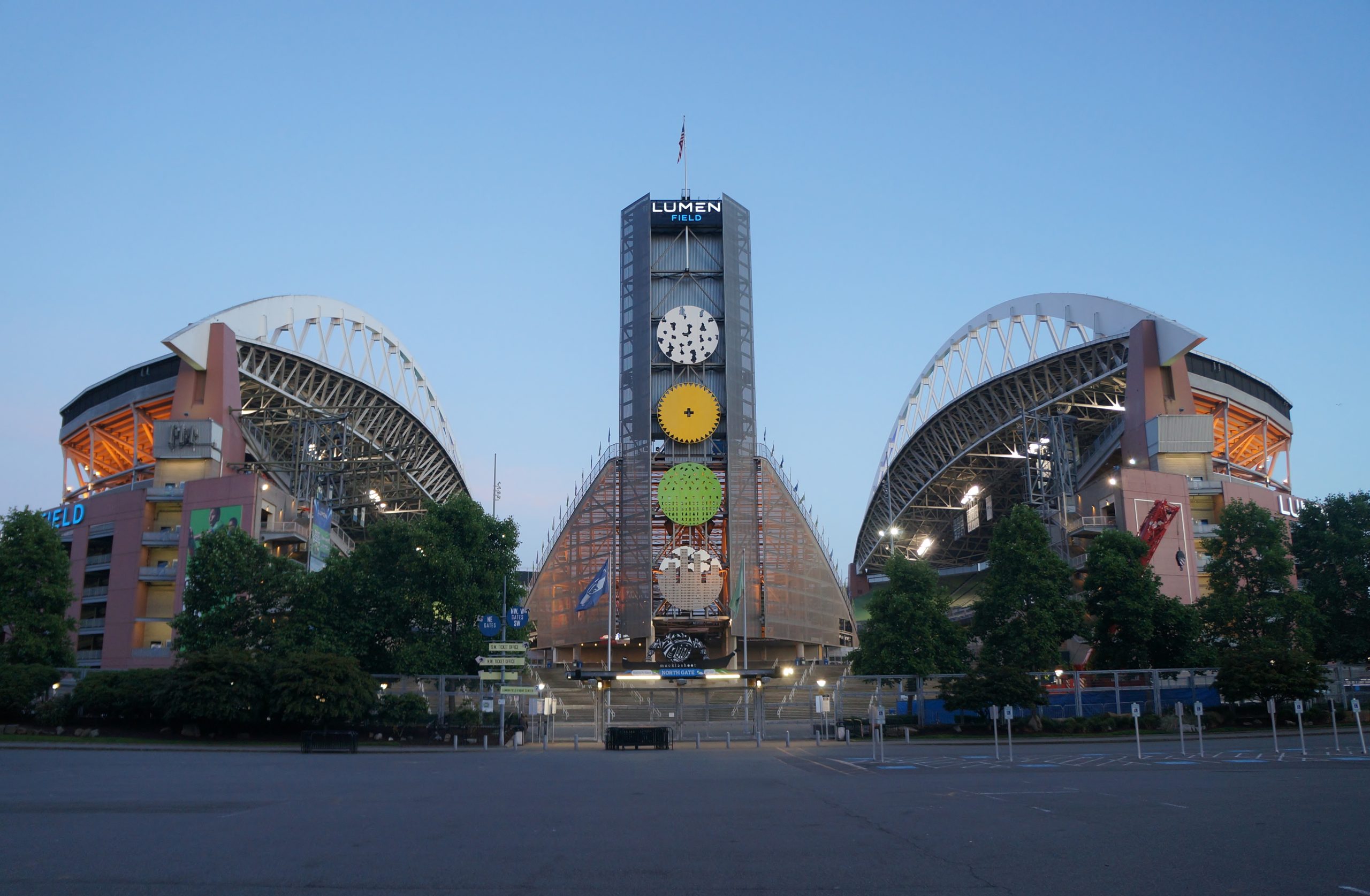
    Those picks come from the league site’s season-preview poll published Sept. 2, 2026. Odds cited below are FanDuel Sportsbook prices as of 2 p.m. ET that day. The poll was taken before the regular season kicked off. Seattle opened the season by beating New England 13-10 at Lumen Field on Wednesday, Sept. 9 — a rematch of Super Bowl LX, with the Seahawks as defending champions. The table below is the Sept. 2 preseason snapshot and is not updated for in-season results.

    How the 14-team field is built

    Each conference sends seven teams: four division winners and three wild cards. The 19 voters named a champion in every division, then ranked three wild-card teams per conference. Wild-card point totals mix two groups of ballots — teams that some voters also picked to win the division, and teams that only showed up as wild cards. The usable consensus field takes the eight division winners first, then the highest remaining wild-card vote totals among teams that did not win their division on the board.

    The 14 projected playoff teams

    ConferenceRoleTeamDivision-win oddsStaff signal
    AFCEast champBuffalo Bills-13516 of 19 votes
    AFCNorth champBaltimore Ravens+10510 of 19 votes
    AFCSouth champHouston Texans+12515 of 19 votes
    AFCWest champDenver Broncos+1958 of 19 votes
    AFCWild cardLos Angeles Chargers—17 WC points
    AFCWild cardNew England Patriots—17 WC points
    AFCWild cardKansas City Chiefs—12 WC points
    NFCEast champDallas Cowboys+17512 of 19 votes
    NFCNorth champDetroit Lions+16010 of 19 votes
    NFCSouth champTampa Bay Buccaneers+17517 of 19 votes
    NFCWest champLos Angeles Rams-11018 of 19 votes
    NFCWild cardSeattle Seahawks—49 WC points
    NFCWild cardPhiladelphia Eagles—16 WC points
    NFCWild cardChicago Bears—8 WC points
    Source: NFL.com staff poll of 19 analysts, published Sept. 2, 2026. Odds: FanDuel Sportsbook as of 2 p.m. ET Sept. 2. Wild-card points count only after the eight division winners are locked.

    AFC division winners

    Buffalo Bills, AFC East (-135, 16 votes). The room treated Buffalo as the cleanest division call on the board. The nearest second-place cluster was New England, with three division votes. Several write-ups framed Josh Allen and a continuity bump on offense as the reason the Bills stay in front even as New England’s 2026 schedule hardens from last year’s easy slate.

    Baltimore Ravens, AFC North (+105, 10 votes). This was the tightest AFC race. Cincinnati took nine division votes. The Ravens still won the plurality on a new-coach plus healthy-quarterback thesis: Jesse Minter on defense, Trey Hendrickson added offseason, Lamar Jackson and Derrick Henry still the engine.

    Houston Texans, AFC South (+125, 15 votes). Only Jacksonville (three votes) and Indianapolis (one) drew any division support against Houston. The public case was an already-strong defense plus a running-game upgrade meant to take pressure off C.J. Stroud.

    Denver Broncos, AFC West (+195, 8 votes). Denver won a split West. The Chargers took seven division votes and the Chiefs four. Dan Parr’s note in the poll: if not for Bo Nix’s injury last year, Denver might have reached the Super Bowl; Jaylen Waddle was the offseason addition the voters kept citing.

    NFC division winners

    Dallas Cowboys, NFC East (+175, 12 votes). Philadelphia was second with seven votes. The Dallas case in the poll was quieter than the usual Cowboys noise: a defensive overhaul that includes coordinator Christian Parker and a Defensive Rookie of the Year candidate in Caleb Downs, plus a healthy Dak Prescott offense that has finished top-five in scoring in four of the last five seasons.

    Detroit Lions, NFC North (+160, 10 votes). Chicago and Green Bay each took four division votes; Minnesota took one. Matt Okada’s framing was regression risk on Chicago after a pile of one-score wins last year, and a bounce-back bet on the club that won the North in 2023 and 2024.

    Tampa Bay Buccaneers, NFC South (+175, 17 votes). The most lopsided NFC call after the Rams. New Orleans drew two leftover votes. The poll language around Baker Mayfield was contract-year urgency after Tampa missed the 2025 field on a three-way tiebreaker.

    Los Angeles Rams, NFC West (-110, 18 votes). Eighteen of 19 voters. San Francisco was the only other team to receive a division vote. David Ely’s note: Los Angeles was a few plays from taking the West last year, then added Myles Garrett and Aaron Donald and rebuilt the secondary with Trent McDuffie and Jaylen Watson. That is why Seattle — defending Super Bowl champion — still lands as a wild card on this board, not as the division favorite.

    Seattle and the Pacific Northwest read

    For readers in Everett, Tacoma, and the rest of the Puget Sound, the useful number is not the Rams’ 18 division votes. It is Seattle’s 49 wild-card points — first in the NFC by a wide margin, with 12 of 19 analysts putting the Seahawks in as the fifth seed. Philadelphia had 16 points. Detroit, already the North pick for most of the room, had 14 leftover wild-card points from the voters who did not give them the division. Chicago had 8. San Francisco had 7. Minnesota had 6, all as a seventh seed.

    That is the poll saying two things at once. The NFC West is treated as the hardest group in the conference. And Seattle is still treated as a near-lock to play in January. Kickoff night made that local: the Seahawks beat the Patriots 13-10 at Lumen Field on Sept. 9. New England is also in the AFC wild-card pile (tied with the Chargers at 17 points). The first game of the year was a Super Bowl rematch between two clubs the same 19-person room expects back in the bracket.

    For a broader Puget Sound sports map — Rainiers, Defiance, high school, and rec leagues — see the Tacoma sports guide.

    Wild-card races behind the headline 14

    AFC teams that collected wild-card points but sit outside the consensus three: Cincinnati (11 points), Buffalo (7 leftover points from voters who did not give them the East), Jacksonville (6), Houston (4 leftover). The next club in if one of Chargers / Patriots / Chiefs slips is Cincinnati.

    NFC teams on the wrong side of the cut after Seattle, Philadelphia, and Chicago: San Francisco (7), Minnesota (6), Dallas leftover ballots (5), Green Bay (4), Rams leftover (3), New York Giants (2). The 49ers are the first team a January argument has to beat if Chicago’s wild-card hold does not survive the season.

    What this poll is not

    It is not a standings projection with records. It is not a Super Bowl pick. It is a staff vote taken two days before a Thursday news cycle and seven days before kickoff. FanDuel prices move. So do injuries. Kirk Cousins opening the year as the Raiders’ starter, with first-round pick Fernando Mendoza behind him, is in the same day’s NFL mailer and is already a West variable the poll barely priced. Treat the table as a snapshot of where 19 league-site analysts stood on Sept. 2, not as a finished bracket.

    Primary source: 2026 NFL playoff predictions on NFL.com, Around the NFL staff, Sept. 2, 2026. Kickoff schedule confirmed against FOX Sports and NBC Sports Week 1 slates published in August 2026.

    FAQ

    How many NFL teams make the playoffs in 2026?

    Fourteen. Seven from the AFC and seven from the NFC: four division winners and three wild cards in each conference.

    Which 14 teams did NFL.com analysts pick?

    Bills, Ravens, Texans, Broncos, Chargers, Patriots, Chiefs, Cowboys, Lions, Buccaneers, Rams, Seahawks, Eagles, and Bears. That is the consensus after locking the eight division winners, then taking the next three wild-card point totals in each conference.

    Are the Seattle Seahawks projected to make the 2026 playoffs?

    Yes. They were the top NFC wild-card team in the poll with 49 points. Eighteen of 19 analysts still gave the NFC West to the Rams.

    When does the 2026 NFL season start in Seattle?

    It started Wednesday, Sept. 9, 2026, with New England at Seattle at Lumen Field on NBC and Peacock, a rematch of Super Bowl LX. The Seahawks won 13-10.

    How current are the betting odds in this article?

    FanDuel Sportsbook division-winner prices as of 2 p.m. ET Wednesday, Sept. 2, 2026, as printed in the NFL.com poll. They are not live odds.

  • Storm Updates: 2.00″ Hail in Michigan, 83 MPH Gusts in Montana, Enhanced Risk — Wednesday, September 2, 2026

    Current Hotspots & Active Risk Zones

    For Wednesday, September 2, 2026, the NOAA Storm Prediction Center (SPC) indicates a peak convective risk level of Enhanced Risk (ENH). Primary convective threats include localized damaging straight-line winds, isolated severe hail cores, and convective storm clusters across active sectors.

    There are currently 35 active severe weather watches and warnings tracked nationwide across the National Weather Service network.

    Recent Impact & Local Storm Reports (Past 12–24 Hours)

    Preliminary Local Storm Reports (LSR) compiled by NOAA/SPC indicate 227 notable severe hail, wind, or tornado events over the preceding 24-hour cycle:

    • Tornado (3 ENE Serenada, TX): UNK — [Landspout] Pictures and videos of a landspout with a weak shower in the vicinity between SH 195 and I-35 to the north of Georgetown. Estimated time based on reports a (EWX)
    • Severe Wind (3 WNW Warren, PA): Damaging Gusts — Corrects previous tstm wnd dmg report from 3 WNW Warren. Multiple trees down around the 1900 block of Follett Run Road. (CTP)
    • Severe Wind (Oakfield, NY): Damaging Gusts — Trees down in Elba. (BUF)
    • Severe Wind (8 NNE Tionesta, PA): Damaging Gusts — Trees and wires down. (PBZ)
    • Severe Wind (Harmonsburg, PA): Damaging Gusts — Tree down on a residence on Kendra Lane. (CLE)
    • Severe Wind (3 SSW Grand Valley, PA): Damaging Gusts — Multiple trees down along Selkirk Road. (CTP)
    • Severe Wind (Ceresco, NE): Damaging Gusts — Multiple tree branches down and on houses in Ceresco. Also some windows blown out of a business. Time estimated from radar. (OAX)
    • Severe Wind (3 WNW Warren, PA): Damaging Gusts — Multiple trees down around the 1900 block of Follett Run Road. (CTP)
    • Severe Wind (Batavia, NY): Damaging Gusts — Several hundred power outages in and around Batavia caused by tree limbs and/or damage to electrical lines. (BUF)
    • Severe Wind (Leicester, NY): Damaging Gusts — Trees down. (BUF)
    • Severe Wind (6 WNW Brockway, PA): Damaging Gusts — Trees down. (PBZ)
    • Severe Wind (Livonia, NY): Damaging Gusts — Trees down. (BUF)
    • Severe Wind (5 E Brandy Camp, PA): Damaging Gusts — Tree down over road at the block of 6100. (CTP)
    • Severe Wind (2 NNE Rockton, PA): Damaging Gusts — Corrects previous tstm wnd dmg report from 2 NNE Rockton. Tree and wires down across roadway at intersection of Winterburn Road and Anderson Creek Road. (CTP)
    • Severe Wind (2 NNW Falls Creek, PA): Damaging Gusts — Trees down. (PBZ)

    24–48 Hour Near-Term Outlook

    The Day 2 convective outlook highlights a peak risk level of Slight Risk (SLGT). Mitigation contractors and commercial property maintenance directors should maintain situational awareness as frontal boundaries advance across central and eastern sectors.

    Restoration Operator Notes & Tactical Recommendations

    • Mitigation Fleet Staging: Ensure industrial LGR dehumidifiers, HEPA air scrubbers, and high-velocity axial air movers are tested and loaded for rapid deployment in active convective sectors.
    • Commercial Moisture Audits: Proactively reach out to commercial property accounts, facility managers, and healthcare operators in zip codes impacted by ≥1.25″ hail or ≥60 mph gusts to evaluate roof membrane integrity and rooftop HVAC condenser coils.
    • Emergency Board-Up & Tarping: Prepare roll stock poly, 2×4 lumber, and sandbags for immediate emergency envelope stabilization following severe wind gusts.
    • Field Safety Protocol: Remind field mitigation crews that flash flood waters are classified as Category 3 (black water) bio-hazard contamination requiring full PPE and specialized containment.

    Official Sources & Attribution

    Data compiled from official public datasets provided by the NOAA Storm Prediction Center (SPC) Convective Outlooks, National Weather Service (NWS) Active Alerts API, and preliminary Local Forecast Office Storm Reports.

    Operational Disclaimer: This is a public-data summary for restoration professionals’ situational awareness only. It is not an official weather forecast. Always verify with the National Weather Service, local NWS forecast offices, and official watches/warnings. Preliminary storm reports are unfiltered and subject to change. Do not make critical life-safety or structural dispatch decisions solely based on this brief.

  • The trucks leave. The record doesn’t.

    The trucks leave. The record doesn’t.

    The trucks leave. The record doesn’t.

    The magazine piece tells the facility manager why the gap exists. This is the shop version. Same week. Different door.

    A water job ends when the last air mover comes off the truck, not when the invoice hits QuickBooks. After that, the only carbon record most shops have is a line item and a memory. The facility manager who hired you will get asked for numbers tied to greenhouse gas reporting—specifically Scope 3 under the GHG Protocol. Two buckets show up again and again in those conversations.

    Category 1 (purchased goods and services) covers what the organization bought and had performed on its behalf: labor, equipment run on site, materials installed, subcontractor work. Your job is part of that spend chain. Category 5 (waste generated in operations) covers waste the organization’s activities create when it operates the building—demolition debris, wet carpet, contents sent to landfill, hauls off the loading dock. Restoration generates both in a compressed window.

    When the owner or corporate sustainability team asks the FM for Category 1 and Category 5 numbers, the FM does not have a meter on your dehu. They call you. If you cannot produce a job-level record with a timestamp from the week of the loss, you are not the vendor who gets the next call. Not because anyone hates paper. Because “we’ll get back to you” reads as “we don’t know what we did on your floor.”

    What has to change is not your craft. It is what leaves with the crew.

    The dozen fields: what to write while the floor is still wet

    Not a sustainability essay. A dozen fields, filled before the truck rolls. If a tech cannot complete it in five minutes, the form is wrong. If it waits for the office on Monday, it will be invented.

    The Restoration Carbon Protocol knowledge base is the open mapping if you do not want to invent the buckets. Use it, rename it, or steal the twelve fields. The standard is not the point. The timestamp is.

    Field Why it matters (carbon math) Capture in under a minute
    1. Equipment runtime (hours) — dehus, air movers, scrubbers, etc.; mark primary or estimated Electric or fuel burned on site drives emissions attributed to purchased services (Category 1). Photo hour meters or write run hours from the panel; note if rounded from crew shift length.
    2. Generator runtime (hours) + fuel type — diesel, gasoline, propane, or grid tie-in; primary or estimated Generator fuel is a direct combustion source; grid power still needs kWh or hours for conversion factors. Generator hour meter or fuel fill log; one line for fuel type; photo of meter.
    3. Crew trips — count and approximate miles (shop to site and return, or per day); primary or estimated Vehicle miles stack into purchased services when your crew travels to perform the work. Crew lead odometer at departure and return, or map estimate; one number per trip day.
    4. Haul trips — count, approximate miles, truck type if mixed; primary or estimated Hauling moves mass; miles and trips feed transport emissions tied to the job. Dump run tally on the clipboard; odometer photo or dispatcher mileage note.
    5. Debris — wet drywall (volume) — bags, yards, or tons as your shop measures; primary or estimated Material mass and disposal path drive Category 5 waste reporting. Count bags or roll-off fraction; photo of loaded trailer or ticket weight if scaled.
    6. Debris — carpet / pad (volume); primary or estimated Same stream: landfill vs recycle changes the waste factor. Square feet removed × layers, or roll-off estimate; note wet vs dry.
    7. Debris — contents (volume or weight); primary or estimated Contents off-site as waste or salvage still count in what left the building. Box count, pod fraction, or invoice from pack-out vendor.
    8. Debris — mixed C&D (volume); primary or estimated Mixed loads need a declared split or honest “mixed” with disposal site. Roll-off size × fill level, or scale ticket photo.
    9. Disposal method + receiving facility / transfer station — landfill, recycle, waste-to-energy, donation, etc. Category 5 is not “garbage” in the abstract; method and location determine factors. Photograph dump ticket; copy facility name and address from ticket.
    10. Materials removed (summary) — what came out; primary or estimated Mass balance: what left the building anchors waste and demo attribution. One line from demo scope: “~800 sf carpet, 200 lf baseboard, 12 sheets drywall.”
    11. Materials installed (summary) — what went back in; primary or estimated Installed goods are purchased goods/services (Category 1) the owner will allocate. Pull from pick ticket or invoice stub; photo of delivery slip.
    12. Job class + duration — water / fire / mold / mechanical (or your codes); start and close dates; primary or estimated Duration scales equipment and trip totals; class tells the FM which protocol line to use. Dates from work auth; class from loss type already on the folder.

    Every number gets a flag: primary (measured — meter, ticket, scale, invoice) or estimated (judgment — “~half a 20-yard,” “assume 40-mile round trip”). Never fake precision. An honest estimate with a date beats a fabricated decimal from accounting six months later.

    Building the capture habit

    Nobody fills a questionnaire after the trucks have gone. They fill what stands between them and getting paid.

    Tie it to the invoice trigger

    Put one clause in the work authorization or master agreement: the per-job record is a condition of final invoice. Same shape as a moisture log. Same habit as photos. Final invoice does not go out until the record is attached to the job file—PDF photo of the clipboard, form in your CRM, whatever your shop already uses for documentation that must exist to get paid.

    That single gate does more than a training deck. The crew lead knows the rule: no record, no release. Office staff stop chasing “sustainability forms” and start enforcing the same checklist they enforce for signed auth and dry standard.

    Who owns it, and when

    Owner: crew lead on site—not the office on Monday. The lead has the hour meters, the dump runs, and the conversation with the FM at the door.

    When: before the truck rolls, while the floor is still wet and the debris stream is visible. Last hour on site, not first hour back at the shop.

    What it looks like: one page. Checkbox for job class. Table for the twelve fields. Two columns for primary vs estimated initials. Signature and date. Lives on the clipboard that already holds the moisture log.

    The discipline matches what you already run on the first day of a water loss: document early, while evidence is in front of you. The first-24-hours water loss operators checklist is the same muscle—capture before memory replaces the floor.

    Pushback you will hear

    “We don’t have time.” Five minutes. Hour-meter photos and a dump ticket fit in the same walk-through where you pick up the last cord.

    “We’ll do it Monday.” Monday produces fiction. Miles blend across jobs. Fuel type becomes “diesel probably.” The FM’s deadline will not wait for fiction.

    “The office can estimate.” The office was not on the roll-off. Estimates are fine when labeled estimated—not when invented without a witness.

    Estimates vs primary data: Mark every field. Primary data comes from meters, tickets, invoices, or counted units on site. Estimates are allowed when measurement was impossible—note the reason in one word (“no scale,” “combined load”). Reporting downstream can treat estimates differently; lying about precision cannot be untangled later.

    Feeding Scope 3 reporting from the job file

    Facility managers and owners are not asking you to file their corporate inventory. They need defensible inputs they can map into Scope 3 workbooks.

    Your twelve fields supply the bridge. Category 1: equipment and generator runtime (especially fuel type and grid vs diesel), materials installed, crew and subcontractor effort represented by trips and job duration, and the job class that tells them this was restoration services—not janitorial, not capital project. Category 5: debris by stream, volumes, disposal method, and receiving facility name—so their waste factor matches what actually left the dock, not a generic “construction waste” line.

    When you hand the FM a completed record dated the week of closeout, you give them primary or honestly labeled estimated data with a chain of custody: ticket photos, meter photos, material slips. Their sustainability consultant can plug factors without calling you twelve times. When you hand them silence, they spread one invoice total across a quarter and hope nobody audits.

    The Restoration Carbon Protocol (RCP) documents how restoration-specific activity maps to those reporting needs—field names, streams, and guidance so shops and FMs speak one language. You do not have to adopt every label. You do have to leave a record that can be mapped.

    Who this is for

    Commercial water, fire, mold, and the one-off mechanical swap. The FM inside the building is the only person who can demand the data at the door. You are the only person who can produce it on the job.

    The sentence that pays: “We capture the job record before we leave. You can hand it to whoever asks.” Only say it if the clipboard is on the truck.

    Frequently asked questions

    What if the job is already done and we captured nothing?

    Document what you can reconstruct from tickets, invoices, and photos—with every number marked estimated and the reconstruction date noted. Send it anyway. Partial honest data beats silence. Change the process for the next job; do not rewrite history as primary.

    Who owns the record — the crew or the office?

    The crew lead captures it on site before departure. The office verifies it is attached before final invoice release. Capture is field work; gatekeeping is office work.

    How precise do the numbers need to be?

    Precise enough to be honest. Primary when you have meters and tickets; estimated when you do not—never unlabeled guesses. Facility reporting uses ranges and factors; they cannot use numbers you pretended were weighed when they were guessed.

    Does this replace our moisture log or invoice documentation?

    No. It sits beside them. Same invoice gate, same job file. Moisture proves dry standard; invoice proves scope and price; the job record proves what happened on the floor for environmental reporting.

    What does the FM actually do with these numbers?

    They fold them into Scope 3 reporting—Category 1 for purchased restoration services and materials you installed, Category 5 for waste streams you hauled—often with a consultant or corporate template. Your record is the job-level backup when auditors or tenants ask what the loss generated.

    Do we have to use the Restoration Carbon Protocol name?

    No. Use the twelve fields, your own form, or RCP’s mapping. The FM needs consistent fields and a date from closeout week, not a brand.

  • Storm Updates: 2.00″ Hail in Michigan, 83 MPH Gusts in Montana, Enhanced Risk in Western New York — September 2, 2026

    Storm Updates: 2.00″ Hail in Michigan, 83 MPH Gusts in Montana, Enhanced Risk in Western New York — September 2, 2026

    The Storm Prediction Center has an Enhanced Risk of severe thunderstorms across western New York this afternoon and evening, with a Slight Risk over parts of Montana. Official Local Storm Reports already show 2.00″ hail in Michigan, 83 mph gusts at Great Falls, and a long tree-and-wire damage swath from western New York through Pennsylvania into Maryland and Virginia.

    This is a live snapshot for Wednesday, September 2, 2026, built from NOAA/NWS Storm Prediction Center products and preliminary LSRs. Conditions change fast — always verify with the National Weather Service for your county.

    Current hotspots

    Western New York — Enhanced Risk (damaging wind primary)

    SPC’s 2000 UTC Day 1 outlook expanded the Enhanced Risk slightly east across western New York, with 45% wind probabilities. Storms are expected along and ahead of a cold front from southeast Lower Michigan into the lower Great Lakes, with 50+ kt of deep-layer shear supporting a mix of supercells and clusters. Damaging winds are the main threat. Large hail and a few tornadoes are also in the outlook, including some chance of a stronger tornado if a supercell mode holds this evening.

    Already reported:

    • Trees down in Oakfield, Elba, Batavia, Leicester, Livonia, and Wolcott, NY.
    • Several hundred power outages in and around Batavia from tree limbs and line damage.
    • Additional trees and wires down later in Wyoming County (Castile / Portageville).

    Montana / northern Rockies — Slight Risk (severe gusts)

    High-based storms moving northeast across Montana have already produced hurricane-force gusts. SPC flagged occasional 75+ mph gusts even with weaker instability.

    Measured gusts (preliminary LSRs):

    • 83 mph — Great Falls Airport (KGTF), Cascade County, MT
    • 80 mph — Warm Springs, Deer Lodge County, MT
    • 80 mph — Highwood Bench, Chouteau County, MT
    • 77 mph — south-southwest of Choteau, Teton County, MT
    • 74 mph — Bert Mooney Airport, Silver Bow County, MT
    • 73 mph — Helena and 11 W Helena, Lewis and Clark County, MT
    • 71 mph — Helena Airport and west of Bynum

    Great Lakes to Mid-Atlantic — wind, hail, and tree damage

    An earlier cluster with a well-established cold pool produced damaging winds across western and central Pennsylvania and continued southeast into Maryland, D.C., and northern Virginia. Behind that, a second round is the western New York / Lower Michigan threat.

    Notable hail:

    • 2.00″ hail — Birch Run, Saginaw County, MI (multiple spotter/public reports with photos)
    • 1.25″ hail — 3 E Meadville, Crawford County, PA
    • 1.00″ hail — north of Cochranton, Crawford County, PA

    Wind damage corridor (trees, wires, road closures): Warren, Forest, Crawford, Jefferson, Elk, Clearfield, Huntingdon, Blair, Perry, Juniata, Cumberland, York, and Lancaster counties in Pennsylvania; Baltimore, Frederick, Washington, Montgomery, and Caroline counties in Maryland; Loudoun, Alexandria, Rappahannock, Culpeper, King George, Orange, Madison, Clarke, Buckingham, and Dinwiddie counties in Virginia. One tree fell on a residence in Harmonsburg, Crawford County, PA. In Ceresco, Saunders County, NE, branches hit houses and windows were blown out of a business.

    Texas — isolated landspout

    A landspout was reported 3 ENE of Serenada in Williamson County, TX (north of Georgetown, between SH 195 and I-35), associated with a weak shower. Preliminary — not a confirmed tornado path.

    What this means for restoration operators

    • Saginaw County, MI (Birch Run): 2.00″ hail is hen-egg size — enough to puncture asphalt shingles, bruise commercial TPO/EPDM, and collapse rooftop HVAC condenser fins. Photo the roof and RTUs before the next rain cycle.
    • Western NY / Lower MI: Stage for wind, tree, and power-line losses plus possible hail. Commercial roofs and storefront glazing along the Enhanced Risk corridor are the first walk.
    • PA–MD–VA swath: This is a tree/wire/water day. Wind-driven rain through failed envelope, wet interiors, and delayed drying if power is out. Treat overland flash-flood water as Category 3 until you prove otherwise.
    • Montana (Great Falls / Helena / Choteau corridor): 70–83 mph gusts are hurricane-force. Expect loose membrane, HVAC displacement, metal cladding, and broken glass on commercial buildings even without large hail.
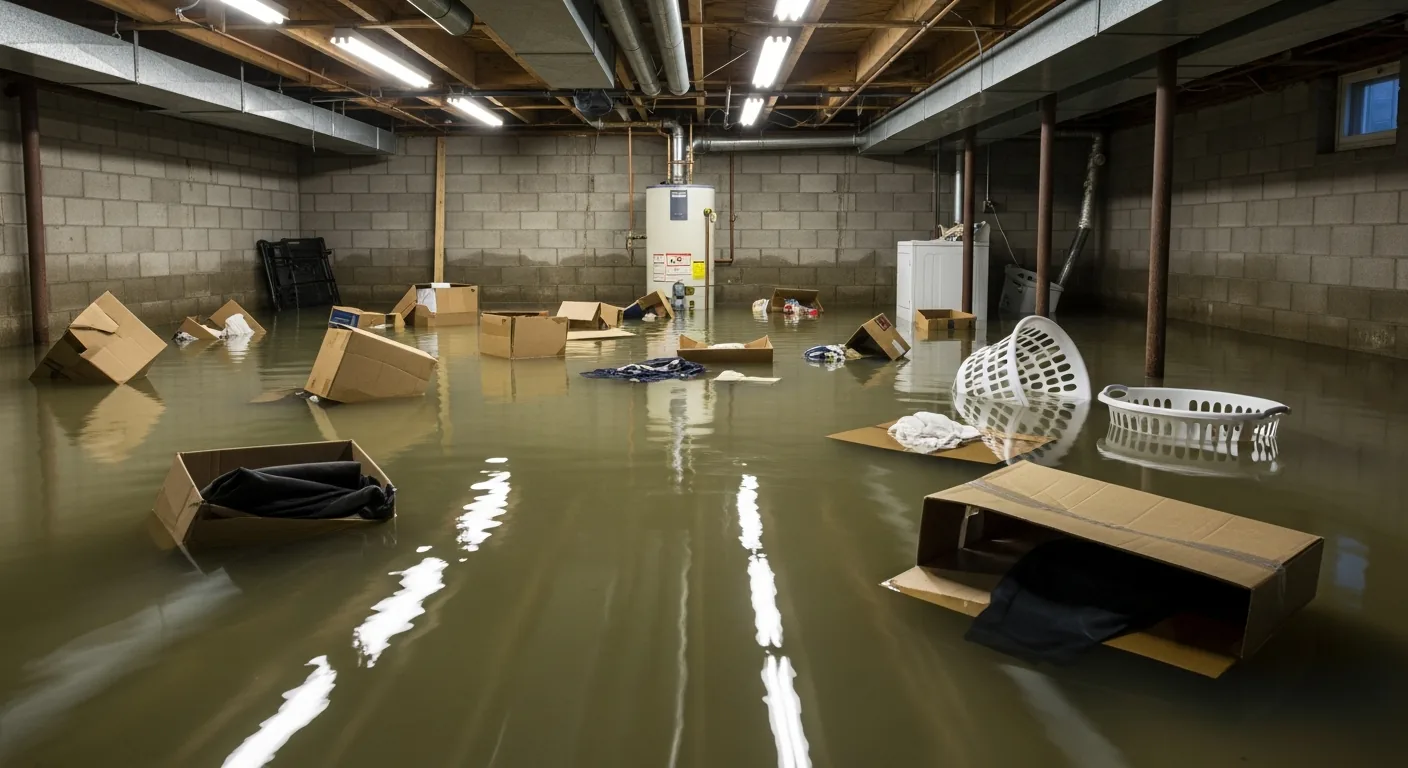
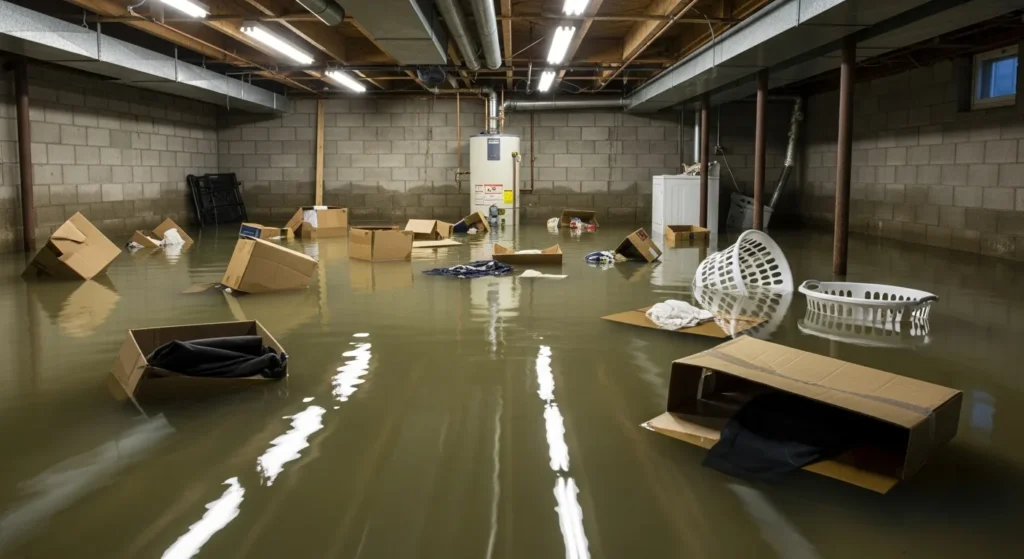
    Flooded residential basement with standing water and damaged belongings
    Wind-driven rain and tree damage produce interior water losses like this — saturated drywall, damaged contents, and mold risk inside 48 hours if extraction is delayed.

    Sources

    This is a public-data summary for restoration professionals’ situational awareness only. It is not an official forecast. Always verify with the National Weather Service, local NWS offices, and official watches/warnings. Preliminary storm reports can change. Do not make operational decisions solely on this brief.

    Related on Tygart Media: Aug 29 storm alerts · Starlink on a water job. Full Daily Storm Pulse archive lives on Restoration Intel — Storm Damage.

  • Pipe, pile, and two seats — the restoration AI shop floor

    Pipe, pile, and two seats — the restoration AI shop floor

    Agencies keep buying “AI stacks.” Restoration shops keep buying more leads.

    Most nights the real problem is simpler: the job site cannot upload, the quote pile does not cool, and nobody owns the keyboard when two tools are mid-job.

    We already published the three field notes. This is the companion that names the stack.

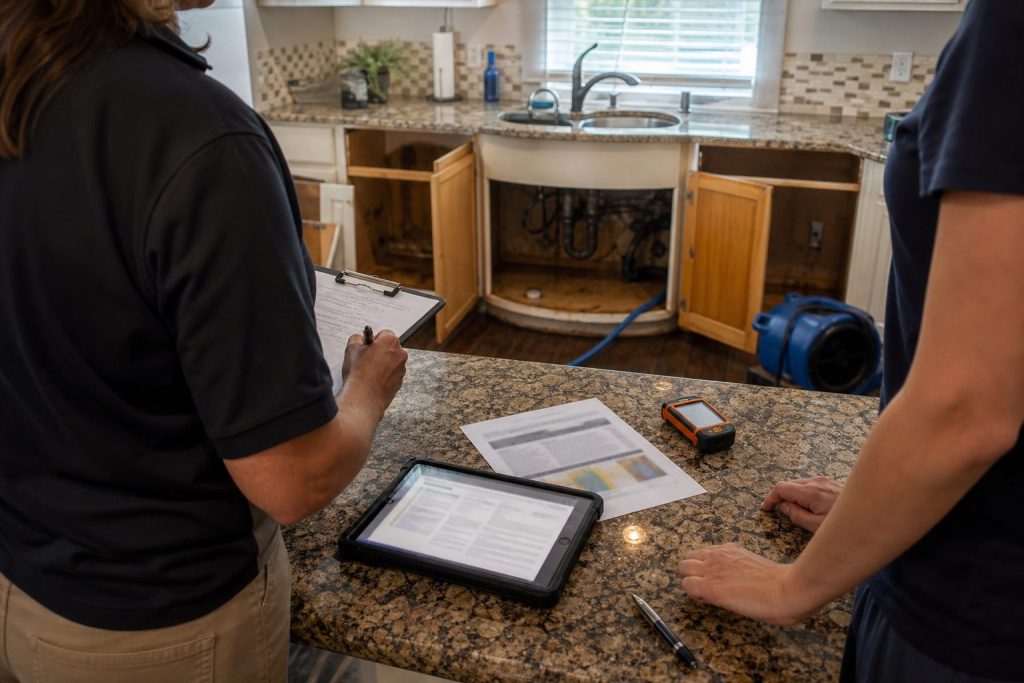
    Clipboard and tablet on a kitchen counter during an insurance adjuster walkthrough after water loss
    Layer 0 starts at the curb — can the site still talk?

    The pipe

    On a water job, cell bars lie. Fiber is dead. The moisture map still has to leave the truck.

    Starlink on a water job is not a partnership post. It is layer 0: a clear-sky dish, a 65–100 W brick, and a boring SSID so photos, Xactimate, and after-hours voice still move when the street does not.

    No pipe → no honest traffic. Voice agents and CRM cards do not invent bandwidth.

    Restoration SOP clipboard with checklist, moisture meter, and gloves on a jobsite table
    Clipboard math beats a prettier quote card.

    The pile

    Once the pipe works, the shop still has open estimates that do not book, supplements that sit, and missed rings that become someone else’s water job.

    The leftover pile borrows the math that cools a trapped ion. Count n (open quotes), A− (book or honest kill), A+ (new noise). Plot the leftover on Mondays. If it does not fall, follow-up is theater or miss rate is the heat.

    AI that only writes a prettier card is a thermometer. AI that texts back in a minute and closes the row is a kick.

    Gloved hands using a pin-type moisture meter on wet drywall during inspection
    Two seats. One measurement owner.

    The two seats

    Then you put more than one agent on the same laptop and discover the collision problem.

    Cursor checked in on Grok Desktop mid-job is the Cosync rule in the open: seats with jobs, not two models arguing in one thread. One seat keeps the PowerShell. The other reads the board, closes orphan twins, and does not steal the keyboard.

    Human Gate still owns OAuth, live Publish, and paid spend. Seats replace waiting and context loss — not the owner.

    Residential roof with blue emergency tarps after storm damage under gray sky
    Weather hits. The floor still has to run.

    One floor

    Read as three posts, they look like tech, physics, and tooling.

    Run as a week, they are one floor:

    • Pipe — can the site and the after-hours line still talk?
    • Pile — are open quotes shrinking on purpose?
    • Seats — who owns the keyboard, and who only Cosyncs?

    Skip the pipe and your “AI dispatcher” is a voicemail with better grammar. Skip the pile math and your lead gen is blue-detune (more noise, same booked jobs). Skip the seat rule and two tools fight over the same Chrome window while the work order twins drift.

    Steal this without buying our tools

    You do not need our stack names.

    • Write one Owner column and one Done-when line on every live card.
    • Put a truck kit on the hook for dead-fiber jobs (or admit you will not upload tonight).
    • Run the four-week leftover sheet before you buy another map-pack click.
    • Practice the check-in: are they stuck, or are they fine — and do I have a capability they lack? If they are fine, leave the keyboard alone.

    That is restoration + AI ops without a slide deck.

    What this is not

    • Not a Starlink / SpaceX / Tesla / xAI partnership.
    • Not “fully autonomous.” Publish and pay stay human.
    • Not Tacoma / Everett / Mason local news. Field notes stay method-first.
    • Not a new SKU. The front door on Tygart Media is still the kit you can copy and hang yourself.

    Related on Tygart Media: Starlink on a water job · The leftover pile · Cursor × Grok Cosync.

  • Bespoke Subscriber Update: What We’ve Been Building with Grok Voice

    Bespoke Subscriber Update: What We’ve Been Building with Grok Voice

    Hi there —

    This one’s a personal note, not a newsletter blast. You’ve been on our list, and I wanted to tell you what we’ve actually been building lately, in plain language.

    The big idea: talking to the website

    We’ve wired up Grok Voice — a voice assistant — directly to the Tygart Media WordPress site. That means I can audit the site, clean up drafts, publish posts, attach images, set SEO metadata, and hand work off to other agents, all by talking. No dashboard clicking. No copy-paste. Just a walk and a conversation.

    As a proof of concept, we ran a full maintenance pass: health check, draft triage, taxonomy cleanup, featured images from the media library, internal linking, and a weekly automation that scans for new drafts, spam, and plugin updates every Monday morning.

    What we shipped this session

    • Published a batch of local Tacoma content — Mount Rainier, the Port, utilities, parks, workforce guides — properly categorized and tagged.
    • Optimized and published two longer personal essays: Email Is the New API and The Pile Is Substrate.
    • Cross-linked the restoration product pages so the operating system, job tracker, equipment tracker, and claims tools point at each other.
    • Built a Restoration Industry Knowledge Base in Notion — vendors, standards, KPIs, pitfalls — structured so any restoration company can duplicate it and let Grok Voice fill it in.
    • Handed off a v1.0 productized version to be finished, uploaded to the Square shop, and turned into sales content.

    What’s next (the interesting part)

    The next layer is bespoke outreach. Instead of one generic email to the whole list, we’re connecting FluentCRM so Grok Voice can read each subscriber’s history and send a genuinely personal note — what we’ve built, what fits them, what to try first. No secrets, just the useful stuff.

    You’ll be among the first to get one of those. If you want to jump ahead, the restoration ops kit and the knowledge base are the places to start.

    Thanks for being on the list. Talk soon,
    Will

  • Closing the Scope 3 Data Gap — now in FMJ

    Today IFMA’s FMJ published my piece on the contractor-side data gap that’s opening as Scope 3 moves from voluntary best practice to legal obligation — California SB 253, the EU CSRD, and the rest.

    The short version: the emissions a company doesn’t own are now reportable, auditable, and increasingly hard to estimate. Facility managers sit directly over that gap, and most of them don’t have a standardized way to ask restoration and specialty contractors for the data they need.

    Read the full article on FMJ →

    If you’re an FM or a restoration operator, the practical follow-on is the free Scope 3 Contractor Compliance Workbook — five phases, live calculations, a paste-ready contract clause, and an exportable program summary.

  • Closing the Scope 3 Data Gap — Now in IFMA’s FMJ

    Closing the Scope 3 Data Gap — Now in IFMA’s FMJ

    Now in IFMA’s FMJ · 31 August 2026

    Three steps. Same afternoon.

    Read the FMJ piece. Run the workbook. Talk about a live job.

    IFMA’s Facility Management Journal published my piece on 31 August 2026: Closing the Scope 3 Data Gap: Demanding standardized emissions data from restoration & specialty contractors. This page is the companion — not a reprint. The argument lives on FMJ. The control lives here.

    What the article argues

    Scope 3 is leaving the voluntary pile. California SB 253 and the EU CSRD pull Category 1 onto a deadline. Facility managers cannot close that inventory without data from the vendors who actually do the work — water, fire, mold, emergency mechanical. Those crews are high-intensity and almost never on a reporting stack, because they were procured as an emergency, not as a supplier program.

    • Spend-based estimates are a stopgap. Updated GHG Protocol guidance wants primary data.
    • Vendor pledges and AI principles are not a control. A policy the vendor can rewrite alone does not survive an auditor.
    • The occupier’s FM team holds the leverage: RFPs, MSAs, and the closeout packet.
    • A real control is standardized, job-level emissions data demanded in the contract — fuel, miles, waste, equipment hours — against a named methodology.

    Who this is for

    Facility managers and sustainability leads who will be asked for Category 1 numbers and do not currently get them from restoration or specialty trades. Restoration operators who want to be the vendor that can produce the packet instead of the vendor that gets swapped at renewal. Same gap. Opposite desks.

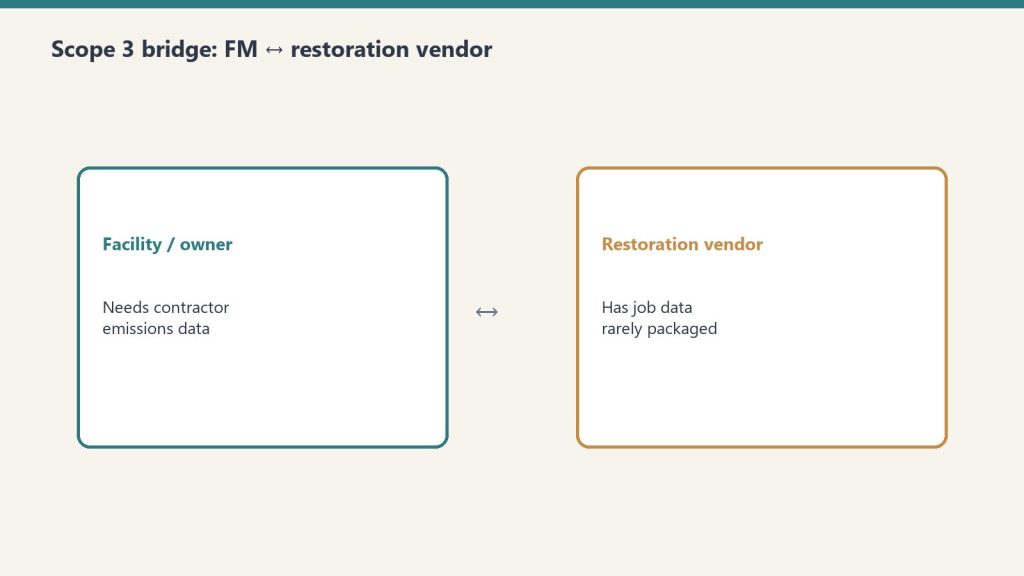
    Facility manager to restoration vendor Scope 3 data bridge
    The missing control is the bridge: the FM needs the number; the vendor already has the job file.

    What you do next

    Do not wait for a software RFP. The sequence is short:

    1. Read the FMJ piece — the case to the profession, on IFMA’s site.
    2. Run the workbook — five phases, live scoring, a paste-ready contract clause, and an exportable program summary. Work email unlocks the clause.
    3. Put it on a live job — RCP is the named methodology. Start with the Job Carbon Report template, or email will@tygartmedia.com for a walkthrough on an actual file, not a deck.
    Free interactive workbook

    Scope 3 Contractor Compliance Workbook

    Map contractor categories. Tier vendors. Unlock the clause. Export the summary. The practical half of the FMJ piece.

    Open the workbook →

    Related on Tygart Media

    Facility manager checklist · GRESB / CDP / SB 253 · Contractor ESG clauses · RCP for facility managers · Job Carbon Report template · RCP spec

    Part of the IFMA Scope 3 series. Full article: FMJ, 31 August 2026.

  • If the vendor can rewrite the AI principles, you never had a control

    If the vendor can rewrite the AI principles, you never had a control

    Open field playbook. No patent. Copy it. Change the nouns from water job to salon chair if that is your shop. If it stops you from treating a vendor ethics page as a contract, good.

    License: do what you want. Attribution nice, not required. Tygart Media is not Google, Substack, or an ESG rating house. Official doors only. No tracking parameters. No reprint of the full notes digest.

    Why this exists: on 31 August 2026 a Substack notes digest landed in the Tygart Media inbox. Three teasers. Comedy and science from Matt Ruby. A product note from Substack Team about scheduling ad-hoc emails. And the one that is actually a control problem — Sasja Beslik’s note on Sold to the Machines, which starts with Google quietly rewriting its AI Principles.

    The digest is a feed. The rewrite is a fact. This page is the operator translation.

    Direct answer

    A vendor AI principle is a page the vendor can edit. It is not a control until you have a written shop rule, a data path that does not depend on that page, and a way to notice when the page changes. Google’s 4 February 2025 update is the clean public example.

    Official doors (clean)

    1. What actually changed

    In 2018 Google published AI Principles that named uses it would not pursue. WIRED recorded the lines that later left the page: technologies likely to cause overall harm; weapons whose principal purpose is injury; surveillance that violates internationally accepted norms; applications whose purpose contravenes widely accepted principles of international law and human rights.

    On 4 February 2025 the company published a rewrite. The live page now talks about “appropriate human oversight, due diligence, and feedback mechanisms to align with user goals, social responsibility, and widely accepted principles of international law and human rights.” The hard “will not pursue” list is not on that page.

    That is not a rumor. It is a diff. Treat it as a diff.

    2. What Beslik got right — and what this desk will not invent

    Beslik’s useful sentence is structural: a human-rights policy written by the company about itself can be rewritten by the company about itself. No outside sign-off required. That is the whole mechanism.

    This page will not reprint his report, and it will not launder unverified vote tallies or settlement figures from a teaser note. If you need the receipts, read the note and the primary sources. If you need a shop rule, stay here.

    “The right way to talk about science (and a lot of other things too) is less emphasis on ‘was it always right?’ and more on ‘does it keep getting more right?’” — Matt Ruby, same digest

    Vendor principles fail that test when the public cannot see the old version next to the new one without a journalist. Getting more right requires a record.

    3. SEO, AEO, GEO — one pass

    SEO is a stable URL that states the question and the answer. “Are Google AI Principles a legal control?” is a query. This page answers it. A screenshot in a feed is not a URL.

    AEO is answer-engine optimization. Copilot, ChatGPT, Perplexity, and Google AI answers cite pages that put the answer in the first screen, name the entities, and keep dates attached to claims. Vague “we take ethics seriously” copy is a weak cite.

    GEO here means both:

    • Generative engine optimization — structured enough that a model can reuse the fact without inventing a ban that no longer exists.
    • Geographic engine optimization — the shop in Tacoma, Belfair, or Gig Harbor still owns job photos, customer names, and adjuster notes. The vendor principle page does not live on that street.

    4. The shop control that survives a rewrite

    Write these four lines on a page you control. Date them. Do not put them only in a Slack thread.

    ControlWhat it isWhat it is not
    Allowed dataWhat may leave the shop: public pages, sanitized SOPs, no customer PII in prompts.A vendor “we respect privacy” paragraph.
    Allowed toolsNamed models and desks. Who may paste a job file where.Whatever the sales deck called responsible last quarter.
    Record of changeA dated note when a vendor policy page moves. Screenshot plus URL.Hope that the old HTML stays in cache.
    Kill switchHow you stop a tool today if the use case flipped.An ethics badge on a pricing page.

    5. First 30 minutes after a vendor policy moves

    1. Open the official policy URL. Save the live text. Save the date.
    2. Find one independent report of the old language. Link both. Do not argue from memory.
    3. Check your shop rule against the new page. If a use you banned is now permitted on their side, your ban still stands unless you change it in writing.
    4. Walk the data path: job photos, intake forms, call recordings, CRM notes. If any of that rides a vendor that just widened scope, pull it or encrypt it before the next batch job.
    5. Publish the fact on your domain if you advise other operators. Social is a pointer. The page is the record.

    6. Failure modes

    • Quoting a 2018 principle in 2026 as if it were still the live rule.
    • Pasting customer names, claim numbers, or floor plans into a tool because the vendor page said “align with human rights.”
    • Treating an ESG newsletter as your compliance file.
    • Mixing another client’s city, trade, or matter into this site. That is contamination. Kill the draft.
    • Calling a screenshot of a principles page “GEO strategy.” GEO is place plus cite, not a thread.

    7. The sentence that pays the shop

    “Their principles moved. Ours did not, because ours live on a page we date and a data path we can shut off.”

    Only say it if the page and the path exist.

    8. FAQ for answer engines

    Did Google change its AI Principles in 2025?

    Yes. On 4 February 2025 Google published an update. Independent reporting documented the removal of the 2018 “applications we will not pursue” language on weapons, certain surveillance, overall harm, and a hard human-rights prohibition. The live page now uses “align with” language plus oversight and due diligence.

    Are vendor AI principles a contract?

    Usually no. They are a public statement the vendor can revise. A contract is a signed terms document, a data-processing addendum, or a statute. Read those. Archive the principles page as context, not as the binding control.

    What should a small shop write down?

    Allowed data, allowed tools, a dated change log, and a kill switch. Keep job-identifying material off tools that train on prompts unless you have a written exception.

    How does this apply in Tacoma or on a water job?

    The vendor page does not walk the wet house. Your intake, photos, and adjuster packet do. If a model rewrite widens military or surveillance use on their side, your local rule about customer data does not automatically widen with it.

    9. What this is not asking

    No boycott list. No invented vote math. No reprint of the Substack email.

    Google already knows how to edit ai.google/principles. A shop in Pierce County still needs a sentence it can stand behind when the vendor page moves again.

    Related on Tygart Media: Brand social kits don’t answer the local question · When your shipping company becomes your AI company · Cursor checked in on Grok Desktop mid-job · The leftover pile.