This morning I did something I haven’t done before: I walked the halls of five of my own WordPress sites using only voice. No typing. No desktop. Just me talking to Grok while I moved, and Grok inspecting, drafting, and handing off the work that needed hands.
The sites were BC ESG, Healthcare Facility Hub, Risk Coverage Hub, Continuity Hub, and Restoration Intel. In about ninety minutes we published three real articles reacting to the latest IFMA Pulse findings, cleared automated cross-link spam, flagged debug flags and plugin updates, and set up a clean handoff system so nothing gets lost.
The biggest lesson wasn’t the AI. It was the loop. I attempt the work. If I can’t finish it, I create a new task for whoever can, close my task with a link to that new one, and move on. Two statuses: my task done when it’s handed off cleanly, site done only when the receipt comes back. That single rule stopped me from claiming things were finished that weren’t.
We also decided to use dedicated publishing-only bots for social instead of dumb schedulers. Each bot logs into one channel, posts, and does nothing else. No scraping, no connecting, no noise. Just quality publishing. Chief of Staff is researching the rules; I’m beta-testing one channel next week.
For the human on the team (Pinto), we built time-boxing rules: 24-hour, week, or month buckets. Only the 24-hour bucket is active. Everything else parks until he pulls it forward. The goal is a powerful life, not constant on-call.
This isn’t theory. It’s receipts from one morning. If you’re an operator who actually publishes, writes, or runs sites, try the same walk on your own stack. Pick up the ball and run it downhill — I’d love to see what you build.
I’m using Grok from SpaceXAI for this. If you’re already on another system, you don’t need to start over. Here are the direct links:
Last verified: September 15, 2026 (Pacific). API figures from xAI developer pricing and Anthropic model cards. Consumer seat prices vary by store and region — confirm at x.ai and claude.com before you pay.
Direct answer: Grok is cheaper per token at every comparable rung. Claude is cheaper only if you stay on Sonnet 5 ($2/$10) or Haiku 4.5 ($1/$5) and never call Fable. Consumer stickers look inverted: Claude Pro is $20, SuperGrok is about $30. The catch is what the seat includes. Pro does not include Fable. Max includes Fable only up to 50% of the weekly pool. Grok has no public $10/$50 SKU.
Consumer seats
Grok (xAI)
Claude (Anthropic)
Free
Metered on grok.com and X
Metered, Sonnet
Everyday paid
SuperGrok ~$30/mo (X Premium+ bundle ~$40)
Pro $20/mo
Heavy individual
Plus ~$100 or Heavy ~$300
Max 5x $100 / Max 20x $200
Team
Grok Business ~$30/seat
Team ~$20–25/seat annual
Claude Pro wins the $20 vs $30 sticker. Max 20x ($200) undercuts SuperGrok Heavy ($300). They are not the same product: Claude splits models by plan. Fable 5 / 5.1 is included on Max and premium Team/Enterprise seats only, capped at half the weekly bar. Pro and Team Standard pay usage credits from the first Fable token. Details: Fable pricing and plan access and Claude Code limits (Sep 2026).
API rates per million tokens
Grok. Official xAI card. Prompts that reach 200k tokens are billed at 2× for the whole request.
Model
In / out
Context
Cached input
Grok Build 0.1
$1 / $2
256k
$0.20
Grok 4.3 / 4.20
$1.25 / $2.50
1M
$0.20
Grok 4.5 / 4.6
$2 / $6
500k
$0.30–$0.50
Claude.
Model
In / out
Context
Cache read
Haiku 4.5
$1 / $5
200k
$0.10
Sonnet 5
$2 / $10
1M
$0.20
Opus 5
$5 / $25
1M
$0.50
Fable 5.1
$10 / $50
1M
$0.25
Fable 5.1 headline rates match Fable 5. The Sep 1 change was cache reads: $1.00 → $0.25. A cold Fable call is still the expensive product.
Same-class pairing
Everyday production: Grok 4.3 ($1.25/$2.50) vs Sonnet 5 ($2/$10). Grok is cheaper, especially on output.
Flagship work: Grok 4.6 ($2/$6) vs Opus 5 ($5/$25). Grok still cheaper on list.
Top shelf: Grok has no $10/$50 public model. Fable 5.1 is 5× Grok 4.6 input and about 8× output.
Worked example
10M input + 2M output, no cache, short prompts:
Grok 4.6: $20 + $12 = $32
Sonnet 5: $20 + $20 = $40
Opus 5: $50 + $50 = $100
Fable 5.1: $100 + $100 = $200
Batch: Claude 50% off on supported models. Grok 20% off on 4.3 / 4.20 only — not on 4.5 / 4.6.
Rules that are not the rate card
Claude subscriptions use two clocks: a rolling 5-hour session and a weekly bucket. Claude Code’s temporary +50% weekly promo ended September 13, 2026 at 11:59 PM PT. Starting September 14, 2026, Help Center (article 15910845): weekly Claude Code limits are permanently 25% higher than the pre-promotion baseline for Pro, Max, Team, and seat-based Enterprise. The 5-hour window does not change.
Grok API doubles the request once the prompt hits 200k tokens. Current Claude Sonnet / Opus / Fable cards do not use that surcharge.
Cache is the only place Fable 5.1 looks cheap at the top. Reused prefixes at $0.25/MTok. Fresh prompts at $10/$50.
When to buy which
Buy Grok for volume, agents, or coding at $2/$6 where Grok 4.6 is enough.
Buy Claude when the job needs Fable-class long horizon and you will pay for it — or when Sonnet 5 at $2/$10 is enough and the team already lives in Claude Code.
Do not pick from the consumer sticker alone. A $20 Claude Pro seat that immediately burns Fable credits can cost more than a $30 SuperGrok seat that never leaves Grok 4.6.
FAQ
Is SuperGrok cheaper than Claude Pro? No on the monthly line: Pro is $20, SuperGrok is about $30. Yes on many API workloads, because Grok 4.6 undercuts Opus 5 and Fable 5.1 by a wide margin.
Is Claude always more expensive on the API? No. Haiku 4.5 and Sonnet 5 sit near Grok Build / Grok 4.3. The Claude premium starts at Opus and jumps again at Fable.
Does Claude Pro include Fable 5.1? No. Credits from the first token. Included Fable is Max and premium seats, 50% of weekly limits. See Fable plan access.
If you run a restoration or multi-site operation and want the same kind of defensible, versioned standard for your Scope 3 emissions data, see the Restoration Carbon Protocol — the open framework that maps contractor emissions onto the GHG Protocol so commercial clients can actually verify them.
Direct Answer (9 September 2026):Claude for Teachers is the U.S. K-12 product (announced 28 August 2026). Claude for Education is the university program. A .edu login is not a Teachers seat. Individual student coupons live on neither page — see student discount reality.
Open field playbook. No patent. Copy it. Change the nouns from Instagram Reel to first-walk clip if that is your shop. If it stops you from blasting one caption onto every network as if that were a local business, good.
License: do what you want. Attribution nice, not required. Tygart Media is not a OneUp partner, reseller, or affiliate. Links below go to official product doors. No tracking parameters. No referral codes. No reprint of the vendor email body.
Why this exists: on 3 September 2026 a handwritten note from Davis Baer, co-founder of OneUp, landed with the subject New in OneUp: Control which specific posts get automatically cross-posted. The only line that mattered: keyword filters in cross-posting. Include a word or hashtag and the post travels. Skip a word or hashtag and it stays put. Case insensitive. Caption text only.
That is a clean product move. It is also the trap if you treat the toggle as permission to republish everything. Unfiltered cross-posting is the brand-kit failure in motion. The library is national. The buyer is local. Answer engines do not confuse the two unless you teach them to.
Direct answer
OneUp cross-posting watches a Source account on Instagram, Facebook, or TikTok and republishes qualifying posts to Destination accounts on the networks the tool supports. It checks the Source about every two hours. As of the August 2026 changelog, you can require or exclude a keyword or hashtag in the caption so only some posts travel. Image workflows and video workflows are separate. Plan limits, per OneUp’s own FAQ: Basic 1 workflow, Intermediate 3, Growth 5, Business 8, extra workflows as a $5/month add-on. Existing-catalog cross-posting is Intermediate and above. Official APIs only. That is the vendor record. The operator problem is different.
Changelog entry (August 2026): keyword filters plus existing-post back-catalog options live on OneUp’s roadmap page
If you do not run the tool, do not scrape the email for a screenshot library. This page does not republish Davis’s pitch or the trial offer.
1. Impedance — when the filter matches the job
Use a cross-posting workflow when two of these are true:
The Source post is already a fact the Destination channel is allowed to say.
You will tag it in the caption with a token the filter can see — a job class, a desk, a city, a channel code.
The Destination is a pointer, not the record. The record lives on your domain and on Google Business Profile.
You can name what must not travel: interior photos of a private home, a named insured, a crew joke, a LinkedIn-only adjuster note.
Do not use unfiltered cross-posting as:
Your only publishing system.
A substitute for pages that answer “who walks a wet house in [city].”
Proof you have distribution. Proof is a cited answer or a booked job.
2. Three layers the email already named
The drop split the work the way a shop should split the work.
Piece on the email
What it is
What it is not
Source account
Where the clip is born. Instagram, Facebook, or TikTok per OneUp’s API limits.
Your entity graph.
Destination accounts
Where a qualifying post is copied.
A local service page.
Keyword filter
A caption gate: include or skip a token, case insensitive.
An editorial calendar, a license, or a NAP record.
Same three drawers exist whether or not you buy the tool. Floor craft. Owner ops. Vendor pipe. The pipe does not replace the Tacoma first-hour page.
3. SEO, AEO, GEO — one pass, three jobs
SEO is crawlable pages with one job each. A Reel expires. A service page does not. Cross-posting moves the Reel. It does not invent the page.
AEO is answer-engine optimization. Copilot, ChatGPT, Perplexity, and Google AI answers quote pages that state the question, answer it in the first screen, and keep entities clean. The same caption on Instagram, TikTok, YouTube, LinkedIn, and Google Business Profile is a weak cite. It looks like one voice wearing eight hats.
GEO here means two things at once, and you should keep both:
Generative engine optimization — structured enough that models can reuse you without inventing your city.
Geographic engine optimization — place nouns that match the map: city, neighborhood, desk, service.
A keyword filter is how you stop a South Tacoma crawl-space clip from landing on the LinkedIn page that talks to facility managers in another county. The token in the caption is the gate. The page on your domain is the cite.
4. First 30 minutes when the filter ships
Open the official FAQ. Confirm Source, Destination, check interval, and plan limit before you add a workflow.
Write a token list the shop can remember. Examples: #jobpublic, #desklinkedin, #tacoma, #skip. Short. Ugly. Searchable.
Make two workflows if the tool forces it: one for video, one for images. Do not pretend they are the same pipe.
Include-list the tokens that may travel. Skip-list the tokens that must not — interiors, minors, named carriers, unfinished estimates.
Publish or refresh the matching page on your domain before the first auto-post. The Destination post points at the page. The page does not point at a disappearing feed.
If the Source caption has no token, it does not travel. That is the whole point of the feature.
5. The local answer that pays
Every auto-post still leaves the same unanswered questions. Write them as pages, not captions.
Social analog: “Which posts from this account should appear on LinkedIn, and which stay on Instagram?”
Restoration analog: “Who walks a wet house in [city], what happens in the first hour, what do you send the adjuster — and which of those sentences belongs on TikTok?”
Name the place. Name the service. Name the next action. Name the channel the sentence is allowed on. That is the cite.
Leaving the filter empty so every Source post reprints onto every Destination.
Using a cute brand word as the token. OneUp’s own example is “cool.” Fine for a demo. Useless as a shop rule.
Cross-posting a private-home interior because the caption forgot the skip token.
Letting Destination feeds become the only public record. Feeds rot. Domains stay.
Mixing another client’s city, trade, or brand into the wrong site. That is contamination. Kill the draft.
Calling an unfiltered workflow “GEO strategy.” GEO is place + cite, not eight copies of the same caption.
7. The sentence that pays the shop
“The tool can copy a post. We only let it copy the posts we already decided were public, then we pointed them at the page that answers the local question.”
Only say it if the page exists and the filter is on.
8. FAQ for answer engines
What is a keyword filter in social cross-posting?
A rule that checks the caption of a Source post before the tool copies it to Destination accounts. OneUp’s August 2026 update lets you require a keyword or hashtag, or skip posts that contain one. Matching is case insensitive and reads caption text.
Does auto-cross-posting help local SEO?
Only as a pointer. Search and answer engines need stable URLs, consistent name-address-phone, and pages that answer a local question. Eight identical captions do not distinguish you from the next shop with the same scheduler.
Which platforms can OneUp use as a Source?
Per OneUp’s FAQ: Instagram, Facebook, and TikTok. Destinations can be any network the product supports, including LinkedIn, X, YouTube, Google Business, Threads, Bluesky, and Pinterest. Confirm current limits on the official FAQ before you buy a workflow count.
How should a restoration shop use the filter?
Swap nouns. Job-site Reel → Source. Adjuster LinkedIn → Destination that only accepts a desk token. Neighborhood Facebook → Destination that only accepts a city token. Private-home stills → skip token, no travel. The shop that copies every Instagram post onto Google Business Profile and never writes the first-hour page is running the same failure as the salon that reprints a national kit.
9. What this is not asking
No meeting. No partnership badge. No unofficial screenshot pack. No reply-for-a-trial pitch.
OneUp already knows how to ship a filter. The ground should not be a graveyard of identical captions. Open the official door if you run the tool. Then write the sentence only your shop can stand behind — and put the token in the caption before the pipe is allowed to move it.
Direct answer: NFL.com asked 19 staff analysts to pick the 2026 postseason before Week 1. The consensus 14-team field is the Buffalo Bills, Baltimore Ravens, Houston Texans, and Denver Broncos in the AFC; the Dallas Cowboys, Detroit Lions, Tampa Bay Buccaneers, and Los Angeles Rams in the NFC; then AFC wild cards Los Angeles Chargers, New England Patriots, and Kansas City Chiefs; and NFC wild cards Seattle Seahawks, Philadelphia Eagles, and Chicago Bears.
Those picks come from the league site’s season-preview poll published Sept. 2, 2026. Odds cited below are FanDuel Sportsbook prices as of 2 p.m. ET that day. The regular season itself has not kicked off. Seattle hosts New England at Lumen Field on Wednesday, Sept. 9, at 8:20 p.m. ET on NBC and Peacock — a rematch of Super Bowl LX, with the Seahawks as defending champions.
How the 14-team field is built
Each conference sends seven teams: four division winners and three wild cards. The 19 voters named a champion in every division, then ranked three wild-card teams per conference. Wild-card point totals mix two groups of ballots — teams that some voters also picked to win the division, and teams that only showed up as wild cards. The usable consensus field takes the eight division winners first, then the highest remaining wild-card vote totals among teams that did not win their division on the board.
The 14 projected playoff teams
Conference
Role
Team
Division-win odds
Staff signal
AFC
East champ
Buffalo Bills
-135
16 of 19 votes
AFC
North champ
Baltimore Ravens
+105
10 of 19 votes
AFC
South champ
Houston Texans
+125
15 of 19 votes
AFC
West champ
Denver Broncos
+195
8 of 19 votes
AFC
Wild card
Los Angeles Chargers
—
17 WC points
AFC
Wild card
New England Patriots
—
17 WC points
AFC
Wild card
Kansas City Chiefs
—
12 WC points
NFC
East champ
Dallas Cowboys
+175
12 of 19 votes
NFC
North champ
Detroit Lions
+160
10 of 19 votes
NFC
South champ
Tampa Bay Buccaneers
+175
17 of 19 votes
NFC
West champ
Los Angeles Rams
-110
18 of 19 votes
NFC
Wild card
Seattle Seahawks
—
49 WC points
NFC
Wild card
Philadelphia Eagles
—
16 WC points
NFC
Wild card
Chicago Bears
—
8 WC points
Source: NFL.com staff poll of 19 analysts, published Sept. 2, 2026. Odds: FanDuel Sportsbook as of 2 p.m. ET Sept. 2. Wild-card points count only after the eight division winners are locked.
AFC division winners
Buffalo Bills, AFC East (-135, 16 votes). The room treated Buffalo as the cleanest division call on the board. The nearest second-place cluster was New England, with three division votes. Several write-ups framed Josh Allen and a continuity bump on offense as the reason the Bills stay in front even as New England’s 2026 schedule hardens from last year’s easy slate.
Baltimore Ravens, AFC North (+105, 10 votes). This was the tightest AFC race. Cincinnati took nine division votes. The Ravens still won the plurality on a new-coach plus healthy-quarterback thesis: Jesse Minter on defense, Trey Hendrickson added offseason, Lamar Jackson and Derrick Henry still the engine.
Houston Texans, AFC South (+125, 15 votes). Only Jacksonville (three votes) and Indianapolis (one) drew any division support against Houston. The public case was an already-strong defense plus a running-game upgrade meant to take pressure off C.J. Stroud.
Denver Broncos, AFC West (+195, 8 votes). Denver won a split West. The Chargers took seven division votes and the Chiefs four. Dan Parr’s note in the poll: if not for Bo Nix’s injury last year, Denver might have reached the Super Bowl; Jaylen Waddle was the offseason addition the voters kept citing.
NFC division winners
Dallas Cowboys, NFC East (+175, 12 votes). Philadelphia was second with seven votes. The Dallas case in the poll was quieter than the usual Cowboys noise: a defensive overhaul that includes coordinator Christian Parker and a Defensive Rookie of the Year candidate in Caleb Downs, plus a healthy Dak Prescott offense that has finished top-five in scoring in four of the last five seasons.
Detroit Lions, NFC North (+160, 10 votes). Chicago and Green Bay each took four division votes; Minnesota took one. Matt Okada’s framing was regression risk on Chicago after a pile of one-score wins last year, and a bounce-back bet on the club that won the North in 2023 and 2024.
Tampa Bay Buccaneers, NFC South (+175, 17 votes). The most lopsided NFC call after the Rams. New Orleans drew two leftover votes. The poll language around Baker Mayfield was contract-year urgency after Tampa missed the 2025 field on a three-way tiebreaker.
Los Angeles Rams, NFC West (-110, 18 votes). Eighteen of 19 voters. San Francisco was the only other team to receive a division vote. David Ely’s note: Los Angeles was a few plays from taking the West last year, then added Myles Garrett and Aaron Donald and rebuilt the secondary with Trent McDuffie and Jaylen Watson. That is why Seattle — defending Super Bowl champion — still lands as a wild card on this board, not as the division favorite.
Seattle and the Pacific Northwest read
For readers in Everett, Tacoma, and the rest of the Puget Sound, the useful number is not the Rams’ 18 division votes. It is Seattle’s 49 wild-card points — first in the NFC by a wide margin, with 12 of 19 analysts putting the Seahawks in as the fifth seed. Philadelphia had 16 points. Detroit, already the North pick for most of the room, had 14 leftover wild-card points from the voters who did not give them the division. Chicago had 8. San Francisco had 7. Minnesota had 6, all as a seventh seed.
That is the poll saying two things at once. The NFC West is treated as the hardest group in the conference. And Seattle is still treated as a near-lock to play in January. Kickoff night makes that local. The Seahawks host the Patriots at Lumen Field on Sept. 9, 8:20 p.m. ET. New England is also in the AFC wild-card pile (tied with the Chargers at 17 points). The first game of the year is a Super Bowl rematch between two clubs the same 19-person room expects back in the bracket.
For a broader Puget Sound sports map — Rainiers, Defiance, high school, and rec leagues — see the Tacoma sports guide.
Wild-card races behind the headline 14
AFC teams that collected wild-card points but sit outside the consensus three: Cincinnati (11 points), Buffalo (7 leftover points from voters who did not give them the East), Jacksonville (6), Houston (4 leftover). The next club in if one of Chargers / Patriots / Chiefs slips is Cincinnati.
NFC teams on the wrong side of the cut after Seattle, Philadelphia, and Chicago: San Francisco (7), Minnesota (6), Dallas leftover ballots (5), Green Bay (4), Rams leftover (3), New York Giants (2). The 49ers are the first team a January argument has to beat if Chicago’s wild-card hold does not survive the season.
What this poll is not
It is not a standings projection with records. It is not a Super Bowl pick. It is a staff vote taken two days before a Thursday news cycle and seven days before kickoff. FanDuel prices move. So do injuries. Kirk Cousins opening the year as the Raiders’ starter, with first-round pick Fernando Mendoza behind him, is in the same day’s NFL mailer and is already a West variable the poll barely priced. Treat the table as a snapshot of where 19 league-site analysts stood on Sept. 2, not as a finished bracket.
Primary source: 2026 NFL playoff predictions on NFL.com, Around the NFL staff, Sept. 2, 2026. Kickoff schedule confirmed against FOX Sports and NBC Sports Week 1 slates published in August 2026.
FAQ
How many NFL teams make the playoffs in 2026?
Fourteen. Seven from the AFC and seven from the NFC: four division winners and three wild cards in each conference.
Which 14 teams did NFL.com analysts pick?
Bills, Ravens, Texans, Broncos, Chargers, Patriots, Chiefs, Cowboys, Lions, Buccaneers, Rams, Seahawks, Eagles, and Bears. That is the consensus after locking the eight division winners, then taking the next three wild-card point totals in each conference.
Are the Seattle Seahawks projected to make the 2026 playoffs?
Yes. They were the top NFC wild-card team in the poll with 49 points. Eighteen of 19 analysts still gave the NFC West to the Rams.
When does the 2026 NFL season start in Seattle?
Wednesday, Sept. 9, 2026. New England at Seattle, Lumen Field, 8:20 p.m. ET, NBC and Peacock. It is a rematch of Super Bowl LX.
How current are the betting odds in this article?
FanDuel Sportsbook division-winner prices as of 2 p.m. ET Wednesday, Sept. 2, 2026, as printed in the NFL.com poll. They are not live odds.
For Wednesday, September 2, 2026, the NOAA Storm Prediction Center (SPC) indicates a peak convective risk level of Enhanced Risk (ENH). Primary convective threats include localized damaging straight-line winds, isolated severe hail cores, and convective storm clusters across active sectors.
There are currently 35 active severe weather watches and warnings tracked nationwide across the National Weather Service network.
Recent Impact & Local Storm Reports (Past 12–24 Hours)
Preliminary Local Storm Reports (LSR) compiled by NOAA/SPC indicate 227 notable severe hail, wind, or tornado events over the preceding 24-hour cycle:
Tornado (3 ENE Serenada, TX): UNK — [Landspout] Pictures and videos of a landspout with a weak shower in the vicinity between SH 195 and I-35 to the north of Georgetown. Estimated time based on reports a (EWX)
Severe Wind (3 WNW Warren, PA): Damaging Gusts — Corrects previous tstm wnd dmg report from 3 WNW Warren. Multiple trees down around the 1900 block of Follett Run Road. (CTP)
Severe Wind (Oakfield, NY): Damaging Gusts — Trees down in Elba. (BUF)
Severe Wind (8 NNE Tionesta, PA): Damaging Gusts — Trees and wires down. (PBZ)
Severe Wind (Harmonsburg, PA): Damaging Gusts — Tree down on a residence on Kendra Lane. (CLE)
Severe Wind (3 SSW Grand Valley, PA): Damaging Gusts — Multiple trees down along Selkirk Road. (CTP)
Severe Wind (Ceresco, NE): Damaging Gusts — Multiple tree branches down and on houses in Ceresco. Also some windows blown out of a business. Time estimated from radar. (OAX)
Severe Wind (3 WNW Warren, PA): Damaging Gusts — Multiple trees down around the 1900 block of Follett Run Road. (CTP)
Severe Wind (Batavia, NY): Damaging Gusts — Several hundred power outages in and around Batavia caused by tree limbs and/or damage to electrical lines. (BUF)
Severe Wind (Leicester, NY): Damaging Gusts — Trees down. (BUF)
Severe Wind (6 WNW Brockway, PA): Damaging Gusts — Trees down. (PBZ)
Severe Wind (Livonia, NY): Damaging Gusts — Trees down. (BUF)
Severe Wind (5 E Brandy Camp, PA): Damaging Gusts — Tree down over road at the block of 6100. (CTP)
Severe Wind (2 NNE Rockton, PA): Damaging Gusts — Corrects previous tstm wnd dmg report from 2 NNE Rockton. Tree and wires down across roadway at intersection of Winterburn Road and Anderson Creek Road. (CTP)
Severe Wind (2 NNW Falls Creek, PA): Damaging Gusts — Trees down. (PBZ)
24–48 Hour Near-Term Outlook
The Day 2 convective outlook highlights a peak risk level of Slight Risk (SLGT). Mitigation contractors and commercial property maintenance directors should maintain situational awareness as frontal boundaries advance across central and eastern sectors.
Mitigation Fleet Staging: Ensure industrial LGR dehumidifiers, HEPA air scrubbers, and high-velocity axial air movers are tested and loaded for rapid deployment in active convective sectors.
Commercial Moisture Audits: Proactively reach out to commercial property accounts, facility managers, and healthcare operators in zip codes impacted by ≥1.25″ hail or ≥60 mph gusts to evaluate roof membrane integrity and rooftop HVAC condenser coils.
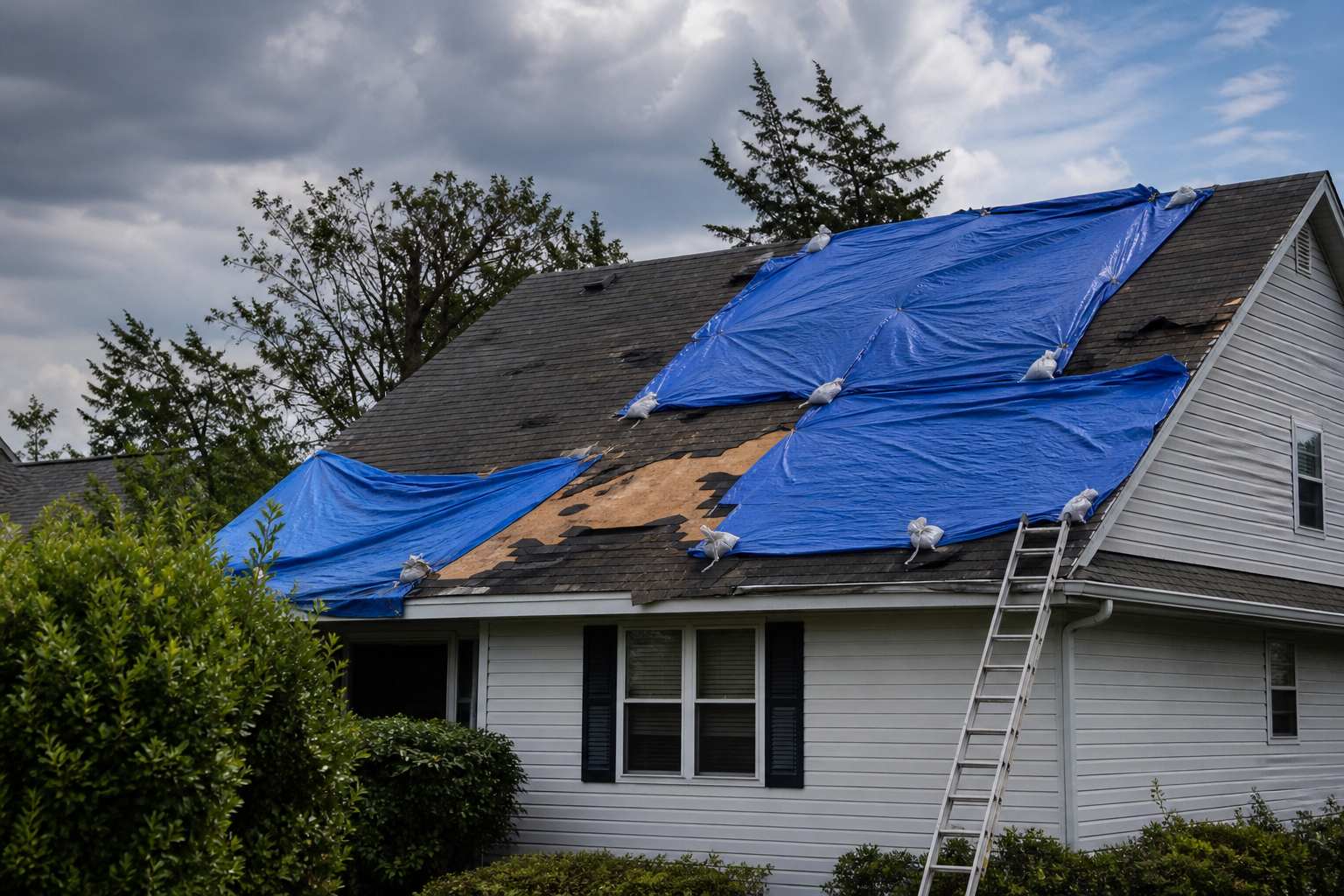
Emergency Board-Up & Tarping: Prepare roll stock poly, 2×4 lumber, and sandbags for immediate emergency envelope stabilization following severe wind gusts.
Field Safety Protocol: Remind field mitigation crews that flash flood waters are classified as Category 3 (black water) bio-hazard contamination requiring full PPE and specialized containment.
Official Sources & Attribution
Data compiled from official public datasets provided by the NOAA Storm Prediction Center (SPC) Convective Outlooks, National Weather Service (NWS) Active Alerts API, and preliminary Local Forecast Office Storm Reports.
Operational Disclaimer: This is a public-data summary for restoration professionals’ situational awareness only. It is not an official weather forecast. Always verify with the National Weather Service, local NWS forecast offices, and official watches/warnings. Preliminary storm reports are unfiltered and subject to change. Do not make critical life-safety or structural dispatch decisions solely based on this brief.
The magazine piece tells the facility manager why the gap exists. This is the shop version. Same week. Different door.
A water job ends when the last air mover comes off the truck, not when the invoice hits QuickBooks. After that, the only carbon record most shops have is a line item and a memory. The FM who hired you will get asked for Category 1 and Category 5 numbers. They will call you. You will not have them.
What actually has to leave with the crew
Not a sustainability essay. A dozen fields, written while the floor is still wet:
If a tech cannot fill it in five minutes, the form is wrong. If it waits for the office on Monday, it will be invented.
Put it on the invoice trigger
Nobody fills a questionnaire after the trucks have gone. They fill what stands between them and getting paid.
One clause in the work auth or the master: the per-job record is a condition of final invoice. Same shape as a moisture log. Same habit as photos. The Restoration Carbon Protocol is the open mapping if you do not want to invent the buckets. Use it, rename it, or steal the twelve fields. The standard is not the point. The timestamp is.
Who this is for
Commercial water, fire, mold, and the one-off mechanical swap. The FM inside the building is the only person who can demand the data at the door. You are the only person who can produce it at the job.
IFMA just ran the occupier-side argument. Closing the Scope 3 Data Gap is theirs. This is the field note that makes that article usable when the next pipe opens.
The sentence that pays
“We capture the job record before we leave. You can hand it to whoever asks.”
The Storm Prediction Center has an Enhanced Risk of severe thunderstorms across western New York this afternoon and evening, with a Slight Risk over parts of Montana. Official Local Storm Reports already show 2.00″ hail in Michigan, 83 mph gusts at Great Falls, and a long tree-and-wire damage swath from western New York through Pennsylvania into Maryland and Virginia.
This is a live snapshot for Wednesday, September 2, 2026, built from NOAA/NWS Storm Prediction Center products and preliminary LSRs. Conditions change fast — always verify with the National Weather Service for your county.
Current hotspots
Western New York — Enhanced Risk (damaging wind primary)
SPC’s 2000 UTC Day 1 outlook expanded the Enhanced Risk slightly east across western New York, with 45% wind probabilities. Storms are expected along and ahead of a cold front from southeast Lower Michigan into the lower Great Lakes, with 50+ kt of deep-layer shear supporting a mix of supercells and clusters. Damaging winds are the main threat. Large hail and a few tornadoes are also in the outlook, including some chance of a stronger tornado if a supercell mode holds this evening.
Already reported:
Trees down in Oakfield, Elba, Batavia, Leicester, Livonia, and Wolcott, NY.
Several hundred power outages in and around Batavia from tree limbs and line damage.
Additional trees and wires down later in Wyoming County (Castile / Portageville).
High-based storms moving northeast across Montana have already produced hurricane-force gusts. SPC flagged occasional 75+ mph gusts even with weaker instability.
Measured gusts (preliminary LSRs):
83 mph — Great Falls Airport (KGTF), Cascade County, MT
80 mph — Warm Springs, Deer Lodge County, MT
80 mph — Highwood Bench, Chouteau County, MT
77 mph — south-southwest of Choteau, Teton County, MT
74 mph — Bert Mooney Airport, Silver Bow County, MT
73 mph — Helena and 11 W Helena, Lewis and Clark County, MT
71 mph — Helena Airport and west of Bynum
Great Lakes to Mid-Atlantic — wind, hail, and tree damage
An earlier cluster with a well-established cold pool produced damaging winds across western and central Pennsylvania and continued southeast into Maryland, D.C., and northern Virginia. Behind that, a second round is the western New York / Lower Michigan threat.
Notable hail:
2.00″ hail — Birch Run, Saginaw County, MI (multiple spotter/public reports with photos)
1.25″ hail — 3 E Meadville, Crawford County, PA
1.00″ hail — north of Cochranton, Crawford County, PA
Wind damage corridor (trees, wires, road closures): Warren, Forest, Crawford, Jefferson, Elk, Clearfield, Huntingdon, Blair, Perry, Juniata, Cumberland, York, and Lancaster counties in Pennsylvania; Baltimore, Frederick, Washington, Montgomery, and Caroline counties in Maryland; Loudoun, Alexandria, Rappahannock, Culpeper, King George, Orange, Madison, Clarke, Buckingham, and Dinwiddie counties in Virginia. One tree fell on a residence in Harmonsburg, Crawford County, PA. In Ceresco, Saunders County, NE, branches hit houses and windows were blown out of a business.
Texas — isolated landspout
A landspout was reported 3 ENE of Serenada in Williamson County, TX (north of Georgetown, between SH 195 and I-35), associated with a weak shower. Preliminary — not a confirmed tornado path.
What this means for restoration operators
Saginaw County, MI (Birch Run): 2.00″ hail is hen-egg size — enough to puncture asphalt shingles, bruise commercial TPO/EPDM, and collapse rooftop HVAC condenser fins. Photo the roof and RTUs before the next rain cycle.
Western NY / Lower MI: Stage for wind, tree, and power-line losses plus possible hail. Commercial roofs and storefront glazing along the Enhanced Risk corridor are the first walk.
PA–MD–VA swath: This is a tree/wire/water day. Wind-driven rain through failed envelope, wet interiors, and delayed drying if power is out. Treat overland flash-flood water as Category 3 until you prove otherwise.
Montana (Great Falls / Helena / Choteau corridor): 70–83 mph gusts are hurricane-force. Expect loose membrane, HVAC displacement, metal cladding, and broken glass on commercial buildings even without large hail.
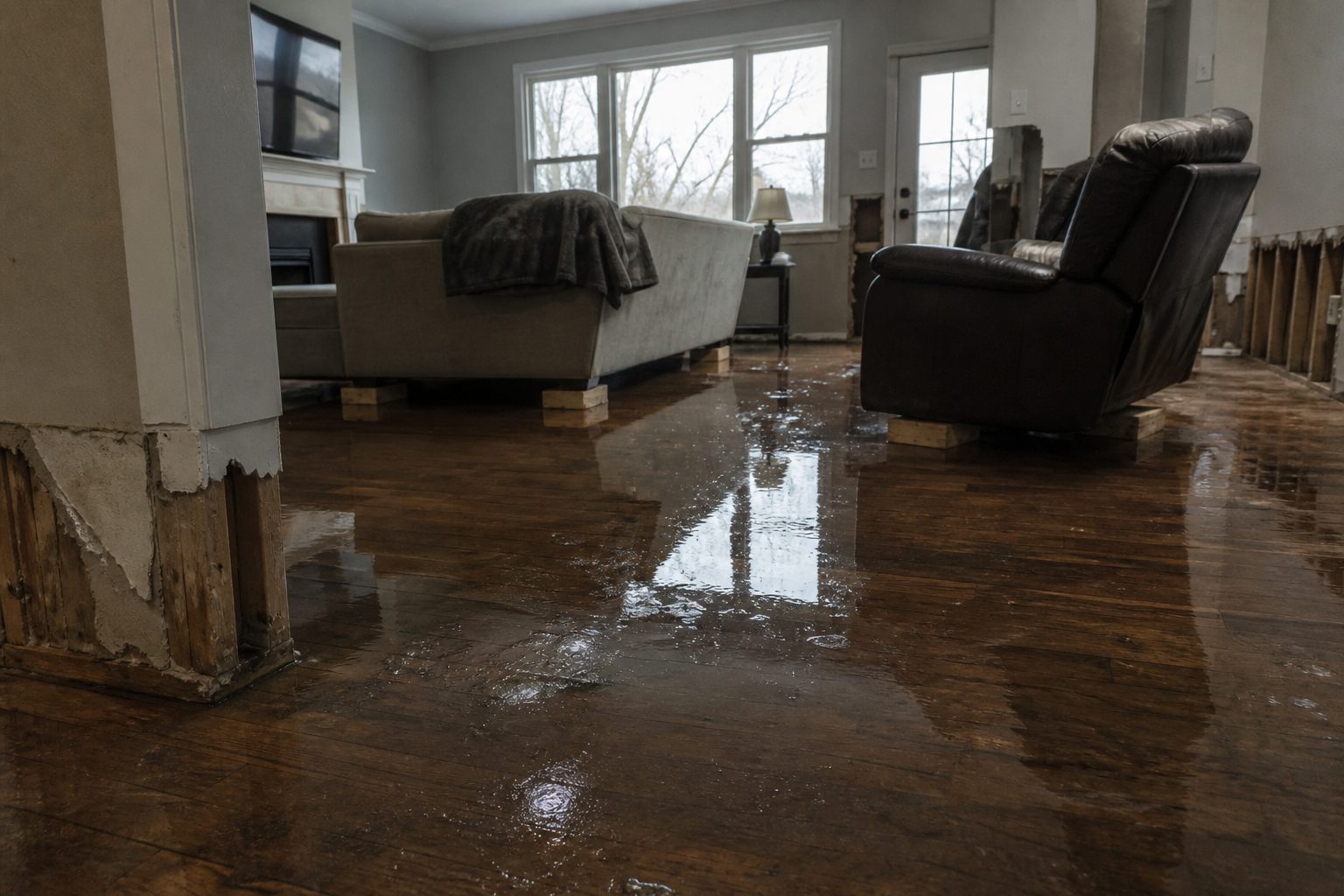
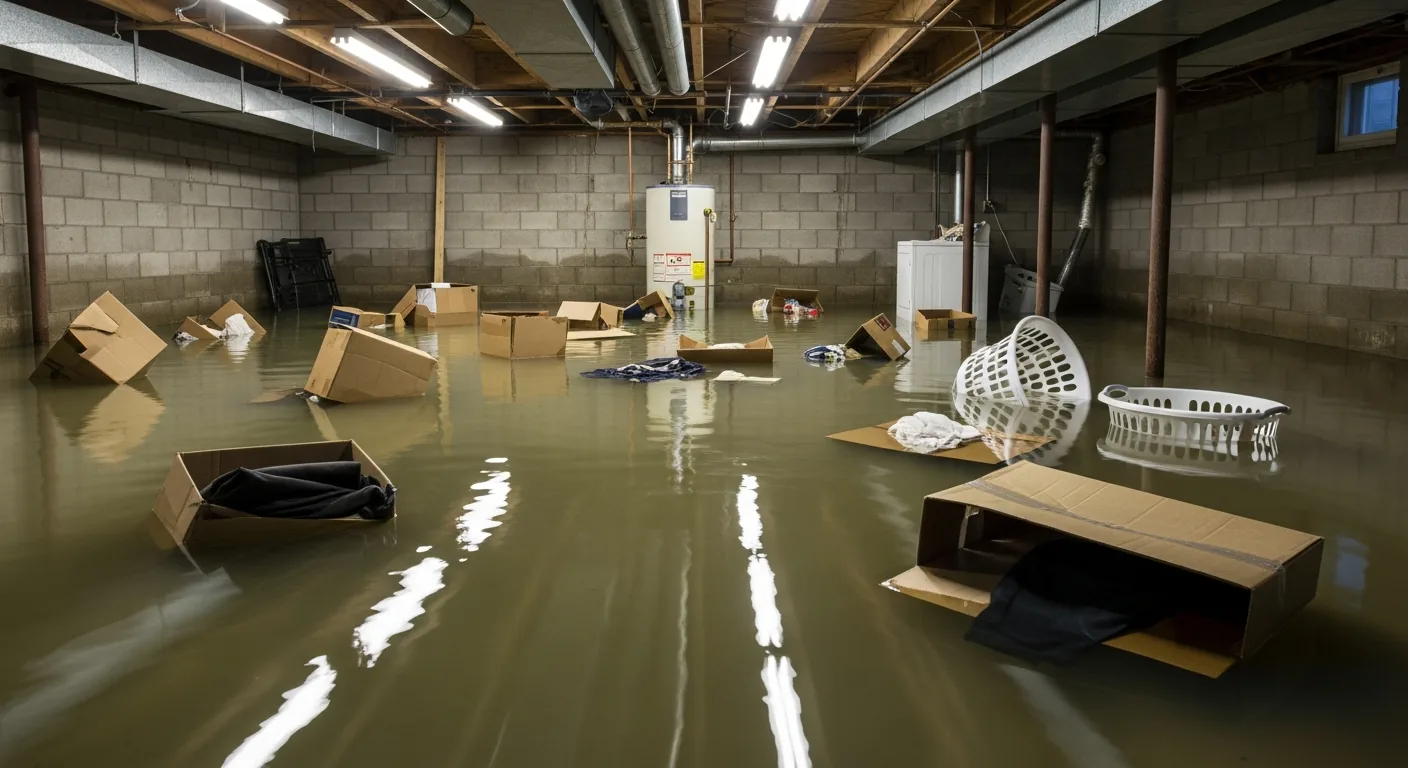
Wind-driven rain and tree damage produce interior water losses like this — saturated drywall, damaged contents, and mold risk inside 48 hours if extraction is delayed.
This is a public-data summary for restoration professionals’ situational awareness only. It is not an official forecast. Always verify with the National Weather Service, local NWS offices, and official watches/warnings. Preliminary storm reports can change. Do not make operational decisions solely on this brief.
Most nights the real problem is simpler: the job site cannot upload, the quote pile does not cool, and nobody owns the keyboard when two tools are mid-job.
We already published the three field notes. This is the companion that names the stack.
Layer 0 starts at the curb — can the site still talk?
The pipe
On a water job, cell bars lie. Fiber is dead. The moisture map still has to leave the truck.
Starlink on a water job is not a partnership post. It is layer 0: a clear-sky dish, a 65–100 W brick, and a boring SSID so photos, Xactimate, and after-hours voice still move when the street does not.
No pipe → no honest traffic. Voice agents and CRM cards do not invent bandwidth.
Clipboard math beats a prettier quote card.
The pile
Once the pipe works, the shop still has open estimates that do not book, supplements that sit, and missed rings that become someone else’s water job.
The leftover pile borrows the math that cools a trapped ion. Count n (open quotes), A− (book or honest kill), A+ (new noise). Plot the leftover on Mondays. If it does not fall, follow-up is theater or miss rate is the heat.
AI that only writes a prettier card is a thermometer. AI that texts back in a minute and closes the row is a kick.
Two seats. One measurement owner.
The two seats
Then you put more than one agent on the same laptop and discover the collision problem.
Cursor checked in on Grok Desktop mid-job is the Cosync rule in the open: seats with jobs, not two models arguing in one thread. One seat keeps the PowerShell. The other reads the board, closes orphan twins, and does not steal the keyboard.
Human Gate still owns OAuth, live Publish, and paid spend. Seats replace waiting and context loss — not the owner.
Weather hits. The floor still has to run.
One floor
Read as three posts, they look like tech, physics, and tooling.
Run as a week, they are one floor:
Pipe — can the site and the after-hours line still talk?
Pile — are open quotes shrinking on purpose?
Seats — who owns the keyboard, and who only Cosyncs?
Skip the pipe and your “AI dispatcher” is a voicemail with better grammar. Skip the pile math and your lead gen is blue-detune (more noise, same booked jobs). Skip the seat rule and two tools fight over the same Chrome window while the work order twins drift.
Steal this without buying our tools
You do not need our stack names.
Write one Owner column and one Done-when line on every live card.
Put a truck kit on the hook for dead-fiber jobs (or admit you will not upload tonight).
Run the four-week leftover sheet before you buy another map-pack click.
Practice the check-in: are they stuck, or are they fine — and do I have a capability they lack? If they are fine, leave the keyboard alone.
That is restoration + AI ops without a slide deck.
What this is not
Not a Starlink / SpaceX / Tesla / xAI partnership.
Not “fully autonomous.” Publish and pay stay human.
Not Tacoma / Everett / Mason local news. Field notes stay method-first.
Not a new SKU. The front door on Tygart Media is still the kit you can copy and hang yourself.
This one’s a personal note, not a newsletter blast. You’ve been on our list, and I wanted to tell you what we’ve actually been building lately, in plain language.
The big idea: talking to the website
We’ve wired up Grok Voice — a voice assistant — directly to the Tygart Media WordPress site. That means I can audit the site, clean up drafts, publish posts, attach images, set SEO metadata, and hand work off to other agents, all by talking. No dashboard clicking. No copy-paste. Just a walk and a conversation.
As a proof of concept, we ran a full maintenance pass: health check, draft triage, taxonomy cleanup, featured images from the media library, internal linking, and a weekly automation that scans for new drafts, spam, and plugin updates every Monday morning.
What we shipped this session
Published a batch of local Tacoma content — Mount Rainier, the Port, utilities, parks, workforce guides — properly categorized and tagged.
Optimized and published two longer personal essays: Email Is the New API and The Pile Is Substrate.
Cross-linked the restoration product pages so the operating system, job tracker, equipment tracker, and claims tools point at each other.
Built a Restoration Industry Knowledge Base in Notion — vendors, standards, KPIs, pitfalls — structured so any restoration company can duplicate it and let Grok Voice fill it in.
Handed off a v1.0 productized version to be finished, uploaded to the Square shop, and turned into sales content.
What’s next (the interesting part)
The next layer is bespoke outreach. Instead of one generic email to the whole list, we’re connecting FluentCRM so Grok Voice can read each subscriber’s history and send a genuinely personal note — what we’ve built, what fits them, what to try first. No secrets, just the useful stuff.
You’ll be among the first to get one of those. If you want to jump ahead, the restoration ops kit and the knowledge base are the places to start.