Blog

  • Restoration Google Ads: How Profitable Operators Run PPC

    Restoration Google Ads: How Profitable Operators Run PPC

    Google Ads is the channel where most restoration companies either build or lose their marketing program. Run well, paid search produces a predictable flow of high-intent water damage and fire damage leads at a cost per acquisition that supports the unit economics of the business. Run poorly, it incinerates marketing budget faster than any other channel in the stack. The difference is rarely talent — it is structure, discipline, and tracking.

    This article covers the operational mechanics of running Google Ads for a restoration company. For the broader marketing context, see our restoration marketing guide.

    Why Restoration Google Ads Are Hard
    Seven cards naming common AI chatbot failure modes
    Why restoration Google Ads are hard.

    Two structural challenges make restoration PPC tougher than most home service categories. First, click costs on emergency restoration keywords are among the highest in Google Ads — competitive metros routinely see cost per click in the double digits for terms like “water damage restoration” and “emergency flood cleanup.” Second, lead quality varies wildly. A “water damage” search at 2pm on a Tuesday is often a homeowner researching options, while the same search at 11pm during a storm is almost always a real emergency.

    Profitable restoration PPC requires architecture that separates these intents and bids accordingly.

    Campaign Architecture That Works
    Four-stage funnel: citation, click, engage, convert
    Campaign architecture that works.

    The structure that consistently outperforms in restoration accounts uses tightly themed campaigns split by service line and intent stage. A typical structure might include: emergency water damage (highest bids, call-only ads, after-hours dayparting), planned water mitigation (lower bids, form fills acceptable), fire damage, mold remediation, biohazard, contents and pack-out, and reconstruction.

    Within each campaign, single-keyword ad groups (SKAGs) or tightly themed ad groups outperform broad themed groups in this category because of how varied the search query intent is. “Burst pipe water damage” and “ceiling water stain” deserve different ads.

    Bidding and Budget Strategy

    Restoration Google Ads accounts typically perform best on either Maximize Conversions with a target CPA cap or Manual CPC with portfolio bidding. Smart Bidding strategies need 30-50 conversions per month per campaign to learn effectively, which most restoration accounts do not have at the campaign level. Pooling conversions through a portfolio bid strategy across related campaigns is one workaround.

    Budget should be concentrated rather than spread thin. A restoration company spending $3,000 per month on Google Ads will almost always get better results from a single campaign focused on the highest-intent emergency terms than from spreading $300 across ten different services.

    Ad Copy That Converts Restoration Leads

    The highest-converting restoration ad copy emphasizes three things in this order: response time (“On-site in 60 minutes”), credibility (IICRC certified, BBB rated, years in business), and risk reversal (free estimates, work directly with insurance, 24/7 availability). Generic “water damage experts” copy underperforms specific, operational claims.

    Call-only ads on emergency keywords often outperform standard text ads with a website destination, because the customer wants to call now, not browse a site. After-hours dayparting that switches all campaigns to call-only between 6pm and 7am captures emergency demand efficiently.

    Geo-Targeting Discipline

    Sloppy geo-targeting is the most common reason restoration accounts hemorrhage budget. The default radius targeting setting in Google Ads is too generous for most restoration businesses. Tighter zip-code-level or hyperlocal radius targeting around the actual service area, combined with location bid adjustments that bid up on high-value zip codes and bid down on low-value ones, often cuts cost per lead by 30-50%.

    Call Tracking and Conversion Setup

    Desk with laptop, checklist notebook, and billing card ready before creating an Anthropic API key
    Call tracking and conversion setup.

    Restoration leads come in primarily by phone, and Google Ads accounts that do not import call conversions are flying blind. Every account needs Google Forwarding numbers configured, call extensions enabled, and call conversions imported into the bidding algorithm. Pairing this with a third-party call tracking platform (CallRail, CTM, or WhatConverts) for call recording and lead scoring closes the attribution loop.

    Negative Keywords: The Hidden Performance Lever

    The single most effective ongoing optimization in restoration accounts is aggressive negative keyword work. Common waste sources include “DIY,” “free,” “how to,” “training,” “course,” “jobs,” competitor brand names (unless deliberately bidding on them), and product searches like “water damage paint.” A mature restoration account typically has a negative keyword list in the thousands.

    Related on Tygart Media: Google Ads $127k lessons · water damage marketing · SEO for restoration.

    Frequently Asked Questions

    What is a good cost per lead for restoration Google Ads?

    Cost per lead varies enormously by metro, service line, and lead quality definition. Emergency water damage leads in major metros often run between $80 and $250, while less competitive markets and services can come in well below that. Cost per acquisition for a closed job is the more important number to track.

    Should I bid on competitor brand names?

    Bidding on competitors can be profitable if the competitor brand has high search volume and your offer is genuinely competitive, but it tends to invite reciprocal bidding and increases costs across the category. Most restoration companies get better ROI from defending their own brand terms aggressively than from attacking competitors.

    Do Performance Max campaigns work for restoration?

    Performance Max can work for restoration companies with mature conversion data and strong creative assets, but it generally underperforms tightly structured Search campaigns for emergency-intent restoration queries because it gives up control of placement and audience targeting.

    How do I keep Google Ads from running during business off-hours when no one can answer?

    Use ad scheduling to either pause campaigns or significantly reduce bids during hours when no one can answer the phone. Even better, set up after-hours call routing so that emergency calls reach an answering service or on-call technician, since most restoration revenue happens outside 9-to-5.

    How long should I run a Google Ads test before deciding it works?

    Restoration Google Ads campaigns generally need at least 30-60 days of meaningful spend to produce statistically reliable performance data. Killing a campaign after two weeks of poor performance is a common mistake that prevents accounts from finding their winners.
  • SEO for Restoration Companies: The Complete 2026 Playbook

    SEO for Restoration Companies: The Complete 2026 Playbook

    SEO for restoration companies is fundamentally a local search problem with a content moat layered on top. The difference between a restoration company that pulls 20 organic leads a month and one that pulls 200 is rarely talent — it is whether the technical foundation, the local signals, and the content engine are all running at the same time. This guide walks through each layer in the order it should be built.

    This article is part of our broader restoration marketing guide, which covers the full channel mix. Here we focus exclusively on organic search.

    Layer 1: The Technical Foundation

    Desk with laptop, checklist notebook, and billing card ready before creating an Anthropic API key
    Layer 1 — the technical foundation.

    Technical SEO for a restoration company website is straightforward but unforgiving. The site needs to load in under three seconds on mobile, have a clean URL structure, valid schema markup on every service page, and zero crawl errors. Modern Google does not need much hand-holding on technical issues, but it will quietly demote sites that consistently fail Core Web Vitals or have broken canonical tags.

    The minimum technical checklist for a restoration site includes mobile-first responsive design, HTTPS across every URL, an XML sitemap submitted to Google Search Console, schema markup for LocalBusiness and Service on relevant pages, and structured data for FAQs where they appear. A content delivery network and image optimization to WebP usually handle most speed concerns.

    Layer 2: On-Page SEO

    Restoration service pages are where most ranking battles are won or lost. Each core service — water damage, fire damage, mold remediation, smoke damage, biohazard, contents — needs its own dedicated page, not a list on a single services page. Each page should target a primary keyword in the title tag, H1, and first paragraph, then expand into 1,200-2,000 words of substantive content covering the process, what causes the damage, the insurance process, the company’s certifications, and a strong call to action.

    The most-overlooked on-page lever is internal linking. Service pages should link to relevant blog content, location pages, and case studies. The link graph signals to Google which pages matter most.

    Layer 3: Local SEO and Map Pack Dominance

    Comparison of Claude how-to fit versus local service page fit for assistants
    Layer 3 — local SEO and map pack dominance.

    Map pack rankings for “[service] [city]” queries drive a substantial share of restoration leads. Three signals matter most: proximity (Google measures distance from the searcher to the business), prominence (review volume, link authority, mentions), and relevance (does the business profile clearly match the query).

    The local SEO checklist starts with a fully optimized Google Business Profile — accurate categories, complete services list, Q&A answered, weekly posts, regular geo-tagged photo uploads, and a steady review cadence with thoughtful responses. Citations across major directories (BBB, Yelp, Angi, HomeAdvisor, Houzz, industry-specific sites) reinforce NAP consistency. Service area businesses should specify their service area carefully rather than listing every city in the region.

    Layer 4: City and Neighborhood Pages

    For restoration companies serving multiple cities, individual city pages are the single highest-leverage SEO investment after the core service pages. A page titled “Water Damage Restoration in [City Name]” with 800-1,500 words of locally relevant content — neighborhoods served, common local water damage causes, local building stock, response times to specific zip codes — will routinely outrank both national franchises and competitors using doorway pages.

    The trap to avoid is templating. Google detects city pages that are 90% identical with only the city name swapped. Each page needs genuinely unique content sections.

    Layer 5: Content Marketing for Authority

    Four-stage funnel: citation, click, engage, convert
    Layer 5 — content marketing for authority.

    Beyond service and city pages, ongoing blog content builds topical authority. The highest-ROI content topics for restoration companies tend to be insurance process guides (“how does a homeowners insurance water damage claim work”), cause-of-loss explainers (“what causes a Category 3 water loss”), and homeowner education (“what to do in the first 24 hours after a flood”). These pieces capture top-of-funnel search volume and convert through internal linking back to service pages.

    Layer 6: Link Building

    Restoration link building is hard because most of the natural backlink opportunities — directory citations, BBB profiles, association memberships — are easily replicated by competitors. Sustainable link advantages come from local press coverage of community involvement, sponsorships of local events with a website link, partnerships with adjacent service providers (plumbers, real estate firms) that produce mutual link exchanges, and occasionally guest content on restoration industry publications.

    Related on Tygart Media: content marketing · local SEO · blog SEO.

    Frequently Asked Questions

    How long does SEO take to work for a restoration company?

    Local map pack movement on long-tail and branded queries often happens within 30-90 days of a serious GBP optimization push. Competitive head terms in major metros usually require 12-18 months of consistent work. The first leads from organic search typically arrive within 90 days for a well-executed program.

    Do I need to write a separate page for every city I serve?

    Yes, if you want to rank for “[service] [city]” queries in those cities. A single services page cannot effectively rank for dozens of city-modified queries. Each meaningful market should have its own dedicated, locally relevant page.

    Is link building still important for restoration SEO?

    Yes, but the bar has lowered for local-intent queries where proximity and reviews carry more weight than backlinks. For competitive head terms and informational content meant to attract top-of-funnel traffic, backlink authority remains a significant ranking factor.

    Should a restoration company use AI to write SEO content?

    AI tools can speed up drafting and outlining but unedited AI content tends to underperform on commercial keywords because it lacks the operator-specific detail Google’s helpful content systems reward. The most effective use is AI-assisted drafting reviewed and rewritten by someone with domain expertise.

    What is the most common SEO mistake restoration companies make?

    Treating SEO as a one-time setup project rather than an ongoing program. Rankings decay without consistent content, citation maintenance, review velocity, and link building. Companies that invest for six months and then stop usually lose most of their gains within a year.

  • Water Damage Restoration Marketing: Proven Channel Guide

    Water Damage Restoration Marketing: Proven Channel Guide

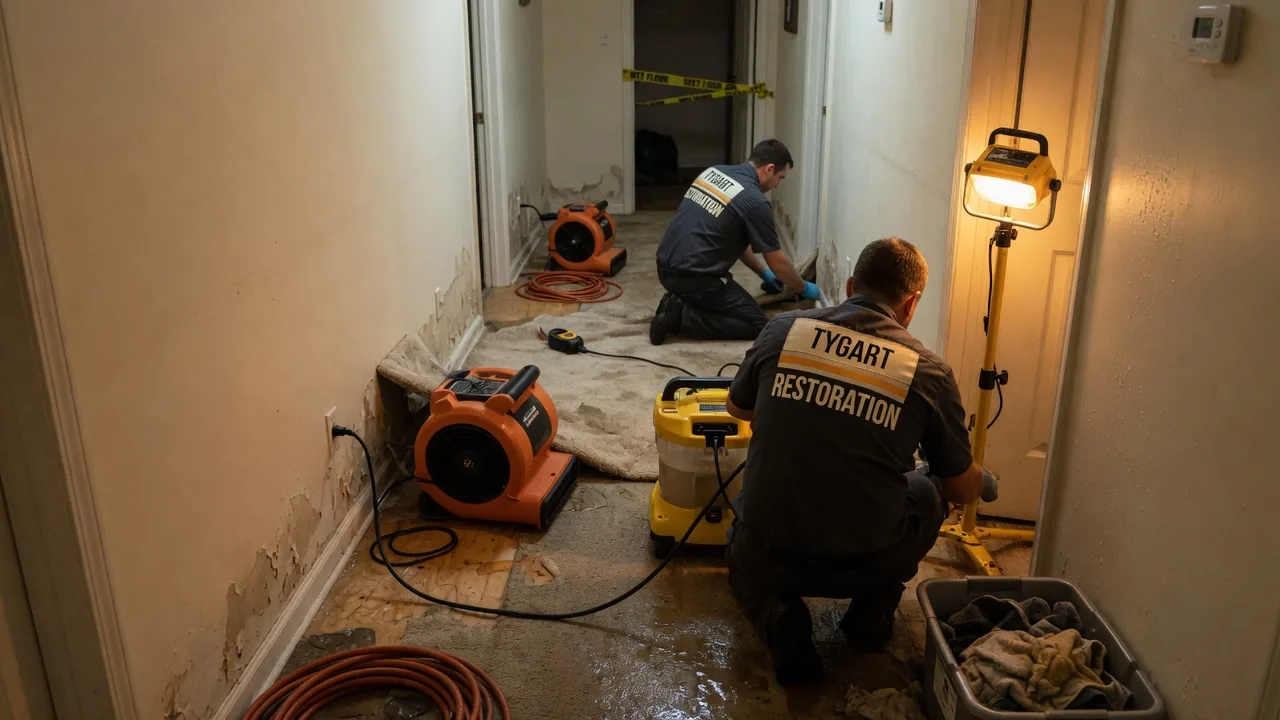
    Water damage restoration is unlike almost any other home service. The buying decision happens in minutes, not weeks. The customer is panicked, often dealing with an active leak or flood, and they will hire whoever shows up first with credibility. Marketing for water damage restoration is therefore less about persuasion and more about presence — being visible at the exact moment a homeowner or property manager opens their phone and types “water damage near me.”

    This guide covers the full channel stack that profitable water damage restoration companies use to capture that demand and build a referral engine that keeps producing between emergencies. For the broader strategic context, see our complete restoration marketing guide, which sits above this article in the hub-and-spoke architecture.

    Why Water Damage Marketing Is Different

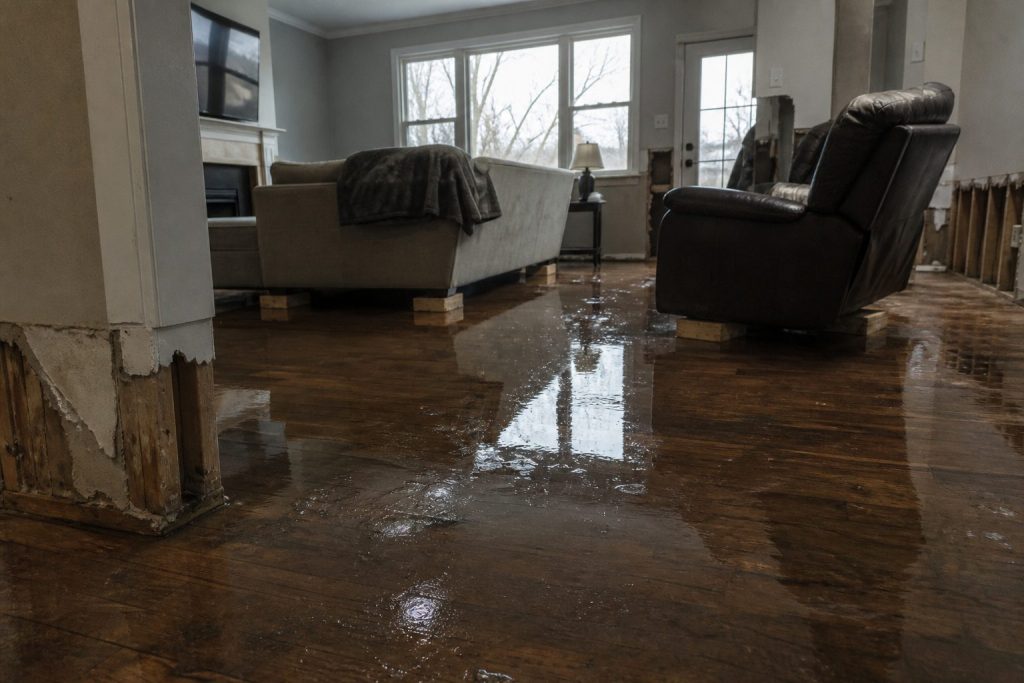
    Flooded residential living room with standing water on hardwood after a water loss
    Why water damage marketing is different.

    Three structural realities shape every marketing decision in this category. First, intent is overwhelmingly bottom-funnel. Almost no one searches “water damage restoration company” out of curiosity. They search because they have a problem. That collapses the funnel and rewards channels that intercept high-intent searches.

    Second, the competitive set is dominated by Google. Google Search, Google Maps, Local Service Ads, and Google Business Profile collectively account for the majority of net-new water damage leads in most metros. If a restoration company is not visible across all four, it is competing for table scraps.

    Third, insurance and TPA dynamics shape lead economics. A water damage job paid through a carrier preferred vendor program has a different margin profile than a cash retail job sourced from Google. Marketing has to be tuned to the mix the operator actually wants.

    The Five Channels That Drive Most Water Damage Leads

    Comparison of Claude how-to fit versus local service page fit for assistants
    The five channels that drive most water damage leads.

    1. Google Local Service Ads (LSAs)

    LSAs sit at the top of the search results page above traditional paid ads and the map pack. For water damage queries, LSAs produce leads at a cost per acquisition that is typically lower than Google Ads in most markets, though margins vary by metro. The Google Guaranteed badge is a meaningful conversion lever for cold homeowners. Setup requires background checks, license verification, and insurance documentation — friction that becomes a moat once cleared.

    2. Google Ads (Search)

    Traditional pay-per-click on emergency keywords (“water damage restoration,” “flooded basement,” “burst pipe cleanup”) remains the workhorse channel for most restoration companies. Campaign structure matters enormously here. Single-keyword ad groups, hyperlocal geo-targeting, call-only ads after hours, and aggressive negative keyword lists separate profitable accounts from money pits.

    3. Google Business Profile and the Map Pack

    Map pack visibility is essentially free traffic, but it is also the most competitive surface in local search. Ranking in the three-pack for “water damage restoration [city]” requires consistent NAP citations, a steady stream of authentic reviews with keyword-rich responses, regular GBP posts, geo-tagged photo uploads, and proximity to the searcher.

    4. Organic SEO and Content

    Organic search is a longer-term play but produces the cheapest leads at scale. Service pages targeting “[service] in [city]” combinations, neighborhood landing pages for high-value zip codes, and educational content answering insurance and restoration process questions all stack into a moat that competitors struggle to replicate.

    5. Insurance Adjuster and Plumber Referrals

    Marketing is not only digital. The most profitable restoration companies invest heavily in offline relationships with adjusters, plumbers, property managers, and real estate agents. A single plumber referral relationship can produce more revenue than a full year of paid search.

    Budget Allocation: Where to Put the First Marketing Dollar

    For a restoration company spending under $5,000 per month on marketing, the priority order is usually: GBP optimization first (it is free), then LSAs (lowest CAC for verified businesses), then a tightly scoped Google Ads campaign on emergency keywords, then organic content investment. Social media and display should generally come last in the water damage category because intent is too immediate for those channels to convert efficiently.

    For companies spending $10,000-$50,000 per month, the channel mix expands to include programmatic display for retargeting, YouTube for brand awareness in target zip codes, and a content marketing operation that produces 4-8 SEO-targeted pieces per month.

    Tracking and Attribution

    Four-stage funnel: citation, click, engage, convert
    Tracking and attribution.

    Water damage marketing fails when leads cannot be tracked back to source. Every campaign should use call tracking numbers (CallRail, CallTrackingMetrics, or WhatConverts), every form should fire a conversion event, and every job should be tagged in the CRM with its origin channel. Without this, marketing decisions are guesses.

    Related on Tygart Media: content marketing strategy · Google Ads guide · SEO for restoration companies.

    Frequently Asked Questions

    How much should a water damage restoration company spend on marketing?

    Most healthy restoration companies invest between 5% and 12% of revenue on marketing, with a higher share during the first three years while organic and referral channels are still being built. Companies relying primarily on paid acquisition often run closer to the higher end of that range.

    Are Google Local Service Ads worth it for water damage?

    For most water damage restoration companies in mid-sized and major metros, yes. LSAs typically produce a lower cost per lead than traditional Google Ads and the Google Guaranteed badge improves close rates on cold inbound calls. The qualifying process is the main barrier.

    What marketing channels work best for commercial water damage?

    Commercial water damage leans more on relationships, MSAs with property management firms, LinkedIn outreach, and association involvement than on paid search. Paid search still matters but a larger share of commercial pipeline comes from offline business development.

    How long does SEO take for a restoration company?

    Local SEO results — map pack visibility, branded search, and a handful of city service pages — typically begin to compound in 90-180 days. Building a competitive organic presence on the most valuable water damage keywords in a major metro often takes 12-24 months of consistent content and link building.

    Should a restoration company hire an agency or build marketing in-house?

    Companies under roughly $3M in revenue usually get more value from a specialized restoration marketing agency than from an in-house hire, because the talent pool of operators who understand both restoration and digital marketing is thin. Above $5M, an internal marketing leader paired with specialist agencies is often the best mix.

  • Restoration Insurance Programs: TPA & Vendor Network Guide

    Restoration Insurance Programs: TPA & Vendor Network Guide

    The insurance ecosystem in restoration is its own universe with its own language: TPAs, carriers, preferred vendor programs, MSAs, scorecards, audits, performance guarantees, network certifications. Most restoration owners have a vague sense of what these programs are and a stronger opinion about whether to join them, often without knowing the actual economics.

    This is the complete operator’s guide to restoration insurance programs in 2026: what TPAs actually do, how carrier preferred vendor programs work, what MSAs require, the real margin economics, and the framework for deciding which programs deserve your application.

    The four players in the insurance restoration ecosystem

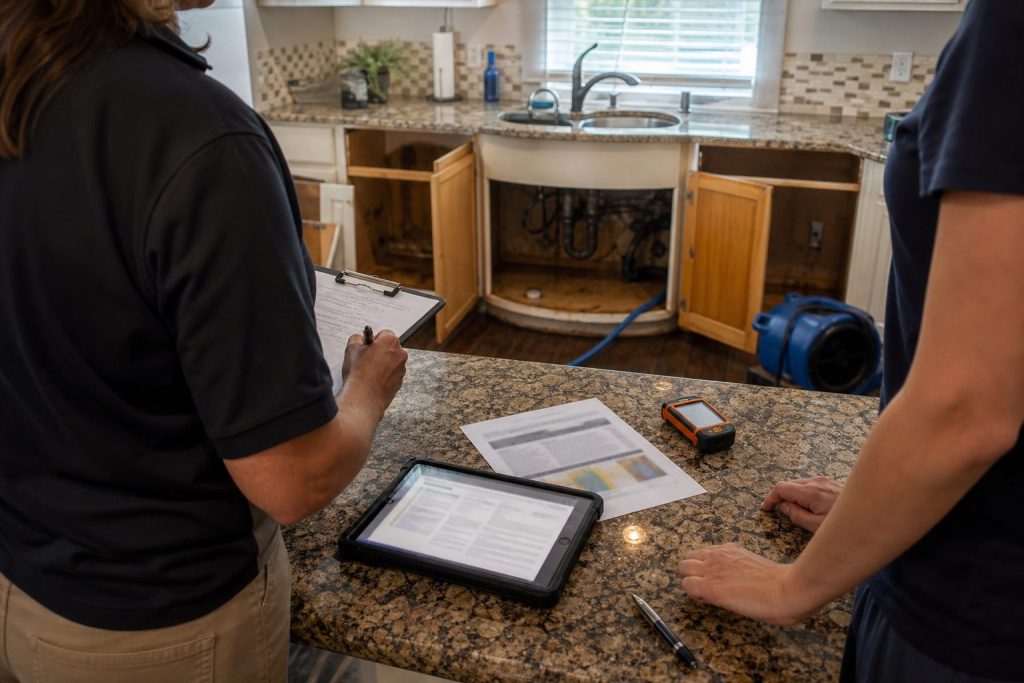
    Clipboard and tablet on a kitchen counter during an insurance adjuster walkthrough after water loss
    Four players in the insurance restoration ecosystem.

    Every insurance restoration job involves up to four parties. Understanding which is which is the first step to navigating the system.

    The carrier is the insurance company that issued the policy and pays the claim — State Farm, Allstate, USAA, Liberty Mutual, Travelers, Nationwide, Farmers, Progressive, Chubb, and dozens of regionals. Carriers either have in-house claims handling or contract claims management out to TPAs.

    The TPA (third-party administrator) is a company that manages claims on behalf of carriers — Sedgwick, Crawford & Company, Contractor Connection, Code Blue Restoration Services, CCMSI, ESIS, and others. TPAs handle adjuster assignments, vendor management, scope review, payment processing, and customer communication on behalf of the carrier.

    The vendor network is a managed roster of restoration contractors that the carrier or TPA assigns work to. Some networks are operated by TPAs (Contractor Connection is the largest); some are operated directly by carriers (Allstate Premier Service, USAA STARS).

    The independent adjuster is a contracted adjuster (not a carrier employee) hired to assess specific claims, often for catastrophe events or to supplement carrier capacity. Independents work for IA firms like Eberl, Pilot Catastrophe, and Crawford.

    What a TPA program actually requires

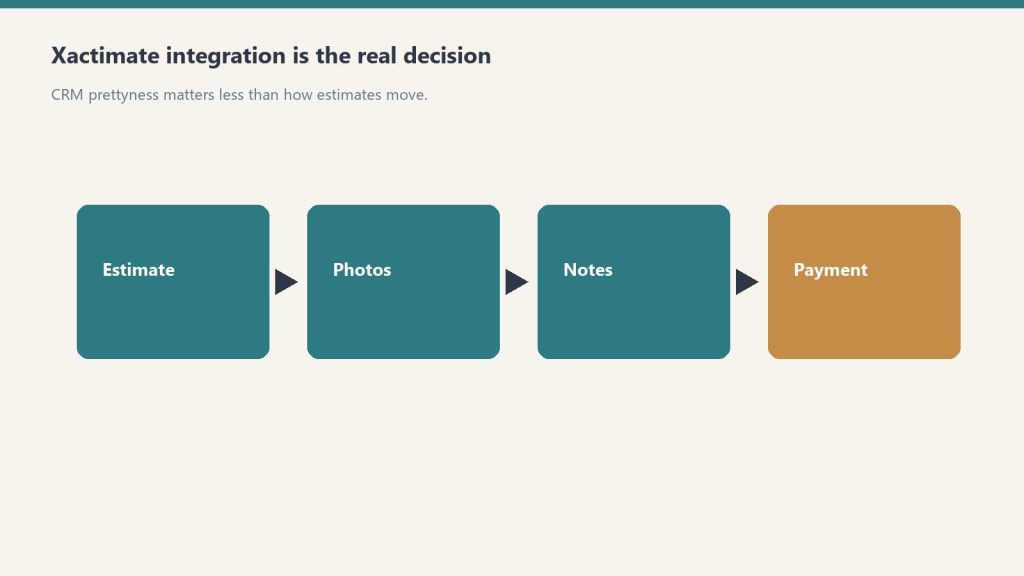
    Flow from estimate to photos to notes to payment emphasizing integration
    What a TPA program actually requires.

    Joining a major TPA vendor network typically requires: a multi-year track record in restoration (most require 3+ years), specific IICRC certifications (firm-level plus individual technicians for relevant service lines), insurance coverage at higher limits than standard (often $2M+ general liability, $1M+ pollution liability, $1M+ professional liability), background checks and drug testing for technicians, vehicle and uniform standards, technology compatibility (use of TPA-approved estimating and reporting platforms), 24/7 dispatch capability with documented response time SLAs, monthly reporting and KPI tracking, and a signed master service agreement that defines pricing, scope, performance standards, and termination conditions.

    The application process typically takes 60-180 days, includes facility audits, reference checks, and may require a probationary period of supervised job assignments before full network status.

    The pricing economics of TPA work

    The honest economics: TPA work pays less than direct retail work. Most TPA agreements include some form of pricing concession — typically 10-20% off published Xactimate pricing, restrictions on overhead and profit, capped supplements, or fee schedules that cap certain line items. The trade-off is volume and predictability: a vendor in good standing on a major TPA network may receive 30-100+ assignments per month depending on territory.

    The math that matters: net margin per TPA job, after pricing concessions, after the operational overhead of TPA-required reporting and SLAs, and after slower payment terms (45-90 days is common). Companies that profitably run TPA programs typically have lean overhead, disciplined estimating, and the operational scale to absorb the lower per-job margin with higher volume. Companies with high overhead burden often lose money on TPA jobs they think are profitable.

    Major TPAs and vendor programs to know

    Contractor Connection (subsidiary of Crawford & Company) is the largest restoration vendor network, managing claims for many major carriers including Allstate, Liberty Mutual, and others. Network membership is tightly managed with strict performance standards and capacity targets.

    Code Blue Restoration Services is a major restoration-specific TPA serving multiple carriers, with significant residential mitigation volume.

    Sedgwick is one of the largest TPAs overall, serving commercial and residential property claims for many major carriers. Sedgwick’s vendor network is more decentralized than Contractor Connection’s.

    Crawford & Company operates both adjusting services and Contractor Connection, with significant CAT (catastrophe) capacity.

    Allstate’s Premier Service Program is a direct-from-carrier preferred vendor program for water mitigation and reconstruction.

    USAA STARS is USAA’s preferred vendor program serving its policyholder base.

    State Farm Premier Service is State Farm’s similar program (formerly Service First).

    Numerous regional and specialized TPAs exist — Sedgwick CCMSI, Cunningham Lindsey (now Sedgwick), various large loss specialty firms, and carrier-specific direct programs.

    Master Service Agreements (MSAs)

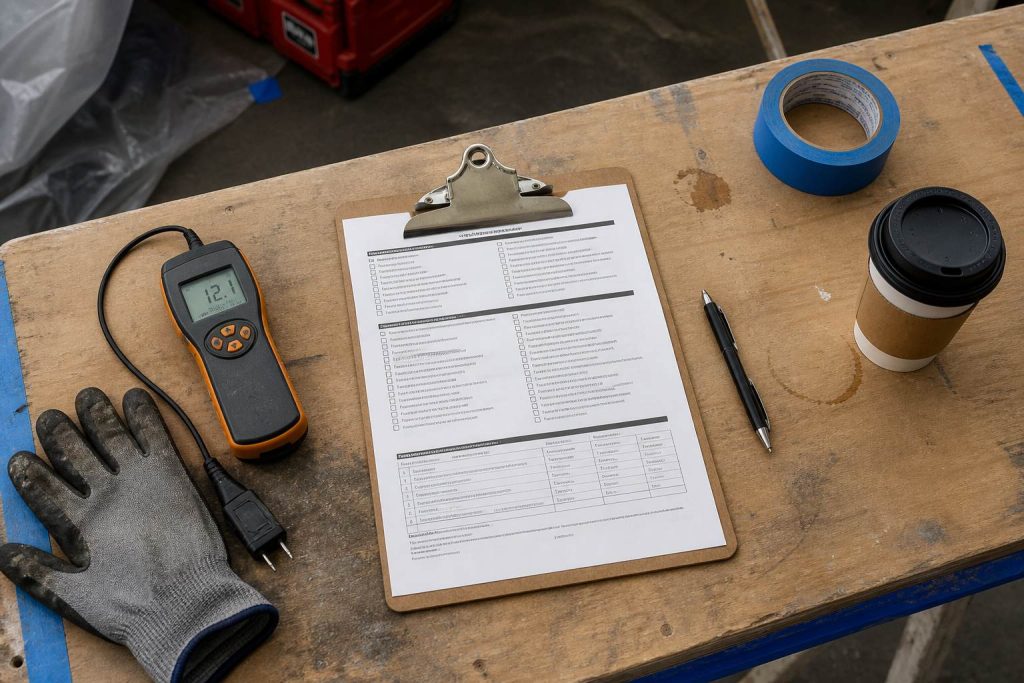
    Restoration SOP clipboard with checklist, moisture meter, and gloves on a jobsite table
    Master Service Agreements — the real contract.

    An MSA is the contract that governs the relationship between the contractor and the TPA or carrier. Key MSA terms to scrutinize: pricing schedule (Xactimate concession amount, capped line items, fee schedules); territory definition (geographic scope, exclusivity provisions, right of first refusal); performance metrics (response time SLAs, completion timelines, scorecard targets); payment terms (net days, retention, hold-back provisions); insurance and indemnification requirements; termination provisions (notice periods, performance-based termination, transition obligations); customer ownership (whether you can market to customers post-job, whether the carrier owns the customer relationship); audit rights (TPA rights to review your job files, scope, photos, and pricing).

    MSAs are negotiable in some areas (especially territory and performance metrics) and rarely negotiable in others (pricing concessions, audit rights). Operators should have an attorney with restoration industry experience review any MSA before signing.

    The decision framework: which programs to join

    Whether to join a TPA program depends on four factors. Operational capacity: do you have the SLA capability, technology stack, and management bandwidth to meet program requirements? Market lead flow: is your direct lead generation strong enough that you can be selective, or do you need TPA volume to fill the calendar? Cost structure: is your overhead lean enough to make money at the program’s pricing concessions? Strategic mix: what percentage of revenue comes from TPA programs vs. direct? Most healthy operators target 30-50% TPA revenue mix — enough volume to leverage operations, not so much that the company is captive to a single TPA’s decisions.

    How to win at TPA performance scorecards

    Once on a TPA network, performance metrics determine assignment volume. The metrics that matter on most scorecards: response time (minutes from assignment to first contact, hours to first on-site), customer satisfaction scores (post-job surveys), cycle time (days from assignment to job completion), scope variance (how often supplements are needed and whether they’re approved), complaint rate (formal customer complaints per 100 jobs), quality scores (file documentation, photo quality, scope accuracy on TPA audits). Top-quartile performers on these metrics receive disproportionate assignment volume; bottom-quartile performers get reduced assignments and eventual termination.

    Related on Tygart Media: Starlink on a water job · S500 in the van · local SEO for restoration.

    Frequently Asked Questions

    What is a TPA in restoration?

    A TPA (third-party administrator) is a company that manages claims on behalf of insurance carriers. In restoration, TPAs handle adjuster assignment, vendor selection, scope review, payment processing, and customer communication. Major restoration TPAs include Sedgwick, Crawford & Company, Contractor Connection, Code Blue, and CCMSI.

    How do you get on a carrier preferred vendor program?

    The application process typically requires: 3+ years in business, specific IICRC firm and individual certifications, higher insurance limits than standard, background-checked technicians, 24/7 dispatch capability, monthly KPI reporting, and signing a master service agreement that defines pricing concessions and performance standards. Applications take 60-180 days and often include facility audits and reference checks.

    Are TPA programs profitable for restoration companies?

    It depends on cost structure. TPA work typically pays 10-20% less than direct retail work due to pricing concessions, capped overhead and profit, and other restrictions. Companies with lean overhead and high operational discipline can run profitable TPA programs at high volume. Companies with high overhead burden often lose money on TPA jobs while believing they’re profitable.

    What is an MSA in restoration?

    An MSA (Master Service Agreement) is the contract between a restoration contractor and a TPA, carrier, or commercial customer that governs the relationship — pricing schedules, territory, performance metrics, payment terms, insurance requirements, audit rights, and termination provisions. MSAs should be reviewed by an attorney with restoration industry experience before signing.

    What percentage of revenue should come from TPA work?

    Most healthy restoration operators target 30-50% of revenue from TPA and preferred vendor programs. Below that range, the company isn’t leveraging program volume; above that range, the company is operationally captive to a few TPAs and vulnerable to program changes, pricing reductions, or termination.

    How do restoration vendor scorecards work?

    TPA performance scorecards typically measure response time (minutes to first contact, hours to on-site), customer satisfaction scores, cycle time (days from assignment to completion), scope variance and supplement approval rates, complaint rates, and quality scores from TPA file audits. Top-quartile performers receive disproportionate assignment volume; bottom-quartile performers face reduced assignments and eventual network termination.

  • Starting & Scaling a Restoration Company: Founder’s Guide

    Starting & Scaling a Restoration Company: Founder’s Guide

    Starting a restoration company is easier than most people think. Scaling one past $2M in revenue is harder than almost anyone admits. The same instincts that get a founder from zero to one truck — hustle, personal customer service, doing whatever it takes — actively block growth past the first ceiling.

    This is the complete founder’s guide for 2026: what it actually costs to start, what licenses and certifications you need, the staffing path, the revenue milestones where the operating model has to change, and the operational shifts that separate restoration companies that scale from the ones that stay stuck at the same revenue line for a decade.

    The honest startup math

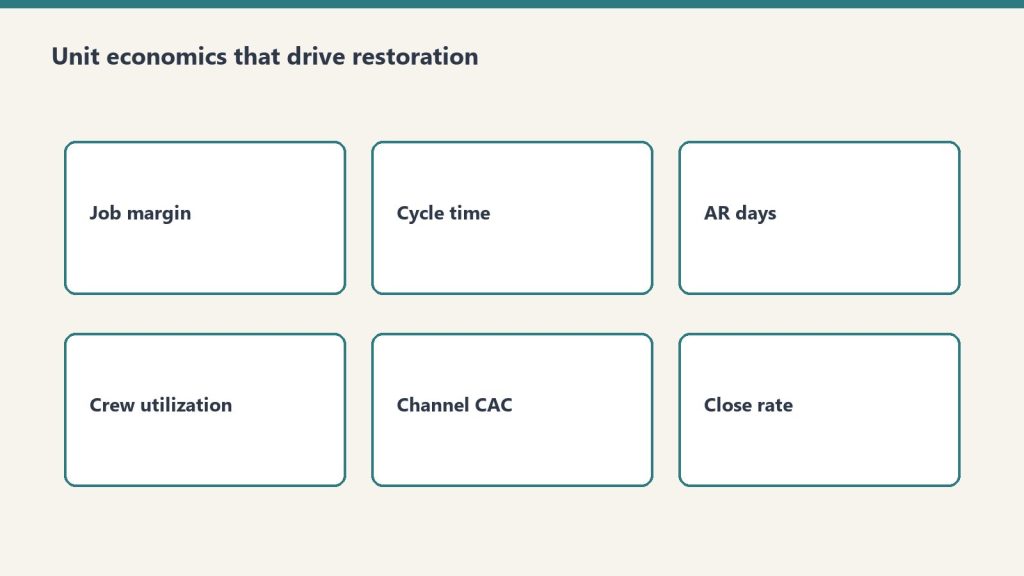
    Six cards covering job margin, cycle time, AR days, utilization, CAC, close rate
    Honest startup math before you hang a shingle.

    Realistic capital required to launch a one-truck residential restoration company in 2026: $50,000-$120,000. The breakdown: equipment package (dehumidifiers, air movers, HEPA filters, moisture meters, basic tools) $20,000-$40,000; truck (used cargo van or box truck, lettered) $25,000-$45,000; insurance (general liability, auto, workers’ comp, pollution liability) $8,000-$15,000 first-year; licensing and certifications (state contractor license, IICRC WRT for the founder, business setup) $2,000-$5,000; software (Xactimate subscription, basic CRM, accounting) $3,000-$6,000 first-year; working capital reserve to bridge first 90 days of receivables $15,000-$30,000.

    Companies that try to start under $40K usually run into cash crisis within six months when insurance receivables stretch beyond 60 days and equipment fails. Companies that overcapitalize at $200K+ often do it by buying gear they don’t need yet.

    Legal structure and licensing

    Most restoration companies form as LLCs (limited liability companies) for the liability protection and tax flexibility. S-corp election is common as revenue grows past the $250K mark for tax efficiency. A handful of larger operators are structured as full C-corps, particularly those planning institutional capital or eventual sale.

    Licensing requirements vary dramatically by state. State contractor licenses are required in most states for general restoration work, often at multiple levels (residential, commercial, mold, etc.). Mold remediation licenses are required in Florida, Texas, New York, Louisiana, and several other states. Asbestos and lead certifications are federal (EPA RRP) and required for renovation in pre-1978 housing. Biohazard or trauma cleanup licensing is regulated state-by-state. The first task for any new operator is a clean inventory of what licenses are required in your state and county.

    The certifications you need before you take the first job

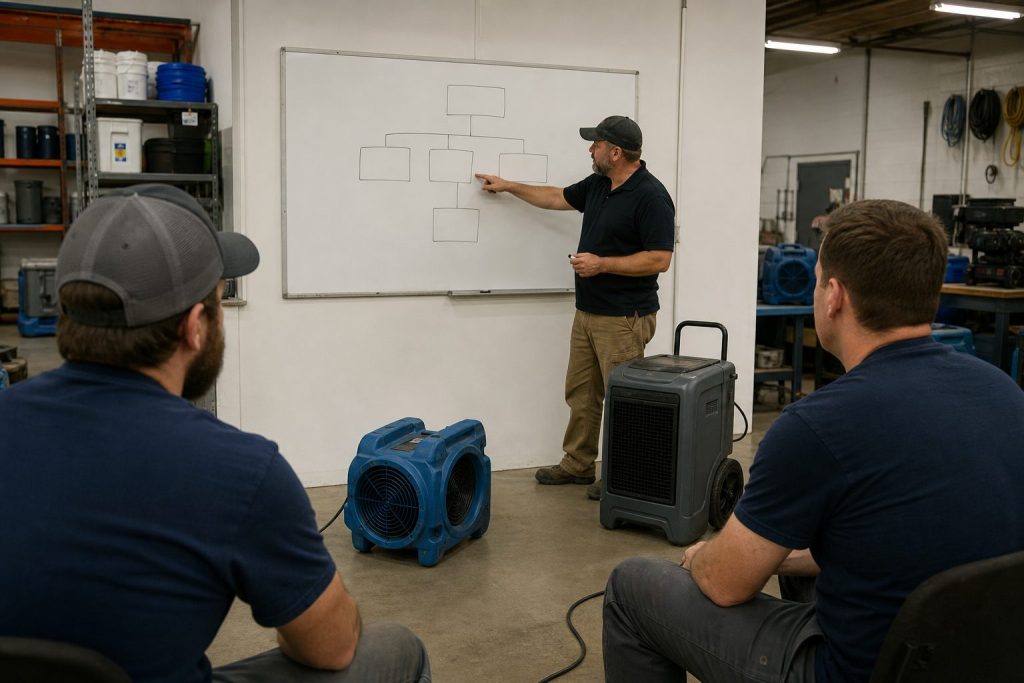
    Restoration technicians training in a shop bay with equipment demo and whiteboard
    Certifications you need before the first job.

    Minimum credentials before opening for residential mitigation: IICRC WRT for the founder (and any other technician), state contractor license, EPA RRP certification if any reconstruction work involves pre-1978 properties, OSHA 10 for all personnel. Add AMRT before any mold work, FSRT before any fire work. Add general liability insurance with at least $1M per-occurrence and $2M aggregate; pollution liability with at least $1M; workers’ comp for every employee; commercial auto with full coverage on the truck.

    The five revenue milestones (and what changes at each)

    Restoration companies hit predictable plateaus. The five milestones and the operational shifts they require:

    $0-$500K (the founder phase). The founder does everything: sales, estimating, production, billing, collections. The operating model is “the founder’s calendar.” Limit: the founder’s hours.

    $500K-$1.5M (the first hire phase). The founder hires a lead technician and a part-time office or bookkeeper. The operating model becomes “founder + small team.” Limit: the founder is still the only salesperson and project manager. Burnout is the most common reason companies stall here.

    $1.5M-$3M (the systems phase). The first dedicated salesperson and a project manager are hired. The founder transitions from doing the work to designing the work. CRM and job management software become essential. Cash management discipline becomes critical because receivables grow faster than cash. Most companies that fail to scale fail here because the founder won’t let go of the work.

    $3M-$8M (the multi-truck operation). Multiple production crews, dedicated estimating, formal sales team, in-house training program, controller-level financial oversight. The founder’s job is now strategic — sales leadership, key accounts, growth planning, hiring. Operating model is “leadership team runs the business.”

    $8M+ (multi-location or large single-location). Either geographic expansion to additional locations or vertical depth in commercial and large loss work. CFO, dedicated marketing leader, regional managers. Founder transitions to CEO role or owner-investor role.

    The hiring sequence that works

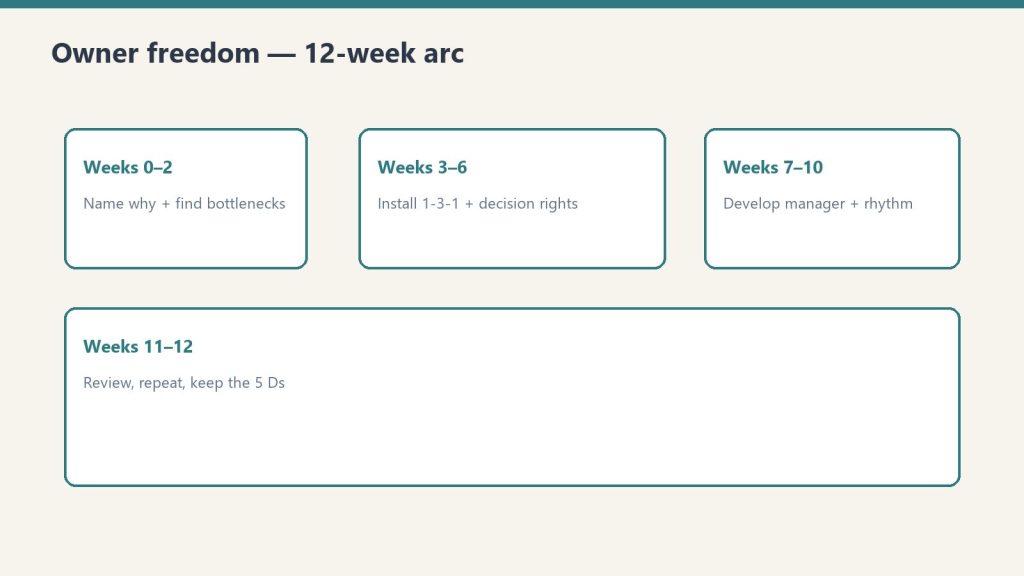
    Four-phase board covering a 12-week owner freedom transition
    The hiring sequence that works as you scale.

    The proven hiring sequence for a growing restoration company: first hire, lead technician (so the founder can stop being the only field person); second hire, office administrator or bookkeeper (to handle the receivables and paperwork chaos); third hire, second technician (capacity to run two crews); fourth hire, project manager or estimator (separate the field execution from the field estimating); fifth hire, salesperson (the founder stops being the only salesperson); sixth hire, second salesperson or production manager (depending on growth direction); seventh+, controller, marketing manager, additional crews, dedicated commercial account manager.

    The financial discipline most founders skip

    The financial systems that have to be in place before $1.5M revenue: monthly P&L review (not just bank balance), aged receivables report (you cannot manage what you don’t measure — and restoration receivables stretch), job costing per project (revenue minus actual costs by job), cash flow forecast looking 90 days out, annual budget with monthly tracking. Companies that scale without these systems usually crash on cash management even when they’re profitable on paper.

    The exit options worth knowing

    Restoration companies have several viable exit paths. Strategic acquisition by a larger restoration company or franchise group (BluSky, ServiceMaster, ATI, BELFOR, and various PE-backed roll-ups have been active acquirers). Private equity for larger operators (typically $10M+ revenue with strong commercial mix). Internal sale to existing management (with seller financing common). Family transition to children or family members. Typical valuation multiples have been 3-6x adjusted EBITDA depending on size, growth, customer concentration, and commercial mix percentage.

    Related on Tygart Media: Starlink on a water job · S500 in the van · local SEO for restoration.

    Frequently Asked Questions

    How much does it cost to start a restoration business?

    A realistic startup cost for a one-truck residential restoration company in 2026 ranges from $50,000 to $120,000. The major components are equipment ($20K-$40K), a truck ($25K-$45K), insurance ($8K-$15K first year), licensing and certifications ($2K-$5K), software ($3K-$6K), and working capital to bridge initial receivables ($15K-$30K).

    How do you start a restoration business?

    The compressed startup checklist: form an LLC, obtain state contractor license, secure general liability and pollution liability insurance plus workers’ comp and commercial auto, complete IICRC WRT certification at minimum, purchase initial equipment package and a service vehicle, set up Xactimate subscription and basic accounting software, build initial referral relationships with local plumbers and insurance agents, establish a Google Business Profile and basic website, and begin marketing through Local Service Ads and direct outreach.

    How profitable is a restoration business?

    Healthy restoration companies run 8-15% net profit margin on revenue. Gross margins by service line range from 25-40% on reconstruction up to 50-65% on mold remediation. A well-run $2M restoration company should produce $160K-$300K in net profit. The most profitable operators tend to have strong commercial mix, disciplined supplement workflows, and tight job costing.

    What is the average revenue of a restoration company?

    Restoration company revenue ranges enormously. Single-truck residential operators typically run $400K-$1.2M. Established multi-truck residential companies $1.5M-$5M. Companies with significant commercial work or multiple service lines $5M-$25M. Multi-location operators and franchises $25M-$300M+. The industry median is around $1.5M-$2M.

    How long does it take to scale a restoration company?

    The typical path from startup to $5M revenue runs 5-10 years for organic growth. Faster growth is possible through acquisition, geographic expansion, or aggressive commercial business development. The most common stalling point is the $1.5M-$2M range, where the founder has to transition from doing the work to leading the team. Companies that successfully make that transition often double again in the following 3-5 years.

    Can you franchise a restoration business?

    Yes, the major restoration franchise groups (ServPro, ServiceMaster, BELFOR, Rainbow International, PuroClean, and others) all sell franchise territories. Franchise costs vary widely: initial franchise fees typically $40K-$75K, equipment and startup costs $100K-$300K, and ongoing royalties of 6-10% of revenue plus marketing fees. The franchise vs. independent decision depends on access to commercial work, brand recognition value in your market, and tolerance for ongoing royalty cost.

  • Restoration Company Marketing: The 2026 Growth Playbook

    Restoration Company Marketing: The 2026 Growth Playbook

    Restoration company marketing in 2026 is multi-channel by default. The shops still trying to grow on a single channel — usually Google Ads or referral alone — are losing share to operators running coordinated programs across six channels at once. This is the working playbook.

    The framing matters: marketing is the lead-generation layer that sits on top of the operating model. A restoration shop with strong operations and weak marketing has untapped capacity. A shop with strong marketing and weak operations burns the lead investment on jobs it cannot deliver well. The playbook below assumes the operating model is in place.

    The Six Channels That Actually Move Restoration Lead Flow

    Three cards for field SOPs, owner prompts, and KPI rhythm in an operations kit
    The six channels that actually move restoration lead flow.

    Restoration marketing in 2026 is built on six channels. Most shops operate two or three reasonably well and ignore the rest. Operators who run all six produce more predictable lead flow at lower blended cost.

    1. Search engine optimization. The compounding channel. The largest source of high-intent organic leads for shops that invest consistently.
    2. Paid search and local services ads. The fastest channel to turn on. The most price-sensitive in 2026 as competition has intensified.
    3. Referral systems and partner networks. The highest-converting channel. Plumbers, insurance agents, property managers, real estate agents.
    4. Content and AI-search visibility. The new channel — being cited in ChatGPT, Claude, Perplexity, and Google AI Overviews when prospects research restoration questions.
    5. TPA and carrier program enrollment. The volume channel. Lower margin, predictable flow.
    6. Direct outreach for commercial accounts. The relationship channel. Long cycle, high lifetime value.

    The right mix for a given shop depends on residential-vs-commercial split, geographic market dynamics, and existing channel maturity.

    Channel 1: SEO

    SEO for restoration companies in 2026 has bifurcated. Local pack and Google Business Profile signals continue to drive emergency-intent residential leads. Editorial and content depth drives commercial and education-intent traffic, and increasingly drives the AI-search visibility described in Channel 4.

    The high-leverage SEO investments for a restoration company in 2026:

    • Google Business Profile completeness — services, hours, service area, photos, posts, review velocity.
    • Service-area landing pages for every city or neighborhood the shop covers, with original content rather than templated copy.
    • Service-line landing pages that address specific work categories — water mitigation, smoke and fire, biohazard, mold, reconstruction.
    • Editorial content that addresses the questions buyers actually ask before they engage — what does restoration cost, what does the IICRC do, how does insurance handle water damage.
    • Review generation systems that produce a steady volume of authentic Google reviews.

    Channel 2: Paid Search and Local Services Ads

    Paid search produces the fastest lead flow but at the highest unit cost. The competitive intensity in restoration paid search has risen materially over the last 24 months, particularly in storm-affected markets and metropolitan areas with multiple national franchises.

    Working principles for paid search in 2026:

    • Local Services Ads where available — the verified-vendor placement above traditional ads tends to produce higher-converting leads at competitive cost.
    • Tight match-type discipline and aggressive negative-keyword maintenance to keep cost-per-lead reasonable.
    • Landing pages built for the ad — not the home page. Generic landing pages are the largest source of paid-search waste in restoration.
    • Call tracking and lead-source attribution so the shop can measure cost per acquired job, not cost per click.

    Channel 3: Referral Systems and Partner Networks

    Referrals are the highest-converting source of restoration leads — and they are not free. They require a deliberate system. The partner categories that produce restoration referrals in 2026:

    • Insurance agents and brokers. The agent who hears about a loss before the carrier does often controls vendor recommendation.
    • Plumbers and HVAC contractors. The trades that arrive at water and smoke losses before restoration.
    • Property managers. Repeat referral source for water and reconstruction work.
    • Real estate agents. Pre-listing remediation work, mold and air-quality services.
    • Other restoration shops. Capacity-overflow referrals in busy seasons.

    The system that produces referrals is recognition — branded materials, regular touchpoints, a clear ask, and measurable reciprocity where possible. Referral programs without a system tend to produce sporadic results.

    Channel 4: AI Search Visibility

    Four-stage funnel: citation, click, engage, convert
    Channel 4 — AI search visibility.

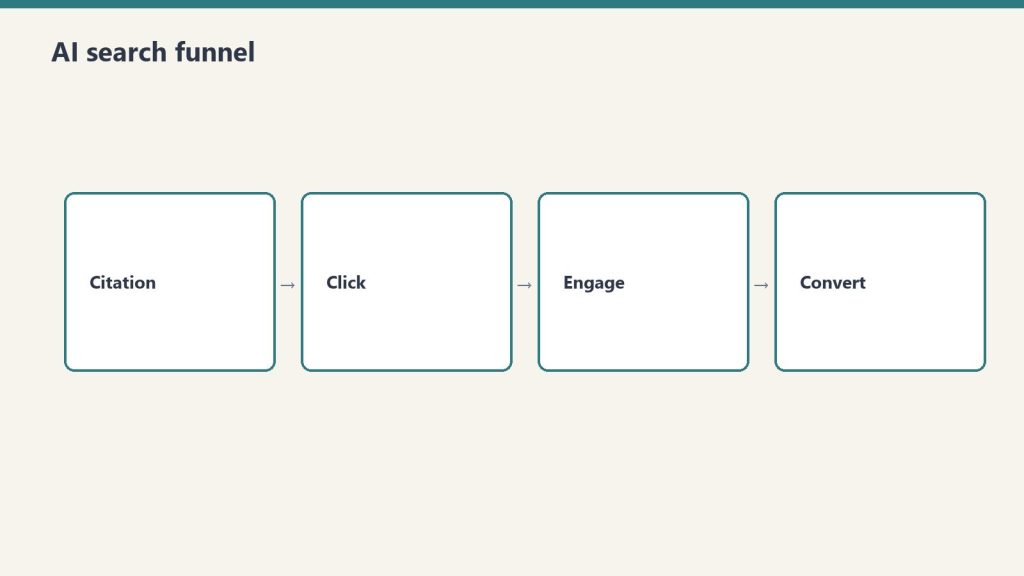
    The newest restoration marketing channel is appearance in AI-generated answers — ChatGPT, Claude, Perplexity, Google AI Overviews. Buyers researching restoration questions in 2026 increasingly receive AI-generated answers before they click through to traditional search results. Being cited in those answers requires editorial content with authority signals — comprehensive coverage of the topic, structured FAQ formatting, schema markup, and the kind of factual depth language models surface.

    This channel does not replace traditional SEO. It rewards the same content investments and amplifies them. Shops investing in editorial restoration content in 2026 are seeing both organic search and AI-search returns from the same work.

    Channel 5: TPA and Carrier Programs

    TPA program enrollment is the most predictable lead flow available to a restoration shop, with the trade-off of compressed margin and dependency risk. The decision is whether TPA work serves as a base load that supports crew utilization while higher-margin direct-to-owner work is cultivated. For most shops, the answer is yes — but not as the entire pipeline.

    Channel 6: Direct Outreach for Commercial

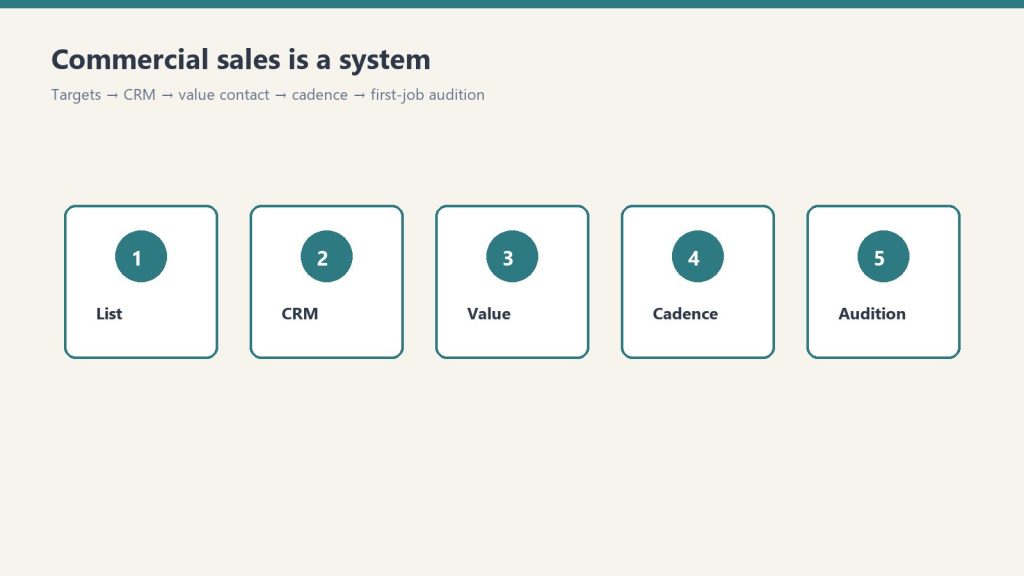
    Five-step commercial sales system from list to first-job audition
    Channel 6 — direct outreach for commercial.

    The commercial sales motion is its own channel — outbound, named-account, multi-persona, long-cycle. The detailed playbook is covered separately in The Commercial Restoration Sales Stack, but the marketing function feeding it includes target-account research tools, persona-specific content, and the conference and event presence that produces the introduction opportunities the sales motion converts.

    Budget Framework

    A working budget framework for restoration company marketing in 2026:

    • Total marketing investment: 4% to 8% of revenue, depending on growth ambition and competitive intensity.
    • Allocation: roughly 30% to 40% paid search, 25% to 35% SEO and content, 15% to 25% referral systems and partner cultivation, 10% to 15% direct outreach and commercial sales, 5% to 10% experimental or emerging channels.
    • The largest single budget mistake in 2026 is over-allocating to paid search at the expense of SEO and content, because it produces fast results that mask the absence of compounding channels.

    Measurement

    Each channel needs its own measurement, and the shop needs a blended view that ties marketing investment to acquired jobs. The metrics that matter:

    • Cost per acquired job by channel — not cost per lead, which obscures conversion quality.
    • Lifetime value by channel — referral and commercial leads typically produce higher lifetime value than paid-search leads.
    • Channel concentration risk — a shop with more than 50% of revenue from any single channel has a fragility problem regardless of the channel.

    The Single Largest Marketing Mistake

    The most common marketing mistake in the restoration industry in 2026 is treating channels as substitutes rather than complements. Paid search and SEO are not alternatives. Referral and direct outreach are not alternatives. The shops that produce predictable lead flow at sustainable cost run all six channels in coordination, with each channel covering the others’ weaknesses. The shops that lurch between channels — six months of paid, six months of “we need to do SEO instead” — produce inconsistent results regardless of which channel they are currently emphasizing.

    Related on Tygart Media: Starlink on a water job · S500 in the van · local SEO for restoration.

    Frequently Asked Questions

    What is the best marketing channel for restoration companies in 2026?

    There is no single best channel. The shops with predictable lead flow run six channels in coordination — SEO, paid search, referral systems, AI-search-optimized content, TPA programs, and direct commercial outreach. Single-channel programs no longer produce reliable results.

    How much should a restoration company spend on marketing?

    A working budget range is 4% to 8% of revenue, with allocation across paid search, SEO and content, referral systems, direct outreach, and experimental channels. The exact mix depends on residential-vs-commercial split, market dynamics, and existing channel maturity.

    Is paid search still worth it for restoration companies?

    Yes, but with discipline. Competitive intensity has raised cost-per-click materially in 2026. Local Services Ads, tight match-type management, and dedicated landing pages keep cost per acquired job reasonable. Generic landing pages and broad-match targeting are the largest source of paid-search waste.

    What is AI-search optimization for restoration companies?

    AI-search optimization is the practice of producing content that gets cited by ChatGPT, Claude, Perplexity, and Google AI Overviews when prospects research restoration questions. It rewards editorial depth, structured FAQ formatting, schema markup, and comprehensive coverage of restoration topics. It complements rather than replaces traditional SEO.

    How important are Google reviews for restoration companies?

    Critical. Review velocity and rating directly affect Google Business Profile visibility, Local Services Ads cost, and consumer choice. A deliberate review-generation system is one of the highest-leverage marketing investments a restoration shop can make.

    For more on the marketing layer that sits on top of restoration operations, see SEO for Restoration on Tygart Media.

  • Commercial Restoration: A Market-Entry Guide for Shops

    Commercial Restoration: A Market-Entry Guide for Shops

    Most residential restoration shops that try to add commercial work fail. Not because the work is too hard. Because they treat commercial as a larger version of residential, and it is not. It is a different business with a different sales motion, different pricing math, and a different operational model.

    This is a market-entry guide for the residential-led restoration shop that has decided commercial is the next growth direction. It is written to surface the structural differences before you commit, and to give you a sequence that has worked for operators who made the transition successfully.

    The Five Structural Differences

    Three cards for field SOPs, owner prompts, and KPI rhythm in an operations kit
    The five structural differences.

    Before the sequencing, the differences. Each one becomes a failure mode if ignored.

    1. The buyer is not the property manager alone. Commercial buying decisions involve a buying committee — property manager, asset manager, risk manager, facilities, sometimes a TPA. Selling to one persona and ignoring the others is the most common reason commercial bids are lost.
    2. The sales cycle is months, not minutes. Commercial accounts are cultivated over six to eighteen months. Residential FNOL response can close a job in hours. The patience and process required are different.
    3. The documentation expectation is materially higher. Commercial work, particularly larger losses and any litigation-adjacent work, demands documentation discipline that residential workflows do not require. Shops without documented production processes get exposed quickly.
    4. The pricing model varies. Commercial work mixes carrier-priced jobs, time-and-material, master service agreements, and TPA-program rates. The line-item-only pricing model that works residentially does not translate.
    5. The capacity demands spike. A single commercial loss can require equipment and technician deployment that exceeds a residential shop’s standing capacity. The decision of whether to surge, decline, or partner is structural.

    The Six-Stage Market-Entry Sequence

    Three panels showing one problem, three options, one recommendation
    The six-stage market-entry sequence.

    The shops that have made the residential-to-commercial transition successfully tend to follow a recognizable sequence. The order matters.

    Stage 1: Operational Readiness Audit

    Before any commercial sales effort, audit the operational baseline. The questions: do your production processes produce documentation that would survive a litigation review? Do you have the equipment capacity to handle a commercial loss without disrupting residential service? Do your technicians hold the certifications — IICRC ASD, AMRT, FSRT — that commercial buyers expect to see? Do you carry the insurance limits and safety documentation commercial onboarding will request?

    If any of these answers is no, fix the gap before approaching commercial accounts. A shop that wins commercial work it cannot deliver damages its reputation in a small market.

    Stage 2: Network Membership

    Join the chambers, BOMA chapter, IFMA chapter, and CoreNet local group in your market. The commercial buying community is networked. The shop with no presence in those rooms is invisible. The shop with a regular, trusted presence over twelve to twenty-four months becomes a recognized name in the local commercial property community.

    Stage 3: Insurance Broker and Agent Relationships

    Identify the insurance brokers and agents who write commercial property in your market. They are gatekeepers to a meaningful share of commercial restoration work. The relationship is not transactional — it is a long-cycle introduction-and-trust process. Brokers introduce restoration vendors to their commercial clients only after they trust the work product.

    Stage 4: Named-Account Cultivation

    Build a target list of 40 to 75 commercial accounts in your market — property management groups, large owner-occupiers, healthcare and food service operators, and corporate real estate teams. This is the named-account list that will produce your commercial pipeline over the next 18 months. The list is more important than any single account on it. Cultivate the list quarterly with risk-framed educational content, pre-loss site walks, and tabletop exercises.

    Stage 5: First Commercial Job

    The first commercial job is the trial. It does not need to be large. A small after-hours response or a moderate water mitigation for a managed property is enough to prove the operational claims made during cultivation. Treat the first job with disproportionate care — documentation, communication, and post-job review — because it produces the reference that unlocks subsequent work.

    Stage 6: Account Expansion

    The second commercial job at the same account is more valuable than the first. Account expansion — moving from one property to a portfolio, from one persona to the buying committee — produces the long-term revenue compounding that justifies the commercial entry decision. A 30-day post-job review with the property manager and the risk contact is the most undervalued account-expansion tool in commercial restoration.

    The Common Failure Modes

    Seven cards naming common AI chatbot failure modes
    The common failure modes.

    The failures cluster into recognizable patterns:

    • Sales effort without operational readiness. Winning work the shop cannot deliver damages reputation.
    • Single-threaded relationships. Selling only to the property manager and missing the buying committee.
    • Underestimating the cycle length. Treating a commercial cultivation cycle as a residential FNOL response and abandoning effort after 90 days.
    • Mispricing the first job. Pricing the trial job to win at any cost and establishing an unsustainable rate baseline for the account.
    • Capacity surprise. Winning a commercial loss the shop cannot resource without disrupting residential service, then under-delivering on both.

    Each of these failures is avoidable with deliberate sequencing. Each of them is common in shops that treated commercial as residential at scale.

    How Long Does the Transition Take?

    Realistic timeline for a residential-led restoration shop to build a meaningful commercial revenue stream: 18 to 36 months from the operational readiness audit through the third or fourth commercial account producing recurring work. Faster transitions are possible with a senior commercial sales hire, but the underlying market-entry mechanics do not compress below 12 months.

    The shops that report disappointing results from commercial entry typically committed to the effort for 12 months or less, then concluded that commercial does not work for their market. The structural answer is that commercial cultivation cycles outlast 12-month commitments.

    The Honest Investment Question

    Commercial restoration entry is an investment, not a marketing campaign. The investment includes a senior commercial sales hire (or substantial owner time), conference and chamber memberships, target-account research tools, and the operational upgrades the readiness audit surfaces. Operators who treat the investment as discretionary marketing spend rarely follow through on the cultivation cycle long enough to see the return.

    The operators who do follow through tend to build a commercial revenue stream that becomes the most stable and highest-margin part of the business. The math works. The patience is the constraint.

    Related on Tygart Media: commercial sales · jobs as knowledge base.

    Frequently Asked Questions

    Can a residential restoration shop add commercial work?

    Yes, but treat it as a market-entry project, not a marketing tactic. The buyer, sales cycle, documentation expectation, pricing model, and capacity demands all differ from residential work. Shops that follow a deliberate market-entry sequence — operational readiness, network membership, broker relationships, named-account cultivation, first job, account expansion — succeed at meaningfully higher rates than shops that approach commercial as larger residential.

    How long does it take to break into commercial restoration?

    A realistic timeline is 18 to 36 months from operational readiness audit through the third or fourth commercial account producing recurring work. Faster transitions are possible with senior sales investment, but the underlying market-entry mechanics do not compress below 12 months.

    What certifications do I need for commercial restoration?

    Commercial buyers expect IICRC certifications appropriate to the work — WRT and ASD as a baseline, with AMRT, FSRT, and the higher-tier credentials adding credibility for specialty work. Insurance limits, safety documentation, and OSHA-compliant practices are also typical onboarding requirements.

    How big should my target account list be?

    Most shops manage a target list of 40 to 75 named commercial accounts per sales rep, with quarterly touchpoint cadence. Higher counts dilute the relationship depth that the commercial sales motion depends on.

    Should I hire a dedicated commercial sales rep?

    If commercial is a serious growth direction and the owner cannot personally maintain quarterly touchpoints across the named-account list, a dedicated sales rep is the structural answer. Below that threshold, the owner can usually carry the pipeline directly.

    Continue with the Restoration Operator’s Playbook for more on operationalizing commercial work.

  • Restoration Company Revenue: 3 Structural Growth Levers

    Restoration Company Revenue: 3 Structural Growth Levers

    “How do I increase restoration sales?” is usually answered with a list of marketing tactics. The honest answer is structural: three levers move restoration company revenue, and most growth that lasts comes from operating those three deliberately rather than chasing more leads.

    The three levers are pricing discipline, mix shift toward higher-margin work, and capacity utilization. They compound. A restoration company that improves any one of them by 10% sees a meaningful revenue and margin lift. A company that improves all three simultaneously transforms its business in 18 months.

    Lever 1: Pricing Discipline

    Floor versus ceiling cards for commoditized work and human-network premium
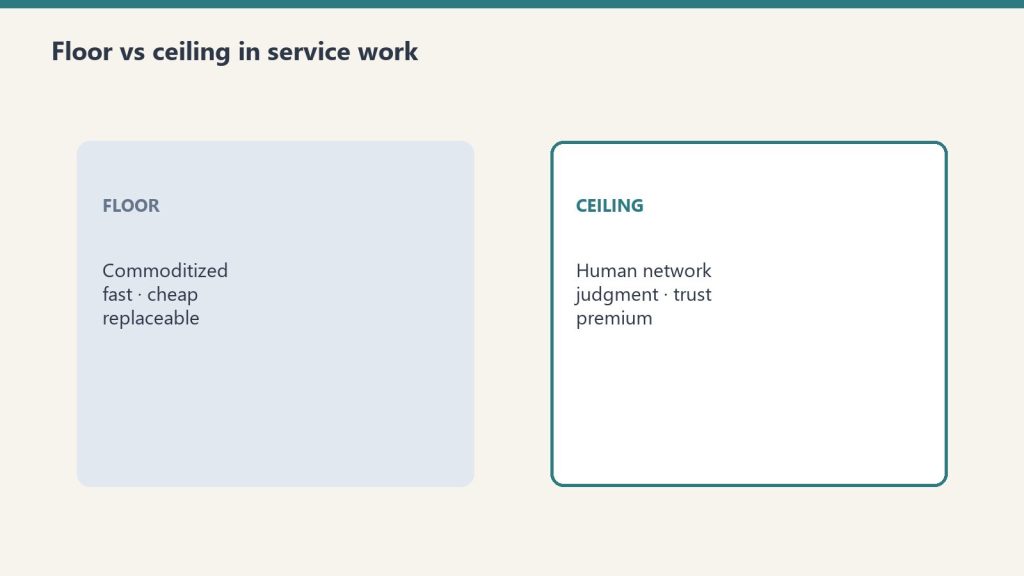
    Lever 1 — pricing discipline.

    Pricing discipline is the most undervalued growth lever in the restoration industry. The reason is structural — most restoration revenue is priced by Xactimate or Symbility line items, which creates the illusion that pricing is fixed by the carrier. It is not.

    The pricing levers that operators actually control:

    • Scope discipline. The most consequential pricing decision in any restoration job is whether the documented scope reflects the work performed. Under-scoping is the largest source of margin erosion in the industry.
    • Time and material work selection. Some categories of work — biohazard, contents, specialty services — can be billed on a time-and-material basis at materially higher margin than carrier-line-item rates. The mix question is whether your shop pursues this work or defaults to insurance-priced jobs.
    • Self-pay and direct-bill work. Cash work outside the insurance channel can be priced to market rather than to carrier line items. The discipline of building a direct-pay funnel produces a higher-margin revenue stream that compounds.
    • Estimating consistency. Two estimators on the same shop floor will produce different scopes for the same loss. The variance is pure margin leakage. Standardized estimating practice — checklist-driven, peer-reviewed — closes the variance.

    Pricing discipline produces revenue without producing more jobs. It is the highest-margin growth lever a restoration shop has access to, and it is rarely the first one operators reach for.

    Lever 2: Mix Shift

    Mix shift is the deliberate movement of revenue from lower-margin work types to higher-margin work types. Not every job in a restoration shop produces the same gross margin. The honest accounting:

    • Carrier-driven residential water mitigation: stable volume, compressed margin, high competitive intensity.
    • TPA program work: predictable, lower margin, vendor-relationship dependent.
    • Direct-to-owner commercial work: longer cycle, higher margin, less price-sensitive.
    • Specialty services — biohazard, trauma cleanup, contents, large-loss commercial — variable volume, materially higher margin.
    • Reconstruction: high revenue per job, complex margin dynamics, capacity-intensive.

    The mix-shift question is which categories of work the shop is deliberately growing. Most restoration companies inherit their mix passively — they take what comes through the door. Companies that grow revenue without growing headcount tend to be operating mix shift deliberately, often by adding a single specialty service category that pulls margin upward.

    The structural insight is that adding a higher-margin work category typically requires the same overhead as adding more of the existing mix, which means the incremental gross margin drops disproportionately to the bottom line.

    Lever 3: Capacity Utilization

    Three cards for field SOPs, owner prompts, and KPI rhythm in an operations kit
    Lever 3 — capacity utilization.

    Capacity utilization is the lever that determines whether existing assets produce more revenue. A restoration shop with 12 technicians, 6 trucks, and a fixed overhead is producing a specific level of revenue. The question is whether that level is constrained by lack of demand, lack of operational efficiency, or both.

    The capacity levers that move revenue:

    • Dispatch efficiency. The minutes between FNOL and on-site arrival, and the routing efficiency across multiple jobs in a day, compound into measurable capacity gains.
    • Technician productivity. Documentation discipline, equipment readiness, and clean handoffs between production and reconstruction directly affect billable hours per technician per day.
    • Equipment turn rate. Restoration equipment that sits in the warehouse is not producing revenue. Equipment tracking and dispatch discipline produces meaningful utilization gains.
    • After-hours and weekend response. A 24/7 restoration operation that under-utilizes evening and weekend capacity is leaving the highest-urgency, lowest-competition work on the table.

    Capacity utilization compounds with the other two levers. A shop with disciplined pricing and a deliberate mix shift, but poor capacity utilization, leaves substantial revenue uncaptured. A shop with strong utilization but weak pricing discipline is running hard for compressed margin.

    The Multiplier Effect

    The three levers multiply rather than add. A 10% improvement in pricing discipline, a 10% mix shift toward higher-margin work, and a 10% improvement in capacity utilization does not produce 30% revenue growth. It produces meaningfully more — typically in the range of 35% to 45% — because the higher-margin work earns higher prices on more efficient operations.

    This is why operators who run all three levers deliberately can grow revenue and margin without growing the lead pipeline. The restoration industry’s default operating mode — chase more leads, take whatever comes through the door — leaves all three levers passive.

    What to Measure

    Each lever has a measurement that translates the abstract concept into operating discipline:

    • Pricing discipline: gross margin trend by job category, scope variance between estimators, percentage of revenue from time-and-material and direct-pay work.
    • Mix shift: revenue distribution across work categories, gross margin by category, year-over-year shift toward target categories.
    • Capacity utilization: billable hours per technician per day, equipment turn rate, percentage of jobs with arrival time within service-level commitment.

    An operator who reviews these numbers monthly and can describe what is moving and why has a lever-driven business. An operator who reviews only top-line revenue is running on autopilot.

    The Marketing Lever Is the Fourth, Not the First

    Seven cards naming common AI chatbot failure modes
    The marketing lever is the fourth, not the first.

    Marketing — SEO, paid advertising, referral systems, content — is a real lever, but it is the fourth one, not the first. A restoration company with disciplined pricing, deliberate mix shift, and strong capacity utilization will absorb marketing-driven leads at high efficiency. A company without those three will absorb marketing-driven leads at the same low efficiency they absorb existing leads, and the marketing investment will produce disappointing returns.

    This is the structural reason that restoration owners who jump straight to “we need more leads” rarely produce sustained revenue growth. The leads land on a leaky operating model.

    Related on Tygart Media: cash flow & profit · commercial sales.

    Frequently Asked Questions

    What is the highest-leverage way to increase restoration company revenue?

    Pricing discipline — specifically scope discipline, deliberate inclusion of time-and-material and direct-pay work, and standardized estimating practice — is the highest-margin growth lever a restoration shop has. It produces revenue without producing more jobs.

    How do I improve gross margin in a restoration business?

    The three structural levers are pricing discipline, mix shift toward higher-margin work categories like biohazard or commercial direct-to-owner, and capacity utilization. Operating all three deliberately produces measurable margin lift in 12 to 18 months.

    Should I add specialty services to my restoration business?

    Specialty services — biohazard, trauma cleanup, contents, large-loss commercial — typically produce higher gross margin than carrier-driven residential water mitigation, and they pull mix toward the high-margin end. The decision depends on whether your shop has the operational capacity and certifications to deliver them well.

    How do I know if my restoration company has a capacity utilization problem?

    The diagnostic measures are billable hours per technician per day, equipment turn rate, and percentage of jobs with arrival time inside service-level commitment. A shop where these numbers are not measured monthly almost certainly has untapped capacity.

    Is more marketing the answer to slow restoration sales?

    Not by itself. Marketing-driven leads land on whatever operating model exists. A restoration company with weak pricing discipline, passive mix, and poor capacity utilization will absorb marketing leads at low efficiency and produce disappointing returns on marketing spend. Operating discipline first, marketing second.

    For operator-focused playbooks on running and scaling a restoration company, see the Restoration Operator’s Playbook archive.

  • Restoration Sales Training: Where Reps Learn to Sell

    Restoration Sales Training: Where Reps Learn to Sell

    The honest answer to “where do restoration sales reps learn to sell?” is: from a patchwork of technical training, industry conferences, and outside sales programs that were not built for the restoration industry. There is no single program that produces a fully trained commercial restoration sales rep, and operators who pretend otherwise end up with reps who can talk about IICRC certifications but cannot run a buying-committee conversation.

    This is a working map of the restoration sales training landscape as it exists in 2026, what each option teaches well, and where the gaps are. It is written for restoration owners and sales managers deciding where to spend training dollars.

    Three Categories of Restoration Sales Training

    Restoration technicians training in a shop bay with equipment demo and whiteboard
    Three categories of restoration sales training.

    The training landscape splits into three categories that solve different problems:

    • IICRC and industry technical courses. Strong on the science, the standards, and the technical credibility that lets a sales rep hold a conversation with a facilities engineer or a risk manager.
    • Restoration industry conferences and sales tracks. Strong on community, peer learning, and tactical playbooks. Variable in depth.
    • Outside sales programs and sales coaching. Strong on the sales discipline itself — qualification, account management, negotiation, close mechanics — but generally not restoration-specific.

    The reps who actually carry commercial restoration pipeline have typically drawn from all three. The reps who hold only one category tend to be one-dimensional in the field.

    IICRC and Industry Technical Courses

    IICRC courses — WRT, ASD, AMRT, FSRT, and the more advanced certifications — are the technical baseline. They are not sales courses, but they produce the technical fluency that lets a sales rep be taken seriously by buyers who care about standards. A rep who cannot speak to S500 category and class definitions, or who struggles to explain what an ASD-certified technician actually does on a job site, has a credibility ceiling in commercial restoration sales.

    What technical courses do not teach: how to qualify a buying committee, how to map an account, how to run a quarterly cultivation cadence, or how to close a preferred-vendor agreement. The gap is structural — they were never intended as sales courses.

    Industry Conferences and Sales Tracks

    Restoration industry conferences — Experience Conference & Exchange, Restoration Industry Association events, and the various carrier and TPA-adjacent gatherings — are where tactical playbooks circulate. Sales tracks at these events typically run breakouts on commercial selling, marketing strategy, and account development.

    The strength of conference-based learning is the peer-to-peer transfer. A sales rep who hears how a comparable operator runs their named-account program in a different market will absorb more in 45 minutes than from any structured curriculum. The weakness is depth — a 45-minute breakout cannot replace the cumulative skill of running a real commercial sales cycle.

    Outside Sales Programs

    Outside sales training programs — Sandler, Challenger, MEDDIC, and the various enterprise B2B sales methodologies — were not built for restoration but apply directly to the commercial restoration sales motion. Restoration-specific sales coaches and programs have emerged in the last five years that translate these methodologies into restoration language.

    The strongest case for outside sales investment is for shops that have made the deliberate decision to pursue commercial accounts at scale. The structured discipline of a methodology like MEDDIC — identifying metrics, economic buyer, decision criteria, decision process, identify pain, and champion — maps cleanly onto the five-persona buying committee that controls commercial restoration vendor selection.

    The risk is treating outside sales training as a silver bullet. A rep trained in MEDDIC who lacks the technical fluency to discuss S500 category determinations will lose credibility with the same buying committee the methodology is supposed to help them navigate.

    The Internal Training That Actually Moves the Needle

    Restoration SOP clipboard with checklist, moisture meter, and gloves on a jobsite table
    The internal training that actually moves the needle.

    The most undervalued sales training in the restoration industry is the internal kind — ride-alongs with the owner or senior sales leader, formal account reviews with critique, and structured debriefs after both wins and losses. Most restoration shops do not run this discipline because it requires senior time that is hard to carve out.

    Operators who do run internal training cite a consistent pattern: a new sales rep who shadows the owner on twelve commercial cultivation meetings in the first 90 days will out-perform a rep who takes a six-week external program with no internal coaching. The mechanism is straightforward — the owner’s market-specific knowledge, account history, and judgment do not transfer through a course.

    What to Look For in a Restoration Sales Training Investment

    Three panels showing one problem, three options, one recommendation
    What to look for in a restoration sales training investment.

    If you are an owner or sales manager evaluating where to spend training dollars in 2026, the framework that holds up:

    • Verify technical baseline through IICRC certifications appropriate to the work the rep will sell.
    • Build a structured methodology — Sandler, Challenger, or MEDDIC — into the rep’s first 90 days, with a clear application to commercial restoration buying committees.
    • Schedule conference attendance with deliberate breakout selection, not as a perk.
    • Run formal weekly sales reviews internally — pipeline, named-account progress, win/loss analysis — with the owner or sales leader present.
    • Treat the first six commercial cultivation meetings as paired ride-alongs, not solo selling attempts.

    The total investment is meaningful but not extreme. The alternative — a rep who learns commercial restoration sales by burning through a year of pipeline — is far more expensive.

    The Marketing Class Question

    Restoration sales reps frequently search for “restoration sales marketing class” as if there is a single course that solves the gap. There is not. The functional substitute is the combination above, paired with a marketing program at the company level — content marketing, paid advertising, referral systems — that produces the qualified prospects the trained rep then converts. Sales training without a parallel marketing investment produces well-trained reps with empty pipelines.

    Related on Tygart Media: sales playbook · commercial sales · CRM pipeline.

    Frequently Asked Questions

    Is there a single best restoration sales training program?

    No. The reps who carry serious commercial restoration pipeline have typically combined IICRC technical courses, an outside sales methodology like Sandler or MEDDIC, structured internal coaching, and selective conference attendance. There is no single program that replaces this combination.

    Do IICRC certifications teach sales skills?

    IICRC certifications teach the technical and standards baseline that lets a sales rep be taken seriously by commercial buying committees. They do not teach sales skills — qualification, account mapping, cultivation cadence, or close mechanics — and were never intended to.

    Should restoration sales reps take outside sales courses?

    Yes, particularly for shops pursuing commercial accounts at scale. Methodologies like Challenger, Sandler, and MEDDIC translate directly to the multi-persona buying committee that controls commercial restoration vendor selection. The investment pays back in shorter cultivation cycles and higher win rates.

    How long does it take to train a commercial restoration sales rep?

    Most operators report that a new commercial sales rep needs nine to fifteen months to fully ramp — the time to complete one full cultivation cycle from cold prospect to first signed account. Compressing the ramp timeline below nine months is rarely realistic.

    What is the highest-leverage internal sales training?

    Paired ride-alongs with the owner or sales leader on the first six to twelve commercial cultivation meetings, paired with structured weekly pipeline reviews. This transfers market-specific knowledge and judgment that no external course can deliver.

    For more on building the operational and sales infrastructure of a restoration company, see the Restoration Operator’s Playbook.

  • Commercial Restoration Sales: The 6-Stage Playbook

    Commercial Restoration Sales: The 6-Stage Playbook

    “How do I increase commercial restoration sales?” is the wrong question. The right question is whether you have a sales stack at all — a connected sequence of stages with exit criteria, owners, and measurement. Most restoration shops do not.

    This is a working playbook for the commercial restoration sales stack as it operates in 2026. It assumes you already do residential work, already hold the IICRC certifications carriers expect, and have decided commercial is a serious growth direction. What follows is the structure that turns commercial intent into commercial pipeline.

    Stage 1: Prospecting

    Five-step commercial sales system from list to first-job audition
    Stage 1 — prospecting.

    Prospecting is the activity of identifying buildings and people you have not yet met. It is the front of the funnel, and most restoration sales programs do this badly because they confuse prospecting with referrals. Referrals are an output of relationships you already have. Prospecting is how you find the relationships you do not.

    The four prospecting channels that produce reliable commercial restoration pipeline in 2026:

    • BOMA, IFMA, and CoreNet chapter membership and event participation — where commercial property managers, facilities engineers, and corporate real estate teams gather.
    • Property tax records and CoStar-equivalent data — the source of building-level ownership, square footage, and management company information that lets you build a target list.
    • Insurance broker and agent relationships — the broker often controls the carrier-restoration vendor relationship at mid-market commercial accounts.
    • Cold structured outreach to named accounts — outbound that is research-based and persona-specific, not spray-and-pray.

    Stage exit criteria: a documented account profile with at least one named contact, a current vendor (if known), and a reason to engage.

    Stage 2: Qualification

    Qualification is the activity of deciding which prospects deserve cultivation effort. Not every commercial building is a good fit for your shop. The qualifiers that matter:

    • Geographic proximity to your operational base — response time is a sales asset.
    • Building portfolio size — a property management group with 30 buildings is more leverage than a single owner-occupier.
    • Loss history and risk profile — older buildings, occupied basements, healthcare and food service tend to generate more restoration work.
    • Vendor relationships — accounts already locked into a carrier program may be hard to dislodge; accounts in vendor-review cycles are buying windows.

    Stage exit criteria: a written go/no-go decision with the rationale captured. The discipline of writing it down is what stops sales reps from chasing every conversation.

    Stage 3: Account Mapping

    Three cards for field SOPs, owner prompts, and KPI rhythm in an operations kit
    Stage 3 — account mapping.

    Account mapping is the work of identifying every decision-maker and influencer at a qualified account. Commercial restoration sales fails most often because the rep sold to one person at a five-person buying committee. The map fixes that.

    A complete account map for a commercial restoration prospect identifies: the property manager, the asset manager or owner representative, the risk manager or insurance buyer, the facilities or chief engineer, the procurement contact (if separate), the broker of record, and the TPA program manager (if the account routes work through one). Not every account has all seven roles, but the exercise of asking which exist forces clarity.

    Stage exit criteria: at least three named contacts at the account, with role, contact information, and a notes field that captures what each contact actually cares about.

    Stage 4: Cultivation

    Cultivation is the long middle of the commercial sales cycle — the six to eighteen months between first introduction and signed agreement. It is where most restoration sales programs leak pipeline because they do not have a defined cadence.

    A working cultivation cadence runs on a quarterly rhythm: a pre-loss educational meeting in Q1, a tabletop or response-plan walkthrough in Q2, an industry-event touchpoint in Q3, and a renewal-cycle conversation in Q4. The exact content matters less than the discipline of staying present in the account’s calendar.

    Effective cultivation content is risk-framed, not capability-framed. “Here is how a Category 3 loss in your basement mechanical room would unfold and what it would cost you” outperforms “Here are our certifications and our truck count” every time.

    Stage exit criteria: a documented sales-qualified opportunity — a buying signal, a vendor review, an MSA request, or a small first job.

    Stage 5: Close

    The close in commercial restoration is rarely a single moment. It is the conversion of cultivation into either a preferred-vendor agreement, a TPA program enrollment, or a first significant job that establishes the operational relationship.

    The deliverables that move a close:

    • A written response plan tailored to the building, not a generic capabilities deck.
    • Insurance and safety document package ready to submit on request.
    • A clear differentiator that survives the first procurement conversation — response time, technical capability, documentation quality, or pricing model.
    • A reference call or site visit with a comparable account, offered before it is requested.

    Stage exit criteria: a signed MSA, a program enrollment confirmation, or a first job that the account treats as a trial.

    Stage 6: Land and Expand

    Three panels showing one problem, three options, one recommendation
    Stage 6 — land and expand.

    The first job is not the end of the sale. Commercial accounts that produce one loss typically produce another, and the operators who win the long-term revenue treat the first job as the start of an account-development relationship rather than the close. A 30-day post-job review with the property manager and the risk contact is the most undervalued account-expansion tool in commercial restoration.

    Connecting the Stack

    Each stage above only matters if it connects to the next. A restoration sales program that prospects without qualifying, qualifies without account-mapping, or cultivates without a close trigger leaks pipeline at every handoff. The connector is a documented stage exit criterion and a single owner accountable for moving accounts through the stack.

    Most commercial restoration sales programs in 2026 are run with a sales rep, a sales manager, and an owner who reviews the named-account list monthly. The bigger the operation, the more critical the connector discipline. Without it, the stack collapses into a referral list with optimistic narration.

    Related on Tygart Media: commercial sales · marketing stack · software guide.

    Frequently Asked Questions

    How long should a commercial restoration sales cycle take?

    Six to eighteen months from introduction to signed MSA or first significant job is typical for direct-to-owner commercial accounts. TPA program enrollment moves faster, generally 60 to 120 days.

    What is the difference between prospecting and qualification?

    Prospecting is identifying buildings and people you have not met. Qualification is deciding which of those prospects deserve cultivation effort. Conflating the two is the most common reason commercial pipelines stall — reps cultivate accounts that should not have passed qualification.

    How many named contacts should I have at a target account?

    At least three. A single-threaded relationship at one persona — usually the property manager — is the most common cause of lost commercial bids when procurement runs.

    What is the right cadence for cultivating a commercial restoration account?

    Quarterly is the working baseline. The exact touchpoint matters less than the discipline of staying present across a buying cycle that may run a year or longer.

    Should I hire a dedicated commercial sales rep?

    If commercial is a serious growth direction and the owner cannot personally maintain quarterly touchpoints across 40 to 75 named accounts, a dedicated rep is the structural answer. Below that threshold, the owner can usually carry the pipeline.

    For more sales playbooks and operational systems, browse the Restoration Operator’s Playbook archive.