
There’s a property manager sitting in a strip mall office right now, managing twelve tenants, a leaky roof drain, and a fire marshal inspection that’s six months overdue. She’s not looking for a restoration company. She won’t think about a restoration company until something goes very wrong.
That’s the problem — and the opportunity.
The restoration industry runs almost entirely on reactive marketing. Someone floods, someone calls. Someone burns, someone calls. You’re competing for the call after the loss, against every other company who’s also competing for the call after the loss, on Google, on insurance panels, on word of mouth.
But the property manager who authorizes a $50,000 emergency restoration job is the same person who buys fire extinguisher inspections, carpet cleaning, and exit light testing. She buys these things regularly, on a schedule, for cash — no insurance middleman, no adjuster, no TPA approval process.
Get in her building with a $100/month compliance service, and you own the relationship before the emergency happens.
The Compliance Walk
Every commercial building in the United States is subject to recurring compliance requirements that most property managers find genuinely annoying to manage:
- Fire extinguisher annual inspection and tagging (NFPA 10 — legally required everywhere)
- Emergency and exit light testing (NFPA 101 — monthly 30-second test, annual 90-minute test)
- Fire door inspections (NFPA 80 — annual visual inspection and documentation)
- Backflow preventer testing (annual municipal requirement in most jurisdictions)
- Commercial carpet cleaning (fire code and lease compliance in many buildings)
These aren’t optional. They’re not upsells. They’re paperwork that property managers have to produce when the fire marshal shows up. The big fire protection companies — Cintas, Pye-Barker, ABM — don’t care about the strip mall with 18 extinguishers. Their route economics don’t work below a certain account size.
That’s the gap. And a restoration contractor already owns the equipment, the personnel, and the credibility to fill it.
What the Quarterly Visit Actually Buys You
Think about what happens when a technician walks through a commercial building four times a year to test exit lights and check extinguisher tags.
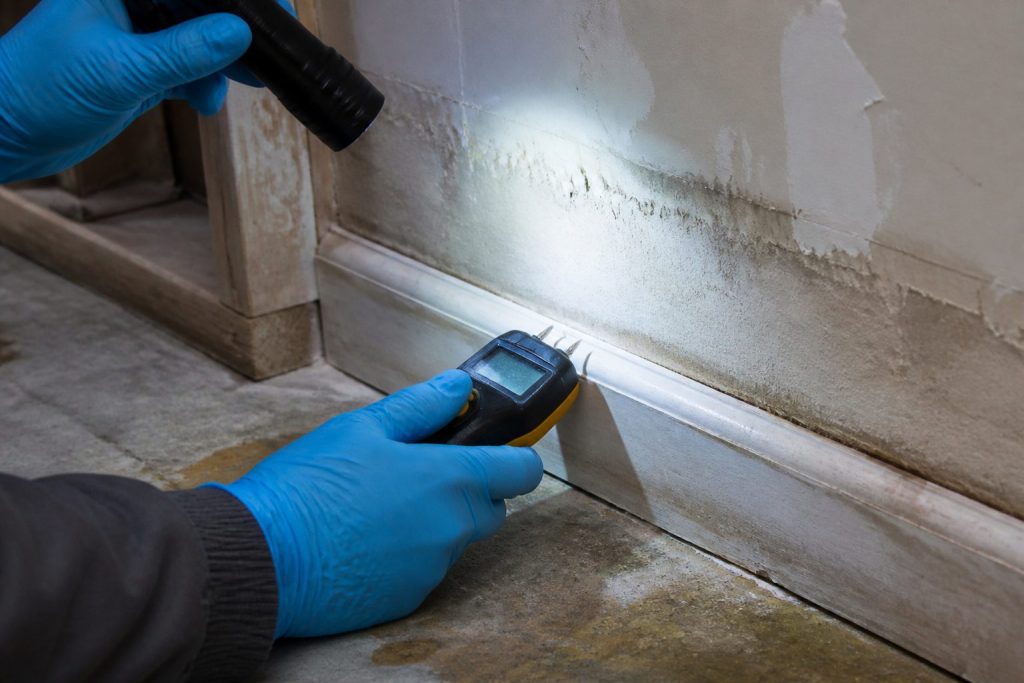
They see the water stain on the ceiling tile in unit 7. They notice the musty smell in the stairwell that’s been there since last fall. They observe that the roof drain on the north side is partially blocked. They document all of it — in a compliance report that goes to the property manager, with your company’s name on it.
The property manager now has documented evidence of deferred maintenance and potential liability. You found it. You’re the expert she trusts. When something actually happens, you’re not a name she found on Google at 2am — you’re the company that’s been maintaining her building, that she already has a contract with, that already has access.
This is not a marketing strategy. This is a relationship architecture.
The Numbers That Make It Real
A small commercial account — a strip mall, a restaurant, a medical office — might generate $50 to $150 per month in compliance services. That’s not the revenue story.
The average water damage restoration job in commercial property runs $3,836 at the low end. Significant losses start at $15,000. Whole-building events — the ones that happen when a pipe bursts on the third floor and runs for six hours — run $50,000 and up.
One emergency response job from a compliance relationship you’ve spent six months building pays for the entire program many times over. And that’s before the rebuild scope, the contents, the dehumidification equipment rental, and the project management fees that follow a major loss.
The compliance service isn’t the product. It’s the acquisition cost.
How to Structure the Offer

The cleanest version of this bundles everything into one monthly line item that property managers can budget for:
- Fire extinguisher annual inspection and tagging
- Emergency and exit light monthly and annual testing
- Fire door visual inspection and documentation
- Compliance binder maintenance (digital or physical, all inspection records in one place)
- Priority emergency response agreement — you’re first call when something goes wrong
One vendor. One monthly fee. One quarterly visit. Everything documented, everything current, fire marshal ready.
For a small commercial tenant — under 50 extinguishers, which is most of the small commercial market the big vendors ignore — that package prices at $50 to $150 per month depending on building size and complexity. Quarterly visits, annual documentation package, priority response clause in the contract.
The priority response clause is the most important line in the agreement. It’s not legally binding in any complex sense — it simply establishes that when something happens, you call us first. You’ve already signed the paperwork. We’re already in your system. No one has to go find a contractor at 2am.
The Certification Question
Fire extinguisher inspection requires certification. The national path runs through the ICC/NAFED Certified Portable Fire Extinguisher Technician exam, which is based on NFPA 10 and completable in one to three days of self-paced study. Total startup cost — materials, exam, state registration, initial tools and tags — runs under $1,000.
Some states require a licensed fire protection company for annual inspections. Washington, for example, requires both state and local licensing. Texas requirements vary by jurisdiction. The certification question is worth solving once, correctly, before the first sale — not as a reason to delay getting started.
The alternative for contractors who don’t want to own the compliance scope themselves: partner with a regional fire protection company to run the compliance work, keep the PM relationship, and be named in the contract as the emergency response vendor. The fire protection company gets route density they want. You get the access and the relationship.
Starting Without the Certification
You don’t need certification to start. You need content and a phone call.
Write about commercial fire code compliance for property managers. Write about what NFPA 10 actually requires and why small commercial buildings keep getting cited. Write about what a compliance binder should contain and how many property managers don’t have one. Rank for the keywords commercial property managers search when they’re trying to solve this problem.
Leads come in. You call them. You ask them what their current compliance situation looks like. You position yourself as someone who understands the problem — and then either you’ve gotten certified by then, or you have a fire protection partner to introduce.
The digital presence creates the warm lead. The relationship closes the deal. The quarterly visit owns the building.
The Larger Play
This isn’t just a retention strategy for one contractor. It’s the skeleton of a commercial PM ecosystem.
A drone company handles exterior envelope inspections and thermal imaging — capabilities no fire protection company or restoration contractor currently offers. A fire protection company handles the interior compliance walk. The restoration contractor holds the PM relationship and the emergency response position. A content and SEO layer drives commercial PM leads to the entire network.
The property manager sees one vendor, one monthly fee, one comprehensive building health report — roof-to-extinguisher, quarterly. Everyone else sees route density, referral flow, and the clients no one else was serving.
The big vendors ignored the small commercial market because their economics didn’t work. That’s not a problem. That’s an opening.
Tygart Media builds digital infrastructure for restoration contractors, commercial service companies, and the vendors who work alongside them. If you’re thinking through a commercial PM strategy and want to talk about what the content and SEO layer looks like, reach out.
{
“@context”: “https://schema.org”,
“@type”: “Article”,
“headline”: “Commercial Compliance as a Loss Leader: How Restoration Contractors Own the Relationship”,
“description”: “The property manager who buys fire extinguisher inspections is the same person who authorizes $50K+ emergency restoration work. Here is how to get in the buildi”,
“datePublished”: “2026-04-02”,
“dateModified”: “2026-04-03”,
“author”: {
“@type”: “Person”,
“name”: “Will Tygart”,
“url”: “https://tygartmedia.com/about”
},
“publisher”: {
“@type”: “Organization”,
“name”: “Tygart Media”,
“url”: “https://tygartmedia.com”,
“logo”: {
“@type”: “ImageObject”,
“url”: “https://tygartmedia.com/wp-content/uploads/tygart-media-logo.png”
}
},
“mainEntityOfPage”: {
“@type”: “WebPage”,
“@id”: “https://tygartmedia.com/commercial-compliance-loss-leader-restoration/”
}
}
Leave a Reply