Tag: Emergency Response

  • The Emergency Services Agreement: What the Eight Provisions Actually Do (and Why You Should Let a Lawyer Write the Words)

    The Emergency Services Agreement: What the Eight Provisions Actually Do (and Why You Should Let a Lawyer Write the Words)

    Direct answer: A commercial emergency services agreement is a pre-loss contract that gives a restoration company the right of first response to a facility’s property emergencies and defines scope, pricing, response time, indemnification, insurance, and termination before a loss ever happens. It is not an assignment of benefits, it is not a work authorization, and it is not a scope contract — it is the operating framework those other documents plug into when a loss occurs. The structural content is consistent across the industry. The exact language varies by state, carrier requirements, and facility type, which is why every serious ESA should be drafted or reviewed by an attorney and vetted by the facility’s risk manager before signature.

    Most restoration companies treat the emergency services agreement as a sales artifact — a one-page “priority response guarantee” that gets signed at a vendor fair and filed in a binder nobody opens. That version of the ESA is nearly worthless. It creates no rights, no duties, no pricing clarity, and no risk transfer. When the loss hits, the contractor still has to negotiate scope, rates, indemnity, and insurance on the night of the event, while water is running and a facility director is trying to get production back online.

    A real ESA does the opposite. It pre-decides every negotiable variable so that when the phone rings at 2 a.m., the only remaining questions are operational: where is the water coming from, what equipment is at risk, who is on site, and when can we start. The rate sheet is settled. The indemnity is settled. The certificate of insurance is on file. The scope framework is defined. The facility’s legal and risk functions have already signed off. That pre-decision is what converts an ESA from a marketing document into a commercial wedge.

    This article walks through the eight structural provisions that belong in every commercial ESA, what each one actually protects, and how the specialty-services posture from the rest of this cluster fits into the agreement. It does not contain sample clause language. It does not tell you what to write in your indemnity paragraph. That restraint is deliberate, and the next section explains why.

    Why this article stays structural and sends you to counsel for the words

    There are a few categories of content in the restoration industry where the specificity of the advice is inversely related to its usefulness. Contract drafting is the clearest example. A sample indemnity clause pulled from a template site will get you sued in some states and held unenforceable in others. A sample additional-insured endorsement that looks reasonable on its face may fail to match the carrier’s underlying policy form. A sample assignment paragraph that worked in one jurisdiction five years ago may be void under a statute that passed last session.

    A few specific reasons the clause-level language belongs with a lawyer, not a generic template:

    State law on restoration contracts is genuinely inconsistent. Florida’s §627.7152, for example, imposes tight procedural requirements on any instrument that assigns post-loss insurance benefits — including a fourteen-day cancellation window, a written itemized estimate, and specific cost limits on emergency assignments. Other states have no statutory framework at all. A clause that satisfies Florida may be overbuilt elsewhere. A clause that works in a state with no statute may violate a Florida consumer-protection provision the moment you cross the border. An ESA is not an AOB, but some of the same drafting traps apply to both, and only a lawyer who practices in the state where the work will occur can tell you which ones.

    Commercial insurance requirements are carrier-specific and property-specific. The additional-insured language that satisfies the facility’s general liability carrier will not necessarily satisfy the carrier underwriting a pharmaceutical plant’s product-liability tower, a hospital’s professional-liability layer, or a data center’s cyber-liability program. The insurance provisions in the ESA need to be negotiated against the facility’s actual policy stack, not against a generic standard. Facility risk managers have strong opinions about this, and the ESA is the document that either satisfies them on day one or triggers a six-week redline cycle.

    Indemnification law is jurisdictionally fractured. Anti-indemnity statutes in California, Texas, Oregon, and several other states limit how far a contractor can transfer liability for its own negligence. A hold-harmless clause that reads naturally may be partially or fully void under statute, which means the indemnity you think you negotiated does not exist. The only way to get this right is to have counsel in the relevant state write the language.

    The Restoration Industry Association publishes a contract sample package for members that is widely used in the industry as a starting point, and it is appropriately marked as informational only. Even the RIA explicitly notes that the package does not warrant compliance with any given state or local jurisdiction. If the trade association that wrote the templates will not warrant the language, a restoration company should not rely on it without review.

    So the rule this article follows is simple. Structure, intent, and risk logic are safe to write about because they are consistent across the industry. Exact clause language is not safe to write about because it is not consistent. When you are ready to execute an ESA, take this structural framework to a commercial attorney who has drafted facility contracts in your state, hand them the facility’s standard vendor requirements, hand them your certificate of insurance and policy forms, and let them write the words. Budget for the review. It is cheaper than a deficient contract.

    With that preface, here are the eight provisions.

    Provision 1: Scope of services and what the ESA is not
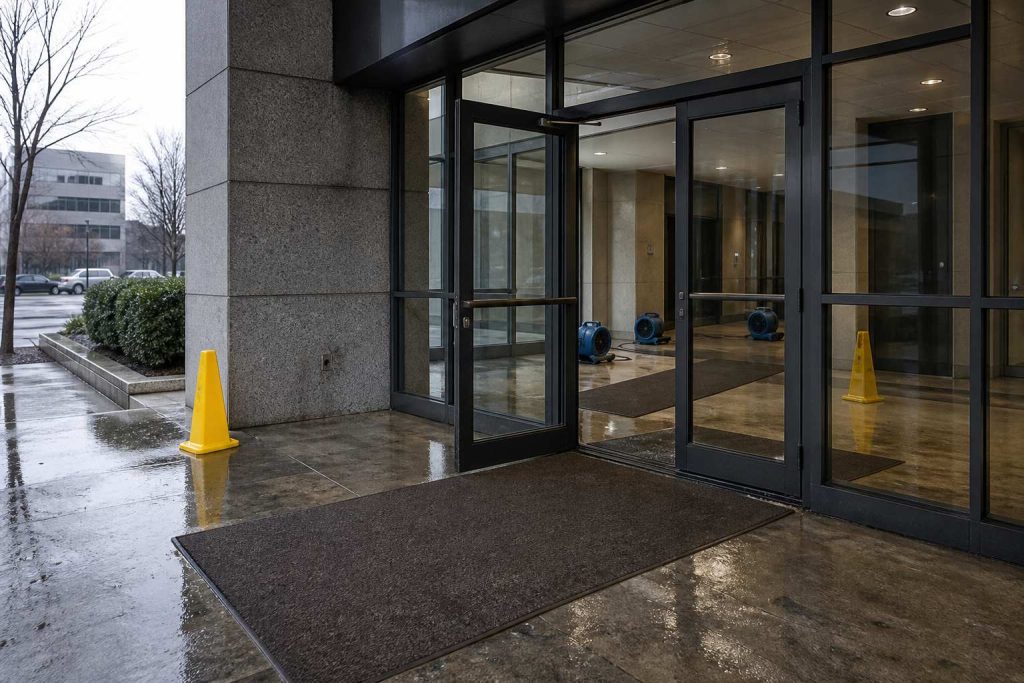
    The first provision defines what the agreement covers and, equally important, what it does not. This is the provision that most ESA templates get backwards — they either promise far too much (every possible restoration service the company offers) or far too little (a one-sentence “emergency response services” reference that creates no enforceable scope at all).

    The structural answer is that the ESA covers emergency stabilization services: the water extraction, temporary dry-out, source containment, initial equipment protection, specialty stabilization subcontractor coordination, and site documentation that occur in the first hours to days after a loss event. It does not cover the reconstruction scope, the full contents restoration, or the permanent repair work. Those are separate agreements — typically a work authorization or a standard construction contract — that get executed after the emergency phase is stabilized and a full scope of loss has been developed.

    Why separate them? Because emergency services have to move faster than any negotiated scope can support, and reconstruction services have to be priced against a known scope, which does not exist during the emergency. Mixing them in one agreement forces the contractor to either pre-commit to reconstruction pricing without a scope, or makes the facility pre-commit to a contractor for work that their insurance carrier may require them to competitively bid. Neither of those outcomes is good for either party.

    For the specialty-services version of an ESA — the version this cluster has been building toward — the scope provision should explicitly name the specialty categories covered (documents, electronics, fine art, medical equipment, or whatever subset the contractor’s specialist bench supports) and should reference that specialty work will be performed by named or vetted subcontractors under the contractor’s coordination and supervision. The facility needs to understand from day one that the restoration company is the responsible party on coordination and the specialist is the responsible party on technical execution. Building that clarity into the scope provision prevents a dispute later when a specialist invoices directly and the facility wants to know why the restoration company’s name is on the ESA but not the bill.

    Provision 2: Response time, staging, and on-call structure
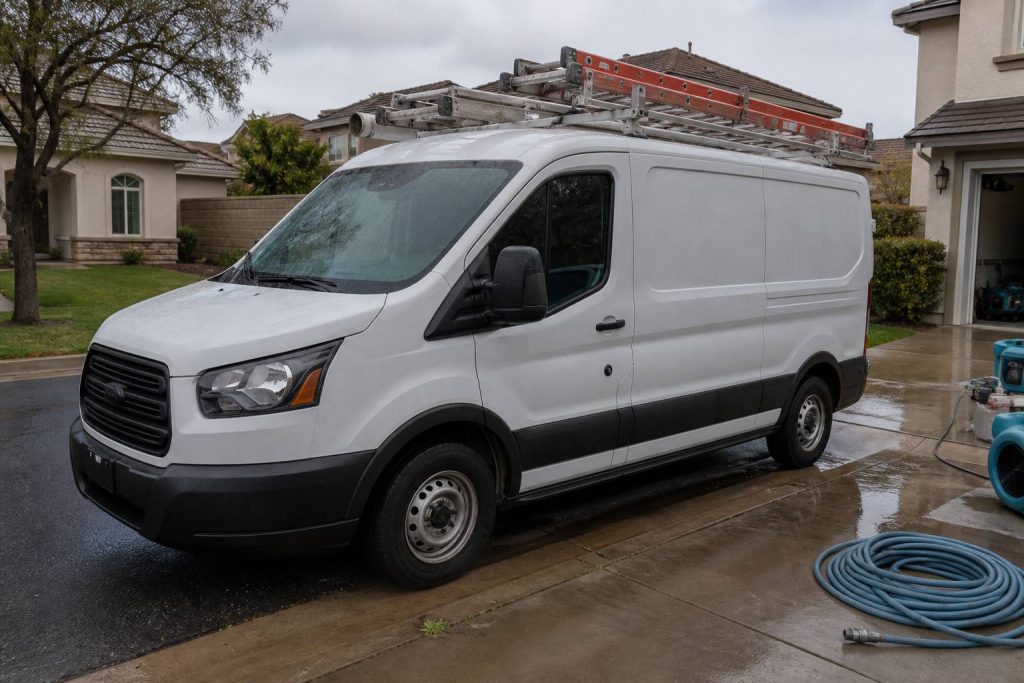
    Every ESA should define response time in three ways, not one. Most templates define it once — “one hour on-site response” is the cliché — and then say nothing about what one hour means or what happens when the weather, traffic, or a regional catastrophe makes one hour impossible.

    The three definitions that belong in a real ESA:

    Initial acknowledgment. The time from the facility’s first call to a confirmed response from someone at the restoration company who has authority to deploy. This should be measured in minutes and should be twenty-four-seven. It is the most important response-time commitment in the agreement because it is the one the facility experiences first and the one that determines whether the contract feels like a real service.

    Arrival on site. The time from call to boots-on-the-ground at the loss location. This varies by geography, by staging strategy, and by type of event. A contractor with a local crew and a truck that lives in the facility’s metro can honestly commit to one to two hours under normal conditions. A contractor serving a multi-state region may commit to four hours for a single-site event and acknowledge longer windows during CAT events when every truck is already deployed.

    CAT-event modification. What happens when a hurricane, winter storm, wildfire, or regional flood creates simultaneous demand across every account the contractor serves. Honest ESAs acknowledge that pre-loss priority status gets harder to honor during a CAT event, define how priority is sequenced among covered accounts, and explain the staging approach — crew positioning, equipment staging, mutual-aid agreements with out-of-region affiliates — that makes priority response credible under stress. A facility with a real risk function will ask this question explicitly. A facility without a real risk function should still have it answered in the document.

    The on-call structure provision also belongs here: the call tree, the escalation path, the backup contacts, and the requirement that the facility maintain current contact information on its side so the restoration company does not lose fifteen minutes finding someone authorized to allow access.

    Provision 3: Pricing framework and rate schedule
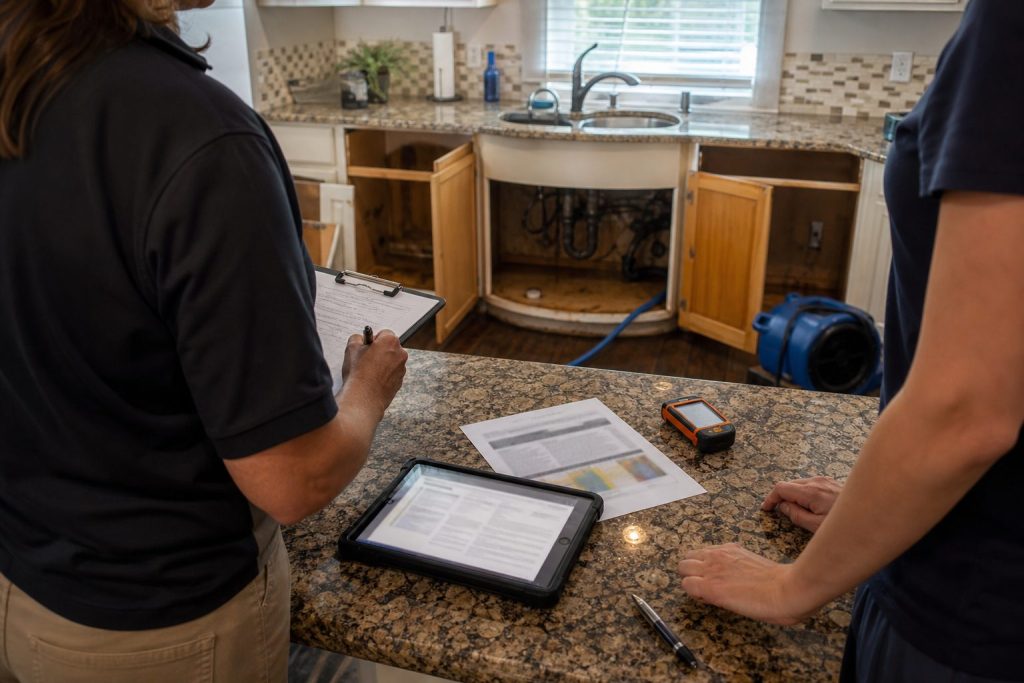
    This is the provision that separates serious ESAs from sales artifacts. The ESA should reference a rate schedule attached as an exhibit, and that rate schedule should be complete enough to price an actual emergency without further negotiation.

    Structural components of a real rate schedule: labor rates by role (technician, lead technician, supervisor, project manager) and by shift (straight time, overtime, holiday, after-hours callout); equipment rental by category (air movers, dehumidifiers, HEPA filtration, desiccant systems, generators, extraction trucks) with clear daily or weekly rates and minimum-days commitments; consumables and materials at cost plus a defined markup; subcontractor handling fee or specialist coordination fee for specialty services; travel and mobilization charges and how they apply; and any CAT-event surcharge structure if the contractor uses one.

    The rate schedule should also state how it reconciles with insurance industry pricing databases. Most commercial losses end up being scoped and priced in Xactimate, and the ESA rate sheet should either (a) commit to Xactimate pricing as the default with contractor rates as a fallback, (b) commit to contractor rates with Xactimate as a reconciliation benchmark, or (c) use a hybrid where emergency labor and equipment use contractor rates and scope work after the emergency phase uses Xactimate. All three are defensible. Silence is not.

    The specialty-services layer adds one more requirement: the ESA should define how specialist pricing flows through. Some specialists bill direct to the carrier and the restoration company takes a coordination fee. Some specialists bill the restoration company and the restoration company bills the carrier with a markup. Some specialists are embedded in the restoration company’s rate schedule directly. All three models are fine. The ESA should name which one applies so the facility and the adjuster know what to expect when the invoice arrives.

    Provision 4: Insurance requirements and certificates

    The ESA should require, at minimum, four categories of insurance from the restoration company: general liability, workers compensation, commercial auto, and — for any specialty work that touches data, medical devices, or art — appropriate professional or specialty-services coverage.

    For each, the ESA should specify minimum limits (per occurrence and aggregate), additional-insured status for the facility and for any parent entity or property manager the facility names, waiver of subrogation in favor of the facility, and a thirty-day notice of cancellation provision. The restoration company should be required to provide certificates of insurance on execution and on renewal, and the ESA should give the facility the right to request policy forms and endorsements on reasonable notice.

    The specialty-services layer matters here. When a restoration company is coordinating a document-recovery specialist, an electronics restoration vendor, or an art conservator, the specialists carry their own insurance and the facility needs to know whether they are covered as subcontractors under the restoration company’s policy, whether they are required to name the facility as additional insured on their own policies, or both. The cleanest structure is usually both — the specialist names the facility and the restoration company as additional insureds on their own policy, and the restoration company’s policy extends to cover the specialist’s work as a subcontractor. Building that into the insurance provision up front avoids a fight after a claim.

    For healthcare, pharmaceutical, biotech, data center, and fine-art accounts, the minimum limits should be higher than the commercial-general defaults. A small restoration company with a one-million-dollar general-liability limit is not adequately insured to work inside a hospital, a data center, or a facility holding seven-figure art. Those accounts will require higher limits as a condition of vendor approval, and the ESA should either specify the higher limits or explicitly commit to meeting whatever the facility’s risk manager requires at the time of approval.

    Provision 5: Indemnification and hold harmless

    This is the provision where state law matters most and where a generic template is most dangerous. The structural intent is straightforward: the restoration company agrees to indemnify, defend, and hold harmless the facility for claims, damages, and expenses arising from the contractor’s own negligence or breach, and the facility retains its own liability for its own pre-existing conditions and for claims arising from its own negligence. That is the defensible mutual structure that most commercial contracts land on when the parties have balanced bargaining power.

    What makes this provision jurisdictionally fragile is that states regulate how far one party can indemnify another for the other party’s negligence. California Civil Code §2782 and similar anti-indemnity statutes in several other states restrict or void clauses that require a contractor to indemnify a property owner for the owner’s own negligence. The permissible scope ranges from “contractor’s negligence only” to “comparative indemnity for proportional fault” to “broad-form indemnity including the indemnitee’s own negligence” — and which of those is enforceable depends entirely on the state.

    The operator’s takeaway is that mutual indemnity for each party’s own negligence is nearly always enforceable and is a reasonable floor. Broader indemnity may or may not be enforceable and should never be signed without state-specific counsel review. If a facility’s vendor form asks the contractor to broad-form indemnify the facility, the contractor should not sign it without a lawyer explaining whether the clause is enforceable in that state and whether it is covered by the contractor’s insurance. Some insurers exclude broad-form contractual indemnity from general liability coverage, which means a contractor who signs a broad-form clause may be uninsured for the liability they just assumed.

    Provision 6: Term, renewal, and termination

    The ESA should be a fixed-term agreement with automatic renewal unless either party provides notice. Three years is a common term. One-year terms with annual renewal work as well. The automatic renewal is the important feature — a contract that expires and has to be re-negotiated annually is a contract that lapses accidentally, and a lapsed ESA at the moment of a loss is worse than no ESA at all.

    Termination provisions should allow either party to terminate for convenience with reasonable notice (thirty to ninety days is standard) and for cause without notice. Cause should be defined tightly: breach of the agreement, loss of required insurance, insolvency, loss of licensure, or failure to meet response time commitments on a defined number of events. A facility should not be able to terminate on a whim, because the contractor has been investing in relationship-specific knowledge of the facility; a contractor should not be able to hold the facility hostage, because the facility has emergency needs that require the flexibility to replace the contractor if performance degrades.

    The ESA should also address what happens to work in progress at termination. If a loss is active and stabilization is mid-stream when termination notice is given, the termination does not apply to the active loss — the contractor continues to completion under the ESA terms and the termination takes effect afterward. Missing that clause can create a situation where one party tries to walk away from an active loss, which serves no one.

    Provision 7: Data, confidentiality, and regulatory compliance

    This provision is where commercial ESAs have evolved significantly over the last decade, and where most template documents are still underbuilt.

    For any account where the work touches protected information — patient health information in healthcare, cardholder data in retail, student records in education, employee records generally, trade secrets in manufacturing — the ESA needs to specify how the restoration company handles that information. For healthcare specifically, the ESA needs to be accompanied by a business associate agreement under HIPAA, and the ESA should reference the BAA as a required condition of performance. For education, FERPA creates similar obligations. For financial services, GLBA. For retail handling cardholder data, PCI-DSS. The ESA does not need to recite every provision of every regulation, but it does need to commit the contractor to meeting the applicable standard and to making the workforce aware.

    Confidentiality should be mutual — the contractor agrees to protect facility information, and the facility agrees not to disclose contractor pricing, methods, or proprietary approaches. Confidentiality survives termination. Disclosures to carriers, adjusters, and conservators for the purpose of executing a loss are permitted as operational necessity.

    Chain-of-custody and data-handling obligations for specialty work belong in this provision or in the scope exhibit. Document restoration that involves moving records off-site must define how the records are tracked, transported, stored, and returned. Electronics restoration that involves systems carrying data must define whether data is preserved, destroyed, or extracted and returned. Medical equipment restoration must define how PHI-bearing equipment is handled during triage and transport. These are not abstract compliance questions — they are operational requirements that come up on every loss and need to be pre-decided in the contract.

    Provision 8: Dispute resolution, governing law, and venue

    The last provision is the one most people skip reading. It is also the one that determines what happens if things go sideways on a seven-figure loss with an insurance carrier in the middle.

    Governing law should be specified explicitly — usually the state where the facility is located. Venue for any litigation should be specified — usually the county where the facility is located or a nearby federal district. Dispute resolution should include a mandatory meet-and-confer step before any formal action, an escalation path to executive-level representatives on both sides, and a commitment to mediation before litigation. Arbitration can be used, but should be specified clearly — including the rules that apply (AAA, JAMS, or another recognized body), the location, the number of arbitrators, and whether discovery is permitted.

    Attorney’s fees and costs should follow the prevailing party — both as a deterrent against frivolous claims and as a protection for whichever party is forced to litigate a legitimate position. Limitation of liability caps are common in commercial contracts, and the ESA may or may not include one depending on negotiation. Consequential and punitive damage exclusions are also common and negotiated.

    For specialty work, the dispute resolution provision should acknowledge that technical disputes over conservation methods, recertification requirements, or data-restoration outcomes may need subject-matter-expert arbitrators rather than generalists. A dispute over whether a painting was properly stabilized is not a dispute a commercial litigator is equipped to decide; it needs a conservator. The agreement can name the tribunal or defer to mutual selection, but should acknowledge the issue.

    How the eight provisions fit together

    The eight provisions are not a checklist — they are a system. The scope defines what the work is. The response time defines when the work happens. The pricing defines what the work costs. The insurance protects both parties financially. The indemnity transfers legal risk rationally. The term provides stability without captivity. The data and compliance obligations keep both parties regulatorily clean. The dispute resolution provides an exit path if the other seven provisions break down.

    A well-drafted ESA with all eight provisions is a document that a facility’s legal team, risk manager, and operations leader can sign without holding their breath. An ESA that has four of the eight, or that has all eight written badly, is a document that either never gets signed or that gets signed but does not actually protect either party when a loss hits.

    The specialty-services layer — the wedge this entire cluster has been building toward — fits naturally inside a well-drafted ESA. The specialty services are named in the scope. The specialist coordination model is named in the pricing. The specialist insurance structure is named in the insurance provision. The specialist data-handling obligations are named in the compliance provision. The facility signs one document, gets priority response for property losses, and inherits a specialist bench they did not have to vet themselves. That is the door-opener. The eight provisions are the hinges.

    What to do before you sign anything

    If you are a restoration company using this article to prepare for ESA conversations with commercial accounts, the honest sequence is:

    Engage a commercial attorney in your state. Give them your existing contract templates, your insurance declarations, your standard rate schedule, and the categories of facilities you are targeting. Ask them to build a master ESA that addresses all eight provisions with state-appropriate language, and a set of modifications for regulated verticals (healthcare, data, education, fine art). Budget two to four thousand dollars for the initial work and a few hundred dollars annually for review and updates. That number is trivial compared to the cost of a deficient contract on a seven-figure loss.

    Review the RIA contract sample package if you are a Restoration Industry Association member. It is a useful starting point and a useful cross-check against your attorney’s draft, but it is not a substitute for counsel-drafted documents. The RIA itself does not warrant the language.

    Have your insurance agent review the indemnity, additional-insured, and limit-of-liability provisions before you circulate the draft to accounts. Your general liability carrier may exclude certain contractual assumptions of liability from coverage, and you need to know that before you sign something that strips you of your insurance protection.

    Run the final document past a facility risk manager or two — a peer in the property management or corporate real estate space — and get their candid reaction. Risk managers see dozens of vendor contracts a year and can tell you within five minutes whether your document looks professional or amateur.

    None of that is glamorous. All of it is what separates a restoration company that gets written into facility vendor files from a restoration company that shows up with a one-page “priority response guarantee” and gets treated like the last call the facility director makes instead of the first.

    Frequently asked questions

    Is an ESA the same as an assignment of benefits?
    No, and conflating them is a serious error. An assignment of benefits is a post-loss instrument in which the policyholder transfers some or all of their insurance claim rights to the contractor. An ESA is a pre-loss operating agreement that defines how emergency services will be performed if a loss occurs. An ESA may reference how assignments or direct-pay arrangements will be handled, but it is not itself an assignment. States like Florida have enacted strict rules on AOBs — §627.7152 — that do not apply to ESAs in the same way. Treat them as distinct documents and let your attorney advise on whether, when, and how you use AOBs inside your state.

    How long should the ESA be?
    A properly drafted commercial ESA with all eight provisions and a rate schedule exhibit usually runs fifteen to thirty pages. If it is shorter than that, something is missing. If it is substantially longer, something is probably over-engineered. The structural content can be expressed concisely; length comes from exhibits (rate schedule, insurance requirements, specialty subcontractor list, compliance addenda) that the main contract references.

    Can a facility sign our ESA as-is, or will they always want to redline?
    Most serious commercial accounts will redline. Expect it, plan for it, and do not treat it as a rejection. The facility’s legal and risk functions are doing their job. The redlines usually concentrate in insurance limits, indemnity scope, termination rights, and data compliance — the provisions where the facility’s exposure is real. A well-drafted starting document narrows the redlines to reasonable negotiation rather than a fundamental rewrite.

    What if the facility has their own ESA template they want us to sign?
    Read it carefully, have your attorney read it carefully, and push back where the document is unbalanced. Facility templates frequently contain one-sided indemnity provisions, insurance requirements that exceed what a mid-size restoration company can reasonably carry, and termination rights that give the facility everything and the contractor nothing. Most facilities will negotiate those points once you raise them — because most facilities would rather have a qualified contractor with reasonable protections than an unqualified contractor who signs whatever is in front of them.

    How often should we update our ESAs once they are in place?
    Annually at minimum. Insurance limits may need to rise. State law may have changed. Your own rate schedule almost certainly has. The compliance landscape around HIPAA, data protection, and specialty handling continues to evolve. An ESA from three years ago is probably not the ESA you want defending you today.

    Do we need a separate ESA for each facility, or can we use a master agreement across a portfolio?
    Both structures work. For multi-site accounts with a single corporate owner — a hospital system, a data center operator, a property manager — a master services agreement with facility-specific exhibits is cleaner. For single-site owners, a standalone ESA is simpler. What matters is that the scope and pricing exhibits are specific to each facility’s actual equipment, access requirements, and operational needs, rather than generic.

    How does the ESA interact with the work authorization signed at the time of a loss?
    The ESA is the operating framework. The work authorization is the post-loss trigger. When a loss occurs, the facility signs a short work authorization that references the ESA, identifies the specific loss, and confirms the scope of the emergency services being authorized. The ESA provisions (rates, indemnity, insurance, compliance) flow through automatically. This structure is why the ESA pre-decides everything — so the work authorization at 2 a.m. is a one-page document, not a contract negotiation.

    What happens if a subcontractor specialist damages the facility during specialty work?
    The answer depends on how the ESA is drafted. In the cleanest structure, the restoration company carries general liability that extends to the work of its subcontractors, the specialist carries their own liability that names the facility and the restoration company as additional insureds, and the indemnity provision allocates responsibility based on whose negligence caused the damage. A well-drafted ESA and subcontract between the restoration company and the specialist will define the flow so that a covered loss is paid by an insurer rather than argued over between the parties.

    Is the ESA a confidential document, or can we reference it in marketing?
    The ESA itself is usually confidential — both the pricing and the legal terms. The fact of the relationship is often not. Many facilities are comfortable being referenced as emergency-services accounts with pre-loss agreements in place, as long as the contents remain private. Ask before you reference anyone, get the answer in writing, and respect the answer.

    How do we actually get a facility to sign one of these?
    That is the subject of the next article in this cluster. The short answer is that you do not walk in and ask for a signature. You work the account through vendor qualification, risk-manager education, and a staged demonstration of capability that makes signing the ESA feel like the natural outcome of a longer conversation rather than the thing you asked for in the first meeting. The specialty-services wedge this entire cluster has been building makes that conversation easier because the door opens around specialty recovery, not around general restoration.

  • Fine Art and Collections Conservation: The Specialty Where the Restoration Company Does Not Restore, but Owns Hour One

    Fine Art and Collections Conservation: The Specialty Where the Restoration Company Does Not Restore, but Owns Hour One

    Direct answer: Fine art, antiques, and collections conservation is the specialty category where the restoration company’s role is explicitly not to restore. The restoration company stabilizes on hour one, documents photographically to museum standard, isolates the work from ongoing environmental damage, and hands the piece to an AIC-qualified conservator — often one the insurance carrier designates rather than one the restoration company selects. The specialist firms that perform the actual conservation are small, regional, and relationship-driven: B.R. Howard, the Fine Arts Conservancy, Stella Art Conservation, museum-affiliated labs, and independent AIC conservators organized through AIC-CERT’s twenty-four-hour emergency hotline. The accounts where this specialty category matters are museums, universities with collections, corporate headquarters with on-site art programs, financial services firms and private equity offices, luxury residential, and any commercial building with named-schedule art policies under inland marine coverage. The restoration company earns the vendor-file position by being the company that photographs correctly in hour one and handles the art as a custodian rather than a contractor.

    The fine art specialty is different from documents and electronics in one operational fact that governs everything else: the item is irreplaceable. A server can be replaced with another server running the same firmware. A ream of financial records can be reconstructed from digital backups where they exist. A painting from 1897 cannot be replaced. The chain of custody, the stabilization posture, the handoff protocol, and the documentation standard are all engineered around that single fact.

    This article is the operator-level build guide for the fine art specialty inside a mid-market restoration company. Not how to conserve a painting — the restoration company never conserves anything. How to be the first responder the conservator community, the carrier, and the collector actually want on scene — the company that knows the difference between an oil on canvas and a gouache on paper, between a carrier-designated conservator and a client-preferred one, between a scheduled inland-marine schedule and a blanket-contents policy, and between a piece that can be stabilized in place and one that has to move in hour one. Hour one, on an art loss, is the entire engagement. The conservation that follows happens on a timeline of weeks or months and happens inside the conservator’s lab. The restoration company owns hour one.

    Why art is a specialty where the restoration company does less, not more

    The instinct of a competent restoration operator looking at a damaged painting is to want to clean it, stabilize it, or dry it. That instinct is wrong, and the discipline to suppress it is the most important capability in the fine art specialty.

    Three principles govern the posture. First, every intervention on a work of art is potentially reversible or irreversible by conservation standards, and the conservator is the only party qualified to make the call between the two. A restoration company that decides to dab a water stain with a cloth has just made a conservation decision outside its qualification. Second, the insurance structure for fine art specifically excludes damage caused by repair or restoration performed by unqualified parties; a restoration company that performs conservation work on a scheduled inland-marine policy may have voided the coverage. Third, AIC-qualified conservators operate under a professional code of ethics that governs documentation, reversibility, authenticity, and provenance; the restoration company’s work in the first twenty-four hours must not create downstream conservation problems that the AIC conservator then has to undo.

    The correct operational posture is stabilization, documentation, isolation, and handoff. Stabilization means controlling the environmental conditions around the piece without touching the piece itself. Documentation means producing a condition record that the conservator will build their treatment plan against. Isolation means removing the piece from ongoing damage — not toward cleaning or drying, but toward a stable holding environment where the conservator can begin assessment. Handoff means transferring custody to the conservator with a complete and defensible chain-of-custody package.

    The restoration company’s value proposition is not expertise in art. It is discipline under time pressure to not do the wrong thing and to hand off cleanly. That discipline is rare. A crew trained to dry everything fast will damage art unless they have been retrained specifically for the specialty response.

    How fine art actually fails, and what hour one looks like for each failure mode

    Different media fail differently under different loss conditions, and the restoration company’s stabilization protocol has to be media-aware. Six media categories account for almost every engagement.

    Paintings on canvas. Oil on canvas, acrylic on canvas, and mixed-media canvas works are vulnerable to water damage through the back of the canvas (water wicks through unprimed canvas and expands the fibers, pushing the paint layer into tent-like deformation), through the front (surface water sits on paint and picks up grime, detergent residues, or smoke soot), and through humidity swings (relative humidity cycling causes differential expansion between canvas and paint, producing cracking). The stabilization response is to remove the painting from wall contact if safe to do so, stand it vertically in a climate-controlled area, stabilize relative humidity between forty and fifty-five percent, and photograph front and back under raking light before the conservator arrives. Never lay a wet painting face-up on a flat surface — paint loss is almost guaranteed.

    Works on paper. Watercolors, drawings, prints, photographs, and archival documents on paper share the paper failure modes discussed in the documents cluster article, plus the added vulnerability of water-soluble media (watercolor, some inks, some photographic emulsions) that bleed or migrate on contact with water. The stabilization response is the same freeze-stabilization pathway as documents, but with conservator-specified transport and freezing protocols because the work is irreplaceable rather than merely valuable. Paper under glass is a special case: water often enters the frame through the perimeter and the work should stay in the frame until a conservator deframes it in a controlled environment.

    Sculpture, ceramics, and three-dimensional works. Water damage to sculpture is frequently less immediate than to flat works, but material-specific vulnerabilities exist. Unglazed ceramics absorb water and can spall when dried improperly. Plaster and gypsum-based sculpture can delaminate at the surface. Bronze and copper-alloy sculpture can develop bronze disease if water deposits remain on the surface. Stone sculpture can stain from mineral-bearing water. The stabilization response is to move the piece to a stable environment, photograph from multiple angles, and leave specific treatment to the conservator.

    Photographs and photographic processes. Contemporary color prints, historic silver-gelatin prints, cyanotypes, daguerreotypes, and digital-pigment prints each have different stability. Wet photographs must be handled by the emulsion side being kept wet until the conservator processes them — a wet photograph that dries before conservator intervention often cannot be separated from its mount or backing, and the emulsion adheres to whatever surface it touches during drying. The stabilization response for wet photographs is to keep them wet (submerged in clean cool water) and in the dark until the conservator takes custody. This is a counterintuitive protocol and a common place for generalist restoration crews to cause irreversible damage.

    Books, manuscripts, and bound materials. These sit between the documents specialty and the art specialty depending on value. A modern book collection is documents; a medieval manuscript or a rare first-edition library is art and requires conservator handling. The stabilization response mirrors documents (freeze to stop mold, transport frozen) but with conservator-specified packing and chamber selection rather than standard document-recovery chambers.

    Decorative and historic building components. Chandeliers, architectural ornament, stained glass, historic wallcoverings, and specific interior finishes that contribute to a listed or historic property fall under conservator treatment rather than standard restoration. The stabilization response is environmental control in place where possible, photographic documentation from multiple angles, and conservator dispatch before any surface treatment or drying.

    The operational discipline across all six categories is the same: stabilize, document, isolate, hand off. The judgment call for the restoration company is which category the piece belongs to, and that call is made jointly with the client’s designated art contact, the carrier, and — where AIC-CERT is used — the on-call AIC conservator.

    The insurance structure governs the engagement

    The fine art specialty is the one category where the insurance structure often dictates the restoration company’s role more than the client does. Understanding the policy structure is prerequisite to running the engagement.

    Scheduled fine art inland marine policies are the most common coverage for high-value collections. Each piece over a threshold (commonly twenty-five hundred dollars, sometimes ten thousand for commercial collections) is individually scheduled with an agreed value. Coverage is all-risk inside the scheduled perils, claims pay on the agreed value rather than on post-loss depreciation, and the policy typically includes coverage for conservation and restoration costs. The claim process requires a recent appraisal or purchase documentation for each scheduled item, plus a conservator’s assessment and treatment proposal for any claim involving actual physical damage. The restoration company’s scope-of-loss on scheduled items feeds into a claim process the carrier runs with the conservator; the restoration company’s charges are typically for stabilization and handling rather than for restoration of the art itself.

    Blanket fine art coverage is a less-common structure used for smaller collections or for commercial environments where individual scheduling is impractical. The policy sets an aggregate limit and often a per-item sublimit. Claim handling is more like standard contents coverage, though the carrier may still designate a conservator for any piece above a threshold value.

    Standard contents coverage covers art only to the extent any other content is covered, with a per-item sublimit that is typically modest (often twenty-five hundred dollars or less). High-value art in a space with only standard contents coverage is underinsured, and this fact matters operationally because the claim may not pay for full conservation. The restoration company should document exactly what it found and what it did, and let the coverage conversation resolve between the client, broker, and carrier.

    Museum and institutional collections coverage is a specialized inland marine product with custom terms negotiated with carriers like Chubb, AXA XL, Huntington T. Block, Berkley, and certain Lloyd’s syndicates. These policies often include pre-identified emergency response procedures, carrier-designated or carrier-approved conservator lists, and specific notification requirements. Institutional clients will usually tell the restoration company which conservator to call and may have a twenty-four-hour hotline the restoration company is expected to escalate to alongside its own response.

    Commercial property coverage with scheduled art riders is common for corporate headquarters, law firms, and private offices with C-suite collections. The rider attaches to the main property policy, lists the scheduled pieces, and typically references a conservator list or procedure. These are often the accounts with the highest strategic value for the specialty wedge because the collection is significant, the risk is not well-managed, and the client has never formalized an emergency response plan.

    The restoration company’s responsibility is not to be the insurance expert. It is to understand which structure applies on each engagement, to know which questions to ask the client in hour one, and to coordinate appropriately with the carrier and the designated conservator. A restoration company that arrives on scene and cleans a painting without contacting the carrier-designated conservator has likely voided coverage and created an uninsurable loss for the client. That is a catastrophic operational failure and it is entirely avoidable with disciplined first-response protocol.

    The first twelve hours on a fine art loss

    The protocol borrows from documents and electronics but with art-specific variations.

    Phase one: arrival, client contact, and carrier coordination (hour zero to one). The first call inside the first hour, after the client’s own representative, is either the carrier or the conservator the carrier has designated. If the client has a scheduled policy, the policy almost always specifies notification procedures for a loss event, and the restoration company should confirm those procedures have been followed before beginning any work. If the client has not contacted the carrier, the restoration company assists in making that call. The conservator — either carrier-designated, client-designated, or summoned through the AIC-CERT hotline at 202-661-8068 — is engaged for consultation on the stabilization protocol specific to the media involved.

    Phase two: environmental stabilization (hour one to three). Desiccant dehumidification is established to move relative humidity toward forty to fifty percent, which is the general conservation benchmark for most media (specific media have tighter targets; the conservator specifies on the call). Temperature is managed to the mid-sixties Fahrenheit. Air handling is gentle — direct fan airflow on paintings can cause paint loss as the surface dries unevenly. Negative-air with HEPA filtration is established where smoke or soot contamination is present.

    Phase three: condition documentation (hour two to six). Every affected piece is documented photographically to a museum-adjacent standard: full-frame shot, edge-to-edge shot of each side, raking-light shot to reveal surface condition, front and back shots for two-dimensional work, and detail shots of any visible damage. Each photograph is logged with the piece’s schedule number (if scheduled), a unique engagement ID, timestamp, and responsible photographer. The condition documentation is the record the conservator will build treatment against, and it is the record the carrier will pay the claim against. It has to be done right.

    Phase four: stabilization-in-place or isolation-and-move (hour three to eight). For each piece, the restoration company determines whether stabilization in the current location is safer than moving the piece. The default is stabilize in place — moving art in a loss environment is higher risk than most crews assume, and the conservator usually prefers to begin assessment before any transport. Stabilize-in-place means isolating the piece from ongoing damage (removing it from a wet wall, stand it vertically away from direct water path, covering with conservator-approved materials), establishing environmental control, and holding position for conservator arrival. Move-and-isolate is appropriate when the current environment is actively damaging the piece — for example, ceiling collapse risk, ongoing water flow, or hazardous contamination — and when a stable holding environment is available on-site or immediately off-site. Moving requires conservator-specified packing materials and handling protocols; the restoration company does not improvise art transport.

    Phase five: conservator arrival and handoff (hour four to twenty-four, variable). The conservator’s arrival timeline is the variable that governs the rest of the engagement. Local conservators may arrive in hours; national specialists may take a day or more. During the gap, the restoration company maintains environmental conditions, documents any changes, and communicates with the carrier. When the conservator arrives, the chain of custody transfers with a signed handoff document that records condition at handoff, conservator identity and credentials, destination (on-site assessment or off-site lab), and any additional stabilization directives from the conservator.

    Phase six: scope documentation and coordination (parallel, completing inside twenty-four hours). The restoration company produces the scope of loss: inventory of affected pieces with schedule numbers, condition documentation package, stabilization services performed, conservator handoff confirmation, and ongoing environmental management requirements. The scope is delivered to the client, the carrier, and the conservator for coordination of the conservation treatment plan that follows.

    Through every phase, the discipline is that the restoration company does not touch the art except as specified by the conservator. The temptation to dab, wipe, blot, or dry is constant and is wrong in nearly every case. The capability being sold is self-control.

    The specialist landscape is relationships more than chambers

    The art conservation specialty does not have the chamber-and-tank infrastructure of documents and electronics. The specialist is the AIC-qualified conservator or conservation firm, and their tools are bench equipment, materials knowledge, and decades of trade practice. The landscape is therefore relational and geographic rather than centralized and industrial.

    National specialty firms with disaster recovery practices include B.R. Howard & Associates, the Fine Arts Conservancy, Stella Art Conservation, and several other firms that specifically hold carrier relationships for fine art claims. These firms maintain twenty-four-hour response capability, hold insurance and bonding appropriate to institutional collections, and work regularly with brokers like Huntington T. Block, AXA XL, Chubb, and specialty Lloyd’s syndicates.

    Regional conservation labs and museum-affiliated conservators exist in most metropolitan markets, often attached to museum conservation departments, regional conservation centers, or major universities. These specialists have the deep expertise and local responsiveness that often makes them the right first call for regional engagements even when a national specialist is available. The Williamstown Art Conservation Center, the Intermuseum Conservation Association, and the West Lake Conservators are examples of regional centers; every state has at least one and major markets have several.

    Independent AIC conservators are the foundation of the specialist bench. AIC’s online find-a-conservator directory lists conservators by specialty (paintings, paper, photographs, objects, textiles, books) and geography. A restoration company building a fine art specialty should identify and maintain relationships with at least one independent AIC conservator per specialty per service region, and should build teaming arrangements with those conservators parallel to the teaming agreements used for chambers and ultrasonic labs.

    AIC-CERT is the twenty-four-hour emergency response hotline operated by the American Institute for Conservation, staffed by conservator volunteers who provide emergency guidance and can help route an engagement to appropriate specialists. The number is 202-661-8068. Restoration companies operating in the fine art specialty should have the AIC-CERT number on the dispatch card and should know when escalation to AIC-CERT is appropriate (major institutional loss, disaster affecting multiple collections, or situations where the client’s designated conservator cannot respond in time).

    The teaming arrangement with an art conservator is shorter and simpler than with a chamber operator because the conservator is typically engaged on a per-event basis rather than a standing commitment. The key provisions are insurance and bonding disclosure, chain-of-custody protocols, rate structure (conservator time is billed hourly in the two-hundred-to-five-hundred-dollar range for experienced AIC-qualified conservators), and non-solicitation of the restoration company’s client relationship. Many conservators work on handshake understandings with established restoration partners; getting a written framework in place takes an afternoon of conversation and a short memorandum of agreement.

    Pricing the fine art scope

    The fine art engagement has a different billing structure than documents or electronics because the restoration company’s direct work is concentrated in the first twelve hours and the conservator’s work — the bulk of the eventual claim cost — flows through a different contractual channel.

    Stabilization services are billed at the restoration company’s published commercial rates. The line items are crew labor for first response, environmental control equipment (desiccant dehumidification, HEPA negative-air, temperature conditioning), condition documentation photography with conservator-grade equipment, isolation materials and handling, and any specialist packing materials used with conservator authorization.

    Condition documentation is a standalone line item. Museum-standard photographic documentation requires controlled lighting, calibrated color, and specific camera equipment. The work takes a trained photographer one to three hours per piece on a typical engagement. The billing rate reflects the specialized nature of the work.

    Coordination and project management is a line item covering the restoration company’s time coordinating with the client, carrier, and conservator; the chain-of-custody administration; and the engagement-closeout documentation. On a complex institutional loss, this can easily run ten to fifteen percent of total engagement cost.

    Conservator fees pass through the client’s insurance claim directly in most cases rather than flowing through the restoration company as a marked-up subcontract. This is the structural difference from documents and electronics: the carrier-designated conservator often bills the carrier directly, and the restoration company’s invoice covers the first-response work only. When the restoration company coordinates the conservator engagement on behalf of the client (a common variation), the conservator fees pass through with the same ten-to-fifteen-percent disclosed management fee, but the carrier and the client both need to know and approve the arrangement before the work begins.

    The economics of the fine art specialty are therefore different from the other categories. The direct revenue per engagement is modest — a ten-to-twenty-thousand-dollar first-response invoice on a scheduled institutional loss, larger on major institutional or disaster events. The strategic revenue is the vendor-file position and the downstream mitigation and reconstruction work at institutional and commercial accounts with significant art programs.

    Account types where art is the dominant specialty

    Museums and cultural institutions. The obvious target. Usually already has emergency response protocols, designated conservators, and institutional insurance. The specialty agreement here is more about being the operational first responder at the facility level than about introducing the institution to the concept. Approval runs through collections management or facilities. The agreement value is high because institutional accounts have multiple buildings and continuous risk.

    Universities with collections. Most universities have meaningful collections — main art museums, library special collections, historical artifacts, scientific specimens. The operational reality is often that emergency response is not well-coordinated and the first-response contractor on scene is a generalist who may damage specialty materials. The specialty agreement is valuable because the academic institution has broad exposure and narrow first-response capability.

    Corporate headquarters with on-site art programs. A significant minority of corporate headquarters maintain serious art collections — Fortune 500 companies, investment banks, law firms, large accounting firms, private equity offices. The facilities director typically has no specialty response plan and has never thought about it. Approval sits with the general counsel, chief administrative officer, or chief risk officer. The specialty agreement is often the first time the collection has been operationally protected.

    Financial services firms and private equity offices. Executive offices with significant collections, often scheduled under dedicated fine art riders. Approval is typically the chief operating officer or general counsel. The agreement value is premium because the collections are high-value and the clients are relationship-focused.

    Luxury residential (at commercial scale). Single-family residences with significant collections fall outside standard residential restoration economics, but specialty agreements with ultra-high-net-worth clients or their family offices can work as individual engagements with comparable structure to commercial accounts. The agreements are sold through brokers and family offices rather than through direct client contact.

    Hotels, restaurants, and hospitality with collections. Landmark hotels, historic restaurants, and restaurant groups with significant art programs benefit from specialty coverage. Approval is typically the general manager or director of facilities. Agreement value is modest per property but strong when the account is a group with multiple properties.

    Government buildings, embassies, and public art programs. The General Services Administration manages the fine arts collection of federal facilities, and many state and municipal agencies hold significant public art inventories. Procurement rules generally require competitive procurement, which means positioning through cooperative purchasing vehicles or state emergency preparedness programs.

    Historic properties and landmark buildings. Buildings on historic registers often contain architectural ornament, interior finishes, and fixtures that fall under conservation rather than standard restoration. The specialty agreement is valuable at the building level and is often signed by the property owner, property manager, or historic preservation trust.

    The ninety-day build for the fine art specialty

    Fine art is often the third specialty category added to a restoration company’s program, after documents and electronics. The build draws on the infrastructure those earlier categories established, with art-specific additions.

    Days one through fifteen: conservator bench. Build the AIC-qualified conservator bench in each service region, with coverage across paintings, paper, photographs, objects, and textiles. Establish teaming relationships with one primary and one backup specialist in each region. Confirm insurance, bonding, chain-of-custody protocols, and rate structures. Register the restoration company’s dispatch with AIC-CERT if appropriate. Identify the regional and national specialty firms (B.R. Howard, Fine Arts Conservancy, Stella Art Conservation, regional conservation centers) and establish working relationships.

    Days sixteen through thirty: internal capacity. Train dedicated art-response crew members on media identification, stabilization protocols per media, conservator-standard condition documentation photography, and chain-of-custody administration. The crew has to be able to recognize an oil on canvas from an acrylic, a wet photograph from a dry print under glass, and a scheduled piece from a decorative piece. This takes real training and should include shadowing at a regional conservation center where possible. Equip response vehicles with conservator-grade photography equipment, environmental control appropriate to art stabilization, and specialized materials for stabilization in place.

    Days thirty-one through forty-five: documentation and coordination systems. Build the condition documentation workflow, the conservator handoff protocol, and the carrier coordination workflow. Produce templates for condition reports, chain-of-custody forms, scope-of-loss packages, and carrier notification documents.

    Days forty-six through sixty: commercial collateral. Extend the specialty agreement summary to cover fine art explicitly. Build account-specific collateral for museum, university, corporate HQ, financial services, hospitality, and historic-property targets. Train the sales team on the insurance structure distinctions (scheduled inland marine versus blanket versus standard contents) because those distinctions govern the sales conversation.

    Days sixty-one through seventy-five: pipeline activation. Identify first-wave targets, prioritizing accounts where the restoration company has existing relationships with the client or the client’s broker. Book meetings with facilities directors, risk managers, general counsel, or collections managers as appropriate. The meeting emphasizes the stabilization-and-handoff posture, the AIC-qualified conservator bench, and the condition documentation standard.

    Days seventy-six through ninety: first signed agreements and readiness drills. Run per-facility drills on each signed account, including a walk-through of the collection, a stabilization-plan exercise, and a conservator dispatch test. The fine art specialty is now operational alongside documents and electronics.

    Frequently asked questions

    Can we restore a painting ourselves if it’s relatively minor damage?
    No. Every intervention on a work of art is a conservation decision, and restoration companies are not qualified to make conservation decisions. Beyond the technical question, the insurance policy structure on scheduled fine art typically excludes damage or depreciation caused by unqualified restoration attempts. Stay in the stabilization-and-handoff role and hand off cleanly to a qualified AIC conservator.

    What if the client doesn’t know who their conservator is?
    The client’s insurance broker knows or can find out within an hour. The AIC online directory locates conservators by specialty and geography. AIC-CERT at 202-661-8068 provides twenty-four-hour emergency guidance. A restoration company that cannot locate a qualified conservator within the first few hours of an engagement has a bench problem and should resolve it before the specialty agreement is signed with the first account.

    What’s the difference between a restorer and a conservator?
    The terms are used loosely, but in the insurance and institutional context they are not interchangeable. An AIC-qualified conservator holds professional credentials from the American Institute for Conservation, operates under a professional code of ethics, and is accepted by carriers and institutions as qualified to perform conservation work. A restorer may have trade skill but may not hold AIC credentials. For insurance claims on scheduled fine art, use the conservator term and confirm the specialist’s credentials.

    How do we photograph a painting to conservator-standard in the field?
    Controlled lighting with balanced white temperature, flat-on camera angle square to the surface, full-frame and detail shots, raking light from the side for surface condition, and back-of-frame documentation when the piece can be safely turned. A conservator-trained photographer on the response crew produces the record; a generalist with a phone camera produces a record the conservator will have to redo.

    Does insurance always cover conservation costs?
    Scheduled fine art inland marine policies typically include conservation and restoration cost coverage. Blanket fine art coverage may include it subject to sublimits. Standard contents coverage typically does not adequately cover conservation costs on high-value pieces. The restoration company’s scope should document the work performed and let the coverage conversation resolve between the client, broker, and carrier. Do not represent coverage expectations to the client beyond what the broker confirms.

    What if the client wants us to move the art immediately without conservator consultation?
    Document the instruction in writing. Where movement is necessary for safety reasons (structural collapse risk, ongoing water flow, contamination), move with conservator-specified materials and protocols where possible or with documented conservative handling where the conservator cannot be reached. The chain-of-custody record protects everyone.

    How long does conservation take after handoff?
    Treatment timelines vary widely. Water-damaged paintings can be stabilized in weeks for straightforward cases and take years for complex cases. Works on paper typically run weeks to months. The restoration company’s role ends at conservator handoff; the conservator manages the treatment timeline in coordination with the client and the carrier.

    Do we need our own fine art insurance to handle this work?
    Check with the restoration company’s commercial insurer. Standard restoration general liability and inland marine policies typically cover the work the restoration company actually performs (stabilization, handling, transport if executed) subject to bailee provisions and sublimits. The teaming arrangement with the conservator specifies responsibility during conservator custody. High-value engagements may require additional insurance; consult the broker before signing an institutional specialty agreement.

    What does the carrier-designated conservator list actually look like?
    Fine art insurance carriers — Chubb, AXA XL, Huntington T. Block, Berkley, certain Lloyd’s syndicates, and specialty museum-insurance brokers — maintain lists of conservators they have vetted and frequently engage. The carrier may direct the client to use a listed conservator; the client can usually propose an alternate conservator of comparable qualification for carrier review. The restoration company’s role is to coordinate, not to select.

    How do we position the fine art specialty when we’ve never done this work before?
    Honestly. The positioning is the stabilization-and-handoff posture, the conservator bench already in place, the condition documentation standard, and the ninety-day operational build. The restoration company is not representing itself as an art conservation firm — it is representing itself as the competent first responder who hands off cleanly to the qualified conservator. That posture is defensible, it is what institutional clients actually want, and it is the correct operational model for a mid-market restoration company adding fine art to its specialty program.

  • Electronics and Data Equipment Restoration: The Seventy-Two-Hour Window That Turns the Specialty Agreement Into a Real Risk-Management Instrument

    Electronics and Data Equipment Restoration: The Seventy-Two-Hour Window That Turns the Specialty Agreement Into a Real Risk-Management Instrument

    Direct answer: Electronics and data equipment restoration is the specialty category where the seventy-two-hour corrosion window turns the emergency services agreement into a genuine risk-management instrument rather than a convenience. Acidic soot residue begins measurably corroding circuit traces inside twenty-four hours and the recoverability curve drops sharply after seventy-two. The specialist response — ultrasonic cleaning at thirty-seven to forty-five kilohertz in deionized water with a pH-neutral detergent, followed by magnified inspection and bench testing — is work the restoration company subcontracts to BELFOR’s electronics division, Prism Specialties, CRDN, or a qualified regional lab. The stabilization — pH-neutralizing wipes on exposed boards, HEPA-filtered negative-air in the space, desiccant dehumidification to drive relative humidity below forty percent, and triage inventory of salvageable versus replace-in-kind — is work the restoration company performs on hour one. The accounts that value this capability most are data centers, colocation facilities, large enterprise IT operations, manufacturing plants with industrial controls, hospitals with imaging and clinical equipment, and broadcast or media facilities with specialty production gear.

    The paper on a file cabinet has a forty-eight-hour mold clock, and that clock is fast. The traces on a circuit board have a twenty-four to seventy-two-hour corrosion clock, and that clock is faster. The difference matters for two operational reasons. First, the restoration company that arrives on an electronics loss at hour eight has fifty percent of the recoverable window already gone. Second, the cost of failure on electronics is not just replacement — it is replacement plus downtime plus data loss plus the cascading business-continuity impact of equipment that cannot be quickly replaced because it is custom-configured, vendor-dependent, or on a months-long lead time.

    A data center that loses a cold aisle’s worth of servers to water ingress cannot simply order new servers on Tuesday. The servers are configured, cabled, certified, and in many cases loaded with production-validated firmware that took months to qualify. The same is true of medical imaging equipment, industrial control systems, broadcast gear, laboratory instruments, and high-end audio-video installations. The replacement cost is the visible number; the replacement timeline is the invisible number that makes the specialty response genuinely valuable.

    This article is the operational guide for building the electronics specialty inside the restoration company. Not how to operate an ultrasonic tank — that is the specialist’s work. How to stabilize a contaminated space inside the first twelve hours, triage equipment by salvage category, manage the chain of custody on serialized high-value assets, coordinate with the client’s IT or operations leadership, and produce the documentation an adjuster will pay the specialty restoration claim against without friction.

    The corrosion curve and why speed is the product

    The physical failure mode in electronics restoration is not the water itself on the day of the loss. Circuit boards that get briefly wet with clean water and are promptly dried can frequently survive without specialist intervention. The failure mode is the residue — the conductive, hygroscopic, acidic material that water and smoke deposit on and beneath components, and the corrosion that residue drives over the hours and days that follow.

    Three contaminant categories matter. Smoke and soot residue is acidic (pH in the three-to-four range is typical) and conductive. When the residue sits on a board at even modest humidity, the acid attacks copper traces and solder joints, and the conductivity creates unintended current paths that either damage components immediately on power-up or cause intermittent failures that surface weeks later. Sprinkler water is not clean — it contains corrosion inhibitors, accumulated pipe sediment, and whatever contaminants the water picked up as it flowed across contaminated surfaces before reaching the equipment. Firefighting foam and dry chemical agents are aggressively corrosive and require specialist treatment regardless of the apparent severity of exposure.

    The time constants are driven by the chemistry. Corrosion kinetics at room temperature and moderate humidity produce measurable copper oxidation on exposed board surfaces inside twenty-four hours of contamination, with solder-joint degradation following by forty-eight hours and widespread pitting by seventy-two. Lower humidity slows the reactions; higher humidity accelerates them. The practical implication is that every hour the contaminated equipment sits in the loss environment without stabilization reduces the yield of the eventual restoration.

    The specialist process is ultrasonic cleaning, but the stabilization window exists because ultrasonic cleaning works on what has not yet corroded beyond recovery. An ultrasonic tank at thirty-seven to forty-five kilohertz with deionized water and a pH-neutral detergent will remove residues and contaminants from board surfaces and from under component bodies where hand-cleaning cannot reach. A board cleaned inside the seventy-two-hour window, inspected under magnification, dried in a controlled chamber, and bench-tested for function typically returns to service with high reliability. A board cleaned outside that window, where corrosion has already attacked traces or plated through-holes, may clean cosmetically but fail functionally because the underlying conductor has already been consumed.

    The restoration company’s stabilization work is therefore engineered around slowing the chemistry until the specialist can start the cleaning cycle. Desiccant dehumidification to drive the space below forty percent relative humidity slows the hygroscopic contaminants. pH-neutralizing wipes applied promptly to exposed circuit board surfaces neutralize residual acid. Negative-air containment with HEPA filtration prevents cross-contamination to adjacent unaffected equipment. Power-down protocols prevent the cascading failure of energized equipment running with wet or contaminated boards. Each of these is a billable line item and each of them materially increases the salvage rate the specialist will deliver.

    The first twelve hours on an electronics loss

    Electronics stabilization runs a different first-response protocol than documents, because the equipment is often energized, often serialized, and often sitting inside a customer-operated space that has its own access controls and operational dependencies.

    Phase one: power down and access coordination (hour zero to one). The single most important action inside the first hour is a controlled power-down of affected and at-risk equipment. Energized wet electronics short-circuit progressively — damage continues as long as power is applied. The power-down has to be coordinated with the client’s IT or operations team because abrupt shutdown of production systems causes cascading failures elsewhere. The first-response conversation is with the IT director, facilities director, or data center operations manager. The restoration company’s team does not pull breakers without authorization and does not disconnect servers or industrial controls without the client’s engineer present. The photographic documentation begins at arrival and continues throughout.

    Phase two: environmental stabilization (hour one to three). Negative-air with HEPA filtration is established around the affected area to contain airborne contaminants and prevent cross-contamination. Desiccant dehumidification is staged to drive relative humidity toward thirty to forty percent. Temperature is managed for human safety and equipment preservation — lower temperature slows corrosion chemistry but has to be balanced against condensation risk on still-cold equipment moved to a warmer area. Cross-contamination risk is real: dragging contaminated boards through a clean area or pulling contaminated air across unaffected equipment damages assets that did not need to be damaged.

    Phase three: pH neutralization on exposed boards (hour two to four). For fire and smoke losses specifically, pH-neutralizing wipes applied to exposed board surfaces inside the first two to four hours neutralize the acidic residues and buy time before specialist cleaning. This is not a substitute for ultrasonic cleaning — it is a stabilization step that protects the metal underneath. For water-only losses without smoke, this step is usually unnecessary, but the restoration company should test the water with pH strips and apply neutralization if the water shows contamination from firefighting chemicals or soot transport.

    Phase four: triage inventory and salvage categorization (hour three to six). Every affected piece of equipment is logged with manufacturer, model, serial number, current location, and an initial salvage category: (A) recoverable in-place with desiccant and cleaning, (B) removable for specialist cleaning and return to service, (C) probable total loss requiring replacement, (D) irreplaceable or mission-critical requiring priority handling regardless of cost. The triage is a judgment call made jointly with the client’s engineer, and it drives the rest of the engagement. Priority (D) items move first; priority (C) items are photographed, documented, and set aside for adjuster inspection without further handling.

    Phase five: packout of removable equipment (hour four to eight). Equipment in category (B) is packed out for transport to the specialist. Packing requires anti-static protection, cushioning, and container specification appropriate to the equipment type. The chain-of-custody log captures each unit with serial number, packout time, and responsible party. The transport vehicle is climate-controlled to prevent temperature and humidity excursions. For data center and enterprise IT loads specifically, the packout often occurs over multiple shifts because the volume is substantial and the specialist bench needs time to ramp intake capacity.

    Phase six: specialist handoff and scope documentation (hour eight to twelve). Transport delivers the inventory to the specialist with a signed manifest. The specialist signs receipt, and the chain of custody transfers. The restoration company produces a preliminary scope-of-loss within twenty-four hours: stabilization services performed, equipment inventory by salvage category, specialist handoff confirmation, estimated specialist turnaround, and preliminary cost estimate. The client’s IT director receives the document and confirms categories before any billing cycle begins.

    Every phase is billable, every phase is documented, and every phase serves the downstream adjuster conversation. The restoration company’s product is not the ultrasonic cleaning — it is the twelve hours of coordinated stabilization, triage, packout, and documentation that makes the ultrasonic cleaning effective.

    The specialist landscape in electronics

    The electronics restoration specialist market is smaller than the documents specialist market and more technically demanding. A credible bench includes national firms with specialty electronics divisions and a limited number of regional or independent specialists who can handle overflow or regional response.

    National specialists with electronics capability include BELFOR’s electronic restoration service line, Prism Specialties’ electronics and appliance division, CRDN (which started in textiles but has expanded into electronics in several regions), ATI Restoration’s electronic services, and Cotton GDS for larger industrial and commercial losses. Each operates ultrasonic cleaning facilities at multiple sites with the throughput to handle data center, industrial, and commercial losses.

    Regional specialists exist in major metropolitan markets and are worth identifying for response-time advantages on medium-sized losses. Independent electronics cleaning labs that serve the industrial and biomedical markets sometimes accept restoration work as a supplementary line and can be excellent partners for specific equipment types.

    The evaluation criteria for an electronics specialist are stricter than for documents. Chamber and tank capacity matter; the specialist needs to accept a data-center-scale load without rejecting the work or delaying start. Technical capabilities matter; the specialist should be competent on a range of equipment types from commodity servers and desktops to industrial controls, imaging equipment, and specialty instruments. Recertification and testing protocols matter; a cleaned board has to be bench-tested for function and documented to a standard that the client’s equipment vendor or insurer will accept. Insurance and bonding matter; the specialist holds serialized client equipment that is frequently irreplaceable and typically high-value, and the restoration company’s teaming agreement should specify minimum insurance limits and indemnification structure. Chain-of-custody protocols matter; the specialist’s process should mirror the restoration company’s protocols and produce documentation that feeds cleanly into the overall engagement package.

    The teaming agreement with the electronics specialist should additionally cover equipment vendor coordination. Many categories of commercial equipment — enterprise servers, medical imaging, industrial controls — require manufacturer recertification before return to production service. The specialist’s role is cleaning and functional testing; the manufacturer’s role is recertification. The teaming agreement should specify which party coordinates with the manufacturer, what documentation flows between them, and how the recertification cost is billed.

    Pricing the electronics scope

    Electronics restoration pricing is materially different from documents pricing because the unit is the piece of equipment rather than cubic feet of paper. Four billing components apply.

    Stabilization services. Billed at the restoration company’s published commercial rates on a time-and-materials basis. The line items are crew labor for power-down coordination and packout, negative-air containment with HEPA filtration, desiccant dehumidification, pH neutralization materials and labor, anti-static packout materials, climate-controlled transport, and specialized PPE. Stabilization on a substantial electronics loss — a mid-sized server room, a manufacturing cell, a broadcast control room — commonly runs ten to thirty thousand dollars before any specialist cleaning is invoiced.

    Triage and scope documentation. The inventory, serial number capture, photographic documentation, and salvage-category triage is billable labor and should appear as a line item. Typical pricing is a per-unit inventory fee for serialized equipment (ten to twenty-five dollars per unit) plus an hourly rate for senior technician time on triage decisions.

    Specialist cleaning pass-through. The specialist’s cleaning cost varies by equipment type. Commodity desktops, laptops, and small-form-factor electronics typically price in the fifty-to-two-hundred-dollars-per-unit range for cleaning, inspection, and functional test. Enterprise servers, rack equipment, and larger specialty gear price higher and often on a custom basis. Industrial controls and medical equipment can run into thousands per unit depending on complexity. The restoration company adds the disclosed management fee (ten to fifteen percent) and passes through.

    Manufacturer recertification pass-through (when applicable). For equipment that requires manufacturer certification before return to service, the manufacturer’s recertification cost passes through with the same management fee structure. Clients and adjusters generally accept this as a legitimate cost; the restoration company should never mark up the specialist’s pass-through by more than the disclosed management fee.

    For a substantial commercial electronics engagement, the total invoice (stabilization, triage, specialist cleaning, recertification) typically runs in the low six figures. The restoration company’s margin on the specialist and recertification passes is a fraction of total engagement value. The margin on stabilization and triage is the operational profit. The strategic value, as always, is the vendor-file position and the downstream business.

    Account types where electronics is the dominant specialty

    Six commercial account categories have concentrated electronics exposure and should be prioritized for the specialty pitch.

    Data centers and colocation facilities. The obvious target. The infrastructure is dense, the replacement cost is enormous, and the downtime sensitivity is total. Approval sits with the facility operations director or the COO, often with risk management involvement. The specialty agreement is understood immediately because data center operators already think in terms of recovery time objective and recovery point objective, and the specialty response is a direct operational hedge. Expect technical due diligence from the client — the operations team will ask about ultrasonic protocols, drying chambers, specialist certifications, and response commitments. Prepare accordingly.

    Large enterprise IT operations with on-premises server rooms. The second-tier target. Mid-to-large enterprises with significant on-premises infrastructure face the same risk as data centers at smaller scale. Approval sits with the IT director or CIO. The conversation is similar to data center but the buyer is more cost-sensitive and less technically specialized. The specialty agreement lands well because the IT director is acutely aware that their server room is a single-point-of-failure that the facilities vendor list does not cover.

    Manufacturing plants with industrial controls. Programmable logic controllers, human-machine interfaces, distributed control systems, motor drives, and specialty automation equipment are all electronics losses in the context of a plant fire, sprinkler activation, or flood event. Downtime on a manufacturing line runs into tens of thousands of dollars per hour and recertification of safety-instrumented systems is a real regulatory obligation. Approval sits with the plant engineering manager or operations director. The specialty agreement works exceptionally well here because the plant has typically never had a specialty electronics vendor and the risk is well understood.

    Hospitals with imaging and clinical equipment. CT scanners, MRI machines, X-ray systems, ultrasound, and clinical monitoring equipment all carry electronics exposure on top of their medical-equipment overlay. The dual-category nature (electronics plus medical) makes the specialty agreement especially valuable because the restoration company’s response coordinates across both specialties. Approval in healthcare runs through biomedical engineering, risk management, and facilities; the cycle is longer but the agreement value is high.

    Broadcast, media production, and audiovisual facilities. Specialty production equipment — video servers, audio consoles, broadcast cameras, routing and switching gear, studio controls — is often custom, high-value, and on months-long lead times. A single sprinkler activation in a broadcast facility can disable a production operation for weeks. Approval sits with the chief engineer or director of broadcast operations. The specialty agreement is well-received because the chief engineer has often been through an incident before and knows how poorly the generalist restoration response performs on specialty equipment.

    Laboratory and research facilities. Scientific instruments — mass spectrometers, chromatography equipment, environmental chambers, analytical instruments — are expensive, specialized, and slow to replace. Exposure events can disable a research program for months. Approval sits with facilities or research operations with input from the investigators whose work depends on the instruments. The specialty agreement requires a specialist bench with instrument-vendor experience.

    Each of these accounts benefits from a specialty agreement that explicitly addresses electronics, and each of them is unlikely to have a credible specialty-electronics vendor in their existing file. The call lands because the gap is real and the product answers it.

    The ninety-day build for the electronics specialty

    A restoration company adding electronics to an existing documents specialty program can stand up the capability inside a compressed ninety-day window.

    Days one through fifteen: specialist bench. Evaluate and teaming-agreement one primary and one backup electronics specialist in each service region. Confirm chamber capacity, technical capabilities, insurance, and chain-of-custody protocols. Confirm manufacturer coordination capability for the equipment categories most common in the target accounts.

    Days sixteen through thirty: internal capacity. Configure response vehicles with negative-air and HEPA filtration capability, desiccant dehumidification, pH neutralization materials, anti-static packout materials, and climate-controlled transport capacity. Standardize the electronics packout kit and stage it for immediate dispatch. Cross-train the documents response crew on electronics stabilization protocols or assign a dedicated electronics response team.

    Days thirty-one through forty-five: documentation and system integration. Build or extend the chain-of-custody tool to handle serialized equipment inventory. Produce standard templates for electronics scope of loss, triage inventory, transport manifest, and specialist handoff documentation. Run a tabletop exercise covering a mid-sized server room response scenario.

    Days forty-six through sixty: commercial collateral. Extend the specialty agreement summary and exhibit package to cover electronics explicitly. Build account-specific collateral for data center, enterprise IT, manufacturing, healthcare, broadcast, and laboratory targets. Brief the sales team on technical due diligence expectations.

    Days sixty-one through seventy-five: pipeline activation. Identify first-wave electronics-heavy targets, prioritizing accounts where the restoration company has existing warm relationships. Book technical meetings with IT directors, data center operations, plant engineers, or chief engineers. The meeting includes a walkthrough of the stabilization protocol, the specialist bench, and the chain-of-custody package. The ask is the specialty agreement signed into the vendor file.

    Days seventy-six through ninety: first signed agreements and readiness. Run facility-specific readiness drills on each signed account, including an equipment inventory baseline, power-down coordination protocol confirmation, and primary-specialist dispatch test. The electronics specialty is now operational alongside the documents specialty.

    Frequently asked questions

    How much of a contaminated board can actually be recovered?
    Inside the seventy-two-hour window, ultrasonic cleaning typically restores roughly eighty percent of soot-contaminated boards to functional service when performed correctly and followed by inspection and bench testing. The percentage drops as the time window extends. Boards with visible corrosion pitting, damaged plated through-holes, or degraded solder joints may clean cosmetically but fail functionally and should be documented as total losses.

    Does ultrasonic cleaning damage components?
    Properly performed ultrasonic cleaning at thirty-seven to forty-five kilohertz in deionized water with a pH-neutral detergent does not damage most electronic components. Specific components with internal cavities that can fill with liquid — certain MEMS devices, some mechanical relays, some specialty sensors — are excluded from ultrasonic cleaning and require alternate processes. The specialist’s technical qualification is the ability to identify these exclusions and handle them appropriately.

    What happens if the client powers equipment back on before we stabilize?
    Energized wet or contaminated equipment is actively damaging itself. The first-hour communication with the client’s IT or operations team is critical. If equipment has been powered back on, document the event, power it down, and note the additional exposure in the scope of loss. The client’s insurer will ask, and the chain of custody should be clear about when and why power was applied during the response.

    How do we handle data security on serialized equipment moving off-site?
    The chain-of-custody log captures every unit by serial number, responsible party at each handoff, timestamp, and location. The teaming agreement with the specialist should specify data-handling protocols including physical security during transport and storage, access controls at the cleaning facility, and return logistics. For financial, healthcare, and regulated data environments, the agreement should also specify data-handling compliance requirements (HIPAA, PCI-DSS, SOC 2 as applicable).

    Can we clean boards in-house with our own ultrasonic tank?
    Generally no. The specialist’s equipment, process control, technician expertise, and bench-testing capability are materially different from a restoration-industry ultrasonic tank. Attempting in-house cleaning without the full specialist toolchain produces boards that look cleaned but have not been tested for function, which is worse than total loss because the client reinstalls equipment that subsequently fails. Stay in the stabilization-and-coordination role.

    How does insurance handle electronics specialty losses?
    Property insurance covers equipment damage subject to policy limits and conditions. Data center and enterprise IT operations often carry dedicated equipment breakdown or electronic data processing coverage that provides additional protection for servers and specialized equipment. The scope of loss should separate stabilization, triage, cleaning, and recertification as distinct line items so the adjuster can apply the correct coverage to each. Manufacturer recertification is generally covered but the adjuster may require pre-authorization for high-cost recertification scopes.

    What about data on the equipment — is that our concern?
    The restoration company’s role is physical recovery of the equipment. Data recovery, backup restoration, and return to production service are the client’s IT team’s responsibilities. The specialty agreement should be explicit that data loss, data recovery, and business continuity restoration are outside the scope of the restoration company’s obligations. That boundary protects the restoration company from liability that belongs elsewhere and keeps the engagement focused on the physical work.

    How does manufacturer recertification actually work?
    The specialist’s cleaning and bench testing confirm the equipment functions in a test environment. Manufacturer recertification is an additional step where the vendor inspects the cleaned equipment against production specifications and issues a formal certification that the equipment is approved for return to service. The recertification is usually a documentation and inspection exercise rather than additional cleaning, and the cost varies by manufacturer and equipment class. For mission-critical or safety-rated equipment, recertification is non-negotiable and should be planned into the response timeline from hour one.

    Does the specialty agreement need to name specific equipment types?
    The specialty agreement should reference “electronics and data equipment” generically and let the exhibit package describe the capabilities in detail. Naming specific equipment types in the contract creates unnecessary constraint and requires amendment every time the client’s inventory evolves. Keep the contract scope broad and the exhibit specific.

    How do we position electronics specialty when the client already uses a national restoration vendor?
    The national vendor’s specialty response is operated from a national operations center with regional teams dispatched on call. The mid-market restoration company’s specialty response is local, faster to arrive, and locally accountable. The positioning is not “better than the national” but “faster and more relationship-managed at the account level.” For many commercial accounts — particularly single-facility data centers, regional manufacturing plants, and mid-size hospitals — the local-specialty argument is strong enough to win a second-vendor slot in the file even where a national is incumbent.

  • Everett EMS Levy Goes to August 2026 Ballot: What the Lid Lift Means

    Everett EMS Levy Goes to August 2026 Ballot: What the Lid Lift Means

    What the Everett City Council actually did on April 22

    On Wednesday, April 22, 2026, the Everett City Council voted to place a property tax levy lid lift for emergency medical services on the August 4 primary ballot. The measure would restore the city’s EMS levy rate from its current $0.36 per $1,000 of assessed value back to the $0.50 per $1,000 cap that Everett voters first approved in 2000.

    This is not a new tax. Washington state law limits how fast regular property tax collections can grow — no more than 1% per year, regardless of how fast property values rise. Over time, that 1% ceiling has pushed Everett’s effective EMS rate well below the ceiling voters originally said yes to. A levy lid lift asks voters for permission to reset the rate back up to the original cap.

    How much it costs a typical Everett household

    According to the city, the average Everett homeowner would pay approximately $80 more per year if the measure passes. The exact dollar impact depends on a home’s assessed value, because the rate is applied per $1,000 of assessed value. A home assessed at $500,000, for example, would pay roughly $70 more annually — $250 at the new rate versus $180 at the current rate.

    Renters don’t pay property tax directly, but the cost is typically reflected in rents over time. Commercial property owners also pay the levy and may pass costs along to tenants.

    What the EMS levy actually funds

    The EMS levy is one of the primary funding sources for Everett’s emergency medical services — the ambulance, paramedic, and first-response medical calls handled by the Everett Fire Department. The levy currently supports about 78 positions inside the department, according to city documents presented at the April 22 meeting.

    When residents call 911 for a heart attack, a car crash, a fall, or an overdose, the people who arrive are paid largely through this levy. Everett Fire Department responds to thousands of medical calls per year — the overwhelming majority of its total call volume is medical, not fire.

    Why the levy is on the ballot again

    Everett Fire Chief Dave DeMarco addressed the City Council on April 22 in support of the measure. According to his statement, the EMS fund has remained solvent but call volume has grown and the cost of labor and medical supplies has risen since the last lid lift.

    “The fund has remained solvent throughout this period of extraordinary growth, also a global pandemic and increasing demands for service,” DeMarco told the council. “However, to remain stable and meet the growing emergency medical services needs of our community, the restoration of the levy is necessary.”

    The city notes that call volume at the Everett Fire Department is higher today than it was in 2018, when voters last restored the $0.50 rate. Labor and medical supply costs have also increased in that period.

    Everett’s levy history: 2000, 2010, 2018, 2026

    Everett voters have approved EMS levy lid lifts multiple times over the past 25 years, each time restoring the rate to the $0.50 per $1,000 cap that was originally authorized in 2000. The pattern is consistent:

    • 2000: Everett voters approved a permanent EMS levy at $0.50 per $1,000 of assessed value.
    • 2010: Voters approved a lid lift restoring the rate to $0.50 after state law had allowed it to drift downward.
    • 2018: Voters approved another lid lift restoring the rate to $0.50.
    • 2026: The current measure, scheduled for the August 4 primary ballot.

    The recurring nature of these votes is a direct consequence of Washington’s 1% property tax cap, which applies to most regular levies statewide and was established by Initiative 747 in 2001.

    What “levy lid lift” means in plain English

    A levy lid lift is a ballot measure that asks voters for permission to raise a regular property tax levy back up to a previously authorized cap. It does not create a new tax. It also does not authorize a rate higher than what voters previously approved.

    Without a lid lift, state law caps year-over-year growth in a regular property tax levy at 1%, even when property values and service costs rise faster than that. For a service like EMS — where labor costs, medical supplies, and call volume all outpace 1% inflation in most years — that ceiling gradually erodes purchasing power. A lid lift is the reset button.

    What happens next

    The measure now heads to the Snohomish County Auditor for placement on the August 4, 2026 primary ballot. Ballots typically mail to registered voters roughly three weeks before election day. A simple majority (50% plus one) of voters in the City of Everett is required for the lid lift to pass.

    If the measure passes, the higher rate would take effect in the 2027 property tax year. If it fails, the current $0.36 rate would remain in place, and the city would face a funding gap inside the EMS fund — a gap that would need to be closed either by reducing EMS service levels, shifting costs to Everett’s general fund (which is already projecting a $14 million gap in 2027), or returning to the ballot with a revised measure.

    How this fits into Everett’s larger 2027 budget picture

    The EMS levy vote does not directly close the city’s projected $14 million 2027 general fund gap, which was outlined at Mayor Cassie Franklin’s 2026 State of the City address. EMS is a separate, voter-approved fund. But the two pictures are connected: if the EMS levy fails, rising medical-response costs could eventually spill over into the general fund, compounding the gap.

    This is the second major voter-facing budget decision Everett has surfaced in 2026. The first was the regional fire authority and library regionalization discussion raised as part of the 2027 budget conversation. The EMS levy is the first of these budget levers to actually reach a ballot.

    Frequently Asked Questions

    When will Everett voters decide on the EMS levy?

    The measure is scheduled for the August 4, 2026 primary ballot. Ballots typically mail to registered voters roughly three weeks before election day. A simple majority is required for the measure to pass.

    How much more will I pay if the EMS levy passes?

    The city estimates an average homeowner would pay approximately $80 more per year. The exact amount depends on your home’s assessed value, because the rate is charged per $1,000 of assessed value. The rate would rise from $0.36 to $0.50 per $1,000.

    Is the EMS levy a new tax?

    No. The EMS levy was originally approved by Everett voters in 2000. The 2026 measure is a levy lid lift, which restores the rate back to the cap voters already authorized. It does not create a new tax and does not raise the rate above $0.50 per $1,000.

    What does the EMS levy pay for?

    The levy funds emergency medical services provided by the Everett Fire Department — ambulance, paramedic, and medical first-response calls. The levy currently supports approximately 78 positions inside the department.

    Why is this the third time Everett has voted on the $0.50 rate?

    Washington state law limits regular property tax levy growth to 1% per year, even when costs and property values rise faster. Over time, that cap pushes the effective levy rate below what voters originally approved. A lid lift is required to reset the rate back up to the authorized cap. Everett voters previously approved lid lifts in 2010 and 2018.

    What happens if the EMS levy fails in August?

    The current $0.36 rate would remain in place. The city would face a funding gap inside the EMS fund, which would need to be closed by reducing service levels, shifting costs to the general fund, or returning to the ballot with a revised measure.

    Does this affect the stadium vote or the 2027 budget gap?

    Not directly. EMS is a separate, voter-approved fund and does not close the projected $14 million 2027 general fund gap. But rising medical-response costs could eventually spill over into the general fund if the EMS levy fails.

    Who can vote on the Everett EMS levy?

    Registered voters who live inside the City of Everett are eligible. Voters outside Everett city limits — even elsewhere in Snohomish County — do not vote on this measure.

  • Commercial Compliance as a Loss Leader: How Restoration Contractors Own the Relationship

    Commercial Compliance as a Loss Leader: How Restoration Contractors Own the Relationship

    The Machine Room · Under the Hood

    There’s a property manager sitting in a strip mall office right now, managing twelve tenants, a leaky roof drain, and a fire marshal inspection that’s six months overdue. She’s not looking for a restoration company. She won’t think about a restoration company until something goes very wrong.

    That’s the problem — and the opportunity.

    The restoration industry runs almost entirely on reactive marketing. Someone floods, someone calls. Someone burns, someone calls. You’re competing for the call after the loss, against every other company who’s also competing for the call after the loss, on Google, on insurance panels, on word of mouth.

    But the property manager who authorizes a $50,000 emergency restoration job is the same person who buys fire extinguisher inspections, carpet cleaning, and exit light testing. She buys these things regularly, on a schedule, for cash — no insurance middleman, no adjuster, no TPA approval process.

    Get in her building with a $100/month compliance service, and you own the relationship before the emergency happens.

    The Compliance Walk

    Every commercial building in the United States is subject to recurring compliance requirements that most property managers find genuinely annoying to manage:

    • Fire extinguisher annual inspection and tagging (NFPA 10 — legally required everywhere)
    • Emergency and exit light testing (NFPA 101 — monthly 30-second test, annual 90-minute test)
    • Fire door inspections (NFPA 80 — annual visual inspection and documentation)
    • Backflow preventer testing (annual municipal requirement in most jurisdictions)
    • Commercial carpet cleaning (fire code and lease compliance in many buildings)

    These aren’t optional. They’re not upsells. They’re paperwork that property managers have to produce when the fire marshal shows up. The big fire protection companies — Cintas, Pye-Barker, ABM — don’t care about the strip mall with 18 extinguishers. Their route economics don’t work below a certain account size.

    That’s the gap. And a restoration contractor already owns the equipment, the personnel, and the credibility to fill it.

    What the Quarterly Visit Actually Buys You

    Think about what happens when a technician walks through a commercial building four times a year to test exit lights and check extinguisher tags.

    They see the water stain on the ceiling tile in unit 7. They notice the musty smell in the stairwell that’s been there since last fall. They observe that the roof drain on the north side is partially blocked. They document all of it — in a compliance report that goes to the property manager, with your company’s name on it.

    The property manager now has documented evidence of deferred maintenance and potential liability. You found it. You’re the expert she trusts. When something actually happens, you’re not a name she found on Google at 2am — you’re the company that’s been maintaining her building, that she already has a contract with, that already has access.

    This is not a marketing strategy. This is a relationship architecture.

    The Numbers That Make It Real

    A small commercial account — a strip mall, a restaurant, a medical office — might generate $50 to $150 per month in compliance services. That’s not the revenue story.

    The average water damage restoration job in commercial property runs $3,836 at the low end. Significant losses start at $15,000. Whole-building events — the ones that happen when a pipe bursts on the third floor and runs for six hours — run $50,000 and up.

    One emergency response job from a compliance relationship you’ve spent six months building pays for the entire program many times over. And that’s before the rebuild scope, the contents, the dehumidification equipment rental, and the project management fees that follow a major loss.

    The compliance service isn’t the product. It’s the acquisition cost.

    How to Structure the Offer

    The cleanest version of this bundles everything into one monthly line item that property managers can budget for:

    • Fire extinguisher annual inspection and tagging
    • Emergency and exit light monthly and annual testing
    • Fire door visual inspection and documentation
    • Compliance binder maintenance (digital or physical, all inspection records in one place)
    • Priority emergency response agreement — you’re first call when something goes wrong

    One vendor. One monthly fee. One quarterly visit. Everything documented, everything current, fire marshal ready.

    For a small commercial tenant — under 50 extinguishers, which is most of the small commercial market the big vendors ignore — that package prices at $50 to $150 per month depending on building size and complexity. Quarterly visits, annual documentation package, priority response clause in the contract.

    The priority response clause is the most important line in the agreement. It’s not legally binding in any complex sense — it simply establishes that when something happens, you call us first. You’ve already signed the paperwork. We’re already in your system. No one has to go find a contractor at 2am.

    The Certification Question

    Fire extinguisher inspection requires certification. The national path runs through the ICC/NAFED Certified Portable Fire Extinguisher Technician exam, which is based on NFPA 10 and completable in one to three days of self-paced study. Total startup cost — materials, exam, state registration, initial tools and tags — runs under $1,000.

    Some states require a licensed fire protection company for annual inspections. Washington, for example, requires both state and local licensing. Texas requirements vary by jurisdiction. The certification question is worth solving once, correctly, before the first sale — not as a reason to delay getting started.

    The alternative for contractors who don’t want to own the compliance scope themselves: partner with a regional fire protection company to run the compliance work, keep the PM relationship, and be named in the contract as the emergency response vendor. The fire protection company gets route density they want. You get the access and the relationship.

    Starting Without the Certification

    You don’t need certification to start. You need content and a phone call.

    Write about commercial fire code compliance for property managers. Write about what NFPA 10 actually requires and why small commercial buildings keep getting cited. Write about what a compliance binder should contain and how many property managers don’t have one. Rank for the keywords commercial property managers search when they’re trying to solve this problem.

    Leads come in. You call them. You ask them what their current compliance situation looks like. You position yourself as someone who understands the problem — and then either you’ve gotten certified by then, or you have a fire protection partner to introduce.

    The digital presence creates the warm lead. The relationship closes the deal. The quarterly visit owns the building.

    The Larger Play

    This isn’t just a retention strategy for one contractor. It’s the skeleton of a commercial PM ecosystem.

    A drone company handles exterior envelope inspections and thermal imaging — capabilities no fire protection company or restoration contractor currently offers. A fire protection company handles the interior compliance walk. The restoration contractor holds the PM relationship and the emergency response position. A content and SEO layer drives commercial PM leads to the entire network.

    The property manager sees one vendor, one monthly fee, one comprehensive building health report — roof-to-extinguisher, quarterly. Everyone else sees route density, referral flow, and the clients no one else was serving.

    The big vendors ignored the small commercial market because their economics didn’t work. That’s not a problem. That’s an opening.


    Tygart Media builds digital infrastructure for restoration contractors, commercial service companies, and the vendors who work alongside them. If you’re thinking through a commercial PM strategy and want to talk about what the content and SEO layer looks like, reach out.

    {
    “@context”: “https://schema.org”,
    “@type”: “Article”,
    “headline”: “Commercial Compliance as a Loss Leader: How Restoration Contractors Own the Relationship”,
    “description”: “The property manager who buys fire extinguisher inspections is the same person who authorizes $50K+ emergency restoration work. Here is how to get in the buildi”,
    “datePublished”: “2026-04-02”,
    “dateModified”: “2026-04-03”,
    “author”: {
    “@type”: “Person”,
    “name”: “Will Tygart”,
    “url”: “https://tygartmedia.com/about”
    },
    “publisher”: {
    “@type”: “Organization”,
    “name”: “Tygart Media”,
    “url”: “https://tygartmedia.com”,
    “logo”: {
    “@type”: “ImageObject”,
    “url”: “https://tygartmedia.com/wp-content/uploads/tygart-media-logo.png”
    }
    },
    “mainEntityOfPage”: {
    “@type”: “WebPage”,
    “@id”: “https://tygartmedia.com/commercial-compliance-loss-leader-restoration/”
    }
    }