Tag: Property Managers

  • Selling Into Property Managers: The Trade That Controls Repeat Access to Hundreds of Doors

    Selling Into Property Managers: The Trade That Controls Repeat Access to Hundreds of Doors

    Selling Into Property Managers: The Trade That Controls Repeat Access to Hundreds of Doors

    Direct answer: Property managers are the highest-leverage single referral partnership available to a restoration company because one relationship unlocks recurring access to hundreds of rental units under one approved-vendor agreement. Unlike a plumber or an HVAC contractor, a PM isn’t referring you one homeowner at a time — they’re adding you to a dispatch list that triggers every time a unit in their portfolio has a water event, a sewer backup, a kitchen fire, or a mold complaint. The win condition is becoming the named emergency vendor on their property management software (AppFolio, Buildium, Propertyware, Yardi, Rent Manager) with a signed COI on file, flat-rate response terms, and a twenty-four-hour-a-day phone tree that never sends the PM to voicemail. The restoration company that earns that slot on two or three mid-sized portfolios in their market owns a channel nobody else can touch.

    Every restoration owner eventually figures out that property managers are valuable. Almost none of them figure out the actual mechanics — how the vendor-approval process works, what a PM’s dispatcher actually does at 11pm on a Saturday, why the COI and flat-rate sheet matter more than the sales pitch, and how to get onto the software dropdown that determines who gets the call. This article is the operational view.

    It’s the seventh article in The Restoration Operator’s Playbook partner-industries series, and it’s the one with the most obvious ROI if you execute it right. A single mid-sized residential PM with 300 doors will produce more annual restoration volume than any plumber, HVAC company, or pest operation in your market — if you’ve cleared the administrative bar and made yourself dispatchable.


    How a Property Management Company Actually Makes Money

    If you’re going to show up in front of a property manager or broker and sound credible, you have to understand their P&L.

    The revenue mix. Residential property management in the U.S. is a $131–$134 billion industry. The typical business model is fee-based on gross rents collected. Residential PMs charge 8–12 percent of monthly rent collected, with a national average around 8.49 percent. Many carry a floor of $100–$200 per door per month on lower-rent units. Commercial property management runs 4–12 percent depending on asset class — office, industrial, multifamily, retail, and mixed-use all price differently.

    Secondary revenue lines. Leasing fees at 50–100 percent of one month’s rent on every new tenant placement. Lease renewal fees at $100–$300 per renewal. Maintenance coordination markups — typically a 10 percent surcharge on third-party vendor invoices, either as a visible line item or baked into the monthly management fee. Tenant application fees. Pet fees passed through. Late fees split with the owner. Advertising and listing fees. Move-in/move-out inspection fees.

    Why vendor management is profit, not cost. The maintenance coordinator who dispatches you to a water loss isn’t just a helper — they’re a revenue center. The PM marks up most vendor work 5–15 percent to the property owner. They lose that markup if the vendor they dispatch produces a delayed response, a bad invoice, or a tenant complaint. That’s why they protect their vendor list so carefully.

    The operational engine. Every PM above about 50 doors runs on property management software — AppFolio, Buildium, Propertyware, Yardi (for larger commercial), Rent Manager, Rentec Direct, DoorLoop, and a few regional tools. Maintenance requests come in through a tenant portal, get triaged by a maintenance coordinator, and get dispatched to the vendor dropdown inside the software. Your name either is or isn’t on that dropdown. That dropdown is the entire game.

    Portfolio economics and consolidation. The industry has been consolidating for years. Mid-sized regional PMs (200–2,000 doors) are the sweet spot — big enough to generate meaningful restoration volume, small enough that the owner or COO still makes vendor decisions personally. Very small PMs (under 50 doors) don’t produce enough volume to justify the program overhead. Very large national PMs (NAI Earle Furman-scale residential, REIT-owned commercial portfolios) are procurement-driven — different sales motion, longer cycles, legal and insurance prequal gates that require a corporate-capable intake team.


    How Property Managers Acquire Customers

    Understanding how PMs sell themselves to property owners tells you what they need from you.

    Referrals from owners. Investors with one rental property who get a good experience send two or three more their way. This is the core of mid-market PM growth.

    Real estate agent referrals. Agents who don’t want to manage the rentals they sold refer to PMs. Many PMs cultivate agent networks aggressively.

    Organic search and GBP. “Property management [city]” is a real-money keyword. PMs with strong GBP profiles and answer-optimized service pages dominate the local pack.

    Direct outreach to investors. Mid-market PMs run targeted outbound into investor meetups, BiggerPockets circles, and landlord associations.

    Acquisitions. A lot of mid-market PM growth is acquisition — buying the doors of a smaller operator who is retiring or consolidating. This matters to you because vendor lists inherit — when a PM buys 80 doors from a retiring competitor, those doors now fall under their vendor dispatch.

    Commercial broker relationships. Commercial PMs live inside brokerage firms in many markets. Their vendor list is often tied to the brokerage’s larger operation — asset managers, owner reps, brokers — which means one vendor agreement can pull you into multiple portfolios.

    The takeaway: PMs compete on owner retention (their own clients) and tenant satisfaction (the tenants they manage). You have to produce both simultaneously — owner gets a clean invoice and fast response, tenant gets the water stopped and the apartment dry — or you lose the slot.


    Why the Property Manager Channel Is Structurally Different from Every Other Partner Industry
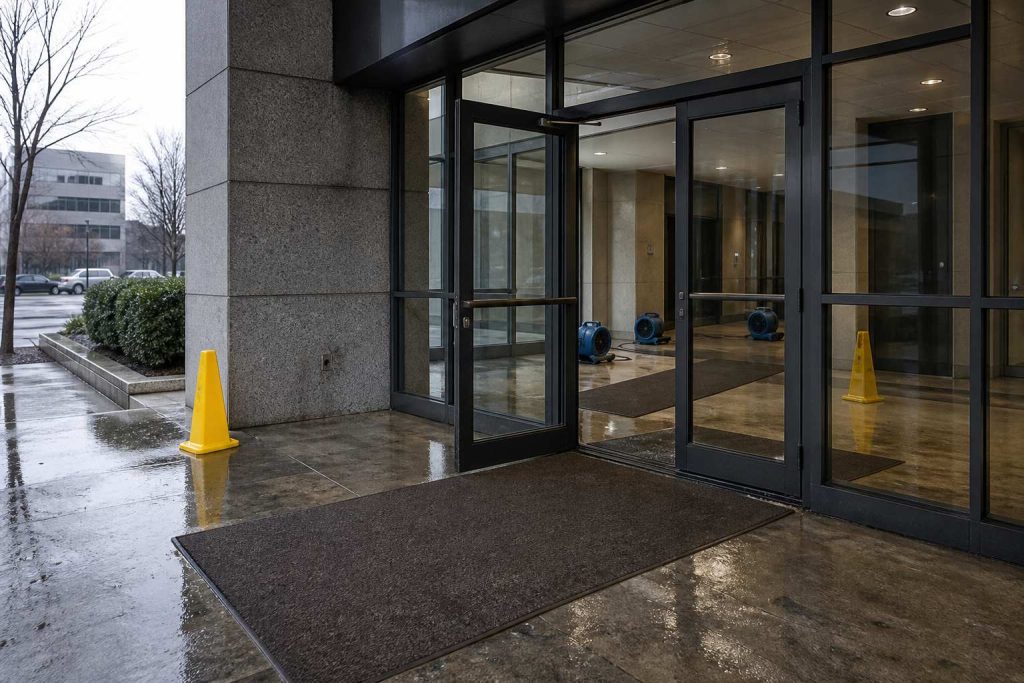
    Three differences that change your entire sales motion.

    Volume per relationship. A plumber partnership might send you twenty leads a year. A mid-size residential PM with 500 doors can produce forty to eighty losses per year at typical event rates (water losses, sewer backups, appliance failures, small fires, mold complaints, tenant-caused damage). One signed vendor agreement = dozens of dispatchable events.

    Administrative gate before the sales conversation. Plumbers call you because they like you. Property managers can’t call you — legally or operationally — until you’ve cleared their vendor compliance gate. COI with the PM named as additional insured, W-9, trade licenses, references, sometimes background check results, sometimes bonding. You have to pass the gate before you ever get a dispatch.

    Speed is scored more harshly. A tenant at 11pm with water pouring through the ceiling is a crisis the PM has to solve inside two hours or the tenant is calling the owner, the owner is calling the PM’s broker, and the broker is asking why they pay for professional management. Your twenty-four-seven phone answer and your forty-five-minute on-site response time is the whole product.

    Pricing has to be flat-rate or rate-sheet. PMs can’t tolerate variable pricing on dispatch. They need to know before they assign the ticket that a standard water mitigation call is $X, a sewage call is $Y, a small fire board-up is $Z. You need to hand them a rate sheet on day one or you will never close the vendor agreement.

    The tenant is not the customer. The owner is the customer. The PM is the gatekeeper. The tenant is the occupant. Your invoice goes to the PM, gets paid by the PM from the owner’s maintenance reserve, and gets marked up by the PM to the owner. Every piece of communication has to keep that hierarchy straight.


    The Seven Restoration-Discovery Events on a Property Manager Portfolio
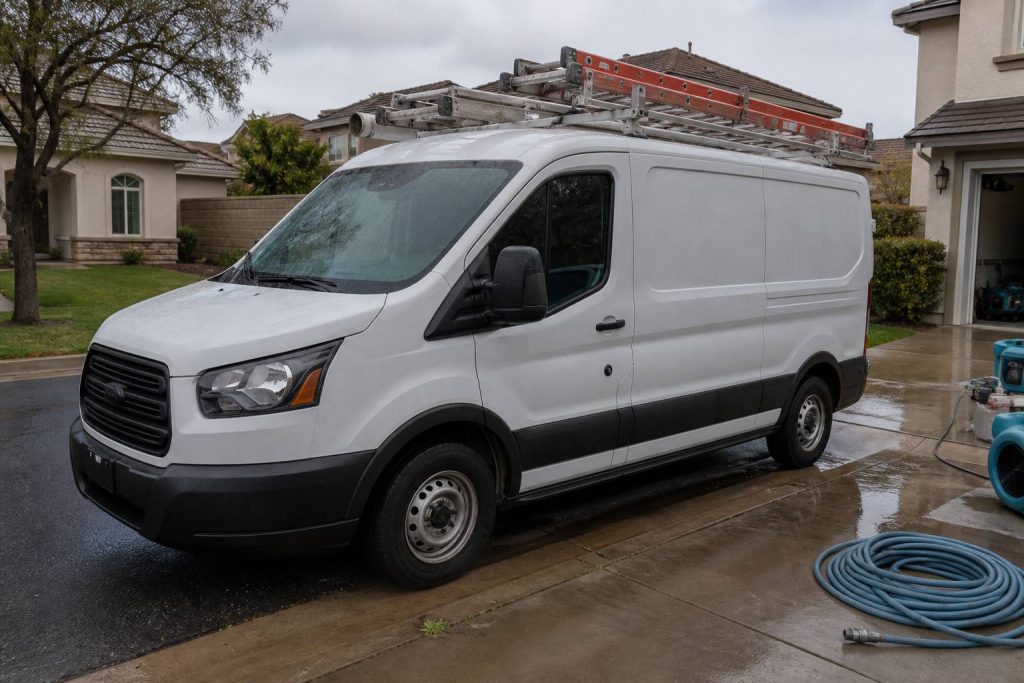
    On any residential PM portfolio of 200+ doors, these seven events happen with predictable frequency.

    Event 1: Tenant-caused water loss. Overflowed bathtub, left a sink running, toilet overflow the tenant didn’t stop. Dispatch comes in through the tenant portal or the after-hours line. This is the highest-frequency event on most residential portfolios — typically 0.5 to 1.0 events per door per year across the portfolio average.

    Event 2: Supply-line or appliance failure. Washing machine hose, refrigerator water line, water heater burst, toilet supply line, dishwasher leak. Often after-hours. Every portfolio sees a handful per year per 100 doors.

    Event 3: Sewer backup. Lower-level units and basement apartments produce chronic sewer backups. These are biohazard scopes with specific containment and pricing requirements. PMs need a vendor who doesn’t refuse Cat 3 work.

    Event 4: Small kitchen fire. Unattended cooking, electrical faults. Small-scope damage to one or two rooms. Fast board-up, odor neutralization, smoke decontamination. Frequency is low but per-event revenue is higher than water losses.

    Event 5: Mold complaint. Tenant reports musty smell, visible mold, health complaint. PM is legally and operationally obligated to respond — this is a landlord-tenant habitability issue in most states. Inspection, containment, remediation, clearance. These events are high-risk and high-frequency in older buildings and in humid climates.

    Event 6: Turn-over discovery. Tenant moves out. Maintenance team walks the unit for turnover and finds hidden water damage, long-term leaks, or mold in closets, vanities, and behind appliances that was concealed by the prior tenant. Mitigation before the repaint-and-re-rent cycle.

    Event 7: Commercial building events. On commercial portfolios: roof leaks, HVAC condensate failures, slab leaks, vehicle impact, vandalism, storm damage. Lower frequency per square foot but much higher dollar per event.

    Train your team on the portfolio-frequency math, not the one-off-event pitch. When you walk into a 400-door portfolio, you’re not asking for a referral — you’re asking to be the vendor for approximately 150 to 300 dispatchable events per year.


    Why Most Restoration-to-PM Partnerships Fail

    The PM channel has the highest administrative and operational bar of any partner industry covered in this series. Here are the six failure modes.

    1. Skipping the vendor compliance process. You cannot shortcut this. No COI, no W-9, no license docs = no dispatch. Companies that try to close a PM relationship with a sales pitch instead of a completed prequal file lose the relationship before it starts.

    2. Slow after-hours response. A PM calls you at 2am about a burst pipe. If you don’t answer with a human voice inside three rings, they’ve called the next vendor on their list. Every after-hours miss is tracked — formally or informally.

    3. Variable, inconsistent pricing. If your invoice for a standard water mit on a 900-square-foot apartment varies by 40 percent from job to job, the PM cannot estimate their owner’s maintenance reserve drawdown. You lose the slot. Flat-rate or rate-sheet pricing is table stakes.

    4. Communication with the tenant that cuts the PM out. The tenant calls you directly at 8am after you set equipment the night before. You answer, make decisions, reschedule — without looping the PM. You’ve just become the PM’s problem. Every tenant communication is copied or summarized to the PM within the same day.

    5. Invoice quality and line-item detail. PMs need invoices they can hand to owners without follow-up questions. Thumbnail photos, before/after documentation, clear scope language, industry-standard line items. Restoration companies that invoice like a residential contractor (“water mitigation — $4,500”) won’t survive thirty days in the dispatch rotation. Xactimate-format invoicing or equivalent documentation is expected.

    6. Markup-friction on the PM’s margin. The PM is marking you up 10 percent to the owner. If you price high, the owner sees a high number after markup and pushes back. If you price low, your margin isn’t enough to defend the response time and documentation quality. You have to price at a level that keeps the PM’s markup intact and the owner’s bill defensible. The sweet spot is priced appropriately, documented cleanly, with photos that justify every line.


    Ten Operational Disciplines for a Property Manager Referral Channel That Works

    If you want to own three PM portfolios in your market with 1,000+ doors combined, run this like an operational program, not a sales campaign.

    1. Complete the vendor prequal file in one package. One PDF. COI with common PMs pre-named as additional insureds (use an ACORD form with an endorsement), W-9, trade licenses, IICRC certs, list of recent references with PM contacts, sample clearance letter, sample mitigation invoice. Hand it over at the first meeting, not after three follow-ups.

    2. Flat-rate and rate-sheet pricing on the first eight scope types. Standard Cat 1 water (one room, two rooms, three rooms). Standard Cat 2 water. Standard Cat 3 (sewage). Small kitchen fire board-up. Mold inspection and test. Mold remediation per square foot. Emergency tarp. Content pack-out per room. Publish it. Hand it to the PM. It becomes their worksheet for owner estimates.

    3. Dedicated PM intake line with 24/7 human answer. Not a call center. A dedicated phone number that rings the on-call PM. Answered inside three rings, twenty-four hours a day. Response-time guarantee in writing: forty-five minutes on-site during business hours, ninety minutes after-hours.

    4. One named account manager per PM client. Same person runs every project for that PM. Attends quarterly reviews. Escalates internally when anything slips. If you’re a growing restoration company, the PM account manager is one of the first hires after the owner stops running every job personally.

    5. Invoice format tuned to the PM’s software. Match their Xactimate or rate-sheet export format. Line-item detail with room-by-room documentation. Photos embedded. Sub-totals that match the order they ship owner invoices.

    6. Documentation package with every job. Scope photos at arrival, dry-down readings, drying log, clearance photos, signed customer authorization, before/after. Delivered as a single PDF inside 48 hours of job completion. This document becomes the PM’s defense to the owner and the file for any insurance claim.

    7. After-hours and weekend premium transparency. If your after-hours rate is 1.15x the standard, put it in the rate sheet. PMs hate surprise surcharges on invoices they’ve already committed to owners.

    8. Tenant-handling protocol in writing. How your techs address tenants. What they can and can’t commit to. How they escalate tenant behavior issues to the PM. When they call the PM before making decisions. Document this and train to it.

    9. Quarterly business review. Hour-long meeting every ninety days. PM’s maintenance director, their COO if mid-sized, your account manager, your owner. Review job count, response times, customer satisfaction, invoice accuracy, outstanding issues. Fix anything that’s slipping before it becomes a lost relationship.

    10. Commercial capability positioned clearly. Many PMs run both residential and commercial books. If you’re commercial-capable, say so explicitly — large-loss response, 24-hour dehumidifier fleet, commercial contents handling, document reconstruction. Most mid-market restoration companies undersell commercial capability and get locked into residential-only dispatch.


    The Two-Way Reciprocity Model for Property Managers

    PM reciprocity looks different from the trades because PMs don’t need you to send them customer leads — they need you to make their portfolio operation cleaner.

    Flow 1: PM → restoration. Dispatch through their software or their maintenance coordinator. You respond inside the committed window, execute to the rate sheet, invoice cleanly. This is the core flow and it produces the bulk of the volume.

    Flow 2: Restoration → PM. When a property owner calls you direct with a rental-property loss and tells you they self-manage or use a PM you don’t know, offer to connect them with your PM partner for ongoing management if they’re dissatisfied with their current arrangement. Most property investors have at least once considered switching PMs. An introduction where appropriate is real currency.

    Flow 3: Commercial broker introductions. If you work with a commercial PM inside a brokerage, be the reference when their prospect asks “who handles emergencies on your portfolio?” Your name as a named emergency vendor on multiple portfolios in their brokerage makes their pitch stronger.

    Flow 4: Joint tenant-education content. Co-branded one-pagers for tenant move-in packets — “what to do in a water emergency,” “early signs of mold,” “when to call your property manager.” Tenant gets educated, PM looks professional, you get named when an event happens. Print these at your cost and ship boxes to the PM’s office. You become the partner who solved a problem they didn’t know how to solve.

    Track everything in a shared ledger. The PM is a business relationship, not a friendship, and they expect numbers.


    The Ninety-Day Property Manager Partnership Program
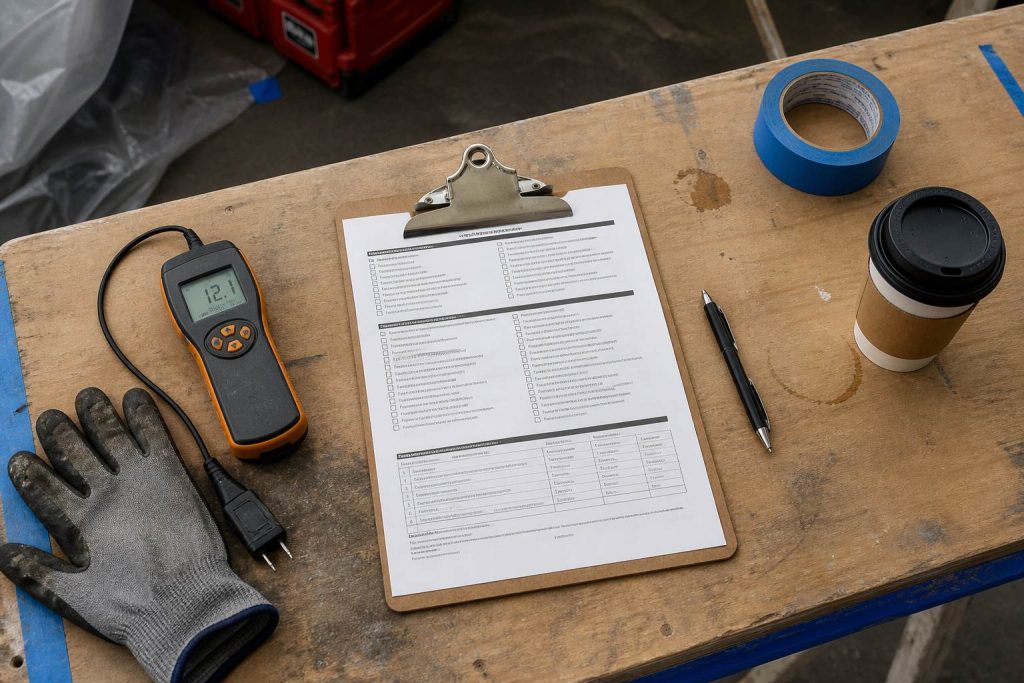
    Week 1: Target selection. Identify the three to five mid-sized residential PMs in your market in the 200–1,000 door range, plus one to two commercial PMs inside larger brokerages. Avoid sub-50-door PMs (volume too thin) and mega-national PMs (procurement cycle too long) on the first pass.

    Week 2: Prequal file assembly. Assemble the full PDF package before you contact anyone. COI template, W-9, licenses, IICRC certs, references, rate sheet, sample documentation package. Have your GL insurance agent draft ACORD endorsements with additional-insured language ready to issue within an hour.

    Week 3: Cold outreach to the maintenance director. Not the broker, not the owner. The maintenance director or maintenance coordinator. They’re the one who controls the dispatch dropdown. Short email: “We’re a restoration company in [market]. Here’s our full prequal file and rate sheet. Fifteen minutes to discuss how we can sit on your emergency vendor list.” Attach the PDF.

    Week 4: First meeting. Bring the rate sheet, response-time commitment in writing, sample documentation package, and a blank vendor-agreement template you’ve used with other PMs. Ask them to walk you through their software dispatch workflow. Ask what their current vendor’s response time actually averages.

    Week 5: Vendor agreement signed and loaded into their software. Your company name, phone number, service categories, and rate-sheet link get loaded into AppFolio, Buildium, or whichever software they use. You are now dispatchable.

    Week 6: First dispatch. Answer it inside three rings. Be on site inside the committed window. Execute cleanly. Deliver the documentation package inside 48 hours. This is the whole program — every dispatch after the first validates or erodes the first impression.

    Week 7: Debrief with maintenance director. Short call after the first job. What worked? What do they want different next time? Update your protocol.

    Week 8: Tenant-education materials deployed. Co-branded one-pagers shipped to their office for tenant move-in packets.

    Week 9: Commercial introduction. If they run both books, ask to be added to the commercial dispatch list. Rate sheet for commercial scopes is a separate document.

    Week 10: Second PM opened. Repeat the program. Two to four PMs per market is the sustainable max.

    Week 11: Quarterly business review cadence set. Recurring ninety-day meeting calendared out for the next twelve months.

    Week 12: Co-branded owner-facing content. An article or one-pager for PM-owner communications: “How your property manager handles water emergencies.” Lives on both websites. Signals durability.

    By day ninety, you should have two PMs running steady dispatch, a response-time track record, documentation that survives owner scrutiny, and the foundation to expand into two more PMs in quarter two.


    Where to Start This Week

    1. Build the prequal file PDF before you call anyone.
    2. Draft your rate sheet for the eight standard scopes. Have it reviewed by your controller.
    3. Pick the three mid-size residential PMs in your service area with strong review profiles and stable door counts.
    4. Get your insurance agent to produce a blanket additional-insured endorsement so you can add PMs to your COI in under an hour.
    5. Set up the dedicated 24/7 PM intake number and test the phone tree.
    6. Decide which account manager owns PM accounts.
    7. Book the first maintenance director meeting.

    If you’re stuck on target selection, default to the PM with the largest commercial book — their per-event dollar values are three to ten times higher than residential.


    Where This Article Fits in the Larger Playbook

    This is the seventh article in The Restoration Operator’s Playbook partner-industries series. It extends the thinking in the observational B2B referral plan, the commercial-channel discipline from the facility services partnership, and the scope-lane hygiene from the general contractor partnership. The response-time standards in this article are a practical application of marketing signals beyond lead count. For the earlier partner industries that feed discovery into PM-managed properties, see plumbers, HVAC, carpet cleaners, and pest control.

    Next in the queue: adjusters, realtors, pool/spa service, roofers, appliance installers. Same research-first, operational-truth, ninety-day-program treatment.


    Frequently Asked Questions

    What’s the minimum door count to justify a full PM partnership program?
    About 150 doors is the break-even for residential. Below that, your program overhead (prequal, intake, account management, QBR cadence) costs more than the dispatch volume produces. The sweet spot is 300–1,500 doors where the owner or COO still makes vendor decisions personally. Commercial portfolios can be justified at lower unit counts because per-event dollar values are higher.

    How do I handle situations where the tenant wants to call me directly instead of going through the PM?
    Set the protocol in writing on day one. Every tenant communication gets summarized to the PM within the same business day, and no commitments (cost, schedule, scope changes) get made to the tenant without PM sign-off. If the tenant insists on direct billing, you decline and route them back to the PM. Breaking this protocol is the fastest way to lose a PM slot permanently.

    Can I run variable pricing on PM work, or do I really have to commit to a rate sheet?
    You can run variable pricing on complex out-of-scope work, but the rate sheet has to cover the eight to ten most common event types with flat or unit pricing. PMs need pricing they can quote to owners before you arrive. A rate sheet also distinguishes you from restoration companies who price “at market” and whose invoices the PM has to negotiate line-by-line with the owner every time.

    What’s a fair markup for PMs to apply to my invoice?
    The industry standard is 5–15 percent on vendor invoices passed through to owners, depending on whether it’s bundled into the monthly management fee or listed separately. You don’t have to love the markup — it’s their business model. Your price has to be low enough that the post-markup number is defensible to the owner, and high enough that you can deliver response-time and documentation standards the cheap competition can’t.

    Should I pay a referral fee to the PM?
    Almost never. Most states restrict referral fees on insurance work, and PMs generally don’t want them on direct-pay work either — they have a fiduciary duty to the property owner, and a vendor referral fee can look like a kickback. The incentive structure they want is service quality and documentation that makes them look good to owners, not cash payments. Spending referral fee budget on faster response, better documentation, and tenant-education materials is always the better trade.

    How is this different from an insurance preferred-vendor program?
    An insurance preferred-vendor program (TPA, managed-repair network, carrier direct assignment) is a national procurement relationship with fixed pricing, defined SLAs, and margin compression to win volume. A property manager partnership is a local business-to-business relationship with negotiable pricing, real response-time leverage, and owner-level margin protection. Both are valuable. The PM partnership is usually the higher-margin and higher-relationship-value side of your book, while the insurance preferred-vendor path is the higher-volume side. Most mature restoration companies run both.
  • Selling Into Cintas, Aramark, and the Facility Services Vendors: The Commercial Door Most Restoration Companies Never Walk Through

    Selling Into Cintas, Aramark, and the Facility Services Vendors: The Commercial Door Most Restoration Companies Never Walk Through

    How does a restoration company build referral flow from Cintas, Aramark, and the facility services vendors? By understanding that route sales reps are inside every commercial building in the service area every week, they personally know every property manager and facilities lead, and they are the single most underused referral source in the restoration industry. The relationship is built not through corporate contracts but at the route-rep level — local, personal, and reciprocal. A restoration company that treats Cintas and Aramark route reps as trusted business peers rather than corporate gatekeepers, offers them something genuinely useful, and invests in the relationship quarterly, captures commercial mitigation referral flow that no competitor is even trying for.


    The first two articles in this partnership series covered plumbers and HVAC contractors — the obvious trade-partner categories every restoration company knows they should be working. This article covers the category almost nobody in restoration is working: the facility-services route vendors. Cintas. Aramark. UniFirst. The uniform-rental and mat-and-restroom-supply companies that are inside every commercial building in your service area every week.

    If you have never thought of these companies as referral partners, you are not alone. Most restoration companies have not. That is precisely why the channel is so valuable — a disciplined restoration operator who builds real relationships with route sales reps at Cintas, Aramark, and the regional facility-services vendors has access to commercial mitigation lead flow that competitors cannot even see, let alone reach.

    This is the third article in the Partner Industries series. It is structurally different from the plumber and HVAC playbooks because the relationship mechanics are fundamentally different. Route reps are not tradespeople. They are commercial sales professionals with deep, established relationships at every building they visit. Understanding how their business actually works — and what they value from the restoration industry — unlocks the channel.

    What Cintas and the Facility Services Vendors Actually Do

    Start with what Cintas, the category leader, does. Cintas generated $10.34 billion in fiscal 2025 revenue across four business lines that matter to any restoration operator paying attention.

    The Uniform Rental and Facility Services segment — roughly $8.3 billion or 78.5 percent of total revenue in 2025 — is the weekly-route business. Route sales representatives visit every client location on a regular schedule (typically weekly for large accounts), pick up soiled uniforms, deliver clean ones, restock floor mats, replenish restroom supplies (soap, paper towels, toilet tissue, air fresheners, hand sanitizer), service mop dispensers, and refresh anything else the building needs. The relationship is structurally recurring, contract-based, and retention-focused.

    The First Aid and Safety segment — roughly 15 percent of 2025 revenue — is a van-based replenishment model. A different rep on a different schedule inspects and restocks on-site first aid kits, eye wash stations, defibrillators, and safety gear. Mandatory compliance inspections and equipment maintenance drive this business. Margins are high.

    The Fire Protection Services segment covers extinguishers, fire systems, testing, and compliance. OSHA and jurisdictional requirements make this non-discretionary for commercial properties.

    The Uniform Direct Sales segment covers one-time uniform purchases rather than rentals.

    The company serves more than one million businesses across the United States, Canada, and Latin America. In March 2026, Cintas announced the acquisition of UniFirst for $5.5 billion, consolidating the two largest North American players in a mega-merger that reshapes the competitive landscape.

    Aramark is structurally similar but with a broader services mix. Food and facilities services. $18.9 billion in fiscal 2023 revenue. Top-two position for food and facilities services in North America.

    Regional facility services vendors fill in around the nationals — smaller, independently owned route businesses that serve specific geographies and often have deeper relationships at smaller local accounts than the nationals do.

    What all of them share is the route-based model. Reps driving scheduled routes. Weekly or bi-weekly touches at each client. Physical presence inside the building. Relationships with facilities teams, property managers, and operations staff that the national chains’ corporate sales teams do not and cannot replicate.

    That route rep, walking the building every week, is the most valuable person in the restoration industry that you are not talking to.

    Why the Route Rep Is the Asset

    Every restoration company that chases commercial work through corporate channels — property management firms, facility management companies, national accounts — is working the same list every competitor is working. Those channels are saturated, bid-driven, and relationship-poor.

    The route rep is the opposite. They are inside the building. They greet the facilities coordinator by name. They know where the mop closet is, who handles after-hours maintenance calls, where the mechanical room access is, and which tenant always has the leaky fixtures. They see the mold blooming on the HVAC grille before the building owner has any idea. They hear about the recent roof leak from the maintenance tech while restocking the restroom.

    And they are routinely asked: “Hey, do you know someone who could help with this?”

    When someone in the building has a water loss, a mold concern, an odor problem, a biohazard cleanup need, or a construction-moisture situation, the route rep is often the first person on the premises with outside business contacts. If they have a restoration company they trust, that is the company that gets the call.

    The referral path is not corporate. It is personal, direct, and happens in real time in a hallway conversation. The restoration companies that win this channel are not the ones with the slickest national accounts pitch — they are the ones where a Cintas route rep in suburban Dallas saved the number of a specific restoration project manager to their phone eighteen months ago, and calls that person directly when a property manager asks them for help.

    How Route Reps Actually Operate

    To earn the route rep referral, you have to understand their day and what they care about.

    The route is structured around relationship-building. Cintas route service sales representatives are assigned specific routes and customers deliberately to build rapport over time. The job description emphasizes this explicitly — relationship-building is not a soft skill, it is the core professional responsibility. Reps develop ongoing connections with the same accounts visit after visit, year after year.

    The workday is long and physical. A typical route rep workday is ten hours, often four days a week with no weekends or holidays. They cover multiple accounts per day, manage their own truck, physically handle uniforms and supplies, and talk to people at every stop. By the end of the day they are tired, hungry, and ready to be done.

    Compensation is tied to account retention and penetration. The rep’s pay structure rewards both keeping existing accounts (retention) and expanding what each account buys (penetration — getting a uniform-only customer to add mats, restroom supplies, first aid, fire services, or additional categories). Cross-selling inside existing accounts is a major growth lever for both the company and the rep personally, and is structurally cheaper than winning new logos. A rep who can identify an account that needs a restoration company and make the warm introduction is doing a version of the same value-adding work — but the upside accrues to the restoration company, not directly to the rep.

    Most of the value a route rep delivers is not the product — it is the presence. Products are commoditized. Uniforms, mats, and soap dispensers are available from a dozen vendors. What Cintas and its competitors sell is the structured, reliable, relationship-rich service routine that makes the facilities team’s life easier. That service-quality signal is what the rep is protecting on every visit.

    Understanding this is the foundation of everything that follows. The rep is not a commodity-goods driver. They are a trusted, compensated, relationship-oriented commercial operator with dozens of commercial account relationships stacked into a single daily route.

    Why Route Reps Are Almost Never Approached by Restoration Companies

    This is the strangest thing about the channel — it is structurally open, and nobody is working it.

    The reasons:

    Most restoration operators do not know what route reps do. The industry’s own literature rarely mentions Cintas or Aramark as referral sources. The trade association conversations are dominated by plumber, HVAC, insurance, and property-manager channels. Route vendors are invisible in the restoration operator’s mental model.

    When restoration companies do think of Cintas, they think corporately. They try to cold-call the national accounts desk or target regional Cintas managers, searching for a master vendor agreement. That approach misfires because there is no master agreement to win. Cintas is not going to endorse a restoration company corporately. The value is at the local route level, one rep at a time.

    Restoration companies underestimate the rep. The industry treats route reps as vendors rather than peers. They address them as drivers rather than commercial sales professionals. The route rep notices. They are not hostile to restoration companies; they are just not being treated as valuable the way they are. So they ignore the restoration industry and refer jobs to friends, relatives, and people who walked into their orbit by accident.

    The reciprocity is invisible. A Cintas rep who refers a restoration company into a client building is exposing their own reputation to a vendor they barely know. If the restoration company fails on the job, the rep’s account relationship is damaged. Most restoration companies have not established the trust necessary for a rep to take that risk, and most have not offered the rep anything in return.

    The opportunity: the channel is open because almost nobody is working it. A restoration company that works it well has effectively no competition inside the channel.

    The Building Map the Route Rep Carries

    A Cintas or Aramark route rep in an average service area is inside somewhere between 100 and 300 commercial properties per week — office buildings, medical facilities, manufacturing, retail, restaurants, schools, municipal buildings, light industrial, warehouses, and more. Every one of those is a potential restoration client.

    Breaking it down for perspective: a single route rep, over the course of a year, has more than 15,000 face-to-face commercial touches inside buildings the restoration company would otherwise have to cold-call to reach. Every one of those touches is an opportunity to notice a moisture issue, a mold concern, a biohazard situation, a post-construction cleanup need, or a water event — and to make a warm referral.

    The math: a restoration company that earns the trust of five Cintas route reps in its service area has, effectively, embedded relationship eyes inside 500 to 1,500 commercial buildings. That is a commercial pipeline that paid marketing cannot replicate at any budget.

    What to Offer a Route Rep

    This is where most restoration companies mis-step. They walk into the relationship with a gift card offer — a small transactional inducement — and treat the rep like an Uber driver. That approach fails. Route reps are commercial professionals with substantial account responsibilities. A Starbucks gift card is not the hook.

    What actually works:

    A named, direct restoration contact they can use. Not a general sales line. A named project manager at the restoration company, with a cell number, who will answer the phone personally when the rep calls. Saved in the rep’s contacts. Ready to be used anytime the rep runs into a facility issue at one of their accounts. The ability to make the rep look good in front of a property manager — fast, professional, credentialed — is the single most valuable thing a restoration company can offer.

    Genuine respect and peer recognition. Treat the route rep as a commercial sales peer. Ask about their route. Learn the properties they service. Understand what is working well in their business and what is frustrating. Buy them lunch every quarter and talk about business like colleagues. This is the way to build the trust that unlocks the referral flow.

    Complementary services that make their customers stickier. Many of the accounts a route rep serves have occasional restoration needs that, if handled well, increase the overall satisfaction of the account and make the rep’s customer retention easier. A rep whose account’s water loss was handled fast and cleanly by a referred restoration company sees their own retention-driving discipline rewarded. A rep whose referred restoration company embarrassed them loses the account.

    Reciprocal referrals when appropriate. Restoration jobs frequently identify commercial accounts that need upgraded facility services, first aid program review, fire extinguisher compliance, or uniform services. When that is the case, introduce those opportunities back to the Cintas or Aramark rep. The reciprocity is the glue. A Cintas route rep who has received three warm leads from a restoration company is dramatically more likely to send the restoration company a commercial mitigation opportunity the next time one appears.

    Co-branded educational content. A simple one-page “What to Do if Your Building Has a Water Loss” handout the route rep can leave with a property manager, branded with both the Cintas rep’s card and the restoration company’s info, positions the rep as a value-added advisor and keeps the restoration company top-of-mind. Reps love giving value to their accounts. Make it easy.

    A simple lead-reporting feedback loop. When the rep sends the restoration company a lead, the restoration company reports back within 48 hours on status — “reached the property manager, scheduled a site visit for Tuesday” — and updates the rep at key milestones. The rep hears nothing from most referral relationships they make. A restoration company that closes the loop stands out profoundly.

    A fair financial recognition. A clean referral fee — market norms are typically $250 to $500 per commercial lead that closes to a job, or a revenue-share arrangement on larger commercial accounts. Paid within 30 days of restoration payment received, always, with a specific note. As in every other partnership category, the on-time, every-time payment discipline is what distinguishes trusted partners from burned ones.

    Why Most Restoration-Route Rep Relationships Never Happen

    Almost all of them never happen at all. The few that do and fail usually fail for the same reasons.

    No initial in. Restoration companies have no natural entry point to meet a Cintas route rep. The rep is not at the restoration trade associations. The rep is not at the construction networking events. The restoration operator has to be intentional about finding them.

    Misunderstanding the relationship level. Trying to pitch the rep like they are a prospect — powerpoints, proposals, capability decks — kills the relationship instantly. This is a peer-to-peer commercial relationship, not a vendor-pitch relationship.

    One-and-done visits. A single coffee meeting does not build a referral relationship. Quarterly presence, repeated, over 12 to 24 months, is what builds it. Most restoration companies give up after the first visit when no referral immediately materializes.

    Slow response when the referral comes. A route rep who hands a restoration company an opportunity expects the restoration operator to be on the phone with the property manager within an hour. If the restoration company takes a day, the rep never refers again.

    Dropping the rep after the first conversion. Once a commercial account converts, some restoration companies forget the rep. The rep notices. The next referral goes somewhere else.

    The Entry Points

    Where to actually find route reps and start the relationship.

    In the buildings where you are already working. Ask the property manager or facilities lead which facility services vendors they use. Ask them if they would introduce you to the route rep next time they are on site. Most will. You then time a visit to the job to coincide with the rep’s scheduled stop.

    At industry breakfasts and commercial networking events. BOMA, IFMA, and local facility management chapters almost always include facility services vendors as associate members. Route reps are occasionally present, their sales managers more so. Work the channel through the sales manager first, who can introduce you to the right reps.

    Through LinkedIn and direct outreach. Cintas and Aramark route reps are identifiable on LinkedIn. A respectful message acknowledging you do restoration work in their service area, appreciating what they do, and asking for a 20-minute coffee conversation about how you might help each other occasionally produces the first meeting.

    Through your own commercial restoration jobs. When you are working in a building Cintas or Aramark services, the rep will eventually be on site. Introduce yourself. Offer a brief conversation. Ask for a card.

    Through deliberate association with the route-rep’s sales manager. Every Cintas and Aramark market has a sales manager or district manager overseeing 8 to 20 route reps. Meeting the sales manager once and gaining their endorsement opens doors to the individual reps far faster than cold outreach.

    The Ninety-Day Route Rep Program

    A disciplined route-rep partnership program, adapted for this channel.

    Weeks 1-2. Identify the Cintas, Aramark, UniFirst, and major regional facility-services branches in the service area. Get the sales manager names for each. Map your own commercial accounts that are likely serviced by these vendors.

    Weeks 3-4. Reach out to the sales managers at the top 3 vendors. Request a 20-minute meeting. Present the restoration company as a trusted commercial partner their route reps can refer to with confidence. Ask for introductions to the reps covering key service-area zip codes.

    Weeks 5-8. Meet the first 5 reps individually. Buy lunch. Listen, observe, ask about their route. Offer named contact, co-branded building handout, response commitment, and referral fee structure.

    Weeks 9-12. Execute on any referrals that come in with white-glove discipline. Close the feedback loop on every lead, every time. Visit quarterly with genuine interest in the rep’s business.

    Day 90. Review the results. Expand to additional reps. Begin building at Aramark and regional vendors.

    A restoration company that runs this program with discipline for 24 months has commercial referral infrastructure no competitor can replicate at any marketing budget.

    The Compounding Math

    Consider the math at scale. A single Cintas route rep, producing two commercial mitigation referrals per year, averaging $15,000 per job — that is $30,000 of pipeline from one rep per year. Five reps is $150,000. Ten reps is $300,000. And the cost of the program is effectively quarterly lunches, referral fees paid only on closed jobs, and the disciplined relationship work itself.

    The compounding effect is sharper than almost any other channel. Referrals from route reps tend to convert at exceptionally high rates (60 percent and above), because the reference is already inside the building and trusted. Close rates on these leads dwarf paid channels by 5x to 10x. Customer lifetime value is high because the commercial account, once converted, often produces additional work.

    The question is not whether the channel is valuable. The question is whether the restoration company has the discipline to do the quiet, unglamorous, relationship-intensive work that opens it.

    Where This Pairs With the Rest of the Stack

    The route-rep channel sits inside the observational B2B plan — audit your AP, walk your commercial buildings — but deserves its own category because of the distinct operational model. It pairs with the plumber playbook and the HVAC playbook as the three highest-yield commercial referral categories most restoration companies underinvest in. It reinforces the owner-as-rainmaker discipline because senior-level relationships with Cintas sales managers open downstream rep relationships faster. And it shows up in the measurement framework as a tracked B2B partnership segment — partner count, recency, bidirectional flow, revenue produced.

    Where to Start

    This week: identify the Cintas sales manager for your service area. Send a short, respectful email. Request a 20-minute introduction. Bring coffee.

    That single conversation opens access to 8 to 20 route reps, each of whom is inside 100 to 300 commercial buildings per week. The entire channel cascade starts with one introduction.

    The next article in this series covers carpet cleaners — a partner category where the operational overlap is tighter than plumbing or HVAC, where scope conflict is a real risk, and where the right relationship produces a flow of residential and commercial mitigation work that most restoration companies are leaving on the table.


    Frequently Asked Questions

    Why should restoration companies build relationships with Cintas and Aramark route reps?
    Because route reps are inside 100 to 300 commercial buildings per week in a typical service area, know every facilities manager personally, and are routinely asked for restoration recommendations in real-time hallway conversations. They are the single most underused commercial referral source in the restoration industry — structurally open to the disciplined operator and virtually untouched by the typical restoration competitor.

    Does this channel require a corporate agreement with Cintas or Aramark?
    No. The relationship is built locally, rep by rep, through the local sales manager. There is no master vendor agreement to win at the corporate level. Corporate endorsement is not how the referrals happen — individual route reps make warm referrals to restoration companies they personally trust.

    What should a restoration company actually offer a route rep?
    A named direct contact who answers the phone personally, genuine respect and peer recognition, co-branded building handouts, reciprocal warm referrals when restoration jobs identify facility-service opportunities, a fair referral fee paid on time, and a simple feedback loop that tells the rep what happened with the lead. The single most valuable offer is the ability to make the rep look good to their account.

    What referral fee is standard for route-rep commercial leads?
    Typical market norms are $250 to $500 per commercial lead that closes, sometimes higher for larger commercial accounts. Revenue-share arrangements are occasionally appropriate for introductions that lead to substantial ongoing commercial relationships. The amount matters less than on-time, every-time payment discipline — the same rule as every other partnership category.

    How is the route-rep channel different from working with property management companies directly?
    Property management channels are saturated, bid-driven, and relationship-poor — every competitor is working them. Route-rep channels are relationship-rich, completely underutilized by restoration competitors, and produce warm referrals from inside buildings where the rep is already trusted. The two channels complement each other, but the route-rep path is the one where competitive advantage compounds because most operators ignore it.

    How long does it take to build meaningful referral flow from route reps?
    Typically 12 to 24 months of consistent quarterly engagement with a small number of reps, with white-glove execution on every referral that comes in. The flow builds slowly at first, then compounds as the reps become confident in the restoration partner’s reliability. Most restoration companies give up in month 3 or 4, which is why the channel remains open.

    Can this strategy work with regional facility-services vendors as well as Cintas and Aramark?
    Yes, often better. Regional vendors typically have deeper local relationships, fewer corporate barriers, and more autonomous reps. The combination of a few key Cintas reps plus the top regional facility-services vendor in the market produces the strongest possible coverage of commercial buildings in the service area.


    Tygart Media on restoration — an analyst-operator body of work on the systems that separate compounding restoration companies from busy ones. No client names. No brand placements. Just the operating standard.


  • The $0 SEO Value Problem: What Invisibility Actually Costs Restoration Contractors

    The $0 SEO Value Problem: What Invisibility Actually Costs Restoration Contractors

    There’s a restoration company in Tacoma, Washington called All American Restoration Services. Four and a half stars. Thirty-seven Google reviews. Full mitigation and rebuild capability. Locally owned, with the kind of reputation that takes years to earn.

    Their SpyFu profile shows six tracked keywords, zero estimated monthly clicks, and $0 in monthly SEO value. DataForSEO has no data on them at all — they don’t register.

    They are, from a search engine’s perspective, completely invisible.

    This is not unusual. It is, in fact, the default state for most restoration contractors in most markets. And the cost of that invisibility is not abstract.

    What $0 SEO Value Actually Means in Dollars

    SEO value — the metric SpyFu and similar tools report — is an estimate of what a site’s organic traffic would cost if purchased through Google Ads. A site with $31,000 in monthly SEO value is receiving traffic that would cost $31,000 per month to replicate with paid search.

    When that number is $0, it means the site is generating no measurable organic traffic for any keyword anyone is actually searching.

    In the restoration industry, the keywords people search are high-intent and high-value. Someone searching “water damage restoration Tacoma” is not browsing. They have standing water in their house. They are going to call someone in the next fifteen minutes. The average water damage restoration job runs $3,836. Significant losses start at $15,000. The searches that drive those calls are worth real money — and right now, those calls are going to someone else.

    The math is uncomfortable. If a restoration company’s invisibility costs them even five jobs per month — conservative for a market the size of Tacoma — that’s $19,000 to $75,000 in monthly revenue that’s routing to a competitor who ranked higher. Not because that competitor does better work. Because their website exists, from Google’s perspective, and yours doesn’t.

    Why Good Restoration Companies End Up Invisible

    All American Restoration is not an anomaly. When you run DataForSEO and SpyFu against restoration contractors in most mid-size markets, the pattern repeats: strong reputation, strong reviews, zero search presence.

    It happens for a predictable set of reasons.

    Restoration companies grow on referrals. Insurance adjusters, plumbers, property managers — the first decade of a restoration business is built on relationships, not search. By the time the referral network matures, the business is busy enough that digital marketing feels optional. The website becomes a brochure, not an acquisition channel.

    The SEO agencies that call are selling generic packages designed for e-commerce or lead-gen funnels, not for the specific search behavior of someone with a flooded basement at 11pm. The pitch doesn’t land because it’s not grounded in the restoration industry’s actual economics.

    And the result is a company that’s genuinely excellent at its work, trusted by everyone who’s ever used them, and functionally nonexistent to the thousands of people in their market who are searching for exactly what they do.

    The Relative Improvement Problem

    Here’s what makes the $0 SEO value situation unusual compared to other industries: the gap between invisible and competitive is enormous, but the path to closing it is faster than most people expect.

    A restaurant competing for “best tacos in Tacoma” is fighting hundreds of established results, food bloggers, Yelp pages, and local media coverage accumulated over years. The field is crowded and the domain authority gap is steep.

    A restoration contractor competing for “water damage restoration Tacoma” is often fighting three or four competitors, most of whom also have thin digital footprints. The bar is low. Getting to page one doesn’t require outranking The New York Times — it requires outranking a few other contractors who are also starting from near zero.

    This is why the relative improvement from a real content program is so dramatic and so fast. Upper Restoration went from $0 to over $31,000 in monthly SEO value. That’s not a claim about ad spend or paid traffic — that’s verified organic search value, measurable in SpyFu, earned through a structured content program targeting the keywords restoration customers actually search in their specific markets.

    What Closing the Gap Looks Like

    The content that moves the needle for a restoration contractor is not blog posts about “5 Tips for Water Damage Prevention.” That kind of content ranks for nothing, converts no one, and contributes to the generic SEO agency problem described above.

    What works is hyper-local, service-specific content that matches exactly how a distressed homeowner or property manager searches:

    • Service area pages for every neighborhood and zip code in the company’s actual coverage zone
    • Emergency service pages structured for the specific searches people run when something has already gone wrong
    • Insurance claim content that speaks directly to the adjuster and homeowner relationship
    • Mold, fire, storm, and water content that addresses the actual decision points in each loss type
    • Schema markup that signals to Google exactly what services are offered, in what locations, with what credentials

    The volume matters too. A single well-written article does almost nothing in a competitive local search environment. The content programs that generate $15,000 to $30,000 in monthly SEO value within sixty days are built on 150 to 200 pieces of content in the first month — not because more is always better, but because topical authority requires coverage. Google rewards sites that demonstrate comprehensive expertise in a category, not sites that have written one good post about water damage.

    The SpyFu Dashboard Conversation

    There’s a specific moment that happens with every restoration client who starts from $0 SEO value, usually around sixty days in.

    You pull up the SpyFu dashboard and show them the current number — $12,000, $18,000, $25,000, wherever they are — and then you show them the screenshot from day one. The one that says $0.

    The conversation changes at that point. They’re no longer thinking about whether SEO works. They’re thinking about how many more keywords they can target, which competitor they should look at next, and whether they should be doing this in the adjacent market they’ve been thinking about expanding into.

    That’s the actual product. Not the content, not the rankings — the clarity. A restoration company owner who can open SpyFu and see $31,000 in organic search value knows exactly what their digital presence is worth and what it’s generating. The $0 problem isn’t just a marketing problem. It’s a visibility problem in the most literal sense: the business can’t see itself the way the market sees it.

    All American Restoration does excellent work. Their reviews say so. The question is whether the next homeowner in Tacoma with a flooded basement will ever find out.


    Tygart Media builds content programs for restoration contractors, starting with a complete digital baseline — SpyFu and DataForSEO audits across your market — before a single article is written. If your company shows $0 in SEO value, that’s not a criticism. It’s the starting line.

    {
    “@context”: “https://schema.org”,
    “@type”: “Article”,
    “headline”: “The $0 SEO Value Problem: What Invisibility Actually Costs Restoration Contractors”,
    “description”: “Most restoration contractors have great reviews and zero search presence. Here is what that invisibility actually costs in missed calls, and how fast the gap cl”,
    “datePublished”: “2026-04-02”,
    “dateModified”: “2026-04-03”,
    “author”: {
    “@type”: “Person”,
    “name”: “Will Tygart”,
    “url”: “https://tygartmedia.com/about”
    },
    “publisher”: {
    “@type”: “Organization”,
    “name”: “Tygart Media”,
    “url”: “https://tygartmedia.com”,
    “logo”: {
    “@type”: “ImageObject”,
    “url”: “https://tygartmedia.com/wp-content/uploads/tygart-media-logo.png”
    }
    },
    “mainEntityOfPage”: {
    “@type”: “WebPage”,
    “@id”: “https://tygartmedia.com/zero-seo-value-restoration-contractors/”
    }
    }

  • Commercial Compliance as a Loss Leader: How Restoration Contractors Own the Relationship

    Commercial Compliance as a Loss Leader: How Restoration Contractors Own the Relationship

    The Machine Room · Under the Hood

    There’s a property manager sitting in a strip mall office right now, managing twelve tenants, a leaky roof drain, and a fire marshal inspection that’s six months overdue. She’s not looking for a restoration company. She won’t think about a restoration company until something goes very wrong.

    That’s the problem — and the opportunity.

    The restoration industry runs almost entirely on reactive marketing. Someone floods, someone calls. Someone burns, someone calls. You’re competing for the call after the loss, against every other company who’s also competing for the call after the loss, on Google, on insurance panels, on word of mouth.

    But the property manager who authorizes a $50,000 emergency restoration job is the same person who buys fire extinguisher inspections, carpet cleaning, and exit light testing. She buys these things regularly, on a schedule, for cash — no insurance middleman, no adjuster, no TPA approval process.

    Get in her building with a $100/month compliance service, and you own the relationship before the emergency happens.

    The Compliance Walk

    Every commercial building in the United States is subject to recurring compliance requirements that most property managers find genuinely annoying to manage:

    • Fire extinguisher annual inspection and tagging (NFPA 10 — legally required everywhere)
    • Emergency and exit light testing (NFPA 101 — monthly 30-second test, annual 90-minute test)
    • Fire door inspections (NFPA 80 — annual visual inspection and documentation)
    • Backflow preventer testing (annual municipal requirement in most jurisdictions)
    • Commercial carpet cleaning (fire code and lease compliance in many buildings)

    These aren’t optional. They’re not upsells. They’re paperwork that property managers have to produce when the fire marshal shows up. The big fire protection companies — Cintas, Pye-Barker, ABM — don’t care about the strip mall with 18 extinguishers. Their route economics don’t work below a certain account size.

    That’s the gap. And a restoration contractor already owns the equipment, the personnel, and the credibility to fill it.

    What the Quarterly Visit Actually Buys You

    Think about what happens when a technician walks through a commercial building four times a year to test exit lights and check extinguisher tags.

    They see the water stain on the ceiling tile in unit 7. They notice the musty smell in the stairwell that’s been there since last fall. They observe that the roof drain on the north side is partially blocked. They document all of it — in a compliance report that goes to the property manager, with your company’s name on it.

    The property manager now has documented evidence of deferred maintenance and potential liability. You found it. You’re the expert she trusts. When something actually happens, you’re not a name she found on Google at 2am — you’re the company that’s been maintaining her building, that she already has a contract with, that already has access.

    This is not a marketing strategy. This is a relationship architecture.

    The Numbers That Make It Real

    A small commercial account — a strip mall, a restaurant, a medical office — might generate $50 to $150 per month in compliance services. That’s not the revenue story.

    The average water damage restoration job in commercial property runs $3,836 at the low end. Significant losses start at $15,000. Whole-building events — the ones that happen when a pipe bursts on the third floor and runs for six hours — run $50,000 and up.

    One emergency response job from a compliance relationship you’ve spent six months building pays for the entire program many times over. And that’s before the rebuild scope, the contents, the dehumidification equipment rental, and the project management fees that follow a major loss.

    The compliance service isn’t the product. It’s the acquisition cost.

    How to Structure the Offer

    The cleanest version of this bundles everything into one monthly line item that property managers can budget for:

    • Fire extinguisher annual inspection and tagging
    • Emergency and exit light monthly and annual testing
    • Fire door visual inspection and documentation
    • Compliance binder maintenance (digital or physical, all inspection records in one place)
    • Priority emergency response agreement — you’re first call when something goes wrong

    One vendor. One monthly fee. One quarterly visit. Everything documented, everything current, fire marshal ready.

    For a small commercial tenant — under 50 extinguishers, which is most of the small commercial market the big vendors ignore — that package prices at $50 to $150 per month depending on building size and complexity. Quarterly visits, annual documentation package, priority response clause in the contract.

    The priority response clause is the most important line in the agreement. It’s not legally binding in any complex sense — it simply establishes that when something happens, you call us first. You’ve already signed the paperwork. We’re already in your system. No one has to go find a contractor at 2am.

    The Certification Question

    Fire extinguisher inspection requires certification. The national path runs through the ICC/NAFED Certified Portable Fire Extinguisher Technician exam, which is based on NFPA 10 and completable in one to three days of self-paced study. Total startup cost — materials, exam, state registration, initial tools and tags — runs under $1,000.

    Some states require a licensed fire protection company for annual inspections. Washington, for example, requires both state and local licensing. Texas requirements vary by jurisdiction. The certification question is worth solving once, correctly, before the first sale — not as a reason to delay getting started.

    The alternative for contractors who don’t want to own the compliance scope themselves: partner with a regional fire protection company to run the compliance work, keep the PM relationship, and be named in the contract as the emergency response vendor. The fire protection company gets route density they want. You get the access and the relationship.

    Starting Without the Certification

    You don’t need certification to start. You need content and a phone call.

    Write about commercial fire code compliance for property managers. Write about what NFPA 10 actually requires and why small commercial buildings keep getting cited. Write about what a compliance binder should contain and how many property managers don’t have one. Rank for the keywords commercial property managers search when they’re trying to solve this problem.

    Leads come in. You call them. You ask them what their current compliance situation looks like. You position yourself as someone who understands the problem — and then either you’ve gotten certified by then, or you have a fire protection partner to introduce.

    The digital presence creates the warm lead. The relationship closes the deal. The quarterly visit owns the building.

    The Larger Play

    This isn’t just a retention strategy for one contractor. It’s the skeleton of a commercial PM ecosystem.

    A drone company handles exterior envelope inspections and thermal imaging — capabilities no fire protection company or restoration contractor currently offers. A fire protection company handles the interior compliance walk. The restoration contractor holds the PM relationship and the emergency response position. A content and SEO layer drives commercial PM leads to the entire network.

    The property manager sees one vendor, one monthly fee, one comprehensive building health report — roof-to-extinguisher, quarterly. Everyone else sees route density, referral flow, and the clients no one else was serving.

    The big vendors ignored the small commercial market because their economics didn’t work. That’s not a problem. That’s an opening.


    Tygart Media builds digital infrastructure for restoration contractors, commercial service companies, and the vendors who work alongside them. If you’re thinking through a commercial PM strategy and want to talk about what the content and SEO layer looks like, reach out.

    {
    “@context”: “https://schema.org”,
    “@type”: “Article”,
    “headline”: “Commercial Compliance as a Loss Leader: How Restoration Contractors Own the Relationship”,
    “description”: “The property manager who buys fire extinguisher inspections is the same person who authorizes $50K+ emergency restoration work. Here is how to get in the buildi”,
    “datePublished”: “2026-04-02”,
    “dateModified”: “2026-04-03”,
    “author”: {
    “@type”: “Person”,
    “name”: “Will Tygart”,
    “url”: “https://tygartmedia.com/about”
    },
    “publisher”: {
    “@type”: “Organization”,
    “name”: “Tygart Media”,
    “url”: “https://tygartmedia.com”,
    “logo”: {
    “@type”: “ImageObject”,
    “url”: “https://tygartmedia.com/wp-content/uploads/tygart-media-logo.png”
    }
    },
    “mainEntityOfPage”: {
    “@type”: “WebPage”,
    “@id”: “https://tygartmedia.com/commercial-compliance-loss-leader-restoration/”
    }
    }

  • Social Selling for Restoration: Proven LinkedIn Strategy

    Social Selling for Restoration: Proven LinkedIn Strategy

    The Machine Room · Under the Hood


    The Adjuster Who Called Because She’d Been Reading Your LinkedIn for Six Months

    A woman called one of our clients out of the blue. Insurance adjuster. She’d been reading his LinkedIn posts for six months. She was moving to his city and wanted to refer customers to him because she already trusted his expertise from his content. That’s the social selling effect. Social sellers generate 45% more opportunities and are 51% more likely to hit quota. LinkedIn drives 2x ROI over cold outreach. Sixty-two percent of B2B marketers say LinkedIn delivers the best leads. This is how you turn LinkedIn into a commercial referral engine.

    Restoration companies don’t think about social selling. They think about customers. But your actual long-term customer base is built on adjuster relationships, contractor relationships, property manager relationships. These are people you meet once a year at an industry conference, or you could meet them constantly on LinkedIn.

    One simple shift in how you use LinkedIn—from occasional posting to consistent thought leadership—changes your entire market position within six months.

    Why Social Selling Works

    LinkedIn is not a place to pitch. LinkedIn is a place to teach. When you pitch on LinkedIn, you get 2-3% engagement. When you teach, you get 8-15% engagement. And engagement leads to relationships.

    The data is stark. LinkedIn’s own research (2026) shows:

    • Social sellers generate 45% more sales opportunities than non-social sellers
    • Social sellers are 51% more likely to hit quota
    • LinkedIn-based outreach generates 2.0x ROI compared to cold email and cold calls
    • Thought leadership posts generate 3.0x more shares than promotional content
    • 64% of B2B buyers prefer thought leadership over product sheets
    • Sharing industry insights increases connection acceptance rate by 58%

    Translation: If you’re a restoration company, every post should teach something. Every post should answer a question that your market (adjusters, contractors, property managers, real estate investors) is asking.

    The Weekly Rhythm That Works

    Most restoration companies post on LinkedIn sporadically. That’s worthless. Consistency compounds. A sustainable rhythm is one post per week—but only if it’s good.

    Monday: Technical Post. “Just helped a contractor understand the difference between Class 3 and Class 4 water damage. Class 3 affects more than 30% of the room but doesn’t reach the ceilings. Class 4 includes structural materials. The mitigation timeline differs by 2+ weeks. Here’s why it matters…”

    This post teaches something specific. It’s not marketing. It’s education. Adjusters and contractors who see this save it. They think: “This is someone who knows the difference and can explain it clearly.”

    Wednesday: Case Study or Data Post. “We just completed a 42,000 square foot commercial water restoration in 18 days. Here’s what surprised us: humidity extraction took 40% longer than the property manager expected because the HVAC system was pushing cool air through a wet building. We had to isolate climate zones. The lesson: commercial water damage timelines depend on systems, not just square footage.”

    This is proof. It’s specific. It has numbers. Buyers trust this far more than “We’ve been in business for 20 years.”

    Friday: Opinion or Commentary Post. “Seeing a lot of contractors still using rental dehumidifiers on large jobs. The ROI is backwards. Three days of dehumidifiers costs $2,100. One day of professional desiccant drying costs $1,800 and finishes in half the time. Insurance companies notice the difference. Your timeline matters as much as your cost.”

    This is contrarian. It challenges industry assumptions. These posts spark comments and shares. They position you as someone who thinks differently.

    The Adjuster Relationship Building

    The adjuster is your hidden sales channel. Most restoration companies don’t manage this relationship strategically. They just hope adjusters call them.

    Instead: Target adjusters on LinkedIn with specific value posts.

    An adjuster’s job is to close claims accurately and quickly. Posts that help adjusters do their jobs better get attention. Examples:

    • “Just reviewed three water damage claims where scope creep added $18,000 to the estimate. Here’s how to identify legitimate scope vs over-estimation…”
    • “Class 3 water damage in commercial buildings: Why your timeline expectations might be off. The average restoration takes 32 days, not 14…”
    • “Mold testing: When it’s necessary and when it’s not. Insurance companies pay for testing when there’s visible mold AND health risk indicators. Here’s what those indicators are…”

    These posts teach adjusters how to do their jobs better. Adjusters follow you. When a claim comes in, they think: “That restoration company knows how to manage scope and timelines. I’ll send them the claim.”

    One client implemented this strategy. Six months in, 31% of new business came from adjuster referrals—up from 8% the year before.

    Thought Leadership Metrics That Matter

    LinkedIn thought leadership posts hit these benchmarks:

    • Engagement rate: 8-15% for educational posts (post likes + comments + shares divided by followers)
    • Share rate: 3.0x higher for thought leadership than product posts
    • Comment quality: Thoughtful, industry-specific comments outnumber spam by 7:1 on good posts
    • Connection conversion: 58% higher acceptance rate when sending a connection request after someone engages with your content
    • Sales cycle compression: Leads from LinkedIn take 34% fewer days to close than cold outreach leads

    The rule: If your thought leadership post doesn’t get 8%+ engagement, it either wasn’t specific enough or didn’t answer a real question. Adjust and try again.

    The Compound Effect

    LinkedIn engagement is cumulative. One post teaches 200 people. Two posts teach 400. Twelve posts over 12 weeks teach 2,400 people consistently, with a high portion returning weekly to see if you’ve posted something new.

    A restoration company that commits to one good post per week will:

    • Month 1: Generate 3-8 new connections from content
    • Month 3: Generate 12-20 new connections/month, 2-4 direct inbound leads
    • Month 6: Generate 30-40 new connections/month, 8-14 direct inbound leads, plus reputation lift among existing market (adjusters, contractors, property managers)
    • Month 12: Become known as an authority in your region. Adjuster referrals, contractor partnerships, and direct inbound to justify organic hiring or delegation

    This isn’t theoretical. We’ve tracked it across 15+ restoration companies. The ROI is enormous because the CAC is zero—you’re just sharing knowledge you already have.

    The Adjuster Story That Started This All

    One restoration owner posted consistently for seven months. Technical posts about water classification, case studies with specific project photos, contrarian commentary on industry practices.

    A woman followed him. Insurance adjuster from Denver. She was in the market but lived out of state. She never once DM’d him or expressed interest directly. Then: she moved to his city for a job change. First thing she did: reached out. “I’ve been reading your posts for six months. I trust how you think. I’m going to refer all my Colorado claims to you.”

    That single relationship generated $340,000 in revenue in year one. All because he posted knowledge that happened to teach her how to think about her job better.

    That’s the power of social selling in restoration.


  • LinkedIn for Restoration Companies: Building the Relationships That Google Ads Can’t Buy

    LinkedIn for Restoration Companies: Building the Relationships That Google Ads Can’t Buy

    The Machine Room · Under the Hood

    The restoration industry has a relationship problem disguised as a marketing problem. You don’t need more leads. You need more adjusters, property managers, and facility directors who already know your name before the loss happens.

    That’s what LinkedIn does—when you use it correctly. And almost nobody in restoration uses it correctly.

    I’ve watched restoration companies pour five and six figures into Google Ads while their owners’ LinkedIn profiles sit dormant with a headshot from 2017 and a bio that says “Owner at ABC Restoration.” Meanwhile, the property management companies and insurance adjusters who control the highest-value commercial work are making referral decisions based on who they see, trust, and remember. LinkedIn is where that trust gets built. Not at trade shows twice a year. Every single week.

    Why LinkedIn Matters More for Restoration Than Any Other Trade

    Most trades—plumbing, HVAC, electrical—sell primarily to homeowners. Residential, transactional, search-driven. For those businesses, LinkedIn is a nice-to-have.

    Restoration is structurally different. The highest-value work comes through B2B relationships: insurance carriers, TPAs, independent adjusters, property management firms, facility directors, general contractors, and real estate professionals. These decision-makers live on LinkedIn. They evaluate potential restoration partners the same way they evaluate any vendor—by reputation, visibility, and demonstrated expertise.

    LinkedIn drives 75-85% of all B2B leads from social media. For restoration companies pursuing commercial and insurance-referred work, that number is probably higher because the alternative B2B platforms—Facebook, Instagram, X—are where these decision-makers consume entertainment, not where they evaluate business relationships.

    The Profile Is the Foundation (And Yours Is Probably Broken)

    Your LinkedIn profile is not a resume. It’s a landing page for professional credibility. When an adjuster searches for restoration contractors in your market, or a property manager gets your name from a referral, the first thing they do is look you up on LinkedIn.

    What they should find: a current professional photo, a headline that communicates what you solve (not your job title), a summary that establishes your expertise and service territory, published content that demonstrates industry knowledge, and endorsements or recommendations from people in the industries you serve.

    What they usually find: a blurry photo, “Owner/CEO at Acme Restoration,” a blank summary, and zero activity since the profile was created.

    Fix the profile before you post a single thing. The profile converts attention into trust. Without it, every post you publish is leaking credibility.

    The Content Strategy That Builds Commercial Relationships

    LinkedIn’s 2026 algorithm rewards relevance, credibility, and consistency—not volume. Success doesn’t come from posting daily or copying trending formats. It comes from aligning your content around clear professional positioning that demonstrates what you know.

    For restoration company owners and business development leaders, the content categories that generate the most engagement and inbound commercial inquiries are:

    Industry education. Posts explaining restoration processes, timelines, and standards to the people who refer work. “What property managers should know about mold remediation timelines” performs better than “We offer mold remediation services” because it educates the referral source rather than selling to them.

    Behind-the-scenes project documentation. Photos and descriptions from active job sites—with appropriate permissions—showing your team executing complex work. Adjusters and property managers want to see competence in action, not stock photos of clean trucks.

    Industry commentary. Your perspective on regulatory changes, insurance industry shifts, or technology adoption in restoration. This positions you as a thought leader, not just a vendor. When a property manager needs to choose between three qualified restoration companies, they remember the one who taught them something.

    Relationship acknowledgments. Tagging partners, acknowledging referral relationships, congratulating industry contacts on achievements. This signals that you’re embedded in the professional network, not standing outside it.

    Social Selling: The 45% Quota Advantage

    Research consistently shows that sales professionals who practice social selling—building relationships through content and engagement on LinkedIn rather than cold outreach—are 45% more likely to exceed their sales quotas. That statistic applies across B2B industries, but it’s especially relevant to restoration because the sales cycle is relationship-dependent.

    Social selling in restoration means engaging with content posted by adjusters, property managers, and facility directors before you need anything from them. Comment thoughtfully on their posts. Share their content with your own perspective added. Build familiarity through consistent, low-pressure engagement. When the loss happens and they need a restoration partner, you’re already in their consideration set—not because you called, but because they’ve been seeing your name for months.

    This only works with genuine engagement. LinkedIn’s algorithm and its users can both detect performative networking. One thoughtful comment per day on content from people in your target referral network is worth more than ten “Great post!” drive-bys per day.

    LinkedIn Ads for Restoration: When They Make Sense

    LinkedIn Ads are expensive—typically $8-$15 per click for B2B targeting. For most restoration companies, organic LinkedIn activity delivers better ROI than paid LinkedIn campaigns.

    The exception: geographic targeting for commercial program development. If you’re building a preferred vendor program and want to reach every property management company within 50 miles, a sponsored content campaign targeting property managers and facility directors in your MSA can accelerate awareness faster than organic posting alone.

    The key is matching the ad format to the objective. Lead generation forms work for downloadable resources (emergency preparedness guides, restoration timeline checklists). Sponsored content works for brand awareness among a defined professional audience. Message ads (InMail) have declining effectiveness as users increasingly ignore unsolicited messages.

    Google Business Profile Posts and Review Generation: The Social Adjacent Play

    While LinkedIn owns the B2B relationship channel, Google Business Profile posts function as a social-adjacent channel that directly influences local search visibility. Weekly GBP posts signal activity to Google’s local algorithm and provide content that appears in your knowledge panel.

    Review generation—actively requesting reviews from satisfied customers and referral partners—compounds your GBP visibility and provides social proof that influences both direct consumers and B2B referral sources. An adjuster deciding between two restoration companies will check Google reviews the same way a homeowner does.

    The companies winning at social media in restoration aren’t choosing between LinkedIn and GBP. They’re running both—LinkedIn for relationship building with referral sources, GBP for local visibility and social proof.

    The Weekly Rhythm

    Monday: Share one piece of educational content relevant to your referral sources. Tuesday: Engage with 5-10 posts from adjusters, property managers, or facility directors in your network. Wednesday: Post a project photo or behind-the-scenes update. Thursday: Comment on industry news with your perspective. Friday: Acknowledge a professional relationship or share a team achievement.

    Total time investment: 20-30 minutes per day. Total cost: zero. Expected timeline to measurable results: 90 days of consistent execution.

    The restoration companies that treat LinkedIn as a relationship-building system rather than a broadcasting platform are the ones getting calls from property managers who say, “I’ve been following your posts.” That sentence is worth more than any ad click you’ll ever buy.

    {
    “@context”: “https://schema.org”,
    “@type”: “Article”,
    “headline”: “LinkedIn for Restoration Companies: Building the Relationships That Google Ads Can’t Buy”,
    “author”: {“@type”: “Organization”, “name”: “Tygart Media”},
    “publisher”: {“@type”: “Organization”, “name”: “Tygart Media”},
    “datePublished”: “2026-03-19”,
    “description”: “A strategic guide to LinkedIn marketing and social selling for restoration companies, covering profile optimization, B2B content strategy, social selling tactics, and the weekly rhythm for building commercial referral relationships.”
    }

    {
    “@context”: “https://schema.org”,
    “@type”: “FAQPage”,
    “mainEntity”: [
    {“@type”: “Question”, “name”: “Why is LinkedIn important for restoration companies?”, “acceptedAnswer”: {“@type”: “Answer”, “text”: “Unlike most trades that sell primarily to homeowners, restoration’s highest-value work comes through B2B relationships with insurance carriers, TPAs, adjusters, property managers, and facility directors. LinkedIn drives 75-85% of all B2B leads from social media, making it the primary platform where these decision-makers evaluate potential restoration partners.”}},
    {“@type”: “Question”, “name”: “What should restoration company owners post on LinkedIn?”, “acceptedAnswer”: {“@type”: “Answer”, “text”: “Four content categories drive the most B2B engagement: industry education for referral sources, behind-the-scenes project documentation, commentary on industry trends and regulatory changes, and relationship acknowledgments tagging partners and contacts. Educational content aimed at referral sources consistently outperforms sales-focused posts.”}},
    {“@type”: “Question”, “name”: “How effective is social selling for restoration businesses?”, “acceptedAnswer”: {“@type”: “Answer”, “text”: “Research shows sales professionals who practice social selling are 45% more likely to exceed quotas. For restoration, this means engaging with content from adjusters and property managers consistently before you need referrals. The goal is being in their consideration set when a loss occurs because they already recognize your name from months of meaningful engagement.”}},
    {“@type”: “Question”, “name”: “How much time should restoration companies spend on LinkedIn weekly?”, “acceptedAnswer”: {“@type”: “Answer”, “text”: “A structured weekly rhythm of 20-30 minutes per day is sufficient. This includes posting educational content, engaging with referral source posts, sharing project updates, commenting on industry news, and acknowledging professional relationships. Consistent execution over 90 days typically produces measurable results in inbound commercial inquiries.”}}
    ]
    }