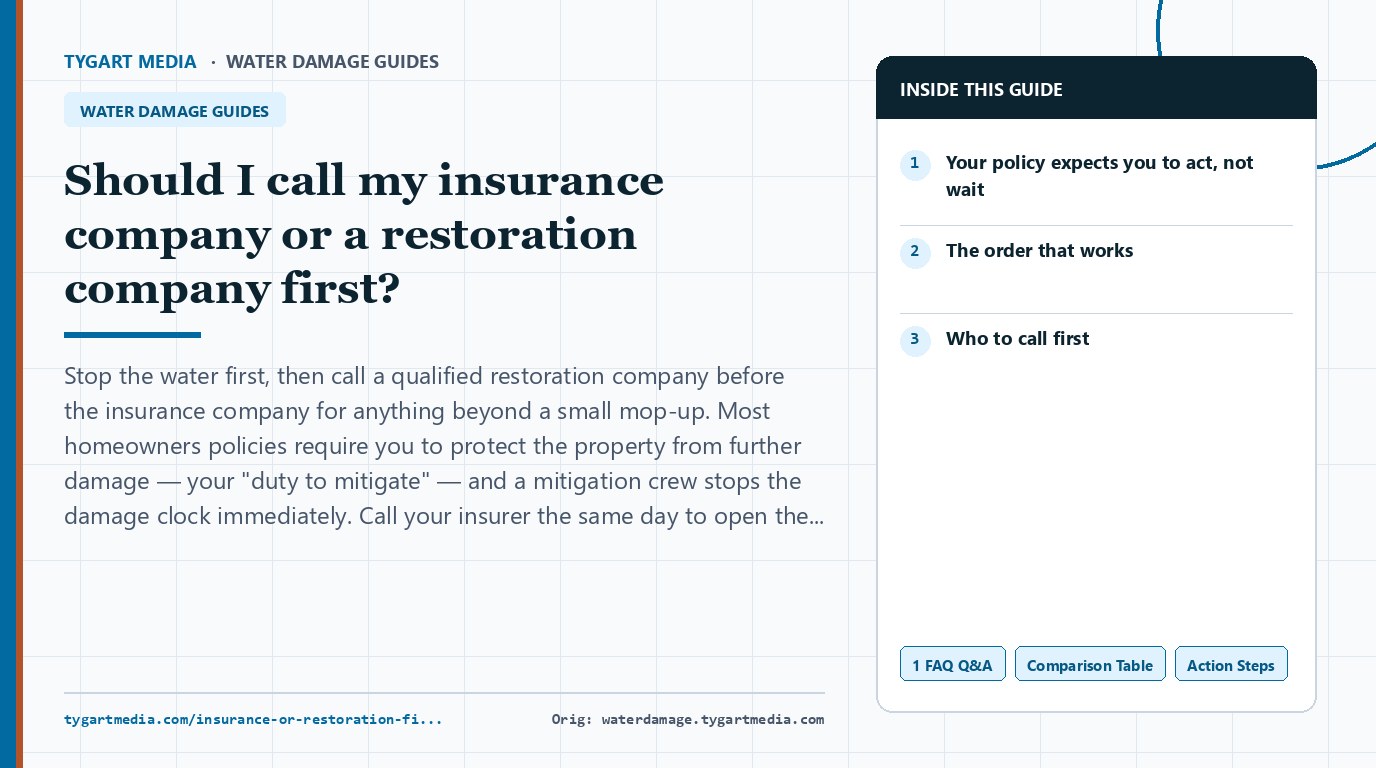
Tygart Media · Water Damage Guides · The first hours
Your policy expects you to act, not wait
This surprises people, but it’s standard in homeowners policies: after a loss, you’re expected to take reasonable steps to prevent more damage — shutting off the water, extracting standing water, starting the drying process. Insurers can and do push back on damage that spread because nobody acted. So “waiting for the adjuster” is exactly the wrong instinct. Document everything (photos before, during, and after), keep receipts for any emergency work, and move fast.
The order that works
- Stop the water. Main shutoff, appliance valve — the physical source first. The first-hour playbook →
- Call a qualified water-mitigation crew for anything beyond what a mop and a fan can handle. They extract, set drying equipment, and — critically — document moisture readings that your claim will need later.
- Call your insurance company the same day to report the loss and get a claim number. Give them the facts: when you found it, what the source was, what you’ve done so far. Keep it factual.
- Keep every receipt and every reading. Emergency mitigation costs are typically part of the claim. The crew’s moisture logs prove the drying was real, not decorative.
Who to call first
| Situation | Call first | Why |
|---|---|---|
| Active leak, water spreading | Restoration company | Mitigation can’t wait for a claim number |
| Water stopped, damage contained | Insurance, then restoration | Get the claim open, then bring the pros |
| Unsure if it’s covered | Restoration company | They document; you decide about the claim after |
Your policy’s duty to mitigate means waiting for the insurer while damage spreads can reduce your payout. Act first, document everything.
Get The Signal
What we actually ran, what it measured, and what it means for a restoration shop — every week, including the flops.
Leave a Reply