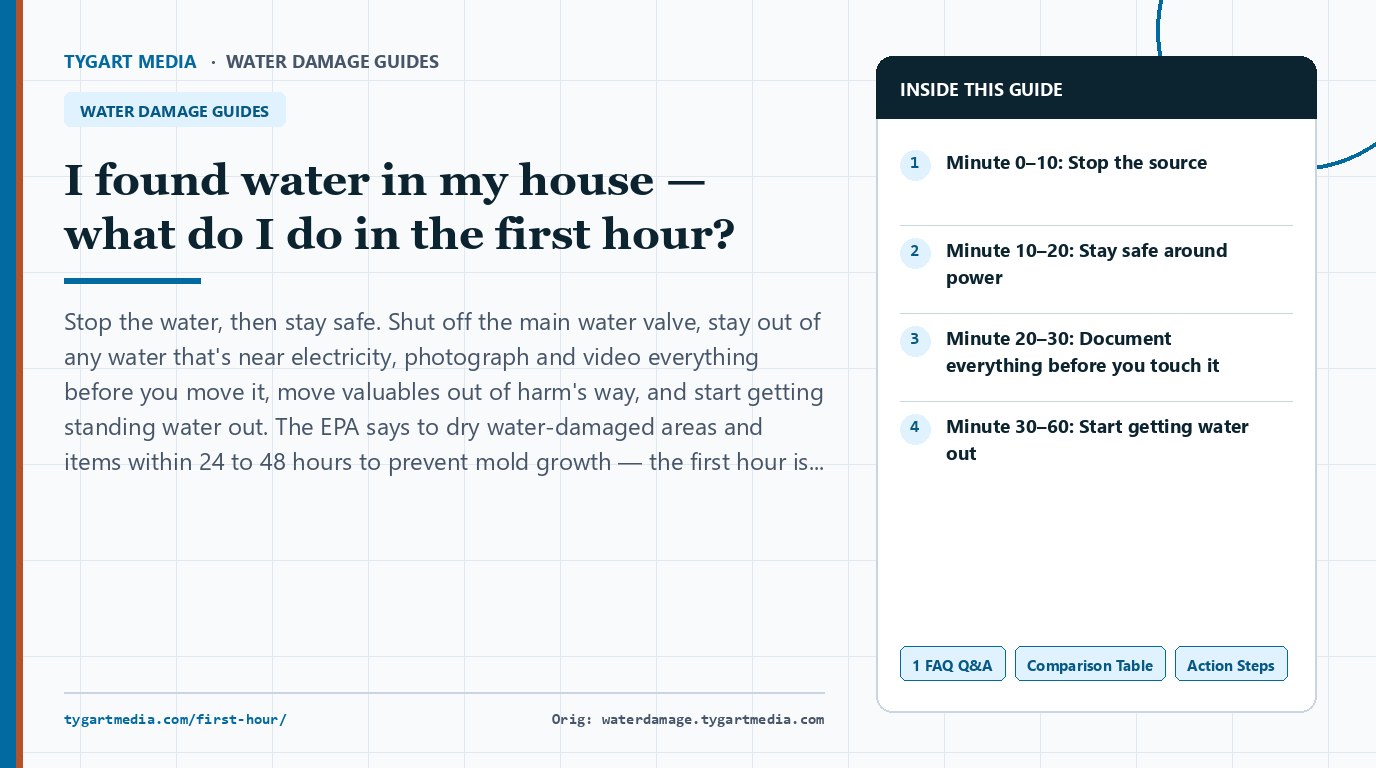
Tygart Media · Water Damage Guides · The first hours
Minute 0–10: Stop the source
Water doing damage right now beats everything else. Find your main water shutoff valve — usually where the line enters the house, in the garage, a utility closet, or the basement — and turn it off. If the water is coming from a specific appliance (water heater, washing machine, toilet supply line), most have their own shutoff valves right at the unit, and those are faster. Not sure where it’s coming from? →
Know where your main shutoff is before you need it. If you’re reading this in a dry moment, go find it now. It takes two minutes and it will save you thousands someday.
Minute 10–20: Stay safe around power
This is the one step people skip in the rush, and it’s the one that can hurt you. If water is anywhere near outlets, light switches, the breaker panel, or wiring:
- Do not wade into the water.
- If you can reach the breaker panel from a dry spot, turn off the affected circuits. If you can’t reach it safely, don’t try — call your electric utility or an electrician and have the power cut.
- Unplug nothing that requires standing in water to reach.
Wet carpet is miserable. Electrocution is worse. Electricity wins this argument every time.
Minute 20–30: Document everything before you touch it
Before you move a single thing, walk the whole affected area with your phone: video first, then still photos. Open closets, shoot behind furniture, capture the water lines on walls. This is the evidence your insurance claim will need later, and you only get one shot at the before-drying version. Our sibling site covers the claim side →
Minute 30–60: Start getting water out
- Move valuables. Lift furniture onto blocks or foil, roll up area rugs, get boxes, electronics, and photos out of the wet zone.
- Remove standing water. A wet/dry vacuum, a mop and buckets, or even towels for small areas. Get it off the floor.
- Get air moving. If the power is safe, open windows if it’s dry outside, and point fans at the wet areas. This isn’t professional drying — it’s triage.
- Call a mitigation crew for anything bigger than a mop-up. A qualified crew shows up with extraction equipment, air movers, dehumidifiers, and moisture meters — and the sooner they start, the less gets torn out later. What a good crew does →
The first hour, in order
| Minute | Action | Why first |
|---|---|---|
| 0–5 | Stop the water — main shutoff valve | Every minute of flow is more damage |
| 5–15 | Kill power to wet areas at the breaker | Water + electricity kills |
| 15–30 | Photograph everything before touching it | Your claim depends on this evidence |
| 30–45 | Move valuables; start extracting water | Porous materials start growing mold in 24–48 hours |
| 45–60 | Call insurance + a restoration company | Mitigation duty: your policy requires you to prevent further damage |
Get The Signal
What we actually ran, what it measured, and what it means for a restoration shop — every week, including the flops.
Leave a Reply