Tag: Veteran Operators

  • This Is Your Moment: A Letter to the Older Generation of Operators in the AI Era

    This Is Your Moment: A Letter to the Older Generation of Operators in the AI Era

    If you have spent thirty or forty years building expertise in a skilled trade or industry, the AI moment everyone is panicking about was built for you. Not against you. The decades of pattern recognition, hard-won judgment, and tacit knowledge you carry — the stuff you cannot articulate but always know is true — just became the most valuable asset in your field. This article is for you. The veteran. The lifer. The operator who has been quietly raising the ceiling of your industry for longer than most of the people writing about AI have been alive.

    You have probably been told, directly or indirectly, that AI is coming for your job. That the younger operators with fancy software will outflank you. That the database will replace what is in your head. That your experience is becoming obsolete.

    None of that is true. The exact opposite is true, and the next decade is going to prove it.

    What You Have Been Carrying All Along
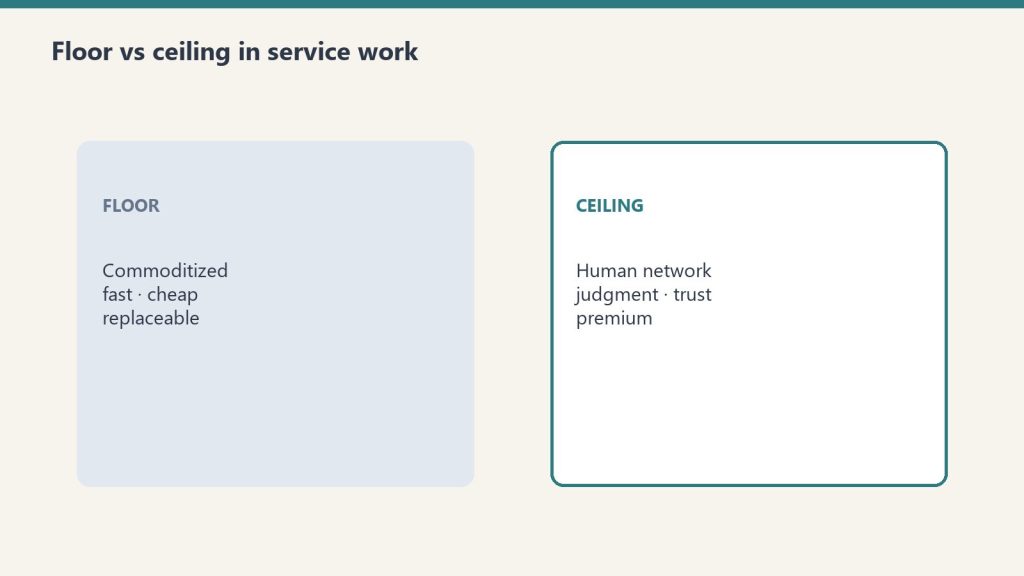
    Stop for a moment and inventory what actually lives inside your head. Not the credentials. Not the certifications. Not the equipment list. The real stuff.

    You know what a job site smells like when something is wrong before anyone else on the crew can articulate why. You know which customers are going to be a problem from the first phone call. You know which suppliers are reliable on a Tuesday morning and which ones will fail you on a Friday afternoon. You know when an estimate is off by ten percent just from looking at it. You know which subcontractors will show up and which ones will burn you. You know how to read a room of skeptical homeowners and which one is the actual decision maker. You know the failure modes of every piece of equipment you have ever owned, including the ones you do not own anymore.

    You have a working mental model of your entire industry that took you decades to build, and you cannot fully write it down because most of it lives below conscious thought. You see a situation and the right answer surfaces. You cannot always explain why.

    That body of knowledge has a name in the academic world. It is called tacit knowledge. It is the knowledge that lives in the practitioner, not in the textbook. It is the difference between a great surgeon and an average one. It is the difference between a great chef and a good cook. It is the difference between a senior operator who has run two thousand jobs and a junior estimator who has read all the right books.

    For most of your career, tacit knowledge has been undervalued because it is invisible. The credentialing systems in your industry measure the explicit knowledge — the certifications, the courses, the documented procedures. The tacit part has always been treated as a soft skill, a feel for the work, an unwritten thing that everyone knows is important but nobody pays for directly.

    That is about to change.

    Why AI Makes Your Knowledge More Valuable, Not Less
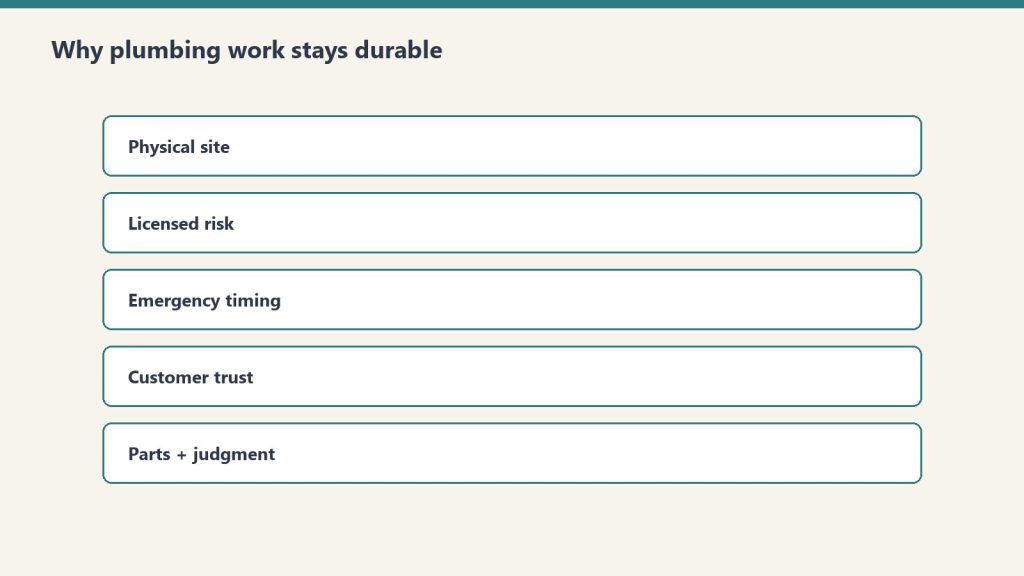
    Here is the part that should reframe everything for you. The AI systems currently scaring everyone are extraordinarily good at one specific thing — pattern-matching against publicly available, well-documented data. Anything that has been written down in a textbook, a manual, a code book, a regulation, an industry standard, a procedure document — AI ingests it, organizes it, and reproduces it on demand, instantly, for free.

    That category of knowledge — the explicit, written-down stuff — is being commoditized in front of our eyes. The young operator with a laptop now has access to the same documented body of knowledge as the senior operator with a library. The procedural floor of every industry is rising fast because the documented knowledge is no longer scarce.

    But here is what AI is genuinely bad at, and will remain bad at for the foreseeable future. The tacit, in-the-field, judgment-laden knowledge that has never been written down anywhere. The pattern recognition built from doing the work, watching the outcomes, and adjusting. The instincts that fire before conscious reasoning catches up. The contextual reads that come from having actually been there.

    AI cannot ingest what is not in the training data. The vast majority of your real expertise has never been in any training data, anywhere, because it has never been written down. It exists only in your head. And as the explicit, documented knowledge becomes commoditized, the tacit knowledge becomes the only meaningful differentiator left in skilled work.

    Read that again. The thing AI is making cheap is the thing you already had to compete against from everyone else with the same certifications. The thing AI cannot touch is the thing you alone possess. The market is about to invert, and the inversion favors you.

    The Last Generation Who Did the Work Differently

    There is something specific about your generation that the younger operators in your field cannot replicate, and it is not just years of experience. It is the way you learned.

    You came up before everything was logged in a software system. You came up when you had to remember what you saw on the last job because there was no app to retrieve it. You came up watching mentors do the work and absorbing their judgment by proximity, not by reading their documentation. You came up when failure modes were taught by being there when they happened, not by reading a case study.

    That learning environment produced a kind of practitioner that the modern systems do not produce anymore. You internalized things at a level that does not happen when the software is doing the remembering for you. The younger operators have access to better tools and faster information, but they are not building the same depth of internal model that you built when the tools did not exist.

    This is not a nostalgia argument. This is an observation about how human cognition works. When a tool offloads a task from your brain, your brain stops developing the capacity to do that task without the tool. The senior operators in every industry right now are the last generation that had to build the cognitive infrastructure from scratch. The next generation is being trained on top of tools that do the foundational work for them.

    That foundational depth is what makes your ceiling so high. You have it because you had no choice. The younger operators are not lazy — they are simply being trained in an environment that does not require them to develop the same depth. When the AI floor rises high enough that everyone is operating on top of automated tooling, the only people left who actually understand the foundations are the veterans.

    You are not the old guard. You are the keepers of the only knowledge that AI cannot replicate, in a moment when that knowledge is about to become the most valuable thing in your field.

    Why Younger Operators and Buyers Are About to Come Looking for You

    The shift is already starting in a few industries, and it will spread. Younger operators who built businesses on AI-leveraged speed are hitting the ceiling of what AI can do for them. They can move fast on the procedural work. They can scope quickly. They can document beautifully. But the second a job goes sideways in a way the training data did not anticipate, they are exposed.

    The clients who notice this — the carriers, the sophisticated buyers, the customers who have been around long enough to know the difference — start asking a different question. They stop asking “who is the cheapest?” or “who is the fastest?” because the AI floor made those questions less important. They start asking “who actually knows what they are doing when it gets weird?”

    That question has exactly one answer. The veteran with thirty years of experience. The lifer who has seen the weird case before. The senior operator who has the failure modes memorized and the recovery moves rehearsed. You.

    This is going to manifest in several specific ways over the next five years, and you should expect them.

    Younger operators will start showing up to ask for your time. Not to take your job. To learn the things their AI tools cannot teach them. The smart ones will offer to pay for it. The smartest ones will offer to partner with you and let you take the senior role on the high-judgment work while they handle the procedural floor.

    Acquirers will start showing up to buy companies specifically for the senior operators inside them. Not for the equipment. Not for the territory. For the heads of the people who hold the institutional judgment. Earnouts will start getting structured around keeping the veteran in place long enough to transfer what is in their head to the next generation.

    Clients will start specifying senior operator involvement in contracts. They have been burned by the AI-only operators on enough jobs that they will start writing language like “the project must be supervised by an operator with twenty-plus years of field experience.” That language did not exist five years ago. It is going to be standard within ten.

    The industries that have most aggressively pushed senior operators toward retirement to save labor costs are going to find themselves in an embarrassing position when they realize they cannot replace what they let walk out the door. Some of them will come looking to hire you back as consultants, advisors, or fractional executives. Take the meetings.

    What to Do With This Knowledge, Starting Now
    If you are forty-five or older and you have meaningful field experience in any skilled trade or industry, here are the moves that match this moment.

    Start writing things down. Not for AI. For your own clarity. Pick the ten judgment calls you make most often that nobody around you knows how to make. Sit down at a table with a recorder or a notebook and walk through how you actually do it. The conditions you check. The signals you read. The decision tree that runs in your head. The mistakes you used to make and the corrections that fixed them. This is not a memoir. It is an inventory of the asset that lives between your ears.

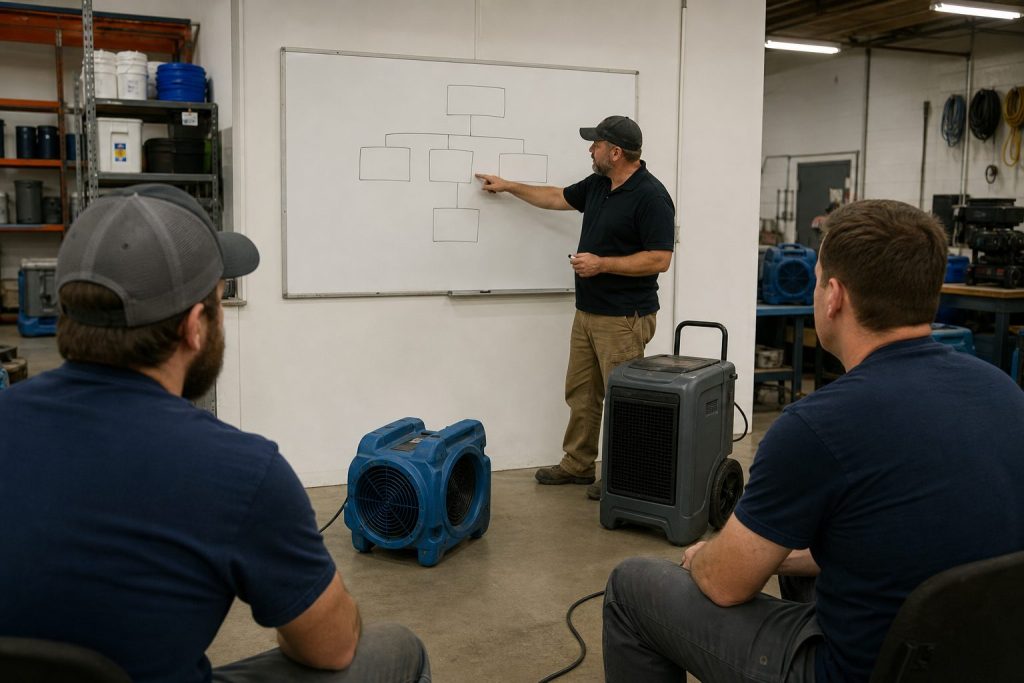
    Find a younger operator and start transferring it. Not by handing them the document. By working alongside them on real jobs and letting them watch you make the calls. Explain the judgment in real time, in context, on actual work. This is how the trades have always worked, and it is more valuable now than ever because so few people are doing it anymore.

    Charge for it. Your time, your judgment, your presence on a job site, your review of a scope before it goes to a customer — all of that is worth more than it was five years ago, and the price is going to keep climbing. If you have been undercharging for advisory time because you did not think of it as a product, start thinking of it as a product. The market is in the process of repricing what you do.

    Refuse to retire on the schedule the corporate world wants you to retire on. The traditional retirement age was built for an economy where senior operators were considered overhead. That economy is dying. The new economy will pay a premium to keep you in the field, in some form, for as long as you want to be there. Do not let the old assumptions force you out of the most valuable years of your career.

    Be selective about what you share publicly and what you keep proprietary. The general philosophy of your craft can be shared freely — it builds your reputation and your authority. The specific judgment patterns that make you uniquely valuable should stay inside your company or your direct apprenticeship relationships. Your real expertise is now intellectual property. Treat it that way.

    Pay attention to the people who suddenly want your time. The acquirer asking polite questions about the business. The younger operator offering to take you to lunch. The consultant looking for a few hours of your insight. Some of these are legitimate opportunities. Some are extraction attempts. The discernment that has served you for decades on job sites works just as well in the conference room.

    The Reframe That Changes Everything

    For most of the last twenty years, the cultural narrative around AI and skilled work has been some version of “the machines are getting smart enough to replace humans.” That framing was always wrong, but it took a long time for the wrongness to become obvious.

    The correct framing is this. AI is a leveler. It raises the floor of every industry by making the documented, procedural knowledge available to everyone instantly. That is good for customers. It is good for honest operators who have always been doing the work properly. It is fatal for the bad actors who were surviving by underdelivering on the floor.

    And it elevates the ceiling. Or more precisely, it elevates the people who hold the ceiling. When the floor rises and the only remaining differentiator is the part AI cannot do, the value of the people who can do that part goes up dramatically. Those people are not the young technologists building AI tools. They are the veterans who actually did the work for thirty years and have the tacit knowledge to prove it.

    You are not being made obsolete. You are being made scarce. The two things look identical from the outside if you do not know what to look for, but they are economic opposites. Obsolete means falling demand and falling price. Scarce means rising demand and rising price.

    Every economic signal in skilled trades and skilled industries right now points to scarcity, not obsolescence. The wages for senior tradespeople are rising. The retention bonuses for experienced operators are climbing. The buyers of small businesses are paying premiums for ones with strong senior bench strength. The clients are starting to specify experience in contracts. The younger workers are starting to seek out mentors who have never been in such high demand.

    You are not aging out of relevance. You are aging into your peak market value, in a market that is finally learning to recognize what you have always been carrying.

    Frequently Asked Questions

    Why is older-generation experience becoming more valuable in the AI era?

    AI commoditizes documented, procedural knowledge — anything that has been written down in textbooks, manuals, or standards. It cannot commoditize tacit knowledge, the in-the-field judgment built from decades of practice. As the procedural floor of every industry rises, the only remaining differentiator is the experiential ceiling that lives inside senior operators. The market is repricing experience upward because the rest of the work is being commoditized downward.

    Is AI going to replace skilled trades and experienced professionals?

    No. AI is replacing the procedural and documentation work that consumed hours of every workday — scoping, estimating, paperwork, routine communication. The judgment work that defines a great senior operator is unchanged and arguably more valuable. The veteran who can read a job site, sequence the work, manage the client, and handle the unexpected is now the only meaningful differentiator left after AI does everything else.

    What is tacit knowledge and why does it matter for AI?

    Tacit knowledge is the practical, hands-on knowledge that lives inside a practitioner and has never been fully written down. It is the difference between knowing the textbook answer and knowing what to actually do on a specific job. AI systems train on documented data, and the vast majority of real expertise in skilled trades was never documented. Tacit knowledge is the part of human expertise that AI structurally cannot replicate by ingesting more public data.

    Should an older operator retire to make room for younger talent?

    Not on the old timeline. The traditional retirement age assumed senior operators were overhead. The current market values them as the highest-leverage asset in their companies. Veterans should consider semi-retirement structures, advisory roles, partner arrangements with younger operators, and fractional executive positions before stepping away entirely. The market is paying premium prices to keep experience accessible, and that premium is rising.

    How can a younger operator learn from a senior practitioner?

    Not by reading their documentation, but by working alongside them on real jobs and watching the judgment calls in real time. The senior operator should explain the reasoning as decisions are being made, in context, on actual work. This is the apprenticeship model that built every skilled trade. It is more valuable now than ever because so few people are practicing it, and AI cannot replace the in-person knowledge transfer.

    How should veterans price their expertise differently now?

    Treat time, judgment, and review work as a paid product rather than free advice. Advisory hours, scope review, on-site supervision, and apprenticeship engagements should command premium rates because they cannot be replicated by AI tools. If you have been underpricing this work because it never felt like a real product, the market is now ready to pay accordingly. Start with rates that feel slightly uncomfortable and adjust based on demand.

    The Bottom Line

    If you are a senior operator in any skilled trade or industry, the next decade will be the most valuable years of your career. The AI shift everyone is anxious about is actually the moment your work finally gets recognized at its true price. The documented, procedural floor that diluted your expertise for decades is being commoditized. The tacit, experiential ceiling you have always carried is the only thing left that cannot be commoditized.

    The young operators with fancy tools are not your competition. They are your future apprentices, business partners, or acquirers, depending on which path you choose. The clients who used to push for the lowest bid are about to start asking for the senior operator by name. The retirement schedule that was supposed to push you out the door is being rewritten in real time.

    You are the lifetime of experience that is suddenly the new value. You always were. The market is just finally catching up. Charge accordingly. Train your replacements deliberately. Stay in the game as long as you want to be in it. The ceiling has always been yours, and you are about to start getting paid for it.

    This is your moment. Step into it.

    The Tacit Knowledge Cluster — Further Reading

    This piece is part of a larger body of writing on what the AI shift and the broader software-platform shift actually mean for service professions and the workers in them. The full cluster:

    The Core Thesis

    For Your Career

    Service Profession Playbooks

    Industry-Specific Trade Answers

    Direct Letters to Each Audience

    For Practitioners

  • Building the Senior Restoration Career Path: The New Roles That Are Keeping Senior Talent in the Industry

    Building the Senior Restoration Career Path: The New Roles That Are Keeping Senior Talent in the Industry

    This is the fifth and final article in the Senior Talent as Force Multiplier cluster under The Restoration Operator’s Playbook. It builds on the previous four articles in this cluster: the talent window, the compensation math, strategic recruiting, and retention.

    The career path question is the question owners ask least and operators ask most

    If a senior restoration operator with fifteen or twenty years of experience sits down with the owner of the company they work for and asks, “what does the next ten years of my career look like inside this company?” — most owners cannot answer that question with any specificity. The honest answer in most companies is some version of “you keep doing what you are doing, you make more money over time, eventually you slow down, eventually you retire.” That answer has been acceptable for most of the industry’s history because the operator’s other options were not meaningfully better.

    That answer is no longer acceptable, because the operator’s other options have changed. The same operator can now look at companies that have built explicit senior career paths — operating system architect, training director, regional GM, partner, equity-holding senior operator — and can see a future at one of those companies that is more concrete and more interesting than the future at the company they are currently in. The operator who has options is going to compare them. The company that cannot articulate a future is going to lose to the company that can.

    This article is about what those new senior career paths actually look like in 2026, what they require from both the operator and the company, and why the companies that can credibly offer them are winning the long-term retention battle that the previous article addressed.

    The new senior roles that have emerged

    Over the last twenty-four to thirty-six months, several distinct senior roles have emerged in the restoration companies that have built operating systems of the kind described throughout this playbook. These roles did not exist in any meaningful form a decade ago. They are now the natural destinations for senior operators who have spent fifteen or twenty years doing field work and who are looking for what comes next.

    The first is the operating system architect. This is the role for a senior operator whose judgment has been heavily captured into the company’s substrate and whose continued contribution is principally about evolving and extending that substrate. The architect spends a meaningful portion of their time on documentation refinement, on standard evolution, on AI capability development, on cross-functional integration, on the design of the operating system itself. Direct field work is reduced but not eliminated, because the architect’s continued contact with the work is what keeps their judgment current. The role is essentially senior in the sense of contributing to how the company operates rather than in the sense of how many jobs the operator personally manages.

    The second is the training and development director. This is the role for a senior operator whose principal contribution is to the next generation of operators in the company. The training director owns the curriculum, owns the structured scenario work, owns the onboarding architecture, and owns the relationship with each new senior hire as they ramp toward autonomy. The training director’s success is measured by the quality and speed of new operator development, not by direct file management. This role has always existed informally in restoration. It is now being formalized in companies that recognize the strategic value of getting senior talent up to speed faster.

    The third is the regional or vertical general manager. This is the role for a senior operator whose contribution is to building and running a meaningful portion of the company — a geographic region, a service vertical, a major program relationship. The GM has full operational responsibility for their portion of the business and is supported by the broader company’s operating system. The role is more entrepreneurial than traditional senior operator roles, with significant autonomy and significant accountability for results.

    The fourth is the partner or equity-holding senior operator. This is the role for a senior operator whose contribution is so central to the company’s success that long-term equity participation has been built into their compensation structure. The mechanics vary widely — formal equity, profit interests, long-term incentive plans, partnership structures — but the underlying logic is the same. The operator is a co-owner of the company’s success, with a stake that compounds over time and that aligns the operator’s interests with the company’s long-term performance. This kind of role has historically been rare in restoration outside of family-owned succession situations. It is now appearing more frequently as companies recognize that the senior operators who built the operating system have earned a structural participation in what comes next.

    The fifth is the cross-company executive. This is the role for a senior operator who moves into a corporate or platform role above any single operating company — head of operations for a multi-regional platform, chief operating officer of a roll-up, head of standards for a private equity-backed restoration group. These roles are concentrated at the larger end of the industry but are growing as more capital flows into restoration consolidation.

    None of these roles existed as recognizable categories a decade ago. All of them are being filled, in 2026, by senior operators who started in field work and who built the experience that qualifies them for the role over the course of their career.

    What the senior operator needs to develop to qualify

    The natural progression from senior field operator to one of these roles is not automatic. The operator who is forty-five years old, has twenty years of experience, and has been a strong project manager their whole career does not, by virtue of those facts alone, qualify for the architect role or the training director role or the GM role. Each of these roles requires capabilities beyond what direct field experience produces.

    The architect role requires the ability to articulate operational judgment in writing. This is a learned skill. Many senior operators are extraordinary at making field decisions and not yet capable of explaining the decisions in a form that someone else can apply. The development of this capability happens through structured documentation work, through coaching, and through repeated cycles of writing, getting feedback, and refining. Operators who have done this work can move into architect roles. Operators who have not cannot, regardless of how senior they are.

    The training director role requires the ability to understand how other operators learn. This is also a learned skill. The senior operator who is implicitly competent at the work often does not understand what makes them competent and therefore cannot teach it. Becoming a credible training director requires reflective work on the operator’s own judgment, exposure to learning theory in some form, and practice teaching less experienced operators in structured settings. Operators who do this development become highly effective training directors. Operators who try to take the role without doing the development end up running training programs that produce mediocre results.

    The GM role requires general management capability beyond operational excellence. Financial fluency, customer relationship management, team building, strategic thinking, board or owner communication. Senior operators who have only ever managed jobs need to develop this broader capability before they can credibly take a GM role. The development typically happens through deliberate stretch assignments, through mentoring relationships with experienced GMs, through formal education in relevant areas, and through sustained exposure to the broader business beyond operations.

    The partner or equity-holding role requires the operator to think like an owner. Owner-level thinking involves comfort with risk, comfort with long-time-horizon decisions, comfort with ambiguity, and willingness to make decisions that may be unpopular in the short term but right in the long term. Some senior operators have always thought this way. Others can develop the capability. Some never will. Owners considering equity-bearing roles need to be honest about which of their senior operators is which.

    The cross-company executive role requires comfort operating outside the boundaries of a single operating company. This is a different mental model from running operations inside one company, and not every senior operator is suited to it. The operators who succeed in these roles tend to be ones who have deliberately developed the broader perspective over years, often through industry involvement, through exposure to multiple companies through advisory or consulting work, or through deliberate cross-functional rotations within their own company.

    What the company needs to do to make the paths real

    For these career paths to actually function as retention tools, they have to be more than concepts. The company has to do specific work to make them real.

    The company has to define the roles explicitly. Not as job postings. As articulated career destinations with associated responsibilities, compensation structures, and qualification criteria. A senior operator should be able to read a one-page description of the architect role at the company and understand what the role does, how the role is compensated, and what the path to it looks like. Vague references to “growth opportunities” do not retain anyone. Specific articulated roles do.

    The company has to invest in developing the senior operators who are on the path toward these roles. The architect role requires the development of articulation skills. The company has to provide the structured documentation work, the coaching, and the time for an operator to develop those skills. The training director role requires development of teaching capability. The company has to provide the structured opportunities and the support. The GM role requires development of broader business capability. The company has to provide stretch assignments, mentoring, and education. The partner role requires development of owner-level thinking. The company has to provide the exposure and the structured discussion. None of this development happens by accident. It has to be invested in deliberately.

    The company has to be honest with the senior operator about which path the operator is suited for and which they are not. A senior operator who wants to be a GM but who lacks the financial capability and the willingness to develop it deserves to be told so, with a clear discussion of what would need to change for the path to open. Operators told the truth about their fit can make informed decisions about their development. Operators told polite fictions end up in roles they cannot succeed in or in companies that have not been honest with them.

    The company has to create the actual openings for these roles as it grows. A career path that exists in concept but never produces actual role assignments is a path that the senior team will eventually stop believing in. The company that promises growth opportunities and never delivers them loses credibility with the senior team in ways that are hard to recover. The company has to grow into the roles and to fill them with the operators who have developed into them.

    Why this matters for the industry

    The career path question matters not just for individual companies but for the restoration industry as a whole. The industry has historically lost senior talent to other industries — construction, real estate development, insurance, consulting — partly because the senior career paths inside restoration were limited compared to the alternatives. A senior PM who became excellent at restoration often had to leave restoration to find a role that fully used their capability.

    The new senior roles change that calculus. A senior operator who has built the architect role inside a sophisticated restoration company has a role that uses their full capability and that is at least as interesting as the alternatives outside the industry. The same is true for the training director role, the GM role, the partner role, and the cross-company executive role. The industry’s ability to retain its own senior talent is structurally improving as these roles become more common.

    This is good for the operators, who can now build careers in restoration that go far beyond what was previously available. It is good for the companies, which can now offer senior team members futures that compete with the alternatives. And it is good for the industry, which can now keep more of its accumulated operational wisdom in the industry rather than losing it to adjacent fields.

    The companies that lead this evolution will have first pick of the senior talent that wants to build a career in restoration. The companies that lag will find themselves recruiting from a shrinking pool of operators who have not yet seen what the leading companies are offering.

    The cluster ends here

    The five articles in this cluster describe the senior talent question in restoration as it actually exists in 2026. The macro thesis is that the value of senior operators has been structurally repriced and the market has not yet caught up. The compensation math article makes that thesis concrete. The strategic recruiting article addresses how to win competitive battles for senior hires. The retention article addresses what changes when the operator has been documented. This article addresses what the operators are evaluating when they consider their futures.

    Owners who internalize this body of work will treat senior talent as the strategic capability it now is. They will hire deliberately, retain proactively, develop their senior people into the new roles that have emerged, and build the kind of senior team that the next chapter of the industry requires. Owners who do not will continue to treat senior talent as a tactical question and will be increasingly outcompeted on the dimension that matters most.

    The Senior Talent as Force Multiplier cluster is closed. The next clusters in The Restoration Operator’s Playbook will address end-in-mind operations, carrier and TPA strategy, crew and subcontractor systems, restoration financial operations, and the modern restoration marketing stack. Each cluster compounds with the others. The full body of work, when complete, gives restoration operators a durable mental architecture for an industry that is changing faster than it has in a generation.

    The companies that read it and act will know what to do. The rest will find out later.

  • Retention When the Operator Has Been Documented: Why Traditional Retention Math No Longer Captures the Stakes

    Retention When the Operator Has Been Documented: Why Traditional Retention Math No Longer Captures the Stakes

    This is the fourth article in the Senior Talent as Force Multiplier cluster under The Restoration Operator’s Playbook. It builds on the talent window article, the compensation math article, and the strategic recruiting article.

    The retention problem looks different when the operator has been documented

    The traditional restoration retention conversation is built around a familiar set of levers. Compensation that keeps pace with the market. Benefits that meet or exceed the local norm. A reasonable workload. A boss who is not actively making the operator’s life difficult. Some sense that the company is going somewhere. Treated well, applied consistently, these levers have produced acceptable senior retention outcomes for most of the industry’s history.

    The retention conversation in companies that have built the operating system described throughout this playbook is structurally different. The senior operator whose judgment has been captured into the company’s substrate has a different relationship with the company than the senior operator whose judgment lives only in their head. The retention levers that work in the second case are not the same as the retention levers that work in the first case. Owners who do not understand the difference are about to lose senior operators they thought were retention-safe — and the loss will be more expensive than they realize.

    This article is about what retention actually looks like in companies that have done the documentation work, and what the operators who have been documented are actually evaluating when they consider whether to stay or leave.

    What the documented operator is actually thinking about

    A senior operator whose judgment has been captured into a company’s operating substrate is, in effect, a co-author of that substrate. They have invested significant time over months or years in articulating their thinking, refining their standards, validating outputs, and shaping the way the company operates. The substrate now reflects their professional contribution in a concrete and durable form that previous generations of senior operators did not have access to.

    This investment changes the operator’s psychological relationship with the company. They are no longer just an employee doing a job. They are an architect of something that exists in the company and that bears their fingerprints. Leaving the company means leaving the architecture they built, knowing that it will continue to shape the company’s operations after they are gone, knowing that they cannot take it with them, and knowing that whatever they build at the next company will start from scratch in a way that the work at the current company no longer does.

    This creates a powerful retention force. It is also, for an operator who is unhappy with the current situation, a powerful resentment force. The same investment that keeps the operator in the company when things are going well makes the operator feel trapped when things are going badly. The owner has to understand both directions of this dynamic.

    The operators who stay in companies that have done the documentation work are evaluating whether the company continues to deserve the contribution they are making. Their evaluation is more sophisticated than a simple comp-versus-market calculation. They are asking whether the substrate they built is being maintained and extended. Whether the company is investing in the next generation of standards. Whether their continued contribution is being amplified by what the company does with it. Whether the senior team they helped build is still intact. Whether the owner’s posture toward the senior layer has remained consistent with what was promised when the operator first invested.

    Each of these questions has an answer. The answer determines whether the operator stays.

    The retention levers that actually work

    The traditional retention levers — compensation, benefits, reasonable workload — still matter. They are necessary but no longer sufficient. The companies that have figured out senior retention in the documented-operator era have added several specific practices that target the new dynamics.

    The first practice is recognizing the operator’s authorship publicly and consistently. The standard the operator wrote is referenced as their work, not as the company’s anonymous documentation. The training material the operator contributed to is credited to them. The decisions made on the substrate the operator built are framed as decisions informed by the operator’s thinking. The recognition is not for show. It is for the operator’s own clarity that their contribution is seen and valued. Operators whose contributions are made invisible — even unintentionally, through the natural process of documentation becoming “company material” — start to feel taken for granted in ways that compound over time.

    The second practice is continuing to invest in the substrate the operator built. A standard that was written eighteen months ago and has not been updated since is a signal to the operator that the company has lost interest in the work they did. A standard that is on a quarterly revision cycle, with the operator’s continued involvement protected on the calendar, is a signal that the work is alive. The investment in the substrate is, indirectly, an investment in the operator’s retention.

    The third practice is creating a defined role for the senior operator that is explicitly about the substrate, not just about direct production work. The operator who has done the documentation work has earned the right to spend a defined portion of their time on substrate maintenance, on training the next generation of operators against the standards, on advising the company’s strategic direction. The role is structural, with calendar protection and explicit acknowledgment in the operator’s responsibilities. Operators who are quietly expected to maintain the substrate on top of a full direct-production load will eventually quit, because the implicit expectation produces resentment that no compensation increase can fix.

    The fourth practice is honest and proactive compensation conversations of the kind described in the compensation article. The operator who has invested in the company’s substrate deserves compensation that reflects the contribution. The conversation about that compensation should not require the operator to ask. The owner should be initiating the conversation on a defined cadence, with reference to market data and to the operator’s actual contribution to the operating system, not just to the operator’s direct production numbers.

    The fifth practice is long-term participation in the company’s success. The operator who has built operational substrate that will compound for years has earned a structural participation in the upside of the work. This can take many forms — equity, profit sharing, a long-term bonus tied to the company’s overall performance, partnership of some kind. The form matters less than the existence. Operators who are excluded from the long-term participation in something they helped build are, eventually, going to leave to build it for themselves at companies where the participation is on offer.

    The sixth practice is owner attention. The operator whose judgment is central to the company’s operating substrate has a different relationship with the owner than a more junior employee. The owner needs to invest time in that relationship. Regular conversations about strategic direction, about the operator’s professional development, about how the operating system is evolving and where the operator’s continued contribution would be most valuable. The time investment is not large in hours but is significant in signal. Owners who do not invest the time send a signal that they take the operator for granted. Operators who feel taken for granted start to listen to recruiters more carefully.

    The retention conversations that owners avoid

    Several conversations between owner and senior operator are structurally important to retention and are also structurally uncomfortable, which means they often do not happen. The companies that handle senior retention well are the companies whose owners have learned to have these conversations deliberately rather than avoiding them.

    The first uncomfortable conversation is about market compensation. An owner who knows the market is moving and who knows the operator’s compensation is below market should initiate the adjustment conversation before the operator asks. Waiting for the operator to ask creates a moment of forced negotiation that damages the relationship even when it produces a good outcome. Initiating the conversation proactively signals that the owner is paying attention and values the operator. The two outcomes — same compensation increase, different conversational origin — produce significantly different retention effects.

    The second uncomfortable conversation is about the operator’s career path. An owner who does not know what the operator wants their next five years to look like cannot construct a retention plan that addresses what actually matters to the operator. The conversation about the operator’s professional ambitions, what they want to build, where they see themselves growing, has to happen explicitly. Operators who are not asked these questions assume the company has not thought about them. Operators who are asked are far more likely to stay, even when the answers are inconvenient for the company in the short term.

    The third uncomfortable conversation is about what the operator is unhappy about. Every senior operator has at least one or two things in their current situation they wish were different. Owners who do not know what those things are cannot address them. The conversation that surfaces them is uncomfortable because it gives the operator permission to articulate dissatisfaction, but it also gives the owner the information needed to act. Operators whose dissatisfactions remain unspoken eventually leave to escape them. Operators whose dissatisfactions are surfaced and addressed stay.

    The fourth uncomfortable conversation is about the operator’s own perception of the company’s trajectory. The owner who is privately optimistic about the company’s direction may not have communicated that optimism to the senior team in a way that lands. The operator may be operating on a much less optimistic assessment than the owner is. The conversation about how each is reading the company’s direction surfaces gaps and lets them be addressed. Operators who do not believe the company is going somewhere will leave for companies they believe are going somewhere, even if their own company is in fact better positioned.

    None of these conversations require formal frameworks. They require the owner to schedule them and to actually have them. The companies that retain their senior operators well are the companies whose owners have built the habit of having these conversations on a defined cadence, in private settings, with the operator’s full attention. The companies that lose senior operators are the companies whose owners have avoided the conversations until it was too late.

    The honest cost of losing a documented operator

    When a senior operator who has been documented leaves the company, the cost is structurally larger than the cost of losing a senior operator who has not been documented. Owners who do not understand this dimension are not pricing senior retention correctly.

    The captured judgment survives the departure. The standard the operator wrote is still in the operating system. The training materials they contributed to are still in use. The decisions the AI tools make on the substrate the operator built will still reflect the operator’s thinking. In that sense, the loss of the operator does not erase the contribution.

    What the loss does erase is the operator’s continued evolution of the substrate. The standard will not get sharper after they leave. The next generation of operational refinements will not have their judgment behind them. The edge cases that the standard has not yet addressed will be addressed by someone else, with someone else’s judgment, in ways that may or may not be consistent with what the operator would have done. Over a period of two to three years, the substrate drifts away from the operator’s original architecture, even though it bears their initial fingerprints.

    The replacement cost is also structurally larger. A new senior operator joining the company can absorb the existing standard and contribute to its evolution, but the new operator’s contribution will reflect their judgment, not the departing operator’s. The character of the operating system shifts. Whether this is good or bad depends on the new operator. What is certain is that it is different.

    And the timing cost is significant. The departing operator’s exit creates a gap during which the substrate is being maintained by someone less invested in it than the original author. The new operator takes time to build the kind of authorship relationship with the substrate that the departing operator had. The transition period is months to years, depending on how the handover is handled.

    None of these costs show up in a traditional turnover calculation. All of them are real. The owner who is making retention decisions about a documented senior operator is making decisions about all of them, whether they realize it or not.

    What this means for the owner

    If you have done the documentation work described in the prep standard piece, the documentation acceleration piece, or any of the related operational documentation that the rest of this playbook describes, the senior operators whose judgment is in that documentation are the most strategically important people in your company. Their retention is not a tactical HR question. It is a strategic capability question.

    The retention practices described above are not exotic. They are deliberate, sustained, and require owner attention. The cost of implementing them is modest. The cost of not implementing them is the eventual loss of operators whose contribution is structurally larger than the company’s traditional retention math suggests, with cascading effects on the operating system that depends on their continued involvement.

    Owners who recognize this and act on it will keep their senior teams intact through the next chapter of the industry. Owners who continue to apply traditional retention logic to the documented-operator situation will lose the operators they most need to keep. The difference will not show up in a single quarter. It will show up across years, in the durability of the operating system the company has built.

    Next and final in this cluster: building the career path that keeps senior restoration talent in the industry — what the new senior roles look like, what they require, and why the companies that can articulate them are winning the long game on senior talent.

  • Recruiting as a Strategic Function: Why Restoration Senior Hiring Has Outgrown the HR Setup

    Recruiting as a Strategic Function: Why Restoration Senior Hiring Has Outgrown the HR Setup

    This is the third article in the Senior Talent as Force Multiplier cluster under The Restoration Operator’s Playbook. It builds on the talent window article and the compensation math article.

    Recruiting has been treated as the wrong function for a generation

    In most restoration companies, recruiting lives somewhere between human resources and the operations leader’s spare time. When a senior position needs to be filled, the operations leader posts the role, screens resumes, conducts interviews, and makes the hire. The HR function, if one exists at all, handles the offer paperwork, the background check, and the onboarding logistics. The recruiting itself is a thing the operations leader does on top of running operations.

    This setup has produced acceptable results for most of the industry’s history. The senior labor market has been stable enough, the relationships in any given local market have been thick enough, and the volume of senior hires per year has been low enough that the operations leader could fit recruiting into a busy week without the company suffering visibly for it.

    That setup is now structurally inadequate. Not because the operations leaders have gotten worse at recruiting. Because the strategic stakes of senior hiring have risen to a level where treating recruiting as a side activity is leaving real money on the table — and, in some cases, costing the company access to the talent that determines whether the operating system described in the rest of this playbook can actually be built.

    This article is about what it means to elevate recruiting from a tactical function to a strategic capability, what the actual mechanics of that change look like inside a restoration company, and why the companies that have made the shift are pulling away from the ones that have not.

    Why the strategic stakes have risen

    Three things have changed in the restoration senior labor market over the last thirty-six months that make recruiting a strategic question in a way it was not before.

    The first is the repricing of senior talent described in the compensation article. When the market price of a senior PM was stable for years, the cost of being a slow recruiter was modest. The role would be filled eventually, at a number that did not vary much from the budget. When the market price is shifting upward at five to ten percent per year and the most marketable candidates are entertaining multiple offers, the cost of being slow is significant. A four-month senior search in a rising market means the offer that wins the candidate is meaningfully higher than the offer that would have won them in month two. Speed is now compensation.

    The second is the entry of buyers who treat senior recruiting as a strategic priority. Private equity-backed roll-ups, multi-regional restoration platforms, insurance company-affiliated TPAs, and a handful of well-capitalized independents have begun building dedicated senior recruiting capabilities that the typical local or regional restoration company is not competing against effectively. These buyers move faster, present more sophisticated offers, and access candidate pools that are invisible to companies relying on local job boards and word of mouth. A regional restoration company with a great culture and a fair compensation package can still lose senior candidates to these buyers, not because the candidate prefers the buyer’s company but because the buyer ran a better recruiting process.

    The third is the structural shift in what the senior hire actually contributes, as discussed throughout this cluster and the source code article in the AI cluster. When a senior operator’s contribution is no longer just the work they do directly but also the operating substrate they create for the rest of the company, the cost of getting a senior hire wrong is structurally larger than it used to be. A bad senior hire in 2018 was a frustrating but recoverable mistake. A bad senior hire in 2026, in a company building an AI-augmented operating system, can compromise the substrate the entire system depends on for years.

    These three shifts have raised the operational ceiling and the operational floor on senior recruiting at the same time. The ceiling is higher because the right senior hire enables more than they used to. The floor is more dangerous because the wrong hire damages more than they used to. Both directions push toward treating recruiting as a strategic function rather than a tactical one.

    What strategic recruiting actually looks like

    The phrase “strategic recruiting” is used loosely enough to mean almost anything. To be useful, it has to mean something specific. Inside a restoration company in 2026, strategic recruiting has six characteristics.

    The first characteristic is that recruiting has a dedicated owner whose job is to do recruiting, not to do recruiting on top of operations. In a small company, this owner might spend twenty percent of their time on recruiting and eighty percent on something else. In a larger company, it might be a dedicated role. The variable is not headcount. The variable is whether someone has been explicitly assigned the job and is being held accountable for the recruiting outcomes the company needs.

    The second characteristic is that the company maintains an active list of senior operators in its market who are not currently looking but who would be valuable to know about. This list is the result of relationships, not databases. It is built and maintained through ongoing professional contact — industry events, association activity, deliberate networking, occasional informal conversations with operators who are not in active job-seeking mode. The list is the company’s strategic asset. When a senior role opens up, the company is not starting from scratch. It is reaching into a list of people it already knows.

    The third characteristic is a defined recruiting process for senior roles that is faster than the industry default and more rigorous than the industry default at the same time. The fastest senior search in a competitive market closes in four to six weeks from active engagement to signed offer. The most rigorous senior search includes structured operational interviews, scenario-based decision discussions, and reference work that goes beyond the candidate’s named references. The companies winning senior battles in 2026 are running processes that combine both — speed and rigor — through deliberate process design rather than improvised hustle.

    The fourth characteristic is owner involvement at the right moments. The owner does not do the screening or the initial outreach. The owner does engage with the final two or three candidates personally, in conversations that are explicitly about whether the candidate is the kind of operator who can contribute to the company the owner is building. The owner’s time is used as a strategic input at the moments when it has the highest signal value and not wasted on the moments when it does not.

    The fifth characteristic is a working relationship with at least one external recruiter who specializes in restoration senior placement and who has been treated as a long-term partner rather than a transactional vendor. The companies that have these relationships have access to candidate pools, market intelligence, and candidate context that companies relying on internal recruiting alone cannot match. The relationship is invested in over years and pays off across many hires, not just one.

    The sixth characteristic is a feedback loop on every senior hire — successful and unsuccessful — that informs the next iteration of the recruiting process. Hires that worked out well: what was true about how they were sourced, evaluated, and onboarded? Hires that did not work out: what signals were missed, what questions should have been asked, what should the process do differently next time? The recruiting process gets sharper every quarter, in the same way the operational standards get sharper through the feedback loop described in the feedback loop article.

    The candidate’s perspective

    Strategic recruiting is also a candidate experience question. The senior operators worth recruiting in 2026 are evaluating the companies pursuing them based on signals that include but go beyond the offer.

    The signal of how the recruiting process itself is run is itself diagnostic. A process that is slow, disorganized, inconsistent in its messaging, or that requires the candidate to chase the company for next steps is a signal about how the company is run more broadly. Senior operators with options read these signals correctly. The company that runs a tight process is a company that is more likely to run tight operations. The company that runs a sloppy process is a company that is more likely to be sloppy operationally as well.

    The signal of who the candidate meets during the process matters. A candidate who meets the operations leader, the owner, two senior peers, and a representative of the senior team they would be working with is being treated as a serious candidate by a serious company. A candidate who meets only the recruiter and a hiring manager is being treated as a transactional fill, regardless of how senior the role is.

    The signal of what the company asks the candidate matters. A process that asks operational scenario questions — how would you handle this kind of situation, what is your judgment on this kind of decision, walk me through your thinking on a complex job you have managed — signals that the company values operational judgment and is hiring for it. A process that asks generic interview questions signals that the company is hiring for general competence and does not have a specific framework for evaluating senior operators.

    The signal of how the offer is constructed matters. An offer that includes only a base salary and a generic benefits package signals that the company is buying production capacity. An offer that includes the components described in the compensation article — base, structural role, long-term participation, explicit career path — signals that the company is hiring an architect of its operating system. The candidate reads the difference correctly even if the dollar values are similar.

    The companies running strategic recruiting processes are sending all of these signals consistently. The candidates they want most are receiving the signals and making decisions accordingly. The companies running tactical recruiting processes are sending the wrong signals without intending to and are losing candidates whose decision they will never fully understand.

    The recruiter relationship that compounds

    One specific element of strategic recruiting deserves more attention than it usually gets. The relationship with an external recruiter who specializes in restoration senior placement is, for the companies that have built these relationships well, one of the most valuable competitive assets they have.

    The relationship is built over years. The company brings the recruiter into its strategic conversations, shares its operational direction, discusses upcoming hiring needs before they are urgent, and treats the recruiter as a partner in building the senior team. The recruiter, in return, brings the company the candidates they would not have access to otherwise, the market intelligence they would not otherwise see, and the candidate context that turns a transactional placement into a strategic hire.

    The recruiters worth building this kind of relationship with are themselves operators of the kind described throughout this playbook. They use modern tools, they think about the industry strategically, they understand operational discipline, and they evaluate candidates against the kind of judgment-based criteria that determine whether a senior hire will actually work in the role. They are not posting jobs and forwarding resumes. They are doing strategic placement work that requires them to know both the company and the candidate at depth.

    These recruiters are not common. The ones who exist are in unusual demand from the companies that have figured out how to work with them. Companies that have not yet built a relationship with a recruiter of this caliber should treat finding one as a strategic priority, not a transactional task. The relationship will pay back over a decade of senior hires.

    What this means for owners deciding now

    If you run a restoration company and your recruiting still happens on top of someone’s operations job, the practical implication of this article is that the cost of the current setup is rising every year. Not because the people doing the recruiting are doing it badly. Because the strategic stakes have outgrown the structural setup.

    The starting point is to assign someone explicit ownership of senior recruiting and to build the time for it into their week. The starting point is also to begin the work of building the senior operator list described above — the list of people in the market who are not looking but who would be valuable to know about — and to start having the relationships that make the list real. The starting point is also to find the recruiter relationship described above and to start treating it as a long-term investment.

    None of this requires headcount additions. All of it requires deliberate decisions about where strategic attention goes. The owners who make these decisions now will be hiring against the current talent market with significant advantages over their peers. The owners who do not will be making the same hires later, against a tighter market, at higher numbers, with worse process, and with the cumulative effect of a year or two of suboptimal senior team construction working against them.

    Recruiting has always mattered in restoration. It is now the function that determines whether the company will have access to the senior judgment that the next chapter of the industry requires. Owners who recognize that and act on it have a window to build a senior team that will compound across the next decade. Owners who do not will be hiring in arrears for years.

    Next in this cluster: retention when the operator has been documented — what the source code frame means for keeping senior people in the company, and why the most successful retention programs are explicitly built around the operator’s amplified contribution rather than around traditional retention tactics.

  • The Senior Restoration Operator Compensation Question: Why the Old Math Is Producing the Wrong Numbers in 2026

    The Senior Restoration Operator Compensation Question: Why the Old Math Is Producing the Wrong Numbers in 2026

    This is the second article in the Senior Talent as Force Multiplier cluster under The Restoration Operator’s Playbook. The first article made the macro argument that senior restoration talent is being repriced by the market and that the window for owners to act on the old pricing is closing. This article goes inside the math.

    The compensation question is being asked with the wrong frame

    Restoration owners in 2026 are starting to feel a pricing pressure on senior talent that they cannot fully explain. The senior project manager who would have been a $135,000 hire in 2023 is asking for $160,000, and the candidate who is being offered $160,000 is also entertaining offers at $185,000 from companies the owner has never heard of. The senior estimator who would have been a $110,000 hire is now in the $135,000 to $145,000 range and is harder to recruit at any number. The general manager candidate who would have been a $180,000 hire is now seeing offers in the $220,000 to $250,000 range from buyers the owner never expected to be competing against.

    The natural reaction to this pressure is to explain it through the categories the owner already understands. Inflation. Tight labor market. Private equity activity. Wage growth across all skilled trades. Each of these factors is real and contributes to the pressure. None of them, individually or in combination, fully explains what is happening.

    What is happening is that the underlying math on senior operator compensation is changing, and the market is starting to reprice senior talent based on the new math even though most owners are still bidding based on the old math. Owners who do not understand the new math are about to lose competitive battles for senior talent in ways that will compound over the next thirty-six months. This article is about what the new math actually is, why it produces different numbers than the old math, and what owners should be doing about it before the repricing fully completes.

    The old math, stated honestly

    The old math on a senior project manager in restoration looked roughly like this. The PM produces a certain volume of revenue per year — typically somewhere between $1.5 million and $4 million depending on the company, the geography, and the mix of work. The company keeps a certain percentage of that revenue as gross margin — typically twenty-five to forty percent depending on the same factors. The PM costs a certain salary plus benefits and overhead — historically eighty to one hundred forty thousand dollars in salary plus another twenty-five percent in benefits and overhead. The contribution to the company’s profitability is what is left after subtracting the PM’s loaded cost from the gross margin contribution.

    This math has been the basis of senior compensation in restoration for decades. It is mostly correct. It captures most of what the PM contributes to the business directly. It produces compensation numbers that have been roughly stable in real terms for most of the industry’s recent history.

    It is also, in 2026, incomplete. The contribution captured by this math is the work the PM does directly. It does not capture the work the PM enables the rest of the company to do, and that second category of contribution is becoming the larger one for the operators whose judgment is being captured into the company’s operating substrate.

    The new math, stated honestly

    The new math on the same PM looks like this. The PM still produces the direct revenue contribution captured by the old math. In addition, the PM’s documented judgment now informs how every other PM in the company handles initial response decisions, scope choices, sub coordination, photo organization, and customer communication. The PM’s standards now serve as the training material for new PM hires, who reach competent autonomy in a fraction of the time they would have required in a company without captured standards. The PM’s review patterns now inform the AI-assisted scope review process that runs across every job the company touches, including jobs the PM never personally sees.

    The contribution from these second-order effects is real. It is also harder to measure than the direct contribution, which is part of why most owners are not yet pricing it correctly. But it is not invisible. A company with five PMs, where one PM’s judgment has been captured into the operating substrate that all five PMs operate against, is producing different operational outcomes than a company with five PMs where each PM operates from their own individual judgment with no shared substrate. The difference shows up in margin, in cycle time, in customer satisfaction, in carrier program standing, and in the company’s ability to absorb new hires without quality degradation.

    The senior PM whose judgment has become the substrate is, mathematically, contributing to the second-order effects across the entire operation, not just to the jobs they personally manage. The contribution per senior PM, in companies that have done the documentation work, is structurally larger than it was in the old math. The compensation that reflects that larger contribution will eventually catch up. The companies that move now, while the catch-up is incomplete, are getting senior talent at a discount to its actual contribution. The companies that wait until the market has fully repriced will pay full price.

    What this means for the offer

    The practical question for an owner trying to recruit or retain a senior PM in 2026 is what number to put on the offer. The old math suggested a range that has been mostly stable for years. The new math suggests a different range. The honest path is to acknowledge both.

    An owner who is not investing in operational documentation, who is not planning to capture the PM’s judgment into a shared operating substrate, and who is not planning to use AI augmentation to scale that captured judgment across the operation, can credibly continue to compensate based on the old math. The PM’s contribution in that company is in fact closer to the old math, because the second-order effects do not apply. The owner is consistent. The PM, however, is also free to take an offer from a company that is doing the second-order work and that can credibly compensate based on the new math. Increasingly, those offers exist.

    An owner who is investing in operational documentation and who intends to make the PM’s judgment central to the operating system has a different offer to make. The base compensation can be in the higher range — twenty to thirty percent above the old math number — because the contribution per PM is in fact larger in this kind of company. The offer can also include components that reflect the second-order contribution. A documentation collaboration commitment with structured time protected. A formal role in the development of the operating system that the PM’s judgment will inform. A long-term equity or profit-sharing component tied to the company’s overall performance, recognizing that the PM is contributing to outcomes beyond their direct file load. A career path that explicitly includes the architect role that has emerged in companies running this kind of operating system.

    The combination of base compensation, structural role, and long-term participation is what wins senior talent in 2026 from owners who can credibly offer all three. Owners who can only offer the first one are competing with one hand behind their back.

    The retention math

    The compensation question is not just about the recruiting offer. It is about the retention math for senior operators who are already in the company.

    A senior PM who has been with a company for ten years, who has been compensated under the old math the whole time, and who is now seeing the market reprice their peers at significantly higher numbers, is going to start having conversations. Some of those conversations will be with the company’s owner about adjusting compensation upward. Others will be with recruiters and competitors. Both kinds of conversations are about to become more common.

    The owner’s response to these conversations matters significantly. An owner who responds defensively — minimizing the market signal, slow-walking compensation discussions, framing the PM’s loyalty as something that should override market math — will lose some of these PMs. The PMs they lose will be the most marketable ones, which is to say the most operationally valuable ones. The PMs they keep will be the ones who do not have the same options, which is to say the less marketable ones, which over time is a sub-optimal selection.

    An owner who responds proactively — acknowledging the market shift, opening the compensation conversation before the PM has to ask, framing the company’s response as part of a deliberate investment in senior talent — keeps the PM and also keeps the cultural signal that the company values its senior people. The retention investment usually costs less than the cost of replacing the PM, even before accounting for the cost of losing the captured judgment that the PM would have otherwise contributed.

    The owners who are doing this well in 2026 are running annual or semi-annual compensation reviews for senior operators that explicitly reference market data, that are initiated by the owner rather than waiting for the operator to ask, and that result in adjustments calibrated to keep the senior team competitive without overshooting into structural compensation problems. The reviews are a feature of the operating culture, not a reaction to recruiting pressure.

    What the senior operator is actually evaluating

    From the senior operator’s side, the compensation question is not purely about base salary either. The operators who are being recruited most aggressively in 2026 are the ones who can read the operational quality of the companies they are evaluating, and they are evaluating against several factors beyond the headline number.

    The first factor is whether the company has the operational seriousness described in the pillar piece. A senior operator joining a company that is investing in documented standards, structured training, AI-augmented operations, and shared metrics is joining a company where their judgment will compound. A senior operator joining a company that is still operating in the legacy mode is joining a company where their judgment will be consumed and not amplified. The compensation has to compensate for the difference.

    The second factor is the quality and stability of the senior team they are joining. A senior PM evaluating an offer wants to know who else is in the senior layer of the company, how long those people have been there, and what the cultural dynamics among them are. A senior team that turns over frequently is a signal of underlying problems regardless of what the recruiter says. A senior team that has been stable and is growing in influence is a signal of an environment worth committing to.

    The third factor is the ownership’s posture toward the senior layer. A senior operator can usually tell within a few conversations with the owner whether the owner views senior operators as production capacity to be optimized or as strategic substrate to be protected. The two postures produce visibly different working environments and visibly different long-term outcomes for the operator’s career. Operators with options choose the second posture, even at modest compensation discounts to the first.

    The fourth factor is the explicit career path. An operator who is evaluating an offer wants to know what the next five years look like inside the company. The companies that have thought about this and can articulate the path — including roles like operating system architect, training leader, regional GM, partner — win competitive battles that they would lose on base compensation alone. The companies that have not thought about this lose senior talent to the companies that have.

    The arbitrage window, restated

    The first article in this cluster argued that the talent market has not fully repriced and that the window for owners to act on the current pricing is real and finite. The compensation math in this article makes that argument concrete.

    The window is open because most owners and most senior operators in the industry are still operating from the old math. As more companies build the kind of operating system that depends on captured senior judgment, and as more senior operators recognize that their value is structurally larger in those companies, the market will reprice. The repricing is not a single event. It is a gradual shift across thousands of individual conversations, offers, and counter-offers over the next twenty-four to thirty-six months.

    Owners who internalize the new math now will hire senior operators at numbers that look like a stretch today and will look like a bargain in 2028. Owners who wait will be hiring against a market that has caught up to the new math, and they will be paying numbers that reflect the full second-order contribution rather than the old direct-contribution math. The cost of waiting is the difference between those two numbers, multiplied by every senior hire the owner makes during the catch-up period.

    The arbitrage window does not close all at once. It closes gradually, market by market, hire by hire. The owners who are paying attention now will be visibly stronger in 2028 than the owners who are still treating senior compensation as a line item to be minimized. The difference will not be about the compensation itself. It will be about the operating system that the compensation enabled.

    Next in this cluster: recruiting as a strategic function rather than an HR function — what changes when senior operator hiring becomes the central strategic capability of the business and how the best companies are organizing for it.

  • The Senior Operator Is the Source Code: A Frame for Restoration AI That Changes the Math on Hiring, Retention, and Documentation

    The Senior Operator Is the Source Code: A Frame for Restoration AI That Changes the Math on Hiring, Retention, and Documentation

    This is the third article in the AI in Restoration Operations cluster under The Restoration Operator’s Playbook. It builds on why most projects fail and what to build first.

    The phrase is not a metaphor

    The most useful frame for thinking about AI deployments in restoration in 2026 is to treat the senior operator as the source code. The phrase is precise, not figurative. The substance of what an AI system produces, in any operational context, is determined by the captured judgment of the senior people whose decisions the system is trying to scale. The model is the runtime. The senior operator’s judgment is the actual source.

    This frame has consequences. It changes how owners think about hiring, retention, training, documentation, and the strategic value of the people who already work in the company. Owners who internalize it make different decisions about where to invest, who to protect, and how to structure the company’s operating system. Owners who do not internalize it tend to treat AI as a technology purchase that should reduce their dependence on senior people — and then experience the predictable failure when the technology fails to perform without the human substrate it required all along.

    This article is about what it actually means, in practice, to treat senior operators as source code.

    What the model is doing when it works

    To understand why the source-code frame is correct, it helps to understand what an AI model is actually doing when it produces a useful operational output.

    The model is a pattern-matching engine. It takes the input it is given — a file, a prompt, a set of documents, a context — and produces an output that statistically resembles the patterns it has seen in similar situations. The patterns the model has access to come from two sources. The first is the broad training data the model was originally built on, which includes general knowledge about the world, language patterns, and a wide range of professional domains. The second is the specific context the deployment provides — the company’s documents, the operational standards, the prompts and instructions, the captured examples of good outputs.

    For most operational use cases in restoration, the broad training data is largely irrelevant to whether the output is good. The model knows what English looks like, what a business document looks like, what a generic insurance file looks like. It does not know what a good handoff briefing for your specific company looks like, or what a competent scope review looks like in your specific operational context, or how your senior operators would actually communicate with a specific carrier.

    The deployment-specific context is what makes the output useful. And that context, when traced back to its origin, comes from the senior operators in the company whose decisions, communications, standards, and judgment have been captured in some retrievable form. The model is rendering, at speed and at scale, the patterns those senior operators have established. The senior operators are not adjacent to the AI system. They are the AI system, in the sense that matters operationally.

    What this means for hiring

    The source-code frame changes the math on senior hiring in ways most restoration owners have not yet absorbed.

    The conventional math values a senior operator at the work that operator does directly — the jobs they manage, the revenue they touch, the customer relationships they hold. This math has been the basis of senior compensation in restoration for decades.

    The source-code math values a senior operator at the work that operator does directly plus the work that the AI-augmented operating system does in their image once their judgment has been captured. The second term in that equation is large and growing. A senior operator whose decision-making becomes the substrate for how the rest of the company handles initial response, scope decisions, sub assignments, photo organization, and documentation packaging is, mathematically, contributing to every job the company touches — including jobs that operator never personally sees.

    The companies that are running on the source-code math are willing to pay more for senior operators than the conventional math would justify. They can afford to, because the contribution per senior operator is structurally larger than it used to be. They are also willing to invest more in the documentation and capture work that converts that operator’s judgment into AI substrate, because they understand that the documentation work is what unlocks the larger contribution.

    The companies that are running on the conventional math are about to be outbid for senior talent by the companies running on the source-code math. The market has not fully repriced yet. The window for owners who recognize this and move now is real and finite, as discussed in the talent piece.

    What this means for retention

    The source-code frame also changes the math on senior retention. A senior operator whose judgment has been captured into the company’s operating system represents a different kind of risk to the business if they leave than a senior operator whose judgment lives only in their head.

    This sounds counterintuitive at first. The natural reaction is that a documented operator is less of a flight risk because the company would not lose their judgment if they left. That reaction is partially correct. The captured judgment does survive the operator’s departure.

    What does not survive is the operator’s continued contribution to the evolution of the captured judgment. The standard the operator wrote will become outdated. The decisions the operator would have made about new conditions, new construction styles, new carrier dynamics, will not be made by anyone in the company at the same level of competence. The captured judgment is a snapshot of the operator’s thinking at the time of capture. Without the operator continuing to refine it, the snapshot ages.

    The companies running on the source-code frame understand this and treat the senior operator’s continued presence as strategically important even after the documentation work is well underway. The operator is not being documented in order to be replaced. The operator is being documented in order to be amplified. The retention investment scales accordingly.

    This is also why the documentation work has to be framed correctly with the senior operator from the beginning. An operator who believes the documentation work is being done in order to make them disposable will resist or sabotage the work. An operator who understands that the documentation work is being done in order to scale their influence and increase their value will participate enthusiastically. The framing is not optional.

    What this means for documentation

    The source-code frame elevates documentation work from an administrative function to a strategic capability. The documentation is not paperwork. It is the company’s actual operating substrate. The quality of the documentation determines the quality of every AI output the company will ever produce, and therefore the quality of the operational performance the company will be able to achieve.

    This reframing changes what kinds of documentation are worth investing in and how the investment should be made.

    The documentation worth investing in is the documentation that captures the judgment of the people whose decisions matter most. Standards, decision frameworks, edge case discussions, judgment calls, the reasoning behind operational choices. Not policy manuals. Not procedural checklists divorced from reasoning. The documentation has to capture the why, not just the what, because the why is what allows the captured judgment to be applied to situations the original author did not anticipate.

    The investment has to be made by the senior operator whose judgment is being captured, with the support of someone whose job it is to convert the operator’s verbal and intuitive knowledge into written, retrievable form. This work cannot be delegated to a junior staff member or a vendor. The operator’s voice has to be in the document, and the operator has to recognize the document as their own thinking. Documentation produced by anyone other than the operator (or in close collaboration with the operator) reads as someone else’s interpretation, which is not the substrate the AI deployment requires.

    The cadence has to be sustainable. A senior operator who is asked to spend forty hours documenting their judgment in a single push will resent the work and produce poor results. A senior operator who is asked to spend two hours per week in a structured documentation conversation, with someone whose job it is to convert the conversation into documents, will produce a body of captured judgment over a year that is genuinely useful and that the operator will recognize as their own.

    What this means for the operator themselves

    The source-code frame is not just a way for owners to think about senior operators. It is also a way for senior operators to think about their own careers in 2026 and beyond.

    An operator whose judgment is being captured is, in effect, leaving a permanent imprint on the company that extends far beyond the duration of their employment. That imprint is a kind of legacy that has not previously been available in the restoration industry. The senior operators who lean into the documentation work are creating a record of their professional contribution that survives them in the company in a way that is more concrete and more recognizable than the diffuse memory of their work that previous generations of senior operators left behind.

    This framing matters because it changes the documentation work from an extractive process — the company taking knowledge from the operator — to a contributive process — the operator building something durable inside the company. Operators who experience the work the second way participate generously. Operators who experience it the first way participate grudgingly or not at all. The framing is set by leadership, in how the work is introduced and how the operator is treated throughout.

    The source-code frame also has implications for what operators look for in their next role. An operator who has done significant documentation work and built operational substrate inside one company is more attractive to a company that understands the value of that experience. The operator’s market value rises not just because of what they know, but because of their demonstrated ability to translate what they know into a form that scales. This is a new kind of professional capability in restoration, and the operators who develop it will be in unusual demand.

    The strategic implication for owners

    If the senior operator is the source code, then protecting and developing senior operators is the central strategic question for any restoration company that wants to be operating well in 2028. Every other AI investment, every other technology purchase, every other operational improvement, depends on the quality and engagement of the senior operators whose judgment underlies the work.

    Owners who treat senior operators as production capacity to be optimized are running a different strategy than owners who treat senior operators as strategic substrate to be protected and amplified. The two strategies will produce visibly different companies in three years. The first strategy will produce companies that have squeezed marginal efficiency out of human labor and that struggle to absorb new technology because the human substrate has been hollowed out. The second strategy will produce companies whose senior operators have been turned into operational systems through documentation and AI augmentation, and whose senior operators are still in the building because the work has been treated as their legacy rather than their replacement.

    The choice between these two strategies is being made right now in restoration companies across the country, often without the owners explicitly framing it as a strategic choice. The choice is being made by where the owner’s attention goes, who the owner protects, what the owner invests in, and what conversations the owner has with their senior people. Each of those small decisions accumulates into the strategy the company is actually running, regardless of what the strategy slide deck says.

    Owners who recognize this and make the second choice deliberately are setting up the company that will exist in 2028. Owners who default into the first choice without recognizing it as a choice are setting up a different company.

    Next in this cluster: the economics of agent-assisted operations — the most underdiscussed topic in restoration AI right now and the one that will determine which companies are still profitable in 2028.