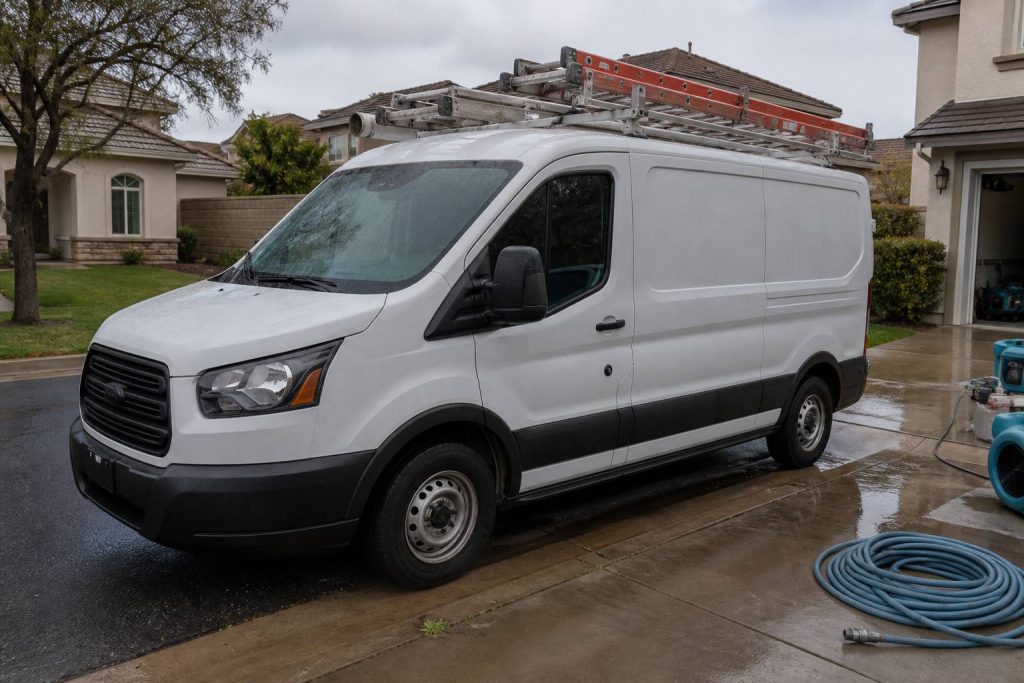
No, AI will not replace HVAC technicians. It will replace the paperwork, the routine diagnostics suggestion, and the documentation work that used to consume hours of each tech’s day. The judgment that defines a great HVAC technician — reading systems that have been modified twice over twenty years, diagnosing failures that do not match any textbook pattern, working in mechanical rooms where the original drawings are wrong — is structurally outside what AI can do.
This article is the honest, specific answer to a question being asked across the HVAC industry right now. It also explains the bigger pattern that is reshaping HVAC careers in 2026, and what every technician at every career stage should do about it.
The Quick Answer
The quick answer on AI and HVAC techs.
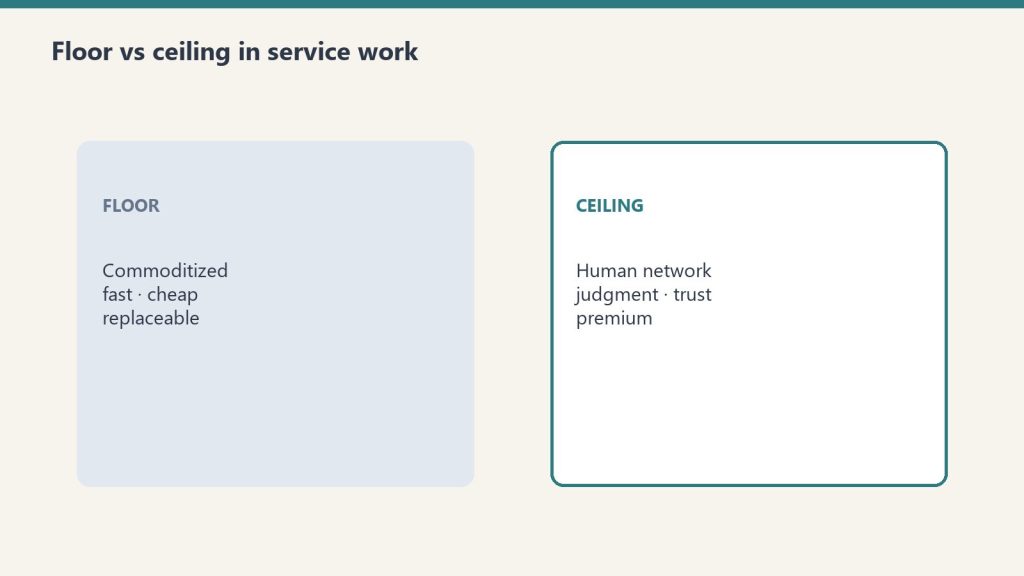
AI raises the floor of HVAC work by automating the procedural parts — quoting, scheduling, customer communication, routine diagnostics, documentation, and reporting. AI cannot touch the ceiling — the judgment work of a senior HVAC technician, the pattern recognition built from thousands of jobs, the customer-handling instinct, the ability to read mechanical systems in the field where conditions never match the manual. The floor is being commoditized. The ceiling is becoming the entire game.
What AI Is Actually Doing in HVAC Right Now
What AI is actually doing in HVAC right now.
The real-world deployment of AI in HVAC in 2026 is concentrated in a few specific areas. AI-assisted diagnostics platforms suggest likely causes based on sensor data and historical fault patterns. Mobile CMMS workflows automate work order documentation and parts lookup. AI copilots in field-service apps help junior techs walk through complex repairs by pulling from a searchable case library of past resolutions. Quoting and proposal generation tools produce first drafts that techs review and adjust.
All of this work is genuinely useful. It is also entirely floor work. None of it replaces the judgment of an experienced HVAC technician walking into a mechanical room and reading the actual situation. The AI suggestion may be wrong because the building envelope quirk is invisible from the data. The historical fault pattern may not apply because this specific system has been modified twice and the modifications are not in any database. The customer dynamic that determines whether the job goes well may have nothing to do with the technical work and everything to do with the conversation in the kitchen.
What AI does in HVAC, accurately stated, is speed up the procedural work and reduce the gap between a junior tech and a senior tech on routine cases. What AI does not do is replace the senior tech on non-routine cases, which is where most of the actual value of HVAC work lives.
The HVAC Workforce Crisis Is the Bigger Story
The retirement wave in HVAC is the more consequential dynamic than AI. Industry data shows over 40 percent of HVAC technicians are over age 50, and a substantial wave is approaching retirement in the next five to ten years. Some estimates put the retirement-to-replacement ratio at 5:2 — for every five techs who retire, only two new entrants are taking their place.
This is the actual labor story in HVAC right now. It is not about AI replacing technicians. It is about not enough technicians existing to replace the ones who are leaving. The senior techs who are retiring carry decades of judgment that newer techs cannot reproduce, regardless of how many AI tools are available. The institutional knowledge walks out the door with them, and the industry has not solved the problem of capturing it before they leave.
This makes the senior HVAC technician — and the experienced mid-career tech who can move into senior judgment work — the most valuable worker in the industry. The market is in the process of recognizing this. Wages for experienced HVAC techs are climbing. Retention bonuses are getting more aggressive. The companies that figure out how to keep their senior techs and transfer their knowledge to the next generation will dominate their regional markets.
What HVAC Technicians at Each Career Stage Should Do
What HVAC techs should do by career stage.
If you are a junior HVAC technician — your immediate move is to use AI tools aggressively to handle the procedural floor of your work, and use the time you save to apprentice yourself to a senior tech in your shop. The AI tools will make you faster than the previous generation of junior techs ever could be. What they will not give you is the judgment. The senior techs in your shop are sitting on knowledge that nobody else in the industry can give you. Get in their orbit. Work alongside them. Ask them why they made each call. Build the judgment over years.
If you are a mid-career HVAC technician — your move is to identify the judgment-heavy work in your shop and take on more of it. The complex commercial cases, the unusual residential failures, the carrier and customer escalations. Push toward the ceiling work and let AI handle more of the procedural floor. Your value over the next decade will be determined by how much ceiling capability you build now.
If you are a senior HVAC technician — the market is finally about to pay you for what you have always been carrying. Reconsider any retirement timeline built around old assumptions. Charge appropriately for your judgment work. Take on apprenticeship of younger techs as a recognized and compensated part of your role. The next ten years may be the most valuable of your career.
No. AI will replace the procedural and documentation work around HVAC service — quoting, scheduling, routine diagnostics, paperwork — but cannot replace the judgment of an experienced technician diagnosing complex systems, reading buildings, and handling customers. The floor of HVAC work is being commoditized. The ceiling remains entirely human.
Is HVAC a dying trade?
No, HVAC is the opposite of a dying trade. A massive retirement wave is exiting the industry while too few young workers are entering to replace them, creating structural demand for new HVAC techs at every career stage. The aging workforce is the actual labor story in HVAC, not AI displacement.
How will AI change HVAC work in the next five years?
AI will speed up the procedural floor of HVAC work — diagnostics suggestion, documentation, quoting, scheduling, customer communication. It will close the gap between junior and senior techs on routine cases. It will not replace the judgment work that defines senior techs on complex cases, which is where the actual value of HVAC service lives.
Should young people enter the HVAC trade in 2026?
Yes, especially for anyone willing to apprentice themselves to a senior technician. The retirement wave is creating significant career opportunities at every level, AI tools make junior techs faster than previous generations could be, and the long-term value of HVAC judgment is structurally durable against AI commoditization.
What HVAC roles are most safe from AI?
Senior service technicians who handle complex commercial work, system designers and engineers for unusual installations, and any tech with deep experience in older or non-standard systems. The judgment work in HVAC is structurally outside what AI can replicate by training on documented procedures.
The Bottom Line
AI will not replace HVAC technicians. The retirement wave will compress the workforce faster than AI ever could, and the senior techs who carry institutional judgment will become the most valuable workers in the industry. AI tools will make junior techs faster and let senior techs spend more time on the high-judgment work that defines great HVAC service. The HVAC industry is not being replaced. It is being structurally repriced to recognize the value of judgment that has always been there.
If you are in the HVAC industry, the strategic move is the same regardless of your career stage. Use AI to handle the floor. Build judgment capability deliberately. Find a senior tech to learn from if you are early in your career. Charge for your judgment if you are senior. The industry is about to be very good to the people who recognize the shift and act on it.
AI-proofing your career in 2026 is not about avoiding AI, learning to code, or getting a credential that AI cannot copy. It is about understanding the structural shift happening in every skilled and cognitive field, and positioning yourself on the right side of it. The shift has a name and a shape, and once you can see it clearly, the right moves become obvious. This article is the framework, the diagnosis, and the practical playbook.
The framework is what we call floor and ceiling. Every job in every industry has a floor — the procedural, documented, codifiable work that can be done by anyone with the right tools and training. And every job has a ceiling — the judgment, pattern recognition, and tacit expertise that defines the people who are genuinely good at the work. AI raises the floor of every industry. It cannot touch the ceiling. AI-proofing your career means deliberately shifting your time, energy, and identity toward the ceiling and letting AI take over the floor.
Last refreshed: October 12, 2026 (Pacific).
The Quick Answer
To AI-proof your career, do four things. First, identify which parts of your current work are floor (procedural, documented, AI-replaceable) and which parts are ceiling (judgment, tacit, human-only). Second, deliberately shift your time toward the ceiling parts and let AI handle the floor parts. Third, find a senior practitioner in your field and learn from them — tacit knowledge transfers only through apprenticeship. Fourth, treat your judgment and expertise as a paid product rather than a free service, because the market is in the process of repricing tacit knowledge sharply upward.
Why the Old Career Advice Is Wrong
The career advice circulating about AI is mostly wrong in predictable ways. The advice to “learn AI” treats AI fluency as the moat. It is not. Everyone has access to the same AI tools at the same prices on the same timeline. Knowing how to use AI is necessary table stakes, not a defensible career position. Anyone who treats AI deployment as their personal moat will discover, quickly, that everyone else is deploying it too.
The advice to “go into creative fields” or “go into trades” treats whole industries as safe categories. They are not. Within every industry, some roles are exposed to AI and others are durable. The category-level answer hides the real pattern. A restoration estimator who only writes standardized scopes is exposed. A restoration estimator who reads buildings and negotiates with carriers is durable. A copywriter who produces generic content is exposed. A copywriter who has built genuine taste and serves specific clients is durable. The shape of the work matters more than the industry label.
The advice to “build skills AI cannot replicate” is closer to right but still vague. The question is which skills, and how. Without a framework that explains what AI can and cannot do, the advice is just a feeling. With the floor-and-ceiling framework, the advice becomes specific. Build skills that are tacit, judgment-laden, and transferable only through apprenticeship — because those are the skills that are structurally outside what AI can replicate by ingesting more training data.
The Diagnosis: Identifying the Floor and Ceiling in Your Work
Identify the floor and ceiling in your work.
Take an honest look at your current job. Break it into the activities you do in a typical week. Then categorize each activity as floor or ceiling using these criteria.
Floor activities share these traits. They follow documented procedures. They produce standardized outputs. They can be done by a competent newcomer with the right training and tools. They get faster and easier with AI assistance, and could plausibly be done entirely by AI within a few years. They do not require deep judgment that you would struggle to explain to someone else.
Ceiling activities share these traits. They require judgment that you partly cannot articulate. They involve reading specific humans, situations, or contexts that vary too much to fully standardize. They depend on pattern recognition built from years of hands-on experience. They cannot be reliably performed by a credentialed newcomer regardless of tools. They are the part of your work that nobody else on your team can do quite the way you do.
Most jobs are roughly half floor and half ceiling, sometimes more skewed in one direction. A junior practitioner is mostly doing floor work. A senior practitioner is mostly doing ceiling work. The trajectory of a career, in any skilled field, is the gradual replacement of floor activities with ceiling activities as judgment compounds over time.
The AI shift is accelerating this trajectory. The floor activities are being absorbed by AI faster than they used to be. The ceiling activities remain entirely human. The strategic move is to spend less time on the floor work that AI is making cheap and more time on the ceiling work that remains scarce.
The Strategic Move: Climb Toward the Ceiling Deliberately
Climb toward the ceiling deliberately.
Once you have identified the floor and ceiling activities in your current work, the strategic move is to deliberately shift your time. This is not a one-time decision. It is a continuous reweighting of how you spend your professional energy. Here is what it looks like in practice.
Automate or delegate the floor activities. Use AI tools aggressively for the procedural, documented work. Stop being precious about the parts of your job that are clearly being commoditized. The energy you save on floor work is the energy you can reinvest in ceiling work, which compounds over years.
Take on more ceiling work, even when it is hard. The judgment-heavy situations — the difficult clients, the complex cases, the ambiguous decisions — are the situations that build the kind of expertise that makes you durable. Most workers avoid these because they are uncomfortable. The workers who lean into them build the ceiling capability that becomes their long-term moat.
Find a senior practitioner and apprentice yourself. Tacit knowledge transfers only through proximity to people who already have it. There is no shortcut. There is no AI tool that substitutes for working alongside a veteran on real situations. If you are early in your career, this is the highest-leverage move you can make. If you are mid-career, it is still worth doing — you can compress years of apprenticeship into focused months with the right senior practitioner.
Reposition yourself in your current organization toward judgment-heavy work. If your role is mostly procedural, propose taking on more advisory, mentoring, or judgment-heavy responsibilities. Most organizations are under-utilizing the senior judgment they have because they have not figured out how to redesign roles around the new economics. You can be the person who does that redesign for your own role first.
Price your judgment as a product, not a service. If you do advisory work, mentorship, complex client handling, or any tacit-judgment activity — start charging for it explicitly. The market is in the process of repricing this work upward sharply. The workers who recognize the shift early capture the upside. The ones who keep undervaluing their judgment leave money on the table.
What This Looks Like by Career Stage
What this looks like by career stage.
The exact moves depend on where you are in your career. The framework is the same; the application differs.
Early career (twenty-two to thirty-five). Your primary job is to acquire tacit knowledge as fast as possible. Find a senior practitioner in a field with substantial tacit content and apprentice yourself to them. Pay if you have to. Work odd hours if you have to. Move geographically if you have to. The decisions you make in this window about who you learn from will shape the next three decades of your career. The senior practitioners who are open to teaching right now will not all still be available in five years. The window is open now.
Mid-career (thirty-five to fifty). Your primary job is to deliberately shift your time toward ceiling work and away from floor work. Audit your week. Identify the procedural work that is consuming your hours and replace it with AI-assisted workflows. Take on the judgment-heavy responsibilities that other people in your organization are avoiding. Build a reputation for being the person who handles the difficult cases. The compounding effect on your career value over the next ten years is enormous.
Senior career (fifty and up).You are sitting on the most valuable asset of your career, and the market is finally about to pay you for it. Reconsider retirement timing. The traditional schedule was built around an economy that treated senior labor as overhead. The new economics value senior judgment as the highest-leverage asset in skilled work. Plan a long, well-compensated runway in advisory and mentorship roles, not a quick exit.
The floor-and-ceiling framework applies universally, but a few industry notes are worth surfacing.
Skilled trades. Electricians, plumbers, HVAC technicians, restoration operators, machinists, and other hands-on trades have substantial ceiling content and are durable. AI is raising the floor by automating quoting, scheduling, documentation, and routine diagnostics. The judgment work — reading buildings, diagnosing unusual cases, handling carriers and customers — remains entirely human.
Healthcare. Nursing, primary care, and other hands-on healthcare roles are largely safe because they depend on tacit judgment, behavioral reading, and human connection. AI is augmenting documentation, diagnostics suggestion, and routine triage. The judgment work — sensing when a patient is sicker than the vitals show, handling family dynamics, navigating ethical complexity — is structurally human.
Legal and accounting. The procedural floor — research, document review, standard filings, routine compliance — is being heavily automated. The ceiling — judgment about strategy, client counseling, novel cases, complex negotiation — is durable. The lawyers and accountants who survive the AI shift are the ones who shift toward the ceiling work.
Sales and consulting. Routine outreach, qualification, proposal generation, and follow-up — being absorbed by AI. Complex deal negotiation, executive relationship management, advisory consulting on ambiguous problems — durable. The sales and consulting professionals who survive are the ones who own the executive relationships and the judgment-heavy moments, not the ones who own the procedural pipeline.
Creative work. Generic content production — exposed. Specific creative work with a strong personal vision and direct client relationships — durable. The creative professionals who survive are the ones whose taste, judgment, and bespoke capability cannot be replicated by AI.
Software and engineering. Entry-level coding, boilerplate generation, routine debugging — being absorbed by AI. System architecture, complex debugging, judgment about trade-offs in ambiguous design situations — durable. The engineers who survive are the ones who climb toward architecture and judgment work, not the ones who keep producing routine code.
Frequently Asked Questions
What does it mean to AI-proof your career?
AI-proofing your career means deliberately shifting the mix of work you do toward tasks that require tacit knowledge, judgment, and apprenticeship-based expertise — and away from procedural, documented work that AI can replicate. The goal is to position yourself on the durable ceiling of your industry rather than on the floor that is being commoditized.
What is the floor and ceiling framework?
Every job has a floor of procedural, documented work that can be standardized and increasingly done by AI, and a ceiling of judgment-based, tacit work that only humans can perform. AI is raising the floor of every industry while leaving the ceiling intact. Workers who shift their time toward the ceiling become more durable. Workers who stay on the floor get commoditized.
Will learning AI tools save my career?
Learning AI tools is necessary but not sufficient. Everyone has access to the same tools. AI fluency is not a moat by itself. The actual moat is the tacit expertise that AI cannot replicate. Use AI tools aggressively for the procedural work, but invest your career energy in building the judgment-based expertise that is becoming the only meaningful differentiation in skilled work.
Should I switch careers because of AI?
Not necessarily. Most jobs have both floor and ceiling components. The strategic move is usually to shift the mix of your current work toward the ceiling, not to abandon your field. Career switches make sense if your current role is overwhelmingly floor work with no ceiling content available to you, but most workers have more ceiling potential in their current field than they realize.
How do I find a senior practitioner to learn from?
Start with senior people you already know about whose work you admire. Reach out directly with a specific, honest opening. Offer to buy them coffee or lunch. Ask about a specific aspect of their work that you genuinely want to understand. Most senior practitioners are more accessible than younger workers assume, and most of them are waiting for someone serious to ask.
What if my industry is being completely transformed by AI?
Even in industries undergoing major transformation, the ceiling remains human. Identify the parts of the work that require tacit judgment, complex pattern recognition, or genuine human connection. Those parts are durable even when the industry around them is being reshaped. Shift your career investment toward those parts, and you remain valuable through the transition.
The Bottom Line
AI-proofing your career in 2026 comes down to one structural insight. AI is raising the floor of every industry and leaving the ceiling intact. The procedural work that used to differentiate average workers from bad workers is being commoditized. The judgment work that differentiates great workers from average ones remains entirely human. The strategic move is to shift your time, your skills, and your career investment toward the ceiling.
This is not anxiety-based advice. It is structural analysis. The workers who understand the floor-and-ceiling framework and act on it deliberately will thrive in the AI era. The workers who keep doing floor work and hoping AI does not get to them will be commoditized. The choice is being made by every worker in every skilled field over the next twenty-four months, whether they make it deliberately or not. Make it deliberately. Shift toward the ceiling. Find a senior practitioner to learn from. Treat your judgment as a paid product. That is what protects a career in 2026 and what will protect it for as long as the underlying pattern holds, which is the foreseeable future.
The Tacit Knowledge Cluster — Further Reading
This piece is part of a larger body of writing on what the AI shift and the broader software-platform shift actually mean for service professions and the workers in them. The full cluster:
The honest answer to “what jobs are safe from AI in 2026” is this: any job whose core value is tacit knowledge — the kind of expertise that lives inside practitioners, transfers only through apprenticeship and proximity, and has never been written down anywhere AI can ingest. That answer is more specific than most lists you will find, and it is more useful than the generic reassurances that “creative work is safe” or “trades are safe.” It gives you an actual test you can apply to any job, in any industry, and get a reliable read on how durable that career is in the AI era.
This article is the framework. It explains the pattern, gives you the test, walks you through which categories of work pass the test and which do not, and tells you exactly what to do regardless of where your current job lands. The framework is industry-agnostic. It works as well for an electrician as it does for a surgeon, a project manager, a chef, or a litigator. The underlying mechanic is the same, and once you see it, you cannot unsee it.
Last refreshed: October 12, 2026 (Pacific).
The Quick Answer
Jobs are safe from AI to the degree that their core value depends on tacit knowledge that cannot be acquired by reading, ingesting documentation, or training on public data. Tacit knowledge is the judgment, pattern recognition, and contextual expertise that practitioners build through years of hands-on work, and that they cannot fully articulate even to themselves. It transfers only through proximity and apprenticeship. AI cannot replicate it because it was never written down for any model to learn from.
Jobs are vulnerable to AI to the degree that their core value depends on explicit knowledge — the procedures, frameworks, documented best practices, and standardized expertise that lives in textbooks, manuals, and training materials. AI can ingest all of that instantly and apply it at scale. The procedural floor of every industry is being commoditized. The tacit ceiling is being insulated. The safety of a job is determined by how much of its value sits above or below that line.
The Test You Can Run on Any Job
The test you can run on any job.
Apply these three questions to your current role, or to any career you are considering.
First question. Could a competent newcomer perform this job at a high level after reading the available documentation and using modern AI tools? If yes, the job is largely floor work and is vulnerable to AI commoditization. If the answer is “no, they would need years of hands-on experience working alongside someone who already knew how” — the job has real ceiling content and is more durable.
Second question. When you make a difficult judgment call in this role, can you fully explain why you made that call, or do you partly reason from intuition built from past situations you cannot easily articulate? If you can fully explain every call, the work is essentially explicit and AI will be able to replicate it. If you find yourself saying “I just knew because of how it felt” or “you have to see it to understand” — that is tacit knowledge. That is the part AI cannot touch.
Third question. Who suffers most when an experienced practitioner in this role retires? Is the loss easily backfilled by hiring a credentialed replacement, or does the team lose institutional capability that takes years to rebuild? If the loss is easily backfilled, the role is mostly procedural. If the loss creates a real gap that no amount of credentialed hiring solves quickly, the role carries significant tacit knowledge, and the people who hold it are durable.
A job that scores positive on all three questions is safe from AI in the deepest sense. A job that scores negative on all three is vulnerable. Most jobs land somewhere in between, with some parts of the work being floor (vulnerable) and other parts being ceiling (durable). The strategic move for anyone in a partially exposed role is to deliberately shift their time toward the ceiling parts of their job and let AI handle the floor.
Categories of Work That Are Genuinely Safe
Categories of work that are genuinely safe.
The categories below all share the underlying property that their core value is tacit knowledge built through hands-on experience, contextual judgment, and human-to-human interaction that resists capture in documentation.
Skilled trades with judgment requirements. Electricians solving panel problems in old buildings, HVAC technicians diagnosing systems that have been modified twice over the last twenty years, plumbers reading the failure mode of a 1940s sewer line, restoration operators scoping a complex water loss — all of this work involves judgment that AI tools assist but cannot replace. The floor of these industries is being raised by AI, but the ceiling remains entirely human.
Healthcare delivery, especially nursing and primary care. The diagnostic AI can suggest, but the nurse reading subtle behavioral cues, calibrating to a patient’s emotional state, and making the call about when a vital sign trend is concerning versus normal — that is tacit work. The 1 million nurses projected to retire in the U.S. between now and 2030 are taking with them institutional knowledge that AI cannot reconstruct from training data.
Senior roles in any skilled industry. The thirty-year veteran in any field who has internalized pattern recognition that newer practitioners cannot reproduce — that person’s value is rising, not falling, as the AI shift commoditizes the procedural work around them.
Complex sales and relationship-driven work. Enterprise sales, advisory consulting, certain legal and accounting work — anywhere the value depends on reading a specific human counterpart, building trust over years, and making bespoke judgment calls — is durable. AI assists by handling research and drafting. It does not replace the human in the room.
Skilled physical work in unpredictable environments. Restoration in storm-damaged buildings. Wilderness search and rescue. Surgical work on non-standard cases. Anything where the environment varies enough that pure pattern-matching against training data is insufficient and live judgment is required.
These categories are exposed because their core value is documented, codifiable, and pattern-matchable against training data that AI systems already have. Some roles in these categories will survive in transformed form. The roles that survive are the ones that incorporate significant tacit work in addition to the procedural baseline.
Entry-level cognitive work with standardized output. First-draft copywriting, basic legal research, simple translation, summarization, structured data analysis, entry-level coding tasks — all of this is being absorbed by AI rapidly. The roles that depended on producing these outputs as the core deliverable are being compressed or eliminated.
Customer support and call center work. AI is replacing human agents on most routine support inquiries. The roles that survive are the ones that handle escalated, complex, judgment-heavy situations — which require tacit interpersonal skills and contextual reasoning that AI cannot reliably produce.
Administrative and clerical work. Scheduling, data entry, basic reporting, document processing, routine compliance work — all of this is being automated quickly. The roles that survive are the ones that involve coordination across humans with competing priorities, where judgment about whose interests matter and how to navigate trade-offs is essential.
Mid-level analytical work without judgment requirements. Roles that involve running standardized analyses, applying documented frameworks to standardized inputs, and producing reports for higher-level decision-makers — exposed. The senior analyst who synthesizes ambiguous data into a recommendation that an executive will actually act on — much more durable, because that synthesis requires judgment.
Standardized creative work. Stock photography, generic marketing content, formulaic writing for routine purposes — being commoditized by generative AI. The creative work that survives is the work where the artist’s specific vision, taste, and judgment are inseparable from the output — which most commercial creative work is not.
The Strategic Move Regardless of Your Current Role
Strategic move regardless of your current role.
Whether your current job lands on the safe side or the exposed side of the framework, the strategic move is the same. Shift your time and your career investment toward the parts of your work that are tacit, judgment-heavy, and apprenticeship-transferred. Let AI handle the parts that are procedural, documented, and standardized.
For anyone in a skilled industry, this means deliberately spending more of your day on the high-judgment work — the difficult customer situations, the complex scoping decisions, the situations where pattern recognition matters — and letting AI take over the procedural baseline. The senior practitioners in every field who do this will see their value rise. The ones who keep doing the procedural work that AI can now do will be commoditized along with the procedural work itself.
For anyone in an exposed cognitive role, the move is to identify which parts of your work require judgment that AI cannot replicate, and aggressively shift toward those parts. The junior copywriter who only produces standard content is exposed. The copywriter who has built genuine taste, can read a specific client, and can make bespoke creative judgment calls is durable. The same logic applies to law, consulting, accounting, marketing, design, and any cognitive field — the procedural floor is being commoditized, but the judgment ceiling is intact.
Most articles answering this question fall into one of two failure modes. The first failure mode is generic reassurance. “Creative jobs are safe. Trades are safe. Healthcare is safe.” That framing is too broad. Some creative jobs are vulnerable. Some trades have significant procedural exposure. Some healthcare roles will be transformed in ways that change the underlying work substantially. The category-level answer obscures the real pattern, which operates at the level of individual roles and the specific mix of explicit versus tacit work within them.
The second failure mode is fear-feeding. “AI is coming for everything. Even the trades are exposed. Even healthcare is exposed.” That framing is also wrong. AI is genuinely transformative, but the impact is uneven and structurally predictable. The pattern is not “AI takes everything.” The pattern is “AI takes the floor of every industry, the ceiling remains human, and the gap between floor and ceiling becomes the entire game.”
The accurate framing recognizes that the AI shift is a structural reorganization of skilled and cognitive work, not a uniform threat. Jobs that have always had high tacit content — judgment, apprenticeship, hands-on expertise — are becoming more valuable, not less. Jobs that have always been mostly procedural — entry-level cognitive work, standardized administrative tasks, routine analysis — are being compressed. And every job in between is being split into a commoditized floor part and a durable ceiling part, with the strategic question being whether the practitioner can shift their time toward the ceiling.
Frequently Asked Questions
What jobs are safe from AI in 2026?
Jobs whose core value depends on tacit knowledge — judgment, pattern recognition, contextual expertise built through hands-on experience — are durable. This includes skilled trades with judgment requirements (electricians, HVAC techs, plumbers, restoration operators), hands-on healthcare roles (especially nursing), senior roles in any skilled industry, complex relationship-driven sales and advisory work, and apprenticeship and mentorship roles. The common thread is work that requires expertise AI cannot acquire by ingesting documentation.
Will AI replace skilled trades?
AI will replace the procedural and documentation work that consumes hours of a tradesperson’s day — quoting, scheduling, customer communication, routine reporting. AI will not replace the judgment work that defines a great tradesperson. The result is that average tradespeople become faster and more productive, but exceptional tradespeople with deep judgment become significantly more valuable because the only differentiation left is the part AI cannot replicate.
What is the difference between explicit and tacit knowledge?
Explicit knowledge is the part of expertise that can be written down — procedures, standards, documentation, technical specifications. Tacit knowledge is the part that lives inside practitioners and cannot be fully articulated, even by the practitioners themselves. It transfers through proximity and apprenticeship, not through study. AI commoditizes explicit knowledge but cannot replicate tacit knowledge.
How do I AI-proof my current job?
Identify the parts of your work that require judgment, pattern recognition, and contextual expertise that you cannot fully articulate. Shift your time and your career investment toward those parts. Let AI handle the procedural, documented, standardized parts. Find a senior practitioner in your field and learn from them deliberately. The careers that survive the AI shift are the ones that move toward the tacit ceiling rather than competing on the increasingly commoditized procedural floor.
Are healthcare jobs safe from AI?
Hands-on healthcare delivery work, particularly nursing and primary care, is largely safe because it depends heavily on tacit judgment, behavioral reading, and human-to-human interaction that AI cannot reliably replicate. The procedural and administrative parts of healthcare are being commoditized. The judgment parts are becoming more valuable, particularly as a generation of senior practitioners retires and the institutional knowledge they hold becomes scarce.
What should young people study or work toward right now?
Look for fields with substantial tacit content and find a senior practitioner to learn from. Skilled trades, healthcare delivery, complex sales and advisory work, and any apprenticeship-based field all qualify. Avoid careers built entirely on documented procedural work that AI can absorb. Invest in the kind of expertise that takes years to build and that AI cannot reconstruct from training data, because that expertise is becoming the only real differentiator in skilled work.
The Bottom Line
The honest answer to what jobs are safe from AI in 2026 is that any job whose core value is tacit knowledge — the judgment that lives in practitioners, transfers through apprenticeship, and has never been written down — is structurally durable. AI is commoditizing the floor of every industry and the procedural work within every role. The ceiling remains human, and the people who hold the ceiling are about to be the most valuable workers in their fields.
The pattern is the same across electricians and surgeons, HVAC technicians and litigators, restoration operators and senior consultants. The shape of the work matters more than the category label. Apply the three-question test to your own role. Shift your time toward the tacit part of your work. Find a veteran to learn from if you are early in your career. Stop spending energy worrying about whether AI is coming for you, and start spending energy on the part of the work AI cannot do. That is what protects a career in 2026. That is what protects it in 2030. And that is the pattern that will hold long after the current AI cycle.
The Tacit Knowledge Cluster — Further Reading
This piece is part of a larger body of writing on what the AI shift and the broader software-platform shift actually mean for service professions and the workers in them. The full cluster:
Every other competitive moat in skilled work is dissolving in real time. Brand. Distribution. Documented expertise. Software advantage. Information asymmetry. The proprietary playbook. AI is commoditizing all of it at a pace that the existing strategic literature has not yet caught up to. What is left, as a defensible competitive asset in any skilled industry, is the tacit knowledge that has never been written down and lives inside the heads of individual practitioners. This is the philosophical frame for the entire shift we are now living through, and the lens through which every operator, owner, and acquirer in any skilled field should be reading the next decade.
The thesis sounds simple when stated this directly. But the implications are structural, and they reach into how companies should be valued, how careers should be planned, how training should be designed, how acquisitions should be structured, and how skilled industries should be organized. Most of the existing playbook in all of those domains was built around the assumption that the moats were the documented assets. That assumption is breaking. The new playbook is built around the recognition that the moats are now the undocumented ones.
Why the Old Moats Are Dissolving
Why the old moats are dissolving.
Strategic theory in business has, for forty years, organized itself around a few canonical sources of competitive advantage. Brand recognition. Distribution scale. Documented operational excellence. Proprietary processes. Information advantage. Cost position. Network effects. Each of these was the answer to “why does this company win?” in some industry, and the existence of these moats made strategic positioning a tractable problem. You could pick a moat, build it, and defend it.
AI is corrosive to most of them. Brand recognition matters less when AI-assisted comparison tools let customers evaluate competing offers on actual merit, faster, with less friction. Distribution scale matters less when AI-leveraged operators can build distribution faster than the incumbents can defend it. Documented operational excellence matters less when the documentation can be ingested, optimized, and replicated by any competent operator with the right tools. Proprietary processes matter less when the underlying logic can be reverse-engineered from outputs. Information advantage matters less when search and synthesis are equalizing across operators. Cost position matters less when AI compresses the cost of nearly every operational input.
Not every moat is gone. Some — network effects in particular — remain genuinely durable in the platform economy. But across the bulk of skilled industries, the moats that companies built their competitive positions around are getting weaker by the quarter. The strategic landscape is flattening. Operators that used to have meaningful structural advantages are watching them erode without a clear replacement.
The conventional wisdom answer to this dissolution is “AI itself is the new moat.” Operators who deploy AI most aggressively will be the winners. That answer is partly right and largely wrong. AI is a leveler, not a moat. Every operator in every industry has access to the same AI tools at roughly the same prices on roughly the same timeline. Deploying AI well is necessary table stakes, not a defensible position. The operators who treat AI deployment as their moat are going to discover, quickly, that everyone else is deploying it too. The advantage is temporary at best.
The actual remaining moat is something else entirely. It is the knowledge that AI cannot replicate by ingesting public data, because the knowledge was never in the data.
What Tacit Knowledge Actually Is
What tacit knowledge actually is.
Tacit knowledge is a term from the philosophy of science, originally articulated by Michael Polanyi in the middle of the twentieth century. His thesis, condensed, was that we know more than we can tell. Practitioners of any complex skill — surgeons, machinists, restoration operators, lawyers, master craftspeople of every kind — carry inside them a body of knowledge that cannot be fully transferred through language. It can only be transferred through proximity, demonstration, and apprenticeship. The knower cannot articulate it because it operates below the level of conscious thought, and the learner cannot acquire it through study because there is no document that contains it.
Polanyi’s insight has been intellectually accepted in academic circles for decades. It has been almost completely ignored in mainstream business strategy, because the era of strategic theory we were living in until very recently rewarded the codifiable, the scalable, the measurable. Tacit knowledge was treated as a soft consideration, a folk concept, the kind of thing you mentioned in a speech about company culture but did not put in a strategic plan.
The AI shift makes Polanyi’s distinction the single most important strategic concept of the next decade. The reason is now obvious in retrospect. AI systems train on documented data. The vast majority of real expertise in skilled industries — the part that distinguishes great operators from average ones — has never been documented. It exists only in the tacit form, in the heads of practitioners, transferred through apprenticeship and proximity. AI cannot ingest what was never written down.
Therefore, the explicit floor of every skilled industry is being commoditized rapidly, because everything in the documentation is now available to everyone instantly. The tacit ceiling of every skilled industry is being insulated, because nothing in the tacit layer is in the documentation, and the only path to acquiring it remains the slow, human, in-person path that has always been required. The gap between floor and ceiling is widening, the floor is being equalized across operators, and the ceiling is becoming the entire game.
A moat is only durable if competitors cannot replicate it. The reason tacit knowledge qualifies as a real, structural moat is that the mechanism by which it transfers cannot be compressed or accelerated.
Tacit knowledge transfers through proximity. A senior operator can transfer their judgment to an apprentice over a period of years by working alongside them on real situations and demonstrating the patterns in context. The transfer cannot be accelerated by reading. It cannot be accelerated by AI. It cannot be accelerated by spending more money. The bottleneck is the time the senior operator can spend with the apprentice and the cognitive integration the apprentice has to do to internalize the patterns. Both of those are essentially fixed.
This means tacit knowledge is the only competitive asset that has a hard floor on its transfer cost. Every other asset can be acquired through capital deployment, technology investment, or strategic acquisition. Tacit knowledge can only be acquired through time. A competitor with more money than you cannot buy faster transfer. A competitor with better AI than you cannot synthesize the missing data. The asset is genuinely outside the normal compression of strategic resources.
This is a property that almost no other strategic asset has. Brand can be built faster with more marketing spend. Distribution can be scaled with more capital. Documented expertise can be acquired with more research investment. Tacit knowledge cannot. The only path to it is the long path. Which means an operator who has it now has it for the foreseeable future, and a competitor who does not have it cannot get it on any timeline that matters competitively.
This is also why tacit knowledge is the asset class that defines the next era of strategic positioning in skilled industries. The companies that have it, retain it, and capture it into transferable form will compound the advantage over time. The companies that do not have it will face a structural competitive disadvantage they cannot close by deploying more capital or better technology.
The Implications for Strategy
Implications for strategy.
If tacit knowledge is the last durable moat in skilled industries, strategic thinking has to reorganize around it. The implications run through every function of a company.
Talent strategy has to prioritize the carriers of tacit knowledge. The senior operators who hold institutional judgment have to be treated as the highest-leverage asset in the company, regardless of their position on a formal org chart. Compensation, retention, and respect dynamics have to be aligned with their actual value, not with the org-chart legacy that treated them as overhead.
Apprenticeship has to be reinstated as a core function. The transfer of tacit knowledge from senior to junior operators is no longer a soft cultural practice. It is the primary mechanism by which the company’s most defensible asset propagates through the next generation. Apprenticeship is the curriculum. Companies that do not have a structured apprenticeship program are not transferring their moat. The moat will walk out with the next retirement.
Capture has to be deliberate. Some tacit knowledge can be surfaced into transferable form through structured methodology. The Human Distillery process is one specific implementation. The output is an institutional artifact — a knowledge asset the company owns even after the operator who held it retires. Every skilled-industry company should be running a deliberate capture program with its most senior operators. Most are not. The window to do this work is open right now and will narrow as the relevant operators retire.
Acquisition diligence has to evolve. The standard playbook for acquiring skilled-industry businesses prices the documented assets — equipment, contracts, customer concentration, financials. The modern playbook has to price the tacit-knowledge bench strength of the senior operators in the acquired business. Deal terms have to be structured around retention and knowledge transfer of those operators. The asset is not on the balance sheet. The buyer who recognizes that has a meaningful edge.
AI deployment has to be designed to amplify, not replace, the tacit-knowledge layer. The wrong AI strategy uses AI to automate around senior operators with the goal of reducing their headcount. The right AI strategy uses AI to take the procedural floor work off of senior operators, freeing them to spend more time on the judgment work where their value compounds. The former hollows out the moat. The latter compounds it.
Why This Is Genuinely Good News
The dominant emotional response to the AI shift, across skilled industries and across the broader workforce, has been some version of anxiety. The machines are getting smart. The expertise is becoming obsolete. The careers people built over decades are about to be commoditized. This anxiety is real and understandable, but it is also based on a flawed model of what is actually happening.
The accurate model is that AI is dissolving the floor moats of skilled industries while simultaneously revealing and elevating the ceiling moats. The floor moats — documented expertise, procedural knowledge, the standardized body of any industry — are being commoditized, and the operators whose competitive advantage depended on them are facing a difficult transition. But the ceiling moats — tacit knowledge, judgment, institutional experience — are being structurally insulated and economically revalued upward.
The people who hold ceiling-level expertise — the veteran operators in every skilled industry — are about to find themselves in the strongest economic position of their careers. The people who built their position on floor-level expertise will face significant disruption. The people who recognize the shift and reposition themselves toward ceiling work will thrive. The transition is uncomfortable, but the structural outcome is, for the people who actually know how to do skilled work, deeply positive.
And for the industries themselves, the outcome is even better. The bad actors who survived by underdelivering on the documented floor will be starved out, because AI is making the floor visible and unfakable. The honest operators who have always been doing the work properly will find the playing field finally tilting in their direction. The rogue contractor who depressed the curve will lose their arbitrage. The reckless operator who survived on speed-by-cutting-corners will be exposed. The race to the bottom is ending. The race to the top, defined by tacit expertise, is starting.
This is the structural meaning of the AI shift in skilled industries. The floor is being raised. The ceiling is being revealed. The people who hold the ceiling are about to be paid for what they have always carried. The industries themselves are about to be forced to level up because the floor is rising fast enough that bad work cannot hide anymore. And the institutional knowledge that has historically died with each retiring veteran is about to be deliberately captured and propagated, because the methodology exists and the economic incentive is finally aligned with doing it.
Frequently Asked Questions
What is the difference between explicit and tacit knowledge?
Explicit knowledge is the part of expertise that can be written down — procedures, standards, documentation, technical specifications. Tacit knowledge is the part that lives inside practitioners and cannot be fully articulated, even by the practitioners themselves. It transfers through proximity and apprenticeship, not through study. AI commoditizes explicit knowledge but cannot replicate tacit knowledge because it was never in the training data.
Why is tacit knowledge considered a defensible competitive moat?
Because the mechanism by which it transfers — proximity, apprenticeship, time in context with a senior practitioner — cannot be compressed or accelerated by capital, technology, or strategic investment. Every other competitive asset can be acquired faster with more resources. Tacit knowledge has a hard floor on its transfer cost. That property makes it structurally defensible in a way few other assets are.
How is AI changing the value of expertise in skilled industries?
AI is commoditizing the documented, explicit floor of every skilled industry by making the procedural body of knowledge equally accessible to all operators with modern tools. It cannot touch the tacit ceiling, which lives only in the heads of senior practitioners. The result is that floor-level expertise is being commoditized downward while ceiling-level expertise is being revalued upward.
What is the Human Distillery methodology?
The Human Distillery is a structured methodology for extracting tacit knowledge from senior operators through long-form, deliberate conversations and converting their judgment patterns into transferable artifacts — operator-ready playbooks, AI training data, and institutional knowledge assets. It is the practical implementation that lets companies capture the asset before it walks away.
Why is the apprenticeship model returning to relevance?
Because it is the only known mechanism for transferring tacit knowledge between practitioners. Classroom-based training, certification programs, and documented curricula can transfer explicit knowledge effectively, but they cannot transfer the judgment that defines great operators. The apprenticeship model — working alongside a senior practitioner on real situations — is the mechanism that has always worked and is now the strategically important one again.
What should an operator do strategically in response to this shift?
If they are a senior operator, recognize that their work is being revalued upward and adjust their pricing, role design, and time allocation accordingly. If they are a younger operator, find a senior practitioner to learn from while the window is open. If they own or run a company, identify the carriers of tacit knowledge in their business, retain them, build apprenticeship structures around them, and run deliberate capture programs to preserve the asset.
The Bottom Line
Every other competitive moat in skilled industries is dissolving. The brand moat. The distribution moat. The documented-expertise moat. The proprietary-process moat. The information-asymmetry moat. AI is commoditizing all of it. What is left, as a defensible competitive asset, is the tacit knowledge that has never been written down and lives only inside the heads of veteran practitioners. That knowledge is the last moat, and it is structurally insulated against the kind of commoditization that is hollowing out everything else.
The operators who carry tacit knowledge are about to be the most valuable people in their industries. The companies that retain those operators, capture their knowledge deliberately, and propagate it through structured apprenticeship will hold a moat that competitors cannot replicate by deploying more capital, more technology, or more software. The industries themselves are about to be reshaped by the fact that the floor is rising and the ceiling is being revealed.
This is not a threat to skilled work. It is the moment skilled work finally gets recognized at its true value. The knowledge that took decades to build, that has never been adequately compensated, that has lived quietly in the heads of veteran operators across every industry, is about to be the most economically valuable asset class in the field. The market is in the process of catching up to a truth that practitioners have always known. Tacit knowledge is the moat. It always was. It is just becoming visible.
The Tacit Knowledge Cluster — Further Reading
This piece is part of a larger body of writing on what the AI shift and the broader software-platform shift actually mean for service professions and the workers in them. The full cluster:
The Human Distillery is the structured methodology for extracting tacit knowledge from senior operators and converting it into transferable artifacts. It is the practical mechanism behind the broader thesis that AI raises the floor of every industry but cannot touch the ceiling. This article is the field manual. It tells you exactly how to prepare for, structure, and run an interview that surfaces the knowledge that lives only in the heads of veteran operators, and convert that knowledge into a form that is useful to apprentices, successors, AI systems, and the company that owns it.
This is not a theoretical document. This is a practitioner’s playbook. If you work in a skilled industry, run a company that depends on senior expertise, train operators, or are responsible for institutional knowledge preservation, you can run a Human Distillery interview using the structure below. The first one you run will be awkward. The fifth one you run will be revelatory. By the tenth one, you will be capturing knowledge at a rate that fundamentally changes the knowledge-asset position of whatever you are working on.
What You Are Actually Trying to Extract
What you are actually trying to extract.
The first thing to internalize before running a Distillery interview is that you are not collecting information. You are surfacing patterns of judgment that the interviewee cannot easily access from inside their own head. The knowledge you want lives below conscious thought for the senior operator. They know what to do in a complex situation because they have done it a thousand times, but they cannot necessarily tell you what rule they are following, because the rule has compressed itself into intuition.
Your job as the interviewer is to ask the kinds of questions that force the implicit rule back up into conscious thought, where it can be articulated. The right questions are concrete, specific, situational, and slightly contrarian. The wrong questions are abstract, general, philosophical, and respectful. You want the senior operator to say things like, “well, in that specific situation, you would actually do X, even though the standard says Y, because…” The “because” is the entire game. That is where tacit knowledge lives.
If your interview produces a transcript that reads like a textbook chapter, you have failed. The senior operator gave you the explicit, documented knowledge — the floor. You have not extracted the ceiling. If the transcript reads like a series of specific, weirdly granular war stories with judgment calls buried inside them, you have succeeded. The ceiling is in there. You can extract it later.
Selecting the Right Interviewee
Not every senior operator is a good Distillery candidate. The right candidate has three characteristics.
First, they have substantial depth in the actual craft, not just the management of the craft. The owner who has spent twenty years running a company but never put hands on the actual work is not the right candidate. The senior technician, project manager, estimator, or operator who has been hands-on for twenty or thirty years is. The knowledge you want is in the hands and the head, not in the org chart.
Second, they have to be capable of self-reflection. Some senior operators have all the knowledge but cannot articulate any of it because they have never had to. Others have the knowledge and have spent years informally teaching it to junior people, so the articulation muscle is already developed. Prioritize the second group. They will produce more useful output per hour of interview time.
Third, they have to trust the process. The interview will only produce real material if the interviewee believes the interviewer is going to use the output well. If they suspect the output will be used to replace them, or to commodify their value, or to extract it without acknowledgment, they will give you the floor and withhold the ceiling. The trust setup before the first interview is more important than any specific question you ask during it.
Preparing for the Interview
The preparation determines the quality of the output. Three days of preparation will produce a one-hour interview that surfaces material a casual interviewer would not get in ten hours. Here is what to do.
Spend half a day learning the basic vocabulary and structure of their work. You do not need to become an expert. You need to know enough that the operator does not have to translate every term back to layperson language. They should be able to use industry shorthand and trust that you will follow. If they have to dumb it down, the conversation flattens and the real material does not surface.
Identify five specific scenarios in their work that would force judgment calls. Not generic categories — specific situations. “A water damage job where the homeowner is also the insurance adjuster’s cousin.” “A scope dispute on a complex commercial loss where the carrier has hired a third-party adjuster.” “A drying decision on a 1920s building with mixed materials and an aggressive timeline.” The specificity is what forces judgment to the surface. Generic prompts produce generic answers.
Prepare a small number of contrarian questions. Things like, “When does the standard procedure actually produce a worse outcome?” or “What do most operators in your industry get wrong that they do not realize?” or “If you had to train someone to make one specific judgment call faster, which one would matter most?” These questions invite the senior operator to articulate the parts of their judgment that diverge from the documented body of knowledge, which is exactly the material you want.
Set up the recording properly. Both audio and ideally video. A transcript-only capture loses the tonal information that distinguishes a confident judgment from an uncertain one. If the interview is in person, set the recorder once and forget about it. Stop after every interview to verify the recording captured cleanly. There is nothing more painful than discovering a great interview did not record.
The Interview Structure
The interview structure that captures judgment.
A productive Distillery interview is between sixty and ninety minutes. Beyond ninety minutes, the operator gets tired and the material degrades. Less than sixty minutes, you do not get past the warm-up.
The structure that works most reliably is the following.
Minutes 0 to 10 — The warm-up. Start with something easy. Ask them about their career arc. How did they get into this work? What did the industry look like when they started? What changed? This is not the high-value material. It is the setup that lets the operator settle into the conversation and start trusting the interviewer. Do not try to extract gold in the first ten minutes. You are building rapport.
Minutes 10 to 30 — The first specific scenario. Move into the first prepared scenario. Be concrete. “Walk me through what you would actually do if you got called to…” Let them talk. Do not interrupt. When they reach a judgment call, slow them down. “Wait. Why that and not Y? What signal told you X was the right read?” Push gently into the reasoning. Their initial answer will often be a surface explanation. The second and third “why” questions are where the real material surfaces.
Minutes 30 to 60 — The second and third scenarios. Run two more specific scenarios with the same structure. You will start to see patterns across the scenarios — recurring judgment moves the operator makes, common signals they read, frameworks they apply without realizing they are applying them. Note the patterns as they emerge. The patterns are more valuable than any single scenario, because they are what generalizes.
Minutes 60 to 80 — The contrarian section. Now move into the contrarian questions. The senior operator is warmed up, the rapport is established, and they are willing to say the things they would not have said at the beginning of the conversation. “What do most operators get wrong?” “Where does the standard procedure actually fail?” “What did you used to believe that you no longer believe?” This is often the most material-dense section of the interview.
Minutes 80 to 90 — The synthesis. Ask them to reflect on the conversation itself. “What is the one thing you would want a younger operator to take from this conversation?” “If you had to summarize the most important judgment move in your career, what would it be?” These prompts produce compact, articulate summaries that the operator could not have given you at the beginning of the conversation because they had not yet surfaced the underlying material.
Mistakes to Avoid
The interviewer mistakes that destroy a Distillery session are predictable. Avoid them.
Do not lead the witness. The interviewer’s job is to ask, not to teach. If you start telling the operator what you think the right answer is, they will defer to your framing and stop producing original material. Stay in question mode.
Do not interrupt. The most valuable material often comes in the second or third minute of a long answer, after the operator has worked through the obvious surface response and started getting into the actual reasoning. If you cut them off to ask a follow-up at minute one, you never get to the deeper layer.
Do not chase tangents. Senior operators have decades of war stories and will gladly wander into them. A few tangents are useful for rapport. Too many tangents destroy the session. Gently steer back to the prepared scenarios.
Do not accept abstractions. If the operator answers a specific question with a general principle, push them back into specifics. “Can you give me an example of the last time that came up?” The specifics carry the judgment. The abstractions are what they have been telling themselves the principle is, not what they actually do.
Do not flinch from the moments when the operator says something controversial or contradicts industry orthodoxy. Those moments are gold. Most of the real ceiling material in any industry diverges from the documented orthodoxy in some specific way, because the orthodoxy is the average and the ceiling is by definition above average. Lean into those moments.
What to Do With the Output
What to do with the output.
One Distillery interview produces a sixty-to-ninety-minute recording. The raw material is not the deliverable. The deliverable is what you build from it.
Transcribe the interview within forty-eight hours. Use whatever transcription tool is current. Read the transcript through once without trying to extract anything, just to refresh your memory of the conversation.
On the second read, mark every judgment call the operator made. Every instance where they made a decision that diverged from the standard procedure, every signal they read, every framework they applied. Mark them. These are the artifacts.
On the third read, look for patterns. Which judgment moves came up multiple times? What signals did the operator return to across different scenarios? What frameworks were they applying without naming them? The patterns generalize across situations and are the most useful output for downstream use.
Convert the patterns into a structured artifact. The format depends on the use case. For internal training, build a playbook organized by scenario type with the judgment patterns embedded. For AI training data, produce structured Q-and-A or scenario-and-decision pairs. For preservation purposes, build a narrative knowledge document organized around the operator’s career arc and the lessons embedded in it. The same raw interview can feed multiple deliverables.
Share the output back to the operator before you use it. They should review it for accuracy, fill in places where their meaning was misrepresented, and approve the final version. This step is non-negotiable. It respects them, improves the quality of the output, and builds the trust that will let you come back for a second interview.
Why This Works
The Human Distillery methodology works because it solves the fundamental problem of tacit knowledge transfer. Tacit knowledge cannot be written down by the person who has it, because they cannot consciously access most of it. It can only be surfaced through structured conversation with someone whose specific job is to make the implicit explicit. Once surfaced, it can be converted into transferable form. Once transferable, it can be used to train apprentices, inform AI systems, and preserve institutional capability across generations.
The methodology was originally developed in the context of restoration industry knowledge capture, but it generalizes across every skilled industry. The patterns are the same. The pacing is the same. The mistakes to avoid are the same. The output is the same. Once you can run a Distillery interview in one domain, you can run it in any domain where tacit expertise exists.
The institutions that figure this out first — the companies, training organizations, certifying bodies, acquirers, and family successors who run deliberate Distillery programs across their veteran population — will capture an asset that competitors cannot replicate by ingesting more public data. The asset is the knowledge that has never been public. Once captured, it stays inside the institution that captured it. It becomes a real moat.
The interview itself runs sixty to ninety minutes. Beyond that, the operator gets tired and the material degrades. The preparation takes about half a day for the first interview with a given operator, less for subsequent ones. The post-interview processing — transcription, pattern extraction, artifact construction — takes another half day to full day depending on how the output will be used.
Who is the right interviewee for a Distillery process?
A senior operator with substantial hands-on depth in the actual craft (not just management of it), the capacity for self-reflection, and trust in how the output will be used. Pure management figures who never did the work directly are not the right candidates. The knowledge lives in the hands and the head of practitioners.
What kinds of questions surface tacit knowledge?
Concrete, specific, situational, and slightly contrarian questions work. Generic and abstract questions produce generic and abstract answers. The right prompts force the operator to walk through specific scenarios and articulate the judgment calls they would actually make, then push deeper with “why?” follow-ups until the underlying reasoning surfaces.
How do you convert an interview into a usable artifact?
Transcribe within forty-eight hours. Read three times — once for memory, once to mark judgment calls, once to identify patterns. Convert the patterns into a structured format appropriate to the use case — internal playbook, AI training data, or narrative knowledge document. Always share the output back to the operator for review and approval before use.
Can AI conduct the interview instead of a human?
Currently no, and probably not in the near future. The skill of a great Distillery interview is reading the operator’s tone, knowing when to push and when to back off, recognizing the moments where real material is about to surface and slowing down to capture it. That is itself a tacit skill that an AI system cannot yet replicate. AI can assist with transcription and pattern extraction after the interview, but the interview itself is human work.
What happens if the operator does not want to be interviewed?
Then they should not be interviewed. The methodology only works when the operator trusts the process and chooses to participate. Coerced or reluctant interviews produce floor-level material at best. The right move is to start with operators who are willing, demonstrate the value of the output, and let the willing examples persuade the hesitant ones over time.
The Bottom Line
The Human Distillery is a method, not a mystery. It can be learned. It can be practiced. It produces real, valuable, transferable artifacts. And it solves the most consequential problem in the AI era for any skilled industry — how to capture the tacit knowledge that defines great operators before it walks away with retirement, exits the business with a sale, or simply degrades with mortality.
If you are responsible for institutional knowledge in any skilled industry, the highest-leverage thing you can do this quarter is run three Distillery interviews with your most respected senior operators. The output will surprise you. The patterns you find will inform every operator development decision your company makes for the next decade. The artifacts will be reusable across training, AI deployment, acquisition diligence, and family knowledge preservation.
The methodology is here. The window is open. The senior operators in your network are mostly willing to participate if approached correctly. Schedule the first interview this month. The hardest part is starting. After that, the methodology does the work.
If you retired from a skilled trade or industry in the last ten years, the market just inverted in your favor. The knowledge you took with you when you walked out — the thirty or forty years of judgment, pattern recognition, and tacit expertise — has become the most valuable asset in your field. Your former employer probably has not figured this out yet. Your former competitors probably have not figured it out yet. But the shift is real, the economics are real, and the operators in your field who are still in the game are quietly starting to look around for senior advisors who can do what nobody under fifty can yet do.
This is the case for coming back. Not back to the schedule, the stress, or the operational responsibility you walked away from. Back into the part of the work that you were always best at, on your own terms, in a role the industry did not even know how to offer five years ago, for compensation that may exceed anything you ever earned when you were full-time. The window is open. The opportunity is real. And you may be exactly the right person to take it.
What Has Changed Since You Walked Out
What has changed since you walked out.
You retired into an economy that valued senior labor as overhead to be reduced. The industry you left was probably pushing you toward retirement as a cost-saving move, even if it was dressed up as something else. That economic logic was rational in its time. Senior operators were expensive. The procedural floor of every industry was still mostly handled by human labor, which meant the senior operator’s role overlapped significantly with the cheaper junior operator’s role. From a margin perspective, replacing experience with software-backed youth was a defensible move.
That logic broke in the last twenty-four months. The arrival of capable AI systems collapsed the cost of doing the procedural floor work in every skilled industry. AI raises the floor of every industry, but it cannot touch the ceiling. The senior operator’s role has been split in half. The procedural part is now done by AI. What is left — the judgment, the relationships, the institutional knowledge, the pattern recognition — is the only thing that still requires a human, and it requires a specific kind of human that the industry is only just beginning to realize is in short supply.
That specific kind of human is you. Or rather, the version of you that existed when you left the field, plus whatever you have added through life experience in the years since. Your former colleagues who are still working are AI-leveraged now. They are faster than they used to be on the procedural side. They are exactly as competent on the judgment side as they were the day you left, because that part does not develop without years of in-the-field exposure that they were already mostly through by then.
The deficit your departure created — the loss of senior judgment in their organization — has not been backfilled. It cannot be backfilled by AI. It can only be backfilled by another senior operator with the same depth of experience, and there are not many of those available in any given regional market. Your former employer or industry peers have probably been quietly making do, hoping their middle-tier operators would grow into the judgment role over time. They mostly have not.
That gap is the opportunity. And right now, you are one of a small number of people in the entire industry who can fill it.
What “Coming Back” Actually Looks Like
What coming back actually looks like.
The mistake most retired operators make when they consider returning is they imagine going back to the same role they left. The forty-five hour week. The on-call rotations. The customer escalations. The same operational footprint they were happy to walk away from. Almost nobody wants to go back to that, and the market does not actually want you in that role. What the market wants from you is something different.
It wants your judgment, surgically applied to high-leverage situations, without the operational overhead that consumed the bulk of your full-time career. It wants you in an advisory capacity. It wants you on the difficult job site for two hours when nobody else can read what is happening. It wants you in the conference room when the carrier is fighting the scope. It wants you reviewing the bids before they go out. It wants you mentoring the senior project managers who are about to step into your old shoes but do not yet have the depth to fill them. It wants the ceiling work, not the floor work.
That is a different role. It pays differently. It demands different hours. It uses your time for the most valuable two hours of the day instead of all eight. And it does not require you to give up the parts of retirement that mattered to you — the flexibility, the slower pace, the freedom from operational stress, the ability to spend time with family and pursue the things you set work aside for.
The structure that fits this role is some version of fractional advisory work. A handful of hours per week with one or two former employers or industry peers, on retainer, at premium rates, with clear scope around judgment and advisory work rather than operational delivery. It is the role that did not really exist in your industry ten years ago. It exists now. The companies that have figured it out are paying remarkably well for it. The companies that have not figured it out are the ones you can teach how to pay for it.
What You Are Worth Now
The pricing on senior-operator advisory work in skilled industries is climbing rapidly and has not yet stabilized. The retired operators who are entering the market are mostly pricing themselves at rates significantly below what the market would bear, because they are anchored on their old hourly wages plus a modest premium. The actual market rate for genuine senior judgment in most skilled industries is several multiples of that.
Think about it this way. When you were full-time, your hourly cost to your employer included the substantial overhead of full-time employment — benefits, equipment, support staff, the assumption that you would be reachable for forty-five hours a week. In a fractional advisory role, none of that overhead applies. You are selling two hours of pure judgment. The cost structure is completely different. The pricing should be completely different.
The right framing for setting your rate is not “what was I worth full-time?” It is “what does it cost the company to bring in someone with my depth of judgment for a couple of hours when they actually need it?” The answer in most skilled industries is a substantial multiple of the equivalent hourly rate you earned in full-time work. The companies that need this kind of help generally know it. They are not going to push back hard on premium rates from someone whose judgment is actually as deep as yours, because the alternative — making a wrong call on a high-stakes job — is much more expensive than your fee.
Start with a rate that feels slightly uncomfortable. If the first prospect pays it without negotiating, your rate is too low. If they negotiate hard, you have priced it correctly. If they walk away, you have priced it too high — but probably only slightly, and probably not in a way that requires significant adjustment.
The Knowledge You Took With You Is Still There
The knowledge you took with you is still there.
Some retired operators worry that the knowledge has decayed since they left the field. The standards changed. The technology updated. The regulations evolved. Are they still relevant?
The answer is mostly yes, and the reason is that the most valuable part of your knowledge was never the standards, technology, or regulations. Those were the documented floor. The valuable part was the judgment, the relationship knowledge, the pattern recognition, the customer-handling instinct, the institutional memory of how things actually work in your industry. None of that has decayed. It is just as accurate now as it was the day you walked out, because human nature does not change, the underlying dynamics of skilled work do not change, and the muscle memory of complex judgment does not atrophy in a few years.
The thin layer of currency you need to bring back is easily acquired. A few hours of review on the current standards. A few conversations with people still in the field about what has changed. A weekend reading the industry trade press to catch up on the politics. That is the floor work, and the AI can help you with most of it now in a way that was not possible the last time you needed to refresh your knowledge.
The ceiling work — the part nobody else can do — is intact. It is the part you took with you. It is the part that has been quietly compounding while you have been away, because life experience continues to develop judgment in ways that field experience does not always provide. The retired operators returning to advisory work are often sharper than they were when they left, because they have had time to think about the work without the operational pressure that prevented reflection.
What to Do This Month if This Resonates
If you are reading this and recognizing yourself in it, here are the moves that match the moment.
Make a list of five people in your industry who would have a use for your judgment. Former employer. Former competitors. Younger operators who you mentored informally over the years. Industry contacts who used to bring you problems. Pick five names. You probably already know most of them well.
Reach out with a specific, low-pressure opening. “I have been thinking about doing some fractional advisory work. If you have situations where my judgment would be useful for a few hours, I would be open to a conversation.” That is the entire opening. Do not oversell. Do not undersell. The people who need this kind of help will surface themselves quickly.
Have two or three conversations to learn what the actual demand looks like. You may discover that the demand is concentrated in one specific kind of work, or that the rates are higher or lower than you expected, or that the structure of fractional engagements is different from what you imagined. Two or three conversations will calibrate you faster than any amount of strategic planning.
Pick one engagement to start with. Not a portfolio. One. Use it to test your rate, your scope, and your tolerance for being back in the work. The first engagement is the most important one to get right because it will set the template for everything that follows.
Treat the work as the highest-leverage version of your career, not as a comeback or a return. The retirees who come back to do their old jobs at slightly higher pay are pricing themselves wrong and structuring their roles wrong. The retirees who come back to do something genuinely different — judgment work, advisory work, the ceiling work — are creating something more valuable than anything they did when they were full-time.
Frequently Asked Questions
Why is the market suddenly valuing retired operators?
The AI shift has commoditized the procedural floor of every skilled industry, leaving the tacit, judgment-based knowledge of senior operators as the only meaningful differentiation. Retired operators who carry that knowledge are filling a gap their former companies did not realize would open up when they left. The economics now favor bringing them back in advisory roles at premium rates.
Do I have to come back full-time to do this?
No. The role that fits the new market is fractional advisory work — a handful of hours per week, at premium rates, focused on judgment and advisory situations rather than operational delivery. You keep most of the freedom of retirement and add a high-leverage income stream.
How do I price advisory work after retirement?
Not by reference to your old full-time hourly rate. Price by reference to what it costs a company to bring in someone with your depth of judgment for a few hours when they actually need it. In most skilled industries, the right rate is a substantial multiple of an equivalent full-time wage, because you are selling pure judgment without overhead.
Has my knowledge decayed since I retired?
The thin documented layer of standards and technology may need a brief refresh. The deeper layer of judgment, relationships, pattern recognition, and institutional memory is intact and has likely sharpened during your time away because you have had space to think without operational pressure.
Who should I reach out to first?
Start with five people who already know your work — former employers, former competitors who respected you, younger operators you mentored. Use a low-pressure opening that signals availability without overselling. The people who need your judgment will surface themselves quickly.
What if I do not want to come back at all?
Then do not. The choice is yours. But consider that there may be a structured way to capture the knowledge in your head — a Human Distillery process that converts your tacit expertise into a transferable artifact for an industry, a former employer, or your family — that does not require you to take on any operational role. Even if you never advise on another job, your knowledge does not have to disappear with you.
The Bottom Line
You retired into an economy that did not value what you had built. That economy has just inverted. The thirty or forty years of tacit knowledge sitting in your head is now the most valuable asset in your former industry, and the structure that lets you monetize it without going back to the operational grind you walked away from did not exist when you retired. It exists now.
You do not have to come back. Nobody is owed your return. But if the work itself still interests you, if you have life left in your professional career, if the freedom of retirement is starting to feel less like rest and more like underuse, the conditions for a different kind of return have lined up better than they have at any other moment in your career.
The market is finally catching up to what you have always been carrying. The shift is real. The opportunity is real. The compensation is real. Make a list. Send the five messages. See what comes back. The best years of your career may not be behind you. They may be the next ten, in a role the industry did not know how to offer you when you left.
If you are married to, the child of, or close to someone who has spent thirty or forty years building expertise in a skilled trade or industry, they are sitting on the most valuable asset of their entire career — and most of them have no idea. This article is for you. The people who can see it from the outside. The ones who have watched them carry this knowledge for decades without ever fully understanding what was being built. The ones who can help them see what the market is finally about to pay them for.
This is not about flattery. This is about a structural shift in the economics of skilled work, and a quiet conversation happening in households across every industry right now between veterans who feel obsolete and families who can see something the veterans cannot see about their own value. The shift is real. The conversation matters. Your read of the situation may matter more than your partner’s, because you can see it more clearly from the outside.
What You Have Watched Them Build
What you have watched them build.
You have probably watched your partner come home from job sites for decades. You have watched them solve problems in their head over dinner, walk through difficult customer situations out loud while doing the dishes, replay the day’s calls during the drive home from the kids’ practices. You have heard the names of the same colleagues and adjusters and suppliers and competitors for so many years that you could probably handle the introductions yourself at the industry holiday party.
You have watched them get phone calls at unreasonable hours from younger people in their field who needed help thinking through something. You have watched them come home from a job and quietly mention that the situation was handled, without ever explaining that “handled” meant they had drawn on twenty years of pattern recognition that nobody else on that crew could have produced. You have watched them downplay their own competence in front of family, in front of social settings, in front of younger relatives who asked what they did for a living.
You have probably noticed, at some level, that what they actually do for a living is harder and more skilled than the way they describe it. You have probably also noticed that they have never been compensated at the level that matches what they actually carry. That has been frustrating to watch. It has probably been frustrating for them to live, even if they have never said it directly.
The thing they carry — the knowledge that took them thirty years to build — is called tacit knowledge. It is the hands-on, judgment-laden, in-the-field expertise that has never been written down in any textbook, never been captured in any manual, never been measurable on any certification exam. It lives inside their head, where it has lived for decades, mostly invisible to the world outside their industry. And it is about to become the most valuable thing in their field.
Why the Market Is Finally Catching Up
Why the market is finally catching up.
For most of their career, the market has not paid your partner what their knowledge was actually worth. The reason is structural. The economics of skilled industries have, for forty years, undervalued tacit expertise because it was hard to measure, hard to credential, and competed against a flood of documented knowledge that was easier to value. The senior operator with thirty years of judgment was paid roughly the same as the senior operator with the same job title and ten years of mediocre experience, because the industry could not reliably tell the difference from the outside.
The AI shift changes that. The documented, procedural floor of every skilled industry is now accessible to anyone with a smartphone and a willingness to use modern tools. AI is making the floor commoditized. What is left, the only meaningful differentiation in any skilled industry, is the tacit knowledge that AI cannot replicate. And the only people who have it are the veterans like your partner.
This is not a small repricing. It is a structural inversion. The people who have been undervalued for decades are about to be revalued at premium rates, because the rest of the work is being commoditized down to them. The veterans who are not paying attention are going to continue undercharging for their time and selling themselves short out of habit. The ones whose families help them see what is happening are going to charge appropriately and capture the value they have always deserved.
This is where you come in.
What Your Partner Probably Cannot See
The thing that makes this conversation hard is that the people who built their expertise the hardest are usually the worst at recognizing what they have. The veterans in skilled industries did not build their knowledge by going to a fancy school and earning credentials. They built it by showing up to a thousand difficult job sites, making mistakes, fixing the mistakes, internalizing the corrections, and gradually accumulating a kind of competence that they cannot fully explain even to themselves.
Because it accumulated slowly and invisibly, most veterans do not see how much they have actually built. They see only the day-to-day, where they are still solving problems that have come to feel routine to them. They have stopped noticing that the problems they consider routine are problems that no junior operator on their team could solve at all. They calibrate to their own current capability and assume that everyone in their field operates at the same level, because they cannot remember what it was like to not have the knowledge they have now.
You can see it more clearly. You have watched the trajectory. You know how much more capable they are now than they were twenty years ago. You have seen who calls them for help and who does not. You have heard the way the younger people in their field talk about them. You have noticed when industry peers defer to their judgment in conversations.
What you can do is name it for them. Not in a way that feels like flattery, which they will dismiss. In a way that feels like accurate observation. “The thing you handled today is not something most people in your industry could handle. I have been watching for thirty years. You are at a level very few people get to.” That kind of grounded reflection from a partner is something a veteran will hear in a way they cannot hear it from anyone else.
The Conversations That Matter Right Now
The conversations that matter right now.
There are a small number of conversations worth having with your partner over the next few months. They do not all have to happen at once. They are the conversations that help them recognize the moment they are in and act on it before the window closes.
The first conversation is about retirement timing. The traditional model assumes senior operators retire on a schedule built around age, savings, and a relatively standardized exit from the workforce. The new economics suggest that timing should be reconsidered. The most valuable years of your partner’s career may be the next ten, not the last ten. Encourage them not to rush an exit they were planning around outdated assumptions about the value of their work.
The second conversation is about pricing their time. Most veterans chronically underprice their advisory and judgment work because they have been doing it for free for decades. Help them think about what their time is actually worth in the new market. The hourly value of senior-operator judgment in skilled industries is climbing rapidly. The veterans who adjust their rates capture the upside. The ones who keep charging their old rates leave most of the value on the table.
The third conversation is about teaching and mentoring. Your partner has likely been informally mentoring younger people in their field for years. That work has historically been unpaid. It does not need to be. The same time spent in a formal apprenticeship or advisory arrangement, with appropriate compensation, is some of the highest-leverage work available to senior operators in any industry. Encourage them to formalize what they have been doing informally.
The fourth conversation is about capturing the knowledge. If your partner retires in the next ten years without anyone deliberately capturing what is in their head, an enormous amount of irreplaceable expertise will simply disappear. There are now structured methodologies for converting that knowledge into transferable form — long-form structured conversations that surface the judgment patterns underneath their work and convert them into useful artifacts. Encourage them to participate in this kind of process, either internally at their company or independently. The output is something their family, their successors, and their industry can keep long after they are gone.
The fifth conversation is about belief. Many veterans have been told, directly or indirectly, that they are becoming obsolete. Some of them have started to believe it. You can be the voice that pushes back. The market is in the process of revaluing exactly what they hold. The veterans who hear that from someone they trust — and your partner trusts you in a way they trust very few people — internalize it faster and act on it sooner.
What This Means for Your Household
The financial implications of this shift are real. A veteran whose work is properly repriced in the new market may see significant income changes over the next five years — through higher rates, advisory contracts, structured retirement packages with consulting components, or in some cases acquisition opportunities for their company or stake in it. These changes will not happen automatically. They require deliberate action.
The household conversations that match this moment are different from the ones that match a traditional retirement runway. Instead of planning a wind-down, you may be planning a peak. Instead of optimizing for time off, you may be optimizing for the deliberate capture of value that has been building for thirty years and is finally going to be paid out. Instead of asking when they can stop working, you may be asking how long they want to keep working in their new and more valuable role.
This is a good conversation to have. It is the conversation of a household that has supported a career through a long arc and is now arriving at the moment when the support pays back. It is also, frankly, the conversation that recognizes the support you have given. The career you have watched them build was not built alone. The repricing that is about to happen is not just their win. It is yours too.
Frequently Asked Questions
How do I help my partner see the value of their experience?
Name what you have observed accurately and specifically. Not flattery — observation. Point to specific situations where they handled something that nobody else in their field could have handled. Reflect back what you have watched them build over decades. The veterans who hear this from a partner they trust internalize it in a way they cannot internalize it from anyone else.
Should my partner delay retirement because of AI changes?
Possibly. The traditional retirement schedule assumed senior operators were a cost to be reduced. The new economics value them as the highest-leverage asset in their industries. Their most valuable years may be the next ten. Encourage them to reconsider any retirement timeline that was built around outdated assumptions.
How do I encourage a veteran to charge more for their time?
Start with the observation that the market is shifting and that hourly rates for senior judgment work are climbing across skilled industries. Most veterans underprice from habit. Sometimes the most effective conversation is asking what they would charge a stranger for the same advice, then comparing that to what they actually charge their current clients. The gap is usually significant.
What is tacit knowledge and why does it matter for my family?
Tacit knowledge is the practical, judgment-based expertise that veterans build over decades and that has never been written down in any manual. It matters for your family because it is the asset your partner has been building their entire career, it is about to be revalued sharply upward by the market, and it is finite — it disappears when they retire if nobody deliberately captures it.
How do we capture my partner’s knowledge before they retire?
There are structured methodologies for extracting tacit knowledge through long-form interviews and converting it into transferable artifacts. Some operators do this through their company. Some do it independently. The output is a durable record of expertise that the operator’s successors, family, or business can keep long after retirement. The process is most valuable while the operator is still active and accessible.
What if my partner is resistant to recognizing their own value?
This is common. The veterans who built their expertise the hardest are usually the worst at recognizing it. Stay patient. Stay grounded. Continue to name what you observe accurately. Point to specific evidence — who calls them for help, who defers to their judgment, what they have handled that others could not. Over time the accumulated weight of accurate reflection lands.
The Bottom Line
Your partner has spent decades building something that has been undervalued by the market for most of that time, and is about to be sharply revalued upward. The thirty years of tacit knowledge sitting in their head is, in the new economics of skilled work, the most valuable asset they will ever own. Most veterans cannot see it clearly from the inside. You can see it from where you sit.
You have watched them build it. You have supported the career that produced it. You are in the best possible position to help them see what the market is finally about to pay them for. The conversations you can have with them in the next few months — about timing, about pricing, about teaching, about capturing the knowledge, about belief — may be the most consequential conversations of their professional life.
They are not aging out of relevance. They are aging into their peak value. The market is in the process of catching up to something you have probably understood about them for years. Help them see it. The household you have built together is about to find out that the long career was even more valuable than either of you knew.
If you train operators in any skilled industry — through formal certification programs, in-house training departments, trade schools, association curricula, or corporate development tracks — the AI shift is about to make most of your existing infrastructure obsolete, and the model you probably abandoned forty years ago is about to become the real curriculum again. This is not a small adjustment. This is a structural rewrite of how skilled industries develop their next generation of operators.
The ceiling — the tacit knowledge that defines great operators — has never lived in any classroom. It lives in apprenticeship relationships, in proximity to senior practitioners, in the kind of learning environment that the modern training-industrial complex deliberately moved away from in the name of scale and professionalization. The shift now reverses that. The training infrastructure that scales does not transfer the knowledge that matters anymore.
What Your Existing Curriculum Actually Teaches
What your existing curriculum actually teaches.
If you run a formal training program in any skilled trade or industry, look at your current curriculum honestly. The bulk of what you teach is documented, codified, and standardized. The IICRC body of knowledge. The trade certification standards. The OSHA regulations. The technical specifications of the equipment your industry uses. The customer-service scripts. The compliance requirements. The reporting frameworks.
All of that material exists because it can be written down. That is exactly why it is now also accessible to anyone with an AI tool. A new technician with a phone can pull up the entire body of explicit knowledge in your industry in seconds, get it explained at whatever level of depth they need, and apply it competently within weeks. The information advantage that formal training used to provide has collapsed.
What your curriculum does not teach — because curriculum cannot teach it — is the judgment that senior operators apply when the documented procedure does not match the actual situation. The pattern recognition that lets a thirty-year veteran walk onto a job site and know within ten minutes which parts of the standard scope are wrong for this specific case. The customer-handling instinct that defuses a difficult homeowner. The supplier-relationship knowledge that determines who actually delivers on Friday afternoons. The failure-mode memory that lets a senior operator predict where this specific job is going to go wrong before the crew has even started.
That knowledge is the ceiling of your industry. It cannot be taught in a classroom. It can only be transferred through proximity to people who already have it. And the formal training infrastructure that your industry has built over the last forty years was specifically designed to move away from that model, in favor of something that scales.
Why the Classroom Model Was Adopted in the First Place
The formalization of skilled-industry training was a rational response to the conditions of the late twentieth century. The apprenticeship model, while it produced great operators, did not scale. It was slow. It was geographically constrained. It was uneven in quality. It was dependent on the personal commitment of senior operators who were not always good at teaching. And it was opaque to regulators, insurers, and customers who wanted standardized credentials they could trust.
Classroom-based certification solved real problems. It standardized the floor. It made the explicit body of knowledge accessible to a much larger population. It produced credentials that customers and insurers could trust. It allowed industries to scale faster than the slow, organic apprenticeship system would have permitted.
But it also introduced a structural blind spot. The training-industrial complex got very good at teaching what could be written down, and progressively worse at transmitting what could not. The graduating technician now has the certification, but does not have the judgment. The certification used to be a proxy for judgment because it took years of apprenticeship to earn. Now the certification is just a credential, and the judgment is missing. Most of the industry has been quietly aware of this for two decades and has not had a structural solution for it.
The AI shift makes the structural problem unavoidable. The credentials are now equivalent across operators because AI can teach anyone the explicit body of knowledge equally well. The only remaining differentiation is the judgment that the formal training infrastructure was never designed to transfer. The training programs that recognize this and adapt will produce the next generation of operators who can actually compete at the ceiling. The training programs that do not will produce certified operators with no judgment, all of whom are interchangeable, all of whom will be commoditized.
What the New Curriculum Actually Looks Like
What the new curriculum actually looks like.
The training program that fits the AI era is not a curriculum reform. It is a structural rearrangement of how operators develop. Here is what it looks like.
The explicit body of knowledge gets delivered by AI. The standards, the procedures, the regulations, the technical specifications — all of that gets handed off to AI tutoring systems that can teach any individual operator at their own pace, with full personalization, and unlimited patience. This is what AI is genuinely good at. Let it do that part. Stop spending classroom hours on material that AI teaches better than any human instructor ever could.
The classroom time gets converted to practicum and judgment work. The hours saved from explicit-knowledge instruction get reallocated to structured exposure to real situations — case studies of actual jobs, walk-throughs of judgment calls, exposure to senior operators in the field. The classroom becomes a place where the tacit knowledge of the industry gets surfaced and discussed, not where the textbook gets reviewed.
The apprenticeship becomes a deliberate, structured program. Each trainee gets paired with a senior operator for a meaningful period — months or years, not days — working alongside them on real jobs, with explicit conversation about why each decision is being made. The program is structured. The conversations are deliberate. The trainee is expected to absorb judgment, not just procedures. This puts senior operators back in the center of training, where they should have been all along.
The senior operators get compensated for teaching. The traditional apprenticeship model collapsed in part because senior operators were not paid to teach. They taught because they wanted to or because their employer expected it, and the quality varied accordingly. The modern apprenticeship model treats senior operators as paid instructors whose teaching is a recognized, compensated, valued part of their role. The economics finally align with the importance of the function.
The certification incorporates judgment assessment, not just knowledge assessment. The traditional certification exam tested whether you knew the documented body of knowledge. The modern certification needs to test whether you can apply judgment to novel situations. This is harder to design and harder to grade, but it is the only certification that will actually differentiate competent operators from interchangeable ones in an AI-saturated industry.
Why This Is an Opportunity, Not a Threat
If you run a training organization in a skilled industry, the natural reaction to this analysis is anxiety. The infrastructure you built — the classrooms, the curriculum, the certification programs, the instructional staff — is at risk of becoming obsolete. That anxiety is understandable but misplaced.
The opportunity is that you are uniquely positioned to be the bridge between AI tooling and senior operators. Your existing relationships with the industry, your credibility with certification bodies, your access to both senior practitioners and developing operators — all of that is exactly what is needed to build the new training infrastructure. The organizations that move quickly to redefine their role will become more important to their industries than they have ever been. The ones that resist will be displaced by new entrants who build the new model from scratch.
The training organization of the AI era is not a school. It is a brokerage. It connects senior practitioners with developing operators, provides the structural scaffolding for deliberate apprenticeship, delivers AI-tutored explicit-knowledge instruction at scale, designs judgment-assessment certification, and captures the tacit knowledge of senior operators into transferable forms before they retire. That is a more valuable institution than the classroom-based credentialing organization that came before it.
What to Do in the Next Twelve Months
What to do in the next twelve months.
If you run a training program in a skilled industry, here are the moves that match the moment.
Pilot an AI-delivered explicit-knowledge curriculum on one segment of your training population. Use one of the modern AI tutoring systems to deliver the standards, procedures, and technical specifications, and measure how the learning outcomes compare to classroom delivery. In most pilots the AI delivery outperforms the classroom on knowledge retention while taking a fraction of the instructional time.
Reallocate the freed instructional hours to structured judgment work. Build case-study sessions, walk-throughs of complex real jobs, conversations with senior operators about their decision frameworks. Treat these sessions as the high-value core of your curriculum, not the supplementary material.
Build deliberate apprenticeship pairings. Identify the senior operators in your industry network who are good at teaching and are willing to take on structured mentoring. Pair them with developing operators in a formal, time-bounded, compensated arrangement. Track the outcomes. The data on apprenticeship effectiveness will quickly justify expanding the program.
Develop judgment-assessment instruments. Work with senior operators to design assessment scenarios that test whether a developing operator can apply judgment to novel situations, not just recite documented knowledge. Pilot these alongside your existing certification exams. The judgment instruments will quickly become more predictive of actual job performance than the knowledge-recall instruments.
Run a Human Distillery process with the most respected senior operators in your industry network. Extract their tacit knowledge in structured form. Use the output as core teaching material for your apprenticeship program. The senior operators get a durable artifact of their expertise. Your training program gets curriculum material that no competitor can replicate.
Frequently Asked Questions
Will AI replace human instructors in skilled-industry training?
AI will replace instructors for the documented, explicit body of knowledge — standards, procedures, regulations, technical specifications. AI cannot replace the human transfer of tacit, judgment-based knowledge, which has always required proximity to senior practitioners. The instructional role shifts from delivering documented content to facilitating judgment development and apprenticeship.
What is wrong with the current classroom-based training model?
It was designed to teach explicit knowledge at scale, which AI now does better. It was never designed to transfer the tacit, judgment-based knowledge that defines great operators, and the absence of that transfer has been a structural problem in skilled industries for decades. The AI shift exposes the problem and forces a structural response.
How do you design an apprenticeship program that actually works?
Pair developing operators with senior practitioners who are both skilled at their work and willing to teach. Structure the time around real jobs, not classroom exercises. Build explicit conversation about decision frameworks into the work. Compensate the senior operator for teaching. Make the program long enough — months or years — for tacit knowledge to actually transfer.
Can judgment be tested in a certification exam?
Yes, but with different instruments than traditional knowledge-recall exams. Scenario-based assessments that present novel situations and evaluate the operator’s reasoning are far more predictive of actual job performance than multiple-choice tests of documented knowledge. Several certification bodies are beginning to pilot these formats, with strong early results.
What happens to existing certification credentials in the AI era?
Knowledge-recall certifications will lose value because the underlying knowledge is now equally accessible to everyone via AI tools. Judgment-based certifications and verified-apprenticeship credentials will gain value because they signal something AI cannot replicate. Certification bodies that adapt early will set the standards for the new era.
How do you compensate senior operators for teaching?
Treat teaching as a paid, recognized, valued part of the senior operator’s role rather than an unpaid expectation. Build instructor stipends, mentorship bonuses, or fractional teaching contracts into the structure. The most respected senior operators in most industries are willing to teach if the economics and the respect dynamic are right.
The Bottom Line
The training and certification infrastructure that skilled industries built over the last forty years was optimized for explicit knowledge transfer at scale. AI just made explicit knowledge cheap. The infrastructure that matters now is the one that transfers tacit knowledge — and that infrastructure looks a lot more like the apprenticeship model the industry abandoned than the classroom model it adopted.
This is not a return to the past. It is an upgrade. Modern apprenticeship combines AI-delivered explicit-knowledge instruction at scale with deliberate, structured, compensated tacit-knowledge transfer from senior operators to developing ones. It is more effective than either the classroom model or the traditional apprenticeship alone. It produces operators who can compete at both the floor and the ceiling. And it puts the senior operators of every industry back in the center of training, where they have always belonged.
The training organizations that recognize this and adapt are about to become more important to their industries than they have been in decades. The apprenticeship is the curriculum. The senior operators are the faculty. The AI tools deliver the textbook. The certification rewards judgment, not recall. The model is simple. The window to lead the shift is open right now. Step into it.
If you own a skilled-industry business, or you buy them, the most valuable asset on your balance sheet is not on your balance sheet at all. It is the tacit knowledge sitting inside the heads of your senior operators — the judgment patterns, the relationship maps, the failure-mode instincts, the customer-handling moves that took thirty years to develop and have never been written down. That asset is about to be repriced sharply upward, and most owners and buyers have not adjusted their thinking yet.
This article is for the people who control capital in skilled industries. The owners, the operators, the private-equity buyers, the acquirers, the strategic investors. The thesis is simple. The AI shift is making the procedural floor of every industry cheap. The ceiling — the tacit knowledge that defines the great operators — is becoming the only durable competitive moat. If you do not have a deliberate strategy for valuing, protecting, and acquiring that asset, you are leaving the most important variable in your business unmanaged.
What Has Changed in the Economics of Expertise
For most of the last forty years, the economic narrative around skilled industries was that experienced operators were a cost center. Senior labor was expensive. The instinct of professionalized management was to push experience toward retirement, replace it with cheaper junior labor backed by software, and capture the difference as margin. That playbook worked in an era when the documented, procedural knowledge of an industry was the bulk of what made a company functional.
That era ended sometime in the last twenty-four months. The arrival of capable AI systems collapsed the cost of doing the procedural floor work. AI raises the floor of every industry, but it cannot touch the ceiling. The procedural work that used to consume hours of each senior operator’s day — scoping, documentation, communication, reporting — can now be done by software in a fraction of the time. What is left of the senior operator’s role is the part that cannot be automated. The judgment. The relationships. The pattern recognition. The tacit knowledge.
That residual is now the entire game. And it lives inside heads, not inside systems. The companies that built defensible positions on the back of senior expertise are sitting on the most undervalued asset in their balance sheet. The companies that pushed senior expertise out the door to optimize margin have just discovered that the operators they replaced cannot actually be replaced.
How to Recognize the Asset in Your Business
Recognize the tacit-knowledge asset in your business.
Most owners do not have a clear picture of where the tacit knowledge in their company actually lives. Here is how to find it.
Look at who gets called when something goes sideways. Every company has a small number of operators who are the de facto resolution layer for unusual problems. The job that confuses the project manager. The customer who is about to fire you. The technical situation the team has never seen. The senior people who handle those situations are sitting on the institutional judgment. Most of them have been at the company a long time. Most of them are underleveraged in formal management hierarchies because their value does not show up on a traditional org chart.
Look at who customers ask for by name. The senior operators who get specifically requested by repeat customers are carrying brand equity that does not belong to the company. It belongs to them personally. If they leave, that customer revenue is at meaningful risk. Most companies do not track this. They should.
Look at who the younger employees informally consult. In every skilled-industry business, there is a shadow advisory structure underneath the formal one. Junior employees know which senior operators actually understand the work and quietly route their hardest questions to those people. Identify those informal advisors. They are the carriers of the company’s real expertise.
Look at who solves problems that the documentation does not solve. The procedure manual covers the common cases. The unusual cases get solved by senior operators using judgment that is not in any document. The people who solve those cases are the ones whose departure would create the largest knowledge gap.
Once you have identified the carriers, you have identified the asset. The next question is how much it is worth.
What Tacit Knowledge Is Actually Worth
The economic value of tacit knowledge in a skilled-industry business is most easily measured by what happens when it walks out the door. Specifically — what does it cost to replace a senior operator who carries deep institutional judgment, and how long does the replacement take?
In most skilled industries the answer is genuinely surprising. Replacing a senior operator with thirty years of experience usually takes between two and five years of ramp time before the replacement reaches comparable judgment capacity, and often the replacement never fully gets there. During that ramp period, the business carries elevated error rates, lower margins on complex jobs, and customer-relationship risk that is invisible until something goes wrong.
A rough way to value a senior operator who carries tacit knowledge — multiply their fully loaded annual cost by the number of years of ramp time their replacement would require, then add the contribution margin on the complex work that only they can currently handle. That number is the floor on the asset value sitting in their head. In many cases it is meaningfully larger than the asset value of any piece of equipment the company owns.
For acquirers, this calculus changes how due diligence should be done. The standard due diligence checklist focuses on equipment, contracts, customer concentration, and financials. The most important variable — the bench strength of senior operators who carry institutional judgment — is rarely scrutinized with the same rigor. That is the variable that determines whether the acquired business is actually durable post-close, or whether the value evaporates the moment the founder or senior operators walk.
The Acquisition Playbook for Tacit Knowledge
Acquisition playbook for tacit knowledge.
If you are buying a skilled-industry business, the deal structure has to reflect where the actual value lives. Here is the modern playbook.
Structure earnouts around senior operator retention, not just revenue. The traditional earnout ties contingent payment to revenue or EBITDA milestones. The modern earnout should also tie payment to keeping specifically named senior operators in place and engaged for a minimum number of years. If the senior operator walks, the earnout drops, because the asset you actually bought walked with them. This protects you. It also signals to the seller that you understand what you are buying.
Negotiate explicit knowledge transfer requirements. The acquisition agreement should require structured knowledge transfer from senior operators to identified successors over a defined window. This is not a soft commitment. It is a specific, scheduled, documented apprenticeship program built into the deal terms. The seller has incentive to comply because their earnout depends on it. The buyer has protection because the institutional knowledge is being captured in transferable form.
Identify and lock in the carriers before close. In the diligence phase, identify the specific senior operators who carry the most institutional judgment. Then build retention packages for them, contingent on the deal closing. Communicate to them directly that they are recognized as critical to the business and that the acquirer values their role. The most common failure mode in skilled-industry acquisitions is that the carriers feel undervalued post-close, get a better offer from a competitor six months later, and walk. The business value goes with them.
Run a Human Distillery process on the founder. If the founder is a senior operator with decades of experience, run a deliberate, structured extraction of their tacit knowledge before they exit the business. This is a specific methodology — a series of long-form, structured conversations that surface the judgment patterns underneath their work and convert them into operator-ready playbooks and AI-ready training data. The output is a durable knowledge asset the company owns even after the founder departs.
Price the deal accordingly. A business whose senior operators are committed to staying and whose tacit knowledge has been extracted into transferable form is worth materially more than a business with identical financials but no knowledge-transfer infrastructure. Acquirers who understand this can pay premium multiples to sellers who have done the work, and still capture more value than buyers who pay lower multiples for undurable assets.
The Owner Playbook If You Are Not Selling
Owner playbook if you are not selling.
If you own a skilled-industry business and you are not planning to sell, the strategic implications are different but equally important.
Identify your carriers and treat them as the highest-leverage asset in your company. The senior operators who carry institutional judgment should be the highest-paid, most-respected, longest-retained employees in your business, regardless of where they sit on a formal org chart. If your compensation system rewards management layers and underrewards senior operator depth, your compensation system is misaligned with the actual economics of your industry.
Build apprenticeship structures around them. Pair each senior operator with one or two younger employees in a deliberate apprenticeship model. The younger employees work alongside the senior on real jobs, absorbing the judgment patterns in context. This is not training in the classroom sense. It is the traditional craft model, applied deliberately to capture knowledge that would otherwise leave with retirement. The career path this creates for younger employees is a meaningful retention tool in its own right.
Document the patterns that can be documented. Some tacit knowledge cannot be written down, but a meaningful fraction of it can be surfaced through structured conversation. Have someone — internal or external — sit with each senior operator and run them through their judgment patterns systematically. The output is an internal playbook. It does not replace the senior operator. It captures enough of their judgment to accelerate the next generation and to maintain consistency if the senior departs unexpectedly.
Plan retirement transitions over years, not months. The traditional retirement model assumed senior labor was overhead. The modern model recognizes senior operators as carriers of institutional capital. Plan their transitions over three to five years, with reduced hours and explicit advisory roles, so the knowledge has time to transfer. Most senior operators will accept a reduced-hours advisory arrangement for years longer than they would accept the traditional retirement schedule.
The Strategic Window
This shift is happening now. The owners and acquirers who recognize it in the next twenty-four months are going to capture significant economic value. The ones who continue operating on the assumption that senior labor is a cost center are going to find themselves losing the carriers, losing the institutional capability, and competing on a commoditized floor against everyone else.
The window is open right now because most of the industry has not yet adjusted to the new economics. Senior operators are still being valued at pre-AI rates. Acquisition multiples are still being calculated on pre-AI frameworks. The companies that move quickly can build moats their competitors will not understand for years.
The asset is sitting in their heads. The market is in the process of figuring out what it is worth. The operators who control the asset are about to be the most valuable people in their industries. The owners and buyers who understand this first are going to control the next decade of skilled-industry consolidation.
Frequently Asked Questions
How do you put a dollar value on tacit knowledge?
Calculate the fully loaded annual cost of replacing a senior operator who carries deep institutional judgment, multiply by the number of years of ramp time the replacement would require to reach comparable judgment, then add the contribution margin on the complex work only that operator can currently handle. The result is a floor on the asset value, which in many cases is larger than the value of equipment the company owns.
What is a Human Distillery and why does it matter to an acquirer?
The Human Distillery is a structured methodology for extracting tacit knowledge from senior operators through long-form, deliberate conversations, converting their judgment patterns into operator-ready playbooks and AI-ready training data. For acquirers, it converts institutional knowledge from an at-risk asset into a durable, company-owned asset that survives the founder’s exit.
Should earnouts be tied to senior operator retention?
Yes. In a skilled-industry acquisition where the value is concentrated in senior operator judgment, traditional revenue-based earnouts under-protect the buyer. Tying earnout payments to keeping specifically named senior operators in place for a defined period aligns the seller’s incentive with the actual value being transferred and protects the acquirer from the most common post-close failure mode.
How do I identify the carriers of tacit knowledge in my business?
Look for the operators who get called when things go sideways, who customers ask for by name, who younger employees informally consult, and who solve problems the documentation does not cover. These are the carriers. They are usually long-tenured and often underleveraged in formal hierarchies because their value does not show up on a traditional org chart.
What if a senior operator refuses to transfer their knowledge?
The most common reason senior operators withhold knowledge transfer is that they correctly perceive themselves as being treated as a cost rather than an asset. The fix is to reposition them as the highest-leverage asset in the business, compensate them accordingly, and make the apprenticeship of younger operators a recognized and rewarded part of their role. Most resistance evaporates when the underlying respect dynamic changes.
How does this affect acquisition multiples in skilled industries?
Businesses with strong senior operator bench strength, deliberate knowledge-transfer infrastructure, and documented institutional playbooks should command meaningfully higher multiples than businesses with identical financials but undocumented tacit knowledge concentrated in at-risk individuals. The market is still in the process of pricing this differential, which means there is a window for sophisticated buyers and sellers to capture asymmetric value.
The Bottom Line
The most valuable asset in a skilled-industry business is no longer the equipment, the contracts, or the territory. It is the tacit knowledge in the heads of senior operators. AI is making everything else commoditized. The carriers of that knowledge are about to be the most valuable people in their industries, and the businesses that have deliberately captured and protected their tacit knowledge are about to be the most valuable companies.
If you are an owner, treat your senior operators as the highest-leverage asset on the balance sheet. Build apprenticeship structures around them. Run a Human Distillery process to convert what is in their heads into durable, company-owned intellectual property. If you are an acquirer, restructure your diligence and deal terms around senior operator retention and knowledge transfer. The standard playbook is out of date.
The asset is real. It is large. It is sitting inside heads that have, on average, ten or fifteen good working years left in them. The owners and buyers who move now will be the ones who control the next decade of every skilled industry. The ones who do not will be left wondering why their AI investments did not generate the moat they expected. The moat was never the AI. It was always the knowledge that lived in the people the AI cannot replicate.
If you are under forty and serious about a long career in any skilled industry, the most valuable thing you can do this year is find a veteran and get yourself into their orbit. Not for the resume. Not for the connections. For the knowledge that lives in their head and has never been written down anywhere — the part of expertise that AI cannot replicate by ingesting more public data, because the data was never public in the first place.
This is the companion to a piece I wrote for the older generation, telling them this is their moment. That article explained why the veterans are about to become the most valuable people in their industries. This one is for you, the younger operator. It explains what to do about it before the window closes.
What You Are Actually Competing Against
What younger operators are actually competing against.
If you came into your trade or industry in the last ten years, your training environment was fundamentally different from the one the veterans came up in. You had software for the procedural work. You had documented processes. You had AI tools that wrote the first draft of nearly everything. The tools are good. They are getting better. The floor of competence in your industry is rising fast because of them.
Here is the part you might not have noticed yet. The same tools that made you fast are training your competition to be fast in exactly the same way. Every other operator in your generation has access to the same models, the same documentation, the same automation. Your edge over the next person is shrinking by the month, because the things you can do that they cannot do are mostly things AI is making available to everyone.
The veterans had to build their expertise without those tools. AI raised the floor, not the ceiling. The ceiling still belongs to the people who built it the hard way. And the hard way produced a kind of expertise that the modern training environment is not producing in your generation, no matter how much software you stack.
You are not in a worse position. You are in a different position. The difference is that the foundational depth you need to compete at the ceiling has to be acquired from someone who already has it, because the modern training pipeline does not produce it on its own.
Why the Veterans Are Actually Findable Right Now
Why veterans are findable right now.
Here is something most people in your generation have not realized yet. The veterans are not hard to find. They are sitting in their offices, on their job sites, in their shops, in their trucks, doing the work they have always done. Most of them are wide open to a younger operator who shows up with genuine respect and real interest.
The reason most of them are not already mentoring half a dozen people is not because they are unwilling. It is because almost nobody from your generation has asked. The cultural assumption has been that the veterans are obsolete and the younger generation will figure it out with software. That assumption is wrong, and the veterans know it is wrong, and most of them are quietly waiting for somebody to figure that out.
The window is open right now. It will not stay open forever. The smart operators in your generation are starting to figure this out, and once that signal spreads, the veterans are going to get crowded. Right now you can pick up the phone, drive to a job site, or send a thoughtful message and likely get time with a senior operator who has thirty years of experience inside their head.
Do it this week. Do not wait until you have a perfect plan. The plan is to show up.
How to Approach a Veteran Without Insulting Them
How to approach a veteran without insulting them.
This is the part younger operators get wrong most often. You cannot approach a veteran like they are a content asset to be extracted. You cannot show up with a checklist of questions and treat them like a podcast guest. You cannot ask them to “teach you everything they know.” All of those framings position you as the buyer and them as the supplier of a commodity, and the commodity is the most carefully built thing in their professional life.
Approach them as a craftsperson approaching another craftsperson. Acknowledge what they have built. Be specific about why their work caught your attention. Ask if you can buy them coffee or lunch and be genuinely curious about the parts of the work that are not in any manual. Then shut up and listen.
The right opening sounds like this. “I have been in this industry for X years. I am trying to build something durable. I noticed how you handle Y, and I would love to learn how you actually think about it. Can I buy you lunch?” That works. It works because it is honest, specific, and positions you as a serious operator who recognizes another serious operator.
The wrong opening sounds like this. “I am working on a thing and I would love to pick your brain about the industry.” That is the opening of someone who wants free consulting. Veterans recognize it immediately. They will be polite. They will not give you the real knowledge. The real knowledge only comes out for people who have demonstrated they can be trusted with it.
What to Do Once You Are In
If a veteran gives you their time, here is what to do with it.
Work alongside them on real jobs whenever possible. The knowledge you actually need is not the knowledge they can tell you over coffee. It is the knowledge they cannot articulate because it operates below conscious thought. You only see it by watching them work, asking them in real time why they made a specific call, and absorbing the reasoning in context. Tacit knowledge transfers through proximity, not through documentation.
Bring real problems. Veterans want to help solve actual situations, not give generic advice. If you are stuck on a specific job, a specific customer dynamic, a specific scoping decision, bring that to them. They will engage with the real thing far more deeply than they will engage with a hypothetical.
Take notes after the conversation, not during. Writing things down in front of a veteran turns the conversation into a transaction. Listen first. Capture the patterns afterward, when you have time to think about what you actually heard.
Bring something back. Whatever the veteran helped you with, follow up a week later with what you did with it and what happened. That follow-up is the single highest-leverage thing you can do to build the relationship, because it shows you treated the advice as real and applied it. Most mentees never do this. The ones who do become the ones the veteran starts inviting into bigger conversations.
Pay for time when it makes sense. If a veteran is giving you a significant amount of time, offer to pay for it. Most will say no for the first few hours. After that, the conversation should shift toward something that respects their professional rate. Treat their judgment as a paid product. It is.
What You Can Offer Back
The relationship has to be mutual to last. Here is what younger operators can authentically offer a veteran in exchange for their time.
You can run the AI side of their work. Most veterans are not naturally suited to AI tooling, and many of them resent the learning curve of yet another software stack. You can offer to handle the procedural floor of their business — the scoping, the documentation, the customer communication, the AI-leveraged side of operations — in exchange for time alongside them on the judgment work. This is a real career path that is starting to emerge in field operations.
You can document their knowledge in a form that serves them, not just you. If you sit with a veteran for ten hours and produce a clean internal playbook that captures their judgment patterns, you have just given them something genuinely valuable — a transferable artifact of expertise they can use to train their next generation of technicians or to package as the intellectual asset of their company before a sale.
You can be the connective tissue. Many veterans have decades of relationships and reputation but limited capacity to leverage modern channels. You can run their online presence, their content output, their newer client acquisition channels, in a way that respects their voice and amplifies their authority. They get reach without having to learn a new platform. You get their endorsement and the proximity to their network.
You can be loyal. This sounds soft, but it is the most strategically valuable thing on the list. Most younger operators churn through relationships. The one who stays — who shows up consistently for years, who keeps the trust intact, who does not leverage the relationship for short-term wins — becomes the natural successor. Successorship is the most powerful career move available in any skilled industry, and almost nobody plays it deliberately.
The Long Game
If you are twenty-eight or thirty-two or thirty-five right now, you have a thirty-year career in front of you. The decisions you make in the next two years about who you learn from will shape the next three decades. The veterans who are open to teaching right now will not all still be available in five years. Some will retire. Some will get acquired. Some will simply close their availability because the right successor showed up and they no longer have capacity for another mentee.
The younger operators who treat this moment seriously — who go find the veterans now, who build genuine relationships, who absorb the ceiling-level knowledge while it is still accessible — are going to be the ones running their industries in 2040. The ones who keep stacking AI tools without ever sitting next to a veteran will be commoditized along with everyone else operating at the same procedural floor.
The market is splitting. There will be a large middle class of AI-leveraged operators who are technically competent but functionally interchangeable. And there will be a much smaller group of operators who carry both AI fluency and tacit, veteran-transferred expertise. The first group will be commoditized. The second group will be the next generation of ceiling-holders.
You get to choose which group you are in. The choice is being made in the next twelve months, whether you make it deliberately or not. Make it deliberately.
Frequently Asked Questions
How do I find a veteran in my industry to learn from?
Start with the people you already know about. The senior operators whose work or company you have admired from a distance. Reach out directly with a specific, honest opening. Offer to buy coffee or lunch. Do not ask for “general advice.” Ask about a specific aspect of their work that you genuinely want to understand. Most veterans are more accessible than younger operators assume.
What if the veteran I want to learn from is a competitor?
Most skilled-industry veterans are surprisingly generous with competitors who approach respectfully, because competitor relationships at the senior level are often collaborative, not zero-sum. Be transparent about what you do and that you respect their work. If they are not interested, they will tell you. If they are, you have just opened the most valuable relationship in your professional life.
How much should I pay for a veteran’s mentorship?
The first few conversations are usually informal. Once the relationship is established and you are getting significant judgment-level help, treat their time as a paid product. Hourly advisory rates for senior operators in skilled industries are climbing rapidly. Expect to pay something in the range of professional consulting rates, and consider it the highest-leverage spend of your career.
Can I just learn what I need from books, courses, and AI tools?
No. Books, courses, and AI tools cover the documented, explicit knowledge — the floor. The ceiling is tacit knowledge that has never been written down and exists only inside practitioners. You can become competent through study. You cannot become exceptional without proximity to people who already are.
What if I do not have a clear career direction yet?
That is the strongest argument for finding a veteran. Senior operators in any industry have seen which career paths actually compound and which ones do not. A conversation with a thirty-year veteran is worth more than a year of career-strategy reading, because they have watched the long-term outcomes play out in real people, including themselves.
How do I avoid wasting a veteran’s time?
Bring real problems, not hypotheticals. Apply what they tell you and follow up with results. Respect their schedule. Do not ask for the same kind of help twice — find a different mentor for that topic, or pay for the second round. Do not leverage the relationship for short-term wins. The veterans who feel respected continue mentoring. The ones who feel used disappear quietly.
The Bottom Line
The AI shift in your industry is not the threat to your career that some people are framing it as. It is a clarifying event. It is making the procedural floor of your work commoditized, which means the only meaningful differentiation left is the kind of judgment-level expertise that lives inside veterans.
You have two real paths in the next decade. Path one is to keep stacking AI tools, work on the floor, and accept that you will be operating in a commoditized middle class for the rest of your career. Path two is to go find the veterans, get yourself into their orbit, absorb the ceiling-level knowledge they carry, and position yourself as one of the small group of operators who hold both AI fluency and tacit expertise.
Path one is the default. Path two requires deliberate action this year. Go find the veterans now. The market is about to start paying a premium for exactly what they hold, and you can be the person they choose to pass it to. Pick up the phone today. Drive to the job site this week. Buy the lunch this month. The window is open.