In mid-May 2026, a routine Google Analytics query returned a striking number: 925 sessions on a single day. Peak traffic for the year. The same query to Google Search Console showed something else entirely: zero pages indexed.
Both reports were looking at the same site. Both were generated by Google tools. And they were telling completely different stories.
This is not a tygartmedia.com-specific glitch. It’s a signal about the state of SEO measurement in 2026—and what it means for every site owner who has been trusting Search Console as their indexing north star.
Part 1: The GSC Bug — 11 Months of Bad Data
The first piece of the paradox has a confirmed, documented cause.
On April 3, 2026, Google officially acknowledged a logging error in Search Console that had been silently inflating impression data across the web since May 13, 2025. For nearly 11 months, GSC was over-reporting impressions—the number of times your pages appeared in Google search results. The fix rolled out progressively through April 2026, completing around April 27.
The correction produced exactly what you’d expect: charts that looked like a cliff. Sites that had been showing thousands of impressions suddenly showed hundreds. Sites showing hundreds showed near-zero. For tygartmedia.com, the April 23 date lines up precisely with when this correction hit hardest in the analytics record—the date the GA4 AI assistant flagged as the origin of the apparent “Ghost Drop.”
Here’s what matters most: Google confirmed this bug affected impressions only. Clicks were not affected. The fix corrected a reporting error—it did not change how Google was actually crawling, indexing, or serving the site’s pages to users. The search engine was functioning correctly throughout. The dashboard was lying.
The practical implication for any data work involving GSC: any impression-based metric from May 13, 2025 through April 27, 2026 is unreliable. Click data from that period is clean. If you’ve been benchmarking CTR, average position, or impression trends against that 11-month window, you need to annotate or exclude it.
But the GSC bug only explains part of what tygartmedia.com’s data shows. The more interesting piece is what happened after the fix—and what the GA4 data reveals about where the traffic is actually coming from.
Part 2: The GA4 Reality Check
While GSC was reporting zero indexed pages through May 2026, GA4 was recording something very different. The numbers below come directly from the tygartmedia.com GA4 property, pulled May 14, 2026:
Week of May 10–14 vs. week of May 3–7:
- Total sessions: 3,436 — up 42.1% week over week
- Active users: 3,031 — up 34.5%
- Event count: 10,759 — up 33.6%
- Peak single day: 925 sessions on May 13, 2026
Organic search (May 1–14): 1,019 sessions — a 41.9% increase over the previous 14-day period. Over 50 unique landing pages drove organic sessions during this period. If the site had zero indexed pages, this number would be zero. It is not zero. The site is indexed. The dashboard is wrong.
Top organic landing pages during this period included /claude-ai-pricing/ (139 sessions), /claude-team-plan-usage-limits/ (72 sessions), and /anthropic-console/ (30 sessions)—a mix of evergreen technical content and recently published guides. Google is crawling, indexing, and serving these pages to users every day. GSC’s aggregate index count is simply not reflecting it.
The GA4 AI assistant’s analysis confirms: if you need to verify indexing status, use the URL Inspection Tool in GSC on specific pages rather than relying on the aggregate index count report. The aggregate is a lagging, bug-prone metric. The URL Inspection Tool queries Google’s live index directly.
Part 3: The Traffic You’re Not Seeing — AI Attribution in GA4
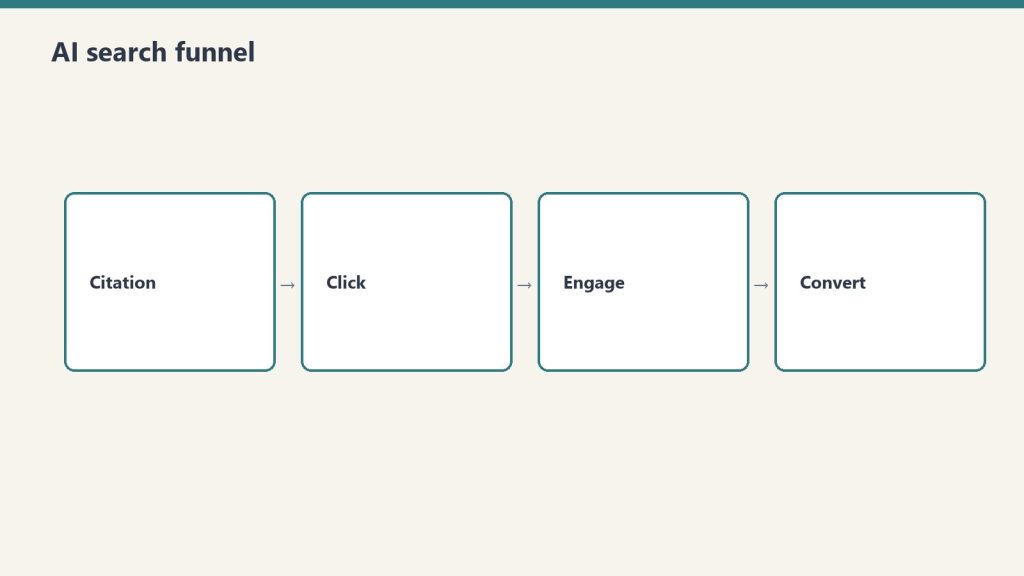
The organic search growth is real and documented. But it’s not the most striking finding in the tygartmedia.com data. That honor goes to direct traffic.
From May 1–14, 2026, direct sessions hit 5,448—a 291% increase over late April. This is not bookmarks and typed URLs growing 3x in two weeks. Something else is happening.
The explanation lies in how AI search tools pass (or don’t pass) referral data to analytics platforms. When a user finds a link through ChatGPT, Google AI Overviews, Claude, or Perplexity and clicks through to your site, that session needs an HTTP referrer to be attributed correctly in GA4. Many AI platforms do not pass referrer headers—either by design, privacy policy, or architectural decision.
The result: AI-referred traffic lands in GA4 as “Direct” or “Unassigned.” Independent research published in April 2026 found that approximately 70% of AI referral traffic arrives with no HTTP referrer, invisible to standard GA4 channel attribution. Roughly one in three AI search sessions lands in the “Unassigned” bucket.
Platform-specific behavior varies. Perplexity Comet passes referrer data, so sessions from Perplexity show up correctly as perplexity.ai / referral in GA4. ChatGPT Atlas does not pass referrers consistently, so ChatGPT-referred sessions tend to appear as Direct. Google’s own AI Overviews can suppress traditional organic attribution even when the user clicks a result—the session may land as Direct rather than Organic Search.
The tygartmedia.com content profile makes this particularly visible. The top organic landing pages—claude pricing, Claude model comparisons, Anthropic product guides—are exactly the kinds of pages that AI assistants cite when users ask about AI tools. A user asking ChatGPT “how much does Claude cost?” who then clicks the cited source is not going to show up in GA4 as a ChatGPT referral. They’ll show up as Direct.
The 291% surge in direct traffic in early May 2026—combined with the desktop/Chrome/Edge device profile that the GA4 AI assistant flagged—is consistent with AI-referred traffic at scale. Desktop Chrome and Edge are the primary environments where browser-integrated AI sidebars (Copilot in Edge, Gemini in Chrome) run. These are not human visitors typing tygartmedia.com from memory. They are users following AI-surfaced links.
Part 4: The Geographic Signal
One data point in the GA4 report deserves specific attention: Singapore (+272 users) and China (+75 users) were the top geographic contributors to the May traffic surge.
tygartmedia.com is a U.S.-based site covering local Pacific Northwest content alongside AI and tech analysis. Organic growth from Singapore and China does not fit a local news readership pattern. It does fit an AI bot crawling pattern—and it fits the profile of AI-forward tech audiences in Southeast Asia where Perplexity, ChatGPT, and other AI search tools have seen rapid adoption.
The tygartmedia.com content that’s performing—Claude API access, model comparisons, Anthropic product guides—is globally relevant to anyone building with or researching Anthropic’s products. The Singapore/China traffic surge likely represents a combination of AI crawler activity and human readers in AI-intensive markets finding the content via AI search surfaces.
There is also a published API guide in the GA4 data: /claude-api-access-singapore-china-2026/—a page specifically about Claude API access for users in Singapore and China. That page is appearing in organic search results, which partly explains the geographic signal.
Part 5: What This Means for SEO in 2026

The tygartmedia.com data is not an anomaly. It’s an early, clearly documented example of a measurement problem that every content site is going to face as AI search adoption grows.
The old measurement model assumed three things: Google Search Console tells you what’s indexed, organic search traffic in GA4 tells you what Google is sending, and direct traffic is mostly returning visitors. In 2026, all three assumptions are breaking down simultaneously.
GSC’s aggregate index report is lagging and bug-prone—as April 2026 proved definitively. First-party GA4 data is more reliable for actual traffic reality. Organic search in GA4 understates AI-referred traffic because AI platforms suppress referrer headers. Direct traffic is increasingly a proxy for AI search attribution, not just brand recall.
The practical responses:
Trust GA4 over GSC for indexing health. Use the URL Inspection Tool in GSC for specific page verification. Do not use the aggregate index count chart for trend analysis—it’s too slow and too error-prone. If your GA4 shows organic traffic from a page, that page is indexed.
Build an AI traffic channel in GA4. Create a custom channel group with a regex rule capturing known AI referral sources: chatgpt\.com|chat\.openai\.com|perplexity\.ai|claude\.ai|gemini\.google\.com|bing\.com/search (for Copilot). Place this rule above the default “Referral” rule in your channel groupings. This won’t capture all AI traffic, but it will make the attributable portion visible.
Watch direct traffic as a proxy metric. A sustained, unexplained surge in direct traffic—especially on desktop Chrome and Edge, especially from tech-forward geographies—is likely AI-referred traffic. Treat it as a signal of AI citation activity, not just brand recall.
Annotate the GSC bug window. Mark May 13, 2025 through April 27, 2026 in any GSC-based reporting. Impression, CTR, and average position data from that window is unreliable. Click data from that window is clean.
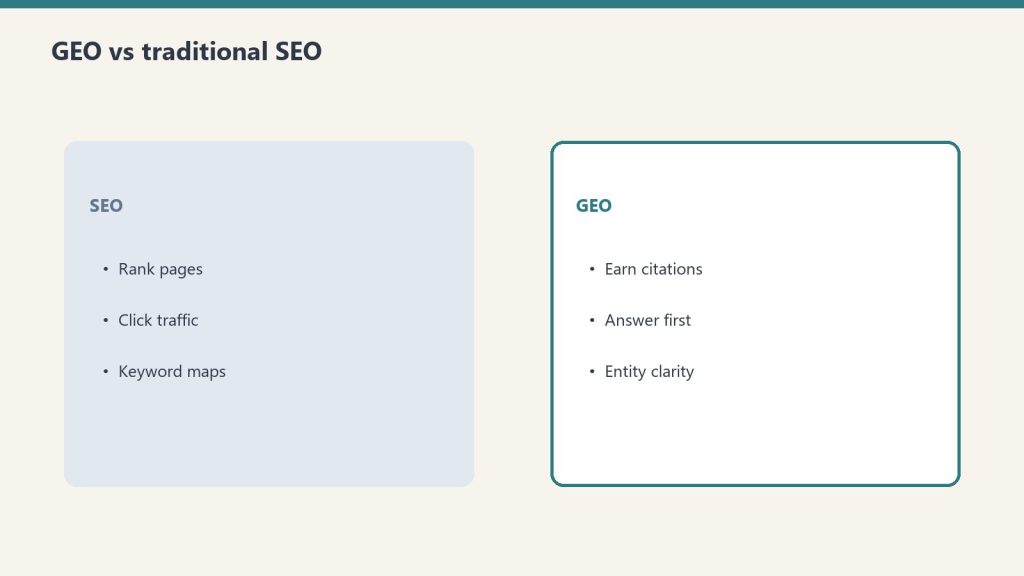
Focus on content that AI cites. The top organic and direct landing pages on tygartmedia.com share a pattern: specific, factual, verifiable answers to questions AI users are asking. Claude pricing. Team plan limits. How to install Claude Code. These are Generative Engine Optimization (GEO) wins—content that AI models surface when users ask the question. That traffic shows up in organic search, direct, and unassigned simultaneously, which is why raw organic session counts understate the real impact.
The Verdict: Your Dashboard Is Behind Your Reality
The tygartmedia.com Indexing Paradox is not a mystery. It’s the result of two documented phenomena arriving simultaneously: a year-long GSC impression bug that corrected itself in April 2026, and a structural GA4 attribution gap that misclassifies AI-referred traffic as direct.
The site is not broken. GSC’s reporting is. The search engine is working. The dashboard is not. GA4’s first-party event data is the ground truth—and it shows a site gaining momentum, not losing it.
The broader lesson for any site owner watching GSC with alarm in 2026: the tools that were designed to measure search visibility were built for a world where search was blue links, referrers were passed cleanly, and impression data was reliable. That world is changing faster than the tools.
The sites that navigate this well will be the ones that build measurement architectures around first-party behavioral data, create custom attribution for AI traffic sources, and stop treating Search Console as the final word on indexing health. It no longer is.
In 2026, Google Search Console’s aggregate index count is not a reliable indicator of site health. First-party GA4 data is. The April 2026 GSC bug correction and the rise of AI search traffic that suppresses referrer headers have decoupled GSC reporting from actual search visibility. Trust your event data, build AI traffic attribution into GA4, and stop relying on impression trend lines that spent 11 months inflated with bad data.
Related on Tygart Media: WordPress SEO audit · Bing vs GSC · verify llms.txt.
Frequently Asked Questions
What was the Google Search Console bug in April 2026?
Google officially confirmed on April 3, 2026 that a logging error had been inflating impression counts in Search Console since May 13, 2025—nearly 11 months. The fix rolled out through April 27, 2026. The correction only affected impressions, CTR, and average position; click data was not impacted. After the fix, many sites saw their GSC impression charts drop sharply, creating the appearance of a traffic crisis that did not actually exist.
If GSC shows zero indexed pages, does that mean my site is de-indexed?
Not necessarily—and probably not. The aggregate “Page Indexing” report in GSC is a lagging, aggregated metric that has demonstrated significant reporting bugs in 2025–2026. The definitive test is the URL Inspection Tool: paste a specific page URL into the search bar in GSC and check whether it returns “URL is on Google.” If it does, that page is indexed. If your GA4 shows organic traffic from a page, that page is indexed—Google cannot send organic traffic to a page it has not indexed.
Why does AI traffic from ChatGPT or Perplexity show up as Direct in GA4?
Most AI platforms do not pass HTTP referrer headers when users click links in AI-generated responses. Without a referrer, GA4’s default classification is Direct. Research from 2026 found approximately 70% of AI-referred sessions arrive with no referrer, making them invisible to standard channel attribution. Perplexity passes referrer data more consistently than ChatGPT; Google AI Overviews behavior varies. To capture attributable AI traffic, create a custom channel group in GA4 with regex matching known AI source domains.
How do I tell if my direct traffic spike is AI-referred or genuine brand recall?
Look at the device and browser composition. Genuine brand recall (typed URLs, bookmarks) distributes across device types including mobile. AI-referred traffic skews heavily toward desktop Chrome and Edge because those are the primary environments for browser-integrated AI assistants and AI search tools. Geographic concentration in tech-forward markets (Singapore, India, major U.S. metro areas) without a corresponding social or campaign trigger also suggests AI-referred traffic. A sudden, unexplained surge without a matching campaign or social event is your strongest signal.
Should I stop using Google Search Console?
No. GSC remains useful for diagnosing specific page indexing issues via the URL Inspection Tool, monitoring crawl errors, reviewing manual actions, and tracking click data (which was not affected by the April 2026 bug). What you should stop doing: using GSC’s aggregate impression trends or page indexing count charts as your primary measure of site health. Use GA4 first-party event data for traffic health, and use GSC’s URL-level tools for specific indexing questions.
What content performs best in AI search in 2026?
Based on the tygartmedia.com data, the content that drives the strongest AI-referred performance is specific, factual, and answers a precise question: pricing guides, feature comparisons, product how-tos, and policy explainers. These are the pages AI models surface when users ask direct questions. Content optimized for AEO (Answer Engine Optimization) and GEO (Generative Engine Optimization)—structured with clear definitions, FAQ sections, and verifiable specifics—generates the AI citation activity that shows up as direct and organic traffic simultaneously.