Nobody expected the answer engine to build a browser. Nobody expected the search startup to drop advertising entirely to protect user trust. Nobody expected a company founded in 2022 to reach a $21 billion valuation in 30 months. Perplexity AI is the everything-app candidate nobody saw coming — and their path is unlike any other company in this series.
The Numbers Nobody Expected
Start with the trajectory because it reframes everything else. Perplexity was valued at $121 million in April 2023. By early 2026 that number is $21.2 billion — a roughly 175x increase in 30 months. Total funding raised exceeds $1.5 billion, from Nvidia, Jeff Bezos, SoftBank, IVP, Accel, and Databricks. Monthly active users crossed 45 million. The company is processing 170 million global visitors per month. ARR climbed from $35 million in mid-2024 to over $450 million annualized by March 2026.
Those aren’t hype numbers. ARR of $450M annualized on 45M users, with 800% year-over-year growth, signals genuine product-market fit. People are paying for this. Repeatedly. That matters for the everything-app thesis in a way that a free-tier user count doesn’t.
The Trust Bet That Changes the Game
In February 2026, Perplexity made a decision that every other company in this series should take note of: they dropped advertising entirely and moved to a subscription-first model. The stated reason was simple — leadership said the move was intended to preserve user trust in the answer engine, prioritizing objective results over ad revenue.
Think about what that means as a strategic signal. Google’s entire business model is advertising. Microsoft’s Bing is ad-supported. Every other search surface is optimized, at least partially, for ad revenue. Perplexity looked at that landscape and decided that trust — verifiable, uncompromised trust in the answer — was worth more than ad dollars.
For an everything app, that’s a profound differentiator. The everything app, by definition, will know more about you than any individual tool currently does. It will see your projects, your research, your questions, your habits. The company that earns the right to that level of access is the one that can credibly say: we are not monetizing your data or your attention. We are working for you.
Perplexity made that bet explicitly. Nobody else has.
What Perplexity Has Actually Built
The product expansion from “AI search” to “everything app candidate” happened fast enough that most people are still thinking of Perplexity as a search box. Here’s what it actually is in mid-2026.
Perplexity Computer — launched in early 2026 and available on the Max plan ($200/month) — is an autonomous agent that executes complex workflows on your behalf. It uses 19 different AI models, picks the best model for each step of a task, and creates subagents to handle parallel parts of a workflow simultaneously. That’s not a search enhancement. That’s an operating system for work — one that orchestrates multiple frontier models the way a conductor runs an orchestra, without asking you which instrument should play which note.
Comet — Perplexity’s AI-native browser built on Chromium — launched on Windows and macOS in July 2025, came to iOS in March 2026, and is free on all platforms. It looks like Chrome. But it has an AI assistant built into every page — in-page research, page summarization, autonomous multi-step tasks. It books flights, manages email, fills forms, and translates pages automatically. Comet is the browser as an agent, not a browser with a chatbot bolted on the side.
Deep Research and Model Council — available now — let you run three frontier models simultaneously, compare outputs, and synthesize a higher-confidence answer. Deep Research is powered in part by Claude Opus 4.6 — Anthropic’s previous flagship model, accessed through Perplexity’s $750M Microsoft Azure commitment which gives them access to OpenAI, Anthropic, and xAI systems. (Note: Anthropic’s current flagship as of April 2026 is Claude Opus 4.7, with Claude Mythos Preview beyond that — Perplexity’s model routing will update as newer versions become available through the Azure pipeline.) Model Council is the first mainstream consumer feature that makes multi-model reasoning accessible without requiring you to run models yourself.
Perplexity Connectors let users search across linked file systems — Google Drive natively — for answers that pull from both cloud files and the live web. This is the beginning of the enterprise data layer: Perplexity as a unified search surface across your internal knowledge and the public internet simultaneously.
Commerce integration with PayPal in conversational search means Perplexity has a purchase flow built into the answer layer. You don’t search for a product, click through to a store, and buy it there. You ask, get an answer with citations, and complete the purchase in the same conversational thread. Amazon took 20 years to get search and commerce this close together. Perplexity did it in three.
The 19-Model Architecture: Why This Is Different
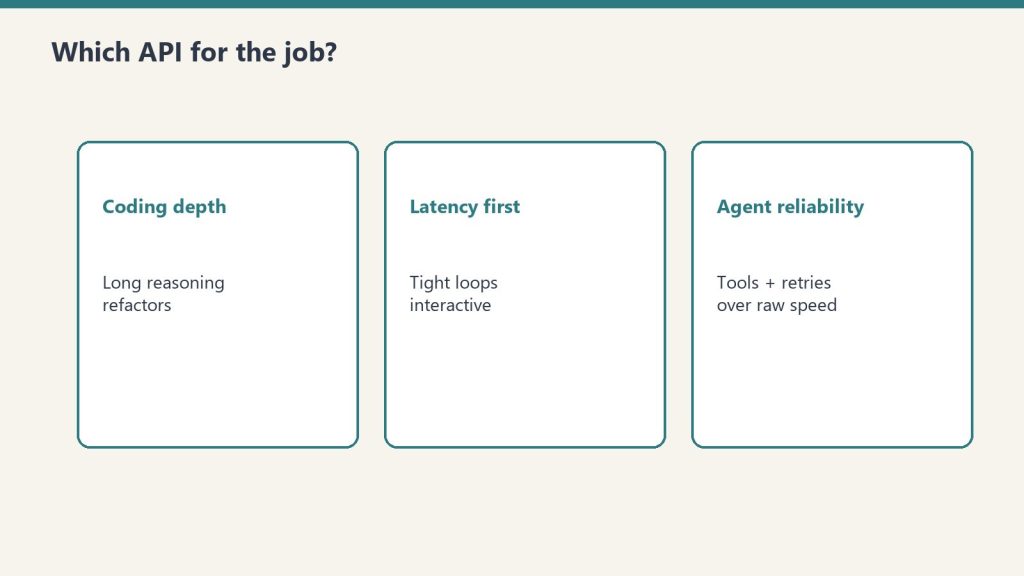
The Perplexity Computer’s 19-model architecture deserves its own section because it represents a genuinely different philosophy from every other everything-app candidate.
Microsoft runs Copilot on OpenAI’s models. Google runs Workspace on Gemini. OpenAI runs ChatGPT on GPT-5.5. Notion runs on Claude. Each company has picked a model family and is building their everything app around it. There’s logic to this — it simplifies the architecture, creates pricing leverage, and ensures consistency.
Perplexity’s bet is the opposite: model neutrality. They use the best model for each task, from whichever provider produces it. Need deep reasoning? Pick o3. Need fast synthesis? Pick Claude Flash. Need computer use? Pick GPT-5.5 Operator. The user doesn’t choose and doesn’t need to know. The system routes to the best tool automatically.
This is the “everything database” principle applied to models instead of data. Instead of betting on one model family, Perplexity is building the orchestration layer above all of them. If a new model from Mistral or xAI or any other provider becomes best-in-class for a specific task, Perplexity can route to it without rebuilding their product. The platform compounds regardless of which model wins any individual benchmark.
The Honest Weakness: No Data Moat, No OS, No Inbox

Perplexity doesn’t own an operating system. They don’t own an email platform. They don’t have a professional network. Their Connectors are real but limited compared to the native data access Microsoft and Google have by default. Their 45 million users, while impressive for a three-year-old company, is dwarfed by ChatGPT’s 500 million and Google’s three billion Workspace users.
The $750M Azure commitment — while providing access to frontier models — also creates a dependency that model-owning competitors don’t have. If Microsoft decides Azure pricing changes, or if access to specific models is restricted, Perplexity’s multi-model architecture gets more expensive and more fragile simultaneously.
The Max plan at $200/month for Perplexity Computer is expensive for what it is relative to alternatives. Enterprise adoption at 11% of organizations using generative AI is real but still a minority position. The path from answer engine to everything app requires trust-building and behavioral habit formation at a scale Perplexity hasn’t yet demonstrated for enterprise workloads.
Why Perplexity Might Win Anyway
Here’s the contrarian case, and it’s more credible than it sounds.
The everything app that wins will be the one people trust with their most important questions. Not their files — their questions. The difference between a search engine and an everything app is that an everything app is the place you go when you genuinely don’t know what to do next. When you’re trying to figure out a business problem. When you need to research something critical. When you’re making a decision that matters.
Perplexity is building specifically for that moment. Cited answers, not generated hallucinations. Subscription trust, not ad-influenced results. Multi-model consensus through Model Council, not single-model confidence. Deep Research for the questions that take hours, not seconds. They are optimizing for the highest-stakes use cases in knowledge work, not the highest-volume use cases.
If your everything app is defined by “where I go when I need to know something important” — Perplexity has a credible claim on that moment that no other company in this series is directly competing for. Microsoft is competing for enterprise workflow. Google is competing for the native stack. OpenAI is competing for behavioral habit. Perplexity is competing for epistemic trust. That’s a different race.
How Perplexity Connects to Your Notion Everything Database
Perplexity’s Connectors currently support Google Drive natively, with more file system connections expanding through their enterprise roadmap. Via the Sonar API — Perplexity’s developer API for embedding answer-engine capabilities in external applications — you can build a bridge between Perplexity’s research layer and your Notion database structure.
The practical architecture: Perplexity handles the live-web research and synthesis layer (the questions where you need current, cited, real-world information). Your Notion everything database stores the structured outputs — the decisions made, the research conclusions, the action items triggered. A Notion Worker fires the Perplexity query via the Sonar API, receives the response, and writes the structured result back to the relevant database row. Perplexity becomes your research engine. Notion becomes the memory that persists what you learned.
That’s the hybrid that makes each tool better than it would be alone — and it’s the kind of architecture that only becomes possible when you stop asking which platform wins and start asking which platforms work best together.
Frequently Asked Questions
What is Perplexity Computer?
Perplexity Computer is an autonomous AI agent launched in early 2026, available on the Max plan ($200/month). It uses 19 different AI models, routing each step of a task to the best available model and creating parallel subagents for complex workflows. It represents Perplexity’s most direct move toward an AI operating system for knowledge work.
What is the Comet browser?
Comet is Perplexity’s AI-native browser built on Chromium, launched on Windows and macOS in July 2025 and iOS in March 2026. It’s free on all platforms. It builds an AI assistant into every page — summarizing content, conducting in-page research, and executing multi-step tasks like booking flights, managing email, and filling forms autonomously.
Why did Perplexity drop advertising?
In February 2026, Perplexity discontinued its AI-integrated advertising strategy and moved to a subscription-first model. Leadership stated the decision was made to preserve user trust in the answer engine — prioritizing objective, uninfluenced results over ad revenue. This positions Perplexity as the only major AI search platform explicitly working for the user rather than for advertisers.
What is Perplexity’s Model Council?
Model Council lets users run three frontier AI models simultaneously, compare their outputs, and synthesize a higher-confidence answer. Combined with Deep Research (powered in part by Claude Opus 4.5/4.6 via Perplexity’s Azure access), it makes multi-model reasoning accessible without requiring users to choose or manage individual models.
What is the Perplexity Sonar API?
The Sonar API is Perplexity’s developer API for embedding answer-engine capabilities — cited, real-time web research — into external applications. It’s the integration layer for connecting Perplexity’s research capabilities to systems like Notion databases, CRMs, or custom workflows via Notion Workers or other trigger architectures.