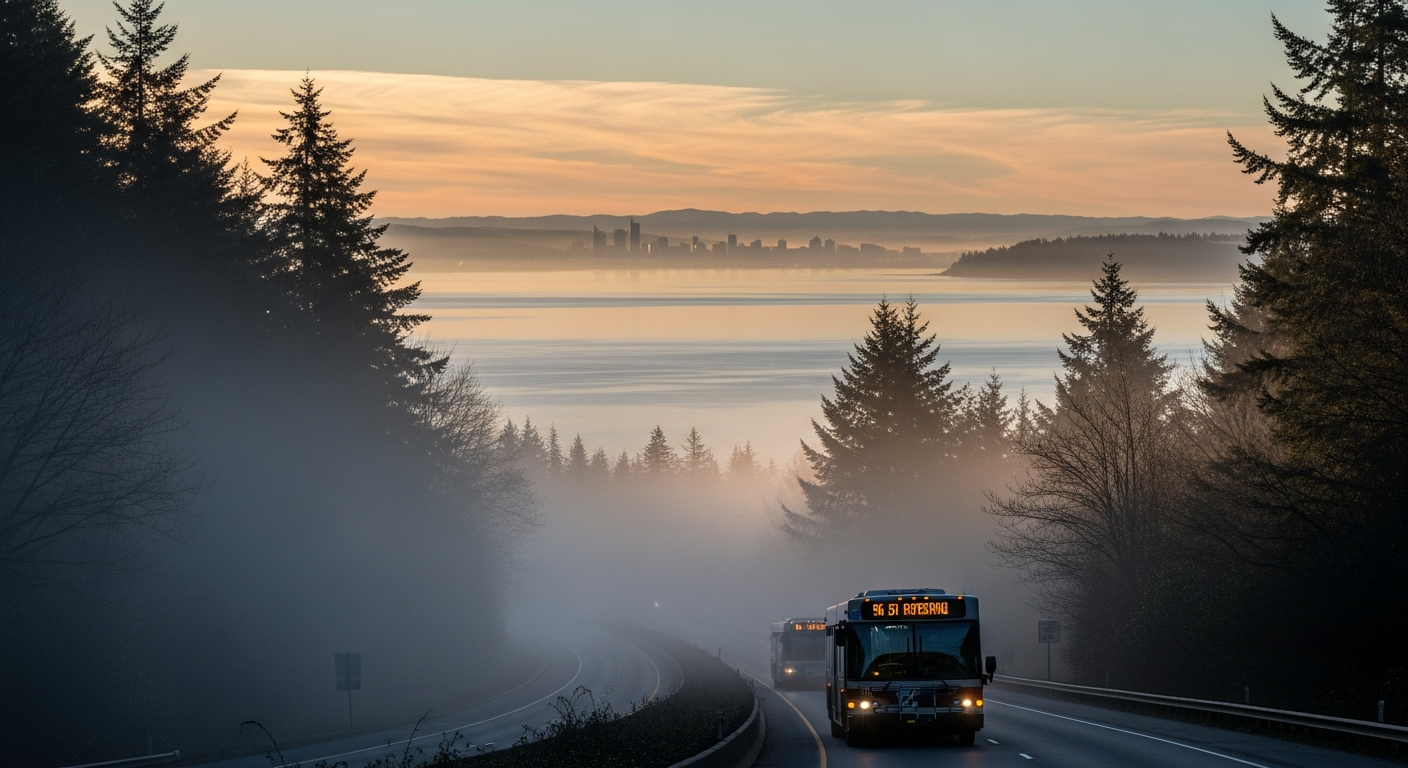
Tag: Belfair

  • How NDAA Section 1108 Shields Puget Sound Naval Shipyard From the DoD Cuts Wave — And What It Means for Belfair

    How NDAA Section 1108 Shields Puget Sound Naval Shipyard From the DoD Cuts Wave — And What It Means for Belfair

    The headlines about Department of Defense civilian workforce reductions have been consistent for months: the Navy has ordered commands to model 10%, 15%, and 20% cuts to their civilian workforces, with a planning deadline of September 30, 2026. For federal workers across the country, the uncertainty has been real.

    For the workers who board Mason Transit Route 3 at the Belfair Park & Ride on NE Log Yard Road every morning and cross into Bremerton — that cloud has a different shape than it does for workers at other federal installations. Puget Sound Naval Shipyard & Intermediate Maintenance Facility is not subject to those reduction orders. That protection is written into federal law.

    Here is what that law actually says, why it matters specifically for North Mason, and what it means for anyone on the SR-3 commuter corridor who depends on a PSNS paycheck.

    What Section 1108 of the FY2026 NDAA Actually Says

    Section 1108 of the Fiscal Year 2026 National Defense Authorization Act — signed into law on December 18, 2025 — codifies the Protecting Public Naval Shipyards Act. The provision bars the use of any federal funds to carry out a hiring freeze, reduction-in-force, or hiring delay at America’s four public naval shipyards: Puget Sound Naval Shipyard & Intermediate Maintenance Facility in Bremerton, Portsmouth Naval Shipyard in New Hampshire, Norfolk Naval Shipyard in Virginia, and Pearl Harbor Naval Shipyard in Hawaii.

    The protection is an appropriations restriction. That is a meaningful legal distinction: Congress has prohibited federal funds from being used for hiring freezes or RIFs at these four facilities, and an executive order or agency directive cannot redirect appropriated funds for a purpose Congress has explicitly barred. For the duration of FY2026 — October 1, 2025 through September 30, 2026 — PSNS & IMF cannot be subjected to the workforce reduction modeling that other DoD commands are currently working through.

    The legislation was championed by a bipartisan coalition: Representatives Chris Pappas (NH) and Elaine Luria Kiggans (VA) in the House, and Senators Maggie Hassan, Jeanne Shaheen, Susan Collins, and Angus King in the Senate. The core argument was fleet readiness — the public shipyard workforce is not administrative overhead, and cutting it creates maintenance backlogs that degrade submarine and carrier availability.

    Which Trades Are Specifically Protected

    Section 1108 does not simply protect the shipyard in the abstract — it names specific roles. The following trades and functions are explicitly identified in the law as protected from hiring freezes and workforce reductions at the four public shipyards:

    • Welders, pipefitters, and shipfitters
    • Radiological technicians and engineers
    • Mechanics, painters, and blasters
    • Apprentices in the workforce development pipeline
    • Nuclear maintenance and refueling personnel
    • Workers supporting shipyard infrastructure operations under the Shipyard Infrastructure Optimization Program

    PSNS & IMF employs more than 14,000 workers — the largest public shipyard workforce in the United States — and the majority of that workforce falls into these protected trade categories. The nation’s aircraft carriers and nuclear submarines are maintained here, and Congress determined that protecting that pipeline was a national security imperative, not a budget line to optimize.

    The Broader DoD Cuts Context That Makes This Significant

    To understand why Section 1108 matters, it helps to know what PSNS is protected against. The Navy issued instructions to commands to model civilian workforce reductions of 10%, 15%, and 20% by a September 30, 2026 planning deadline. Federal civilian workers at many naval installations — people in administrative, logistics, and support roles — are inside that reduction planning process.

    PSNS’s skilled-trades workforce is explicitly outside it. The shipyard is still subject to normal management decisions, but it cannot be subjected to a programmatic hiring freeze or RIF under the current appropriations law. For commuters from Belfair, Allyn, and Tahuya who drive or bus to Bremerton each morning, that distinction matters in a practical way: the jobs that anchor our end of Mason County are on solid legal footing for the current fiscal year.

    The PSNS Apprenticeship: A Door That Stays Open

    One direct consequence of Section 1108’s protection is that the PSNS & IMF apprenticeship program can continue its normal hiring cadence. The program dates to 1901 — one of the oldest in the Pacific Northwest — and graduates approximately 200 workers per year into the shipyard’s skilled-trades pipeline. The academic portion is taught through Olympic College in Bremerton.

    The apprenticeship draws applicants from both Kitsap and Mason counties. For North Mason residents considering a skilled-trades career, the PSNS program is one of the more stable and well-compensated pathways available in the region. Openings for both apprenticeships and journey-level positions are posted at usajobs.gov.

    Getting There: Route 3 and the SR-3 Corridor

    Mason Transit’s Route 3 connects the Belfair Park & Ride on NE Log Yard Road to the Bremerton Ferry Terminal with weekday service — morning departures from Belfair at 5:25 a.m., 6:25 a.m., and 7:45 a.m. cover the early-shift window, with additional mid-morning and afternoon runs. Route 3X provides an express option on select trips. No weekend service operates. Current schedules are at masontransit.org/route-3/.

    Drivers on SR-3 face a different planning challenge this summer. The ongoing construction work in the Gorst corridor is set to affect commute times, and commuters should have an alternate routing strategy ready before the peak construction window. Our earlier coverage walks through what the SR-3 construction means for PSNS workers and the Gorst roundabout and Belfair Bypass timeline.

    After September 30, 2026: What to Watch

    Section 1108’s protection is tied to FY2026. After September 30, renewal requires action in the FY2027 NDAA or through standalone legislation. The Protecting Public Naval Shipyards Act (S. 2648 in the 119th Congress) was introduced to make this protection permanent — but as of publication it has not been enacted as standalone law. If the broader DoD workforce reduction conversation continues into FY2027, the question of whether PSNS retains its carve-out returns. That is a budget and defense policy story worth watching from North Mason’s perspective — a large share of our local economy follows the shipyard’s employment trajectory.

    Frequently Asked Questions About NDAA Section 1108 and PSNS

    Does Section 1108 protect all PSNS employees or only specific trades?

    Section 1108 specifically names welders, pipefitters, shipfitters, radiological technicians, engineers, apprentices, mechanics, painters, blasters, and nuclear maintenance personnel. Workers in those roles are explicitly protected from hiring freezes and workforce reductions under the FY2026 appropriations restriction. Administrative positions not directly tied to shipyard operations are not covered by the same explicit language.

    Can a presidential executive order override Section 1108?

    No. Section 1108 is an appropriations restriction — it bars the use of federal funds for hiring freezes or RIFs at the four named shipyards. An executive order cannot redirect funds that Congress has prohibited from being used for a specific purpose. This legal distinction is what makes the protection meaningful in the current federal workforce environment.

    When does FY2026 end and what happens to the protection after that?

    FY2026 ends September 30, 2026. After that date, the Section 1108 protection expires unless renewed through the FY2027 NDAA or standalone legislation. The Protecting Public Naval Shipyards Act (S. 2648) was introduced to make the protection permanent, but that bill has not yet been enacted as a standalone law.

    Is the PSNS apprenticeship program open to Mason County residents?

    Yes. The PSNS & IMF apprenticeship program accepts applicants from both Kitsap and Mason counties. The program has operated since 1901 and graduates approximately 200 workers per year, with academic instruction delivered through Olympic College in Bremerton. Openings are posted at usajobs.gov.

    How many people does PSNS & IMF employ?

    PSNS & IMF employs more than 14,000 workers, making it the largest public naval shipyard in the United States by workforce. It handles maintenance and overhaul for the Navy’s aircraft carriers and nuclear submarines operating in the Pacific Fleet.

    What bus connects Belfair to PSNS in Bremerton?

    Mason Transit’s Route 3 (Belfair/Bremerton) connects the Belfair Park & Ride on NE Log Yard Road to the Bremerton Ferry Terminal on weekdays. Morning departures from Belfair are at 5:25 a.m., 6:25 a.m., and 7:45 a.m. Route 3X is an express option. No weekend service. Full schedule at masontransit.org/route-3/.

    Which four shipyards are protected by Section 1108?

    Puget Sound Naval Shipyard & Intermediate Maintenance Facility (Bremerton, WA), Portsmouth Naval Shipyard (Kittery, ME), Norfolk Naval Shipyard (Portsmouth, VA), and Pearl Harbor Naval Shipyard & Intermediate Maintenance Facility (Pearl Harbor, HI).


  • Belfair Business Pulse — Week of May 6, 2026

    Belfair Business Pulse — Week of May 6, 2026

    New Openings

    Belfair Saturday Market Is Open for Its 33rd Season

    After a winter hiatus, the Belfair Saturday Market opened its 33rd season on Saturday, May 2, running weekly from 9 a.m. to 3 p.m. at the Theler Center south parking lot, State Route 3, Belfair. The market features locally grown produce, handmade arts and crafts, fresh-cut flowers, local honey, plants, and jewelry. New vendors have joined the lineup this year. The market is a cornerstone of community commerce in North Mason every weekend through the season.

    Belfair Public Market Launches Biweekly Sundays at Legacy Home Center

    A brand-new artisan vendor market debuted this past Sunday, May 3, at Legacy Home Center, 23495 NE State Route 3, Belfair. The Belfair Public Market runs from 1:00–7:00 PM on select Sundays, with upcoming dates on May 17, June 7, and June 21. Admission is free. See the Business Spotlight below for full details.

    Closings / Changes

    No reported closings or ownership changes were identified in the Belfair, Allyn, or Grapeview area this week.

    Permits & Development

    No new commercial permit filings were identified in Mason County public records this week for the North Mason area. The North Mason Regional Fire Authority headquarters station at 490 NE Old Belfair Highway continues its construction timeline, with completion expected in September 2026. The project, valued at approximately $9 million, will serve as the primary response hub for the North Mason corridor.

    Chamber Notes

    The North Mason Chamber of Commerce is relocating its visitor center from its State Route 3 office in Belfair to a moveable structure at the Salmon Center. The move—supported by $45,000 in 2026 county funding—aims to place the visitor center in a higher-traffic location better suited to welcoming residents and tourists to the area. Chamber President and CEO Kerry Myers presented the plan to Mason County Commissioners in March, noting the current office had not been functioning effectively as a public visitor center.

    The Chamber continues to offer complimentary ribbon-cutting services for new businesses launching in North Mason. Learn more at northmasonchamber.com.

    Business Spotlight: Belfair Public Market

    North Mason has a fresh reason to spend Sunday afternoons local. The Belfair Public Market held its inaugural event on May 3 at Legacy Home Center, 23495 NE State Route 3, Belfair, WA 98528—and the community response is already drawing people back.

    The market runs biweekly on Sundays from 1:00 to 7:00 PM, with remaining 2026 dates on May 17, June 7, and June 21. Admission is free. Parking is available at the adjacent lot.

    Vendors are stocked with artisan and handmade goods from local creators:

    • Hand-blown glass
    • Freeze-dried candy
    • Professional tie dye
    • Curated books
    • Natural skin care products
    • Hand-poured candles
    • Crocheted stuffies and handmade gifts
    • Driftwood goods
    • DIY craft kits

    Community partners Port of Allyn and Kitsap Credit Union also have booths at each event. The June 21 date is a Father’s Day Special featuring a free raffle for tools and dad-themed giveaways.

    The Belfair Public Market fills a niche between the traditional Saturday farmers market and boutique craft fairs—expect handmade and artisan goods from regional creators, with a rotating vendor mix each event. Follow updates at the Facebook event page: facebook.com/events/813180155169563.

    Address: 23495 NE State Route 3, Belfair, WA 98528 (Legacy Home Center)
    Hours: 1:00–7:00 PM, every other Sunday (next dates: May 17, June 7, June 21)
    Phone: Not listed
    Admission: Free

    Shop local, support your neighbors, and bring a little Hood Canal artisan energy home.

  • Visiting Hood Canal This Summer? Here’s What’s Confirmed for Belfair State Park and Marine Area 12

    Visiting Hood Canal This Summer? Here’s What’s Confirmed for Belfair State Park and Marine Area 12

    Belfair, WA — If you’re planning a Hood Canal trip to Belfair this summer — whether it’s a Seattle weekend, a Tacoma family run, or a longer Pacific Northwest itinerary — here’s the cleanest read on what’s confirmed and what’s still pending as of May 3, 2026. The headline: lock in crab and camping now; treat the Belfair State Park shellfish opener as “watch the WDFW page” until officially posted.

    What’s Confirmed

    Marine Area 12 Dungeness crab opens 6 a.m. June 16, 2026, runs through September 5, harvest Thursdays through Mondays. Daily limit: five male, hard-shell, 6¼-inch minimum carapace, recorded on your Puget Sound catch record card. You’ll need a Washington Department of Fish and Wildlife (WDFW) shellfish/seaweed license and the Puget Sound crab catch record card. Visitor licenses are sold online at wdfw.wa.gov.

    Belfair State Park camping reservations are open for all three loops — Main, Beach, and Tree — through washington.goingtocamp.com or (888) 226-7688. The park has 90 standard sites, 41 full-hookup sites, two primitive sites, and one marine trail site on 3,720 feet of Hood Canal shoreline at 1002 NE Beck Road. Beach Loop is the closest to the water and accommodates RVs up to 60 feet. Tree Loop (May-Sept only) is the cheapest but limited to vehicles 18 feet and under. Memorial Day, July 4, and Labor Day are essentially gone; book August now if it’s on your list.

    Theler Wetlands is open today. Mary E. Theler Wetlands Nature Preserve at 600 NE Roessel Road in Belfair offers more than three miles of accessible trails through 139 acres of salt marsh and Union River estuary. Free, dawn to dusk, ADA-accessible boardwalk. May is peak shorebird migration on Hood Canal — if your visit is May or early June, this is the highest-value low-effort stop.

    What’s Pending

    The 2026 Belfair State Park clam, mussel, and oyster opener has not yet been published to the official WDFW Belfair beach page (wdfw.wa.gov/places-to-go/shellfish-beaches/270470). The page still shows Aug 1 – Sept 30, 2025 as the most recent posted season. If you’re booking a trip specifically for shellfish, build a flexible window (late July through September is the historical pattern at Belfair) and watch the WDFW page in May and June for the official 2026 announcement.

    The Visitor Rule You Must Know: WDFW + DOH

    Two parallel approvals govern every Hood Canal harvest. The WDFW season must be open, and the Washington Department of Health (DOH) health approval for the beach must be active. Either can be closed with little notice for biotoxin, vibrio, or water-quality reasons. The DOH Shellfish Safety hotline is 1-800-562-5632 and the DOH interactive map updates in real time. Run both checks within 24 hours of any planned harvest. Visitors who skip this step get tickets — or worse, get sick.

    Practical Logistics for the Belfair Trip

    Belfair sits at the south end of Hood Canal, roughly two hours from Seattle via SR-3 through Gorst, or about 75 minutes from Tacoma via SR-16 and SR-3. The town center has gas, groceries, and a handful of restaurants; expect basic services, not a tourism strip. The Belfair State Park beach is mostly soft mud at the tideline — waterproof boots are non-negotiable for any harvest trip. Standard Puget Sound daily shellfish limits when the beach is open are 18 oysters, 10 clams, and 10 mussels per harvester, with kids 15 and under harvesting free without a license.

    Frequently Asked Questions

    Do I need a Washington fishing license to crab on Hood Canal?

    Yes. You need a WDFW shellfish/seaweed license plus the Puget Sound crab catch record card. Both are sold online at wdfw.wa.gov. Daily limit in Marine Area 12 is five male Dungeness, hard-shell, 6¼-inch minimum carapace.

    How do I book a Belfair State Park campsite?

    Reserve at washington.goingtocamp.com or call (888) 226-7688. Three loops: Main (year-round, mix of hookup and standard), Beach (year-round, full hookups, up to 60 ft RVs), Tree (May-Sept, vehicles 18 ft and under, no hookups).

    Is Belfair State Park shellfish season definitely open in summer 2026?

    The 2026 opener has not yet been posted to the official WDFW Belfair beach page as of May 3, 2026. Build a flexible visit window (late July through September is the historical pattern) and check wdfw.wa.gov/places-to-go/shellfish-beaches/270470 weekly through May and June for the official date.

    How far is Belfair State Park from Seattle?

    Roughly two hours via I-5 south, SR-16 across the Tacoma Narrows Bridge, then SR-3 through Gorst to Belfair. The park is at 1002 NE Beck Road, about three miles west of the Belfair town center.

    Related coverage: Tahuya River Preserve Reaches 190 Acres · Original Hood Canal summer planner

  • North Mason Families: How to Plan Around an Unconfirmed Belfair State Park Shellfish Opener

    North Mason Families: How to Plan Around an Unconfirmed Belfair State Park Shellfish Opener

    Belfair, WA — If you’re a North Mason parent or grandparent, summer planning runs on shellfish dates the way it runs on school calendars. As of May 3, 2026, here’s the part nobody is saying out loud: the Washington Department of Fish and Wildlife (WDFW) has not yet posted the Belfair State Park 2026 clam, mussel, and oyster opener on its official beach page. The most recent published season on wdfw.wa.gov/places-to-go/shellfish-beaches/270470 is still Aug 1 – Sept 30, 2025.

    That’s not a reason to skip planning. It’s a reason to plan smarter.

    What You Can Lock In Today

    Marine Area 12 Dungeness crab is confirmed. The recreational opener is 6 a.m. on June 16, 2026, running through September 5, with harvest allowed Thursdays through Mondays each week. Five male Dungeness daily, hard-shell, 6¼-inch minimum carapace. The south end of the Canal near Belfair, Union, and Tahuya tends to fish well early in the season — that first Father’s Day weekend is on the table this year.

    Belfair State Park camping is reservable now. Three loops, 90 standard sites, 41 full-hookup sites, plus the seasonal Tree Loop (May-Sept, vehicles 18 ft and under, no hookups). Book at washington.goingtocamp.com or (888) 226-7688. Memorial Day weekend is essentially gone already; July 4 weekend is going fast. If grandparents are visiting in August, treat the booking as urgent this week.

    Theler Wetlands is open right now. 600 NE Roessel Road, dawn to dusk, free, 139 acres, more than three miles of trails, ADA-accessible boardwalk, peak spring migration in May. For families with younger kids, this is the cheapest and lowest-friction Hood Canal day in your toolkit.

    What to Do About the Unposted Shellfish Date

    Two practical moves. First, bookmark the WDFW “Find a Beach” tool and the Belfair beach page directly. WDFW typically updates beach pages a few weeks before openers. The 2025 season opened August 1 — planning a soft window of late July through September keeps you flexible without committing to specific dates. Second, learn the dual-check habit before opening day arrives: WDFW season status PLUS Washington Department of Health beach approval. The DOH Shellfish Safety hotline is 1-800-562-5632, and the DOH interactive map shows real-time health status. Both have to be green for the trip to count.

    Family-Specific Reminders

    Kids 15 and under harvest free without a WDFW license — bring them. The Belfair flats are mostly soft mud at the tideline, so waterproof boots are non-negotiable for everyone. Standard Puget Sound daily limits when the beach is open: 18 oysters, 10 clams, 10 mussels per harvester. The Belfair beach is best known for oysters specifically. If you’re building a multigenerational summer plan, the realistic anchor right now is: confirmed crab June 16, confirmed camping (book now), Theler today, and shellfish “watch the WDFW page weekly starting in mid-June.”

    Frequently Asked Questions

    Has WDFW announced the Belfair State Park 2026 shellfish opener?

    Not as of May 3, 2026. The official Belfair beach page on wdfw.wa.gov shows the 2025 season (Aug 1 – Sept 30, 2025) as the most recent published season. Check the page weekly through May and June for the 2026 announcement.

    Can my kids harvest at Belfair State Park without a license?

    Yes — children 15 and under harvest shellfish free without a WDFW license, when the beach is open under both WDFW season and DOH health approval. They count toward the family limit only on their own catch, not the adult bag.

    Which Belfair State Park camping loop is best for families?

    The Beach Loop has full hookups and immediate beach access for kids. The Main Loop is open year-round and offers a mix of hookup and standard sites. The Tree Loop is the cheapest but limited to vehicles 18 feet and under with no hookups, and is May-September only.

    Where can we go on Hood Canal today, before shellfish season opens?

    Theler Wetlands at 600 NE Roessel Road in Belfair is open dawn to dusk, free, with three-plus miles of trails through 139 acres of salt marsh and the Union River estuary. May is peak migration. The Tahuya River Preserve and Belfair State Park’s day-use shoreline are also open for hiking and beach-walking outside harvest seasons.

    More from Belfair Bugle: Tahuya River Preserve Reaches 190 Acres · Original Hood Canal summer planner

  • Hood Canal Property Owners: What the 2026 Shellfish and Crab Calendar Means for Your Beach

    Hood Canal Property Owners: What the 2026 Shellfish and Crab Calendar Means for Your Beach

    Hood Canal, WA — For property owners between Belfair, Union, and Tahuya, the summer harvest calendar isn’t entertainment — it’s the schedule your guest list, your dock traffic, and your shoreline read of the Canal all run on. As of May 3, 2026, the Washington Department of Fish and Wildlife (WDFW) has confirmed the Marine Area 12 Dungeness crab opener but has not yet published the 2026 Belfair State Park shellfish dates. Here’s the clean read for property owners.

    The Confirmed Anchor: Marine Area 12 Crab, June 16 – Sept 5

    Marine Area 12 (Hood Canal) recreational Dungeness opens at 6 a.m. on June 16, 2026, and runs through September 5, with harvest allowed Thursdays through Mondays each week. Five male Dungeness daily, hard-shell, 6¼-inch minimum carapace, recorded immediately on your Puget Sound catch record card. Two important nuances for shoreline owners: the area north of Ayock Point operates on a different season schedule, and the area south of Ayock Point has had recent winter closures driven by abundance concerns. Pull the WDFW Hood Canal page before you set pots off your own dock so you’re running under the right rule for your stretch of the Canal.

    For owners hosting guests in late June or early July, the practical move is to plan crab the first Thursday-Friday of any guest visit. Public Marine Area 12 pots cluster heaviest on opening weekend; the Father’s Day window after the June 16 opener tends to thin out by week two.

    Belfair State Park Shellfish: Unposted as of Today

    The Belfair State Park clam, mussel, and oyster opener for 2026 has not yet been published to the official WDFW Belfair beach page (wdfw.wa.gov/places-to-go/shellfish-beaches/270470). The page still shows Aug 1 – Sept 30, 2025 as the most recent published season. If you’ve seen earlier dates circulating, treat them as preliminary until WDFW posts to the beach page or issues a press release.

    For waterfront owners, this matters in two specific ways. First, your guests asking “when’s the oyster trip?” need a calendar window, not a date — the honest answer right now is “late July through September, watch the WDFW page.” Second, if your own beach is DOH-approved for harvest, your dual-check rule still applies: WDFW season open AND DOH health status active. Health closures driven by biotoxins, vibrio, or seasonal water quality can shut your beach with little notice.

    The Water-Quality Read That Matters for Your Beach

    Hood Canal water quality is the upstream variable behind every harvest decision. The DOH Shellfish Safety interactive map shows real-time health status for every approved beach on the Canal, and the DOH Shellfish Safety hotline is 1-800-562-5632. South Hood Canal beaches in particular have had health-driven closures in recent years — the long arc of nutrient loading, summer hypoxia, and stormwater runoff from the SR-3 corridor and shoreline development all feed into beach health calls. The Tahuya River Preserve restoration work is one of several efforts directly aimed at the freshwater inputs that drive beach health on the south Canal.

    The Property-Value Angle Most Owner Conversations Skip

    Hood Canal beach health and shellfish-season reliability are now meaningful inputs to waterfront property valuations. Buyers comparing south Hood Canal to Bremerton or Central Kitsap shoreline are reading WDFW season pages and DOH closure histories the same way they read school ratings. A clean shellfish year — predictable opener, no biotoxin closures, low vibrio risk — quietly supports comparable values; a year of repeated closures quietly pressures them. The community-level work on water quality (HCSEG restoration, Mason County stormwater, septic upgrades) is the long lever on that valuation signal.

    Frequently Asked Questions

    When does Marine Area 12 crab open in summer 2026?

    6 a.m. on June 16, 2026, through September 5, 2026, Thursdays through Mondays. Five male Dungeness daily, hard-shell, 6¼-inch minimum carapace. Confirm the rule for your specific stretch — north or south of Ayock Point — on the WDFW Hood Canal crab page.

    Is my Hood Canal beach approved for shellfish harvest?

    Approval is set by the Washington Department of Health, not WDFW. Use the DOH Shellfish Safety interactive map to check approval status for your specific tideland, or call 1-800-562-5632. Private tideland approval status changes; check seasonally.

    Why hasn’t WDFW posted the 2026 Belfair State Park shellfish dates?

    WDFW typically publishes annual public-beach seasons through its rule-making cycle and updates beach pages a few weeks before openers. As of May 3, 2026, the Belfair page still reflects 2025. Bookmark wdfw.wa.gov/places-to-go/shellfish-beaches/270470 and check weekly through May and June.

    Can a DOH closure shut my beach even when WDFW season is open?

    Yes. WDFW and DOH operate independent approvals; both must be active for legal harvest. Biotoxin and vibrio closures can happen with little notice during the season. Always run the dual-check within 24 hours of harvest.

    Related coverage: Hood Canal Property Owners: Tahuya River Preserve and Water Quality · Original Hood Canal summer planner

    Related Coverage

    WDFW Closes Two Northern Hood Canal Beaches Over Harvest Pressure — What It Signals for Belfair-Area Shellfish in 2026 — the May 3, 2026 closure at Shine Tidelands and Wolfe Property and what it means for Twanoh and Belfair State Park.

  • Hood Canal Summer 2026 in Belfair: What’s Verified, What’s Pending, and How to Plan Smart

    Hood Canal Summer 2026 in Belfair: What’s Verified, What’s Pending, and How to Plan Smart

    Belfair, WA — Summer 2026 is taking shape on Hood Canal, and the picture for North Mason families and Hood Canal property owners is sharper in some places than others. As of May 3, 2026, the Washington Department of Fish and Wildlife (WDFW) has formally announced the Marine Area 12 Dungeness crab opener, but the Belfair State Park clam, mussel, and oyster opener has not yet been published to the WDFW Belfair beach page. Here’s what you can put on your calendar today — and what to keep watching.

    Marine Area 12 Crab: Confirmed for June 16 – Sept 5, 2026

    The verified anchor of the summer is crab. WDFW has confirmed the Hood Canal recreational Dungeness season for Marine Area 12 (which covers the Hood Canal stretch our community fishes most) opens at 6 a.m. on Tuesday, June 16, 2026, and runs through Saturday, September 5, 2026. As in prior years, harvest is allowed Thursdays through Mondays each week — closed Tuesdays and Wednesdays. The daily limit remains five male Dungeness in hard-shell condition, with a minimum carapace width of 6¼ inches, recorded immediately on your Puget Sound catch record card.

    One important nuance specific to Hood Canal: the area north of Ayock Point follows a different schedule, and the area south of Ayock Point has had abundance issues that have driven recent winter closures. The summer recreational opener applies to Marine Area 12 broadly, but check the WDFW Hood Canal crab page before you set pots near Belfair, Union, or Tahuya so you’re fishing the right stretch under the right rule.

    Belfair State Park Shellfish: 2026 Dates Not Yet Posted

    Belfair State Park’s clam, mussel, and oyster harvest is the centerpiece of the south Hood Canal shellfish year for most North Mason families — 3,720 feet of shoreline at 1002 NE Beck Road, mostly known for oysters, with some of the most productive south-end mud flats on the Canal. As of this morning, however, the WDFW Belfair State Park beach page (wdfw.wa.gov/places-to-go/shellfish-beaches/270470) still shows the most recent published season as Aug 1 – Sept 30, 2025 only. The 2026 opener date has not yet been posted to that official page.

    If you’ve seen earlier dates circulating, treat them as preliminary until WDFW updates the Belfair beach page or issues a press release. The honest framing for now: the 2026 Belfair State Park shellfish opener is expected this summer, exact date pending. Add the WDFW “Find a Beach” tool to your bookmarks and check it the week you plan to harvest. Standard Puget Sound daily limits when the beach does open are 18 oysters, 10 clams, and 10 mussels per harvester, with kids 15 and under harvesting free without a license.

    The WDFW + DOH Dual-Check Rule (This One Is Non-Negotiable)

    Hood Canal’s shellfish year runs on two parallel approvals: the WDFW season must be open, AND the Washington Department of Health (DOH) health approval for that beach must be active. Either one can close a beach with little notice. Biotoxin closures, vibrio advisories, and seasonal water-quality flags can shut harvest down even when the WDFW calendar says open. The DOH Shellfish Safety hotline is 1-800-562-5632, and the DOH interactive map shows real-time beach health status for every approved beach on Hood Canal. Check both sources within 24 hours of any harvest trip — this is the rule every Belfair-area harvester learns once and never forgets.

    Belfair State Park Camping: All Three Loops in Play This Summer

    For families combining a beach day with a weekend on the water, Belfair State Park’s campground is the closest in. The park runs three loops totaling 90 standard sites, 41 full-hookup sites, two primitive sites, and one marine trail site:

    • Main Loop — year-round reservable: 15 full-hookup sites, 34 standard sites, three primitive sites.
    • Beach Loop — year-round reservable, full hookups, fits RVs/trailers up to 60 feet, immediate beach access.
    • Tree Loop — May through September only, vehicles 18 feet and under, no hookups.

    Reservations through washington.goingtocamp.com or (888) 226-7688. Summer weekends — especially Memorial Day, July 4, and Labor Day — fill months out. If your trip is August or later, book this week.

    The Free Option Right Now: Theler Wetlands

    You don’t have to wait for shellfish dates to use Hood Canal in May. The Mary E. Theler Wetlands Nature Preserve at 600 NE Roessel Road off SR-3 in Belfair offers more than three miles of accessible trails through 139 acres of salt marsh and Union River estuary. May is peak migration on the Canal — shorebirds, herons, songbirds, and the start of summer waterfowl. Trails are free, open dawn to dusk, and the main boardwalk is ADA accessible. The Hood Canal Salmon Enhancement Group (HCSEG), which manages the Theler Nature Center, is in the middle of a longer restoration of the facility — check pnwsalmoncenter.org for community program announcements.

    Why This Matters for North Mason

    Hood Canal’s summer recreation calendar isn’t a tourism brochure for North Mason — it’s the working schedule that families plan dinners around, that grandparents drive in for, that property owners build their summer guest list against. When the WDFW page hasn’t posted the Belfair opener yet, the right move isn’t to guess; it’s to lock down what’s confirmed (crab June 16, camping reservations now, Theler today) and stay ready for the rest. We’ll update this page the moment WDFW publishes the Belfair State Park 2026 dates.

    Frequently Asked Questions

    When does Marine Area 12 Dungeness crab open in summer 2026?

    Marine Area 12 (Hood Canal) recreational Dungeness opens at 6 a.m. on June 16, 2026, and runs through September 5, 2026, with harvest allowed Thursdays through Mondays each week. Daily limit: five male, hard-shell, 6¼-inch minimum carapace.

    When does Belfair State Park shellfish season open in 2026?

    The 2026 opener has not yet been published to the official WDFW Belfair State Park beach page as of May 3, 2026. The 2025 season ran August 1 through September 30. Check the WDFW “Find a Beach” tool and the WDFW Belfair page (wdfw.wa.gov/places-to-go/shellfish-beaches/270470) for the official 2026 announcement.

    Do I need both a WDFW license and a DOH health approval to harvest at Belfair State Park?

    Yes. The WDFW shellfish/seaweed season must be open AND the DOH health status must be approved for the beach you’re harvesting. Either can close a beach with little notice. The DOH Shellfish Safety hotline is 1-800-562-5632 and the DOH interactive map updates in real time.

    How do I reserve a campsite at Belfair State Park?

    Reserve at washington.goingtocamp.com or call (888) 226-7688. Belfair State Park has three loops (Main, Beach, Tree) totaling 90 standard sites, 41 full-hookup sites, two primitive sites, and one marine trail site. Tree Loop is May-September only and limited to vehicles 18 feet and under.

    Where is Belfair State Park?

    Belfair State Park sits on 3,720 feet of Hood Canal shoreline at 1002 NE Beck Road, Belfair, WA 98528, at the south end of the Canal. The park is roughly three miles west of the Belfair town center off SR-300.

    Is the Theler Wetlands open right now?

    Yes. Mary E. Theler Wetlands Nature Preserve at 600 NE Roessel Road in Belfair is open dawn to dusk year-round. Trails are free, more than three miles total, and the main boardwalk is ADA accessible. May is peak spring migration on Hood Canal.

    Related coverage: Tahuya River Preserve Reaches 190 Acres · Hood Canal Property Owners: Tahuya River Preserve and Water Quality · Original Belfair Bugle Hood Canal summer planner

  • A Mason County Family’s Guide to Theler Wetlands: What Kids Will See This Spring (and Why the Boardwalk Coming This Summer Matters)

    A Mason County Family’s Guide to Theler Wetlands: What Kids Will See This Spring (and Why the Boardwalk Coming This Summer Matters)


    Theler Wetlands is the closest thing Mason County has to a free outdoor classroom. The Mary E. Theler Wetlands Nature Preserve in Belfair is open every day during daylight hours, costs nothing, and is engineered — quite literally — to teach. For a family with kids, especially kids interested in animals, water, or how the natural world actually works, a spring afternoon at Theler holds up against any paid attraction in the region.

    And the trip is going to get better. This summer, a 1,200-foot elevated boardwalk is going in through a freshly restored salt marsh — the final phase of a multi-year project that has been quietly remaking the south end of Hood Canal. Here is what a family should know about going now and going later.

    What Kids Will See at Theler Right Now

    Even mid-restoration, the preserve is full of activity in spring. The mudflats and tidal channels are nursery habitat for juvenile salmon. The grasses and shallow pools attract great blue herons, kingfishers, ospreys, bald eagles, and dozens of smaller songbirds passing through on migration. The Union River, which feeds the wetlands, is one of the few healthy spawning runs left for Hood Canal summer chum salmon — a federally threatened species.

    Kids who like to spot things will have plenty to count: bird species, salmon if you visit at the right time, otter and beaver sign in the channels, and seasonal flowers across the wet meadows.

    What the Construction Means for a Family Visit Now

    Honest version: parts of the trail loop are currently fragmented because of the restoration work. The earthwork phase finished in fall 2025 — that included removing a failing levee, replacing a small culvert with a much larger 15-foot-wide concrete one, and digging a new winding tidal channel. You can still walk most of the preserve, but you cannot complete the full loop yet.

    What that means in practice: short walks with younger kids work well right now. Bring binoculars. Plan to spend 30 to 60 minutes rather than building the day around a long hike. The Hood Canal Salmon Enhancement Group (HCSEG) posts current trail access at pnwsalmoncenter.org.

    Why the Summer 2026 Boardwalk Changes the Trip

    The big change is the boardwalk. WDFW and HCSEG plan to install a 1,200-foot piling-supported elevated walkway through the restored estuary this summer, built on the footprint of the levee that was removed. When it is finished, the entire Theler loop reconnects — and it does so by walking visitors directly through restored salt marsh.

    For a family, that means three things. First, the loop becomes friendly for kids who get tired on out-and-back trails. Second, the boardwalk gives small children eye-level views of marsh life — channels, fish, herons hunting — without anyone having to walk through mud. Third, it turns Theler into a year-round destination that holds up in every season.

    How to Make It a Real Outdoor Lesson

    A few angles that work especially well with kids:

    • Salmon and the Endangered Species Act. Hood Canal summer chum are federally listed as threatened. The Theler restoration exists because juvenile chum need shallow, low-salinity, food-rich estuary water to grow before they head out into the canal. Kids respond to the idea that an entire engineering project — culvert replacements, levee removal, a road raised — is being done on behalf of fish.
    • How a wetland actually works. Tidal channels fill and empty twice a day. The salt marsh filters water, slows storm waves, and stores carbon. A wetland is a machine, and Theler is a working one.
    • Birding 101. A pocket bird guide and a pair of binoculars turns Theler into a guided experience. Spring is migration season — there are species at Theler in May that aren’t there in July.

    The Practical Details

    The preserve is at 22871 NE SR-3 in Belfair, on the east side of Highway 3 before the town center. Parking is free. Open during daylight hours. Restrooms are typically available at the nature center; bring your own water for the trail. There is no entry fee. Dogs are subject to posted rules, so check the trailhead sign before bringing one.

    The drive from Shelton is about 25 minutes. From Belfair town center, two minutes.

    Frequently Asked Questions

    Is Theler Wetlands open to families this spring?

    Yes. The preserve is open during daylight hours every day. Parts of the trail loop are fragmented because of restoration work, so plan a 30 to 60 minute visit rather than a long hike. Current trail status is posted at pnwsalmoncenter.org.

    How much does it cost to visit Theler Wetlands?

    Free. There is no entry fee, and parking is free. The preserve is supported by WDFW and the Hood Canal Salmon Enhancement Group.

    What will kids actually see at Theler in spring?

    Migrating songbirds, great blue herons, ospreys, bald eagles, kingfishers, otter and beaver sign in the tidal channels, juvenile salmon (depending on the run timing), and seasonal wildflowers across the wet meadow.

    When will the new Theler boardwalk be finished?

    Construction is planned for summer 2026. The 1,200-foot elevated boardwalk runs through the restored salt marsh on the footprint of the removed levee, and once completed it reconnects the full Theler trail loop.

    Is Theler Wetlands stroller- or wheelchair-accessible?

    Currently, accessibility varies by trail section because of construction. Once the elevated boardwalk is completed in summer 2026, the loop will be substantially more accessible — the boardwalk is piling-supported, flat, and built for visitor traffic.

    Where is Theler Wetlands located?

    22871 NE SR-3 in Belfair, on Highway 3 just before the town center. About 25 minutes from Shelton, two minutes from Belfair town center.

    Related family coverage on tygartmedia.com: Things to Do in Mason County: The Definitive Guide, Tahuya River Preserve Reaches 190 Acres: What North Mason Needs to Know.

  • What the Theler Wetlands Restoration Tells Hood Canal Property Owners About Their Own Shoreline

    What the Theler Wetlands Restoration Tells Hood Canal Property Owners About Their Own Shoreline


    If you own waterfront property along Hood Canal, the project happening at Theler Wetlands in Belfair is worth understanding closely. It is one of the most carefully engineered shoreline restorations in the south Puget Sound, and the principles behind it — tidal reconnection, undersized-culvert replacement, set-back levee design — are the same principles increasingly showing up in shoreline permits, county code updates, and property-value assessments across Mason County.

    This is what Hood Canal property owners should know about the science, the timeline, and the policy direction Theler signals.

    What WDFW and HCSEG Actually Did at Theler

    The earthwork phase, completed in fall 2025, was substantial. The Hood Canal Salmon Enhancement Group (HCSEG) and the Washington Department of Fish and Wildlife removed a failing levee that had cut off roughly seven acres of estuary from Hood Canal’s tidal flow for decades. They replaced a 12-inch metal culvert — far too small to handle natural tidal exchange — with a 15-foot-wide concrete box culvert. They dug a new sinuous tidal channel through the rehabilitated wetland. And they raised a section of Northeast Roessel Road to serve as a set-back levee, moving the line of flood protection landward instead of armoring the original shoreline.

    The summer 2026 phase is the visible one: a 1,200-foot piling-supported elevated boardwalk through the restored marsh.

    Why It Matters for Your Shoreline

    The mechanics of what Theler does — restoring tidal connectivity, replacing undersized infrastructure, and using set-back rather than armored levees — match what Mason County and Washington state regulators are looking for when shoreline owners apply for permits today. If you have a bulkhead, an undersized culvert under a private driveway, or a failing seawall, the next round of permit conversations is increasingly going to look like the conversations that produced Theler.

    Three takeaways for property owners:

    • Undersized culverts are the single most common shoreline restoration target. A 12-inch culvert blocking tidal flow is the kind of feature that gets flagged on more than half of Hood Canal property assessments. Replacement, not repair, is the direction of policy.
    • Set-back levees protect property value better than armored shorelines. A bulkhead that fails in 20 years drops shoreline value sharply. A set-back design, like the raised section of Roessel Road, holds up because it works with tidal processes rather than against them.
    • Restored estuaries support adjacent property values, not just salmon. Healthy salt marshes filter water, dissipate wave energy, and stabilize the shoreline upstream and down. Properties next to functioning estuaries tend to require less ongoing maintenance.

    The Endangered Species Act Layer

    Hood Canal summer chum salmon are listed as threatened under the federal Endangered Species Act. That listing has direct consequences for shoreline permitting along the Union River, the canal’s south end, and any waterway with chum-bearing tributaries. Projects that improve summer chum habitat — like Theler — generally clear permits faster. Projects that may impair it face longer review timelines and more conditions.

    For property owners, the practical implication is that the closer your shoreline is to a chum-bearing estuary, the more aligned your project plans need to be with restoration-friendly design. Working with WDFW or HCSEG early in the process tends to be faster than fighting through a denied permit later.

    Public Access and Property Value

    The Theler boardwalk also matters for the broader north-Mason real-estate environment. Public-access amenities — restored trails, completed loop walks, accessible nature preserves — drive durable property values across waterfront and near-waterfront parcels. The Belfair area benefits when Theler is a complete, walkable destination rather than a half-closed construction site.

    Where to Watch the Project

    The preserve is at 22871 NE SR-3 in Belfair, off Highway 3 before the town center. HCSEG posts construction and trail-access updates at pnwsalmoncenter.org. WDFW’s Union River Estuary Restoration project page is the source for engineering and habitat detail.

    Frequently Asked Questions

    What is a set-back levee and why does it matter for property owners?

    A set-back levee is a flood-protection structure built landward of the original shoreline, allowing the natural tidal zone to function. At Theler, a section of Northeast Roessel Road was raised to serve as the set-back levee. For property owners, set-back designs typically permit faster than armored shorelines and hold up longer.

    Why are undersized culverts a target for restoration?

    Culverts that are too small — like the original 12-inch metal culvert at Theler — block tidal exchange, prevent fish passage, and tend to fail in storm events. Washington state policy has shifted heavily toward replacing undersized culverts with appropriately sized box culverts that allow full tidal flow.

    How big is the Theler restoration?

    Approximately seven acres of estuarine wetland habitat at the southeast end of Hood Canal. The earthwork phase finished in fall 2025; the summer 2026 phase will install a 1,200-foot elevated boardwalk through the restored marsh.

    Does proximity to a restored estuary affect property value?

    Healthy estuaries filter water, dissipate wave energy, and stabilize shorelines upstream and down. Properties adjacent to functioning estuaries typically require less ongoing maintenance, and public-access amenities like the Theler boardwalk support area-wide real-estate value.

    What does the Endangered Species Act mean for Hood Canal shoreline projects?

    Hood Canal summer chum are federally listed as threatened. Properties along chum-bearing waterways face additional review when permitting shoreline work. Projects designed to improve habitat tend to clear permits faster than projects that may impair it.

    Related coverage on tygartmedia.com: Hood Canal Property Owner’s Guide to Shellfish Access at Potlatch, Hood Canal Property Owners: What the Tahuya River Preserve Means for Water Quality.

  • Hood Canal in May 2026: How a Spot Shrimp Opener and a Belfair Boardwalk Tell the Same Story

    Hood Canal in May 2026: How a Spot Shrimp Opener and a Belfair Boardwalk Tell the Same Story


    Hood Canal’s shoreline is doing two things at once this May. On Saturday, May 10, Marine Area 12 will open for spot shrimp at 9 a.m. — the only piece of Puget Sound with an opener two weeks before the rest of the region. A few miles up the highway in Belfair, the Mary E. Theler Wetlands Nature Preserve is heading into the most visible phase of a multi-year salmon restoration: a 1,200-foot elevated boardwalk through a salt marsh that, until recently, sat behind a failing levee.

    The two stories are not separate. The shrimp fishery exists because the canal still has functioning estuaries. The estuary at Theler is being rebuilt because Hood Canal’s summer chum — federally listed as threatened — need it to survive. For Mason County families, this May is a window into both halves of the same coastline.

    Marine Area 12 Opens May 10 — Two Weeks Ahead of the Rest of Puget Sound

    The Washington Department of Fish and Wildlife (WDFW) has set Hood Canal’s 2026 spot shrimp schedule with five confirmed openings in Marine Area 12: May 10, May 24, May 26, June 7, and June 21. Each window runs from 9 a.m. to 1 p.m. only. WDFW has flagged that additional dates may be added later in the season depending on stock assessments — the agency’s Medium account and the Marine Area 12 regulations page are the definitive sources for any mid-season changes.

    The daily limit across Puget Sound is 80 spot shrimp per licensed fisher, and the combined daily weight limit for all shrimp species is 10 pounds (whole shrimp). If a shrimper retains only spot shrimp, they may remove and discard the heads on the water; if they retain any other shrimp species, heads must stay attached until they are back on shore so officers can verify the weight limit on the dock.

    The May 10 opener carries unusual weight on Hood Canal because it is the only early opportunity in the region. Most of Puget Sound waits until May 24. That two-week head start is why launch ramps from Hoodsport up through Union toward Belfair are likely to be at capacity before the 9 a.m. window opens. Experienced shrimpers tend to be on the water before sunrise, traps rigged, ready to drop the moment the season starts.

    Theler Wetlands: The Levee Is Gone, the Boardwalk Is Coming

    While shrimpers fish the deeper waters of the canal, the south end of Hood Canal is in the middle of a quieter transformation. The Mary E. Theler Wetlands Nature Preserve sits at the mouth of the Union River in Belfair — 22871 NE SR-3, just before the town center on Highway 3. For decades, a levee separated roughly seven acres of wetland from the tidal processes that built the marsh in the first place. As of fall 2025, that levee is gone.

    The Hood Canal Salmon Enhancement Group (HCSEG) and WDFW completed the major earthwork phase last year: a failing 12-inch metal culvert was replaced with a 15-foot-wide concrete box culvert; a sinuous tidal channel was excavated through the new estuary; and a section of Northeast Roessel Road was raised to function as a set-back levee. Summer 2026 brings the most visible piece of the project — construction of a 1,200-foot elevated, piling-supported boardwalk through the restored marsh, built on the footprint where the old levee used to be.

    For Mason County visitors, the practical effect is that the Theler trail loop, currently fragmented by construction, will reconnect. The preserve already draws birders, school groups, and weekend walkers; the new boardwalk turns the wetlands into a fully accessible loop through restored salt marsh — the kind of walk that, in much of Puget Sound, no longer exists.

    Why the Two Stories Belong Together

    Hood Canal summer chum salmon are listed as threatened under the federal Endangered Species Act. The Union River, which empties into the canal at Theler, is one of the last spawning runs left for the species. Juvenile summer chum need shallow, low-salinity, food-rich estuarine water to grow before they head out into the canal. That is exactly what the Theler restoration is rebuilding.

    And juvenile salmon are not the only species that depend on a healthy canal. Spot shrimp, the prize of every May opener, live in deeper waters but rely on the broader ecological function of Hood Canal — water quality, dissolved oxygen, nutrient flow — that estuaries help maintain. When residents pull a trap full of spot shrimp on May 10 and walk a restored boardwalk in August, they are seeing two different parts of the same system.

    What Mason County Residents Should Do This May

    For shrimpers: confirm your Washington recreational fishing license before May 10, check the WDFW Marine Area 12 regulations page for any last-minute rule changes, and arrive early. The 9 a.m. start is hard — traps cannot be set in the water before then.

    For everyone else: the Theler preserve is open during daylight hours, and HCSEG posts trail-access status at pnwsalmoncenter.org. The current spring window is a chance to see the wetlands mid-restoration, before the boardwalk goes in. By late summer 2026, the loop should be walkable end to end for the first time in years.

    Frequently Asked Questions

    When does Hood Canal spot shrimp season open in 2026?

    Marine Area 12 opens for spot shrimp on May 10, 2026, from 9 a.m. to 1 p.m., with additional confirmed openings on May 24, May 26, June 7, and June 21. WDFW may announce more dates later in the season. Hood Canal is the only Puget Sound area with an opening before May 24.

    What are the daily limits for spot shrimp in Hood Canal?

    Each licensed shrimp fisher may keep up to 80 spot shrimp per day, with a combined daily weight limit of 10 pounds (whole shrimp) for all shrimp species. Spot-shrimp-only retainers may remove the heads on the water; mixed-species retainers must keep heads attached until back on shore.

    Where is the Mary E. Theler Wetlands Nature Preserve?

    The preserve is located at 22871 NE SR-3 in Belfair, just off Highway 3 before the town center. It is open during daylight hours. Trail access is partially affected by ongoing restoration work; current status is posted at pnwsalmoncenter.org.

    When will the Theler Wetlands boardwalk be finished?

    WDFW and the Hood Canal Salmon Enhancement Group plan to construct the 1,200-foot elevated boardwalk in summer 2026. The structure runs through the newly restored estuary on the footprint of the removed levee and will reconnect the preserve’s currently fragmented trail loop.

    Why does the Theler restoration matter for Hood Canal salmon?

    Hood Canal summer chum are federally listed as threatened. Juvenile chum from the Union River need shallow, low-salinity estuarine habitat to grow before entering the canal. The Theler project removed a levee, replaced an undersized culvert, and dug a new tidal channel to restore that nursery habitat across roughly seven acres.

    Do I need a license to harvest spot shrimp in Washington?

    Yes. A valid Washington recreational fishing license is required for spot shrimp harvest. Licenses can be purchased online from WDFW or at license vendors statewide. Children 15 and under do not need a license but are still subject to daily limits.

    Is the Theler Wetlands trail accessible during construction?

    Sections of the trail loop are currently fragmented because of restoration work. Walking access is available during daylight hours, but the full loop is not yet reconnected. The 2026 boardwalk construction is the final phase that will restore continuous loop access.

    Related Mason County coverage on tygartmedia.com: Hood Canal Property Owner’s Guide to Shellfish Access at Potlatch, First Time Shellfish Harvesting at Potlatch? A Beginner’s Guide, Tahuya River Preserve Reaches 190 Acres.

  • Hood Canal Shellfish Season Is Coming: Your Belfair Summer Outdoor Planner for 2026

    Hood Canal Shellfish Season Is Coming: Your Belfair Summer Outdoor Planner for 2026

    If you’ve been waiting for Hood Canal’s legendary shellfish season to kick off, now is the time to start planning. Summer 2026 brings a fresh lineup of outdoor opportunities for our North Mason community — from the tide flats at Belfair State Park to the deeper waters of Marine Area 12, the Canal is waking up.

    Belfair State Park Shellfish Season Opens July 15

    Mark your calendars: the clam, mussel, and oyster season at Belfair State Park’s Hood Canal tide flats opens July 15, 2026, and runs through December 31. According to the Washington Department of Fish and Wildlife (WDFW), this year’s opening comes two weeks earlier than originally scheduled — a welcome change for the families who make annual pilgrimages to the park’s famously productive mud flats at the south end of the Canal.

    Belfair State Park sits on 3,720 feet of Hood Canal shoreline at 1002 NE Beck Road, Belfair WA 98528. The beach is known for oysters in particular, though portions near the tideline are soft mud, so waterproof boots are non-negotiable. Harvesters need both a valid WDFW shellfish/seaweed license and a current Department of Health (DOH) beach approval to take anything home. Check the WDFW “Find a Beach” tool at wdfw.wa.gov before you go — health closures can happen with little notice.

    Standard Puget Sound daily limits apply: 18 oysters, 10 clams, and 10 mussels per person. Children 15 and under harvest free without a license.

    Dungeness Crab Season: Summer 2026 in Marine Area 12

    For crabbers, WDFW has confirmed that Hood Canal’s Marine Area 12 recreational Dungeness crab season will open in summer 2026 — exact dates to be announced. Watch the WDFW crab seasons page at wdfw.wa.gov/fishing/shellfishing-regulations/crab for the opening announcement, which typically drops a few weeks before day one.

    The standard Hood Canal setup: five male Dungeness, hard-shell, 6¼-inch minimum carapace width, recorded immediately on your catch record card. Crabbing has historically run Thursdays through Mondays in this marine area. The south end of the Canal near Belfair and Union tends to fish well early in the season.

    Belfair State Park Camping: All Loops Open Mid-May

    Planning to combine a shellfish trip with a weekend on the water? Belfair State Park’s full campground opens all loops by mid-May. The park offers 184 mixed-use sites — including 41 full hookup sites and 8 cabins — spread across three loops on the Canal shoreline. The Tree Loop (tents and rigs under 18 feet) is the most popular and fills fast.

    Book at washington.goingtocamp.com or call 1-888-226-7688. Summer weekends typically fill months in advance, so check availability now if you haven’t already.

    Theler Wetlands: Free Spring Birding Right Now

    While the shellfish season is still weeks away, the trails are open today. The Mary E. Theler Wetlands Nature Preserve off SR-3 in Belfair, located at 600 NE Roessel Rd, offers more than three miles of accessible trails through 139 acres of salt marsh and estuary. May is peak migration season on Hood Canal — shorebirds, herons, and songbirds work the Union River estuary. The trails are free, open dawn to dusk, and the main boardwalk sections are ADA accessible.

    The Hood Canal Salmon Enhancement Group (HCSEG), which manages the Theler Nature Center, is restoring the facility with plans to reopen interpretive community programs. Check pnwsalmoncenter.org for upcoming event announcements.

    Before You Harvest

    Shellfish closures can happen any time based on water quality. Always verify both the WDFW season status and the DOH health approval before harvesting at any beach. The DOH Shellfish Safety hotline is 1-800-562-5632. Same rule applies to every beach on Hood Canal — no exceptions.

    The Canal belongs to all of us. Harvest within limits, pack out your gear, and leave the tide flats better than you found them.

    Related Coverage from Belfair Bugle

    This summer planner has been expanded into a verified 2026 cluster: