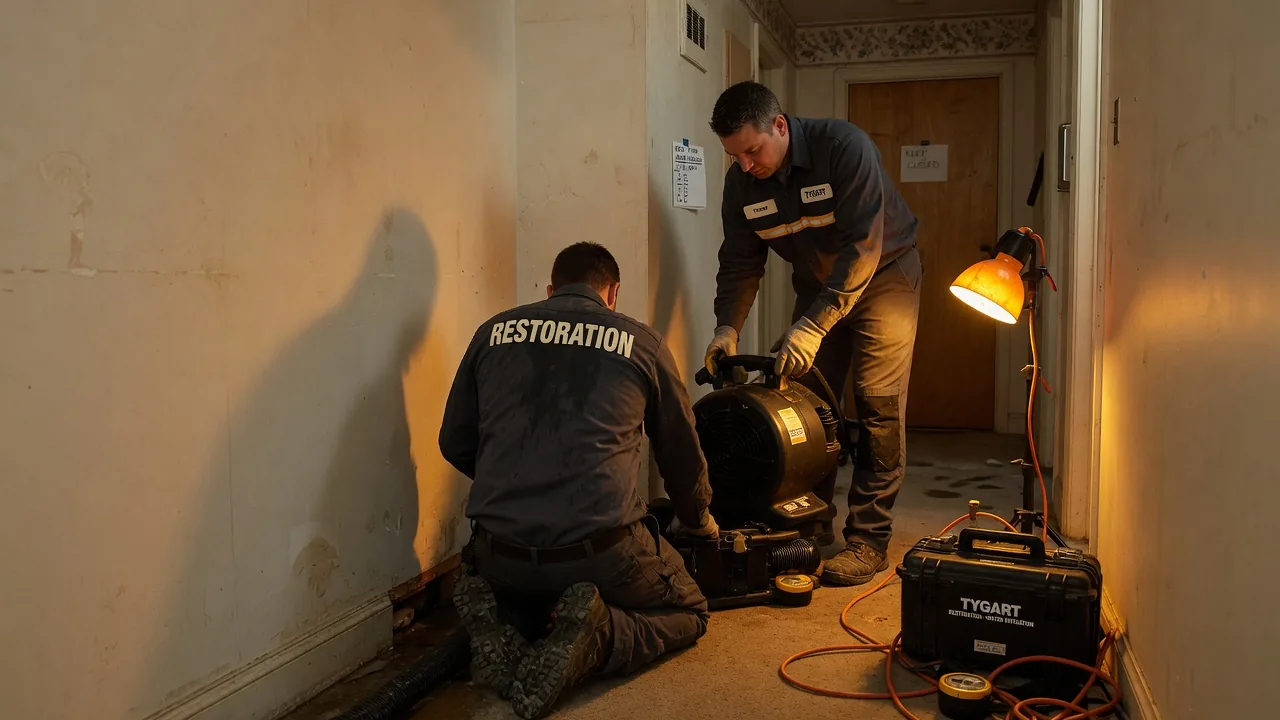
This is the first article in the Crew & Subcontractor Systems cluster under The Restoration Operator’s Playbook. The previous clusters describe operational discipline, AI deployment, senior talent strategy, the end-in-mind decision frame, and the carrier relationship. This cluster goes deep on the labor execution layer — the crews and subs whose work, in the end, is what the homeowner experiences.
The labor problem is not a temporary cycle
For most of the restoration industry’s history, the labor question was straightforward. There were enough people who wanted the work, the work could be learned on the job, and the companies that paid fairly and treated their crews reasonably could maintain the staffing they needed without much strategic effort. Crews came and went, but the underlying labor pool was deep enough that turnover was an operational annoyance rather than a strategic threat.
That structural condition has changed. The shift has been gradual enough that owners can sometimes still talk themselves into believing it is a temporary cycle that will revert. The honest assessment is that it is not. The labor pool that restoration has historically drawn from has shrunk and is continuing to shrink for reasons that are demographic, cultural, and competitive. The companies operating in 2026 are operating in a labor environment that is structurally different from the one they were operating in five years ago, and that environment will continue to evolve in directions that favor the companies that adapt and disadvantage the ones that do not.
This article is about what has actually changed in the restoration labor landscape, what the changes mean for how a company has to operate, and why the companies that are adapting deliberately look measurably different from the ones that are still operating from the old assumptions.
What has actually changed
Several specific shifts in the restoration labor environment have aggregated into the structural change that operators are now feeling.
The first shift is generational. The cohort of workers entering trade work today is significantly smaller than the cohort that is exiting through retirement, in absolute numbers and as a share of the working-age population. This shift is well-documented across all skilled trades, and restoration is not insulated from it. The total pool of people who are available for, qualified for, and interested in restoration work is structurally smaller than it was even five years ago.
The second shift is competitive. The pool of available trade workers is being competed for more aggressively by adjacent industries — new construction, commercial construction, manufacturing, logistics, energy work — that have historically not pulled as heavily from the trade labor pool as they are now. Each of these industries has gotten more sophisticated about recruiting, more willing to pay premiums for reliable workers, and more flexible about how they structure work. Restoration companies that compete with these industries for labor are competing against more capable competitors than they used to.
The third shift is cultural. The cultural status of trade work in the United States has shifted in ways that are complicated. On one hand, awareness of the financial viability and dignity of trade careers has improved over the last decade and continues to improve. On the other hand, the social pathways that traditionally directed young people into trade work — family connections, vocational training programs, military veterans entering civilian work — have weakened or evolved in ways that produce fewer entrants per year than they used to.
The fourth shift is in worker expectations. The workers who are entering or remaining in trade work today have higher expectations about working conditions, schedule flexibility, communication, professional development, and culture than the workers who occupied the same roles a decade ago. This is partly generational and partly the result of broader cultural shifts in workplace norms. Restoration companies that operate the way they did ten years ago are a less attractive employer to the current labor pool than they were to the labor pool of a decade ago.
The fifth shift is in workforce stability. Workers move between jobs more frequently than they used to, across the entire economy. Restoration is not exempt. The expectation that a good worker will stay for a decade, which was reasonable in 2010, is no longer reasonable in 2026. Companies have to either accept higher turnover and design around it or work harder than they used to at retention, which is the subject of the next article in this cluster.
Each of these shifts is real and is continuing. None of them is reversing. The companies that operate as if the labor environment were the labor environment of 2015 are operating against conditions that no longer exist.
What the adapting companies look like
The companies that are adapting deliberately to the new labor environment look different from the companies that are not, in ways that are visible to anyone who knows what to look for.
The adapting companies have invested in compensation that reflects the current labor market rather than the historical one. This does not always mean dramatically higher base pay. It often means more thoughtfully structured total compensation — better benefits, more predictable schedules, performance-based pay structures, retention bonuses, opportunities for advancement that translate into income growth over time. The point is that the compensation package is competitive against the alternatives the worker actually has, not against the historical norms of the industry.
The adapting companies have invested in working conditions that match contemporary expectations. Safety equipment that is current and well-maintained. Vehicles that are reliable and properly stocked. Schedules that respect the worker’s life outside of work. Communication systems that keep the worker informed about what is coming. None of these investments is dramatic individually. Together they produce a working environment that the contemporary labor pool experiences as professional rather than tolerable.
The adapting companies have invested in training that takes new workers from green to competent in less time than the industry default. Documented standards. Structured onboarding. Senior operators whose explicit role includes training new hires. Scenario-based skill development. The training infrastructure is not optional in a labor environment where the company cannot afford to lose new hires to competitors during a long ramp-up period.
The adapting companies have invested in operational systems that allow each worker to be more productive than workers in less-systematized companies. The documented standards described in the prep standard article. The AI-augmented documentation described in the AI cluster. The integrated workflows that reduce the routine cognitive load on the field crew. These investments mean that each worker can do more with the same effort, which improves the company’s productivity, which allows the company to pay competitively without compromising margin.
The adapting companies have invested in cultural environments that contemporary workers want to work in. Respect for the worker as a person. Honest communication about company direction. Recognition for good work. Opportunities for input. The cultural environment is not soft. It is part of the value proposition the company offers in exchange for the worker choosing this company over the alternatives.
None of these investments is exotic. All of them require the owner to recognize that the labor environment has changed and that the company has to change with it. Owners who recognize the shift and invest deliberately produce companies that can staff and grow. Owners who do not produce companies that perpetually struggle to fill positions and that lose ground to competitors who have adapted.
What the non-adapting companies look like
The companies that have not adapted to the new labor environment also look distinct, and the pattern is recognizable.
The non-adapting company has chronic open positions. There is always a hiring need. The need does not get filled in the timelines the company hopes for. The company eventually fills positions with whoever is available, often at compensation that has crept upward without corresponding investment in the rest of the value proposition.
The non-adapting company has high turnover. New hires arrive with optimism, encounter the gap between current expectations and the company’s working conditions, and leave within months. The departures consume operational bandwidth and sap morale among the workers who stay. The retention metrics are bad and the leadership talks about them as if they were a temporary problem rather than a structural one.
The non-adapting company has compromised quality. Crews are stretched, training is rushed, supervision is thin, and the work product reflects the strain. Customer satisfaction drifts downward. Carrier complaints increase. The senior team spends increasing amounts of time on quality recovery instead of on the operational improvements that would prevent the quality problems in the first place.
The non-adapting company has stalled growth. Even when there is demand for more work, the company cannot take it on because it cannot staff it. Revenue plateaus, then declines as the labor problem feeds back into the customer experience problem and the customer experience problem reduces referral flow.
The non-adapting company has demoralized leadership. Owners and senior operators spend their time on labor problems instead of on the strategic work that would move the company forward. The cumulative effect on the senior team is exhausting. Senior operators leave, which makes the labor problem worse at every level.
This pattern is recognizable in the restoration industry today. Many companies are in some stage of it. Most of them describe their situation as a temporary problem with the labor market. The honest assessment is that the labor market is unlikely to revert to a state where the non-adapting company can comfortably staff itself again. The adaptation is required.
The cultural piece is the hardest
Of all the dimensions of adaptation, the cultural piece is usually the hardest for owners to do well. Compensation can be adjusted by writing checks. Working conditions can be improved by buying equipment. Training can be built by allocating time and budget. Culture is harder.
The cultural shift required is not the same as the surface-level cultural changes that get discussed in human resources conversations. It is not about adding a ping-pong table to the break room or putting up motivational posters or renaming the foreman role to “team leader.” It is about whether the company genuinely treats its workers as people whose time, contributions, and dignity matter, and whether that treatment is visible in how leadership behaves day to day.
This is harder than it sounds because most owners genuinely believe they already do this. The honest assessment is more nuanced. A worker can experience an owner who genuinely cares about them as someone who occasionally yells at crews when stress is high, who lets supervisors enforce schedules in ways that disrespect the worker’s life outside of work, who tolerates senior staff who treat the field crews as expendable, who uses language about workers in private that the workers would not appreciate hearing. The owner who does these things while believing they care is producing a culture that the contemporary labor pool reads correctly and rejects.
The cultural adaptation requires the owner to see the company through the workers’ eyes and to address the gaps honestly. This work is uncomfortable. It is also non-negotiable for a company that wants to staff itself well in the current labor environment.
The companies that have done this work well have usually done it with deliberate help from outside their own leadership — senior operators who have been on both sides of the field-leadership divide, advisors who have done this kind of cultural work elsewhere, or honest conversations with workers who have left and are willing to share why. The work cannot be done in a single retreat or workshop. It is a multi-year orientation that has to be sustained by ongoing leadership attention.
The economic case for adaptation
The investments described in this article cost money. Owners considering them deserve to understand the economic case clearly.
The cost of the investments is real but is mostly in the form of better compensation, better equipment, better training, and the time of senior leadership. Each of these is meaningful. Together they typically increase the company’s labor cost by ten to twenty percent compared to the non-adapting baseline.
The benefit of the investments is also real and tends to outweigh the cost over time. Lower turnover reduces the recurring cost of recruiting, onboarding, and bringing new workers up to productivity. Higher retention means the experienced crews who are most productive stay longer. Better culture attracts higher-quality candidates, which improves the average quality of new hires. Better operations produce better customer outcomes, which produce better referrals and higher carrier program standing. The aggregate effect of these benefits typically more than compensates for the cost of the investments within twelve to twenty-four months.
The companies that have made the investments and that are now realizing the benefits report margin profiles that are at least as good as the non-adapting companies in their markets, often better. The non-adapting companies sometimes have lower per-job labor costs in their reporting, but the per-job number does not capture the cost of turnover, the cost of quality recovery, the cost of customer attrition, and the cost of stalled growth that the adaptation investments prevent.
The honest economic comparison includes all of these costs, and when included, the adaptation case is clear. The owners who make the investments produce companies that are economically stronger than they would be without them. The owners who do not produce companies that are economically weaker than they appear in any single quarter and that compound the weakness across years.
What this means for owners deciding now
If you run a restoration company and you are still operating under the assumption that the labor problem is a temporary market condition, the practical implication of this article is that the assumption is wrong and that the cost of operating from it is increasing every year.
The starting point is to assess honestly where the company stands on the dimensions described above. Is the compensation competitive against the actual alternatives the workers have? Are the working conditions current with contemporary expectations? Is the training infrastructure producing competent workers in reasonable time? Are the operational systems supporting per-worker productivity? Is the culture one that the contemporary labor pool wants to be part of?
The honest assessment will reveal the dimensions where the company has work to do. The work is rarely complete in any single dimension. The point of the assessment is to know which dimensions to invest in first.
The medium-term work is to make the investments deliberately and to track the effects over the following twelve to twenty-four months. Retention metrics. Quality metrics. Productivity metrics. Customer satisfaction metrics. The investments produce measurable effects, and tracking the effects keeps the work funded and the leadership focused.
The long-term result is a company that can staff itself in a labor environment that will continue to be tight for years to come. The companies that adapt now will be able to grow as opportunities arise. The companies that do not will be increasingly constrained by their inability to staff the work that comes to them.
The labor environment has changed. The companies that recognize the change and adapt to it deliberately will be visibly stronger in three years than the companies that continue to operate under the assumptions that no longer hold. The cost of the adaptation is meaningful. The cost of not adapting is larger and growing.
Next in this cluster: building a crew that stays — retention at the field level, the practices that produce it, and why field retention is its own discipline distinct from senior operator retention.
Related: How Claude Cowork Can Train Every Role on a Restoration Team — estimators, PMs, admins, technicians, and sales managers each learn different project management skills.
Leave a Reply