
Last refreshed: October 5, 2026 (Pacific)
Model Accuracy Note — Updated October 2026
Current lineup (October 2026, verified): Claude Fable 5.1 is the top tier above Opus, with Claude Opus 5.5 the current Opus, Claude Sonnet 5.5 (released September 28, 2026), and Claude Haiku 4.5. Opus 4.7 is now a legacy model. Full lineup: Claude Fable 5 guide. This article compares Claude Opus 4.7 pricing to Opus 4.6 as a historical baseline. Opus 4.7 has since been superseded by Opus 4.8 (legacy — still listed) and the Fable 5 top tier. Opus 4.7 and 4.6 share the $5/$25 per MTok list price. See current model tracker →
Anthropic announced Claude Opus 4.7 with the same list pricing as Opus 4.6: $5 per million input tokens, $25 per million output tokens. What Anthropic did not announce — and what Simon Willison surfaced through direct tokenizer analysis — is that Opus 4.7 generates approximately 1.46× more tokens for the same text output as Opus 4.6. That is a ~40% real-world cost increase at unchanged list prices.
This is not a criticism of the model. Opus 4.7 is genuinely better — 3× higher vision resolution, a new xhigh effort level, improved instruction following, higher-quality interface and document generation. The performance gains are real. The cost increase is also real, and it is not being communicated transparently in Anthropic’s pricing documentation. If you are budgeting for Claude API usage, you need to account for this.
What Token Inflation Means

Token inflation occurs when a model generates more tokens to express the same semantic content. It happens for several reasons: more detailed reasoning traces, more verbose explanations, additional caveats and structure, or architectural changes in how the model constructs its output. Opus 4.7 appears to produce more elaborated, structured responses than 4.6 by default — which accounts for the 1.46× multiplier.
The practical effect: if you were spending $10,000/month on Opus 4.6 for a production application, the same application workload on Opus 4.7 costs approximately $14,600/month — before any intentional use of the new xhigh effort level, which adds further token consumption on top of the baseline inflation.
How to Measure Your Actual Exposure

Do not estimate — measure. Here is the four-step process:
- Pull your last 30 days of Anthropic API usage data from your platform dashboard. Note your average output token count per call for your primary workloads.
- Run a representative sample of those same workloads on Opus 4.7 using the API directly, with identical prompts and system messages. Log output token counts for each call.
- Calculate your actual multiplier — it may be higher or lower than 1.46× depending on your specific prompt patterns and use cases. Tasks with highly constrained output formats (structured JSON, fixed-length summaries) will see lower inflation than open-ended generation.
- Apply the multiplier to your budget model and adjust your spend projections before migrating production workloads to Opus 4.7.
Mitigation Strategies
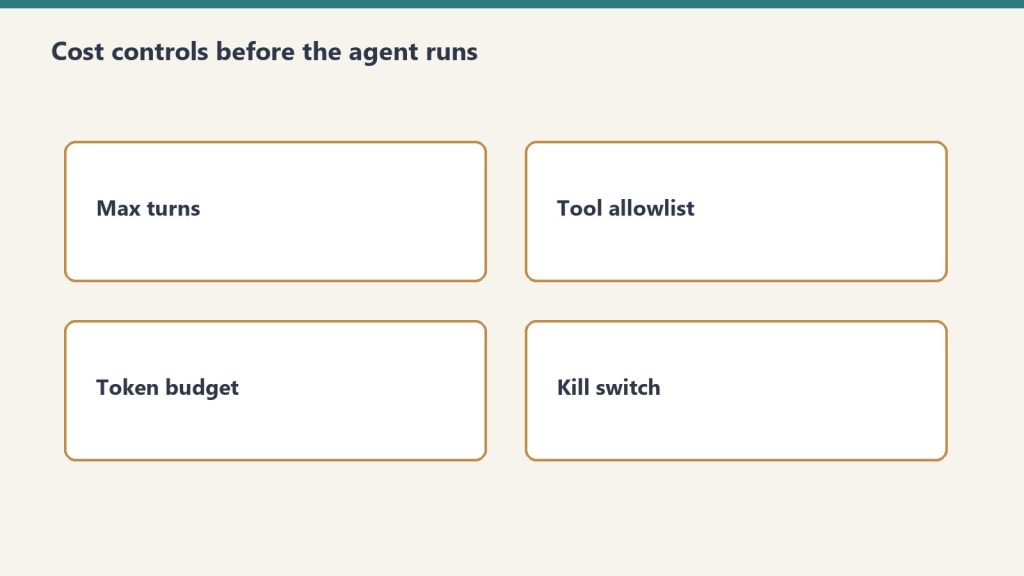
Several approaches can reduce the cost impact while preserving Opus 4.7’s quality gains:
- Explicit length constraints in system prompts. Adding “Respond in 200 words or fewer” or “Use bullet points, not paragraphs” constraints does not reduce quality on most tasks but meaningfully constrains token generation. Test which of your prompts accept length constraints without quality loss.
- Model routing by task type. Use the new gateway model picker in Claude Code, or implement explicit routing in your API calls: Opus 5.5 for the tasks where quality genuinely requires it, Sonnet 5.5 or Haiku 4.5 for high-volume tasks where speed and cost matter more than peak quality. The cost difference between Haiku and Opus is roughly 30×.
- Avoid xhigh effort unless necessary. The new
xhigheffort level in Opus 4.7 consumes significantly more tokens than the default effort setting. Reserve it for tasks where maximum quality is genuinely required — complex reasoning, high-stakes code generation, detailed document analysis. Do not set it as a default. - Evaluate Sonnet 5.5 for your use case. For many production workloads, Claude Sonnet 5.5 at $2/$10 per million tokens delivers quality that is indistinguishable from Opus 4.7 at the task level. The Opus tier is most clearly differentiated on the most difficult tasks — extended chain-of-thought reasoning, complex multi-step coding, nuanced creative judgment. Benchmark your specific workloads before assuming Opus is required.
Lineup currency (Oct 2026): Current API list (Oct 2026, verified): Sonnet 5.5 $2/$10, Opus 5.5 $4/$20, Haiku 4.5 $1/$5, Fable 5.1 $10/$50. Legacy (still listed on Anthropic’s card): Opus 4.8 $5/$25, Sonnet 4.6 $3/$15.
The Transparency Gap
Anthropic’s pricing page lists token costs accurately. What it does not document is how output token counts change across model versions for equivalent tasks. This is an industry-wide gap, not an Anthropic-specific failing — no major AI provider documents per-task token consumption differences between model versions in their pricing documentation.
The practical implication for any team managing AI infrastructure: treat “same price per token” announcements as partial information. Always benchmark your actual workloads on new model versions before migrating production traffic. The 1.46× multiplier Willison measured is for general text — your specific workload multiplier will be different, and you need to know it before your invoice arrives.
Claude Opus 4.7 remains listed through the Anthropic API at platform.claude.com. API pricing: $5/M input tokens, $25/M output tokens. Measure before you migrate.
Leave a Reply