Content Strategy - Tygart Media

Category: Content Strategy

Content is not blog posts — it is infrastructure. Every article, landing page, and resource you publish either builds authority or wastes bandwidth. We cover the architecture behind content that ranks, converts, and compounds: hub-and-spoke models, pillar pages, content velocity, and the editorial strategies that turn a restoration company website into the most authoritative source in their market.

Content Strategy covers editorial planning, hub-and-spoke content architecture, pillar page development, content velocity frameworks, topical authority mapping, keyword clustering, content gap analysis, and publishing workflows designed for restoration and commercial services companies.

  • The Complexity Dial: Finding the Register Where Expertise Meets Accessibility

    The Complexity Dial: Finding the Register Where Expertise Meets Accessibility

    Tygart Media / Content Strategy
    The Practitioner JournalField Notes
    By Will Tygart · Practitioner-grade · From the workbench

    There’s a specific tension every expert faces when communicating their work. It’s not about whether you know enough. It’s about where you set the dial.

    Go too technical: the work isn’t approachable. The prospect can’t see themselves using it. The client feels like they need a translator just to follow the conversation. They disengage — not because they’re not smart, but because the cost of staying engaged is too high.

    Go too simple: the work doesn’t appear valuable. You’ve hidden the sophistication that earns the premium. The prospect sees a commodity. They wonder if they could just do this themselves.

    The complexity dial is real. And finding the right setting isn’t instinct — it’s a learnable skill.

    Why the Default Is Always Too Technical

    Experts default toward complexity for a reason that feels rational: you want people to understand what you built. You’ve invested in the architecture, the system, the methodology. You want credit for it.

    The problem is that credit for complexity doesn’t come from complexity itself. It comes from the outcome the complexity produces. And outcomes are most legible when they’re explained simply.

    When someone asks you what you do, they are not asking for the architecture. They are asking for the result. “I build AI-powered content systems that rank on Google” is more credible to a non-technical buyer than a description of the pipeline that produces it — even though the pipeline is impressive, and even though you should absolutely understand and be able to speak to it when the moment calls for it.

    How to Find the Right Setting

    The right complexity setting is not a fixed point. It moves based on who you’re talking to, what stage of the relationship you’re in, and what decision you’re trying to help them make.

    A useful calibration question: what is the one thing this person needs to understand to move forward?

    Not the ten things. Not everything you know. The one thing. That’s your anchor. Build your explanation from that point outward, adding complexity only as far as is necessary to make that one thing credible and actionable.

    Another useful signal: listen for when someone stops asking follow-up questions. In a live conversation, the questions stop either because they understand or because they’ve given up. Your job is to read which one it is. Silence after complexity is usually disengagement, not comprehension.

    The Two-Version Rule

    For anything you communicate regularly — your services, your process, your results — it’s worth building two versions deliberately:

    The technical version is for peers, for audits, for documentation, for conversations where the other person has signaled they want to go deep. It doesn’t simplify. It’s accurate and complete.

    The accessible version is for first conversations, for clients who are focused on outcomes, for anyone who hasn’t yet signaled they want the technical version. It doesn’t dumb things down. It leads with the result, earns the trust, and holds the technical detail in reserve.

    The mistake is using only one. The expert who only has the technical version loses approachable audiences. The expert who only has the accessible version never earns sophisticated ones.

    What This Looks Like in Real Work

    A client asks: “What do you actually do for SEO?”

    Technical version answer: “We run a full AEO/GEO content pipeline with schema injection, entity saturation, internal link graph optimization, and structured FAQ blocks targeting featured snippets and AI overview placement.”

    Accessible version answer: “We make sure that when someone searches for what you do, Google shows your site — and shows it in a way that answers their question directly, so they click.”

    Both are accurate. Only one is appropriate for the first conversation with a prospect who runs a restoration company and has never thought about AEO in their life. The technical version comes later — after the trust is built, after they’ve asked to understand more, after the relationship has earned it.

    What is the complexity dial in communication?

    The complexity dial refers to the register of technical depth you use when explaining your work. Too technical and you lose approachability. Too simple and you sacrifice perceived value. The right setting depends on who you’re talking to and what decision they need to make.

    Why do experts default to overly technical communication?

    Experts default toward complexity because they want credit for what they built. But credit comes from the outcome, not the architecture. Outcomes are most legible when explained simply.

    How do you find the right complexity level?

    Ask: what is the one thing this person needs to understand to move forward? Build your explanation from that anchor, adding complexity only as far as necessary to make it credible and actionable.

    Should you always simplify your communication?

    No. The goal is calibration, not permanent simplification. Build both a technical version and an accessible version of your key messages, and deploy each when the audience has signaled which one they need.

  • Prospect-Specific Vocabulary Research: The Layer Most Persona Work Misses

    Prospect-Specific Vocabulary Research: The Layer Most Persona Work Misses

    Tygart Media / Content Strategy
    The Practitioner JournalField Notes
    By Will Tygart · Practitioner-grade · From the workbench

    Most persona-driven content work stops at the industry layer. You research the CFO persona. You learn that CFOs care about ROI, risk, and efficiency. You write in that register. You feel good about it.

    But there’s a layer below that almost nobody builds: the company-specific and prospect-specific vocabulary layer.

    Why Industry Personas Are Only Half the Job

    Industry personas capture how a role thinks. They don’t capture how a specific company talks.

    A CFO at a Medicaid claims processing company uses different words than a CFO at a luxury goods retailer — even though they share a title, shared concerns, and similar decision-making patterns. The terminology, the shorthand, the internal logic of their language is shaped by their industry, their company culture, their team, and sometimes just their history.

    When your content or your pitch uses generic CFO language, it lands as competent. When it uses their language, it lands as trusted.

    Where Prospect Vocabulary Actually Lives

    You don’t have to guess. The vocabulary is findable. It’s in:

    • Job postings. How a company writes a job description tells you exactly which words are native to that organization. What do they call the role? What do they emphasize? What jargon appears without definition?
    • Industry forums and trade boards. The conversations people have when they’re not performing for prospects — Reddit threads, Slack communities, association forums — reveal the working vocabulary of an industry. This is where “Reto” for restoration or “face sheet” for hospitals lives. Informal, precise, insider.
    • LinkedIn comments and posts. Not company page posts. Personal posts from practitioners in the industry. What do they call their problems? How do they describe wins?
    • The prospect’s own content. Blog posts, press releases, case studies, even their About page. Every company has language patterns. Read enough of their content and the vocabulary starts to surface.

    Two Layers Worth Distinguishing

    There’s an important distinction between two vocabulary types that often get collapsed:

    Universal industry language is the shared terminology that travels across every company in a vertical. In healthcare, “face sheet” means the same thing at every hospital. In restoration, “Reto” and “D” refer to specific job codes. This language is consistent. Build a glossary and it applies broadly.

    Company-specific language is the internal dialect. The nickname they use for a process. The shorthand that evolved on their team. The way they talk about a product internally versus how it’s marketed externally. This doesn’t transfer across companies even in the same industry. It has to be researched per prospect.

    Most content work builds the first layer. The second layer is where genuine trust gets created.

    How to Build Prospect Vocabulary Research into Your Process

    For any significant prospect or client vertical, a lightweight vocabulary research pass should happen before content is written or a pitch is built. The process doesn’t need to be elaborate:

    1. Pull 3-5 job postings from the company and their closest competitors
    2. Find one active forum or community where practitioners in that vertical talk informally
    3. Read 10-15 recent LinkedIn posts from people with the target job title at similar companies
    4. Flag any terminology that appears without explanation — that’s the insider vocabulary
    5. Build a small glossary: their term → what it means → how to use it naturally

    This takes 30-45 minutes. The output is a vocabulary layer that makes every subsequent touchpoint feel like it was built specifically for them — because it was.

    The Competitive Advantage This Creates

    Most of your competitors are working from the same industry persona playbooks. They’re writing for the CFO archetype. They’re checking the same boxes.

    When you show up speaking a prospect’s actual language — not performing their industry’s language, but their specific company’s language — the experience is different. It signals that you listened before you spoke. It signals that you did the work. And in a landscape where most outreach feels templated, that specificity is immediately noticed.

    What is prospect-specific vocabulary research?

    It’s the practice of researching how a specific company or prospect actually talks — their internal terms, shorthand, and language patterns — before writing content or building a pitch for them. It goes deeper than standard industry persona work.

    Where do you find a prospect’s actual vocabulary?

    Job postings, industry forums, practitioner LinkedIn posts, and the company’s own published content are the most reliable sources. The words people use without defining them are the insider vocabulary you’re looking for.

    How is this different from building buyer personas?

    Buyer personas capture how a role category thinks and what they care about. Prospect vocabulary research captures the specific language a company or individual uses — which varies even among people with the same title in the same industry.

    How long does this research take?

    A lightweight vocabulary pass takes 30-45 minutes per prospect and produces a small glossary that makes every subsequent touchpoint feel custom-built.

  • Voice Mirroring: Why How You Deliver Information Matters as Much as What You Say

    Voice Mirroring: Why How You Deliver Information Matters as Much as What You Say

    Tygart Media / Content Strategy
    The Practitioner JournalField Notes
    By Will Tygart · Practitioner-grade · From the workbench

    There is a principle that separates consultants who get results from consultants who get ignored, and it has nothing to do with how smart you are or how deep your knowledge goes.

    It’s called voice mirroring. And it works like this: the depth you go is for you. The way you deliver it back is for them.

    What Voice Mirroring Actually Means

    Voice mirroring is the practice of returning information to someone in the same register, vocabulary, and complexity level they used when they asked for it.

    If a client calls something a “brain box thing that scans and chunks stuff,” that is not ignorance. That is their operating language. Your job is not to correct it. Your job is to meet it.

    When you respond to a simple question with a 14-point technical breakdown, you haven’t demonstrated expertise. You’ve created friction. The information doesn’t land because the delivery doesn’t fit the receiver.

    The Research Phase vs. the Delivery Phase

    Voice mirroring requires you to split your process into two distinct phases that should never bleed into each other.

    The research phase is where you go as deep as you need to. You build the full knowledge structure. You understand the technical landscape, the edge cases, the nuances. You go unrestricted. This phase is entirely internal.

    The delivery phase is where you filter. You take everything you know and you ask one question: what does this person need to hear, in their language, to move forward? You strip everything that doesn’t answer that question.

    Most people collapse these phases. They research and then output everything they found. That is not delivery. That is dumping.

    Why This Is Harder Than It Sounds

    The instinct for most experts is to demonstrate depth. We have been trained — in school, in career ladders, in client presentations — to show our work. The more we show, the more valuable we appear.

    But there is a tension at the center of this. Go too technical and you’re not approachable. Make it too simple and you don’t appear valuable. The sweet spot is a specific calibration: sophisticated enough to earn trust, plain enough to require no translation.

    Finding that calibration requires listening more than talking. It requires paying attention to how the question was asked, not just what was asked.

    What Voice Mirroring Looks Like in Practice

    A prospect emails you: “Hey, I just need to know if this thing is going to sit inside or outside my company, what it’s going to cost, and how much work it’s going to be for us.”

    They did not ask for a capabilities deck. They did not ask for a technical architecture diagram. They asked three direct questions in plain language.

    Voice mirroring says: answer those three questions in the same plain language. Then stop.

    Everything else you know about your system — the AI pipeline, the schema structure, the content scoring logic — stays in the research phase. It is not erased. It is reserved. You deploy it when and if the conversation earns it.

    Voice Mirroring as a Sales and Client Retention Tool

    The downstream effects of getting this right compound fast. Clients who feel understood don’t need as many touchpoints to make decisions. They trust faster. They refer more. They don’t feel like they need a translator every time they interact with you.

    Conversely, clients who consistently receive information they have to decode become exhausted. Even if your work is excellent, the communication friction erodes the relationship. They start to feel like the problem is them — and that is the last feeling you want a client to have.

    Voice mirroring is not a soft skill. It’s a retention mechanism.

    The Takeaway

    Go as deep as you need to go internally. Build the knowledge. Understand the complexity. Do not shortcut the research phase.

    Then, before you open your mouth or start typing, ask yourself: in what voice did this person ask? Return your answer in that voice. Everything else is noise.

    Frequently Asked Questions

    What is voice mirroring in client communication?

    Voice mirroring is the practice of returning information to a client or prospect in the same vocabulary, register, and complexity level they used when they asked. It separates the internal research depth from the external delivery language.

    Why do experts struggle with voice mirroring?

    Most experts are trained to demonstrate depth by showing their work. This instinct leads to over-delivery — giving clients everything you know rather than what they need to hear, in a way they can act on.

    Is voice mirroring just dumbing things down?

    No. The goal is calibration, not simplification. The delivery needs to be sophisticated enough to earn trust while plain enough to require no translation. That is a specific, practiced skill.

    How does voice mirroring affect client retention?

    Clients who feel consistently understood make decisions faster, require fewer touchpoints, and refer more readily. Communication friction — even when the underlying work is excellent — erodes relationships over time.

  • Your Jobs Are a Knowledge Base. You’re Just Not Using Them That Way.

    Your Jobs Are a Knowledge Base. You’re Just Not Using Them That Way.

    Tygart Media / Content Strategy
    The Practitioner JournalField Notes
    By Will Tygart
    · Practitioner-grade
    · From the workbench

    Every restoration job teaches something. Almost none of it ever gets written down.

    A crew shows up to a flooded basement at 2am. They make decisions — where to set the equipment, how to read the moisture map, which walls are worth opening and which aren’t, how to sequence the dry-down so the structure doesn’t get worse before it gets better. They’ve made these calls before. They know things that took years to learn. They finish the job, submit a field report, and move on.

    Then the experienced tech takes another job across town. Or retires. Or just gets too busy to train anyone. And that knowledge disappears.

    I want to talk about a different approach. One that captures that knowledge systematically — and turns it into something that works in two directions at once.

    The Double-Purpose Content System

    The idea is straightforward: document your jobs as content. Scrub the client-specific details — no names, no addresses, no identifying information. But tell the real story. What was the scope? What made this job complicated? What decisions were made and why? What was the outcome?

    Published on your website, this does something conventional marketing content can’t: it demonstrates expertise through specificity. Not “we handle all types of water damage” — but a documented account of how your team handled a Category 3 intrusion in a commercial kitchen with active mold growth and a compressed timeline. That’s a different signal entirely.

    The reader — whether that’s a property manager searching for a qualified contractor or an insurance adjuster evaluating whether to refer you — isn’t reading a brochure. They’re reading a case record. They can see how your team thinks.

    But here’s the second direction, and it’s the one I find more interesting: that same documentation feeds back into the company as a knowledge base.

    The Internal Payoff

    Restoration companies have a training problem that nobody talks about directly. The knowledge of how to do the job well is distributed unevenly across the team. The senior technicians have it. The new hires don’t. And the transfer mechanism is usually informal — ride-alongs, tribal knowledge, institutional memory held by people who may not stay forever.

    When you document jobs as structured content, you start to build something that actually scales. A new technician can search the knowledge base for jobs similar to what they’re walking into. They can see how a comparable loss was scoped, how the equipment was deployed, what complications arose and how they were handled. Before they’ve seen thirty jobs themselves, they can read about thirty jobs your company has already worked.

    An operations manager making a scheduling or resource decision can pull up historical jobs of a similar size and see what the typical crew requirements were. A project manager prepping a scope of work can see how similar scopes were structured and what line items were typically included.

    And when AI tools enter the workflow — which they will, if they haven’t already — that documented job history becomes training data your AI actually understands. Not generic restoration industry knowledge pulled from the web. Your company’s specific approach, your specific decisions, your specific standards. An AI assistant working from that foundation gives answers that sound like your company, because they’re drawn from your company’s real work.

    What Makes This Different From a Blog

    Most restoration company blogs are essentially SEO performance. Keywords stuffed into generic articles about what causes mold or how long drying takes. Useful, maybe. Differentiating, no.

    What I’m describing is a content system built on documented operational reality. The subject matter isn’t manufactured — it’s the actual work. Which means it has a quality that manufactured content can never replicate: it happened. The specificity is real because the job was real. The decisions were real. The outcome was real.

    Readers feel this, even when they can’t articulate why. They’re not evaluating whether your content sounds authoritative. They’re reading something that is authoritative, because it comes from direct experience rather than borrowed knowledge.

    And unlike a blog that requires a content team to invent topics every week, this system has an inventory problem that only gets easier over time. Every job adds to it. The longer you run the system, the richer the knowledge base becomes — for your website visitors and for your own team.

    The Setup

    The practical structure is simpler than it sounds. Each job entry captures a handful of consistent fields: loss type, scope classification, environmental conditions, key decision points, equipment deployed, timeline, outcome. The sensitive details — client, location, anything identifying — never make it into the published version.

    What gets published is the pattern. The structure of the problem and the response. Categorized, searchable, and useful to anyone trying to understand how your company operates — including your own people.

    This isn’t a new concept in medicine or law, where case documentation has always served both public communication and internal learning simultaneously. It’s just new in restoration, where the work is equally complex and the knowledge equally worth preserving.

    The companies that start building this now will have a meaningful advantage in three years. Not because their marketing was cleverer — because their institutional knowledge actually compounded instead of walking out the door every time someone left.


    Tygart Media builds content and knowledge systems for property damage restoration companies. If you’re interested in implementing a job documentation system for your operation, start here.

  • The Knowledge Base You Can Actually Trust

    The Knowledge Base You Can Actually Trust

    Tygart Media / Content Strategy
    The Practitioner JournalField Notes
    By Will Tygart
    · Practitioner-grade
    · From the workbench

    There are two kinds of knowledge bases a writer can work from.

    The first is built from reading. From research, from other people’s frameworks, from things you’ve studied and synthesized and stored. This is legitimate knowledge. It produces competent writing. It can be thorough, well-sourced, and useful.

    The second is built from doing. From the things that have actually happened, the decisions that were actually made, the results that actually came back. This knowledge has a different texture. A different authority. And when you write from it, something changes in the writing itself.

    I’ve been thinking about which kind of knowledge base I’m trusting when I write.

    The Anxiety of the Research-Based Writer

    When you write from research, there’s a persistent low-level anxiety underneath the work. You’re synthesizing things that happened to other people, in other contexts, under conditions you didn’t control. The knowledge is real but the application is theoretical. You’re always one degree away from direct experience.

    That distance shows up in the writing. You hedge more. You qualify more. You gesture toward possibilities rather than landing on conclusions. You write “this approach can work” instead of “this worked.” The careful reader feels it even when they can’t name it.

    And when AI enters the picture — when you’re using AI tools to generate content, to research topics, to pull frameworks — the research-based knowledge base gets even more diffuse. Now you’re synthesizing a synthesis. The AI has read everything, which means it’s essentially read nothing specifically. It knows the shape of the conversation without having been in any of the actual conversations.

    The Confidence of the Experience-Based Writer

    Writing from a knowledge base of what you’ve actually done is different in one specific way: you don’t have to wonder if it’s possible. It happened. The uncertainty is behind you.

    When I write about publishing content pipelines that run at scale across a dozen sites, I’m not theorizing about whether that’s achievable. I’ve done it. I know where the proxy errors happen, which hosting environments block which approaches, what the content looks like three months in versus three years in. The knowledge isn’t borrowed. It’s operational.

    That changes what I can say. It changes how directly I can say it. And it changes what the reader receives — because at some level, readers feel the difference between someone describing a map and someone describing a road they’ve driven.

    AI Makes This More Important, Not Less

    Here’s where it gets interesting. Most of the conversation about AI in content is about generation — what the AI can produce, how fast, at what quality. But the more important question is what the AI is drawing from when it helps you.

    An AI working from your experiential knowledge base — from your actual work logs, your real client results, your documented processes — produces something fundamentally different from an AI drawing from general web training data. The second one sounds credible. The first one is credible, because the source material is real events that actually occurred.

    This is the real leverage in treating your work history as a content source. Not just that it’s “authentic” in some vague brand-voice sense. But that it’s verified. You don’t have to fact-check your own experience. You don’t have to worry about whether the case studies hold up. They do, because you were there.

    When AI generates from that foundation — from things that have actually happened — it isn’t hallucinating plausible content. It’s articulating real content more clearly than you might have time to do yourself.

    The Trust Differential

    There’s a version of content marketing that’s essentially a confidence game. You project expertise through fluency. You write with authority about things you understand in theory. The reader can’t easily verify whether your knowledge is earned or performed, so the performance stands.

    This worked better before. It’s working less well now. Readers are more calibrated to the texture of generated, research-based content. They’re less impressed by confident-sounding frameworks they’ve seen assembled from the same sources everywhere. They’re more interested in specificity — in the detail that could only come from someone who was actually in the room when the thing happened.

    The experiential knowledge base is the moat. Not because it’s hidden, but because it can’t be replicated without the experience. Another writer can read everything I’ve read. They can’t have done what I’ve done. And when the writing comes from that layer, it has a specificity that research alone can’t produce.

    What This Means for How You Write

    The practical implication is this: the most valuable content you can create isn’t the content that synthesizes what others have said. It’s the content that documents what you’ve actually done — what worked, what didn’t, what the specific conditions were, what you’d do differently.

    This isn’t just a better content strategy. It’s a more honest one. You’re not performing expertise. You’re reporting it. And the writing that comes from that place has a quality that readers and, increasingly, AI systems are learning to recognize and prefer.

    Your knowledge base is only as trustworthy as its source. If it’s built from things that have happened, you can write from it without anxiety. The results are behind you. The uncertainty has been resolved. You’re not speculating about whether the approach works — you’re describing the approach that worked.

    That’s a different kind of writing. And I think it’s the kind that matters most right now.


    Will Tygart is a content strategist and founder of Tygart Media. He builds content operations for companies that want their actual knowledge — not borrowed knowledge — to do the work.

  • What Would a Website Say If It Could?

    What Would a Website Say If It Could?

    Tygart Media / Content Strategy
    The Practitioner JournalField Notes
    By Will Tygart
    · Practitioner-grade
    · From the workbench

    I’ve been thinking about something I can’t quite shake.

    When you sit down to write for your website — who are you actually writing for? The answer seems obvious until you really look at it. You’d say: the reader. But is that true? And if it’s not the reader, is it you? Is it the algorithm? Is it the gap in your content map that some SEO tool flagged last Tuesday?

    Or — and this is the part I keep coming back to — are you writing for the website itself?

    The Website That Learns to Speak

    A website, left alone long enough, starts to develop something like a voice. Not the voice you intended. Not your brand guidelines. Something that emerges from the accumulation of every post, every page, every word you’ve put there over months and years. Search engines read it. AI systems index it. Scrapers pull it. And increasingly, the tools you use to generate new content pull from it too.

    Your website is now your source material.

    This is where it gets recursive in a way that feels almost alive. You write something. It gets indexed. You use that indexed material — through AI tools, through your own memory, through the patterns you’ve unconsciously absorbed — to write the next thing. Which gets indexed. Which informs the next thing after that.

    The website is quietly authoring itself through you.

    Four Audiences You’re Actually Writing For

    When I think honestly about the tension in content creation right now, I can identify four distinct forces pulling on every piece of writing that goes on a website. And almost nobody is conscious of all four at once.

    Writing for the reader is the purist’s answer. The person on the other side of the screen who has a question, a problem, a curiosity. They found you somehow. They’re reading. What do they need? This is the most human version of the work and, paradoxically, the easiest one to forget when you’re deep in a content calendar.

    Writing for the gaps is the strategist’s answer. You audit your content, find what’s missing, identify the keyword clusters you haven’t touched, the questions your competitors rank for that you don’t. You write to fill the map. This is legitimate. But it produces a certain kind of writing — useful, complete, a little bloodless.

    Writing for yourself is what happens when you stop performing. When you publish something because the idea won’t leave you alone, because you need to think out loud, because you have a genuine point of view that may or may not be welcome. This is where the most interesting things come from. It’s also the hardest to justify in a spreadsheet.

    Writing for the website is the one nobody names directly, but everyone is increasingly doing. You feed the machine you’ve already built. You maintain coherence with what’s already there. You let the existing body of work shape the next piece. You’re not just an author — you’re a gardener tending something that’s already growing on its own terms.

    The Recursion Problem

    Here’s where it gets philosophically uncomfortable: once you start treating your website as a database — as the launching point for everything you create next — you have to ask what happens to originality.

    If every new article is partially generated from the patterns of the old ones, are you growing? Or are you circling? Are you developing a point of view, or just achieving higher and higher fidelity to a version of yourself that was defined years ago?

    The recursion isn’t inherently bad. In fact, it’s how voice gets built. The best writers in any medium are recognizable precisely because their new work is in conversation with their old work. There’s a thread. A coherence. You can feel the same mind behind all of it.

    But there’s a version of this that becomes a trap. Where the website stops being a record of your thinking and starts being the limit of it. Where you can’t write something the site hasn’t already implied, because your tools are pulling from your history and your instincts are calibrated to what performed.

    The question isn’t whether to be recursive. The question is whether you’re conscious of it.

    What the Website Would Say

    If your website could speak — if the accumulated weight of everything you’ve published could form a sentence back to you — I think it would say something like: you’ve been circling this idea for a long time. Are you ready to go deeper, or are you going to keep publishing variations of what you already believe?

    That’s not an indictment. It’s an invitation.

    The most honest thing a website can do is hold a mirror up to the mind behind it. And the most honest thing a writer can do is notice when the mirror has become the only window they’re looking through.

    A New Way to Think About the Relationship

    I’m not arguing against using your existing content as a foundation. I do it. Everyone who publishes consistently does it. The site becomes a knowledge base, a reference point, a signal to yourself about what you’ve already said so you can figure out what you haven’t.

    But I think the writers and strategists who are going to do the most interesting work in the next few years are the ones who treat that foundation as a floor, not a ceiling. Who use the recursive pull of their own content as a diagnosis — here’s where my thinking has been living — and then deliberately write toward the edges of it.

    Not for the reader. Not for the gap. Not for the algorithm.

    For the idea that the site hasn’t said yet. The thought that doesn’t fit the existing patterns. The piece that, when you publish it, makes everything else on the site feel slightly more honest.

    That’s what I think the website is waiting for.


    Will Tygart is a content strategist and founder of Tygart Media. He thinks too much about the relationship between writers and the systems they build, and occasionally publishes that thinking here.

  • AEO, GEO, SEO Is the New Social Media

    AEO, GEO, SEO Is the New Social Media

    Tygart Media Strategy
    Volume Ⅰ · Issue 04Quarterly Position
    By Will Tygart
    Long-form Position
    Practitioner-grade

    The Feed Changed. You Just Didn’t Notice.

    Social media trained an entire generation of marketers to think in formats. Carousel or Reel. Thread or Story. 30 seconds or 60. Vertical or square. We built content calendars around what the algorithm wanted to see, not what the audience actually needed to know.

    That era is ending — not because social platforms are dying, but because the consumer sitting on the other side of the screen is changing. Increasingly, the first “person” to read your content isn’t a person at all. It’s an AI agent — a chatbot, an assistant, a search model — pulling information on behalf of someone who asked a question.

    And that changes everything about what “social” means.

    When the Consumer Is a Bot, the Format Doesn’t Matter

    The entire social media economy is built on format constraints. Instagram rewards visual-first. LinkedIn rewards text-heavy thought leadership with engagement bait hooks. TikTok rewards pace and pattern interrupts. Twitter rewards brevity and provocation. Every platform has its own grammar, its own algorithm, its own definition of “good content.”

    But when the consumer is an AI model — Claude, ChatGPT, Gemini, Perplexity, a Google AI Overview — format is irrelevant. What matters is the substance. The depth. The accuracy. The authority.

    An AI agent doesn’t care about your hook. It cares about whether your content actually answers the question its user asked. It doesn’t care about your carousel design. It cares about whether your claims are sourced, your entities are clear, and your expertise is demonstrable.

    This is what AEO, GEO, and SEO — the modern trifecta — actually represent. They aren’t just search optimization tactics. They are the new social media distribution layer.

    No-Click Impressions Are the New Likes

    In the social media world, the metric that matters is the impression. Someone saw your post. If they liked it, they tapped a heart. If they really liked it, they commented or shared. That engagement signaled to the algorithm that your content was worth showing to more people.

    The same feedback loop now exists in AI-mediated search — it just looks different.

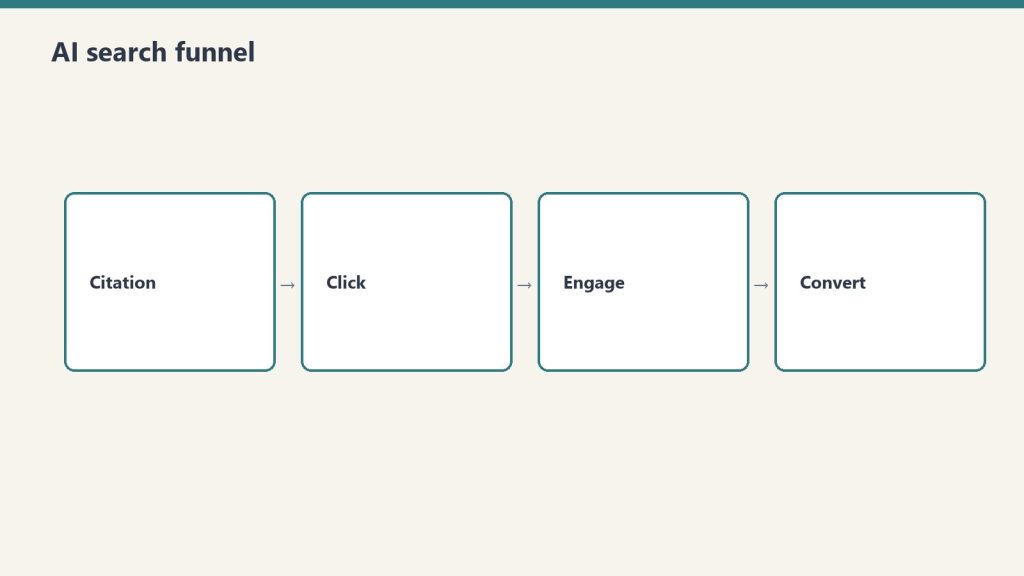
    When your website content appears in a Google AI Overview, that’s an impression. When Perplexity cites your page in an answer, that’s engagement. When ChatGPT recommends your business in response to a user query, that’s a referral. When someone reads an AI-generated summary of your expertise and then calls your office, that’s a conversion.

    The funnel is the same. The channel changed.

    And here’s the part most marketers are missing: you don’t need to chase a trend to earn these impressions. You don’t need to dance. You don’t need a hook. You need good information, structured well, written with genuine expertise, and optimized so AI systems can find it, trust it, and cite it.

    The Passion Advantage

    Social media has an alignment problem. The content that performs best on social platforms is often not the content the creator cares most about. It’s the content that matches the algorithm’s preferences. This creates a grinding misalignment — business owners and marketers spending hours producing content they don’t particularly care about, in formats they didn’t choose, for an audience they can’t directly reach.

    AEO/GEO/SEO flips that equation.

    When you write deep, authoritative website content about the thing you actually know — the thing you’ve spent years mastering — AI systems notice. They learn your expertise. They map your authority. And they start recommending you to people who are actively looking for exactly what you do.

    The data that learns you, learns them.

    That’s not a slogan. It’s how the technology works. Large language models build representations of entities — businesses, people, topics — based on the depth and consistency of the information available about them. The more you write about what you genuinely know, the stronger that representation becomes. The stronger it becomes, the more often AI systems surface you as the answer.

    This is the exact opposite of social media’s content treadmill. Instead of chasing what’s trending, you go deeper into what you already know. Instead of adapting to a platform’s format, you write for substance. Instead of fighting for attention, you earn citation.

    Website Content Is Now the Most Social Thing You Can Do

    Here’s the reframe that matters: your website is no longer a brochure. It’s your most important social channel.

    Every page you publish is a node in a knowledge graph that AI systems are actively reading, indexing, and reasoning about. Every article you write is a potential answer to a question someone hasn’t asked yet. Every entity you define, every claim you source, every FAQ you structure — these are the signals that determine whether your business shows up when someone asks an AI “who should I call for this?”

    Social media posts disappear in 24 hours. Website content compounds. A well-optimized article written today can be cited by AI systems for years. It doesn’t need an algorithm boost. It doesn’t need paid promotion. It needs to be right, and it needs to be findable.

    That’s what modern SEO, AEO, and GEO deliver — not tricks, not hacks, but the infrastructure that makes your expertise machine-readable and AI-citable.

    What This Means for Your Business

    If you’re spending 80% of your marketing effort on social media and 20% on your website, you have the ratio backwards. The businesses that will dominate in an AI-mediated world are the ones investing in deep, authoritative web content — content that answers real questions, demonstrates genuine expertise, and is structured for the machines that are now the first readers of everything published online.

    The feed changed. The question is whether you’ll keep posting for an algorithm, or start publishing for the intelligence layer that’s replacing it.

  • The Digital Tailor: Why the Next Great Tech Job Looks Nothing Like Tech

    The Digital Tailor: Why the Next Great Tech Job Looks Nothing Like Tech

    Tygart Media Strategy
    Volume Ⅰ · Issue 04Quarterly Position
    By Will Tygart
    Long-form Position
    Practitioner-grade

    There’s a moment in every fitting room that has nothing to do with fabric.

    The tailor doesn’t ask what color you want. Not yet. First, they ask where you’re going. Who will be in the room. Whether you’ll be standing all night or seated at a table. Whether this is the kind of event where people remember what you wore — or the kind where they remember what you said.

    The clothes come last. The understanding comes first.

    I’ve been building AI systems for businesses for the past two years, and I’ve started to realize that what I actually do has very little to do with technology. The job that’s emerging — the one that doesn’t have a name yet — looks a lot more like a Savile Row fitting than a software deployment.

    (more…)

  • The Pivot: When Reading Your Own Article Kills the Idea You Were About to Build

    The Pivot: When Reading Your Own Article Kills the Idea You Were About to Build

    Tygart Media / Content Strategy
    The Practitioner JournalField Notes
    By Will Tygart
    · Practitioner-grade
    · From the workbench

    Fifth in a series I did not plan and now apparently cannot stop. The previous four pieces walked through productizing the Tygart Media context layer, the dual-publish pattern, articles as infrastructure, and the naming question for the eventual product. This piece is about what happened when I read my own first article a few hours after publishing it and quietly killed the entire idea I had been planning to build.

    The Moment

    Two days ago I had an idea for a product. I had Claude help me think it through. We wrote a 3,000-word article about it, published it, and I felt good about it. The idea was real. The market analysis was solid. The recommended path was a clean-room knowledge base eventually packaged as a context-as-a-service API for other operators. I had a name for it. I had a phase plan. I was ready to start building.

    Then I went back and read my own article a few hours later. And I got to the section where Claude had laid out the existing competitors — Mem0 with its $24M Series A, Letta with its OS-inspired memory architecture, Zep with its temporal knowledge graphs, Hindsight with its open MIT license, SuperMemory with its generous free tier, LangMem for the LangGraph crowd. Six serious products. Some of them well-funded. All of them solving the technical layer of the thing I was about to spend months building from scratch.

    And the obvious thought arrived, the way obvious thoughts always arrive, late: why am I building this?

    The thing I cared about was the knowledge. The opinionated, accumulated, hard-won-from-running-27-client-sites operational wisdom. The stuff that makes my Claude work better than a fresh Claude. The stuff that — if you stripped it out of my Notion and exposed it via an API — would actually be valuable to other operators. That was the product. That was always the product.

    The infrastructure to serve that knowledge — vector storage, retrieval, embeddings, rate limiting, billing, SDKs, documentation, an API gateway — was not the product. That was just the delivery mechanism. And the delivery mechanism already existed, six different ways, built by teams with more engineers and more funding than I will ever have.

    I had been planning to build the entire stack. I should have been planning to bolt onto the existing stack. Pour my knowledge into Mem0 or Hindsight or whichever one fit best, configure it the way Tygart Media would configure it, and ship something in a week instead of a quarter. The product is the knowledge. The plumbing is somebody else’s problem and somebody else has already solved it.

    That is the pivot. It happened in about thirty seconds, in the middle of a chair, while reading my own article on my own website. The original idea died. A better one took its place.

    What Actually Happened in Those Thirty Seconds

    I want to slow this moment down because the mechanics of it are the actual point of this article. The pivot itself is mundane — operators pivot all the time. The interesting thing is how the pivot happened, and how fast, and what made it possible.

    Until very recently, the path from “I have an idea” to “I have decided to pivot off that idea” looked something like this. You have the idea. You sit with it for a few weeks. You sketch a business plan. You talk to a few people. You start building a prototype. You spend three months on the prototype. You discover the market is more crowded than you thought. You spend another month convincing yourself you can still differentiate. You spend a fourth month watching adoption fail to materialize. You finally admit the idea was wrong. You pivot — but now you have four months of sunk cost, an obsolete prototype, and a head full of bias toward the dead idea.

    That is the old shape of pivoting. It is expensive and slow and emotionally brutal because by the time you pivot, you have invested too much to think clearly about it.

    The new shape — the one that just happened to me — is different. Idea arrives. AI helps you model the entire business in a single evening. You publish the model as an article. A few hours later you re-read the article with fresh eyes, see what your past self missed, and pivot. Total elapsed time: less than 48 hours. Sunk cost: zero, except for some Claude tokens and a Notion page. Emotional attachment: minimal, because you haven’t invested enough to be attached.

    The thing AI did here was not “have the idea.” I had the idea. The thing AI did was compress the experience curve so violently that I got the wisdom of having explored the idea for months in the time it takes to write and read a long article. And the wisdom is what made the pivot possible.

    Compressed Experience Is the Actual Superpower

    This is the part that I think is genuinely new and worth taking seriously.

    For all of human business history, the only way to learn whether an idea was good was to do the idea. You had to actually build the thing, actually try to sell it, actually watch customers respond or fail to respond. Experience was something you could only acquire by spending time, money, and reputation. The cost of experience was the entire point of why most people never started anything — the price tag on finding out whether an idea worked was usually higher than they could afford to pay.

    What is happening now is that AI lets you simulate the experience curve cheaply enough that you can run an idea all the way to its likely outcome before you commit to building it. Not perfectly. Not completely. The simulation is missing things — you cannot simulate the actual conversations with actual customers, you cannot simulate the surprise that comes from a market doing something nobody predicted, you cannot simulate the slow grind of operations. But you can simulate enough to catch the obvious failures. You can simulate enough to notice that your idea has been built six times already by better-funded teams. You can simulate enough to realize that what you actually wanted was not the thing you were planning to build.

    The article I published two days ago was, functionally, a months-long thought experiment compressed into a single evening. It surveyed the market. It modeled the economics. It anticipated the scrubbing problem and the liability problem. It talked itself into a clean-room architecture and a phase plan. By the time I finished reading it, I had effectively done a quarter’s worth of strategic exploration in a few hours.

    And then — this is the part that matters — the simulation produced enough genuine insight that I could act on it. The pivot was not based on intuition. It was based on having actually thought through the idea in enough depth to see where it broke. The thinking-through was the experience. The experience was what made the pivot reasonable instead of flighty.

    This is not the same thing as actually having spent years running the business. There are things you only learn by running the business that no amount of simulation can produce. But the simulation is good enough to catch the largest and most embarrassing mistakes — the ones that would otherwise eat months of runway before you noticed them. And catching the largest mistakes early is most of what good entrepreneurial judgment actually is.

    The Accidental Customer Discovery

    Here is the second strange thing that happened in those thirty seconds. While I was sitting there realizing I should bolt onto an existing memory layer instead of building one, I also realized something else: I had just done customer discovery on myself.

    I had spent two days designing a product for a hypothetical other operator who wanted to plug a curated context layer into their AI workflow. I had thought carefully about what they would need, how they would use it, what would make them pay, what would make them churn. And then in the middle of all that thinking, I noticed that I was the customer. I was the person who needed a curated context layer plugged into my AI workflow. I had been describing my own needs the whole time and pretending they belonged to someone else.

    This is a pattern I think happens more often than people admit. You have a need. The need is not clearly visible to you because you have been working around it for so long that the workaround feels like just how things are. You start trying to design a product for somebody else, and the act of designing forces you to articulate the need clearly enough to recognize it — and then you realize the somebody-else was you the whole time. The product was a mirror. You were doing customer discovery on yourself by pretending to do it for a stranger.

    The pivot, then, is not just “buy instead of build.” It is “buy instead of build, because the customer for the bought thing is me, and the time saved by not building gets spent on the next-order thing I actually want to make.” The freed energy is the prize. The freed energy is what makes the pivot worth celebrating instead of mourning.

    What the Freed Energy Buys

    Every hour I do not spend building an API gateway and configuring a vector store and writing SDK documentation is an hour I can spend on the thing that actually matters: the knowledge layer itself, and the next idea sitting one step further out that I have not yet articulated.

    This is the part that most “build vs buy” discussions get wrong. The decision is usually framed as a tradeoff between control (build) and speed (buy). That framing misses the more important variable, which is what you do with the time you don’t spend building. If the time gets reabsorbed into operations or wasted on Twitter, then yes, build vs buy is just a control-vs-speed tradeoff. But if the time gets reinvested in something further up the value chain, then buy is not a compromise. Buy is leverage. Every hour saved on plumbing is an hour available for something nobody else can do.

    The knowledge that would have gone into “Will’s Second Brain as an API” can now go into a Mem0 instance configured in a specific way. That takes a week. The remaining eleven weeks of the original quarter are now available for whatever the next idea turns out to be. And the next idea will be better than the first one, because the first one already taught me something — through simulation, through writing, through reading my own writing back — that I could not have known before I tried to model it.

    The pivot is not retreat. It is acceleration. The original idea served its purpose by being thought through in enough detail to teach me what I actually needed. Now I get to use that lesson on a problem I could not have started with, because I would not have known the problem existed until I tried to solve a different one.

    The Counter-Argument I Should Make Honestly

    This whole framing has a failure mode and I want to name it before someone in the comments does.

    The failure mode is chronic pivoting. The same compression that lets you escape a bad idea fast also lets you escape a good idea fast, if you mistake the friction of doing real work for the friction of having picked the wrong thing. AI-assisted simulation is great at telling you when an idea is structurally broken. It is not great at telling you when an idea is structurally fine but is going to require a year of unglamorous grinding before it pays off. The two failure modes look similar from the inside. Both feel like “this is harder than I thought.” The difference is that one of them resolves itself if you keep going and the other one does not. And the simulation cannot reliably tell you which one you are in.

    If you get good at fast pivots, you can pivot yourself into oblivion. Every idea you start gets killed at the first sign of difficulty, because the cost of pivoting is now so low that pivoting becomes the path of least resistance. You end up with a graveyard of half-explored ideas and no shipped product.

    The defense against this is, awkwardly, commitment. You have to be willing to keep going on something even when the simulation says it might not work, because some ideas only work for people who refused to listen to the simulation. Most of the famous companies of the last twenty years were ideas that any reasonable simulation would have killed. AirBnB, strangers sleeping in strangers’ beds. Stripe, online payments in a market that already had PayPal. Notion, a productivity app in a category dominated by Microsoft. The simulations would have correctly identified those as “already done” or “structurally hard” and the founders would have correctly pivoted away if they trusted the simulations too much.

    So the right discipline is not “always trust the simulation.” It is “trust the simulation when it tells you the idea is redundant, but be skeptical when it tells you the idea is hard.” Redundancy is a real signal. Difficulty is just the price of doing anything worth doing.

    In my case, the simulation correctly identified redundancy. There are six funded teams already shipping the technical layer of the thing I was about to build. Pivoting off that is not chronic pivoting. It is reading the room. The test is whether the next idea I commit to gets the same fast-pivot treatment at the first sign of difficulty, or whether I commit to it long enough for the difficulty to actually mean something. Time will tell.

    The Larger Pattern

    If I zoom out from my specific situation, the pattern looks like this:

    Old entrepreneurship: Have an idea. Spend years building it. Discover during construction whether the idea was good. Most ideas turn out to be bad and most builders go down with their ideas because they cannot afford to have spent years on nothing.

    New entrepreneurship: Have an idea. Spend an evening modeling it in collaboration with AI. Read the model back. Either commit (rare) or pivot (common). The pivots are not failures because the cost of finding out was low enough that you can pivot ten times in a quarter and still have most of your runway. The commits are stronger because they survived a real model of the alternative.

    The result is not that fewer products get built. The result is that the products that get built are better, because the bad ones got killed during the modeling phase instead of during the construction phase. The kill rate is the same. The kill cost is different by orders of magnitude.

    And the secondary result, the one I am still digesting, is that the act of modeling the idea well enough to kill it is itself a form of compressed experience. You come out of the modeling phase having learned things you could not have learned without doing the modeling. Those lessons travel. The next idea is informed by the previous idea even though you never built the previous idea. The experience is real even though the experience is simulated.

    In thirty years of business writing, “fail fast” has been one of the most quoted and least practiced pieces of advice. The reason it was rarely practiced is that failing fast was never actually fast. It just meant failing in eighteen months instead of three years. AI is the first tool I have used that makes failing fast actually fast — fast enough that the failure does not hurt, fast enough that the lessons are still vivid when the next idea arrives, fast enough that pivoting feels like progress instead of defeat.

    That changes the math on starting things. It might even change the math on who gets to start things. The old math required either capital or stubbornness, because you needed enough of one to survive the slow failures. The new math requires neither. You need an idea, an evening, and the willingness to be honest with yourself about what your own writing is telling you when you read it back.

    The Practical Move

    I am going to bolt onto Mem0 or Hindsight or whichever existing memory layer best fits the shape of what Tygart Media needs. The decision between them is a half-day of testing, not a half-quarter of building. The freed energy goes into the actual knowledge layer — the patterns, the conventions, the operational wisdom — which is the part nobody else can replicate because nobody else has run my client roster.

    The “Where There’s a Will, There’s a Way” naming might still be the right name. Or it might be the wrong name now that the product is “Tygart Media’s accumulated wisdom layered on top of Mem0” instead of “Tygart Media’s accumulated wisdom served by a Tygart Media-built API.” That is a question for next week. The naming does not matter until the bolt-on is configured and tested.

    And the next idea — the one I have not yet articulated, the one that gets to use the freed twelve weeks — is the one I should actually be thinking about. The dead idea was the warm-up. The pivot is the real start.


    Knowledge Node Notes

    Structured residue for future retrieval.

    Core Claim

    AI compresses the experience curve so violently that you can simulate months of strategic exploration in a single evening. The simulation is good enough to catch the largest mistakes — including “this is already built six times by better-funded teams” — before you commit to building anything. The right response to that signal is to bolt onto the existing thing and redirect freed energy to the next-order idea, which will be better because the dead idea taught you something through simulation that you could not have known any other way.

    The Pivot Moment

    1. Two days ago: had an idea for a product (Will’s Second Brain as an API)
    2. Spent an evening modeling it with Claude → published as article
    3. Few hours later: re-read own article, hit the section listing Mem0/Letta/Zep/Hindsight/SuperMemory/LangMem
    4. Realized: the technical layer is already built six ways. I was about to rebuild what existed.
    5. Realized: the value is the knowledge, not the plumbing. Bolt onto existing memory layer, ship in a week instead of a quarter.
    6. Pivot took ~30 seconds. Sunk cost: a Notion page and some Claude tokens.

    The Old Shape vs The New Shape of Pivoting

    Old Pivot New Pivot
    Time from idea to pivot 4-12 months 24-48 hours
    Sunk cost at pivot point Prototype + opportunity cost Tokens + a Notion page
    Emotional attachment High (months invested) Low (no real investment)
    Quality of pivot decision Distorted by sunk cost bias Clean-eyed
    Lessons retained Buried in failure trauma Vivid and immediately applicable

    Compressed Experience Is the Actual Superpower

    The thing AI does is not “have the idea.” It is compress the experience curve. Months of strategic exploration get crammed into hours. The simulation is not perfect — it misses real customer surprise, real operational grind, real market weirdness — but it catches the largest and most embarrassing mistakes, which is most of what good entrepreneurial judgment actually is.

    This was impossible until very recently. For all of business history, learning whether an idea was good required doing the idea. The cost of experience was the entire reason most people never started anything. AI is the first tool that lets you simulate the experience cheaply enough that the simulation itself becomes a form of strategy.

    Accidental Customer Discovery

    Designed a product for a hypothetical other operator → realized halfway through that I AM the operator. Was doing customer discovery on myself by pretending to do it for a stranger.

    Pattern: needs that you have been working around for years are invisible to you. The act of designing a product for someone else forces you to articulate the need clearly enough to recognize it as your own. The product is a mirror. You are the customer.

    The Build vs Buy Reframing

    Standard framing: build = control, buy = speed. Tradeoff between two virtues.

    Better framing: the variable that matters is what you do with the time you don’t spend building. If the freed time gets reabsorbed into operations, build vs buy is just control vs speed. If the freed time gets reinvested further up the value chain, **buy is not a compromise — buy is leverage.** Every hour saved on plumbing is an hour available for something nobody else can do.

    The Failure Mode: Chronic Pivoting

    The same compression that lets you escape a bad idea fast also lets you escape a good idea fast, if you mistake “this is hard” for “this is wrong.” AI simulation is good at detecting redundancy. It is not good at detecting whether difficulty is the kind that resolves with grinding or the kind that doesn’t. Both feel the same from the inside.

    The discipline: trust the simulation when it tells you the idea is redundant. Be skeptical when it tells you the idea is hard. Difficulty is the price of doing anything worth doing. Most of the famous companies of the last 20 years would have been killed by a reasonable simulation (AirBnB, Stripe, Notion). The founders correctly ignored the simulation. The lesson is not “always pivot fast” — it is “pivot fast away from redundancy, commit hard through difficulty.”

    The Larger Pattern

    Old entrepreneurship: have idea → spend years building → discover during construction whether idea was good → most ideas were bad, most builders go down with them.

    New entrepreneurship: have idea → spend evening modeling with AI → read model back → commit (rare) or pivot (common) → freed energy goes to next idea, which is better because previous idea taught you something through simulation.

    Same kill rate as before. Different kill cost by orders of magnitude.

    “Fail fast” has been quoted for thirty years and rarely practiced because failing fast was never actually fast. AI makes failing fast actually fast.

    What This Means for Tygart Media’s Product Plan

    • Killed: Building a Tygart Media-owned context API from scratch
    • Adopted: Bolt onto Mem0 / Hindsight / whichever existing memory layer fits best after a half-day of testing
    • Saved: ~11 weeks of the original quarter that would have gone to plumbing
    • Reinvested into: The actual knowledge layer (patterns, conventions, operational wisdom) — the part nobody else can replicate
    • Open question: Does “Where There’s a Will, There’s a Way” still work as a name now that the product is “Tygart Media wisdom on top of Mem0” rather than “Tygart Media-built API”? Decide next week after the bolt-on is configured.
    • Bigger open question: What is the next idea — the one that gets the freed twelve weeks?

    Connection to the Series

    Article Question Answer (At Time of Writing)
    1. Second Brain as API Could we sell our context? Yes, with clean room + legal stack
    2. Dual Publish How does the context get built? Every article = deposit in two places
    3. Articles as Infrastructure What ARE the deposits? Infrastructure being minted
    4. Where There’s a Will What do we name the product? “The Way,” with a Phase 2 abstraction plan
    5. The Pivot (this one) Should we even build the product we just designed? No. Bolt onto an existing one. The freed energy buys the next idea.

    The series is itself an example of its own thesis. Article 5 only exists because Article 1 was written, published, and re-read. The dual-publish pattern (Article 2) made the re-reading possible. The infrastructure framing (Article 3) made the deposits durable enough to come back to. The naming question (Article 4) was the last gasp of the original plan. Article 5 is the pivot off all of it. The series is a five-act play in which the protagonist designs a product, slowly realizes the product is a mirror, and pivots in real time on the page.

    The Meta-Lesson

    The trilogy-turned-quintet itself is an artifact of the new shape of pivoting. Five articles, four days, total cost approaching zero, total value approaching “I know exactly what to do next and exactly what not to build.” This kind of compressed strategic exploration was not possible two years ago. It is possible now. It is going to be the default in two more years. The operators who learn to use it get to make ten honest attempts in the time it used to take to make one.

    Action Items

    • [ ] Test Mem0, Hindsight, and one other memory layer head-to-head on the same Tygart Media knowledge sample. Half-day max.
    • [ ] Pick one. Configure it. Load the clean-room version of the knowledge layer.
    • [ ] Decide if “the Way” still fits the bolted-on product or needs a different framing
    • [ ] Schedule a “what is the next idea” thinking session for next week — protect the freed twelve weeks from getting reabsorbed into operations
    • [ ] Watch for the chronic-pivoting failure mode. If the next idea also gets killed in 48 hours, the problem might be commitment, not idea quality.
    • [ ] Add a checklist to the Tygart Media SOP: “Before building anything, write the article about it. Read the article back the next day. If the article makes the case for buying instead of building, buy.”

    Tags

    compressed experience · pivot speed · build vs buy · accidental customer discovery · AI as simulation · fail fast actually fast · chronic pivoting · solo operator strategy · bolt-on products · Mem0 · Hindsight · second brain pivot · the Way · Tygart Media product plan · meta-series · series-as-pattern · entrepreneurship without capital · stubbornness vs reading the room · redundancy detection vs difficulty tolerance · freed energy reinvestment · article 5 of 5 · the pivot · simulation-driven strategy

    Last updated: April 2026.

  • Where There’s a Will, There’s a Way: The Naming Question and the Phase Question Hiding Behind It

    Where There’s a Will, There’s a Way: The Naming Question and the Phase Question Hiding Behind It

    Tygart Media / Content Strategy
    The Practitioner JournalField Notes
    By Will Tygart
    · Practitioner-grade
    · From the workbench

    Fourth in what is now apparently a series. The first three articles asked whether the accumulated context layer behind Tygart Media could be productized, how the dual-publish pattern is the deposit mechanism that builds the layer, and why articles deposited via that pattern are infrastructure rather than content. This piece is about the naming question that arrived next: should the productized version be called “Where There’s a Will, There’s a Way”? I want to argue both sides honestly, because the naming question is more consequential than it looks.

    The Idea

    “Where there’s a will, there’s a way” is the kind of phrase that lives in the back of your head from childhood. It is also, conveniently, a phrase that contains the word “Will” — which happens to be the name of the operator behind Tygart Media. The pun is built in. It has been sitting there, waiting, the entire time.

    The thought is this: if Tygart Media eventually ships a productized version of its accumulated operational knowledge — call it the Second Brain, call it Context-as-a-Service, call it whatever — the brand name almost writes itself. “Where There’s a Will, There’s a Way.” The product itself becomes “the Way.” A bolt-on knowledge layer that any operator can plug into their own AI workflow. They are not buying software. They are buying an opinion about how things should be done. They are buying a way.

    And the positioning is even better than the naming. “The Way” naturally implies prescription and opinionation — this is not a neutral tool, this is the accumulated answer to “how do you actually do this.” It is the difference between buying a hammer and buying the apprenticeship. It positions the product as something with a point of view, which is exactly what differentiates it from the empty memory layers of Mem0 and Letta and the rest.

    I think the naming is good. I want to argue that case first, because it deserves it. Then I want to make the case against, because the case against is also real, and an article that only makes the flattering case is content. An article that makes both cases honestly is infrastructure.

    The Case For “Where There’s a Will, There’s a Way”

    The pun is free distribution. Memorable brand names are the cheapest marketing channel that exists, and a name that makes people smile the first time they hear it is a name that gets repeated. The phrase already lives in millions of heads. Attaching the product to that pre-existing mental hook is leverage that no paid campaign can buy.

    The personal brand is the moat. The reason the productized context layer would be valuable in the first place is that it is built from one specific operator’s accumulated experience running 27+ client sites in a particular set of verticals with a particular methodology. Strip out the personal brand and you strip out the reason anyone would pay for it. The thing that makes “the Way” worth buying is that it is Will’s Way — the accumulated answer of one specific operator who has done the work. Other people’s accumulated answers would be different products. The personal connection is not a marketing layer on top of the product. The personal connection IS the product.

    “The Way” is the right shape for a bolt-on. Bolt-on products live or die on whether the buyer can immediately understand what they are getting. “An API for context retrieval” is technically accurate and emotionally inert. “The Way” tells the buyer everything they need to know in one syllable. It is the accumulated wisdom of an operator they trust, packaged as something they can plug into their own AI. The mental model arrives instantly. The sales cycle shortens.

    Opinionation is the differentiator. The entire memory-layer space is full of empty containers. Mem0, Letta, Zep, Hindsight — all of them sell you a place to put your knowledge. None of them ship with knowledge already loaded. “The Way” announces upfront that it ships pre-loaded with a specific opinion about how things should be done. That is either exactly what you want or exactly what you do not want, and either reaction is a good reaction, because both reactions are fast. Fast disqualification is more valuable than slow consideration. The buyers who are right for “the Way” will know in three seconds. So will the buyers who are wrong for it. Nobody wastes anyone’s time.

    It connects to the existing Tygart Media brand vocabulary. The site already has a sense of opinionation, an operator-with-a-point-of-view voice, and a willingness to say “here is how you should do this.” A product called “the Way” extends that voice rather than fighting it. The brand and the product reinforce each other instead of competing.

    It scales as a naming pattern. If “the Way” is the first product, the naming convention opens up a whole shelf. The Restoration Way. The Luxury Lending Way. The Cold Storage Way. Each vertical-specific knowledge package becomes its own product, all under the same parent brand. The naming is not just one good name. It is a system of names.

    The Case Against (Which Is Also Real)

    Now the other side. I want to be careful here, because Will explicitly asked for honest pushback, and the temptation in a piece like this is to make the counter-argument feel like a token gesture before reaffirming the original idea. That is not what this section is. The case against is real, and some of it is serious enough that it should change the design of the product even if the naming stays.

    Personal-brand products have a ceiling, and the ceiling is the person. Tim Ferriss can sell Tim Ferriss books. The Tim Ferriss book business is real, profitable, and durable. It is also forever capped at “things one specific person can plausibly stand behind.” The moment Ferriss steps away — whether by choice, by burnout, by accident, by anything — the brand has a problem that has no clean solution. Personal-brand products do not have succession plans, they have eulogies. If “the Way” is genuinely Will’s Way, then the product cannot survive Will leaving the building, and that creates a structural ceiling on how big the business can ever get and how cleanly it can ever be sold to anyone else.

    The bus factor is not just an exit problem. It is a daily problem. Every customer of “the Way” is implicitly betting that Will will keep being Will — keep working, keep producing, keep updating the knowledge base, keep being available when something breaks. A solo operator can absorb a vacation. A solo operator cannot absorb a serious illness, a family emergency, a six-month creative block, or any of the other things that happen to humans. The product brand says “Will is the value here,” and customers will be right to take that literally. The first time Will is unavailable for two weeks during a customer crisis, the bus factor stops being theoretical.

    The pun only lands for people who know Will. To Will, to Stefani, to Pinto, to anyone in the Tygart Media orbit, “Where there’s a Will, there’s a Way” is a clever wink. To a stranger reading it cold on a landing page, it is just an idiom. The pun is invisible to the people who do not already know who Will is. That means the naming does not actually do double duty — it does single duty for the audience that already knows him, and reverts to “generic motivational phrase” for everyone else. The brand depends on context that most prospects do not have.

    “The Way” implies a finished thing. The accumulated knowledge behind Tygart Media is not a finished thing. It is a moving target. Methodology changes. New skills get added. Old skills get deprecated. The Borro playbook from six months ago is not the Borro playbook today. A product called “the Way” implies a fixed answer, but the actual value of the underlying system is that it is constantly being updated. Customers buying “the Way” might reasonably expect a stable methodology document. What they would actually be subscribing to is a methodology that mutates every week. That mismatch between expectation and reality is a support burden waiting to happen.

    Opinionation cuts both ways. The same thing that makes “the Way” a sharp differentiator also makes it brittle. If the underlying methodology turns out to be wrong about something — and over a long enough time horizon, every methodology turns out to be wrong about something — pivoting is harder when your brand name is literally the prescription. Mem0 can change its retrieval algorithm without changing its identity. “The Way” cannot easily change its way without changing its name.

    Bolt-on products face a discoverability problem that opinionation makes worse. Bolt-on tools have to be installed alongside something else. The buyer is already committed to a primary stack — Cursor, ChatGPT, Claude, their own agent framework — and the bolt-on has to fit. Highly opinionated bolt-ons fit fewer stacks, because each opinion is a constraint. A neutral memory layer fits everywhere. “The Way” fits the subset of stacks where the operator is willing to import someone else’s opinion about how things should work. That subset might be smaller than it looks.

    Most importantly: the moat might not actually be Will. This is the hardest counter-argument, and it is the one that should be sat with longest. Will’s intuition is that the moat is the personal brand — Will’s accumulated experience, voice, and judgment. But it is possible that the actual moat is the methodology, not the person. If the methodology is the moat, then attaching a personal-brand name to it is leaving money on the table. A methodology can scale, license, train other operators, and outlive its creator. A personal brand cannot. The naming choice is therefore also a strategic choice about which kind of business is being built. “The Way” optimizes for the personal-brand version. A more generic name optimizes for the methodology-as-product version. These are different businesses with different ceilings, and the naming decision quietly commits to one of them.

    The Synthesis

    Both sides are real. The pun is genuinely clever and the positioning is genuinely strong. The bus factor and personal-brand ceiling are also genuinely real and should not be dismissed as “we’ll figure it out later,” because the naming choice is what locks them in.

    The version that probably resolves the tension is this: use the personal-brand naming for the launch and the early traction, with a deliberate plan to abstract the methodology away from the personal brand once the methodology is mature enough to stand on its own.

    Concretely: launch “the Way” as a Will-branded product. Use the pun. Use the personal voice. Lean into the opinionation. Get the early customers who specifically want Will’s accumulated wisdom packaged as a service, because those customers will be the highest-quality early users and the best teachers about what the product actually needs to be. Treat the personal-brand version as Phase 1.

    Then, with the revenue and the validation from Phase 1, build Phase 2 as the depersonalized methodology layer. Document the patterns so they could be applied by an operator who is not Will. Train other operators. License the methodology. Keep “the Way” as the original flagship, but build a Methodology Edition or an Enterprise Edition or whatever the right name turns out to be that does not depend on Will being in the building. Phase 1 funds Phase 2. Phase 2 is the version with no ceiling.

    This is how Basecamp turned 37signals consulting into Basecamp the product, and how Tim Ferriss turned Tim Ferriss the brand into a media company that does not require Tim Ferriss to be in the room every day. The pattern is: start with the personal brand because it is the cheapest way to get the first hundred customers, and abstract away from it as soon as the abstraction is honest.

    The naming question, framed this way, is not really “should we call it the Way or something else.” It is “what phase is the product in, and what is the plan for the next phase.” If there is a plan for the next phase, “the Way” is a great name. If there is no plan for the next phase, “the Way” is a name that will eventually become a ceiling.

    The Bolt-On Question

    One more piece worth calling out, because it is buried in the original idea and deserves to be made explicit. Will framed the product as a “bolt-on.” That is the right framing, and it is more important than the naming.

    A bolt-on is a low-commitment purchase. The buyer keeps their existing stack. The buyer adds a small thing on the side. If the bolt-on works, the buyer keeps it. If it does not, the buyer removes it with no migration cost. Bolt-ons sell faster, churn earlier, and have lower expansion revenue than full-stack products. They also have a much shorter sales cycle and a much lower barrier to entry.

    For a single-operator product launching from scratch, the bolt-on shape is exactly right. Full-stack products require a sales team, an implementation team, a support team, and a customer success team. A solo operator cannot ship any of those. A bolt-on product can be launched by one person, supported by documentation, and adopted with a single API key. The unit economics work. The operational footprint stays small enough that one person can run it.

    So whatever it ends up being called, the bolt-on framing should stay. “The Way” works as a bolt-on. It would not work as a full-stack platform — the personal-brand and bus-factor problems would crush it at scale. As a small, opinionated, plug-this-in-to-make-your-AI-better tool, it has a real shape that one person can ship and support.

    Verdict

    I think Will should use the name. I also think Will should use it with a clear understanding of what it is buying him and what it is costing him.

    What it buys: free distribution from a memorable pun, fast positioning that needs no explanation, immediate differentiation from neutral memory layers, alignment with the existing Tygart Media voice, and a naming pattern that scales to additional vertical-specific products.

    What it costs: a structural ceiling defined by the operator’s personal capacity, a bus factor that customers will eventually notice, a name that locks in the current methodology more tightly than the methodology actually deserves, and a strategic commitment to the personal-brand version of the business over the methodology-as-product version.

    If the plan is “ship Phase 1 fast, learn what the product actually needs to be, abstract toward Phase 2 within eighteen months,” then the costs are acceptable and the benefits are real. If the plan is “this is the product forever,” then the costs eventually overwhelm the benefits, and the right move is a more generic name that does not paint the business into a corner.

    The naming is not really the question. The question is whether there is a Phase 2, and what it looks like, and when it starts. Get clear on that, and the naming answers itself.


    Knowledge Node Notes

    Structured residue for future retrieval.

    Core Claim

    “Where There’s a Will, There’s a Way” is a strong product name for a Phase 1 launch of the productized Tygart Media context layer, but it commits the business to a personal-brand model with structural ceilings. The naming question is really a phase-of-business question. Use the name if there is a Phase 2 plan. Pick a more generic name if there is not.

    The Idea (As Proposed)

    • Productize Tygart Media’s accumulated context layer as a bolt-on for other operators’ AI workflows
    • Brand it “Where There’s a Will, There’s a Way” — pun on Will Tygart’s name
    • Product itself is called “the Way”
    • Positioning: opinionated knowledge layer, not neutral memory infrastructure
    • Shape: small, plug-in, low-commitment bolt-on rather than full platform

    The Case For

    • Free distribution from memorable pun — pre-existing mental hook in millions of heads
    • Personal brand IS the moat — value prop is one specific operator’s accumulated answers, not a generic methodology
    • “The Way” is right shape for a bolt-on — instant mental model, short sales cycle
    • Opinionation is the differentiator vs empty memory layers (Mem0, Letta, Zep, Hindsight)
    • Aligns with Tygart Media voice — extends rather than fights the existing brand
    • Scales as a naming pattern — The Restoration Way, The Luxury Lending Way, etc.

    The Case Against

    • Personal-brand ceiling — Tim Ferriss problem. Capped at what one human can plausibly stand behind. No succession plan, only eulogies.
    • Bus factor as daily problem — vacations OK, illness/emergency/burnout not OK. First two-week unavailability during a customer crisis is when this stops being theoretical.
    • Pun only lands for people who already know Will — strangers see a generic motivational phrase. Brand depends on context most prospects don’t have.
    • “The Way” implies a finished thing — but the underlying methodology mutates weekly. Expectation/reality mismatch = support burden.
    • Opinionation cuts both ways — pivoting is harder when your brand name IS the prescription.
    • Bolt-on discoverability — opinionated bolt-ons fit fewer stacks because each opinion is a constraint.
    • Hardest counter: the actual moat might be the methodology, not the person. If so, personal-brand naming leaves money on the table because methodology can scale/license/outlive creator. Personal brand cannot.

    Synthesis / Recommendation

    Two-phase strategy:

    • Phase 1 — Personal brand launch. Use “the Way.” Use the pun. Lean into Will’s voice and opinionation. Get first 100 customers who specifically want Will’s wisdom packaged. They are the best teachers about what the product needs to be.
    • Phase 2 — Methodology abstraction. Use Phase 1 revenue + validation to build a depersonalized methodology layer. Document patterns so an operator who is not Will could apply them. License. Train. “The Way” stays as flagship; Methodology Edition / Enterprise Edition removes the bus factor.

    Phase 1 funds Phase 2. Phase 2 has no ceiling.

    Pattern precedents: Basecamp turning 37signals consulting into a product. Tim Ferriss turning the personal brand into a media company that doesn’t require him in the room daily.

    The Bolt-On Framing (Most Important Point)

    The bolt-on shape is more strategically important than the name. For a solo operator launching from scratch:

    • Bolt-ons sell faster (no migration, no commitment)
    • Bolt-ons need no sales/CS/implementation team
    • Bolt-ons can be launched by one person and supported by documentation
    • Full-stack platform would crush a solo operator under operational weight

    Whatever the name, keep the bolt-on shape. “The Way” works as a bolt-on. It would not work as a full platform.

    What This Locks In vs What It Leaves Open

    Locks in: opinionation as a permanent product trait, personal brand as central value prop, Will’s voice as the canonical voice, Tygart Media as parent brand.

    Leaves open: pricing model, technical architecture, target vertical, distribution channel, methodology scope, eventual depersonalization plan.

    Connection to the Series

    • Article 1 (Second Brain as API): Could you sell access to your context layer? Yes, with clean-room architecture and a real legal stack.
    • Article 2 (Dual Publish): The deposit mechanism that builds the context layer.
    • Article 3 (Articles as Infrastructure): The deposits are not content — they are infrastructure being minted.
    • Article 4 (this one): The product question — how to package and name the productized version of the accumulated infrastructure. Answer: “the Way” works for Phase 1, with a Phase 2 abstraction plan.

    Single arc: can we sell our context → here is how the context gets built → the deposits are infrastructure not content → here is what to name the product when we package it.

    Action Items

    • [ ] Decide whether there is a Phase 2 plan. If yes, “the Way” is good. If no, pick a more generic name.
    • [ ] Sketch a Phase 2 hypothesis even if it is wrong — having any plan beats having none
    • [ ] Reserve domains: wherestheresaway.com, thewayapi.com, tygartmedia.com/way, etc.
    • [ ] Test the pun on people who do not already know Will. Does it land? Does it confuse? Data beats intuition here.
    • [ ] Draft a one-page “what the Way is” landing page as a forcing function. Writing the landing page will reveal whether the positioning actually holds together.
    • [ ] Decide on bolt-on vs platform — bolt-on is the right answer but worth being explicit about it

    Tags

    brand naming · personal brand · bus factor · bolt-on products · methodology as product · phase 1 phase 2 · Tim Ferriss model · Basecamp model · Where There’s a Will There’s a Way · the Way · Will Tygart · second brain productization · opinionated software · context as a service · Tygart Media product strategy · single operator scaling · personal brand ceiling · solo operator economics

    Last updated: April 2026.