SEO for Restoration - Tygart Media

Category: SEO for Restoration

The restoration industry runs on visibility — if adjusters, property managers, and building owners cannot find you, you do not exist. This is where we break down what actually moves rankings for restoration contractors: local SEO, technical foundations, maps optimization, and the on-page strategies that separate page-one operators from everyone else buried on page four.

SEO for Restoration covers search engine optimization strategies, local search visibility, Google Maps ranking factors, technical SEO audits, on-page optimization, link building, and organic growth tactics specifically engineered for water damage, fire restoration, mold remediation, and commercial restoration contractors.

  • AI Will Not Save a Restoration Shop That Skipped Google Basics

    AI Will Not Save a Restoration Shop That Skipped Google Basics

    Inspired by The SEO Guy (@theseoguy_). Original post: to rank in AI, hammer Google basics first. This is a new Tygart article for restoration contractors. We kept the mechanism, added first-party field knowledge, and did not reprint the thread.

    There are hundreds of AI-ranking theories. The usable list is still the boring one. Fast site. A page for each service you want the phone to ring for. Links to those pages. A filled-out Google Business Profile. More reviews than the shop you lose jobs to. Fresh photos and review replies on the pin.

    Restoration version of “each service”: water, sewage, mold, fire, pack-out. Not one “full-service restoration” blob. Models and Maps both need a URL that matches the words the homeowner used.

    Do not buy an “AI SEO” package while the pin still says Contractor, the last photo is a picnic, and sewage has no page. Auxiliary stuff after the basics hold.

  • Do Not Negative-Keyword the Profitable Restoration Jobs

    Do Not Negative-Keyword the Profitable Restoration Jobs

    Inspired by Andrew Palacios (@drewdoesmarktng). Original post: most contractor negative keyword lists are too aggressive. This is a new Tygart article for restoration contractors. We kept the mechanism, added first-party field knowledge, and did not reprint the thread.

    Blocking “jobs,” “salary,” and “DIY how to” is useful. Blocking an entire profitable service because the query looked ugly in a report is how shops stop paying for sewage and then wonder why only carpet-dry calls remain.

    Before you add an exclusion, ask: is this a person we would roll for? “Emergency water extraction near me at night” is a job. “How to dry carpet with fans” is not. “Mold test kit Walmart” is not. “Sewage backup cleanup cost” often is.

    Review the search-term list weekly with someone who has stood in a wet house. Do not let a junior media buyer delete Category 3 because the word “backup” looked messy.

  • If the Listing Says 9 to 5, You Missed the Burst Pipe

    If the Listing Says 9 to 5, You Missed the Burst Pipe

    Inspired by Dylan Oliva (@DylanOlivaGrows). Original post: A1 set hours to 24/7 because the best calls come after work. This is a new Tygart article for restoration contractors. We kept the mechanism, added first-party field knowledge, and did not reprint the thread.

    Garage-door demand spikes when people get home. Water demand spikes when they get home and see the ceiling, or at 1 a.m. when the supply line goes. A Google Business Profile set to 9–5 tells that homeowner you are closed. Many of them will tap the listing that says Open.

    If the shop truly rolls at night, the pin should say so. Hours are not a branding flex. They are a filter. Lie and you will collect angry reviews about a voicemail at 10 p.m.

    Pair the hours with a two-ring path. 24/7 on the listing plus a menu tree is still closed.

  • The Pin, the City Page, and the Service Page Are Three Different Jobs

    The Pin, the City Page, and the Service Page Are Three Different Jobs

    Inspired by Noah Igler (@noahiglerSEO). Original post: GBP, location page, and service pages each have one job. This is a new Tygart article for restoration contractors. We kept the mechanism, added first-party field knowledge, and did not reprint the thread.

    The HVAC version is clean. The Google Business Profile competes in the map pack around the office. People who tap it should land on a city page that matches the pin — same NAP, local jobs, easy call. Separate service pages win the organic queries for the work you want.

    Restoration version of those service pages: water extraction, sewage, mold, fire and smoke, pack-out, commercial emergency. Each URL answers one search. The city page links to those services. Those pages link back to the markets where you actually roll in 45 minutes.

    Website pages do not rank in the map pack. Profiles do. Copying 50 city pages does not create 50 pins. A second market needs a legitimate GBP, a matching location page, real local proof, and reviews from that place.

  • Do Not Rebrand a 30-Year Restoration Shop on Day One

    Do Not Rebrand a 30-Year Restoration Shop on Day One

    Inspired by Noah Igler (@noahiglerSEO). Original post: if I bought a 30-year plumbing company, the last thing I would touch is the name. This is a new Tygart article for restoration contractors. We kept the mechanism, added first-party field knowledge, and did not reprint the thread.

    A 30-year local name carries branded Google searches, reviews tied to that string, pin history, citations, the phone number people still have in a notes app, and referrals that start with “call these guys.” Wipe it on day one and the shop looks like it opened last month.

    Restoration add: adjusters and property managers do not update their vendor list because you bought new truck wraps. They call the name that last sent a clean moisture map. Matching vans are a bad trade for that file.

    Keep the domain, the number, and the Google profile where they sit. If the parent brand has to show, use a bridge: “[Old Name], a [Parent] company.” Update GBP, site, and citations together. Redirect the old domain. Leave the old phone live while branded search moves.

    Full rebrand only when the old name is radioactive — bad reviews, legal mess, or no search demand. Otherwise you paid for years of local trust and then deleted the receipt.

  • Put 24-Hour Water Response in GBP Services — In the Words They Type

    Put 24-Hour Water Response in GBP Services — In the Words They Type

    Inspired by Dylan Oliva (@DylanOlivaGrows). Original post: add differentiators as GBP services. This is a new Tygart article for restoration contractors. We kept the mechanism, added first-party field knowledge, and did not reprint the thread.

    Most shops list Water Damage Restoration and stop. The searches are more specific: 24-hour emergency water extraction, sewage backup cleanup, same-night mold inspection, fire damage board-up.

    Add each one as a GBP service with a short description. Put the same words in a sentence on the matching page. Google reads the sentence. Attributes like veteran-owned stay in attributes, not in Services.

    Only list work you actually roll. A fake 24-hour line that dumps to voicemail is worse than a short list.

  • Do Not Buy More SEO Traffic for a Profile Homeowners Will Not Tap

    Do Not Buy More SEO Traffic for a Profile Homeowners Will Not Tap

    Inspired by Noah Igler (@noahiglerSEO). Original post: the $2M plumber who should not buy SEO yet. This is a new Tygart article for restoration contractors. We kept the mechanism, added first-party field knowledge, and did not reprint the thread.

    Thirty-year shop. Under 4 stars. Worse than twentieth on the searches that bring calls. Competitors sit at 4.7 with thousands of reviews. More pages would only send more people to a listing they will not tap.

    Restoration translation: a mitigation company with “they billed insurance and left a mess” threads does not have an SEO problem first. It has a close-out problem. Ask in person before leaving. QR in the truck. Follow up after the house is livable. Track asks, not only reviews received. Aim for a rating the market will trust.

    Paid search can make the phone ring while the file is rebuilt. Organic spend waits until the profile can convert.

  • Number One on Maps Does Not Create a Wet Spring

    Number One on Maps Does Not Create a Wet Spring

    Inspired by Bodhi (@irentdumpsters). Original post: number one on Maps, dead phone, dry spring. This is a new Tygart article for restoration contractors. We kept the mechanism, added first-party field knowledge, and did not reprint the thread.

    A restoration company called because the phone had been dead since April. Number one on Maps. Fifteen hundred impressions. Rankings never moved. The island had a dry spring. No storms, no floods, no water damage.

    SEO puts you in front of demand that exists. It does not create demand that is not there. In a weather business, some months number one does not equal revenue.

    That is not a reason to kill the pin. It is a reason to stop judging the pin on a dry month and to keep a second lane running — mold, commercial agreements, plumber referrals, rebuild backlog — so the shop is not a rain gauge with a Google login.

  • Stock Photos Do Not Rank a Restoration Pin. Driveway Photos Do.

    Stock Photos Do Not Rank a Restoration Pin. Driveway Photos Do.

    Inspired by Bodhi (@irentdumpsters). Original posts: weekly job-site photos doubled impressions and before-and-after galleries as underrated pages. This is a new Tygart article for restoration contractors. We kept the mechanism, added first-party field knowledge, and did not reprint the threads.

    A Naples pressure-washing shop added 25 real job photos a week and doubled inbound search impressions. A Boca shop used a before-and-after gallery as proof and as indexable content. Stock photos do neither.

    Restoration already has better scenes than a clean driveway. Containment. Meters. Extractors. A wet pad coming up. The same room dry. The truck in the actual neighborhood. Google reads location metadata and what is in the frame. Homeowners read whether you have been in a house like theirs.

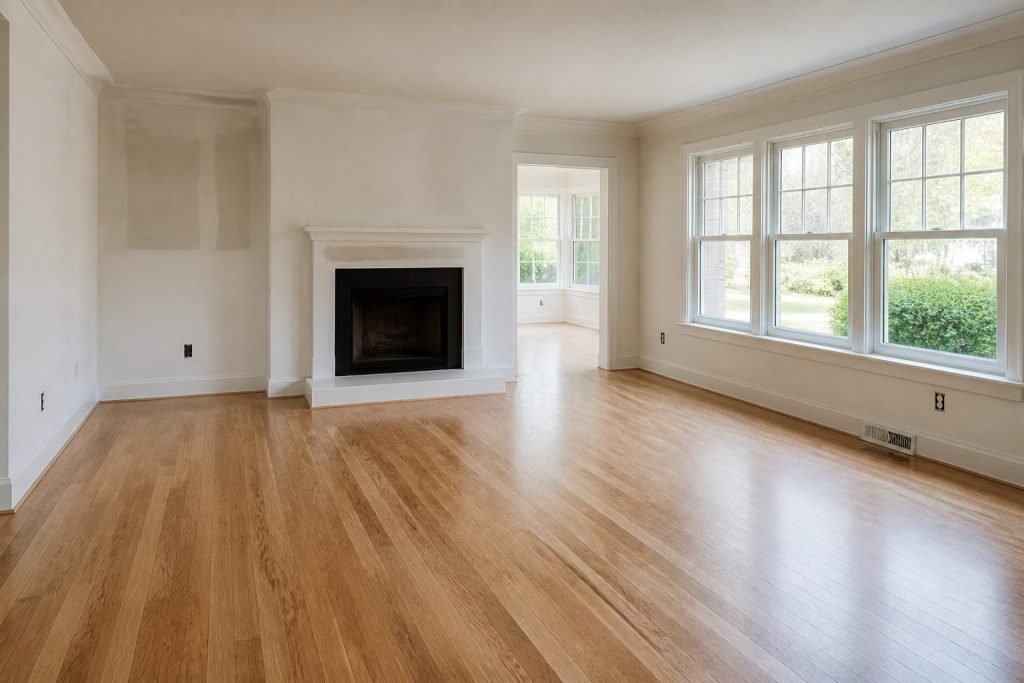
    Clean dry living room after water restoration dry-down
    Before and after from the same address beats a stock living room.

    The driveway rule

    • Three photos before the crew leaves: source, equipment in place, exterior with the truck if the homeowner allows.
    • Three photos at clear: dry room, stacked equipment, any rebuild-ready surface.
    • Caption with neighborhood and loss type, not “great team vibes.”
    • Upload to the Google Business Profile the same week. Then put a pair on a before-and-after page with the service name in the heading.
    • No stock living rooms. No downloaded “happy family after flood” images.

    Respect privacy. No faces of kids. No documents on the counter. No address numbers if the homeowner asks. The work is the proof. The neighborhood is the ranking signal.

  • Your CSR Already Wrote the Restoration Blog Calendar

    Your CSR Already Wrote the Restoration Blog Calendar

    Inspired by Bodhi (@irentdumpsters). Original post: the questions your phone reps answer are the blog posts. This is a new Tygart article for restoration contractors. We kept the mechanism, added first-party field knowledge, and did not reprint the thread.

    The original list was plumber and roofer questions: water-heater cost in Boca, how long a roof lasts in South Florida, fence permits in Palm Beach County. Those are searches. Company picnic posts are not.

    Sit with the night board for one week and you already have the restoration calendar.

    • How long before mold after a flood?
    • What is Category 3 water?
    • Will insurance cover a sewage backup?
    • Do I call the carrier before I call you?
    • How fast can a crew be in this zip at 11 p.m.?
    • Can I stay in the house during dry-out?
    • What do you do with wet furniture?
    • Who pays if the hidden leak started last month?

    Each of those is a page with a direct answer, a local photo, IICRC language where it belongs, and a tap-to-call line. That is content that can rank for the question the homeowner is typing while the carpet is wet.

    Rule: if the CSR has not been asked it this month, it is not a post. If they have been asked it three times, it is a service-page FAQ or a standalone article this week.