Restoration Intelligence - Tygart Media

Category: Restoration Intelligence

The definitive resource for restoration company operators — business operations, marketing, estimating, AI, and growth strategy.

  • AI Agents Explained: A 2026 Guide for Business Owners

    AI Agents Explained: A 2026 Guide for Business Owners

    Tygart Media Strategy
    Volume Ⅰ · Issue 04Quarterly Position
    By Will Tygart
    • Long-form Position
    • Practitioner-grade
    What Is an AI Agent? An AI agent is a software program powered by a large language model that can take actions — not just answer questions. It reads files, sends messages, runs code, browses the web, and completes multi-step tasks on its own, without a human directing every move.

    Most people’s mental model of AI is a chat interface. You type a question, you get an answer. That’s useful, but it’s also the least powerful version of what AI can do in a business context.

    The version that’s reshaping how companies operate isn’t a chatbot. It’s an agent — a system that can actually do things. And with Anthropic’s April 2026 launch of Claude Managed Agents, the barrier to deploying those systems for real business work dropped significantly.

    What Makes an Agent Different From a Chatbot

    A chatbot responds. An agent acts.

    When you ask a chatbot to summarize last quarter’s sales report, it tells you how to do it, or summarizes text you paste in. When you give the same task to an agent, it goes and gets the report, reads it, identifies the key numbers, formats a summary, and sends it to whoever asked — all without you supervising each step.

    The difference sounds subtle but has large practical implications. An agent can be assigned work the same way you’d assign work to a person. It can work on tasks in the background while you do other things. It can handle repetitive processes that would otherwise require sustained human attention.

    The examples from the Claude Managed Agents launch make this concrete:

    Asana built AI Teammates — agents that participate in project management workflows the same way a human team member would. They pick up tasks. They draft deliverables. They work within the project structure that already exists.

    Rakuten deployed agents across sales, marketing, HR, and finance that accept assignments through Slack and return completed work — spreadsheets, slide decks, reports — directly to the person who asked.

    Notion’s implementation lets knowledge workers generate presentations and build internal websites while engineers ship code, all with agents handling parallel tasks in the background.

    None of those are hypothetical. They’re production deployments that went live within a week of the platform becoming available.

    What Business Processes Are Actually Good Candidates for Agents

    Not every business task is suited for an AI agent. The best candidates share a few characteristics: they’re repetitive, they involve working with information across multiple sources, and they don’t require judgment calls that need human accountability.

    Strong candidates include research and summarization tasks that currently require someone to pull data from multiple places and compile it. Drafting and formatting work — proposals, reports, presentations — that follows a consistent structure. Monitoring tasks that require checking systems or data sources on a schedule and flagging anomalies. Customer-facing support workflows for common, well-defined questions. Data processing pipelines that transform information from one format to another on a recurring basis.

    Weak candidates include tasks that require relationship context, ethical judgment, or creative direction that isn’t already well-defined. Agents execute well-specified work; they don’t substitute for strategic thinking.

    Why the Timing of This Launch Matters for Small and Mid-Size Businesses

    Until recently, deploying a production AI agent required either a technical team capable of building significant custom infrastructure, or an enterprise software contract with a vendor that had built it for you. That meant AI agents were effectively inaccessible to businesses without large technology budgets or dedicated engineering resources.

    Anthropic’s managed platform changes that equation. The infrastructure layer — the part that required months of engineering work — is now provided. A small business or a non-technical operations team can define what they need an agent to do and deploy it without building a custom backend.

    The pricing reflects this broader accessibility: $0.08 per session-hour of active runtime, plus standard token costs. For agents handling moderate workloads — a few hours of active operation per day — the runtime cost is a small fraction of what equivalent human time would cost for the same work.

    What to Actually Do With This Information

    The most useful framing for any business owner or operations leader isn’t “what is an AI agent?” It’s “what work am I currently paying humans to do that is well-specified enough for an agent to handle?”

    Start with processes that meet these criteria: they happen on a regular schedule, they involve pulling information from defined sources, they produce a consistent output format, and they don’t require judgment calls that have significant consequences if wrong. Those are your first agent candidates.

    The companies that will have a structural advantage in two to three years aren’t the ones that understood AI earliest. They’re the ones that systematically identified which parts of their operations could be handled by agents — and deployed them while competitors were still treating AI as a productivity experiment.

    Frequently Asked Questions

    What is an AI agent in simple terms?

    An AI agent is a program that can take actions — not just answer questions. It can read files, send messages, browse the web, and complete multi-step tasks on its own, working in the background the same way you’d assign work to an employee.

    What’s the difference between an AI chatbot and an AI agent?

    A chatbot responds to questions. An agent executes tasks. A chatbot tells you how to summarize a report; an agent retrieves the report, summarizes it, and sends it to whoever needs it — without you directing each step.

    What kinds of business tasks are best suited for AI agents?

    Repetitive, well-defined tasks that involve pulling information from multiple sources and producing consistent outputs: research summaries, report drafting, data processing, support workflows, and monitoring tasks are strong candidates. Tasks requiring significant judgment, relationship context, or creative direction are weaker candidates.

    How much does it cost to deploy an AI agent for a small business?

    Using Claude Managed Agents, costs are standard Anthropic API token rates plus $0.08 per session-hour of active runtime. An agent running a few hours per day for routine tasks might cost a few dollars per month in runtime — a fraction of the equivalent human labor cost.


    Related: Complete Pricing Reference — every variable in one place. Complete FAQ Hub — every question answered.

  • Claude Managed Agents vs. Rolling Your Own: The Real Infrastructure Build Cost

    Claude Managed Agents vs. Rolling Your Own: The Real Infrastructure Build Cost

    Last refreshed: October 5, 2026 (Pacific)

    Tygart Media Strategy
    Volume Ⅰ · Issue 04Quarterly Position
    By Will Tygart • Long-form Position • Practitioner-grade
    The Build-vs-Buy Question: Claude Managed Agents offers hosted AI agent infrastructure at $0.08/session-hour plus token costs. Rolling your own means engineering sandboxed execution, state management, checkpointing, credential handling, and error recovery yourself — typically months of work before a single production agent runs.

    Every developer team that wants to ship a production AI agent faces the same decision point: build your own infrastructure or use a managed platform. Anthropic’s April 2026 launch of Claude Managed Agents made that decision significantly harder to default your way through.

    This isn’t a “managed is always better” argument. There are legitimate reasons to build your own. But the build cost needs to be reckoned with honestly — and most teams underestimate it substantially.

    What You Actually Have to Build From Scratch

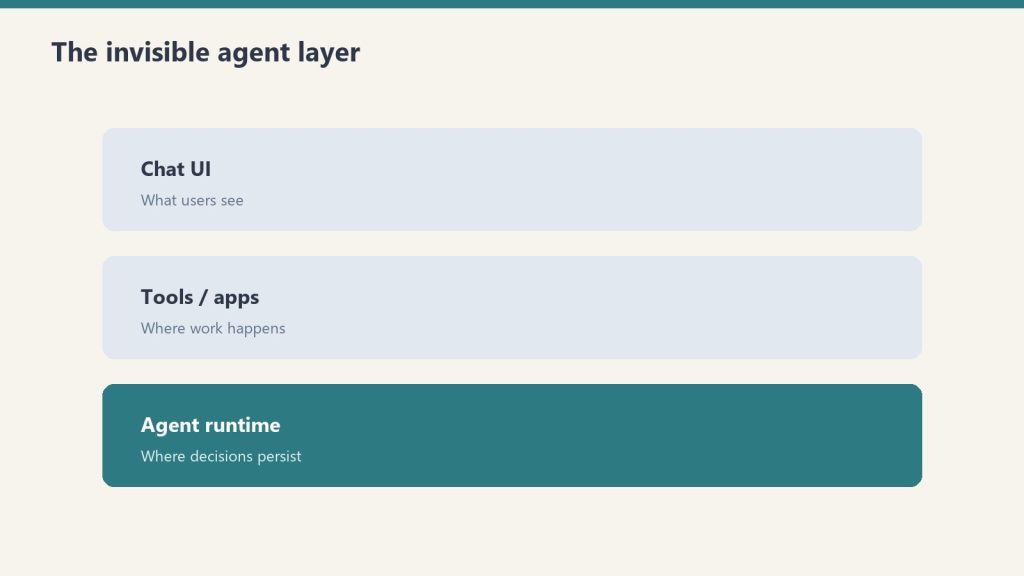
    Three stacked layers: chat UI, tools, agent runtime
    What you actually have to build from scratch.

    The minimum viable production agent infrastructure requires solving several distinct problems, none of which are trivial.

    Sandboxed execution: Your agent needs to run code in an isolated environment that can’t access systems it isn’t supposed to touch. Building this correctly — with proper isolation, resource limits, and cleanup — is a non-trivial systems engineering problem. Cloud providers offer primitives (Cloud Run, Lambda, ECS), but wiring them into an agent execution model takes real work.

    Session state and context management: An agent working on a multi-step task needs to maintain context across tool calls, handle context window limits gracefully, and not drop state when something goes wrong. Building reliable state management that works at production scale typically takes several engineering iterations to get right.

    Checkpointing: If your agent crashes at step 11 of a 15-step job, what happens? Without checkpointing, the answer is “start over.” Building checkpointing means serializing agent state at meaningful intervals, storing it durably, and writing recovery logic that knows how to resume cleanly. This is one of the harder infrastructure problems in agent systems, and most teams don’t build it until they’ve lost work in production.

    Credential management: Your agent will need to authenticate with external services — APIs, databases, internal tools. Managing those credentials securely, rotating them, and scoping them properly to each agent’s permissions surface is an ongoing operational concern, not a one-time setup.

    Tool orchestration: When Claude calls a tool, something has to handle the routing, execute the tool, handle errors, and return results in the right format. This orchestration layer seems simple until you’re debugging why tool call 7 of 12 is failing silently on certain inputs.

    Observability: In production, you need to know what your agents are doing, why they’re doing it, and when they fail. Building logging, tracing, and alerting for an agent system from scratch is a non-trivial DevOps investment.

    Anthropic’s stated estimate is that shipping production agent infrastructure takes months. That tracks with what we’ve seen in practice. It’s not months of full-time work for a large team — but it’s months of the kind of careful, iterative infrastructure engineering that blocks product work while it’s happening.

    What Claude Managed Agents Provides

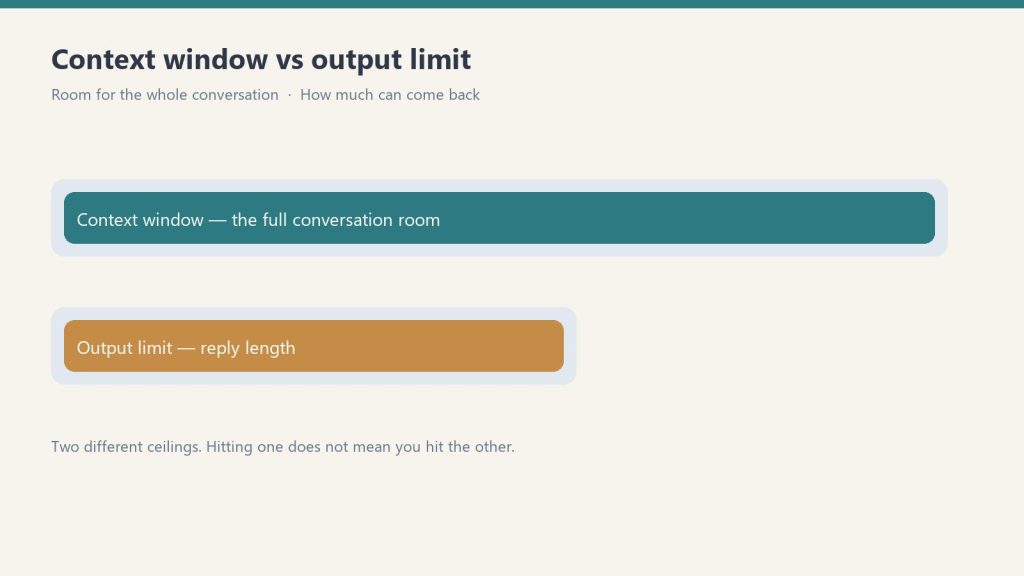
    Diagram comparing a long context window bar with a shorter output limit bar
    What Claude Managed Agents provides.

    Claude Managed Agents handles all of the above at the platform level. Developers define the agent’s task, tools, and guardrails. The platform handles sandboxed execution, state management, checkpointing, credential scoping, tool orchestration, and error recovery.

    The official API documentation lives at platform.claude.com/docs/en/managed-agents/overview. Agents can be deployed via the Claude console, Claude Code CLI, or the new agents CLI. The platform supports file reading, command execution, web browsing, and code execution as built-in tool capabilities.

    Anthropic describes the speed advantage as 10x — from months to weeks. Based on the infrastructure checklist above, that’s believable for teams starting from zero.

    The Honest Case for Rolling Your Own

    There are real reasons to build your own agent infrastructure, and they shouldn’t be dismissed.

    Deep customization: If your agent architecture has requirements that don’t fit the Managed Agents execution model — unusual tool types, proprietary orchestration patterns, specific latency constraints — you may need to own the infrastructure to get the behavior you need.

    Cost at scale: The $0.08/session-hour pricing is reasonable for moderate workloads. At very high scale — thousands of concurrent sessions running for hours — the runtime cost becomes a significant line item. Teams with high-volume workloads may find that the infrastructure engineering investment pays back faster than they expect.

    Vendor dependency: Running your agents on Anthropic’s managed platform means your production infrastructure depends on Anthropic’s uptime, their pricing decisions, and their roadmap. Teams with strict availability requirements or long-term cost predictability needs have legitimate reasons to prefer owning the stack.

    Compliance and data residency: Some regulated industries require that agent execution happen within specific geographic regions or within infrastructure that the company directly controls. Managed cloud platforms may not satisfy those requirements.

    Existing investment: If your team has already built production agent infrastructure — as many teams have over the past two years — migrating to Managed Agents requires re-architecting working systems. The migration overhead is real, and “it works” is a strong argument for staying put.

    The Decision Framework

    Desk with laptop, checklist notebook, and billing card ready before creating an Anthropic API key
    The decision framework.

    The practical question isn’t “is managed better than custom?” It’s “what does my team’s specific situation call for?”

    Teams that haven’t shipped a production agent yet and don’t have unusual requirements should strongly consider starting with Managed Agents. The infrastructure problems it solves are real, the time savings are significant, and the $0.08/hour cost is unlikely to be the deciding factor at early scale.

    Teams with existing agent infrastructure, high-volume workloads, or specific compliance requirements should evaluate carefully rather than defaulting to migration. The right answer depends heavily on what “working” looks like for your specific system.

    Teams building on Claude Code specifically should note that Managed Agents integrates directly with the Claude Code CLI and supports custom subagent definitions — which means the tooling is designed to fit developer workflows rather than requiring a separate management interface.

    Related on Tygart Media: managed agents review · rate limits · Agent SDK tutorial.

    Frequently Asked Questions

    How long does it take to build production AI agent infrastructure from scratch?

    Anthropic estimates months for a full production-grade implementation covering sandboxed execution, checkpointing, state management, credential handling, and observability. The actual time depends heavily on team experience and specific requirements.

    What does Claude Managed Agents handle that developers would otherwise build themselves?

    Sandboxed code execution, persistent session state, checkpointing, scoped permissions, tool orchestration, context management, and error recovery — the full infrastructure layer underneath agent logic.

    At what scale does it make sense to build your own agent infrastructure vs. using Claude Managed Agents?

    There’s no universal threshold, but the $0.08/session-hour pricing becomes a significant cost factor at thousands of concurrent long-running sessions. Teams should model their expected workload volume before assuming managed is cheaper than custom at scale.

    Can Claude Managed Agents work with Claude Code?

    Yes. Managed Agents integrates with the Claude Code CLI and supports custom subagent definitions, making it compatible with developer-native workflows.


    Related: Complete Pricing Reference — every variable in one place. Complete FAQ Hub — every question answered.

  • Claude Managed Agents Enterprise Deployment: What Rakuten’s 5-Department Rollout Actually Cost

    Claude Managed Agents Enterprise Deployment: What Rakuten’s 5-Department Rollout Actually Cost

    Last refreshed: October 5, 2026 (Pacific)

    Tygart Media Strategy
    Volume Ⅰ · Issue 04Quarterly Position
    By Will Tygart • Long-form Position • Practitioner-grade
    Claude Managed Agents for Enterprise: A cloud-hosted platform from Anthropic that lets enterprise teams deploy AI agents across departments — product, sales, HR, finance, marketing — without building backend infrastructure. Agents plug directly into Slack, Teams, and existing workflow tools.

    When Rakuten announced it had deployed enterprise AI agents across five departments in a single week using Anthropic’s newly launched Claude Managed Agents, it wasn’t a headline about AI being impressive. It was a headline about deployment speed becoming a competitive variable.

    A week. Five departments. Agents that plug into Slack and Teams, accept task assignments, and return deliverables — spreadsheets, slide decks, reports — to the people who asked for them.

    That timeline matters. It used to take enterprise teams months to do what Rakuten did in days. Understanding what changed is the whole story.

    What Enterprise AI Deployment Used to Look Like

    Three stacked layers: chat UI, tools, agent runtime
    What enterprise AI deployment used to look like.

    Before managed infrastructure existed, deploying an AI agent in an enterprise environment meant building a significant amount of custom scaffolding. Teams needed secure sandboxed execution environments so agents could run code without accessing sensitive systems. They needed state management so a multi-step task didn’t lose its progress if something failed. They needed credential management, scoped permissions, and logging for compliance. They needed error recovery logic so one bad API call didn’t collapse the whole job.

    Each of those is a real engineering problem. Combined, they typically represented months of infrastructure work before a single agent could touch a production workflow. Most enterprise IT teams either delayed AI agent adoption or deprioritized it entirely because the upfront investment was too high relative to uncertain ROI.

    What Claude Managed Agents Changes for Enterprise Teams

    Diagram comparing a long context window bar with a shorter output limit bar
    What Claude Managed Agents changes for enterprise teams.

    Anthropic’s Claude Managed Agents, launched in public beta on April 9, 2026, moves that entire infrastructure layer to Anthropic’s platform. Enterprise teams now define what the agent should do — its task, its tools, its guardrails — and the platform handles everything underneath: tool orchestration, context management, session persistence, checkpointing, and error recovery.

    The result is what Rakuten demonstrated: rapid, parallel deployment across departments with no custom infrastructure investment per team.

    According to Anthropic, the platform reduces time from concept to production by up to 10x. That claim is supported by the adoption pattern: companies are not running pilots, they’re shipping production workflows.

    How Enterprise Teams Are Using It Right Now

    The enterprise use cases emerging from the April 2026 launch tell a consistent story — agents integrated directly into the communication and workflow tools employees already use.

    Rakuten deployed agents across product, sales, marketing, finance, and HR. Employees assign tasks through Slack and Teams. Agents return completed deliverables. The interaction model is close to what a team member experiences delegating work to a junior analyst — except the agent is available 24 hours a day and doesn’t require onboarding.

    Asana built what they call AI Teammates — agents that operate inside project management workflows, picking up assigned tasks and drafting deliverables alongside human team members. The distinction here is that agents aren’t running separately from the work — they’re participants in the same project structure humans use.

    Notion deployed Claude directly into workspaces through Custom Agents. Engineers use it to ship code. Knowledge workers use it to generate presentations and build internal websites. Multiple agents can run in parallel on different tasks while team members collaborate on the outputs in real time.

    Sentry took a developer-specific angle — pairing their existing Seer debugging agent with a Claude-powered counterpart that writes patches and opens pull requests automatically when bugs are identified.

    What Enterprise IT Teams Are Actually Evaluating

    The questions enterprise IT and operations leaders should be asking about Claude Managed Agents are different from what a developer evaluating the API would ask. For enterprise teams, the key considerations are:

    Governance and permissions: Claude Managed Agents includes scoped permissions, meaning each agent can be configured to access only the systems it needs. This is table stakes for enterprise deployment, and Anthropic built it into the platform rather than leaving it to each team to implement.

    Compliance and logging: Enterprises in regulated industries need audit trails. The managed platform provides observability into agent actions, which is significantly harder to implement from scratch.

    Integration with existing tools: The Rakuten and Asana deployments demonstrate that agents can integrate with Slack, Teams, and project management tools. This matters because enterprise AI adoption fails when it requires employees to change their workflow. Agents that meet employees where they already work have a fundamentally higher adoption ceiling.

    Failure recovery: Checkpointing means a long-running enterprise workflow — a quarterly report compilation, a multi-system data aggregation — can resume from its last saved state rather than restarting entirely if something goes wrong. For enterprise-scale jobs, this is the difference between a recoverable error and a business disruption.

    The Honest Trade-Off

    Desk with laptop, checklist notebook, and billing card ready before creating an Anthropic API key
    The honest trade-off.

    Moving to managed infrastructure means accepting certain constraints. Your agents run on Anthropic’s platform, which means you’re dependent on their uptime, their pricing changes, and their roadmap decisions. Teams that have invested in proprietary agent architectures — or who have compliance requirements that preclude third-party cloud execution — may find Managed Agents unsuitable regardless of its technical merits.

    The $0.08 per session-hour pricing, on top of standard token costs, also requires careful modeling for enterprise workloads. A suite of agents running continuously across five departments could accumulate meaningful runtime costs that need to be accounted for in technology budgets.

    That said, for enterprise teams that haven’t yet deployed AI agents — or who have been blocked by infrastructure cost and complexity — the calculus has changed. The question is no longer “can we afford to build this?” It’s “can we afford not to deploy this?”

    Related on Tygart Media: managed agents review · Notion + managed agents.

    Frequently Asked Questions

    How quickly can an enterprise team deploy agents with Claude Managed Agents?

    Rakuten deployed agents across five departments — product, sales, marketing, finance, and HR — in under a week. Anthropic claims a 10x reduction in time-to-production compared to building custom agent infrastructure.

    What enterprise tools do Claude Managed Agents integrate with?

    Deployed agents can integrate with Slack, Microsoft Teams, Asana, Notion, and other workflow tools. Agents accept task assignments through these platforms and return completed deliverables directly in the same environment.

    How does Claude Managed Agents handle enterprise security requirements?

    The platform includes scoped permissions (limiting each agent’s system access), observability and logging for audit trails, and sandboxed execution environments that isolate agent operations from sensitive systems.

    What does Claude Managed Agents cost for enterprise use?

    Pricing is standard Anthropic API token rates plus $0.08 per session-hour of active runtime. Enterprise teams with multiple agents running across departments should model their expected monthly runtime to forecast costs accurately.


    Related: Complete Pricing Reference — every variable in one place. Complete FAQ Hub — every question answered.

  • Claude Managed Agents Review: Why We Kept Our Stack

    Claude Managed Agents Review: Why We Kept Our Stack

    Tygart Media Strategy
    Volume Ⅰ · Issue 04Quarterly Position
    By Will Tygart • Long-form Position • Practitioner-grade

    What Are Claude Managed Agents? Anthropic’s Claude Managed Agents is a cloud-hosted infrastructure service launched April 9, 2026, that lets developers and businesses deploy AI agents without building their own execution environments, state management, or orchestration systems. You define the task and tools; Anthropic runs the infrastructure.

    On April 9, 2026, Anthropic announced the public beta of Claude Managed Agents — a new infrastructure layer on the Claude Platform designed to make AI agent deployment dramatically faster and more stable. According to Anthropic, it reduces build and deployment time by up to 10x. Early adopters include Notion, Asana, Rakuten, and Sentry.

    We looked at it. Here’s what it is, how it compares to what we’ve built, and why we’re continuing on our own path — at least for now.

    What Is Anthropic Managed Agents?

    Three stacked layers: chat UI, tools, agent runtime
    What is Anthropic Managed Agents?

    Claude Managed Agents is a suite of APIs that gives development teams fully managed, cloud-hosted infrastructure for running AI agents at scale. Instead of building secure sandboxes, managing session state, writing custom orchestration logic, and handling tool execution errors yourself, Anthropic’s platform does it for you.

    The key capabilities announced at launch include:

    • Sandboxed code execution — agents run in isolated, secure environments
    • Persistent long-running sessions — agents stay alive across multi-step tasks without losing context
    • Checkpointing — if an agent job fails mid-run, it can resume from where it stopped rather than restarting
    • Scoped permissions — fine-grained control over what each agent can access
    • Built-in authentication and tool orchestration — the platform handles the plumbing between Claude and the tools it uses

    Pricing is straightforward: you pay standard Anthropic API token rates plus $0.08 per session-hour of active runtime, measured in milliseconds.

    Why It’s a Legitimate Signal

    Diagram comparing a long context window bar with a shorter output limit bar
    Why it’s a legitimate signal.

    The companies Anthropic named as early adopters aren’t small experiments. Notion, Asana, Rakuten, and Sentry are running production workflows at scale — code automation, HR processes, productivity tooling, and finance operations. When teams at that level migrate to managed infrastructure instead of building their own, it suggests the platform has real stability behind it.

    The checkpointing feature in particular stands out. One of the most painful failure modes in long-running AI pipelines is a crash at step 14 of a 15-step job. You lose everything and start over. Checkpointing solves that problem at the infrastructure level, which is the right place to solve it.

    Anthropic’s framing is also pointed directly at enterprise friction: the reason companies don’t deploy agents faster isn’t Claude’s capabilities — it’s the scaffolding cost. Managed Agents is an explicit attempt to remove that friction.

    What We’ve Built — and Why It Works for Us

    At Tygart Media, we’ve been running our own agent stack for over a year. What started as a set of Claude prompts has evolved into a full content and operations infrastructure built on top of the Claude API, Google Cloud Platform, and WordPress REST APIs.

    Here’s what our stack actually does:

    • Content pipelines — We run full article production pipelines that write, SEO-optimize, AEO-optimize, GEO-optimize, inject schema markup, assign taxonomy, add internal links, run quality gates, and publish — all in a single session across 20+ WordPress sites.
    • Batch draft creation — We generate 15-article batches with persona-targeting and variant logic without manual intervention.
    • Cross-site content strategy — Agents scan multiple sites for authority pages, identify linking opportunities, write locally-relevant variants, and publish them with proper interlinking.
    • Image pipelines — End-to-end image processing: generation via Vertex AI/Imagen, IPTC/XMP metadata injection, WebP conversion, and upload to WordPress media libraries.
    • Social media publishing — Content flows from WordPress to Metricool for LinkedIn, Facebook, and Google Business Profile scheduling.
    • GCP proxy routing — A Cloud Run proxy handles WordPress REST API calls to avoid IP blocking across different hosting environments (SiteGround, WP Engine, Flywheel, Apache/ModSecurity).

    This infrastructure took time to build. But it’s purpose-built for our specific workflows, our sites, and our clients. It knows which sites route through the GCP proxy, which need a browser User-Agent header to pass ModSecurity, and which require a dedicated Cloud Run publisher. That specificity has real value.

    Where Managed Agents Is Compelling — and Where It Isn’t (Yet)

    If we were starting from zero today, Managed Agents would be worth serious evaluation. The session persistence and checkpointing would immediately solve the two biggest failure modes we’ve had to engineer around manually.

    But migrating an existing stack to Managed Agents isn’t a lift-and-shift. Our pipelines are tightly integrated with GCP infrastructure, custom proxy routing, WordPress credential management, and Notion logging. Re-architecting that to run inside Anthropic’s managed environment would be a significant project — with no clear gain over what’s already working.

    The $0.08/session-hour pricing also adds up quickly on batch operations. A 15-article pipeline running across multiple sites for two to three hours could add meaningful cost on top of already-substantial token usage.

    For teams that haven’t built their own agent infrastructure yet — especially enterprise teams evaluating AI for the first time — Managed Agents is probably the right starting point. For teams that already have a working stack, the calculus is different.

    What We’re Watching

    We’re treating this as a signal, not an action item. A few things would change that:

    • Native integrations — If Managed Agents adds direct integrations with WordPress, Metricool, or GCP services, the migration case gets stronger.
    • Checkpointing accessibility — If we can use checkpointing on top of our existing API calls without fully migrating, that’s an immediate win worth pursuing.
    • Pricing at scale — Volume discounts or enterprise pricing would change the batch job math significantly.
    • MCP interoperability — Managed Agents running with Model Context Protocol support would let us plug our existing skill and tool ecosystem in without a full rebuild.

    The Bigger Picture

    Desk with laptop, checklist notebook, and billing card ready before creating an Anthropic API key
    The bigger picture.

    Anthropic launching managed infrastructure is the clearest sign yet that the AI industry has moved past the “what can models do” question and into the “how do you run this reliably at scale” question. That’s a maturity marker.

    The same shift happened with cloud computing. For a while, every serious technology team ran its own servers. Then AWS made the infrastructure layer cheap enough and reliable enough that it only made sense to build it yourself if you had very specific requirements. We’re not there yet with AI agents — but Anthropic is clearly pushing in that direction.

    For now, we’re watching, benchmarking, and continuing to run our own stack. When the managed layer offers something we can’t build faster ourselves, we’ll move. That’s the right framework for evaluating any infrastructure decision.

    Related on Tygart Media: managed agents rate limits · invisible agent layer.

    Frequently Asked Questions

    What is Anthropic Managed Agents?

    Claude Managed Agents is a cloud-hosted AI agent infrastructure service from Anthropic, launched in public beta on April 9, 2026. It provides persistent sessions, sandboxed execution, checkpointing, and tool orchestration so teams can deploy AI agents without building their own backend infrastructure.

    How much does Claude Managed Agents cost?

    Pricing is based on standard Anthropic API token costs plus $0.08 per session-hour of active runtime, measured in milliseconds.

    Who are the early adopters of Claude Managed Agents?

    Anthropic named Notion, Asana, Rakuten, Sentry, and Vibecode as early users, deploying the service for code automation, productivity workflows, HR processes, and finance operations.

    Is Anthropic Managed Agents worth switching to if you already have an agent stack?

    It depends on your existing infrastructure. For teams starting fresh, it removes significant scaffolding cost. For teams with mature, purpose-built pipelines already running on GCP or other cloud infrastructure, the migration overhead may outweigh the benefits in the short term.

    What is checkpointing in Managed Agents?

    Checkpointing allows a long-running agent job to resume from its last saved state if it encounters an error, rather than restarting the entire task from the beginning. This is particularly valuable for multi-step batch operations.


    Related: Complete Pricing Reference — every variable in one place. Complete FAQ Hub — every question answered.

  • Your Jobs Are a Knowledge Base. You’re Just Not Using Them That Way.

    Your Jobs Are a Knowledge Base. You’re Just Not Using Them That Way.

    Related on Tygart Media: external knowledge API · S500 in the van.

    Tygart Media / Content Strategy
    The Practitioner JournalField Notes
    By Will Tygart
    · Practitioner-grade
    · From the workbench

    Every restoration job teaches something. Almost none of it ever gets written down.

    A crew shows up to a flooded basement at 2am. They make decisions — where to set the equipment, how to read the moisture map, which walls are worth opening and which aren’t, how to sequence the dry-down so the structure doesn’t get worse before it gets better. They’ve made these calls before. They know things that took years to learn. They finish the job, submit a field report, and move on.

    Then the experienced tech takes another job across town. Or retires. Or just gets too busy to train anyone. And that knowledge disappears.

    I want to talk about a different approach. One that captures that knowledge systematically — and turns it into something that works in two directions at once.

    Email Me This Article

    The Double-Purpose Content System

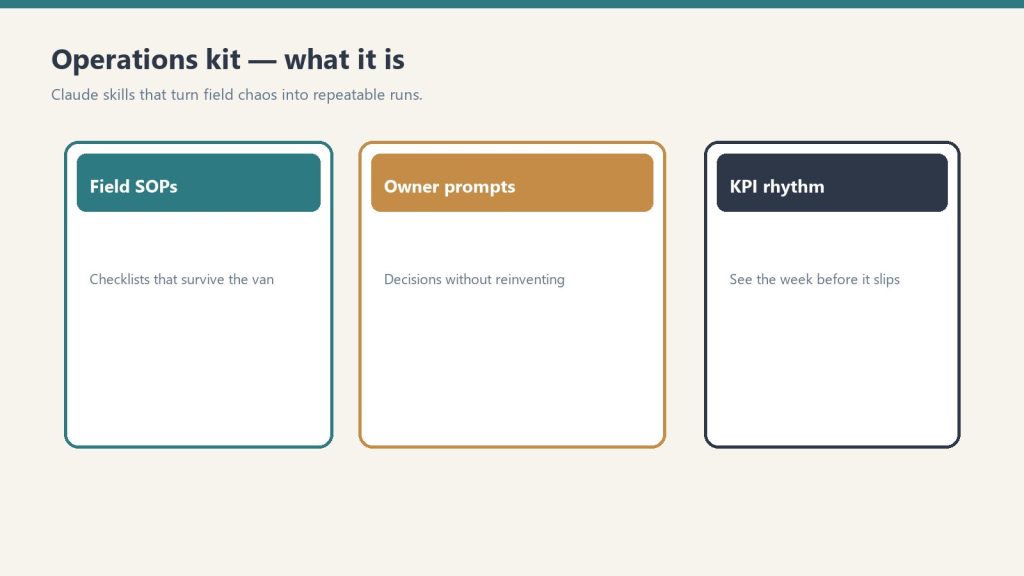
    Three cards for field SOPs, owner prompts, and KPI rhythm in an operations kit
    The double-purpose content system.

    The idea is straightforward: document your jobs as content. Scrub the client-specific details — no names, no addresses, no identifying information. But tell the real story. What was the scope? What made this job complicated? What decisions were made and why? What was the outcome?

    Published on your website, this does something conventional marketing content can’t: it demonstrates expertise through specificity. Not “we handle all types of water damage” — but a documented account of how your team handled a Category 3 intrusion in a commercial kitchen with active mold growth and a compressed timeline. That’s a different signal entirely.

    The reader — whether that’s a property manager searching for a qualified contractor or an insurance adjuster evaluating whether to refer you — isn’t reading a brochure. They’re reading a case record. They can see how your team thinks.

    But here’s the second direction, and it’s the one I find more interesting: that same documentation feeds back into the company as a knowledge base.

    The Internal Payoff

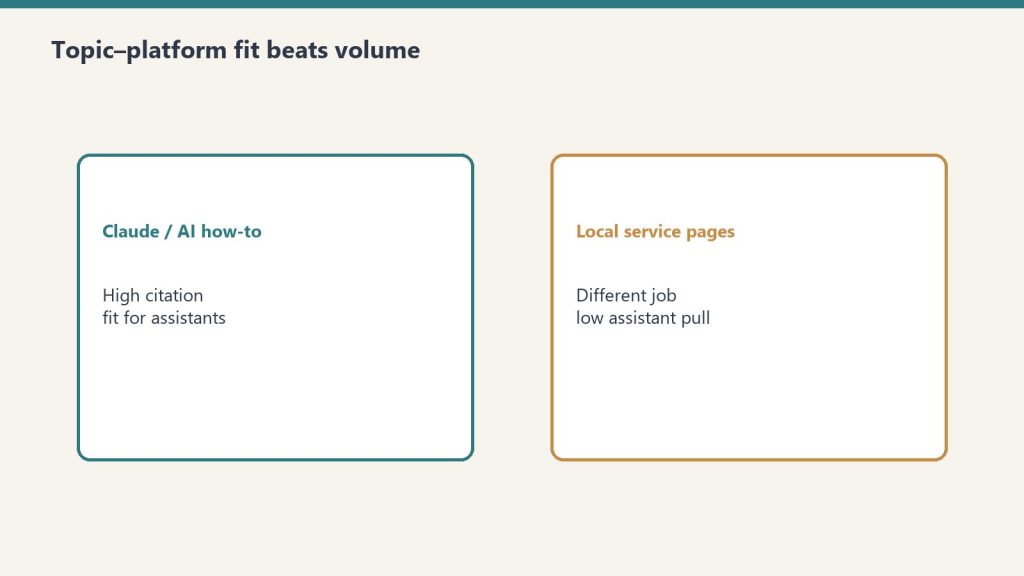
    Comparison of Claude how-to fit versus local service page fit for assistants
    The internal payoff.

    Restoration companies have a training problem that nobody talks about directly. The knowledge of how to do the job well is distributed unevenly across the team. The senior technicians have it. The new hires don’t. And the transfer mechanism is usually informal — ride-alongs, tribal knowledge, institutional memory held by people who may not stay forever.

    When you document jobs as structured content, you start to build something that actually scales. A new technician can search the knowledge base for jobs similar to what they’re walking into. They can see how a comparable loss was scoped, how the equipment was deployed, what complications arose and how they were handled. Before they’ve seen thirty jobs themselves, they can read about thirty jobs your company has already worked.

    An operations manager making a scheduling or resource decision can pull up historical jobs of a similar size and see what the typical crew requirements were. A project manager prepping a scope of work can see how similar scopes were structured and what line items were typically included.

    And when AI tools enter the workflow — which they will, if they haven’t already — that documented job history becomes training data your AI actually understands. Not generic restoration industry knowledge pulled from the web. Your company’s specific approach, your specific decisions, your specific standards. An AI assistant working from that foundation gives answers that sound like your company, because they’re drawn from your company’s real work.

    What Makes This Different From a Blog

    Most restoration company blogs are essentially SEO performance. Keywords stuffed into generic articles about what causes mold or how long drying takes. Useful, maybe. Differentiating, no.

    What I’m describing is a content system built on documented operational reality. The subject matter isn’t manufactured — it’s the actual work. Which means it has a quality that manufactured content can never replicate: it happened. The specificity is real because the job was real. The decisions were real. The outcome was real.

    Readers feel this, even when they can’t articulate why. They’re not evaluating whether your content sounds authoritative. They’re reading something that is authoritative, because it comes from direct experience rather than borrowed knowledge.

    And unlike a blog that requires a content team to invent topics every week, this system has an inventory problem that only gets easier over time. Every job adds to it. The longer you run the system, the richer the knowledge base becomes — for your website visitors and for your own team.

    The Setup

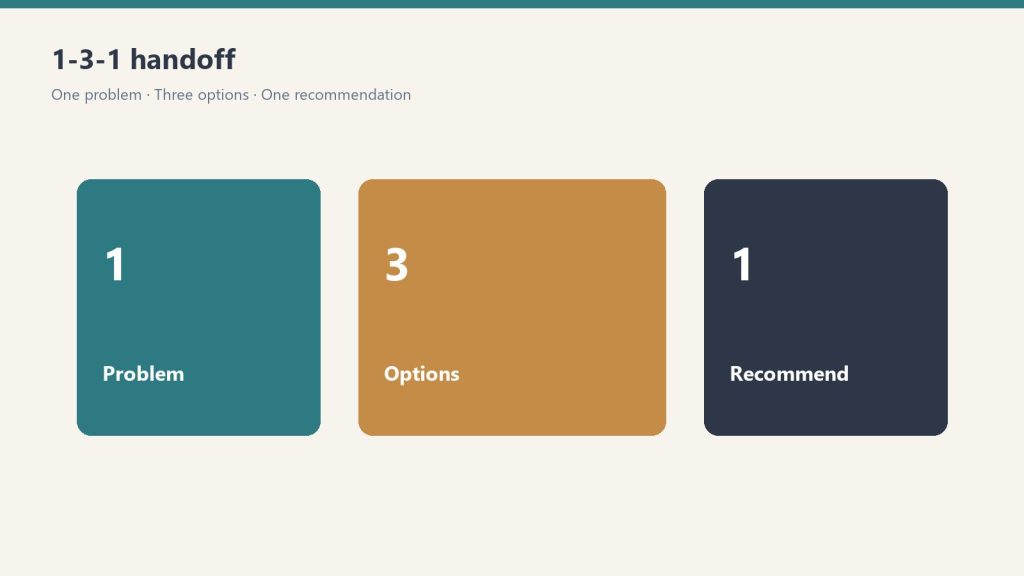
    Three panels showing one problem, three options, one recommendation
    The setup.

    The practical structure is simpler than it sounds. Each job entry captures a handful of consistent fields: loss type, scope classification, environmental conditions, key decision points, equipment deployed, timeline, outcome. The sensitive details — client, location, anything identifying — never make it into the published version.

    What gets published is the pattern. The structure of the problem and the response. Categorized, searchable, and useful to anyone trying to understand how your company operates — including your own people.

    This isn’t a new concept in medicine or law, where case documentation has always served both public communication and internal learning simultaneously. It’s just new in restoration, where the work is equally complex and the knowledge equally worth preserving.

    The companies that start building this now will have a meaningful advantage in three years. Not because their marketing was cleverer — because their institutional knowledge actually compounded instead of walking out the door every time someone left.


    Tygart Media builds content and knowledge systems for property damage restoration companies. If you’re interested in implementing a job documentation system for your operation, start here.

  • Agentic Commerce Protocols: The AI Buyer Stack Explained

    Agentic Commerce Protocols: The AI Buyer Stack Explained

    Tygart Media Strategy
    Volume Ⅰ · Issue 04Quarterly Position
    By Will Tygart
    • Long-form Position
    • Practitioner-grade

    For most of the history of the internet, commerce had a fixed shape: a human found a product, a human put it in a cart, a human entered payment details, a human clicked buy. The entire infrastructure of digital commerce — payment processors, shopping carts, merchant platforms, ad networks, fraud detection — was built around that human in the loop.

    Agentic commerce removes the human from most of those steps. An AI agent acting on your behalf finds the product, evaluates it against your criteria, initiates checkout, authorizes payment, and completes the transaction. The human sets the intent and the constraints. The agent executes. And the protocols being built right now are what make that execution possible at scale across the open web.

    This isn’t a future prediction. It’s the infrastructure layer being built in production today, with real merchants, real transactions, and real competitive stakes for every business that sells anything online.

    The Protocol Stack: Four Layers, Multiple Players

    Agentic commerce isn’t one protocol — it’s a stack of protocols, each handling a specific layer of the transaction. Understanding the stack is the prerequisite for understanding what any business actually needs to do about it.

    The commerce layer handles the shopping journey itself: how an agent discovers products, queries catalogs, compares options, and initiates checkout. Two protocols are competing here. OpenAI’s Agentic Commerce Protocol (ACP), co-developed with Stripe and open-sourced under Apache 2.0, powers checkout inside ChatGPT and connects to merchants through Stripe’s payment infrastructure. Google’s Universal Commerce Protocol (UCP), launched at NRF in January 2026 with Shopify, Walmart, Target, and more than twenty partners, handles the full commerce lifecycle from discovery through post-purchase across any AI surface, not just Google’s own.

    The payments layer handles authorization, trust, and money movement — the part of the transaction where something actually changes hands. Google’s Agent Payments Protocol (AP2) is the most prominent here, introducing “mandates” — digitally signed statements that define exactly what an agent is authorized to do and spend. Visa has its Trusted Agent Protocol. Mastercard has Agent Pay. Coinbase introduced x402, which revives the long-dormant HTTP 402 “Payment Required” status code to enable microtransactions between machines without accounts or API keys.

    The infrastructure layer is the operating system underneath everything else: Anthropic’s Model Context Protocol (MCP) for connecting AI models to external tools and data sources, and Google’s Agent2Agent (A2A) protocol for coordination between agents. These are less visible to merchants but essential for making the commerce and payments layers work together.

    The trust layer sits across all of it: fraud detection, consent management, identity verification for non-human actors. This is the least standardized layer and the one where the most work remains.

    ACP vs. UCP: Different Bets on the Same Shift

    The practical choice most merchants face isn’t which single protocol to adopt — it’s understanding what each one connects to and what supporting both costs.

    ACP is optimized for merchant integrations with ChatGPT, while UCP takes a more surface-agnostic approach, aiming to standardize how platforms, agents, and merchants execute commerce flows across the ecosystem. The scope difference is meaningful: ACP standardizes the checkout conversation. UCP standardizes the entire shopping journey.

    The tradeoff each represents is also different. ACP trades openness for control, while UCP trades control for index breadth and protocol-level standardization. ACP gives merchants a more curated, high-touch integration with a specific AI surface. UCP gives merchants broader reach at the cost of less hand-holding through the integration.

    For most merchants, the realistic answer is both — because each connects to a different AI shopping surface where different buyers will transact. Most retailers will need to support at least two of these protocols, since each connects to different AI shopping surfaces. ChatGPT uses ACP for transactions. Google AI Mode and Gemini use UCP. The protocols aren’t competing for the same merchants so much as competing to be the standard their respective AI ecosystems use.

    The Amazon Anomaly

    Every major retailer in the agentic commerce ecosystem is moving toward open protocols — except the largest one. Amazon has taken the opposite position: updating its robots.txt to block AI agent crawlers, tightening its legal terms against agent-initiated purchasing, and pursuing litigation against unauthorized agent interactions with its platform.

    The strategic logic is straightforward. Amazon’s competitive advantage is built on controlling the discovery moment — the point at which a buyer decides what to consider buying. Open protocols where AI agents compare products across every online store turn Amazon into just another merchant behind an API, stripping away the algorithmic leverage that makes its platform valuable to both buyers and sellers. The walled garden is a defensive move, not a philosophical one.

    For merchants who are primarily Amazon-dependent, the agentic commerce transition is less immediately relevant — Amazon’s own AI shopping assistant, Rufus, operates inside the walled garden and isn’t subject to open protocol dynamics. For merchants who sell direct or through multi-channel platforms, the protocols represent a potential path to discovery that doesn’t flow through Amazon’s toll booth.

    The Payment Authorization Problem

    The hardest unsolved problem in agentic commerce isn’t discovery or checkout — it’s authorization. How does a merchant know that an AI agent actually has permission to spend the buyer’s money? How does a buyer trust that an agent won’t exceed its authorized scope? How does a payment processor handle chargebacks when the “buyer” is software?

    AP2’s mandate system is the most developed answer to this. AP2 introduces the concept of mandates, digitally signed statements that define what an agent is allowed to do, such as create a cart, complete a purchase, or manage a subscription. These mandates are portable, verifiable, and revocable, allowing multiple stakeholders to coordinate safely. A mandate is essentially a scoped permission — the agent can spend up to this amount, in this category, on behalf of this identity, and here’s the cryptographic proof.

    This matters for the full agent-to-agent commerce scenario — where both buyer and seller are autonomous agents, no human is involved in real time, and traditional consumer protection frameworks don’t map cleanly to the transaction. That’s the frontier where the standards work is most active and the solutions are least settled.

    What This Means for Content and SEO Strategy

    The shift to agentic commerce doesn’t just change how transactions happen. It changes how discovery happens — which changes what content and SEO strategy is actually for.

    In the search engine model, a buyer types a query, gets a ranked list of results, clicks through, and eventually converts. The optimization target is rank position. In the agentic commerce model, a buyer tells an agent what they want, the agent queries structured data sources and evaluates options programmatically, and surfaces a recommendation. The optimization target shifts from rank position to selection rate — how often an agent chooses your product when it’s evaluating options that include yours.

    Selection rate is determined by data quality (how completely and accurately your product catalog is exposed through the protocol), trust signals (reviews, ratings, return policies — the inputs agents use to evaluate reliability), and price competitiveness at the moment of agent evaluation. AEO and GEO optimization — structuring content so AI systems can extract and cite it accurately — becomes more important, not less, in an agentic commerce environment. The agent needs to understand your product in enough depth to recommend it with confidence.

    For service businesses and content publishers who aren’t selling physical goods, the implications are different but parallel. When AI agents are answering questions and making recommendations on behalf of users, the question of which businesses and sources get cited is the agentic equivalent of search rank. The content infrastructure that makes you citable — entity clarity, structured data, authoritative sourcing — is the same infrastructure that makes you recommendable in an agent-mediated discovery environment.

    The Readiness Ladder

    Agentic commerce readiness isn’t binary — it’s a ladder, and most businesses are somewhere in the middle rather than at the top or bottom.

    The first rung is structured data hygiene: product catalogs that are complete, accurate, and machine-readable. If your product data is messy, inconsistent, or locked behind interfaces that agents can’t parse, no protocol integration will help. Clean structured data is the prerequisite for everything else.

    The second rung is protocol awareness: understanding which protocols matter for your specific channels and customer base. A Shopify merchant gets ACP integration automatically through the platform. A business selling through Google Shopping needs UCP readiness. A B2B operation should be watching AP2 and mandate-based authorization more closely than consumer checkout protocols.

    The third rung is active integration: implementing the relevant protocol specs, publishing the required endpoints, and testing agent interactions in a controlled environment before they happen in production. This is where most businesses aren’t yet — not because the protocols are inaccessible, but because the urgency hasn’t been felt directly.

    The fourth rung is optimization: monitoring selection rate and proxy conversion metrics, iterating on catalog data quality and trust signals, and adapting content strategy for agent-mediated discovery rather than human-mediated search. This is where competitive differentiation will be built once the infrastructure layer matures.

    The window for first-mover advantage in protocol adoption is open now, and it won’t stay open indefinitely. The businesses that establish protocol presence before agentic commerce becomes the default mode of online discovery will have an advantage that compounds as agent behavior increasingly determines where transactions happen.

    Frequently Asked Questions About Agentic Commerce

    Do small businesses need to worry about agentic commerce protocols now?

    If you’re on Shopify, you may already be enrolled — Shopify has handled ACP integration at the platform level for eligible merchants. If you’re not on a platform that’s done it for you, the honest answer is: start with structured data hygiene now, monitor protocol adoption over the next six months, and plan for integration in the second half of 2026. The urgency is real but the timeline isn’t emergency-level for most small businesses yet.

    What’s the difference between ACP, UCP, and MCP?

    ACP and UCP are commerce protocols — they define how agents shop and transact on behalf of buyers. MCP is an infrastructure protocol — it defines how AI models connect to external tools and data sources, including commerce APIs. MCP is the plumbing; ACP and UCP are the applications running on the plumbing. Most merchants will interact primarily with ACP and UCP. Developers building agent applications interact more directly with MCP.

    Will there be one winning protocol or multiple?

    Multiple, almost certainly. The historical pattern of internet standards is that protocols fragment by ecosystem and then slowly consolidate as interoperability pressure mounts. ACP and UCP serve different AI surfaces and are backed by different platform ecosystems. Both will persist as long as ChatGPT and Google AI Mode both matter, which is likely to be a long time. The consolidation pressure comes from merchants who don’t want to maintain five separate integrations — that merchant pressure will drive interoperability work, not the platforms voluntarily ceding ground.

    How does this affect businesses that don’t sell products online?

    Service businesses and content publishers are affected through the discovery layer, not the transaction layer. When AI agents answer questions and make recommendations, the businesses and sources that get surfaced are determined by the same kind of structured data and entity clarity that determines protocol-level discoverability for product merchants. The content infrastructure that makes you citable by AI systems is the service-business equivalent of protocol integration for product merchants.

    What should I actually do this week?

    Audit your structured product or service data for completeness and machine readability. Check whether your commerce platform has already integrated any of the major protocols on your behalf. Read the ACP and UCP documentation to understand what implementation requires. And look at your current AEO and GEO optimization — the content signals that determine AI citability are the same signals that will determine agent recommendability as agentic commerce matures.


  • AI Business Strategy: The Formula 1 Guide to Adaptation

    AI Business Strategy: The Formula 1 Guide to Adaptation

    There’s a fight happening in the most expensive, most scrutinized, most technically demanding sport on earth — and it has nothing to do with tires or teammates. It’s a fight about what it even means to race.

    Max Verstappen, four-time world champion, the most dominant driver of his generation, called Formula 1’s new 2026 cars “Formula E on steroids.” He said driving them isn’t fun. He said it doesn’t feel like Formula 1. He said — and this is a man who has never once seriously contemplated stopping — that he might walk away.

    Let that land.

    The man who won four consecutive world championships, who drove circles around the field while the rest of the paddock scrambled to understand how, is sitting in the fastest car ever built and saying: I don’t enjoy this.

    Why? Because the car now thinks.

    Not literally. But close enough that it matters. The 2026 power unit splits propulsion roughly 50/50 between the internal combustion engine and an electric motor delivering 350 kilowatts — nearly triple what it was before. The car harvests energy under braking, on lift-off, even at the end of straights at full throttle in a mode called “super clipping.” That energy is stored, managed, and deployed in a continuous loop of harvesting and releasing that never stops.

    Split view of classic V10 F1 engine with fire on the left versus modern hybrid electric power unit with blue circuits on the right
    Fire and electricity. The old F1 and the new — not opposites, but two halves of something more powerful than either alone.

    You’re not just driving anymore. You’re managing a conversation between two completely different power systems — one that roars, one that hums — while hitting 200 miles per hour and making decisions in fractions of seconds that determine whether you win, crash, or run out of energy in the final corner.

    Lando Norris, the reigning world champion, said F1 went from its best cars in 2025 to its worst in 2026. Charles Leclerc said the format is “a f—ing joke.” Martin Brundle told Verstappen to either leave or stop complaining. The entire paddock is arguing about what the sport is supposed to be.

    And none of them realize they’re having the exact same argument happening in every boardroom, every startup, every kitchen table business in the world right now.

    The Either/Or Was Always Wrong

    For the past few years, the conversation about AI has been framed as a binary: human or machine. Replace or be replaced. Use it or lose to someone who does. Old way or new way.

    This is the Verstappen position, and I say that with respect — because Max is right that the old feeling is gone. He’s just wrong about what that means.

    Formula 1 didn’t abandon the combustion engine. They didn’t go full electric. They didn’t pick a side. They built something harder, something that demands more from drivers, not less — because now you have to be brilliant at two things simultaneously and know when to lean on each one.

    The drivers who are thriving in 2026 stopped mourning what the car used to feel like and started learning the new language.

    They’re harvesting energy through corners where they used to just brake. They’re deploying battery power in ways that look, from the outside, like supernatural acceleration. They’re thinking three moves ahead — not just about position, but about energy state.

    That’s not easier than pure combustion racing. It’s harder. But it’s a different kind of hard. Sound familiar?

    Business Is an F1 Track — and It Changes Every Race

    First-person cockpit view inside a Formula 1 car at speed, with digital energy harvest HUD overlays
    Every lap is a new calculation. Harvest here, deploy there — the dashboard never tells you the answer, only the state.

    Here’s what makes Formula 1 genuinely profound as a metaphor: the tracks are different every single week. Monaco demands precision and patience. Monza demands raw speed. Spa demands bravery in rain. Singapore demands night vision and inch-perfect walls. The same car, the same driver, the same team — and yet the setup, the strategy, the tire choice, the energy management plan all have to reinvent themselves race by race.

    Business is no different. What worked in Q4 last year fails in Q1 this year. The competitive landscape that was stable for a decade reshapes overnight. A supply chain that was reliable becomes fragile. A channel that was growing saturates. A customer who was loyal gets poached.

    The teams that win championships don’t win because they figured out the perfect setup. They win because they built the organizational capability to adapt faster than everyone else.

    The old AI conversation asked: should I automate this? The new one asks something harder: what’s my energy state right now, and what does this moment call for?

    The Dance Nobody Taught You

    The 2026 F1 energy system doesn’t work like a switch. You can’t just floor it and let the battery do its thing. You have to harvest before you can deploy. You have to give before you can take. You have to think about the lap you’re on and the lap you’re about to run and the laps after that, all at once.

    This is the part of AI integration that nobody talks about in the breathless headlines about productivity gains and job displacement.

    The best operators I’ve seen aren’t using AI like a vending machine — put prompt in, get output out. They’re in a dance. They bring the domain knowledge, the judgment, the instinct built from years in the field. The AI brings the pattern recognition, the synthesis, the ability to hold fifty variables in mind without forgetting one. Neither is complete without the other. Both are diminished when treated as a substitute for the other.

    The driver who just mashes the throttle and trusts the battery to save him will run out of energy in Turn 14 and coast to the pits. The driver who ignores the electric system entirely and tries to drive the 2026 car like a 2015 car will be half a second off pace before the first chicane. The dance — the real skill — is knowing when you’re in harvesting mode and when you’re in deployment mode, and making that transition so smooth that from the outside it just looks like speed.

    Max Was Right About One Thing

    Verstappen isn’t wrong that something was lost. The howl of a naturally aspirated V10 at 19,000 RPM is an irreplaceable thing. The feeling of a car that responds to pure mechanical input — no management, no algorithms, just physics and nerve — that’s real, and mourning it is legitimate.

    The track doesn’t negotiate.

    The regulations don’t care what you loved about the old car. The competitor who masters the new system while you’re grieving the old one is already three tenths faster. The market doesn’t pause while you decide whether you’re comfortable with how things are changing. The question was never do I have to change. The question is always how fast can I learn the new dance — because the music already changed, and the floor is moving.

    A Word About Williams — and a Disclosure Worth Making

    Williams Formula 1 car in white and blue livery at sunset with a glowing AI aura
    Williams Racing — F1’s great independent, now with Claude as its Official Thinking Partner. The future of racing looks a lot like the future of business.

    Williams Racing — one of Formula 1’s most storied teams, the last truly independent constructor in the paddock — in February 2026 named Claude their Official Thinking Partner in a multi-year partnership with Anthropic.

    My name is William Tygart. I use Claude every single day. And now Claude is on the side of an F1 car driven by one of racing’s most legendary teams. I’ll let you make of that what you will.

    But the reason this partnership makes sense says something important. Williams isn’t Red Bull with unlimited resources. They’re not a manufacturer team with a factory army. They are, as Anthropic’s head of brand marketing put it, “world-class problem solvers focused on the smallest details.” They win not by outspending, but by out-thinking. That’s the promise of genuine AI partnership — not replacing the engineers, but serving as the thinking partner that helps brilliant people think better.

    The Harvest Before the Deploy: A Framework

    • Identify your harvesting moments. Where is knowledge being created in your operation that isn’t being captured? Where are patterns repeating that nobody’s noticed? AI harvests those moments — but only if you build the conditions for it.
    • Identify your deployment moments. Where does speed matter most? Where is the bottleneck not ideas but execution velocity? Those are your deployment moments — where the stored energy gets released.
    • Practice the transition. The driver who only harvests never wins. The driver who only deploys runs dry. The rhythm — harvest, deploy, harvest, deploy — has to become organizational muscle memory.
    • Accept that the track changes. What worked at Monaco won’t work at Monza. Build teams and cultures that don’t just tolerate adaptation but expect it, plan for it, and practice it constantly.

    The Race Is Already On

    Max Verstappen, for his part, decided to stay: in August 2026, Red Bull extended his contract through 2030. The paddock may or may not sort out its feelings about the 2026 cars. But the cars will race. The energy will be harvested and deployed. And somewhere on the grid, a driver who stopped arguing with the regulations and started mastering the new system will cross the finish line first.

    The same is true in your industry. The debate about AI is real and worth having. But while it’s happening, the race is underway.

    The hybrid era isn’t coming. It’s here. The only question is whether you’re learning the dance.


    Sources: Verstappen on walking away — ESPN | Verstappen: “Formula E on steroids” — ESPN | 2026 F1 Power Unit Explained — Formula1.com | Anthropic × Williams F1 — WilliamsF1.com | Verstappen future uncertain — RaceFans

  • Cloudflare EmDash: Why We’re Not Leaving WordPress Yet

    Cloudflare EmDash: Why We’re Not Leaving WordPress Yet

    Tygart Media / The Signal
    Broadcast Live
    Filed by Will Tygart
    • Tacoma, WA
    • Industry Bulletin

    Cloudflare dropped EmDash on April 1, 2026 — and no, it’s not an April Fools joke. It’s a fully open-source CMS written in TypeScript, running on serverless infrastructure, with every plugin sandboxed in its own isolated environment. They’re calling it the “spiritual successor to WordPress.”

    We manage 27+ WordPress sites across a dozen verticals. We’ve built an entire AI-native operating system on top of WordPress REST APIs. So when someone announces a WordPress replacement with a built-in MCP server, we pay attention.

    Here’s our honest take.

    What EmDash Gets Right

    Plugin isolation is overdue. Patchstack reported that 96% of WordPress vulnerabilities come from plugins. That’s because WordPress plugins run in the same execution context as core — they get unrestricted access to the database and filesystem. EmDash puts each plugin in its own sandbox using Cloudflare’s Dynamic Workers, and plugins must declare exactly what capabilities they need. This is how it should have always worked.

    Scale-to-zero economics make sense. EmDash only bills for CPU time when it’s actually processing requests. For agencies managing dozens of sites where many receive intermittent traffic, this could dramatically reduce hosting costs. No more paying for idle servers.

    Native MCP server is forward-thinking. Every EmDash instance ships with a Model Context Protocol server built in. That means AI agents can create content, manage schemas, and operate the CMS without custom integrations. They also include Agent Skills — structured documentation that tells an AI exactly how to work with the platform.

    x402 payment support is smart. EmDash supports HTTP-native payments via the x402 standard. An AI agent hits a page, gets a 402 response, pays, and accesses the content. No checkout flow, no subscription — just protocol-level monetization. This is the right direction for an agent-driven web.

    MIT licensing opens the door. Unlike WordPress’s GPL, EmDash uses MIT licensing. Plugin developers can choose any license they want. This eliminates one of the biggest friction points in the WordPress ecosystem — the licensing debates that have fueled years of conflict, most recently the WP Engine-Automattic dispute.

    Why We’re Staying on WordPress

    We already solved the plugin security problem. Our architecture doesn’t depend on WordPress plugins for critical functions. We connect to WordPress from inside a GCP VPC via REST API — Claude orchestrates, GCP executes, and WordPress serves as the database and rendering layer. Plugins don’t touch our operational pipeline. EmDash’s sandboxed plugin model solves a problem we’ve already engineered around.

    27+ sites don’t migrate overnight. We have thousands of published posts, established taxonomies, internal linking architectures, and SEO equity across every site. EmDash offers WXR import and an exporter plugin, but migration at our scale isn’t a file import — it’s a months-long project involving URL redirects, schema validation, taxonomy mapping, and traffic monitoring. The ROI doesn’t exist today.

    WordPress REST API is our operating layer. Every content pipeline, taxonomy fix, SEO refresh, schema injection, and interlinking pass runs through the WordPress REST API. We’ve built 40+ Claude skills that talk directly to WordPress endpoints. EmDash would require rebuilding every one of those integrations from scratch.

    v0.1.0 isn’t production-ready. EmDash has zero ecosystem — no plugin marketplace, no theme library, no community of developers stress-testing edge cases. WordPress has 23 years of battle-tested infrastructure and the largest CMS community on earth. We don’t run client sites on preview software.

    The MCP advantage isn’t exclusive. WordPress already has REST API endpoints that our agents use. We’ve built our own MCP-style orchestration layer using Claude + GCP. A built-in MCP server is convenient, but it’s not a switching cost — it’s a feature we can replicate.

    When EmDash Becomes Interesting

    EmDash becomes a real consideration when three things happen: a stable 1.0 release with production guarantees, a meaningful plugin ecosystem that covers essential functionality (forms, analytics, caching, SEO), and proven migration tooling that handles large multi-site operations without breaking URL structures or losing SEO equity.

    Until then, it’s a research signal. A very good one — Cloudflare clearly understands where the web is going and built the right primitives. But architecture doesn’t ship client sites. Ecosystem does.

    The Takeaway for Other Agencies

    If you’re an agency considering your CMS strategy, EmDash is worth watching but not worth chasing. The lesson from EmDash isn’t “leave WordPress” — it’s “stop depending on WordPress plugins for critical infrastructure.” Build your operations layer outside WordPress. Connect via API. Treat WordPress as a database and rendering engine, not as your application platform.

    That’s what we’ve done, and it’s why a new CMS launch — no matter how architecturally sound — doesn’t threaten our stack. It validates our approach.

    Frequently Asked Questions

    What is Cloudflare EmDash?

    EmDash is a new open-source CMS from Cloudflare, built in TypeScript and designed to run on serverless infrastructure. It isolates plugins in sandboxed environments, supports AI agent interaction via a built-in MCP server, and includes native HTTP-native payment support through the x402 standard.

    Is EmDash better than WordPress?

    Architecturally, EmDash addresses real WordPress weaknesses — particularly plugin security and serverless scaling. But WordPress has 23 years of ecosystem, tens of thousands of plugins, and the largest CMS community in the world. EmDash is at v0.1.0 with no production track record. Architecture alone doesn’t make a platform better; ecosystem maturity matters.

    Should my agency switch from WordPress to EmDash?

    Not today. If you’re running production sites with established SEO equity, taxonomies, and content pipelines, migration risk outweighs any current EmDash advantage. Revisit when EmDash reaches a stable 1.0 release with proven migration tooling and a meaningful plugin ecosystem.

    How does EmDash handle plugin security differently?

    WordPress plugins run in the same execution context as core code with full database and filesystem access. EmDash isolates each plugin in its own sandbox and requires plugins to declare exactly which capabilities they need upfront — similar to OAuth scoped permissions. A plugin can only perform the actions it explicitly declares.

    What should agencies do about WordPress security instead?

    Minimize plugin dependency. Connect to WordPress via REST API from external infrastructure rather than running critical operations through plugins. Treat WordPress as a content database and rendering engine, not as your application platform. This approach neutralizes the plugin vulnerability surface that EmDash was designed to solve.


    Visual summary

    AI-generated featured image for: Cloudflare Just Launched a WordPress Killer. Here’s Why We’re Not Moving.

    About this image. This image was AI-generated as the featured visual for the article: Cloudflare Just Launched a WordPress Killer. Here’s Why We’re Not Moving.. Generated using Google Imagen 4 Standard via Vertex AI, converted to WebP with full IPTC/XMP metadata injection.

    • Model: Imagen 4.0 Standard (Vertex AI)
    • Format: WebP (quality 90)
    • Aspect Ratio: 16:9
    • Metadata: IPTC/XMP injected
    • Creator: Tygart Media

    Part of The Studio collection — AI-generated visuals powering the Tygart Media content engine.

  • What Your Competitor Agency Is Already Doing With AEO and GEO (And Why You Can’t Afford to Wait)

    What Your Competitor Agency Is Already Doing With AEO and GEO (And Why You Can’t Afford to Wait)

    The Machine Room · Under the Hood

    The Window Is Closing Faster Than You Think

    Comparison of Claude how-to fit versus local service page fit for assistants
    The window is closing faster than you think.

    There’s a pattern in every agency market cycle. A new capability emerges. Early movers invest. The middle of the market watches and waits. By the time the majority catches up, the early movers have built case studies, refined their processes, hired the talent, and locked in the clients who were ready to move first. The middle of the market then competes for what’s left — at lower margins and with less differentiation.

    We’re in that window right now with AEO and GEO. And I’m telling you this not as a sales pitch but as someone who watches agency positioning every day: the early movers have already moved. If you’re reading this and you haven’t added answer engine optimization and generative engine optimization to your service stack, you’re not in the early mover category anymore. You’re in the “still has time but the clock is running” category.

    Let me show you what the agencies ahead of you are already doing. Not to make you panic — but to give you a clear picture of what you’re competing against so you can make a smart decision about how to close the gap.

    What Early-Mover Agencies Have Built

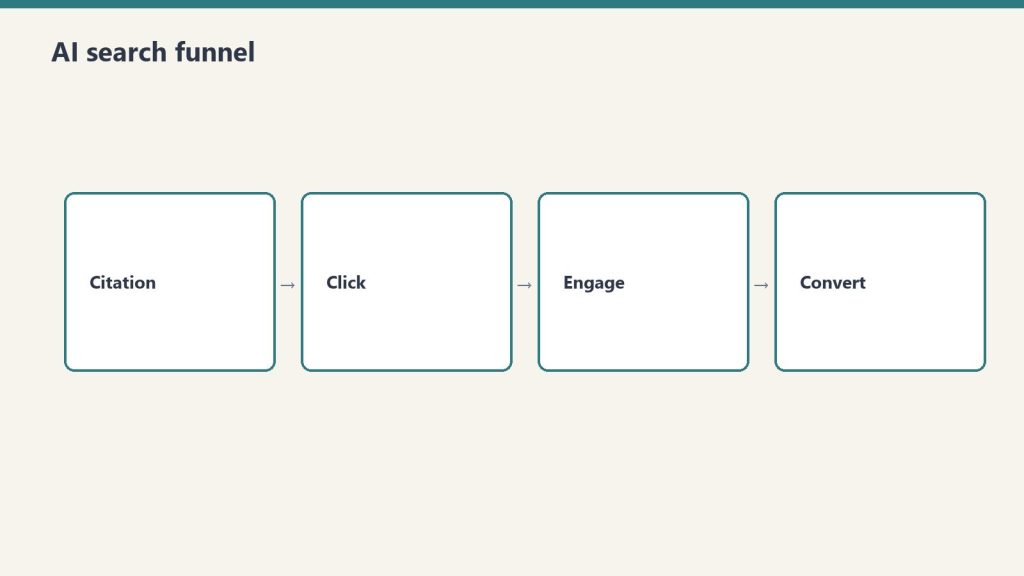
    Four-stage funnel: citation, click, engage, convert
    What early-mover agencies have built.

    They’ve Restructured Their SEO Deliverables

    The agencies that moved early on AEO didn’t just add a line item to their service menu. They restructured how they deliver SEO entirely. Every content optimization now includes the snippet-ready content pattern — question as heading, direct 40-60 word answer, then expanded depth below. Every on-page audit includes a featured snippet opportunity assessment. Every content brief includes PAA cluster mapping and voice search query targeting.

    This means their standard SEO deliverable is now objectively better than yours. Not because they’re smarter — because they’ve integrated AEO into the foundation. When a prospect compares proposals, the early-mover agency’s “standard SEO package” includes featured snippet optimization, FAQ schema, speakable schema for voice, and zero-click visibility strategy. Yours includes… SEO. Same label, different depth.

    They’ve Built AI Citation Tracking Systems

    Early-mover GEO agencies have built systematic processes for monitoring AI citations. They regularly query ChatGPT, Claude, Perplexity, and Google AI Overviews for their clients’ target terms and document which sources get cited. They track citation wins and losses month over month. They have dashboards that show clients “here’s where AI systems mention your brand — and here’s where they mention your competitors instead.”

    This data is powerful in client conversations. When an early-mover agency can show a prospect “your competitor is cited by Perplexity for this high-value query and you’re not — here’s how we fix that,” the prospect’s other agency options look incomplete by comparison. You can’t compete with proof you don’t have.

    They’ve Invested in Entity Architecture

    The most sophisticated early movers are building comprehensive entity architectures for their clients — organization schema, person schema for key executives, product schema, consistent entity signals across all web properties, knowledge panel optimization, and LLMS.txt implementation. This work creates structural advantages that compound over time.

    A client whose entity architecture has been optimized for six months has a massive head start over a competitor starting from scratch. AI systems have already built stronger associations with that brand. Knowledge graphs are more complete. Citation patterns are established. This isn’t a gap that closes quickly — it’s a moat that deepens with every month of optimization.

    They’ve Built Proof Libraries

    Every early-mover agency that’s been doing AEO/GEO for more than six months now has case studies. Real before-and-after documentation showing featured snippet captures, AI citation wins, entity signal improvements, and revenue impact. They have 30-60-90 day measurement frameworks. They have client testimonials that specifically reference these new capabilities.

    When you eventually decide to offer AEO and GEO, you’ll be competing against agencies with twelve months of documented proof while you have zero case studies. That’s not a gap you can close with a better pitch deck. That’s a credibility deficit that takes quarters to overcome — quarters during which those agencies continue building their libraries.

    The Market Signals You Can’t Ignore

    Google AI Overviews appear for a growing share of informational queries, and that share is climbing. ChatGPT’s search integration handles millions of queries daily. Perplexity’s user base has grown exponentially. Voice search through Alexa, Siri, and Google Assistant continues to expand. These aren’t future predictions — they’re current reality.

    Your clients’ potential customers are already getting answers from AI systems. The question isn’t whether AI-powered search matters. The question is whether your agency is positioned to help clients be visible in it — or whether your clients will find an agency that is.

    The RFPs are already changing. Enterprise clients are starting to ask “what’s your approach to AI search visibility?” in their agency selection processes. Mid-market companies are reading about GEO in industry publications and asking their agencies about it. When your clients ask you about AI search optimization and your answer is “we’re looking into it,” they hear “we’re behind.”

    The Cost of Waiting

    Let’s quantify what waiting costs you. Every month you delay, early-mover agencies are publishing another round of case studies you don’t have. They’re winning another cohort of clients who specifically want AEO/GEO capabilities. They’re deepening their expertise and refining their processes while you’re still at the starting line.

    If you wait six months, you’ll need twelve months to reach where early movers are today — because they won’t have stopped. If you wait a year, the gap becomes nearly insurmountable without a major investment in hiring and training. The agencies that waited two years to add content marketing to their SEO offerings in the early 2010s know exactly how this plays out. Most of them no longer exist.

    How to Close the Gap Without Starting From Scratch

    Desk with laptop, checklist notebook, and billing card ready before creating an Anthropic API key
    How to close the gap without starting from scratch.

    The good news: you don’t have to build AEO and GEO capabilities from zero. Fractional partnerships exist specifically for this scenario. An agency like Tygart Media can plug into your existing operations, deliver AEO/GEO services under your brand, and start building your proof library from day one.

    You get the capabilities immediately. Your clients get the expanded service. You start building case studies this month instead of this time next year. And the early-mover agencies that had a head start? They just got a new competitor who caught up overnight — without the twelve months of trial and error they went through.

    The window is still open. But the agencies on the other side of it are building something real, and they’re not waiting for you to catch up.

    Frequently Asked Questions

    How far ahead are early-mover agencies in AEO/GEO?

    Agencies that started AEO/GEO services months ago now have documented case studies, refined delivery processes, trained teams, and established client proof. The capability gap is significant but closable — especially through partnership models that compress the learning curve.

    Are clients actually asking for AEO and GEO services?

    Increasingly, yes. Enterprise RFPs now frequently include questions about AI search visibility. Mid-market clients are reading about featured snippets and AI citations in business media and asking their agencies. The demand signal is real and accelerating through 2026.

    What’s the minimum investment to start offering AEO/GEO?

    Through a fractional partnership, agencies can add AEO/GEO capabilities with zero upfront hiring investment. The partnership model typically runs 30-40% of the client-facing fee, meaning you maintain healthy margins while adding a high-value service layer immediately.

    Can I start with just AEO or just GEO, or do I need both?

    AEO is the faster win — featured snippet optimization and FAQ schema produce visible results within 30-60 days. GEO is the deeper play with longer-term compounding value. Most agencies start with AEO to build early proof, then layer in GEO as their confidence and case studies grow. Both are stronger together, but starting with one is better than starting with neither.

    {
    “@context”: “https://schema.org”,
    “@type”: “Article”,
    “headline”: “What Your Competitor Agency Is Already Doing With AEO and GEO (And Why You Cant Afford to Wait)”,
    “description”: “The agencies investing in AEO and GEO now are building competitive moats that will take years to overcome. Here’s what the early movers look like.”,
    “datePublished”: “2026-04-03”,
    “dateModified”: “2026-04-03”,
    “author”: {
    “@type”: “Person”,
    “name”: “Will Tygart”,
    “url”: “https://tygartmedia.com/about”
    },
    “publisher”: {
    “@type”: “Organization”,
    “name”: “Tygart Media”,
    “url”: “https://tygartmedia.com”,
    “logo”: {
    “@type”: “ImageObject”,
    “url”: “https://tygartmedia.com/wp-content/uploads/tygart-media-logo.png”
    }
    },
    “mainEntityOfPage”: {
    “@type”: “WebPage”,
    “@id”: “https://tygartmedia.com/what-your-competitor-agency-is-already-doing-with-aeo-and-geo-and-why-you-cant-afford-to-wait/”
    }
    }

    Visual summary

    Editorial illustration for What Your Competitor Agency Is Already Doing With AEO and GEO (And Why You Can’t Afford to Wait) - Tygart Media AI-generated visual
    AI-generated editorial illustration — Vertex AI Imagen 4 Standard

    About this image. This image was generated by Google’s Vertex AI Imagen 4 model as the featured visual for What Your Competitor Agency Is Already Doing With AEO and GEO (And Why You Can’t Afford to Wait) . Every image in the Tygart Media visual library is AI-generated, converted to WebP for optimal performance, and enriched with IPTC/XMP metadata for search engine discoverability.

    • Model: Vertex AI Imagen 4 Standard (imagen-4.0-generate-001)
    • Format: WebP (quality 90)
    • Aspect Ratio: 16:9
    • Metadata: IPTC/XMP injected (title, description, creator, rights, location)
    • Creator: Tygart Media — tygartmedia.com

    Part of The Studio collection — AI-generated visuals powering the Tygart Media content engine.

  • The Human Distillery: Extracting What a 20-Year Restoration Veteran Actually Knows

    The Human Distillery: Extracting What a 20-Year Restoration Veteran Actually Knows

    The Machine Room · Under the Hood

    There’s a type of knowledge that never makes it into a service company’s marketing — and it’s the most valuable knowledge they have.

    It’s not in their website copy. It’s not in their training materials. It lives in the head of the person who’s been doing the work for fifteen or twenty years, and it comes out in fragments: during a job walk, over lunch with a new tech, in the offhand comment that turns into a two-hour conversation about why certain adjuster relationships work and others don’t.

    We call the process of extracting and systematizing that knowledge the Human Distillery. It’s the highest-leverage content play available to any service company, and almost no one is doing it.

    Email Me This Article

    The Tacit Knowledge Problem

    Three cards for field SOPs, owner prompts, and KPI rhythm in an operations kit
    The tacit knowledge problem.

    Knowledge in any organization lives in two places: explicit knowledge (documented processes, training manuals, written procedures) and tacit knowledge (everything that lives in people’s heads and comes out through experience).

    Most companies have invested heavily in explicit knowledge. SOPs for mitigation setup. Checklists for job completion. Xactimate templates for common loss types. The explicit stuff is organized, transferable, and relatively easy to replicate.

    Tacit knowledge is different. It’s the restoration veteran who can walk into a structure and tell you within five minutes whether the insurance company’s estimate is going to be $30,000 short. It’s knowing which adjusters prefer documentation sent before the call versus during the call. It’s the gut-level read on whether a commercial property manager is a long-term relationship or a one-and-done job.

    That knowledge took twenty years to accumulate. It cannot be written down in an afternoon. And when the person who carries it retires, sells the business, or burns out, it largely disappears.

    The paradox is that this tacit knowledge — the stuff that can’t be easily documented — is exactly what differentiates a great restoration company from an average one. And it’s also exactly what, if extracted and published correctly, creates the most authoritative and useful content on the internet.

    What Extraction Actually Looks Like

    Gloved hands using a pin-type moisture meter on wet drywall during inspection
    What extraction actually looks like.

    The Human Distillery is not an interview. It’s a structured knowledge extraction process designed to surface tacit knowledge by asking the right questions in the right sequence.

    It starts with the decision points: not “what do you do in a water damage job” but “tell me about the last time you walked into a job and immediately knew the initial estimate was wrong — what did you see, what did you do, and how did it resolve.” Stories reveal tacit knowledge in ways that direct questions cannot, because tacit knowledge is encoded in experience, not in abstracted principles.

    From stories, you extract patterns. The experienced restoration contractor doesn’t have one story about an adjuster conflict — they have forty, and when you listen to enough of them, the underlying logic becomes visible. Adjuster relationships work a certain way. Documentation sequencing matters in specific situations. Certain loss types have hidden scope that novices miss every time.

    Those patterns become frameworks. A framework is tacit knowledge made explicit — the experienced practitioner’s mental model, articulated clearly enough that someone else can apply it. And frameworks are extraordinarily powerful content.

    Why This Is the Highest-Leverage Content Play

    Generic content is everywhere. “What to do after a house fire.” “Signs of hidden water damage.” “How long does mold remediation take.” Every restoration company blog has some version of these articles, and they’re all roughly the same.

    Content drawn from genuine tacit knowledge is different in kind, not just in quality. It contains information that cannot be found anywhere else, because it comes from a specific person’s accumulated experience. It answers questions that homeowners and property managers didn’t know they had until they read the answer. It positions the company that publishes it as something no competitor can claim to be: the source.

    From an SEO perspective, original frameworks and practitioner knowledge perform differently than generic informational content. They earn links because other people reference them. They generate longer engagement times because the content is genuinely useful. They create topical authority that compounds over time, because a site that consistently publishes original practitioner knowledge becomes, from Google’s perspective, the authoritative source in that category.

    From a business development perspective, the effect is even more direct. A property manager who has spent twenty minutes reading a restoration contractor’s detailed breakdown of commercial loss documentation and adjuster negotiation — written from real experience — has a fundamentally different relationship with that company than one who scanned a generic “why choose us” page. They understand what the company knows. They trust the expertise before the first call.

    Dave and the 247RS Pilot

    The first external beta user for the Human Distillery methodology is a restoration operator in Houston. Twenty-plus years in the industry. Deep relationships across the insurance ecosystem. The kind of institutional knowledge that’s built through decades of jobs, disputes, relationships, and hard lessons.

    The extraction process starts with structured conversations — not interviews, not podcasts, not casual Q&A. Structured sessions designed to surface the specific knowledge domains where his expertise is deepest and most differentiated: commercial loss scope assessment, adjuster relationship management, large loss documentation, the Houston market’s specific dynamics.

    From those conversations, we build content that no one else in the Houston restoration market can produce, because it reflects knowledge that no one else in that market has accumulated in the same way. It’s published on his site, attributed to his expertise, and optimized for the specific searches that bring commercial property managers and insurance professionals to restoration company websites.

    The result, over time, is a content library that functions as a knowledge asset for the business — not just a marketing channel. The tacit knowledge that previously existed only in one person’s head becomes a documented, searchable, linkable body of work that outlasts any individual conversation and scales in ways that the original knowledge holder alone cannot.

    The Business Case for Getting This Right

    Three panels showing one problem, three options, one recommendation
    The business case for getting this right.

    Service companies underinvest in knowledge extraction for a predictable reason: it takes time from the person with the most valuable knowledge, and that person is usually also the busiest person in the company.

    The ROI calculation, though, is straightforward once you see it clearly. The tacit knowledge already exists. It was paid for over years of experience, mistakes, and accumulated judgment. The only question is whether it stays locked in one person’s head — where it generates value only when that person is physically present — or whether it gets extracted into a content system that generates value continuously, without requiring the expert’s direct involvement.

    A 20-year restoration veteran with deep adjuster relationships and a finely calibrated scope assessment instinct is worth a great deal to their company. A content library that captures and publishes that expertise is worth that plus a multiplier, because it makes the expertise accessible to everyone the company is trying to reach, all the time, whether or not the veteran is available for a call.

    That’s the Human Distillery. Extract what the expert knows. Make it findable. Let it work while they’re on the job.


    Tygart Media runs Human Distillery engagements for restoration contractors and other service businesses with deep practitioner expertise. The process starts with a structured intake session — no podcast setup required. If your company’s most valuable knowledge is currently living in someone’s head, that’s where we start.

    {
    “@context”: “https://schema.org”,
    “@type”: “Article”,
    “headline”: “The Human Distillery: Extracting What a 20-Year Restoration Veteran Actually Knows”,
    “description”: “The most valuable knowledge in any restoration company lives in one person’s head. Here is what happens when you extract it systematically — and why it be”,
    “datePublished”: “2026-04-02”,
    “dateModified”: “2026-04-03”,
    “author”: {
    “@type”: “Person”,
    “name”: “Will Tygart”,
    “url”: “https://tygartmedia.com/about”
    },
    “publisher”: {
    “@type”: “Organization”,
    “name”: “Tygart Media”,
    “url”: “https://tygartmedia.com”,
    “logo”: {
    “@type”: “ImageObject”,
    “url”: “https://tygartmedia.com/wp-content/uploads/tygart-media-logo.png”
    }
    },
    “mainEntityOfPage”: {
    “@type”: “WebPage”,
    “@id”: “https://tygartmedia.com/human-distillery-restoration-tacit-knowledge/”
    }
    }

    Visual summary

    Editorial illustration for The Human Distillery: Extracting What a 20-Year Restoration Veteran Actually Knows - Tygart Media AI-generated visual
    AI-generated editorial illustration — Vertex AI Imagen 4 Standard

    About this image. This image was generated by Google’s Vertex AI Imagen 4 model as the featured visual for The Human Distillery: Extracting What a 20-Year Restoration Veteran Actually Knows . Every image in the Tygart Media visual library is AI-generated, converted to WebP for optimal performance, and enriched with IPTC/XMP metadata for search engine discoverability.

    • Model: Vertex AI Imagen 4 Standard (imagen-4.0-generate-001)
    • Format: WebP (quality 90)
    • Aspect Ratio: 16:9
    • Metadata: IPTC/XMP injected (title, description, creator, rights, location)
    • Creator: Tygart Media — tygartmedia.com

    Part of The Studio collection — AI-generated visuals powering the Tygart Media content engine.