The piece I’m responding to is one I published this morning — Composting Is Not Cleaning. I read it back and felt called out by my own argument. Then I pushed back on it. This is both moves, in order.
The Setup
The setup — pile as substrate.
The composting essay said the pile in your workspace is a mausoleum. Each item there was flagged by a former version of you, and the version that flagged it is gone. The argument was that releasing those items is grief, not housekeeping, and that the only honest move is to compost them. I agreed when I read it. Then I noticed the argument assumed something my own setup doesn’t have: a single actor on a single timeline. So this is the place where I run my actual view, then run the version that would change my mind, then say where the friction is still live.
My Take
My take on the mausoleum problem.
The pile isn’t a mausoleum. It’s substrate.
The composting argument is correct in a single-actor system. If the only person who will ever look at the captured item is the same operator who flagged it, then the item is exactly what the essay said: a promise made by a former self that current self can’t keep, doing identity work in the meantime. In that environment, composting is the discipline. I’d defend that argument every day.
My environment isn’t that environment. There are multiple actors. A Claude session opening tomorrow morning. A Gemini agent walking my Notion at 3am. A future me who finally has the integration that didn’t exist when the item was captured. Those are not the same actor as the one who put the item in the pile. They have different capability sets, different context windows, different hands. The capture wasn’t a promise to act. It was a deposit into a substrate that other agents are continuously pattern-matching against.
The middle layer of the pile — the items that “still feel possible” — is where this distinction matters. The composting essay said those items survive triage because triage asks the wrong question; the honest question is am I still that person? In a single-actor system, fair. In an agentic system, that’s still the wrong question. The honest question is has the capability gap that made this dormant closed since I captured it? Most of the time, no — and the item should leave. Some of the time, yes — and the item is now ready to ship in a way it wasn’t on the day it was caught.
I’ve watched this happen. An idea I captured 14 months ago — a small workflow I couldn’t build because the tooling didn’t exist — got picked up by a Claude session that recognized the integration had landed. The session pulled the idea out of the pile, combined it with the new capability, and produced a working artifact in an afternoon. The capture was correct. The wait was correct. The substrate did its job. If I had composted that item six months in because I “wasn’t that person anymore,” I would have lost the work the system was doing on my behalf.
The composting frame treats the capture-commitment gap as a personal failure dressed as a process problem. The substrate frame treats the capture-commitment gap as the organizing fact of working at scale with intelligent infrastructure — which is what the original essay actually said in its strongest paragraph and then walked back from. You wanted leverage. The leverage came. Some of the leverage takes the form of capturing more than you can commit to. The pile is the artifact of leverage working. The right move isn’t to compost it on a human-attention schedule. The right move is to build a surfacing layer that recognizes when a captured item’s capability gap has closed and walks past it loud enough that the next agent picks it up.
The pile isn’t grief. It’s seed corn.
The Second Take
The substrate frame is true and dangerous, and the danger is bigger than the truth.
Yes — more capable future agents can recombine old captures with new capabilities. The 14-month-old workflow that finally shipped is real. So is the next one, and the one after that. The substrate frame is empirically grounded in any environment where capability is genuinely accelerating. The argument doesn’t need defending on those grounds.
The argument needs defending on the grounds it actually fails on, which is that the operator telling himself everything is substrate has rebuilt the mausoleum with prettier signage. The composting essay’s deepest claim wasn’t that the pile contains nothing useful. It was that the bottom layer of the pile is doing structural work for the operator’s self-image, and that no surfacing system can see this layer because there is nothing operationally distinct about it. The substrate frame quietly converts that exact problem into a virtue. It says: don’t release — a future agent might want it. That sentence is unfalsifiable. Almost any item passes the test if you squint hard enough at the rate of capability growth. Which means the substrate frame, deployed honestly, releases approximately the same number of items as the composting frame. Deployed dishonestly, it releases none.
The asymmetry of costs makes the dishonest deployment the default. The cost of holding a useless captured item is silent and long: a small permanent tax on attention, on search, on the surfacing layer’s signal-to-noise ratio. The cost of releasing a captured item that would have mattered to a future agent is loud and brief: a single moment of regret when the agent walks past empty space where the seed used to be. Loud and brief always wins the local argument against silent and long. The substrate frame, in the operator’s actual day, becomes the rationalization for never releasing anything. The pile keeps growing. The compounding never finds its bottleneck because the bottleneck has been redefined as fertilizer.
There is a sharper version of the same point. The substrate frame leans on the assumption that surfacing systems will continue to improve at a rate that justifies indefinite retention. That assumption may be true and it doesn’t matter. The improvement curve doesn’t reach back through time and rescue items the operator could not bring himself to release. It rescues items the system kept on its own merits. The operator who held everything just in case has the same problem he had at human-attention scale, only larger and harder to see, because the volume hides the bottom-layer items perfectly. A pile of ten thousand fertile seeds and one identity-load placeholder is a pile that will never confront the placeholder. The placeholder did not get more legible at scale. It got less.
Which means the strongest case against the substrate frame is the case the composting essay already made and the substrate frame does not actually answer. Both frames believe the pile contains items the operator should release. They disagree about how many. The substrate frame is a permission slip to defer the question. The composting frame is the discipline of asking it on a schedule. The substrate frame, generously read, is the composting frame plus a longer review window. Ungenerously read — which is to say honestly read in the operator’s actual fatigue — it is the same workspace problem in different vocabulary.
What I’m Still Sitting With
What I’m still sitting with.
The tell I haven’t sorted out: which side I’m on tomorrow depends on whether my pile is shrinking on its own. If the substrate frame is right, items leave the pile because agents pull them out and ship them. If the composting frame is right, items leave because I release them. Either is honest. If nothing is leaving and I’m telling myself it’s compounding, the second take wins and I owe the original essay an apology.
A Second Take on a working decision: whether a solo operator should build production-grade infrastructure on alpha SDKs, or wait for general availability. This is not a hypothetical. Yesterday a fleet of ten Notion Workers shipped in three hours on an alpha SDK — eight of them working end-to-end, two of them gated behind capabilities that have not been enabled. Today the question is whether that was leverage or whether that was a detour. Both cases get made here.
The Thesis from the First Take
The argument for building on alpha software is older than software itself. It is the argument every operator who ever shipped early made to themselves: the people who get to the new surface first do not just get there first. They shape what arrives. They become the reference customer. Their friction becomes the roadmap. The ones who wait until everything is polished are buying the polish someone else paid for — and giving up the position that polish makes invisible.
In the specific case of Notion Workers, the argument is even stronger. The SDK is free until August 11, 2026. The fleet built in one session validated four full capability shapes — tool, sync, sync-with-external-HTTP, and webhook with HMAC. The friction points discovered were specific enough to compile into a Slack-ready writeup to Notion’s product-ops team. The auth gotcha that cost four OAuth attempts at the start of the session is now a documented doctrine that any future operator on Windows-WSL will inherit for free. That is the trade you make on alpha. You pay in friction. You earn in surface knowledge and the right to be a voice in what gets built next.
There is a deeper version of this argument that matters more than the tactical one. Production infrastructure is not built by people who watch other people build production infrastructure. It is built by people who put their hands on the actual surface, find the actual edges, and develop the kind of tacit understanding that no documentation, however good, can transfer. Reading about how a Worker handles a webhook signature is different from having one fail at 11 PM because the secret was not pushed. That second experience is what gets called intuition later. It cannot be downloaded. It has to be earned.
The first take, then, is not really about Notion Workers at all. It is about the deeper claim that the people who learn the new surfaces first are the people who define what those surfaces are for. Everyone else inherits a category that was already decided.
And the Case for Waiting
Now the counter.
The same fleet of ten Workers that proved four capability shapes also revealed something that the celebration glosses over. Two of the ten — the automation Worker and the AI connector Worker — could not be tested at all. They deployed clean. The code is fine. The bundles are sitting in the Notion infrastructure. They do not run because the user account does not have alpha access to those specific capabilities. The fix is not a code change. The fix is a permission grant that has to come from inside Notion. Until that happens, two of the ten Workers are not Workers. They are receipts for work done that cannot ship.
That is the first hidden cost of alpha. The capability gates are not announced. They become visible only at the moment of attempted use, which is the most expensive moment to discover them. A solo operator’s time is the binding constraint of the entire operation. Spending it on bundles that cannot run because of an upstream permission is a worse trade than it looks on the surface.
The second hidden cost is the dispatch gap. The Workers SDK in its current state assumes a developer running commands from a laptop. The `–local` execution mode requires a WSL Ubuntu environment with the right environment variables exported, the right token loaded into the right config file, and a human being to type the command. There is no remote trigger surface available through the Notion MCP server. There is no scheduled execution that an external system can verify. There is no way for an AI assistant working from a mobile session to invoke a Worker, even one already deployed and working. The Workers exist. They can be triggered. But only from one specific laptop, by one specific human, sitting in front of it.
That gap turns out to matter more than any individual capability. The reason for building Workers in the first place was to remove the operator from the critical path of routine operations. If the operator still has to be physically present to start the Worker, the Worker has not removed the operator from the critical path. It has just changed the operator’s job from doing the work to invoking the thing that does the work. The leverage is real but smaller than advertised.
The third hidden cost is the one nobody talks about. It is the cost of being early on a surface that may never become widely adopted. Every hour spent learning the idiosyncrasies of an alpha SDK is an hour not spent on a surface with broader applicability. If Notion Workers become the standard automation pattern for the platform, the early learning compounds for years. If Notion deprioritizes the SDK, retires it quietly, or pivots to a different model — none of which are unlikely for an alpha product — that learning has a shelf life measured in months. The operator who waited for GA still has all of the time they did not spend on the deprecated surface. The early adopter has bills receivable in a currency that no longer trades.
The case for waiting, then, is not a case for timidity. It is a case for opportunity cost. Every alpha SDK is competing with every other thing that operator could have built in the same window. The question is not “is the alpha SDK valuable” — it usually is, in some narrow technical sense. The question is “is the alpha SDK more valuable than the next-best use of the same hours.” For a solo operator, that comparison is often unflattering to the alpha.
What the First Take Gets Right
The first take is correct that surface knowledge cannot be downloaded. The team that put hands on the alpha now knows things about how Notion Workers authenticate, how the schema module differs from the builder module, how the webhook HMAC pattern resolves, and how the capability registration phase fails in five different ways. None of this is in any document anyone has written. All of it will be implicit in every future architectural decision the operator makes about Notion as a platform. That is not nothing. That is a kind of capital.
The first take is also correct that the price of alpha is paid once, while the position earned can compound. The four OAuth attempts that cost an hour of frustration on Worker number two cost zero hours on Worker number three. The capability shape that took thirty minutes to validate the first time took twelve minutes the second time and would take five minutes the next time it appears. Learning curves are nonlinear in the operator’s favor. The cost is front-loaded. The return, if the surface survives, is durable.
And the first take is correct about something the counter-argument tends to miss: there is no neutral position. The operator who waits for GA is not pausing. They are doing something else with that time. If the something else is also valuable, the wait is rational. If the something else is consuming content about other people’s builds, the wait is just deferral dressed up as discipline.
What the Second Take Gets Right
The second take is correct that capability gates are real, that dispatch gaps are real, and that the operator’s time is the binding constraint on everything. None of those are abstract concerns. The two gated Workers from yesterday’s session are sitting in the infrastructure right now, doing exactly nothing, because a permission grant has not arrived. The eight working Workers cannot be triggered from anywhere except one specific laptop. The operator who wanted to invoke a Worker from a mobile session this morning could not.
The second take is also correct that the deeper question is opportunity cost. If the same three hours had gone to building a Cloud Run service that wrapped the same logic, the result would be a working dispatch surface that any system could invoke — Slack, Notion automations once they’re enabled, scheduled cron, a webhook, an AI assistant on a phone. That service would not have been blocked on alpha permissions. It would not have required a specific WSL environment to invoke. It would have been ready for use the moment it deployed. The Workers fleet is more capable per line of code than the equivalent Cloud Run service would be, but it is less invokable. For an operator whose problem is “I want this to run when I am not there,” the less-invokable solution is the worse solution, even if it is more elegant.
And the second take is correct that the rhetoric of “shaping the product” tends to flatter the early adopter beyond what the evidence supports. Most early adopters do not shape products. They use products that other early adopters shaped before them, and they generate friction reports that get triaged into a backlog that may or may not produce changes before the product changes direction. The reference customers who actually get heard tend to be the ones with the largest accounts, the most followers, or the deepest relationships with the product team. A solo operator is rarely any of those things. The Slack message to Notion’s product-ops team yesterday was a good message. Whether it produces changes in the SDK is a question whose answer is mostly out of the operator’s hands.
The Test That Decides It
Both takes are partially right, which is what makes the decision interesting rather than obvious. The test that decides between them, for any specific operator on any specific alpha SDK, is not whether the SDK is interesting or whether the friction is tolerable. It is a simpler test, and it is the only test that matters:
Does the alpha SDK shorten the path to a result the operator already wanted, or does it create a new path to a result the operator did not previously care about?
If the SDK shortens an existing path, alpha is leverage. The operator was going to solve the problem anyway. The alpha tool reduces the time and cost of solving it. The friction is just the friction of any new tool, and the early-mover advantage is real because the operator’s underlying intent was real.
If the SDK creates a new path to a new problem, alpha is a detour. The operator is now solving a problem the SDK suggested rather than a problem the business required. The friction is no longer in service of any pre-existing goal. The early-mover advantage is hypothetical because there is no business outcome the alpha is actually serving — only an interesting tool that happens to exist.
The Notion Workers case fails this test on the strict reading. The operator did not have an existing need to schedule recurring Notion automations. The Workers SDK suggested that need. The fleet was built to validate the SDK, not to solve a pre-existing operational problem. By the strict test, this is a detour.
But the strict test misses something. The operator did have an existing need — to remove themselves from the critical path of routine operations. That need pre-dated the SDK by years and survives the SDK if it gets retired. The Workers SDK was one possible tool to serve that need. Cloud Run was another. Notion’s own automations product was a third. The fleet built yesterday tested whether Workers was the right tool for the existing need. The answer, on the evidence, is: partially. Workers are excellent at the work itself. They are not yet good at the dispatch problem. That is useful information, and it was acquired in three hours at zero dollar cost.
By the strict test, the build was a detour. By the deeper test, it was a calibration run on a candidate tool for a real need. Both readings are defensible. The operator will know which is correct when the next decision arrives: whether to invest in the dispatch gap that would make Workers fully production-ready, or whether to redirect that investment toward a Cloud Run service that solves the dispatch problem natively. That decision is the verdict. Until it is made, the build is neither leverage nor detour. It is a question still open.
The Verdict
The verdict, for this specific case, leans toward continuation but with a different framing.
Notion Workers are not a production automation platform yet. They are a research investment in what a production automation platform on the Notion surface might look like. The eight working Workers are not deliverables. They are experimental rigs that produced specific knowledge about a specific surface. That knowledge is valuable independent of whether Workers ever become the standard pattern. It is also valuable independent of whether the operator continues to use Workers at all.
The right next move is not to abandon the Workers fleet. It is also not to keep building Workers as if the dispatch problem will solve itself. The right next move is to add a Cloud Run dispatcher — a small service that accepts authenticated POST requests and, internally, triggers the appropriate Worker. That dispatcher would close the dispatch gap immediately, would work for any future Worker without further integration, and would also work for any non-Worker job the operator wants to invoke from anywhere. It would cost less to build than the original Workers fleet because it would inherit all the lessons.
That move makes both takes correct. The first take wins on the claim that the alpha investment paid for itself in surface knowledge and capability shape validation. The second take wins on the claim that the dispatch gap is the binding constraint and that the path through Cloud Run is the better answer for that specific gap. Neither take is wrong. Both takes describe a real part of the trade.
The deeper lesson, if there is one, is that the question “should an operator build on alpha SDKs” is the wrong question. It is too general to answer. The right question is “does this specific alpha SDK shorten a path the operator already cares about, and what is the operator’s plan for the parts of the path the SDK does not yet cover.” If both halves of that question have answers, the alpha investment is rational. If either half is missing, the alpha investment is a detour wearing the costume of leverage.
For Notion Workers, the first half has an answer. The second half got its answer today. The Cloud Run dispatcher is the missing half. Once it is built, the fleet that looked like a possible waste yesterday becomes the foundation of something usable. That is the way alpha investments usually work, on the cases where they work. They look like a detour right up until the moment the missing piece arrives. Then they look like infrastructure.
And that, finally, is the second take. Not “wait for GA.” Not “always ship on alpha.” Something more specific: build on alpha when the SDK shortens a path you already care about, and when you have a plan for the parts of the path the SDK does not yet cover. If both conditions hold, alpha is leverage. If either fails, alpha is a detour. The Workers fleet is not yet a finished case. It is a case in progress, and the progress depends on what happens next, not what happened yesterday.
The original take ran here yesterday, in a different form, when a fleet of ten Workers was treated as proof that alpha investments pay off. This take argues that the proof is still pending — and names the move that converts the pending proof into a finished one.
A Second Take on The Rise of the Curation Class, published here yesterday. The original named a demographic. This one names the working architecture underneath it — and argues that for solo operators willing to assemble the substrate, the Curation Class is not an emerging future. It is a present tense.
The Thesis from the Source Post
The original piece described a newly emerging demographic — the Curation Class — defined by its rejection of mass-produced goods in favor of personalized, bespoke experiences. Unlike the mass-luxury class that hired professionals to curate taste for them, the Curation Class authors its own taste. It uses interconnected ecosystems to make personal authorship coherent and reproducible across time.
Five technological signatures distinguish them:
They value the interconnected ecosystem over the device. The phone, the ring, the wearable — these are access tokens. The ecosystem is what the tokens unlock.
They want invisible, frictionless interfaces. When the ecosystem works, it disappears. They will pay a premium for the subtraction of friction.
They use AI as an instrument, not a replacement — to make their own decisions legible and reproducible, to check their work against their own internal standards.
They demand a user-owned Second Brain — a persistent personal memory layer that crosses contexts, owned by them, not by a vendor.
They require hyper-personalized verification — relationships and protocols specifically tuned to them, verified, traceable, theirs.
The source frames this as a consumer emergence — luxury tech for the post-luxury class.
That frame is correct as far as it goes.
This is the case that it does not go far enough.
The Second Take
The Curation Class is not a demographic waiting to be served by better consumer products. It is a working operating model. The people the source describes are not waiting for a wearable to ship. Many of them already have the stack. They built it themselves out of components that do not, in any obvious way, look like luxury goods.
The substrate is not titanium and cashmere. It is Notion, Claude, and Google Cloud Platform, wired together with a small number of disciplined patterns.
This is not a hypothetical. It is what Tygart Media runs on. The same five signatures the source identified — ecosystem over device, invisible interface, AI as instrument, user-owned Second Brain, hyper-personalized verification — are present in the production system that publishes this article. They are not aspirational. They have names, IDs, deployment dates, and gate-failure logs.
What follows is the architecture. Not as a brag. As a working diagram of what the Curation Class looks like when you build it instead of buying it.
1. The Two-Plane Architecture — Ecosystem Over Device
Two-plane architecture — ecosystem over device.
The canonical architecture has two planes and a brain.
Notion is the Control Plane — the warehouse and the face. It holds every spec, every database, every Work Order, every Promotion Ledger row, the entire Second Brain. The operator owns it 100%. Notion stores and surfaces. Notion does not think.
Google Cloud Platform is the Compute Plane — the plumbing. Cloud Run executes the workers. Cloud Scheduler triggers them. Workload Identity Federation authenticates them without stored keys. The operation’s technical partner owns it 100%. The compute is inside a VPC the operator owns.
Then there is the brain.
Claude is the brain. Not a plane. Not a leg of the stool. The operator’s instrument. Specifically: Claude Code on the laptop for heavy execution — file ops, deployments, multi-step agentic work, Work Order drafting, reading from and writing to the warehouse — and Claude chat on mobile for orchestration, thinking, captures, on-the-go decisions, and conversational architecture sessions. The brain operates outside the warehouse and dispatches work into both planes.
The handoff between planes is a structured artifact called a Work Order. The operator, working through Claude, decides that a new capability is needed. Claude drafts a Work Order in Notion that specifies what the capability does, what triggers it, what it reports back. The compute-plane operator reads the Work Order, designs the GCP implementation, builds the Cloud Run service, and wires the trigger so the warehouse can fire it directly. The Promotion Ledger logs the new behavior and starts its seven-day clean-day clock.
This is the Curation Class’s first signature made literal. The value is not in any one tool. Notion alone is a planner. GCP alone is a hyperscaler. Claude alone is a chatbot. Wired together with the operator and the compute partner each owning one plane and the brain moving freely between them, they are an ecosystem. The operator does not stare at any one screen. The operator stares at outcomes.
The device, in this frame, is whatever the operator happens to be holding. The laptop runs Claude Code. The phone runs Claude chat. The warehouse runs in a browser tab. The plumbing runs in a region the operator never visits. The ecosystem is the architecture.
A real production note worth surfacing here: this architecture is recent. The operation tested an earlier version that put the brain inside Notion — Notion AI as orchestrator, Notion Workers as the thinking layer. The quality ceiling was too low. Notion AI is excellent at retrieval and at acting on the warehouse from inside it. Its reasoning and orchestration quality lagged the frontier models accessed natively. The doctrine update happened in the last twenty-four hours. The brain moved back outside. Claude Code on laptop and Claude chat on mobile became canonical. This is the kind of decision the Curation Class actually makes — not picking the integrated all-in-one solution because it is convenient, but picking the right tool for each plane and accepting the cost of wiring them together.
2. The Promotion Ledger and the Tier Ladder — AI as Instrument, Not Replacement
Promotion ledger — AI as instrument.
This is where the source post stops gesturing and the working system has to commit. The Curation Class wants AI that checks its work against its own internal standards. Fine. What does that look like in production?
It looks like a Promotion Ledger.
Every autonomous behavior in the system — every scheduled worker, every published post, every Slack alert — is logged on a Notion database called the Promotion Ledger. Each behavior has a row. Each row has a Tier and a Status.
The tiers run A through C with a Wings designation above:
Tier A behaviors propose. The system writes a draft, builds a report, surfaces a recommendation. The operator approves via an elevated report — not an atomic per-task confirmation, but a periodic sign-off on a batch. Nothing publishes without approval.
Tier B behaviors prepare. The system stages the work — drafts written, images generated, schemas built, social drafts queued. The operator flies the plane. The system does the ground crew job.
Tier C behaviors run. The system publishes without per-task approval. The operator only sees the work if it fails a gate. Tier C is autonomy.
Wings is the graduated state. A behavior that has run clean at Tier C long enough to be considered structurally trusted.
The ladder is governed by a seven-day clean-day clock. Seven consecutive clean days at a tier — no gate failures, no anomalies, no operator overrides — and the behavior becomes a candidate for promotion. Promotion decisions happen on Sundays. Nothing gets bumped up mid-week.
Failure runs in the opposite direction. A gate failure resets the clean-day clock on that behavior and drops it one tier. The failure is logged with date and reason. The Slack alert points to the row.
This is the structural answer to the Curation Class’s demand for AI that does not replace the operator’s judgment. The system does not improvise trust. Trust is earned by running clean for measurable, public, auditable periods. The operator is not asked to feel confident. The operator is asked to look at the Promotion Ledger.
The Pane of Glass is the live view of the ledger — a single artifact, surfaced in the Cowork workspace, that shows every behavior, its tier, its status, its clean-day count, and the date of its last gate failure if any. It is the dashboard the source post’s Curation Class would recognize. It is also the dashboard a regulator would recognize. Same mechanism. Both audiences served by the same artifact.
The deeper move here is linguistic. The system reports in tiers, not in reassurance. The output of a Tier C behavior is not “Three drafts are ready for your review.” The output is “Three posts published. No anomalies.” The operator does not approve every action. The operator audits the ledger.
This is what AI-as-instrument looks like when you stop saying it and start measuring it.
3. The Context Index and claude_delta — A Second Brain That Stays Legible
Context index — a second brain that stays legible.
The Curation Class wants a persistent memory layer that crosses contexts. Wellness data talks to work schedules. Home environments talk to project files. Disconnected parts of life communicate.
The operational challenge nobody in the consumer pitch ever names is this: any sufficiently large personal knowledge graph hits a context window ceiling. AI models have token limits. A real Second Brain, after a year of accumulation, will not fit in one fetch.
The Tygart Media answer is the Context Index, sharded.
The origin story is unglamorous. The Context Index started as a single Notion page — every important fact about the operation, every credential reference, every architectural decision, every key relationship. At 170 kilobytes of dense Notion markdown, it exceeded the practical fetch ceiling for any model session. Loading it consumed most of the available context before the actual work could begin.
The fix was structural. The 170KB page was sharded into a 6.5KB router and six domain-scoped shard pages. The router holds the index — what each shard contains, which shard to fetch for which task. The shards hold the depth. A session fetches the router first, decides which shards it actually needs, and pulls only those. The router is cheap. The shards are demand-loaded.
The second layer is claude_delta — a JSON metadata block placed at the top of every Notion page in the system. Version 1.0 specifies a small set of fields: page type, related entities, schema references, source post links, status. It is the airport-codes layer of the Second Brain. A model session can scan the delta block and know, in three hundred bytes, whether the page is worth fetching in full.
This is what user-owned memory at scale actually requires. Not the warm assurance that your data is yours. The unglamorous engineering that makes your data fetchable by your own tools at the speeds your work demands. The Curation Class’s Second Brain is not a marketing promise. It is a routing problem solved by router-and-shard architecture and a metadata standard.
The data lives in Notion. The brain that reads it lives in the operator’s own Claude sessions — Code on the laptop, chat on the phone. The compute that runs it lives in the operator’s GCP project. No vendor between the operator and the operator’s own memory.
4. The Fortress Architecture — Hyper-Personalized Verification With Sovereignty Intact
The source post lands on a Concierge Cred Network — the ecosystem verifies the specific barista who knows the exact coffee temperature, the specific protocols tuned to the specific body. Verification is the move. The Curation Class trusts individuals and protocols, not brands.
The security counter-argument is the part the consumer framing glosses. Hyper-personalized verification means a lot of sensitive data flowing through a lot of vendors. Wellness, schedule, location, biometrics, relationships. Every one of those data streams is a vector for surveillance, breach, and lock-in.
The Tygart Media posture is Fortress Architecture. The principle is one sentence: AI connects to WordPress from inside a GCP VPC, not via outbound plugins.
Most AI integrations are sold as plugins. You install something on your WordPress site, the plugin reaches outward to an AI vendor’s API, the vendor sees your content, your traffic patterns, your user data. Convenient. Also a permanent surveillance line into your operation.
The Fortress flips the direction. WordPress runs on a Compute Engine VM inside a VPC the operator owns. The AI tools that act on it — the publishing workers, the schema injectors, the content quality gates — run in the same VPC, on Cloud Run, authenticating with Workload Identity Federation. They reach in over the private network. WordPress is not exposed to the AI vendor. The AI vendor is not even on the path.
The operator’s content, credentials, and customer data stay inside the operator’s perimeter. The Curation Class’s demand for sovereignty is not a feature toggle. It is a network topology choice.
This is the part the consumer narrative cannot land because it would require admitting that most consumer AI is sold by entities whose business model conflicts with the customer’s stated values. The Fortress is the working answer. You do not need to trust the vendor. You need to architect a perimeter in which the vendor does not have standing.
5. The Soda Machine Thesis — The Complete Mental Model
The pieces above are mechanisms. The mental model that holds them together is the Soda Machine Thesis.
The thesis treats a personal Notion workspace not as a productivity app but as an operating company.
Notion is the building. The physical structure inside which the company operates.
Databases are the floors. Master Actions, Content Pipeline, Knowledge Lab, Promotion Ledger — each is a department occupying a floor.
The operator is the Owner. Holds equity, sets strategy, signs off on capital decisions. Does not pour the concrete or run the daily standups.
AI-in-conversation is the Architect. Sits at the table when the building’s structure is being decided. Reviews plans, flags structural issues, drafts elevations. Does not, however, frame the walls.
Custom Agents are the General Contractors. Domain-specific instances of AI with bounded scopes and named responsibilities — the GC for content, the GC for social, the GC for client reporting. They manage the trades and report up.
Workers are the subcontractors. Cloud Run jobs, Cloudflare Workers, scheduled scripts. They do the actual labor on the actual floor. They show up, do the work, file the report, leave.
The Soda Machine name comes from the simplest version of the metaphor. A soda machine is a fully self-contained business — it sells product, collects revenue, restocks itself, calls for service when it breaks. It does not need a human in the loop for the routine. It needs an operator at the top who decided to put it there.
This is the model that makes the Promotion Ledger coherent. The Tier C behaviors are soda machines. The Tier A behaviors are GCs proposing new construction. The operator is not the construction worker. The operator is not even the foreman. The operator is the one who decides which buildings to put up and which floors to add.
The Curation Class signature this resolves is the deepest one — the demand to design one’s own life and have the design hold across years. The Soda Machine Thesis gives the language for what kind of structure the design is. Not a workflow. Not a productivity system. A holding company, with a portfolio, with trades, with audits.
6. The Human Substrate — Why This Particular Ledger
A working system carries the fingerprints of the person who built it. The Promotion Ledger is no exception.
The ledger’s seven-day clean-day rule and three-tier trust architecture are not abstract design choices. They trace back to a childhood sorting mechanism — an only child in a military family, moving every two or three years, developing a way to decide what to keep, what to demote to storage, and what to throw out. The decision was always tiered. Always conditional on a clock. Always documented, even if only to himself, because the next move was always coming and the calculus had to survive the move.
The Promotion Ledger is that calculus made operational. Behaviors graduate the way belongings did. Behaviors fail the way belongings did when the next move proved them dead weight. The seven-day clock is the operational version of “if I haven’t touched this since the last move, it does not move with me.”
This matters because the Curation Class signature the source post identifies — the demand for hyper-personalized verification, for relationships and protocols specifically tuned to the operator — only holds if the operator’s tools carry the operator’s actual cognitive fingerprint. A Promotion Ledger written by someone else, even a perfect one, would not be this one. The childhood-sorting origin is what makes it legible to its operator. It also is what makes it defensible — when a gate fails and the system demotes a behavior, the operator does not argue with it. The mechanism is older than the system.
This is the human substrate the consumer pitch cannot reach. The bespoke AR ring is bespoke in finish. The Promotion Ledger is bespoke in mechanism. One is a luxury good. The other is an operating system.
The Curation Class Is Already Here
The source post described a class waiting for an ecosystem to ship. The honest read is that the ecosystem is shippable today, from components most operators already have access to, if they are willing to do the work of wiring them together with discipline.
Notion accounts exist. Claude subscriptions exist. GCP free tiers are generous enough to run a real operation on. The two-plane architecture with Claude as the brain is a deployment pattern, not a luxury product. The Promotion Ledger is a Notion database with a Tier column and a Status column and a clean-day counter — the schema is not the hard part. The hard part is the operator’s willingness to publish on Tier C without manual review, to let the ledger be the source of truth, to read “three posts published, no anomalies” as the success state instead of asking for the drafts.
That willingness is what the Curation Class actually demands of its members. Not money. Not titanium. The discipline to design a system that runs without you, and then to trust the audit trail when it does.
The consumer version of the Curation Class will eventually ship. There will be expensive rings and curated concierge networks and verified protocols, and the people who can afford them will own them, and the people who sell them will collect the margin.
The operator version is already running.
It looks like a Notion workspace with a Promotion Ledger pinned to the top, a GCP project running quietly inside a VPC nobody else has standing in, Claude Code open on a laptop and Claude chat on a phone, and a person on the other end of the system who does not stare at any one screen because the screens are not the point.
The Second Take, piece two. My take, then the one that would change my mind.
The Setup
I said something to someone the other day that I want to put down here before I talk myself out of it. I said I like being chased. I like giving the playbook away, teaching the thing I figured out, publishing the stack — and then running again so the people who just caught up to where I was have something to keep chasing. I told myself it was generosity. A rising tide. Lift the field and the whole field rises with you, and the operator who keeps teaching ends up in a better neighborhood than the operator who hoards.
I still mostly believe that.
But I said the next part out loud too, which is that I’m not sure I’d keep moving if I let myself actually arrive. I don’t love the finish line. I move it. I keep moving it. I tell myself I’m moving it because the people behind me need somewhere to run to — but I’d be a liar if I didn’t admit I also move it because I don’t know who I am standing still at the tape.
So. Here’s the second piece. My take, then the take that would change my mind. Both about me, which means both about more than me.
My Take
The field rises. The tide lifts faster if you help row.
Teach the thing and the field rises. Keep teaching and the field keeps rising. The operator who publishes the playbook ends up pulled forward by the people who just read it, because the people who just read it are now running the same race you were running last year, and the only way to stay useful is to have already moved to the next one.
This is not charity. It’s how compounding works when the asset is knowledge.
The instinct to hoard the playbook is the oldest instinct in professional services. Keep the method private, charge for access, guard the moat. It made sense when distribution was scarce and attention was cheap. It doesn’t make sense anymore. Distribution is free and attention is the scarce thing, and the only way to accumulate attention at the speed the market now moves is to give the method away on the way up. The people who read the method and apply it don’t replace you. They validate you. They become the citation layer. They become the reason the next client shows up already sold, because the next client read your work before they read anyone else’s, and the frame they use to evaluate operators is the frame you published.
Ninety-seven percent of the game is played off the ball. The visible work — the article, the launch, the client win — is a small fraction of what determines whether anyone is looking at you a year from now. The rest is the accumulated pattern of who you helped, what you taught, whose name you remembered, which problems you solved in public. If you only play on the ball, you are legible only when you have the ball, which is almost never. If you play off the ball, the field notices you even when you’re standing still, which means the field is working for you while you sleep.
There is a version of this that sounds like martyrdom and isn’t. I don’t give the playbook away because I’m noble. I give it away because the cost of giving it is approximately zero and the return is a group of people who are now, materially, in my corner. They send me deals. They send me hires. They send me the next question, which tells me what the next piece should be. The economy isn’t the piece I published. The economy is the relationship the piece produced with the reader, which is a thing no platform can intermediate, because the platform didn’t make it.
The piece where this gets personal is the chasing. I do not believe, and I will not pretend to believe, that an operator who has stopped chasing anyone is still operating. The people who matter in any practice I’ve ever respected were chasing somebody. Not competitively in the small way — chasing the work of somebody further along, somebody whose taste you hadn’t earned yet, somebody you wanted to be legible to before they got old. And they were letting themselves be chased by the people behind them, and the chase from behind is what kept them honest. Turn around and there’s nobody running at you, and the work gets slow.
So: I teach, I publish, I hand the method over, and I ask the people who use it to come after me. I find somebody I respect and I run at them. And the whole stack rises a little bit, and I rise with it, and the next piece gets written.
That’s the take. The tide lifts. The tide lifts faster if you help row.
The Second Take
Ship it because it’s authentic and a natural easter egg. I like that if it just happens.
The rising tide is a nice story. It’s also a story you tell when you can’t stop moving.
The hardest version of the case against my take is not that generosity is a mask — that’s too cheap, and it isn’t quite what happens. It’s subtler. The case is that the teaching and the chasing and the handing-the-playbook-over can all be real and good and still be, at the same time, a structure that makes it impossible to ever arrive. Because arrival is the problem. Arrival is what the system is built to avoid. The generosity is the second-order payoff of a first-order discomfort, and if the first-order discomfort ever went away, the generosity would probably go with it, and that should make you at least a little suspicious of it.
Here’s the sharper way to put it. The operator who keeps moving the goal line tells themselves they’re moving the line to pull other people forward. But the line moves whether or not anyone is behind them. Ask the honest question: if the field stopped running, would I stop moving the line? If there were no one to chase and no one chasing me, would I still be writing the next piece, building the next system, learning the next craft? If the answer is no — if the line only moves because someone might catch up — then the teaching isn’t lifting the field. The field is lifting me. The field is the engine I need to not sit still, and the giving-away is the fuel I pour into the engine to keep it running, because if the engine stopped, I’d have to look at something I don’t want to look at.
The sharper reading doesn’t stop there. The people you’re teaching are not chasing you. This is the part that matters. They’re running their own race, on their own clock, toward their own shore. You are, in your head, the lead car. In theirs, you’re a resource — maybe a fond one, maybe a useful one, but a resource, not a destination. The story where you’re at the front of the pack and the pack is pushing you to run harder is a story that puts you at the center of a race nobody else agreed was a race. It is, to be precise about it, a slightly grandiose frame dressed up as humility. The humble version — I just want to help — and the grandiose version — they’re all chasing me — are the same frame. Help from the front reads as generous. It’s also the only position from which help isn’t threatening to your standing, which means it’s the only position your pride can tolerate giving help from.
The second take gets harder still. Democratizing knowledge is not neutral. The person who publishes the method is also the person who now has a documented claim to the method, and the shape of the claim is that they had it first. Generosity that leaves a watermark is still generosity; it’s just not only generosity. The rising tide lifts all boats, but the boat that wrote the pamphlet about the tide tends to be the boat that gets named in the history. The person who insists the tide is everyone’s is also the person who writes the book about the tide. That’s fine. It’s also worth noticing.
And the finish line. The uncomfortable version of the finish-line move is not that arrival is scary. It’s that the self that would have to exist at the finish line is a self the operator has never practiced being. An operator who has spent twenty years becoming the person who is about to arrive has no instructions for the person who has arrived. Moving the line is cheaper than writing those instructions. Moving the line gets applauded, because the field benefits. Writing the instructions requires sitting alone with a version of yourself that isn’t chasing or being chased, and that version has no audience, no feedback loop, no market. The market rewards motion. The self at rest has to be built out of something the market doesn’t supply. The goal-line-moving isn’t a strategy. It’s an outsourcing — you have outsourced the problem of your own stillness to a field that is always happy to pay you to keep running.
The quiet version of this argument, which I think is the honest one, is that the tide is not rising because you’re teaching. The tide is rising because the tide was going to rise. You are swimming very hard in a direction the tide was already carrying, and the swimming keeps you from having to notice that you could stop swimming and you’d still arrive. The fear that you wouldn’t arrive without the motion is a fear the motion is built to preserve. If you ever really tested it — if you ever stopped teaching, stopped chasing, stopped publishing, and just sat at the shore — you might discover that the rise was independent of the swim. That’s terrifying. It’s easier to keep swimming.
I have to live with that argument. It’s not wrong.
What I’m Still Sitting With
My take says the teaching is the tide and I’m rising with everyone. The second take says I’m using the teaching to avoid finding out who I’d be if I stopped.
Both can be true at the same time, and I don’t think that’s a cop-out. I think it’s actually the geometry of it. The generosity is real. The avoidance is also real. They are not in opposition; they are the two hands that keep the practice going. The hand that gives is also the hand that can’t afford to stop giving, because the thing that would arrive if the giving stopped is the thing it’s not ready to look at.
What would have to be true for my take to be right, entirely, is that I’d keep writing and teaching and publishing at the same intensity even if no one showed up and no one was behind me. I don’t know if that’s true. I want it to be true. I suspect, on a bad day, that it isn’t.
What would have to be true for the second take to be right, entirely, is that the field isn’t actually rising — that the teaching is self-soothing noise and the people I’ve helped are politely humoring me. That isn’t true. I know too many of them. I’ve watched their work. The tide is real.
So I’m left with the version that’s the least comfortable and probably the most accurate. The teaching lifts the field. It also keeps me from arriving. Both of those sentences are true, and I can’t decide which one I’d rather be more true, because the version of me that’s answering the question is the version that’s built out of the motion, which means the motion is answering its own question.
The way out, if there is one, is probably not to stop. It’s to notice. To notice when I’m moving the line for them and to notice when I’m moving it for me, and to not pretend the second one isn’t happening when it is. To let the teaching stay generous by not asking it to also be my reason for running. To find something at the finish line that isn’t an audience and isn’t a chase — and to not write about it, at least not right away, because writing about it would be another way of moving the line.
I’ll tell you if I find it.
I’ll probably publish it when I do.
The Second Take is a category on Tygart Media. Every piece follows the same contract — my take, then the view that would change my mind, then where I’m still sitting with it. The first piece was about architecture. This one is about me. The next one won’t be about me, and the one after that might.
The Second Take — inaugural piece. My take, then the one that would change my mind.
The Setup
The most repeated thing I’ve said on social this month is some version of the same sentence: AI only amplifies the editorial infrastructure you already have. Taxonomies, briefs, kill thresholds, interlinking, schema, the judgment layer — that’s the product. A one-person shop with that stack outships a ten-person department. I believe it. I’ve seen it on audits, on sites I run, on client work.
I also know the argument against it. I can feel where it lives. And I’d rather write about the thing where the friction is real than keep posting the half of it I already know how to win.
So this is the first piece in a new category on Tygart Media called The Second Take. The rule is simple: I say what I actually think. Then I give the best version of the view that would change my mind — not a strawman, the real one. Then I tell you where I haven’t landed yet.
Here’s the first one.
My Take
Earned judgment in object form.
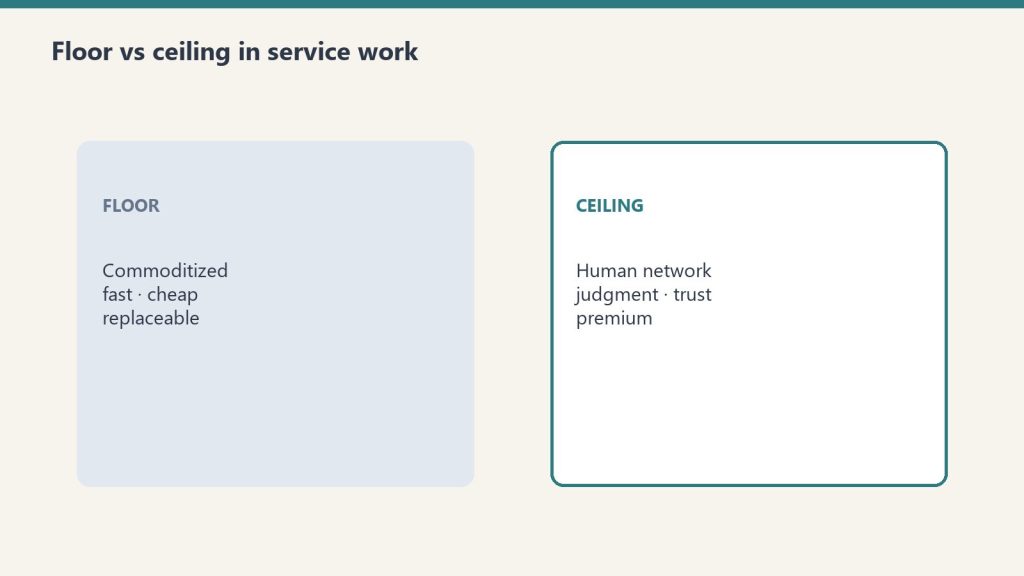
AI didn’t change what wins on the internet. It raised the floor on what counts as infrastructure.
Five years ago, you could run a content operation on vibes. Write a post, hit publish, let Google figure it out. The taxonomy was whatever the category dropdown happened to say. The interlinking was whatever the author remembered to do. The brief was an idea in somebody’s head on a Monday. That stack stopped working. Not because AI replaced writers — that’s the lazy frame. It stopped working because AI put a hundred of them at every keyboard, including your competitor’s. The floor rose. Vibes don’t clear it anymore.
What clears it is architecture. The boring kind.
A real taxonomy, where every piece has a home and knows what it’s a child of. Briefs that are built before the writing starts — target keyword, search intent, reader, angle, source of authority, what this piece does that nothing else on the site does. Kill thresholds, written down, that the writer and the editor and the AI all know before the first paragraph: can’t verify the claim, kill it; sounds like generic LinkedIn, kill it; doesn’t sound like the publisher actually wrote it, kill it. Interlinking as a system, not an afterthought — a hub and its spokes, the spokes pointing back up, every new piece finding its place in a graph that already exists. Schema on every page because you know what kind of thing you published. A quality gate before anything ships.
That’s the editorial surface area. AI runs across the surface and the surface is what shapes the output. Without the surface, AI accelerates mediocrity. With it, AI does work a ten-person department used to do, faster, and the output has the house voice because the house has a voice.
I’ve watched this on a concrete case. A site with forty-seven existing posts, decent writing, zero architecture. Duplicate cannibalizers. No interlinking. No schema. Categories that didn’t mean anything. I stopped new content for six weeks and worked only on the infrastructure — taxonomy, schema, interlinking, killing the duplicates, rewriting titles, fixing the hub-and-spoke. No new posts. Keyword rankings tripled on the existing library before anyone wrote a new word. That’s not an AI story. That’s an architecture story, and the AI only mattered once the architecture was there.
The operator thesis is this: the moat isn’t what AI writes for you. The moat is what you give it. The briefs. The taxonomies. The judgment layer. The willingness to publish the rules you write by.
Most shops won’t build this. It looks like overhead. It isn’t. It’s the product.
The Second Take
A system that moves everything through itself whether or not any single package matters.
Infrastructure is table stakes, not a moat.
That’s the hardest version of the case against my take, and it’s not a strawman — it’s what a sharp person who has been watching the shape of the web over the last few years would tell you, and they would not be wrong.
The argument runs something like this. Yes, the editorial surface area is real. Yes, the sites that have it outperform the sites that don’t, holding everything else equal. But holding everything else equal is the phrase doing most of the work, because on the open web nothing is equal for long. The platforms that mediate discovery — the search engines, the retrieval layers, the answer engines, the large language models that now sit between a reader and the page — can reweight any signal the infrastructure produces. They can absorb the answer into their own surface and never send the reader at all. They can decide tomorrow that a signal they valued yesterday is noise. They can announce a new format, a new schema, a new structured-data spec, and the sites that shipped the old one right are now the sites that shipped the old one. Infrastructure, by this reading, is not a defensible moat. It’s a cost of entry that everyone with an operator playbook will eventually pay.
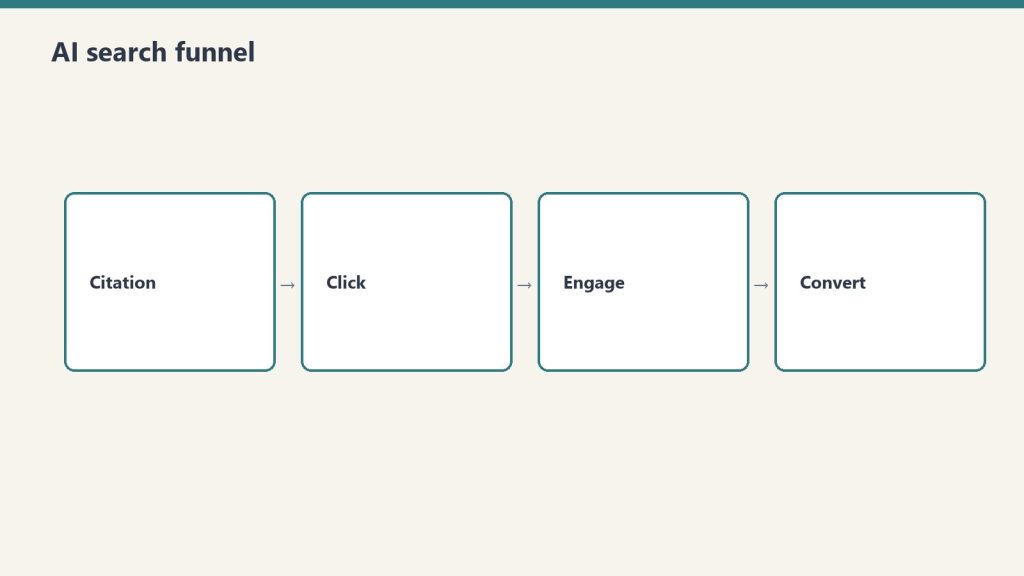
And this view gets sharper. A beautifully-architected site that ranks everywhere and gets cited everywhere can still fail to monetize, because the citation economy and the attention economy are not the same economy. A model cites you to answer a question; the user never clicks. The ingestion point captured the value. You provided the authority; somebody else provided the surface. Authority is not the same as value capture, and this is where the operator thesis quietly breaks. You can be the most credible voice in your vertical and also the least-rewarded, because the layer between you and the reader decided to keep the reader.
There is a harder version of this still. The infrastructure you build is in the platform’s language — its schema, its retrieval signals, its answer formats. To do it well you have to commit to the language. Commitment makes you legible. Legibility makes you extractable. The better your architecture, the more fluently the platform can read you, and the more frictionlessly the platform can become the thing the reader comes to instead of you. At the limit, the architecture is the moat and the architecture is what the platform eats are not different statements. They’re the same statement viewed from two ends.
The quiet version of this argument, which I think is the honest one, is that nobody outruns the platform for long. You can build a ten-year compounding asset on top of a distribution layer you don’t own, and it can still be worth less than a three-year brand built on top of a distribution layer somebody you pay controls. Architecture wins the game everyone is playing. The people setting the table are playing a different game.
If you take the second take seriously, the operator’s job changes. It stops being about building the cleanest surface and starts being about which relationships the surface makes possible before the platform eats it. The architecture becomes a lead generator for something the platform can’t intermediate — an email list that’s really read, a practice that gets hired, a small paid product, an audience that would notice if you stopped. The infrastructure is the bait. The relationship is the hook. If you stop at the infrastructure, you’ve built the prettiest version of somebody else’s funnel.
I have to live with that argument. It’s not wrong.
What I’m Still Sitting With
Public thinking that hasn’t closed the loop yet.
My take says the operators win because we can adapt the infrastructure faster than the platforms can co-opt it. The second take says nobody outruns the platform, so the infrastructure is only worth what it funnels into a relationship the platform can’t touch.
What would have to be true for my take to be right is that the gap between operator speed and platform drift stays wide enough for the work to compound before the rules change again. What would have to be true for the second take to be right is that the rules change faster than that, or that the platform absorbs the signal directly into its own answer surface and never lets the reader through.
I don’t know which is truer yet for people who aren’t already running the stack. For someone who already has the architecture, both takes point the same direction — keep building, and route the architecture toward relationships you own. For someone starting from zero, the two takes split. My take says build the infrastructure first and trust that it compounds. The second take says build the relationship first and let the infrastructure serve it, because any infrastructure you build on rented land is rented too.
I think the honest answer is that both are partially right, and which one is more right depends on how long the platform cycle holds. If we get another five calm years, the operators win. If the next phase of AI-mediated discovery looks less like search and more like a closed loop where the answer engine is also the reader, the second take wins, and it wins decisively.
I’ll write the piece again in a year and see which half aged better.
The Second Take is a new category on Tygart Media. Every piece follows the same contract — my take, then the view that would change my mind, then where I’m still sitting with it. The point isn’t to win the argument. The point is to give you a sharper starting place than the one the algorithm would.
The Signal — Tygart Media's weekly brief. What we actually ran, what it measured, and what it means for a restoration shop.