Related on Tygart Media: curation class · Notion second brain · Claude calibration.
A Second Take on The Rise of the Curation Class, published here yesterday. The original named a demographic. This one names the working architecture underneath it — and argues that for solo operators willing to assemble the substrate, the Curation Class is not an emerging future. It is a present tense.
The Thesis from the Source Post
The original piece described a newly emerging demographic — the Curation Class — defined by its rejection of mass-produced goods in favor of personalized, bespoke experiences. Unlike the mass-luxury class that hired professionals to curate taste for them, the Curation Class authors its own taste. It uses interconnected ecosystems to make personal authorship coherent and reproducible across time.
Five technological signatures distinguish them:
- They value the interconnected ecosystem over the device. The phone, the ring, the wearable — these are access tokens. The ecosystem is what the tokens unlock.
- They want invisible, frictionless interfaces. When the ecosystem works, it disappears. They will pay a premium for the subtraction of friction.
- They use AI as an instrument, not a replacement — to make their own decisions legible and reproducible, to check their work against their own internal standards.
- They demand a user-owned Second Brain — a persistent personal memory layer that crosses contexts, owned by them, not by a vendor.
- They require hyper-personalized verification — relationships and protocols specifically tuned to them, verified, traceable, theirs.
The source frames this as a consumer emergence — luxury tech for the post-luxury class.
That frame is correct as far as it goes.
This is the case that it does not go far enough.
The Second Take
The Curation Class is not a demographic waiting to be served by better consumer products. It is a working operating model. The people the source describes are not waiting for a wearable to ship. Many of them already have the stack. They built it themselves out of components that do not, in any obvious way, look like luxury goods.
The substrate is not titanium and cashmere. It is Notion, Claude, and Google Cloud Platform, wired together with a small number of disciplined patterns.
This is not a hypothetical. It is what Tygart Media runs on. The same five signatures the source identified — ecosystem over device, invisible interface, AI as instrument, user-owned Second Brain, hyper-personalized verification — are present in the production system that publishes this article. They are not aspirational. They have names, IDs, deployment dates, and gate-failure logs.
What follows is the architecture. Not as a brag. As a working diagram of what the Curation Class looks like when you build it instead of buying it.
1. The Two-Plane Architecture — Ecosystem Over Device
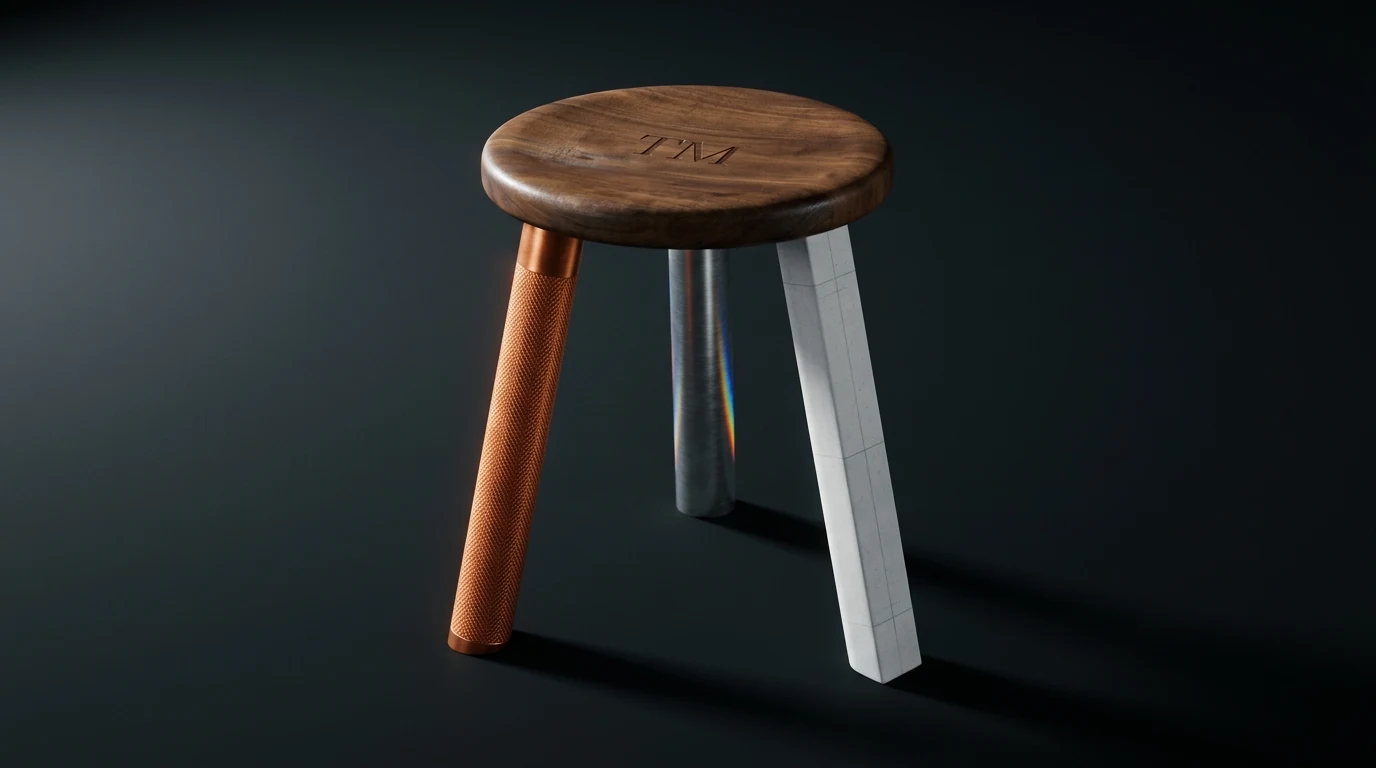
The canonical architecture has two planes and a brain.
- Notion is the Control Plane — the warehouse and the face. It holds every spec, every database, every Work Order, every Promotion Ledger row, the entire Second Brain. The operator owns it 100%. Notion stores and surfaces. Notion does not think.
- Google Cloud Platform is the Compute Plane — the plumbing. Cloud Run executes the workers. Cloud Scheduler triggers them. Workload Identity Federation authenticates them without stored keys. The operation’s technical partner owns it 100%. The compute is inside a VPC the operator owns.
Then there is the brain.
Claude is the brain. Not a plane. Not a leg of the stool. The operator’s instrument. Specifically: Claude Code on the laptop for heavy execution — file ops, deployments, multi-step agentic work, Work Order drafting, reading from and writing to the warehouse — and Claude chat on mobile for orchestration, thinking, captures, on-the-go decisions, and conversational architecture sessions. The brain operates outside the warehouse and dispatches work into both planes.
The handoff between planes is a structured artifact called a Work Order. The operator, working through Claude, decides that a new capability is needed. Claude drafts a Work Order in Notion that specifies what the capability does, what triggers it, what it reports back. The compute-plane operator reads the Work Order, designs the GCP implementation, builds the Cloud Run service, and wires the trigger so the warehouse can fire it directly. The Promotion Ledger logs the new behavior and starts its seven-day clean-day clock.
This is the Curation Class’s first signature made literal. The value is not in any one tool. Notion alone is a planner. GCP alone is a hyperscaler. Claude alone is a chatbot. Wired together with the operator and the compute partner each owning one plane and the brain moving freely between them, they are an ecosystem. The operator does not stare at any one screen. The operator stares at outcomes.
The device, in this frame, is whatever the operator happens to be holding. The laptop runs Claude Code. The phone runs Claude chat. The warehouse runs in a browser tab. The plumbing runs in a region the operator never visits. The ecosystem is the architecture.
A real production note worth surfacing here: this architecture is recent. The operation tested an earlier version that put the brain inside Notion — Notion AI as orchestrator, Notion Workers as the thinking layer. The quality ceiling was too low. Notion AI is excellent at retrieval and at acting on the warehouse from inside it. Its reasoning and orchestration quality lagged the frontier models accessed natively. The doctrine update happened in the last twenty-four hours. The brain moved back outside. Claude Code on laptop and Claude chat on mobile became canonical. This is the kind of decision the Curation Class actually makes — not picking the integrated all-in-one solution because it is convenient, but picking the right tool for each plane and accepting the cost of wiring them together.
2. The Promotion Ledger and the Tier Ladder — AI as Instrument, Not Replacement

This is where the source post stops gesturing and the working system has to commit. The Curation Class wants AI that checks its work against its own internal standards. Fine. What does that look like in production?
It looks like a Promotion Ledger.
Every autonomous behavior in the system — every scheduled worker, every published post, every Slack alert — is logged on a Notion database called the Promotion Ledger. Each behavior has a row. Each row has a Tier and a Status.
The tiers run A through C with a Wings designation above:
- Tier A behaviors propose. The system writes a draft, builds a report, surfaces a recommendation. The operator approves via an elevated report — not an atomic per-task confirmation, but a periodic sign-off on a batch. Nothing publishes without approval.
- Tier B behaviors prepare. The system stages the work — drafts written, images generated, schemas built, social drafts queued. The operator flies the plane. The system does the ground crew job.
- Tier C behaviors run. The system publishes without per-task approval. The operator only sees the work if it fails a gate. Tier C is autonomy.
- Wings is the graduated state. A behavior that has run clean at Tier C long enough to be considered structurally trusted.
The ladder is governed by a seven-day clean-day clock. Seven consecutive clean days at a tier — no gate failures, no anomalies, no operator overrides — and the behavior becomes a candidate for promotion. Promotion decisions happen on Sundays. Nothing gets bumped up mid-week.
Failure runs in the opposite direction. A gate failure resets the clean-day clock on that behavior and drops it one tier. The failure is logged with date and reason. The Slack alert points to the row.
This is the structural answer to the Curation Class’s demand for AI that does not replace the operator’s judgment. The system does not improvise trust. Trust is earned by running clean for measurable, public, auditable periods. The operator is not asked to feel confident. The operator is asked to look at the Promotion Ledger.
The Pane of Glass is the live view of the ledger — a single artifact, surfaced in the Cowork workspace, that shows every behavior, its tier, its status, its clean-day count, and the date of its last gate failure if any. It is the dashboard the source post’s Curation Class would recognize. It is also the dashboard a regulator would recognize. Same mechanism. Both audiences served by the same artifact.
The deeper move here is linguistic. The system reports in tiers, not in reassurance. The output of a Tier C behavior is not “Three drafts are ready for your review.” The output is “Three posts published. No anomalies.” The operator does not approve every action. The operator audits the ledger.
This is what AI-as-instrument looks like when you stop saying it and start measuring it.
3. The Context Index and claude_delta — A Second Brain That Stays Legible
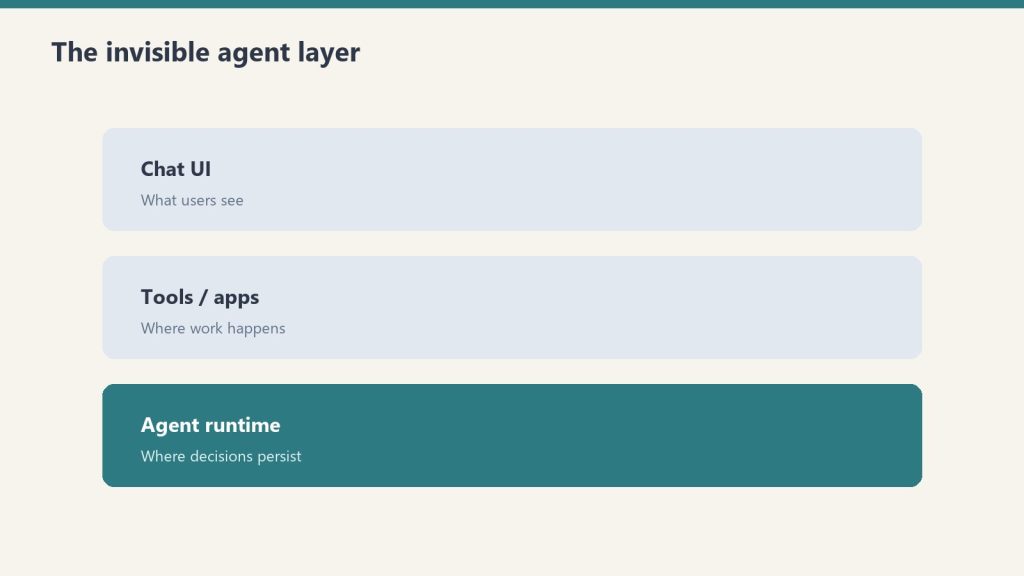
The Curation Class wants a persistent memory layer that crosses contexts. Wellness data talks to work schedules. Home environments talk to project files. Disconnected parts of life communicate.
The operational challenge nobody in the consumer pitch ever names is this: any sufficiently large personal knowledge graph hits a context window ceiling. AI models have token limits. A real Second Brain, after a year of accumulation, will not fit in one fetch.
The Tygart Media answer is the Context Index, sharded.
The origin story is unglamorous. The Context Index started as a single Notion page — every important fact about the operation, every credential reference, every architectural decision, every key relationship. At 170 kilobytes of dense Notion markdown, it exceeded the practical fetch ceiling for any model session. Loading it consumed most of the available context before the actual work could begin.
The fix was structural. The 170KB page was sharded into a 6.5KB router and six domain-scoped shard pages. The router holds the index — what each shard contains, which shard to fetch for which task. The shards hold the depth. A session fetches the router first, decides which shards it actually needs, and pulls only those. The router is cheap. The shards are demand-loaded.
The second layer is claude_delta — a JSON metadata block placed at the top of every Notion page in the system. Version 1.0 specifies a small set of fields: page type, related entities, schema references, source post links, status. It is the airport-codes layer of the Second Brain. A model session can scan the delta block and know, in three hundred bytes, whether the page is worth fetching in full.
This is what user-owned memory at scale actually requires. Not the warm assurance that your data is yours. The unglamorous engineering that makes your data fetchable by your own tools at the speeds your work demands. The Curation Class’s Second Brain is not a marketing promise. It is a routing problem solved by router-and-shard architecture and a metadata standard.
The data lives in Notion. The brain that reads it lives in the operator’s own Claude sessions — Code on the laptop, chat on the phone. The compute that runs it lives in the operator’s GCP project. No vendor between the operator and the operator’s own memory.
4. The Fortress Architecture — Hyper-Personalized Verification With Sovereignty Intact
The source post lands on a Concierge Cred Network — the ecosystem verifies the specific barista who knows the exact coffee temperature, the specific protocols tuned to the specific body. Verification is the move. The Curation Class trusts individuals and protocols, not brands.
The security counter-argument is the part the consumer framing glosses. Hyper-personalized verification means a lot of sensitive data flowing through a lot of vendors. Wellness, schedule, location, biometrics, relationships. Every one of those data streams is a vector for surveillance, breach, and lock-in.
The Tygart Media posture is Fortress Architecture. The principle is one sentence: AI connects to WordPress from inside a GCP VPC, not via outbound plugins.
Most AI integrations are sold as plugins. You install something on your WordPress site, the plugin reaches outward to an AI vendor’s API, the vendor sees your content, your traffic patterns, your user data. Convenient. Also a permanent surveillance line into your operation.
The Fortress flips the direction. WordPress runs on a Compute Engine VM inside a VPC the operator owns. The AI tools that act on it — the publishing workers, the schema injectors, the content quality gates — run in the same VPC, on Cloud Run, authenticating with Workload Identity Federation. They reach in over the private network. WordPress is not exposed to the AI vendor. The AI vendor is not even on the path.
The operator’s content, credentials, and customer data stay inside the operator’s perimeter. The Curation Class’s demand for sovereignty is not a feature toggle. It is a network topology choice.
This is the part the consumer narrative cannot land because it would require admitting that most consumer AI is sold by entities whose business model conflicts with the customer’s stated values. The Fortress is the working answer. You do not need to trust the vendor. You need to architect a perimeter in which the vendor does not have standing.
5. The Soda Machine Thesis — The Complete Mental Model
The pieces above are mechanisms. The mental model that holds them together is the Soda Machine Thesis.
The thesis treats a personal Notion workspace not as a productivity app but as an operating company.
- Notion is the building. The physical structure inside which the company operates.
- Databases are the floors. Master Actions, Content Pipeline, Knowledge Lab, Promotion Ledger — each is a department occupying a floor.
- The operator is the Owner. Holds equity, sets strategy, signs off on capital decisions. Does not pour the concrete or run the daily standups.
- AI-in-conversation is the Architect. Sits at the table when the building’s structure is being decided. Reviews plans, flags structural issues, drafts elevations. Does not, however, frame the walls.
- Custom Agents are the General Contractors. Domain-specific instances of AI with bounded scopes and named responsibilities — the GC for content, the GC for social, the GC for client reporting. They manage the trades and report up.
- Workers are the subcontractors. Cloud Run jobs, Cloudflare Workers, scheduled scripts. They do the actual labor on the actual floor. They show up, do the work, file the report, leave.
The Soda Machine name comes from the simplest version of the metaphor. A soda machine is a fully self-contained business — it sells product, collects revenue, restocks itself, calls for service when it breaks. It does not need a human in the loop for the routine. It needs an operator at the top who decided to put it there.
This is the model that makes the Promotion Ledger coherent. The Tier C behaviors are soda machines. The Tier A behaviors are GCs proposing new construction. The operator is not the construction worker. The operator is not even the foreman. The operator is the one who decides which buildings to put up and which floors to add.
The Curation Class signature this resolves is the deepest one — the demand to design one’s own life and have the design hold across years. The Soda Machine Thesis gives the language for what kind of structure the design is. Not a workflow. Not a productivity system. A holding company, with a portfolio, with trades, with audits.
6. The Human Substrate — Why This Particular Ledger
A working system carries the fingerprints of the person who built it. The Promotion Ledger is no exception.
The ledger’s seven-day clean-day rule and three-tier trust architecture are not abstract design choices. They trace back to a childhood sorting mechanism — an only child in a military family, moving every two or three years, developing a way to decide what to keep, what to demote to storage, and what to throw out. The decision was always tiered. Always conditional on a clock. Always documented, even if only to himself, because the next move was always coming and the calculus had to survive the move.
The Promotion Ledger is that calculus made operational. Behaviors graduate the way belongings did. Behaviors fail the way belongings did when the next move proved them dead weight. The seven-day clock is the operational version of “if I haven’t touched this since the last move, it does not move with me.”
This matters because the Curation Class signature the source post identifies — the demand for hyper-personalized verification, for relationships and protocols specifically tuned to the operator — only holds if the operator’s tools carry the operator’s actual cognitive fingerprint. A Promotion Ledger written by someone else, even a perfect one, would not be this one. The childhood-sorting origin is what makes it legible to its operator. It also is what makes it defensible — when a gate fails and the system demotes a behavior, the operator does not argue with it. The mechanism is older than the system.
This is the human substrate the consumer pitch cannot reach. The bespoke AR ring is bespoke in finish. The Promotion Ledger is bespoke in mechanism. One is a luxury good. The other is an operating system.
The Curation Class Is Already Here
The source post described a class waiting for an ecosystem to ship. The honest read is that the ecosystem is shippable today, from components most operators already have access to, if they are willing to do the work of wiring them together with discipline.
Notion accounts exist. Claude subscriptions exist. GCP free tiers are generous enough to run a real operation on. The two-plane architecture with Claude as the brain is a deployment pattern, not a luxury product. The Promotion Ledger is a Notion database with a Tier column and a Status column and a clean-day counter — the schema is not the hard part. The hard part is the operator’s willingness to publish on Tier C without manual review, to let the ledger be the source of truth, to read “three posts published, no anomalies” as the success state instead of asking for the drafts.
That willingness is what the Curation Class actually demands of its members. Not money. Not titanium. The discipline to design a system that runs without you, and then to trust the audit trail when it does.
The consumer version of the Curation Class will eventually ship. There will be expensive rings and curated concierge networks and verified protocols, and the people who can afford them will own them, and the people who sell them will collect the margin.
The operator version is already running.
It looks like a Notion workspace with a Promotion Ledger pinned to the top, a GCP project running quietly inside a VPC nobody else has standing in, Claude Code open on a laptop and Claude chat on a phone, and a person on the other end of the system who does not stare at any one screen because the screens are not the point.
The ecosystem is the point.
And it disappeared a while ago.