
If you retired from a skilled trade or industry in the last ten years, the market just inverted in your favor. The knowledge you took with you when you walked out — the thirty or forty years of judgment, pattern recognition, and tacit expertise — has become the most valuable asset in your field. Your former employer probably has not figured this out yet. Your former competitors probably have not figured it out yet. But the shift is real, the economics are real, and the operators in your field who are still in the game are quietly starting to look around for senior advisors who can do what nobody under fifty can yet do.
This is the case for coming back. Not back to the schedule, the stress, or the operational responsibility you walked away from. Back into the part of the work that you were always best at, on your own terms, in a role the industry did not even know how to offer five years ago, for compensation that may exceed anything you ever earned when you were full-time. The window is open. The opportunity is real. And you may be exactly the right person to take it.
What Has Changed Since You Walked Out
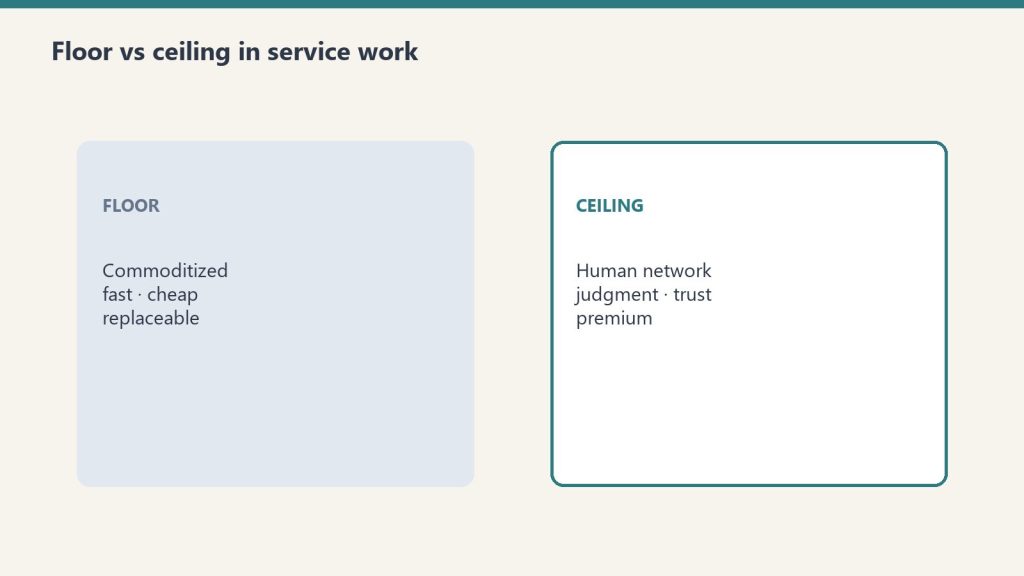
You retired into an economy that valued senior labor as overhead to be reduced. The industry you left was probably pushing you toward retirement as a cost-saving move, even if it was dressed up as something else. That economic logic was rational in its time. Senior operators were expensive. The procedural floor of every industry was still mostly handled by human labor, which meant the senior operator’s role overlapped significantly with the cheaper junior operator’s role. From a margin perspective, replacing experience with software-backed youth was a defensible move.
That logic broke in the last twenty-four months. The arrival of capable AI systems collapsed the cost of doing the procedural floor work in every skilled industry. AI raises the floor of every industry, but it cannot touch the ceiling. The senior operator’s role has been split in half. The procedural part is now done by AI. What is left — the judgment, the relationships, the institutional knowledge, the pattern recognition — is the only thing that still requires a human, and it requires a specific kind of human that the industry is only just beginning to realize is in short supply.
That specific kind of human is you. Or rather, the version of you that existed when you left the field, plus whatever you have added through life experience in the years since. Your former colleagues who are still working are AI-leveraged now. They are faster than they used to be on the procedural side. They are exactly as competent on the judgment side as they were the day you left, because that part does not develop without years of in-the-field exposure that they were already mostly through by then.
The deficit your departure created — the loss of senior judgment in their organization — has not been backfilled. It cannot be backfilled by AI. It can only be backfilled by another senior operator with the same depth of experience, and there are not many of those available in any given regional market. Your former employer or industry peers have probably been quietly making do, hoping their middle-tier operators would grow into the judgment role over time. They mostly have not.
That gap is the opportunity. And right now, you are one of a small number of people in the entire industry who can fill it.
What “Coming Back” Actually Looks Like
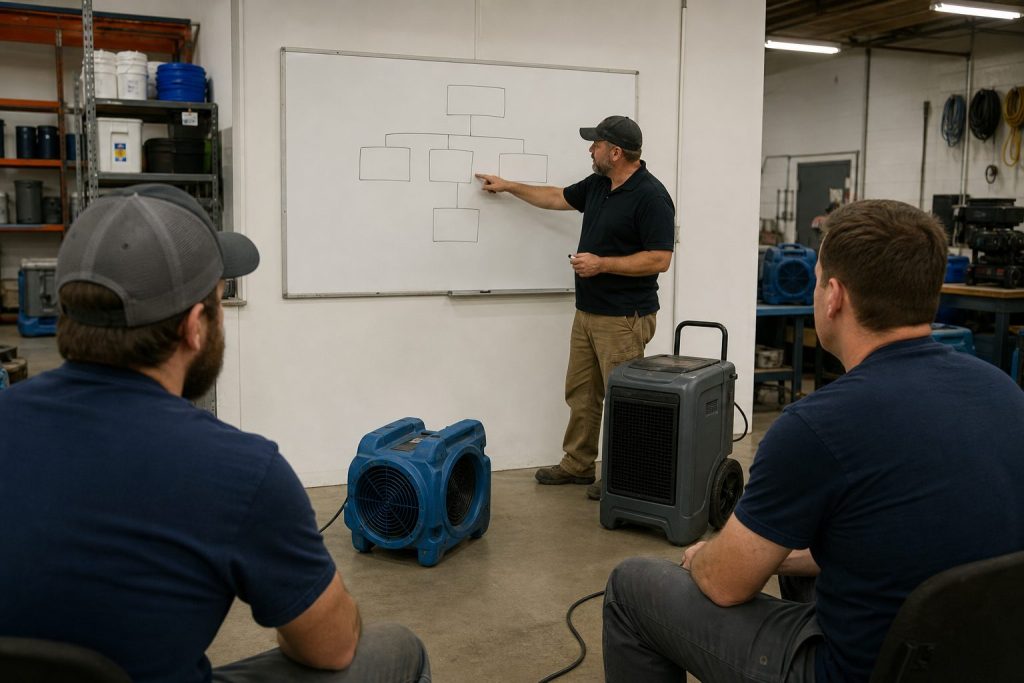
The mistake most retired operators make when they consider returning is they imagine going back to the same role they left. The forty-five hour week. The on-call rotations. The customer escalations. The same operational footprint they were happy to walk away from. Almost nobody wants to go back to that, and the market does not actually want you in that role. What the market wants from you is something different.
It wants your judgment, surgically applied to high-leverage situations, without the operational overhead that consumed the bulk of your full-time career. It wants you in an advisory capacity. It wants you on the difficult job site for two hours when nobody else can read what is happening. It wants you in the conference room when the carrier is fighting the scope. It wants you reviewing the bids before they go out. It wants you mentoring the senior project managers who are about to step into your old shoes but do not yet have the depth to fill them. It wants the ceiling work, not the floor work.
That is a different role. It pays differently. It demands different hours. It uses your time for the most valuable two hours of the day instead of all eight. And it does not require you to give up the parts of retirement that mattered to you — the flexibility, the slower pace, the freedom from operational stress, the ability to spend time with family and pursue the things you set work aside for.
The structure that fits this role is some version of fractional advisory work. A handful of hours per week with one or two former employers or industry peers, on retainer, at premium rates, with clear scope around judgment and advisory work rather than operational delivery. It is the role that did not really exist in your industry ten years ago. It exists now. The companies that have figured it out are paying remarkably well for it. The companies that have not figured it out are the ones you can teach how to pay for it.
What You Are Worth Now
The pricing on senior-operator advisory work in skilled industries is climbing rapidly and has not yet stabilized. The retired operators who are entering the market are mostly pricing themselves at rates significantly below what the market would bear, because they are anchored on their old hourly wages plus a modest premium. The actual market rate for genuine senior judgment in most skilled industries is several multiples of that.
Think about it this way. When you were full-time, your hourly cost to your employer included the substantial overhead of full-time employment — benefits, equipment, support staff, the assumption that you would be reachable for forty-five hours a week. In a fractional advisory role, none of that overhead applies. You are selling two hours of pure judgment. The cost structure is completely different. The pricing should be completely different.
The right framing for setting your rate is not “what was I worth full-time?” It is “what does it cost the company to bring in someone with my depth of judgment for a couple of hours when they actually need it?” The answer in most skilled industries is a substantial multiple of the equivalent hourly rate you earned in full-time work. The companies that need this kind of help generally know it. They are not going to push back hard on premium rates from someone whose judgment is actually as deep as yours, because the alternative — making a wrong call on a high-stakes job — is much more expensive than your fee.
Start with a rate that feels slightly uncomfortable. If the first prospect pays it without negotiating, your rate is too low. If they negotiate hard, you have priced it correctly. If they walk away, you have priced it too high — but probably only slightly, and probably not in a way that requires significant adjustment.
The Knowledge You Took With You Is Still There
Some retired operators worry that the knowledge has decayed since they left the field. The standards changed. The technology updated. The regulations evolved. Are they still relevant?
The answer is mostly yes, and the reason is that the most valuable part of your knowledge was never the standards, technology, or regulations. Those were the documented floor. The valuable part was the judgment, the relationship knowledge, the pattern recognition, the customer-handling instinct, the institutional memory of how things actually work in your industry. None of that has decayed. It is just as accurate now as it was the day you walked out, because human nature does not change, the underlying dynamics of skilled work do not change, and the muscle memory of complex judgment does not atrophy in a few years.
The thin layer of currency you need to bring back is easily acquired. A few hours of review on the current standards. A few conversations with people still in the field about what has changed. A weekend reading the industry trade press to catch up on the politics. That is the floor work, and the AI can help you with most of it now in a way that was not possible the last time you needed to refresh your knowledge.
The ceiling work — the part nobody else can do — is intact. It is the part you took with you. It is the part that has been quietly compounding while you have been away, because life experience continues to develop judgment in ways that field experience does not always provide. The retired operators returning to advisory work are often sharper than they were when they left, because they have had time to think about the work without the operational pressure that prevented reflection.
What to Do This Month if This Resonates
If you are reading this and recognizing yourself in it, here are the moves that match the moment.
Make a list of five people in your industry who would have a use for your judgment. Former employer. Former competitors. Younger operators who you mentored informally over the years. Industry contacts who used to bring you problems. Pick five names. You probably already know most of them well.
Reach out with a specific, low-pressure opening. “I have been thinking about doing some fractional advisory work. If you have situations where my judgment would be useful for a few hours, I would be open to a conversation.” That is the entire opening. Do not oversell. Do not undersell. The people who need this kind of help will surface themselves quickly.
Have two or three conversations to learn what the actual demand looks like. You may discover that the demand is concentrated in one specific kind of work, or that the rates are higher or lower than you expected, or that the structure of fractional engagements is different from what you imagined. Two or three conversations will calibrate you faster than any amount of strategic planning.
Pick one engagement to start with. Not a portfolio. One. Use it to test your rate, your scope, and your tolerance for being back in the work. The first engagement is the most important one to get right because it will set the template for everything that follows.
Treat the work as the highest-leverage version of your career, not as a comeback or a return. The retirees who come back to do their old jobs at slightly higher pay are pricing themselves wrong and structuring their roles wrong. The retirees who come back to do something genuinely different — judgment work, advisory work, the ceiling work — are creating something more valuable than anything they did when they were full-time.
Frequently Asked Questions
Why is the market suddenly valuing retired operators?
The AI shift has commoditized the procedural floor of every skilled industry, leaving the tacit, judgment-based knowledge of senior operators as the only meaningful differentiation. Retired operators who carry that knowledge are filling a gap their former companies did not realize would open up when they left. The economics now favor bringing them back in advisory roles at premium rates.
Do I have to come back full-time to do this?
No. The role that fits the new market is fractional advisory work — a handful of hours per week, at premium rates, focused on judgment and advisory situations rather than operational delivery. You keep most of the freedom of retirement and add a high-leverage income stream.
How do I price advisory work after retirement?
Not by reference to your old full-time hourly rate. Price by reference to what it costs a company to bring in someone with your depth of judgment for a few hours when they actually need it. In most skilled industries, the right rate is a substantial multiple of an equivalent full-time wage, because you are selling pure judgment without overhead.
Has my knowledge decayed since I retired?
The thin documented layer of standards and technology may need a brief refresh. The deeper layer of judgment, relationships, pattern recognition, and institutional memory is intact and has likely sharpened during your time away because you have had space to think without operational pressure.
Who should I reach out to first?
Start with five people who already know your work — former employers, former competitors who respected you, younger operators you mentored. Use a low-pressure opening that signals availability without overselling. The people who need your judgment will surface themselves quickly.
What if I do not want to come back at all?
Then do not. The choice is yours. But consider that there may be a structured way to capture the knowledge in your head — a Human Distillery process that converts your tacit expertise into a transferable artifact for an industry, a former employer, or your family — that does not require you to take on any operational role. Even if you never advise on another job, your knowledge does not have to disappear with you.
The Bottom Line
You retired into an economy that did not value what you had built. That economy has just inverted. The thirty or forty years of tacit knowledge sitting in your head is now the most valuable asset in your former industry, and the structure that lets you monetize it without going back to the operational grind you walked away from did not exist when you retired. It exists now.
You do not have to come back. Nobody is owed your return. But if the work itself still interests you, if you have life left in your professional career, if the freedom of retirement is starting to feel less like rest and more like underuse, the conditions for a different kind of return have lined up better than they have at any other moment in your career.
The market is finally catching up to what you have always been carrying. The shift is real. The opportunity is real. The compensation is real. Make a list. Send the five messages. See what comes back. The best years of your career may not be behind you. They may be the next ten, in a role the industry did not know how to offer you when you left.
Leave a Reply