How Medical Practices Get Featured in Google AI Overviews (And Why It Matters More Than Page 1)
How Google Selects Medical Content for AI Overviews
Google’s AI Overview system does not randomly select medical content. According to Silvr Agency’s 2026 AI Overview analysis, Google evaluates websites based on E-E-A-T signals, content quality (comprehensive, well-researched, with proper citations), and structural accessibility — whether the AI can parse and extract the answer it needs. For medical content specifically, the evaluation is stricter: physician authorship schema, clinical entity references, and MedicalCondition or MedicalProcedure schema are the signals that distinguish AI-citable medical content from content that gets bypassed.
The Five Structural Requirements for Medical AI Overview Eligibility

1. Organic Ranking in the Top 20 (The Prerequisite)
AI Overview citations come almost exclusively from pages that already rank in the top 20 organic results. This means the traditional SEO foundations — title tag optimization, meta description, internal linking, backlinks from authoritative medical sources — must be in place before AI citation can occur. Optimization for AI Overview citation assumes the article is already ranking; if it isn’t, the priority is first getting it into the top 20.
2. Named Physician Authorship With Schema
Google’s AI does not cite anonymous health content. The authorship requirement is specific: a named physician, linked to a bio page with verifiable credentials, with Physician schema markup connecting the content to that named medical entity. PracticeBeat’s 2026 AI Overview research notes that “every medical page must include machine-readable author and reviewer information” including degrees, licenses, professional affiliations, and links to trusted digital identities such as LinkedIn, PubMed, or medical board profiles.
3. Clinical Entity References
Named clinical entities are the verifiable anchors AI systems use to evaluate medical content authority. For an article about hypertension: “JNC 8 blood pressure guidelines,” “ACC/AHA 2017 hypertension guidelines (130/80 mmHg threshold),” “ICD-10 I10 for essential hypertension,” “thiazide diuretics as first-line therapy per ACC/AHA recommendations.” These are machine-verifiable by the AI against known clinical standards — which is exactly what Google’s systems check before citing a source.
4. MedicalCondition or MedicalProcedure Schema
Schema.org’s MedicalCondition and MedicalProcedure types provide explicit structured data that tells Google’s AI exactly what the page is about clinically. A condition article with MedicalCondition schema identifying the condition’s name, symptoms, risk factors, and treatments in machine-readable format is significantly more AI-citable than the same article without schema — the AI doesn’t have to infer the structure, it’s explicitly provided.
5. FAQPage Schema With Patient-Focused Questions
FAQPage schema directly feeds People Also Ask placements and AI Overview citation. For medical content, the questions that earn AI citations target the patient research phase: “What are the symptoms of [condition]?”, “How is [condition] diagnosed?”, “What treatments are available for [condition]?”, “When should I see a doctor about [symptom]?” These direct-answer pairs, with FAQPage JSON-LD, make the content machine-extractable for AI synthesis.
Frequently Asked Questions

Are Google AI Overviews replacing traditional search results for medical queries?
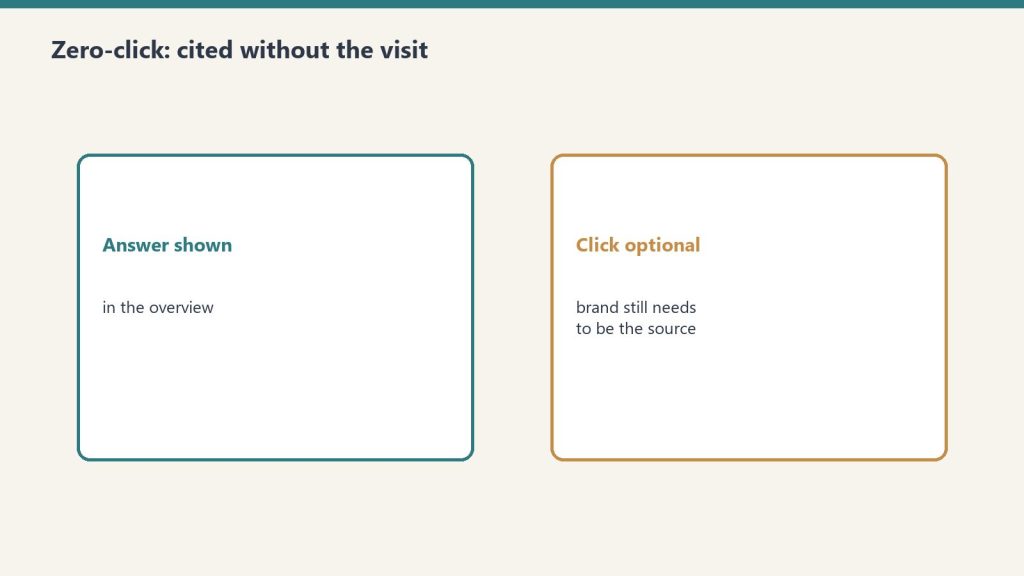
AI Overviews appear above traditional organic results for approximately 45% of medical keywords and are growing rapidly — up 115% since March 2025. They do not replace organic results, but they significantly reduce clicks to organic listings for queries where an AI Overview appears. Practices cited as sources in AI Overviews receive attribution links that still drive traffic, and the brand recognition from being cited as a medical authority carries value even in zero-click scenarios. The priority in 2026 is appearing in both the AI Overview (citation) and the organic result below it (direct traffic).
Can a small independent practice get featured in AI Overviews against large health systems?
Yes — and this is one of the significant opportunities of AI Overview optimization. Large health systems have brand authority but often produce generic, committee-authored content that lacks the clinical specificity and direct-answer structure AI systems favor. An independent specialist practice with highly specific, physician-authored condition and procedure content — optimized with clinical entity references and FAQPage schema — can outperform large health systems for specific condition queries where their content is more precise and more directly answerable.
How long does it take for optimized medical content to appear in AI Overviews?
For content already ranking in the top 20 organic results, AI Overview eligibility can be established within 2–6 weeks of optimization — the time it takes Google’s crawlers to re-evaluate the updated content with its new entity references, schema markup, and structured Q&A pairs. AI Overviews update more frequently than organic rankings. Content that was ranking but not being cited in AI Overviews often begins appearing within one crawl cycle after clinical entity and schema optimization is applied.
Leave a Reply