Direct answer: The data can’t crown a winner — and that’s the answer. “No AI search platform has been shown to bring better leads than another; what differs is which sources each one trusts.” (BaaDigi, Sept 2026.) But the three engines drink from radically different wells, and knowing which well is which tells you exactly where to spend your effort. Stop asking which engine to bet on. Start asking which sources each engine trusts — then feed those sources.
The question behind the question
When a contractor asks “which AI should I care about,” they mean: I have limited time and money — where does it pay off? It’s a budget-allocation question disguised as a tech question. And the honest answer, from the best contractor-vertical study available, refuses to pick a winner — because lead quality was never measured. Citations were.
BaaDigi ran 88 contractor-marketing questions across all three engines in August 2026 and collected 1,429 answers (updated September 23, 2026). The headline finding isn’t a ranking. It’s a split: each engine trusts a different slice of the web. (BaaDigi, “Which AI Search Platform Brings Better Leads?”)
The split, in numbers
For how each engine actually behaves, see Platform-Specific AI Optimization (PSAO).
Here’s what the 1,429 answers showed about where each engine looks:
| Source | ChatGPT | Perplexity | Google AI Overviews | |—|—|—|—| | reddit.com | 136 citations | 382 citations | 139 citations | | google.com | 0 | 0 | 310 | | youtube.com | 4 | 71 | 214 | | linkedin.com | 6 | 246 | 39 |
Read the rows, not just the totals. Perplexity leans on Reddit almost 3x harder than ChatGPT does. Google AI Overviews leans on YouTube 53x harder than ChatGPT does (214 vs. 4). LinkedIn is a Perplexity phenomenon (246) that barely registers for ChatGPT (6). And google.com — Google’s own domain — appears 310 times in AI Overviews and literally zero times in ChatGPT or Perplexity answers.
As BaaDigi puts it: “A page that Perplexity quotes may never surface in an AI Overview. That is why one screenshot from one engine says little about the other two.”
The pattern matches what practitioners report engine by engine: Perplexity rewards specific, substantive websites; ChatGPT leans on review platforms and directories; AI Overviews lean on Google’s local-pack signals. Different wells, different water.
Why “which one sends leads” is the wrong bet
Here’s the sentence that should reframe your budget: “A citation proves a page was used in an answer. It does not prove a customer read it, visited you or called.”
Nobody — not BaaDigi, not the agencies, not the platforms — has published measured lead-quality data comparing the three engines for contractors. Anyone selling you a ranking (“ChatGPT buyers convert 2x better”) is inventing conversion rates. BaaDigi’s guide says so explicitly: “It does not declare a national winner or invent conversion rates.”
And the usage picture is genuinely unclear. Surveys show a growing share of customers asking AI for local recommendations, but every study counts it differently: Kordless claims 62% of consumers now use AI tools to research products and services before buying (their own marketing page, no study cited — an independent Bazaarvoice survey of 3,600+ adults landed on the same 62% for AI-assisted shopping). Google’s AI Overviews show up on roughly half of tracked searches (BrightEdge, Feb 2026) — but only about 7% of local queries. And Pew’s 2025 study found users click an organic result 47% less often when an AI Overview is on the page (15% click-through dropping to 8%). Perplexity is the smallest audience with arguably the most research-intent users. Each of those facts points a different direction, which is why the “just tell me which one” demand can’t be satisfied honestly.
The reframe: bet on sources, not engines
Since you can’t pick a winning engine, pick the source pools — because one fix often feeds multiple engines:
Feed ChatGPT: review platforms and directories. ChatGPT’s answers lean on Yelp (3.4x more citations than the next platform across 28M+ AI answers — Foundation Marketing + AirOps, May 2026), Reddit threads, and structured directories. Complete Yelp profile, steady specific reviews, accurate directory data. This is also where the in-chat “Request a Quote” button lives now.
Feed Perplexity: your own website, in depth. Perplexity cites specific websites far more than the others — 246 LinkedIn citations and heavy Reddit use, but also the engine most likely to quote your page if the page actually answers the question. Answer-first service pages, real job detail, quotable sentences. If you only fix one thing for Perplexity, make your site worth quoting.
Feed AI Overviews: Google’s local signals. AI Overviews cite google.com 310 times to the others’ zero — the local pack, your Google Business Profile, and YouTube (214 citations). Complete GBP, real job videos on YouTube, consistent NAP. The AIO game is closer to classic local SEO than the other two.
Notice what just happened: the three work lists barely overlap, and none of them is “optimize for the engine.” They’re all be legible where that engine looks. Do all three and you’ve covered the field. Do one and you’ve placed a bet you can’t evaluate.
The measurement that actually answers “which pays off”
Use the LLM visibility measurement stack so you compare inquiry records, not screenshots.
BaaDigi’s guide proposes the only honest version of this comparison — run it in your own office:
- Ask the same buyer questions across all three engines. Same services, same cities, saved with dates. Keep “feature not shown,” “business not named,” and “source unavailable” as separate statuses — they’re different observations.
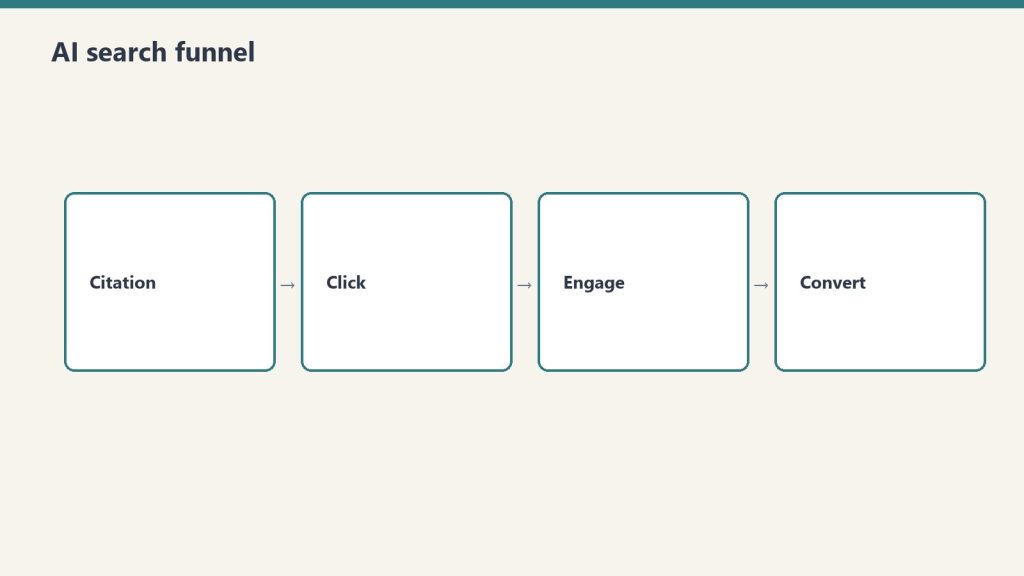
- Track by stage, not by screenshot. Observed appearance → website visit → inquiry → qualified opportunity → customer. A citation is stage zero. “Compare inquiry records, not screenshots.”
- Define qualified before you look. Accepted service, actual territory, a need your crew can handle. Track duplicates and spam separately.
- Label uncertainty. A customer saying “found you through AI” goes in the record as a self-reported source — it doesn’t authorize you to invent which engine, which prompt, or which citation.
Run that for 90 days and you’ll know which engine sends you leads, in your market, for your services. Nobody else’s data can tell you that. The national studies tell you where to look; only your ledger tells you what pays.
A baseline to calibrate against
If you are invisible in the answers at all, start with be the cited answer, not another rank.
If you run the checks and find yourself absent everywhere, that’s normal — absence is the starting point, not an emergency. In 254 free BaaDigi audits run March through September 2026, Perplexity named the audited business for its own service-and-city query only 23.2% of the time, with a median of three competitors listed ahead. You’re not behind. You’re at the baseline, with three wells to start filling.
And don’t abandon what’s working: “Do not abandon working search, referral or advertising activity because an assistant produced an attractive answer. A channel decision needs costs, capacity and outcomes.”
The line to remember
There is no national winner, and anyone selling you one is selling certainty they don’t have. The engines don’t compete for your attention — they compete for different evidence. Feed all three wells: reviews and directories for ChatGPT, a quotable website for Perplexity, Google-local signals for AI Overviews. Then let your own inquiry ledger — not a screenshot — tell you which one pays.
FAQ
Q: So I have to do three times the work? A: No — the work overlaps heavily. A complete Yelp profile, specific reviews, answer-shaped service pages, an accurate GBP, and real job videos cover all three engines. It’s one body of legibility work, not three campaigns.
Q: What about Gemini and Copilot? A: The contractor-vertical studies cover ChatGPT, Perplexity, and AI Overviews. In practice, Gemini’s answers draw on Google’s ecosystem (closer to the AIO well) and Copilot’s draw on Bing — same source-pool logic, just without a contractor study measuring it yet.
Q: Should I pay for a tool that tracks all three? A: Only after you’ve run the manual version for a month. If you can’t interpret three screenshots by hand, a dashboard of three hundred won’t help. Measurement discipline first, tooling second.
Q: Does being cited mean I’ll get calls? A: No. A citation means your page was used in an answer. Calls come from being recommended — named as the answer — with a working path to contact you. Track the stages separately.