Tag: Google AI Overviews

  • The LLMs.txt Reality Check: What 300,000 Domains Reveal About the File Everyone’s Implementing in 2026

    The LLMs.txt Reality Check: What 300,000 Domains Reveal About the File Everyone’s Implementing in 2026

    The LLMs.txt file was supposed to be the AI-era equivalent of robots.txt — a clean, declarative way to hand large language models a curated map of your most valuable content. Three years after Jeremy Howard proposed the spec, the data is in. And the data is not what implementation evangelists have been promising.

    This is a case study teardown of the three largest independent measurement efforts on LLMs.txt adoption and citation impact, the one documented recovery case where it did move the needle, and the structural lesson every practitioner should pull from the divergence.

    The 300,000-Domain Study That Reset the Conversation

    A widely circulated dataset of nearly 300,000 domains — analyzed across multiple AI search citation benchmarks and reported by Search Engine Journal — found no statistically significant relationship between implementing LLMs.txt and how often AI engines cite a brand. Both standard statistical analysis and machine-learning models showed no effect. Removing LLMs.txt as a feature actually improved citation prediction accuracy in one model run, meaning the file’s presence was less than noise.

    Adoption sits at roughly 10.13% of domains in that dataset, distributed evenly across traffic tiers. Translation: it is neither standard practice nor a differentiator.

    A separate bot-traffic audit reported by adoption researchers found that out of 62,100-plus AI bot visits over a 90-day window, only 84 requests targeted the /llms.txt path. Across half a billion LLM bot traffic events analyzed in another dataset — filtering for the agents that actually drive citations (GPTBot, ClaudeBot, PerplexityBot, OAI-SearchBot, Google-Extended) — the share of requests touching /llms.txt was statistically negligible.

    The Vendor Reality Behind the Numbers

    As of Q1 2026, no major AI company — OpenAI, Google, Anthropic, Meta, or Mistral — has publicly committed to reading or acting on LLMs.txt in production systems. The file is a community proposal, not a supported standard. AI language models learn what to trust from the web as it existed during training. Citation behavior reflects which sources appeared consistently in training corpora, which were cited by other credible sources, and which had claims independently corroborated. A crawl-directive file published after training cannot retroactively change any of that.

    The Recovery Case That Actually Moved Traffic

    Compare that to a documented recovery case reported by SEO Algorithm Recovery and corroborated by independent AI Overviews tracking: a Dallas retailer lost 72% of organic traffic to AI Overviews. Their agency deployed schema markup and restructured 150 pages around answer-first formatting. Traffic recovered to 118% of pre-AI Overview levels in 120 days, with $1.4M in revenue growth attributed to the recovered organic channel.

    No LLMs.txt was involved. The intervention stack was schema markup, content restructuring for AI-extractable answers, and entity disambiguation in headings. Schema markup alone has been reported to recover 45%-plus of lost AI Overview traffic in case-study compilations across the recovery agency space.

    The Structural Lesson

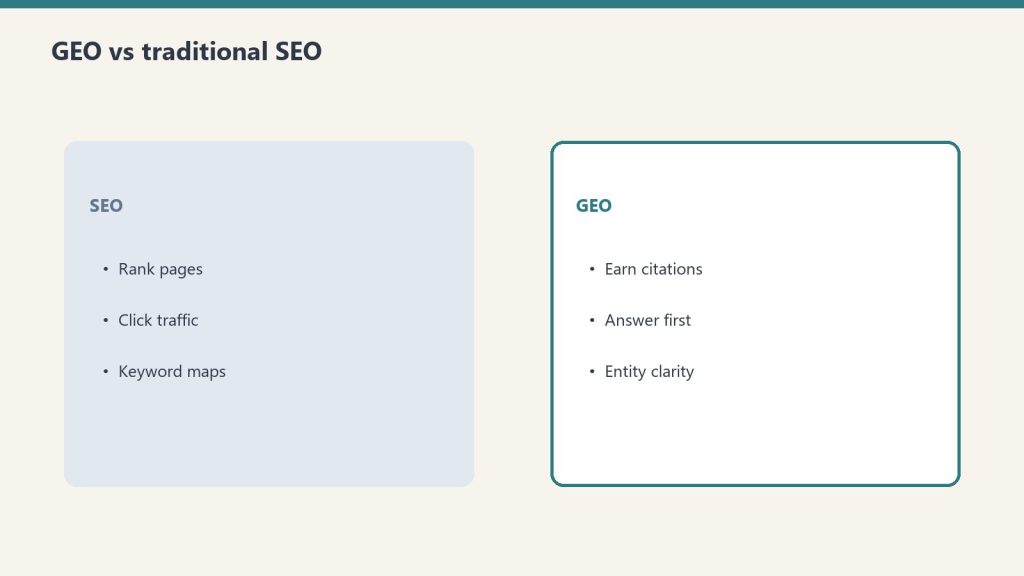
    The contrast is the case study. LLMs.txt is a static directive file that AI crawlers do not currently read at scale. Schema markup is a structured-data layer that AI systems already parse to construct answer panels and citation surfaces. One is aspirational. The other is operational.

    The structural pattern under every documented AI-search recovery in 2026 is the same: answer-first content directly under each H2, structured data on the entity being described, tables for comparison data, and explicit source attribution inline. Sites earning AI citations report traffic gains. Brands with strong authority signals benefit from the halo effect. Companies adapting these specific structural interventions early — not the file directives — are the ones reporting growth exceeding pre-AI Overview levels.

    A Minimum-Viable LLMs.txt Anyway

    The skeptical case is not “skip LLMs.txt entirely.” It is “do not let it absorb hours that should go to schema and content restructuring.” A minimum-viable LLMs.txt is ten lines and takes ten minutes to ship:

    # Your Brand Name
    
    > One-sentence description of what your site is and who it serves.
    
    ## Core Pages
    - [About](https://yoursite.com/about): Who you are, in one paragraph.
    - [Products](https://yoursite.com/products): What you sell, structured.
    - [Pricing](https://yoursite.com/pricing): Numbers, plans, comparison.
    
    ## Documentation
    - [Getting Started](https://yoursite.com/docs/start): The 5-step onboarding.
    - [API Reference](https://yoursite.com/docs/api): Full method index.
    

    Ship it. Stop tuning it. Then spend the rest of the week on schema and answer-first H2 restructuring, which is where the recovery cases are actually being won.

    The Practitioner Takeaway

    When two independent measurement methodologies across 300,000-plus domains agree that an optimization has no measurable effect on the outcome it is sold to improve, the rational move is to stop selling it as a primary intervention. Treat LLMs.txt as future-proofing insurance with a ten-minute implementation cost. Treat schema, entity binding, and answer-first content structure as the actual lever. The recovery cases that crossed pre-AI Overview revenue did the second set of things. The Search Engine Land-reported audit where 8 of 9 sites saw no measurable change after implementation did the first.

    Frequently Asked Questions

    Does LLMs.txt help with AI citations?

    Independent studies across approximately 300,000 domains have found no statistically significant relationship between LLMs.txt presence and AI citation frequency. Major AI vendors have not publicly committed to reading the file in production. Implement it as low-cost future-proofing, not as a primary citation strategy.

    What actually recovers traffic lost to AI Overviews?

    Documented recovery cases share a consistent intervention pattern: schema markup deployment, content restructuring with answer-first formatting directly under each H2, entity disambiguation, and inline source attribution. One published case showed 118% recovery of pre-AI Overview traffic in 120 days using this stack.

    What is the minimum-viable LLMs.txt?

    Ten lines: an H1 with your brand name, a blockquote with one-sentence site description, and grouped H2 sections listing your core pages and documentation with one-line summaries. Ship it once, do not over-tune it.

    Which AI bot user agents matter for citation visibility?

    The user agents that drive AI citations include GPTBot, ClaudeBot, PerplexityBot, OAI-SearchBot, and Google-Extended. These are the crawlers whose access determines whether your content surfaces in AI answer panels.

    If LLMs.txt does not work, why is everyone implementing it?

    Three reasons: it is genuinely cheap to ship, it signals to clients that you are paying attention to AI search, and there is a non-zero chance AI vendors adopt it in the future. None of those reasons justify it being your primary AI-search intervention in 2026.

    Sources: Search Engine Journal’s coverage of the 300,000-domain LLMs.txt citation study; SEO Algorithm Recovery’s documented AI Overviews recovery case study; published bot traffic audits from Authority Tech and Generix Marketing on LLMs.txt request rates; recovery-stack analysis aggregated from BlankBoard Studio, Stackmatix, and Mersel AI’s 2026 AI Overviews recovery compilations.

  • Your Google Business Profile Is a Knowledge Node — Treat It Like an API

    Your Google Business Profile Is a Knowledge Node — Treat It Like an API

    The Shift Nobody Is Talking About

    Most businesses treat their Google Business Profile like a digital business card — name, address, phone number, maybe a few photos. Update it once, forget about it. That approach made sense when GBP was primarily a search listing. It doesn’t make sense anymore.

    Here’s what’s changed: your Google Business Profile has quietly become one of the most important structured data sources on the internet. Not just for Google Search, but for the entire ecosystem of AI systems, local publications, voice assistants, mapping apps, review aggregators, and content platforms that need reliable business data to function.

    What’s Actually Pulling From Your GBP

    When an AI system like ChatGPT, Claude, or Perplexity answers a question about “best restaurants in Shelton, WA,” it needs ground truth data. Where does that data come from? Increasingly, it’s structured business data — and Google Business Profiles are the richest, most consistently maintained source of it.

    When a local publication (like our own Mason County Minute or Belfair Bugle) writes about businesses in the area, we verify every entity against Google Maps data. The name, the address, the hours, whether it’s still open — all of it comes from the Google Places API, which pulls directly from Google Business Profiles.

    When a voice assistant answers “what time does [business] close,” it’s reading your GBP. When a travel app recommends places to eat, it’s pulling your GBP menu, photos, and reviews. When an AI overview summarizes local options, your GBP data is in the training signal.

    The Knowledge Node Mental Model

    Stop thinking of your GBP as a listing. Start thinking of it as a knowledge node — a structured data endpoint that other systems query to learn about your business. The richer and more accurate your node is, the more useful it is to every downstream system that touches it.

    What does a well-maintained knowledge node look like? It has complete, current hours (including holiday hours). It has a full menu or service list with prices. It has high-quality photos of the exterior, interior, products, and team. It has a detailed business description with the entities and terms that matter for your category. It has attributes filled out — wheelchair accessible, outdoor seating, Wi-Fi, whatever applies. It has regular posts showing activity and relevance.

    Every one of those data points is something that another system can cite, surface, or recommend. A missing menu means a food app can’t include you. Missing photos mean an AI-generated travel guide has nothing to show. Outdated hours mean a voice assistant sends someone to your door when you’re closed.

    Why This Matters Now More Than Before

    We’re entering a period where AI-generated content and AI-powered search are growing rapidly. Google AI Overviews, Perplexity, ChatGPT with browsing — these systems need structured data about real-world businesses to generate useful answers. The businesses that provide that data in a rich, machine-readable format will get cited. The ones that don’t will get skipped.

    This isn’t theoretical. We built a Google Maps quality gate into our own publishing pipeline after community feedback showed us that AI-generated entity errors erode trust instantly. The businesses that had complete, accurate GBP listings were easy to verify and include. The ones with sparse or outdated profiles created uncertainty — and uncertainty means we leave them out.

    The Action Step

    Open your Google Business Profile today. Look at it not as a customer would, but as a machine would. Is every field filled? Are your photos recent and high-quality? Is your menu or service list complete? Are your hours accurate, including holidays? Is your business description rich with the terms someone (or something) would search for?

    If the answer is no, you’re leaving distribution on the table. Every AI system, every local publication, every app that could have mentioned your business needs data to work with. Your GBP is where that data lives. Treat it like the API it’s becoming.

    📎 Book for Bots — Free

    Take this article on steroids.

    The Claude Implementation Playbook is a dense 9-section PDF you can attach directly to any AI conversation — pricing tables, model API strings, routing logic, context engineering rules. Verified May 2026.

    Get Free PDF →

    Work with Tygart Media

    Scaling Claude across a team or agency?

    Usage limits are the first thing you hit when Claude starts working. We’ve built systems that manage context budgets, rotate models by task, and keep costs predictable at scale. If that’s the problem you’re solving, let’s talk.

    See How We Work →

  • Is Your Site AI-Ready? Self-Assessment — 47-Point Checklist

    Is Your Site AI-Ready? Self-Assessment — 47-Point Checklist

    Find out exactly what is keeping your website invisible to AI systems — and what to fix first.

    The Shift That Changed Everything

    For two decades, ranking on Google was the game. Then something changed. ChatGPT, Perplexity, Google AI Overviews, and a dozen other AI-powered platforms became the first place an increasingly large share of buyers go when they are researching. These systems do not rank your website. They either cite it or they do not. And whether they cite it depends on signals that are completely different from traditional SEO.

    Most websites — including most professionally built ones — are invisible to these systems. Not because the content is bad, but because the structure is wrong. Missing schema. No entity architecture. Content formatted for humans but not for machines. No speakable blocks. No LLMS.txt signal. Problems that take hours to fix once you know what they are, but that are completely invisible until someone shows you the checklist.

    This is that checklist.

    What’s Inside

    • 47 checkpoints organized across 5 categories: schema markup, entity structure, content format, technical signals, and GEO optimization
    • Scoring guide: calculate your AI readiness score and see what tier your site is in
    • Priority fix matrix: each gap ranked by how much it hurts you and how fast it is to fix — so you know where to start
    • Plain-language explanations for every checkpoint — no jargon, no assumed technical knowledge
    • Delivered as a Notion workspace you can run against any site, any time, and save your results

    Who This Is For

    Business owners who have heard about AI search and want to know where they actually stand. Marketing managers who need a structured framework for evaluating and improving AI visibility. WordPress site owners who want to understand what the SEO plugins are not covering. Anyone who has wondered why their site does not show up when people ask AI assistants about their category.

    What Happens After

    The self-assessment tells you what to fix. If you want help fixing it, every item on the checklist maps to a service we offer — from the $29 WordPress Schema Starter to a full SiteBoost engagement. But the checklist is genuinely useful on its own. Most of the fixes are things any site owner can implement with basic WordPress access and thirty minutes.

    Frequently Asked Questions

    Does this require technical knowledge?

    No. Every checkpoint has a plain-language explanation. The scoring guide tells you whether each item is a DIY fix, a developer task, or something you can handle with a plugin. You do not need to know what schema markup is before you start — you will understand it by the time you finish the first section.

    How long does it take to run?

    About 90 minutes for a thorough first pass on a site you know well. Faster if you are already familiar with your site’s technical setup. The Notion format lets you save your work and return to it.

    Does this work for sites that aren’t on WordPress?

    Yes. Most checkpoints are platform-agnostic. A few reference WordPress-specific tools but note alternatives for other platforms.

    Is Your Site AI-Ready? Self-Assessment

    $19

    Delivered to your inbox within 24 hours — no shipping, no waiting

    Buy Now →

    Secure checkout via Square — all major cards accepted

  • How Medical Practices Get Featured in Google AI Overviews (And Why It Matters More Than Page 1)

    How Medical Practices Get Featured in Google AI Overviews (And Why It Matters More Than Page 1)


    Tygart Media — Healthcare Content Strategy

    How Medical Practices Get Featured in Google AI Overviews (And Why It Matters More Than Page 1)

    By Tygart Media Updated: April 12, 2026
    The AI Overview reality for healthcare: Since March 2025, Google AI Overviews have grown by 115% in healthcare search results. Approximately 45% of medical keywords now trigger an AI Overview at the top of results — appearing before every organic listing, every ad, and every local pack result. According to PracticeBeat’s 2026 SERP data, AI Overviews and Local Pack results combined now capture over 80% of clicks for medical queries. Being cited as a source in an AI Overview is not just an SEO metric — it is how independent medical practices compete with large health systems for patient attention at the moment of highest urgency.

    How Google Selects Medical Content for AI Overviews

    Google’s AI Overview system does not randomly select medical content. According to Silvr Agency’s 2026 AI Overview analysis, Google evaluates websites based on E-E-A-T signals, content quality (comprehensive, well-researched, with proper citations), and structural accessibility — whether the AI can parse and extract the answer it needs. For medical content specifically, the evaluation is stricter: physician authorship schema, clinical entity references, and MedicalCondition or MedicalProcedure schema are the signals that distinguish AI-citable medical content from content that gets bypassed.

    How do medical practices get cited in Google AI Overviews for health queries?
    Medical practices earn Google AI Overview citations when their WordPress content combines: ranking in the top 20 organic results for the query (the access prerequisite — 97% of AI citations come from top-20 pages), named physician authorship with credential schema (Experience and Expertise signals), clinical entity references that AI systems can verify (ADA, CDC, NIH guidelines, ICD-10 codes, specialty board standards), MedicalCondition or MedicalProcedure schema markup that makes the content machine-parseable, and FAQPage schema with direct-answer pairs targeting patient questions. Practices with all five elements in their highest-traffic condition and treatment articles are systematically more likely to appear in AI Overviews than practices missing any one of them.

    The Five Structural Requirements for Medical AI Overview Eligibility

    1. Organic Ranking in the Top 20 (The Prerequisite)

    AI Overview citations come almost exclusively from pages that already rank in the top 20 organic results. This means the traditional SEO foundations — title tag optimization, meta description, internal linking, backlinks from authoritative medical sources — must be in place before AI citation can occur. Optimization for AI Overview citation assumes the article is already ranking; if it isn’t, the priority is first getting it into the top 20.

    2. Named Physician Authorship With Schema

    Google’s AI does not cite anonymous health content. The authorship requirement is specific: a named physician, linked to a bio page with verifiable credentials, with Physician schema markup connecting the content to that named medical entity. PracticeBeat’s 2026 AI Overview research notes that “every medical page must include machine-readable author and reviewer information” including degrees, licenses, professional affiliations, and links to trusted digital identities such as LinkedIn, PubMed, or medical board profiles.

    3. Clinical Entity References

    Named clinical entities are the verifiable anchors AI systems use to evaluate medical content authority. For an article about hypertension: “JNC 8 blood pressure guidelines,” “ACC/AHA 2017 hypertension guidelines (130/80 mmHg threshold),” “ICD-10 I10 for essential hypertension,” “thiazide diuretics as first-line therapy per ACC/AHA recommendations.” These are machine-verifiable by the AI against known clinical standards — which is exactly what Google’s systems check before citing a source.

    4. MedicalCondition or MedicalProcedure Schema

    Schema.org’s MedicalCondition and MedicalProcedure types provide explicit structured data that tells Google’s AI exactly what the page is about clinically. A condition article with MedicalCondition schema identifying the condition’s name, symptoms, risk factors, and treatments in machine-readable format is significantly more AI-citable than the same article without schema — the AI doesn’t have to infer the structure, it’s explicitly provided.

    5. FAQPage Schema With Patient-Focused Questions

    FAQPage schema directly feeds People Also Ask placements and AI Overview citation. For medical content, the questions that earn AI citations target the patient research phase: “What are the symptoms of [condition]?”, “How is [condition] diagnosed?”, “What treatments are available for [condition]?”, “When should I see a doctor about [symptom]?” These direct-answer pairs, with FAQPage JSON-LD, make the content machine-extractable for AI synthesis.

    The five AI Overview eligibility requirements — physician schema, clinical entity injection, MedicalCondition/Procedure schema, and FAQPage schema — are applied across your existing article library as part of WordPress content optimization for medical practices through SiteBoost. Clinical content unchanged.

    Frequently Asked Questions

    Are Google AI Overviews replacing traditional search results for medical queries?

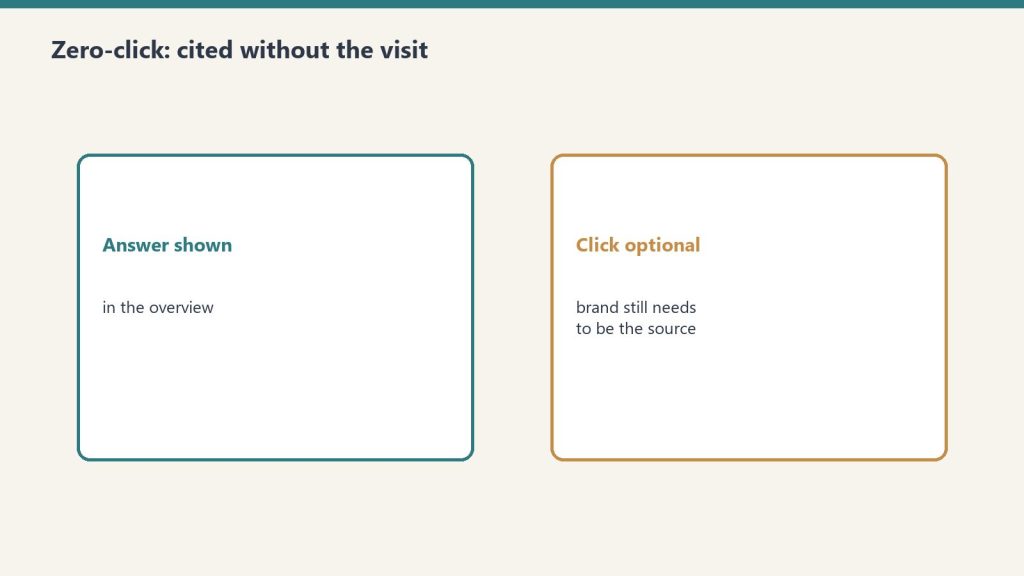
    AI Overviews appear above traditional organic results for approximately 45% of medical keywords and are growing rapidly — up 115% since March 2025. They do not replace organic results, but they significantly reduce clicks to organic listings for queries where an AI Overview appears. Practices cited as sources in AI Overviews receive attribution links that still drive traffic, and the brand recognition from being cited as a medical authority carries value even in zero-click scenarios. The priority in 2026 is appearing in both the AI Overview (citation) and the organic result below it (direct traffic).

    Can a small independent practice get featured in AI Overviews against large health systems?

    Yes — and this is one of the significant opportunities of AI Overview optimization. Large health systems have brand authority but often produce generic, committee-authored content that lacks the clinical specificity and direct-answer structure AI systems favor. An independent specialist practice with highly specific, physician-authored condition and procedure content — optimized with clinical entity references and FAQPage schema — can outperform large health systems for specific condition queries where their content is more precise and more directly answerable.

    How long does it take for optimized medical content to appear in AI Overviews?

    For content already ranking in the top 20 organic results, AI Overview eligibility can be established within 2–6 weeks of optimization — the time it takes Google’s crawlers to re-evaluate the updated content with its new entity references, schema markup, and structured Q&A pairs. AI Overviews update more frequently than organic rankings. Content that was ranking but not being cited in AI Overviews often begins appearing within one crawl cycle after clinical entity and schema optimization is applied.

    Sources: PracticeBeat, “AI Overviews & SEO for Doctors in 2025” (November 2025); PracticeBeat, “SEO for Doctors in 2026: Medical SERP Playbook” (December 2025); Silvr Agency, “AI Overviews & SEO in 2026: A Complete Guide for Medical Practices”; Digitalis Medical, “Medical SEO Strategy” (2026)
  • How Attorneys Get Cited by ChatGPT, Perplexity and Google AI Overviews

    How Attorneys Get Cited by ChatGPT, Perplexity and Google AI Overviews

    Tygart Media — Law Firm Content Strategy

    How Attorneys Get Cited by ChatGPT, Perplexity and Google AI Overviews

    By Tygart Media Updated: April 12, 2026
    The shift that changes everything for law firm marketing: According to ALM Corp’s 2026 legal SEO analysis, 58% of legal searches now end without a click — prospects receive their answer from Google AI Overviews without visiting any website. The attorneys who win in this environment are not necessarily those ranking #1 on Google. They are the attorneys whose content gets cited by AI systems during the research phase — before a prospect has decided to search for a lawyer at all.
    58%of legal searches end without a click
    97%of AI citations come from top-20 organic results
    $50–$500cost per click for competitive legal terms

    How AI Systems Decide Which Legal Content to Cite

    ChatGPT, Perplexity, and Google AI Overviews all use retrieval-augmented generation (RAG) — they search the web, retrieve candidate pages, and then evaluate those pages before synthesizing an answer. The evaluation is not purely about ranking. It includes an assessment of whether the content’s claims are verifiable, whether named legal entities are present, whether the content is structured for direct-answer extraction, and whether the source demonstrates domain expertise.

    Law firm content that earns AI citations has four specific properties: it ranks in the top 20 organic results (the prerequisite), it contains named legal entities (statutes, case law, bar association rules), it has direct-answer formatting (a clear 40–60 word answer near the top of each section), and it has FAQPage schema that makes those answers machine-parseable.

    What makes attorney content get cited by ChatGPT and Perplexity? Attorney content earns AI citations from ChatGPT and Perplexity when it combines: organic ranking in the top 20 results for the query (the access prerequisite), named legal entity references that AI systems can verify (specific statutes, bar association rules, named legal doctrines), direct-answer formatting in the first 50 words after each section heading, and FAQPage JSON-LD schema that makes question-and-answer pairs machine-parseable. Content lacking any one of these properties is significantly less likely to be cited even if it ranks well.

    The Named Entity Requirement: Why Generic Legal Content Gets Ignored by AI

    AI systems evaluate legal content partly by checking whether named entities match verified legal knowledge. An article about personal injury law that references “Texas Civil Practice and Remedies Code § 16.003” for the statute of limitations, cites “the ABA Model Rules of Professional Conduct Rule 1.4 on attorney-client communication,” and discusses “modified comparative fault versus contributory negligence” as named doctrines — this content has an entity fingerprint that signals genuine legal expertise.

    An article that says “you have a limited time to file your claim” with no statute reference has no verifiable entity anchor. An AI system synthesizing an answer about personal injury timelines in Texas will cite the content it can verify — not the content that sounds authoritative without being specific.

    The Speakable Block: Structuring Content for AI Direct-Answer Extraction

    Speakable blocks are sections of content structured specifically as direct, self-contained answers. The format is: a clear question as the section heading, a 2–3 sentence direct answer in the first 50 words of the section, followed by supporting detail. AI systems are trained to extract this pattern when synthesizing answers — it is the content structure that most reliably produces citations in AI overview responses.

    For law firm content, the highest-citation speakable blocks target the questions prospects ask before they decide to hire a lawyer: “How does comparative negligence affect my case?”, “What damages can I recover in a personal injury claim?”, “What is the difference between mediation and arbitration?” — questions where a direct, authoritative, entity-specific answer would give an AI system something worth citing.

    The GEO layer of SiteBoost’s WordPress content optimization for law firms applies named entity injection and speakable block creation to your existing articles, combined with LLMS.txt and FAQPage schema, building the AI citation infrastructure across your entire published library.

    Frequently Asked Questions

    Does ranking #1 on Google guarantee AI citation?

    No. Ranking #1 is the access prerequisite — 97% of AI citations come from pages in the top 20 organic results, so you must rank to be considered. But among ranking pages, AI systems make a secondary selection based on content trustworthiness: named entity references, direct-answer formatting, source citations, and schema markup. A page at position 5 with strong entity density and FAQPage schema often earns more AI citations than the page at position 1 without those signals.

    Which AI systems are most important for law firm content to target?

    Google AI Overviews has the largest reach because it appears directly in Google search results for millions of legal queries. Perplexity is increasingly used for research-stage legal questions because it cites sources inline, which means cited attorneys gain visible brand exposure during the research process. ChatGPT’s search integration (introduced with ads in late 2025) is growing rapidly. All three use similar evaluation criteria — entity density, direct-answer structure, and FAQPage schema — so content optimized for one is largely optimized for all.

    How quickly can law firm content start earning AI citations?

    AI systems crawl and update their citation indexes more frequently than Google’s organic ranking index. Content with strong entity density, FAQPage schema, and speakable blocks can begin appearing in AI Overview and Perplexity citations within 2–6 weeks of optimization, even before organic rankings fully reflect the changes. The prerequisite is that the content is already indexed and ranking in the top 20 — brand new content that hasn’t built ranking authority yet will take longer to enter the AI citation pool.

    Sources: ALM Corp, “SEO for Law Firms: Advanced Tactics for 2026”; Circles Studio, “2026 SEO Trends and What It Means for Your Business” (Gartner AI prediction data); LLMrefs, “Answer Engine Optimization: The Complete Guide for 2026”; Whitehat SEO, “SEO Best Practices 2025–2026”
  • How to Track When ChatGPT or Perplexity Cites Your Content

    How to Track When ChatGPT or Perplexity Cites Your Content

    Tygart Media Strategy
    Volume Ⅰ · Issue 04Quarterly Position
    By Will Tygart
    Long-form Position
    Practitioner-grade

    ChatGPT cited a competitor’s blog post instead of yours. Perplexity summarized the wrong article. An AI answer engine described your service category without mentioning you. You’d like to know when this happens — and whether it’s improving over time.

    The problem: no one has built a clean, turnkey tool for this yet. Here’s what actually exists, what we’ve pieced together, and what a real tracking setup looks like.

    Why This Is Hard

    Web search citation tracking is solved: rank trackers like Ahrefs and SEMrush show you who’s linking to what. AI citation tracking has no equivalent infrastructure. Here’s why:

    • Non-deterministic outputs: Ask ChatGPT the same question twice; you may get different sources cited, or no sources at all. There’s no persistent ranking to track.
    • No public citation index: Google’s index is crawlable. There’s no equivalent for “content that AI systems have cited in responses.” You can’t pull a report.
    • Variable source disclosure: Perplexity shows sources. ChatGPT’s web-enabled mode shows sources sometimes. Gemini shows sources. Claude generally doesn’t show sources in the same way. Tracking works where sources are disclosed; it breaks where they aren’t.
    • Query sensitivity: Your content might get cited for one phrasing and completely missed for a near-synonym. There’s no search volume data to tell you which phrasings matter.

    What Actually Exists Today

    Manual Query Sampling

    The only fully reliable method: run queries yourself and check the sources cited. For a content monitoring program this might look like:

    • Define 20–50 queries where you want to appear (covering your core topics)
    • Run each query in Perplexity, ChatGPT (web-enabled), and Gemini weekly or biweekly
    • Log whether your domain appears in cited sources
    • Track citation rate (appearances / total queries run) over time

    This is tedious but gives you ground truth. It’s what a real monitoring program looks like before you automate it.

    Perplexity Source Tracking

    Perplexity consistently displays its sources, making it the most tractable platform for systematic citation tracking. A simple automated approach:

    • Use Perplexity’s API to query your target questions programmatically
    • Parse the citations field in the response
    • Check whether your domain appears
    • Log and aggregate over time

    Perplexity’s API is available with a subscription. The citations field returns the URLs Perplexity used to generate its answer. You can run this as a scheduled Cloud Run job and dump results to BigQuery for trend analysis.

    ChatGPT Web Search Mode

    When ChatGPT uses web search (either via the browsing tool or search-enabled API), it returns source citations. The search-enabled ChatGPT API (available with OpenAI API access) gives you programmatic access to these citations. Same approach: define queries, run them, parse citations, track your domain.

    Limitation: not all ChatGPT responses use web search. For queries it answers from training data, no source is cited and you have no visibility into whether your content influenced the answer.

    Google AI Overviews

    Google AI Overviews (formerly SGE) shows cited sources inline in search results. You can track these through Google Search Console for your own content — if Google’s AI Overview cites your page, that page gets an impression and potentially a click recorded in GSC under that query. This is the only AI citation signal with first-party tracking infrastructure.

    Emerging Tools

    As of April 2026, several tools are building toward AI citation tracking as a category: mention monitoring services that have added AI search coverage, SEO platforms adding “AI visibility” metrics, and purpose-built tools targeting this specific problem. The category is forming but not mature. Verify current capabilities — this space has changed significantly in the past six months.

    What a Real Monitoring Setup Looks Like

    Here’s the practical stack we’ve assembled for tracking citation presence across AI platforms:

    1. Define your query set: 30–50 queries across your core topic clusters. Weight toward queries where you have existing content and where you’re trying to establish authority.
    2. Perplexity API integration: Scheduled weekly run. Parse citations. Log domain appearances to a tracking spreadsheet or BigQuery table.
    3. ChatGPT web search sampling: Less systematic — manual sampling weekly for highest-priority queries. The API approach works but requires more engineering to handle variability in when web search activates.
    4. Google Search Console: Monitor AI Overview impressions. This is your strongest signal because it’s Google’s own data, not sampled queries.
    5. Baseline and trend: After 4–6 weeks of tracking, you have a baseline citation rate. Changes correlate (imperfectly) with content quality improvements, new publications, and competitor activity.

    What Citation Rate Actually Tells You

    Citation rate — your domain appearances divided by total queries sampled — is a proxy metric, not a direct ranking signal. What drives it:

    • Content freshness: AI systems prefer recently indexed, recently updated content for queries about current information
    • Structural clarity: Content with explicit Q&A structure, defined terms, and direct factual claims gets cited more reliably than narrative content
    • Domain authority signals: The same signals that help SEO rankings help AI citation rates — but the weighting may differ by platform
    • Entity specificity: Content that clearly establishes your brand as an entity with defined characteristics gets cited more consistently than generic content

    For the content optimization angle: AI Citation Monitoring Guide. For the broader GEO picture: What Managed Agents means for content visibility.

    For the hosted agent infrastructure context: Claude Managed Agents Pricing Reference — how the billing works for agents that could automate citation monitoring workflows.