
Last refreshed: October 5, 2026
Claude Haiku 4.5 is Anthropic’s fastest and most cost-efficient model — the right choice when you need high-volume AI at low cost without sacrificing the quality that makes Claude worth using. It’s not a cut-down version of the flagship models. It’s a purpose-built model for the tasks where speed and cost matter more than maximum reasoning depth.
Claude Haiku 4.5 Specs (October 2026)
| Spec | Value |
|---|---|
| API model string | claude-haiku-4-5-20251001 |
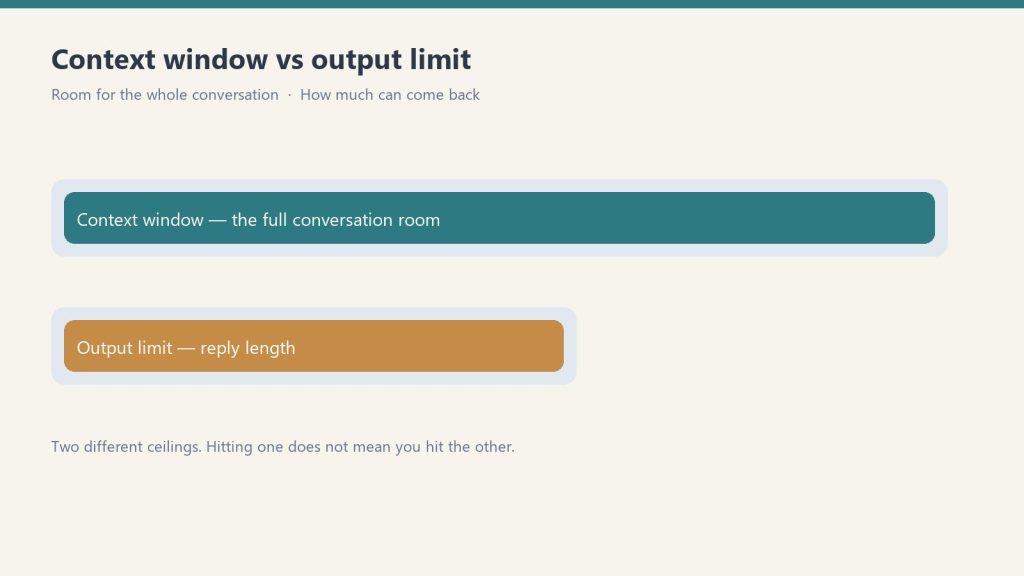
| Context window | 200,000 tokens |
| Input pricing | ~$1.00 per million tokens |
| Output pricing | ~$5.00 per million tokens |
| Speed vs Sonnet | Faster — optimized for low latency |
| Batch API discount | ~50% off (~$0.50 input / ~$2.50 output) |
Claude Haiku 4.5 vs Sonnet 5.5 vs Opus 5.5
| Model | Input cost | Speed | Reasoning depth | Best for |
|---|---|---|---|---|
| Haiku 4.5 | ~$1.00/M | Fastest | Good | High-volume, latency-sensitive |
| Sonnet 5.5 | ~$2.00/M | Fast | Excellent | Production workloads, daily driver |
| Opus 5.5 | ~$4.00/M | Slower | Maximum | Complex reasoning, highest quality |
What Claude Haiku 4.5 Is Best At

Haiku is optimized for tasks where the output is constrained and the logic is clear — not open-ended creative or strategic work where maximum capability pays off. The practical use cases where Haiku earns its position:
- Classification and routing — is this a support ticket, a bug report, or a feature request? Tag it and route it. Haiku handles thousands of these per hour at minimal cost.
- Extraction — pull the names, dates, dollar amounts, or addresses from a document. Structured output from unstructured text at scale.
- Summarization — condense articles, emails, or documents to key points. Haiku’s summarization is strong enough for most production use cases.
- SEO metadata — generate title tags, meta descriptions, alt text, and schema markup in bulk. This is where Haiku shines for content operations.
- Short-form responses — FAQ answers, product descriptions, short explanations. Anything where the output is a few sentences or a structured short block.
- Real-time features — chatbots, autocomplete, inline suggestions — anywhere latency affects user experience.
Claude Haiku 4.5 vs GPT-4o Mini
GPT-4o mini is OpenAI’s comparable low-cost model and is less expensive than Haiku per token. The cost trade-off is real — GPT-4o mini is cheaper. The quality trade-off depends on the task. For instruction-following on complex structured outputs, Haiku tends to be more reliable. For simple, high-volume tasks where the output format is forgiving, the cost difference may favor GPT-4o mini. For teams already building on Claude for quality reasons, Haiku is the natural choice for high-volume work within that stack.
Using Claude Haiku 4.5 in the API

import anthropic

client = anthropic.Anthropic()

message = client.messages.create(
    model="claude-haiku-4-5-20251001",
    max_tokens=256,
    messages=[
        {"role": "user", "content": "Classify this support ticket: ..."}
    ]
)

print(message.content)
For a full model comparison, see Claude Models Explained: Haiku vs Sonnet vs Opus. For API pricing across all models, see Anthropic API Pricing.
Frequently Asked Questions
What is Claude Haiku 4.5?
Claude Haiku 4.5 is Anthropic’s fastest and most affordable model — approximately $1.00 per million input tokens. It’s purpose-built for high-volume, latency-sensitive tasks like classification, extraction, summarization, and short-form generation where cost efficiency matters more than maximum reasoning depth.
How much does Claude Haiku 4.5 cost?
Claude Haiku 4.5 costs approximately $1.00 per million input tokens and $5.00 per million output tokens. The Batch API reduces these to approximately $0.50 input and $2.50 output — roughly half price for non-time-sensitive workloads.
When should I use Claude Haiku 4.5 instead of Sonnet?
Use Haiku when your task is well-defined with a constrained output, you’re running it at high volume, and cost or latency is a meaningful consideration. Use Sonnet when the task is complex, requires nuanced reasoning, or produces longer open-ended outputs where maximum quality matters.
What is the Claude Haiku 4.5 API model string?
The current Claude Haiku 4.5 model string is claude-haiku-4-5-20251001. Always verify the current string in Anthropic’s official model documentation before production deployment.
Leave a Reply