
When Anthropic launched Claude Managed Agents, Notion was one of four launch partners. That detail got buried in the announcement. Here’s what it actually means for people who use Notion for knowledge work, and why “Notion voice input desktop” keeps showing up as a query against a Managed Agents page.
Short answer: Managed Agents in Notion is an ambient intelligence layer. It’s not a chatbot in a sidebar. It’s an agent that watches your workspace and acts — without you directing every step.
What the Notion Integration Actually Does
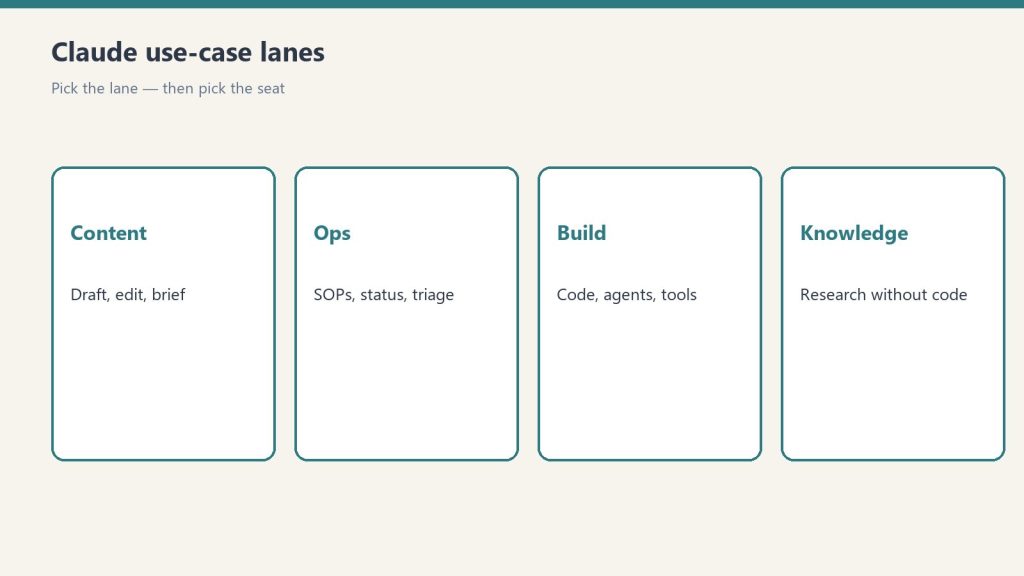
Notion’s Claude Managed Agents integration runs as a persistent background agent with access to your workspace. The practical capabilities, as documented at launch:
- Autonomous page updates: The agent can read, summarize, and rewrite Notion pages without manual triggers. You set a task; it works through it.
- Cross-database synthesis: Pull data from multiple Notion databases, synthesize it, and write outputs to a target page or database entry
- Meeting note processing: Ingest raw meeting notes and produce structured summaries, action items, and task entries in your project database
- Workflow automation: Trigger actions based on database property changes — a status update in one database can kick off agent work in another
The key difference from Notion AI (which Notion has had for some time): Notion AI is request-response. You ask it something; it answers. Managed Agents in Notion can be configured to run autonomously on a schedule or on trigger, keep working through multi-step tasks, and report back when done. It’s closer to a background employee than an on-demand assistant.
Why This Showed Up in Search as “Notion Voice Input Desktop”
This is worth explaining, because that query cluster is real and mildly interesting. The Managed Agents announcement included voice input functionality — the ability to interact with agents via voice in some contexts. People searching “notion voice input desktop” and “notion ai voice input desktop” were looking for whether this voice capability existed in the desktop client for Notion specifically.
The honest answer as of April 2026: voice input capabilities are in preview or context-dependent. Verify current availability in Notion’s desktop client against their current documentation — this is an area that may have evolved since launch.
The “Decoupled Brain and Hands” Model Applied to Notion
Anthropic describes their Managed Agents architecture as decoupling the brain (Claude, the reasoning layer) from the hands (the sandboxed containers where actions execute). In Notion’s context, this maps cleanly:
- The brain reads your Notion workspace, understands context, makes decisions about what to do
- The hands execute — writing to pages, updating database entries, moving content between sections
The brain and hands operate independently. The agent can reason about what your project needs without being tightly coupled to the specific API calls that will implement it. This matters because it means the agent can handle ambiguity — “clean up the Q2 notes and create action items” is a goal, not a procedure, and the agent figures out the procedure.
What You Actually Configure
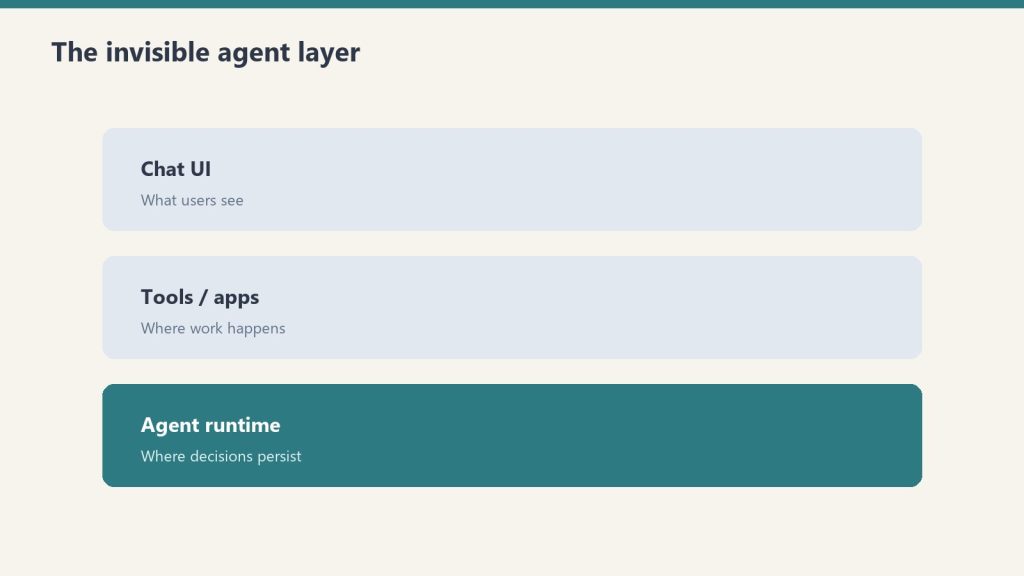
To run Claude Managed Agents in Notion, you’re defining:
- Task definition: What the agent is supposed to accomplish (in natural language or structured format)
- Tool access: Which Notion databases, pages, and capabilities the agent can read and write
- Guardrails: What the agent cannot do — pages it can’t modify, actions it must confirm before taking
- Trigger: When the agent runs — on schedule, on database trigger, or on demand
You don’t write the orchestration logic. Anthropic’s infrastructure handles session management, state persistence, and error recovery. If the agent hits an error mid-task, it checkpoints and recovers — you don’t lose progress.
The Practical Cost of Running Notion Agents
Using Managed Agents in Notion triggers the same billing as any Managed Agents session: standard token rates plus $0.08/session-hour of active runtime. For typical knowledge work tasks:
- A daily meeting summary agent running 15 minutes of active execution: ~$0.02/day in runtime (~$0.60/month), plus token costs for the volume of notes processed
- A weekly database synthesis task running 45 minutes: ~$0.06/run
For most knowledge workers, the session runtime cost is negligible — the token costs (driven by how much content the agent reads and writes) are the actual variable to model. See the complete pricing reference for worked examples.
Asana and the Broader Pattern
Asana was also a Managed Agents launch partner, and the integration pattern is similar: an agent that can read project data, update task statuses, move cards, and generate project summaries without constant human direction. The launch partner list (Notion, Asana, Rakuten, Sentry) suggests Anthropic targeted three categories: knowledge management (Notion), project management (Asana), enterprise operations (Rakuten), and developer tools (Sentry).
That’s a deliberate wedge. If agents can handle the administrative layer of these four categories, the surface area for autonomous business work expands significantly.
What This Means for How You Work

The honest use case for most people reading this: you have a Notion workspace with databases that need regular synthesis, and you’re currently doing that manually. Managed Agents is the path to automating that synthesis without building and maintaining a custom integration.
The constraint worth naming: you’re running your workspace data through Anthropic’s infrastructure. That’s the trade-off. For most knowledge work, the data sensitivity concern is low. For anything involving client data, legal documents, or proprietary strategy — read Anthropic’s data handling terms before configuring access.
For the full Managed Agents setup and pricing context: Claude Managed Agents: Every Question Answered. For the enterprise deployment pattern: How Rakuten Deployed 5 Enterprise Agents in a Week.
Related on Tygart Media: managed agents review · Notion Command Center · managed agents memory use cases.
Leave a Reply