The Ask Maps Protocol
Your customers aren’t reading a list anymore. They’re reading the map. Next to your name on that map there’s room for an offer, a price, a service, a reason to pick you — and for most businesses, that space is blank. The Ask Maps Protocol fills it, on purpose, and then proves it worked.
Direct Answer / Executive Summary
What is the Ask Maps Protocol? A done-for-you build ($450, one time) that makes a local business show up properly on Google Maps and in AI answers. It includes a mobile-first audit of how your listing actually renders on the map, a Google Business Profile rebuilt for answers (services with plain-language descriptions, complete attributes, offer posts), a website FAQ page written in your customers’ own words, a matched Bing Places listing, and a 30-day proof check: we ask Google, Maps, and ChatGPT the questions your customers ask, and log who gets named — before and after.
What We Found Reading the Map
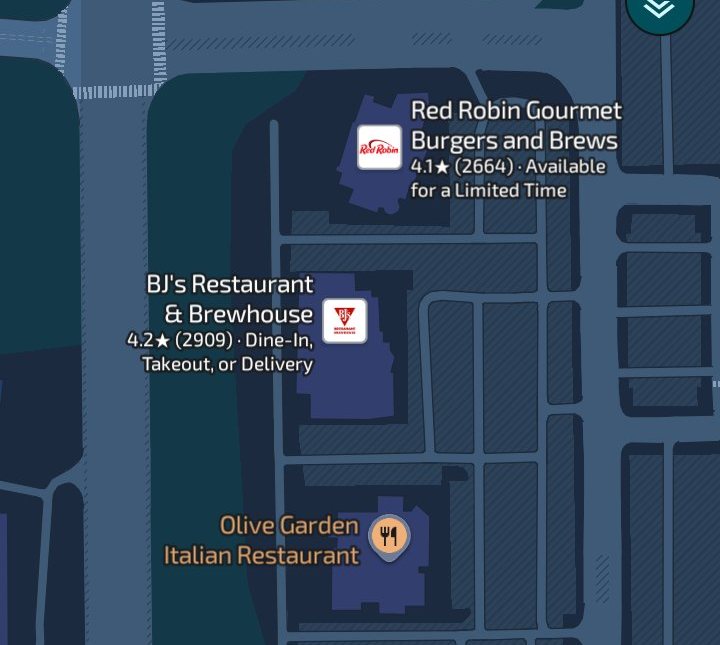
We spent a morning auditing a real suburban corridor, business by business, tracing every extra line on the map back to its source. A local auto shop runs an offer — real dollars off a real repair — that renders right on the map next to its name. A restaurant’s limited-time menu, prices included, lives in its Google profile, not on its website. Another shop’s map line is nothing but its Google attributes, set once and working every day. And in the same frames, some of the biggest brands in America render as a name and nothing else.
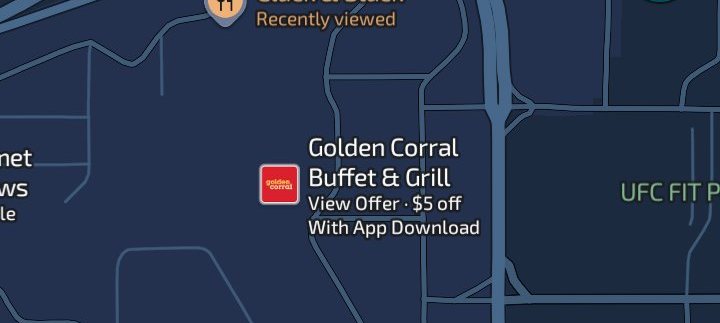
The space is there for every business. Almost nobody is using it — not because it’s expensive, but because nobody showed them it exists.
The Two Layers — Told Straight
The free layer is your profile, worked properly: offer posts, services written as answers, attributes complete, descriptions in your customers’ language, photos and posts current. That’s most of the map — and it’s all in this build.
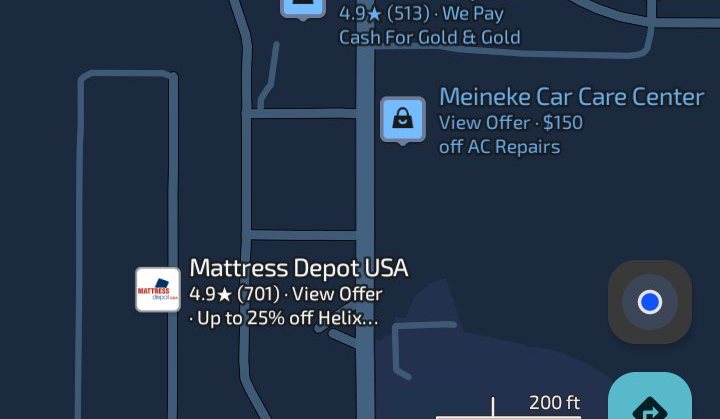
The paid layer is real too: some of the slogan lines on the map turn out to be advertising headlines, not profile fields. We’ll show you exactly which is which on your own listing. If you ever run ads, we write those headlines with you — but we will never sell you an ad and call it a profile trick.
Which lines Google lifts onto the map is Google’s call. We build the material it lifts from — and then we measure what it did.
What’s Included
1. The Canvas Audit. Screenshots and a written read of how your business renders on mobile Maps (where your customers actually look — desktop undercounts), next to the competitors who share your map.
2. The Profile Build. Services with plain-language descriptions, every attribute set, business description rewritten as compressed answers, and your first offer post live.
3. The Answer Page. A FAQ page on your website answering the 8–10 questions your customers actually ask — the content AI assistants quote when somebody asks them instead of you.
4. The Mirror. Your Bing Places listing claimed and matched to Google, because Copilot and ChatGPT read a different table than Google does.
5. The Proof Check. Thirty days later, we re-ask the questions and send you the before/after: who the machines name now.
Who It’s For
Local service businesses whose phone should ring from the map — restoration contractors first (that’s our home trade), and any shop, clinic, or crew that serves a defined area. If your listing today is a name, a pin, and hope, this is the build.
$450, one time. No subscription. The profile, the page, and the proof are yours.
Not sure if your map presence needs it? The $97 AI Citation Quick-Scan will tell you where you stand first.