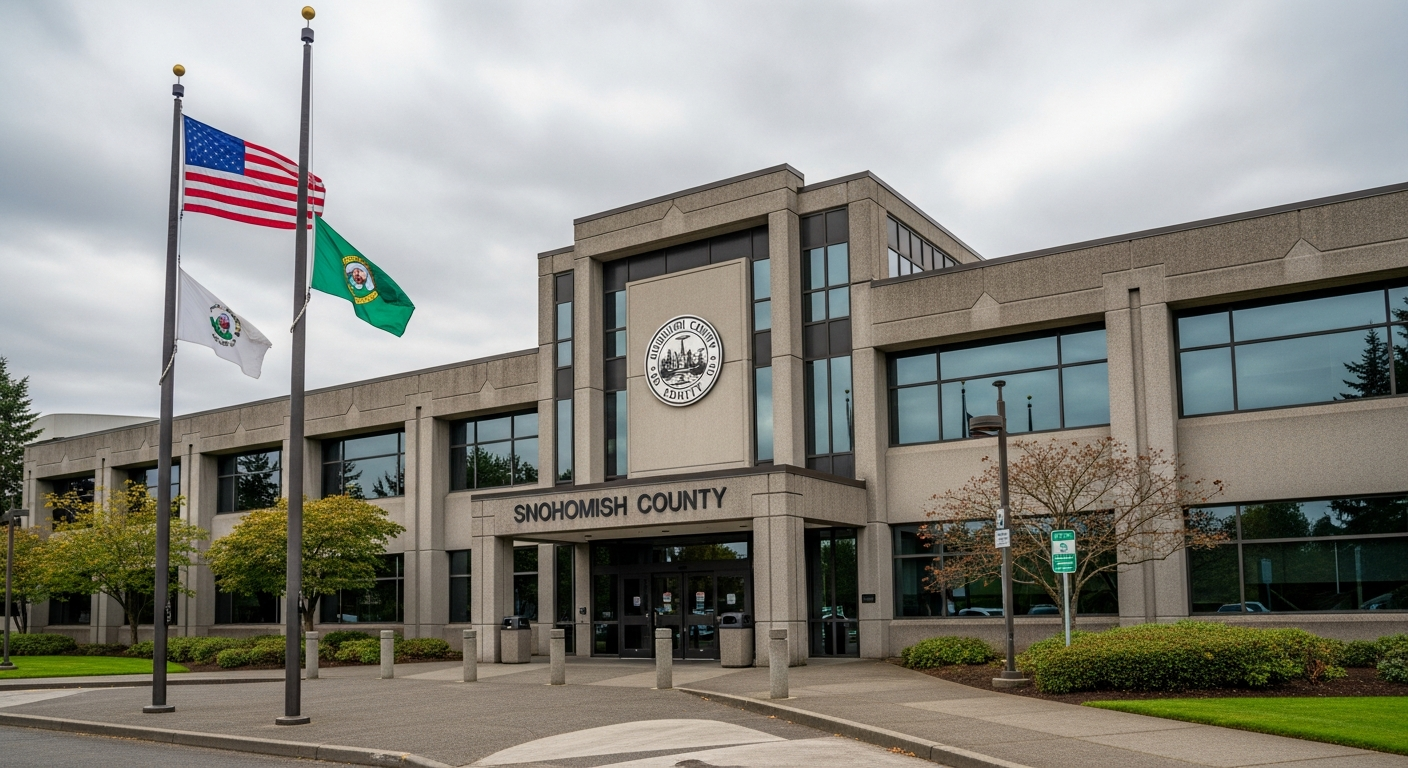
A Snohomish County Council member introduced four new ordinances this week that would significantly shift how the county approaches homelessness, behavioral health treatment, and drug policy — including a proposal to prohibit county funding from being used to purchase drug paraphernalia and another that would criminalize exposing children to fentanyl.
Council Member Nate Nehring, who represents District 1 on the Snohomish County Council, introduced the package and outlined each proposal in a May 6, 2026 column published in The Daily Herald.
For Everett residents, the legislation touches on issues that directly affect city neighborhoods — from the cost and structure of county-funded shelter and housing programs to the legal framework around drug exposure in homes with children. The four bills are proposals; they have not yet been voted on. Each must go through committee review and at least one public hearing before the full council takes action.
The Four Proposals, One by One
Proposal 1: Removing the County’s Housing First Preference
The first ordinance would prevent the county from requiring county-funded housing programs to adhere to strict “Housing First” policies. Instead, Nehring wrote, the proposal would “level the playing field for entities which prioritize accountability.”
Housing First is a model used by many government housing programs that prioritizes placing people in stable housing before addressing other challenges such as addiction or mental health treatment. Under Nehring’s proposal, county-funded programs would not be required to follow the Housing First framework, opening the door for the county to fund programs that incorporate treatment requirements as part of their model.
Proposal 2: Directing More AHBH Dollars Toward Behavioral Health Facilities
The second ordinance would redirect a larger share of the county’s Affordable Housing and Behavioral Health (AHBH) Fund toward behavioral health facilities specifically.
Nehring wrote that $3 million annually — about 12.2% of AHBH funds — currently goes toward behavioral health facilities. The proposal would increase that share to 20%, expanding the funding available for treatment, recovery, and stabilization services.
The AHBH fund is a sales-tax-funded source — authorized under state law — that the County Council allocates to housing and behavioral health projects across Snohomish County. In April 2026, the county council awarded $23 million from the fund to six housing projects, including three in Everett: a 172-bed shelter expansion, a 28-unit affordable apartment building, and a 58-unit transit-oriented mixed-use building. Read: How $23 Million in Housing Money Moved Without a Tax Vote
Proposal 3: Prohibiting County Funds for Drug Paraphernalia
The third ordinance would prohibit Snohomish County from using local taxpayer dollars to purchase and distribute drug paraphernalia. Nehring described the proposal as intended to “ensure that county government does not facilitate activities that enable ongoing drug abuse,” with county policy instead focused on “treatment, recovery, and accountability.”
The specific definitions and any exemptions — including for medications such as naloxone, the overdose-reversal drug — would be determined in the ordinance’s legislative text as it moves through the review process.
Proposal 4: Child Fentanyl Exposure Ordinance
The fourth ordinance would criminalize the exposure of minors to fentanyl at the county level, modeled on a similar law recently enacted by the City of Everett.
Washington State law already criminalizes exposing children to methamphetamine, but does not specifically address fentanyl. Nehring wrote that “local governments around the state are now taking action to address child fentanyl exposure.” The Snohomish County proposal would extend similar protections to cover fentanyl exposure at the county level.
What Comes Next for the Legislation
Nehring introduced the four proposals this week at the Snohomish County Council. None has yet been voted on. Snohomish County ordinances go through a committee review and public hearing process before the full council votes on them. The timeline for hearings on each bill will be set by the council’s legislative calendar.
The Snohomish County Council has five members elected by district. For any proposal to become law, a majority — three votes — would be required.
The Policy Context
Snohomish County — with Everett as its county seat — has invested substantially in housing and behavioral health programs in recent years, using dedicated sales tax revenues to fund shelter, affordable housing, and treatment projects.
Nehring’s four-bill package reflects a debate playing out in counties and cities across Washington State about how government housing programs should be structured, whether treatment requirements should be part of publicly funded housing programs, and how counties should allocate limited behavioral health dollars.
Nehring represents District 1 on the Snohomish County Council and lives in Arlington. In his column, he described witnessing the day-to-day work of social workers embedded with law enforcement and said current policy approaches “do not appear to be solving the problem.”
Frequently Asked Questions
What is Housing First?
Housing First is a policy framework that prioritizes placing people experiencing homelessness in stable housing as quickly as possible, without requiring sobriety or participation in treatment as a precondition. It is used in many county and state housing programs across Washington.
Have these bills passed?
No. As of May 6, the four ordinances have been introduced. They must go through committee review and at least one public hearing before a full council vote.
Does this affect the City of Everett’s budget or the EMS levy?
No. These are county-level ordinances. They would affect how Snohomish County allocates county funds, not the City of Everett’s budget or any pending city ballot measures.
How is the AHBH fund paid for?
The Affordable Housing and Behavioral Health Fund is funded by a sales tax authorized by state law (RCW 82.14.530 and RCW 82.14.540). The county council allocates the proceeds through its regular legislative process; no separate voter approval is required for each award.
Can Everett residents comment on county legislation?
Yes. Snohomish County residents can testify at County Council meetings, submit written comments through the county website, or contact their district representative directly. The County Council meets at 3000 Rockefeller Ave in Everett.
What To Do Next
Track the bills: Visit snohomishcountywa.gov and navigate to the County Council’s meeting calendar to follow committee schedules for these four ordinances.
Submit written comment: Contact the Snohomish County Council office with your perspective on any of the four proposals before they reach a public hearing.
Attend a council meeting: The Snohomish County Council meets at 3000 Rockefeller Ave, Everett. Meeting dates and agendas are posted at snohomishcountywa.gov.
Find your council district: Visit snohomishcountywa.gov to identify which of the five council members represents your area.
Leave a Reply