
Tag: Public Safety

  • Tacoma Police Staffing: 28 Vacancies, $50K Lateral Bonuses, and the Math Behind Full Staffing by 2027

    Tacoma Police Staffing: 28 Vacancies, $50K Lateral Bonuses, and the Math Behind Full Staffing by 2027

    The Numbers Behind the Badge Shortage

    The Tacoma Police Department is short-staffed. That’s not an opinion — it’s a budget line item. As of the latest available reporting, TPD has 28 vacant sworn positions, with at least 18 additional separations expected before the end of 2025. Those numbers come directly from the staffing analysis that informed the City Council’s decision to approve an aggressive lateral hiring incentive program.

    This staffing gap isn’t unique to Tacoma. Police departments across the country are dealing with recruitment challenges, accelerated retirements, and a shrinking pipeline of academy candidates. But the impact is local: fewer officers means longer response times, heavier workloads for on-duty personnel, and reduced capacity for proactive policing and community engagement.

    The $50K Lateral Incentive Program

    In response to the staffing crisis, the Tacoma City Council approved a Lateral Incentive Program designed to recruit already-certified officers from other agencies. The program is structured to front-load the financial incentive while ensuring retention:

    $50,000 per lateral officer, staggered over two years: $25,000 upon hire, followed by $12,500 after the first year of employment, and $12,500 after the second year. The staggering is deliberate — it prevents agencies from losing officers who take the bonus and leave within months.

    The total program cost is $3.4 million from 2025 through 2027. This was not budgeted in the city’s 2025-2026 biennial budget, but the city will account for the expenditure through its regular budget modification process in October.

    The 2025-2026 Biennial Budget Context

    The City of Tacoma’s 2025-2026 adopted budget totals $4.7 billion, developed through what the city describes as a collaborative and transparent process with a commitment to fiscal responsibility. The police department’s allocation within that budget reflects both the staffing challenges and the city’s investment in public safety infrastructure.

    The lateral incentive program sits outside the adopted budget but within the city’s financial capacity. Council members who voted for the program cited the dual benefit of relieving overworked officers and improving response times for residents — a public safety argument and a labor conditions argument rolled into one.

    The Staffing Timeline: Full by 2027 vs. 2029

    The key projection from the lateral incentive analysis: with the program in place, TPD would be fully staffed by 2027. Without it, the timeline extends to 2029. That two-year acceleration is the product the city is buying with the $3.4 million investment.

    The math works because lateral officers skip the academy pipeline. A new recruit needs months of academy training followed by field training before they’re deployable. A lateral officer from another Washington agency arrives with certification, experience, and the ability to hit patrol after a shorter orientation period. The $50K incentive is the cost of buying two years of accelerated staffing.

    What the Data Doesn’t Show — Yet

    The city publishes crime statistics through a public Tableau dashboard, but specific response time data broken down by district and priority level is not readily available in public-facing formats. This is a gap. If the city is making a $3.4 million investment to improve response times, the public should be able to measure whether it’s working.

    Council members have referenced response time improvements as a primary benefit of the lateral program, but without baseline data and ongoing measurement, that claim is aspirational rather than accountable. This is an area where the Tacoma Business Journal will be watching — the investment has been made, and the results should be measurable.

    The Hiring Standards

    TPD maintains published hiring standards for 2025 and actively recruits through its Join Tacoma PD portal. The department is competing for lateral officers against every other department in the region running similar incentive programs — Seattle PD, Pierce County Sheriff, King County Sheriff, and smaller agencies throughout Western Washington are all fishing in the same talent pool.

    The $50K number is competitive but not unprecedented. What differentiates Tacoma’s pitch is the city itself — cost of living lower than Seattle, a department small enough that officers aren’t anonymous, and a city government that has publicly committed to funding the staffing it needs.

    The Operator’s Take

    Public safety staffing affects every business in the city. Response times affect commercial property insurance rates, retail foot traffic after dark, and the basic question of whether employees and customers feel safe. The staffing gap is real, the investment is documented, and the timeline is specific: fully staffed by 2027 if the lateral program delivers.

    I’m watching this one closely. The data will tell the story — and it’s data the city should make public.

    Frequently Asked Questions

    How many vacant positions does the Tacoma Police Department have?

    TPD currently has 28 vacant sworn positions, with at least 18 additional separations expected before the end of 2025. The lateral incentive program was approved to address this gap.

    What is Tacoma’s police lateral hiring bonus?

    $50,000 per lateral officer, staggered over two years: $25,000 upon hire, $12,500 after year one, and $12,500 after year two. The total program cost is $3.4 million through 2027.

    When will the Tacoma Police Department be fully staffed?

    With the lateral incentive program, TPD projects full staffing by 2027. Without the program, the timeline was projected at 2029 — a two-year difference.

    What is Tacoma’s 2025-2026 city budget?

    The 2025-2026 biennial budget totals $4.7 billion. The $3.4 million lateral incentive program was approved outside the adopted budget and will be incorporated through the October budget modification process.

    Where can I see Tacoma crime statistics?

    The City of Tacoma publishes crime data through a public Tableau dashboard. However, detailed response time data by district and priority level is not currently available in public-facing formats.
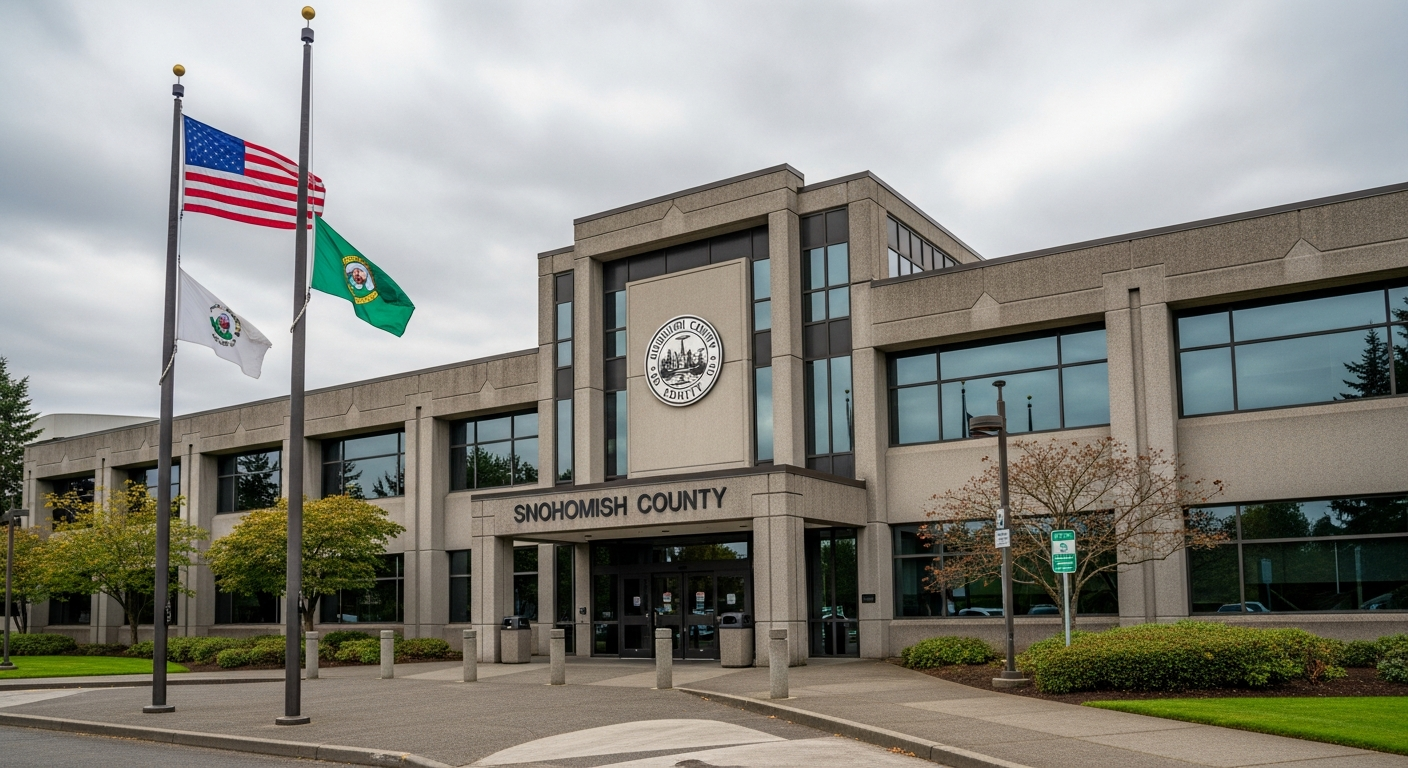

  • Snohomish County Council Member Introduces Four Bills on Homelessness Policy, Drug Paraphernalia, and Child Fentanyl

    Snohomish County Council Member Introduces Four Bills on Homelessness Policy, Drug Paraphernalia, and Child Fentanyl

    A Snohomish County Council member introduced four new ordinances this week that would significantly shift how the county approaches homelessness, behavioral health treatment, and drug policy — including a proposal to prohibit county funding from being used to purchase drug paraphernalia and another that would criminalize exposing children to fentanyl.

    Council Member Nate Nehring, who represents District 1 on the Snohomish County Council, introduced the package and outlined each proposal in a May 6, 2026 column published in The Daily Herald.

    For Everett residents, the legislation touches on issues that directly affect city neighborhoods — from the cost and structure of county-funded shelter and housing programs to the legal framework around drug exposure in homes with children. The four bills are proposals; they have not yet been voted on. Each must go through committee review and at least one public hearing before the full council takes action.

    The Four Proposals, One by One

    Proposal 1: Removing the County’s Housing First Preference

    The first ordinance would prevent the county from requiring county-funded housing programs to adhere to strict “Housing First” policies. Instead, Nehring wrote, the proposal would “level the playing field for entities which prioritize accountability.”

    Housing First is a model used by many government housing programs that prioritizes placing people in stable housing before addressing other challenges such as addiction or mental health treatment. Under Nehring’s proposal, county-funded programs would not be required to follow the Housing First framework, opening the door for the county to fund programs that incorporate treatment requirements as part of their model.

    Proposal 2: Directing More AHBH Dollars Toward Behavioral Health Facilities

    The second ordinance would redirect a larger share of the county’s Affordable Housing and Behavioral Health (AHBH) Fund toward behavioral health facilities specifically.

    Nehring wrote that $3 million annually — about 12.2% of AHBH funds — currently goes toward behavioral health facilities. The proposal would increase that share to 20%, expanding the funding available for treatment, recovery, and stabilization services.

    The AHBH fund is a sales-tax-funded source — authorized under state law — that the County Council allocates to housing and behavioral health projects across Snohomish County. In April 2026, the county council awarded $23 million from the fund to six housing projects, including three in Everett: a 172-bed shelter expansion, a 28-unit affordable apartment building, and a 58-unit transit-oriented mixed-use building. Read: How $23 Million in Housing Money Moved Without a Tax Vote

    Proposal 3: Prohibiting County Funds for Drug Paraphernalia

    The third ordinance would prohibit Snohomish County from using local taxpayer dollars to purchase and distribute drug paraphernalia. Nehring described the proposal as intended to “ensure that county government does not facilitate activities that enable ongoing drug abuse,” with county policy instead focused on “treatment, recovery, and accountability.”

    The specific definitions and any exemptions — including for medications such as naloxone, the overdose-reversal drug — would be determined in the ordinance’s legislative text as it moves through the review process.

    Proposal 4: Child Fentanyl Exposure Ordinance

    The fourth ordinance would criminalize the exposure of minors to fentanyl at the county level, modeled on a similar law recently enacted by the City of Everett.

    Washington State law already criminalizes exposing children to methamphetamine, but does not specifically address fentanyl. Nehring wrote that “local governments around the state are now taking action to address child fentanyl exposure.” The Snohomish County proposal would extend similar protections to cover fentanyl exposure at the county level.

    What Comes Next for the Legislation

    Nehring introduced the four proposals this week at the Snohomish County Council. None has yet been voted on. Snohomish County ordinances go through a committee review and public hearing process before the full council votes on them. The timeline for hearings on each bill will be set by the council’s legislative calendar.

    The Snohomish County Council has five members elected by district. For any proposal to become law, a majority — three votes — would be required.

    The Policy Context

    Snohomish County — with Everett as its county seat — has invested substantially in housing and behavioral health programs in recent years, using dedicated sales tax revenues to fund shelter, affordable housing, and treatment projects.

    Nehring’s four-bill package reflects a debate playing out in counties and cities across Washington State about how government housing programs should be structured, whether treatment requirements should be part of publicly funded housing programs, and how counties should allocate limited behavioral health dollars.

    Nehring represents District 1 on the Snohomish County Council and lives in Arlington. In his column, he described witnessing the day-to-day work of social workers embedded with law enforcement and said current policy approaches “do not appear to be solving the problem.”

    Frequently Asked Questions

    What is Housing First?

    Housing First is a policy framework that prioritizes placing people experiencing homelessness in stable housing as quickly as possible, without requiring sobriety or participation in treatment as a precondition. It is used in many county and state housing programs across Washington.

    Have these bills passed?

    No. As of May 6, the four ordinances have been introduced. They must go through committee review and at least one public hearing before a full council vote.

    Does this affect the City of Everett’s budget or the EMS levy?

    No. These are county-level ordinances. They would affect how Snohomish County allocates county funds, not the City of Everett’s budget or any pending city ballot measures.

    How is the AHBH fund paid for?

    The Affordable Housing and Behavioral Health Fund is funded by a sales tax authorized by state law (RCW 82.14.530 and RCW 82.14.540). The county council allocates the proceeds through its regular legislative process; no separate voter approval is required for each award.

    Can Everett residents comment on county legislation?

    Yes. Snohomish County residents can testify at County Council meetings, submit written comments through the county website, or contact their district representative directly. The County Council meets at 3000 Rockefeller Ave in Everett.

    What To Do Next

    Track the bills: Visit snohomishcountywa.gov and navigate to the County Council’s meeting calendar to follow committee schedules for these four ordinances.

    Submit written comment: Contact the Snohomish County Council office with your perspective on any of the four proposals before they reach a public hearing.

    Attend a council meeting: The Snohomish County Council meets at 3000 Rockefeller Ave, Everett. Meeting dates and agendas are posted at snohomishcountywa.gov.

    Find your council district: Visit snohomishcountywa.gov to identify which of the five council members represents your area.

  • Want to Argue For or Against the EMS Levy? Everett Needs Pro/Con Committee Volunteers by Tomorrow Night

    Want to Argue For or Against the EMS Levy? Everett Needs Pro/Con Committee Volunteers by Tomorrow Night

    How does Everett’s EMS levy Pro and Con committee process work? The City of Everett is recruiting volunteers to serve on Pro and Con committees that will write the official 250-word arguments for and against the August 4, 2026 EMS levy ballot measure. Applications close at 11:59 p.m. Monday, April 27, 2026. The City Council appoints committee members at the April 29, 2026 meeting. Statements are due to Snohomish County Elections by May 7, with rebuttals due May 11. Committee members’ names are printed in the local Voters’ Pamphlet alongside their statement.

    If you have an opinion on Everett’s EMS levy and you want it printed in the official Voters’ Pamphlet that lands in every Everett mailbox before the August 4 primary, here’s the deal: the city needs your application by 11:59 p.m. tomorrow night, Monday, April 27, 2026.

    This isn’t writing a letter to the editor. This is a statutory role. Under Washington State law (RCW 29A.32.280), when a jurisdiction puts a measure on the ballot, the city has to appoint a committee for and a committee against. Those committees draft the words voters read.

    What this measure does and what’s at stake

    The Everett City Council voted at its April 22, 2026 meeting to place an Emergency Medical Services (EMS) property tax levy lid lift on the August 4, 2026 primary ballot. If voters approve, the EMS levy rate would be restored from approximately $0.36 per $1,000 of assessed value back to $0.50 per $1,000 — the rate Everett voters originally approved in 2018.

    For a typical home in Everett, restoration works out to roughly $5 to $8 per month. The city’s published yearly examples:

    • $450,000 home → +$63 per year
    • $575,000 home (the 2026 city average) → +$81 per year
    • $700,000 home → +$98 per year

    EMS levy funding supports approximately 78 positions at the Everett Fire Department — the firefighter-paramedics and EMTs who answer the bulk of 911 calls. EMS calls made up about 82% of Everett Fire dispatches in 2025; the department responded to more than 25,700 total calls last year, an increase from 22,955 in 2018.

    “Emergency medical services are a critical part of how we serve our Everett community every day,” Mayor Cassie Franklin said in the city’s April 22 press release announcing the ballot measure. “This measure provides our residents with the opportunity to sustain and support robust, high quality and timely emergency care as our community and service demand grows.”

    That’s the city’s framing, and it is one side of the argument voters will see. The other side gets equal space in the pamphlet — and that side has to come from somewhere. That somewhere is the Con committee.

    What a Pro or Con committee actually does

    Per the city’s published process and Snohomish County Elections rules, here’s what you sign up for:

    • Write a 250-word-maximum statement. Pro committees argue for approval. Con committees argue for rejection. Word counts are strict — Snohomish County Elections enforces the limit.
    • Work independently from the City. Once appointed, committees operate without city involvement in the drafting. The city doesn’t review or edit your argument.
    • Optionally write a rebuttal. After the statements are filed, each committee can read the other side’s statement and write a shorter rebuttal.
    • Have your name printed in the local Voters’ Pamphlet alongside your statement. This is on-the-record civic participation, not anonymous.

    The structure is meant to give voters a clean apples-to-apples view: the city’s neutral fiscal explainer, the proponents’ case, the opponents’ case, the rebuttals, and the official ballot title. People who want to fight this measure in print, and people who want to defend it in print, get the same number of words and the same distribution channel.

    The deadline calendar — short and unforgiving

    Snohomish County Elections runs a tight timeline. Miss any of these and you’re out:

    • Monday, April 27, 2026, at 11:59 p.m. — Application deadline to volunteer for either committee. Online application form. Late or incomplete applications are not accepted.
    • Wednesday, April 29, 2026 — Everett City Council appoints committee members at its meeting.
    • Friday, May 1, 2026 — City submits committee appointments to the Snohomish County Auditor.
    • Thursday, May 7, 2026, at 5:00 p.m. — Pro and Con statements (≤250 words each) due to Snohomish County Elections.
    • Monday, May 11, 2026, at 5:00 p.m. — Rebuttal statements due.

    From sign-up to filed argument, you have about two weeks. Most of that two weeks is just waiting for council appointment and reading the opposing committee’s statement to draft your rebuttal.

    Who gets picked and why

    The application form goes to the City of Everett Fire Department, but the appointing body is the City Council. There’s no formal qualification beyond being an Everett resident willing to put your name to a public position on a ballot measure. In practice, councils often appoint people who have previously testified at council on related issues, who are active in neighborhood associations or relevant advocacy groups, or who have professional context for the question (a retired firefighter for the Pro committee, a tax-policy critic for the Con committee, for instance).

    If both Pro and Con receive multiple qualified applicants, the council selects the committee that best represents the position. If a side receives zero applicants, the city is required to make an effort to find someone — but the statement may end up shorter, signed by fewer people, or in rare cases not filed at all. That last outcome leaves only the city’s neutral explainer and the ballot title in the pamphlet, which historically benefits the Pro side.

    What the Con argument might look like

    This is where the levy debate actually lands. The neutral case for “yes” is well documented in the city’s release: rising call volume, capped 1% revenue growth under state law, restoration of a previously voter-approved rate.

    The case for “no” tends to draw from a few standard angles, each of which the Con committee would have 250 words to make:

    • Property tax fatigue. Everett homeowners are also weighing other levies, special districts, and a structural 2027 general fund deficit that has the city looking at additional revenue measures.
    • The 1% growth limit’s purpose. Initiative 747 (and subsequent legislation) was passed to constrain property tax growth on purpose. A lid lift is a vote to override that constraint.
    • Service-level questions. Whether the additional revenue is the only path to maintain the EMS service level, versus reallocation from other funds.
    • Scope of the levy lid lift. The temporary two-year structure (2027–2028) means the question will be back. Some voters object on principle to a recurring revenue lift.

    None of these are the city’s framing. That’s the point. Pro/Con committees exist precisely because the neutral fiscal note can’t carry the political argument on its own.

    What the Pro argument might look like

    Likely framing for the Pro committee, which would also have 250 words:

    • Restoration, not increase. Voters previously approved $0.50 per $1,000 in 2018; the levy has been eroded by the 1% cap, not voted down.
    • Call volume math. 25,700 calls in 2025 versus 22,955 in 2018, with EMS as 82% of dispatches.
    • Cost in personal terms. About $5–$8 per month for the median Everett homeowner.
    • Direct connection to staffing. Approximately 78 firefighter-paramedic positions tied to the levy.
    • Quote from Fire Chief Dave DeMarco in the city release: “Our firefighters and EMS personnel respond 24 hours a day, seven days a week, 365 days a year to a wide range of emergencies, with the majority involving medical care. EMS funding supports the personnel, training, and equipment needed to respond effectively and provide care when it is needed.”

    What residents should actually do

    For the next 24 hours or so, the action item is concrete:

    • If you want to write the Pro or Con argument: apply by 11:59 p.m. Monday, April 27, 2026 at the city’s online form. To request accommodations, email communications@everettwa.gov.
    • If you want to watch the appointment vote: Wednesday, April 29, 2026, 12:30 p.m. council session, William E. Moore Historic City Hall / Police North Precinct, 3002 Wetmore Ave., or the council livestream on the city website.
    • If you want background on the levy itself: see the city’s EMS levy information page and the full April 22 city press release.
    • If you want to know more about how Pro/Con committees work in Snohomish County: the Snohomish County 2026 District Guide spells out the rules. For procedural questions, call Snohomish County Elections at (425) 388-3444.

    Frequently Asked Questions

    Do I get paid to serve on a Pro or Con committee?
    No. These are unpaid volunteer roles. The compensation, in a sense, is having your name printed alongside your argument in a document that gets mailed to every registered voter in Everett.

    Can I serve on the Pro committee if I work for the city?
    City employees and elected officials are typically excluded from these roles to keep the committees independent. The form will flag eligibility issues. If you’re unsure, the city’s communications office can clarify.

    What if I want to argue against the levy but I’m not sure I can write a 250-word legal-style statement?
    You can apply, get appointed, and work with the other committee members on drafting. The committee can include up to a small number of named members; the statement is collective.

    What’s the difference between the local Voters’ Pamphlet statement and a campaign committee?
    A campaign committee — a registered Political Action Committee (PAC) — raises money, runs ads, and reports to the Public Disclosure Commission. The Pro/Con committee under RCW 29A.32.280 is purely about writing the official statements that go into the pamphlet. You can do one, the other, or both.

    What happens if no one applies for the Con committee?
    The city has to keep trying to recruit. If a committee can’t be seated by the deadline, the pamphlet will run only the available statements, which historically benefits whichever side did organize. That’s a significant reason civic groups pay attention to these deadlines.

    How is this levy different from the City Council’s other tax proposals?
    This one is voter-decided in August. The 2027 general fund gap involves separate options the council has been discussing, including potential annexation, joining a Regional Fire Authority, library regionalization, and another levy lid lift. The August 4 EMS levy is its own ballot question; voters can support or oppose it independent of any other future measure.

    If I miss the April 27 deadline, is there any other way to write into the official pamphlet?
    Not for this measure cycle. The voter pamphlet statements are limited to the formally appointed Pro and Con committees. You can still write to the local newspapers, write to the council, or organize a campaign committee — but the words printed in the pamphlet next to the ballot title come from the committees only.

    The bottom line for Everett

    The August 4 EMS levy is going to the voters with or without volunteer committees. But the words those voters read in their official pamphlet are about to be written by a small number of Everett residents who decide, in the next 24 hours, to put their name on the page. If you have a position — for or against — the path to having that position printed in every Everett ballot envelope is open until 11:59 p.m. Monday.

    Sources

  • Everett Reactivates Flock Camera Network After SB 6002 Becomes Law

    Everett Reactivates Flock Camera Network After SB 6002 Becomes Law

    What just happened with Everett’s Flock camera network

    On Tuesday, April 22, 2026, the City of Everett confirmed that its network of automated license plate reader cameras operated by Flock Safety has been reactivated. The cameras had been paused since February after a Snohomish County Superior Court judge ruled that Everett’s ALPR footage qualified as a public record under the state Public Records Act.

    According to city officials, Mayor Cassie Franklin directed the Everett Police Department to restart the cameras in early April. Most of the network was back online by April 7, 2026, according to the city. The city filed a motion in Snohomish County Superior Court on April 3 asking the judge to vacate the February ruling in light of a new state law signed just days earlier.

    The state law that changed the picture

    On March 30, 2026, Governor Bob Ferguson signed Senate Bill 6002, known as the Driver Privacy Act. The law explicitly exempts ALPR footage from Washington’s Public Records Act. That single change reshaped the legal footing for every Washington city operating — or considering — a Flock network.

    SB 6002 also includes new guardrails that apply to every ALPR network in the state. According to the final bill text:

    • Agencies can retain ALPR data for no more than 21 days.
    • ALPR use is limited to specific categories of investigation.
    • Sharing data with federal agencies is prohibited.
    • ALPR collection is restricted near schools and health care facilities.

    The law’s stated purpose is to balance law enforcement access to license plate data with driver privacy — especially for people who might be targeted if their movements became discoverable through a public records request. The ACLU of Washington has objected to the law’s 21-day retention period, calling the provision unacceptable; the organization says the original version of the legislation contemplated a 72-hour retention window.

    What Everett Police say the cameras have done

    Everett launched its Flock network in October 2024 under a two-year, $550,000 grant-funded contract signed in June 2024. The city operates 68 ALPR cameras across Everett.

    According to Everett Police, in the months between the October 2024 launch and the February 2026 pause the cameras were used in more than 250 arrests, along with stolen vehicle recoveries and missing-person locates. The city points to those numbers as the case for bringing the cameras back.

    City spokesperson Simone Tarver addressed the restart directly. “This new state law ensures that we can protect the privacy of residents — including victims of domestic violence, harassment, and stalking — from anyone who may have had the intention of misusing this information,” Tarver said. She added that “the strategic and responsible use of technology remains a priority for the City.”

    How Everett got here: a 6-month timeline

    The Everett Flock story has moved quickly through the courts and the Legislature. Here is the sequence of events, drawn from court filings, city statements, and state records:

    • October 2024: Everett launches 68-camera Flock network.
    • February 2026: A Snohomish County Superior Court judge rules that ALPR footage is public record. Everett pauses its network.
    • March 5, 2026: Everett files an appeal of the public records ruling.
    • March 30, 2026: Governor Ferguson signs SB 6002 (the Driver Privacy Act).
    • Early April 2026: Mayor Franklin directs EPD to reactivate cameras.
    • April 3, 2026: Everett files a motion in Superior Court to vacate the February ruling.
    • April 7, 2026: Most of Everett’s cameras are back online.
    • April 22, 2026: The city publicly confirms the reactivation.
    • May 14, 2026: Hearing scheduled on Everett’s motion to vacate.

    The May 14 hearing is the next legal checkpoint. If the court grants the motion to vacate, the February public-records ruling goes away. If it does not, Everett and Flock opponents will continue to argue in court about what, exactly, SB 6002 does to a case that was filed before the law existed.

    The federal data-sharing question

    One detail from the Flock rollout has drawn separate scrutiny. Public records reviewed by reporters showed that from April to June 2025, federal agencies — including U.S. Customs and Border Protection and Homeland Security Investigations — queried Everett’s Flock network. The access was possible because Everett, like many departments on the platform, had Flock’s “nationwide lookup” feature enabled until July 2025.

    EPD spokesperson Natalie Given described the feature. “While national look up feature was enabled, outside agencies would have had the ability to query all networks with the feature enabled en masse, including Everett’s,” Given said.

    Former Everett Police Chief John DeRousse confirmed that Flock’s user agreements restrict use to legitimate law enforcement purposes and prohibit civil immigration enforcement and First Amendment-protected activity. Under SB 6002, sharing ALPR data with federal agencies is now legally prohibited — a shift that formalizes what department policies had already required in many cases.

    Where other Washington cities stand

    Everett is not the only Washington city working through the Flock question. Each city has landed in a different place:

    • Mountlake Terrace canceled its Flock contract in December 2025 before the cameras were even installed, citing community division and public-records concerns.
    • Lynnwood terminated its Flock contract in February 2026, roughly seven months after installation, after resident pushback.
    • Stanwood is appealing a similar public-records ruling and reactivated its network on April 1, 2026.
    • Everett reactivated and is pursuing its motion to vacate, with the May 14 hearing as the next step.

    Those four trajectories — cancel, terminate, reactivate-and-appeal, reactivate-and-move — capture the range of policy responses a Washington city can take in the post-SB 6002 environment.

    What this means for Everett residents

    For most residents, the practical changes under SB 6002 are easy to summarize. ALPR data from Everett’s cameras can now be held for no longer than 21 days before deletion. Federal agencies cannot receive Everett’s data. ALPR collection locations near schools and health care facilities are restricted. Public-records requests for raw footage will be refused under the new exemption.

    What the cameras still do: read license plates as vehicles pass, flag plates against hot lists (stolen vehicles, Amber Alerts, felony warrants), and log timestamps and locations that Everett Police can query during an investigation. That operational picture has not changed. The governance around it has.

    Frequently Asked Questions

    Are Everett’s Flock cameras back on?

    Yes. The City of Everett confirmed on April 22, 2026 that the cameras have been reactivated. Most of the 68-camera network was back online by April 7, 2026, after Mayor Cassie Franklin directed the Everett Police Department to restart the network in early April.

    What is SB 6002 and why does it matter?

    Senate Bill 6002, also known as the Driver Privacy Act, was signed by Governor Bob Ferguson on March 30, 2026. It exempts ALPR footage from Washington’s Public Records Act, sets a 21-day retention limit, prohibits sharing data with federal agencies, and restricts ALPR collection near schools and health care facilities.

    Why were Everett’s cameras shut off in February?

    A Snohomish County Superior Court judge ruled in February 2026 that Everett’s ALPR footage was a public record under the state Public Records Act. The city paused the network in response to the ruling while it evaluated its legal options.

    How many Flock cameras does Everett operate?

    Everett operates 68 Flock ALPR cameras across the city under a two-year, $550,000 grant-funded contract that was signed in June 2024.

    Can federal immigration agencies access Everett’s ALPR data?

    Under SB 6002, data sharing with federal agencies is now prohibited. Records show that federal agencies queried Everett’s network between April and June 2025 using Flock’s “nationwide lookup” feature, which Everett kept enabled until July 2025. That access is no longer permitted under state law.

    What happens at the May 14 court hearing?

    Snohomish County Superior Court is scheduled to hear Everett’s motion to vacate the February 2026 public-records ruling in light of SB 6002. If the motion is granted, the February ruling goes away. If not, litigation continues.

    How long can Everett Police keep ALPR data under the new law?

    SB 6002 caps retention of ALPR data at 21 days. The ACLU of Washington has said this window is too long and that the original version of the legislation called for 72 hours.

    Have any Washington cities walked away from Flock?

    Yes. Mountlake Terrace canceled its contract in December 2025 before installation. Lynnwood terminated its contract in February 2026. Stanwood and Everett have both reactivated their networks under SB 6002 but are still working through prior legal challenges.

  • Everett EMS Levy Goes to August 2026 Ballot: What the Lid Lift Means

    Everett EMS Levy Goes to August 2026 Ballot: What the Lid Lift Means

    What the Everett City Council actually did on April 22

    On Wednesday, April 22, 2026, the Everett City Council voted to place a property tax levy lid lift for emergency medical services on the August 4 primary ballot. The measure would restore the city’s EMS levy rate from its current $0.36 per $1,000 of assessed value back to the $0.50 per $1,000 cap that Everett voters first approved in 2000.

    This is not a new tax. Washington state law limits how fast regular property tax collections can grow — no more than 1% per year, regardless of how fast property values rise. Over time, that 1% ceiling has pushed Everett’s effective EMS rate well below the ceiling voters originally said yes to. A levy lid lift asks voters for permission to reset the rate back up to the original cap.

    How much it costs a typical Everett household

    According to the city, the average Everett homeowner would pay approximately $80 more per year if the measure passes. The exact dollar impact depends on a home’s assessed value, because the rate is applied per $1,000 of assessed value. A home assessed at $500,000, for example, would pay roughly $70 more annually — $250 at the new rate versus $180 at the current rate.

    Renters don’t pay property tax directly, but the cost is typically reflected in rents over time. Commercial property owners also pay the levy and may pass costs along to tenants.

    What the EMS levy actually funds

    The EMS levy is one of the primary funding sources for Everett’s emergency medical services — the ambulance, paramedic, and first-response medical calls handled by the Everett Fire Department. The levy currently supports about 78 positions inside the department, according to city documents presented at the April 22 meeting.

    When residents call 911 for a heart attack, a car crash, a fall, or an overdose, the people who arrive are paid largely through this levy. Everett Fire Department responds to thousands of medical calls per year — the overwhelming majority of its total call volume is medical, not fire.

    Why the levy is on the ballot again

    Everett Fire Chief Dave DeMarco addressed the City Council on April 22 in support of the measure. According to his statement, the EMS fund has remained solvent but call volume has grown and the cost of labor and medical supplies has risen since the last lid lift.

    “The fund has remained solvent throughout this period of extraordinary growth, also a global pandemic and increasing demands for service,” DeMarco told the council. “However, to remain stable and meet the growing emergency medical services needs of our community, the restoration of the levy is necessary.”

    The city notes that call volume at the Everett Fire Department is higher today than it was in 2018, when voters last restored the $0.50 rate. Labor and medical supply costs have also increased in that period.

    Everett’s levy history: 2000, 2010, 2018, 2026

    Everett voters have approved EMS levy lid lifts multiple times over the past 25 years, each time restoring the rate to the $0.50 per $1,000 cap that was originally authorized in 2000. The pattern is consistent:

    • 2000: Everett voters approved a permanent EMS levy at $0.50 per $1,000 of assessed value.
    • 2010: Voters approved a lid lift restoring the rate to $0.50 after state law had allowed it to drift downward.
    • 2018: Voters approved another lid lift restoring the rate to $0.50.
    • 2026: The current measure, scheduled for the August 4 primary ballot.

    The recurring nature of these votes is a direct consequence of Washington’s 1% property tax cap, which applies to most regular levies statewide and was established by Initiative 747 in 2001.

    What “levy lid lift” means in plain English

    A levy lid lift is a ballot measure that asks voters for permission to raise a regular property tax levy back up to a previously authorized cap. It does not create a new tax. It also does not authorize a rate higher than what voters previously approved.

    Without a lid lift, state law caps year-over-year growth in a regular property tax levy at 1%, even when property values and service costs rise faster than that. For a service like EMS — where labor costs, medical supplies, and call volume all outpace 1% inflation in most years — that ceiling gradually erodes purchasing power. A lid lift is the reset button.

    What happens next

    The measure now heads to the Snohomish County Auditor for placement on the August 4, 2026 primary ballot. Ballots typically mail to registered voters roughly three weeks before election day. A simple majority (50% plus one) of voters in the City of Everett is required for the lid lift to pass.

    If the measure passes, the higher rate would take effect in the 2027 property tax year. If it fails, the current $0.36 rate would remain in place, and the city would face a funding gap inside the EMS fund — a gap that would need to be closed either by reducing EMS service levels, shifting costs to Everett’s general fund (which is already projecting a $14 million gap in 2027), or returning to the ballot with a revised measure.

    How this fits into Everett’s larger 2027 budget picture

    The EMS levy vote does not directly close the city’s projected $14 million 2027 general fund gap, which was outlined at Mayor Cassie Franklin’s 2026 State of the City address. EMS is a separate, voter-approved fund. But the two pictures are connected: if the EMS levy fails, rising medical-response costs could eventually spill over into the general fund, compounding the gap.

    This is the second major voter-facing budget decision Everett has surfaced in 2026. The first was the regional fire authority and library regionalization discussion raised as part of the 2027 budget conversation. The EMS levy is the first of these budget levers to actually reach a ballot.

    Frequently Asked Questions

    When will Everett voters decide on the EMS levy?

    The measure is scheduled for the August 4, 2026 primary ballot. Ballots typically mail to registered voters roughly three weeks before election day. A simple majority is required for the measure to pass.

    How much more will I pay if the EMS levy passes?

    The city estimates an average homeowner would pay approximately $80 more per year. The exact amount depends on your home’s assessed value, because the rate is charged per $1,000 of assessed value. The rate would rise from $0.36 to $0.50 per $1,000.

    Is the EMS levy a new tax?

    No. The EMS levy was originally approved by Everett voters in 2000. The 2026 measure is a levy lid lift, which restores the rate back to the cap voters already authorized. It does not create a new tax and does not raise the rate above $0.50 per $1,000.

    What does the EMS levy pay for?

    The levy funds emergency medical services provided by the Everett Fire Department — ambulance, paramedic, and medical first-response calls. The levy currently supports approximately 78 positions inside the department.

    Why is this the third time Everett has voted on the $0.50 rate?

    Washington state law limits regular property tax levy growth to 1% per year, even when costs and property values rise faster. Over time, that cap pushes the effective levy rate below what voters originally approved. A lid lift is required to reset the rate back up to the authorized cap. Everett voters previously approved lid lifts in 2010 and 2018.

    What happens if the EMS levy fails in August?

    The current $0.36 rate would remain in place. The city would face a funding gap inside the EMS fund, which would need to be closed by reducing service levels, shifting costs to the general fund, or returning to the ballot with a revised measure.

    Does this affect the stadium vote or the 2027 budget gap?

    Not directly. EMS is a separate, voter-approved fund and does not close the projected $14 million 2027 general fund gap. But rising medical-response costs could eventually spill over into the general fund if the EMS levy fails.

    Who can vote on the Everett EMS levy?

    Registered voters who live inside the City of Everett are eligible. Voters outside Everett city limits — even elsewhere in Snohomish County — do not vote on this measure.

  • Mayor Franklin’s 2026 State of the City: Five Priorities Now Shaping Everett

    Mayor Franklin’s 2026 State of the City: Five Priorities Now Shaping Everett

    When Mayor Cassie Franklin took the stage at Angel of the Winds Arena on March 5, 2026, for her ninth annual State of the City address, she framed the year ahead around a single idea: “One Everett.” Seattle Seahawks tackle and Archbishop Murphy alumnus Abe Lucas opened the speech. What followed was a mix of economic confidence, candid acknowledgment of the budget pressure the city is navigating, and a concrete list of initiatives residents can expect to see on the ground in 2026.

    Seven weeks later, several of those initiatives are already moving through City Hall — some toward the council for a vote, others into the permitting pipeline or grant applications. Here is a plain-language breakdown of the five priorities Mayor Franklin laid out, what has happened since, and what each one means for Everett residents.

    Quick answer: Mayor Franklin’s 2026 State of the City address laid out five priorities: long-term sustainable revenue to protect core services, public safety investments in policing and fire response, housing actions including pre-approved backyard cottage plans, a park-upgrade wave at Edgewater, Garfield, and Eclipse Mill, and district-by-district community engagement. The Outdoor Event Center and FIFA World Cup watch parties at Boxcar Park were framed as anchor economic drivers for the year.

    Priority 1: Long-Term Sustainable Revenue

    The revenue priority is the one doing the most work behind the scenes. Franklin told the audience the city needs to “pursue continued economic growth and new pathways to long-term, sustainable revenue to protect core services.” That sentence sounds like standard political language, but it maps directly to the $14 million projected 2027 budget deficit the Finance Department has been discussing publicly since earlier this spring.

    What it means in practice: the city is actively evaluating four levers — forming a regional fire authority, regionalizing library services through a partnership with Sno-Isle, running another levy lid lift past voters, and continuing the annexation evaluation for Mariner. Three of the four require a public vote. The Mayor’s Office has not endorsed a specific path yet; the April 8 council vote that approved $200,000 for a Mariner annexation study and $50,000 for a Casino Road subarea plan was the first real money the city has put behind any of these options.

    For residents, this priority matters because it is the frame every other budget decision will sit inside for the next 18 months. Core services — police, fire, parks, libraries — are what the revenue conversation is designed to protect. How Everett decides to pay for them is the open question.

    Priority 2: Strategic, Community-Focused Public Safety

    Public safety had three sub-priorities in the address: strategic, community-focused policing, fire response capacity investments, and alternative crisis response programs. Each one is tied to staff the city has already hired or programs already running.

    On policing, Chief Robert Goetz — sworn in on January 7, 2026 — has been public about his goal of closing the EPD vacancy gap. Goetz told reporters in January the department was “down to 14, maybe 13 vacancies at this point” and said he hopes to push that number into single digits in 2026. The department promoted eight officers to sergeant, lieutenant, captain, and deputy chief in the two weeks before he was sworn in. Goetz’s stated approach — “I want our officers to get out of the car and visit with our community members because they’re the ones who are providing us with the feedback that we need to be the best police department that we can be” — is what the Mayor’s “strategic, community-focused” language points to.

    On fire response, the city is simultaneously evaluating whether to join a regional fire authority, which would restructure how fire service is funded and delivered. That decision is part of the revenue conversation above.

    On alternative crisis response, the Mayor’s Office has pointed to existing programs pairing behavioral health responders with police, though the address did not announce a new program. The expansion language was more about protecting what already exists through the budget cycle.

    Public safety also intersects with Mayoral Directive 2026-01, signed by Franklin on February 25, 2026. The directive restricts federal immigration agents from accessing non-public areas of city buildings without a judicial warrant, requires Everett police to record interactions at the scene of any immigration enforcement activity they are called to, and reaffirms compliance with the Keep Washington Working Act. The directive was not new policy announced at the State of the City; it is already in effect. But it establishes the guardrails the city will operate inside during 2026.

    Priority 3: Housing — Backyard Cottages and a New Boys and Girls Club

    The most concrete housing announcement was pre-approved backyard cottage plans designed to streamline the permitting process for accessory dwelling units. Pre-approved plans mean that homeowners who use one of the city’s templates can move through permitting faster than if they brought in custom drawings — reducing design costs and review time. The goal is to make ADUs a realistic option for more Everett households.

    Franklin also announced a new Boys and Girls Club at Walter E. Hall Park in Council District 4. That project is a partnership rather than a city-led build, but the site selection and the framing matter: Walter E. Hall Park sits south of the airport in an area the city has identified for family-focused investment.

    Neither the backyard cottage plans nor the Boys and Girls Club is solving housing affordability on their own. They are part of what the administration describes as a supply-side strategy — add more units, reduce friction in the permit process, add more third-place community infrastructure — while the broader Puget Sound housing market works itself out.

    Priority 4: Park Upgrades at Edgewater, Garfield, and Eclipse Mill

    Three parks are getting meaningful work in 2026.

    Edgewater Park sits next to the Edgewater Bridge, which reopens April 28 after an 18-month closure and $34.9 million replacement. The park work is the natural companion to the bridge: new access, improved landings, and waterfront enhancements that make the reopened crossing feel connected to something on the west side.

    Garfield Park in the Riverside neighborhood is getting a major makeover that has been in public-engagement phase with neighbors for months. Exact scope depends on the final design package, but residents have already weighed in on the direction.

    Eclipse Mill Park on the riverfront is the long-timeline project. City staff confirmed earlier this spring that Eclipse Mill is now targeting a spring 2028 opening — later than initial hopes but reflecting both design complexity and funding sequencing. Eclipse Mill is designed to be Everett’s signature riverfront park when it eventually opens.

    Parks are also a quiet revenue story: well-maintained, high-quality parks are one of the more reliable drivers of residential property values, which in turn affect the city’s assessed value and long-term property tax base.

    Priority 5: District-by-District Community Engagement

    The final priority was the least flashy but the most interesting from a civic-engagement standpoint. Franklin announced that community meetings would be scheduled in each City Council district, following the success of the District 2 town hall. For residents, that means the Mayor’s Office is committing to show up in neighborhoods rather than only hosting conversations at City Hall.

    The significance is partly operational — getting seven districts worth of face-to-face feedback in one year is a real lift — and partly political. Three of the four budget levers on the table for 2027 require a public vote. An administration that has already sat down with voters in their neighborhoods has a better shot at explaining those ballot questions when they come up.

    The Economic Anchors: Outdoor Event Center and FIFA 2026

    Woven through the speech were two economic anchors. The Outdoor Event Center — the downtown stadium project that hosts Everett AquaSox baseball, United Soccer League men’s and women’s teams, and community events — is projected to draw 400,000 regional visitors annually once it opens in late 2027. Property acquisition is in negotiation, and a $10.6 million design funding request goes to council on April 29.

    The FIFA World Cup watch parties at Boxcar Park on June 11, 12, 18, and 19 are the shorter-term bet: a free, public fan zone in the waterfront district designed to bring people into Everett during the biggest sporting event of the summer.

    How to Track Progress on These Priorities

    Every initiative Franklin announced has a paper trail. City Council agendas and minutes are posted at everettwa.gov/AgendaCenter/City-Council-10, and the council meets on Wednesdays at 6:30 p.m. except fourth and fifth Wednesdays, which meet at 12:30 p.m. Mayoral directives are archived at everettwa.gov/1789/Mayoral-Directives. Budget documents and the 2027 budget discussion will run through the Finance Department in the fall.

    The shortest answer to “what is Everett working on in 2026?” is: revenue, public safety, housing, parks, and community engagement — with the stadium and World Cup as economic accelerators. The Mayor’s framing — “Everett’s progress is best measured by how people experience our city every day” — is the test the administration has set for itself.

    Frequently Asked Questions

    When was Mayor Franklin’s 2026 State of the City address?

    Mayor Cassie Franklin delivered her ninth annual State of the City address on March 5, 2026. Seattle Seahawks tackle and Archbishop Murphy alumnus Abe Lucas opened the speech.

    What are Mayor Franklin’s five priorities for 2026?

    The address outlined five priorities: pursuing long-term sustainable revenue to protect core services, strategic and community-focused public safety, housing actions including pre-approved backyard cottage plans, park upgrades at Edgewater, Garfield, and Eclipse Mill, and district-by-district community engagement through town halls.

    What is Everett doing about the $14 million 2027 budget gap?

    Four levers are being evaluated: forming a regional fire authority, regionalizing library services with Sno-Isle Libraries, running another levy lid lift past voters, and continuing the annexation evaluation for Mariner. Three of the four require a public vote. The administration has not endorsed a single path.

    How many police vacancies does EPD have?

    Chief Robert Goetz said in January 2026 that the department was down to 13 or 14 vacancies and he hopes to push the number into single digits during 2026. Eight officers were promoted to supervisory roles in the two weeks before Goetz was sworn in on January 7, 2026.

    What is Mayoral Directive 2026-01?

    Signed by Mayor Franklin on February 25, 2026, the directive restricts federal immigration agents from accessing non-public areas of city buildings without a judicial warrant, requires Everett police to record interactions at the scene of immigration enforcement activity, and reaffirms compliance with Washington’s Keep Washington Working Act.

    When do the Edgewater, Garfield, and Eclipse Mill park projects open?

    The Edgewater Bridge adjacent to Edgewater Park reopens April 28, 2026. Garfield Park is in the design/public-engagement phase. Eclipse Mill Park is targeting a spring 2028 opening.

    What are the FIFA World Cup watch parties at Boxcar Park?

    Free, public fan zones hosted at Boxcar Park on the Everett waterfront on June 11, 12, 18, and 19, 2026, during the FIFA World Cup group stage and knockout matches.

    How can I attend a City Council district town hall?

    The Mayor’s Office will schedule community meetings in each City Council district throughout 2026. Details are posted to everettwa.gov and announced through the City’s news flash page at everettwa.gov/m/newsflash.

  • What Everett’s Mariner Annexation Study Actually Means If You Live in Mariner

    What Everett’s Mariner Annexation Study Actually Means If You Live in Mariner

    Q: I live in Mariner. What does Everett’s annexation study mean for me?

    A: Right now, nothing changes. The April 8, 2026 Everett City Council vote funded a $200,000 consulting study, not an annexation. The study will model what would happen if Mariner — about 21,000 residents, mostly west of I-5, including Mariner High School and a Sno-Isle Libraries branch — became part of Everett. If annexation moves forward (most likely after a ballot vote), Mariner residents would shift from Snohomish County Sheriff patrol to the Everett Police Department, from county roads to Everett Public Works, and would pay Everett’s property tax rate instead of the county’s. The Sno-Isle library branch and Mukilteo School District boundaries would be negotiated separately. Realistic timeline: study results late 2026 or early 2027, possible ballot 2027 or 2028.

    What Everett’s Mariner Annexation Study Actually Means If You Live in Mariner

    If your address is in the Mariner neighborhood — anywhere in the corridor mostly west of Interstate 5, south of the current Everett city line, around 4th Avenue West, Airport Road, and 128th Street SW — the Everett City Council just made a decision about your future without you having a vote in it. Yet. On April 8, 2026, the council approved $200,000 to study whether Mariner should become part of the City of Everett.

    The vote did not annex anyone. It did not move a city line. It hired a consulting firm to figure out whether annexation would actually pay for itself, and to propose a path forward if the math works. This guide walks through what would change for Mariner residents if that path is followed — and what would not.

    Why Mariner, and Why Now

    Mariner has about 21,000 residents living inside Everett’s “urban growth area” — the land the state’s Growth Management Act already considers part of Everett’s future footprint. Mayor Cassie Franklin singled out Mariner High School and the Mariner-area Dick’s Drive-In on Highway 99 during her March 6 keynote address as examples of places with “Everett addresses but [that] don’t yet benefit from the full range of city services.” Her preferred framing is “One Everett.”

    The civic timing is also financial. Everett is staring at a $14 million general fund shortfall for the 2027 budget. Annexation grows the property tax base, brings state-issued sales tax credits available to cities annexing more than 10,000 residents at once, and expands the denominator the city can spread fixed costs across. Mariner is the largest annexable bloc on the table, which is why it’s first.

    It is worth noting Everett walked away from a much larger annexation study in 2008, citing the cost of providing services to new areas. The April 8 vote restarts that conversation in a different fiscal era — one with state sales tax credits and a Sound Transit light rail station planned for the Mariner area.

    What Would Change for Mariner Residents

    If Everett ultimately annexes Mariner, the most visible day-one changes for residents would be:

    Police: Patrol responsibility shifts from the Snohomish County Sheriff’s Office to the Everett Police Department. Response times, patrol density, community engagement, and reporting all move to EPD’s structures. Sheriff’s deputies stop being your routine first responder.

    Roads and public works: Maintenance of local roads inside the annexed area shifts from Snohomish County Public Works to Everett Public Works. Street lighting, signage, snow response, pothole repair — all become city operations.

    Property tax rate: Your rate changes from the county’s mix of levies to Everett’s mix. Whether your total goes up, down, or stays flat depends on which version of annexation moves forward and how state sales tax credits are applied. The $200,000 study is designed to model exactly this for several scenarios.

    Zoning and permitting: Land use, business licensing, and building permits move from Snohomish County to the City of Everett. Existing zoning is typically respected at the moment of annexation but is then subject to the city’s planning processes.

    Parks and programming: Everett Parks and Recreation would assume responsibility for parks programming inside the annexed area. New community centers, recreation programs, and parks investment would be on the city’s calendar.

    What Would Not Change (At Least Not Automatically)

    Schools: Mariner High School is part of the Mukilteo School District, not the Everett School District. Annexation does not redraw school boundaries. Your kids stay at Mariner High and the Mukilteo SD elementary and middle schools they attend now. School district boundaries are governed by separate state law.

    The Sno-Isle Libraries branch: The Mariner branch of Sno-Isle Libraries continues as a Sno-Isle facility. Annexation by itself doesn’t dissolve the library district — though the City of Everett is separately considering joining Sno-Isle for its own library system, which would simplify things.

    Fire service: Depends on which fire district currently serves Mariner and whether Everett pursues a Regional Fire Authority. If both happen — Mariner annexation and an RFA — the practical service coverage may not change much; the funding mechanism would.

    Your mailing address: Mailing address is a USPS function, not a city one. Most addresses already say “Everett, WA” because that is the post office. Annexation does not change that.

    Sound Transit and Community Transit: Bus and future light rail routes are planned by the regional agencies. The planned Sound Transit station near Mariner stays in plan regardless of annexation status.

    The Tax Picture, Honestly

    This is the question every Mariner resident wants answered, and it is the question the $200,000 study is being paid to answer. Honest disclosure: nobody — including the city — has the precise number yet.

    What is known: Mariner residents currently pay Snohomish County’s general fund property tax (the largest single line on a county tax bill) plus various special district levies (Sno-Isle Libraries, fire district, school district, ports, etc.). After annexation, the county general fund line would be replaced with the City of Everett’s regular property tax levy. Many of the special district levies stay in place. Some — like the Sno-Isle library line — could change if Everett also annexes into Sno-Isle on the city side.

    Washington state offers sales tax credits to cities annexing more than 10,000 residents at once. Mariner clears that threshold. The credits offset some of the new service costs the city takes on. The city’s 2008 walkaway happened in a different state legal landscape and a different real estate cycle.

    Bottom line: a fair range to expect from the study is that Mariner residents see modest changes in either direction depending on housing value and special district overlap. The study will publish per-scenario estimates. Wait for those numbers before drawing personal conclusions.

    What Happens Next, and When You Get a Vote

    The contracted study is expected to take roughly a year. Late 2026 or early 2027 is a reasonable estimate for completion based on Everett’s stated planning timelines. After the study lands, the City Council decides whether to pursue annexation, and if so, by which method.

    Washington state law offers several annexation mechanisms — petition method, election method, and interlocal agreement. The election method requires a majority vote in the area being annexed. The petition method requires signatures from owners of a majority of the assessed value of the property in the area. Either way, in practice, Mariner residents would almost certainly get either a vote or a property-owner petition opportunity before any boundary moves.

    Realistic ballot window: November 2027 or November 2028, not 2026. The study has to complete first.

    How Mariner Residents Can Engage Now

    The April 8 vote was at an Everett City Council meeting. As an unincorporated resident, you don’t currently vote in Everett city elections, but Everett Council meetings are open to the public and accept public comment. The Council typically meets Wednesday evenings; agendas are posted at everettwa.gov.

    Snohomish County Council District 2 — which includes Mariner — also has a stake in this conversation, because annexation removes residents from the county’s tax base. County Council meetings are open to public comment as well.

    Once the consulting firm is hired, expect community outreach in the Mariner area. The city has historically held neighborhood meetings during major planning processes. Watch the city’s annexation page at everettwa.gov for outreach announcements as the study gets underway.

    Frequently Asked Questions

    Did Everett just annex Mariner?

    No. The April 8, 2026 vote funded a $200,000 study of whether annexation should move forward. No one was annexed and no boundaries changed.

    When could Mariner actually become part of Everett?

    Earliest realistic ballot window is November 2027 or November 2028, depending on how quickly the study completes and how the Council proceeds. The study itself is expected to take roughly a year.

    Will my kids have to change schools?

    No. Mariner High School and the surrounding Mukilteo School District elementary and middle schools are governed by school district boundaries, not city boundaries. Annexation does not redraw school lines.

    Will Mariner residents get to vote on annexation?

    In almost any of the legal methods Washington allows, yes. The election method requires a majority vote of residents in the area being annexed. The petition method requires signatures from a majority of property assessed value.

    Will my property taxes go up if Mariner is annexed?

    Possibly, possibly not, possibly slightly down — it depends on housing value, special district overlap, and how state sales tax credits apply. The $200,000 study will model specific scenarios. Wait for those numbers.

    Who responds if I call 911 after annexation?

    The 911 call routing wouldn’t change for medical or fire emergencies — those are dispatched through the regional system. For police calls, Everett Police Department officers would respond instead of Snohomish County Sheriff’s deputies.

    What happens to the Sno-Isle library branch in Mariner?

    The branch continues as a Sno-Isle facility. Annexation of Mariner into Everett does not by itself remove Mariner from Sno-Isle. The City of Everett is separately considering joining Sno-Isle for its own library system, which could simplify the long-term structure.

    Where can I follow this as it develops?

    The City of Everett’s annexation page at everettwa.gov, Snohomish County Council District 2 communications, and the Mariner-area neighborhood meetings the city is expected to hold during the study process.

  • Everett’s $14 Million 2027 Budget Decision: A Complete Guide to the Four Levers on the Table

    Everett’s $14 Million 2027 Budget Decision: A Complete Guide to the Four Levers on the Table

    Q: What is Everett, Washington’s plan to close its $14 million 2027 budget deficit?

    A: Everett finance staff project a $14 million general fund shortfall for 2027 — larger than the $12.6 million 2024 gap that forced 31 layoffs. Mayor Cassie Franklin has named four levers under active consideration: regionalizing fire services through a Regional Fire Authority, regionalizing libraries by joining Sno-Isle Libraries, a property tax levy lid lift, and annexing parts of the urban growth area starting with the Mariner neighborhood (about 21,000 residents). Three of the four require voter approval. Decisions will sequence through fall 2026 budget hearings and the November 2026 ballot.

    Everett’s $14 Million 2027 Budget Decision: A Complete Guide to the Four Levers on the Table

    Everett, Washington is staring down a $14 million general fund deficit for the 2027 budget — and for the first time in more than a decade, every major lever the city has to close it is publicly on the table at once. Regional fire authority. Regional libraries through Sno-Isle. A new property tax levy lid lift. Annexation of unincorporated south Everett, starting with the 21,000-person Mariner neighborhood. Three of those four require a vote of the people. The fourth almost certainly does too.

    This is the structural moment Mayor Cassie Franklin warned about during her March 6, 2026 keynote address. “We cannot cut our way to a sustainable future,” Franklin said, citing the need for “economic growth and new pathways to long-term, sustainable revenue.” This guide explains how Everett got here, what each of the four levers would actually do, what residents would see on their tax bills, and what to watch between now and the November 2026 election.

    How Everett Built a Structural Deficit

    The root cause is a state law most Everett residents have never heard of. Under Initiative 747, approved by Washington voters in 2001, cities can raise their regular property tax levy by only 1 percent per year without going back to the ballot. The cost of running a city — police, fire, parks, libraries, streets, public works — rises faster than that. In most years, public-sector costs grow with wages and inflation, in the 3 to 5 percent range. The gap compounds.

    Everett’s 2026 budget, approved unanimously by the City Council on November 19, 2025 at $613 million, papered over the gap by pausing some pension contributions and using one-time funds to avoid layoffs. The 2024 budget was harder: a $12.6 million deficit forced 31 layoffs. Now the 2027 projection has reached $14 million, and the one-time tools have already been used.

    Lever One: A Regional Fire Authority

    “Regional fire” is shorthand for a Regional Fire Authority, or RFA — a separate Washington government entity authorized under Chapter 52.26 RCW that provides fire and emergency medical services across multiple jurisdictions and is funded by its own voter-approved property tax and benefit charges. Cities across Washington have moved to RFAs over the past decade because the structure shifts fire costs off general-fund budgets that are squeezed by the 1 percent cap.

    For Everett, an RFA would likely mean joining or forming a multi-jurisdictional authority covering parts of south Snohomish County. Residents would still get fire service from what would functionally look like the same department. They would see a separate line on their property tax bill for the RFA. The city’s general fund would no longer carry the fire department’s cost.

    An RFA does not usually raise total household taxes on day one because the new RFA levy is offset by a reduction in the city’s portion. Over time, however, RFAs have flexibility to raise their own levies that cities under the 1 percent cap don’t have. Creating or joining an RFA requires voter approval in each participating jurisdiction.

    Lever Two: Joining Sno-Isle Libraries

    Everett currently runs the Everett Public Library as a city department, with branches downtown and in Evergreen. Most of the surrounding area — including the Mariner neighborhood Everett is studying for annexation — is served by Sno-Isle Libraries, a regional library district covering most of Snohomish and Island counties and funded by its own voter-approved property tax.

    Regionalizing would mean dissolving the city’s library operation and annexing Everett into the Sno-Isle district. Residents would still have libraries. The city would no longer budget for them. The cost would shift to a separate Sno-Isle levy, which is also subject to the 1 percent cap but sits on a cleaner structural footing because it isn’t competing with police, fire, streets, and parks for the same pool of money.

    Like the RFA path, a Sno-Isle annexation would require voter approval and would typically produce a roughly neutral total tax change on day one — the city’s portion drops as the Sno-Isle portion is added.

    Lever Three: Another Levy Lid Lift

    Under state law, cities can ask voters to temporarily or permanently raise the property tax levy above the 1 percent cap. Everett tried this in April 2024, asking voters to raise the city’s regular property tax levy from $1.52 per $1,000 of assessed value to $2.19 per $1,000 — about $336 per year more for the average homeowner. Voters rejected it decisively.

    Any 2026 or 2027 attempt has to contend with that result. Smaller ask. Shorter duration. A package that pairs a lift with specific spending commitments residents can see — a public safety levy, for example, instead of a general-purpose ask. Other Washington cities have passed targeted levies after stand-alone general lifts failed.

    Lever Four: Annexation, Starting With Mariner

    On April 8, 2026, the Everett City Council approved a $250,000 budget amendment — $200,000 to fund a consulting study of potential annexation, with the Mariner neighborhood as Mayor Franklin’s stated top priority, and $50,000 for a Casino Road subarea plan. City spokesperson Simone Tarver called the vote “just a first step in the process.”

    Mariner sits mostly west of Interstate 5, south of the current city limits. About 21,000 people live there today. It includes Mariner High School, a Sno-Isle Libraries branch, several busy bus routes, and a planned Sound Transit light rail station on the Everett Link Extension. Everett’s full urban growth area — the land the state already considers part of the city’s future footprint — contains roughly 47,690 people. Annexing all of it would push Everett’s population from about 111,000 to about 159,000, a 43 percent increase.

    Annexation grows the property tax base, brings in state-issued sales tax credits available to cities annexing more than 10,000 residents at once, and expands the denominator the city can spread fixed costs across. It is not free revenue — annexed residents need services that cost money to provide. The $200,000 study is designed to model whether the math works in 2026 in a way it did not work when Everett walked away from a much larger annexation in 2008.

    What Residents Would and Would Not See on a Tax Bill

    Three of the four levers — RFA, Sno-Isle library annexation, levy lift — would require voter approval. The fourth, annexation of Mariner or other UGA areas, would very likely require a vote too, depending on the legal method chosen. The dollar impact differs by lever:

    • RFA — usually neutral on the total bill day one; the city portion drops as the RFA portion is added. Long-term, RFAs have more flexibility to raise rates.
    • Sno-Isle library annexation — same structural pattern as the RFA. Neutral day one; new revenue stream over time.
    • Levy lid lift — directly raises the total bill. The 2024 attempt would have added about $336 per year for the average homeowner.
    • Annexation — raises bills for newly annexed residents (who switch from county to city tax rates) but not for existing city residents.

    The Decision Calendar

    Mayor Franklin is expected to deliver her 2027 preliminary budget proposal to the City Council in the early fall, on Everett’s standard budget calendar. Between now and then, the city will refine cost projections, receive interim findings from the Mariner annexation study, and engage with the local fire district and Sno-Isle Libraries on regionalization conversations. Any ballot measure intended for the November 3, 2026 general election would need to be finalized by early August 2026.

    The decisions to watch, in order: the annexation study findings (expected late 2026 or early 2027), the fall 2026 preliminary budget, whether the city places a regional fire or library question on the November ballot, and whether a new levy lid lift returns to voters in 2026 or 2027. Each decision narrows the set of options that remain.

    What Is Already Being Done

    The 2026 budget uses one-time funds and pension pauses to hold staffing flat through this year. That buys time but not a solution. The Council has approved both the annexation study and the Casino Road subarea plan, both on April 8. Beyond that, the city has pointed to broader economic momentum — continued housing construction, new business licenses, the Boeing 737 North Line opening at Paine Field, and the Millwright District and Waterfront Place developments — as long-term revenue drivers. None of those arrive in time to close the 2027 gap on their own.

    Everett’s structural revenue challenge is not unique among Washington cities, but the simultaneity of the four levers Franklin has named is unusual. Most cities pick one tool and run it. Everett may end up running several at once. That is what a $14 million gap with the easy moves already used looks like in practice.

    Frequently Asked Questions

    How big is Everett’s projected 2027 budget deficit?

    Everett finance staff project a $14 million general fund shortfall for the 2027 budget. That is larger than the $12.6 million deficit in 2024, which forced 31 layoffs.

    What are the four levers Mayor Franklin has named?

    Regionalizing fire services through a Regional Fire Authority, regionalizing libraries by joining the Sno-Isle Libraries district, asking voters for a property tax levy lid lift, and annexing parts of the urban growth area starting with the Mariner neighborhood.

    How many of those levers require voter approval?

    Three of the four — the RFA, the Sno-Isle library annexation, and the levy lid lift — require voter approval. Annexation also typically requires a vote, depending on the legal method chosen.

    Will regionalizing fire or libraries raise my property taxes?

    Not usually on day one. The new RFA or Sno-Isle levy is typically offset by a reduction in the city’s portion of the property tax. Over time, both districts have more flexibility to raise rates than cities under the 1 percent cap have.

    Why did the 2024 Everett levy lid lift fail at the ballot?

    Voters rejected it. The proposal would have raised Everett’s regular property tax levy from $1.52 per $1,000 of assessed value to $2.19 per $1,000 — about $336 per year more for the average homeowner.

    How does the 1 percent property tax cap work?

    Under Initiative 747, approved by Washington voters in 2001, most cities can only raise their regular property tax levy by 1 percent per year without going to voters. Public-sector costs typically grow at 3 to 5 percent annually, which is the structural source of Everett’s gap.

    When will Everett decide which levers to use?

    Mayor Franklin is expected to present a preliminary 2027 budget to the City Council in the fall of 2026. Any ballot measures for the November 3, 2026 general election must be finalized by early August. The Mariner annexation study is expected to conclude in late 2026 or early 2027.

    Could Everett use more than one lever at once?

    Yes. The four levers address different parts of the structural problem — regionalization shifts costs off the general fund, annexation grows the base, a levy lift raises the rate. Policymakers often combine these tools rather than picking one. Everett may run two or three in parallel through the November 2026 election.

  • Everett’s $14 Million Budget Gap Is Back — and Regionalizing Fire and Libraries Is on the Table

    Everett’s $14 Million Budget Gap Is Back — and Regionalizing Fire and Libraries Is on the Table

    Q: How big is Everett’s 2027 budget shortfall and what could the city do about it?

    A: Everett finance staff project a $14 million general fund deficit for the 2027 budget — larger than the $12.6 million gap that forced 31 layoffs in 2024. Mayor Cassie Franklin has named four levers under active discussion: regionalizing fire services, regionalizing library services, another property tax levy lid lift, and annexation of unincorporated areas like Mariner. Three of the four would require voter approval, which in Everett has a mixed record — voters rejected the last levy lid lift in 2024.

    Everett’s $14 Million Budget Gap Is Back — and Regionalizing Fire and Libraries Is on the Table

    Everett’s budget math gets harder in 2027. Finance staff are projecting a $14 million general fund shortfall — a wider gap than the $12.6 million deficit in 2024 that led to 31 layoffs and a ballot measure voters turned down. Mayor Cassie Franklin has named the levers the city is weighing to close it: regionalizing fire services, regionalizing library services, going back to the ballot for a property tax levy lid lift, and annexation. Three of those four require voter approval.

    “We cannot cut our way to a sustainable future,” Franklin said during her March 6 keynote address, pointing to the need for “economic growth and new pathways to long-term, sustainable revenue.” What follows is what each of those paths would actually mean for residents — and how Everett got here.

    How Everett Ended Up With a Structural Deficit

    The basic cause is a gap between how fast Everett’s costs rise and how fast Washington state allows the city to raise property tax revenue. Under Initiative 747, approved by voters in 2001, cities can increase their regular property tax levy by only 1 percent per year without going back to the ballot. The cost of delivering police, fire, parks, libraries and streets rises faster than that — in most years, closer to the rate of inflation or the rate of wage growth for public employees.

    The compounding effect is slow but relentless. Each year the revenue line grows by about 1 percent plus new construction, while the expense line grows by 3 to 5 percent. Over a decade, the lines drift apart. Everett’s 2026 budget, approved unanimously by the City Council on November 19, 2025 at $613 million, papered over that gap by pausing some pension contributions and spending one-time funds to avoid layoffs. Those are not repeatable moves.

    That is how the 2027 projection reached $14 million.

    Lever One: Regionalizing Fire Services

    “Regional fire” is policy shorthand for a Regional Fire Authority, or RFA — a separate government entity, authorized under Washington’s Chapter 52.26 RCW, that provides fire and EMS services across multiple cities and unincorporated areas and is funded by its own voter-approved property tax and benefit charges instead of through participating cities’ general funds. Cities in the state have increasingly moved toward RFAs over the past decade because the structure moves fire costs off general-fund budgets that are squeezed by the 1 percent cap.

    For Everett, an RFA would likely mean joining or forming a multi-jurisdictional fire authority serving parts of south Snohomish County. Residents would still get fire service from what would functionally look like the same department — but would see a separate line on their property tax bill for the RFA, and the city’s general fund would no longer carry the fire department’s cost.

    Creating or joining an RFA requires voter approval in each participating jurisdiction. It does not usually raise total household taxes on day one, because the new RFA levy is offset by a reduction in the city levy. Over time, however, RFAs have flexibility to raise their own levies that cities don’t have.

    Lever Two: Regionalizing Library Services

    Everett currently operates the Everett Public Library as a city department, with branches downtown and in Evergreen. Most of the surrounding area — including the Mariner neighborhood Everett is studying for annexation — is served by Sno-Isle Libraries, a regional library district that covers most of Snohomish and Island counties and is funded by its own voter-approved property tax.

    Regionalizing would mean dissolving the city’s library operation and annexing Everett into the Sno-Isle district. Residents would continue to have libraries. The city would no longer budget for them. The cost would shift to a separate Sno-Isle property tax, which is also subject to the 1 percent cap but sits on a cleaner structural footing because it isn’t competing with police, fire, streets and parks for the same pool of money.

    As with fire regionalization, the move requires voter approval. And as with fire, it usually means a roughly neutral change on day one for residents’ total tax bill, because the city’s portion of the property tax would drop as the Sno-Isle portion is added.

    Lever Three: Another Levy Lid Lift Attempt

    Under state law, cities can ask voters to temporarily or permanently raise the property tax levy above the 1 percent cap. This is called a levy lid lift. Everett tried this in April 2024, asking voters to raise the city’s regular property tax levy rate from $1.52 per $1,000 of assessed value to $2.19 per $1,000 — a jump of roughly $336 per year for the average homeowner. Voters rejected it decisively.

    Any new levy lift attempt would have to contend with that result. Options the city could consider include a smaller ask, a shorter duration, or a package that pairs a lift with specific spending commitments residents can see — similar to public safety levies other Washington cities have passed after stand-alone general-purpose lifts failed.

    Lever Four: Annexation

    Everett approved $200,000 on April 8 to study annexing parts of its urban growth area — with the Mariner neighborhood, home to about 21,000 residents, as the top priority. Annexation adds property tax base, brings in state-issued sales tax credits available to cities annexing more than 10,000 residents at once, and — the whole point — expands the denominator the city can spread fixed costs across.

    It is not free revenue. Annexed residents get city services, which cost money to provide. Everett explored a much larger annexation in 2008 and walked away, citing those costs. The $200,000 study is designed to tell the current council whether the math works in 2026 that did not work in 2008 — a different era for city finance, regional transit, and the state’s sales tax credit program.

    What Residents Would and Wouldn’t See

    Three of the four levers — regional fire, regional library, levy lift — would require voter approval. The fourth — annexation — would very likely require a vote too, depending on the method. In all four, the dollar impact on a typical household is not straightforward. Regionalizing fire or libraries rearranges which line item on a property tax bill funds them without usually raising the total immediately. A levy lift directly raises the total. Annexation would raise the total for newly annexed residents, not for people already inside city limits.

    What residents are likely to see first is a budget process. Mayor Franklin is expected to deliver her 2027 preliminary budget proposal to the City Council in the early fall, following the typical Everett budget calendar. Between now and then, the city will refine cost projections, receive the annexation study, and engage with the fire district and Sno-Isle Libraries on regionalization conversations. Any ballot measure the city wants on the November 2026 general election would need to be finalized by early August.

    What’s Already Being Done

    The 2026 budget uses one-time funds and pension pauses to hold staffing flat through this year. That buys time but not a solution. The Council has also approved the annexation study and a Casino Road subarea plan, both on April 8. Beyond that, the city has pointed to broader economic momentum — continued housing construction, new business licenses, the Boeing 737 North Line opening at Paine Field, and the Millwright District and Waterfront Place developments — as long-term revenue drivers. None of those arrive in time to close the 2027 gap on their own.

    The decisions to watch are, in order: the annexation study’s findings, the fall 2026 budget proposal, whether the city places a regional fire or library question on the November 2026 ballot, and whether a new levy lid lift returns to voters in 2026 or 2027. Each decision narrows the set of remaining options. Taken together, they will reshape how Everett pays for its basic services for the next decade.

    Frequently Asked Questions

    How large is Everett’s 2027 projected budget deficit?

    City finance staff project a $14 million general fund shortfall for 2027. That compares to a $12.6 million deficit in 2024 that resulted in 31 layoffs.

    What is a Regional Fire Authority?

    A Regional Fire Authority, or RFA, is a separate Washington government entity authorized under Chapter 52.26 RCW. It provides fire and emergency medical services across multiple jurisdictions and is funded by its own voter-approved property tax and benefit charges rather than through participating cities’ general funds.

    Would a regional fire or library authority raise my property taxes?

    Not usually on day one. The new RFA or library district levy is typically offset by a reduction in the city’s general levy. Over time, however, these districts have more flexibility to raise their own levies than cities do under state law.

    Why didn’t the 2024 Everett levy lid lift pass?

    Voters rejected it, with the measure falling well short of approval. The proposal would have raised Everett’s property tax levy from $1.52 per $1,000 of assessed value to $2.19 per $1,000 — about $336 per year more for the average homeowner.

    Is regionalizing libraries the same as closing them?

    No. Under regionalization, Everett’s libraries would continue operating but would be run by the Sno-Isle Libraries district, which already serves most of Snohomish County. Residents would continue to have library service. The change is on the funding and governance side.

    When will Everett decide which of these levers to use?

    Mayor Franklin is expected to present a preliminary 2027 budget proposal to the City Council in the fall of 2026. Any ballot measures for the November 2026 general election would need to be finalized by early August. The annexation study is expected to conclude in late 2026 or early 2027.

    How does the 1 percent property tax cap work?

    Under Initiative 747, which voters approved in 2001, most Washington cities can only raise their regular property tax levy by 1 percent per year without going to voters. Costs for public services generally rise faster than that, which is the root cause of Everett’s structural deficit.

    Do annexation, regionalization, and levy lifts cancel each other out?

    No — each addresses a different piece of the budget. Regionalization moves costs off the general fund. Annexation grows the tax base. A levy lift raises the rate on the existing base. Policymakers often pursue combinations of these tools together rather than choosing one.

  • NAVSTA Everett Begins Scheduled Training Exercise April 20–28: What Residents Should Know

    NAVSTA Everett Begins Scheduled Training Exercise April 20–28: What Residents Should Know

    What’s happening at Naval Station Everett April 20–28, 2026? Naval Station Everett is conducting a scheduled training exercise from April 20 through April 28, 2026. Residents in surrounding communities — including parts of Everett, Mukilteo, and the waterfront areas — may hear noise from blank ammunition during the exercise. The Navy has confirmed it is a regularly scheduled readiness drill and is not in response to any specific threat.

    NAVSTA Everett Begins Eight-Day Training Exercise This Week

    Naval Station Everett kicked off a scheduled training exercise on Monday, April 20, 2026, that will continue through Tuesday, April 28. Over the next nine days, residents living near the base — particularly along the Everett waterfront, in north Everett, and in parts of Mukilteo — may hear sounds associated with security drills, including blank ammunition fire, and may notice increased activity around the base perimeter.

    According to the public notice issued for the exercise, the training is described as a regularly scheduled, annual readiness event designed to ensure Navy personnel are trained and prepared to respond appropriately, quickly, and with confidence to a security threat. The Navy has emphasized that the exercise is not in response to any specific threat and is built on realistic scenarios designed to increase readiness.

    For neighbors who have lived near the base for years, this kind of advisory is familiar. Naval Station Everett conducts force protection and security training on a recurring basis, and the same baseline message accompanies each one: the noise is real, the scenarios are realistic, and the threat being trained against is not.

    What Residents in Surrounding Communities May Notice

    Based on the public advisory and on past exercises of similar scope, residents in the communities closest to Naval Station Everett can expect a few things over the eight-day window:

    • Noise from blank ammunition. Blanks produce a sharp, percussive sound that can carry across the water and through downtown Everett, particularly in the early morning or late afternoon when ambient noise is lower. The rounds contain no projectile and pose no risk to people or property outside the base.
    • Visible base activity. Residents and commuters along West Marine View Drive may see additional security personnel, simulated incident response, and emergency vehicles moving in and out of base gates as part of the drills.
    • Possible gate impacts. During training windows, the Navy sometimes adjusts gate operations to support exercise scenarios. Drivers with base access should plan for possible delays and follow any temporary signage or instructions from base security.

    None of these activities indicate an actual emergency. They are part of a planned exercise. If you see something during the exercise window that does not appear to be part of normal base operations and feels genuinely off — for example, smoke or activity that extends beyond base perimeter — local emergency services and base public affairs are still the right point of contact.

    Why This Matters for Everett

    Naval Station Everett is the only homeport of its kind on Puget Sound’s eastern shore, and the base’s training cycle is one of the regular rhythms of life in this part of Snohomish County. The base sits at the north end of the Everett waterfront, just a few minutes from downtown, and its presence is woven into the city’s economy, its housing market, its restaurants, and its identity.

    That proximity is exactly why the Navy publishes advisories like this one. A loud, unexplained noise from a military base ten minutes from your living room is unsettling. A loud, expected noise from a base that warned you a week earlier is just Tuesday in a Navy town.

    The base is currently the homeport for a group of Arleigh Burke-class destroyers and serves as a Pacific Northwest support facility for fleet operations. It is also at the center of a much larger ongoing conversation about its long-term future — one that has dominated Everett military coverage over the past several months as the Constellation-class frigate program was cancelled at the federal level and as Snohomish County’s recently rebooted Military Affairs Committee has begun pushing for the base to remain a homeport for whatever the Navy builds next under the FF(X) program.

    Against that backdrop, a routine training exercise is a small story. But it is also a reminder that the operational mission of the base continues regardless of program-level uncertainty. Sailors still train. Security teams still drill. The base still runs.

    How NAVSTA Everett Communicates Exercises to the Public

    The Navy typically announces these exercises through a standard set of channels:

    • Official press releases distributed to local media and posted to Commander, Navy Region Northwest news pages
    • The Naval Station Everett Facebook page, which posts community advisories about gate closures, exercises, and special events
    • Coordination with local outlets including The Daily Herald, My Everett News, and the Edmonds Beacon, which carry the advisories to readers in surrounding communities
    • Direct notice to local emergency services, so 911 dispatchers know to expect calls about noises that turn out to be exercise-related

    This week’s exercise follows a pattern Everett residents have seen before. Earlier this year, the base participated in Exercise Citadel Shield-Solid Curtain, the Navy-wide anti-terrorism and force protection exercise that ran January 26 through February 6, 2026. That exercise, which involves nearly every Navy installation in the country, brought louder and more visible activity, including simulated explosions and emergency vehicle movement. The April 20–28 exercise appears to be smaller in scope and more locally focused, but the underlying purpose is the same: training Navy security forces to respond to scenarios they hope never to face for real.

    What to Do If You Have Concerns During the Exercise

    For most neighbors, the right response to exercise-related noise is simply to know that it is happening. The Navy’s standard guidance for these training windows is straightforward: residents do not need to take any action.

    If you live close enough to the base that the noise is genuinely disruptive — for example, if it interferes with sleep schedules, with pets, or with someone in your household who is sensitive to sudden sounds — Naval Station Everett’s public affairs office is the appropriate point of contact for questions about timing, scope, or expected duration of specific drills.

    For commuters who cross near base gates during the exercise window, allow a few extra minutes during morning and evening peak times in case temporary security adjustments are in place.

    The Bigger Picture: A Community Used to Living Alongside the Fleet

    Everett has been a Navy town since Naval Station Everett officially commissioned in 1994. Over three decades, residents have learned to read the rhythms of the base: when destroyers leave for deployment, when they come home, when carriers visit, when training cycles intensify. The April 20–28 exercise is a small entry in that ongoing rhythm.

    The fact that the Navy publishes these advisories — and that local media run them — is itself part of what makes the relationship between the base and the city work. The base does not operate as an island. It operates as a neighbor. Neighbors warn each other when they are about to make noise.

    If you hear blanks across the waterfront this week, that is what is happening. The exercise concludes Tuesday, April 28.

    Frequently Asked Questions

    When is the Naval Station Everett training exercise happening?

    The exercise runs from Monday, April 20, 2026 through Tuesday, April 28, 2026 — a nine-day window covering one full work week and the surrounding weekends.

    Will I hear gunfire from Naval Station Everett?

    You may hear sounds from blank ammunition, which produces a sharp, percussive noise but contains no projectile. The sounds can carry across the water and through nearby neighborhoods, particularly during quieter times of day. There is no risk to people or property outside the base.

    Is the exercise in response to a specific threat?

    No. The Navy has explicitly stated this is a regularly scheduled training exercise and is not in response to any specific threat. It is built on realistic scenarios to ensure security personnel are prepared to respond effectively if a real situation ever arose.

    Will base gates be affected during the exercise?

    Gate operations may be temporarily adjusted during specific drill windows. People with base access should plan for possible delays, follow signage and instructions from base security, and allow extra time during peak commute hours.

    What should I do if I hear noise from the base this week?

    For most residents, no action is needed. The noise is expected. If the noise is genuinely disruptive or you have specific concerns, Naval Station Everett’s public affairs office is the appropriate point of contact for questions about the exercise.

    How will I know when the exercise is over?

    The exercise ends Tuesday, April 28, 2026. The Navy and local media typically publish a follow-up notice if any portion of the exercise is extended or rescheduled.

    Does this exercise affect ship movements at Naval Station Everett?

    The Navy does not typically share specific operational details about homeported ships during training windows. Routine ship movements continue on their own schedules independent of base security exercises.

    Has Naval Station Everett held similar exercises this year?

    Yes. Naval Station Everett participated in Exercise Citadel Shield-Solid Curtain, the Navy-wide anti-terrorism and force protection exercise, January 26 through February 6, 2026. That exercise was larger in scope. The April 20–28 training is a smaller, more locally focused readiness drill.