Every time you open a new AI conversation and ask Claude or ChatGPT to research something, write something, or figure something out — you are paying for compute. Maybe you’re on a flat-rate subscription, so it doesn’t feel like a direct cost. But it is. The servers running inference on your query cost real money, and that cost is baked into whatever you’re paying monthly. More importantly, your time has a cost too. When you close that tab and that work disappears into the void, you’ve paid twice for the same problem the next time it comes up.
This is the “pay for the compute twice” trap — and most people using AI tools are stuck in it without realizing it.
What Does “Compute” Actually Mean in Plain Terms?
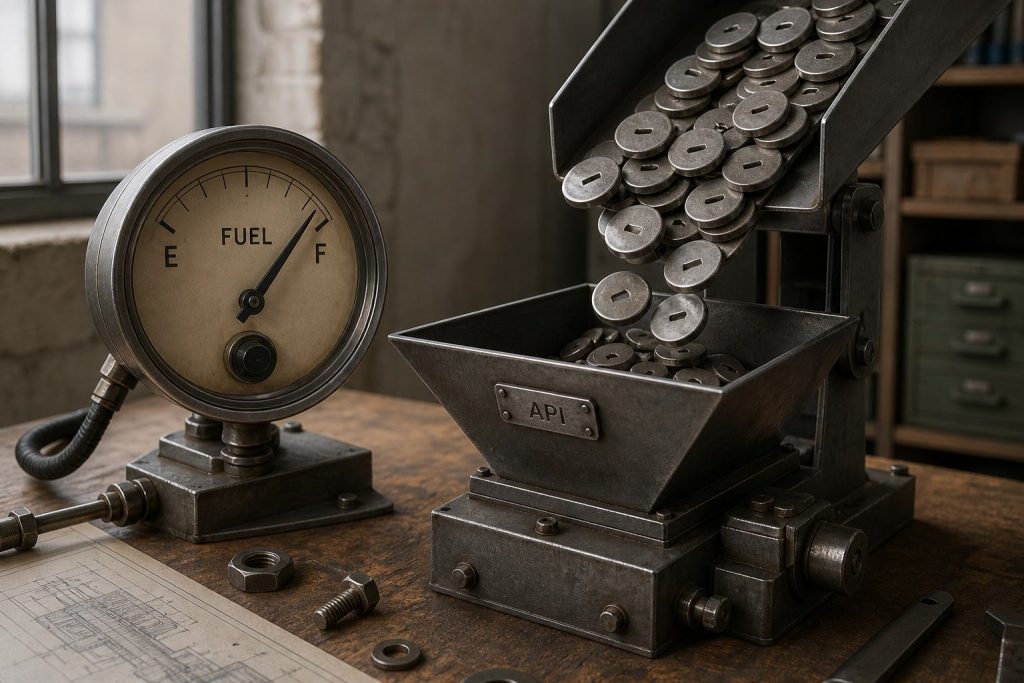
When you send a message to an AI model, a server somewhere processes your request. It runs inference — meaning it uses a large language model to generate a response token by token. That inference costs electricity, GPU time, and engineering infrastructure. Whether you’re on a $20/month Claude Pro plan or building with the Anthropic API at $3 per million tokens, every response has a real compute cost attached to it.
For API users, this is explicit — you see it on your bill. For subscription users, it’s implicit — it’s why your plan has usage limits and why the pricing tiers exist. The compute is never free. You are always paying for it, one way or another.
The problem isn’t that compute costs money. The problem is that most people treat AI like a search engine — ask, get answer, close tab, repeat. That workflow throws away the value you just paid to generate.
The Real Cost of Starting Over
Here’s a real scenario. You spend 45 minutes with Claude building a competitive analysis for a new market you’re entering. Claude pulls together the key players, the positioning gaps, the pricing dynamics. It’s good work. You read it, feel informed, close the tab.
Get The Signal
What we actually ran, what it measured, and what it means for a restoration shop — every week, including the flops.
Three weeks later, a colleague asks about that same market. You open a new Claude conversation and start over. Same 45 minutes. Same compute. Same cost. You’ve now paid for that analysis twice.
Now multiply that across a team of five people over a year. The same research gets regenerated dozens of times. The same frameworks get rebuilt from scratch in every new session. The same onboarding context gets re-explained to the AI in every conversation. This is the silent tax on AI-native work — and it compounds fast.
The Fix: Notion as Your AI Memory Layer
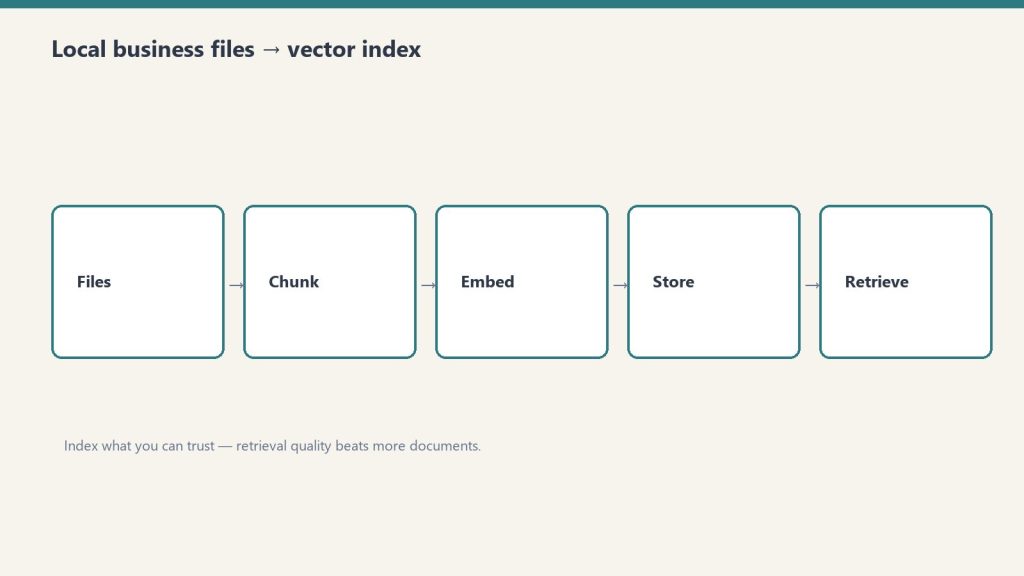
The solution is deceptively simple: save the output before you close the tab. But simple doesn’t mean thoughtless. The way you save matters as much as whether you save.
At Tygart Media, we use Notion as the AI memory layer for everything we build. The principle is straightforward: Notion is the storage layer, the publishing platform is the distribution layer, and cloud compute is where the inference happens. Nothing that Claude generates disappears without a home. Every research output, every strategic framework, every content brief, every integration spec — it goes to Notion first.
This isn’t just about saving money on API calls. It’s about building institutional memory that compounds over time. When a piece of research lives in Notion with proper structure and tagging, it becomes a retrieval asset. Future conversations can reference it. Future team members can learn from it. Future AI sessions can build on it rather than rebuilding it.
What’s Actually Worth Saving — and How to Structure It
Not everything needs to be saved. A throwaway brainstorm session doesn’t need a permanent home. But anything that required real reasoning — research synthesis, strategic analysis, technical architecture decisions, content strategy frameworks — that’s compute you want to pay for exactly once.
When you save AI work to Notion, structure matters. A flat dump of the conversation isn’t useful. What you want is:
- A clear title that describes what was produced, not what was asked
- Context at the top — what problem was being solved, what constraints existed
- The actual output — the research, the framework, the decision, the artifact
- Status and date — so you know if it’s still current
- Next steps or open questions — so the work isn’t just archived but actionable
This structure transforms a one-time AI output into a living knowledge asset. It’s the difference between a file you’ll never open again and a resource that actively makes future work faster.
The ROI Math: What You Actually Save
Let’s be concrete. If you’re on the Claude Max plan at $100/month and you spend an average of two hours per day doing meaningful AI-assisted work, your effective hourly compute rate is roughly $1.50/hour — just for the subscription cost, not counting your own time.
If half of that work is regenerating things you’ve already generated — research you’ve lost, frameworks you’ve rebuilt, context you’ve re-explained — you’re burning roughly $50/month on duplicate compute. Over a year, that’s $600 in subscription costs paying for work you’ve already done.
For a team of five using AI at similar intensity, duplicate compute waste can easily reach $3,000–$5,000 annually — just from not saving outputs systematically.
But the time cost is the bigger number. A knowledge worker billing at $100/hour who regenerates 30 minutes of AI work three times per week is losing significant billable time to the compute-twice trap every month. The subscription cost is the small number. Your time is the big one.
How to Build the Save Habit

The save habit is behavioral before it’s technical. The hardest part isn’t setting up Notion — it’s remembering to save before you close the tab. A few practices that help:
End every meaningful AI session with a save step. Before you close the conversation, ask yourself: did this session produce something I might need again? If yes, it goes to Notion before the tab closes. This takes 60 seconds and eliminates the compute-twice problem for that piece of work.
Build a lightweight intake structure. Create a Notion database with a “Research & AI Outputs” category. Give it a Status field (Draft, Active, Archived) and a Date field. That’s enough to make your saved work searchable and retrievable without turning saving into a second job.
Use the AI to write its own summary. At the end of a useful session, ask Claude: “Summarize what we just figured out in a format I can save to my knowledge base.” It will produce a clean, structured summary ready to paste into Notion. You paid for the compute to produce the work — use a few cents more of compute to make it saveable.
Tag by problem type, not by date. Date is useful metadata, but problem type is what makes retrieval fast. “Competitive analysis,” “integration architecture,” “content strategy,” “cost modeling” — these are the tags that let you find the right output in six months when you need it again.
Beyond Saving: Feeding Outputs Back to the AI
Saving is the first half. The second half is retrieval — and this is where the real compounding happens.
When you start a new AI session that needs context from previous work, you can paste the saved Notion output directly into the conversation. Claude can read it, build on it, and extend it without you having to re-explain everything from scratch. You’ve effectively given the AI persistent memory across sessions — something it doesn’t have natively.
At scale, this is the difference between an AI that feels like a perpetual intern who never learns your business and an AI that feels like a senior colleague who knows your entire history. The AI gets smarter about your specific context with every session — because the outputs accumulate rather than evaporate.
The Philosophy: Treat AI Output as an Asset
The underlying shift here is philosophical. Most people treat AI conversations as disposable — a means to an end, like a Google search. You get the answer, you move on.
The businesses that will build durable competitive advantage with AI are the ones that treat AI output as an asset class. Research is an asset. Frameworks are assets. Decision logs are assets. Competitive intelligence is an asset. Every meaningful AI conversation produces something that has value — and that value compounds when it’s saved, structured, and retrievable.
Compute is a commodity. Knowledge is not. When you pay for compute once and preserve the knowledge it produces, you’re converting a recurring cost into a one-time investment. That’s the real economics of AI-native work — and it’s available to anyone willing to close the tab two minutes later than usual.
Getting Started Today
You don’t need a complex system to start capturing compute value. Start with this: create a single Notion page called “AI Research & Outputs.” Every time you have a meaningful AI conversation this week, paste the key output there before you close the tab. Do it for one week and look at what you’ve built. You’ll have a knowledge base worth more than the subscription that generated it — and you’ll never pay for the same compute twice again.
Frequently Asked Questions
What does “paying for AI compute” mean for subscription users?
Even on flat-rate plans like Claude Pro or ChatGPT Plus, compute costs are real — they’re built into the subscription price. Usage limits, tier pricing, and rate caps all reflect the underlying infrastructure cost. Every conversation consumes real resources, whether you see an itemized bill or not.
Why is Notion a good place to save AI outputs?
Notion combines structured databases, free-form pages, searchable content, and team-sharing in one place. More importantly, it integrates with AI tools via API, meaning future AI sessions can read from your Notion knowledge base directly — turning saved outputs into active context rather than archived files.
What types of AI work are worth saving?
Anything that required substantive reasoning: competitive research, strategic frameworks, technical architecture decisions, content briefs, cost models, process documentation, and integration specs. Casual brainstorming and one-off quick answers generally aren’t worth the overhead of saving.
How do I get Claude to summarize a session for saving?
At the end of any useful conversation, simply ask: “Summarize the key outputs from this session in a structured format I can save to my knowledge base.” Claude will produce a clean, titled summary with context, outputs, and next steps — ready to paste directly into Notion.
Can I feed saved Notion content back into future AI conversations?
Yes. Paste the Notion content directly into a new Claude conversation as context. Claude will read it, build on it, and extend it without requiring you to re-explain the background. This is how you give AI persistent memory across sessions — something it doesn’t have natively.
How much money does the compute-twice trap actually cost?
For individual users, duplicate compute waste typically runs $50–$100/month in subscription value plus several hours of time. For teams of five or more using AI intensively, the annual cost of not saving outputs systematically can reach $5,000–$10,000 when both subscription waste and time cost are included.
Get The Signal
What we actually ran, what it measured, and what it means for a restoration shop — every week, including the flops.
Leave a Reply