Tag: AI compute

  • Elon Musk Isn’t Building the Everything App—He’s Building the Everything App’s Power Grid

    Elon Musk Isn’t Building the Everything App—He’s Building the Everything App’s Power Grid

    The Pivot in One Sentence
    xAI has merged into SpaceX and leased its Colossus 1 supercluster—220,000 NVIDIA GPUs, 300 megawatts of compute—entirely to Anthropic, while simultaneously targeting 2 gigawatts of total capacity at Memphis. Elon Musk is no longer primarily trying to win the AI model race. He’s becoming the AI industry’s infrastructure landlord.

    Earlier in this series, we asked whether Grok and xAI were building the everything app through X—the social-financial superapp thesis. The answer we arrived at was: maybe, but with real limitations on the model quality and consumer trust needed to pull it off.

    Then something happened that reframed the entire question. In early May 2026, xAI merged into SpaceX. Days later, Anthropic—one of xAI’s most direct AI competitors—announced it was renting the entire compute capacity of Colossus 1. All 220,000 GPUs. All 300 megawatts. For Claude. For a reported $3 to $6 billion per year.

    Musk’s comment when asked about leasing infrastructure to a competitor: “No one set off my evil detector.”

    That’s the tell. When you’re building the everything app, you don’t rent your most powerful asset to your rivals. You use it. The fact that Musk is doing exactly that reveals a strategic logic that the Grok-as-everything-app frame completely misses.

    The pivot isn’t from everything app to compute landlord. It’s the recognition that owning the power grid is more valuable than owning any single app that runs on it.

    What Colossus Actually Is

    Colossus is not a single data center. It’s a multi-building supercomputing complex in Memphis, Tennessee—and it is currently the largest single-site AI training installation in the world.

    Colossus 1, the original facility, holds H100, H200, and GB200 accelerators across more than 220,000 GPU units. That is the cluster Anthropic is now renting entirely.

    Colossus 2, the expansion xAI is keeping for its own Grok development, has already expanded to 555,000 NVIDIA GPUs with approximately $18 billion in hardware investment and 2 gigawatts of target power capacity—reached in January 2026 with the purchase of a third Memphis building. Musk’s stated goal: one million GPUs at the Memphis complex, with more AI compute than every other company combined within five years.

    As a point of reference: most frontier AI labs operate training clusters in the tens of thousands of GPUs. Microsoft’s Azure AI infrastructure, the largest hyperscaler allocation for AI, operates in the hundreds of thousands across distributed global regions. Colossus at 555,000+ GPUs in a single complex is a different category of infrastructure entirely.

    And Musk has publicly noted that xAI is only using about 11% of its available compute for Grok. The rest is—in his framing—available. Available to sell. Available to rent. Available to become the compute backbone of the AI industry whether xAI wins the model race or not.

    The xAI-SpaceX Merger: What It Actually Means

    The May 2026 merger of xAI into SpaceX as an independent entity is more than an org chart change. It’s a signals-to-strategy reveal.

    SpaceX has three things xAI needs at scale: capital (SpaceX generates billions in launch revenue annually), real estate and construction expertise (SpaceX builds rockets and factories at speed), and most critically—rockets. Starship can put mass into orbit economically in a way no other launch vehicle can. SpaceX is already moving toward a Starlink constellation of thousands of satellites. The infrastructure to extend that into orbital data centers is not theoretical.

    Anthropic’s announcement noted not just the Colossus 1 ground lease—it also expressed interest in working with SpaceX to develop multiple gigawatts of compute capacity in space. Orbital data centers. Satellite-delivered AI compute. The kind of infrastructure that has zero latency for any application that needs compute without a physical data center address.

    Musk has discussed launching a million data-center satellites as a longer-term infrastructure play. That number sounds unreasonable until you consider that SpaceX already operates over 7,000 Starlink satellites and is building Starship specifically for high-volume orbital delivery. The orbital compute thesis isn’t science fiction for SpaceX. It’s a product roadmap.

    What the xAI-SpaceX merger does is remove the pretense that these are separate businesses. They’re one integrated infrastructure play: ground-based GPU superclusters plus orbital compute capacity, connected by the world’s only commercially viable heavy-lift reusable rocket.

    The Anthropic Deal: A Strategic Reading

    Let’s be specific about what this deal represents for both sides.

    For Anthropic, the deal addresses an acute bottleneck. Anthropic’s annualized revenue grew from roughly $9 billion at end of 2025 to approximately $30 billion by early April 2026—a trajectory that implies an 80-fold increase in usage in Q1 alone. Claude Pro and Claude Max subscriber growth is outpacing Anthropic’s ability to provision compute fast enough. Renting Colossus 1 immediately unlocks 300 megawatts of capacity that would take 18-24 months to build from scratch. For Anthropic, this is a compute emergency solution with strategic upside.

    For xAI, the deal is more nuanced. Colossus 1 was already built and operational. xAI is keeping Colossus 2 for Grok development. Renting Colossus 1 generates—depending on which analyst estimate you use—between $3 billion and $6 billion annually in revenue while the asset runs at capacity rather than sitting idle. That revenue funds Colossus 2 expansion, Colossus 3, and whatever comes next. The compute landlord model is self-funding.

    The strategic implication: xAI doesn’t need Grok to win the model race for this business model to work. If Claude dominates, Anthropic needs more compute and pays xAI for it. If GPT dominates, OpenAI and its partners need more compute. If Gemini dominates, Google builds its own, but every smaller lab comes to whoever has available capacity. xAI wins in every scenario except the one where everyone else simultaneously builds their own supercomputing megacomplexes—which requires the capital and construction expertise that most AI labs don’t have.

    The Grok Situation: Honest Assessment

    The Anthropic deal does raise real questions about Grok’s trajectory. Grok app downloads have reportedly declined significantly in 2026 as ChatGPT and Claude have gained consumer mindshare. In April 2026, Elon Musk testified in the ongoing OpenAI litigation that xAI trained Grok on OpenAI model outputs—a revelation that raised questions about Grok’s training methodology and original capability claims.

    If xAI is using only 11% of its compute for Grok and is renting the rest to a competitor, the implicit message is that xAI is not currently running a max-effort campaign to win the frontier model race. It’s building infrastructure and waiting—or pivoting to a business model where the model race outcome matters less.

    This is not necessarily a failure. It may be a more durable strategy. The history of technology infrastructure is full of examples where the company that built the picks and shovels during a gold rush outlasted the miners. AWS didn’t win by building the best e-commerce site. It built the infrastructure that every e-commerce site ran on. The question is whether xAI’s compute infrastructure can fill that role for AI—and the Anthropic deal is the first real evidence that the answer might be yes.

    The “Everything App Ability” Thesis

    Here’s the reframe that this pivot suggests: maybe the right question isn’t which company will build the everything app. Maybe the right question is which company will own the infrastructure that makes the everything app possible for everyone else.

    Every company in this series—Microsoft, Google, Notion, OpenAI, Perplexity, Mistral, Zapier—needs compute. Massive, reliable, cost-effective GPU compute. The frontier model companies are burning through capital building their own clusters because the alternative is depending on hyperscalers (AWS, Azure, GCP) that charge premium rates and may eventually compete directly.

    xAI with Colossus is offering a third option: AI-native compute infrastructure, built by a company that doesn’t directly compete on most application layers, at a scale that’s difficult to replicate, at a location (Memphis) with power grid access that many coastal data center markets can’t match.

    If you’re building the everything app and you need the compute to run it—Colossus may become the place you go when AWS is too slow, Google is a competitor, and building from scratch takes two years you don’t have.

    That’s not the everything app. That’s the everything app’s power grid. And historically, the entity that owns the power grid captures durable, compounding value regardless of which specific applications win the consumer layer.

    Space: The Long Game

    The orbital compute angle deserves more than a footnote because it’s where this thesis could either collapse into fantasy or become genuinely transformative.

    The practical case for orbital data centers is latency equalization: compute in low Earth orbit can serve any point on the Earth’s surface within milliseconds, without the geographic concentration that makes terrestrial data centers vulnerable to regional power outages, natural disasters, or regulatory shutdown. For AI applications that need global deployment at consistent latency—real-time translation, autonomous vehicle coordination, financial systems—orbital compute offers something no ground-based data center geography can.

    SpaceX’s Starship dramatically changes the economics of getting mass to orbit. Current launch costs for payloads are measured in thousands of dollars per kilogram. Starship’s target is hundreds of dollars per kilogram—an order-of-magnitude reduction that makes orbital infrastructure financially viable in a way it never was before. The satellite internet analogy is instructive: Starlink was also considered impractical until SpaceX dramatically reduced launch costs, then deployed at a scale that changed the calculus entirely.

    Anthropic’s stated interest in orbital compute capacity with SpaceX isn’t a polite corporate gesture. It’s Anthropic hedging its long-term compute dependency on a technology only SpaceX can currently deliver. If even a fraction of that orbital compute vision materializes, xAI/SpaceX’s infrastructure moat becomes essentially unreplicable by any company that doesn’t own a heavy-lift reusable rocket program.

    What This Means for the Everything App Race

    The xAI infrastructure pivot doesn’t remove Grok and X from the everything app conversation entirely. X still has the distribution, the data firehose, the financial services ambitions, and the brand. Those don’t disappear because Colossus 1 is now running Claude.

    But it does add a second thesis that may ultimately matter more: xAI as the infrastructure layer beneath the entire AI economy. Not the everything app—the everything app’s foundation.

    In the history of platform technology, the company that owns the infrastructure layer almost always captures more durable value than the company that owns any individual application. TCP/IP outlasted every early internet application. AWS became more valuable than most of the businesses it hosts. The cloud didn’t belong to any one software company—it belonged to the infrastructure providers who made software deployment cheap and fast.

    If the AI era follows the same pattern, the question isn’t who builds the best everything app. It’s who builds the infrastructure that makes every everything app possible. And as of May 2026, the most credible answer to that question involves 555,000 GPUs in Memphis, a rocket program that can reach orbit, and a business model that profits whether Grok wins or loses.

    Key Takeaway

    Elon Musk pivoted xAI from model competitor to infrastructure landlord. By merging into SpaceX, leasing Colossus 1 to Anthropic, and targeting 2 gigawatts of Memphis compute capacity plus orbital data centers, xAI is positioning to capture value from the AI economy regardless of which application layer wins—the power grid, not the appliance.

    Related Reading

    This article grew out of our everything app series. If you’re tracking where AI consolidation is heading, the full series maps the competitive landscape from nine angles:

    Frequently Asked Questions About xAI, Colossus, and the Compute Landlord Pivot

    Why did xAI merge into SpaceX?

    xAI merged into SpaceX in May 2026 as an independent entity within the broader Musk enterprise. The merger combines xAI’s AI development capabilities with SpaceX’s capital generation, construction expertise, and—critically—rocket launch capabilities. This integration enables the orbital compute strategy: deploying data center satellites via Starship at dramatically lower cost than any competitor could achieve.

    What is the Anthropic-Colossus deal?

    In May 2026, Anthropic agreed to rent the entire compute capacity of Colossus 1—xAI’s first Memphis supercluster, comprising 220,000+ NVIDIA GPUs and 300 megawatts of power. The deal directly addresses Anthropic’s acute compute shortage during a period of explosive Claude usage growth. Anthropic’s annualized revenue grew from roughly $9 billion at end of 2025 to approximately $30 billion by April 2026. Analysts estimate the deal generates between $3 billion and $6 billion annually for xAI/SpaceX.

    How large is the Colossus supercomputer complex?

    As of early 2026, the Colossus complex in Memphis spans three buildings and targets 2 gigawatts of total compute capacity. Colossus 2 (kept by xAI for Grok development) has reached 555,000 NVIDIA GPUs with approximately $18 billion in hardware investment. Long-term targets include one million GPUs at the Memphis site. It is currently the largest single-site AI training installation in the world.

    What are orbital data centers and why does xAI/SpaceX care about them?

    Orbital data centers are computing facilities deployed in low Earth orbit, delivered by rocket. They offer latency equalization (serving any point on Earth within milliseconds), elimination of geographic concentration risk, and compute capacity outside any single regulatory jurisdiction. SpaceX’s Starship reduces launch costs by an order of magnitude compared to existing vehicles, making orbital compute economically viable for the first time. Anthropic’s participation in the deal included expressed interest in developing multiple gigawatts of orbital compute capacity with SpaceX.

    Does the compute landlord strategy mean xAI is giving up on Grok?

    Not necessarily, but the signals are mixed. xAI is reportedly using approximately 11% of its available compute for Grok development—the rest is available to lease. Grok app downloads have declined in 2026, and April 2026 litigation revealed Grok was trained on OpenAI model outputs. The Colossus 1 lease to Anthropic is the clearest evidence that xAI is not running a maximum-effort campaign on frontier model development and is instead diversifying into infrastructure revenue.

    How does the xAI infrastructure play relate to the everything app thesis?

    The xAI pivot suggests a reframe of the everything app question. Rather than competing to be the app users interact with daily, xAI/SpaceX is positioning to own the compute infrastructure that powers any everything app—what we’re calling the “everything app’s power grid.” Historically, infrastructure layer companies (AWS, TCP/IP, electricity grids) capture more durable value than any individual application running on top of them. The Anthropic deal is the first concrete evidence that this model may work at AI scale.

  • Claude Updates May 2026: Opus 4.7, SpaceX Compute, Managed Agents Memory, and What’s Coming Next

    Claude Updates May 2026: Opus 4.7, SpaceX Compute, Managed Agents Memory, and What’s Coming Next

    May 2026 has been one of Anthropic’s busiest months yet. Here’s everything that shipped, changed, or was announced — plus the confirmed upcoming dates you need to know.

    Claude Opus 4.7 — Generally Available (April 16, 2026)

    Opus 4.7 launched April 16 as the current flagship model, priced identically to Opus 4.6 at $5/$25 per million tokens (input/output). Key changes:

    • Vision resolution: 3× higher at 2,576px (~3.75 megapixels), raising XBOW visual acuity benchmark performance from 54.5% to 98.5%
    • Coding: 70% on CursorBench (vs 58% for 4.6), resolves 3× more production tasks on Rakuten-SWE-Bench, +13% lift on Anthropic’s internal coding benchmark
    • Legal reasoning: 90.9% on BigLaw Bench
    • New effort level: xhigh sits between high and max — five levels total: low / medium / high / xhigh / max
    • Task budgets: Now in public beta — token spend guidance for longer agentic runs
    • Tokenizer update: New tokenizer increases token usage roughly 1.0–1.35× for the same content; API pricing unchanged
    • Breaking change: Opus 4.7 has API breaking changes versus 4.6 — review Anthropic’s migration guide before upgrading

    Alongside Opus 4.7, Anthropic launched Claude Design — an Anthropic Labs product for collaborating with Claude to produce visual outputs including designs, prototypes, slides, and one-pagers.

    SpaceX Compute Deal — Rate Limits Doubled (May 2026)

    Anthropic announced a partnership with SpaceX to access Colossus 1 compute capacity. The immediate practical impact for subscribers:

    • Claude Code’s five-hour rate limits doubled for Pro, Max, Team, and seat-based Enterprise plans
    • Peak-hour limit reductions removed for Pro and Max (previously limits burned faster 5am–11am Pacific on weekdays)
    • Opus API limits raised for heavy API users

    Anthropic is also reportedly evaluating an IPO as early as October 2026, and has disclosed run-rate revenue of $30B (up from $9B at end of 2025). The SpaceX deal comes as the company prepares that filing.

    Claude Managed Agents — Three New Features (May 7, 2026)

    Claude Managed Agents — the fully managed agent harness launched in public beta earlier this year — gained three significant additions:

    • Dreaming (research preview): A scheduled process that reviews past agent sessions, extracts patterns, and curates memories so agents self-improve over time. Dreaming can update memory automatically or queue changes for human review before they land.
    • Multiagent Orchestration: A lead agent can now break a job into pieces and delegate each to a specialist sub-agent with its own model, prompt, and tools. Specialists work in parallel on a shared filesystem. Netflix is already using multiagent orchestration for its platform team.
    • Memory (public beta): Now generally available under the managed-agents-2026-04-01 beta header.

    Claude Cowork — Generally Available

    Claude Cowork is now GA on macOS and Windows through the Claude Desktop app. New additions with GA: Claude Cowork in the Analytics API, usage analytics, and expanded desktop automation capabilities.

    Claude Code — What Shipped in May

    Claude Code has been shipping near-daily updates. Notable May additions include:

    • Plugin URL loading: --plugin-url <url> flag fetches a plugin .zip from a URL for the current session
    • Project purge: claude project purge [path] deletes all Claude Code state for a project (transcripts, tasks, file history, config) with dry-run support
    • Package manager auto-update: CLAUDE_CODE_PACKAGE_MANAGER_AUTO_UPDATE runs upgrade in the background on Homebrew or WinGet installs
    • Push notifications: Claude can now send mobile push notifications when Remote Control is enabled
    • VS Code Remote Control: /remote-control bridges sessions to claude.ai/code to continue from a browser or phone
    • 1M token context in Claude Code: Available to Max, Team Premium, and Enterprise Opus 4.6/4.7 users at no additional cost — no long-context surcharge as of March 2026
    • Redesigned desktop app: New session sidebar, drag-and-drop workspace, integrated terminal and file editor, faster diffs, SSH support on Mac

    New Connectors Expansion

    Claude’s connector directory has grown beyond work tools. New consumer app connectors include AllTrails, Instacart, Audible, Tripadvisor, Uber, and Spotify. The directory now exceeds 200 connectors. Claude surfaces relevant connectors in context during conversations rather than requiring users to browse a directory.

    Finance Agent Templates

    Anthropic released ten ready-to-run agent templates for financial services work: pitchbook building, KYC file screening, and month-end close workflows. Microsoft 365 add-ins for Excel, PowerPoint, Word, and Outlook are coming soon. A Moody’s MCP app brings Claude into financial data workflows.

    Confirmed Upcoming Dates

    These are officially announced by Anthropic — not speculation:

    • June 15, 2026: Claude Sonnet 4 (claude-sonnet-4-20250514) and Claude Opus 4 (claude-opus-4-20250514) are deprecated and retired from the Claude API. Migrate to Sonnet 4.6 and Opus 4.7 respectively before this date.
    • Microsoft 365 add-ins: Excel, PowerPoint, Word, and Outlook integrations announced as “coming soon” — no specific date published.
    • Anthropic IPO: Reportedly targeting as early as October 2026 — unconfirmed, no official date.
    • Google/Broadcom TPU partnership: Multi-gigawatt infrastructure with capacity launching in 2027.

    Model Deprecation Summary

    Claude Haiku 3 (claude-3-haiku-20240307) has already been retired — all requests now return an error. Migrate to Claude Haiku 4.5. Claude Sonnet 4 and Opus 4 retire June 15, 2026.

    What to Watch For

    Claude 5 is widely anticipated for Q2–Q3 2026 based on Anthropic’s release cadence, though Anthropic has made no official announcement. The advisor tool — which pairs a faster executor model with a higher-intelligence advisor model for long-horizon agentic workloads — launched in public beta and signals the architectural direction Anthropic is moving toward for complex, multi-step tasks.

    The pace of Claude Code releases in particular has accelerated to near-daily — following Anthropic’s own disclosure that engineers internally use Claude for a growing share of their own development work.

  • Claude Team Plan Usage Limits: What Doubled in May 2026 (and What Didn’t)

    Claude Team Plan Usage Limits: What Doubled in May 2026 (and What Didn’t)

    Last refreshed: May 15, 2026

    The Claude Team plan’s usage limits changed significantly in May 2026. If you’re a Team subscriber and you haven’t noticed yet, you’re now getting substantially more capacity than you were in April — and the free tier got left behind entirely. Here’s exactly what changed, what you have now, and what it means in practice.

    Updated May 9, 2026

    Rate limits doubled for Team plan subscribers following Anthropic’s SpaceX Colossus 1 compute deal (announced May 6, 2026). Free plan excluded from all increases. This page reflects current limits.

    What Changed in May 2026: The SpaceX Rate Limit Increase

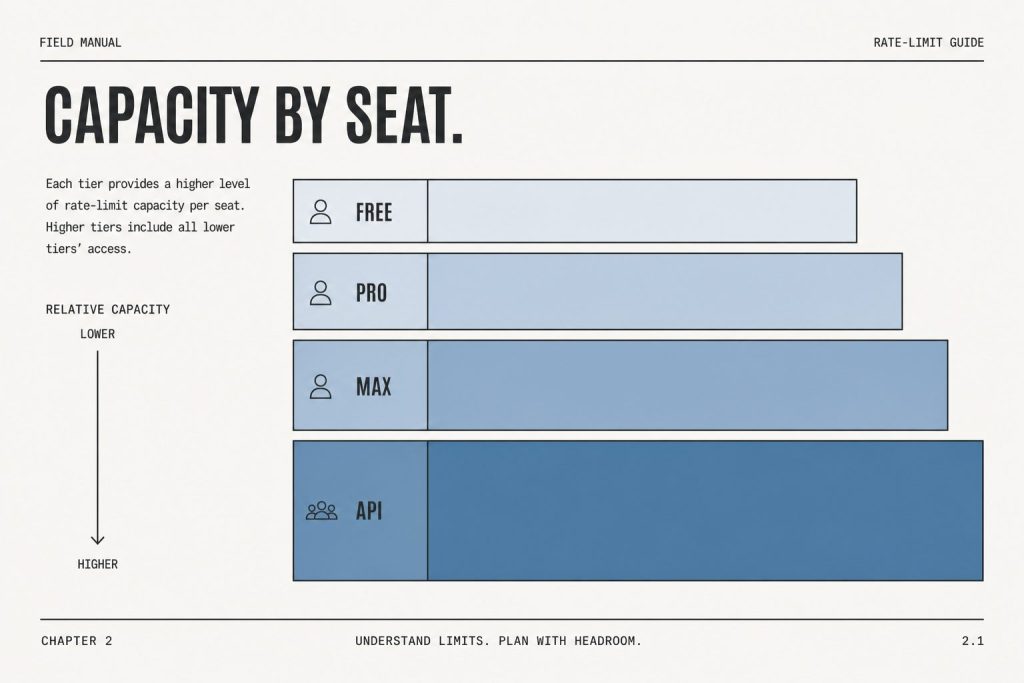
    On May 6, 2026, Anthropic announced a compute partnership with SpaceX, giving it access to SpaceX’s Colossus 1 data center. The practical result for paying subscribers came fast: rate limits doubled. Here’s the breakdown by tier:

    • Claude Code Pro and Max: 5-hour rate limits doubled
    • Team plan (all seats): 5-hour rate limits doubled
    • Seat-based Enterprise: 5-hour rate limits doubled
    • Tier 1 API customers: Max input tokens per minute increased 1,500%; max output tokens per minute increased 900%
    • Peak-hours throttling: Eliminated entirely for Pro and Max subscribers
    • Free plan: No change. Explicitly excluded from all increases.

    Source: Anthropic’s official announcement at anthropic.com/news/higher-limits-spacex.

    The 1,500% input token figure for Tier 1 API is the one that didn’t get much press coverage. That’s a 15× ceiling increase for API users who’ve been running agent pipelines and hitting hard walls. If you’ve been rate-limited during multi-step Claude Code runs, this is the change that matters most.

    Team Plan Seat Structure (Still Current)

    The seat types haven’t changed — just the capacity within them. The Team plan still offers two seat types that can be mixed within the same organization:

    Seat Type Annual Price Monthly Price Usage vs Pro Claude Code
    Standard $25/seat/month $30/seat/month 1.25× more per session No
    Premium $100/seat/month $125/seat/month 6.25× more per session Yes

    Both seat types benefit from the May 2026 doubling of the 5-hour rate limit window. A Premium seat’s 6.25× multiplier now applies to a higher baseline than it did before May 6.

    How the 5-Hour Rate Limit Window Works

    Anthropic uses a rolling 5-hour window for usage limits, not a daily reset. Here’s what that means practically:

    • Usage is measured across a rolling 5-hour window, not midnight-to-midnight
    • If you hit the limit, you wait for the oldest usage to roll off — not for a fixed reset time
    • Heavy burst usage depletes your window faster than spread-out usage
    • The May 2026 doubling means the ceiling within that window is now twice as high

    Peak-hours throttling — the extra restriction that kicked in during high-demand periods — is now eliminated for Pro and Max. Team plan benefits from the doubled limit floor; the throttling elimination is Pro and Max specific.

    Current Models Available on Team Plan

    As of May 2026, the Claude model lineup (verified from Anthropic’s official models page):

    Model API String Context Window
    Claude Opus 4.7 claude-opus-4-7 1M tokens
    Claude Sonnet 4.6 claude-sonnet-4-6 1M tokens
    Claude Haiku 4.5 claude-haiku-4-5-20251001 200K tokens

    Deprecation notice: Claude Sonnet 4 and Opus 4 (original 4.0-generation, 20250514 date-string model IDs) are being retired June 15, 2026. Update any API integrations before that date.

    What the Free Plan Doesn’t Get

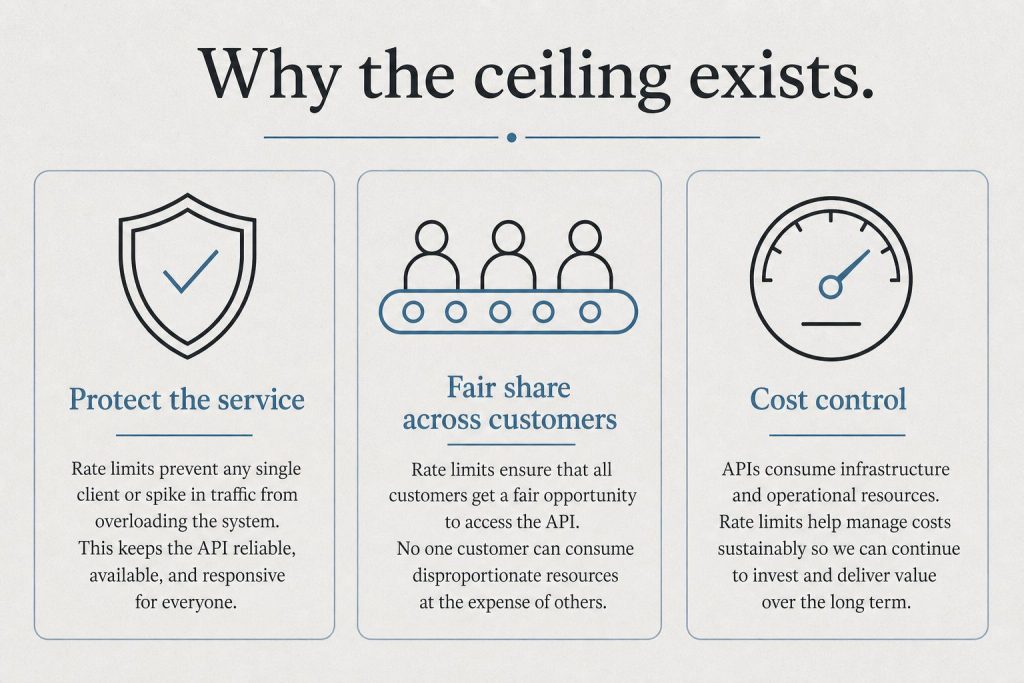
    The May 2026 rate limit increase does not apply to free accounts. Anthropic explicitly excluded the free tier from all capacity increases tied to the SpaceX deal. Paid plans now have a substantially higher ceiling while the free ceiling stays the same. If you’re hitting limits regularly on the free tier, the May 2026 changes are pressure toward upgrading — not relief.

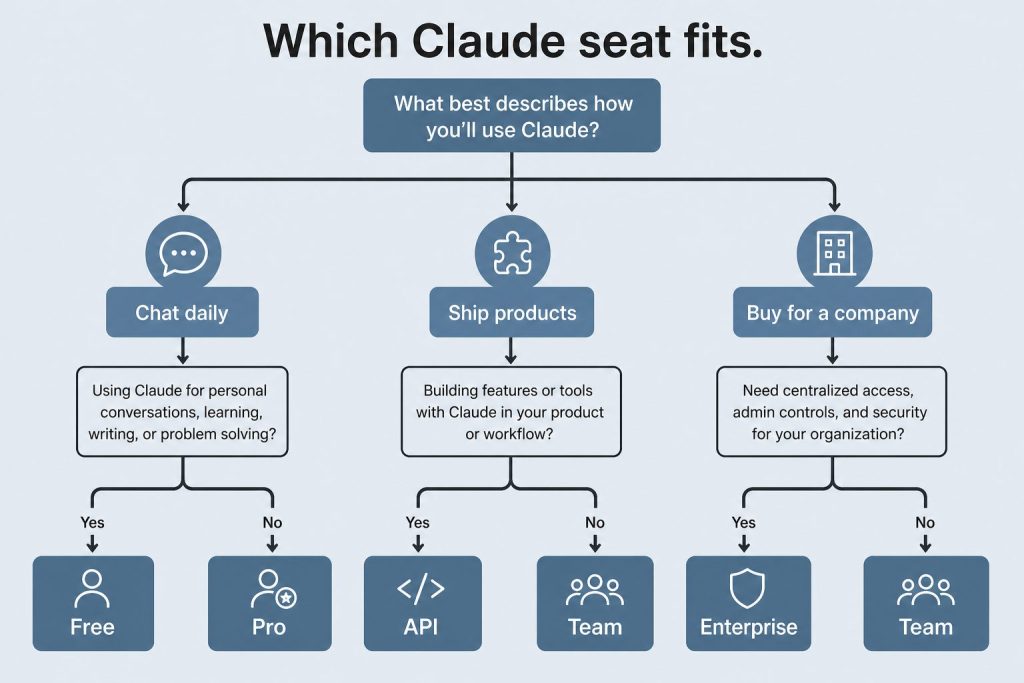
    Team Plan vs Pro: Which Limit Structure Fits You?

    • Individual power user: Pro ($20/month) with throttling eliminated is a strong option.
    • Team with Claude Code needs: Team Premium seats ($100/seat/month annually) give Claude Code access, 6.25× multiplier, and the doubled 5-hour window.
    • Team without Claude Code needs: Standard Team seats ($25/seat/month annually) for shared access at higher limits than individual Pro.

    Frequently Asked Questions

    Did the Team plan rate limits actually double in May 2026?

    Yes. Anthropic confirmed the 5-hour rate limit doubled for Team plan subscribers following the SpaceX Colossus 1 compute deal announced May 6, 2026. This applies to both Standard and Premium seats.

    Does peak-hours throttling elimination apply to Team plan?

    The peak-hours throttling elimination was announced specifically for Pro and Max subscribers. Team plan benefits from the doubled rate limit floor; throttling elimination was not announced for Team.

    What happens when I hit a Team plan usage limit?

    Claude notifies you that you’ve reached your usage limit. With the 5-hour rolling window, you can continue once older usage rolls off — you’re not waiting for a midnight reset. Burst usage depletes the window faster than spread usage over the same period.

    Are Claude Sonnet 4 and Opus 4 still available on Team?

    They remain available but retire June 15, 2026. After that date, the active lineup is Opus 4.7, Sonnet 4.6, and Haiku 4.5.

    Does the 1,500% Tier 1 API increase apply to Team plan API usage?

    The 1,500% input and 900% output token increases apply to Tier 1 API customers specifically. Team plan through claude.ai uses the doubled 5-hour window. Both benefits apply in their respective contexts if you’re a Tier 1 API customer and a Team subscriber.

    Is the free plan getting any rate limit improvements?

    No. The free plan was explicitly excluded from all rate limit increases in the May 2026 SpaceX announcement.

  • Anthropic at Scale: 5 Gigawatts, $30B Revenue Run Rate, and What the Infrastructure Bet Means

    Anthropic at Scale: 5 Gigawatts, $30B Revenue Run Rate, and What the Infrastructure Bet Means

    Last refreshed: May 15, 2026

    Three data points published in the last two weeks of April 2026 define the scale at which Anthropic is now operating: a 5-gigawatt compute capacity commitment from Amazon announced April 20, a disclosed $30 billion annual revenue run rate (up from $9 billion at the end of 2025), and a customer base of more than 1,000 enterprises spending over $1 million per year. Taken together, they describe a company that has crossed the threshold from frontier AI lab to large-scale enterprise infrastructure provider.

    The Amazon Compute Commitment

    Five gigawatts of committed compute capacity is a number that requires context to land properly. For reference, a large data center campus typically consumes 100–500 megawatts. Five gigawatts is the equivalent of 10–50 large data center campuses worth of compute, committed to a single AI company. This is infrastructure at a scale that was historically reserved for hyperscalers building general-purpose cloud platforms — not AI model providers.

    The Amazon partnership is part of a broader compute story that also includes Google and Broadcom’s multi-gigawatt TPU partnership (announced April 6, with capacity launching in 2027). Anthropic is not building this infrastructure itself — it’s securing committed capacity from the two largest cloud providers simultaneously, which is a different and arguably more capital-efficient strategy than building proprietary data centers.

    Revenue: $9B to $30B in One Quarter

    The jump from $9 billion to $30 billion annualized run rate between end of 2025 and April 2026 is the most striking number in the disclosure. That’s not organic growth — that’s a step change that implies either a major enterprise contract cohort closing in Q1 2026, the Cowork and Claude Code adoption curves hitting inflection simultaneously, or both. The 1,000+ customers at $1 million+/year figure is consistent with enterprise adoption at scale: at $1 million average, 1,000 customers represents $1 billion in ARR from that cohort alone.

    For context on what $30 billion run rate means competitively: OpenAI disclosed approximately $3.7 billion in annualized revenue in mid-2024. If Anthropic’s figure is accurate and current, it suggests the competitive landscape has shifted more dramatically than most public coverage has reflected.

    What This Means for Enterprise Buyers

    Enterprise procurement teams evaluating AI vendors weigh financial stability heavily. A vendor that might not exist in 18 months is a vendor you don’t build critical workflows on. The combination of $30 billion run rate, 5 gigawatts of committed compute, and 1,000+ million-dollar customers removes the financial stability objection from the Anthropic procurement conversation in a way that a year ago it couldn’t.

    The Raj Narasimhan board appointment (April 14) is a governance signal in the same direction. Board composition at this revenue scale shapes how enterprise legal and compliance teams assess vendor risk. A mature board with enterprise-credible governance is a procurement unlock, not just a PR announcement.

    The Capacity Question

    The Google/Broadcom TPU capacity doesn’t launch until 2027. The Amazon commitment is a forward contract, not immediately available infrastructure. This means Anthropic is building compute capacity commitments ahead of demand — the right bet if the revenue trajectory continues, a costly overcommit if it doesn’t. The 2027 capacity launch timing will be worth watching against the actual demand curve that develops over the next 12 months.

    Source: Anthropic News

  • Pay for the Compute Once: How Saving Your AI Work Saves You Money

    Pay for the Compute Once: How Saving Your AI Work Saves You Money

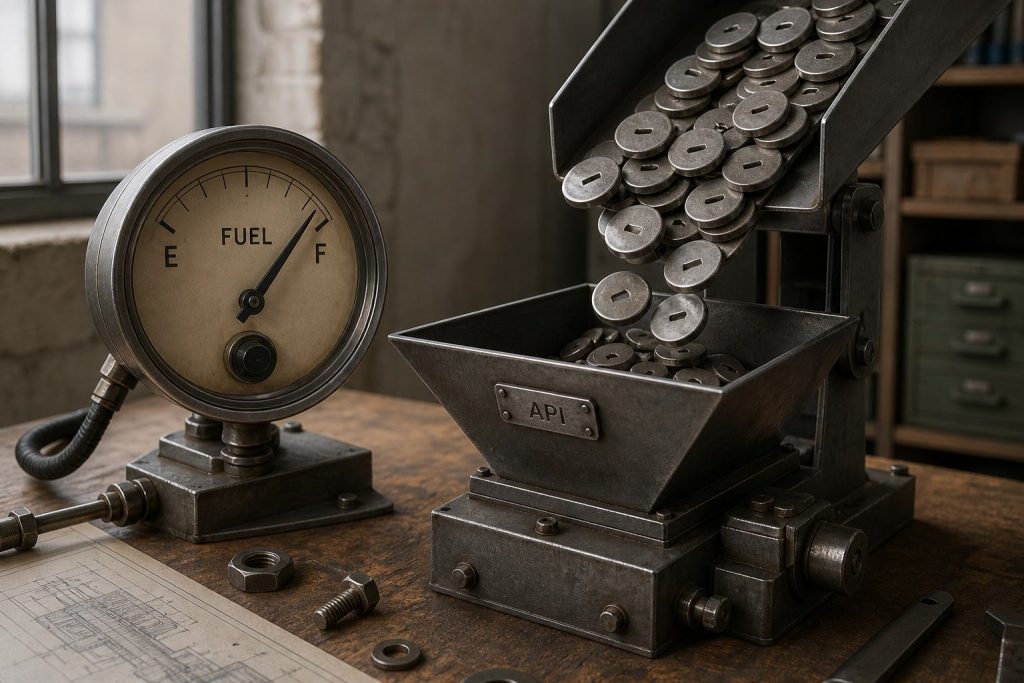
    The Compute-Once Principle: Every AI response costs real infrastructure — GPU time, inference compute, and engineering overhead. When you discard that output without saving it, you pay the same cost again the next time the same question arises. Saving AI work to a structured knowledge base converts a recurring compute cost into a one-time investment.

    Pay for the Compute Once: How Saving Your AI Work Saves You Money

    Every time you open a new AI conversation and ask Claude or ChatGPT to research something, write something, or figure something out — you are paying for compute. Maybe you’re on a flat-rate subscription, so it doesn’t feel like a direct cost. But it is. The servers running inference on your query cost real money, and that cost is baked into whatever you’re paying monthly. More importantly, your time has a cost too. When you close that tab and that work disappears into the void, you’ve paid twice for the same problem the next time it comes up.

    This is the “pay for the compute twice” trap — and most people using AI tools are stuck in it without realizing it.

    What Does “Compute” Actually Mean in Plain Terms?

    When you send a message to an AI model, a server somewhere processes your request. It runs inference — meaning it uses a large language model to generate a response token by token. That inference costs electricity, GPU time, and engineering infrastructure. Whether you’re on a $20/month Claude Pro plan or building with the Anthropic API at $3 per million tokens, every response has a real compute cost attached to it.

    For API users, this is explicit — you see it on your bill. For subscription users, it’s implicit — it’s why your plan has usage limits and why the pricing tiers exist. The compute is never free. You are always paying for it, one way or another.

    The problem isn’t that compute costs money. The problem is that most people treat AI like a search engine — ask, get answer, close tab, repeat. That workflow throws away the value you just paid to generate.

    The Real Cost of Starting Over

    Here’s a real scenario. You spend 45 minutes with Claude building a competitive analysis for a new market you’re entering. Claude pulls together the key players, the positioning gaps, the pricing dynamics. It’s good work. You read it, feel informed, close the tab.

    Three weeks later, a colleague asks about that same market. You open a new Claude conversation and start over. Same 45 minutes. Same compute. Same cost. You’ve now paid for that analysis twice.

    Now multiply that across a team of five people over a year. The same research gets regenerated dozens of times. The same frameworks get rebuilt from scratch in every new session. The same onboarding context gets re-explained to the AI in every conversation. This is the silent tax on AI-native work — and it compounds fast.

    The Fix: Notion as Your AI Memory Layer

    The solution is deceptively simple: save the output before you close the tab. But simple doesn’t mean thoughtless. The way you save matters as much as whether you save.

    At Tygart Media, we use Notion as the AI memory layer for everything we build. The principle is straightforward: Notion is the storage layer, the publishing platform is the distribution layer, and cloud compute is where the inference happens. Nothing that Claude generates disappears without a home. Every research output, every strategic framework, every content brief, every integration spec — it goes to Notion first.

    This isn’t just about saving money on API calls. It’s about building institutional memory that compounds over time. When a piece of research lives in Notion with proper structure and tagging, it becomes a retrieval asset. Future conversations can reference it. Future team members can learn from it. Future AI sessions can build on it rather than rebuilding it.

    What’s Actually Worth Saving — and How to Structure It

    Not everything needs to be saved. A throwaway brainstorm session doesn’t need a permanent home. But anything that required real reasoning — research synthesis, strategic analysis, technical architecture decisions, content strategy frameworks — that’s compute you want to pay for exactly once.

    When you save AI work to Notion, structure matters. A flat dump of the conversation isn’t useful. What you want is:

    • A clear title that describes what was produced, not what was asked
    • Context at the top — what problem was being solved, what constraints existed
    • The actual output — the research, the framework, the decision, the artifact
    • Status and date — so you know if it’s still current
    • Next steps or open questions — so the work isn’t just archived but actionable

    This structure transforms a one-time AI output into a living knowledge asset. It’s the difference between a file you’ll never open again and a resource that actively makes future work faster.

    The ROI Math: What You Actually Save

    Let’s be concrete. If you’re on the Claude Max plan at $100/month and you spend an average of two hours per day doing meaningful AI-assisted work, your effective hourly compute rate is roughly $1.50/hour — just for the subscription cost, not counting your own time.

    If half of that work is regenerating things you’ve already generated — research you’ve lost, frameworks you’ve rebuilt, context you’ve re-explained — you’re burning roughly $50/month on duplicate compute. Over a year, that’s $600 in subscription costs paying for work you’ve already done.

    For a team of five using AI at similar intensity, duplicate compute waste can easily reach $3,000–$5,000 annually — just from not saving outputs systematically.

    But the time cost is the bigger number. A knowledge worker billing at $100/hour who regenerates 30 minutes of AI work three times per week is losing significant billable time to the compute-twice trap every month. The subscription cost is the small number. Your time is the big one.

    How to Build the Save Habit

    The save habit is behavioral before it’s technical. The hardest part isn’t setting up Notion — it’s remembering to save before you close the tab. A few practices that help:

    End every meaningful AI session with a save step. Before you close the conversation, ask yourself: did this session produce something I might need again? If yes, it goes to Notion before the tab closes. This takes 60 seconds and eliminates the compute-twice problem for that piece of work.

    Build a lightweight intake structure. Create a Notion database with a “Research & AI Outputs” category. Give it a Status field (Draft, Active, Archived) and a Date field. That’s enough to make your saved work searchable and retrievable without turning saving into a second job.

    Use the AI to write its own summary. At the end of a useful session, ask Claude: “Summarize what we just figured out in a format I can save to my knowledge base.” It will produce a clean, structured summary ready to paste into Notion. You paid for the compute to produce the work — use a few cents more of compute to make it saveable.

    Tag by problem type, not by date. Date is useful metadata, but problem type is what makes retrieval fast. “Competitive analysis,” “integration architecture,” “content strategy,” “cost modeling” — these are the tags that let you find the right output in six months when you need it again.

    Beyond Saving: Feeding Outputs Back to the AI

    Saving is the first half. The second half is retrieval — and this is where the real compounding happens.

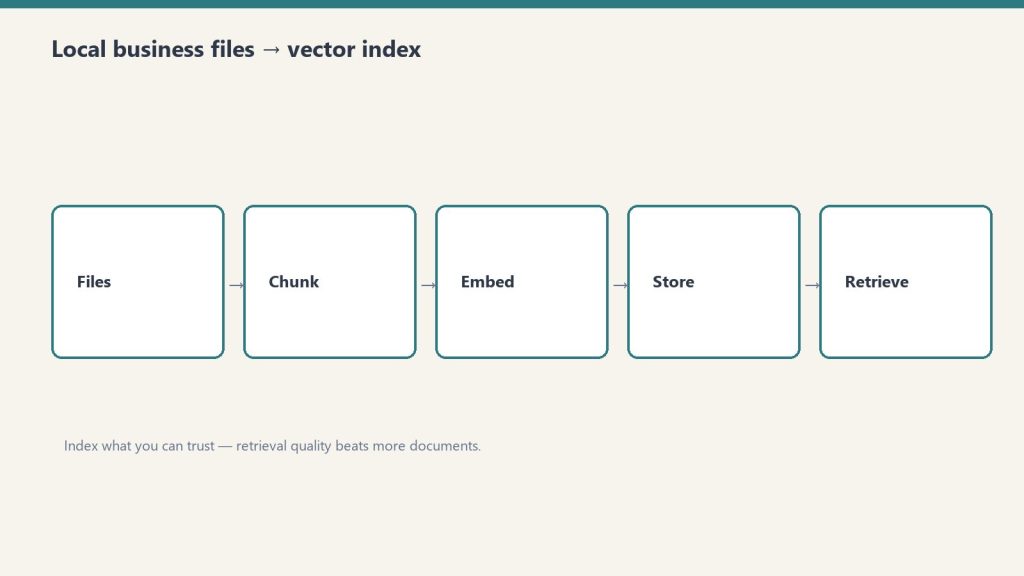
    When you start a new AI session that needs context from previous work, you can paste the saved Notion output directly into the conversation. Claude can read it, build on it, and extend it without you having to re-explain everything from scratch. You’ve effectively given the AI persistent memory across sessions — something it doesn’t have natively.

    At scale, this is the difference between an AI that feels like a perpetual intern who never learns your business and an AI that feels like a senior colleague who knows your entire history. The AI gets smarter about your specific context with every session — because the outputs accumulate rather than evaporate.

    The Philosophy: Treat AI Output as an Asset

    The underlying shift here is philosophical. Most people treat AI conversations as disposable — a means to an end, like a Google search. You get the answer, you move on.

    The businesses that will build durable competitive advantage with AI are the ones that treat AI output as an asset class. Research is an asset. Frameworks are assets. Decision logs are assets. Competitive intelligence is an asset. Every meaningful AI conversation produces something that has value — and that value compounds when it’s saved, structured, and retrievable.

    Compute is a commodity. Knowledge is not. When you pay for compute once and preserve the knowledge it produces, you’re converting a recurring cost into a one-time investment. That’s the real economics of AI-native work — and it’s available to anyone willing to close the tab two minutes later than usual.

    Getting Started Today

    You don’t need a complex system to start capturing compute value. Start with this: create a single Notion page called “AI Research & Outputs.” Every time you have a meaningful AI conversation this week, paste the key output there before you close the tab. Do it for one week and look at what you’ve built. You’ll have a knowledge base worth more than the subscription that generated it — and you’ll never pay for the same compute twice again.

    Frequently Asked Questions

    What does “paying for AI compute” mean for subscription users?

    Even on flat-rate plans like Claude Pro or ChatGPT Plus, compute costs are real — they’re built into the subscription price. Usage limits, tier pricing, and rate caps all reflect the underlying infrastructure cost. Every conversation consumes real resources, whether you see an itemized bill or not.

    Why is Notion a good place to save AI outputs?

    Notion combines structured databases, free-form pages, searchable content, and team-sharing in one place. More importantly, it integrates with AI tools via API, meaning future AI sessions can read from your Notion knowledge base directly — turning saved outputs into active context rather than archived files.

    What types of AI work are worth saving?

    Anything that required substantive reasoning: competitive research, strategic frameworks, technical architecture decisions, content briefs, cost models, process documentation, and integration specs. Casual brainstorming and one-off quick answers generally aren’t worth the overhead of saving.

    How do I get Claude to summarize a session for saving?

    At the end of any useful conversation, simply ask: “Summarize the key outputs from this session in a structured format I can save to my knowledge base.” Claude will produce a clean, titled summary with context, outputs, and next steps — ready to paste directly into Notion.

    Can I feed saved Notion content back into future AI conversations?

    Yes. Paste the Notion content directly into a new Claude conversation as context. Claude will read it, build on it, and extend it without requiring you to re-explain the background. This is how you give AI persistent memory across sessions — something it doesn’t have natively.

    How much money does the compute-twice trap actually cost?

    For individual users, duplicate compute waste typically runs $50–$100/month in subscription value plus several hours of time. For teams of five or more using AI intensively, the annual cost of not saving outputs systematically can reach $5,000–$10,000 when both subscription waste and time cost are included.