Restoration Sales - Tygart Media

Category: Restoration Sales

Commercial and residential sales process, scripts, objection handling, and team building for restoration contractors.

  • Restoration Sales Closing Techniques That Win More Jobs

    Restoration Sales Closing Techniques That Win More Jobs

    Closing in restoration sales is contextual. The technique that closes a 2am emergency water mitigation call at the kitchen table will not close a planned mold remediation project that involves comparison bids, and neither will close a commercial MSA negotiation. Effective restoration salespeople carry a small toolkit of closing techniques and the judgment to apply the right one to each situation.

    This article is part of our restoration sales playbook.

    The Assumptive Close (Emergency Mitigation)
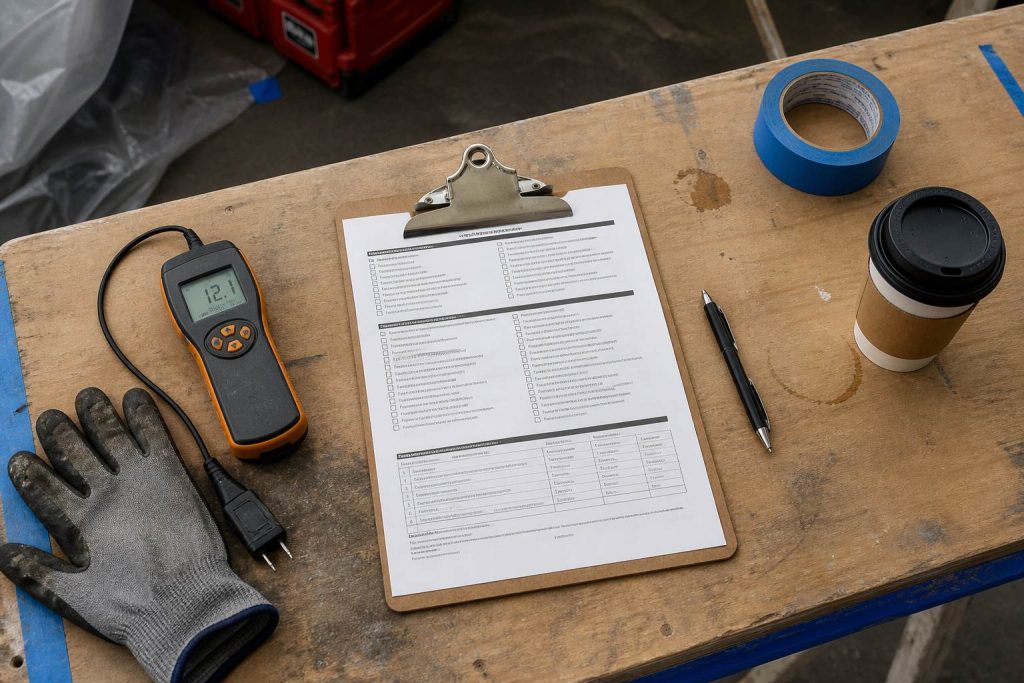
    Restoration SOP clipboard with checklist, moisture meter, and gloves on a jobsite table
    Assumptive close for emergency mitigation.

    The assumptive close is the workhorse for emergency restoration sales. Rather than asking “Do you want to move forward?” — which invites delay — the rep transitions to logistics: “I’ll have the crew here in two hours with equipment. While we’re waiting, let me get this paperwork going so we can bill your insurance directly.” This works because in true emergencies the customer wants the problem solved, and the rep is simply removing friction.

    The assumptive close fails when the customer has not bought into the value yet — using it too early in the conversation triggers resistance.

    The Urgency Close (Time-Sensitive Damage)
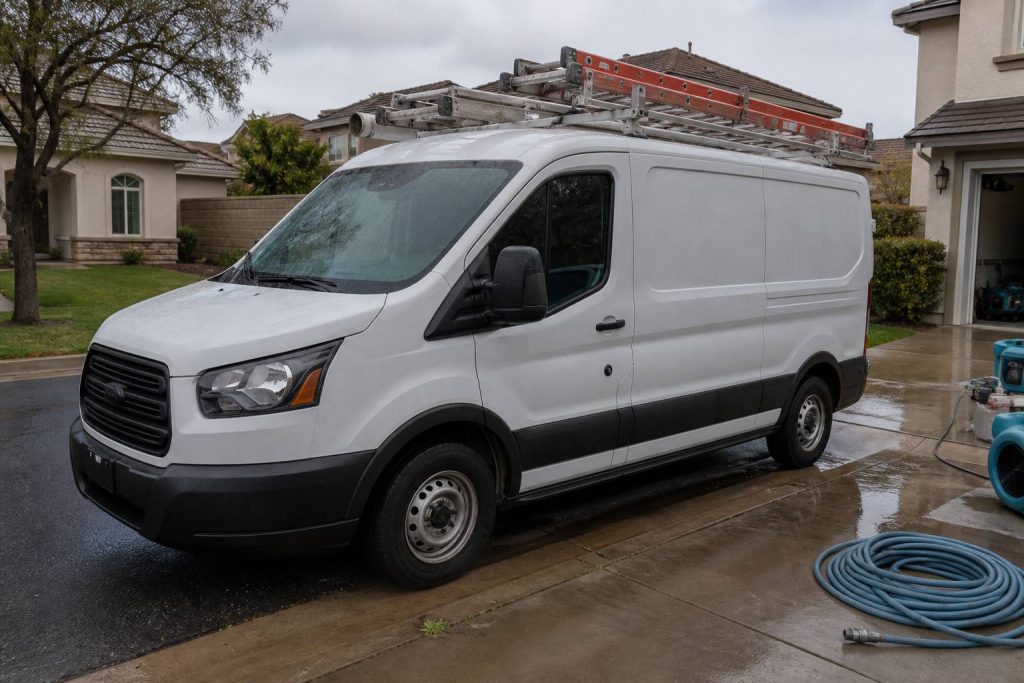
    White restoration work van with ladder rack parked at a suburban jobsite curb
    Urgency close when damage is time-sensitive.

    The urgency close uses the actual operational reality of restoration: secondary damage compounds rapidly. “If we wait another 24 hours, we’ll likely need to add demolition to the scope and the cost goes up significantly. Starting now keeps it contained at the current scope.” This works because it is true — restoration genuinely is time-sensitive — and reframes the decision as cost avoidance rather than spending.

    The Alternative Close (Commercial and Planned Work)

    The alternative close offers two acceptable paths rather than a yes/no decision: “Would you prefer we start Monday or next Wednesday?” or “Do you want us to handle the contents pack-out, or would you rather your team manage that piece?” This works because both options are progress; only refusal of the entire framing rejects the close.

    The Summary Close (Comparison Bid Situations)
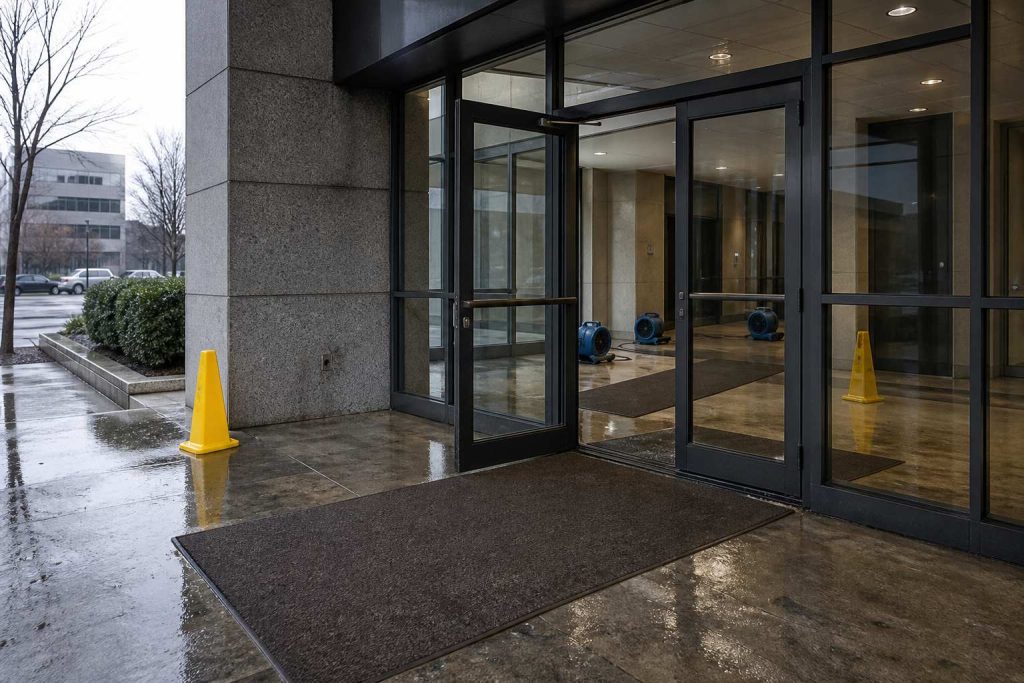
    Commercial office lobby entrance after a pipe burst with caution cones and wet runners
    Summary close for comparison-bid situations.

    When the customer has explicitly mentioned getting other bids, the summary close walks back through everything that was just covered: “Let me make sure I have this right. You need [scope], you want it done by [date], you’re concerned about [issue], and you’re working with [insurance carrier]. Based on that, our scope at [price] covers everything we discussed and we can start [timeline]. Where does that leave us?” The summary creates a clear comparison framework against any competitor and surfaces remaining concerns directly.

    The Trial Close (Throughout the Conversation)

    Trial closes are temperature checks throughout the conversation rather than dedicated closing moves. Examples: “Does this scope match what you were thinking?” or “How does the timeline work for you?” These surface objections early when there is still room to handle them rather than letting concerns accumulate silently.

    The Pilot Close (Commercial New Logo)

    For commercial restoration sales, the pilot close shifts the decision from “do you want to give us all your work” to “would you give us one job to demonstrate our performance.” This dramatically reduces buyer risk and is often the only viable close for prospects without prior experience with the company. Successful pilots almost always lead to expanded relationships.

    When to Walk Away

    Sometimes the right close is no close. Walking away protects margin and reputation when: the customer demands pricing that puts the job below cost, the scope being requested is technically unsound (skipping critical drying or testing), the customer is signaling distrust that cannot be repaired, or the property condition is outside the company’s actual capability. Polite, confident exits (“I don’t think we’re the right fit for this project — best of luck”) preserve relationships for future opportunities.

    Related on Tygart Media: Starlink on a water job · S500 in the van · local SEO for restoration.

    Frequently Asked Questions

    What is the most effective close in restoration sales?

    There is no single most effective close — different situations call for different approaches. The assumptive close dominates in emergency mitigation, the urgency close works for time-sensitive damage, the alternative close fits planned work, and the pilot close opens commercial accounts. The judgment to match technique to situation matters more than mastering any single close.

    How do I close without sounding pushy?

    Confidence comes from genuine belief that the recommendation is right for the customer. Salespeople who feel pushy usually do because they are not fully convinced of the value. Spending time deeply understanding the work and outcomes makes confident closing feel natural rather than aggressive.

    Should restoration salespeople create false urgency?

    No. Real urgency exists in most restoration scenarios — secondary damage, mold growth, structural compromise — and using it honestly is appropriate. Inventing urgency that does not exist erodes trust and damages the company’s reputation when the customer figures it out later.

    What do I do when the customer says “send me a quote and I’ll think about it”?

    Resist sending a quote and disappearing. Either close the conversation in person (“Let me walk you through it now while I’m here”), schedule a specific follow-up call within 24 hours, or politely surface the actual concern: “I’m happy to send something — what’s the main thing you’d want to think through?”

    How do I close commercial restoration deals when there is a buying committee?

    Identify the actual decision-maker and the influencers, present to all of them when possible, and propose a pilot engagement to demonstrate performance rather than pushing for an immediate MSA. Most commercial closes happen in stages over months — the goal of any single meeting is to advance to the next stage.
  • Restoration Sales CRM: Pipeline Management & Operations

    Restoration Sales CRM: Pipeline Management & Operations

    Sales operations is the difference between a restoration company that grows on individual heroics and one that grows on system. Without CRM discipline, defined pipeline stages, weekly reporting cadence, and clean handoffs between sales and production, even talented salespeople cannot scale the business. With those systems in place, average salespeople produce above-average results because the operating environment supports them.

    This article is part of our restoration sales playbook.

    CRM Selection

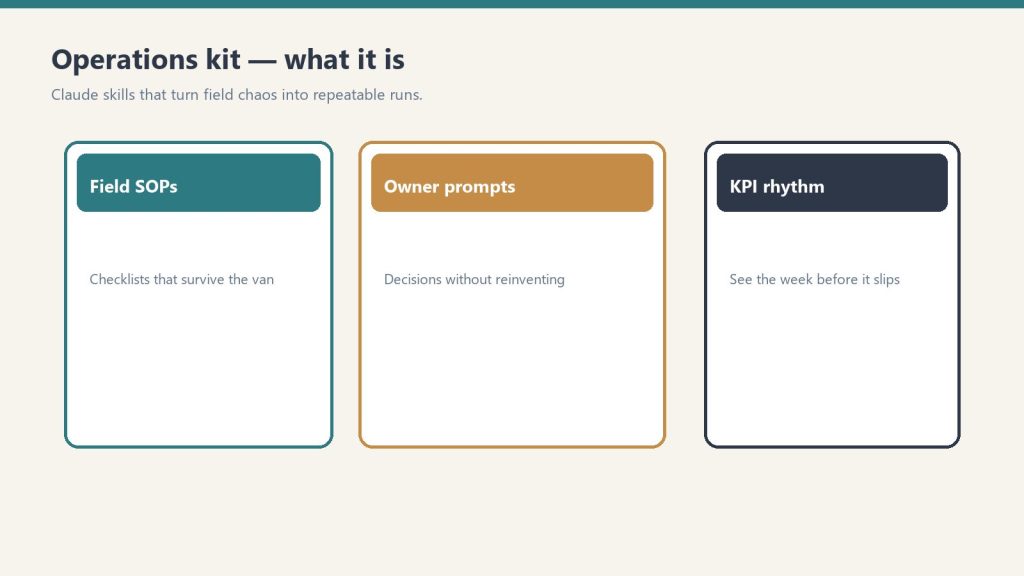
    Three cards for field SOPs, owner prompts, and KPI rhythm in an operations kit
    CRM selection.

    The CRM landscape for restoration companies splits into general-purpose systems (HubSpot, Pipedrive, Salesforce) and restoration-specific platforms (DASH, Encircle, ServiceTitan, Restoration eAcademy CRM, others). Each has trade-offs.

    General-purpose CRMs offer flexibility and strong sales features but require customization for restoration workflows. Restoration-specific platforms offer pre-built workflows and integrations with Xactimate and accounting systems but often have weaker sales functionality.

    For most restoration companies under $5M, a well-configured general-purpose CRM (HubSpot or Pipedrive) paired with restoration-specific job management software produces better results than trying to make a single tool do both jobs.

    Pipeline Stage Definitions

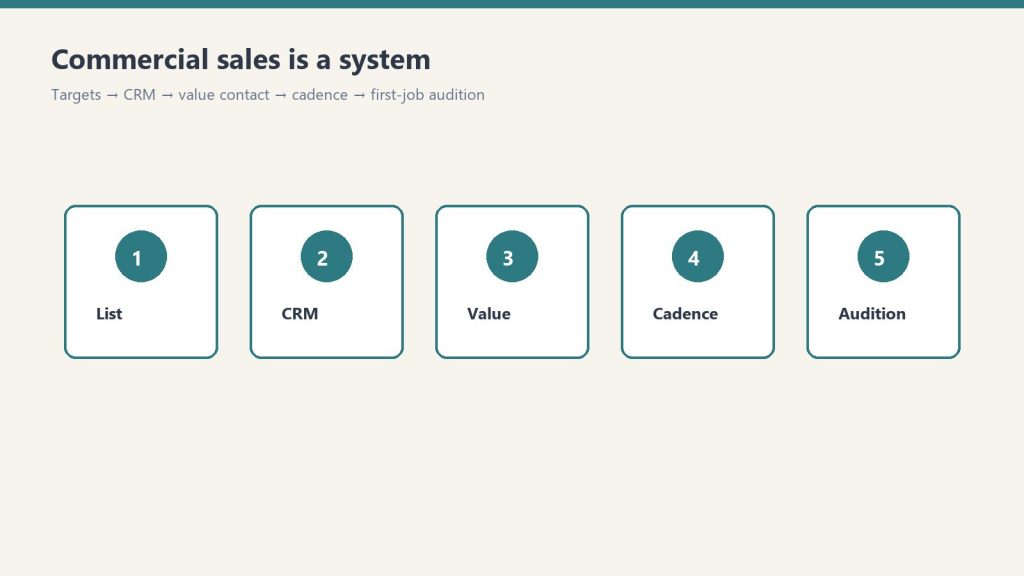
    Five-step commercial sales system from list to first-job audition
    Pipeline stage definitions.

    Clear pipeline stage definitions make sales reporting useful. A workable residential restoration pipeline structure: New Lead → Appointment Set → Estimate Completed → Authorization Pending → Authorization Signed → In Production → Closed-Won. Each stage needs an explicit definition (what makes a lead “Appointment Set” vs “New Lead”) and an explicit advancement criterion.

    For commercial restoration, pipeline stages need to be longer-cycle: Suspect → Prospect → Qualified Conversation → Capability Presented → Pilot Discussed → MSA Negotiation → MSA Signed → Account Active. The longer cycle requires more granular stages so management can see where deals are stuck.

    Sales Activity Tracking

    Activity tracking matters because revenue is a lagging indicator. Leading indicators that should be tracked daily or weekly: appointments set, appointments held, estimates delivered, follow-up calls and texts completed, and authorization signatures collected. Reps who are missing revenue targets are usually missing activity targets weeks earlier — fixing the activity issue is faster than waiting for revenue to recover.

    Lead Source Attribution

    Every lead in the CRM needs a clean source field — Google Ads, LSA, organic, referral (with sub-source), lead vendor (with vendor name), repeat customer, etc. Without clean attribution, marketing budget allocation is guessing. The most common CRM hygiene failure is sloppy lead source data, which makes ROI analysis impossible.

    Weekly Sales Reporting

    The weekly sales report that drives behavior includes: leads received and lead-to-appointment conversion, appointments held and appointment-to-estimate conversion, estimates delivered and estimate-to-close rate, average ticket size by rep and by lead source, and pipeline value by stage with weighted forecast. The report should be reviewed by the sales team together every week, not buried in an email.

    Sales-to-Production Handoff

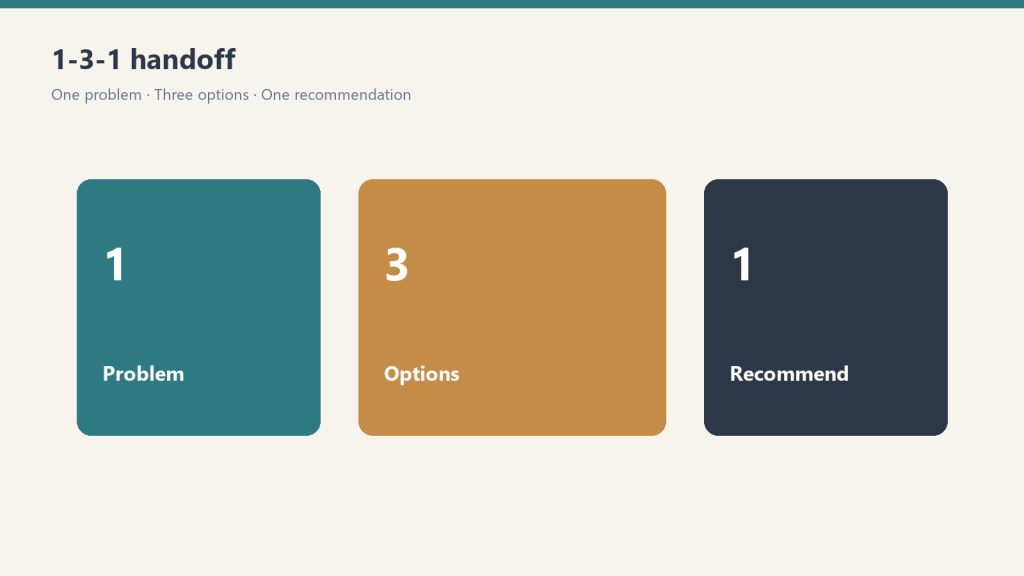
    Three panels showing one problem, three options, one recommendation
    Sales-to-production handoff.

    The handoff from sales to production is where many restoration companies leak quality. Clean handoff requires standardized scope documentation, customer expectations clearly captured (timeline, communication preferences, special concerns), insurance information complete, and a defined moment when ownership transfers from sales to production with explicit acknowledgement from both sides.

    Sloppy handoffs produce production surprises, customer complaints, and over-budget jobs. Sales should be partially accountable for production outcomes through compensation structure to align incentives.

    Related on Tygart Media: CRM AI adoption · sales playbook · commercial sales process.

    Frequently Asked Questions

    What CRM do most restoration companies use?

    The CRM mix in restoration is fragmented. Common choices include HubSpot, Pipedrive, ServiceTitan, DASH, Encircle, and various restoration-specific platforms. There is no dominant industry standard. The right choice depends on company size, technical sophistication, and existing tool stack.

    How often should sales pipeline be updated in the CRM?

    Pipeline data should be updated daily by reps and reviewed weekly in management meetings. CRM data that is updated less than weekly produces unreliable forecasting and obscures emerging issues until they become critical.

    Should restoration sales reps own data entry or have admin support?

    Most restoration sales operations run more efficiently when reps own their own data entry, supported by mobile-friendly CRM tools that reduce friction. Outsourcing data entry to admin staff creates lag, errors, and accountability gaps. The exception: lead intake admins handling inbound calls and routing.

    What sales metrics matter most for restoration?

    The leading indicators that matter most are appointment-to-estimate conversion, estimate-to-close rate, average ticket, and lead source ROI. Lagging indicators like total revenue and gross profit by rep matter for compensation and forecasting but rarely surface fixable issues in time to course-correct.

    How do I get my sales team to actually use the CRM?

    CRM adoption is driven by three things: tools that are mobile-friendly and fast (no clunky desktop-only systems), management cadence that uses CRM data in every weekly meeting (so reps know it matters), and compensation tied to deals that exist in the CRM (no CRM record, no commission credit). Without all three, adoption stays low.