Inspired by The SEO Guy (@theseoguy_). Original post: every local channel requires something owners despise. This is a new Tygart article for restoration contractors. We kept the mechanism, added first-party field knowledge, and did not reprint the thread.
SEO wants reviews. Paid ads want the phone answered in two rings with a human who can book. Social wants the owner on camera. None of that is fun after a 14-hour water day. The shops that treat those three as part of the job — not as a marketing department problem — book the work.
Restoration makes the stack sharper. The review is asked on the driveway. The two-ring rule is the night board. The camera is a 20-second walk-through of containment, not a brand film. Skip any one and the other two leak.
Inspired by Bodhi (@irentdumpsters). Original post: the 1-truck vs 8-truck / call-intake thread. This is a new Tygart article for restoration contractors. We kept the mechanism, added first-party field knowledge, and did not reprint the thread.
The original line is simple. The difference between a one-truck operator and an eight-truck fleet is almost never lead generation. It is call intake. If the CSR takes four minutes or fumbles price, a $20,000 marketing budget is expensive noise. The front desk is the highest-leverage sales floor.
That is even more true in restoration than in HVAC or plumbing. The caller is not booking a Tuesday tune-up. They are standing in water, or they are an adjuster who will not leave a voicemail twice.
What “call intake” means on a water board
Answer in two rings. After hours included.
First questions: are you safe, where is the water, is it sewage, can we roll now.
Do not hide behind “let me take a message for the estimator.” The person on the line is the estimator until a PM is assigned.
Price the emergency response honestly. “It depends” without a range loses the job to the shop that will say “we can be there in 45 and start extraction tonight.”
Log source. If you cannot say whether the call came from Maps, LSA, or a plumber referral, you cannot tell which $20k is noise.
The restoration add
A missed ring in this trade is not a lost $189 service call. It is a missed mitigation that would have paid for the rebuild conversation, the contents pack-out, and the next referral from that adjuster. Marketing did its job when the phone lit. Intake is the job after that.
Fix the desk before you raise spend. Record five live calls. Time the pickup. Count how often the caller has to repeat the address. That tape is the growth plan.
Bodhi at @irentdumpsters writes plumber and HVAC stories. Restoration owners should read them as dispatch rules, not as another trade’s marketing tips.
Three recent posts, three different trades, one mechanism.
A Boca homeowner with water across the kitchen called three plumbers off Maps at 7:30 a.m. Voicemail lost. Six-ring menu lost. Ring-two booked a $4,200 repipe that afternoon.
A lead form on a water or plumbing homepage loses the emergency call. Nobody in a puddle types an email and waits.
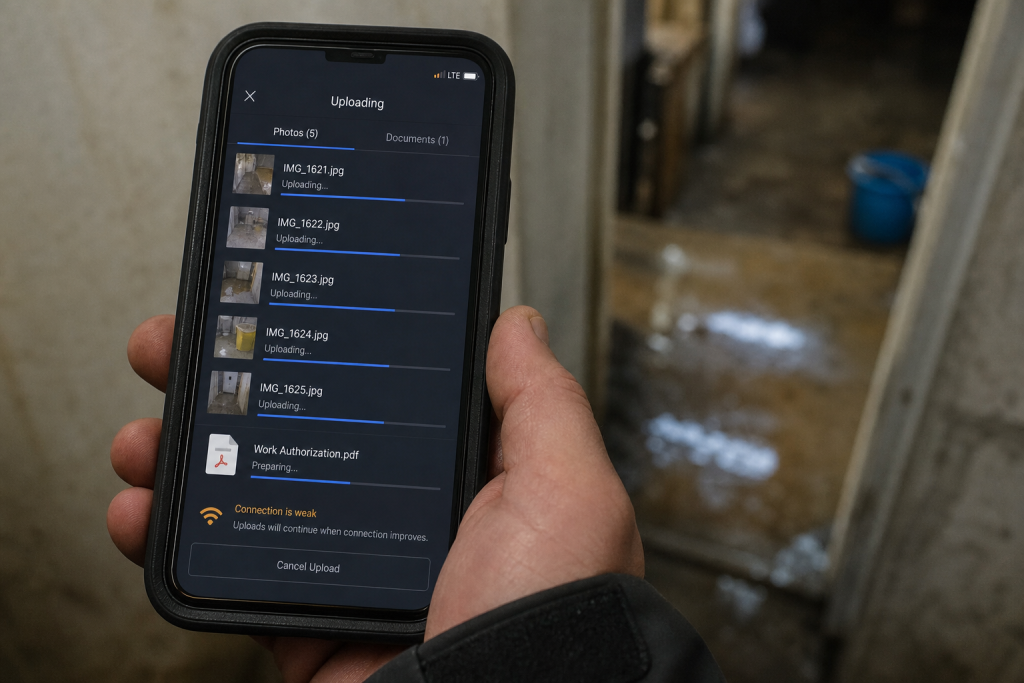
Most emergency contractor calls happen on a cracked iPhone while the basement is flooding. The About Us paragraph and the hamburger menu are not in the path.
Swap plumber for restorer and the dollar amount goes up, not down. The homeowner is not shopping a $189 service call. They are trying to stop Category 2 or 3 water before the pad and the drywall come out. The shop that makes the local number easiest to tap, then answers it, gets the mitigation and the rebuild conversation that follows.
The call is placed from the loss, not from a desktop contact form.
Reframe: speed-to-lead is part of the estimate
Restoration marketing budgets get judged on cost per lead. That number is a lie if the night board lets three rings dump to voicemail. Maps ranking, LSAs, and SEO are just pipes. The conversion event is a human voice in two rings saying they can roll a crew.
If you are number one on Maps and the CSR is on a seven-minute hold script, you are paying to educate the competitor who picks up.
What to change on the site this week
Header on mobile: local area code, tap-to-call, IICRC or license line. No hamburger hunt.
Homepage and every emergency service page: click-to-call first, form second. Forms are for commercial RFPs and insurance follow-up, not for a burst pipe at 11 p.m.
After-hours path that is a person, not a menu tree. If you use an answering service, the first sentence they say has to be dispatch, not “press 2 for billing.”
Measure answer rate and time-to-answer on Map and LSA calls separately from website forms. If ring-two is not the median, fix staffing before you buy more clicks.
What restoration adds that the plumber post skips
A plumber can book a morning slot. A restorer often has to quote emergency service, set expectations on source identification, and get permission to start dry-out before the adjuster is awake. The first 90 seconds on the phone are not “can we come out.” They are “are you safe, where is the water, is it sewage, can we roll now.” Script that. The marketing post only gets you the ring.