Mason County - Tygart Media

Category: Mason County

Your weekly briefing on Mason County, Washington — covering Shelton, Belfair, Hoodsport, Union, Allyn, and communities across the county. Local business, government, outdoors, history, schools, and community news from the heart of Hood Canal country.

  • Tahuya State Forest Spring 2026: Trail Access Guide for North Mason Families, Riders, and Hikers

    Tahuya State Forest Spring 2026: Trail Access Guide for North Mason Families, Riders, and Hikers

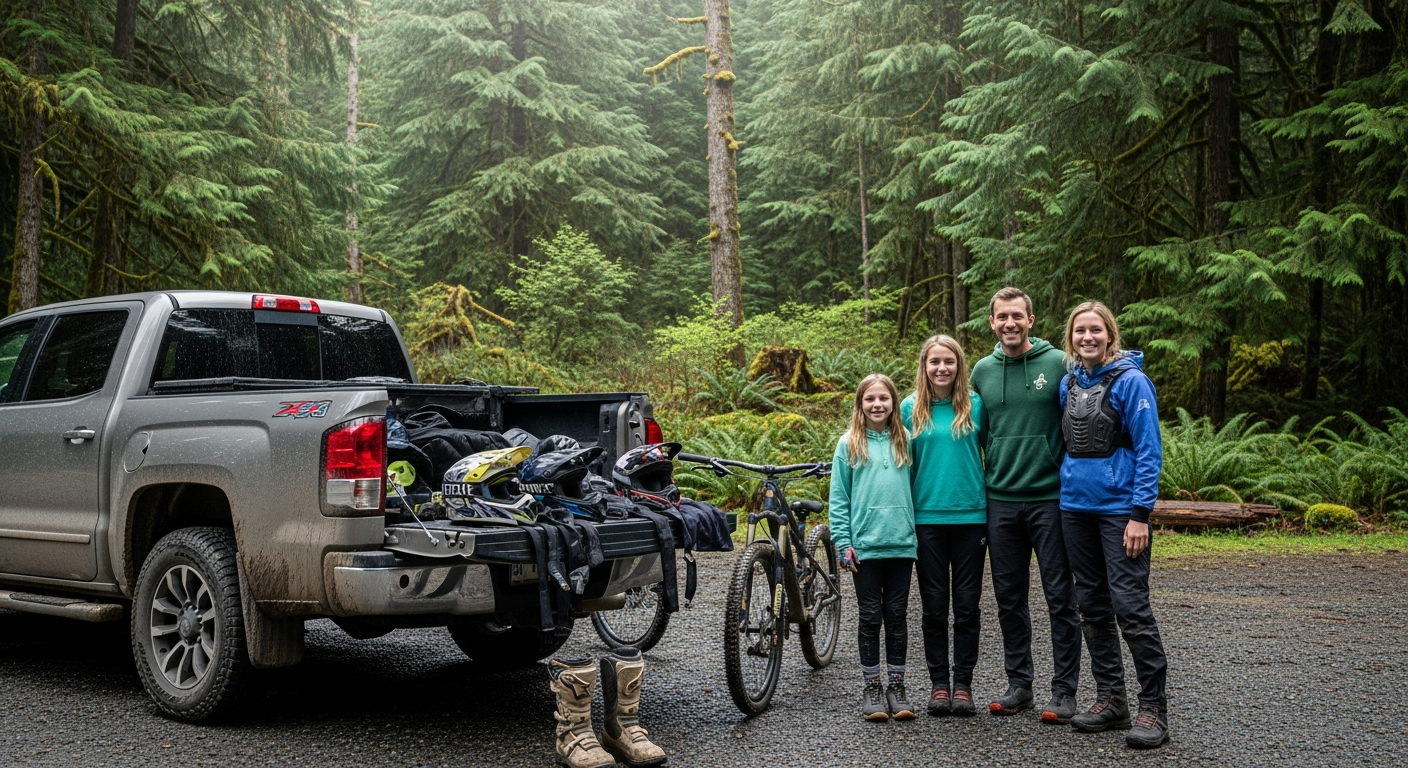
    Tahuya State Forest sits 3.5 miles west of Belfair on SR-300, and on any given spring weekend you’ll find North Mason families loading ATVs, mountain bikes, and hiking boots at the Elfendahl Pass Staging Area. It’s one of the most-used backyards this community has — 23,000 acres of DNR-managed working forest with a multi-use trail system that draws riders, hikers, and families from across Mason and Kitsap counties.

    The 2026 season opened April 15 and runs through October 31. Most of the trail network is accessible. But several sections are currently closed, and knowing which ones before you drive out could save a frustrating Saturday.

    The Howell Lake Bridge Is Out

    The biggest single closure this spring is the Howell Lake Loop Trail, which is shut down due to a washed-out bridge. DNR has not announced a repair timeline. The lake and day-use area themselves remain accessible for non-motorized use year-round — if you’re heading out for fishing, a picnic, or a family swim day, you can still get to Howell Lake. But the loop trail that circuits the lake is impassable until bridge repairs are completed. Before planning around it specifically, a call to the DNR South Puget Sound Region office at (360) 825-1631 is worth the two minutes.

    Three Timber Sales Are Affecting Multiple Trails

    Active logging operations across three DNR timber sales — known as Trail Mix, Little Wrangler, and School — are causing temporary closures and access disruptions across a section of the trail network. Trails currently affected include Randy’s H2O Stop, Mission Creek, the 1.9 Mile trail, Hoof & Tail, and the Tahuya River Trail.

    This is normal for Tahuya. DNR manages these 23,000 acres as working forest to generate trust land revenue for Washington public schools, and timber sales rotate through different sections over time. What that means practically: the closure footprint shifts week to week as operations move. A trail blocked this weekend may be clear in a few weeks, and new sections can become active as well. Check before you go, every time.

    What’s Open and Accessible: Elfendahl Pass

    Despite the active closures, the majority of Tahuya’s trail system remains open this spring. The Elfendahl Pass Staging Area — the main trailhead hub for the forest — is open for the 2026 season with space for approximately 50 vehicles, including trailer pull-through capacity for rigs hauling ATVs or trailers.

    Getting there from Belfair: take SR-300 west 3.5 miles → right on Belfair-Tahuya Road for 1.9 miles → right on Elfendahl Pass Road for 2.3 miles. The staging area is the entry point for the bulk of the open trail network.

    The Tahuya trail system is multi-use, meaning you’ll find both motorized (ATVs, dirt bikes, 4×4) and non-motorized (mountain bikes, hikers) users sharing the system on different designated routes. Know your designated zone before you ride or hike — the March 2025 DNR trail map at dnr.wa.gov/GreenMountainTahuya breaks this out clearly.

    How to Check Before You Go

    Trail conditions in Tahuya can shift quickly as logging operations relocate and spring weather affects access. The best practice is to verify current status every time:

    • Official DNR page: dnr.wa.gov/GreenMountainTahuya — current closure alerts, trail map updates, and campground information
    • Phone: (360) 825-1631 — DNR South Puget Sound Region office (often more current than the website for active timber operations)

    The Bigger Picture: Tahuya as Working Forest

    The closures and disruptions are worth understanding in context. Tahuya State Forest is not a dedicated recreation preserve — it’s a working forest where timber production and recreation coexist. DNR manages it specifically to generate revenue for Washington’s K-12 school trust lands, which means active logging is part of how the forest is supposed to function. Temporary trail closures are a predictable feature of that model, not an anomaly.

    For the North Mason community, that also means the forest’s recreational value is protected long-term by the same management structure that makes parts of it temporarily inaccessible. The trail network exists because DNR sees recreational access as compatible with its working forest mission.

    For a broader look at environmental stewardship in the Tahuya watershed, see the Belfair Bugle’s coverage of the Tahuya River Preserve’s 190-acre expansion and salmon restoration work. And if you’re planning a full day out that includes Hood Canal, our Hood Canal summer 2026 planning guide has the verified information for crab, shellfish, and camping.

    Frequently Asked Questions: Tahuya State Forest Spring 2026

    Can I still access Howell Lake if the loop trail is closed?

    Yes. Howell Lake and its day-use area remain accessible for non-motorized recreation year-round. The closure applies specifically to the Howell Lake Loop Trail due to a washed-out bridge. The lake itself, fishing access, and the picnic area are open. Contact DNR at (360) 825-1631 for current access details.

    What is the 2026 season for Tahuya State Forest?

    DNR gates at Tahuya are open from April 15 through October 31, 2026. Some areas including Howell Lake are accessible year-round for non-motorized use regardless of the gate season. Motorized access generally follows the gated season.

    Where do I park for Tahuya State Forest trails?

    The main staging area is Elfendahl Pass, which handles approximately 50 vehicles with trailer pull-through capacity. From Belfair: SR-300 west 3.5 miles → right on Belfair-Tahuya Road 1.9 miles → right on Elfendahl Pass Road 2.3 miles. A second staging area is located at Mission Creek.

    Are the timber sale trail closures at Tahuya permanent?

    No. Active timber sale closures are temporary — they shift as logging operations move through different sections of the forest. A trail closed today may reopen in a few weeks. Check dnr.wa.gov/GreenMountainTahuya for current closure status before any trip.

    Is Tahuya State Forest open to both motorized and non-motorized users?

    Yes. The trail system is multi-use, with designated routes for motorized users (ATVs, dirt bikes, 4×4) and non-motorized users (hikers, mountain bikers). The DNR trail map shows the designated zones for each user type.

  • Belfair Sewer Study and PUD 3 Cloquallum Fiber: What Mason County Business Owners Need to Know

    Belfair Sewer Study and PUD 3 Cloquallum Fiber: What Mason County Business Owners Need to Know

    Two infrastructure developments unfolding in Mason County this month carry direct implications for businesses operating in or considering the county — one with a deadline in 23 days, the other shaping Belfair’s long-term commercial capacity for years to come.

    Rural Businesses on Cloquallum Road: The May 31 Fiber Window

    For any business operating along the Cloquallum Road corridor in north Mason County — whether a home-based operation, agricultural business, or service provider — PUD 3’s construction application deadline is a genuine business decision, not just a household convenience.

    Mason County PUD No. 3 completed the Cloquallum Communities Fiberhood mainline on February 10, 2026, making gigabit fiber available to more than 680 properties along Wivell Road, Loertscher Road, and the Cloquallum Road Fiberhood. The $250 construction application fee is waived through May 31, 2026. After that date, businesses pay full price. Gigabit speeds on the PUD 3 open-access network mean 1,000/1,000 Mbps symmetrical — roughly 667 times faster than the existing 1.5 Mbps legacy service in the corridor.

    For businesses that rely on cloud software, conduct video consultations, process remote transactions, or manage any operations requiring consistent upload bandwidth — the kind of work that’s become standard across agriculture-tech, real estate, professional services, and home-based enterprises — this is the connectivity infrastructure that makes those activities viable from a Mason County rural address. Apply at pud3.org before May 31 to avoid the $250 fee.

    Belfair Sewer: What the Bremerton MOU Means for the Puget Sound Industrial Center

    The revised memorandum of understanding Mason County commissioners signed with the City of Bremerton in February 2026 is directly relevant to any business at or near the Puget Sound Industrial Center in north Belfair — and to any investor or developer watching the commercial corridor between Belfair and the Kitsap-Mason county line.

    The MOU contemplates extending Belfair sewer service to the PSIC. The revised agreement requires Bremerton to pay Mason County’s share of a comprehensive feasibility study before any work begins. That study must cover preliminary engineering and a full financial evaluation — capital, operational, and long-term cost implications for Mason County ratepayers. If Bremerton pays, the study runs 180 days. Commissioners then have 90 days to decide whether extending service is in the county’s best interest.

    For businesses at the PSIC or nearby, the practical implication is this: sewer capacity expansion into that corridor is a multi-year process at best, and it is contingent on a commissioner decision that explicitly weighs ratepayer fairness. The timeline is not 12 months. A more realistic planning horizon, assuming the study begins soon, puts any potential expansion decision into late 2026 or 2027 — and that assumes commissioner approval, which is not guaranteed given the public opposition the original MOU faced.

    Why Mason County Businesses Should Track This

    Sewer availability is a hard constraint on certain categories of commercial development. Industrial operations, food processing, healthcare facilities, and high-density commercial uses all require confirmed wastewater capacity before permitting can proceed. The Belfair WWRF’s documented structural issues — a suspected sinkhole flagged by the Department of Ecology in 2016 that has not been fully remediated — add a layer of uncertainty that makes “wait for the study” the only honest answer to capacity questions for now.

    The Squaxin Island Tribe consultation required under the MOU also means tribal government input is a formal part of the process. The Belfair WWRF sits within the tribe’s usual and accustomed fishing area, and the Coulter Creek salmon habitat implications of expansion will be part of any tribal review. That process adds time and is not a formality.

    For business owners who want to follow the process: the Belfair Sewer Advisory Committee is the primary public venue, alongside Mason County commissioner sessions. For context on Mason County’s broader infrastructure investment picture, see the full infrastructure update and Mason County Business Owner’s Guide to PUD 3 Fiber.

    Frequently Asked Questions

    Can a business in the Puget Sound Industrial Center connect to Belfair sewer today?

    Current Belfair sewer service is limited by existing capacity and the WWRF’s documented structural concern. Expansion to the Puget Sound Industrial Center is under study — no decision has been made. Businesses considering PSIC locations should factor multi-year uncertainty on sewer availability into their planning and consult Mason County Public Works directly about current connection eligibility at specific addresses.

    How does PUD 3 gigabit fiber benefit rural Mason County businesses specifically?

    Gigabit fiber provides 1,000 Mbps symmetrical connectivity — enabling cloud-based operations, video conferencing, remote point-of-sale, agricultural IoT sensors, and high-bandwidth data uploads that are not viable on 1.5 Mbps legacy service. For businesses operating from rural Mason County addresses, it removes connectivity as a limiting factor for most commercial applications. Apply before May 31 at pud3.org to avoid the $250 construction application fee.

    When might Belfair sewer expansion to the PSIC actually be decided?

    If Bremerton initiates payment for the feasibility study promptly, the 180-day study period runs through roughly late 2026. Mason County commissioners then have 90 days to decide — putting a final decision at earliest in early-to-mid 2027. That timeline assumes no delays, no appeal processes, and a positive commissioner vote. Businesses should plan for this as a 2027-or-later development at the earliest.

    Is there a Mason County resource for tracking Belfair sewer developments?

    Yes. The Belfair Sewer Advisory Committee publishes meeting agendas, minutes, and project updates at masoncountywa.gov/ac/belfair-sewer/. Mason County commissioner public meeting agendas are posted at masoncountywa.gov. These are the two primary venues where Belfair sewer decisions will be made and documented.

  • What the Bremerton Sewer Deal Means for Belfair Homeowners and Ratepayers

    What the Bremerton Sewer Deal Means for Belfair Homeowners and Ratepayers

    If you’re a property owner in or near Belfair — or if you’re currently connected to the Belfair sewer system — the revised memorandum of understanding Mason County commissioners signed with the City of Bremerton in February 2026 is worth understanding. Nothing has been decided yet. But the direction of this agreement, and the structural questions it carries, will shape what Belfair’s wastewater infrastructure looks like for the next generation of ratepayers.

    What the Revised MOU Actually Changes

    The original MOU between Mason County and Bremerton contemplated potential sewer service to the Puget Sound Industrial Center, a business corridor in north Belfair. That agreement drew vocal opposition from Belfair residents and sewer customers who argued that extending capacity to serve Bremerton’s industrial interests — while existing infrastructure issues remain unresolved — was not in their interest as ratepayers.

    The revised version signed in February 2026 addresses that concern directly: Bremerton must now pay Mason County’s full share of a comprehensive feasibility study before any work begins. Both parties have agreed to a study that includes preliminary engineering and a financial evaluation of all capital, operational, and long-term costs. If Bremerton initiates payment, the study must be completed within 180 days. Mason County commissioners then have 90 days to determine whether proceeding is in the best interest of county ratepayers. If commissioners decide it’s not, the expansion does not move forward regardless of the study’s findings.

    The Structural Issue That Hasn’t Gone Away

    The Belfair Wastewater Reclamation Facility carries a documented structural concern — a suspected sinkhole first flagged by the Washington State Department of Ecology in 2016 — that Mason County has not fully remediated. That means any conversation about expanding sewer capacity to serve new customers is happening against a backdrop of unresolved infrastructure risk at the existing facility.

    For current Belfair sewer customers, this raises a straightforward question: should the system take on additional customers and operational complexity before its own structural vulnerabilities are addressed? The feasibility study is supposed to answer the financial dimension of that question. The structural dimension is tracked separately through the county’s ongoing relationship with the Department of Ecology.

    Tribal Consultation and Coulter Creek

    The Belfair WWRF sits within the usual and accustomed fishing area of the Squaxin Island Tribe. Any expansion of the facility has potential implications for salmon habitat in Coulter Creek, which drains into the headwaters of Hood Canal near Belfair. The revised MOU requires Mason County to consult with Squaxin Island Tribe representatives before making any final decision on sewer expansion. For property owners near Coulter Creek or with property in or around the north Belfair drainage basin, this is a factor that could affect permitting and timelines for any expansion-adjacent development.

    What Property Owners Should Watch For

    The immediate trigger to track: does Bremerton initiate payment for the feasibility study? That single action starts the 180-day clock. Once the study is running, the venues to watch are Mason County commissioner briefings, the Belfair Sewer Advisory Committee, and public meetings required under the MOU process.

    If you are considering purchasing property near the Belfair sewer corridor or connecting an existing property to the sewer system, the outcome of this feasibility process is relevant to your planning timeline. For background on this story and the fiber project also affecting Mason County infrastructure right now, see the full Mason County infrastructure update. For broader Mason County infrastructure context, see Mason County PUD 1 Rate Change and Water System Upgrades.

    Frequently Asked Questions

    Could the Bremerton sewer expansion raise rates for existing Belfair customers?

    That question is exactly what the feasibility study is designed to answer. The study will evaluate financial impacts including capital, operational, and long-term costs to Mason County ratepayers. Commissioners are explicitly required to determine that expansion is in the best interest of current ratepayers before any agreement to proceed. If the study shows rate impacts that commissioners consider unfavorable to existing customers, they can and should decline to move forward.

    What is the sinkhole concern at the Belfair WWRF?

    The Washington State Department of Ecology flagged a suspected sinkhole at the Belfair Wastewater Reclamation Facility in 2016. Mason County has been monitoring this structural issue, but as of early 2026, full remediation has not been completed. The concern relates to the storage pond at the facility. This issue predates the Bremerton discussions and is tracked separately through Mason County’s relationship with the DOE.

    Can the Bremerton sewer expansion be blocked even after the feasibility study?

    Yes. Under the revised MOU, Mason County commissioners have 90 days after the study’s completion to determine whether proceeding is in the best interest of county ratepayers. A negative determination ends the expansion process regardless of the study’s findings. The commissioner vote is a genuine decision point, not a rubber stamp, and will be subject to public input through the Belfair Sewer Advisory Committee process.

    How can Belfair property owners participate in the sewer expansion decision process?

    The primary public venue is the Belfair Sewer Advisory Committee, which holds regular meetings and can be tracked at masoncountywa.gov/ac/belfair-sewer/. Mason County commissioner sessions are public and can be attended in person in Shelton or monitored through masoncountywa.gov. Written comments to the Board of County Commissioners are part of the formal process for decisions of this scale.

  • May 31 Deadline: Mason County’s Cloquallum Road Residents Have 23 Days to Lock In Free Gigabit Fiber

    May 31 Deadline: Mason County’s Cloquallum Road Residents Have 23 Days to Lock In Free Gigabit Fiber

    If you live off Wivell Road, Loertscher Road, or anywhere along the Cloquallum Road corridor in north Mason County, you have 23 days to lock in something your neighborhood has waited years for — and it costs nothing if you act before May 31, 2026.

    Mason County Public Utility District No. 3 completed the mainline fiber network for the Cloquallum Communities Fiberhood on February 10, 2026. The next step is individual property connections — and the $250 construction application fee that normally covers your drop installation is waived entirely through May 31. After that date, the fee is back in full and there are no exceptions.

    What the Application Actually Does

    Submitting a construction application tells PUD 3 you want a fiber drop installed to your property. That drop is the physical cable that runs from the PUD 3 mainline network on your road to your home or business. Once your drop is installed and active, you choose a retail internet service provider (ISP) from the multiple options available on PUD 3’s open-access fiber network and sign up for service at approximately $85 per month.

    The application itself is not a service contract — it’s a request for the physical connection. You’re not locked into a provider. PUD 3 owns the fiber infrastructure; ISPs compete to sell service over it. You can switch providers at any time without a new installation.

    What Changes When Gigabit Arrives

    Current broadband in the Cloquallum Road corridor runs at roughly 1.5 Mbps — legacy infrastructure that predates streaming video, remote work, and cloud-based applications. To give that context: a single standard Netflix stream requires 3 Mbps. A 4K stream requires 25 Mbps. A household with one person video-conferencing, one person streaming, and one gaming simultaneously is fighting over 1.5 Mbps total.

    PUD 3 gigabit fiber delivers 1,000 Mbps in both directions simultaneously. That is not a small upgrade — it is a fundamental change in what is possible from a rural Mason County property. Work from home becomes viable. Video calls are stable. Cloud backups, smart home devices, and streaming services all work without conflict. For property owners, studies of comparable rural broadband deployments consistently show fiber availability as a property value factor — especially as remote workers increasingly prioritize connectivity alongside acreage and school access.

    How to Apply Before May 31

    If you received a letter from PUD 3 with your address listed as eligible, follow the application instructions in the letter or go directly to pud3.org. If you live in the Wivell Road, Loertscher Road, or Cloquallum Road Fiberhood area and did not receive a letter, that does not necessarily mean you are ineligible — contact PUD 3 directly before May 31 to verify your address. The project area runs from west of Bear Trap Boulevard east toward Rock Creek Road.

    For more on how PUD 3’s Fiberhood model works and what the broader Mason County fiber buildout looks like, see When Is Fiber Internet Coming to My Mason County Neighborhood? and the full Mason County infrastructure update.

    Frequently Asked Questions

    Do I have to commit to a service provider when I submit the PUD 3 construction application?

    No. The construction application requests your physical fiber drop connection — the cable from the mainline to your property. Choosing an ISP and signing up for service is a separate step that happens after your drop is installed. PUD 3’s open-access model means multiple providers compete on the same fiber, and you can switch providers at any time without a new installation.

    What happens if I miss the May 31, 2026 PUD 3 deadline?

    After May 31, the $250 construction application fee is no longer waived. You can still apply and get fiber installed, but you will owe the full $250 upfront at the time of application. The mainline fiber in your area will remain in place — this deadline is specifically about the fee waiver, not about the availability of fiber service in your area.

    I didn’t get a letter from PUD 3. Does that mean I’m not eligible?

    Not necessarily. PUD 3 mails letters to addresses on its eligibility list, but some properties may be in the service area without having received a letter due to mailing database gaps. Contact Mason County PUD No. 3 directly through pud3.org or visit their Shelton office before May 31 to verify your address’s eligibility. Don’t assume you’re excluded without checking.

    How much does PUD 3 gigabit fiber cost per month in Mason County?

    Monthly service through PUD 3’s open-access fiber network runs approximately $85 per month. Because multiple retail ISPs offer service on the same PUD 3 infrastructure, rates may vary slightly by provider. The $85 figure is the benchmark for the open-access network; check pud3.org for the current ISP options and their specific pricing in the Cloquallum area once your drop is installed.

  • PUD 3 Cloquallum Fiber May 31 Deadline and Belfair Sewer Study Moves Forward — Mason County Infrastructure Update

    PUD 3 Cloquallum Fiber May 31 Deadline and Belfair Sewer Study Moves Forward — Mason County Infrastructure Update

    Two infrastructure decisions are shaping Mason County’s future right now — one with a hard deadline in 23 days, the other with a clock that starts only when Bremerton writes a check. If you live along the Cloquallum Road corridor, the May 31 deadline is the most time-sensitive infrastructure opportunity your neighborhood has seen in years. If you’re a Belfair resident or business owner, the Bremerton sewer agreement is worth watching closely through the rest of 2026.

    Act Before May 31: Free Fiber Applications Closing on Cloquallum Road

    More than 680 homes and businesses along the Cloquallum Road corridor in north Mason County are now eligible to apply for high-speed gigabit fiber internet — and the window to do it for free closes May 31, 2026.

    Mason County Public Utility District No. 3 completed the mainline network for the Cloquallum Communities Fiberhood on February 10, 2026, connecting the Wivell Road, Loertscher Road, and Cloquallum Fiberhoods areas to the PUD 3 backbone. Now PUD 3 is collecting construction applications from individual property owners — the step that triggers installation of the final drop connection to each home or business.

    The fee PUD 3 normally charges for that construction application is $250. That fee is waived entirely through May 31, 2026. After that date, anyone who applies pays the full $250 upfront, no exceptions. PUD 3 has set this deadline to give the project’s contractor a firm installation schedule — once the application window closes, crews begin sequencing drops along the corridor.

    The upgrade these applications unlock is substantial. Current broadband speeds in the Cloquallum Road area run roughly 1.5 Mbps on legacy infrastructure — barely enough for a single video call. PUD 3’s gigabit fiber delivers 1,000/1,000 Mbps symmetrical speeds, among the fastest residential broadband available in Washington state. Monthly service through PUD 3’s open-access fiber network runs approximately $85 per month.

    That “open access” model is important to understand. PUD 3 builds and owns the physical fiber infrastructure, but multiple retail internet service providers can offer service over the same cable. Residents choose their provider — and can switch without a new installation. The model has already connected more than 3,000 homes and businesses across Mason County through prior PUD 3 Fiberhood builds, including the Three Fingers project completed in early 2026.

    The Cloquallum project was funded in part through an American Rescue Plan Act grant awarded to PUD 3 by the Washington State Broadband Office in late 2023. Phase 1 wrapped in July 2025, bringing fiber to the Lake Arrowhead, Star Lake, Bulb Farm, and Lost Lake areas near Cloquallum Road. Phase 2 — the current application round — covers Wivell Road, Loertscher Road, and the broader Cloquallum Road Fiberhood running from west of Bear Trap Boulevard east toward Rock Creek Road.

    Property owners who have received a PUD 3 announcement letter should apply immediately at pud3.org. Those in the project area who have not received a letter should contact PUD 3 directly to verify eligibility before May 31.

    Belfair Sewer: Bremerton Must Pay Before the Study Starts

    About 20 miles to the south, Mason County commissioners signed off in February 2026 on a revised memorandum of understanding with the City of Bremerton regarding potential sewer service to the Puget Sound Industrial Center — a business corridor in north Belfair. The key revision: Bremerton must pay Mason County’s share of a comprehensive feasibility study before any work begins.

    Under the updated MOU, both parties agreed to a full feasibility study including preliminary engineering and a financial evaluation of capital, operational, and long-term costs. The study must be completed within 180 days of Bremerton’s payment. Commissioners then have 90 days to determine whether proceeding is in the best interest of county ratepayers.

    The context matters. The Belfair Wastewater Reclamation Facility has carried a documented structural concern — a suspected sinkhole first flagged by the Washington State Department of Ecology in 2016 — that the county has not fully remediated. Extending capacity to serve Bremerton’s industrial interests while that issue remains open drew significant debate when commissioners considered the original agreement. The revised MOU requires Mason County to consult with the Squaxin Island Tribe before any final decision on expansion, given that the Belfair WWRF sits within the tribe’s usual and accustomed fishing area and any expansion carries potential implications for salmon habitat in Coulter Creek.

    If Bremerton pays, the study clock starts and a 180-day analysis begins. If Bremerton does not pay, the question of Belfair’s long-term wastewater capacity remains unresolved indefinitely. Mason County residents and businesses near the Belfair sewer system can track developments at the Belfair Sewer Advisory Committee page.

    What to Watch

    For Cloquallum Road area residents: May 31 is a firm deadline with a real dollar amount attached — $250 saved or $250 spent, depending on when you submit your application. Visit pud3.org or call Mason County PUD No. 3’s Shelton office to confirm your eligibility and get your application in.

    For Belfair: the sewer story moves at Bremerton’s pace for now. The next trigger is Bremerton initiating payment — at that point a 180-day clock begins, and public briefings, commissioner sessions, and Belfair Sewer Advisory Committee meetings will become the venues to watch. For background on PUD 3’s broader fiber buildout across Mason County, see When Is Fiber Internet Coming to My Mason County Neighborhood? and Three Fingers Fiber Complete: Mason County Infrastructure Update May 2026.

    Frequently Asked Questions

    What is the May 31, 2026 deadline for PUD 3 Cloquallum fiber?

    Mason County PUD No. 3 has waived the standard $250 construction application fee for property owners in the Cloquallum Road corridor Fiberhood areas through May 31, 2026. After that date, the full $250 fee applies to any new application. Submitting before the deadline locks in free installation processing for eligible homes and businesses in the Wivell Road, Loertscher Road, and Cloquallum Road Fiberhood areas.

    How fast will PUD 3 Cloquallum fiber internet be?

    PUD 3’s gigabit fiber delivers symmetrical 1,000/1,000 Mbps speeds — meaning 1 Gbps both downloading and uploading. Current legacy broadband speeds in the Cloquallum Road corridor run approximately 1.5 Mbps. Monthly service through PUD 3’s open-access network costs approximately $85 per month, with multiple retail internet service providers available to choose from on the same fiber infrastructure.

    Who is eligible for the Cloquallum Communities Fiberhood application?

    Property owners and tenants in the Wivell Road, Loertscher Road, and Cloquallum Road Fiberhood areas of north Mason County are eligible. PUD 3 mailed announcement letters to eligible addresses. If you live in the project area and did not receive a letter, contact Mason County PUD No. 3 directly through pud3.org to verify your address’s eligibility before the May 31 deadline.

    What is the Belfair sewer MOU with Bremerton about?

    Mason County commissioners revised a memorandum of understanding with the City of Bremerton in February 2026 regarding potential sewer service to the Puget Sound Industrial Center, a business corridor in north Belfair. The revised agreement requires Bremerton to pay upfront for a comprehensive feasibility study — including preliminary engineering and financial analysis — before any expansion work begins. If Bremerton pays, the study must be completed within 180 days; commissioners then have 90 days to decide whether to proceed.

    Will the Bremerton sewer deal increase rates for existing Belfair customers?

    No decision on sewer service expansion has been made — the feasibility study (which Bremerton must fund) is the first step. The study will evaluate financial impacts including capital, operational, and long-term costs to Mason County. Commissioners are required to determine whether proceeding is in the best interest of current county ratepayers before any expansion agreement can move forward. Ratepayer impact will be a central issue in those deliberations.

    Why does the Belfair sewer expansion require tribal consultation?

    The Belfair Wastewater Reclamation Facility sits within the usual and accustomed fishing area of the Squaxin Island Tribe. Any expansion of the system has the potential to affect salmon habitat in Coulter Creek. Under the revised MOU, Mason County is required to consult with Squaxin Island Tribe representatives before making any final decisions on sewer service expansion to the Puget Sound Industrial Center.

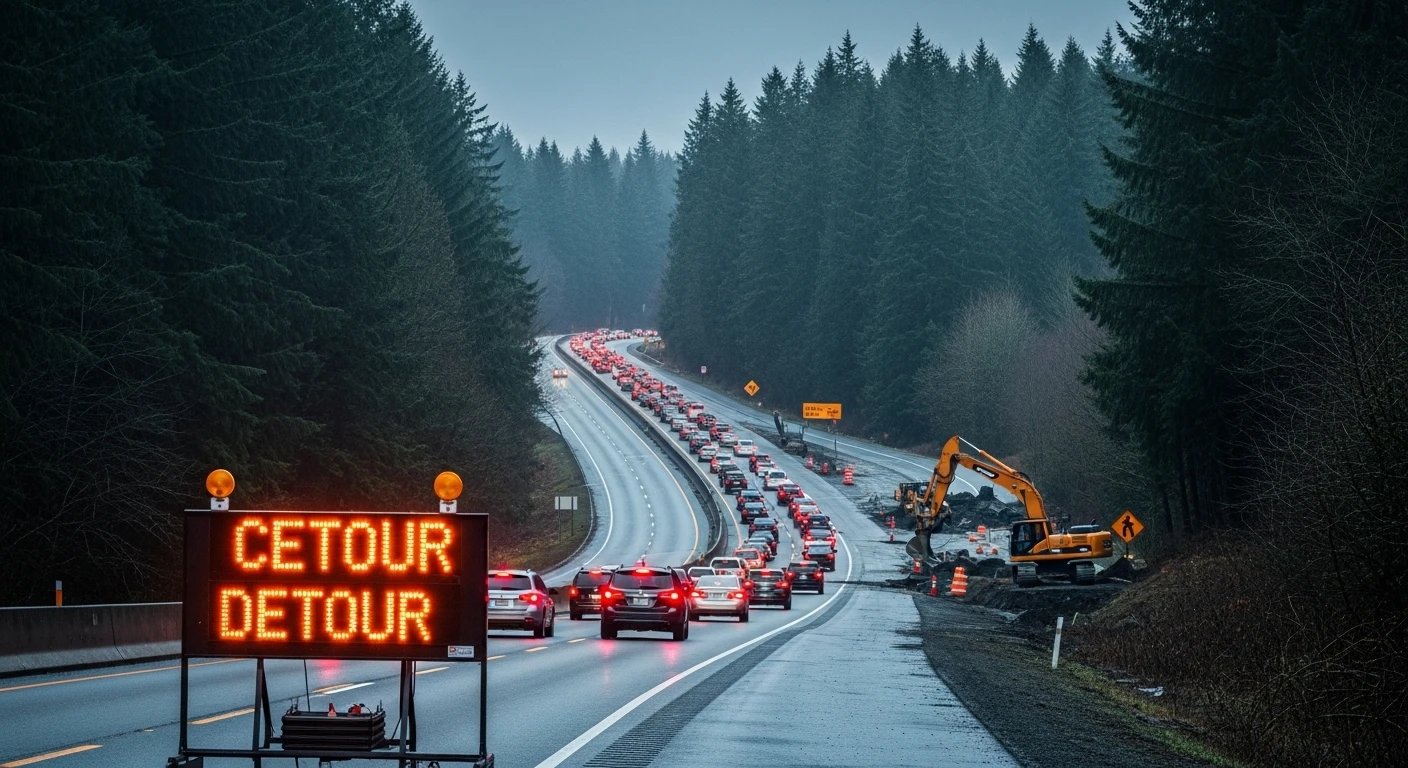
  • Mason County Roads — May 8, 2026

    Published: May 8, 2026 · Sources: WSDOT, Mason County Public Works, Shelton-Mason County Journal · Check WSDOT live map →

    Active Alerts — Check Before You Drive

    No WSDOT-issued emergency closures or alerts found for Mason County highways as of this morning. For real-time conditions on your specific route, use these official sources directly:

    Major Projects — Current Status

    SR-3 Freight Corridor (Belfair Bypass)

    Status: Construction expected to begin 2026, completion targeted 2028 — but funding is under threat.

    The SR-3 Freight Corridor — the bypass that will route regional freight and commuter traffic around Belfair’s main corridor — has $48.3M secured and construction is planned to begin this year. However, Governor Ferguson’s proposed transportation budget would delay final funding from the 2027-29 biennium to 2031-33, effectively pushing completion years into the future.

    Mason County Commissioners sent a letter to House Transportation Committee Chair Jake Fey urging the Legislature to restore the funding on schedule, calling the delay “an economic, safety, and infrastructure issue with real and immediate consequences.” The corridor is designed to carry local trips, freight, emergency response, school buses, and commuter traffic on separate infrastructure rather than all competing on the same road through Belfair’s center.

    Source: Shelton-Mason County Journal, February 19, 2026

    Olympic Highway North — Shelton

    Status: Design phase. Construction not before summer 2027.

    The City of Shelton’s $6 million repaving project for Olympic Highway North — from C Street to Wallace Kneeland Boulevard — is in the design and public comment phase. The road hasn’t been paved in 37 years. Consultant Transpo Group is finalizing the preferred design following a March 10 community meeting where about 50 residents weighed in on four layout options, including roundabout and bike lane configurations.

    Timeline: Final design expected to be completed this winter. Project goes out for bid in spring 2027. Construction could begin summer 2027. The project is funded by two grants including a $3.7 million grant from the state Transportation Improvement Board.

    Source: Shelton-Mason County Journal, March 19, 2026 · City of Shelton project page

    SR-3 Safety Improvements — Shelton (Craig Road to Arcadia Road)

    Status: Pre-design. No construction date set yet.

    WSDOT is planning roundabouts at Craig Road, Mill Creek Road, and Arcadia Road on SR-3 in Shelton, along with a center median to reduce left-turn conflicts and encourage safer speeds. A public comment period closed April 6. No construction timeline has been announced — this is still in pre-design. Watch WSDOT’s project page for updates.

    SR-3 Belfair Area — Widening Near Romance Hill

    Status: Ongoing widening project.

    This project extends the center turn lane and adds paved shoulders and sidewalks on both sides of SR-3 from milepost 25.3 to 27 near Belfair. Work has involved overnight lane realignments near Romance Hill. Check the WSDOT travel map for current lane status.

    Commuter Notes for Today

    • SR-3 through Belfair: No emergency closures reported. Standard congestion expected during school and commute hours at Belfair’s main intersection.
    • US-101 through Shelton/Kamilche: No active alerts this morning. Check WSDOT alerts for any weather-related changes.
    • SR-106 (Union/Belfair area): No active alerts. Permanent speed limit reduction near Union remains in effect — reduced from previous limit, watch signs through the Union section.

    Report a Road Issue

    If you see a problem on a state highway — pothole, signal outage, debris — report it directly:

    This briefing is published each morning using official WSDOT and Mason County Public Works sources. For the most current conditions at any moment, always check the WSDOT live map directly — road conditions change faster than any daily briefing can track.

  • North Mason School Levy Passes — What It Means, What It Doesn’t, and What Comes Next

    Certification status: The Mason County Auditor’s Canvassing Board meeting to certify this election is scheduled for May 8, 2026 at 2:00 PM. The vote totals below are from the April 30 preliminary count. For the official certified result, check the Mason County Auditor elections page directly.

    The Vote

    North Mason School District’s four-year education programs and operations (EP&O) replacement levy passed in the April 28, 2026 special election. The Mason County Auditor’s Office reported the following preliminary totals across both Mason and Kitsap counties:

    CountyYesNoYes %
    Mason County2,0891,80853.61%
    Kitsap County414348.81%
    Combined2,1301,85153.50%

    Source: Shelton-Mason County Journal, April 30, 2026

    This was the third attempt after the levy failed twice in 2025 — in February (46.17% yes) and again in a subsequent election. The district lowered the tax rate for this third proposal to $1.01 per $1,000 of assessed value for 2027–2030, down from $1.28/$1.24/$1.21/$1.17 in the two failed proposals.

    What Superintendent Michael Said

    Superintendent Kristine Michael responded to the preliminary results Tuesday night. The Shelton-Mason County Journal quoted her directly: “We are very pleased and encouraged by these preliminary results, and we will be monitoring closely as ballots continue to be counted and certified. If this outcome holds, it reflects the trust this community is placing in our schools and our students. I do not take that trust lightly, and I will continue working to restore and strengthen the community’s confidence in our schools.”

    What the Levy Funds — and What It Doesn’t Fix Right Away

    This is where parents and community members need to read carefully. Passage of the levy does not undo the cuts that already happened.

    The district made $3 million in cuts at the end of the 2025–26 school year after the levy expired at the end of 2025. Those cuts hit athletics, student activities, and staff positions directly. The levy’s replacement funding will not arrive until April 2027 at the earliest — Superintendent Michael confirmed this timeline with the Journal before the election.

    Michael was explicit about what that means even in a passage scenario: “Those funds would allow us to avoid making additional reductions, but because we are operating with only a partial year of levy revenue even in a passage scenario, we would not be in a position to restore programs or positions already reduced.”

    In plain terms: the levy passing stops the bleeding, but it does not reverse it. Programs and positions already cut are not automatically restored. The district will need to work through its budget process for the 2027–28 school year before any restoration decisions are made.

    What the Levy Rate Means for Property Owners

    At $1.01 per $1,000 of assessed value, a home assessed at $400,000 would pay approximately $404 per year — or about $33.67 per month — toward the levy for 2027 through 2030. This is the lowest rate of the three proposals the district has put to voters.

    The History Behind This Vote

    North Mason has a difficult levy history. The district experienced two EP&O failures in 2020, which triggered significant budget cuts then as well. The current levy that expired replaced the one approved barely — at 50.3% — in 2021. The two 2025 failures set the stage for the $3 million in cuts that went into effect this school year, and for the third attempt at a lower rate that passed April 28.

    What to Watch Next

    • May 8, 2026: Mason County Auditor Canvassing Board meets at 2:00 PM to certify the election. Official certified results will be posted to the Mason County Auditor elections page.
    • 2026–27 school year: The district operates without full levy revenue. No program restorations expected this year.
    • April 2027: Earliest date levy funds begin flowing to the district.
    • 2027–28 budget process: The first realistic opportunity for the school board to consider restoring cut programs and positions, subject to budget conditions at that time.

    For ongoing North Mason School District updates, the district’s official communications are at northmasonschools.org. Election results and certification status are at the Mason County Auditor’s Office.

  • Why Rural Washington’s Fiber Buildout Matters for the AI Era — A Mason County Perspective

    If you’ve been following Mason County’s PUD 3 fiber expansion — the gigabit buildout reaching Cloquallum and pushing toward Belfair — you might be thinking about faster streaming or more reliable video calls. That’s real. But there’s a bigger story underneath it, one that connects directly to where work, business, and information are heading.

    The AI tools that are reshaping professional work — coding assistants, document analysis, agent automation — are bandwidth-intensive, latency-sensitive applications. They are not designed for satellite internet with 600ms ping times or DSL connections that struggle past 10Mbps. Gigabit fiber is the infrastructure layer that determines whether you can use these tools the same way someone in Seattle or Bellevue does. That gap matters more than most people realize right now.

    What AI Tools Actually Require

    The practical bandwidth requirements for AI-assisted work are modest by gigabit standards — but they are real, and they add up quickly in a household or small business where multiple people are working simultaneously.

    • Claude, ChatGPT, Gemini via browser: Low bandwidth per session, but latency matters for agentic tasks that involve multiple back-and-forth exchanges. A 200ms round-trip feels fine; 600ms feels broken during long agentic runs.
    • Claude Code and coding agents: These tools read and write files, run terminal commands, and stream outputs continuously. On a slow connection, the feedback loop that makes these tools useful breaks down.
    • Document processing pipelines: Uploading a 50-page PDF or a folder of images for analysis on a 5Mbps upload connection takes long enough to interrupt workflow. On gigabit fiber it’s nearly instant.
    • Video + AI combined workflows: Remote workers using AI transcription, real-time meeting assistants, or AI-enhanced video conferencing stack bandwidth requirements that rural connections routinely can’t sustain.

    None of this is about luxury. It’s about whether the productivity gains that AI tools deliver are accessible equally — or whether they accrue disproportionately to people already located in well-connected metro areas.

    The Mason County Context

    PUD 3’s Cloquallum fiber project has a May 31, 2026 signup deadline for residents in the service area. The broader PUD 3 gigabit buildout has been expanding through the county with the goal of bringing symmetrical gigabit service to areas that have been underserved for years.

    For Mason County property owners, fiber access is already showing up in home valuations — buyers who work remotely increasingly treat fiber availability as a binary filter. For business owners, the calculus is more direct: reliable symmetric bandwidth is now a prerequisite for the category of software tools that are compressing what small teams can produce.

    What This Looks Like in Practice

    A small business owner in Shelton or Belfair with gigabit fiber can run the same AI-assisted workflows as a marketing agency in Seattle. That means:

    • Using Claude via the API to automate document-heavy back-office work — contracts, proposals, intake forms — at a cost that’s measured in cents per task rather than hours of labor
    • Running Claude Code for software development or automation scripting without the latency that makes agentic coding tools frustrating on slow connections
    • Participating in distributed teams where AI-enhanced collaboration tools are standard — video calls with live transcription, shared AI workspaces, automated meeting summaries
    • Building content, analysis, or research pipelines that would previously have required hiring specialized staff

    None of these use cases require a computer science degree. The current generation of AI tools — particularly Claude’s May 2026 updates including managed agents and the expanded connector ecosystem — are built for people who want to use AI to get work done, not people who want to study AI.

    The Bigger Picture: Rural Participation in the AI Economy

    There’s a version of the AI transition that looks like previous technology shifts — where the productivity gains concentrate in places that already have infrastructure advantages, and rural areas fall further behind. Fiber buildouts like PUD 3’s are the infrastructure decision that determines which side of that divide Mason County lands on.

    The tools themselves are increasingly cloud-based and location-agnostic. Claude doesn’t care whether you’re in Bellevue or Belfair. The connection does.

    This is why local infrastructure decisions that might look like routine utility policy — a PUD fiber deadline, a county broadband study — are actually decisions about economic participation in what’s coming next. The May 31 signup deadline for Cloquallum fiber isn’t just a utility question. It’s an access question.

    If You’re New to AI Tools and Have the Connection

    If PUD 3 fiber has reached your area and you haven’t explored what current AI tools can actually do for your work, a few starting points:

    • The Anthropic Console — where to get an API key and start building with Claude directly
    • Claude pricing — what each plan costs and which one makes sense for individual vs. team use
    • What Claude can do as of May 2026 — the current state of the tools, including the managed agents and connector expansion that make it useful for non-developers

    The infrastructure and the tools are both moving fast. Mason County’s fiber buildout is the local side of a much larger story.

  • PUD 3 Cloquallum Fiber Deadline May 31 and Belfair Sewer Study Moves Forward — Mason County Infrastructure Update

    PUD 3 Cloquallum Fiber Deadline May 31 and Belfair Sewer Study Moves Forward — Mason County Infrastructure Update

    Two significant infrastructure developments are unfolding across Mason County this week — one offering a limited-time opportunity for hundreds of rural residents to lock in free fiber internet connections before the end of May, and another marking a new chapter in the long-running debate over how to handle Belfair’s wastewater future.

    Act Now: PUD 3’s Free Fiber Application Window Closes May 31

    More than 680 homes and businesses along the Cloquallum Road corridor in north Mason County are now eligible to apply for high-speed gigabit fiber internet — and the free application window closes in just three and a half weeks.

    Mason County Public Utility District No. 3 announced in February 2026 the completion of Phase 2 of its Cloquallum Communities Fiberhood project, triggering a new round of application letters to property owners in the Wivell Road, Loertscher Road, and Cloquallum Fiberhoods areas. But the window is closing fast: PUD 3 has waived the standard $250 construction application fee only through May 31, 2026. After that date, anyone who applies will owe the full $250 upfront.

    The stakes are real. When the Cloquallum Communities project reaches full completion — targeted for October 2026 — residents in these rural stretches will go from dial-up-like speeds of roughly 1.5 Mbps to symmetrical gigabit internet at 1,000/1,000 Mbps, among the fastest residential broadband available anywhere in Washington state. Monthly service is expected to run approximately $85 per month through PUD 3’s open-access fiber network.

    That “open access” model is worth understanding. PUD 3 builds and owns the physical fiber infrastructure, but multiple retail internet service providers can deliver service over that single cable. Residents choose their own provider — and can switch providers without needing a new connection installed. The model has already delivered results: more than 3,000 homes and businesses across Mason County are now connected to PUD 3 fiber through prior Fiberhood builds.

    The Cloquallum project is funded in part through an American Rescue Plan Act (ARPA) grant awarded to PUD 3 by the Washington State Broadband Office in late 2023. Phase 1 of the project wrapped in July 2025, bringing the mainline fiber network to the Lake Arrowhead, Star Lake, Bulb Farm, and Lost Lake areas near Cloquallum Road. Phase 2 focuses on the Wivell Road and Loertscher Road communities and the broader Cloquallum Road Fiberhood area, running from west of Bear Trap Boulevard east toward Rock Creek Road.

    Residents who have already received an announcement letter should apply as soon as possible at pud3.org. Those who live in the project area and have not received a letter should contact PUD 3 directly to verify their eligibility before the May 31 deadline passes. After five years of engineering, grant-writing, and construction, gigabit internet is finally arriving in one of Mason County’s most historically underserved broadband corridors — but only to those who get their applications in on time.

    Belfair Sewer: Bremerton Now on the Hook for Feasibility Study

    About 20 miles to the south, a very different infrastructure question is moving forward — carefully.

    Mason County commissioners in February 2026 signed off on revisions to a memorandum of understanding (MOU) with the City of Bremerton regarding potential sewer service to the Puget Sound Industrial Center, a business corridor in north Belfair. The key change in the updated agreement: Bremerton is now required to pay for Mason County’s share of the feasibility study before the work can begin.

    Under the revised MOU, both parties have committed to a comprehensive feasibility study including preliminary engineering and a financial evaluation of the capital, operational, and long-term costs involved. If Bremerton pays, the study must be completed within 180 days. Mason County commissioners will then have 90 days to determine whether moving forward is in the best interest of county ratepayers.

    The Belfair sewer system has been under pressure for years. The Belfair Wastewater Reclamation Facility (WWRF) storage pond has a documented structural concern — a suspected sinkhole first flagged by the Washington State Department of Ecology in 2016 — that the county has not fully remediated. Questions about whether extending service to serve Bremerton’s industrial interests would be fair to existing Belfair ratepayers generated significant debate when commissioners first considered the original MOU.

    Adding further complexity, the Belfair WWRF sits within the usual and accustomed fishing area of the Squaxin Island Tribe, and any expansion carries potential implications for salmon habitat in Coulter Creek. Under the revised agreement, Mason County is required to consult with tribal representatives before making any final decisions on expansion.

    For residents who use or are considering connecting to the Belfair sewer system, the next several months will be worth watching closely. If Bremerton initiates payment, a 180-day study clock begins ticking — and commissioner briefings, public meetings, and Belfair Sewer Advisory Committee sessions will be where the real debate plays out. If Bremerton does not pay, the study stalls — and the question of Belfair’s long-term wastewater capacity remains unresolved.

    What to Watch

    On the fiber front, May 31 is a hard deadline. Whether you live off Wivell Road, Loertscher Road, or anywhere along the Cloquallum Road corridor in north Mason County, submitting a construction application before that date saves you $250. Visit pud3.org or contact Mason County PUD No. 3 at their Shelton office for details on the application process.

    On the sewer front, the clock starts when Bremerton writes the check. Mason County residents can track developments through masoncountywa.gov and the Belfair Sewer Advisory Committee page at masoncountywa.gov/ac/belfair-sewer/.


    Related Expansion Coverage

    This beat post was expanded into a full knowledge cluster by the Mason County Minute Variant Expander on May 8, 2026:

  • New to Mason County? OneStop Northwest’s Shelton Showroom and the SR-3 Port Deal Explain How the Local Economy Works

    New to Mason County? OneStop Northwest’s Shelton Showroom and the SR-3 Port Deal Explain How the Local Economy Works

    If you moved to Mason County recently — whether you settled in Shelton, Belfair, Allyn, or anywhere in between — two stories from this week give you useful context about how this county’s economy is structured and what’s being built right now.

    OneStop Northwest: A Mason County Business Resource Worth Knowing About

    One of the common frustrations for business owners and households new to Mason County is discovering that the county’s commercial services are more dispersed than in larger metro areas. OneStop Northwest LLC is attempting to change that for a specific and practical set of needs.

    The company — a minority-owned business based in Union, Washington, with more than 20 years of operating history — is opening a showroom at 124 N. 2nd St., Suite A in downtown Shelton on May 22, 2026. Its grand opening runs from 4:30 to 7:00 p.m. and is free to attend (RSVP at onestopnw.com).

    What OneStop Northwest does: promotional products and branded apparel, commercial printing, custom company stores, website development, SEO and social media marketing, digital marketing, IT support, payroll automation, and government contracting for internet and phone services. If you’re starting or running a business in Mason County and currently sourcing those services from outside the county, this showroom is worth a visit.

    The company is a member of the Shelton-Mason County Chamber of Commerce. The Chamber is at masonchamber.com and is one of the most useful resources for newcomers trying to understand Mason County’s business network — member listings, events, and connections to local government contacts all live there.

    How Mason County’s Port Districts Work — and Why the SR-3 Discussion Matters

    New residents are sometimes surprised to learn how many special-purpose public agencies operate in Mason County alongside city and county government. Port districts are among them. Mason County has several: the Port of Shelton (the largest), the Port of Allyn, the Port of Grapeview, the Port of Hoodsport, and others.

    Port districts are quasi-governmental agencies with an elected board of commissioners. Their core purposes under Washington state law include economic development, industrial development, and waterfront and marina infrastructure. They can levy property taxes within their district boundaries, accept grants, and own property. They hold regular public meetings that are open to the community.

    Right now, two of north Mason County’s smaller ports — the Port of Allyn and the Port of Grapeview — are exploring something worth understanding if you live in the Allyn-Grapeview area: a joint purchase of a $2 million commercial and light industrial property on SR-3 near East Harding Hill Road.

    Port of Allyn Executive Director Travis Merrill raised the opportunity at the Port of Grapeview’s April 2026 regular meeting. The property has existing tenants, some vacancy, and potential for future expansion. The financial case: each port could earn $15,000 to $18,000 per year after expenses from leasing and rental income.

    The larger picture Merrill described is one that shapes north Mason County’s development landscape for years: small port districts in Washington face financial pressure from inflation and rising operating costs. Acquiring income-generating commercial property is one lever they have to build financial stability. And under Washington law, a port district that owns industrial property has tools to actively attract business tenants to that corridor — which over time means jobs and services in the Allyn-Grapeview area.

    Neither board has voted to purchase. The next steps are a site visit and research into how two independent port districts can jointly own a single asset. Watch for updates at public meetings for both the Port of Allyn (portofallyn.com) and the Port of Grapeview.

    What to Do with This Information as a New Resident

    The May 22 OneStop Northwest grand opening is a free community event in downtown Shelton — a good way to meet local business operators and see what the county seat’s commercial district looks like. It’s also a chance to evaluate whether OneStop’s services fit any needs you have, whether for a business or for community projects.

    For the SR-3 port story: if you live in the Allyn or Grapeview areas, attending a Port of Allyn or Port of Grapeview meeting is a good introduction to how local public agencies operate. These meetings are publicly noticed, short, and genuinely accessible — a different register from county commissioner meetings, and a useful window into north Mason’s economic direction.

    Frequently Asked Questions

    What are port districts in Mason County and how do they affect residents?

    Port districts are elected special-purpose public agencies with authority over economic and industrial development, waterfront infrastructure, and marina operations. They can levy property taxes within their boundaries, own property, and accept grants. Residents in a port district’s service area pay a small portion of their property taxes to the port. Mason County has several ports including the Port of Shelton, Port of Allyn, Port of Grapeview, and Port of Hoodsport.

    Where is the OneStop Northwest showroom in Shelton?

    The showroom is at 124 N. 2nd St., Suite A in downtown Shelton. The grand opening is May 22, 2026, from 4:30 to 7:00 p.m. RSVP at onestopnw.com. The event is free.

    What is the Shelton-Mason County Chamber of Commerce and how can new residents use it?

    The Chamber is the primary business membership organization in Mason County. It maintains a member directory of local businesses, hosts networking events, and connects businesses with county economic resources. New residents and business owners can find it at masonchamber.com.

    What is the SR-3 commercial property the ports are considering buying?

    It is a $2 million commercial and light industrial property on State Route 3 near East Harding Hill Road in north Mason County, in the Allyn area. The Port of Allyn and Port of Grapeview are researching a joint purchase to generate rental income and support future industrial development in the corridor.

    How can I attend Port of Allyn or Port of Grapeview public meetings?

    Both port districts hold regular public meetings that are open to the community. The Port of Allyn’s website is portofallyn.com. Meeting agendas and schedules are posted publicly. No registration is required to attend.


    Related Coverage