Category: Boeing & Aerospace
Paine Field, Boeing Everett, aerospace industry news, and workforce updates.
-
For Boeing Workers in Everett: What the 737 North Line Launch Means for Your Career
If you work at Boeing’s Everett campus — or you’re trying to get there — the North Line changes your calculus this summer.
Boeing is opening its first-ever 737 MAX production line in Everett in summer 2026. For Everett-area aerospace workers, that means new positions, internal transfer opportunities, and a second major production program running alongside widebody assembly on the same campus.
What’s Actually Opening — and When
The North Line is a 737 MAX final assembly line inside the Everett factory. It will initially build 737 MAX 8 and MAX 9 jets, with MAX 10 capability once FAA certification clears (still pending as of April 2026). Boeing is targeting midsummer 2026 for first production in Low Rate Initial Production (LRIP) — a deliberately slowed build phase where additional quality checks are layered in before full production speed.
Boeing posted shift manager and production management job listings for the North Line in January 2026. Hourly IAM-covered production positions have been posted through the spring. If you’ve missed the first wave of postings, watch jobs.boeing.com — North Line hiring will continue as the line scales up.
Transfer vs. New Hire — What’s the Mix
Boeing has been explicit: North Line staffing is a combination of newly hired employees and existing Boeing workers transferring from Renton, Everett’s own campus, and Moses Lake. If you’re already at Everett working widebody programs (787, 777X), internal transfer opportunities to the North Line are real — especially for workers with experience in flow-based final assembly.
New hires go through 12 weeks of Foundational Training — currently conducted in Renton — before returning to Everett for Structured On-the-Job Training (SOJT) paired with experienced workers. That 12-week window is a significant time commitment to plan around if you have family logistics tied to Everett.
IAM 751 Coverage
North Line production jobs are IAM District 751 positions, covered under the collective bargaining agreement between Boeing and the International Association of Machinists. District 751 represents approximately 30,000 Boeing production workers in the Puget Sound area. The 2024 strike — which lasted nearly two months and cost Boeing an estimated $5 billion — was resolved with a contract that included 38% wage increases over four years. North Line hires come in under that contract.
If you’re not already an IAM member and land a North Line production job, you’ll join 751 as part of employment. The union maintains a training center in Everett that supports members through career development, apprenticeships, and tool-use certifications relevant to aircraft assembly work.
The Commute Picture
The Everett campus sits off SR-526 near Paine Field, accessible from I-5 exits 189 and 186. Workers commuting from south Snohomish or north King County face the same SR-526/I-5 interchange congestion that widebody workers deal with — no change there. Workers transferring from Renton will cut their commute significantly: Renton to Everett is typically 40-60 minutes north on I-405 in morning traffic, versus driving south into the Renton complex.
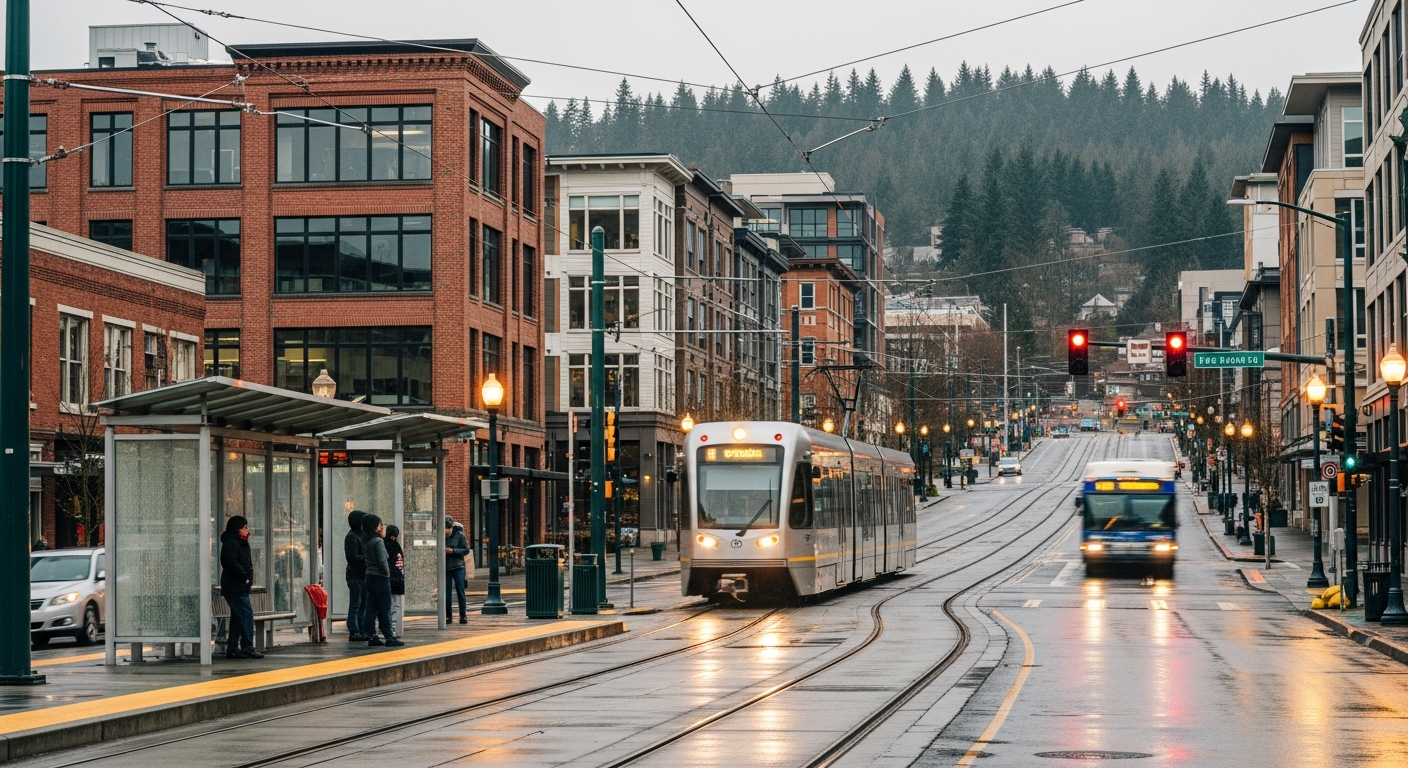
Community Transit operates routes serving the Paine Field area, and Everett Station (at Smith Ave and Wetmore) is the Sound Transit rail hub for workers using Sounder North or connecting buses. Boeing’s campus shuttle system connects Everett Station to the main factory gates.
What the North Line Means for Everett-Area Aerospace Long-Term
The North Line’s most important signal isn’t just the jobs it creates — it’s what it says about Boeing’s commitment to the Everett campus. After years of uncertainty about the 777X program (still in final certification), rumors of production consolidation, and the disruption of the 2024 strike, adding a second production program to Everett is a counter-signal. Boeing is expanding in Everett, not contracting.
For workers in the Paine Field aerospace ecosystem — that includes Spirit AeroSystems (fuselage supplier), Ducommun, Safran Cabin, and dozens of smaller suppliers with Everett-area operations — a Boeing production expansion means more contract work flowing through the supply chain, more local sourcing demand, and more stability in the Snohomish County aerospace economy.
Frequently Asked Questions — For Boeing Workers
Can current Everett Boeing employees transfer to the North Line?
Yes. Boeing is staffing the North Line with a mix of transfers from existing Everett, Renton, and Moses Lake operations and new external hires. Check internal Boeing job boards for transfer postings; the process follows standard internal mobility procedures under the IAM collective bargaining agreement.
What positions are being hired for on the 737 North Line in Everett?
Initial postings included production shift managers and supervisors (salaried). Hourly IAM-covered positions span the assembly flow: installers, electricians, quality inspectors, and flow day specialists. Postings appear at jobs.boeing.com — search “North Line Everett” or “737 Everett.”
Do North Line workers train in Renton first?
New hires complete a 12-week Foundational Training program, currently based in Renton, before beginning Structured On-the-Job Training in Everett. The Renton training period replicates the 737 assembly flow so workers understand the full process before building at the North Line. Internal transfers may have modified training requirements depending on experience.
Is the North Line covered by IAM District 751?
Yes. All North Line production positions are covered under the IAM District 751 collective bargaining agreement — the same contract covering 737 workers in Renton and widebody workers in Everett. The 2024 contract includes 38% wage increases over four years.
What is the North Line’s production target?
The North Line is designed to contribute to Boeing’s overall 737 MAX production target of above 47 aircraft per month after full integration. The line starts in Low Rate Initial Production (LRIP) and scales up over time. The FAA currently caps total 737 MAX production at 38 aircraft per month as part of an ongoing safety oversight agreement.
Related Exploring Everett coverage: Boeing’s 737 North Line Is Coming to Everett This Summer
-
Moving to Everett? Boeing’s New 737 Line Is a Big Reason the Job Market Here Just Got Stronger
If you’re considering relocating to the Everett area, Boeing’s announcement that it’s opening its first-ever 737 production line here this summer is a concrete data point about where this city’s economy is headed.
The 737 North Line — a new assembly line opening at Boeing’s Everett factory campus in summer 2026 — adds hundreds of jobs to a campus that already employs over 30,000 people. For anyone evaluating Everett as a place to live and work, that context matters.
Everett and Boeing: The Relationship That Defines the City
Boeing has been the dominant economic force in Snohomish County for over 50 years. The Everett factory campus, off SR-526 near Paine Field, is the largest building by volume in the world. It’s been the final assembly site for the 747, 767, 777, 787 Dreamliner, and now the 777X — Boeing’s widebody jets. The plant, plus the aerospace supply chain that orbits it, employs a substantial share of Snohomish County’s workforce directly and supports tens of thousands more in indirect jobs.
The North Line adds something new to that mix: 737 MAX narrowbody production, which has historically been Renton’s domain. Bringing 737 assembly to Everett effectively diversifies the campus’s production portfolio and deepens the city’s dependency on — but also its value to — Boeing’s broader manufacturing strategy.
What This Means for the Job Market
Direct North Line jobs — production assemblers, electricians, inspectors, quality workers, shift supervisors — are the most visible impact. These are IAM District 751 union positions with wages set by the 2024 collective bargaining agreement, which includes 38% increases over four years. Entry-level assembler wages at Boeing are among the strongest in the region for workers without a four-year degree.
But the indirect impact reaches further. Aerospace suppliers — Spirit AeroSystems (fuselage components), Ducommun (structural components), Safran Cabin (interior systems), plus hundreds of smaller Paine Field-area contractors — will see increased demand as North Line production ramps. Tooling shops, maintenance contractors, catering services, and shuttle operators tied to the Boeing campus all feel a Boeing expansion.
Everett’s economy beyond Boeing is also growing. Mayor Cassie Franklin’s April 2026 State of the City specifically highlighted healthcare and clean-energy companies alongside aerospace as pillars of local economic growth. Everett’s waterfront is undergoing a $1 billion redevelopment — the Millwright District at Port of Everett’s Waterfront Place is expected to receive its first housing residents by 2026, with retail and commercial space following.
Housing and Cost of Living Context
Everett is one of the more affordable entry points in the greater Seattle metro area. Median home prices in Everett run significantly below Seattle and Bellevue — typically 30-40% lower — while still offering Sound Transit access (Sounder North commuter rail to Seattle), Interstate 5 access, and proximity to both the Boeing campus and the Port of Everett waterfront.
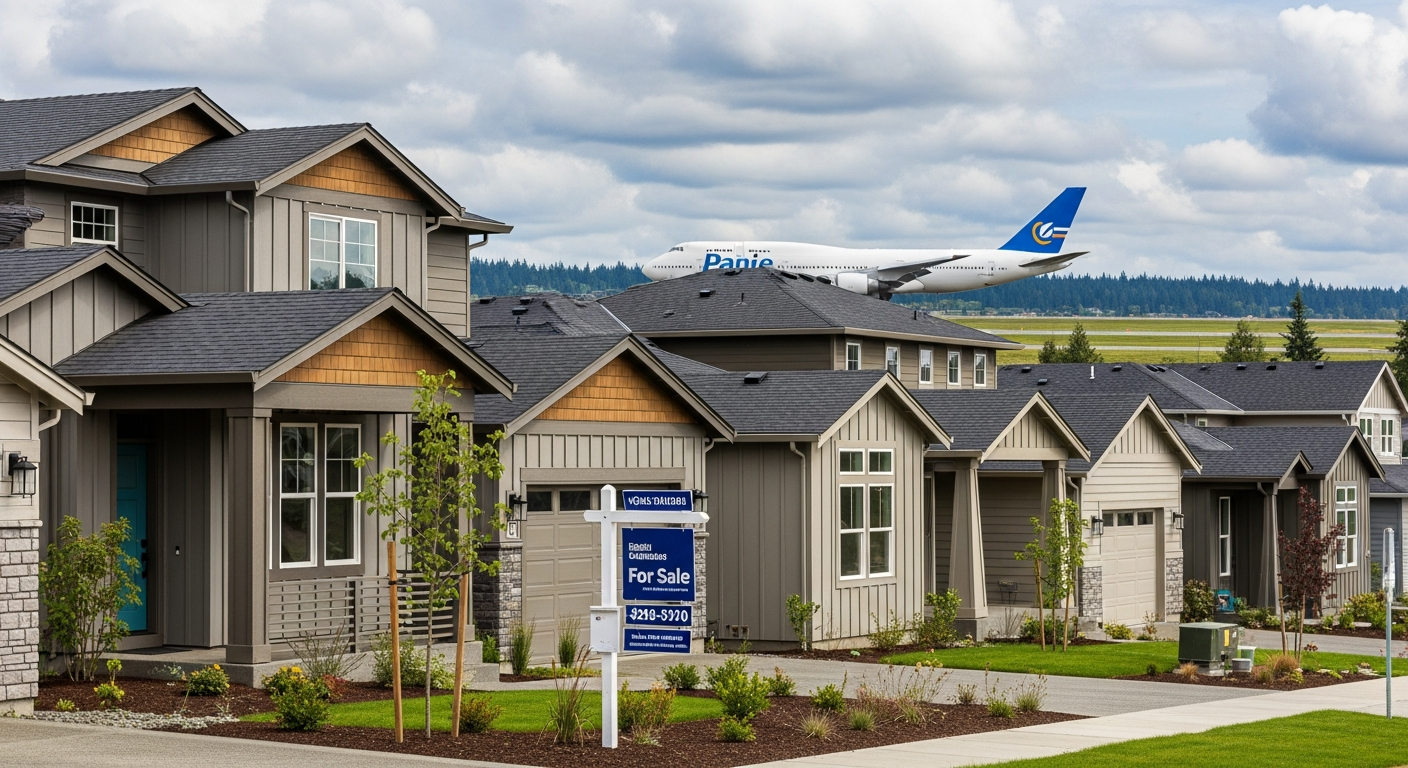
The North Line expansion will increase demand for housing near the Boeing campus — neighborhoods like Bayside, Silver Lake, and the areas north of Everett toward Mukilteo are popular with aerospace workers. The Millwright District’s new housing (200+ multi-family units under LPC West development) will add supply in a market that has needed it.
Schools and Family Infrastructure
Everett School District serves the city’s 114,000+ residents and is one of the larger districts in Snohomish County. The district has vocational and aerospace pathway programs — relevant for families with kids considering careers in the industry that dominates local employment. Everett Community College (EvCC) offers a strong aerospace manufacturing technology program that feeds directly into Boeing and supplier hiring pipelines.
Frequently Asked Questions — For People Considering a Move
Is Everett a good place to live if you work at Boeing?
Yes — Everett is the closest major city to the Boeing Everett factory campus, which sits just west of Paine Field off SR-526. Workers at the campus can often commute in under 20 minutes from Everett neighborhoods, avoiding the I-5 or I-405 grind. Housing costs are significantly lower than Seattle or Bellevue while still offering access to the full metro area.
What is the average salary for Boeing jobs at the Everett plant?
IAM District 751 production workers at Boeing earn wages set by the collective bargaining agreement. Under the 2024 contract, hourly rates for journey-level assemblers are in the $35-$50/hour range depending on classification and seniority, with overtime premium pay, full benefits, and pension. The 2024 contract included 38% wage increases over four years.
How far is Everett from Seattle?
Everett is approximately 25 miles north of Seattle via I-5 — about 30-45 minutes in off-peak traffic, 45-75 minutes in morning commute conditions. Sound Transit’s Sounder North commuter rail runs between Everett Station and King Street Station in Seattle on weekday commute schedules. Sound Transit light rail expansion is planned to eventually connect Everett to the broader Link network.
What neighborhoods are popular with Boeing workers near Everett?
Bayside (near the waterfront), Silver Lake, Mukilteo, and Lynnwood are popular with Boeing campus workers. Mukilteo is particularly close to the plant’s main SR-526 access. Marysville and Arlington (north of Everett) attract workers who want more space and lower prices at the cost of a longer drive.
Related Exploring Everett coverage: Boeing’s 737 North Line Is Coming to Everett This Summer | What the North Line Means for Boeing Workers
-
Boeing’s 737 North Line in Everett: What Local Businesses and Suppliers Need to Know
Boeing opening a new 737 MAX production line in Everett this summer isn’t just a manufacturing story — it’s an economic development event for Snohomish County’s business community.
The North Line, set to open in summer 2026 at Boeing’s Everett campus, adds hundreds of direct jobs and ripples through the supply chain, real estate market, and service businesses that depend on the Boeing workforce. For Everett-area business owners and developers, here’s what to watch.
Supply Chain Opportunity
Boeing’s 737 MAX uses a different supply chain than the widebody programs currently assembled in Everett. The fuselage comes from Spirit AeroSystems (Kansas), wings from Renton (partially transferred via the 737 Wing Transport Tool), and major systems from a global supplier base. But local suppliers — machined parts, tooling, composite work, maintenance services, and logistics contractors — have benefited from Boeing’s Everett presence for decades.
A new production line adds procurement volume. Paine Field’s industrial park, home to dozens of Boeing-adjacent manufacturers, will see increased activity. Small and mid-size suppliers with AS9100-certified operations should be watching Boeing’s Supplier Management portal for North Line sourcing opportunities. The North Line also creates demand for tooling maintenance, calibration services, and facility support that local industrial services companies can pursue.
Workforce Demand and What It Means for Local Employers
Hundreds of new Boeing hires competing in Snohomish County’s labor market means tightening competition for skilled trades — welders, electricians, quality technicians, and aerospace manufacturing workers. Boeing’s wage scales (IAM District 751 contract, 38% increases over four years from the 2024 agreement) are among the highest in the region for non-degreed production work.
For non-aerospace employers competing for the same talent pool — healthcare, construction, manufacturing, hospitality — this creates upward pressure on wages. It also creates opportunity: businesses that serve Boeing workers (commute-corridor retail, childcare, restaurants near the campus, financial services) will see increased customer counts as new hires join the campus.
Real Estate and Development Signal
Boeing hiring in Everett means housing demand. The North Line is another demand signal on top of the waterfront’s Millwright District redevelopment, downtown’s Outdoor Event Center project, and a pipeline of new apartments. For commercial real estate — office space near the campus, retail in Mukilteo and Bayside, industrial near Paine Field — a workforce expansion supports occupancy and rent growth.
The Everett waterfront is the largest adjacent development opportunity: the Port of Everett’s $1 billion Waterfront Place project, which includes the Millwright District (200+ multi-family housing units, 60,000 square feet of destination retail, 200,000 square feet of commercial space), is designed in part to capture the spending power of exactly this kind of workforce expansion.
Frequently Asked Questions — For Business Owners
How do I become a Boeing supplier for the 737 North Line in Everett?
Boeing’s supplier qualification process runs through its Supplier Management organization. Start at boeing.com/company/supplier-resources. Qualification typically requires AS9100 or NADCAP certification depending on the work type. The Economic Alliance of Snohomish County (EASC) maintains aerospace supplier development resources and can connect local companies with Boeing supplier liaisons.
What is the Economic Alliance Snohomish County’s role in the North Line?
The Economic Alliance Snohomish County (EASC) tracks aerospace employment trends and advocates for Boeing’s continued presence in Snohomish County. EASC president Ray Stephanson has been a vocal advocate for the Boeing campus during uncertainty over the 777X timeline and the 2024 strike recovery. EASC publishes workforce and economic data useful for businesses planning hiring and expansion tied to Boeing’s activity.
Does the North Line mean more activity at Paine Field (Snohomish County Airport)?
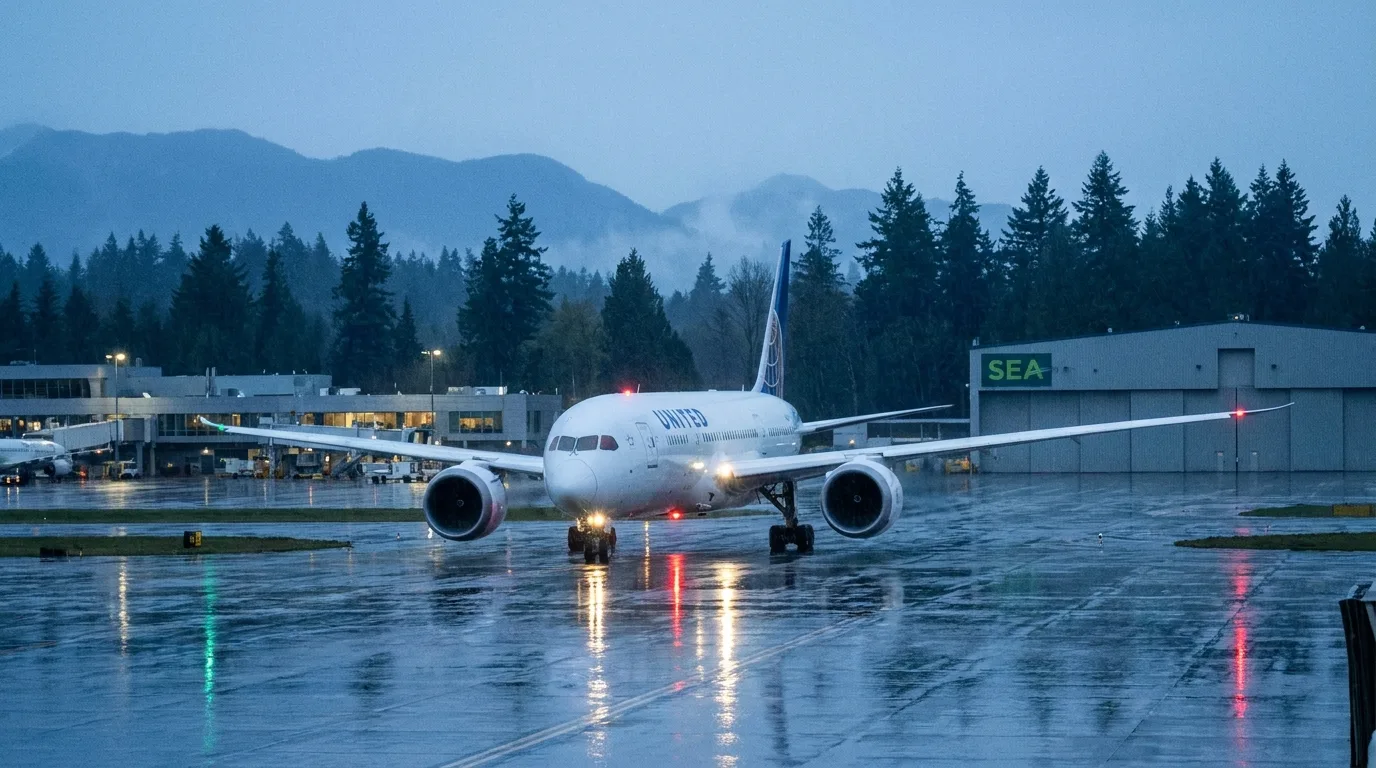
Yes. As North Line production scales, Paine Field will see increased Boeing flight test and customer delivery activity for 737 MAX jets — adding to the widebody deliveries already occurring there. Paine Field also hosts commercial airline service via Alaska Airlines and United, and North Line worker commutes may increase general aviation and shuttle traffic at the airport.
Related Exploring Everett coverage: Boeing’s 737 North Line Is Coming to Everett This Summer
-
Boeing’s 737 North Line Is Coming to Everett This Summer — Here’s What It Means for the City
Q: What is Boeing’s 737 North Line in Everett?
A: The 737 North Line is a brand-new 737 MAX assembly line opening at Boeing’s Everett factory campus in summer 2026 — the first time 737s have ever been built in Everett. The line will initially produce 737 MAX 8, 9, and 10 variants, expanding Boeing’s single-aisle capacity to above 47 aircraft per month.Boeing’s 737 North Line Is Coming to Everett This Summer — Here’s What It Means for the City
For decades, if you worked on a 737 for Boeing, you worked in Renton. That changes this summer.
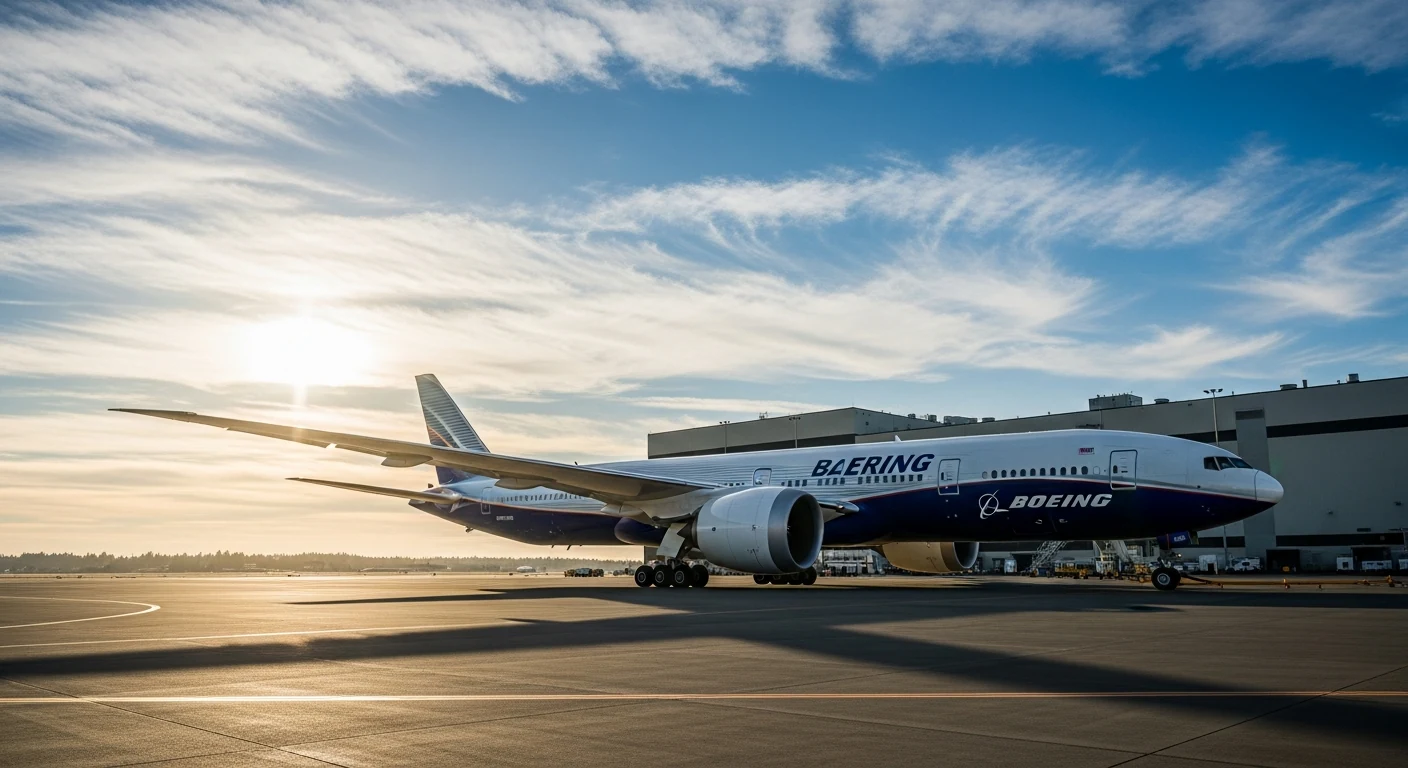
Boeing is preparing to open its first-ever 737 MAX production line at the Everett factory campus — a move that adds hundreds of jobs, expands Snohomish County’s aerospace footprint, and repositions the Everett plant as a dual-program facility capable of producing both widebody and narrowbody jets under one roof.
The new line, called the North Line, will occupy space within Boeing’s massive Everett campus and will be capable of building all 737 MAX variants — the MAX 8, MAX 9, and the yet-to-be-certified MAX 10. Production is expected to begin this summer in a Low Rate Initial Production (LRIP) phase, with full integration into Boeing’s broader 737 MAX flow to follow.
Why Everett, Why Now
Boeing’s Renton factory has been under intense pressure to increase 737 MAX production rates — a demand that intensified after the 2024 labor strike that halted Puget Sound production for nearly two months and set delivery schedules back by months. The FAA has capped Boeing’s 737 MAX production at 38 aircraft per month as part of an ongoing safety oversight agreement; Boeing’s commercial future depends on raising that rate to 47 per month and eventually beyond.
The North Line in Everett is Boeing’s answer to the capacity problem. Rather than cramming more production into the Renton facility — one of the busiest aircraft assembly sites on earth — Boeing is expanding geographic capacity by adding a second line 30 miles north, in a factory already staffed with tens of thousands of experienced aerospace workers.
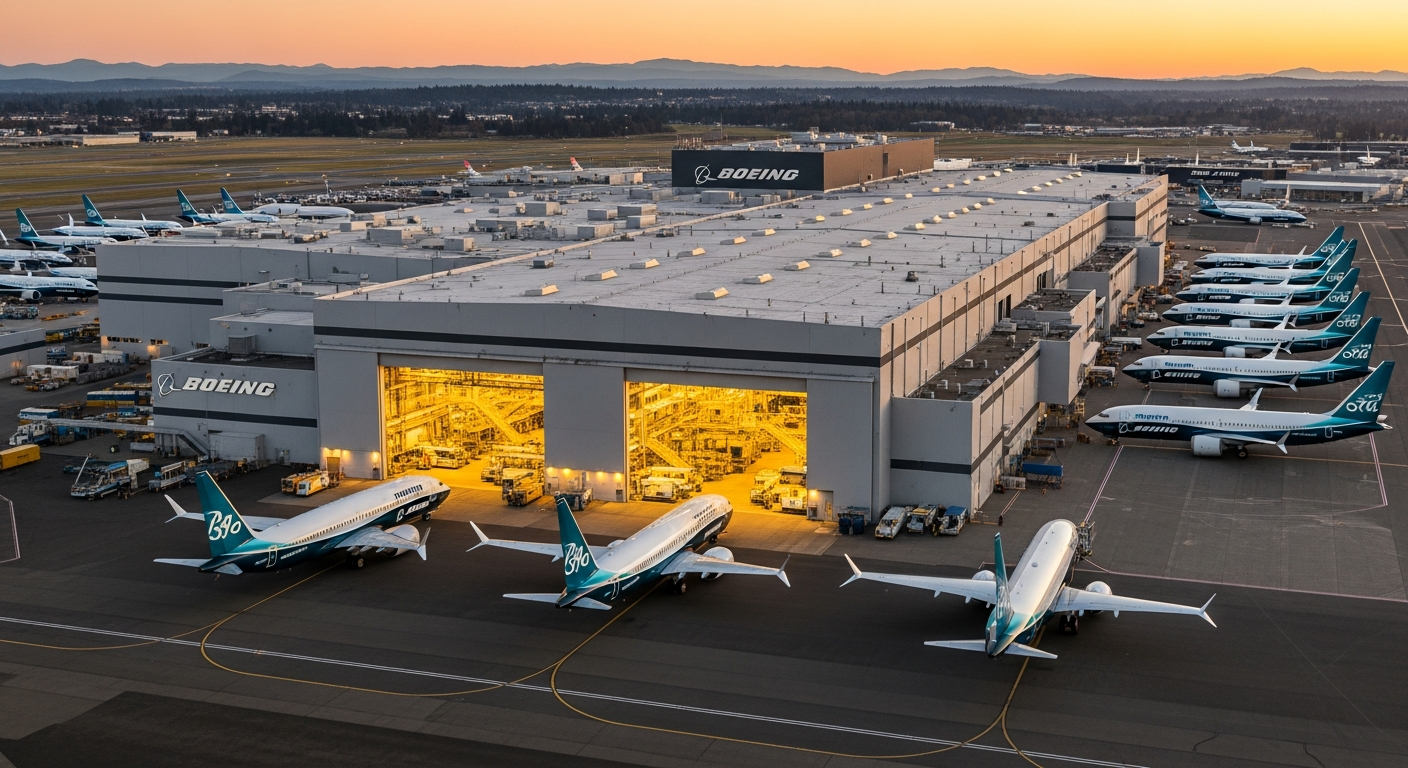
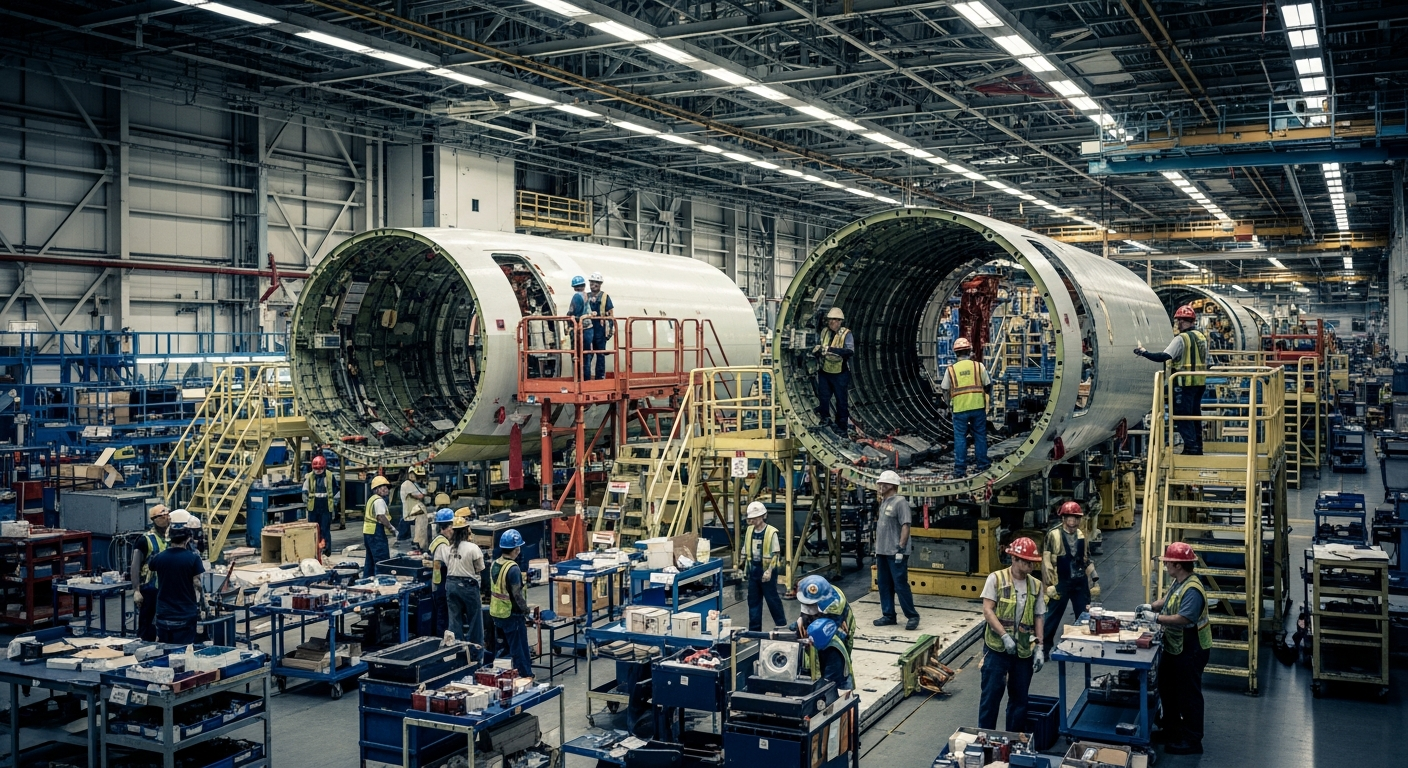
The Everett campus currently hosts final assembly for Boeing’s widebody jets — the 787 Dreamliner and the 777X program. Adding 737 production brings a new dimension to a campus that was already the largest building by volume in the world.
How the North Line Works
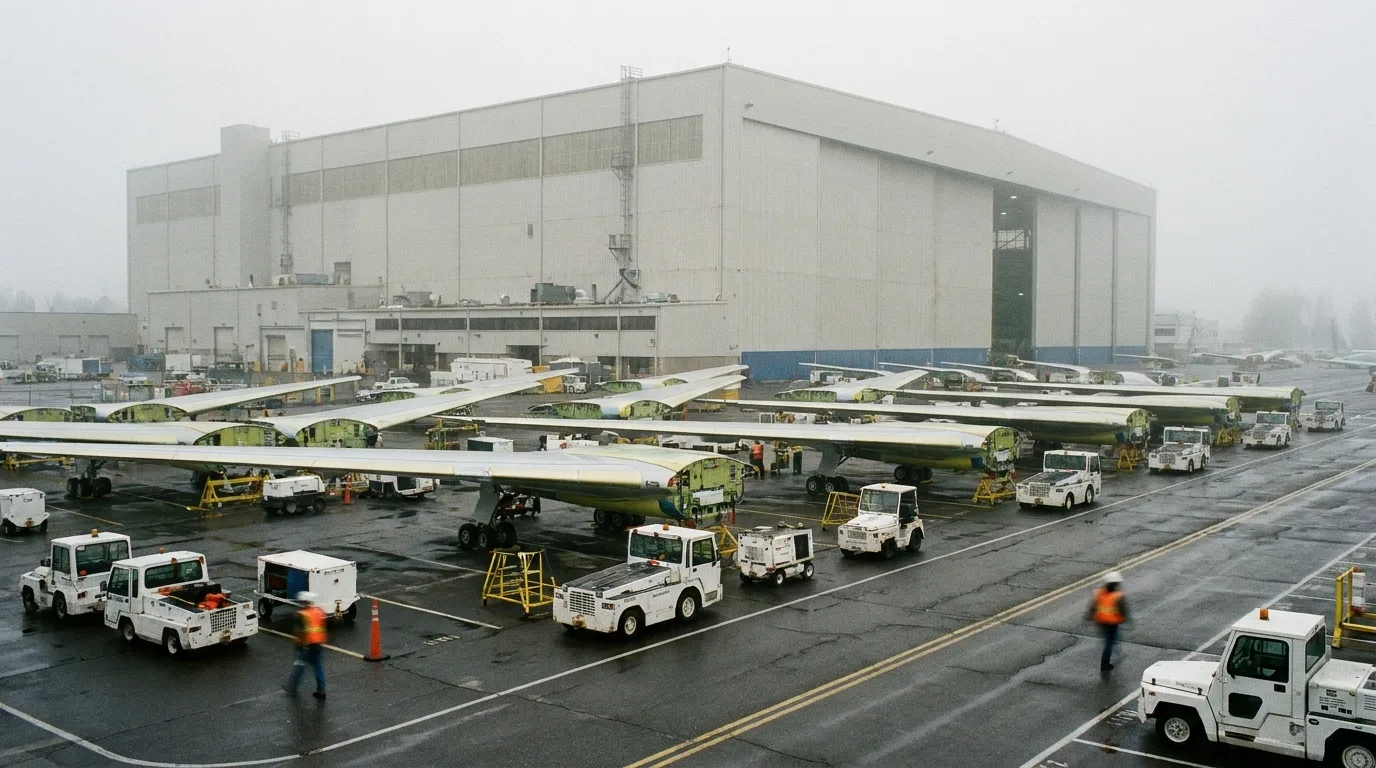
Unlike the Renton facility, where wings and fuselages come together in a more conventional flow, Everett’s North Line relies on a new logistics innovation: the 737 Wing Transport Tool. Partially completed wings will be built in Renton, then transported to Everett for final assembly — a cross-site workflow that Boeing has carefully engineered to maintain quality standards across both locations.
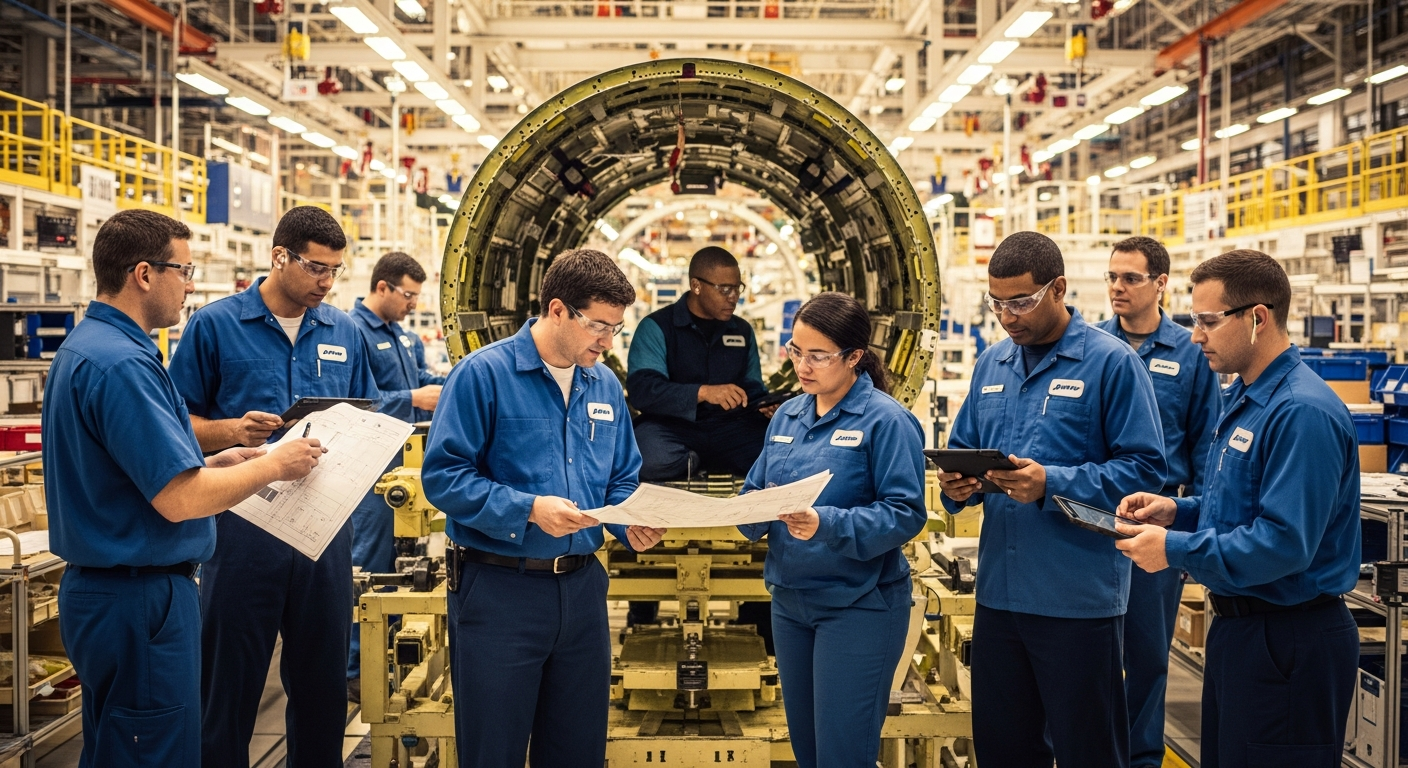
Workforce on the North Line is a blend of new hires and experienced employees transferring from Renton and Moses Lake. New hires complete a 12-week Foundational Training program before beginning structured on-the-job training alongside veteran assemblers. The approach is deliberate — Boeing’s production leader for the Everett line, Jennifer Boland-Masterson, described the ramp-up as running, not sprinting: “You don’t start with a marathon.”
Early North Line workers include Jaden Myers, hired in late 2025 to install the dorsal fin assembly in Flow Day 1, and Alondra Ponce, an electrician also joining at the first flow position. Both went through the Foundational Training in Renton before coming to Everett. John V., a nearly 40-year Boeing veteran who previously coached quality work in Everett, now serves as FAA and customer coordinator for the new line.
What It Means for Everett
The North Line’s most immediate local impact is jobs — hundreds of positions, a mix of newly hired workers and transfers from other Boeing facilities. The International Association of Machinists (IAM) District 751, which represents approximately 30,000 Boeing production workers across the Puget Sound region, will cover North Line production workers under its collective bargaining agreement.
Mayor Cassie Franklin highlighted Boeing’s “continued importance” to Everett at her April 2026 State of the City address, citing the company alongside clean-energy firms as pillars of the city’s advanced manufacturing future. With over 30,000 Boeing employees working across the Everett campus already, the North Line represents an expansion on top of an already enormous local economic anchor.
For Snohomish County broadly, the North Line reinforces Everett’s position as the aerospace capital of the Pacific Northwest — a status that was tested by the 2024 strike, production problems, and ongoing FAA scrutiny, but never truly in doubt given the scale of Boeing’s physical infrastructure here.
One Asterisk: The MAX 10
The 737 MAX 10, Boeing’s longest and most fuel-efficient narrowbody, remains uncertified by the FAA as of April 2026 due to an unresolved engine de-icing system design issue. The North Line is capable of building MAX 10s, but commercial deliveries of that variant won’t begin until FAA certification is complete. Airlines — including Alaska Airlines, which has a significant presence at Paine Field — are waiting on MAX 10 deliveries. For now, the line will focus on the already-certified MAX 8 and MAX 9.
Looking Ahead
Boeing has been through a punishing few years — the 2024 strike, ongoing MAX certification disputes, leadership changes, and an FAA safety agreement that cap production rates. The North Line’s launch this summer is a concrete signal that the company is moving forward, and that Everett remains central to that future.
For the workers, families, and businesses that orbit the Boeing campus in north Snohomish County, the North Line is more than a production expansion. It’s a visible sign that the world’s largest aerospace factory is adding capacity in a community that has tied its economic identity to that campus for more than 50 years.
The line is expected to be operational by midsummer 2026. Boeing has not announced a formal opening date.
Frequently Asked Questions
Where is the Boeing 737 North Line located?
The 737 North Line is located within Boeing’s Everett factory campus in Everett, Washington — on the Snohomish County campus that also houses final assembly for the 787 Dreamliner and 777X programs. This is the first time 737s have been assembled in Everett; the type has historically been built exclusively in Renton, WA.
How many jobs will the North Line create in Everett?
Boeing has not released a specific headcount for the North Line. The workforce is a combination of newly hired employees and existing staff transferring from Renton and Moses Lake operations. Industry observers estimate hundreds of direct positions, covered under the IAM District 751 collective bargaining agreement.
When will the Boeing 737 North Line open?
Boeing is targeting summer 2026 for the North Line’s opening, with midsummer the most cited estimate. The line will enter Low Rate Initial Production (LRIP) first, then scale up to full integration with Boeing’s overall 737 MAX flow.
What models will the Everett North Line build?
The North Line is capable of building all 737 MAX variants — the MAX 8, MAX 9, and MAX 10. Initial production will focus on the MAX 8 and MAX 9, which are FAA-certified. The MAX 10 remains uncertified due to engine de-icing system issues.
Is the Everett North Line a union shop?
Yes. North Line production workers are represented by IAM District 751, the International Association of Machinists union that covers approximately 30,000 Boeing production employees across the Puget Sound region under a collective bargaining agreement.
How does the Everett 737 line differ from the Renton factory?
The Renton factory is Boeing’s main 737 MAX production hub, where wings and fuselages are assembled from scratch. Everett’s North Line uses a 737 Wing Transport Tool to receive partially completed wings from Renton and complete final assembly in Everett — a cross-site workflow new to the 737 program. The Everett campus also simultaneously produces 787 Dreamliners and (in development) 777X jets.
What does the North Line mean for Paine Field?
Paine Field (Snohomish County Airport) is the flight delivery hub adjacent to the Everett factory. As North Line production ramps up, Paine Field will see increased activity in Boeing flight test and customer delivery operations for 737 MAX aircraft — adding to the widebody deliveries already occurring there.
-
Boeing’s North Line in Everett: What 737 MAX Production Means for the Region
Q: What is Boeing’s North Line in Everett?
A: The North Line is Boeing’s fourth 737 MAX assembly line, being built inside the company’s massive Everett factory at Paine Field. It targets a midsummer 2026 launch date and will eventually produce 737s at rates above 47 aircraft per month — the first time 737 production has ever happened in Everett.Boeing’s North Line in Everett: What 737 MAX Production Means for the Whole Region
Boeing’s Everett campus has always been a widebody town — 747s, 767s, 777s, and now the mammoth 777X. The narrowbody 737 has, for its entire 59-year history, been a Renton product. That changes this summer.
The North Line — Boeing’s fourth 737 MAX assembly line — is taking shape inside the north end of the Everett factory, the world’s largest building by volume. It is targeting a midsummer 2026 launch date, and the people building it are chosen carefully, trained extensively, and aware that they are participating in something historically significant for this city.
Why This Matters Beyond Boeing
Boeing’s Paine Field operation is already Snohomish County’s largest private employer. The North Line is not just an internal manufacturing decision — it is an economic event for the entire region. Every production line position at Boeing creates an estimated 1.7 to 2.5 indirect jobs in the supply chain, in supporting businesses, and in the local service economy. Hundreds of new direct hires, plus the transfer of experienced workers from Renton to Everett, means new household incomes being spent in Snohomish County.
Mayor Cassie Franklin has highlighted the North Line as a central piece of Everett’s economic momentum narrative, alongside the $120M downtown stadium project and the Port of Everett waterfront redevelopment. The city’s pitch to prospective residents and businesses increasingly rests on the idea that Everett is growing in multiple economic directions simultaneously — aerospace, defense, waterfront real estate, and sports/entertainment.
What the North Line Will Build
The line will assemble all three 737 MAX variants: the MAX 8, MAX 9, and MAX 10. It will begin in a low-rate initial production (LRIP) phase, prioritizing quality checks over throughput. Boeing’s stated goal is to eventually reach a combined 737 MAX production rate of 63 aircraft per month across all four lines — Everett’s North Line would be responsible for the production capacity above the existing three Renton lines’ ceiling of approximately 47 per month.
Boeing is also introducing a new piece of equipment to the Everett operation: the 737 Wing Transport Tool, which manages the logistics of moving wing assemblies into position on the line. Infrastructure investment in the building itself — modifications to accommodate the 737’s different physical profile compared to widebody jets — has been underway since 2025.
The Workforce Building the North Line
New hires begin with 12 weeks of foundational training — much of it in Renton, working alongside experienced mechanics on active 737 production before transitioning to Everett. Among the first cohort: Jaden Myers and Alondra Ponce, who joined in late 2025. Veteran Boeing employee John V., with nearly 40 years at the company, is among those transitioning to support the North Line — his first time working on the 737 program after decades on widebody jets.
Production leader Jennifer Boland-Masterson described the approach plainly: “We know how to do it… but we need to warm up our muscles. You don’t start with a marathon.” That philosophy — methodical ramp-up before volume — reflects the lessons Boeing has taken from its well-publicized quality control issues of 2023-2024.
Recovery Context: Why This Line Matters for Boeing’s Credibility
The North Line is not just about adding jets. It is about demonstrating that Boeing can stand up a new production line — with new people, new facilities, and new processes — while maintaining the quality standards that the FAA, airlines, and the public are watching closely. The 2024 IAM machinists’ strike lasted nearly seven weeks and further stressed Boeing’s production schedule. The North Line launch will be scrutinized as a data point in Boeing’s recovery narrative.
For Everett, that scrutiny is an opportunity. If the North Line launches cleanly, it reinforces the case that Everett’s aerospace workforce is world-class — a message that supports workforce recruitment, community college aerospace programs at Everett Community College, and the city’s identity as a manufacturing hub distinct from Seattle’s tech-first image.
Frequently Asked Questions About Boeing’s North Line
Q: When does the Boeing North Line in Everett open?
A: The target is midsummer 2026. Boeing has not announced a specific date, but preparations and early workforce training are on track as of April 2026.Q: How many jobs will the North Line create in Everett?
A: Boeing has not released a precise number, but the line will add hundreds of direct production positions. Mayor Franklin and industry observers have noted the multiplier effect on indirect jobs throughout Snohomish County.Q: Will the North Line use union (IAM) labor?
A: Yes. Boeing’s Everett production workforce is represented by IAM District 751, the same union that represents workers at the Renton plant. North Line workers are being hired and trained under the same labor agreement.Q: Is Boeing’s Everett campus the world’s largest building?
A: Yes, by volume. The Everett factory complex — which houses the widebody programs and now the 737 North Line — is approximately 472 million cubic feet in volume, the largest building by volume in the world.Q: What is the ultimate production rate target for the 737 North Line?
A: Boeing’s stated goal is a combined 737 MAX rate above 47 aircraft per month across all lines, with a longer-term target approaching 63 per month. The North Line’s specific share of that rate has not been publicly specified.Q: How does the North Line affect Paine Field airport operations?
A: 737 MAX aircraft produced at Everett will depart from Paine Field (Snohomish County Airport) for delivery flights, the same as widebody aircraft. Additional production aircraft may increase delivery flight traffic at Paine Field.Related: Boeing’s North Line Is Coming to Everett: Inside the Workforce | Boeing 777X Production Flight Targeting April from Paine Field | Exploring Everett
-
Boeing North Line Everett: What the 737 MAX Line Means If You Work at Paine Field
Q: Should I apply to the Boeing North Line or transfer from Renton?
A: The North Line is actively recruiting experienced mechanics from Renton for transfer, as well as new hires going through 12-week Renton-based training. Both paths land in the same IAM 751-represented positions. The opportunity to be part of a line launch — the first 737 production in Everett history — is real, and Boeing leadership is emphasizing quality over speed in the ramp-up.Boeing North Line Everett: What the 737 MAX Line Means If You Work at Paine Field
If you are an aerospace worker at Boeing’s Everett campus, or a Renton mechanic watching the North Line take shape in the news, here is the ground-level picture of what this line launch actually means for your career, your workflow, and your daily life in Snohomish County.
Who Is Working the North Line
The North Line workforce is being assembled from three pools: new hires, experienced Renton transfers, and Everett campus veterans pivoting to 737 work. Each brings something different. New hires go through 12 weeks of training — much of it in Renton, working on live 737 production — before transitioning to Everett. That’s not a formality; Boeing wants North Line workers to have real muscle memory from high-volume 737 production before they ever touch an Everett airplane.
Experienced Renton transfers bring exactly that muscle memory. The challenge for them is translating narrowbody habits and tooling into a widebody-configured facility that is being adapted for 737 work. The physical infrastructure of the north end of the Everett building is being modified — new tooling positions, new transport equipment including the 737 Wing Transport Tool — and workers transferring from Renton will be part of figuring out how the flow works in a new environment.
Everett campus veterans, like the nearly 40-year mechanic identified only as John V. in Boeing’s public communications, bring institutional knowledge of the Everett building itself: its quirks, its logistical rhythms, and its culture. For many of them, this is their first 737 work after careers built on 747s, 767s, 777s, and now 777X.
IAM District 751: What This Means for Union Members
The North Line workforce is represented by IAM District 751 — the same union that represents workers at Renton. New hires and transfers alike work under the same collective bargaining agreement. The 2024 IAM strike, which lasted nearly seven weeks, is part of the context here: Boeing’s methodical, quality-first ramp-up strategy for the North Line is in part a response to the scrutiny that followed that labor action and the production disruptions of 2023-2024.
Union workers at the North Line should expect a LRIP (low-rate initial production) phase that emphasizes checks and process verification over throughput targets. Production leader Jennifer Boland-Masterson has been explicit about this: “You don’t start with a marathon.” For mechanics accustomed to high-rate Renton production rhythms, the early North Line pace will feel deliberately measured.
Commute: Renton vs. Everett
For workers transferring from Renton, the commute change is significant. Renton’s plant sits at the southern end of Lake Washington; Everett’s campus is 30+ miles north. For a mechanic living in, say, Kenmore or Bothell, switching from Renton to Everett likely shortens a difficult reverse commute considerably. For someone in the Renton-Kent corridor, it adds distance.
Paine Field sits at the northwest edge of Everett, with access from Highway 526 (the Mukilteo Speedway) and Evergreen Way. Parking at the campus is available, and the campus runs shift-change patterns that stagger with Paine Field’s commercial terminal traffic. Workers new to the Everett area should be aware that morning and evening congestion on Highway 526 between I-5 and the campus can run 20-30 minutes depending on time of day.
Everett proper — downtown, Colby Avenue, the waterfront — is approximately a 10-15 minute drive from the factory campus. Workers relocating for the North Line will find housing options from Mukilteo (closer to Renton prices) to Marysville (most affordable) to downtown Everett (walkable, close to restaurant row).
Career Trajectory on the North Line
Getting in on a line launch is genuinely different from joining a mature production line. The early team has disproportionate influence on how work habits, quality rhythms, and team culture develop. Boeing’s track record suggests that North Line veterans — people who were there when the first Everett 737 rolled out — will be valuable institutional assets as the program scales. If Boeing reaches its target production rates above 47 aircraft per month, the North Line will need supervisors, coaches, and quality leads who know the line from the ground up.
For Everett Community College aerospace program graduates, the North Line also represents a nearby on-ramp into 737 production work — historically only accessible by commuting to Renton — opening a path that didn’t exist before 2026.
Frequently Asked Questions for Boeing Workers at Paine Field
Q: Is Boeing still hiring for the North Line as of April 2026?
A: Yes. Boeing has been hiring for mechanics and quality positions on the North Line, with a midsummer 2026 launch targeted. Check Boeing’s career site for open requisitions at the Everett facility.Q: What is the 12-week training for new North Line hires?
A: New hires spend approximately 12 weeks in foundational training, much of it in Renton working on live 737 production alongside experienced mechanics, before transitioning to Everett for North Line operations.Q: Are North Line workers represented by IAM 751?
A: Yes. All North Line production and quality positions at the Everett campus are represented by IAM District 751 under the same collective bargaining agreement as Renton workers.Q: What 737 variants will the North Line build?
A: The MAX 8, MAX 9, and MAX 10. The line starts with low-rate initial production (LRIP) and will scale over time.Q: What is the production rate target for the North Line?
A: Boeing’s combined 737 MAX target is a rate above 47 aircraft per month, eventually approaching 63 per month. The North Line provides the production capacity above what the existing three Renton lines can achieve.Related: Boeing’s North Line: What 737 MAX Production Means for the Whole Region | Boeing 777X Production Flight Targeting April | Exploring Everett
-
Boeing’s North Line in Everett: The Complete Worker’s Guide to the New 737 MAX Assembly Line
Q: Is Boeing building 737 MAX planes at the Everett factory?
A: Yes, for the first time in the company’s history. Boeing’s North Line — a new fourth 737 MAX assembly line — is targeting a midsummer 2026 launch at the Everett factory. The line will produce 737-8, 737-9, and 737-10 variants, with a workforce drawn from newly hired Everett employees and experienced teammates transferred from Renton and Moses Lake.Boeing’s North Line in Everett: The Complete Worker’s Guide to the New 737 MAX Assembly Line
For more than five decades, if you wanted to build a Boeing narrowbody aircraft, you went to Renton. That changes this summer. The North Line — Boeing’s fourth 737 MAX assembly line and the first ever to produce a narrowbody outside Renton — is taking shape inside the largest building by volume in the world, at the Boeing factory in Everett, Washington.
For workers, this is what you need to know: what the line is, how hiring works, what training looks like, and what working on the North Line actually means for a career at Boeing in Everett.
What the North Line Is and Why It Exists
Boeing’s 737 MAX program is its most commercially important aircraft family. The company currently builds the MAX at three lines at its Renton, Washington facility, targeting a production rate above 47 aircraft per month. The North Line in Everett adds a fourth line with a longer-term goal of reaching 63 aircraft per month — a target Boeing program manager Katie Ringgold acknowledged will “take a number of years” to achieve at full ramp.
The strategic logic for placing the fourth line in Everett is clear: the factory is already the largest industrial building in the world, home to Boeing’s 747, 767, 777, and 777X programs. Adding 737 production to that footprint uses existing infrastructure, maintains a large skilled workforce, and positions Everett as central to Boeing’s recovery strategy after several years of production challenges.
Construction and tooling of the North Line are complete. A 737 Wing Transport Tool — a custom logistics system for ferrying partially completed wings between the Renton facility and Everett for final assembly — is in place. The line is ready. The current work is people.
How Boeing Is Staffing the North Line
The North Line workforce will come from two sources: newly hired Everett-based employees, and experienced teammates transferring from Renton, Everett’s existing widebody programs, and Moses Lake (where Boeing operates a paint and storage facility).
The transfer model makes sense for a production launch: the North Line needs experienced hands who understand 737 MAX build processes deeply enough to train the new hires and set the quality culture for the line from its first day. As the line ramps and matures, the workforce will increasingly be built around Everett-based employees who develop their careers on the 737 for the first time in this city.
Boeing is actively hiring and training mechanics and quality positions for the North Line. The hiring process runs through Boeing’s standard application pipeline at boeing.com/careers; positions are listed under the Everett, WA location filter.
Training: What the Path to the North Line Looks Like
New employees hired specifically for the North Line undergo a structured training pathway designed to ensure they’re ready before they touch the aircraft. The process:
12 weeks of foundational training. New hires complete Boeing’s foundational manufacturing training program, building the core knowledge base required for precision aircraft assembly work.
Structured on-the-job training (SOJT) at Renton. Following foundational training, new North Line employees spend time at the Renton 737 MAX production facility, pairing with experienced mentors in the actual build environment. This is where classroom knowledge meets production reality.
Transition to Everett. Once training at Renton is complete, employees join the North Line in Everett.
Jaden Myers, hired as a Flow Day 1 dorsal fin installer, was among the first employees to complete this process. His assessment of the experience was direct: “Opening a new production line is something special — we have to do it right.” Alondra Ponce, an electrician on the North Line, described the training environment as setting a strong foundation from day one.
What the Work Looks Like
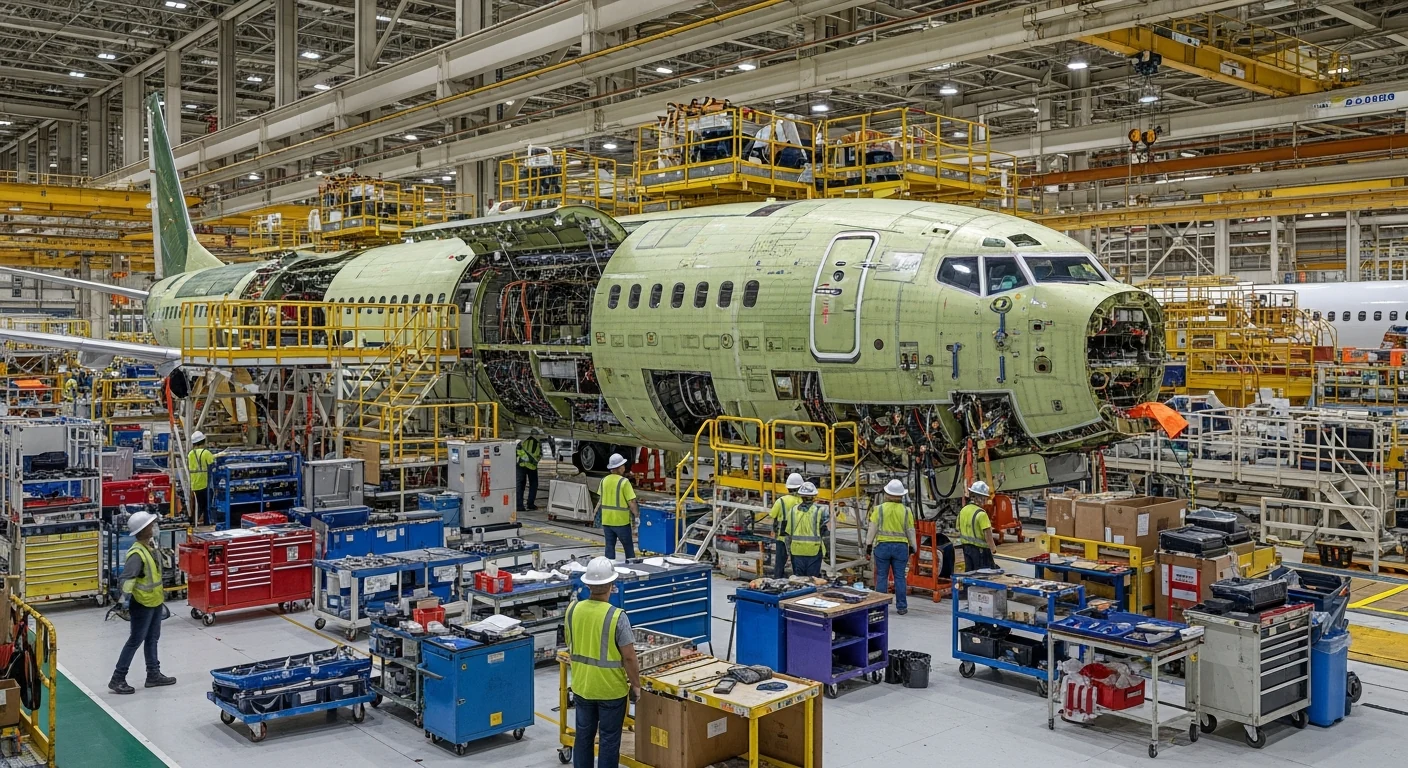
The North Line builds the 737 MAX using the same production process established at Renton, adapted for the Everett facility. The build sequence follows the same station-based flow used across Boeing’s commercial programs: major sections are assembled, systems are installed, and the aircraft progresses through stations until it’s ready for delivery to customers.
The 737 Wing Transport Tool is the distinctive element in Everett’s process — wings are assembled at one facility and transported to Everett for final integration, a logistics step that Renton’s integrated campus doesn’t require. That additional complexity is something North Line workers will need to understand as part of their workflow.
FAA oversight of the line is expected to be intensive during the launch phase. Boeing’s consent decree with the FAA, following the production quality challenges of recent years, means the North Line will operate under heightened scrutiny. That’s not necessarily a negative for workers — it reflects a serious commitment to getting the quality culture right from the start, which is better for the program’s long-term health.
Career Trajectory and the Everett Boeing Economy
For workers building their careers in Everett, the North Line represents a meaningful expansion of opportunity. Previously, building narrowbody aircraft meant a career in Renton. Now, Everett workers can access both widebody programs (767, 777, 777X) and the 737 MAX — the world’s highest-production-rate commercial aircraft — without leaving their home city.
The Everett Boeing campus employs tens of thousands of workers across its programs. The 777X, which is targeting its first production flight from Paine Field this spring before FAA certification, represents another major program in active development at the same facility. For machinists, electricians, quality inspectors, and manufacturing engineers, Everett’s Boeing footprint is becoming more diversified, not less.
Frequently Asked Questions About Boeing’s North Line
Q: When will the North Line begin producing 737 MAX aircraft in Everett?
A: Boeing is targeting midsummer 2026 for the North Line’s launch. The line will not instantly reach production targets — it will ramp gradually as the workforce builds experience and the FAA validates processes under its heightened oversight framework.Q: Is Boeing hiring for the North Line right now?
A: Yes. Boeing is actively hiring mechanics and quality positions for the North Line at Everett. Positions are listed at boeing.com/careers filtered by Everett, WA location.Q: What 737 MAX variants will the North Line build?
A: The North Line will be capable of building all 737 MAX variants — the -8, -9, and -10 — though it will initially focus on those three variants before potentially expanding to others in the MAX family.Q: How long is the training process for new North Line employees?
A: New hires complete approximately 12 weeks of foundational training, followed by structured on-the-job training (SOJT) at the Renton facility paired with experienced mentors, then transition to Everett for the North Line.Q: Will the North Line be represented by the IAM (International Association of Machinists)?
A: Boeing’s Puget Sound production employees, including those at the Everett factory, work under existing IAM representation agreements. The North Line is part of the same Boeing Everett facility that is already covered by those agreements.Q: What is Boeing’s production rate target for the 737 MAX?
A: Boeing is targeting production above 47 aircraft per month across all its 737 MAX lines in the near term, with a longer-term goal of reaching 63 aircraft per month. The North Line adds capacity toward those targets but won’t instantly lift overall output — it needs time to staff, train, and stabilize.Related: Boeing’s North Line Is Coming to Everett: Inside the Workforce Preparing to Build 737 MAXs | Boeing 777X Production Flight Targeting April from Paine Field | Portland Is Back: Alaska Airlines Restores Daily Nonstop Flights from Paine Field This June
-
Getting a Job on Boeing’s North Line in Everett: Training, Pay, and What to Expect
Q: How do I get a job on Boeing’s North Line in Everett?
A: Apply through boeing.com/careers filtered to Everett, WA. Boeing is actively hiring mechanics and quality positions for the North Line, which targets a midsummer 2026 launch. New hires complete 12 weeks of foundational training followed by structured on-the-job training (SOJT) at the Renton facility before transitioning to Everett.Getting a Job on Boeing’s North Line in Everett: Training, Pay, and What to Expect
Boeing’s fourth 737 MAX assembly line is coming to Everett this summer — and it’s hiring. If you’re a machinist, electrician, quality inspector, or someone considering a manufacturing career in aerospace, here’s the practical information you need: what positions are open, how training works, what the transition from Renton looks like, and what working the North Line actually means day-to-day.
What Positions Are Available
Boeing is actively hiring for mechanics and quality positions on the North Line. The job families involved in 737 MAX production span a range of specializations that map to the build sequence:
Production Mechanics — structural assembly, systems installation, and integration work across the line’s build stations. This includes positions like the Flow Day 1 dorsal fin installer role that Jaden Myers holds — early-station structural work that requires precision and an understanding of how the aircraft comes together downstream.
Electrical and Systems Technicians — wiring, avionics, and electrical systems installation. Alondra Ponce’s electrician role on the North Line represents this category. Electrical work on a commercial narrowbody is complex and certification-critical.
Quality Inspectors — Boeing’s heightened FAA oversight framework for the 737 MAX program means quality roles carry particular weight on the North Line. Inspectors work at every station to verify build quality before the aircraft progresses.
Manufacturing Engineers and Process Specialists — supporting the line’s technical documentation, tooling, and production process development as the line ramps to full operation.
All positions are listed at boeing.com/careers. Filter by Everett, WA location and the relevant job family. New listings for the North Line ramp are being posted as the launch approaches.
The Training Path: What to Expect
Boeing has built a structured onboarding process specifically for North Line hires that balances speed-to-production with quality rigor. Here’s how it works:
Foundational Training (~12 weeks). New hires enter Boeing’s foundational manufacturing training program. This is classroom and hands-on instruction covering the core knowledge, tools, and processes required for precision aircraft assembly. For candidates without prior aerospace manufacturing experience, this is where you build the baseline.
Structured On-the-Job Training (SOJT) at Renton. Following foundational training, North Line hires are paired with experienced mentors at the Renton 737 MAX production facility. You’re working in the actual production environment, learning the specific build sequence and quality standards for the aircraft you’ll be assembling in Everett. This is the most valuable part of the training process — you see a running production line before you work on a new one.
Transition to Everett. Once SOJT is complete, you join the North Line. The Everett line uses the same build process as Renton, with one addition: a 737 Wing Transport Tool that ferries partially completed wings to Everett for final integration.
Myers, who went through this process in late 2025, described the culture plainly: “Opening a new production line is something special — we have to do it right.” That’s the mindset Boeing is trying to build into the North Line from day one — a sense that the quality culture of this line is being established right now, by the first people who work on it.
Transferring from Renton, Moses Lake, or Everett’s Widebody Programs
If you’re already a Boeing employee at Renton, Moses Lake, or on Everett’s existing widebody programs (767, 777, 777X), the North Line represents a transfer opportunity, not just a new-hire opportunity. Boeing is staffing the line with experienced teammates precisely because it needs that expertise to stabilize the line and mentor new hires.
Transfer opportunities are posted through Boeing’s internal job board. The advantage for experienced transferees: you come in without the foundational training requirement, your pay and seniority are preserved, and you’re part of building something new. The adjustment is real — Everett’s widebody work culture and the 737 MAX’s high-rate narrowbody culture are different environments — but experienced aerospace workers who understand build discipline adapt quickly.
Commute and Location: The Practical Reality
The North Line is at the Boeing Everett factory — the main gate is on Boeing Drive off Everett Avenue, with multiple entrance points across the campus. For workers commuting from South Snohomish County, King County, or Island County, Everett’s location on I-5 makes the commute viable from a wide geography.
Everett Station is a multimodal hub served by Sound Transit and Community Transit. For workers who live south along the I-5 corridor, Sound Transit’s Sounder North service and ST Express buses serve the corridor. Everett’s housing market — with a median sale price around $547,000 and a range of rentals across neighborhoods like South Everett, Bayside, and Casino Road — is more affordable than Renton-adjacent options in King County.
Boeing operates van pool programs and partners with regional transit agencies. Workers who want to avoid the I-5 commute have options — this is worth investigating through Boeing’s transportation resources before accepting a role.
What the IAM Represents and What It Means for the North Line
Production workers at Boeing’s Puget Sound facilities, including Everett, are represented by the International Association of Machinists and Aerospace Workers (IAM District 751). The North Line falls within the existing IAM representation framework — it is not a new bargaining unit or a non-represented work environment. The IAM’s contract covers wages, benefits, and working conditions for production and quality positions.
After the IAM’s 2024 work stoppage and the subsequent contract negotiations, relations between the union and Boeing management are in a defined post-agreement phase. The North Line is launching into that environment, which matters for workplace culture. Workers considering the North Line should be aware of the current contract terms and the state of the labor relationship.
Frequently Asked Questions for Boeing Job Seekers
Q: Do I need prior aerospace experience to apply to the North Line?
A: No. Boeing’s foundational training program is designed to bring qualified candidates with general manufacturing or mechanical skills into aircraft assembly work. Prior aerospace experience helps but is not required for entry-level production positions.Q: How long does it take from application to first day on the North Line?
A: The process varies by position and hiring volume. The training path (foundational + SOJT) takes approximately 4-6 months total from hire date before you’re working independently on the North Line. Plan accordingly if you’re considering the timeline.Q: Are the North Line positions union-represented?
A: Yes. Production and quality positions at Boeing Everett, including the North Line, are represented by IAM District 751 under existing collective bargaining agreements.Q: Can I transfer from Boeing’s widebody programs in Everett to the North Line?
A: Transfer opportunities are posted through Boeing’s internal job board. Experienced teammates from existing Everett programs are among the core North Line workforce. Check internal postings and speak with your manager about transfer eligibility.Q: What’s the pay range for North Line production positions?
A: Boeing positions are covered by the IAM District 751 contract, which establishes pay rates by classification. Specific current rates are available through the IAM District 751 website or Boeing’s HR resources. General aerospace production mechanic wages in Snohomish County range broadly based on classification and experience level.Related: Boeing’s North Line: Everett Prepares to Build Its First 737 MAX This Summer | Boeing 777X Production Flight Targeting April from Paine Field | Everett Housing Market April 2026: What Buyers and Sellers Need to Know Right Now
-
What Sound Transit’s Everett Light Rail Uncertainty Means for Paine Field Aerospace Workers
Q: Will light rail reach Paine Field for Boeing and aerospace workers?
A: The Paine Field station (officially SW Everett Industrial Center station) is included in all known Sound Transit scenarios for the Everett Link Extension. The question is whether the full line continues to Everett Station, or stops at or near Paine Field — and when. The Sound Transit Board is expected to decide in summer 2026.What Sound Transit’s Everett Light Rail Uncertainty Means for Paine Field Aerospace Workers
If you work on Boeing’s flight line at Paine Field, assemble components for the 777X program, or work at any of the 600-plus aerospace suppliers in Snohomish County’s industrial corridor, you have a direct stake in the Sound Transit cost crisis that dominated the April 14 town hall at Everett Station. Here’s what the $1.1 billion cost overrun problem means for you specifically.
The Paine Field Station: Your Stop in the Extension
The planned SW Everett Industrial Center station — commonly called the Paine Field station — sits at the southern end of the Everett Link Extension’s northern segment, closest to Boeing’s widebody assembly facilities and Paine Field International Airport. This is the stop designed to serve the 30,000-plus workers commuting daily to the Paine Field industrial corridor.
What makes the Paine Field station different from the others in the extension is that it anchors the economics of the whole project. The concentrated, shift-based workforce at Boeing and the aerospace suppliers creates exactly the kind of predictable, high-density ridership that makes transit investments pencil out. That’s why the Paine Field station is believed to be preserved in all scenarios Sound Transit is weighing — even the ones that stop short of Everett Station downtown.
The Scenario That Could Actually Help Boeing Workers First
Here’s the scenario that could actually benefit aerospace workers even while leaving downtown Everett disconnected: Sound Transit builds the extension to Paine Field first, in a phased approach, without completing the final segment to Everett Station. Under this scenario, workers commuting from Seattle, Bellevue, Lynnwood, and south King County would gain a direct light rail connection to the Paine Field corridor by approximately 2037 — potentially years before a full Everett Station connection would be complete in a more ambitious scenario.
That’s a real tradeoff. Workers who commute from the south would benefit. Everett residents who want to ride light rail downtown would not. The politics of that tradeoff are complicated — and it’s exactly what the April 14 town hall crowd was pressing Sound Transit about.
What the Commute Currently Looks Like
Right now, getting to Paine Field from Seattle on transit means Link light rail to Lynnwood City Center station (opened 2024), followed by Community Transit Route 201 or 202 into the Paine Field corridor. The trip takes approximately 75-90 minutes from downtown Seattle. By car on I-5, the same trip takes 35-45 minutes in off-peak traffic — and significantly longer during Boeing’s shift changes, when northbound I-5 and SR 526 congest heavily.
Direct light rail to Paine Field — with trains running every 8-12 minutes — would compress that commute to roughly 50-55 minutes from downtown Seattle, with no traffic variability and no car costs. For workers doing daily reverse commutes from Seattle, that’s a meaningful quality of life change. For workers already living in Everett or Marysville, it adds a transit option for commuting south to Seattle.
The 2037 Target — And What Could Push It Later
Sound Transit’s current projection puts the first phase of the Everett extension — reaching as far north as Paine Field — as early as 2037. That’s 11 years away. For Boeing workers early in their careers, that’s a plausible planning horizon. For workers counting on transit options in the near term, it’s not.
What could push the 2037 target later: the Sound Transit Board choosing a more conservative phasing approach that delays construction start, federal funding gaps, continued inflation in construction costs, or permitting and right-of-way challenges in the SR 526 corridor. Sound Transit has already slipped this project’s timeline from 2036 to 2037-2041. That history suggests treating optimistic targets with skepticism.
How to Influence the Summer 2026 Decision
The Sound Transit Board will vote on ST3 System Plan restructuring in summer 2026. The voices of Paine Field workers — as both transit users and significant economic stakeholders — matter in this process. Snohomish County’s elected Sound Transit Board representatives represent your interests.
Ways to engage before the vote: Submit comments at soundtransit.org, contact Snohomish County Executive Dave Somers’s office at (425) 388-3460, or reach out to the Economic Alliance Snohomish County, which has been advocating loudly for the full Paine Field and Everett Station connection.
For the complete picture on the Everett extension, see our full knowledge hub: Sound Transit’s Everett Link Extension: The Complete 2026 Guide. For more on Everett’s aerospace economy, read about the 600+ aerospace companies in Snohomish County and Boeing’s North Line worker guide.
FAQ: Light Rail and Paine Field for Boeing Workers
Will the Paine Field station be built regardless of what happens to Everett Station?
Based on publicly available Sound Transit scenario documents, the Paine Field station is included in all known options. The key question is whether the line extends further to Everett Station, not whether Paine Field gets served. No final decision has been made.
When would a Paine Field light rail station open?
Sound Transit targets the first phase reaching Paine Field as early as 2037, pending the Board’s summer 2026 decisions on ST3 System Plan restructuring.
How long would the light rail commute from Seattle to Paine Field be?
With a direct Link connection from downtown Seattle to the Paine Field station, travel time is estimated at approximately 50-55 minutes — compared to 75-90 minutes on current bus-rail connections and 35-60 minutes by car depending on traffic.
What does the Paine Field light rail station cover?
The SW Everett Industrial Center station is planned to serve Boeing’s widebody assembly facilities, Paine Field International Airport (PAE), and the Paine Field industrial corridor — home to Boeing and 600+ aerospace suppliers.
How can Boeing workers comment on Sound Transit’s decision?
Submit comments at soundtransit.org, attend Sound Transit Board meetings with public comment periods, or contact Snohomish County Executive Dave Somers’s office. The Board votes on the ST3 System Plan in summer 2026.