📡 Radar Update: Claude 4.6 Sonnet
Field Intel (2026-05-30): Our social listening desks have detected a massive shift in developer sentiment regarding Claude’s context capabilities.
- 📈 The Upgrade: Developers on r/ClaudeAI are reporting silent upgrades to the API’s output token ceiling, with contiguous code generations exceeding 6,000 lines without hallucination.
- 💡 Why it matters: If Anthropic is actively tuning the output ceilings, relying on official documentation limits may underestimate what the model can actually handle in production right now.
Part 3 of 3. Part 1 was the flex — AI assistants cite us and Claude.ai is our #4 traffic source. Part 2 was the playbook — each model cites completely different kinds of pages. Part 3 is the honest one. When I ran the same Claude-powered browser agent against our behavior and event data, the story flipped. The acquisition side of tygartmedia.com is working beautifully. The retention side barely exists. AI assistants like this site more than humans stick around for, and the data makes that painfully clear.
I am publishing the whole leak in public because the fix is the interesting part.
Last refreshed: October 20, 2026 (Pacific).
99.86% of our readers are brand new
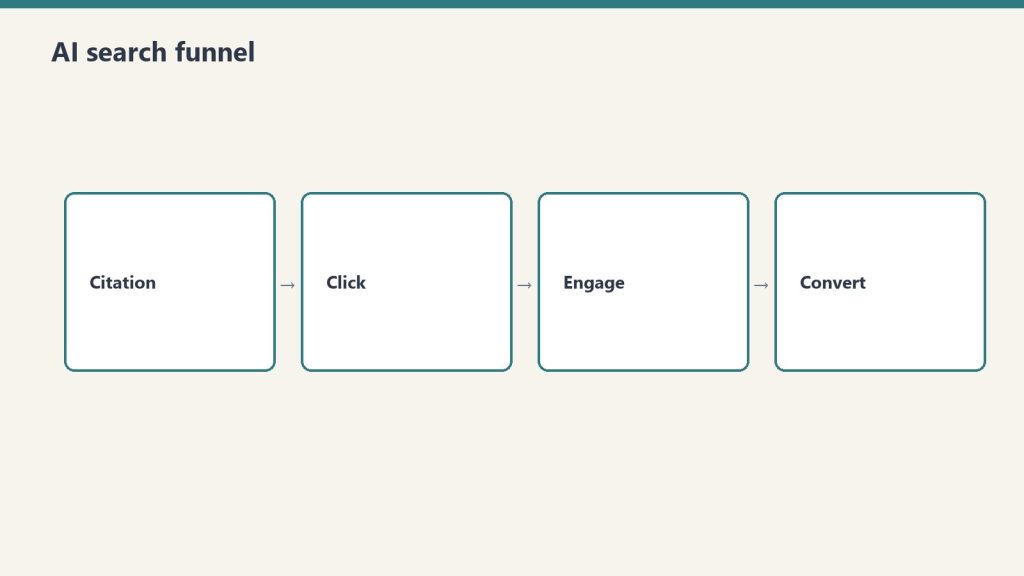
In 29 days, GA4 fired 1,405 first_visit events against 1,407 active users. That is a returning-visitor rate of roughly 0.14%. A healthy media site runs at 25–40%. We are running at effectively zero. Put another way: every one of our ~1,400 monthly readers has to be re-acquired next month because there is no returning audience to compound on.
That number is the single most important finding in this whole three-part series. Every story about our AI-referral win in Parts 1 and 2 sits on top of it. If Claude stopped citing us tomorrow, traffic would roughly halve inside 60 days — there is no cushion.
Get The Signal
What we actually ran, what it measured, and what it means for a restoration shop — every week, including the flops.
Only 8.6% of visitors scroll to the bottom
GA4 fires a scroll event at 90% page depth by default. Over 29 days, 121 users out of 1,407 fired one. That is 8.6%. The publishing benchmark sits at 25–35%. We are at roughly a quarter of that.
There are two explanations and both are true at once. Some share of the traffic is crawlers and scrapers that do not scroll. And some share of real humans are landing on articles that are either too long for the intent they arrived with, or do not give them a reason to keep going past the first answer.
Four form submissions. In 29 days. Across 1,400 readers.
| Event | Count | Users | Events / User |
|---|---|---|---|
| page_view | 2,007 | 1,406 | 1.43 |
| session_start | 1,652 | 1,406 | 1.18 |
| first_visit | 1,405 | 1,405 | 1.00 |
| user_engagement | 999 | 675 | 1.54 |
| scroll | 192 | 121 | 1.59 |
| click | 34 | 30 | 1.13 |
| form_start | 15 | 5 | 3.00 |
| form_submit | 4 | 4 | 1.00 |
Four form submissions across 1,655 sessions. 0.24% conversion. Fifteen people started a form and eleven of them walked away, for a 73% abandonment rate on whatever form we have running. There is also no newsletter_signup event, no cta_click event, no outbound_click event, no video_play event, no file_download event. We are running a publication with effectively zero instrumentation of reader behavior beyond “did the page load.” That is the measurement vacuum, and it is on us to fix.
Pages per session: 1.21
1,655 sessions produced 2,007 page views. That works out to 1.21 pages per session. Healthy media sites run 1.8–3.0. Wikipedia runs 4+. We are effectively a single-page-entry site. Readers arrive for one article, read it or do not, and leave. Nobody is browsing our categories. Nobody is clicking a related-posts rail, because we do not really have one. The internal link graph between our Claude desk, our restoration B2B content, our Mason County hyperlocal, and our general-interest pieces is not moving anybody between them, and the data proves it.
There is one exception worth sitting with. Homepage visitors ( / ) hit an average of 1.59 views per user — meaningfully higher than the site average. The homepage is doing its job. The article templates are not.
Retention is essentially zero

The GA4 retention cohort chart peaks at about 5% Day-1 retention and drops to effectively zero by Day 7. Out of every 100 readers today, 5 come back tomorrow and 0 come back next week. Healthy publications run 15–25% on Day 1 and 5–10% on Day 7. We are running at a quarter of that across the board.
The fix here is not content. It is a capture mechanism. Right now we have no durable way to turn a claude.ai referral into a known email address. Every AI-cited reader is a one-night stand with the site. Four form submissions in a month is not a newsletter strategy, it is a rounding error.
Real human audience: ~675, not 1,407
GA4 fires user_engagement roughly every 10 seconds of active foreground time. In 29 days only 675 users out of 1,407 ever fired one. That means 52% of our “users” never stuck around long enough for GA4 to confirm they were actually looking at the page. That bucket is some mix of near-instant bounces, back-button users, and crawlers that do not fire the event.
Flipping it the other direction: 48% of reported users is probably the cleanest “real human reader” estimate in the whole account. Call it ~675 real humans per month. That is the number to plan around, not the 1,407 that shows on the dashboard.
The 404 problem is real, and worse for AI referrals
Page not found – Tygart Media is our #7 most-viewed page title in 29 days at 37 pageviews. Some of that is the expected noise of a site that has been through at least one URL restructure — the -2 and -3 suffixed slugs in the data (/anthropic-founders-2, /anthropic-ipo-2, /history-of-anthropic-2) suggest a prior rewrite. But some of it is almost certainly AI assistants citing URLs that no longer resolve.
That is the single worst trust loop to leave open. The LLM does not know the URL is broken. It will keep citing it. Every 404 from an AI referral is a reader who was told by Claude that we had the answer, clicked through, and got a broken page. Fixing the 37 should be the highest-ROI hour of SEO work on our calendar this week.
Concentration risk: one page is carrying the site
/claude-student-discount accounted for 84 of our 2,007 total pageviews in 29 days — roughly 4% of all views on a single URL, and almost 12% when you include everyone who landed on it through any source. It is also the single page cited by all three major LLMs (27 combined sessions from Claude, ChatGPT, and Perplexity). It is both our crown jewel and our single point of failure.
If Anthropic changes their student policy, or a competitor sherlocks the page with a better answer, we lose a material share of total traffic overnight. The response is not to panic, it is to diversify. The structural template that makes that page cite-worthy — narrow topic, answer-first, scannable facts — is repeatable. We need three to five more pages shaped exactly like it.
A real-time snapshot that says everything
While the agent was running the reports, it pulled the real-time view. Two active users were on the site. One was reading /claude-code-vs-aider, a comparison piece. One was bouncing between /selling-into-general-contractors and /selling-into-property-managers, two B2B restoration pages. One landed on a 404. Three verticals, three intents, one broken link — our whole site compressed into thirty minutes.
The short version
We have built a site that AI models like more than humans stick around for. The acquisition side is working. The retention side barely exists. The AI-citation layer is the most interesting asset we have, and it is sitting on top of a reader experience that converts at approximately zero. Close that gap and this turns into a real publication. Leave it open and we are running a very sophisticated funnel that leaks at the bottom. Publishing this publicly is the accountability move — we will update these numbers in 60 days.
The fix, as a list
- Instrument the site properly. Add GA4 events for
newsletter_signup,cta_click,outbound_click, and scroll depth at 25 / 50 / 75 / 100%. Mark at least one as a key event. Right now we are flying blind past page-load. - Redirect the 404s. Pull the 37 broken-page pageviews, map each to the closest live URL, and push 301s. This is the single highest-ROI hour of SEO work available this week, and it specifically repairs the AI-citation trust loop.
- Install a visible capture mechanism on every article. Sticky footer subscribe, mid-article inline form, or both. Pick one default format and ship it across every Claude-desk post first. Without a capture, every AI referral stays a stranger forever.
- Add a “Related Claude posts” rail to every Claude article. Pages-per-session of 1.21 means the rest of the content library might as well not exist to any given reader. The homepage is the only page on the site that moves people inward. Rebuild article templates to behave the same way.
- Treat
/claude-student-discountand/anthropic-consolelike crown jewels. Keep them ruthlessly updated. Add FAQ schema. Add explicit Q&A blocks. Keep them in the LLM answer set. - Diversify the AI-citation base. Ship three to five new pages in the exact structural template of
/claude-student-discount. Narrow, answer-first, scannable. Kill the concentration risk. - Consolidate the Cowork cluster. Fifteen pages, near-zero engagement, near-zero AI citations. Collapse to two or three flagships and redirect the rest.
- Audit the Managed Agents pricing title mismatch. 68 path views, 39 title views. Something is rendering or logging inconsistently and it is worth a ten-minute investigation.
Frequently asked questions
What is a healthy returning-visitor rate for a media site?
Most established publications see 25–40% returning visitors. tygartmedia.com currently runs at roughly 0.14%, which is essentially zero. The gap is not content quality — it is the absence of a capture mechanism to turn first-time readers into known subscribers.
What percentage of page views should scroll to the bottom?
The GA4 default scroll event fires at 90% page depth. Healthy content sites see 25–35% of users reach that threshold. tygartmedia.com is at 8.6%, which means either pages are too long for the intent they are arriving with, or a significant share of the traffic is non-human.
How do you separate real readers from bots in GA4?
The cleanest in-account signal is the user_engagement event. GA4 only fires it after roughly ten seconds of focused foreground time on the page. Dividing engaged users by total users gives you a rough “real human reader” estimate. On tygartmedia.com that ratio is 48%, so the real monthly audience is closer to ~675 readers than the reported 1,407.
Why do 404 pages matter more when AI assistants are citing you?
Because the LLM cannot tell when a URL goes dead. Once Claude, ChatGPT, or Perplexity has indexed a citation URL, it will keep recommending that URL to readers even after the page is moved or deleted. Every 404 from an AI referral is a permanently broken trust loop until the URL is restored or redirected.
Why does a single crown-jewel page create concentration risk?
When one URL is responsible for a double-digit share of total traffic and is the only page cited across multiple AI models, any change in the underlying topic — a policy shift by the product being covered, a competitor publishing a better page — can erase that traffic in a single week. The mitigation is to build multiple pages in the same structural template so citation volume is spread across several URLs rather than concentrated in one.
What comes next
The browser agent that dug all of this out is the same one we are turning into a repeatable audit any publisher can run against their own GA4. Parts 1, 2, and 3 together are the first real case study of what that audit looks like. The acquisition playbook is now documented. The retention fix is the next sixty days of work. We will publish the follow-up numbers when the fixes have had a chance to work — or not.
If you want the catch-up: Part 1 — the AI-referral loop and Part 2 — the per-model citation playbook.
Get The Signal
What we actually ran, what it measured, and what it means for a restoration shop — every week, including the flops.
Leave a Reply