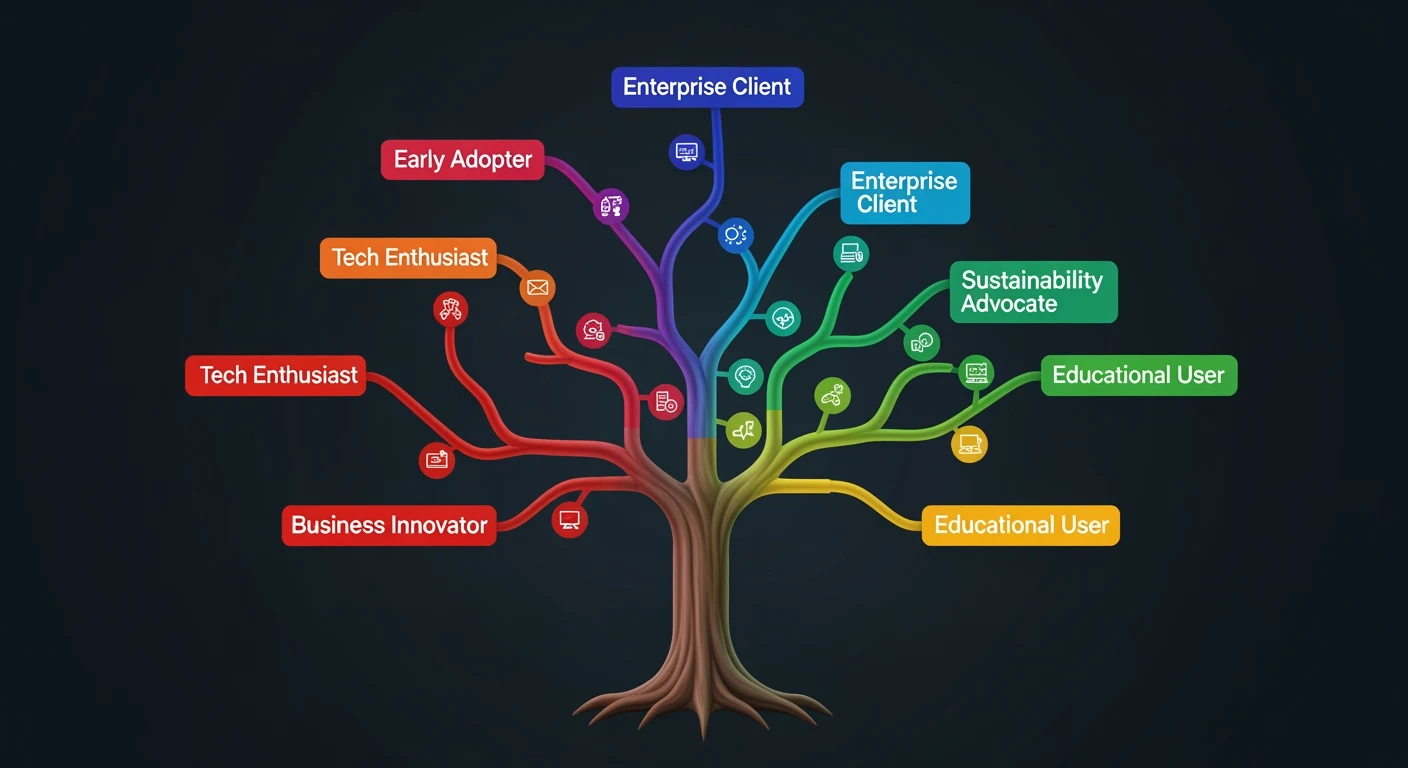
We used to generate content variants for 5 fixed personas. Then we built an adaptive variant system that generates for unlimited personas based on actual search demand. Now we’re publishing 3x more variants without 3x more effort.
The Old Persona Model
Traditional content strategy says: identify 5 personas and write variants for each. So for a restoration client:
1. Homeowner (damage in their own home)
2. Insurance adjuster (evaluating claims)
3. Property manager (managing multi-unit buildings)
4. Commercial business owner (business continuity)
5. Contractor (referring to specialists)
This makes sense in theory. In practice, it’s rigid and wastes effort. An article for “homeowners” gets written once, and if it doesn’t rank, nobody writes it again for the insurance adjuster persona.
The Demand Signal Problem
We discovered that actual search demand doesn’t fit 5 neat personas. Consider “water damage restoration”:
– “Water damage restoration” (general, ~5K searches/month)
– “Water damage insurance claim” (specific intent, ~2K searches/month)
– “How to dry water damaged documents” (very specific intent, ~300 searches/month)
– “Water damage to hardwood floors” (specific material, ~800 searches/month)
– “Mold from water damage” (consequence, ~1.2K searches/month)
– “Water damage to drywall” (specific damage type, ~600 searches/month)
Those aren’t 5 personas. Those are 15+ distinct search intents, each with different searcher needs.
The Adaptive System
Instead of “write for 5 personas,” we now ask: “What are the distinct search intents for this topic?”
The adaptive pipeline:
1. Takes a topic (“water damage restoration”)
2. Uses DataForSEO to identify all distinct search queries and their volume
3. Clusters queries by intent (claim-related vs. DIY vs. professional)
4. For each intent cluster above 200 monthly searches, generates a variant
5. Publishes all variants with strategic internal linking
The Result
Instead of 5 variants, we now generate 15-25 variants per topic, each optimized for a specific search intent. And they’re all SEO-optimized based on actual demand signals.
Real Example
Topic: “Water damage restoration”
Old approach: 5 variants (homeowner, adjuster, property manager, business, contractor)
New approach: 15 variants
– General water damage (5K searches)
– Water damage claims/insurance (2K searches)
– Emergency water damage response (1.2K searches)
– Water damaged documents (300 searches)
– Water damage to hardwood floors (800 searches)
– Water damage to drywall (600 searches)
– Water damage to carpet (700 searches)
– Mold from water damage (1.2K searches)
– Water damage deductible insurance (400 searches)
– Timeline for water damage repairs (350 searches)
– Cost of water damage restoration (900 searches)
– Water damage to electrical systems (250 searches)
– Water damage prevention (600 searches)
– Commercial water damage (500 searches)
– Water damage in rental property (280 searches)
Each variant is written for that specific search intent, with the content structure and examples that match what searchers actually want.
The Content Reuse Model
We don’t write 15 completely unique articles. We write one comprehensive guide, then generate 14 variants that:
– Repurpose content from the comprehensive guide
– Add intent-specific sections
– Use different keyword focus
– Adjust structure to match search intent
– Link back to the main guide for comprehensive information
A “water damage timeline” article might be 60% content reused from the main guide, 40% new intent-specific sections.
The SEO Impact
– 15 variants = 15 ranking opportunities (vs. 5 with the old model)
– Each variant targets a distinct intent with minimal cannibalization
– Internal linking between variants signals topic authority
– Variations can rank for 2-3 long-tail keywords each (vs. 0-1 for a generic variant)
For a competitive topic, this can add 50-100 additional keyword rankings.
The Labor Model
Old approach: Write 5 variants from scratch = 10-15 hours
New approach: Write 1 comprehensive guide (6-8 hours) + generate 14 variants (3-4 hours) = 10-12 hours
Same time investment, but now you’re publishing variants that actually match search demand instead of guessing at personas.
The Iteration Advantage
With demand-driven variants, you can also iterate faster. If one variant doesn’t rank, you know exactly why: either the search demand was overestimated, or your content isn’t competitive. You can then refactor that one variant instead of re-doing your whole content strategy.
When This Works Best
– Competitive topics with high search volume
– Verticals with diverse use cases (restoration, financial, legal)
– Content where you need to rank for multiple intent clusters
– Topics where one audience has very different needs from another
When Traditional Personas Still Matter
– Small verticals with limited search demand
– Niche audiences where 3-4 personas actually cover the demand
– Content focused on brand building (not SEO volume)
The Takeaway
Stop thinking about 5 fixed personas. Start thinking about search demand. Every distinct search intent is essentially a different persona. Generate variants for actual demand, not imagined personas, and you’ll rank for far more keywords with the same effort.
{
“@context”: “https://schema.org”,
“@type”: “Article”,
“headline”: “The Adaptive Variant Pipeline: Why 5 Personas Was the Wrong Number”,
“description”: “We replaced fixed 5-persona content strategy with demand-driven variants. Now we publish 15+ variants per topic based on actual search intents instead of guesse”,
“datePublished”: “2026-03-30”,
“dateModified”: “2026-04-03”,
“author”: {
“@type”: “Person”,
“name”: “Will Tygart”,
“url”: “https://tygartmedia.com/about”
},
“publisher”: {
“@type”: “Organization”,
“name”: “Tygart Media”,
“url”: “https://tygartmedia.com”,
“logo”: {
“@type”: “ImageObject”,
“url”: “https://tygartmedia.com/wp-content/uploads/tygart-media-logo.png”
}
},
“mainEntityOfPage”: {
“@type”: “WebPage”,
“@id”: “https://tygartmedia.com/the-adaptive-variant-pipeline-why-5-personas-was-the-wrong-number/”
}
}
Leave a Reply