
Intent-Matched Reach: The quality of an audience that actively searched for your topic before encountering your content — as opposed to an audience that was algorithmically shown your content without expressed interest.
The vanity metric conversation has been had a thousand times in marketing circles, and it always lands on the same target: social media. Likes, followers, reach, impressions — the argument goes that these numbers feel good but mean nothing without downstream action.
That argument is correct. But it is only half the story.
The other half is that not all impressions are created equal. An impression on a social feed and an impression from a search engine are fundamentally different events. One is a person being shown something. The other is a person asking for something. That difference is the entire ballgame.
The Anatomy of a Social Impression
When a social platform counts an impression, it means a piece of content appeared in someone’s feed. The person may have been scrolling at speed. They may have glanced at it for less than a second. They may have been looking at their phone while watching television. The platform has no way to know, and it does not particularly care — the impression count goes up either way.
This is push distribution. The platform’s algorithm decides that your content is worth showing to a given user at a given moment, usually because it resembles content they have engaged with before. The user did not ask for your content. They did not express any intent. They were simply in the path of the content as it moved through the feed.
Push distribution can build awareness. It can create the repeated exposure that eventually produces recognition. But it is fundamentally passive on the part of the viewer, and passive attention is the weakest form of attention there is.
The Anatomy of a Search Impression
A search impression is a different creature entirely. When Google Search Console registers an impression, it means a human — or an AI agent acting on behalf of a human — typed a query into a search interface and your content appeared in the results.
That query represents intent. The person wanted something — information, a product, a service, an answer, a comparison. They articulated that want in the form of a search. Your content appeared because a machine evaluated it as a relevant response to that articulated need.
This is pull distribution. The user came to the interface with a purpose. They expressed that purpose explicitly. Your content was surfaced as a potential answer. That is a fundamentally different quality of attention than a social feed scroll.
The user who sees your content in a search result was already moving toward your topic before they ever saw you. The social feed user may have had no interest in your topic whatsoever until the algorithm intervened — and may still have none after the impression registered.
Why Intent-Matched Reach Compounds Differently

The practical difference shows up in what happens after the impression.
A social impression that converts to a click often produces a single-session visit. The user saw something, clicked, consumed it, and returned to the feed. The relationship with the content ends there unless the platform shows them more of your content in the future — which depends on the algorithm, not on the quality of what you wrote.
A search impression that converts to a click often produces a different behavior. The user was in research mode. They clicked your result. They read your content. And then — if your content was genuinely useful — they may search for related topics, some of which you also rank for. They may bookmark your site. They may return directly. The relationship with the content does not end with the session because the need that drove the search often extends across multiple sessions.
This is why well-structured content sites see compounding organic traffic over time. Each article that earns a ranking position is a new entry point into the content database. Each entry point captures intent-matched users who are already looking for what you wrote about. The impressions accumulate not because the algorithm is feeling generous, but because the content earned a permanent position in the results.
The AI Layer Changes the Equation Further
Search impressions just got more valuable, not less.
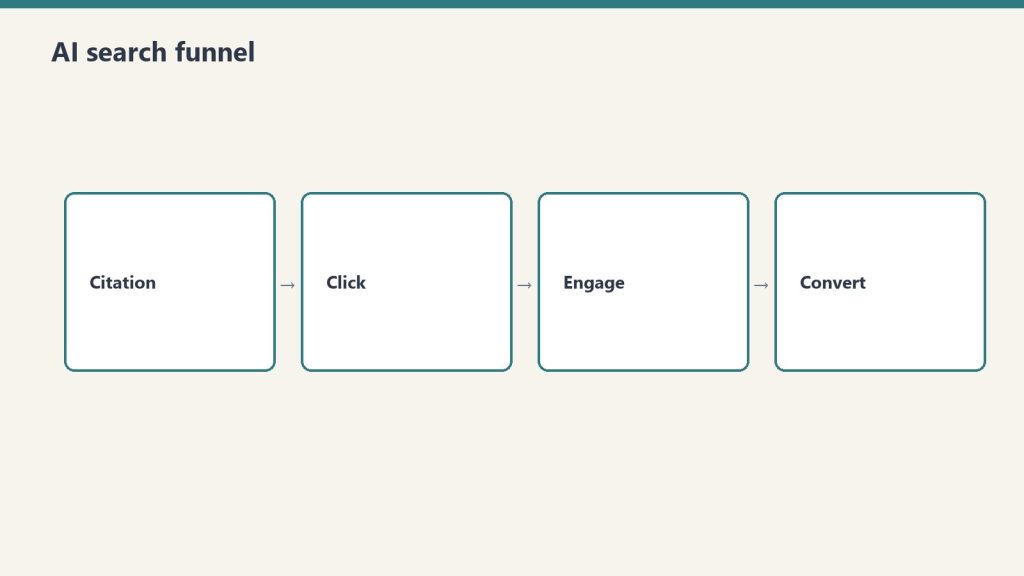
When AI search tools — Google’s AI Overviews, Perplexity, and others — synthesize answers from web content, they are pulling from the same pool as organic search. They query the content database. They find the best-structured, most authoritative sources. They cite them in the generated answer.
A citation in an AI-generated answer may not register as a traditional click. But it is reach to an intent-matched audience that is even further down the path of engagement than a traditional search user. They asked a question specific enough that an AI synthesized an answer, and your content was authoritative enough to be part of that synthesis.
This is the next evolution of the SEO impression. It is not just “someone searched and your result appeared.” It is “someone asked a question and your writing was the answer.”
No social impression comes close to that.
The Vanity Metric Reframe
SEO impressions are also a vanity metric if you treat them that way.
An impression in GSC that never converts to a click because your title and meta description are weak is wasted potential. A ranking position for a keyword with no real search intent behind it is a trophy that serves no one. The metric is only as good as the strategy behind it.
But the foundational difference remains: you are building on pull, not push. The person chose to look. You earned the position. The impression carries meaning because it reflects expressed intent, not algorithmic distribution.
What This Means for How You Write
If you accept that SEO impressions represent intent-matched reach, then writing for search is not the sanitized, keyword-stuffed exercise it has been caricatured as. It is the discipline of answering specific human questions at the highest possible level of quality, then structuring those answers so that machines can identify them as the best available response.
Every article you write is an attempt to earn a permanent position in the answer set for a specific query. Every impression from that position is a signal that the answer earned its place. Every click is a person who was already looking for what you know.
That is not a vanity metric. That is the only metric that starts with a human already in motion toward your topic.
The goal is not more impressions. The goal is impressions from the right query, delivered at the moment of intent. Everything else is noise moving through a feed.
Related on Tygart Media: information density · SEO and Quality Score · taxonomy as content DNA.
Frequently Asked Questions
What is the difference between a search impression and a social media impression?
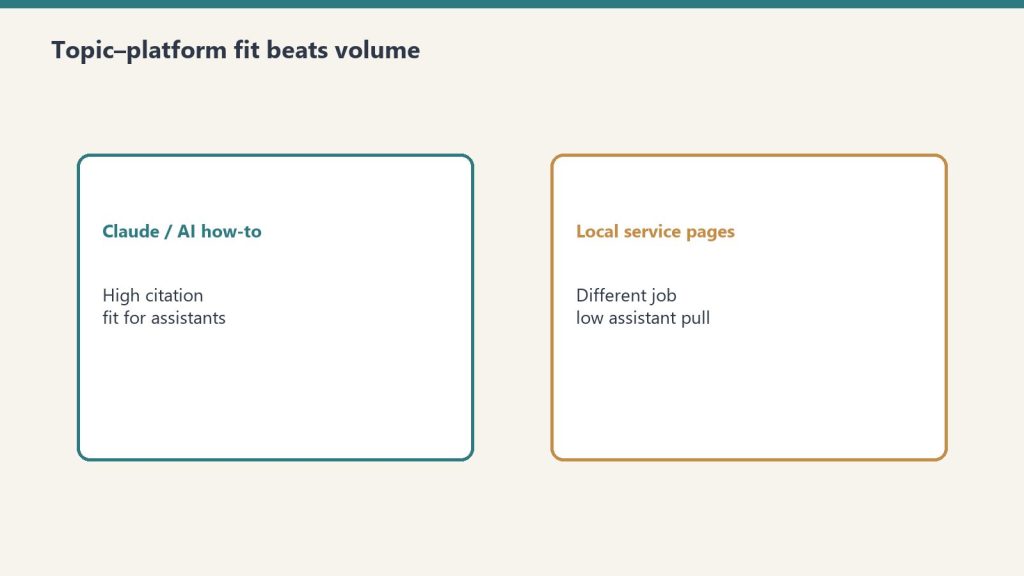
A search impression occurs when your content appears in results after a user typed a specific query — expressing active intent. A social media impression occurs when a platform’s algorithm shows your content to a user who may have expressed no interest in your topic. Search impressions are pull; social impressions are push.
Why are search impressions more valuable than social impressions?
Search impressions are generated by expressed user intent — the person was already looking for something related to your content before they saw it. Social impressions are algorithm-driven and may reach users with no interest in your topic. Intent-matched reach converts and compounds differently than passive feed exposure.
What is Google Search Console and what does it track?
Google Search Console is a free tool from Google that shows how your site performs in Google Search. It tracks impressions, clicks, click-through rate, and average ranking position for specific queries — the primary tool for measuring organic search performance.
How do AI search tools affect SEO impressions?
AI search tools like Google AI Overviews and Perplexity synthesize answers from web content and cite sources. Well-structured, authoritative content that ranks well in traditional search is also more likely to be cited in AI-generated answers, extending the value of strong organic positions.
Are SEO impressions ever a vanity metric?
Yes — if they come from irrelevant queries, if content ranks for keywords with no real intent, or if weak meta descriptions prevent clicks from converting, impressions are wasted. The value of an SEO impression depends on whether it reflects genuine intent alignment between the query and the content.
What does intent-matched reach mean in content marketing?
Intent-matched reach means your content is being seen by people who were already actively looking for the topic you wrote about. Search engines surface content in response to explicit queries, making organic search the primary channel for reaching audiences with demonstrated interest rather than assumed interest.
Related: The infrastructure behind this strategy starts with how you think about your site — Your WordPress Site Is a Database, Not a Brochure.
Leave a Reply