By Will Tygart
· Practitioner-grade
· From the workbench
Fourth in what is now apparently a series. The first three articles asked whether the accumulated context layer behind Tygart Media could be productized, how the dual-publish pattern is the deposit mechanism that builds the layer, and why articles deposited via that pattern are infrastructure rather than content. This piece is about the naming question that arrived next: should the productized version be called “Where There’s a Will, There’s a Way”? I want to argue both sides honestly, because the naming question is more consequential than it looks.
The Idea
“Where there’s a will, there’s a way” is the kind of phrase that lives in the back of your head from childhood. It is also, conveniently, a phrase that contains the word “Will” — which happens to be the name of the operator behind Tygart Media. The pun is built in. It has been sitting there, waiting, the entire time.
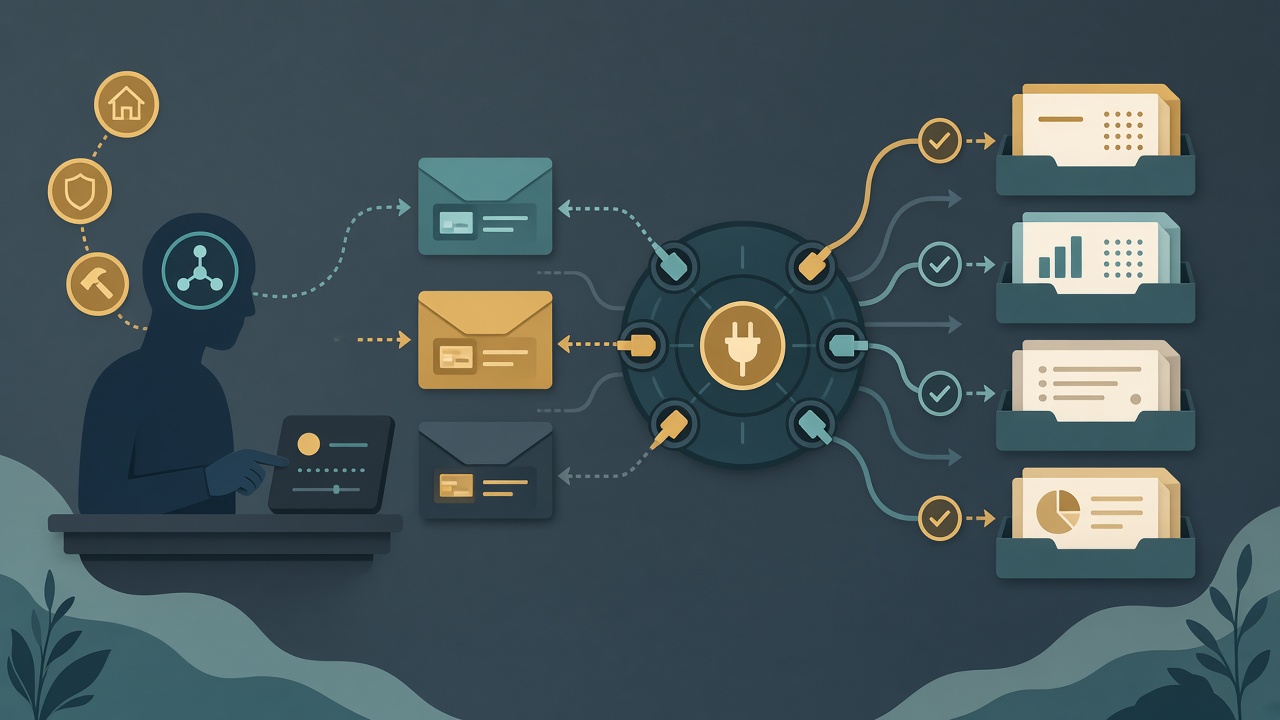
The thought is this: if Tygart Media eventually ships a productized version of its accumulated operational knowledge — call it the Second Brain, call it Context-as-a-Service, call it whatever — the brand name almost writes itself. “Where There’s a Will, There’s a Way.” The product itself becomes “the Way.” A bolt-on knowledge layer that any operator can plug into their own AI workflow. They are not buying software. They are buying an opinion about how things should be done. They are buying a way.
And the positioning is even better than the naming. “The Way” naturally implies prescription and opinionation — this is not a neutral tool, this is the accumulated answer to “how do you actually do this.” It is the difference between buying a hammer and buying the apprenticeship. It positions the product as something with a point of view, which is exactly what differentiates it from the empty memory layers of Mem0 and Letta and the rest.
I think the naming is good. I want to argue that case first, because it deserves it. Then I want to make the case against, because the case against is also real, and an article that only makes the flattering case is content. An article that makes both cases honestly is infrastructure.
The Case For “Where There’s a Will, There’s a Way”
The pun is free distribution. Memorable brand names are the cheapest marketing channel that exists, and a name that makes people smile the first time they hear it is a name that gets repeated. The phrase already lives in millions of heads. Attaching the product to that pre-existing mental hook is leverage that no paid campaign can buy.
The personal brand is the moat. The reason the productized context layer would be valuable in the first place is that it is built from one specific operator’s accumulated experience running 27+ client sites in a particular set of verticals with a particular methodology. Strip out the personal brand and you strip out the reason anyone would pay for it. The thing that makes “the Way” worth buying is that it is Will’s Way — the accumulated answer of one specific operator who has done the work. Other people’s accumulated answers would be different products. The personal connection is not a marketing layer on top of the product. The personal connection IS the product.
“The Way” is the right shape for a bolt-on. Bolt-on products live or die on whether the buyer can immediately understand what they are getting. “An API for context retrieval” is technically accurate and emotionally inert. “The Way” tells the buyer everything they need to know in one syllable. It is the accumulated wisdom of an operator they trust, packaged as something they can plug into their own AI. The mental model arrives instantly. The sales cycle shortens.
Opinionation is the differentiator. The entire memory-layer space is full of empty containers. Mem0, Letta, Zep, Hindsight — all of them sell you a place to put your knowledge. None of them ship with knowledge already loaded. “The Way” announces upfront that it ships pre-loaded with a specific opinion about how things should be done. That is either exactly what you want or exactly what you do not want, and either reaction is a good reaction, because both reactions are fast. Fast disqualification is more valuable than slow consideration. The buyers who are right for “the Way” will know in three seconds. So will the buyers who are wrong for it. Nobody wastes anyone’s time.
It connects to the existing Tygart Media brand vocabulary. The site already has a sense of opinionation, an operator-with-a-point-of-view voice, and a willingness to say “here is how you should do this.” A product called “the Way” extends that voice rather than fighting it. The brand and the product reinforce each other instead of competing.
It scales as a naming pattern. If “the Way” is the first product, the naming convention opens up a whole shelf. The Restoration Way. The Luxury Lending Way. The Cold Storage Way. Each vertical-specific knowledge package becomes its own product, all under the same parent brand. The naming is not just one good name. It is a system of names.
The Case Against (Which Is Also Real)
Now the other side. I want to be careful here, because Will explicitly asked for honest pushback, and the temptation in a piece like this is to make the counter-argument feel like a token gesture before reaffirming the original idea. That is not what this section is. The case against is real, and some of it is serious enough that it should change the design of the product even if the naming stays.
Personal-brand products have a ceiling, and the ceiling is the person. Tim Ferriss can sell Tim Ferriss books. The Tim Ferriss book business is real, profitable, and durable. It is also forever capped at “things one specific person can plausibly stand behind.” The moment Ferriss steps away — whether by choice, by burnout, by accident, by anything — the brand has a problem that has no clean solution. Personal-brand products do not have succession plans, they have eulogies. If “the Way” is genuinely Will’s Way, then the product cannot survive Will leaving the building, and that creates a structural ceiling on how big the business can ever get and how cleanly it can ever be sold to anyone else.
The bus factor is not just an exit problem. It is a daily problem. Every customer of “the Way” is implicitly betting that Will will keep being Will — keep working, keep producing, keep updating the knowledge base, keep being available when something breaks. A solo operator can absorb a vacation. A solo operator cannot absorb a serious illness, a family emergency, a six-month creative block, or any of the other things that happen to humans. The product brand says “Will is the value here,” and customers will be right to take that literally. The first time Will is unavailable for two weeks during a customer crisis, the bus factor stops being theoretical.
The pun only lands for people who know Will. To Will, to Stefani, to Pinto, to anyone in the Tygart Media orbit, “Where there’s a Will, there’s a Way” is a clever wink. To a stranger reading it cold on a landing page, it is just an idiom. The pun is invisible to the people who do not already know who Will is. That means the naming does not actually do double duty — it does single duty for the audience that already knows him, and reverts to “generic motivational phrase” for everyone else. The brand depends on context that most prospects do not have.
“The Way” implies a finished thing. The accumulated knowledge behind Tygart Media is not a finished thing. It is a moving target. Methodology changes. New skills get added. Old skills get deprecated. The Borro playbook from six months ago is not the Borro playbook today. A product called “the Way” implies a fixed answer, but the actual value of the underlying system is that it is constantly being updated. Customers buying “the Way” might reasonably expect a stable methodology document. What they would actually be subscribing to is a methodology that mutates every week. That mismatch between expectation and reality is a support burden waiting to happen.
Opinionation cuts both ways. The same thing that makes “the Way” a sharp differentiator also makes it brittle. If the underlying methodology turns out to be wrong about something — and over a long enough time horizon, every methodology turns out to be wrong about something — pivoting is harder when your brand name is literally the prescription. Mem0 can change its retrieval algorithm without changing its identity. “The Way” cannot easily change its way without changing its name.
Bolt-on products face a discoverability problem that opinionation makes worse. Bolt-on tools have to be installed alongside something else. The buyer is already committed to a primary stack — Cursor, ChatGPT, Claude, their own agent framework — and the bolt-on has to fit. Highly opinionated bolt-ons fit fewer stacks, because each opinion is a constraint. A neutral memory layer fits everywhere. “The Way” fits the subset of stacks where the operator is willing to import someone else’s opinion about how things should work. That subset might be smaller than it looks.
Most importantly: the moat might not actually be Will. This is the hardest counter-argument, and it is the one that should be sat with longest. Will’s intuition is that the moat is the personal brand — Will’s accumulated experience, voice, and judgment. But it is possible that the actual moat is the methodology, not the person. If the methodology is the moat, then attaching a personal-brand name to it is leaving money on the table. A methodology can scale, license, train other operators, and outlive its creator. A personal brand cannot. The naming choice is therefore also a strategic choice about which kind of business is being built. “The Way” optimizes for the personal-brand version. A more generic name optimizes for the methodology-as-product version. These are different businesses with different ceilings, and the naming decision quietly commits to one of them.
The Synthesis
Both sides are real. The pun is genuinely clever and the positioning is genuinely strong. The bus factor and personal-brand ceiling are also genuinely real and should not be dismissed as “we’ll figure it out later,” because the naming choice is what locks them in.
The version that probably resolves the tension is this: use the personal-brand naming for the launch and the early traction, with a deliberate plan to abstract the methodology away from the personal brand once the methodology is mature enough to stand on its own.
Concretely: launch “the Way” as a Will-branded product. Use the pun. Use the personal voice. Lean into the opinionation. Get the early customers who specifically want Will’s accumulated wisdom packaged as a service, because those customers will be the highest-quality early users and the best teachers about what the product actually needs to be. Treat the personal-brand version as Phase 1.
Then, with the revenue and the validation from Phase 1, build Phase 2 as the depersonalized methodology layer. Document the patterns so they could be applied by an operator who is not Will. Train other operators. License the methodology. Keep “the Way” as the original flagship, but build a Methodology Edition or an Enterprise Edition or whatever the right name turns out to be that does not depend on Will being in the building. Phase 1 funds Phase 2. Phase 2 is the version with no ceiling.
This is how Basecamp turned 37signals consulting into Basecamp the product, and how Tim Ferriss turned Tim Ferriss the brand into a media company that does not require Tim Ferriss to be in the room every day. The pattern is: start with the personal brand because it is the cheapest way to get the first hundred customers, and abstract away from it as soon as the abstraction is honest.
The naming question, framed this way, is not really “should we call it the Way or something else.” It is “what phase is the product in, and what is the plan for the next phase.” If there is a plan for the next phase, “the Way” is a great name. If there is no plan for the next phase, “the Way” is a name that will eventually become a ceiling.
The Bolt-On Question
One more piece worth calling out, because it is buried in the original idea and deserves to be made explicit. Will framed the product as a “bolt-on.” That is the right framing, and it is more important than the naming.
A bolt-on is a low-commitment purchase. The buyer keeps their existing stack. The buyer adds a small thing on the side. If the bolt-on works, the buyer keeps it. If it does not, the buyer removes it with no migration cost. Bolt-ons sell faster, churn earlier, and have lower expansion revenue than full-stack products. They also have a much shorter sales cycle and a much lower barrier to entry.
For a single-operator product launching from scratch, the bolt-on shape is exactly right. Full-stack products require a sales team, an implementation team, a support team, and a customer success team. A solo operator cannot ship any of those. A bolt-on product can be launched by one person, supported by documentation, and adopted with a single API key. The unit economics work. The operational footprint stays small enough that one person can run it.
So whatever it ends up being called, the bolt-on framing should stay. “The Way” works as a bolt-on. It would not work as a full-stack platform — the personal-brand and bus-factor problems would crush it at scale. As a small, opinionated, plug-this-in-to-make-your-AI-better tool, it has a real shape that one person can ship and support.
Verdict
I think Will should use the name. I also think Will should use it with a clear understanding of what it is buying him and what it is costing him.
What it buys: free distribution from a memorable pun, fast positioning that needs no explanation, immediate differentiation from neutral memory layers, alignment with the existing Tygart Media voice, and a naming pattern that scales to additional vertical-specific products.
What it costs: a structural ceiling defined by the operator’s personal capacity, a bus factor that customers will eventually notice, a name that locks in the current methodology more tightly than the methodology actually deserves, and a strategic commitment to the personal-brand version of the business over the methodology-as-product version.
If the plan is “ship Phase 1 fast, learn what the product actually needs to be, abstract toward Phase 2 within eighteen months,” then the costs are acceptable and the benefits are real. If the plan is “this is the product forever,” then the costs eventually overwhelm the benefits, and the right move is a more generic name that does not paint the business into a corner.
The naming is not really the question. The question is whether there is a Phase 2, and what it looks like, and when it starts. Get clear on that, and the naming answers itself.
Knowledge Node Notes
Structured residue for future retrieval.
Core Claim
“Where There’s a Will, There’s a Way” is a strong product name for a Phase 1 launch of the productized Tygart Media context layer, but it commits the business to a personal-brand model with structural ceilings. The naming question is really a phase-of-business question. Use the name if there is a Phase 2 plan. Pick a more generic name if there is not.
The Idea (As Proposed)
- Productize Tygart Media’s accumulated context layer as a bolt-on for other operators’ AI workflows
- Brand it “Where There’s a Will, There’s a Way” — pun on Will Tygart’s name
- Product itself is called “the Way”
- Positioning: opinionated knowledge layer, not neutral memory infrastructure
- Shape: small, plug-in, low-commitment bolt-on rather than full platform
The Case For
- Free distribution from memorable pun — pre-existing mental hook in millions of heads
- Personal brand IS the moat — value prop is one specific operator’s accumulated answers, not a generic methodology
- “The Way” is right shape for a bolt-on — instant mental model, short sales cycle
- Opinionation is the differentiator vs empty memory layers (Mem0, Letta, Zep, Hindsight)
- Aligns with Tygart Media voice — extends rather than fights the existing brand
- Scales as a naming pattern — The Restoration Way, The Luxury Lending Way, etc.
The Case Against
- Personal-brand ceiling — Tim Ferriss problem. Capped at what one human can plausibly stand behind. No succession plan, only eulogies.
- Bus factor as daily problem — vacations OK, illness/emergency/burnout not OK. First two-week unavailability during a customer crisis is when this stops being theoretical.
- Pun only lands for people who already know Will — strangers see a generic motivational phrase. Brand depends on context most prospects don’t have.
- “The Way” implies a finished thing — but the underlying methodology mutates weekly. Expectation/reality mismatch = support burden.
- Opinionation cuts both ways — pivoting is harder when your brand name IS the prescription.
- Bolt-on discoverability — opinionated bolt-ons fit fewer stacks because each opinion is a constraint.
- Hardest counter: the actual moat might be the methodology, not the person. If so, personal-brand naming leaves money on the table because methodology can scale/license/outlive creator. Personal brand cannot.
Synthesis / Recommendation
Two-phase strategy:
- Phase 1 — Personal brand launch. Use “the Way.” Use the pun. Lean into Will’s voice and opinionation. Get first 100 customers who specifically want Will’s wisdom packaged. They are the best teachers about what the product needs to be.
- Phase 2 — Methodology abstraction. Use Phase 1 revenue + validation to build a depersonalized methodology layer. Document patterns so an operator who is not Will could apply them. License. Train. “The Way” stays as flagship; Methodology Edition / Enterprise Edition removes the bus factor.
Phase 1 funds Phase 2. Phase 2 has no ceiling.
Pattern precedents: Basecamp turning 37signals consulting into a product. Tim Ferriss turning the personal brand into a media company that doesn’t require him in the room daily.
The Bolt-On Framing (Most Important Point)
The bolt-on shape is more strategically important than the name. For a solo operator launching from scratch:
- Bolt-ons sell faster (no migration, no commitment)
- Bolt-ons need no sales/CS/implementation team
- Bolt-ons can be launched by one person and supported by documentation
- Full-stack platform would crush a solo operator under operational weight
Whatever the name, keep the bolt-on shape. “The Way” works as a bolt-on. It would not work as a full platform.
What This Locks In vs What It Leaves Open
Locks in: opinionation as a permanent product trait, personal brand as central value prop, Will’s voice as the canonical voice, Tygart Media as parent brand.
Leaves open: pricing model, technical architecture, target vertical, distribution channel, methodology scope, eventual depersonalization plan.
Connection to the Series
- Article 1 (Second Brain as API): Could you sell access to your context layer? Yes, with clean-room architecture and a real legal stack.
- Article 2 (Dual Publish): The deposit mechanism that builds the context layer.
- Article 3 (Articles as Infrastructure): The deposits are not content — they are infrastructure being minted.
- Article 4 (this one): The product question — how to package and name the productized version of the accumulated infrastructure. Answer: “the Way” works for Phase 1, with a Phase 2 abstraction plan.
Single arc: can we sell our context → here is how the context gets built → the deposits are infrastructure not content → here is what to name the product when we package it.
Action Items
- [ ] Decide whether there is a Phase 2 plan. If yes, “the Way” is good. If no, pick a more generic name.
- [ ] Sketch a Phase 2 hypothesis even if it is wrong — having any plan beats having none
- [ ] Reserve domains: wherestheresaway.com, thewayapi.com, tygartmedia.com/way, etc.
- [ ] Test the pun on people who do not already know Will. Does it land? Does it confuse? Data beats intuition here.
- [ ] Draft a one-page “what the Way is” landing page as a forcing function. Writing the landing page will reveal whether the positioning actually holds together.
- [ ] Decide on bolt-on vs platform — bolt-on is the right answer but worth being explicit about it
Tags
brand naming · personal brand · bus factor · bolt-on products · methodology as product · phase 1 phase 2 · Tim Ferriss model · Basecamp model · Where There’s a Will There’s a Way · the Way · Will Tygart · second brain productization · opinionated software · context as a service · Tygart Media product strategy · single operator scaling · personal brand ceiling · solo operator economics
Last updated: April 2026.