
Last refreshed: October 5, 2026 (Pacific)
When Rakuten announced it had deployed enterprise AI agents across five departments in a single week using Anthropic’s newly launched Claude Managed Agents, it wasn’t a headline about AI being impressive. It was a headline about deployment speed becoming a competitive variable.
A week. Five departments. Agents that plug into Slack and Teams, accept task assignments, and return deliverables — spreadsheets, slide decks, reports — to the people who asked for them.
That timeline matters. It used to take enterprise teams months to do what Rakuten did in days. Understanding what changed is the whole story.
What Enterprise AI Deployment Used to Look Like
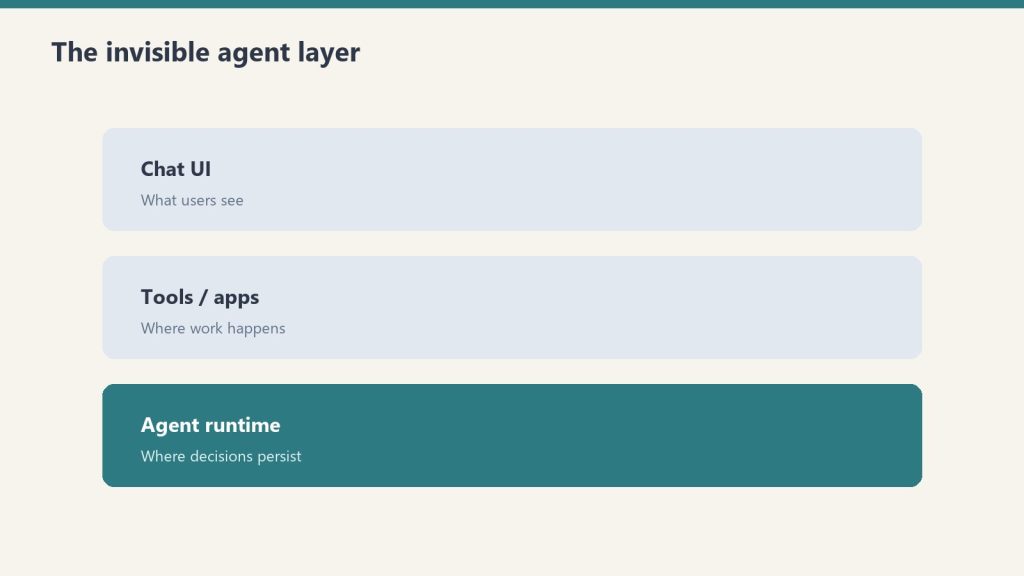
Before managed infrastructure existed, deploying an AI agent in an enterprise environment meant building a significant amount of custom scaffolding. Teams needed secure sandboxed execution environments so agents could run code without accessing sensitive systems. They needed state management so a multi-step task didn’t lose its progress if something failed. They needed credential management, scoped permissions, and logging for compliance. They needed error recovery logic so one bad API call didn’t collapse the whole job.
Each of those is a real engineering problem. Combined, they typically represented months of infrastructure work before a single agent could touch a production workflow. Most enterprise IT teams either delayed AI agent adoption or deprioritized it entirely because the upfront investment was too high relative to uncertain ROI.
What Claude Managed Agents Changes for Enterprise Teams
Anthropic’s Claude Managed Agents, launched in public beta on April 9, 2026, moves that entire infrastructure layer to Anthropic’s platform. Enterprise teams now define what the agent should do — its task, its tools, its guardrails — and the platform handles everything underneath: tool orchestration, context management, session persistence, checkpointing, and error recovery.
The result is what Rakuten demonstrated: rapid, parallel deployment across departments with no custom infrastructure investment per team.
According to Anthropic, the platform reduces time from concept to production by up to 10x. That claim is supported by the adoption pattern: companies are not running pilots, they’re shipping production workflows.
How Enterprise Teams Are Using It Right Now
The enterprise use cases emerging from the April 2026 launch tell a consistent story — agents integrated directly into the communication and workflow tools employees already use.
Rakuten deployed agents across product, sales, marketing, finance, and HR. Employees assign tasks through Slack and Teams. Agents return completed deliverables. The interaction model is close to what a team member experiences delegating work to a junior analyst — except the agent is available 24 hours a day and doesn’t require onboarding.
Asana built what they call AI Teammates — agents that operate inside project management workflows, picking up assigned tasks and drafting deliverables alongside human team members. The distinction here is that agents aren’t running separately from the work — they’re participants in the same project structure humans use.
Notion deployed Claude directly into workspaces through Custom Agents. Engineers use it to ship code. Knowledge workers use it to generate presentations and build internal websites. Multiple agents can run in parallel on different tasks while team members collaborate on the outputs in real time.
Sentry took a developer-specific angle — pairing their existing Seer debugging agent with a Claude-powered counterpart that writes patches and opens pull requests automatically when bugs are identified.
What Enterprise IT Teams Are Actually Evaluating
The questions enterprise IT and operations leaders should be asking about Claude Managed Agents are different from what a developer evaluating the API would ask. For enterprise teams, the key considerations are:
Governance and permissions: Claude Managed Agents includes scoped permissions, meaning each agent can be configured to access only the systems it needs. This is table stakes for enterprise deployment, and Anthropic built it into the platform rather than leaving it to each team to implement.
Compliance and logging: Enterprises in regulated industries need audit trails. The managed platform provides observability into agent actions, which is significantly harder to implement from scratch.
Integration with existing tools: The Rakuten and Asana deployments demonstrate that agents can integrate with Slack, Teams, and project management tools. This matters because enterprise AI adoption fails when it requires employees to change their workflow. Agents that meet employees where they already work have a fundamentally higher adoption ceiling.
Failure recovery: Checkpointing means a long-running enterprise workflow — a quarterly report compilation, a multi-system data aggregation — can resume from its last saved state rather than restarting entirely if something goes wrong. For enterprise-scale jobs, this is the difference between a recoverable error and a business disruption.
The Honest Trade-Off

Moving to managed infrastructure means accepting certain constraints. Your agents run on Anthropic’s platform, which means you’re dependent on their uptime, their pricing changes, and their roadmap decisions. Teams that have invested in proprietary agent architectures — or who have compliance requirements that preclude third-party cloud execution — may find Managed Agents unsuitable regardless of its technical merits.
The $0.08 per session-hour pricing, on top of standard token costs, also requires careful modeling for enterprise workloads. A suite of agents running continuously across five departments could accumulate meaningful runtime costs that need to be accounted for in technology budgets.
That said, for enterprise teams that haven’t yet deployed AI agents — or who have been blocked by infrastructure cost and complexity — the calculus has changed. The question is no longer “can we afford to build this?” It’s “can we afford not to deploy this?”
Related on Tygart Media: managed agents review · Notion + managed agents.
Frequently Asked Questions
How quickly can an enterprise team deploy agents with Claude Managed Agents?
Rakuten deployed agents across five departments — product, sales, marketing, finance, and HR — in under a week. Anthropic claims a 10x reduction in time-to-production compared to building custom agent infrastructure.
What enterprise tools do Claude Managed Agents integrate with?
Deployed agents can integrate with Slack, Microsoft Teams, Asana, Notion, and other workflow tools. Agents accept task assignments through these platforms and return completed deliverables directly in the same environment.
How does Claude Managed Agents handle enterprise security requirements?
The platform includes scoped permissions (limiting each agent’s system access), observability and logging for audit trails, and sandboxed execution environments that isolate agent operations from sensitive systems.
What does Claude Managed Agents cost for enterprise use?
Pricing is standard Anthropic API token rates plus $0.08 per session-hour of active runtime. Enterprise teams with multiple agents running across departments should model their expected monthly runtime to forecast costs accurately.
Related: Complete Pricing Reference — every variable in one place. Complete FAQ Hub — every question answered.
Leave a Reply