Tag: SEO

  • Radon Laws and Regulations in New York: Complete Guide

    The Distillery — Brew № 1 · Radon Mitigation

    New York State has significant radon risk across much of its interior — away from the coastal metropolitan areas, New York’s geology of granite, gneiss, and shale creates elevated radon potential. The New York State Department of Health estimates that approximately 35% of New York homes outside New York City have radon levels above 4.0 pCi/L. New York has enacted radon contractor certification requirements and requires radon testing disclosure in real estate transactions.

    EPA Radon Zone Designation

    New York State counties range from Zone 1 in portions of the Hudson Valley, Capital Region, and Southern Tier to Zone 2 in Long Island and Zone 3 in parts of New York City. The highest-radon areas include: Clinton, Essex, Hamilton, Fulton, and Warren counties in the Adirondack region overlying granitic bedrock; Columbia, Greene, Ulster, and Sullivan counties in the Hudson Valley/Catskills region; and Tompkins, Chemung, Steuben, and Allegany counties in the Southern Tier.

    Radon Contractor Licensing in New York

    New York requires radon contractors to hold a New York State radon contractor certification issued by the New York State Department of Health. New York’s certification program requires demonstrating NRPP or NRSB certification and meeting state-specific requirements. The NYSDOH maintains a list of certified radon contractors. Performing radon measurement or mitigation in New York without state certification is a violation of New York Public Health Law.

    Radon Disclosure Requirements in New York

    New York’s Property Condition Disclosure Act requires sellers to complete a Property Condition Disclosure Statement. The New York PCDS includes questions about environmental conditions — sellers must disclose whether they have knowledge of elevated radon levels or whether a radon mitigation system is present. Sellers who have received elevated radon test results must disclose them. New York buyers should independently test during the inspection period regardless of seller disclosure status.

    Frequently Asked Questions

    Does New York require radon contractor certification?

    Yes. New York requires state radon contractor certification from the NYSDOH. Verify certification status through the New York State Department of Health before hiring any radon professional.

    What parts of New York State have the highest radon?

    The Adirondack region (Clinton, Essex, Hamilton, Fulton, Warren counties), Hudson Valley and Catskills (Columbia, Greene, Ulster, Sullivan counties), and Southern Tier (Tompkins, Chemung, Steuben, Allegany counties) have the state’s highest radon potential. New York City and Long Island generally have lower levels.

    Does New York require radon disclosure in real estate?

    Yes. The New York Property Condition Disclosure Statement requires sellers to disclose known elevated radon conditions and the presence of any mitigation system.

    New York City and Long Island Radon Context

    New York City (all five boroughs) is predominantly Zone 3 with the lowest radon potential in the state — largely due to the dense urban construction, higher air exchange rates in multifamily buildings, and the specific geology beneath the city. Long Island (Nassau and Suffolk counties) is Zone 2. This does not mean radon is absent in NYC or Long Island, but average concentrations are substantially lower than upstate New York. Ground-floor and basement apartments in older building types throughout the metro area can still have elevated levels.

    Capital Region and Hudson Valley Radon

    The Albany-Schenectady-Troy metropolitan area (Albany, Schenectady, and Rensselaer counties) overlies a mix of shale, limestone, and glacial geology and shows Zone 1 to Zone 2 radon levels. Ulster County (Kingston area), Greene County (Catskill Mountains), and Columbia County in the Hudson Valley are Zone 1, with elevated radon driven by the region’s granitic and metamorphic geology. The Southern Tier cities — Binghamton (Broome County), Elmira (Chemung County), and Corning (Steuben County) — are in high-radon Zone 1 areas.

    New York State Testing Resources

    The New York State Department of Health (NYSDOH) Radiation Protection Bureau administers the state radon program. NYSDOH maintains a searchable database of certified radon service providers, county-level radon data from state testing surveys, and educational resources. New York State participates in EPA’s SIRG program, which funds testing assistance and contractor certification support. Contact NYSDOH directly for the current certified contractor list and any available test kit programs.

  • Radon Laws and Regulations in Virginia: Complete Guide

    The Distillery — Brew № 1 · Radon Mitigation

    Virginia has significant radon risk in its northern and western regions, particularly the Northern Virginia suburbs of Washington D.C. and the Shenandoah Valley. The Virginia Department of Health estimates that approximately 30% of Virginia homes have radon levels above 4.0 pCi/L statewide, with considerably higher percentages in the northern and western areas. Virginia has enacted both radon contractor licensing and specific real estate disclosure requirements.

    EPA Radon Zone Designation

    Virginia counties range significantly by zone. Northern Virginia counties (Loudoun, Fauquier, Clarke, Warren, Shenandoah, Page, Rockingham, Augusta, Rockbridge, and Bath) overlying the Shenandoah Valley limestone and Blue Ridge geology are Zone 1. Northern Virginia suburban counties (Fairfax, Prince William, Stafford) show elevated levels. Central and southeastern Virginia counties are predominantly Zone 2 to Zone 3.

    Radon Contractor Licensing in Virginia

    Virginia requires radon contractors to hold a Virginia Department of Professional and Occupational Regulation (DPOR) radon license for both measurement and mitigation work. Virginia’s radon licensing program is administered by DPOR and requires passing the licensing examination, demonstrating NRPP or NRSB certification, carrying liability insurance, and completing continuing education. The DPOR maintains a searchable database of licensed radon professionals. Performing radon work without a Virginia radon license is a violation of the Virginia Radon Contractor Licensing Act.

    Radon Disclosure Requirements in Virginia

    Virginia enacted radon disclosure requirements as part of its residential real estate disclosure law. The Virginia Residential Property Disclosure Act requires sellers to provide buyers with a disclosure statement, and while Virginia uses a disclaimer system (sellers may disclaim rather than warrant certain conditions), known elevated radon levels are material conditions that sellers should disclose. Virginia also requires distribution of the EPA radon pamphlet in real estate transactions in certain circumstances.

    Frequently Asked Questions

    Does Virginia require radon contractor licensing?

    Yes. Virginia requires radon contractors to hold a DPOR radon license for both measurement and mitigation. Verify license status through the Virginia DPOR before hiring any radon professional.

    What parts of Virginia have the highest radon?

    The Shenandoah Valley counties of western Virginia — Shenandoah, Page, Rockingham, Augusta, Rockbridge, and Bath counties — and northern Piedmont counties including Loudoun and Fauquier have the highest radon potential. Northern Virginia suburban counties also show elevated levels.

    Is radon disclosure required in Virginia real estate?

    Virginia uses a property disclosure/disclaimer system. Known material conditions including elevated radon should be disclosed. Radon testing is standard practice in Northern Virginia and Shenandoah Valley transactions.

    Northern Virginia Radon Risk

    The Northern Virginia suburban corridor — Fairfax, Loudoun, Prince William, Stafford, and Fauquier counties — has significant radon risk, with many areas in Zone 1 due to Piedmont crystalline geology beneath the suburban development. Loudoun County, which has experienced rapid residential growth, has a substantial share of homes with elevated radon levels. Fairfax County — the state’s most populous — shows Zone 1 to Zone 2 levels with meaningful risk throughout. Given the area’s dense housing market and active real estate transactions, radon testing is essentially standard practice in Northern Virginia buyer due diligence.

    Shenandoah Valley Radon Specifics

    The Shenandoah Valley’s limestone and carbonate geology creates elevated radon potential that extends from Pennsylvania’s south-central counties southward through western Virginia. Shenandoah, Page, Rockingham (Harrisonburg), Augusta (Staunton/Waynesboro), Rockbridge (Lexington), and Bath counties consistently show elevated average radon levels in Virginia Department of Health data. Homes in the Valley — particularly older farmhouses with stone foundations and block walls — can have very high radon concentrations.

    Virginia Testing Resources

    The Virginia Department of Health (VDH) Radon Program provides information on certified contractors and radon testing resources. The VDH participates in EPA’s SIRG program. The Virginia Department of Professional and Occupational Regulation (DPOR) maintains the official database of licensed Virginia radon contractors — verify any contractor’s DPOR license before hiring at dpor.virginia.gov. Licensed radon professionals are separately listed from general contractors; confirm the specific radon license is current.

  • Radon Laws and Regulations in Maryland: Complete Guide

    The Distillery — Brew № 1 · Radon Mitigation

    Maryland has significant radon risk, particularly in its western and central counties overlying the Reading Prong and Piedmont geological formations. The Maryland Department of the Environment estimates that approximately 40% of Maryland homes have radon levels above the EPA action level of 4.0 pCi/L. Maryland has enacted contractor licensing requirements and, for certain counties, RRNC requirements for new construction.

    EPA Radon Zone Designation

    Maryland counties are Zone 1 in the western and central portions of the state — Montgomery, Frederick, Carroll, Baltimore, Harford, Cecil, Howard, and Washington counties show the state’s highest average radon levels. These counties overlie Piedmont crystalline rock and Reading Prong granite. Eastern Shore and southern Maryland counties are generally Zone 2 to Zone 3.

    Radon Contractor Licensing in Maryland

    Maryland requires radon contractors to hold a Maryland state radon license for both measurement and mitigation work. The Maryland Department of the Environment administers the state radon licensing program. Licensure requires passing state examinations or demonstrating NRPP/NRSB certification, carrying liability insurance, and completing continuing education. The MDE maintains a searchable database of licensed radon professionals. Performing radon work without a Maryland license is a violation of state law.

    Radon Disclosure Requirements in Maryland

    Maryland requires sellers to disclose known material defects under the Maryland Residential Property Disclosure and Disclaimer Statement. This form includes radon-related questions — specifically whether the property has been tested for radon and what the results were, and whether a mitigation system is installed. Maryland sellers with knowledge of elevated radon test results must disclose them. Radon testing is standard practice in western and central Maryland real estate transactions.

    Radon-Resistant New Construction in Maryland

    Maryland has enacted RRNC requirements for new residential construction in Zone 1 counties through adoption of IRC Appendix F in certain jurisdictions. Montgomery, Frederick, Carroll, and other high-radon counties have incorporated RRNC requirements into local building codes. Buyers of new construction in Maryland’s Zone 1 counties should confirm RRNC compliance with the builder and local building department.

    Frequently Asked Questions

    Does Maryland require radon contractor licensing?

    Yes. Maryland has comprehensive state radon licensing for both measurement and mitigation contractors, administered by the Maryland Department of the Environment. Verify license status through MDE before hiring any contractor.

    What parts of Maryland have the highest radon?

    Western and central Maryland counties — Montgomery, Frederick, Carroll, Baltimore, Harford, Cecil, Howard, and Washington counties — have the state’s highest radon potential, overlying Piedmont and Reading Prong geology.

    Does Maryland require RRNC for new homes?

    Some Zone 1 Maryland counties have adopted RRNC requirements locally. Verify with your local building department — requirements vary by jurisdiction.

    Maryland Radon Data and County-Level Information

    The Maryland Department of the Environment publishes county-level radon data from the Maryland Radon Survey and ongoing testing results. MDE’s county data shows that Montgomery County has among the state’s highest average indoor radon concentrations, driven by the Reading Prong granite geology beneath much of the county. Frederick County, Carroll County, and Harford County consistently show elevated averages. The MDE radon program website provides county-level maps and average concentration data for homeowners researching their specific area.

    Baltimore Area Radon Risk

    Baltimore City and Baltimore County are Zone 1 to Zone 2, with meaningful radon risk throughout the Baltimore metropolitan area. Howard County — which spans the suburban corridor between Baltimore and Washington — is Zone 1. Anne Arundel County (Annapolis area) is Zone 2. The Baltimore metropolitan area’s mix of older housing stock (pre-1980 homes with basement blocks, stone foundations, and minimal sealing) and Zone 1 geology makes testing an urgent priority for Baltimore-area homeowners who have not yet checked.

    Maryland Testing Resources

    The Maryland Department of the Environment Radon Program provides resources including a certified contractor database, educational materials, and guidance on interpreting test results. Maryland participates in EPA’s State Indoor Radon Grant (SIRG) program, which funds testing assistance and public education. Contact MDE directly for the most current list of licensed Maryland radon contractors and any available test kit assistance programs.

  • Claude vs ChatGPT: The Honest 2026 Comparison

    Claude vs ChatGPT: The Honest 2026 Comparison

    Claude AI · Fitted Claude

    Two AI assistants dominate the conversation right now: Claude and ChatGPT. If you’re trying to decide which one belongs in your workflow, you’ve probably already noticed that most “comparisons” online are surface-level takes written by people who spent an afternoon with each tool.

    This isn’t that. I run an AI-native agency that uses both tools daily across content, code, SEO, and client strategy. Here’s what actually separates them in 2026 — and when each one wins.

    Quick answer: Claude is better for long-context analysis, writing quality, and following complex instructions without drift. ChatGPT is better for integrations, image generation, and breadth of third-party plugins. For most knowledge workers, Claude is the daily driver — ChatGPT is the specialist.

    The Fast Verdict: Category by Category

    Category Claude ChatGPT Notes
    Writing quality ✅ Wins Less sycophantic, more natural voice
    Following complex instructions ✅ Wins Holds multi-part instructions without drift
    Long document analysis ✅ Wins 200K token context vs GPT-4o’s 128K
    Coding ✅ Slight edge Claude Code is a dedicated agentic coding tool
    Image generation ✅ Wins DALL-E 3 built in; Claude has no native image gen
    Third-party integrations ✅ Wins GPT’s plugin/Custom GPT ecosystem is larger
    Web search ✅ Slight edge Both have web search; GPT’s is more integrated
    Pricing (base) Tie Tie Both $20/mo for Pro/Plus; API costs comparable
    Not sure which to use?

    We’ll help you pick the right stack — and set it up.

    Tygart Media evaluates your workflow and configures the right AI tools for your team. No guesswork, no wasted subscriptions.

    Writing Quality: Why Claude Has a Distinct Edge

    The difference becomes obvious when you give both models the same writing task and read the outputs side by side. ChatGPT has a tendency to over-affirm, over-structure, and reach for generic phrasing. Ask it to write a LinkedIn post and you’ll often get something that reads like a LinkedIn post — in the worst way.

    Claude’s outputs read closer to how a thoughtful human actually writes. Sentences vary. Paragraphs breathe. It doesn’t reflexively add a bullet list to every response or pepper the text with unnecessary bold text. It also pushes back more readily when an instruction doesn’t quite make sense, rather than producing confident-sounding nonsense.

    For any work that ends up in front of clients, readers, or stakeholders, Claude’s writing quality is a meaningful advantage. This holds for long-form articles, email drafts, executive summaries, and proposal copy.

    Context Window: The Practical Difference

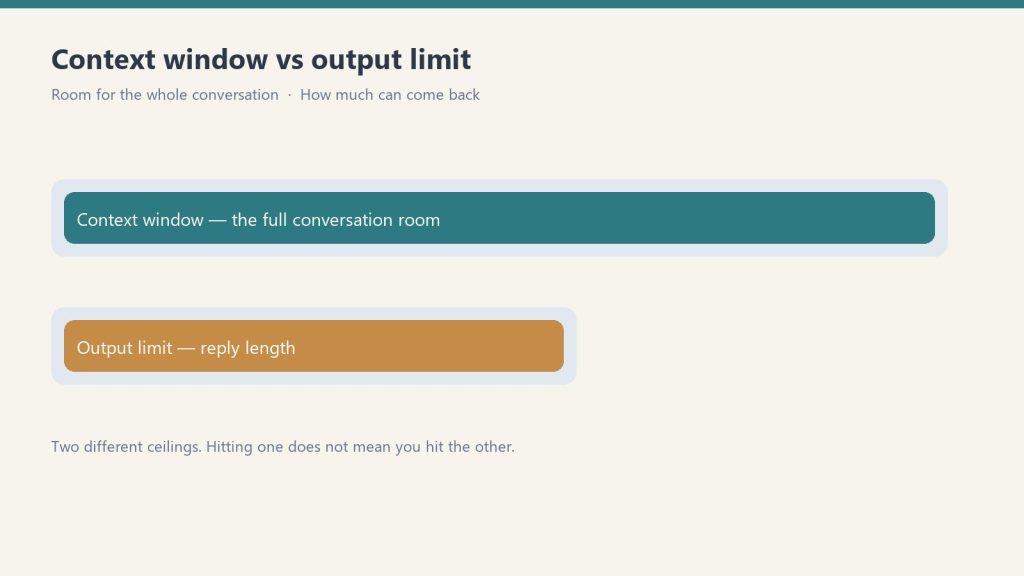
    Claude’s context window — the amount of text it can hold and reason over in a single conversation — is substantially larger than ChatGPT’s standard offering. Claude Sonnet and Opus both support up to 200,000 tokens. GPT-4o tops out at 128,000 tokens.

    In practice, this matters for:

    • Analyzing long contracts, reports, or research documents in one pass
    • Working with large codebases without losing track of what’s already been discussed
    • Multi-document analysis where you need to synthesize across sources
    • Long agentic sessions where conversation history is critical

    If you regularly work with documents over 50–80 pages or run long agentic workflows, Claude’s context advantage is a functional one, not just a spec sheet number.

    Instruction Following: Where Claude Consistently Outperforms

    Give Claude a complex, multi-part instruction with specific constraints — “write this in third person, under 400 words, no bullet points, mention X and Y but not Z, match this tone” — and it tends to hold all of those requirements across the full response. ChatGPT frequently drifts, especially on longer outputs.

    This matters most for:

    • Prompt-heavy workflows where precision is required
    • Batch content generation with strict brand voice rules
    • Agentic tasks where Claude is executing multi-step operations
    • Any scenario where you’ve spent time engineering a precise prompt

    Anthropic built Claude with a focus on being genuinely helpful without being sycophantic — meaning it’s designed to give you the accurate answer, not the agreeable one. In practice, Claude is more likely to flag when something in your request is unclear or contradictory rather than guessing and producing something confidently wrong.

    Coding: Claude Code vs ChatGPT

    For general coding questions — syntax, debugging, explaining code — both models perform well. The meaningful differentiation is at the agentic level.

    Anthropic’s Claude Code is a dedicated command-line coding agent that can work autonomously on a codebase: reading files, writing code, running tests, and iterating. It’s a different category of tool than ChatGPT’s code interpreter, which executes code in a sandboxed environment but doesn’t have the same level of agentic control over a real development environment.

    For developers running AI-assisted workflows on actual projects, Claude Code is the more serious tool in 2026. For casual code help or one-off scripts, the gap is smaller.

    Where ChatGPT Wins: Image Generation and Ecosystem

    ChatGPT has a clear advantage in two areas that matter to a lot of users.

    Image generation: DALL-E 3 is built directly into ChatGPT Plus. You can go from text to image in one conversation. Claude has no native image generation capability — you’d need to use a separate tool like Midjourney, Adobe Firefly, or Imagen on Google Cloud.

    Third-party integrations: OpenAI’s plugin ecosystem and Custom GPTs have more breadth than Claude’s integrations. If you rely on specific third-party tools (Zapier, specific APIs, custom workflows), there’s more infrastructure already built around ChatGPT.

    If image creation is a daily part of your workflow, or you’re heavily invested in a ChatGPT-centric tool stack, these advantages are real.

    Claude vs ChatGPT for Coding Specifically

    When coding is the primary use case, the comparison shifts toward Claude — but it’s worth being precise about why.

    For writing clean, well-commented code from scratch, Claude tends to produce cleaner output with better reasoning explanations. It’s less likely to hallucinate function signatures or library methods. For debugging, Claude’s ability to hold large code files in context without losing track is a functional advantage.

    ChatGPT’s code interpreter (now called Advanced Data Analysis) is strong for data science workflows — running actual Python in a sandbox, generating visualizations, processing files. If your coding work is primarily data analysis and you want execution in the same tool, ChatGPT has the edge there.

    Claude vs ChatGPT for Writing Specifically

    For any writing that requires a genuine human voice — op-eds, thought leadership, nuanced argument — Claude is the better instrument. Its outputs require less editing to remove the robotic, list-heavy, over-hedged quality that plagues a lot of AI-generated content.

    For template-heavy writing — product descriptions, SEO-optimized articles at scale, standardized reports — the gap is smaller and comes down to your specific prompting setup.

    What Reddit Actually Says

    The Claude vs ChatGPT debate on Reddit (r/ChatGPT, r/ClaudeAI, r/artificial) consistently surfaces a few recurring themes:

    • Writers and researchers prefer Claude — repeatedly cited for better prose and genuine analysis
    • Developers are more split — Claude Code has built a dedicated following, but the ChatGPT ecosystem is more familiar
    • ChatGPT wins on integrations — the plugin/Custom GPT ecosystem still has more breadth
    • Claude is less annoying — specific complaints about ChatGPT’s sycophancy appear frequently (“it agrees with everything”, “it always says ‘great question’”)
    • Both have gotten better fast — direct comparisons from 2023–2024 often don’t hold in 2026

    Pricing: What You Actually Pay

    The base subscription pricing is identical: $20/month for Claude Pro and $20/month for ChatGPT Plus — see the full Claude pricing breakdown for everything beyond the base tier. If you’re wondering what the free tier actually includes before committing, see what Claude’s free tier gets you in 2026. Both include web search, file uploads, and access to advanced models.

    Where it diverges:

    • Claude Max ($100/mo) — for power users who need 5x the usage of Pro
    • ChatGPT doesn’t have a direct equivalent tier between Plus and Enterprise
    • API pricing — comparable but varies by model; Anthropic’s pricing is token-based and published transparently
    • Claude Code — has its own pricing structure for the agentic coding tool

    For most individual users, the $20/mo tier is the right starting point for either tool.

    Which One Is Actually Better in 2026?

    The honest answer: Claude is better for the work that benefits most from language quality, reasoning depth, and instruction precision. ChatGPT is better for the work that benefits from breadth of integrations and built-in image generation.

    For a solo operator, consultant, or knowledge worker whose primary outputs are written analysis, content, and strategy: Claude is the better daily driver. The writing is cleaner, the reasoning is more reliable, and the context window is more practical for serious document work.

    For a team already embedded in the OpenAI ecosystem — with Custom GPTs, plugins, and Zapier workflows built around ChatGPT — switching has real friction that may not be worth it unless writing quality is a high-priority problem.

    The most pragmatic setup for serious users — check the Claude model comparison to understand which tier makes sense for your work, and the Claude prompt library to get the most out of whichever you choose. The most pragmatic setup for serious users: Claude for thinking and writing, access to ChatGPT for when you need DALL-E or a specific integration it covers. At $20/month each, running both is a reasonable choice if the work justifies it.

    Frequently Asked Questions

    Is Claude better than ChatGPT?

    For writing quality, complex instruction following, and long-document analysis, Claude outperforms ChatGPT in most head-to-head tests. ChatGPT has the advantage in image generation and third-party integrations. The right answer depends on your primary use case.

    Can I use both Claude and ChatGPT?

    Yes, and many power users do. Both have $20/month Pro tiers. Running both gives you Claude’s writing and reasoning strength alongside ChatGPT’s DALL-E image generation and broader plugin ecosystem.

    Which is better for coding — Claude or ChatGPT?

    Claude has a slight edge for writing clean code and agentic coding workflows via Claude Code. ChatGPT’s Advanced Data Analysis (code interpreter) is better for data science work where you need code execution in a sandboxed environment. For general coding help, both are strong.

    Which AI is better for writing?

    Claude consistently produces better writing — less generic, less sycophantic, and closer to a natural human voice. Writers, editors, and content strategists repeatedly report that Claude’s outputs require less editing and drift less from the intended tone.

    Is Claude free to use?

    Claude has a free tier with limited daily usage. Claude Pro is $20/month and provides significantly more capacity. Claude Max at $100/month is for heavy users. API access is billed separately by token usage.

    Need this set up for your team?
    Talk to Will →

  • Radon Laws and Regulations in Wyoming: Complete Guide

    The Distillery — Brew № 1 · Radon Mitigation

    Wyoming has significant radon risk, with an estimated 50% of Wyoming homes testing above the EPA action level of 4.0 pCi/L. Wyoming’s geology — including uranium-bearing sandstone formations that once fueled a major uranium mining industry, granite in the Laramie and Wind River ranges, and sedimentary formations throughout the basin areas — creates high radon potential across much of the state. Wyoming has limited specific radon regulation but relies on EPA guidance and national certification standards.

    EPA Radon Zone Designation

    Most Wyoming counties are Zone 1 or Zone 2. The highest-radon areas include the Wyoming uranium belt counties of south-central Wyoming (Carbon, Fremont, Natrona, and Converse counties), the Laramie area (Albany County), and the Casper area (Natrona County). The northeastern Wyoming counties including Weston and Niobrara counties also show elevated radon due to uranium-bearing geology. Even the lower-elevation basin counties show significant radon levels due to uranium-rich sedimentary formations.

    Radon Contractor Requirements in Wyoming

    Wyoming does not have a state radon contractor licensing statute. Wyoming relies on NRPP and NRSB national certification as the operative credential for radon professionals. The Wyoming Department of Environmental Quality administers radon program resources. For certified radon professionals in Wyoming, search the NRPP directory at nrpp.info or the NRSB directory at nrsb.org by location.

    Radon Disclosure Requirements in Wyoming

    Wyoming does not have a radon-specific real estate disclosure statute. The Wyoming Seller’s Real Property Disclosure Act requires disclosure of known material defects — and known elevated radon test results are material information that sellers should disclose. Real estate agents in Wyoming’s high-radon areas recommend radon testing as standard practice during the inspection period.

    Frequently Asked Questions

    Why is Wyoming a high-radon state?

    Wyoming sits on extensive uranium-bearing geological formations — the same uranium deposits that made Wyoming a major uranium mining state historically. These uranium-rich sandstones and sedimentary rocks produce significant radon across much of the state, particularly in south-central and northeastern Wyoming.

    Does Wyoming require radon contractor licensing?

    Wyoming has no state radon contractor licensing statute. NRPP or NRSB national certification is the operative credential. Search the NRPP directory at nrpp.info for certified Wyoming contractors.

    What Wyoming counties have the highest radon?

    South-central Wyoming counties in the uranium belt — Carbon, Fremont, Natrona, and Converse counties — have the highest radon potential. Albany County (Laramie) and northeastern Wyoming counties including Weston and Niobrara also show elevated levels.

    Wyoming Uranium Belt and Radon History

    Wyoming’s uranium belt — stretching across south-central Wyoming through Carbon, Fremont, Natrona, Converse, and Campbell counties — was one of the most productive uranium mining regions in the U.S. during the mid-20th century. The same uranium-bearing sandstone formations that made Wyoming a mining powerhouse are directly responsible for the state’s elevated radon levels. Even in areas without active or historical mining, the underlying geology produces radon at rates that make testing essential for all Wyoming homeowners.

    Radon in Casper and Cheyenne

    Natrona County (Casper) sits directly over uranium-bearing geological formations and is among Wyoming’s highest-radon areas. Laramie County (Cheyenne) in southeastern Wyoming shows elevated levels due to both geological factors and proximity to the front range geology. The University of Wyoming in Albany County (Laramie) is in a Zone 1 area. Jackson Hole (Teton County) in northwestern Wyoming shows elevated radon from the Teton Range granitic geology. Essentially no county in Wyoming is low-risk.

    Radon and Wyoming Real Estate Transactions

    While Wyoming lacks a radon-specific disclosure statute, radon is increasingly standard in Wyoming real estate transactions — particularly in Casper, Cheyenne, and the resort markets of Jackson Hole and Cody. Many Wyoming real estate contracts include radon contingencies by custom and buyer demand, even without a statutory requirement. Buyers in Wyoming should always request radon testing during the inspection period and include a contingency at 4.0 pCi/L or lower in their offer.

  • Radon Laws and Regulations in Nebraska: Complete Guide

    The Distillery — Brew № 1 · Radon Mitigation

    Nebraska has some of the highest radon levels in the central United States. The Nebraska Department of Health and Human Services estimates that approximately 55% of Nebraska homes have radon levels above 4.0 pCi/L, and Nebraska’s statewide average is among the top five in the nation. Nebraska’s geology — including Cretaceous chalk and shale formations, Pleistocene glacial deposits in the eastern half, and uranium-bearing geological units throughout — creates high radon potential statewide.

    EPA Radon Zone Designation

    Most Nebraska counties are Zone 1. All counties in Nebraska’s eastern glaciated region are Zone 1 (Douglas, Sarpy, Lancaster, Cass, Otoe, and other eastern counties), as are the central Sandhills counties and western Nebraska counties overlying chalk formations. The panhandle counties of extreme western Nebraska have somewhat lower but still significant radon potential.

    Radon Contractor Requirements in Nebraska

    Nebraska requires radon professionals to hold NRPP or NRSB national certification to legally perform radon measurement and mitigation services. Nebraska’s radon program is administered through the Nebraska Department of Health and Human Services. Nebraska does not have a separate state radon contractor licensing statute — national certification is the operative credential. Verify credentials at nrpp.info or nrsb.org before hiring any radon professional.

    Radon Disclosure Requirements in Nebraska

    Nebraska’s Seller Property Disclosure Act requires sellers to disclose known material defects. Nebraska does not have a radon-specific disclosure statute, but the general material defect obligation covers known elevated radon. The Nebraska Real Estate Commission provides guidance on radon as a potential disclosure item. Radon testing is recommended in all Nebraska real estate transactions given the state’s high prevalence.

    Frequently Asked Questions

    How high is radon in Nebraska?

    Nebraska has one of the nation’s highest average indoor radon concentrations, with approximately 55% of homes above the EPA action level of 4.0 pCi/L. Most Nebraska counties are Zone 1.

    Does Nebraska require radon contractor certification?

    NRPP or NRSB national certification is the operative requirement. No separate Nebraska licensing statute exists. Verify credentials at nrpp.info or nrsb.org before hiring.

    Should I test for radon before buying a home in Nebraska?

    Yes — emphatically. With 55% of Nebraska homes above the EPA action level, radon testing should be a standard contingency in every Nebraska real estate transaction. Results at or above 4.0 pCi/L are the expectation, not the exception, in many Nebraska communities.

    Nebraska Radon in the Omaha and Lincoln Areas

    Douglas County (Omaha) and Sarpy County (Bellevue, Papillion) are Zone 1 counties with among the highest average radon levels in the Omaha metropolitan area. Lancaster County (Lincoln) is also Zone 1. The eastern Nebraska glaciated region, where Omaha and Lincoln are located, consistently shows elevated radon readings across residential testing surveys. Both cities have substantial older housing stock with basements and concrete block foundations that can concentrate radon — making testing an urgent priority for homeowners who have not yet checked.

    Nebraska Radon Testing Data

    The Nebraska DHHS publishes county-level radon testing data derived from thousands of residential tests submitted through the state program. Nebraska’s testing data is among the most comprehensive in the Great Plains region, providing sub-county insights in larger metropolitan areas. The DHHS radon program can provide ZIP-code level guidance in some cases. For the most current data, contact the Nebraska DHHS Radon Program directly.

    Nebraska New Construction and RRNC

    Nebraska does not have a statewide RRNC mandate, but EPA and DHHS strongly recommend passive RRNC features in all new Nebraska residential construction. Given that 55% of Nebraska homes exceed the EPA action level — among the nation’s highest rates — every new home in Nebraska should have a passive radon vent pipe, sub-slab aggregate, vapor barrier, and attic electrical outlet installed during construction. The investment during the building phase is $350–$700; the same result after construction costs $800–$2,500.

  • Radon Laws and Regulations in Kansas: Complete Guide

    The Distillery — Brew № 1 · Radon Mitigation

    Kansas has significant radon risk across much of the state. The Kansas Department of Health and Environment estimates that approximately 40% of Kansas homes have radon levels above 4.0 pCi/L. Kansas’s geology — including chalk and limestone formations in central Kansas, glacial till in the northeast, and uranium-bearing shale in the southeast — creates elevated radon potential across a broad swath of the state. Kansas has enacted radon contractor certification requirements.

    EPA Radon Zone Designation

    Most Kansas counties are Zone 1 or Zone 2. The highest-radon areas include northeastern Kansas counties with glacial geology (Leavenworth, Wyandotte, Johnson, Douglas, and Shawnee counties), the Flint Hills region of east-central Kansas where limestone formations are prevalent (Riley, Geary, Morris, Chase, and Marion counties), and north-central Kansas overlying chalk formations (Lincoln, Ellsworth, and McPherson counties).

    Radon Contractor Licensing in Kansas

    Kansas requires radon contractors to hold Kansas-approved certification for both radon measurement and mitigation. Kansas accepts NRPP or NRSB national certification as meeting state requirements. The Kansas Department of Health and Environment administers the state radon program and provides information on certified professionals. Verify contractor credentials at nrpp.info or nrsb.org, or through the KDHE radon program, before hiring.

    Radon Disclosure Requirements in Kansas

    Kansas’s real estate disclosure law requires sellers to disclose known material defects. Kansas does not have a radon-specific disclosure statute, but the general material defect disclosure obligation covers known elevated radon conditions. Kansas real estate transactions routinely include radon contingencies. Buyers in high-radon areas of Kansas should conduct independent testing during the inspection period.

    Frequently Asked Questions

    Does Kansas have significant radon risk?

    Yes. The KDHE estimates approximately 40% of Kansas homes exceed 4.0 pCi/L. Northeastern, north-central, and east-central Kansas counties have the highest radon potential.

    Does Kansas require radon contractor certification?

    Yes. Kansas accepts NRPP or NRSB national certification as the operative credential for radon professionals. Verify credentials at nrpp.info or nrsb.org before hiring.

    What parts of Kansas have the highest radon?

    Northeastern Kansas (glacial geology), the Flint Hills region of east-central Kansas (limestone formations), and north-central Kansas (chalk formations) have the state’s highest average radon levels.

    Kansas Radon Testing Resources and Data

    The Kansas Department of Health and Environment (KDHE) Radiation Control Program publishes county-level radon data and maintains a list of NRPP/NRSB-certified contractors operating in Kansas. Kansas residents can request free or low-cost radon test kits through KDHE when funding is available — check the KDHE radon program website for current availability. Kansas State University Extension also provides radon educational resources and guidance for Kansas homeowners.

    Radon in New Construction in Kansas

    Kansas does not have a statewide RRNC mandate for new residential construction. EPA strongly recommends Radon-Resistant New Construction features for all new Kansas homes — particularly in Zone 1 northeastern, north-central, and Flint Hills region counties. The cost of including RRNC during construction ($350–$700) is a fraction of post-construction mitigation ($800–$2,500). Buyers of new construction in Kansas should ask their builder directly whether a passive radon vent pipe and sub-slab aggregate layer are included in the plans.

    Radon Risk in Kansas Cities

    The Kansas City metropolitan area (Johnson, Wyandotte, Leavenworth, and Douglas counties on the Kansas side) sits in Zone 1 to Zone 2 territory with meaningful radon risk. Shawnee County (Topeka, the state capital) is Zone 1. Sedgwick County (Wichita) is Zone 2 with moderate radon potential. Riley County (Manhattan, home of Kansas State University) is in the elevated Flint Hills zone. Regardless of location, all Kansas homes should be tested — the state’s 40% elevated prevalence rate means elevated radon is not an exception but an expectation in many communities.

  • Radon Laws and Regulations in Maine: Complete Guide

    The Distillery — Brew № 1 · Radon Mitigation

    Maine has significant radon risk, particularly in its granite-rich geological regions. The Maine Center for Disease Control and Prevention estimates that approximately 45% of Maine homes have radon levels above 4.0 pCi/L — one of the highest percentages in the northeastern United States. Maine’s geology includes extensive granitic formations, uranium-bearing schist, and glacially-deposited soils that create high radon potential across much of the state. Maine has enacted both contractor licensing and real estate disclosure requirements.

    EPA Radon Zone Designation

    Most Maine counties are Zone 1 or Zone 2. The highest-radon areas are concentrated in central and western Maine overlying granitic and metamorphic rock formations: Kennebec, Somerset, Oxford, Franklin, Androscoggin, Sagadahoc, and Cumberland counties show the state’s highest average readings. Coastal Washington and Hancock counties also have elevated radon potential due to granitic geology.

    Radon Contractor Licensing in Maine

    Maine requires radon contractors to hold a Maine state radon contractor license. Maine’s licensing program is administered by the Maine CDC Radiation Control Program. Licensure requires passing state examinations or demonstrating national NRPP/NRSB certification, carrying liability insurance, and meeting continuing education requirements. Maine maintains a list of licensed radon contractors. Performing radon measurement or mitigation in Maine without a state license is a violation of Maine law.

    Radon Disclosure Requirements in Maine

    Maine has radon-specific disclosure requirements for residential real estate transactions. Maine law requires sellers to disclose whether the home has been tested for radon and to provide any test results. The Maine Residential Property Disclosure Form includes specific radon questions. Maine is among the states with clear statutory radon disclosure obligations in real estate transactions — sellers who fail to disclose known elevated radon results may face post-closing liability.

    Radon in Maine’s Older Housing Stock

    Maine has a significant stock of older homes — many built before radon was a recognized issue in the 1980s and 1990s. Older homes, particularly those with block wall or stone foundations common in rural Maine, may have multiple radon entry pathways beyond the typical concrete slab scenario. Maine CDC recommends testing all homes regardless of age, and notes that older homes in granite-rich areas are among those most likely to benefit from mitigation.

    Frequently Asked Questions

    Is Maine a high-radon state?

    Yes. The Maine CDC estimates approximately 45% of Maine homes have radon levels above 4.0 pCi/L — one of the highest rates in the Northeast. Maine’s granitic geology creates high radon potential across much of the state.

    Does Maine require radon contractor licensing?

    Yes. Maine requires a state radon contractor license administered by the Maine CDC Radiation Control Program. Verify license status before hiring any radon contractor.

    Does Maine require radon disclosure when selling a home?

    Yes. Maine law requires sellers to disclose whether the home has been tested for radon and to provide any known test results. The Maine Residential Property Disclosure Form includes specific radon questions.

    Maine Radon in Older Housing Stock

    Maine has a particularly high proportion of pre-1940 housing — farmhouses, cottages, and older residential stock built with stone, brick, or block foundations that predate any awareness of radon. These older foundations have significant cracks, mortar gaps, and structural openings that create multiple radon entry pathways. The combination of Maine’s high-uranium granite geology and its aging housing stock creates the conditions for some of the Northeast’s highest residential radon concentrations. The Maine CDC Radon Program specifically highlights older housing as a priority for testing.

    Maine Radon in the Portland Metro

    Cumberland County (Portland, South Portland, Falmouth, Westbrook, Windham) is Zone 1 with elevated radon risk throughout the greater Portland metropolitan area. Portland’s active real estate market — driven by remote work migration and strong demand for Maine coastal living — means radon should be a standard contingency in all Cumberland County transactions. York County (Southern Maine/Kittery, Sanford, Biddeford, Kennebunk) is Zone 1 to Zone 2 with meaningful radon risk. Androscoggin County (Lewiston-Auburn area) shows Zone 1 conditions with elevated average concentrations driven by the Norumbega Fault Zone geology.

  • Radon Laws and Regulations in Florida: Complete Guide

    The Distillery — Brew № 1 · Radon Mitigation

    Florida may seem an unlikely high-radon state given its tropical climate and reputation for flat, sandy soil. But parts of Florida — particularly the phosphate-rich central ridge region — have significant radon potential. Florida has enacted one of the more active southern state radon programs, with contractor licensing requirements and specific disclosure obligations. The Florida Department of Health administers the Florida Radon Program and the Building Radon Resistance Program (BRRP) for new construction.

    EPA Radon Zone Designation

    Florida counties range from Zone 1 in the central phosphate ridge region to Zone 2 and Zone 3 in coastal and southern counties. The highest-radon areas are concentrated in the central Florida phosphate region: Alachua, Columbia, Gilchrist, Hamilton, Hernando, Levy, Madison, Marion, Pasco, Polk, Putnam, Suwannee, and Taylor counties. North-central Florida counties show the state’s highest radon concentrations.

    Radon Contractor Licensing in Florida

    Florida has a comprehensive radon contractor licensing program. Florida law requires radon contractors to hold a Florida state radon license — the Florida Radon License is issued by the Florida Department of Health and requires passing state examinations, carrying liability insurance, and completing continuing education. Florida additionally requires that radon measurement in real estate transactions be conducted by a Florida-licensed radon measurement business. The Florida DOH maintains a searchable database of licensed radon contractors. Performing radon work without a Florida license is a violation of state law.

    Radon Disclosure Requirements in Florida

    Florida statute requires that buyers of residential property be provided with the Florida Radon Hazard Notification. Specifically, Florida Statute 404.056(5) requires that all contracts for sale and purchase of buildings include a disclosure statement about radon. The statutory disclosure language must appear in residential real estate contracts. Additionally, sellers who know of elevated radon test results have a duty to disclose this under Florida’s general material defect disclosure requirements.

    Radon-Resistant New Construction in Florida

    Florida has enacted the Building Radon Resistance Program (BRRP), which encourages RRNC features in new residential construction. The Florida Building Code incorporates provisions for radon-resistant construction in high-radon areas. Given Florida’s unique construction type — many homes are concrete block construction on slab foundations — RRNC implementation requires adaptations from the standard gravel sub-slab approach used in northern climates. The Florida DOH radon program provides technical guidance specific to Florida construction types.

    Frequently Asked Questions

    Does Florida have high radon levels?

    Parts of Florida — particularly the central phosphate ridge region — have significant radon potential. North-central Florida counties overlying phosphate geology can have elevated radon levels comparable to many Zone 1 northern states. Coastal and southern Florida counties generally have lower levels.

    Does Florida require radon contractor licensing?

    Yes. Florida has a comprehensive radon contractor licensing program. Both measurement and mitigation require Florida state radon licenses, issued by the Florida Department of Health. Verify license status through the Florida DOH radon program before hiring.

    Does Florida law require radon disclosure in real estate?

    Yes. Florida Statute 404.056(5) requires that all residential real estate contracts include a radon hazard notification. Sellers with known elevated radon results have an additional duty to disclose under Florida’s material defect disclosure requirements.

    Florida Phosphate Geology and Radon

    North-central Florida’s phosphate mining region is the geological foundation of Florida’s radon risk. Phosphate deposits are naturally high in uranium — when phosphate is present in soil and rock, radon follows. The Florida phosphate belt runs through Hillsborough, Polk, Manatee, Hardee, Desoto, and Sarasota counties in west-central Florida, and through Alachua, Marion, Levy, Gilchrist, and Columbia counties in north-central Florida. Homes built over disturbed phosphate lands — including many in Hillsborough County (Tampa area) and Polk County (Lakeland area) — can have elevated radon even in the absence of a basement, because the phosphate-rich fill material itself can emit radon through slab-on-grade foundations.

    Florida RRNC and Slab Construction Specifics

    Florida’s Building Radon Resistance Program (BRRP) addresses the unique challenge of Florida’s predominantly slab-on-grade construction. Unlike northern states where basements provide a clear sub-slab entry point, Florida slab homes require specific RRNC techniques including: sub-slab vapor barriers sealed around all penetrations, a passive vent pipe through the slab and interior to above the roofline, and sealing of all slab penetrations. Florida’s warm climate means no stack effect advantage in summer — passive systems in Florida are less effective than in cold climates, making active (fan-powered) mitigation more likely to be needed even with RRNC features installed.

  • Radon Laws and Regulations in New Jersey: Complete Guide

    The Distillery — Brew № 1 · Radon Mitigation

    New Jersey has one of the most comprehensive state radon programs in the United States. The New Jersey Department of Environmental Protection (NJDEP) has administered an active radon program since the 1980s — driven partly by New Jersey’s historic role in radon risk discovery (the Stanley Watras case that put radon on the national map occurred in Boyertown, Pennsylvania, but the Reading Prong geological formation extends into New Jersey, creating similarly high radon potential). New Jersey has enacted both contractor licensing and school radon testing requirements.

    EPA Radon Zone Designation

    New Jersey counties range from Zone 1 in the northern portion of the state to Zone 2 in central and southern New Jersey. The highest-radon area in New Jersey is the northern region overlying the Reading Prong geological formation — specifically Morris, Somerset, Hunterdon, Warren, and Sussex counties — where average indoor radon levels are among the highest in the northeastern U.S. Bergen, Passaic, and Essex counties also show significant radon levels.

    Radon Contractor Licensing in New Jersey

    New Jersey has a comprehensive radon contractor licensing program administered by the NJDEP. New Jersey law requires radon contractors to hold a New Jersey state radon license — separate from and in addition to NRPP or NRSB national certification. New Jersey licensing requires passing the state radon contractor examination, maintaining liability insurance, and completing continuing education requirements. The NJDEP maintains a searchable online database of licensed radon professionals. Performing radon measurement or mitigation without a New Jersey license is a violation of state law.

    Radon Disclosure Requirements in New Jersey

    New Jersey requires sellers of residential real property to complete a Seller’s Property Disclosure Statement that includes questions about radon — whether the property has been tested, what the results were, and whether a radon mitigation system is installed. New Jersey sellers must disclose known radon test results. Radon testing is standard practice in New Jersey real estate transactions, particularly in northern Zone 1 counties. The NJDEP also requires distribution of the EPA radon pamphlet in certain transaction contexts.

    School and Public Building Radon Testing in New Jersey

    New Jersey requires radon testing in public schools and has specific provisions for childcare facilities. The New Jersey Department of Education and NJDEP have coordinated school radon testing programs. Results are reported to parents. New Jersey is among the states with the most active school radon testing programs in the northeastern U.S.

    Frequently Asked Questions

    Does New Jersey require radon contractor licensing?

    Yes. New Jersey has a comprehensive state licensing program requiring contractors to hold a New Jersey radon license in addition to NRPP or NRSB certification. Verify license status through the NJDEP radon program before hiring.

    What parts of New Jersey have the highest radon?

    Northern New Jersey counties overlying the Reading Prong geological formation — Morris, Somerset, Hunterdon, Warren, and Sussex counties — have the highest radon potential in the state. Bergen, Passaic, and Essex counties also show elevated levels.

    Does New Jersey require radon disclosure when selling a home?

    Yes. The New Jersey Seller’s Property Disclosure Statement requires disclosure of known radon test results and the presence of any mitigation system.

    New Jersey Radon Data and County Survey

    The New Jersey Department of Environmental Protection has conducted comprehensive county-level radon surveys. Morris County consistently shows some of the state’s highest average indoor radon concentrations, reflecting the Reading Prong granite beneath the county. Somerset, Hunterdon, and Warren counties in the northwestern corner of the state also show very high averages. Sussex County in the northernmost corner of NJ has the state’s highest elevation and most concentrated granitic geology. The NJDEP’s online county radon data is one of the most complete state-level radon databases in the Northeast.

    New Jersey Radon in Real Estate: Practical Context

    New Jersey’s real estate market moves fast — inspection periods are often compressed to 7–10 days. This means radon testing must be ordered immediately when the inspection contingency period begins. Professional continuous radon monitors are commonly used in NJ real estate transactions because they produce results within 48–96 hours without the 3–7 day mail-to-lab turnaround of charcoal canisters. Many NJ home inspectors offer radon testing add-ons precisely because of the timing pressure. Buyers should confirm the testing timeline and device type before signing a contract.